3.3.2Interactions with the Environment
Human Communicable Diseases
5 min read 8 parts Lesson 19 of 27 Unit quiz
Section 1 of 8Four diseases compared
| Disease | Pathogen | Spread | Main effects | Control |
|---|---|---|---|---|
| Salmonella food poisoning | Bacterium | Eating contaminated food or food prepared in unhygienic conditions | Fever, stomach cramps, vomiting and diarrhoea | Hygienic food handling, thorough cooking, vaccinating poultry |
| Gonorrhoea | Bacterium | Unprotected sexual contact | Thick yellow or green discharge and pain on urinating | Antibiotics (though resistance is growing); barrier contraception |
| Measles | Virus | Droplets from coughs and sneezes | Fever and a red skin rash; can lead to serious complications | Vaccination (MMR) |
| HIV | Virus | Exchange of body fluids: unprotected sex, sharing needles, mother to baby | Attacks the immune system and can lead to AIDS | Antiretroviral drugs slow the virus; condoms, not sharing needles |
Section 2 of 8Routes of infection
Food and water
- Food and water Bacteria such as salmonella are swallowed in contaminated food and multiply in the gut.
Airborne droplets
- Airborne droplets Viruses like measles leave an infected person in tiny droplets and are breathed in by others.
Body fluids and contact
- Body fluids and contact HIV and gonorrhoea pass between people through sexual contact or blood.
Section 3 of 8HIV progression
1Infection
- Infection The virus enters the body and infects white blood cells.
2Immune system weakened
- Immune system weakened Numbers of lymphocytes slowly fall.
3AIDS develops
- AIDS develops The body can no longer fight off other infections.
4Serious illness
- Serious illness Opportunistic diseases take hold and may prove fatal if untreated.
Section 4 of 8Stopping the spread
Preventing infection
Hygiene
- Hygiene Washing hands and preparing food safely stops bacteria reaching people.
Vaccination
- Vaccination Protects against viral diseases such as measles.
Barrier methods
- Barrier methods Condoms reduce transmission of gonorrhoea and HIV.
Treatment
- Treatment Antibiotics treat bacterial infections; they have no effect on viruses.
Section 5 of 8Why viruses and bacteria need different treatments
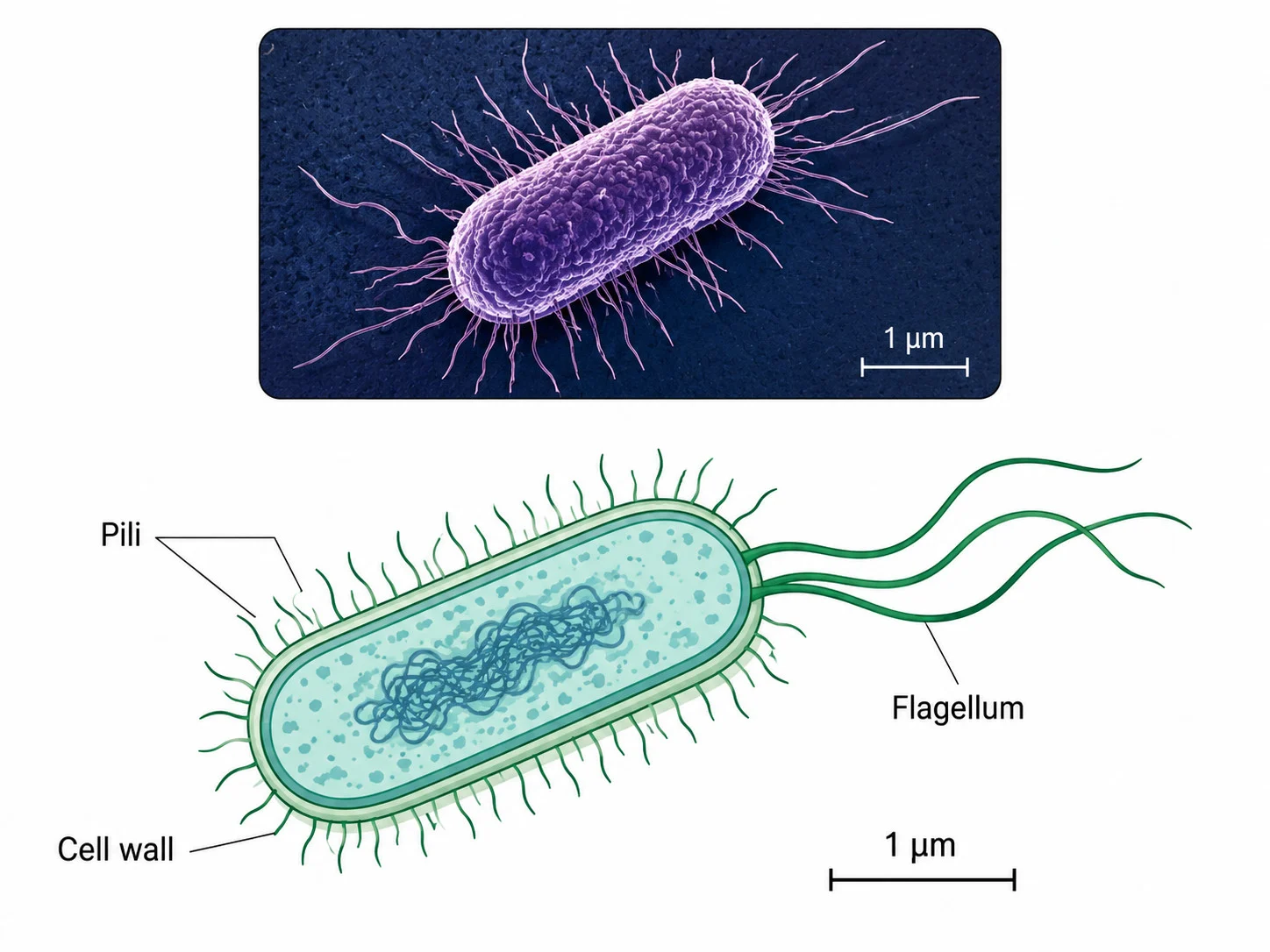
Bacteria
- Bacteria Bacteria are living cells that reproduce on their own, so antibiotics such as penicillin can kill them or stop them growing.
Viruses
- Viruses Viruses reproduce inside host cells,
- which makes them hard to attack without damaging the host; antibiotics do not work,
- so vaccination and antiviral drugs are used.
Resistance
- Resistance Overuse of antibiotics lets resistant bacteria survive and multiply, so gonorrhoea is becoming harder to treat.
Section 6 of 8Applications and exam context
| Question wording | What to include |
|---|---|
| Explain how a disease spreads | Name the pathogen, the route (food, droplets or body fluids) and who is at risk |
| Suggest how to reduce spread | Match the control to the route: hygiene for food, vaccination for droplets, condoms for body fluids |
| Explain why a vaccine works | Antigens trigger lymphocytes to make antibodies and memory cells, giving a fast response next time |
| Explain why HIV leads to other illnesses | It damages lymphocytes, so the immune system cannot fight other pathogens |
Section 7 of 8Key terms
| Term | Meaning |
|---|---|
| Communicable disease | A disease caused by a pathogen that can be passed from one organism to another. |
| Pathogen | A microorganism that causes disease. |
| Sexually transmitted infection | An infection passed on through sexual contact. |
| AIDS | The late stage of HIV infection when the immune system is badly weakened. |
| Vaccination | Giving a harmless form of a pathogen to make the body immune to it. |
Section 8 of 8Exam technique
1
Saying antibiotics can cure measles or HIV. These are viruses, so antibiotics do not work.
2
Stating that HIV and AIDS are the same thing. HIV is the virus; AIDS is the condition it can cause.
3
Forgetting that salmonella is a bacterium spread by food rather than by airborne droplets.
4
Giving 'good hygiene' as the only prevention for all four diseases. Choose the method that fits each route of infection.
5
Naming a disease and its pathogen but not stating how it is transmitted when asked to explain spread.