Skip to content
Dabour HubLEARN · PRACTICE · EXPLORESign inStudent

1.3.1Cell Biology

Diffusion

5 min read 9 parts Lesson 11 of 17 1 quiz

0%read

Section 1 of 9What is diffusion?

Diffusion is the spreading out of particles of a gas or of a solute in solution, resulting in a net movement from a region of higher concentration to a region of lower concentration, down a concentration gradient.

What is diffusion?
Particles in gases and liquids move randomly all the time because they have kinetic energy.
Where there are more particles, more of them move away than move in, so overall the particles spread out until they are evenly distributed.
After that the particles keep moving but there is no net movement.

Diffusion is a passive process: it does not need energy from respiration. The energy comes from the natural kinetic energy of the particles.

Section 2 of 9Diffusion across cell membranes

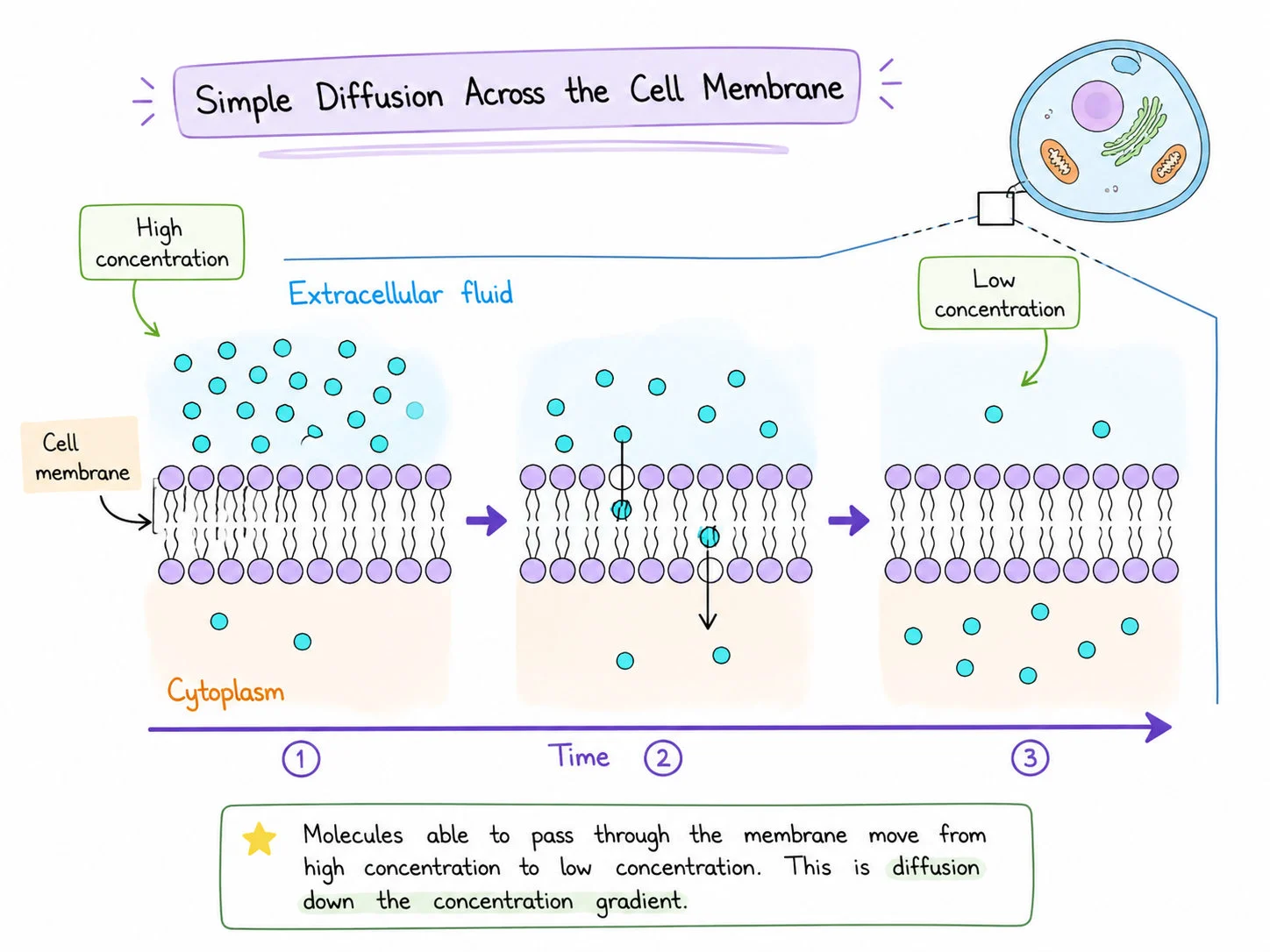
Diffusion of solute across the cell membrane lipid bilayer over time
Membrane diffusion
Simple diffusion across a membrane
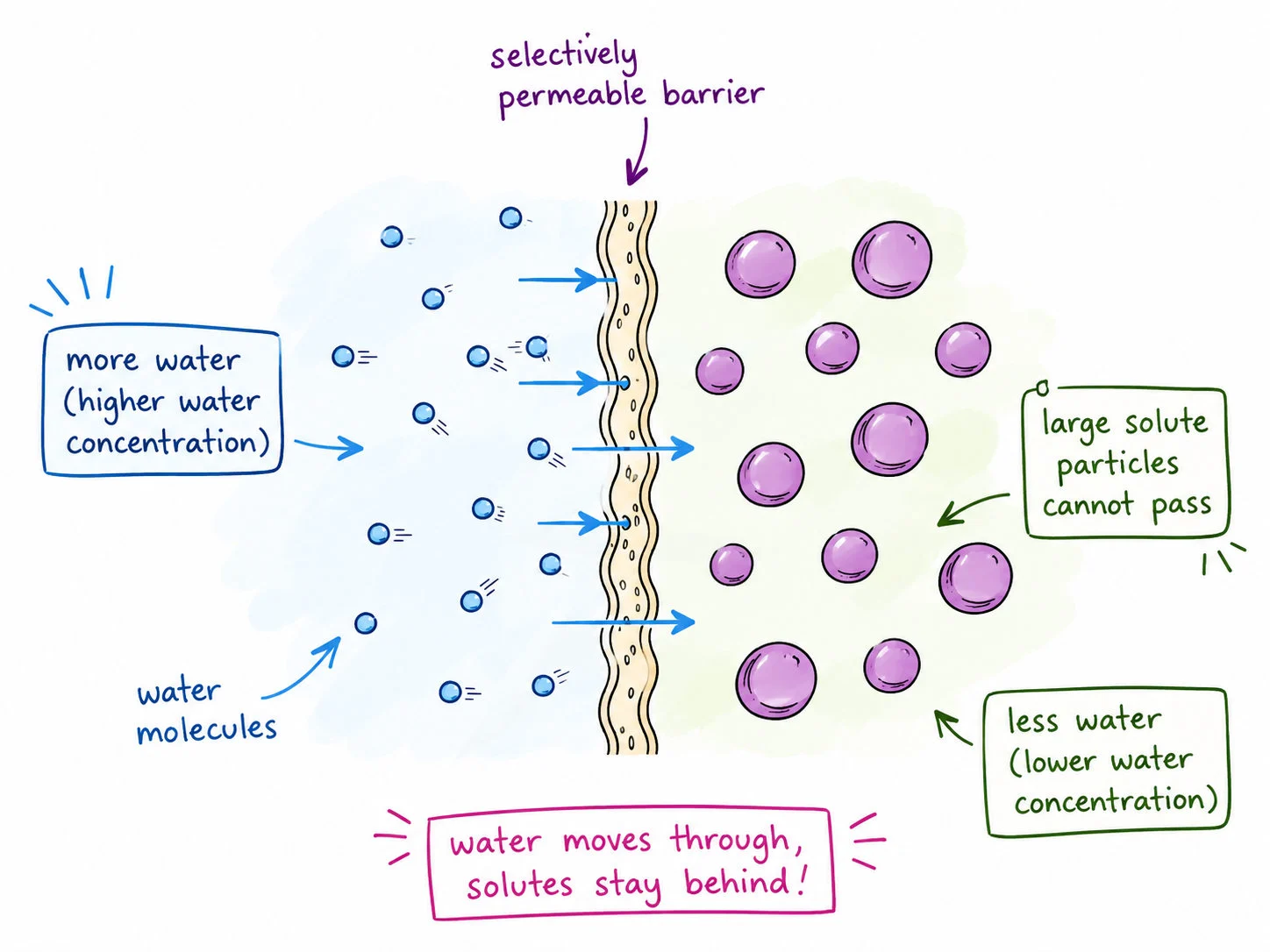
osmosis across a membrane diagram
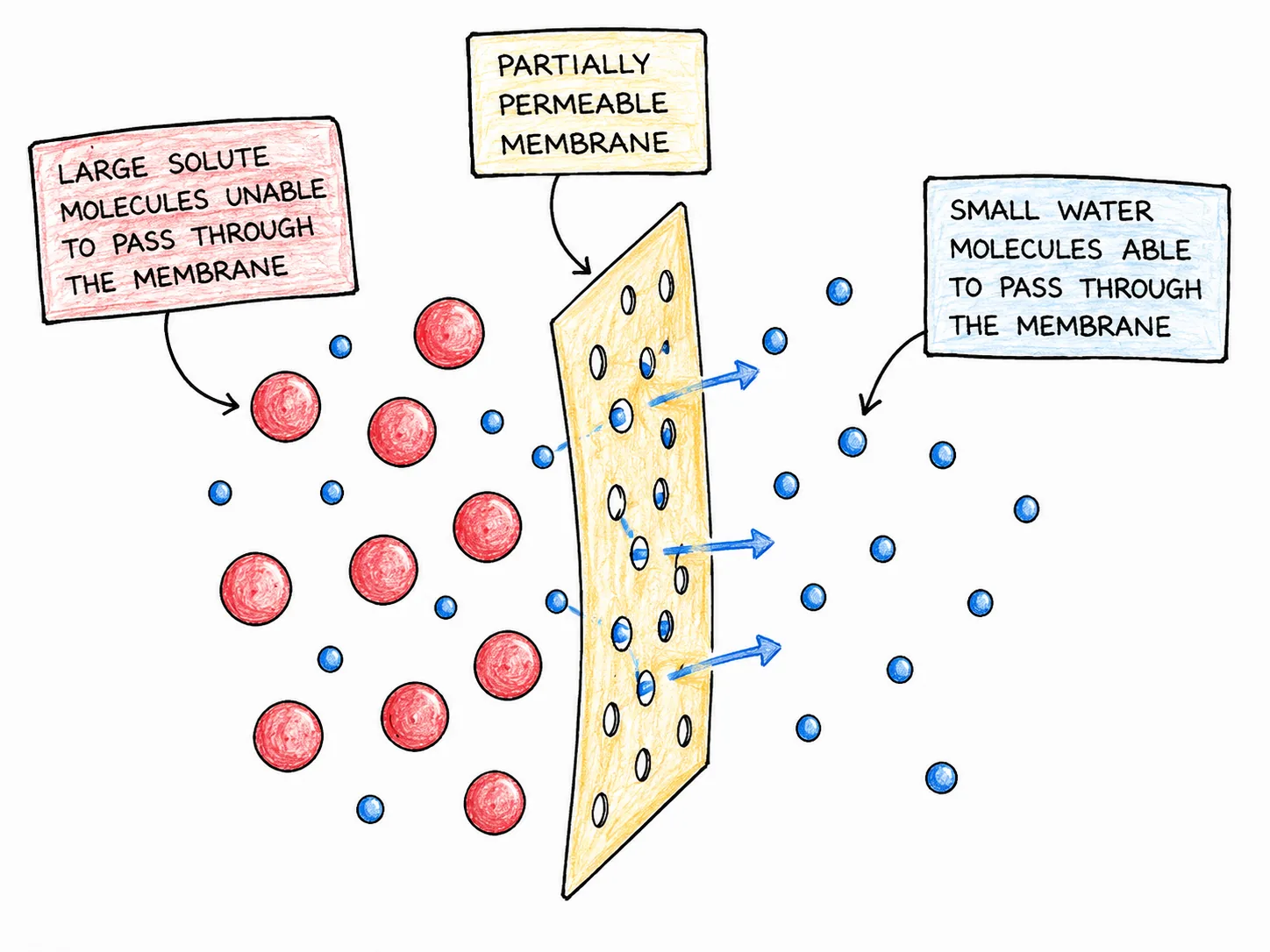
Partially Permeable Membrane
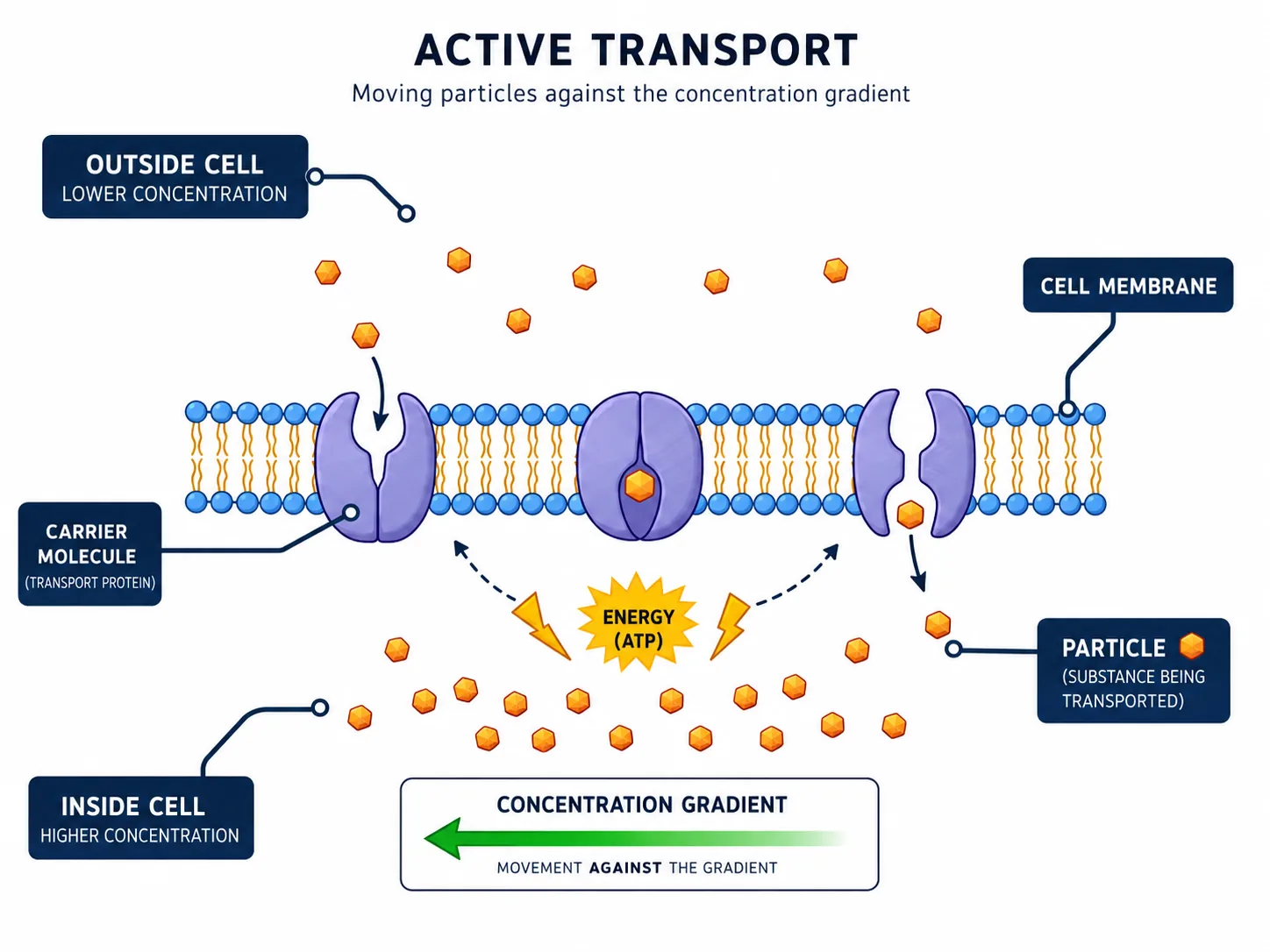
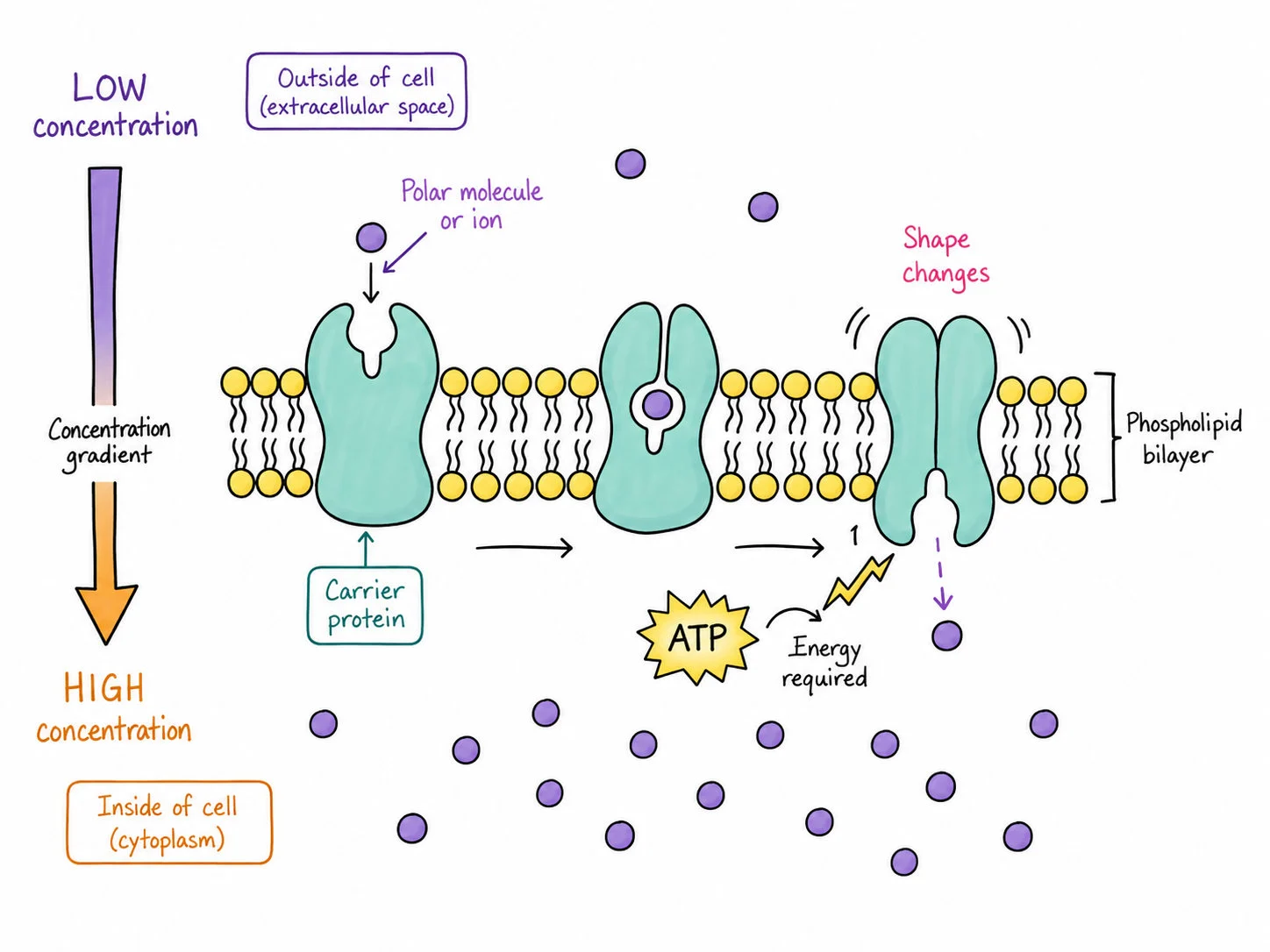
Active Transport Across the Cell Membrane
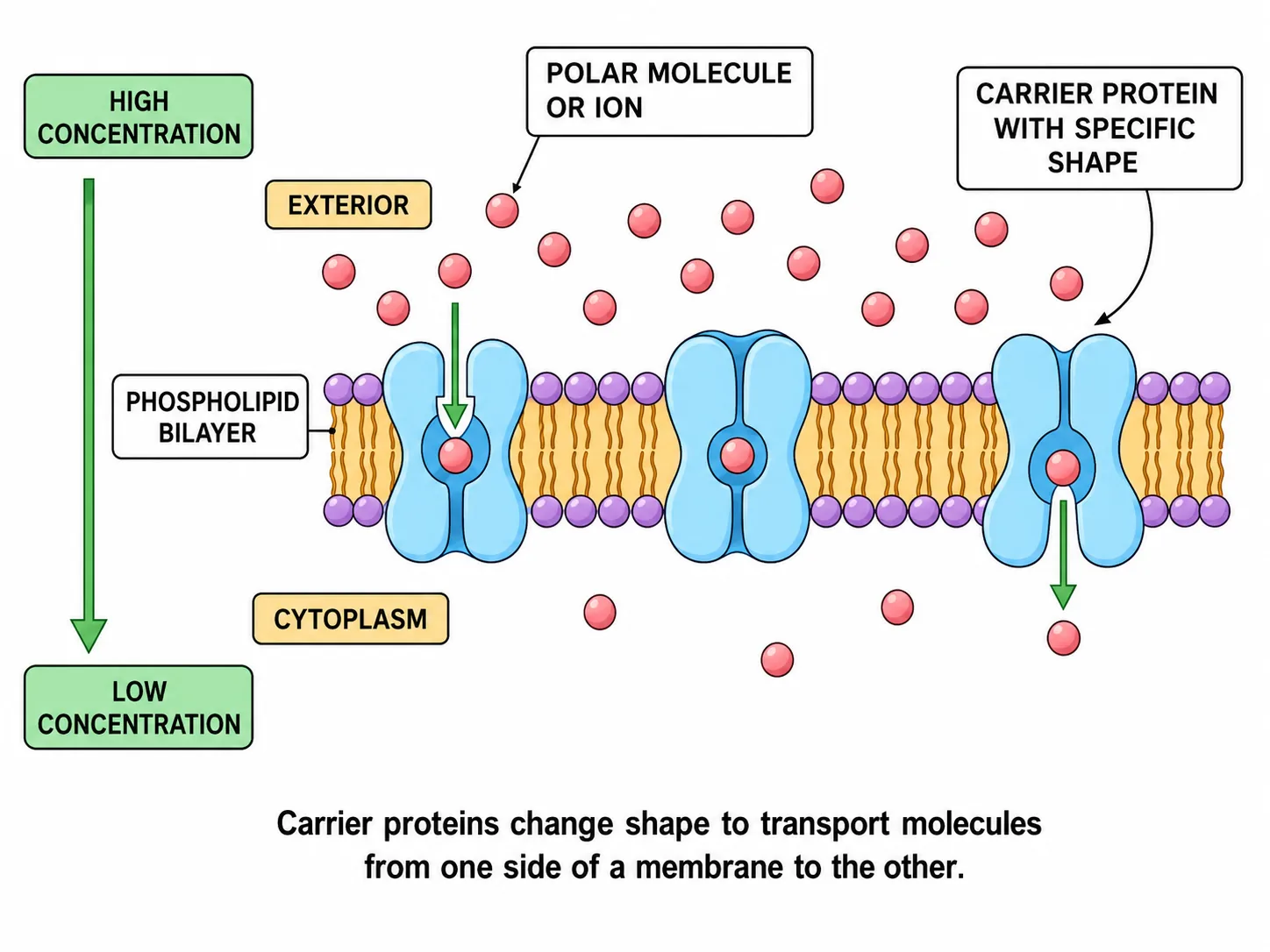
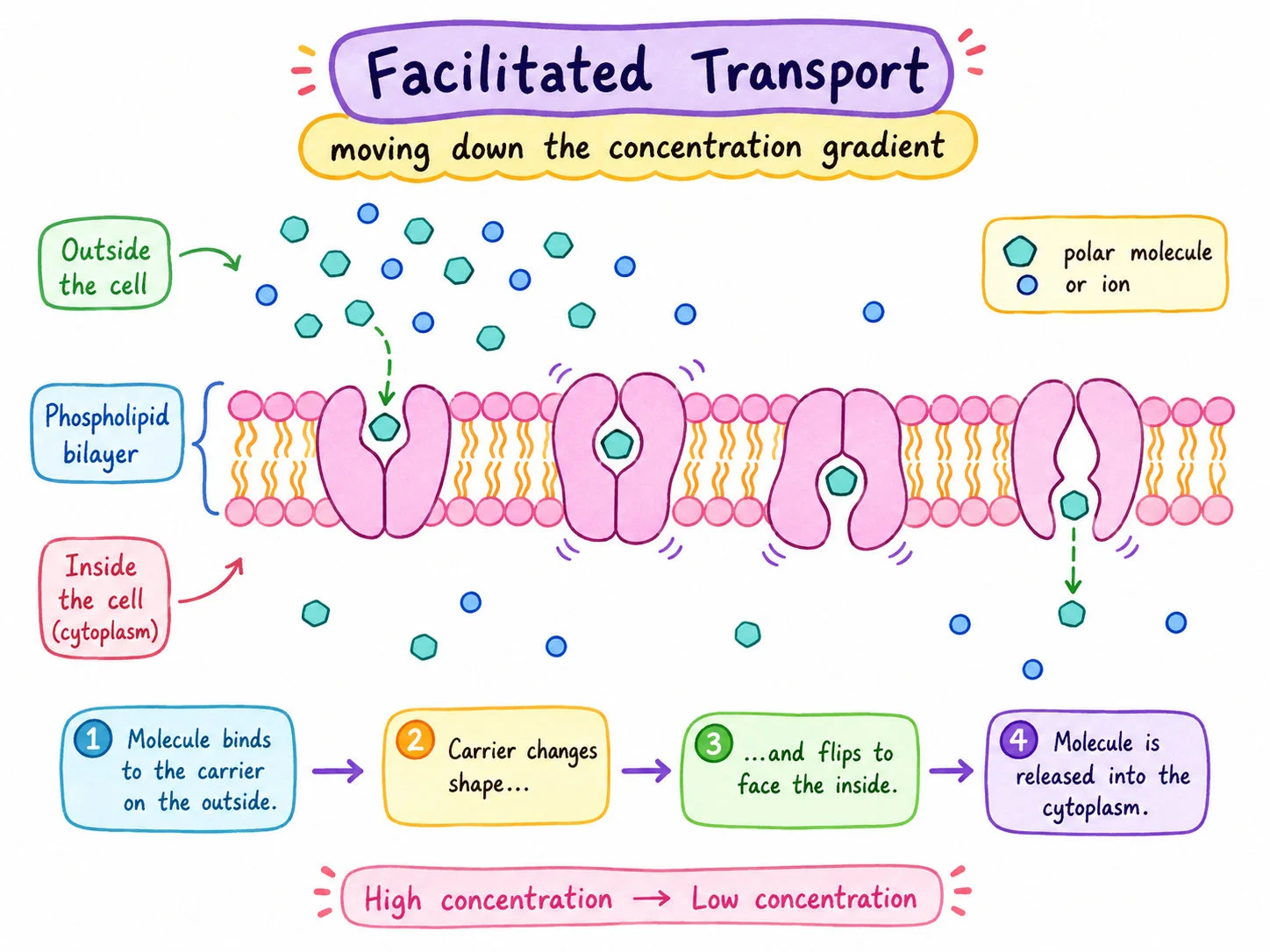
Facilitated Diffusion
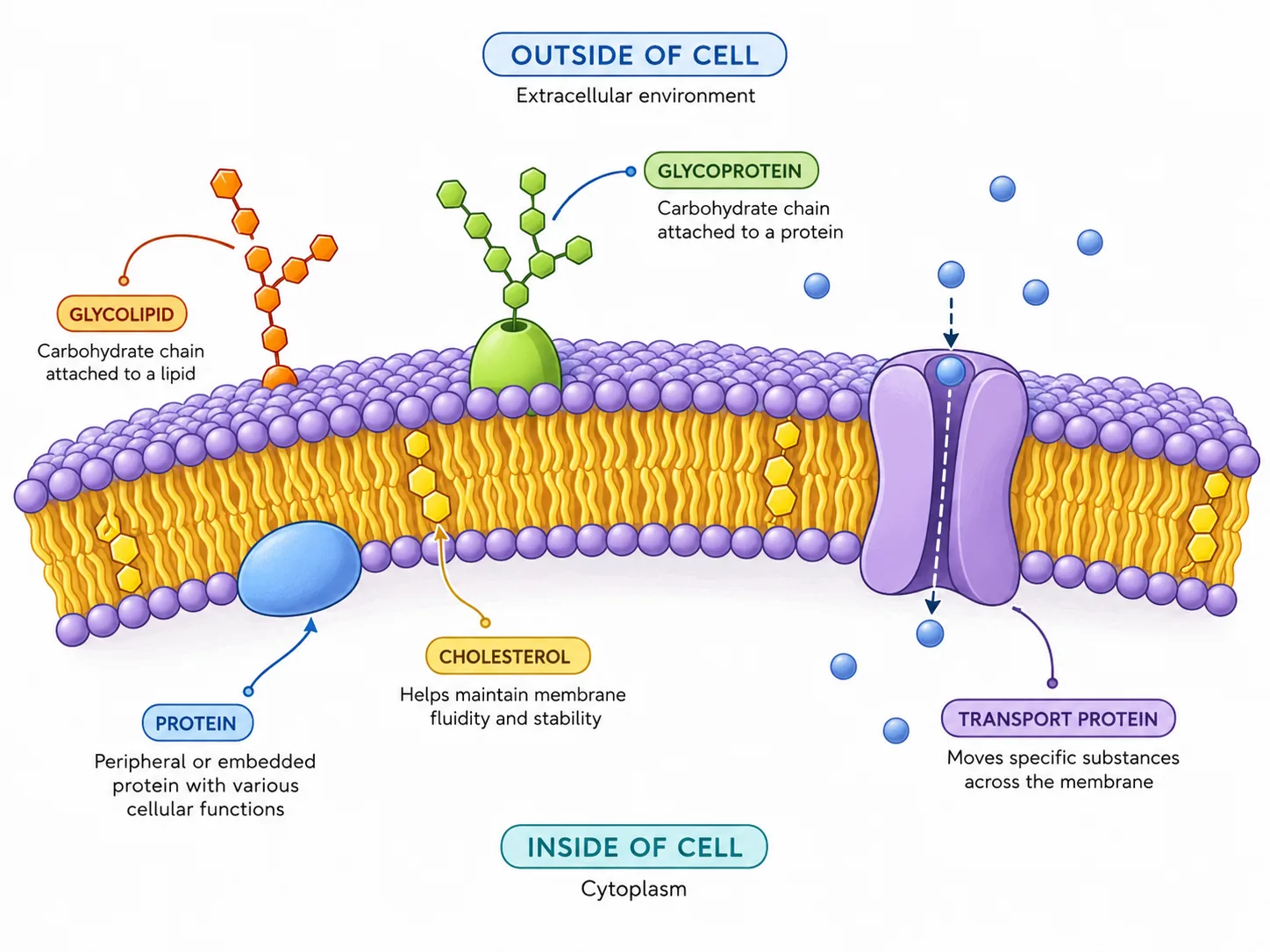
plasma membrane
Cell Surface Membrane
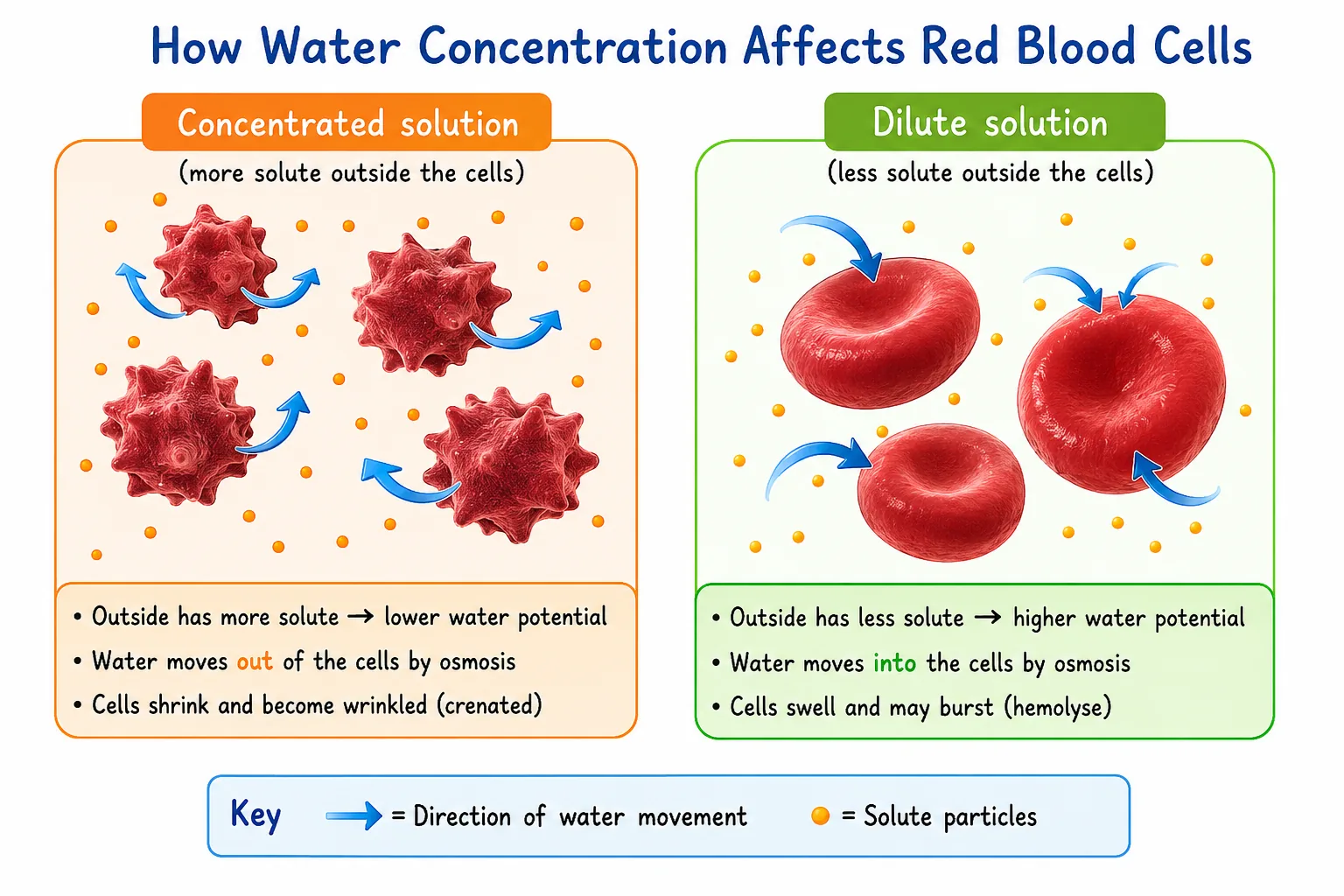
How water concentration affects red blood cells (osmosis)
Osmosis — Partially Permeable Membrane Simulation
Osmosis across a partially permeable membrane
r046-active-transport
pasted 1782294530048 0
Diffusion across a membrane (higher to lower concentration)
Partially Permeable Membrane — Interactive Drawing
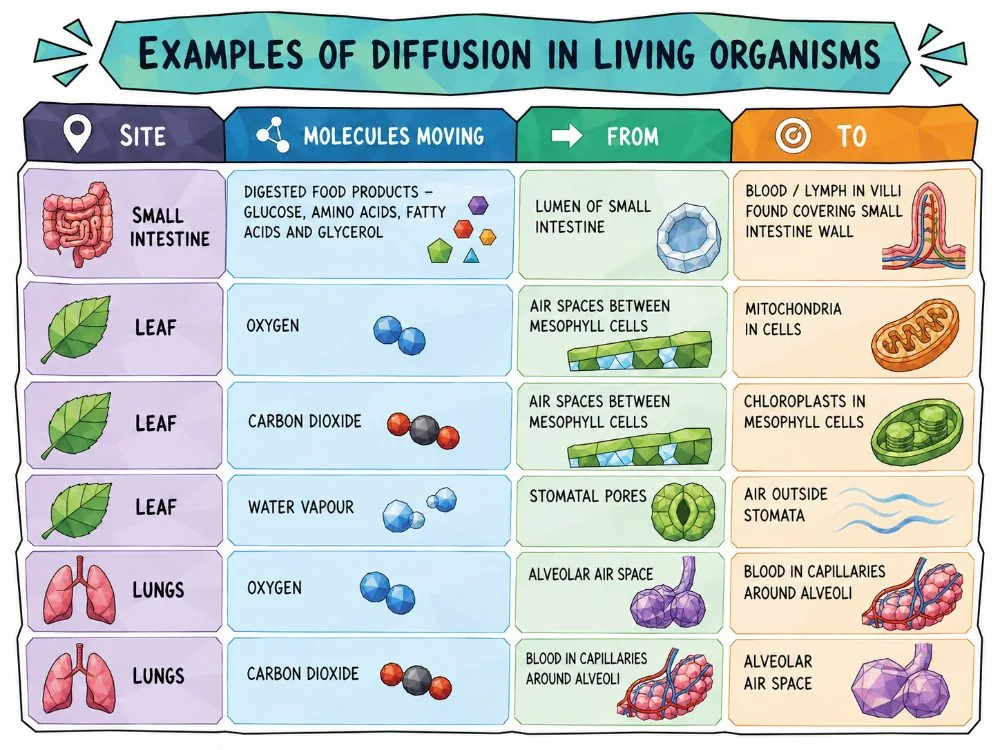
Examples of Diffusion in Living Organisms
Facilitated Diffusion of Glucose — 3D-Drawn Step Simulation
cell membrane
The Cell Membrane — v7.2 Engine X teaching console
Active transport using ATP
Osmosis across a partially permeable membrane
Facilitated diffusion
Simple diffusion
Simple diffusion
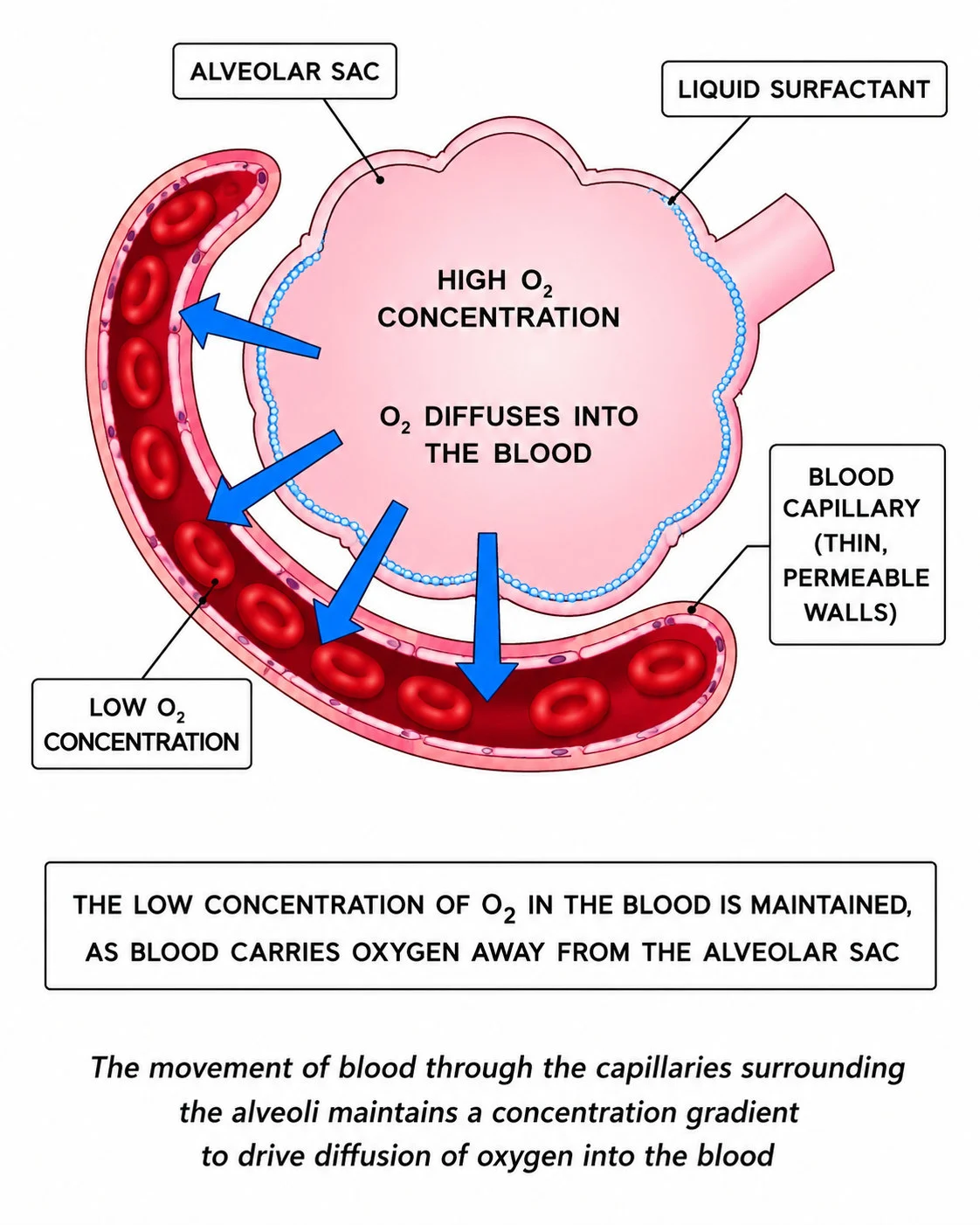
Diffusion at the alveolar surface

Cell membranes are partially permeable, so only some substances can pass through. Small molecules such as oxygen, carbon dioxide, water and urea can diffuse across; large molecules such as proteins and starch cannot. A substance diffuses across a membrane if there is a higher concentration on one side than the other.

Examples in organisms include:

Oxygen
Oxygen diffuses from the air in the alveoli into the blood, and from the blood into respiring cells.
Carbon dioxide
Carbon dioxide diffuses from respiring cells into the blood, and from the blood into the alveoli to be breathed out.
  • In a leaf, carbon dioxide diffuses from the air into the leaf for photosynthesis.
Urea
, a waste made in liver cells, diffuses from the cells into the blood plasma, and is then carried to the kidneys for excretion.
Digested food
Digested food such as glucose diffuses from the small intestine into the blood.

Section 3 of 9Gradient, direction and net movement

It helps to picture a drop of coloured dye in water.

1
At first there are many dye particles in one place; with time they move randomly into the surrounding water until the colour is even.
2
The same logic applies to a membrane.
3
If the concentration of oxygen is higher outside a cell than inside, more particles randomly cross inwards than outwards,
  • so there is a net movement into the cell.
4
When concentrations equalise, the movement in each direction is equal.
5
Therefore in questions you should always state the direction, 'from high concentration to low concentration', and use the phrase 'net movement'.

Diffusion in living things usually has to be maintained so that the gradient is not lost. In the lungs, blood constantly carries away oxygen and brings carbon dioxide, so the gradient stays steep. This is covered in the lesson on diffusion in multicellular organisms.

Section 4 of 9Describing data on diffusion

Diffusion of perfume molecules in air
diffusion in agar cubes explained

A common practical uses a gel or agar block of cubes of different sizes with an indicator.

Describing data on diffusion
Another uses coloured dye or a perfume in air.
When interpreting a graph of distance travelled or amount diffused against time, a steep gradient at the start shows fast diffusion that slows as the concentrations approach each other.
A curve that levels off shows that equilibrium has been reached.
SubstanceMoves fromMoves to
Oxygen (lungs)Alveolus (high O2)Blood (lower O2)
Carbon dioxide (tissues)Respiring cells (high CO2)Blood
UreaLiver cellsBlood plasma
Glucose (gut)Small intestine contentsBlood

Section 5 of 9Limits of diffusion

Active Transport
r097-active-transport

Diffusion is only effective over short distances.

Limits of diffusion
This is why a single-celled organism, such as an amoeba, can take in all the oxygen it needs through its surface,
  • but a large animal cannot rely on diffusion alone and has specialised exchange surfaces and transport systems.
The relationship between size, surface area and volume is explored in the lesson on multicellular organisms.

Diffusion is also the first of three transport processes you meet; the others are osmosis, which is the diffusion of water, and active transport, which moves substances against a gradient using energy.

Section 6 of 9Diffusion in everyday and laboratory settings

Diffusion explains many familiar events.

Diffusion in everyday and laboratory settings
The smell of cooking spreads across a house because aroma molecules diffuse through the air,
  • and tea turns uniformly brown because pigment particles diffuse through water.
In biology laboratories, diffusion is often shown with potassium permanganate crystals in water, with a drop of ink,
  • or with a gel containing indicator that changes colour as acid or alkali spreads through it.
In each demonstration the key observation is the same: particles spread from where they are most crowded to where they are less crowded.

In living tissue, diffusion is rapid across a few micrometres, and a cell's own metabolism helps keep gradients going.

Diffusion in everyday and laboratory settings
For instance, respiring cells constantly use oxygen,
  • so the concentration inside the cell is always lower than in the surrounding blood, and the gradient for oxygen is maintained.
The reverse is true for carbon dioxide, which cells constantly make.
Whenever you explain diffusion in a living context, say why the gradient exists in the first place, as this earns the higher-order marks.

Section 7 of 9Exam-style questions

  1. Define diffusion. [2]2 marks

  2. Name the substance that diffuses (a) from the alveoli into the blood, (b) from liver cells into the blood plasma. [2]2 marks

  3. Explain why diffusion does not need energy from respiration. [2]2 marks

Section 8 of 9Key terms

TermMeaning
DiffusionNet movement of particles from high to low concentration.
Concentration gradientDifference in concentration between two regions.
Passive processA process that does not need energy from respiration.
Partially permeable membraneA membrane that lets some substances through.
SoluteA substance dissolved in a solvent.
Net movementOverall movement after movement in both directions is considered.

Section 9 of 9Exam technique

1
Saying particles 'want' to move to equalise. Say that random movement results in net movement down a gradient.
2
Stating that diffusion stops when concentrations equalise. Movement continues but there is no net movement.
3
Forgetting to mention the direction (high to low).
4
Saying large molecules like proteins diffuse through the membrane.
\n