Section 1 of 9The problem of size
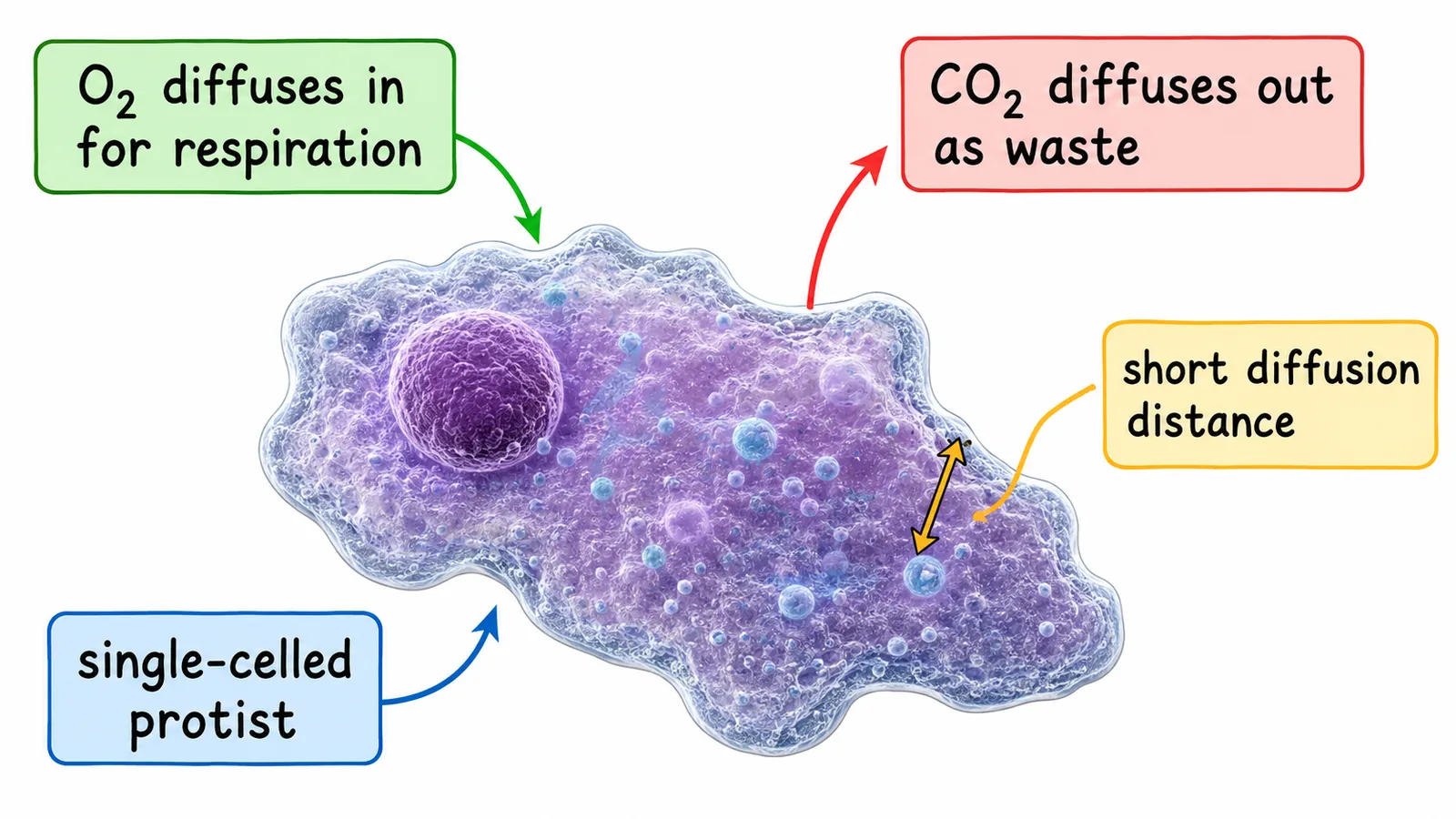
A single-celled organism has a large surface area compared with its volume, so substances reach all parts quickly by diffusion.
Section 2 of 9Features of an efficient exchange surface


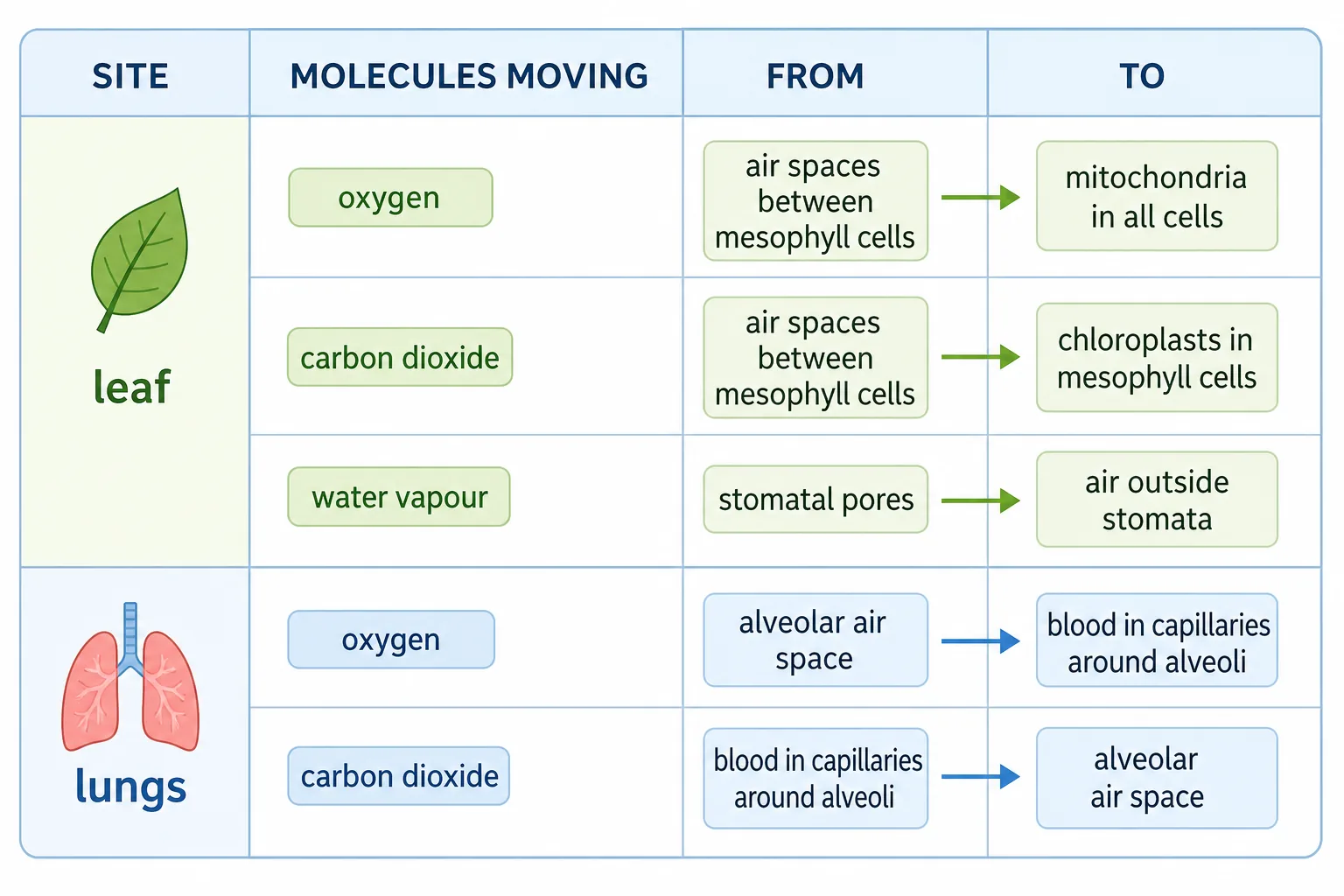

Good exchange surfaces share several features:
Section 3 of 9Examples in animals


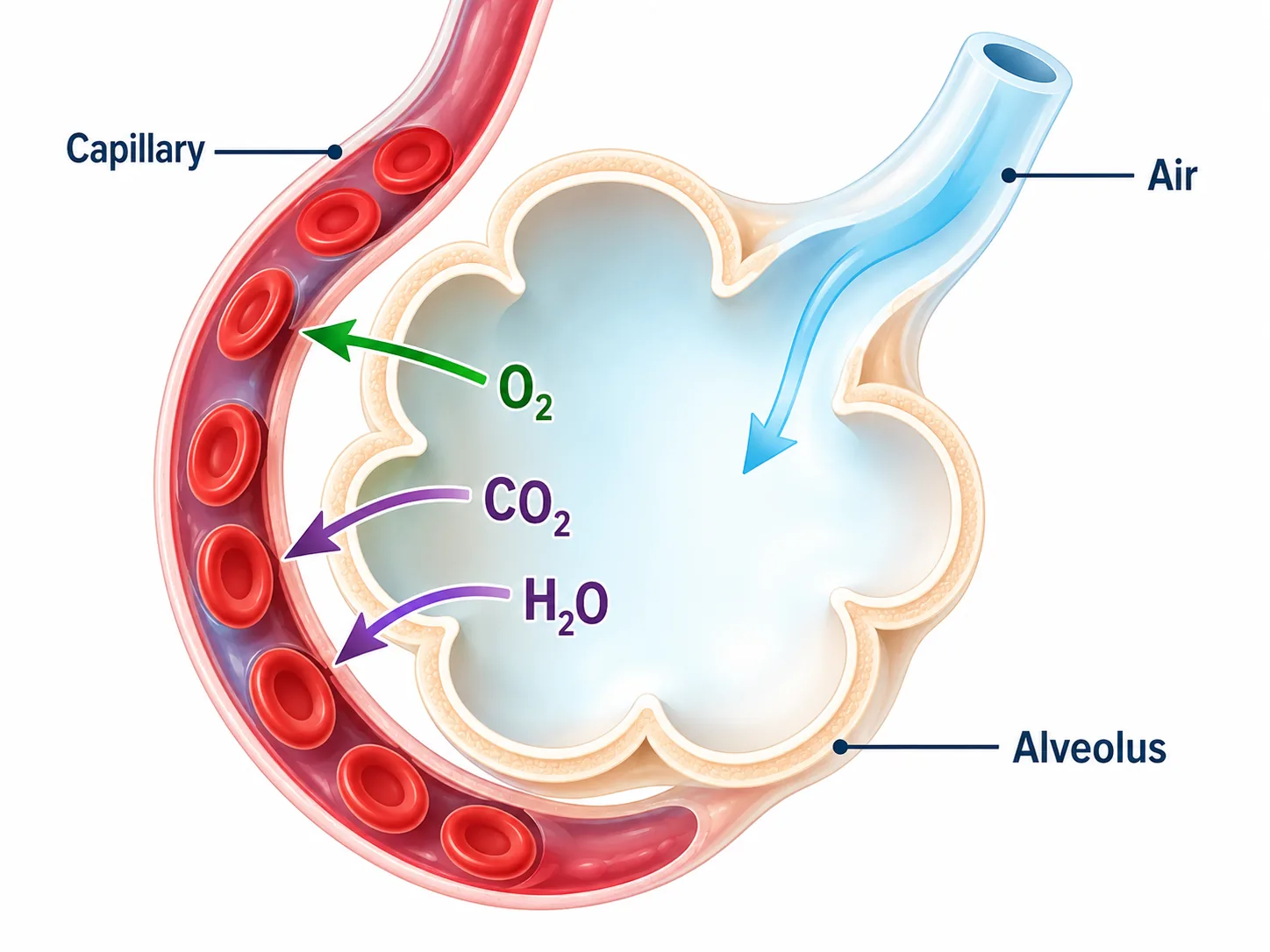
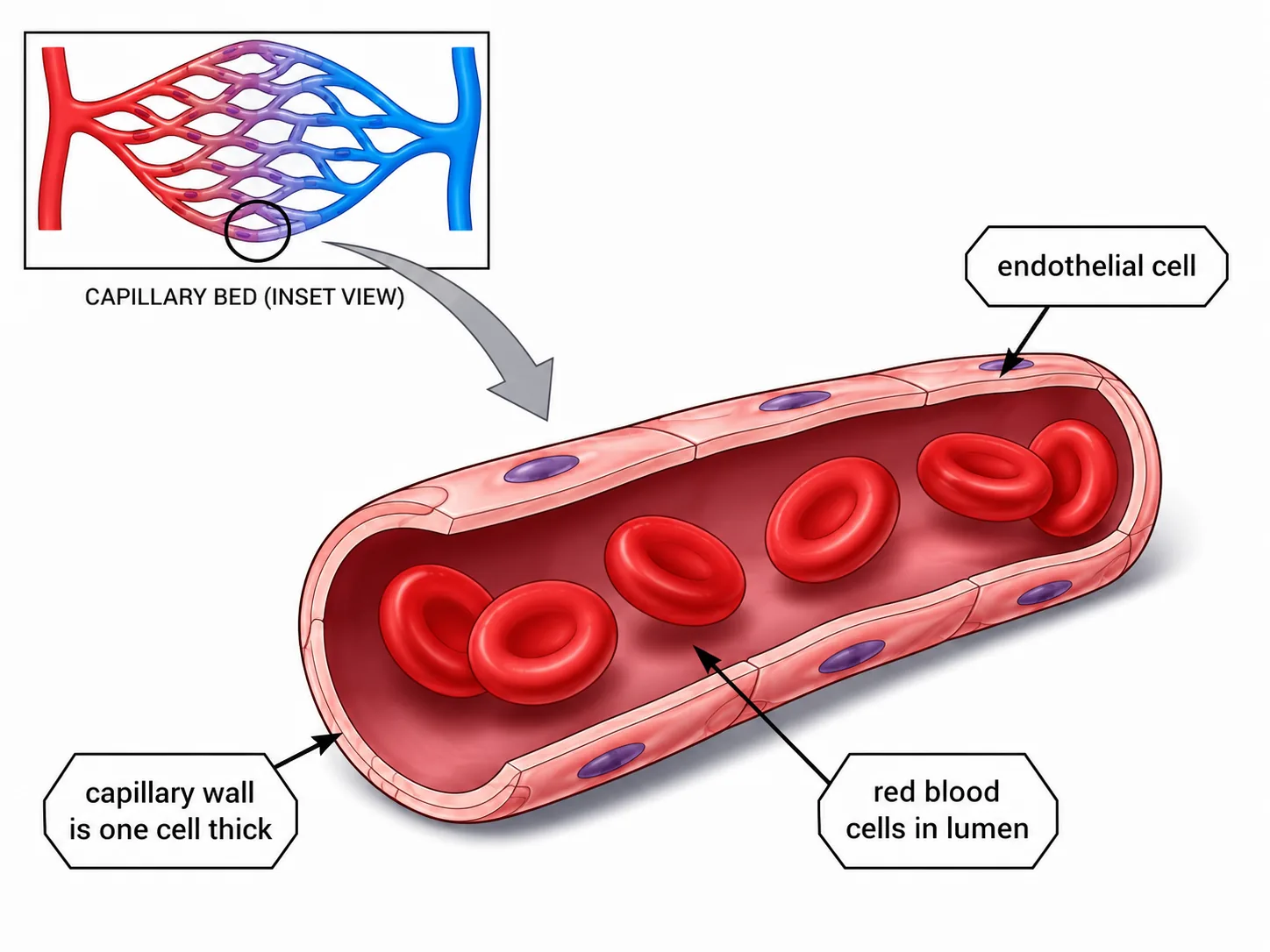
- Their walls are one cell thick and covered in capillaries.
- They give a huge surface area, a short diffusion distance, a rich blood supply,
- and ventilation brings in fresh air,
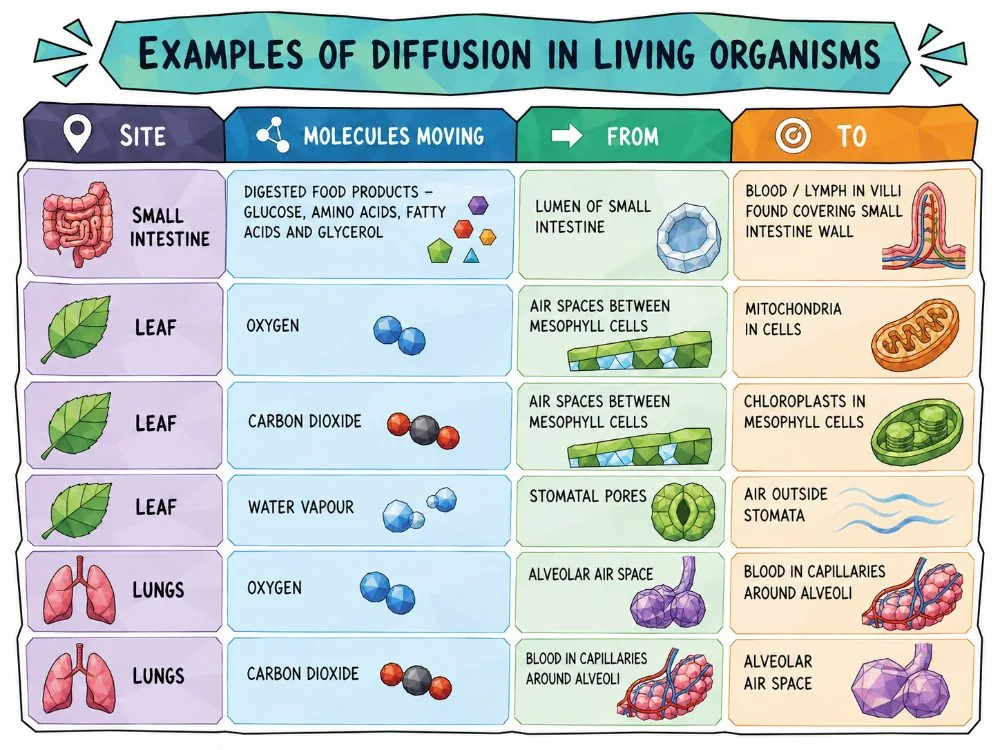
- so oxygen diffuses into the blood and carbon dioxide diffuses out.
- Each villus has a thin wall and a network of capillaries; digested food molecules like glucose and amino acids pass into the blood,
- and the large surface area and blood flow keep the gradient steep.
- The surface of the villi cells has microvilli, tiny projections that increase the area further.
Section 4 of 9Examples in plants



- On the underside, small pores called stomata let carbon dioxide in and oxygen and water vapour out.
- The air spaces inside the leaf give a large surface area of cell surface exposed to gases.
- Guard cells open and close the stomata.
| Exchange surface | Substance | Adaptations |
|---|---|---|
| Alveoli | O2, CO2 | Many sacs, thin walls, capillaries, ventilation |
| Villi | Glucose, amino acids | Folds, thin wall, capillaries |
| Gills | O2 | Filaments, thin, counter-current flow |
| Root hairs | Water, ions | Long extension, thin wall |
| Leaf | CO2 | Flat, thin, stomata, air spaces |
Section 5 of 9Writing good answers
In an examination, take any surface and explain each adaptation by linking it to the factor it affects: 'The walls of the alveoli are one cell thick, so the diffusion distance is short, so diffusion is faster.' Many students list adaptations but do not say what they do. Also be careful to say 'blood supply maintains a steep concentration gradient' rather than that the blood 'speeds up' the diffusion directly.
You should also be able to use the idea of surface area to volume ratio to explain why a flatworm can rely on diffusion across its flat body whereas a human cannot, and why elephants lose less heat per kilogram than mice.
Section 6 of 9Surface area to volume ratio in whole organisms


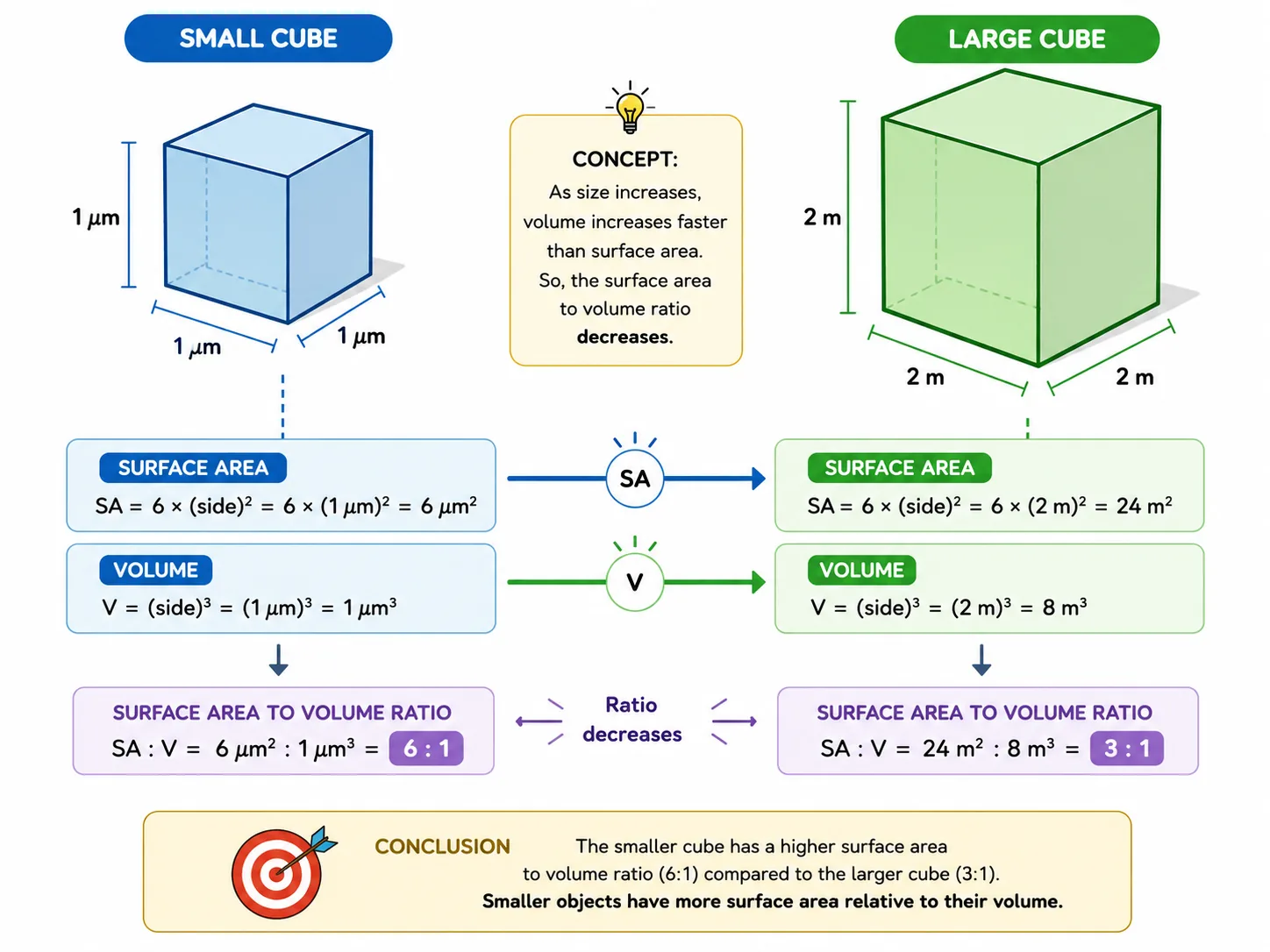
Body shape and size also reflect the need for exchange.
Estimating the area of the lungs is a good example.
Section 7 of 9Exam-style questions

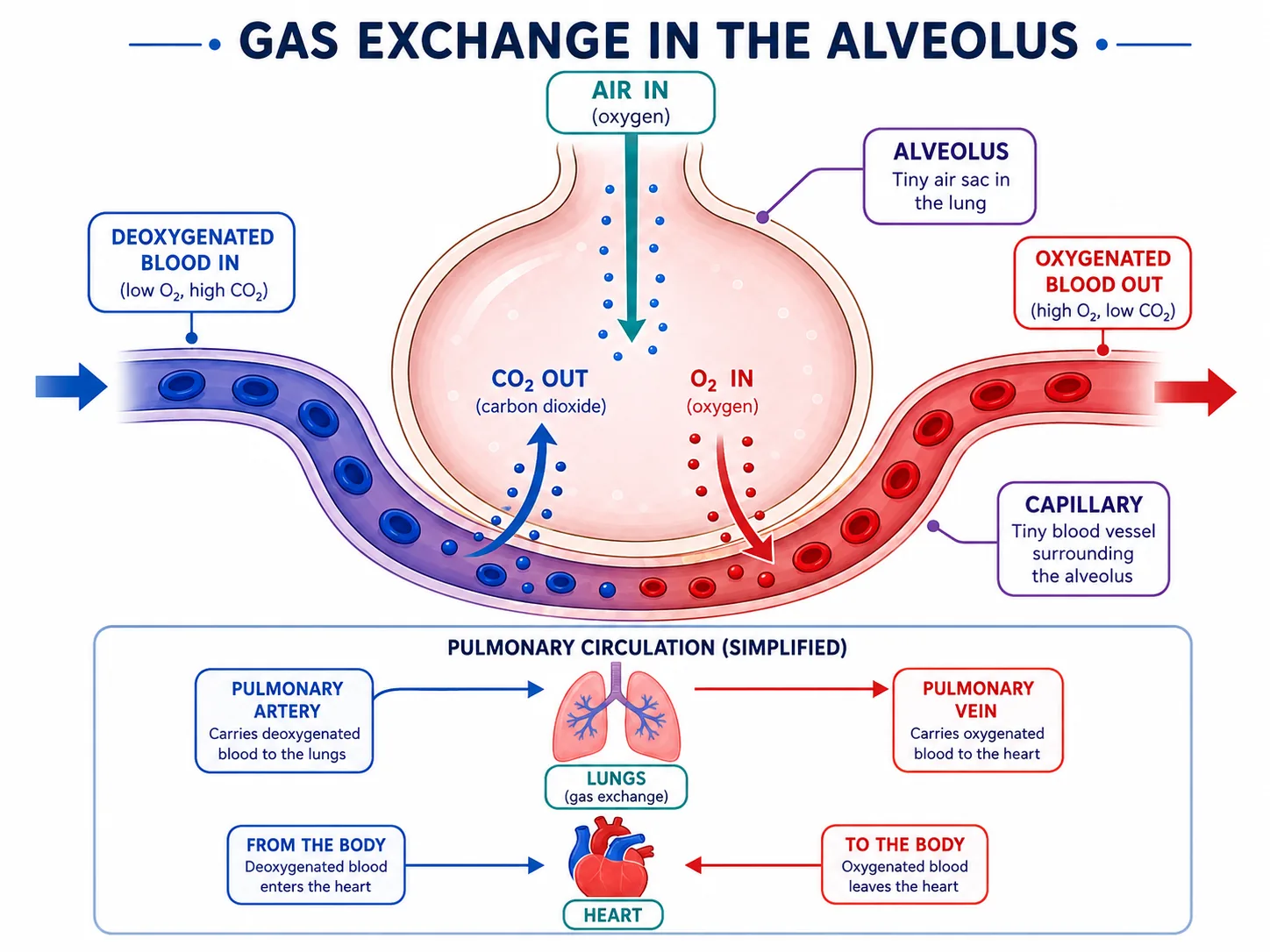

Describe three ways in which the alveoli are adapted for gas exchange. [3]3 marks
Any three: millions of alveoli give a large surface area [1]; walls one cell thick give a short diffusion distance [1]; surrounded by many capillaries giving a good blood supply to maintain the gradient [1]; ventilation brings in fresh air [1].
Explain why a large animal needs a transport system but a single-celled organism does not. [3]3 marks
A single-celled organism has a large surface area to volume ratio, so diffusion is enough [1]. A large animal has a low ratio and a long diffusion distance to inner cells [1], so it needs a circulatory system to carry substances to cells [1].
Explain how the structure of a villus helps absorption. [3]3 marks
Many folds and microvilli give a large surface area [1]; thin wall gives short diffusion distance [1]; capillary network removes absorbed food, maintaining a steep gradient [1].
Section 8 of 9Key terms
| Term | Meaning |
|---|---|
| Exchange surface | A part of an organism where substances move in or out. |
| Alveolus | Air sac in the lungs where gas exchange occurs. |
| Villus | Finger-like projection of the small intestine wall that absorbs food. |
| Stomata | Pores in leaves for gas exchange. |
| Ventilation | Movement of air in and out of the lungs. |
| Capillary | A very thin blood vessel where exchange occurs. |
| Counter-current | Flow of two fluids in opposite directions to maintain a gradient. |
Section 9 of 9Exam technique
Marked practiceQuizzes for this lesson
Magnification Triangle & Unit Conversion
Formula: M = I / A ⇔ A = I / M ⇔ I = M × A
Units: 1 mm = 1,000 μm = 1,000,000 nm.
Rule: Convert Image size (ruler mm) to μm by ×1,000 before dividing by Actual size.