Skip to content
Dabour HubLEARN · PRACTICE · EXPLORESign inStudent

2.1.3Organisation

Enzymes and Metabolism

5 min read 9 parts Lesson 4 of 19 2 quizzes

0%read

Section 1 of 9Enzymes as biological catalysts
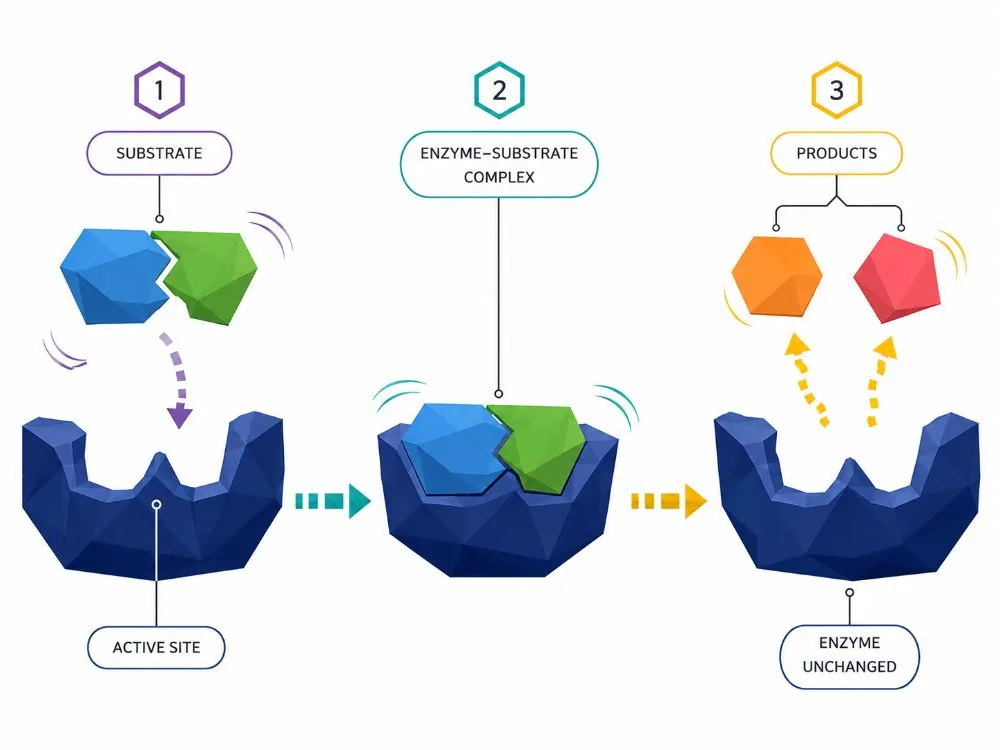
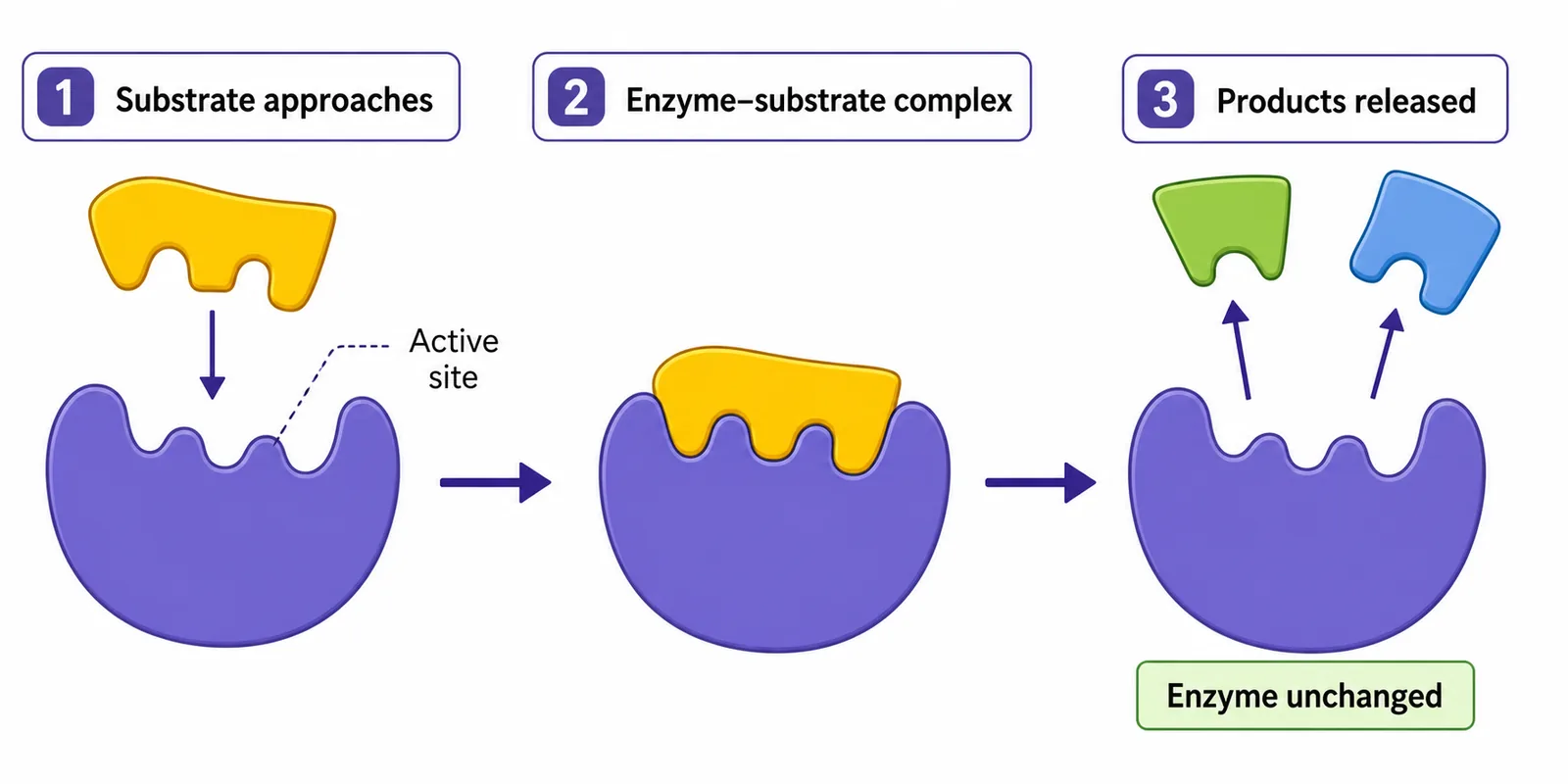
Enzyme action: substrate, complex, products
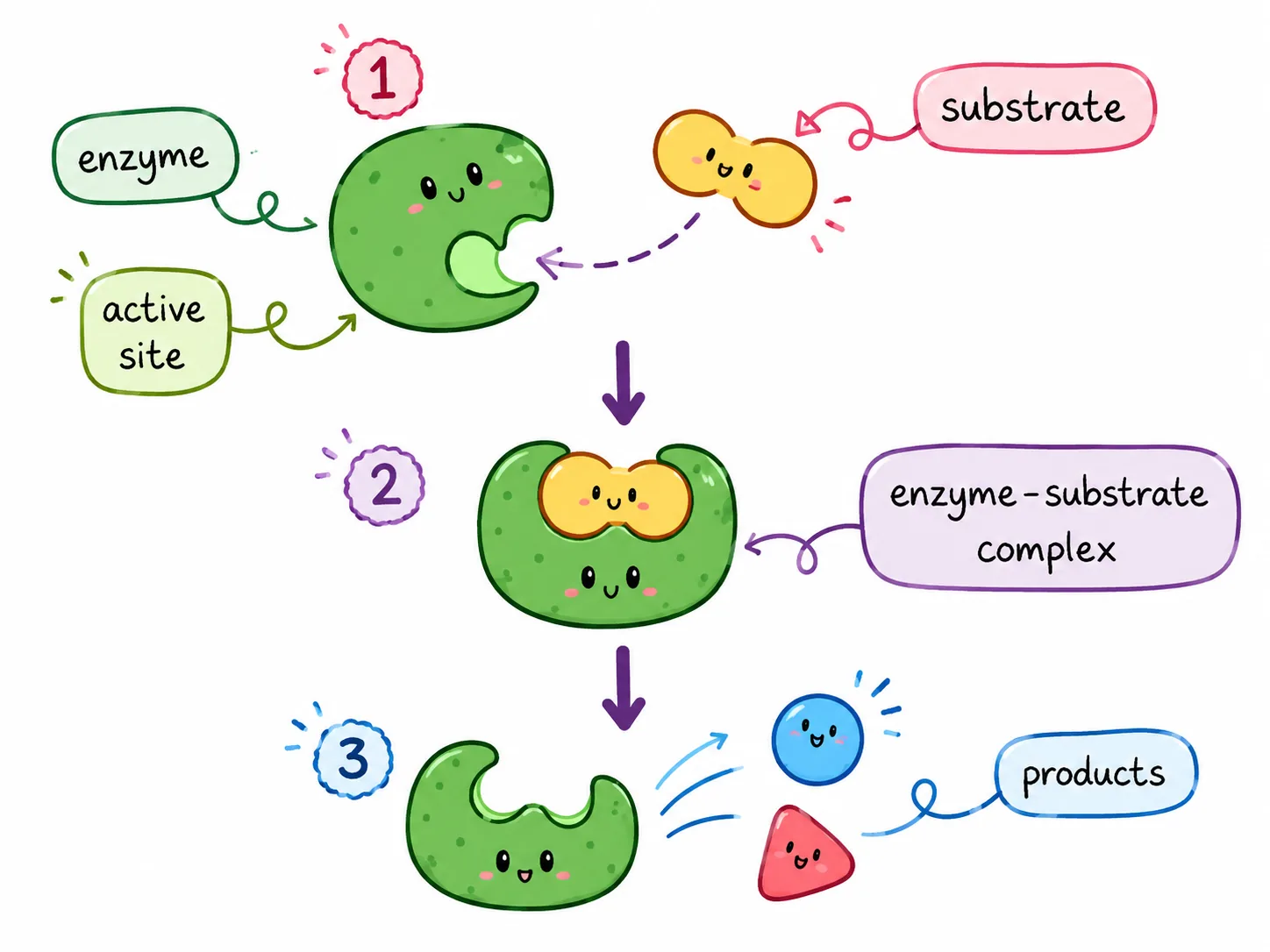
enzyme reaction cycle infographic
pH & enzyme shape — Interactive
Enzyme Action — Interactive
Enzyme Action
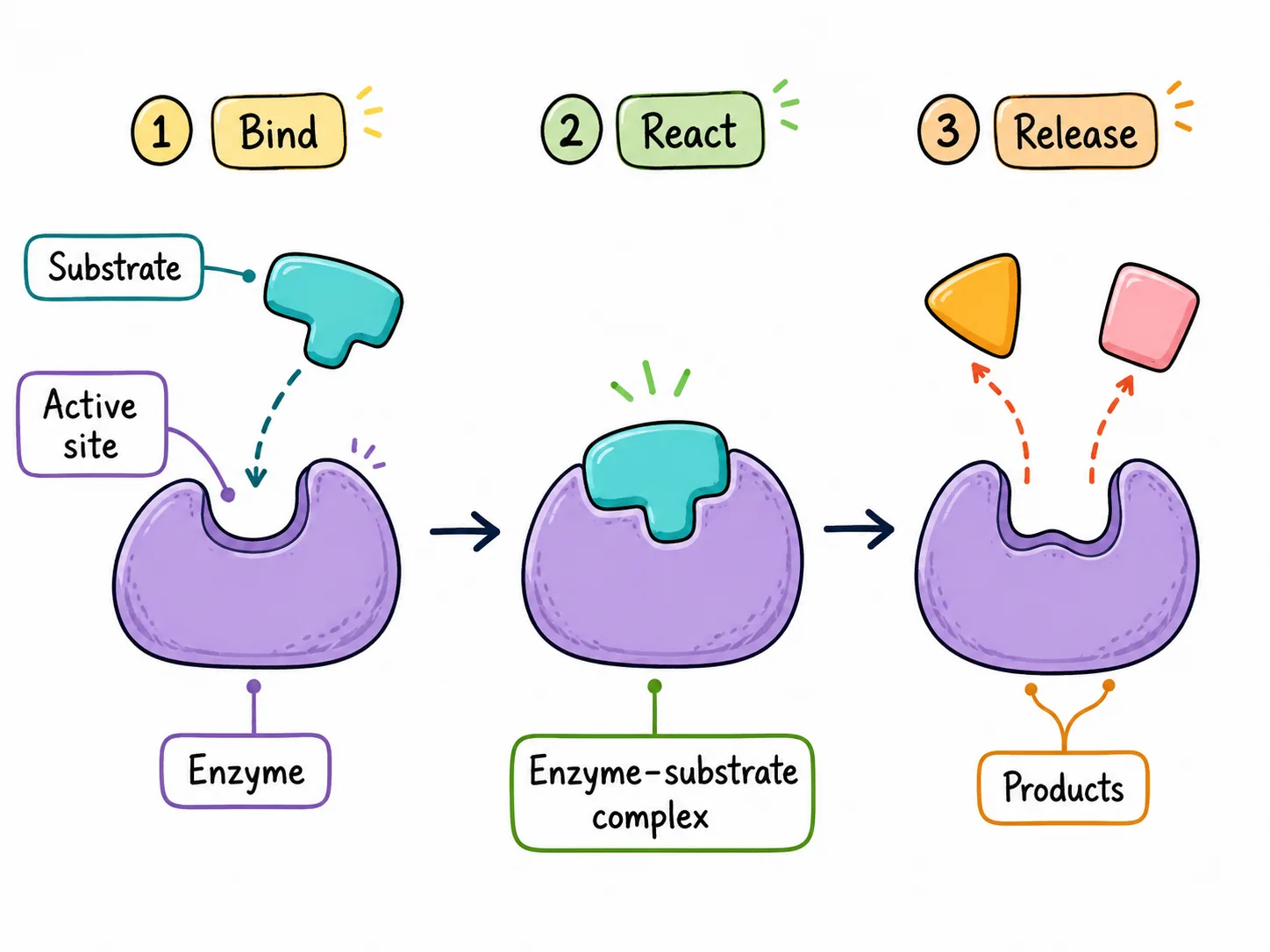
enzyme action cycle diagram
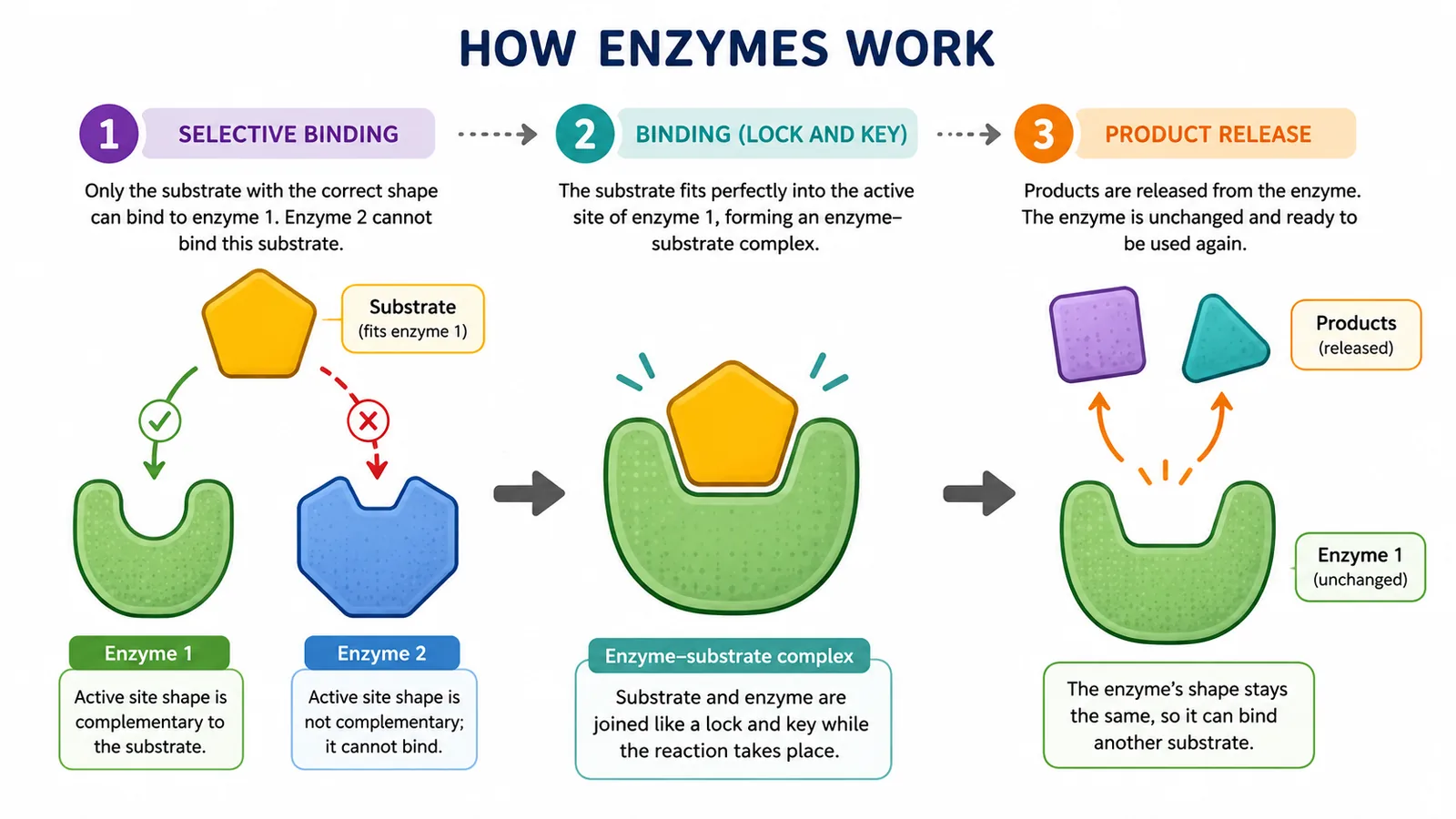
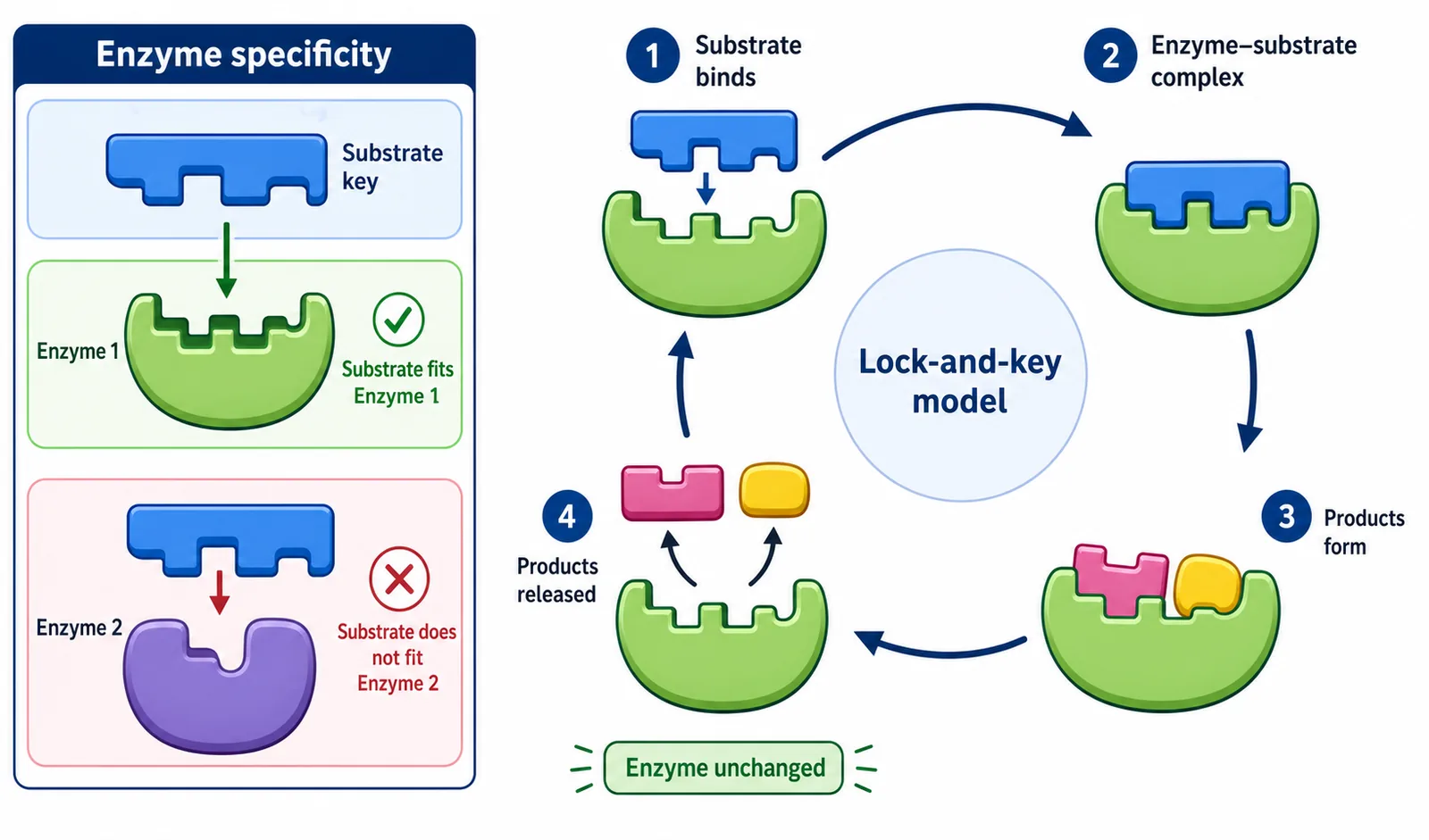
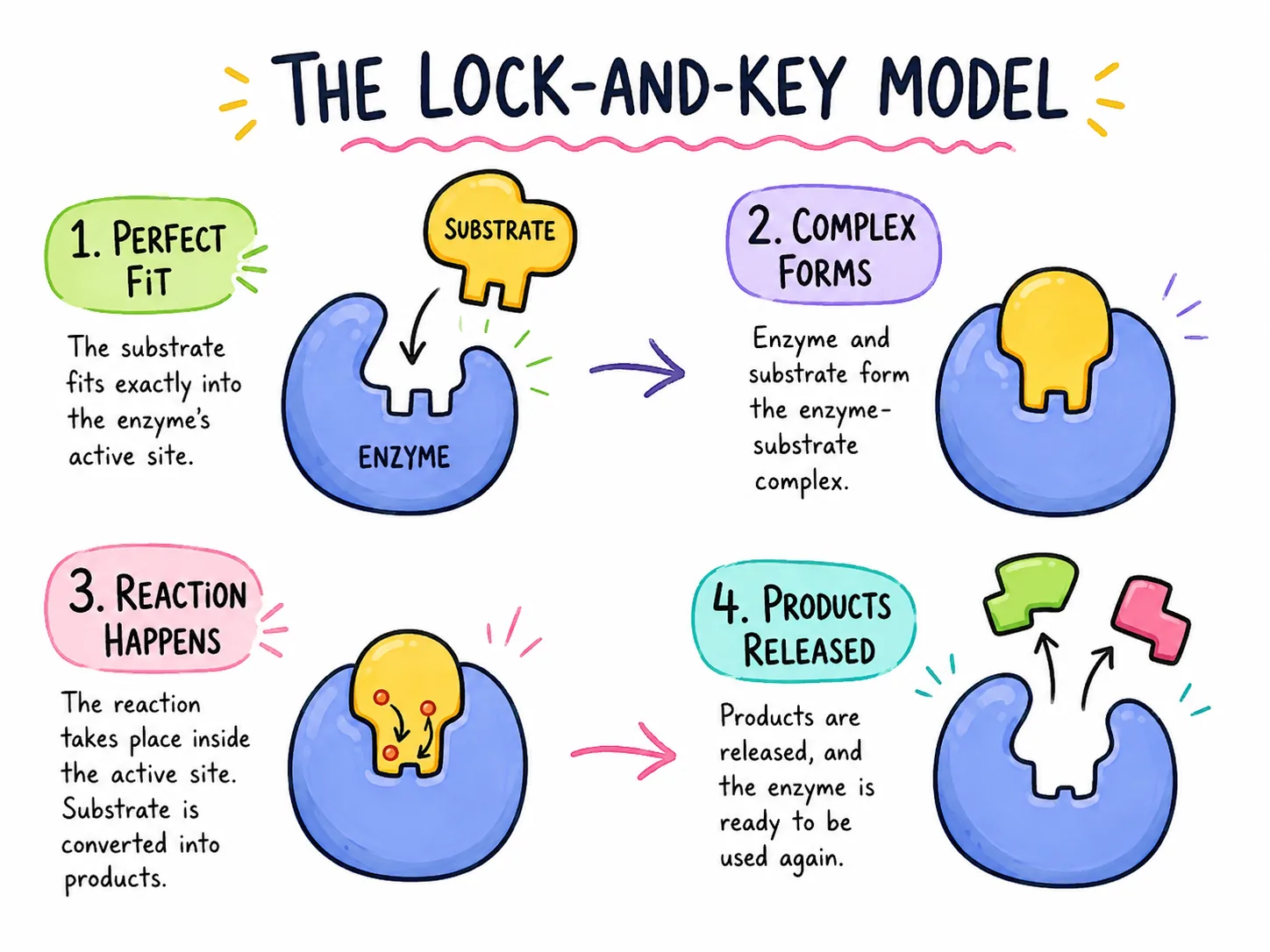
How enzymes work (lock and key stages)
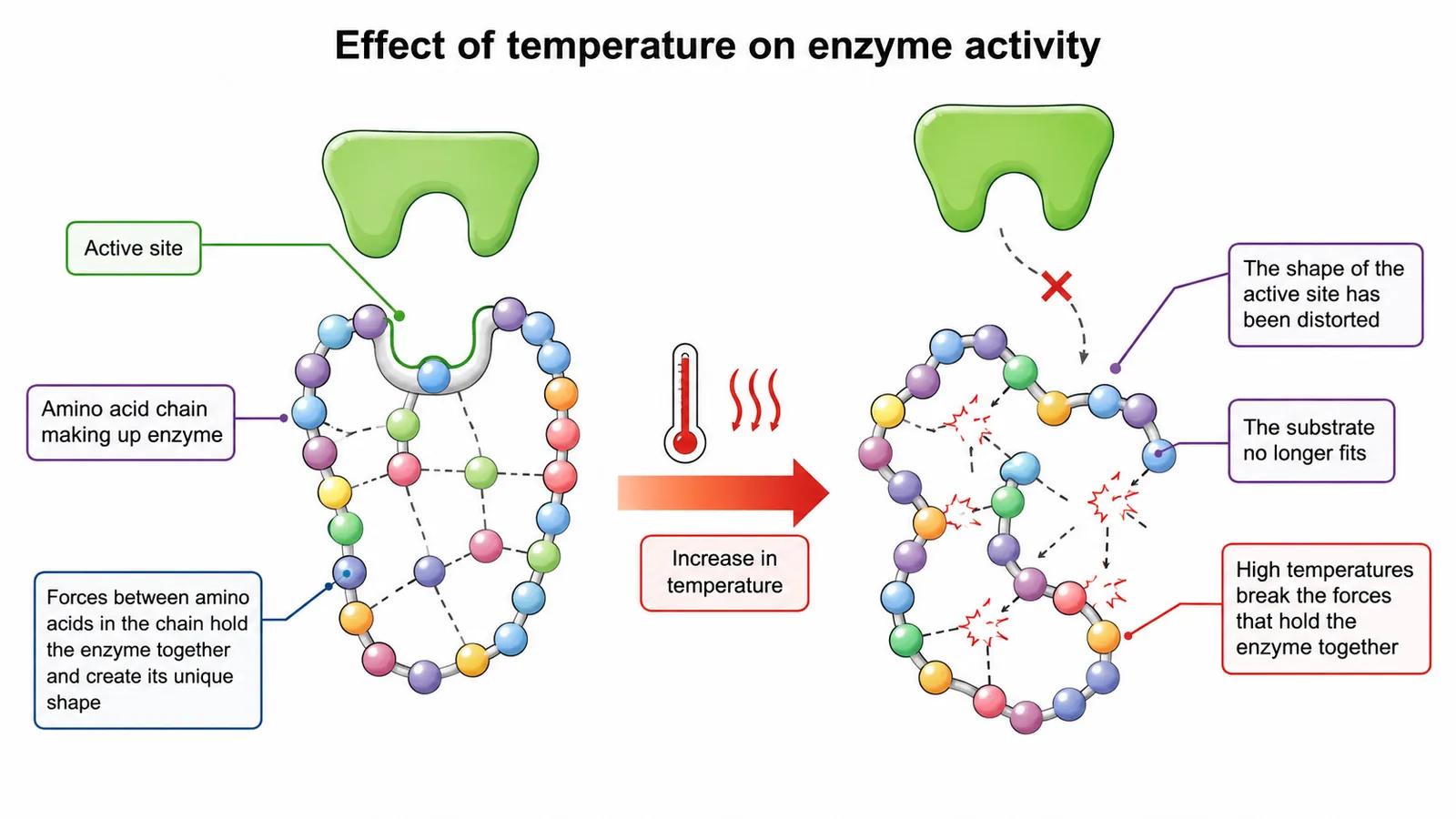
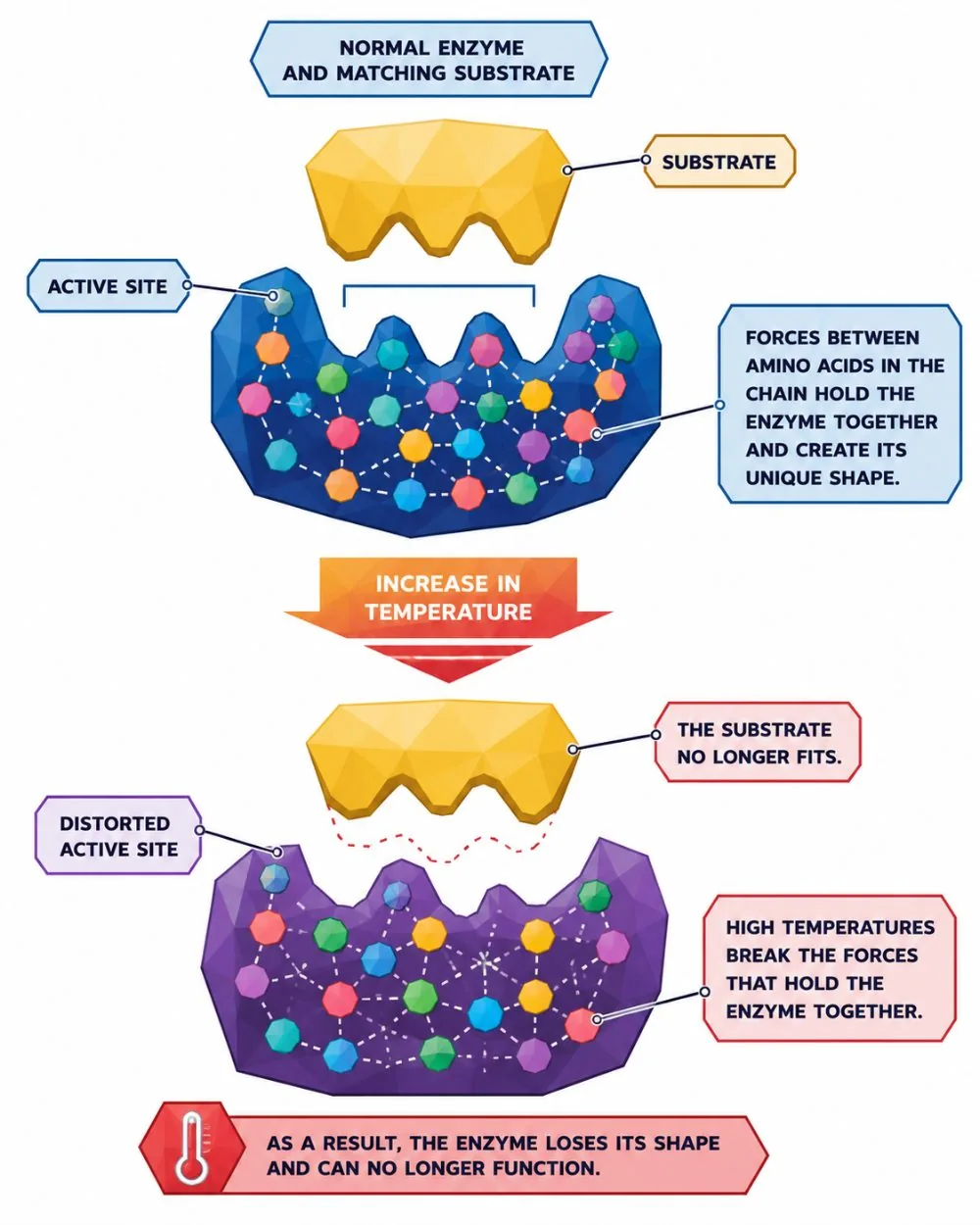
Effect of high temperature on enzyme shape and active site
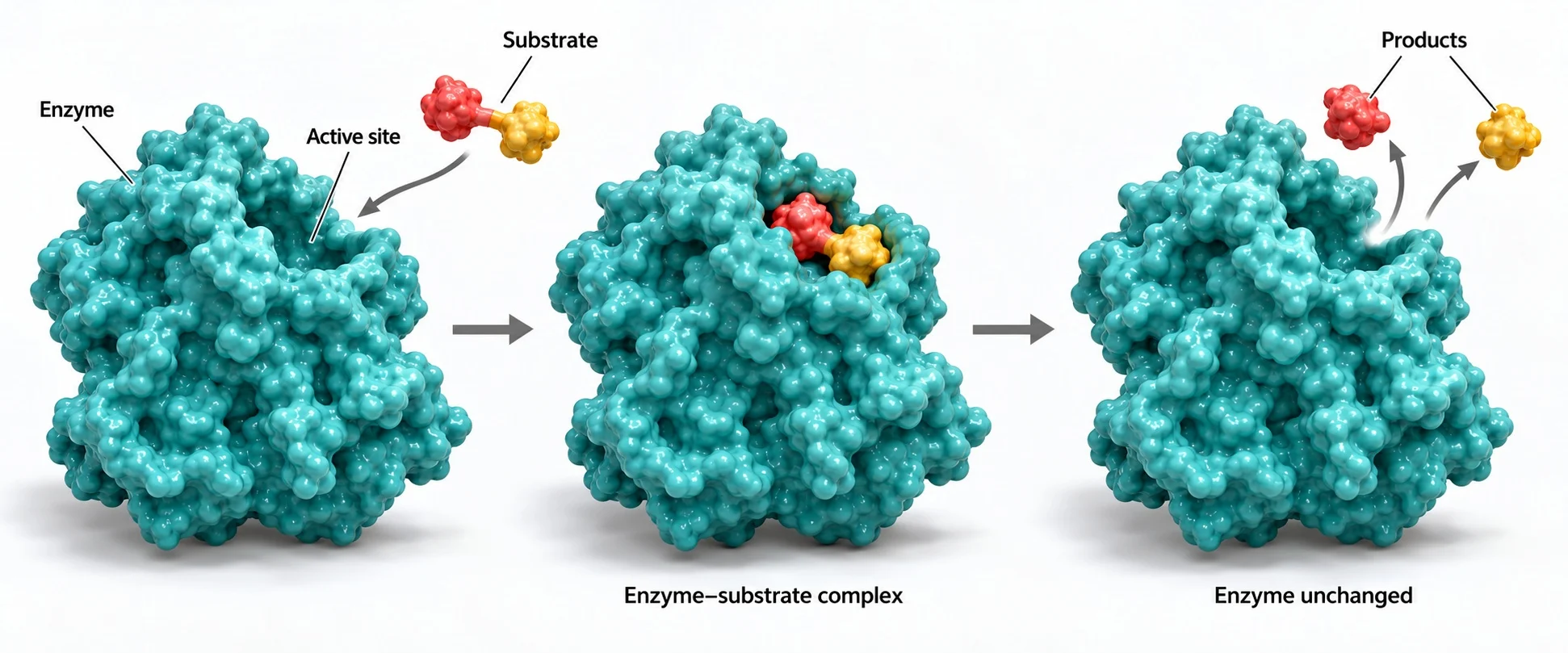
Realistic conceptual model of enzyme action: substrate binding, enzyme–substrate complex and product release

Metabolic reactions are chemical reactions in living cells, and they must happen fast at body temperature. Enzymes are biological catalysts.

They are proteins, and they speed up reactions without being used up.
Enzymes are made of long chains of amino acids folded into a specific three-dimensional shape.
Active site
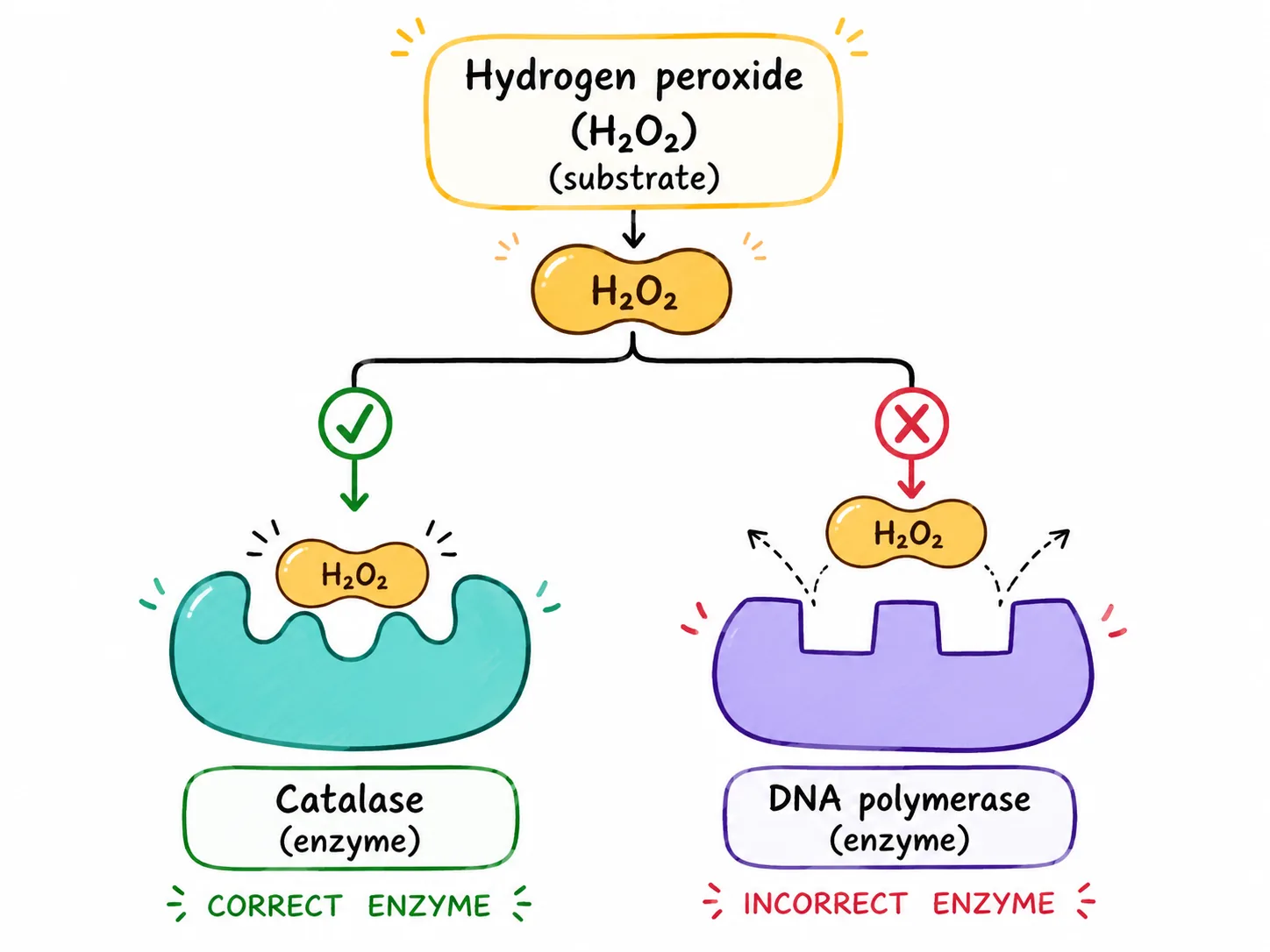
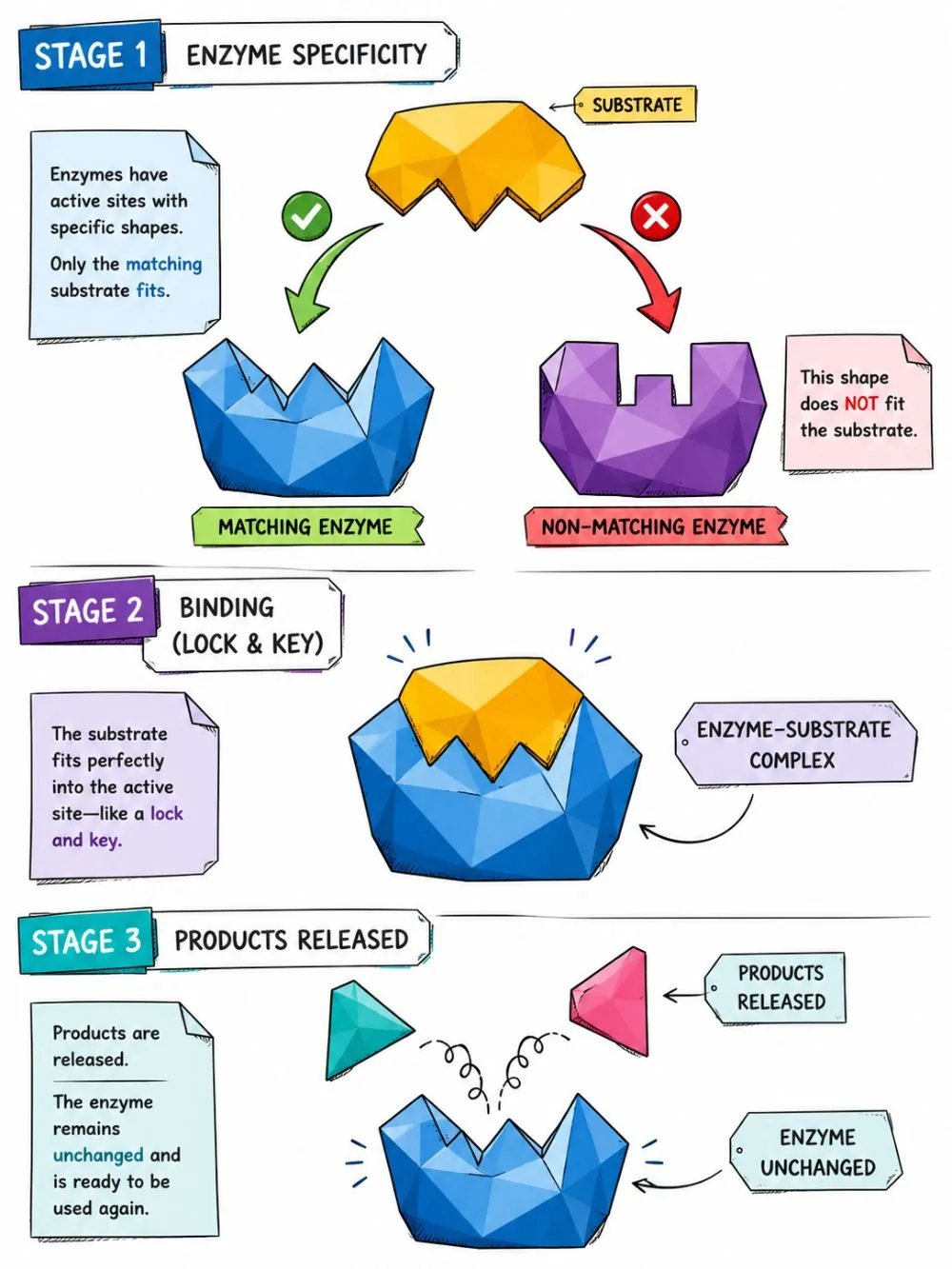
Each enzyme has an active site, a small region whose shape is complementary to its substrate.
Metabolism is the sum of all the reactions in a cell or the body.

Section 2 of 9The lock and key model
Lock and key — Interactive
Enzyme specificity and the lock-and-key model
r058-enzyme-action-lock-and-key
Enzyme Reaction Mechanism

The substrate fits into the active site like a key into a lock, forming an enzyme-substrate complex.

The reaction takes place and the products are released.
The enzyme is unchanged and can be used again.
Specific
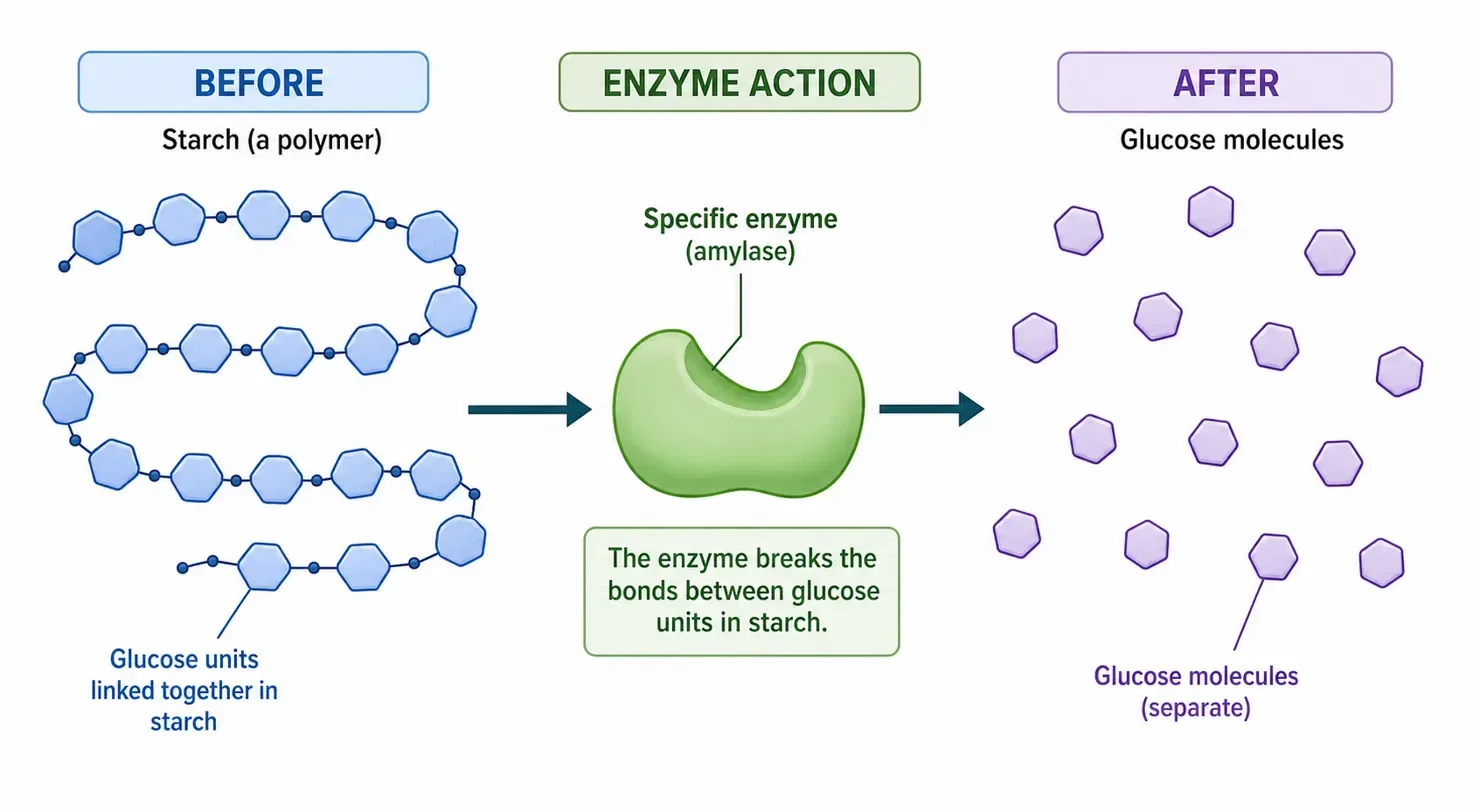
Because the active site has a very specific shape, each enzyme works only with a particular substrate, so it is specific.
For example, amylase breaks down starch but not protein.

Section 3 of 9Temperature

r049-enzyme-temperature
pasted 1782446219913 0
Effect of temperature on enzyme active site (denaturation)
Enzyme denaturation — Interactive
r051-enzyme-denaturation

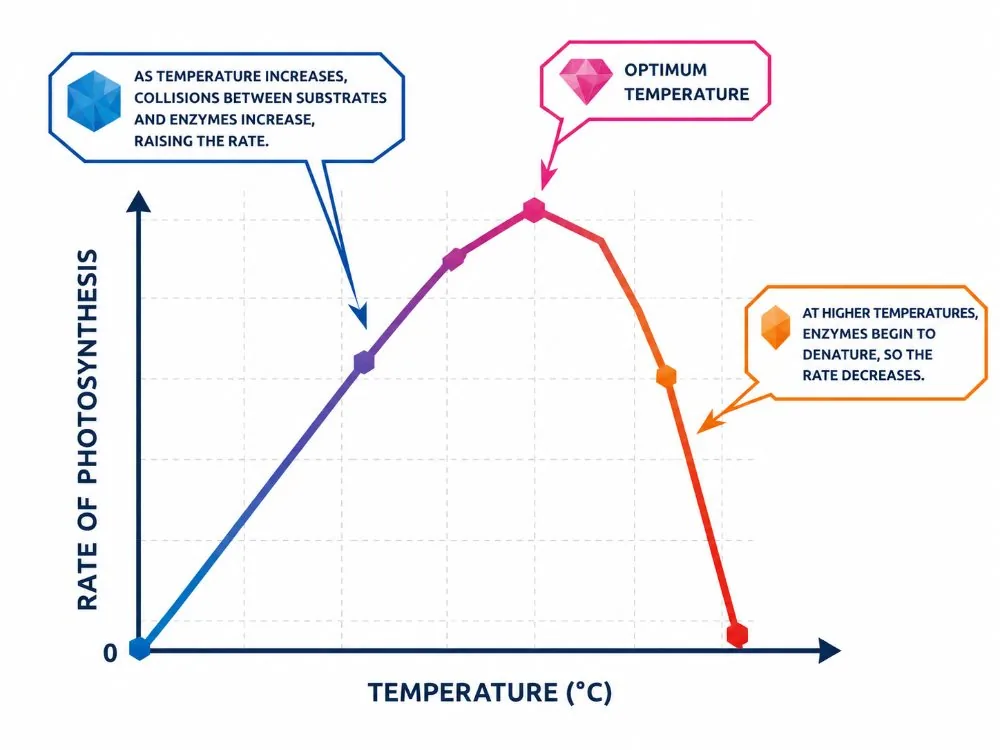
As the temperature rises, particles move faster, so collisions between enzyme and substrate become more frequent and more energetic, increasing the rate.

Optimum temperature
But each enzyme has an optimum temperature, about 37 degrees C for human enzymes.
Above this, the bonds that hold the enzyme in shape start to break and the active site changes shape.
Denatured
The substrate no longer fits, and the enzyme is denatured.
Denaturation is permanent, so the rate drops steeply after the optimum.
At low temperatures, enzymes are not denatured but are slow because particles have less energy.

Section 4 of 9pH and concentration
r052-substrate-concentration-rate
r054-enzyme-concentration
r052-substrate-concentration-rate
Effect of pH on active site shape
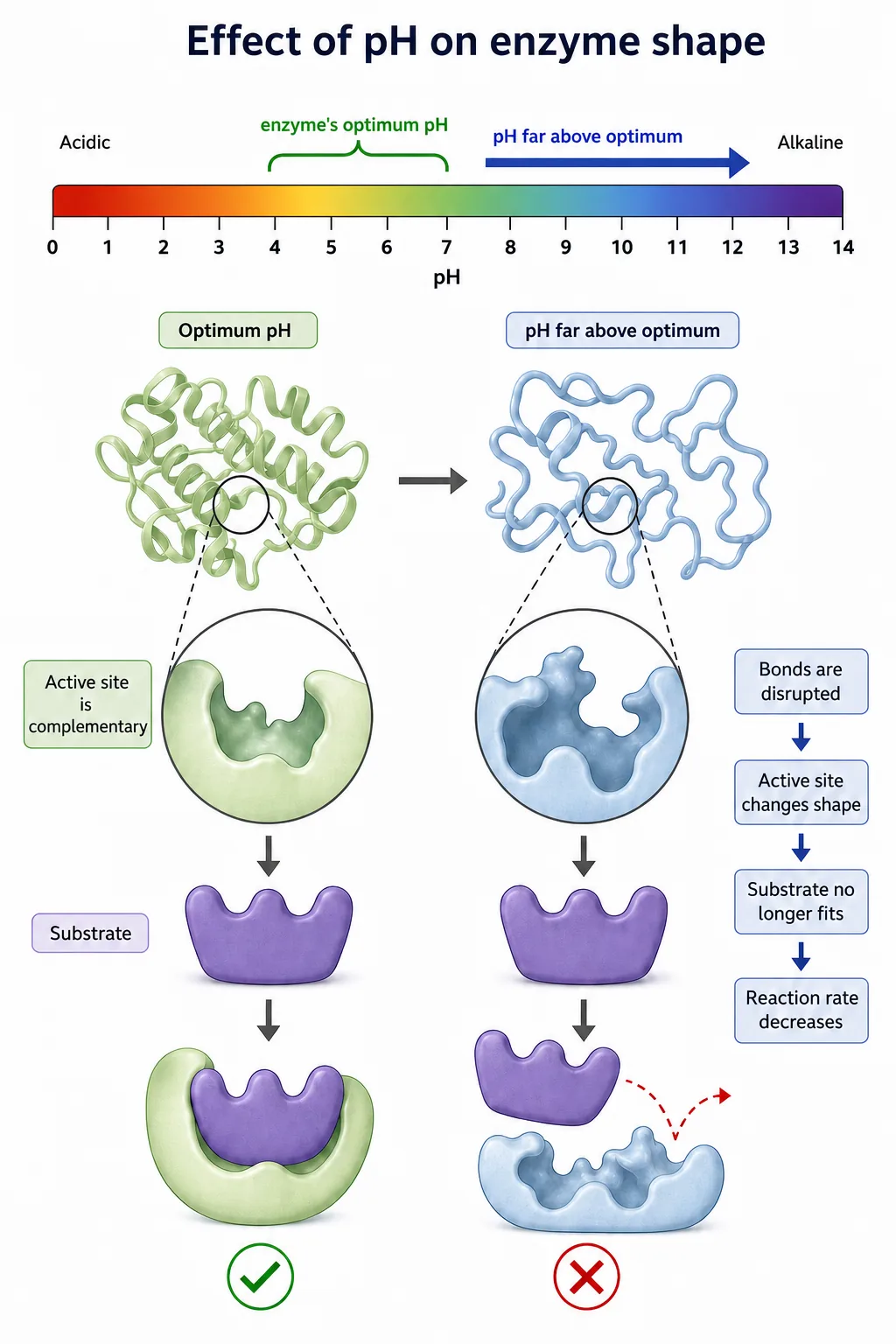
Effect of pH on enzyme shape and activity

Each enzyme also has an optimum pH.

Substrate concentration
Pepsin works best in acid (about pH 2), amylase in the mouth about pH 7 and intestinal protease and lipase around pH 8.
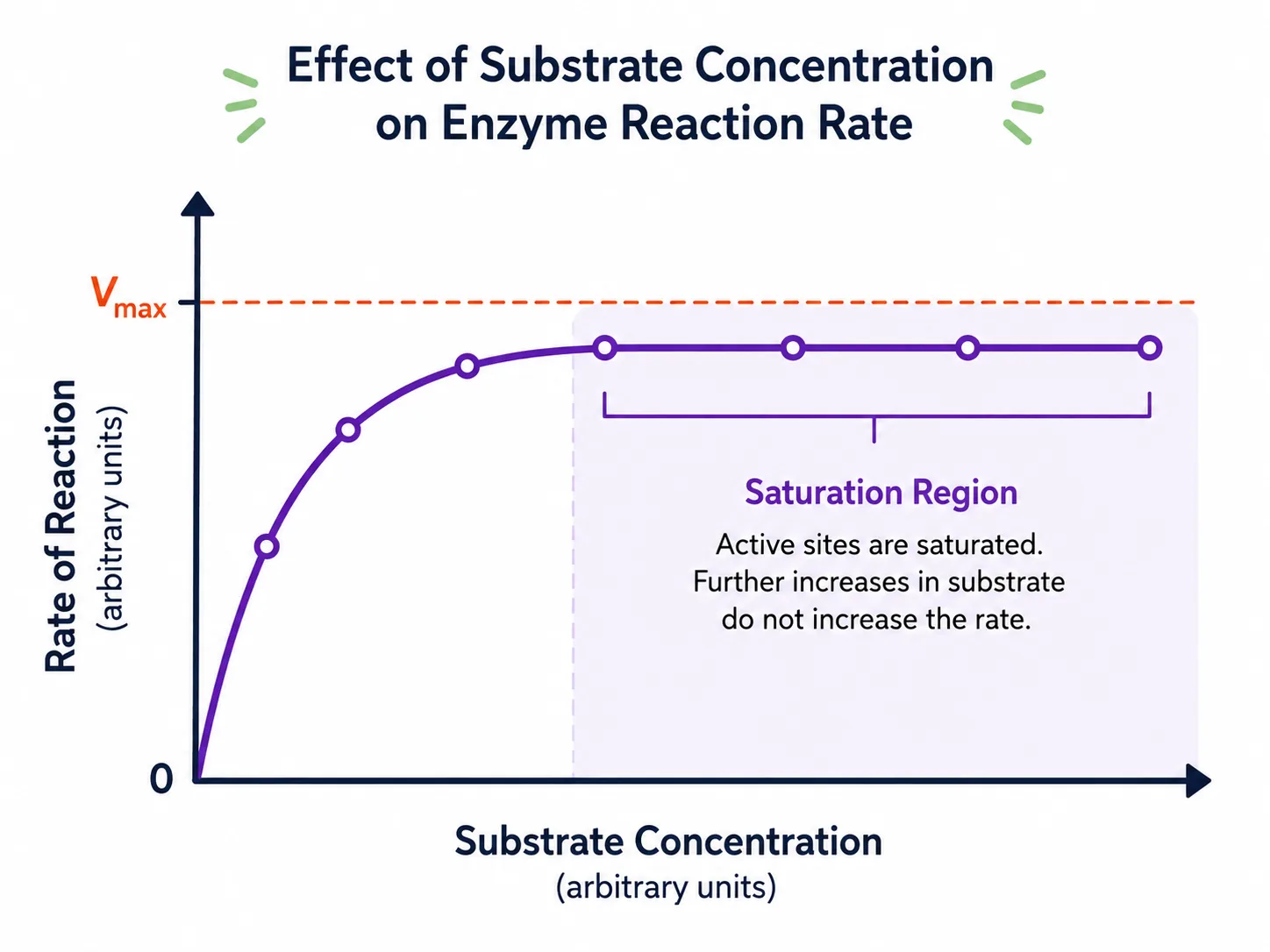
  • If the pH is too high or too low, the shape of the active site changes and the enzyme is denatured. Substrate concentration also affects the rate: increasing it raises the rate until all the active sites are occupied, after which the rate stays constant (a plateau).
Similarly, adding more enzyme increases the rate if the substrate is in excess.
FactorEffect on rateExplanation
Rising temperature (to optimum)IncreasesMore frequent, energetic collisions
Above optimumFalls rapidlyActive site changes shape; denatured
pH away from optimumFallsActive site shape changes
More substrateIncreases then plateausActive sites become saturated

Section 5 of 9Graphs and interpretation
bell curve graph
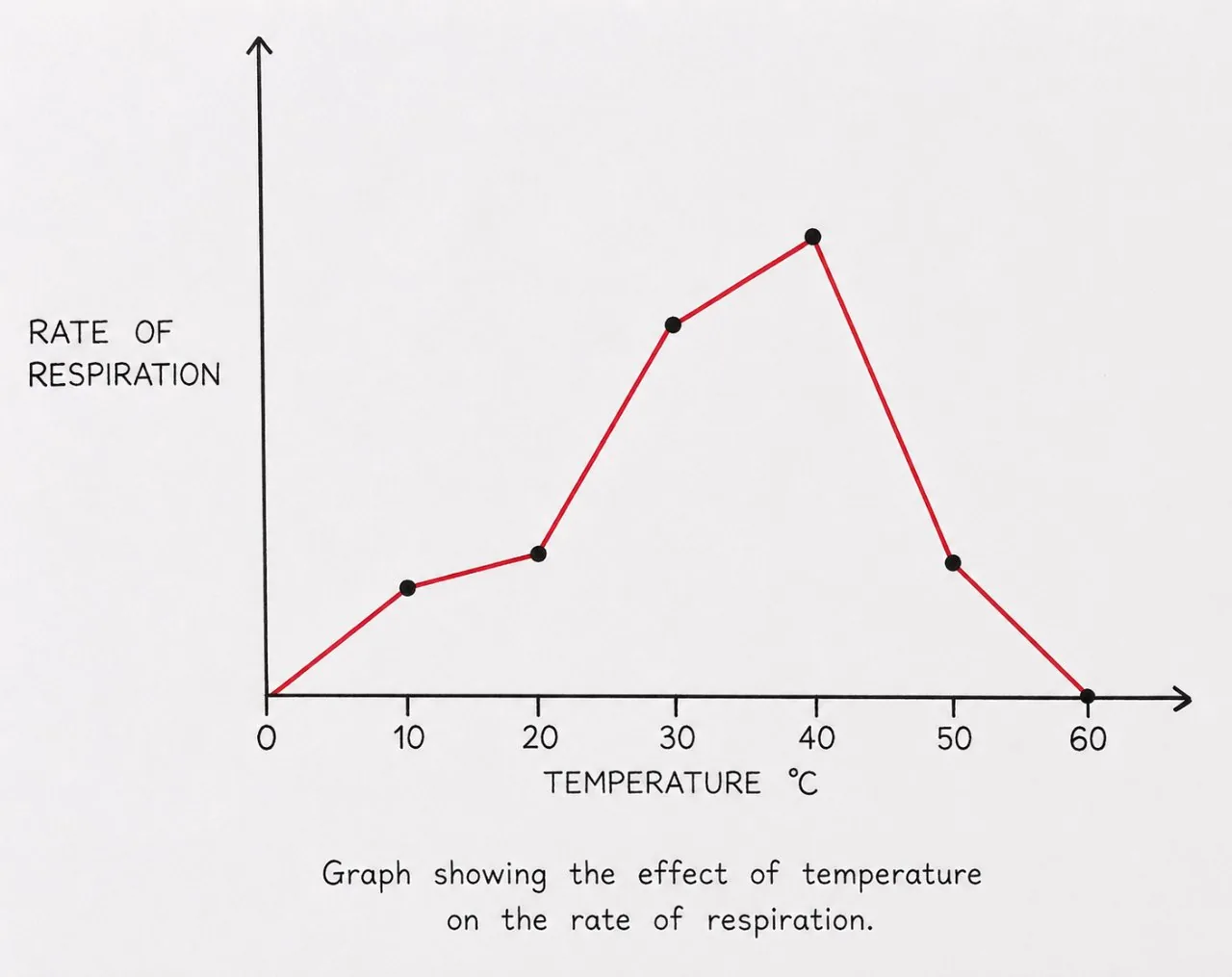
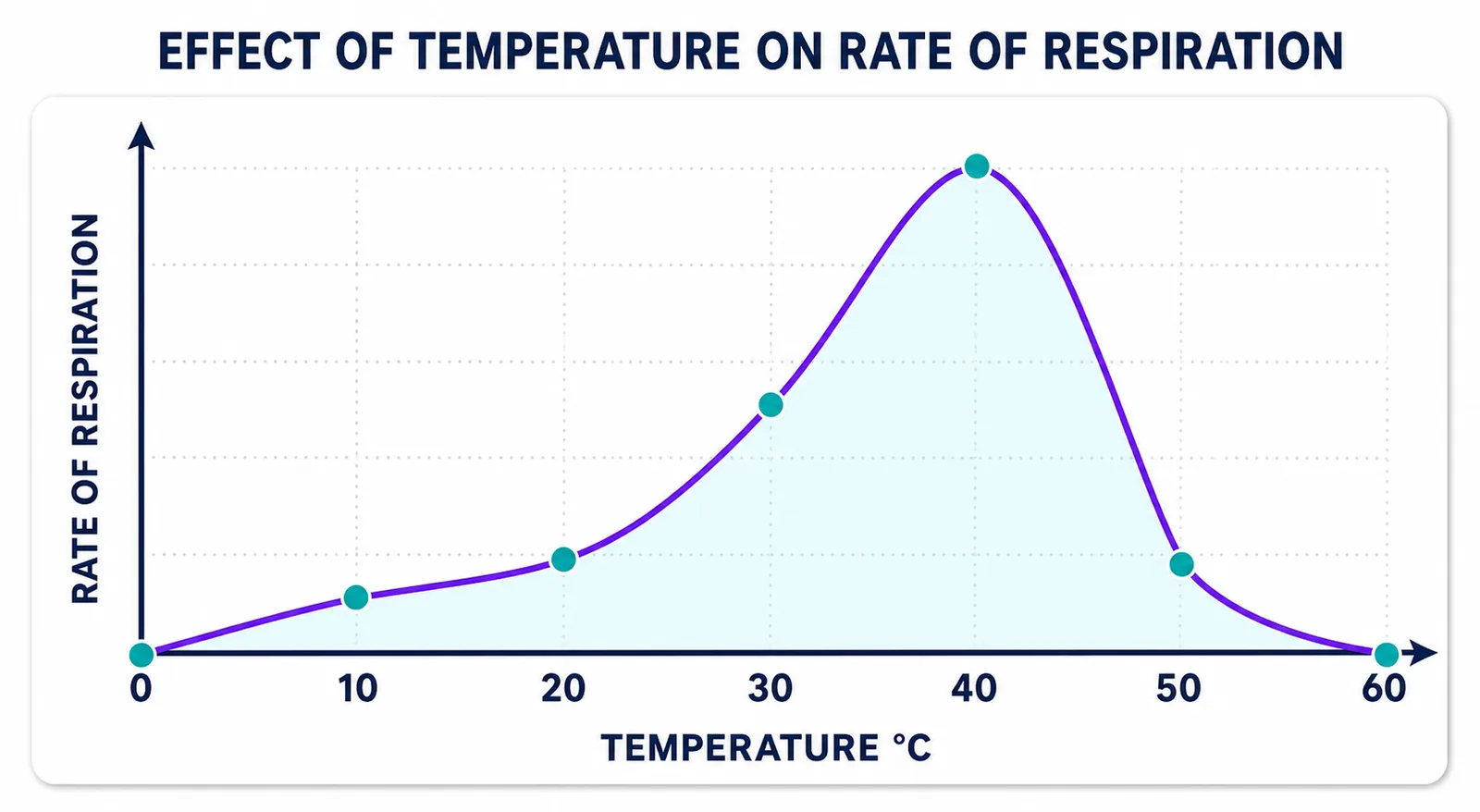
Effect of temperature on rate of respiration (graph)
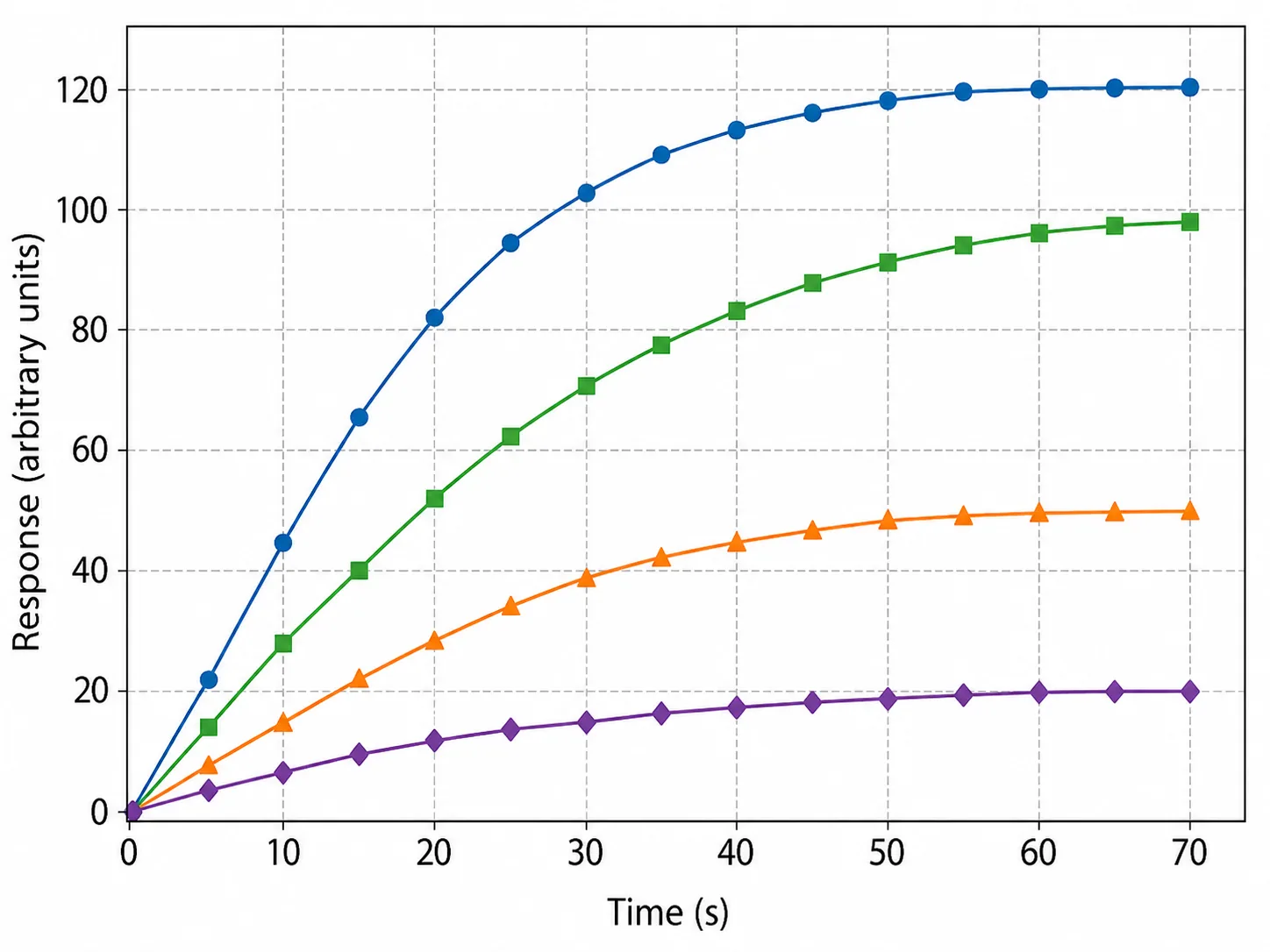
response time graph
Effect of temperature on rate of photosynthesis (graph)

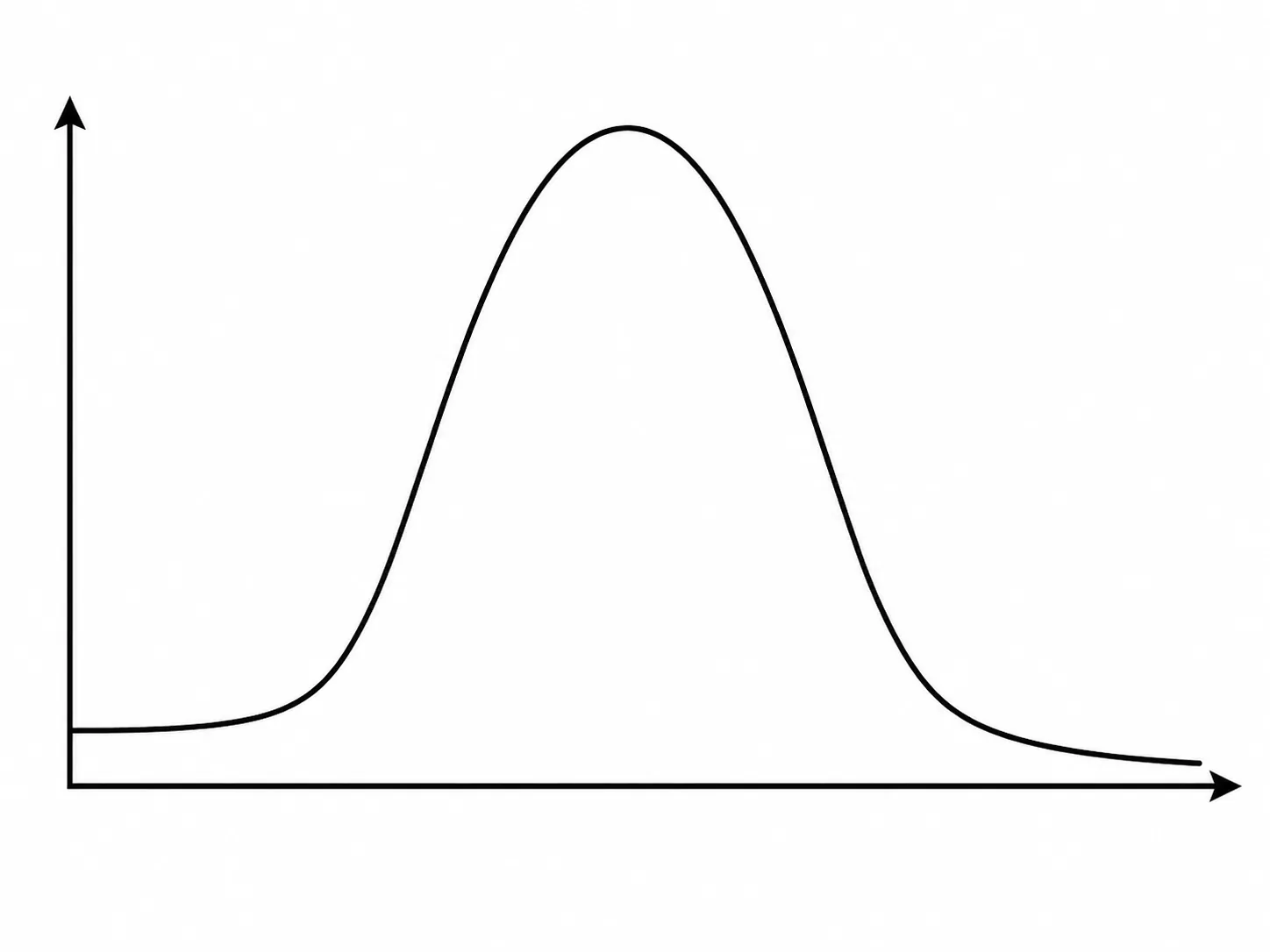
A rate against temperature graph rises to a peak and then drops sharply: that peak is the optimum.

1
A rate against pH graph shows a bell-shaped curve.
2
A substrate concentration graph rises and then levels off.
3
When describing a graph, quote values, and say which factor is limiting at the plateau, for example the amount of enzyme.
4
Rates can be calculated using rate = 1 / time taken (for a reaction such as the disappearance of cloudiness), or as change in product / time.

Enzymes are used in industry, for example in biological washing powders, in making baby food and in producing sugar syrups. These applications often use enzymes that remain active at moderate temperatures to save energy.

Section 6 of 9Going further
Enzyme specificity: lock and key stages
Enzyme specificity — Interactive

Enzymes are also important in industry and medicine, and exam questions often ask you to apply the lock and key model.

1
In biological washing powders, protease and lipase break down protein and fat stains at lower temperatures, saving energy,
  • although the enzymes are denatured if the water is too hot.
2
In food production, isomerase converts glucose to fructose, which is much sweeter, so less of it is needed in slimming foods.
3
Protease is used to pre-digest baby food, and carbohydrase to turn starch into syrup.
4
Because enzymes are costly and can be reused if they are fixed (immobilised) on a surface, industrial processes are often designed to keep temperature and pH at the optimum,
  • giving a high rate with little energy.

Metabolism includes both the building up of molecules (for example glucose into starch, or amino acids into protein) and their breakdown (such as respiration, which releases energy).

Going further
Enzymes control both kinds of reaction.
Without them, reactions would be too slow to support life at body temperature,
  • and raising the temperature to speed up the reactions would denature proteins and kill the cell.

Remember that the shape of the active site, not the shape of the whole enzyme, determines specificity.

Section 7 of 9Exam-style questions
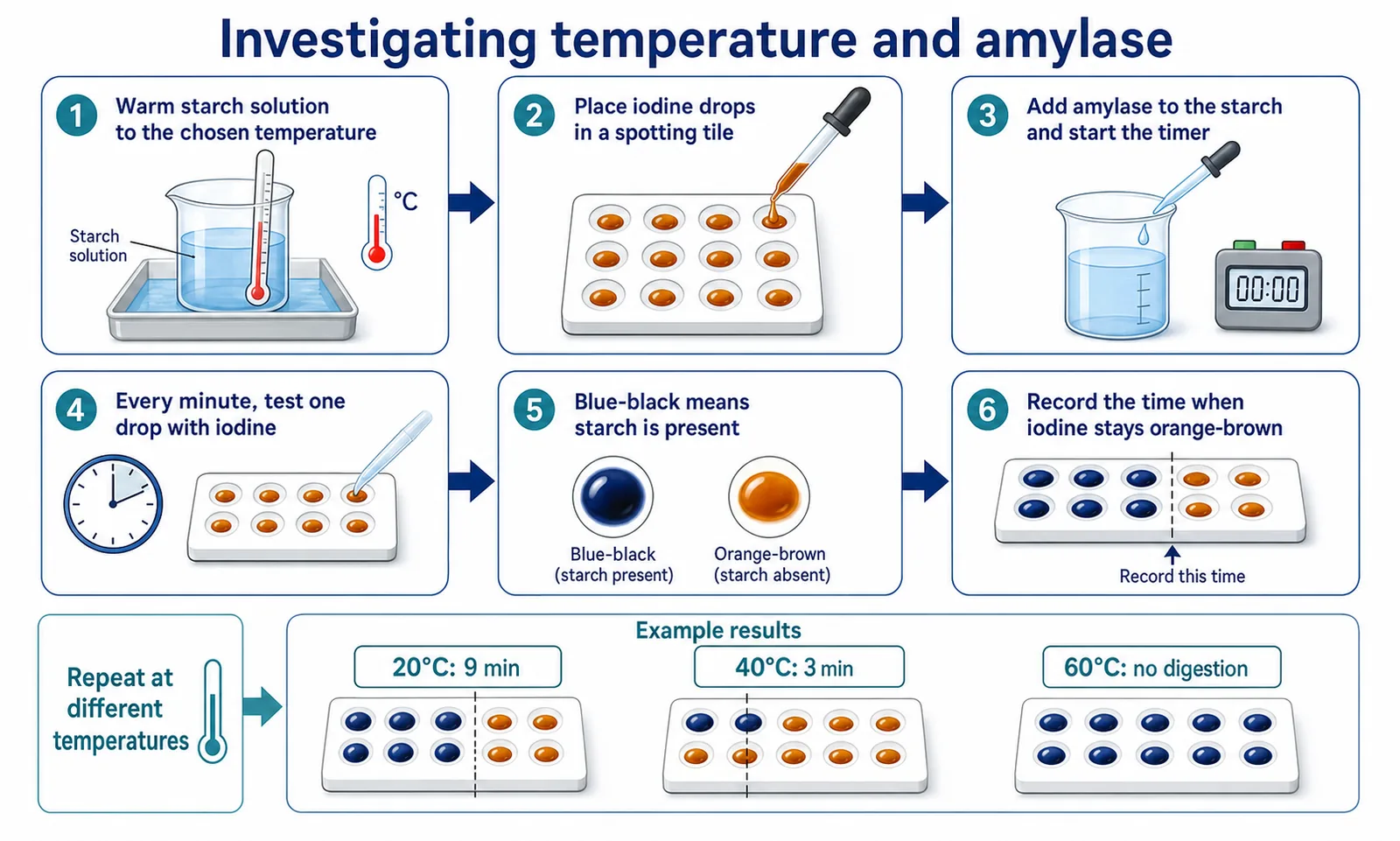
Temperature practical — Interactive
  1. Explain why an enzyme only works with one substrate. [2]2 marks

  2. Explain why the rate of an enzyme-controlled reaction falls to zero at 80 degrees C. [3]3 marks

  3. The time taken for a reaction is 20 s at 30 degrees C and 10 s at 40 degrees C. Calculate the rate (1/time) at each temperature. [2]2 marks

Section 8 of 9Key terms

TermMeaning
EnzymeA biological catalyst, a protein that speeds up reactions.
CatalystA substance that speeds up a reaction and is not used up.
Active siteThe region of an enzyme where the substrate binds.
SubstrateThe molecule on which an enzyme acts.
DenaturedHaving an altered shape so that the enzyme no longer works.
OptimumThe condition at which the rate is highest.
MetabolismAll the chemical reactions in an organism.

Section 9 of 9Exam technique

1
Saying enzymes are 'killed' by heat. They are not alive; they are denatured.
2
Thinking cold temperature denatures an enzyme; it just slows it.
3
Stating that the substrate changes shape to fit the enzyme.
4
Forgetting that the rate plateaus when all active sites are in use.
\n