Section 1 of 9Why digestion is needed


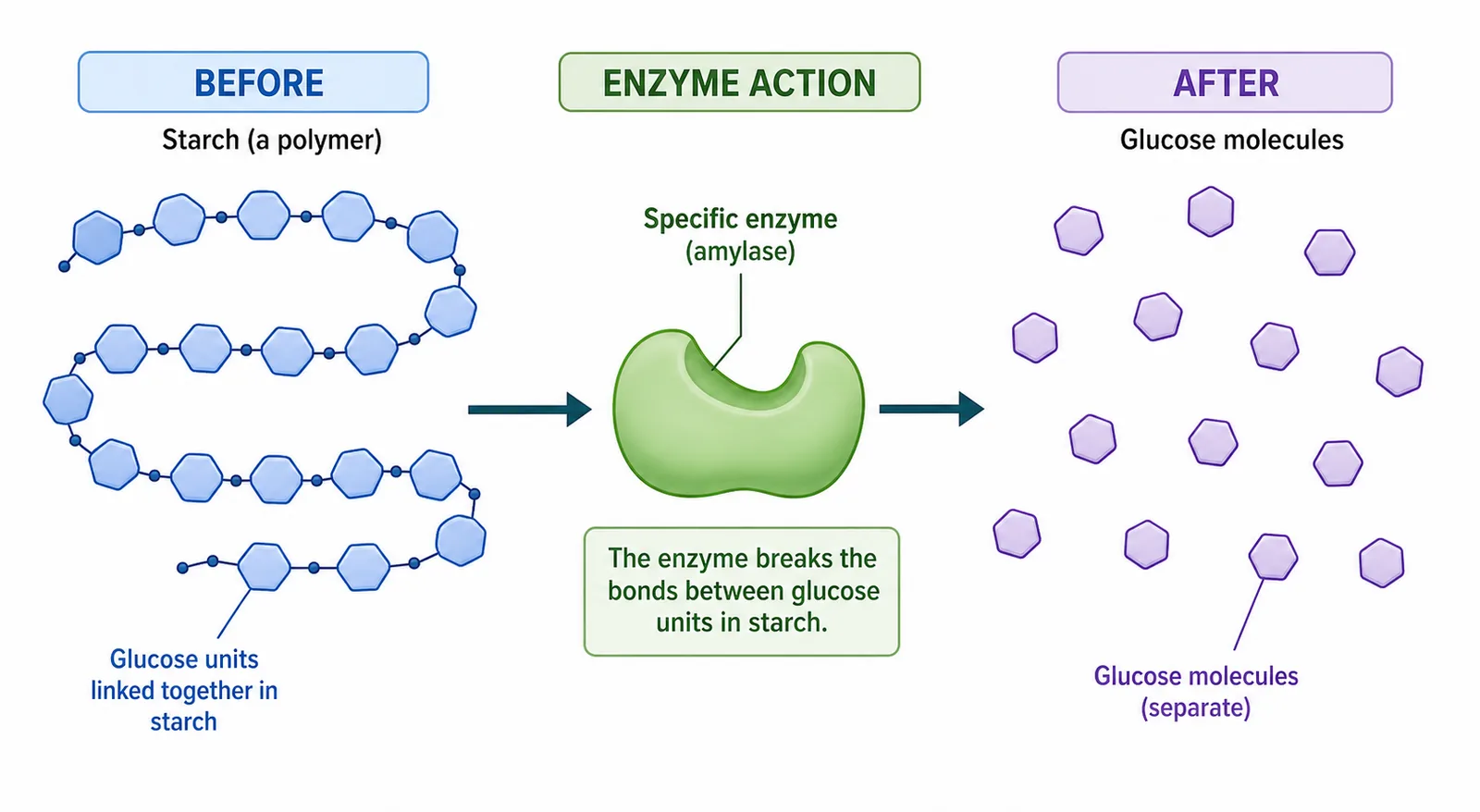
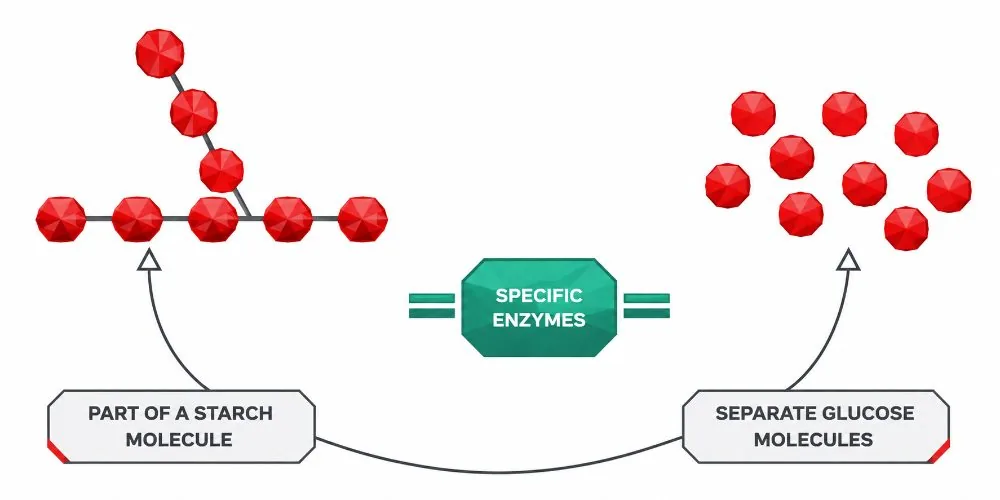
Food contains large molecules, such as starch, proteins and fats, which are insoluble and too big to pass through the wall of the gut into the blood. Digestion breaks these down into smaller soluble molecules, which can be absorbed. The digestive enzymes are made by specialised cells in glands and in the gut lining and released into the gut, so they act outside cells; they are therefore called extracellular enzymes.
Section 2 of 9The three groups of digestive enzymes
| Enzyme group | Breaks down | Into | Made in |
|---|---|---|---|
| Carbohydrase (e.g. amylase) | Carbohydrates (starch) | Simple sugars, e.g. glucose | Salivary glands, pancreas, small intestine |
| Protease | Proteins | Amino acids | Stomach, pancreas, small intestine |
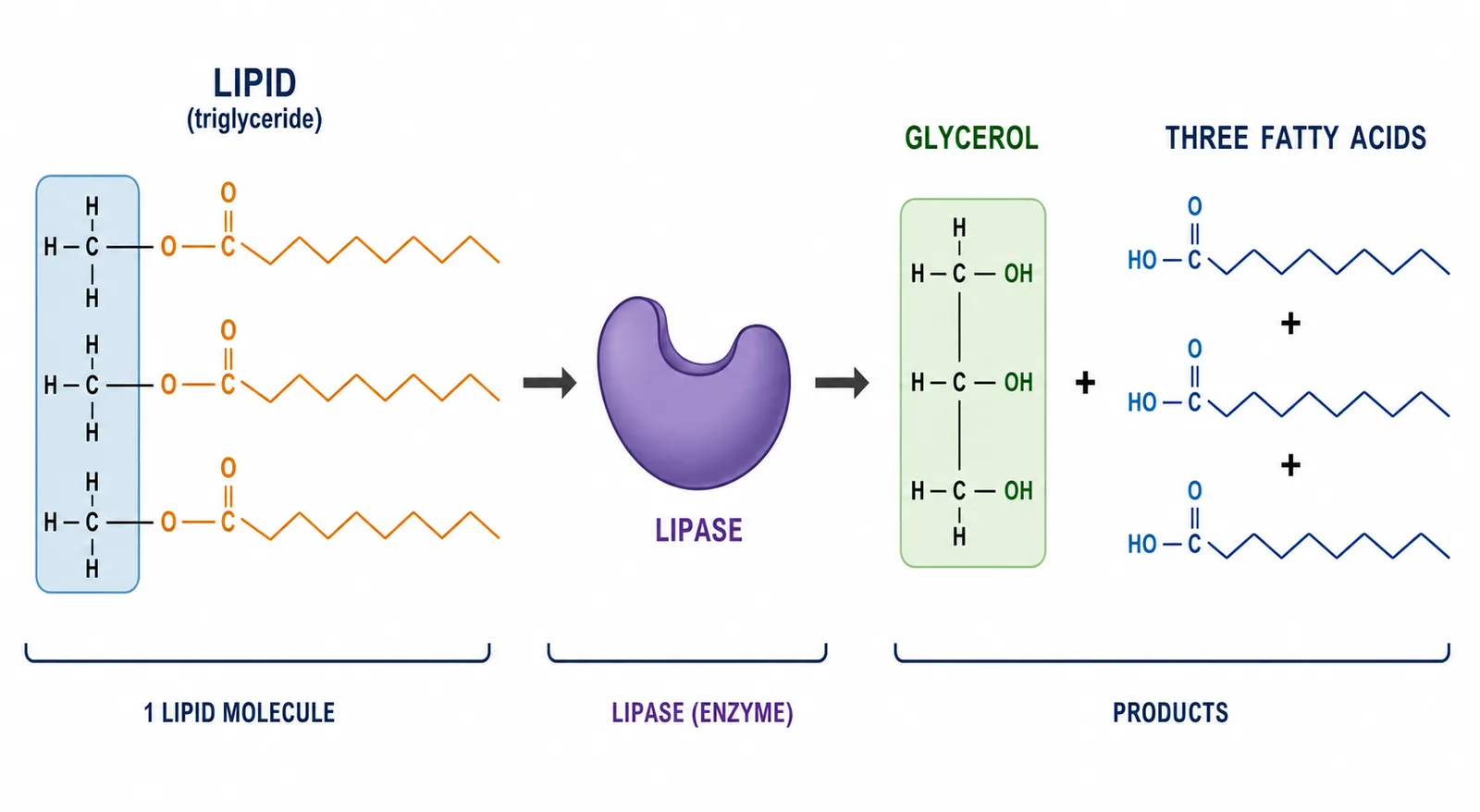
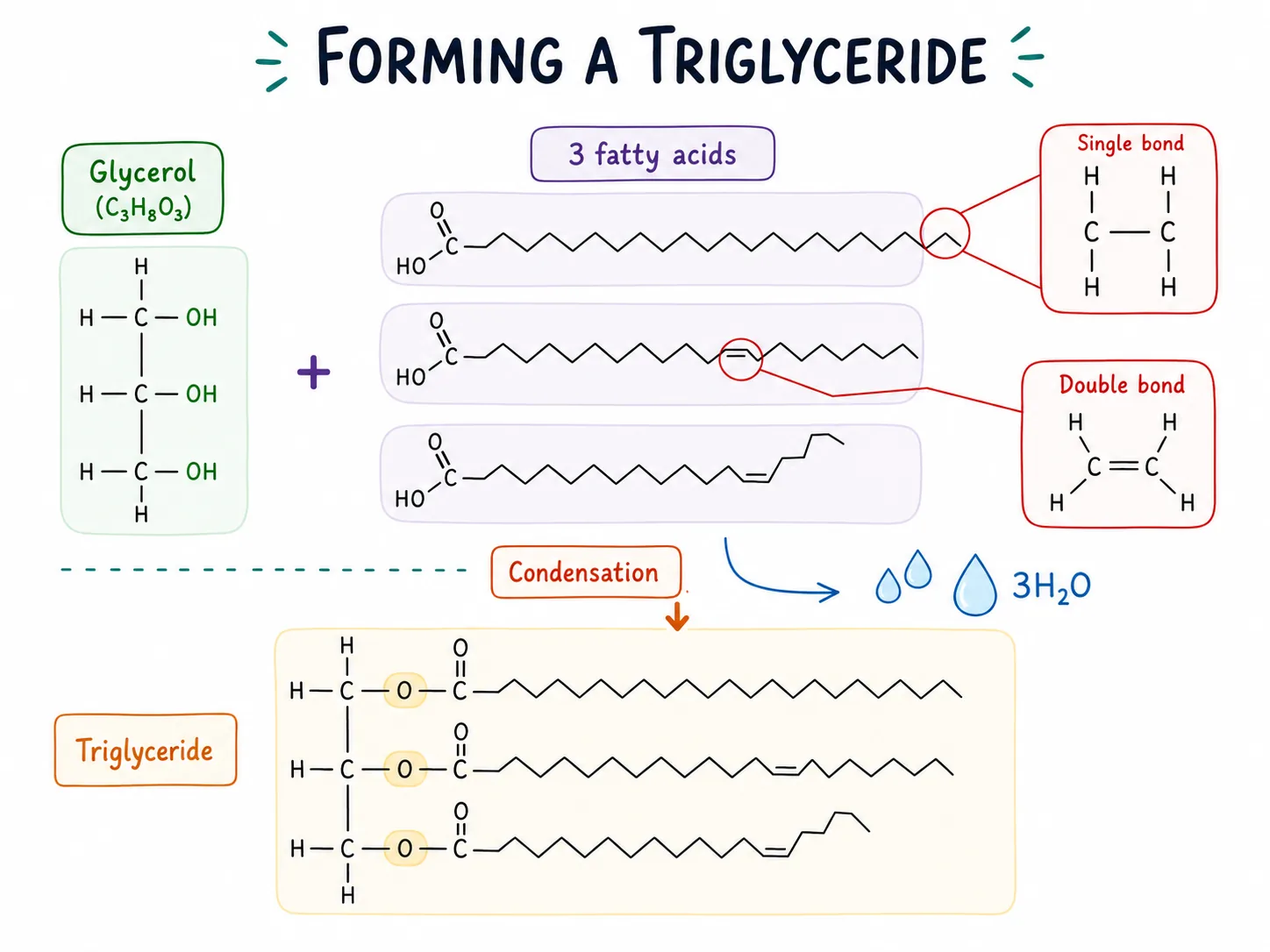
| Lipase | Lipids (fats and oils) | Fatty acids and glycerol | Pancreas, small intestine |
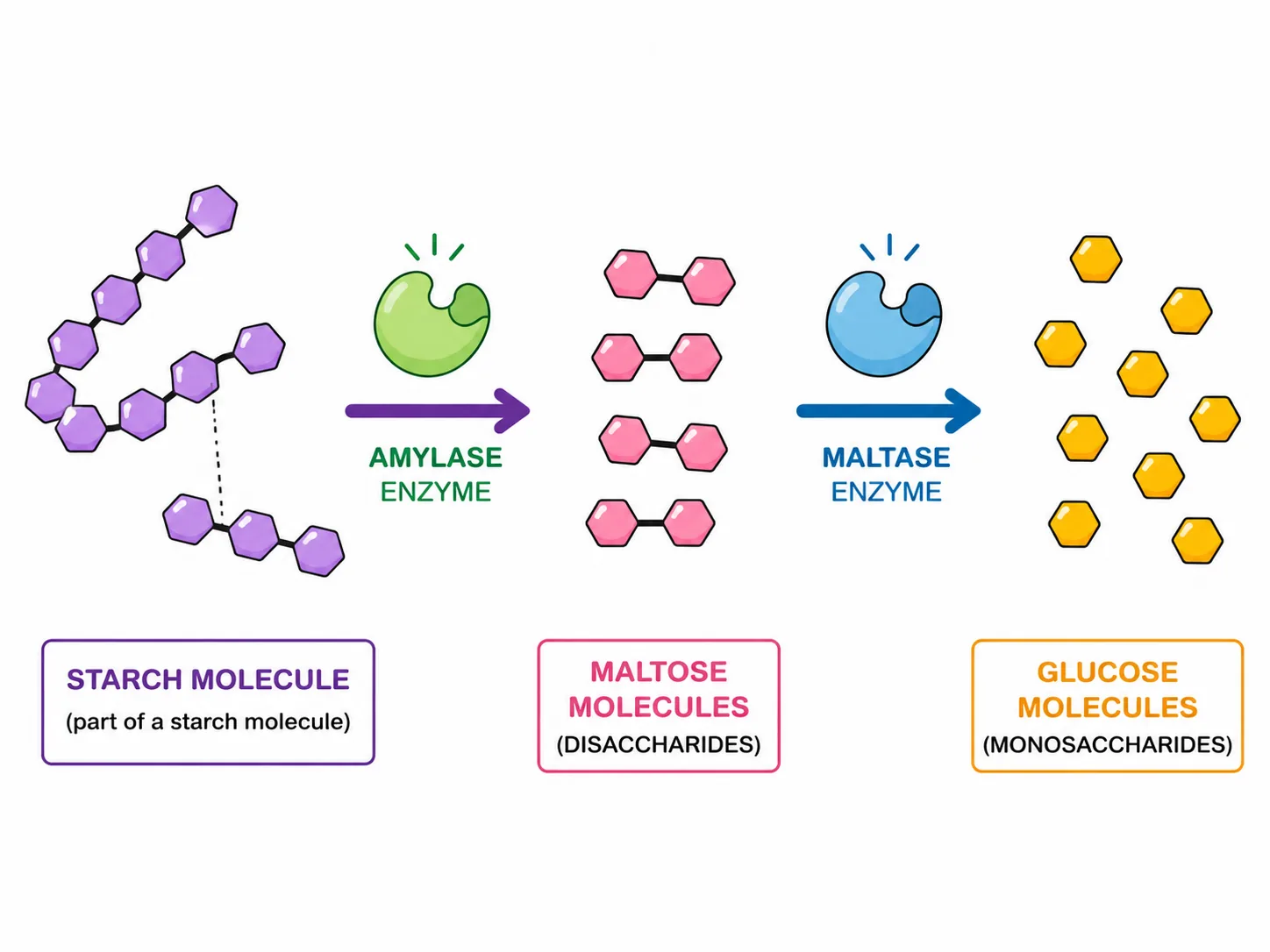
Amylase is the carbohydrase that acts on starch. Other carbohydrases in the small intestine, such as maltase, convert the disaccharide maltose into glucose.
Section 3 of 9Where digestion happens



Digestion begins in the mouth, where amylase from the salivary glands starts to digest starch.
Section 4 of 9Use of the digested products
Some of the glucose is also used to make cellulose in plants. The ideas of synthesis and breakdown are central to metabolism.
Section 5 of 9Interpretation and the factors involved
Questions may describe an experiment in which milk or starch is digested at different pH or in the presence of bile.
- and lipase breaks down fat into fatty acids,
- which lowers the pH.
- (so a pH indicator changes colour)
- such as pepsin with the stomach or intestinal protease with the small intestine.
Section 6 of 9Going further




Extra detail helps with higher-mark questions.
- which is a long chain of glucose units, is split by amylase into the sugar maltose, and a second enzyme, maltase,
- then splits each maltose into two glucose molecules.
Absorbed glucose is carried to the liver via the hepatic portal vein.
The decrease in pH when lipase digests fat is a common practical clue: fatty acids are acidic, so an indicator such as phenolphthalein in alkali turns from pink to colourless as the lipase works. Adding bile to the mixture makes the colour change more quickly, because it emulsifies the fat and increases its surface area.
An extension question might ask why different enzymes are needed for each food type.
- so a mixture of enzymes is needed to digest a mixed meal.
- which links this topic back to cell structure, and are then secreted into the gut, where they work outside the cells that made them.
Section 7 of 9Exam-style questions


Complete the table: amylase, protease, lipase, and the products of each. [3]3 marks
Amylase: starch to sugars (maltose and glucose) [1]. Protease: protein to amino acids [1]. Lipase: lipid to fatty acids and glycerol [1].
Explain why large food molecules need to be digested before they are absorbed. [2]2 marks
Large molecules are insoluble and too big to cross the gut wall / membranes [1]. Digestion converts them into small soluble molecules that can diffuse or be transported into the blood [1].
Describe what happens to the amino acids after absorption. [2]2 marks
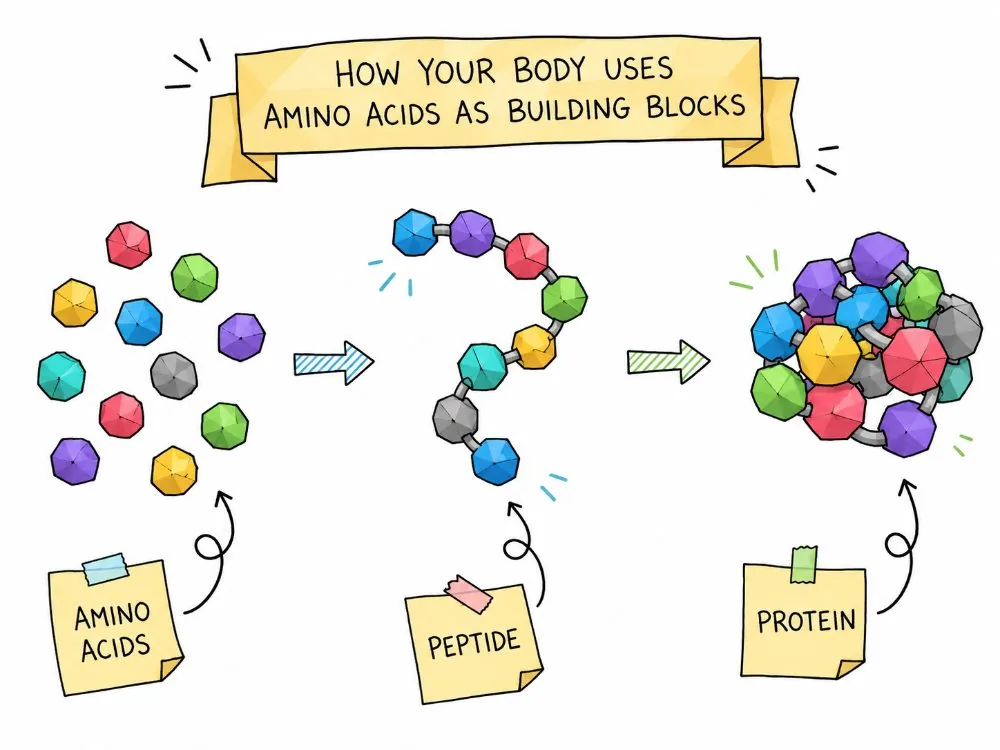
They are carried in the blood to cells [1] and used to build proteins, such as enzymes and muscle [1].
Section 8 of 9Key terms
| Term | Meaning |
|---|---|
| Digestion | Breakdown of large insoluble molecules into small soluble ones. |
| Carbohydrase | Enzyme that breaks down carbohydrates. |
| Maltose | A sugar made of two glucose molecules. |
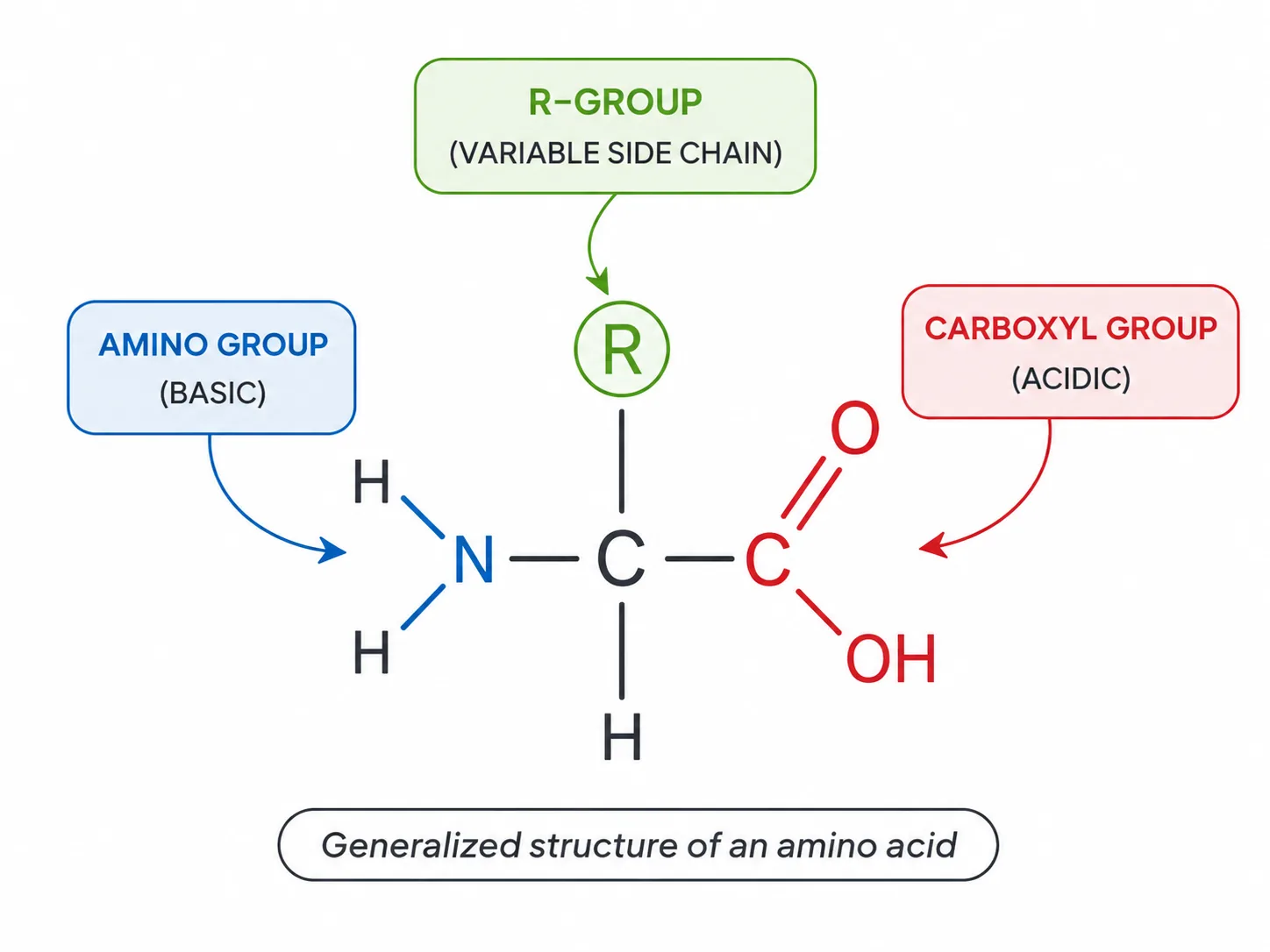
| Amino acid | Small molecule from which proteins are built. |
| Glycerol | Product of fat digestion along with fatty acids. |
| Absorption | Movement of digested food into the blood. |