Section 1 of 9What is transpiration?
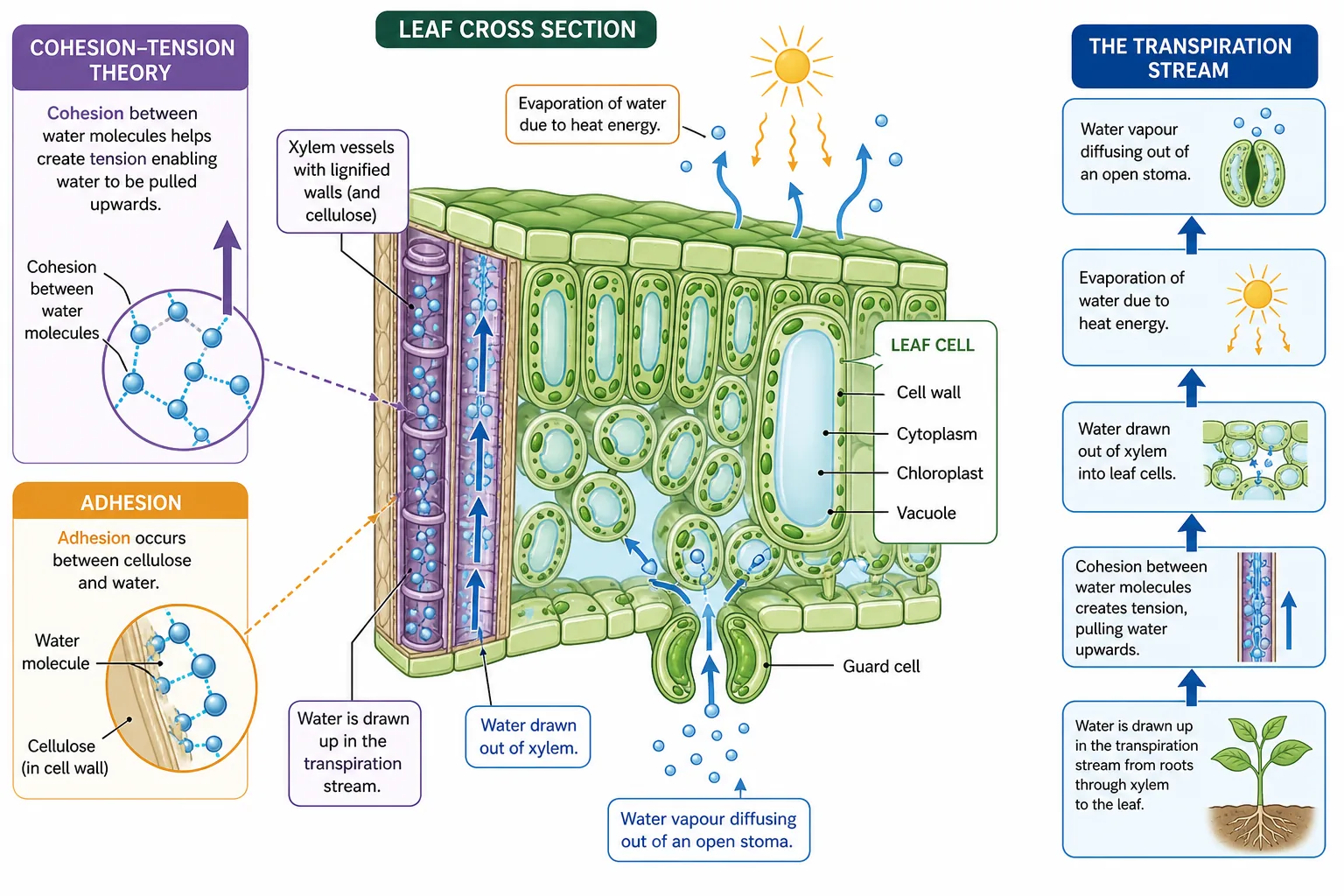
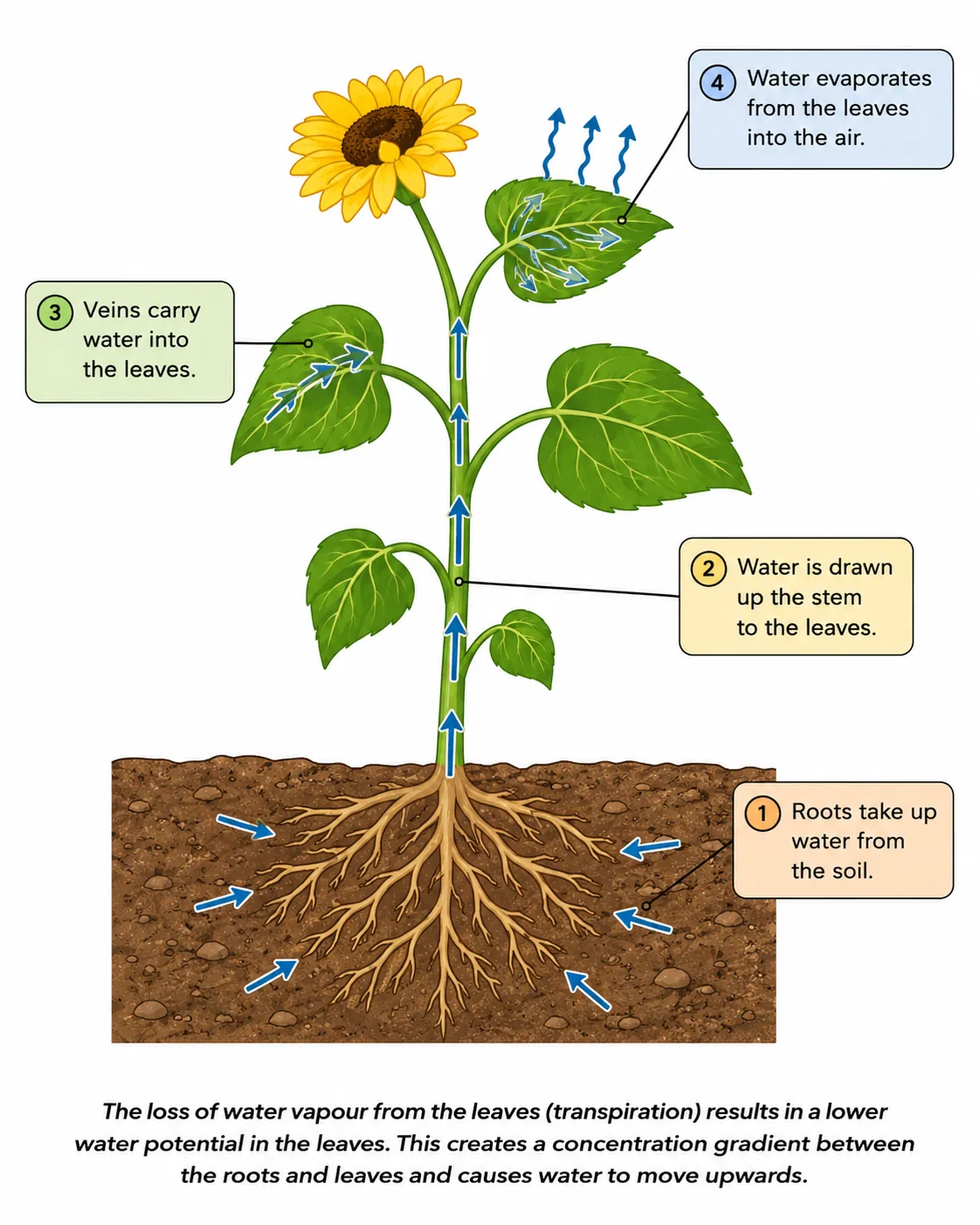


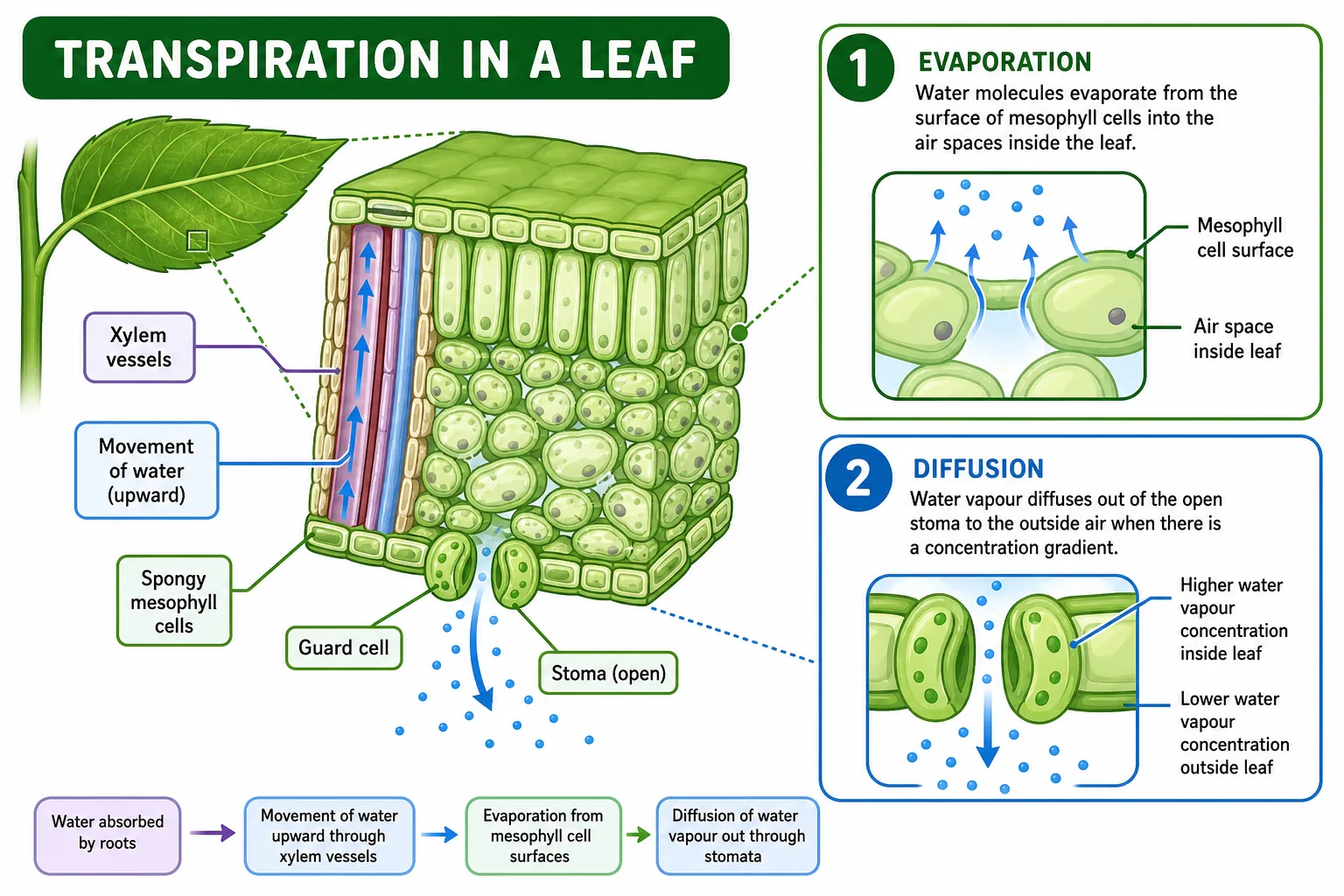
Transpiration is the loss of water vapour from the leaves of a plant, mainly through the stomata, and the movement of water through the plant that results. It happens as follows:
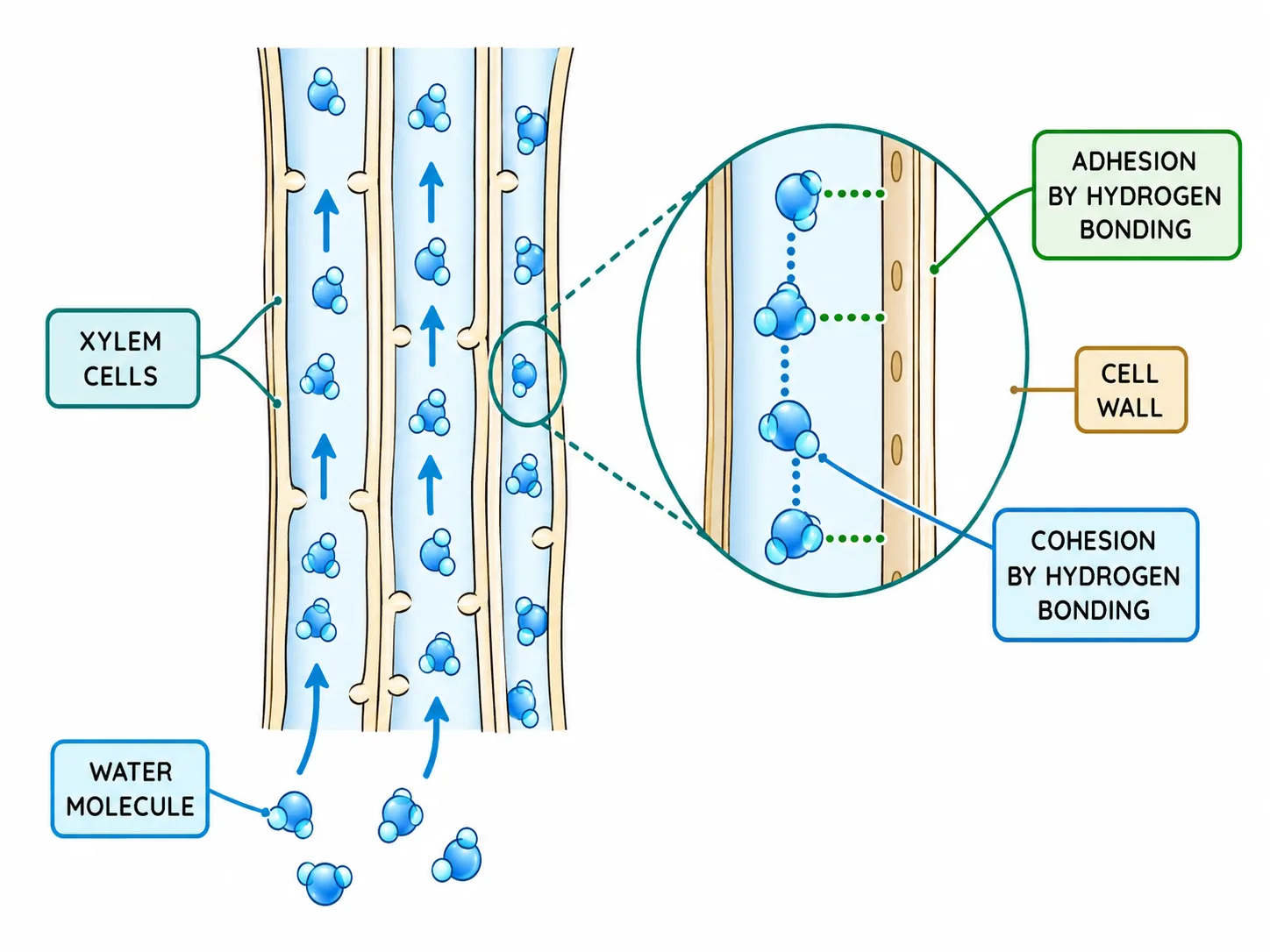
The flow is called the transpiration stream. It supplies water for photosynthesis, keeps cells turgid so that the plant is supported, carries mineral ions to the leaves and cools the leaf as water evaporates.
Section 2 of 9Control by the stomata


The stomata open in the light so that carbon dioxide can enter for photosynthesis, and this inevitably allows water vapour out.
Section 3 of 9Factors affecting the rate of transpiration
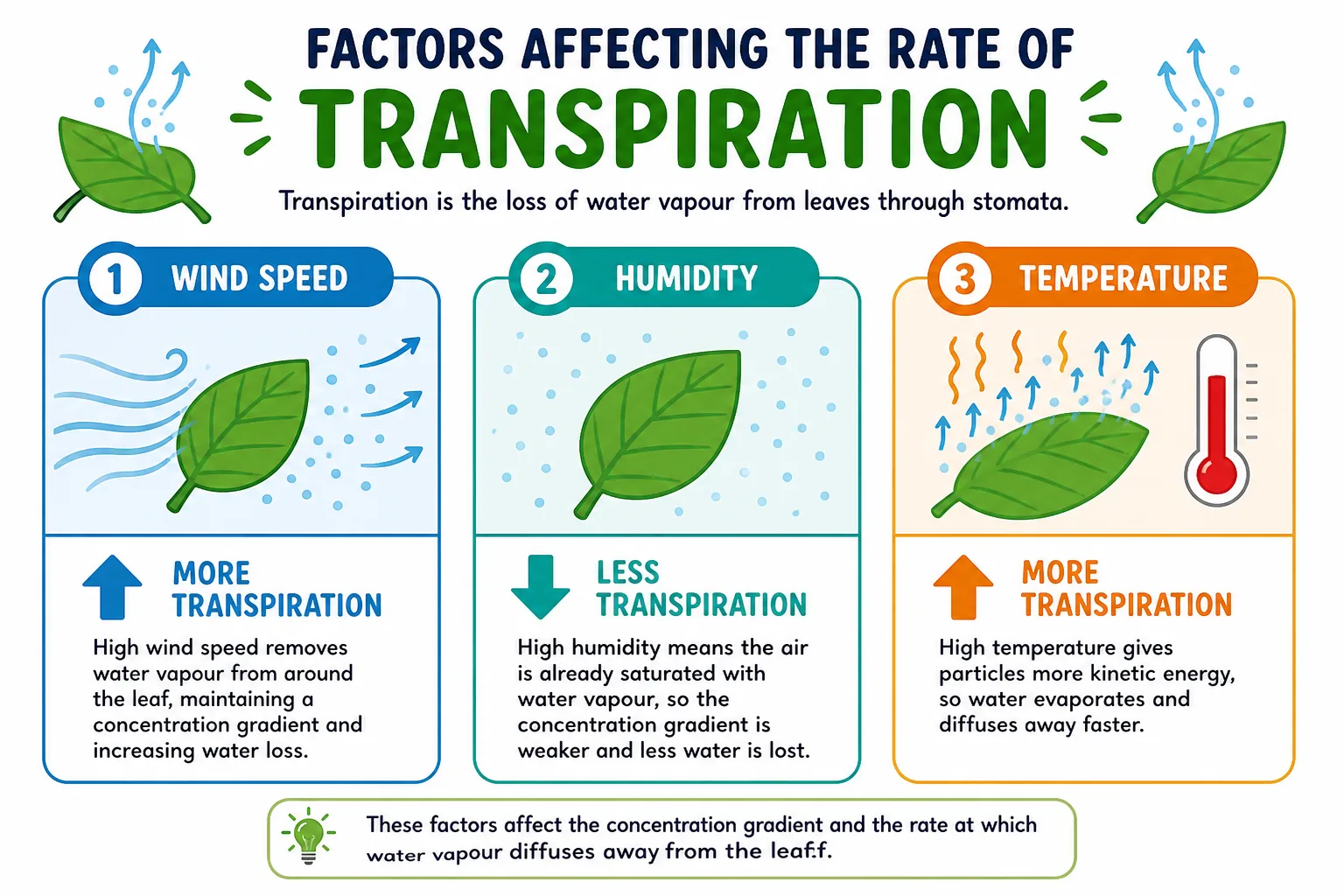

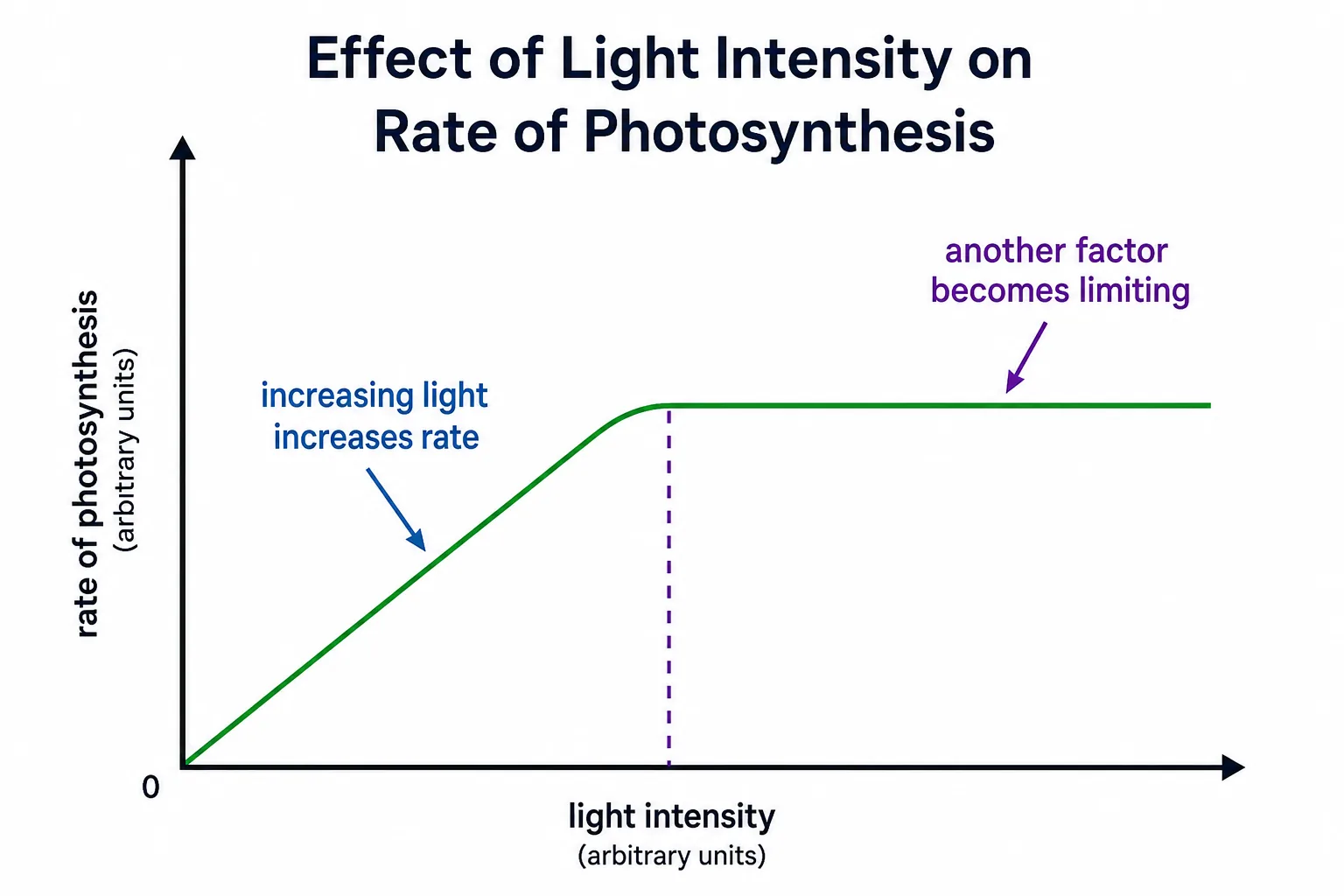
| Factor | Effect on rate | Explanation |
|---|---|---|
| Light intensity | Higher light increases rate | Stomata open wider in the light |
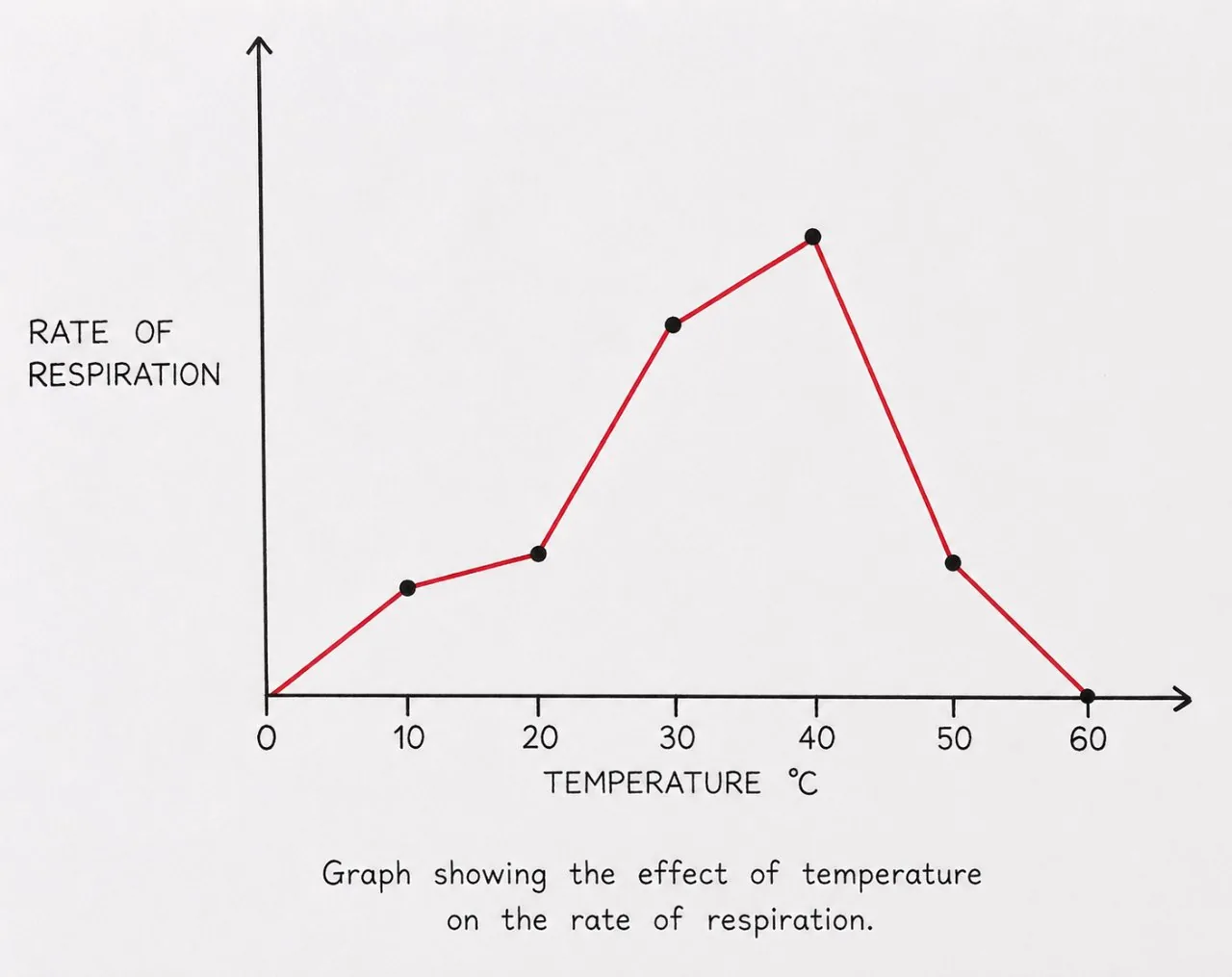
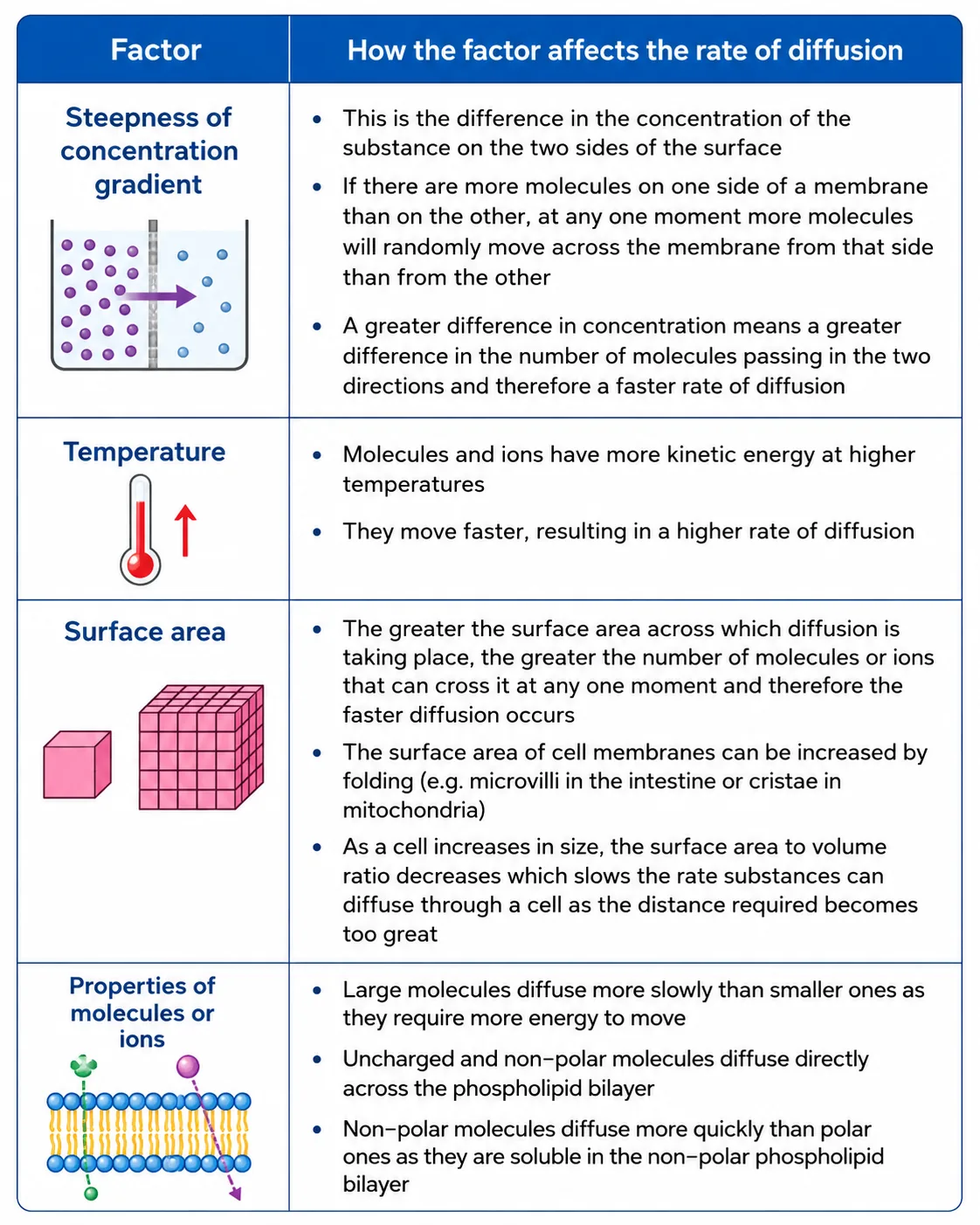
| Temperature | Higher temperature increases rate | Water evaporates faster and molecules diffuse faster |
| Air movement (wind) | More wind increases rate | Wind removes water vapour from near the leaf, keeping the concentration gradient steep |
| Humidity | Higher humidity decreases rate | The air already contains a lot of water vapour, so the concentration gradient is less steep |
On a hot, dry, windy and sunny day, transpiration is fastest. On a still, humid, cool, dull day it is slowest.
Section 4 of 9Measuring transpiration with a potometer

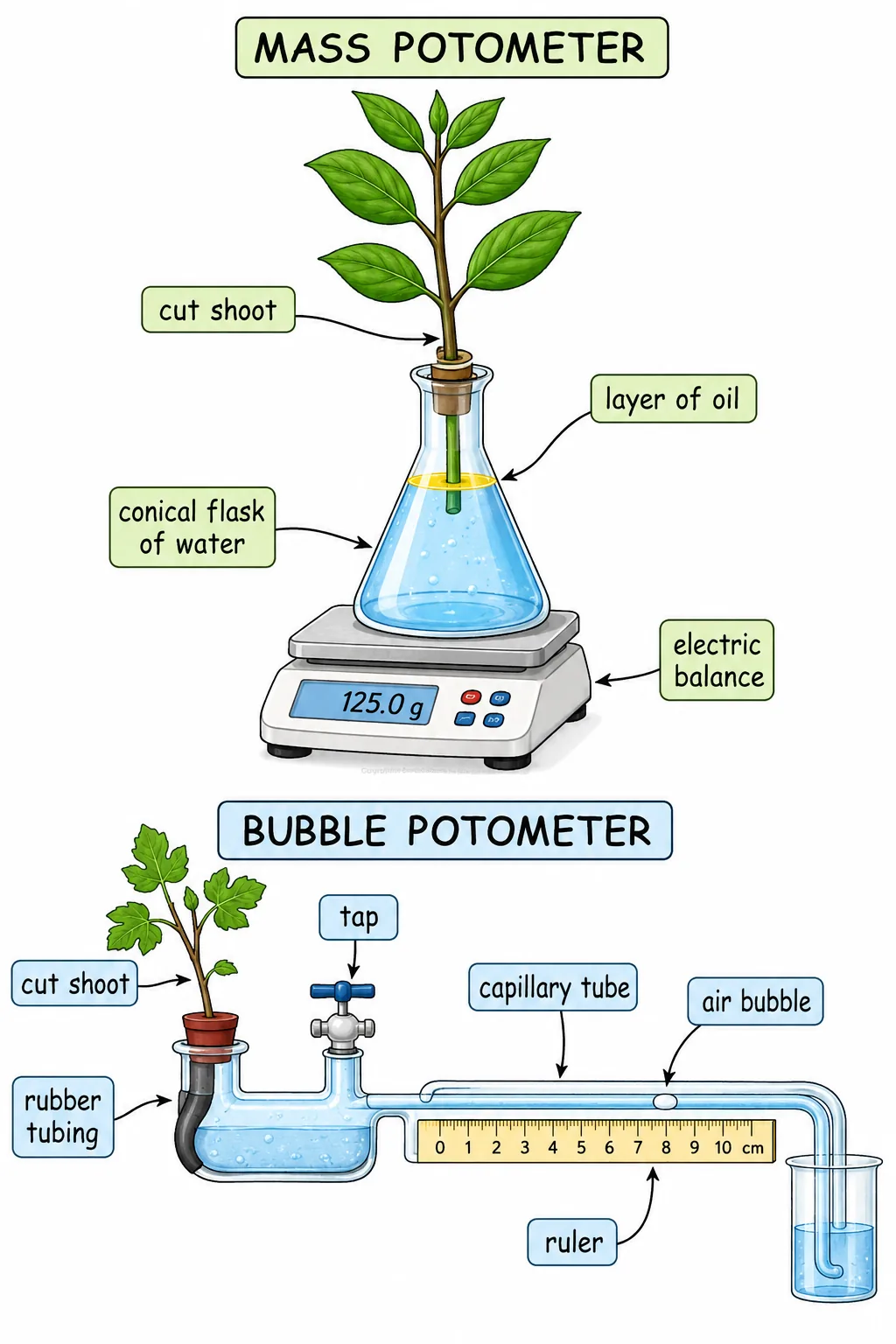

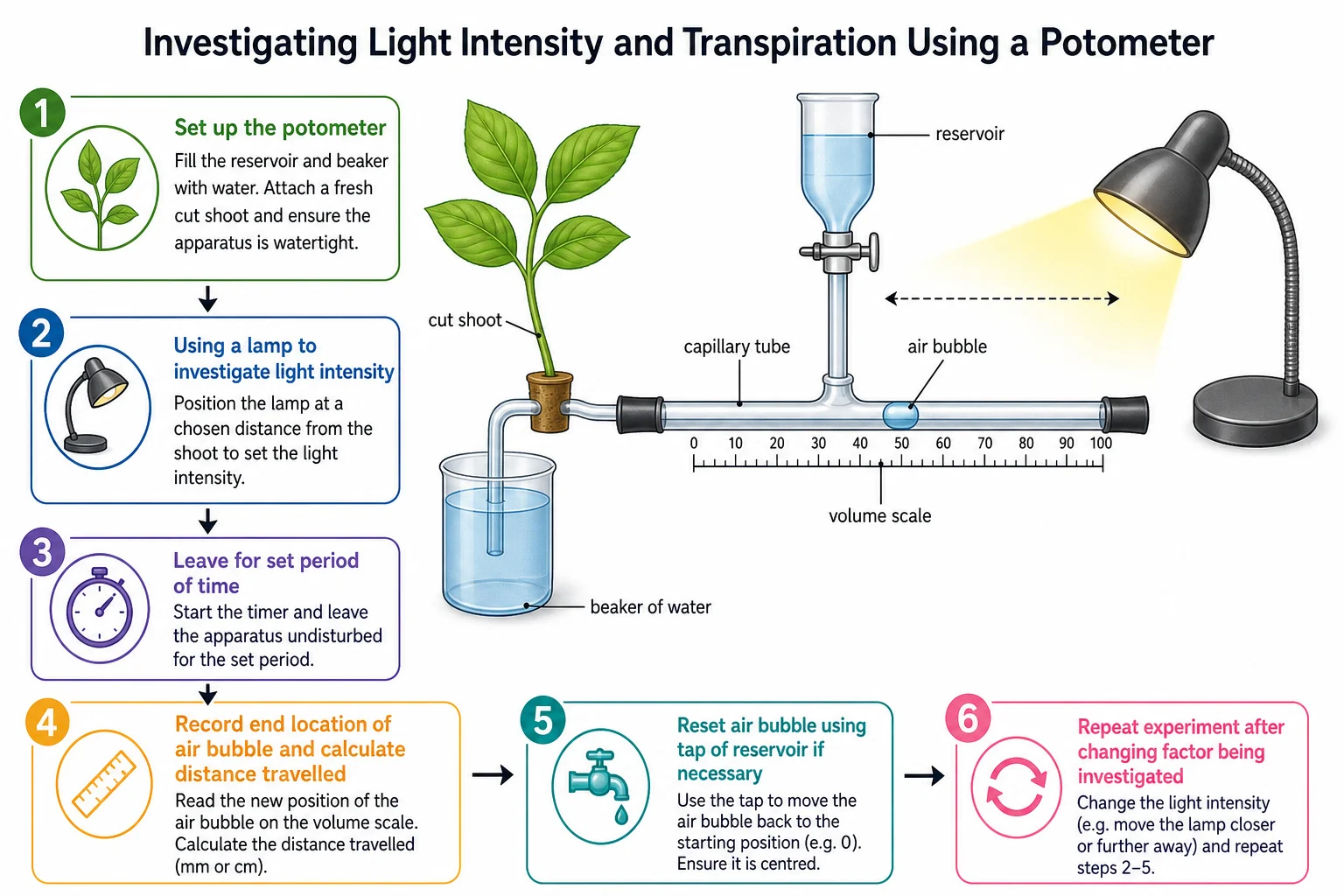
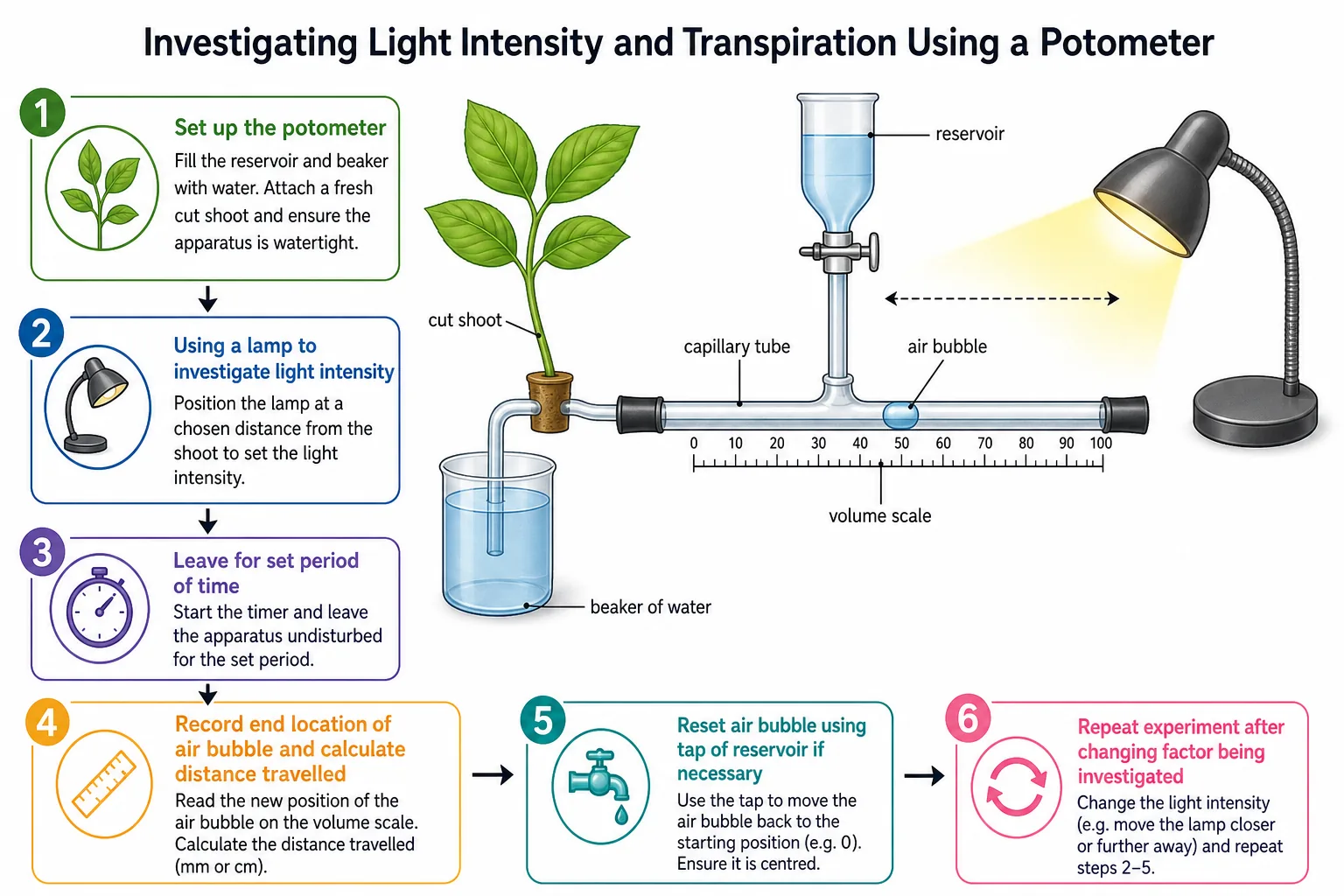
A potometer measures the rate at which a cut shoot takes up water, which is taken as an estimate of the rate of transpiration. The method is:
You can then change one factor, for example turning on a fan, and keep the others constant. Water uptake is not exactly the same as water lost, because some water is used in photosynthesis and some stays in the plant, so it is only an estimate.
Section 5 of 9Calculations and graphs
If the bubble moves 36 mm in 6 minutes, the rate is 36 / 6 = 6 mm per minute.
Section 6 of 9Wilting and turgor
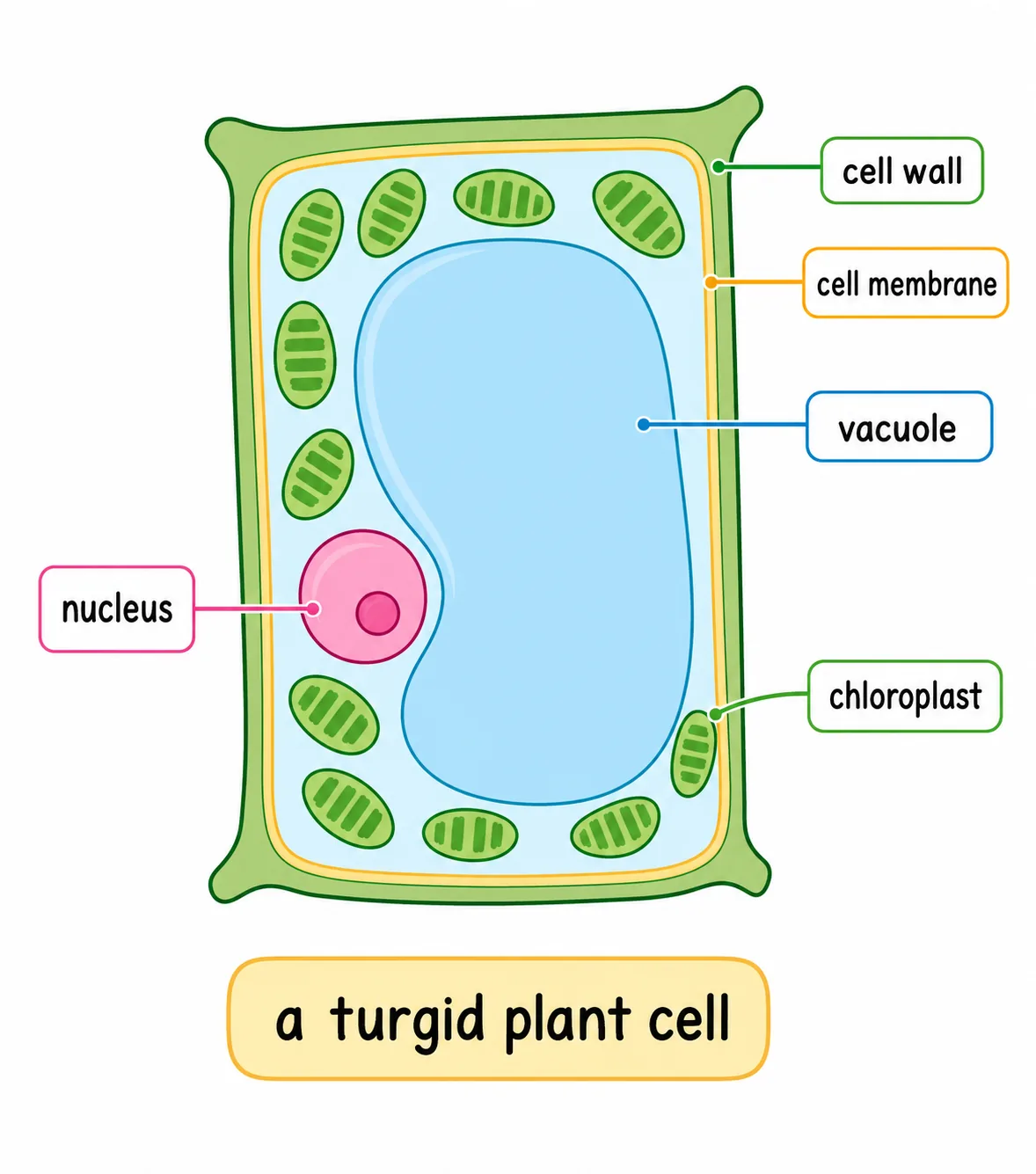
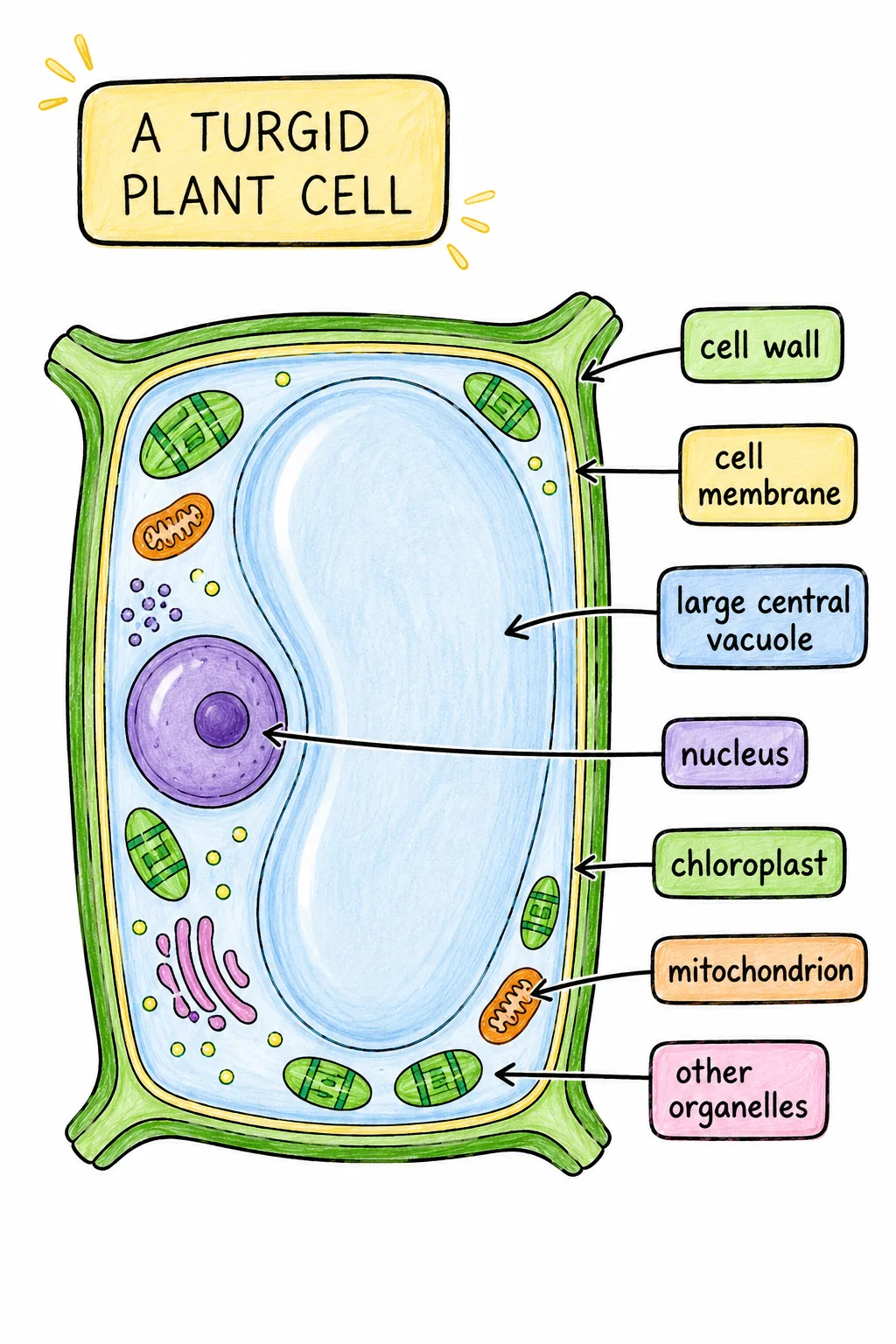


The cells of a well-watered plant are turgid, pushing against their cell walls and supporting the leaves and stems.
- and a water shortage reduces photosynthesis because guard cells close the stomata and limit carbon dioxide.
Transpiration and the plant's other needs
Transpiration can seem wasteful, since a plant may lose hundreds of times more water than it uses in photosynthesis, but it cannot be avoided.
- so transpiration, photosynthesis and temperature are all connected.
Section 7 of 9Exam-style questions

Explain why a plant loses water faster on a windy day than on a still day. [3]3 marks
Wind blows away water vapour from around the stomata [1], which keeps the concentration of water vapour outside the leaf low, so the concentration gradient stays steep [1]. Water vapour therefore diffuses out faster [1].
In a potometer experiment the bubble moved 45 mm in 9 minutes in still air and 90 mm in 9 minutes with a fan. Calculate the rate in each condition and the percentage increase caused by the fan. [3]3 marks
Still: 45 / 9 = 5 mm per minute; fan: 90 / 9 = 10 mm per minute [1]. Increase = 5 [1]; 5 / 5 x 100 = 100% increase [1].
Suggest two precautions needed to make the potometer results reliable. [2]2 marks
Cut the shoot under water and keep the apparatus airtight so there are no air bubbles in the xylem [1]. Repeat and calculate a mean, and keep other variables (light, temperature) constant [1].
Section 8 of 9Key terms
| Term | Meaning |
|---|---|
| Transpiration | Loss of water vapour from the leaves by evaporation and diffusion. |
| Transpiration stream | The flow of water up the xylem from roots to leaves. |
| Cohesion | The attraction between water molecules that keeps them together in a column. |
| Potometer | Apparatus used to measure the rate of water uptake by a shoot. |
| Turgid | Describes a cell full of water and pressing against its wall. |
| Flaccid | Describes a cell that has lost water and is soft. |
| Wilting | Drooping of a plant when its cells lose turgor. |
| Humidity | The amount of water vapour in the air. |