Section 1 of 9Bacteria as pathogens

Bacteria are single-celled organisms without a nucleus.
- so a few bacteria that enter the body can become millions within hours.
Section 2 of 9Salmonella food poisoning
Salmonella bacteria cause food poisoning.
- which usually begin within 12 to 72 hours of eating.
Control measures include:
Section 3 of 9Gonorrhoea
Gonorrhoea is a sexually transmitted infection (STI) caused by bacteria. It spreads by sexual contact. The symptoms are pain when urinating and a thick yellow or green discharge from the vagina or the penis. If untreated, it can cause infertility in women because the infection can damage the reproductive organs, and it can be passed to a baby during birth.
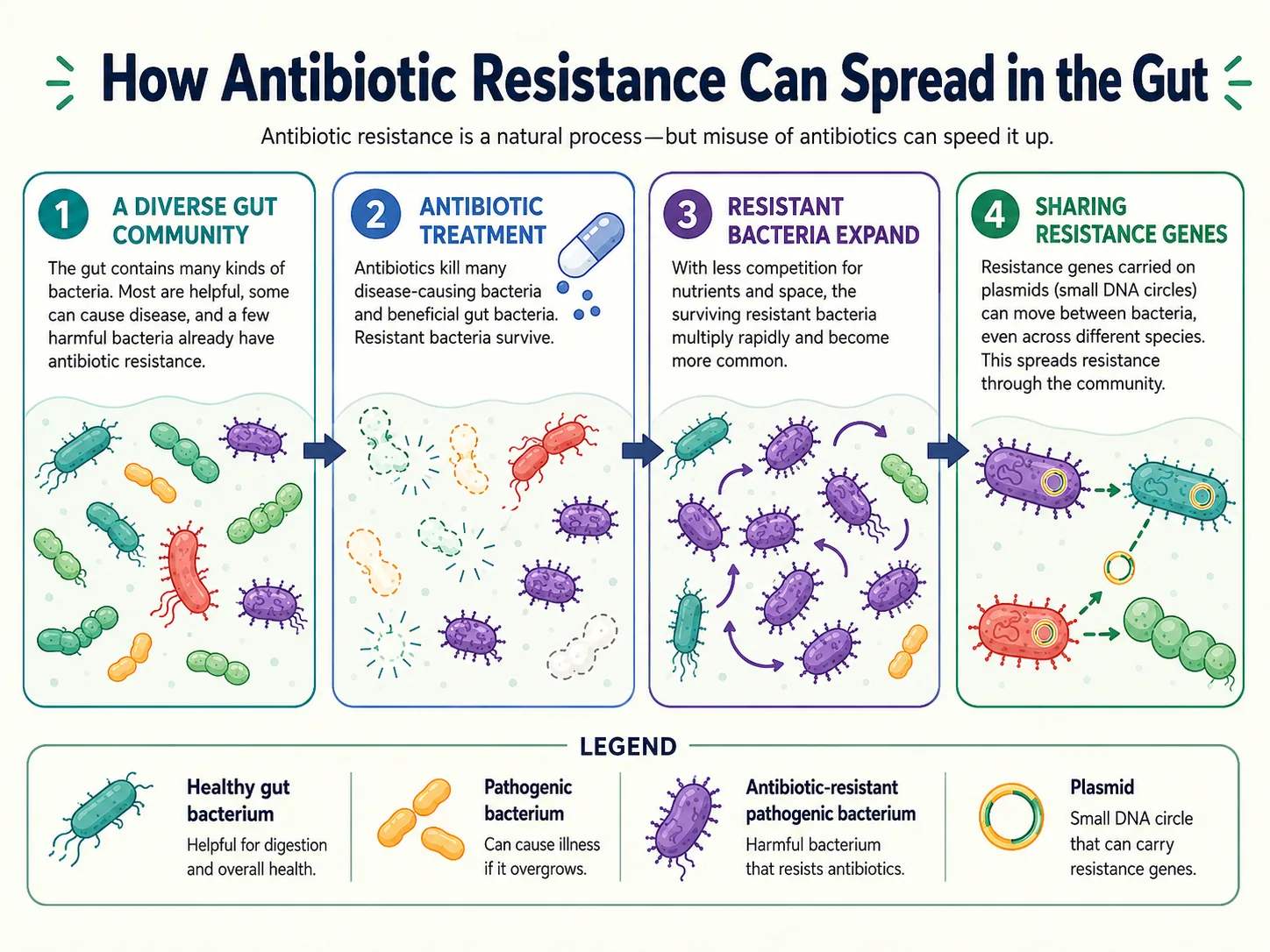
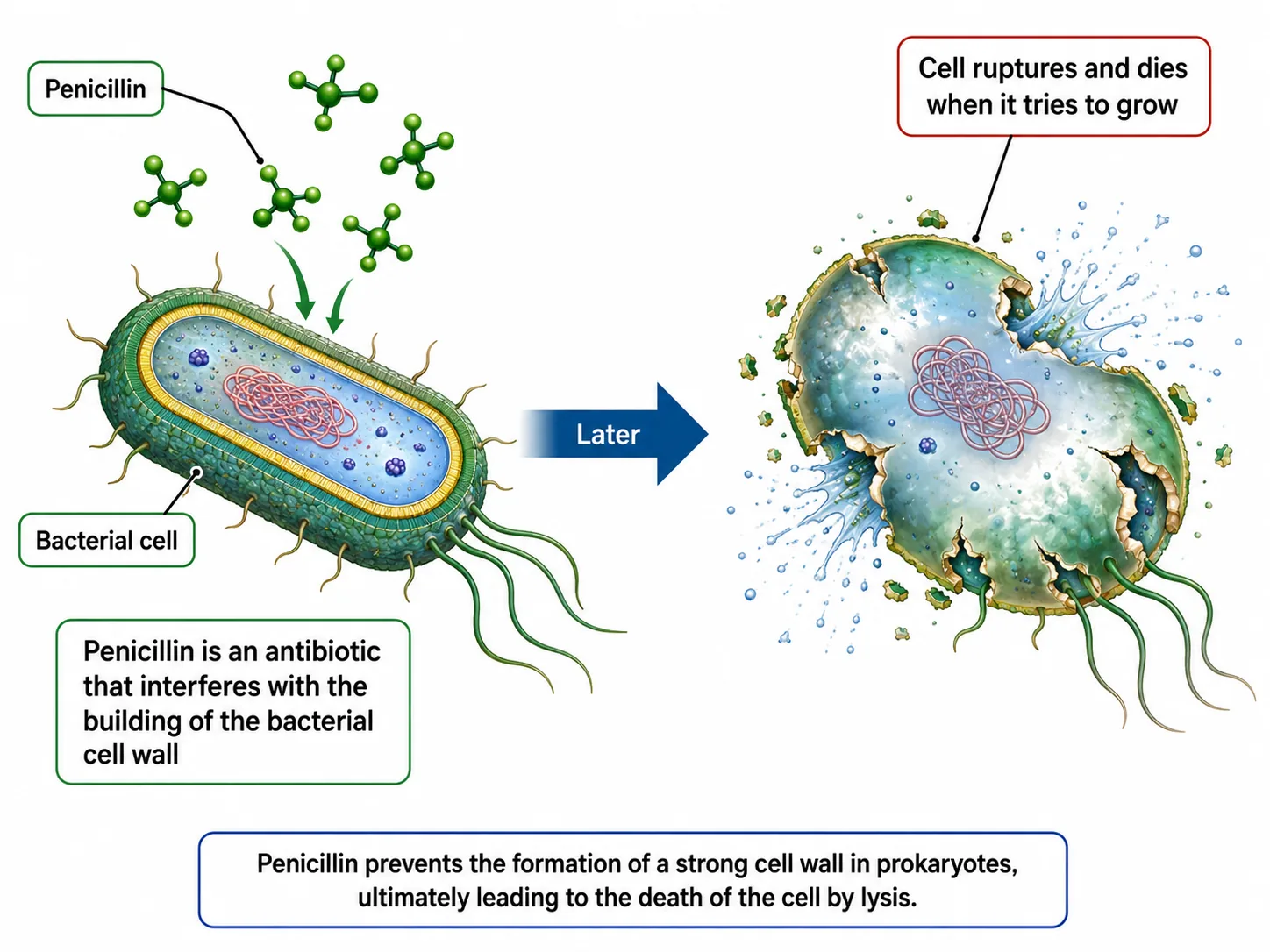
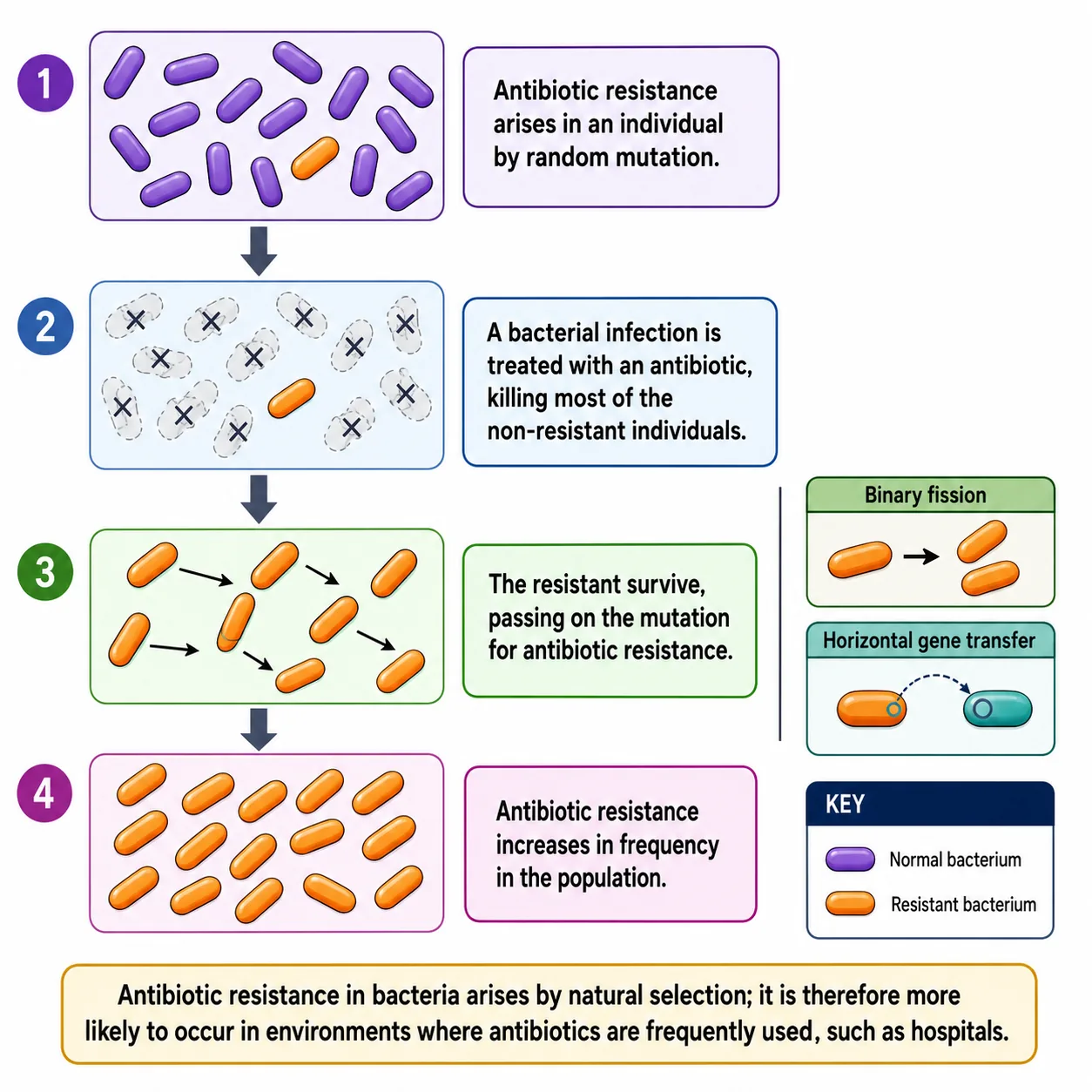
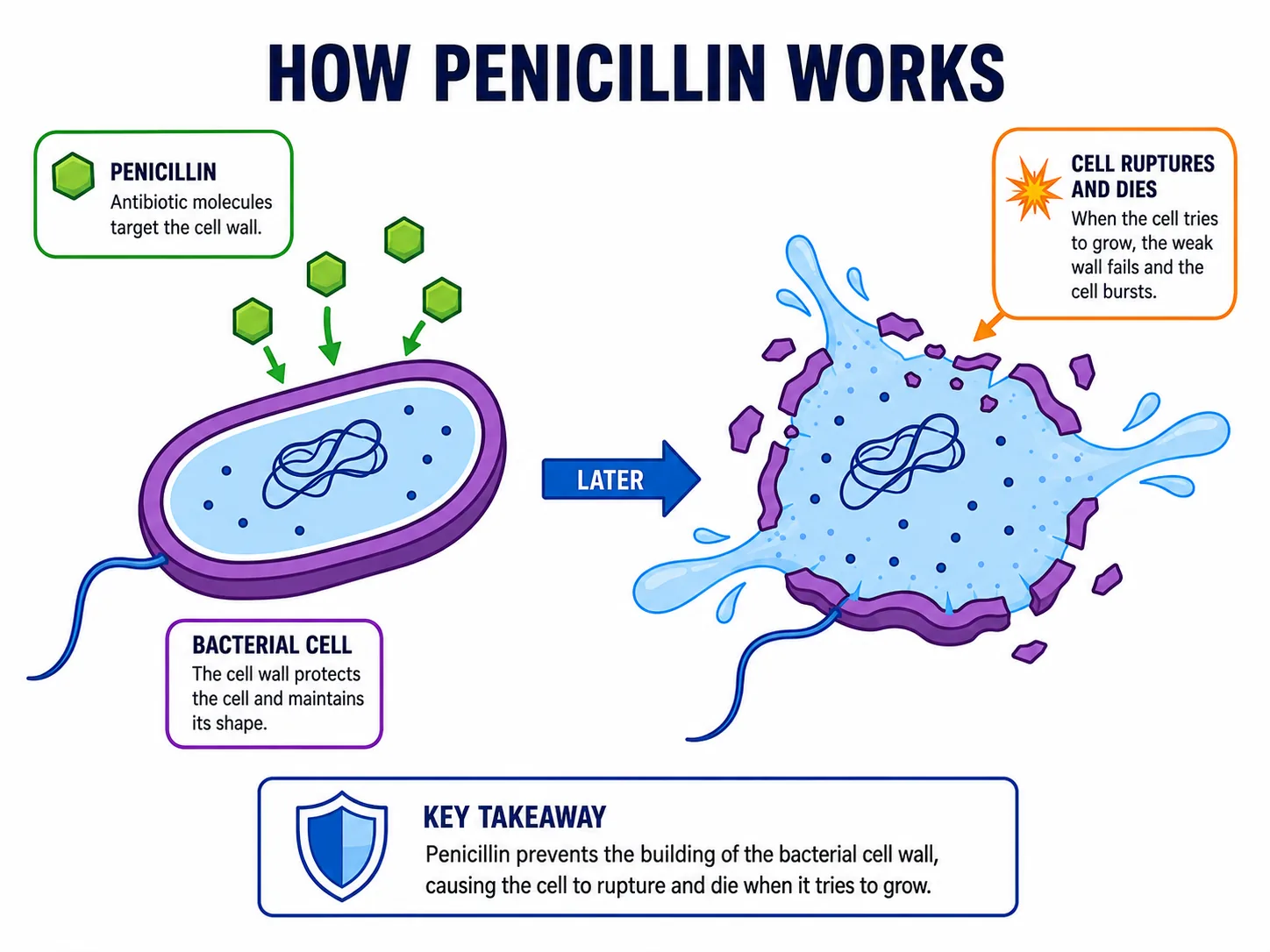
In the past, gonorrhoea was treated with the antibiotic penicillin, but many strains of the bacterium have become resistant to it, so other antibiotics are now used.
Section 4 of 9Comparing the two diseases
| Salmonella food poisoning | Gonorrhoea | |
|---|---|---|
| Spread | Contaminated food, hands and surfaces | Sexual contact |
| Symptoms | Fever, cramps, vomiting, diarrhoea | Pain on urination, thick yellow/green discharge |
| Treatment | Usually rehydration; antibiotics for severe cases | Antibiotics (resistance to penicillin is common) |
| Prevention | Hygiene, thorough cooking, vaccination of poultry | Condoms, treating partners |
Section 5 of 9Antibiotic resistance and public health
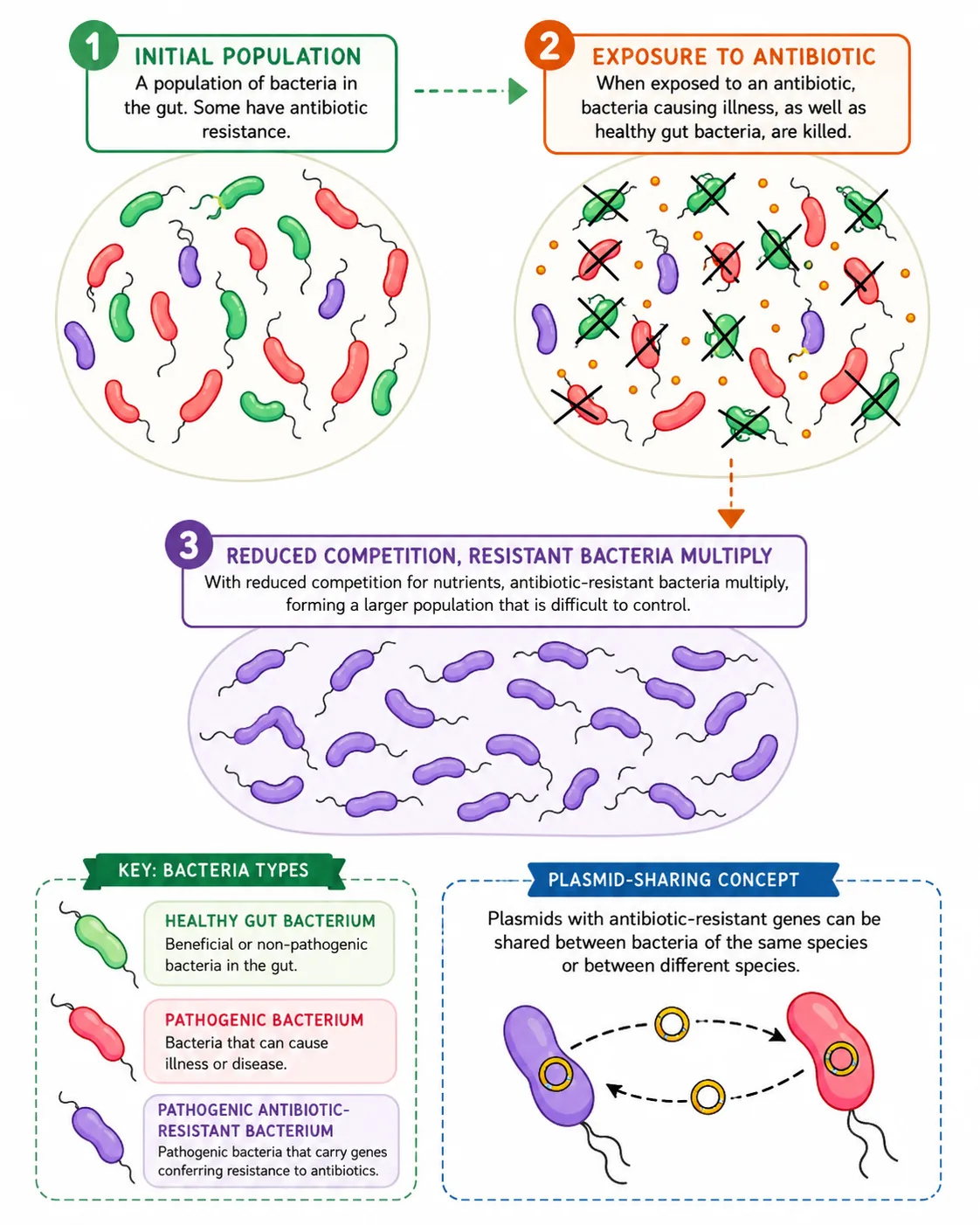
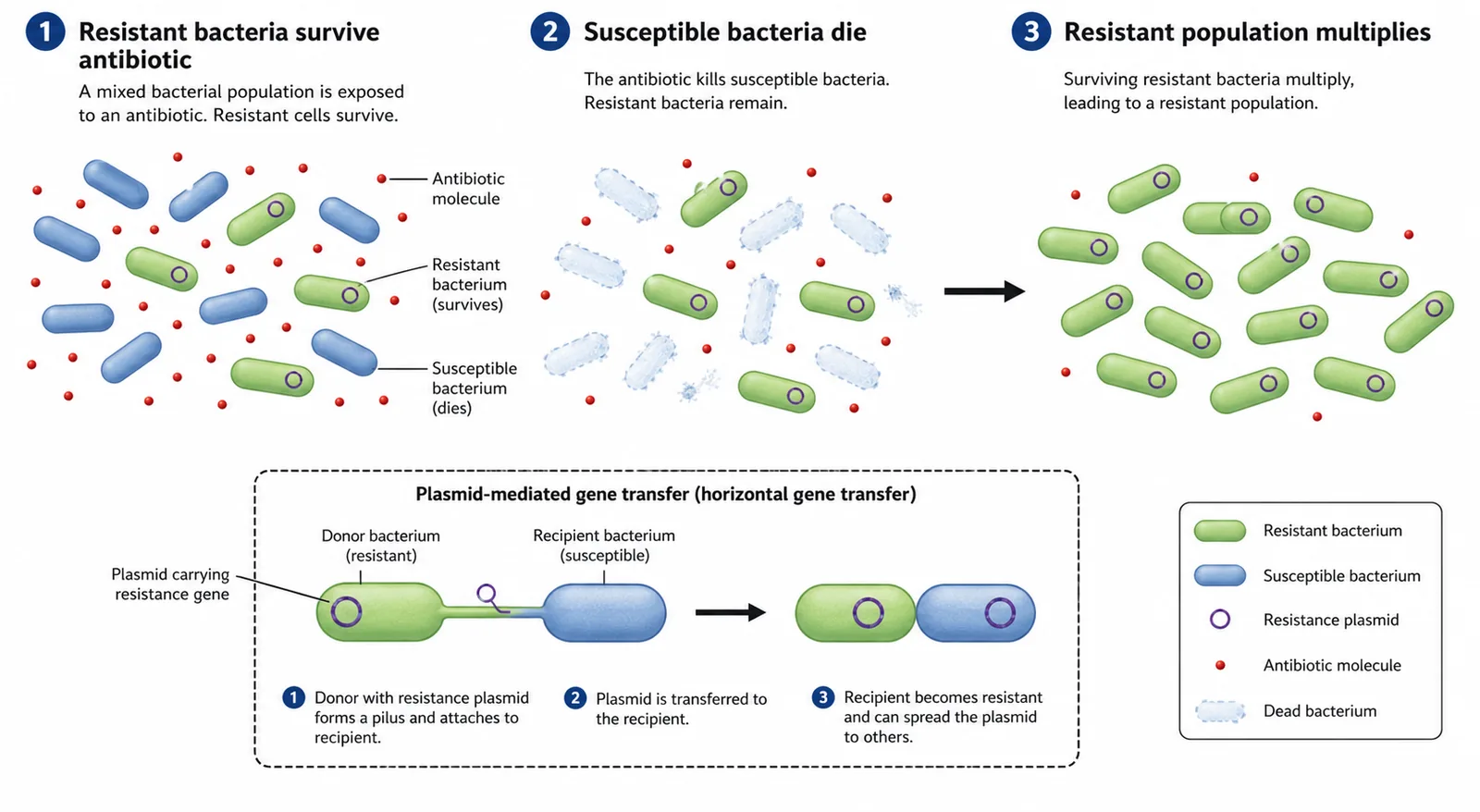
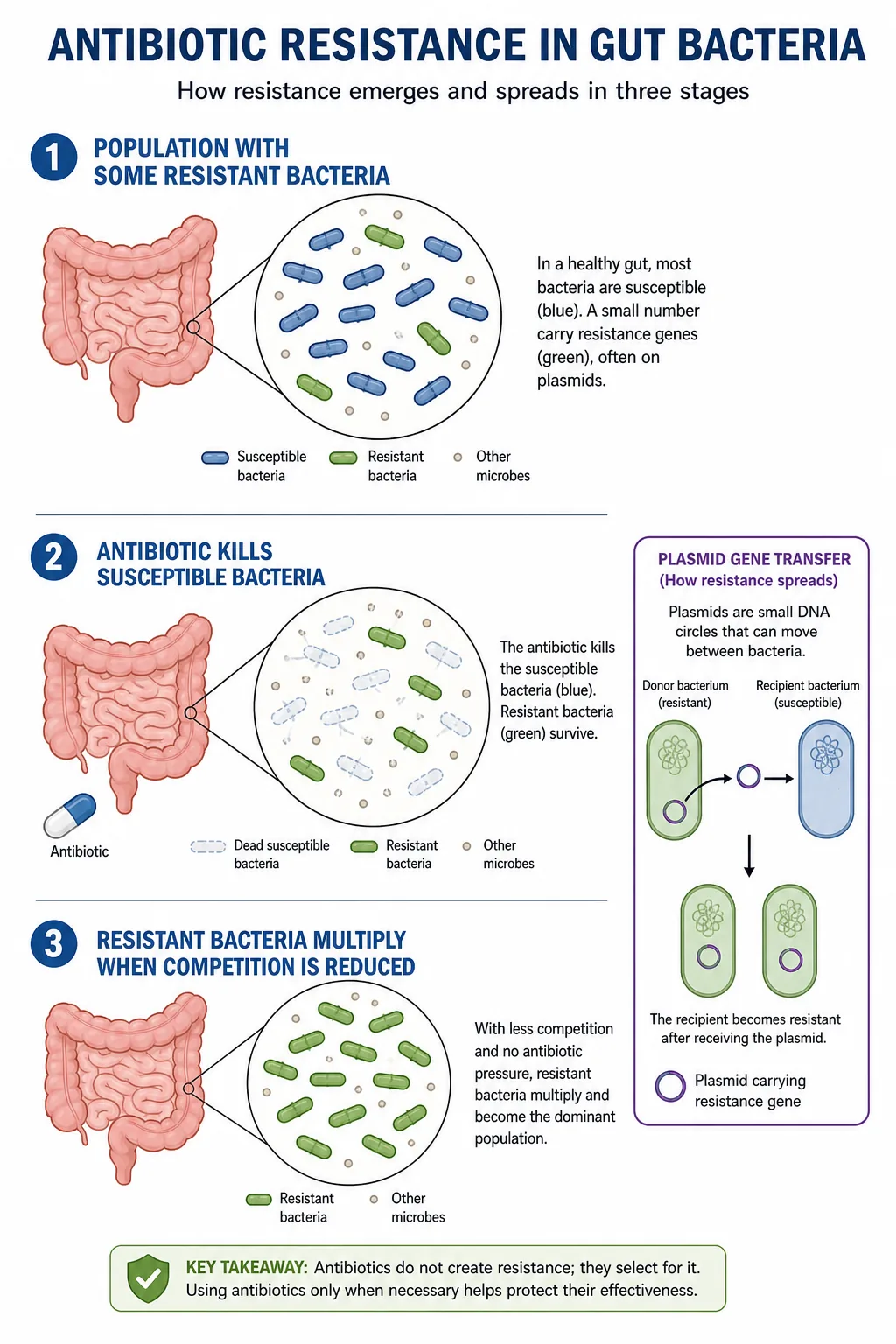
Both diseases show why public health matters.
- so the resistant strain becomes more common.
Section 6 of 9Bacteria and the immune response


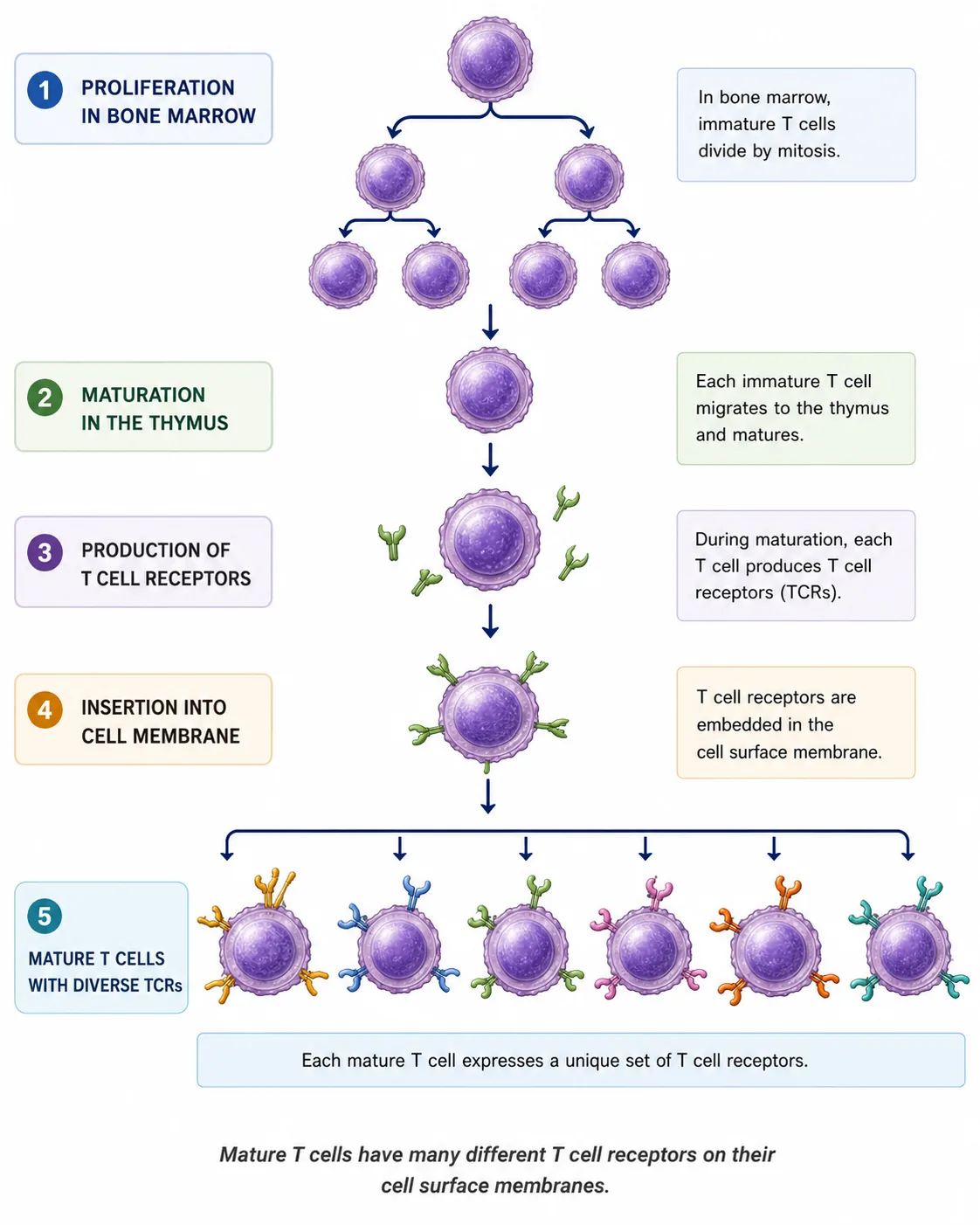
When Salmonella or gonorrhoea bacteria enter the body, white blood cells recognise their antigens and respond (see lesson 3.1.6).
- so drinking plenty of fluids, often with salts, is the main treatment.
- so screening and contact tracing are important in controlling it.
You should be able to compare bacterial diseases with viral ones: bacteria are cells that can be killed with antibiotics, whereas viruses are not cells and cannot.
For a long-answer question, show that you understand the link between cause and control: toxins explain the symptoms of food poisoning, rapid multiplication explains why food must be kept cold, and natural selection explains why resistant gonorrhoea has appeared. Name the pathogen type and the disease each time.
Section 7 of 9Exam-style questions




Explain why food poisoning caused by Salmonella is more likely if chicken is not cooked properly. [3]3 marks
Raw chicken can contain Salmonella bacteria [1]. Cooking at a high temperature kills the bacteria [1]. If it is not cooked thoroughly some survive, multiply in the gut and release toxins [1].
Describe how the spread of gonorrhoea can be reduced. [2]2 marks
Using a condom to prevent contact [1]; treating infected people and their partners with antibiotics (avoiding sexual contact until treated) [1].
A person takes antibiotics for gonorrhoea but the infection continues. Suggest an explanation. [2]2 marks
The bacteria may be a resistant strain [1] which survive the antibiotic and continue to multiply [1].
Section 8 of 9Key terms
| Term | Meaning |
|---|---|
| Bacterium | A single-celled organism with no nucleus. |
| Toxin | A poison produced by bacteria. |
| Salmonella | Bacteria that cause food poisoning. |
| Gonorrhoea | A sexually transmitted bacterial infection. |
| Sexually transmitted infection | An infection spread by sexual contact. |
| Penicillin | An antibiotic that kills bacteria. |
| Antibiotic resistance | The ability of bacteria to survive treatment with an antibiotic. |