Section 1 of 9The principle of vaccination

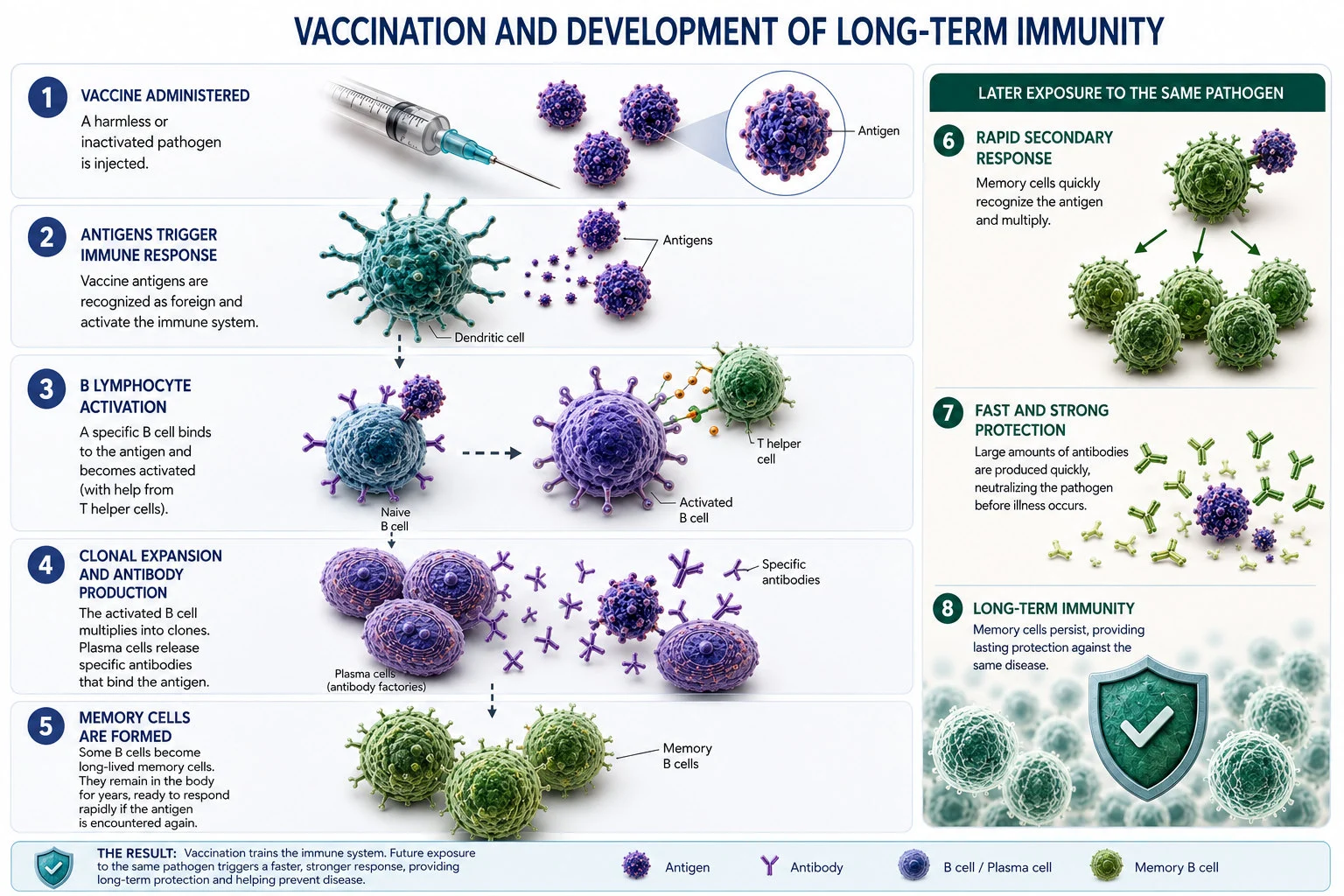
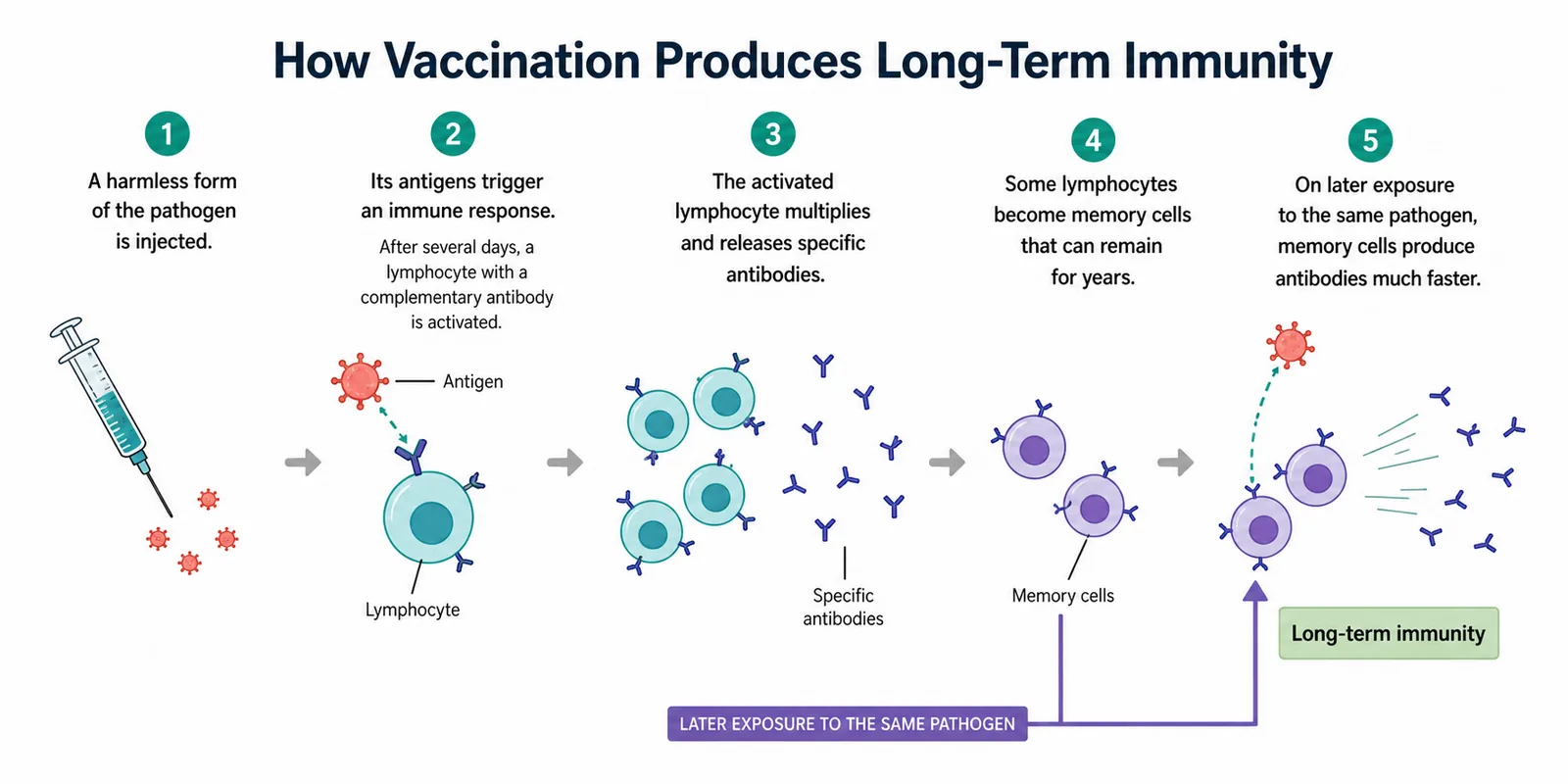
Vaccination gives a person immunity to a disease without them having to suffer it. A vaccine contains small amounts of a pathogen in a harmless form: dead or inactive (weakened) pathogens, or parts of them. The pathogen cannot cause the disease, but its antigens are still there, so the immune system treats them as foreign.
Section 2 of 9How a vaccine works
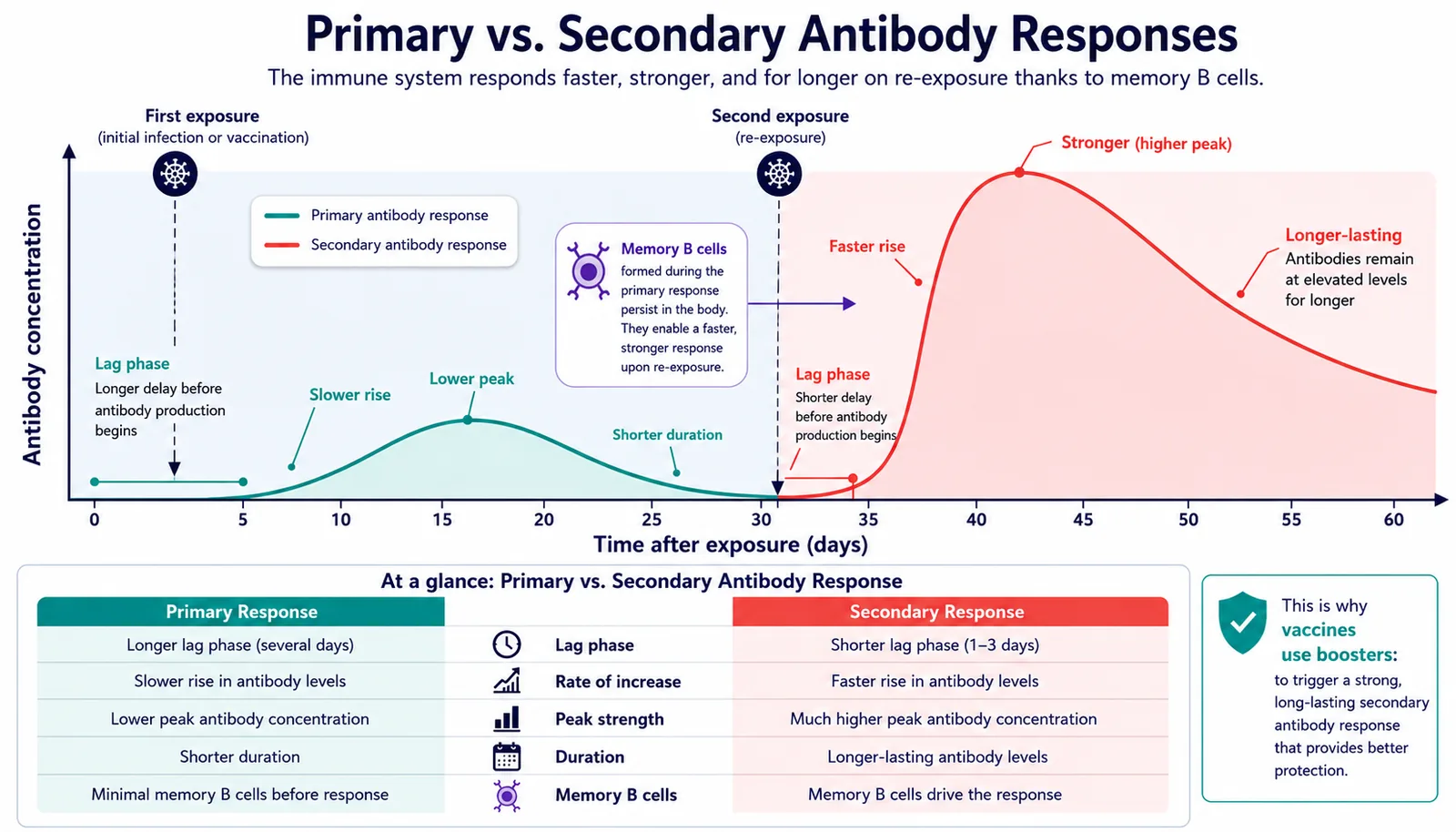
The first response to a vaccine is slow, which is why some vaccines require a second dose or booster, to raise the number of memory cells. Because vaccines protect against one type of antigen, a different vaccine is needed for each disease, and some pathogens that mutate, such as influenza viruses, need new vaccines every year.
Section 3 of 9Herd immunity

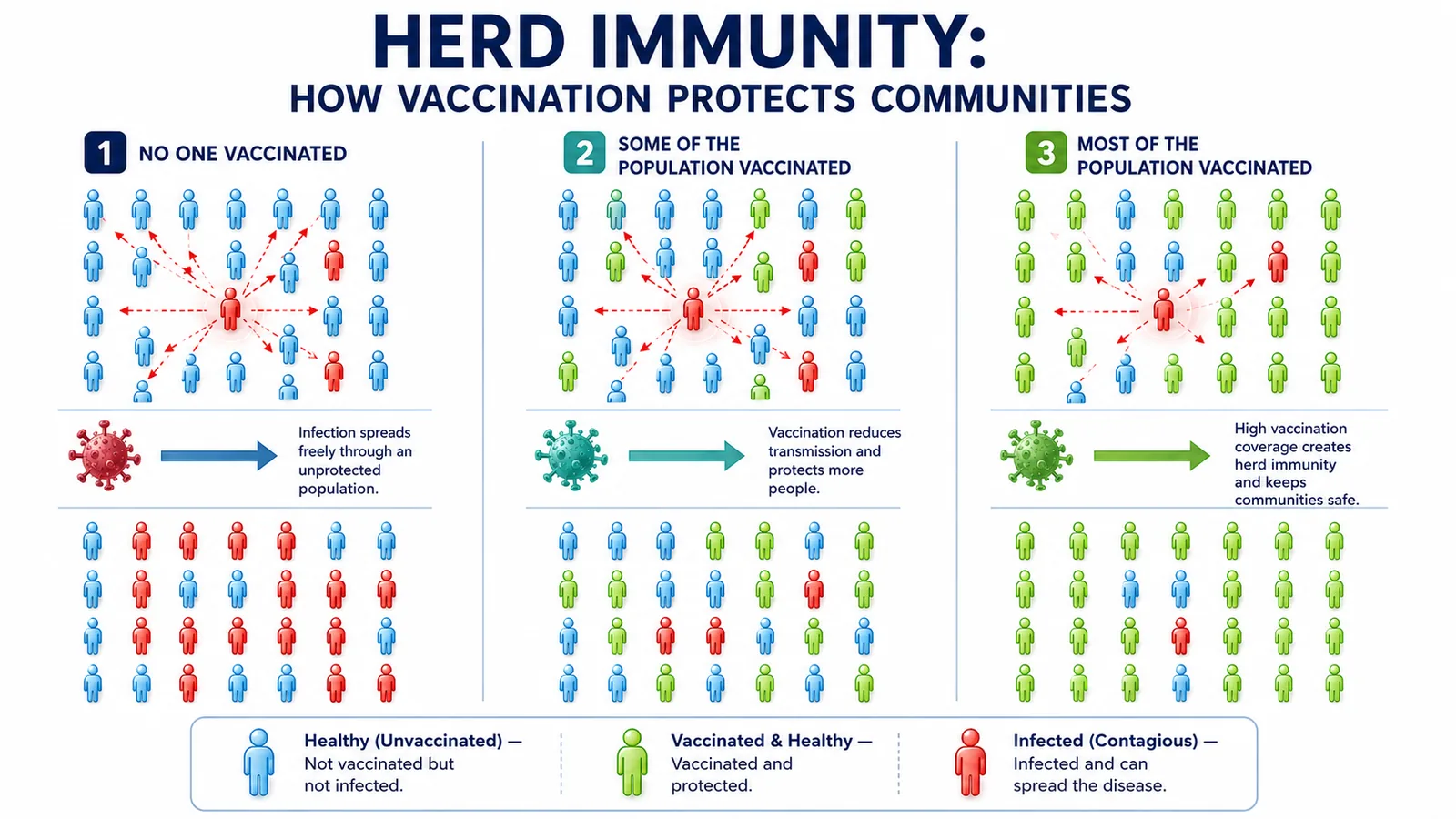

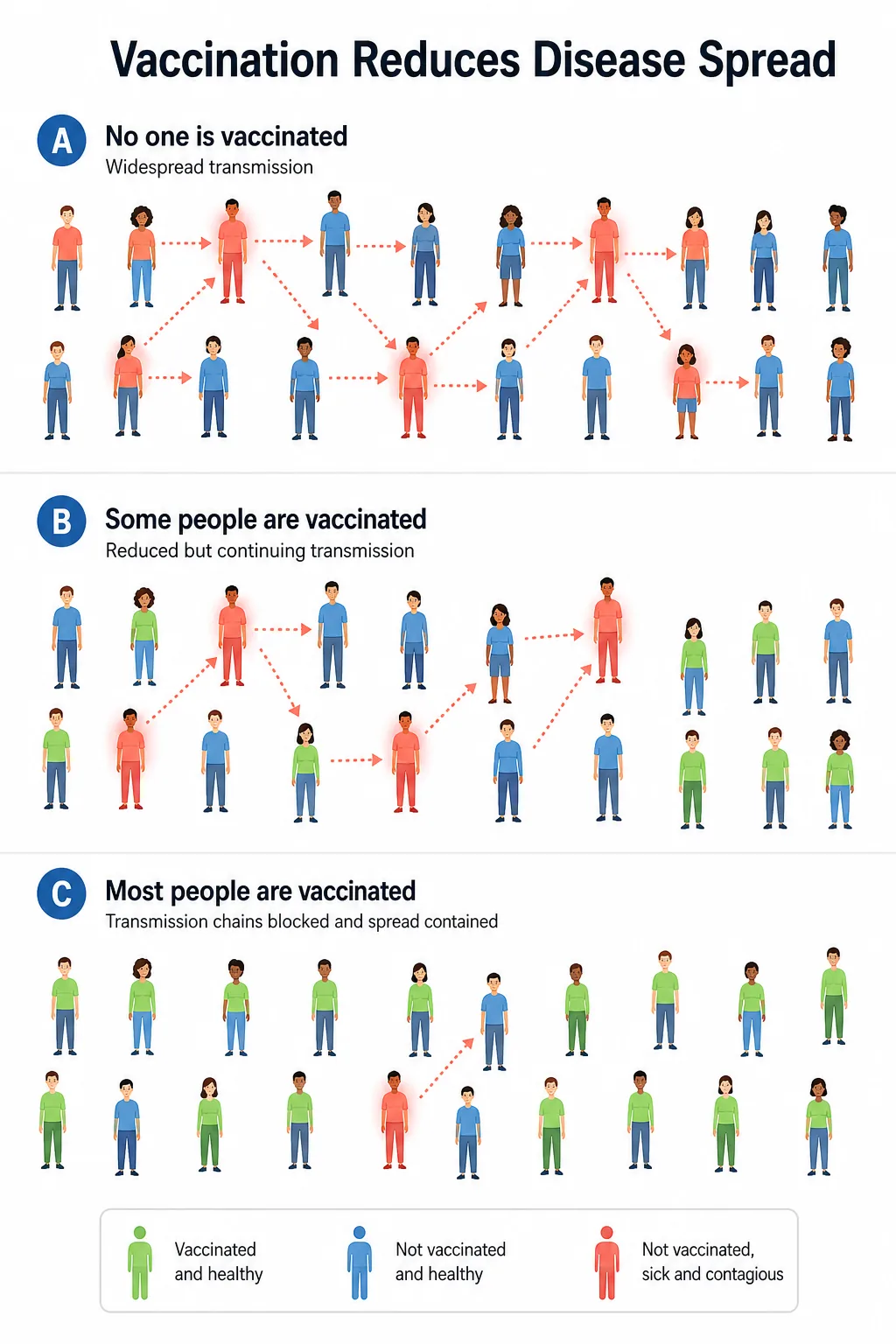

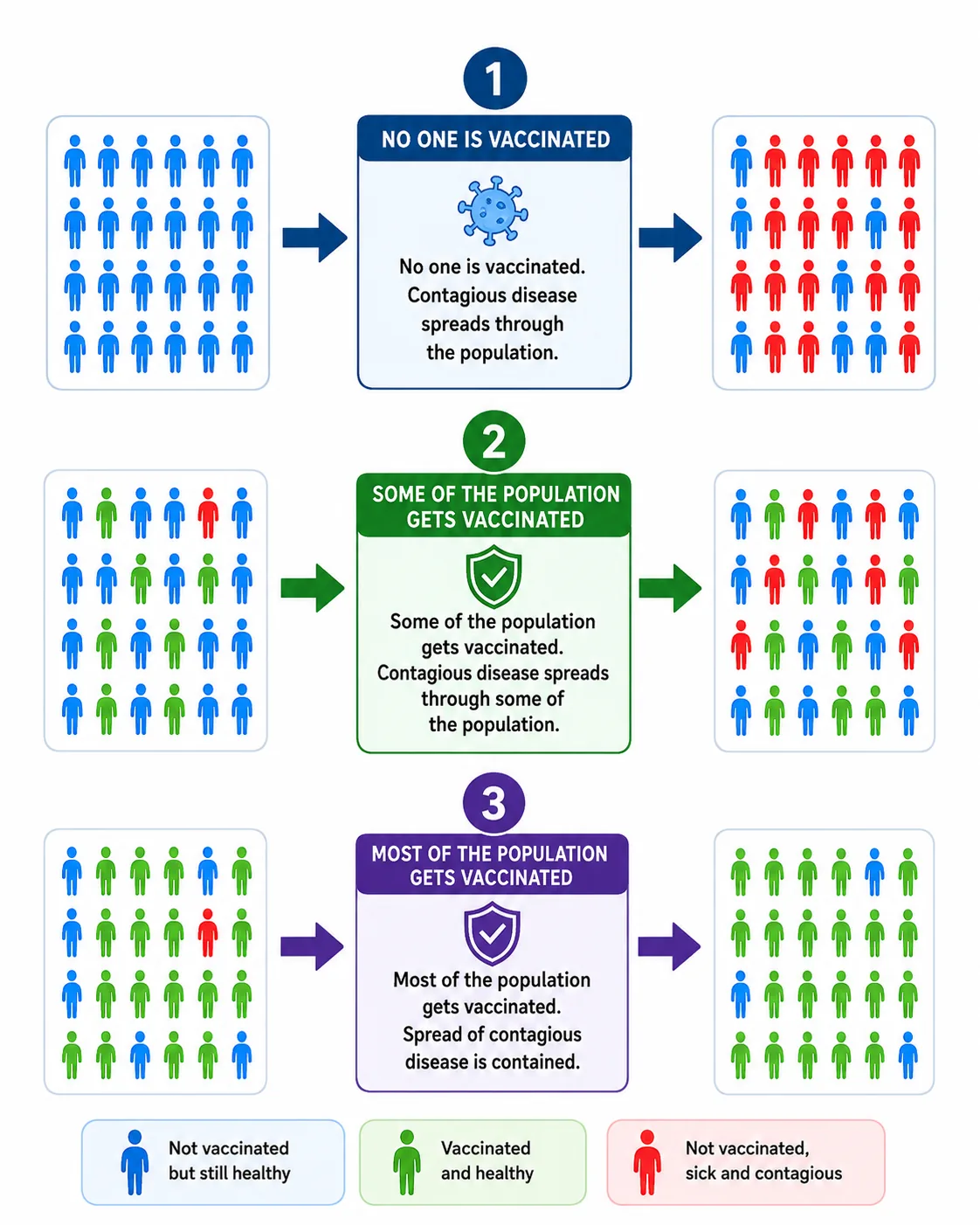
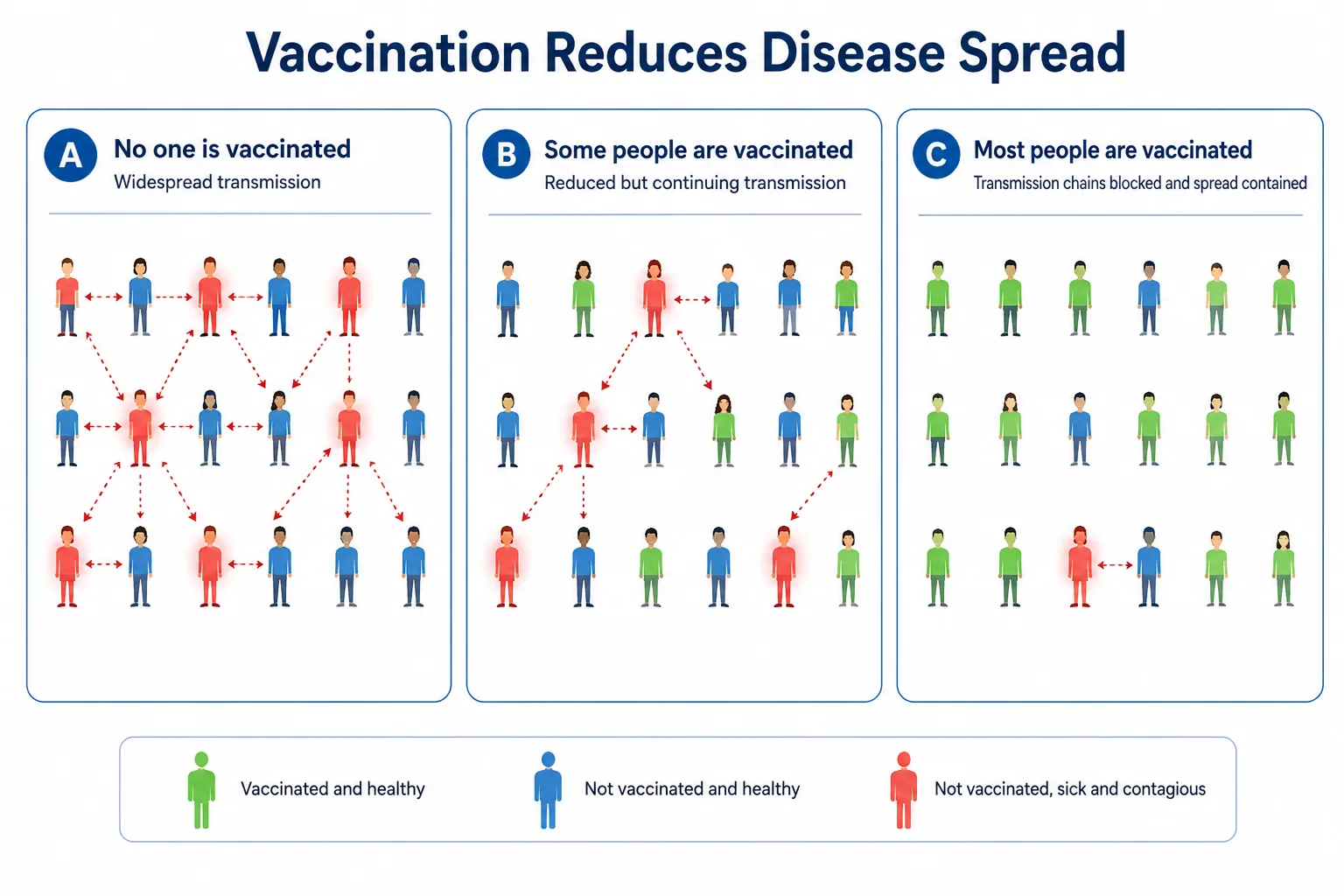
If a large proportion of a population is vaccinated, the pathogen cannot spread easily because there are few people left to infect.
- as happened with measles in some regions when parents became worried about the MMR vaccine.
Section 4 of 9Evaluating vaccination
| Benefits | Risks and drawbacks |
|---|---|
| Prevents serious disease and death | Some people have a mild reaction, such as a sore arm or fever |
| Has helped to eradicate smallpox and nearly eradicate polio | Very rarely, a person has a severe allergic reaction |
| Protects the whole population through herd immunity | A vaccine may not give 100% protection to everyone |
| Cheaper than treating the disease | New vaccines take time to develop and some pathogens (HIV, malaria) are difficult |
On balance, for most diseases the risk of harm from the disease is far greater than the risk from the vaccine. Questions often ask you to compare the number of people harmed by the vaccine with the number harmed by the disease, using data.
Section 5 of 9Interpreting vaccine data
Graphs of the number of cases of a disease against time typically show a steep fall after the introduction of a vaccine.
- and you should notice whether other factors,
- such as improved hygiene, might contribute.
- and the global elimination of smallpox in 1980 shows what it can achieve.
Section 6 of 9Different types of vaccine and delivery
Vaccines vary in what they contain.
- while others contain only a purified part of the pathogen, such as a surface protein.
Why people choose not to vaccinate
Some parents decline vaccines because of fear of side effects or a belief that a disease is no longer common, so the vaccine seems unnecessary.
- and measles cases rose,
- although many large studies later found no link.
Section 7 of 9Exam-style questions


Explain how a vaccine protects a person against a future infection. [4]4 marks
The vaccine contains weakened or dead pathogens with antigens [1]. Lymphocytes recognise these and produce antibodies [1]. Memory cells are produced [1]. On later infection by the same pathogen, memory cells respond rapidly, making antibodies quickly and in large numbers, so the person does not become ill [1].
Explain what is meant by herd immunity. [2]2 marks
When a large proportion of the population is vaccinated/immune [1], the pathogen cannot spread easily, so those who are not immune are also protected [1].
In a country 20 cases of a disease were reported per 100 000 people before vaccination and 2 per 100 000 after. Calculate the percentage decrease. [2]2 marks
Decrease = 18 [1]; 18 / 20 x 100 = 90% [1].
Section 8 of 9Key terms
| Term | Meaning |
|---|---|
| Vaccination | Giving a harmless form of a pathogen to produce immunity. |
| Vaccine | A preparation containing antigens from a pathogen. |
| Immunity | Protection from a disease through memory cells. |
| Booster | An extra dose of vaccine to raise immunity. |
| Herd immunity | Protection of unvaccinated people when most of the population is immune. |
| Memory cell | A lymphocyte that gives a rapid response on re-infection. |
| Antigen | A molecule that triggers an immune response. |