Skip to content
Dabour HubLEARN · PRACTICE · EXPLORESign inStudent

4.1.2Bioenergetics

Rate of Photosynthesis

5 min read 8 parts Lesson 3 of 9 1 quiz

0%read

Section 1 of 8Limiting factors

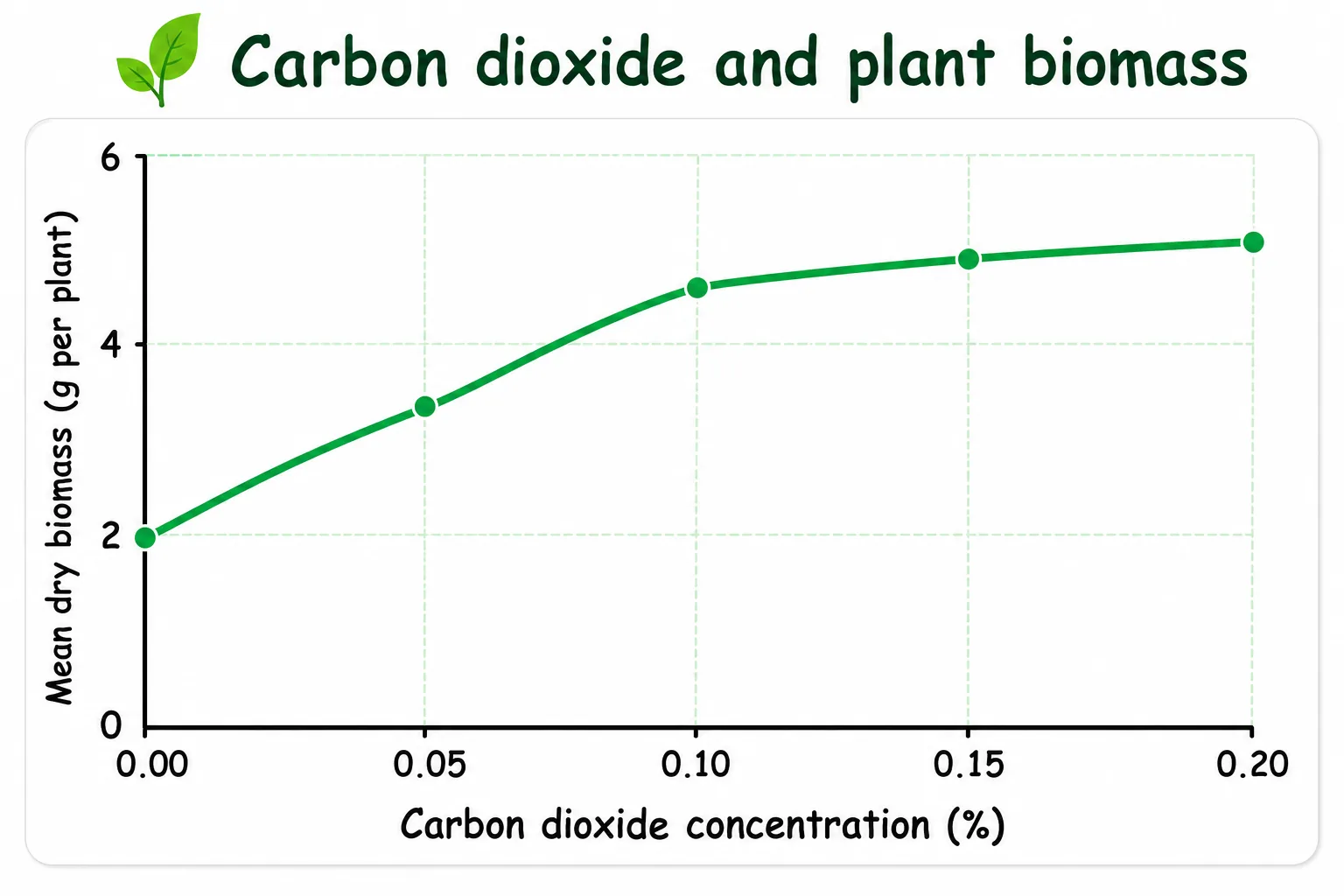
Graph of carbon dioxide concentration against plant biomass
Effect of Limiting Factors on the Rate of Photosynthesis — 2D Simulation
pasted 1782544101824 0

The rate of photosynthesis is how fast a plant makes glucose.

It can be affected by several factors.
Limiting factor
A limiting factor is the factor in shortest supply, which restricts the rate of the reaction.
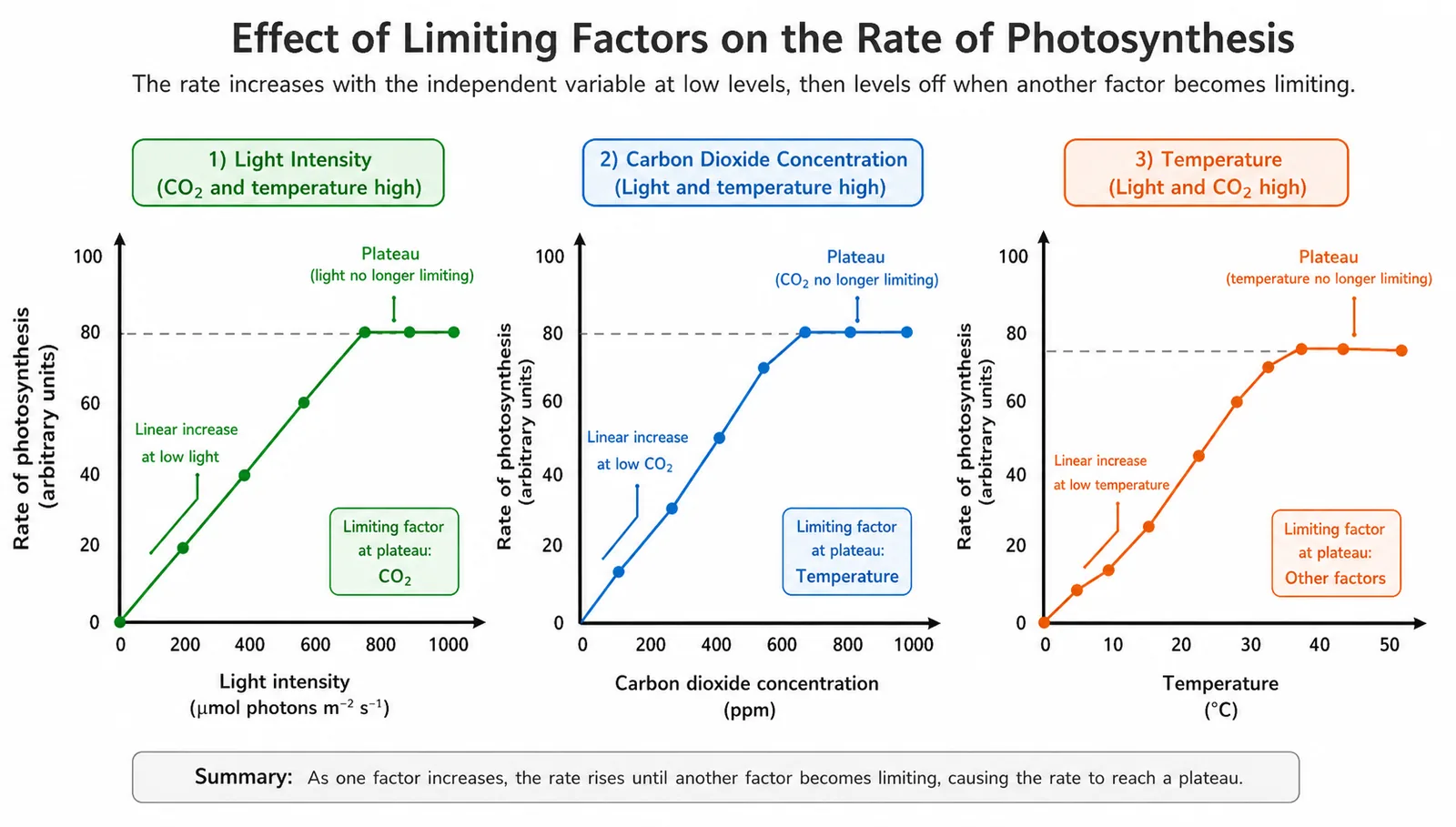
If it is increased, the rate rises, but once something else becomes limiting, increasing the first factor has no further effect.
Light intensity
The four main limiting factors are light intensity, carbon dioxide concentration, temperature and the amount of chlorophyll.

Section 2 of 8Light intensity

pasted 1782544085563 0
Effect of Light Intensity on Rate of Photosynthesis — 2D Simulation
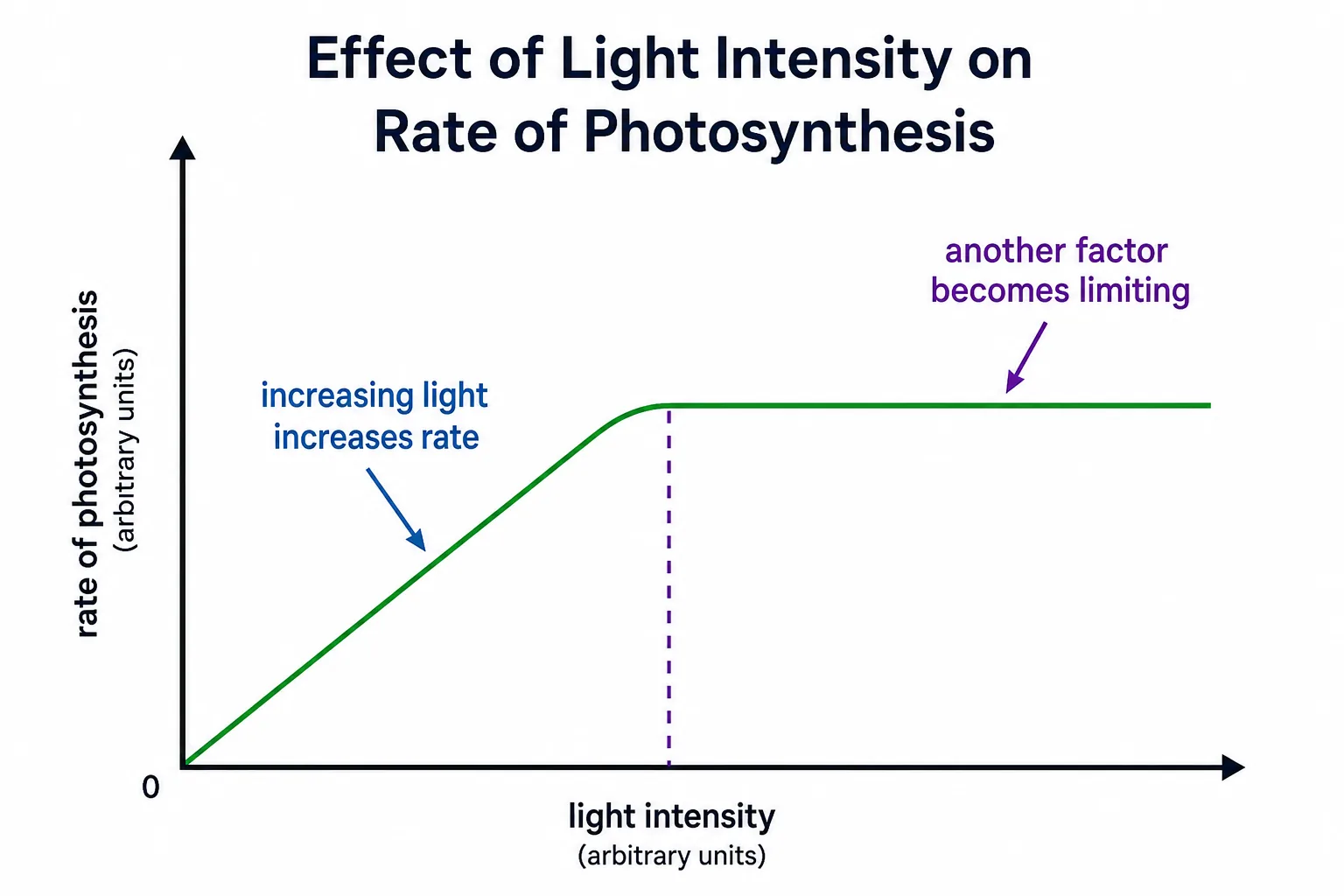
Effect of light intensity on rate of photosynthesis (graph)
Investigating the Effect of Light Distance on Photosynthesis — Full 2D Simulation
Light intensity limiting photosynthesis (graph)
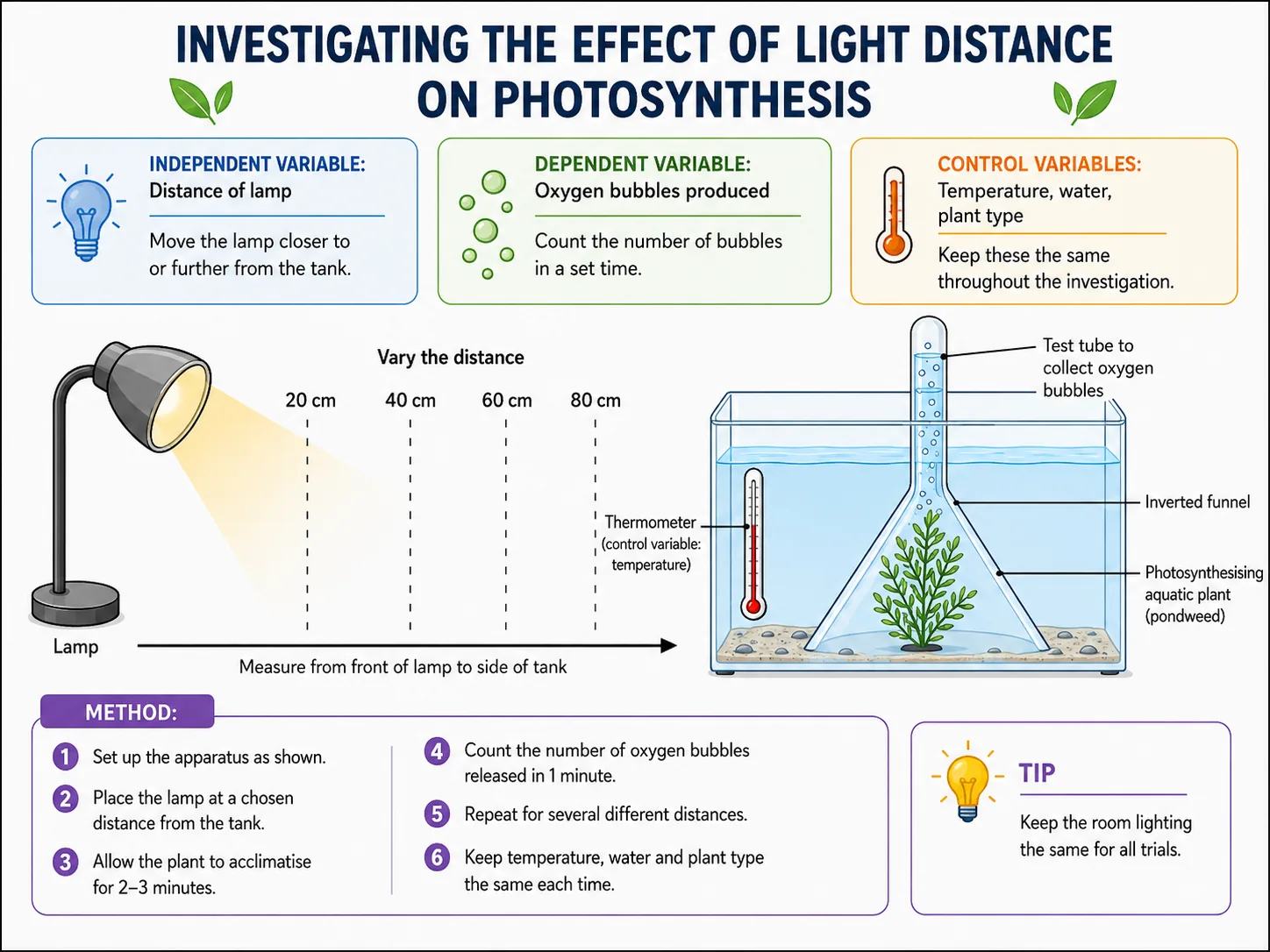
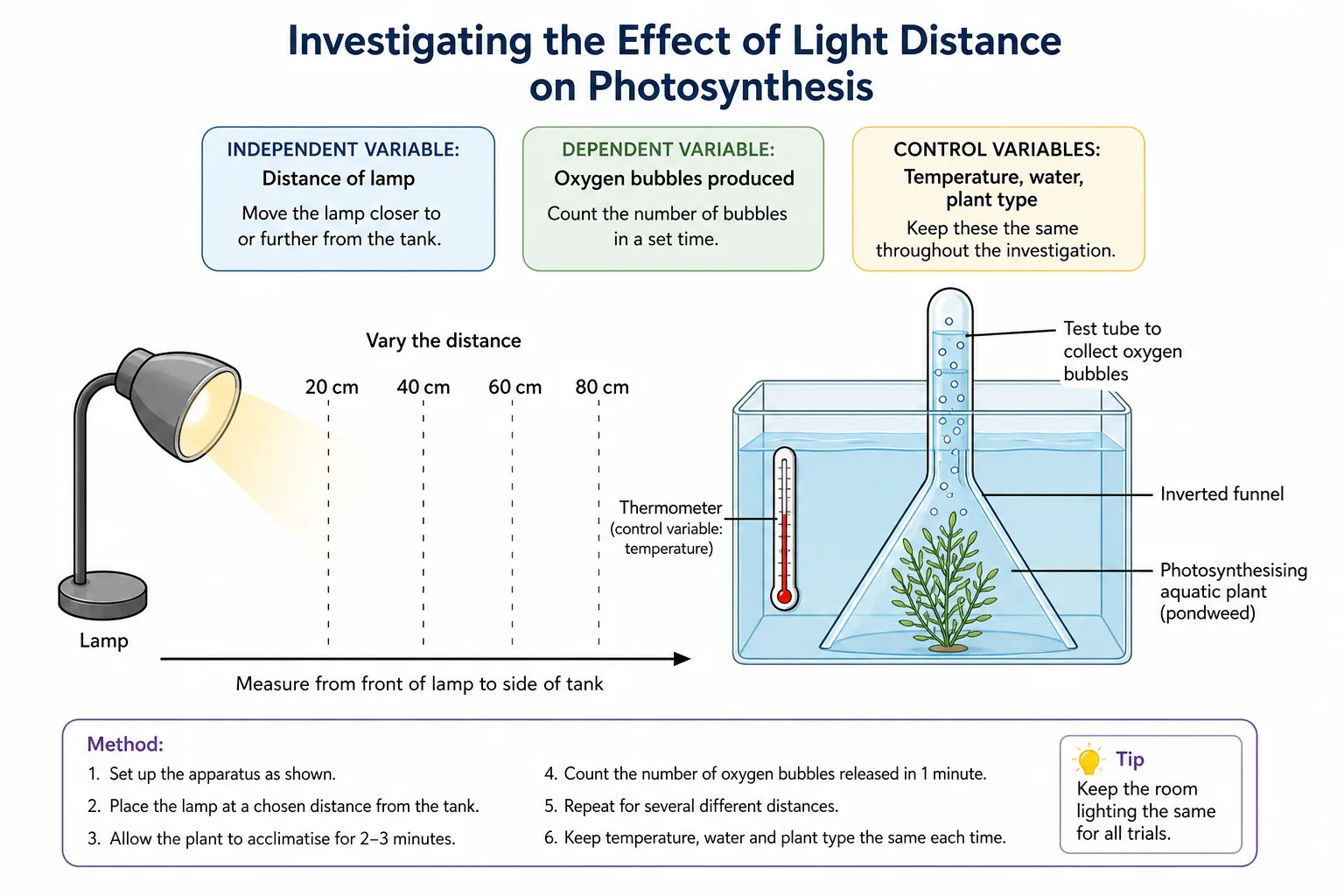
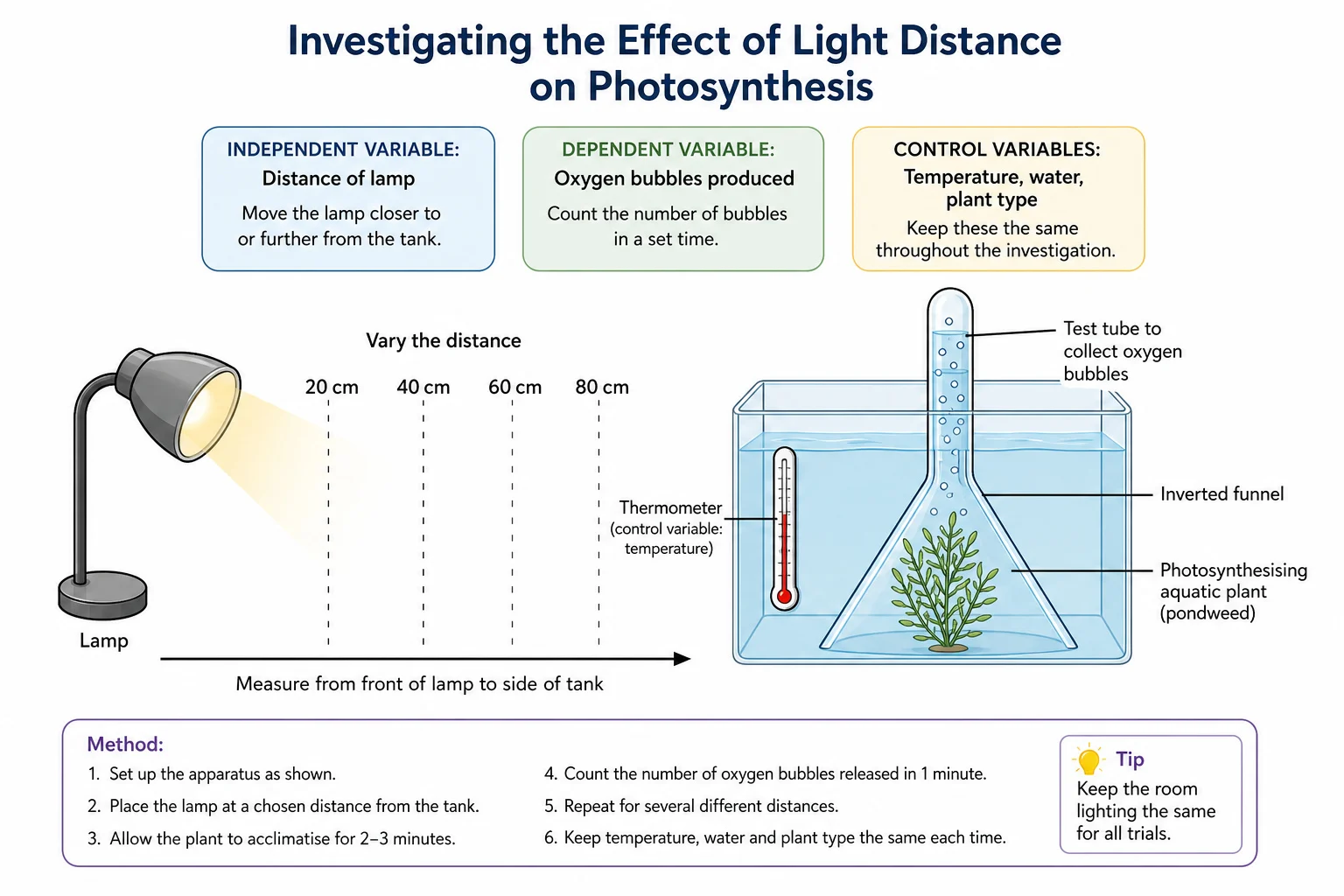
Investigating the effect of light distance on photosynthesis
Investigating light intensity and photosynthesis using pondweed and oxygen collection

Light provides the energy for the reaction.

1
At low light intensity, the rate is low because there is little energy to drive the reaction.
2
As the light intensity rises the rate increases in proportion, so on a graph the line rises steeply.
3
This section of the graph shows that light is limiting.
4
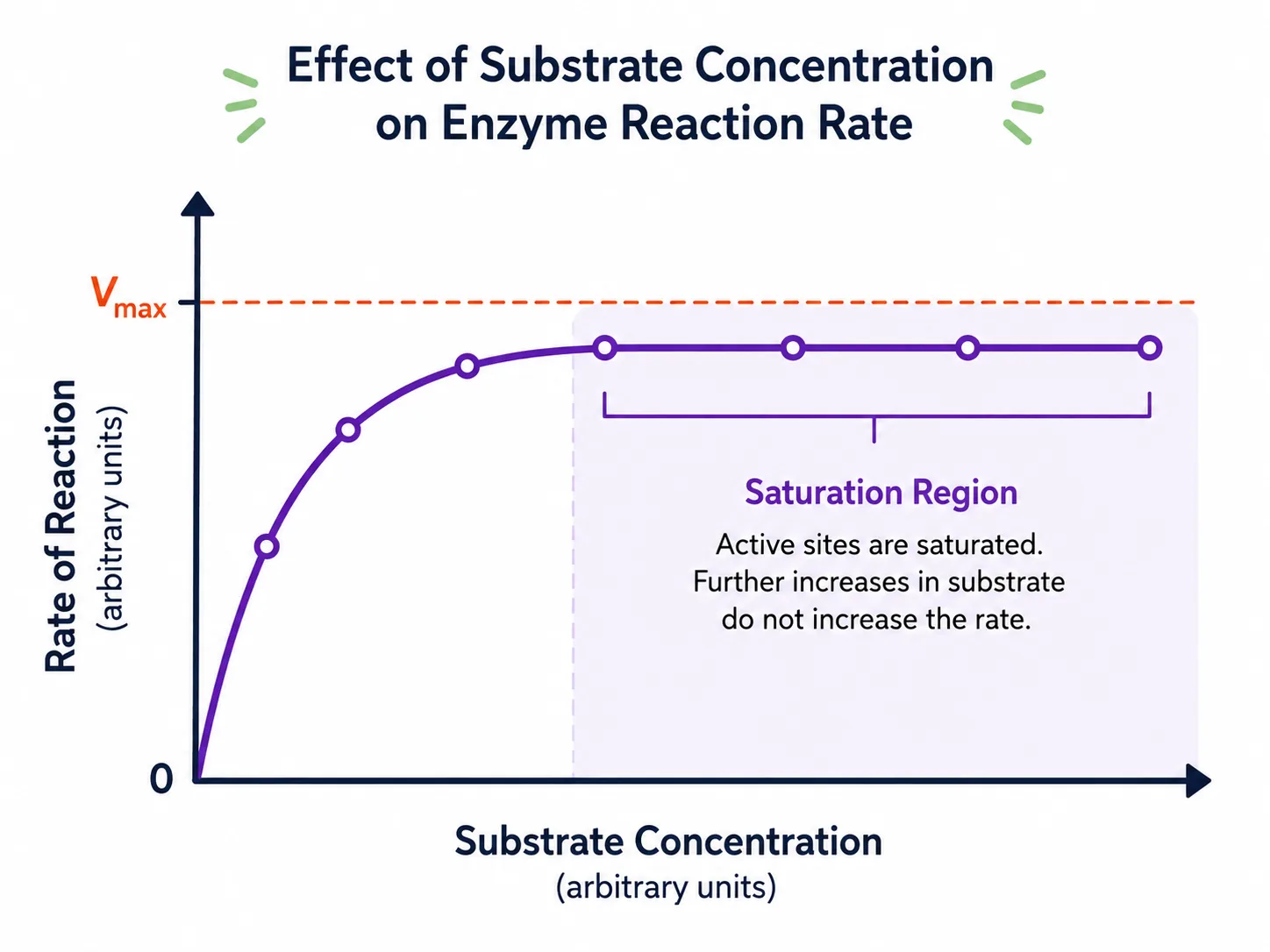
At a certain point the line levels off: more light does not increase the rate,
  • because another factor, such as carbon dioxide concentration or temperature, has become limiting.

For plants growing in water, such as pondweed, light intensity can be changed by moving a lamp closer or further away.

Light intensity is inversely proportional to the square of the distance from the lamp.
Inverse square law
This is the inverse square law (Higher Tier): light intensity is proportional to 1 / d2.
If the distance doubles, the light intensity falls to one quarter; if the distance is halved, the light intensity is four times greater.

As an example of using the inverse square law, suppose the rate of photosynthesis is 8 units when a lamp is 20 cm away.

Light intensity
If the lamp is moved to 10 cm, the light intensity becomes four times greater,
  • so, if light is the only limiting factor, the rate would be about 32 units.
In practice, other factors would soon begin to limit the rate, so the actual increase is usually smaller.
Light intensity also falls when the light has to pass through water or other leaves,
  • which is why plants in deep water or shaded places photosynthesise slowly.

Section 3 of 8Carbon dioxide concentration

Effect of carbon dioxide concentration on rate of photosynthesis (graph)
pasted 1782544092168 0
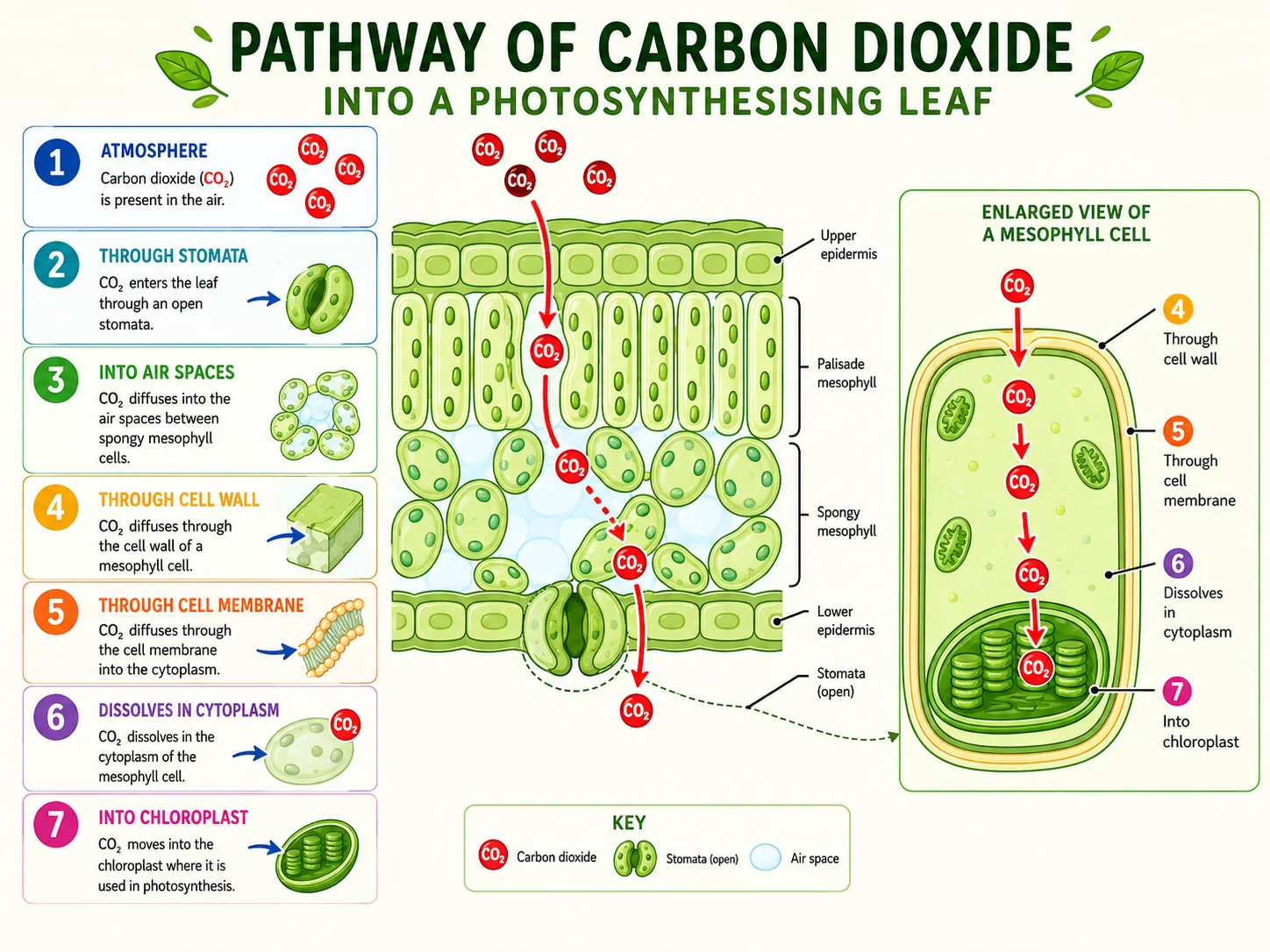
Pathway of carbon dioxide into a photosynthesising leaf
pasted 1782294530048 0
Carbon dioxide and plant biomass
How carbon dioxide enters a leaf for photosynthesis
Leaf cross-section: carbon dioxide enters, oxygen exits

Carbon dioxide is a raw material, so with very little there is little glucose made. As its concentration increases, the rate increases up to a point, after which the line becomes flat because some other factor is limiting. The normal level in air is only about 0.04%, so carbon dioxide is often limiting for plants growing in bright sunlight.

Section 4 of 8Temperature

r049-enzyme-temperature
pasted 1782446219913 0
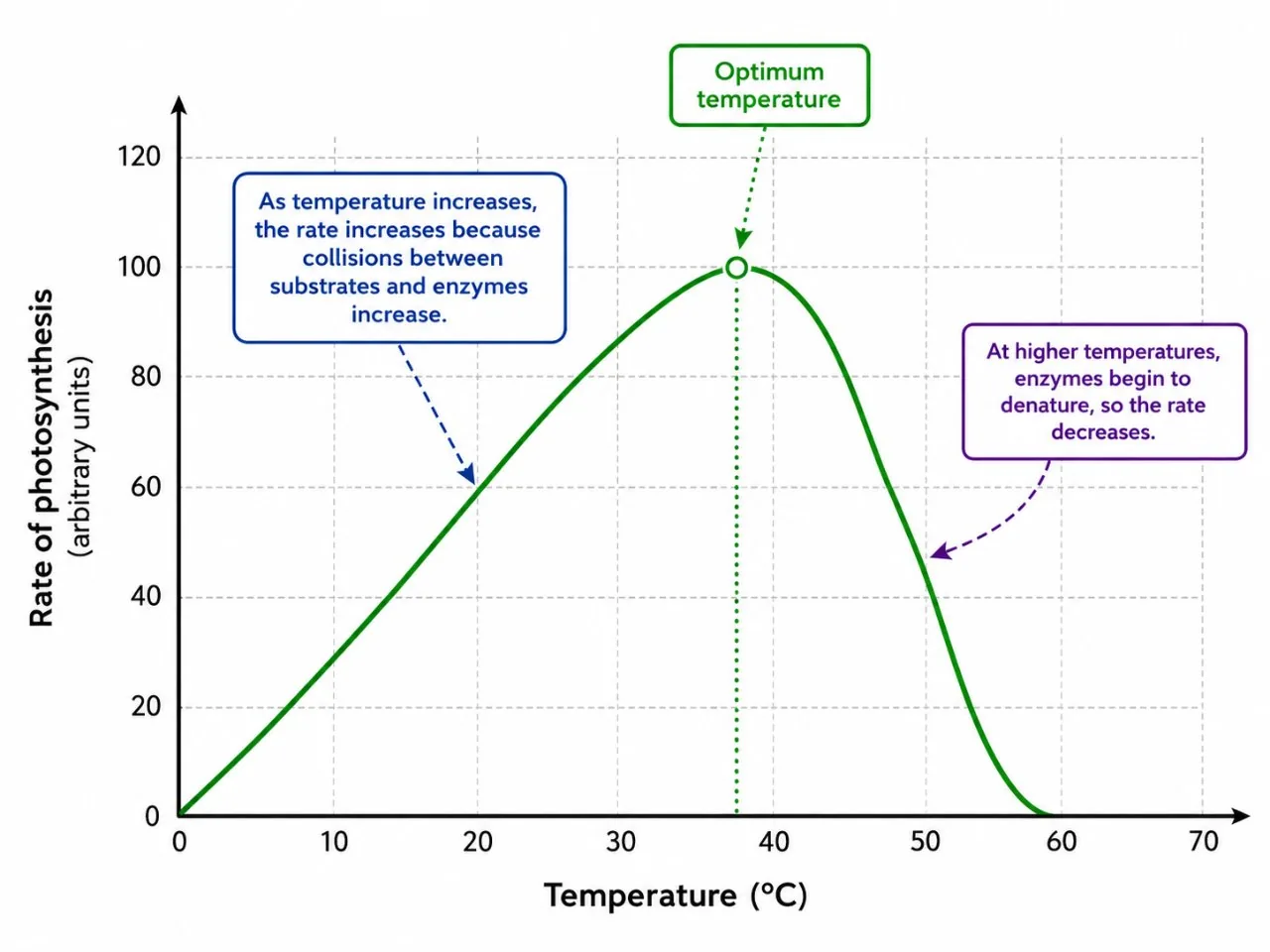
Effect of temperature on rate of photosynthesis (graph)
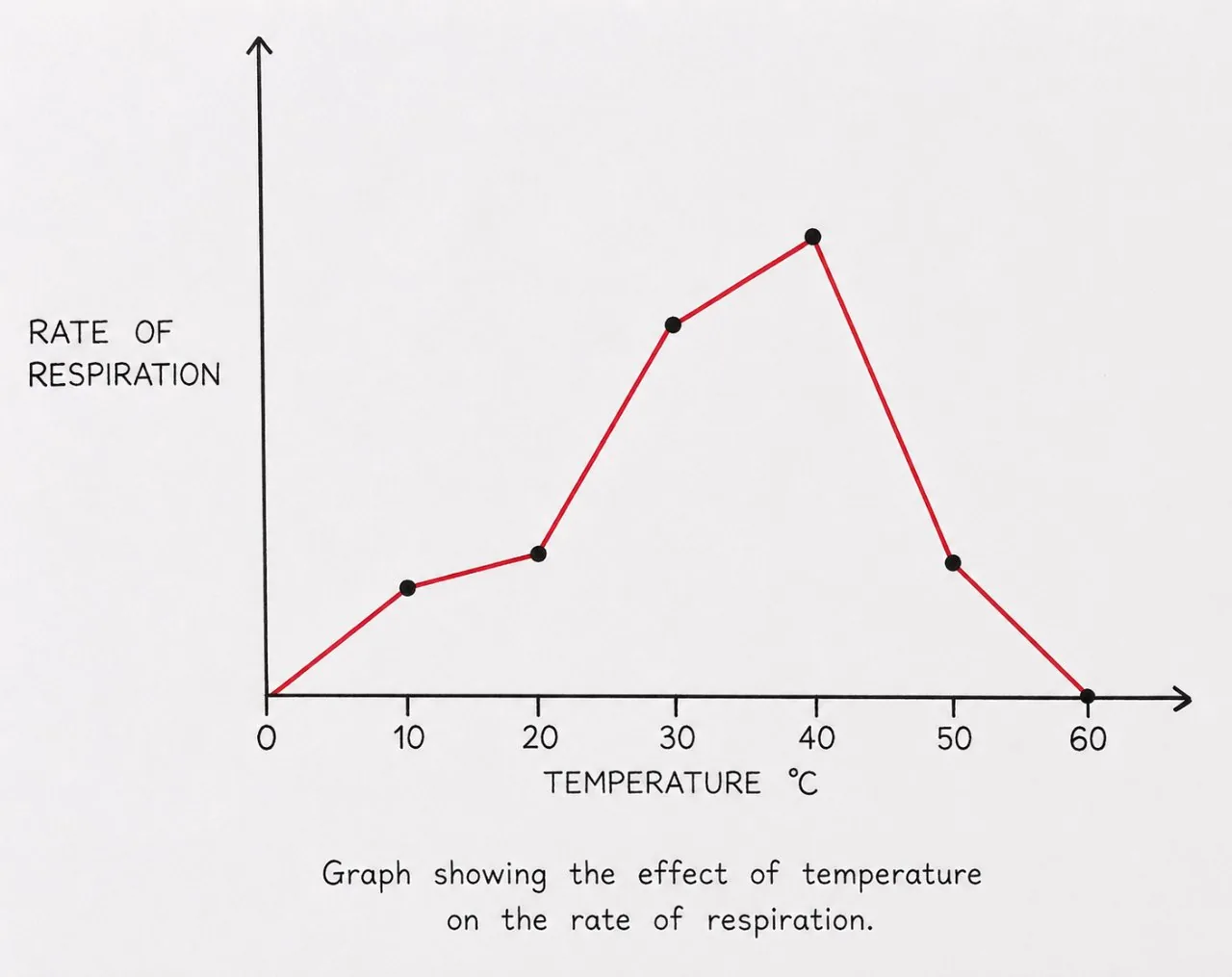
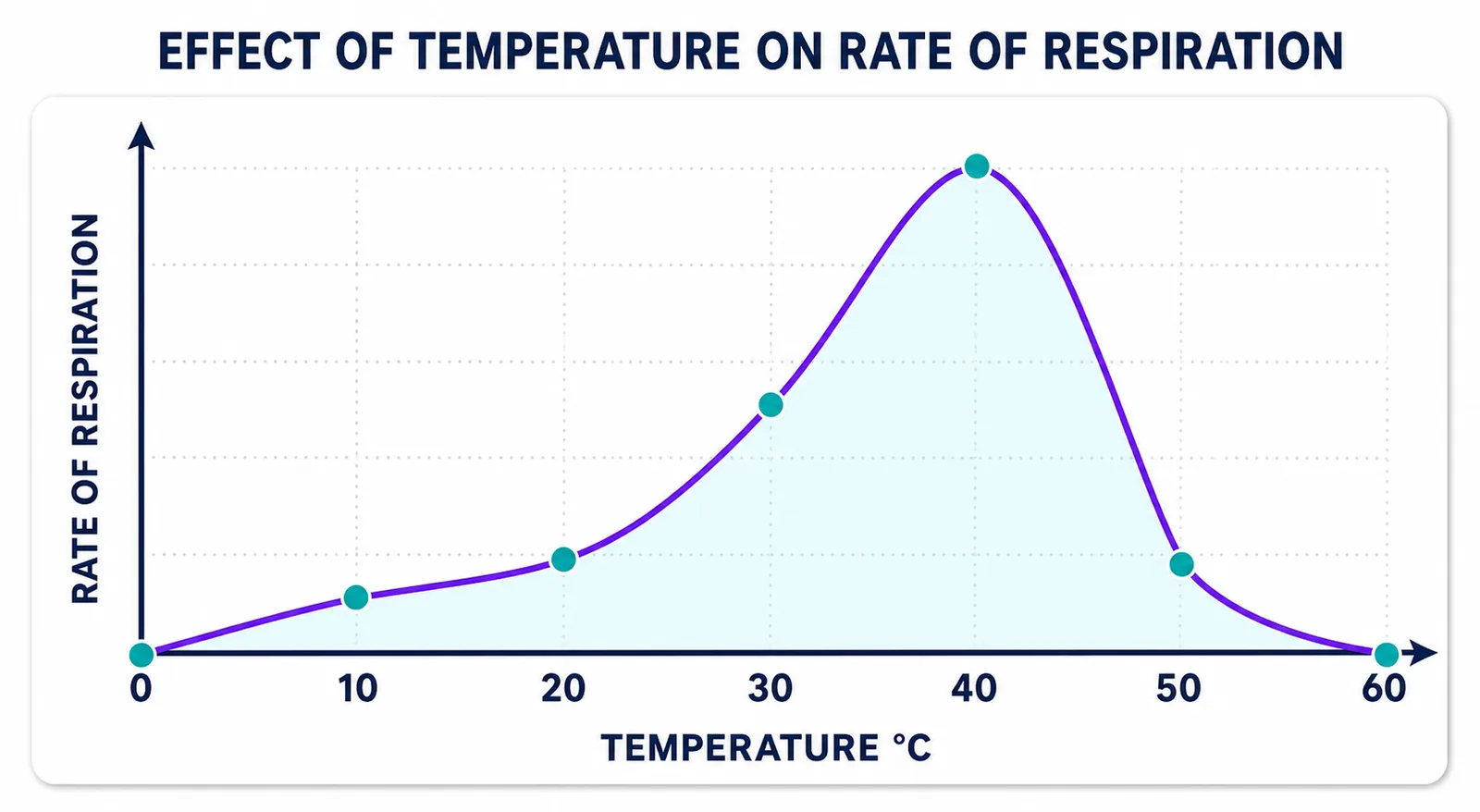
Effect of temperature on rate of respiration (graph)

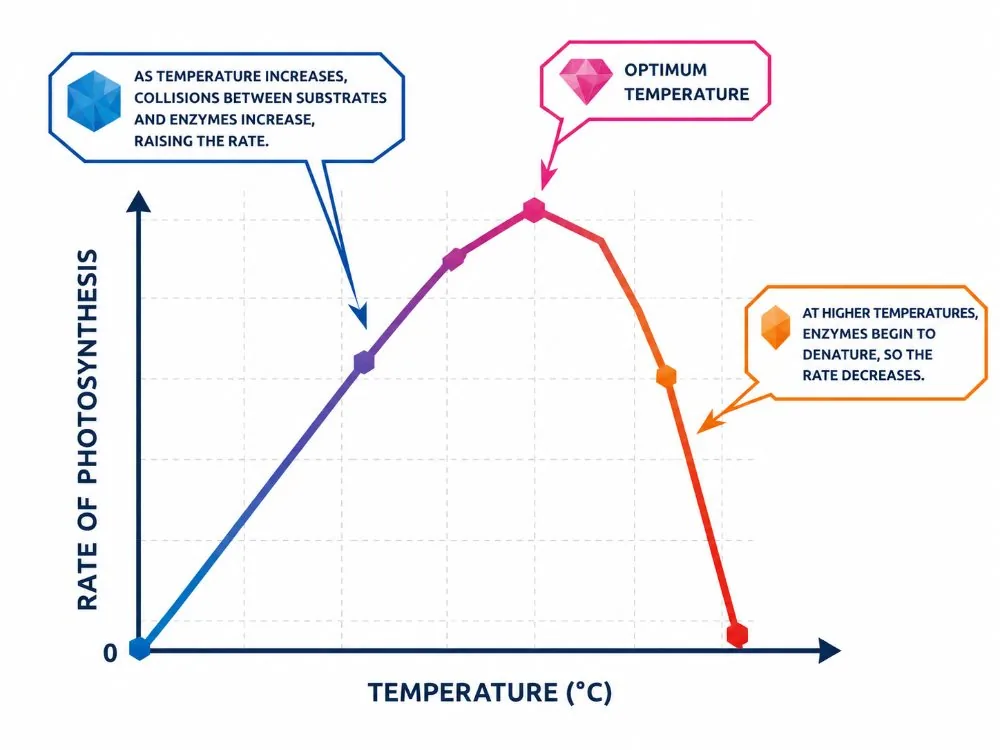
Photosynthesis is controlled by enzymes.

1
At low temperatures, the enzymes have little kinetic energy, so molecules collide less often, and the rate is low.
2
As the temperature rises, the rate increases up to an optimum, often around 25 to 35 degrees Celsius for plants in temperate regions.
3
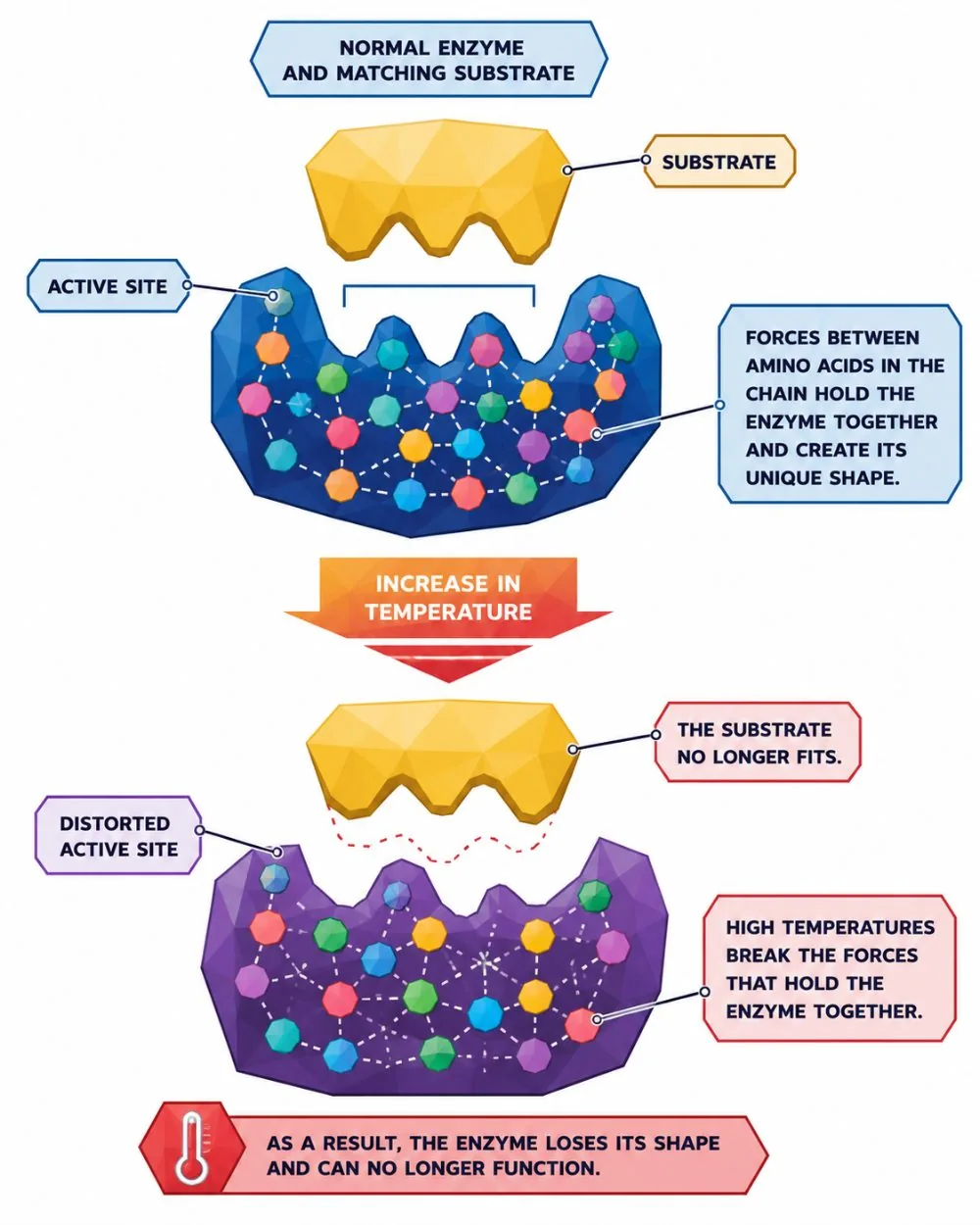
Above the optimum the rate falls steeply, because the enzymes are denatured: their shape changes and the active site no longer fits the substrate.
4
Above about 45 degrees Celsius, photosynthesis may stop altogether.
5
In a graph for temperature the curve therefore rises to a peak and then falls, unlike the light and carbon dioxide graphs, which level off.

Section 5 of 8Chlorophyll

Chlorophyll absorbs the light needed for the reaction. If there is little chlorophyll, less light is absorbed and the rate is lower. The amount can be reduced by disease (such as TMV), by lack of magnesium, or because the leaf is damaged or old. Variegated leaves, with white patches, photosynthesise more slowly than plants with fully green leaves.

Section 6 of 8Exam-style questions
Effect of temperature on rate of photosynthesis (graph)
pH & enzyme shape — Interactive
enzyme reaction cycle infographic
r054-enzyme-concentration
Carbon dioxide concentration limiting photosynthesis (graph)
Enzyme denaturation — Interactive
r051-enzyme-denaturation
r052-substrate-concentration-rate
Effect of temperature on enzyme active site (denaturation)
Effect of pH on active site shape
  1. The graph of photosynthesis rate against light intensity rises and then levels off. Explain why the line levels off. [2]2 marks

  2. A lamp is moved from 20 cm to 40 cm from a pond plant. Calculate how the light intensity changes. [2]2 marks

  3. Explain why the rate of photosynthesis falls at temperatures above 45 degrees Celsius. [3]3 marks

Section 7 of 8Key terms

TermMeaning
Limiting factorThe factor in shortest supply that restricts the rate of a process.
Light intensityThe brightness of the light reaching the plant.
Optimum temperatureThe temperature at which the rate is highest.
DenaturedDescribes an enzyme whose shape has changed so it no longer works.
Inverse square lawLight intensity is proportional to one divided by distance squared.
RateHow fast something happens, measured per unit time.
PlateauA part of a graph where the line is flat.

Section 8 of 8Exam technique

1
Saying temperature graphs level off at a plateau like light: they fall because of denaturation.
2
Writing that the rate stops increasing because 'the plant is full': another factor is limiting.
3
Forgetting to square the distance in the inverse square law.
4
Saying light is the only limiting factor for plants.
Biology 0610 & 9700 Exam Model Limiting Factors Master

Photosynthesis: Limiting Factors & Graph Plateau

6CO2 + 6H2O → C6H12O6 + 6O2 (Light & Chlorophyll required)

  • Limiting Factor Definition: Something present in the environment in such short supply that it restricts life processes.
  • Graph Plateau: When rate levels off as light intensity increases, light is no longer the limiting factor; CO2 concentration or temperature has become limiting.
  • High Temperature Drop: Beyond optimum temp (~40°C), enzymes (e.g. RuBisCO) denature, permanently decreasing rate.