6.3.4Inheritance, Variation and Evolution
Resistant Bacteria
5 min read 9 parts Lesson 15 of 16 Unit quiz
Section 1 of 9Bacteria and antibiotics
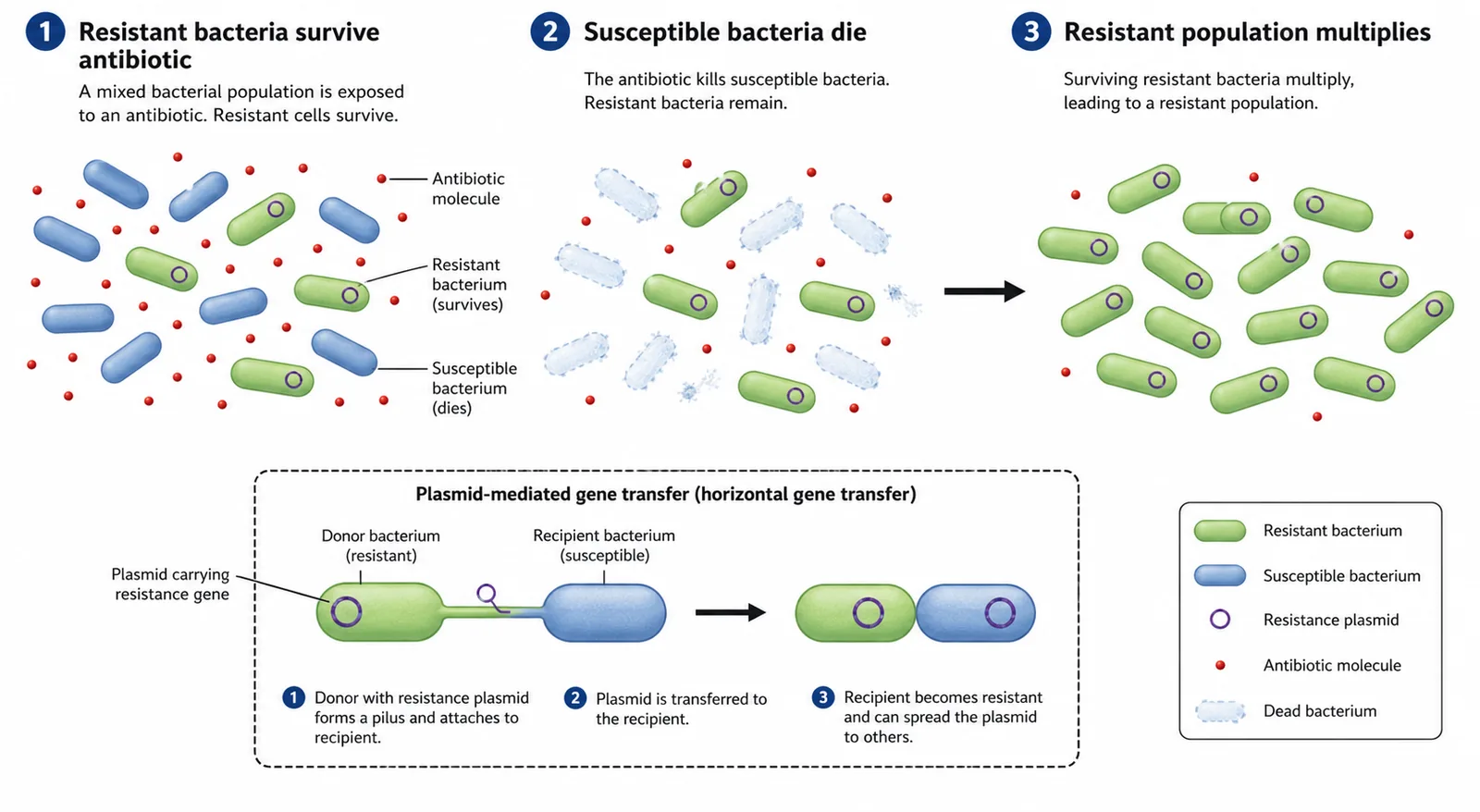

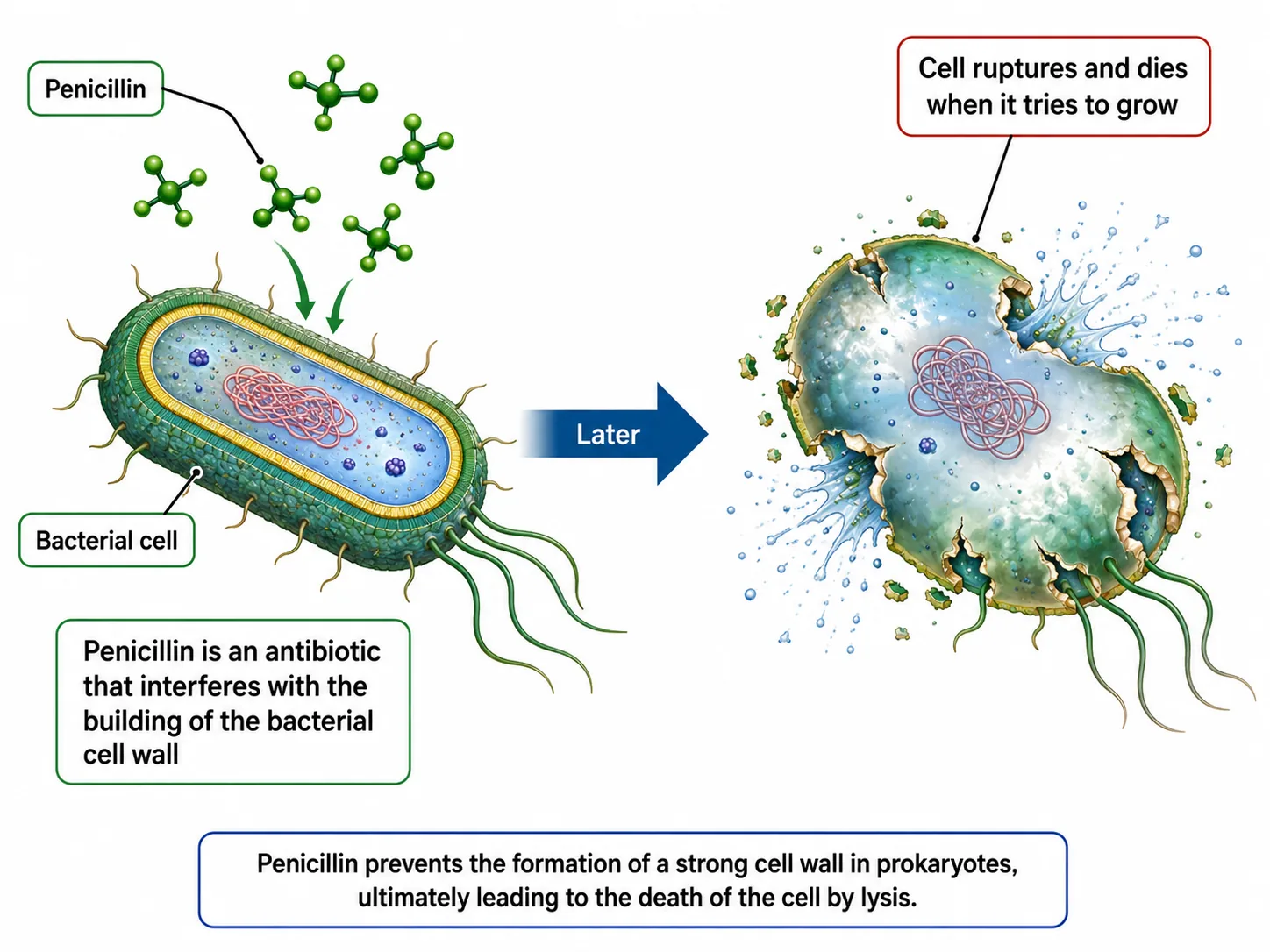

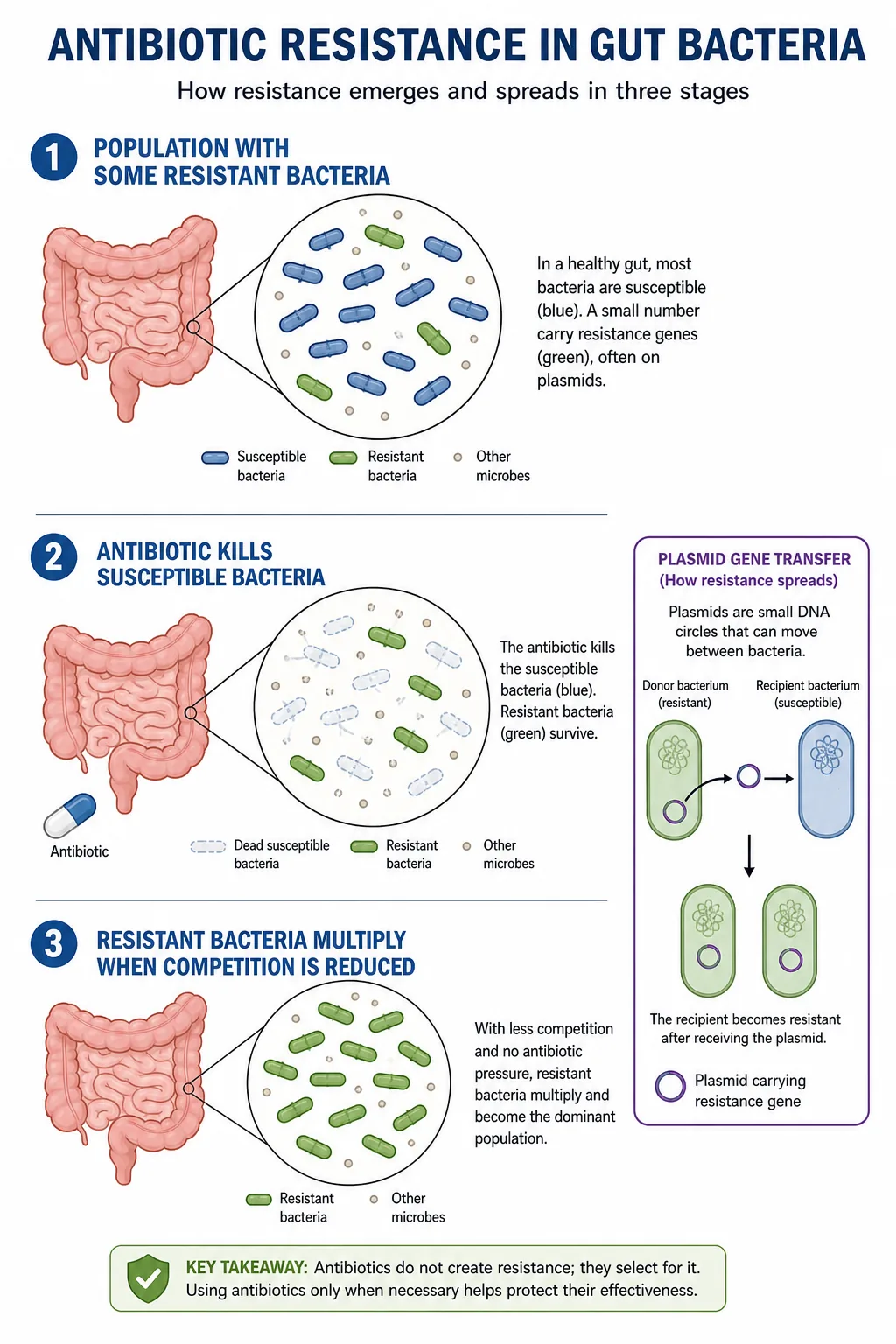

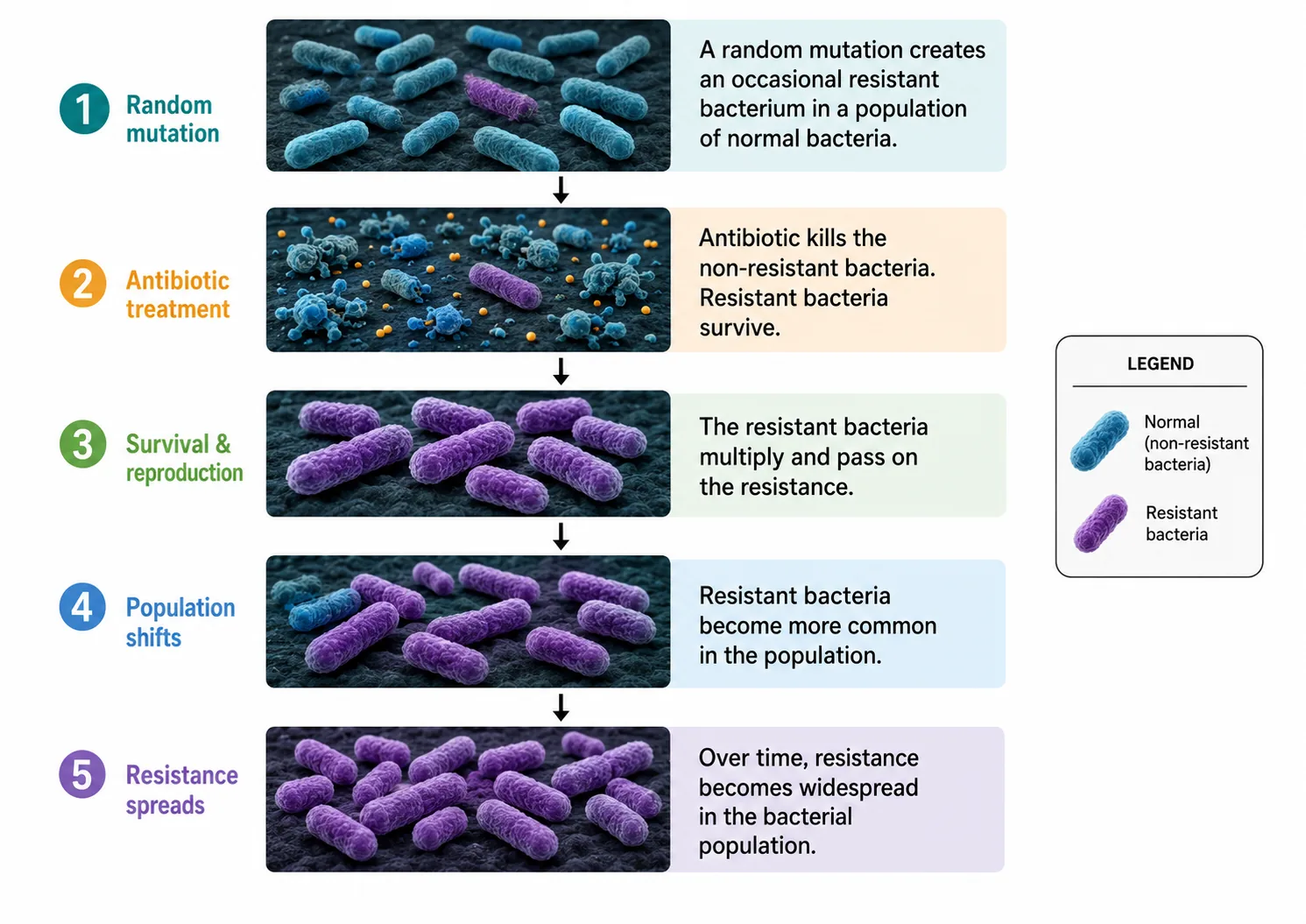
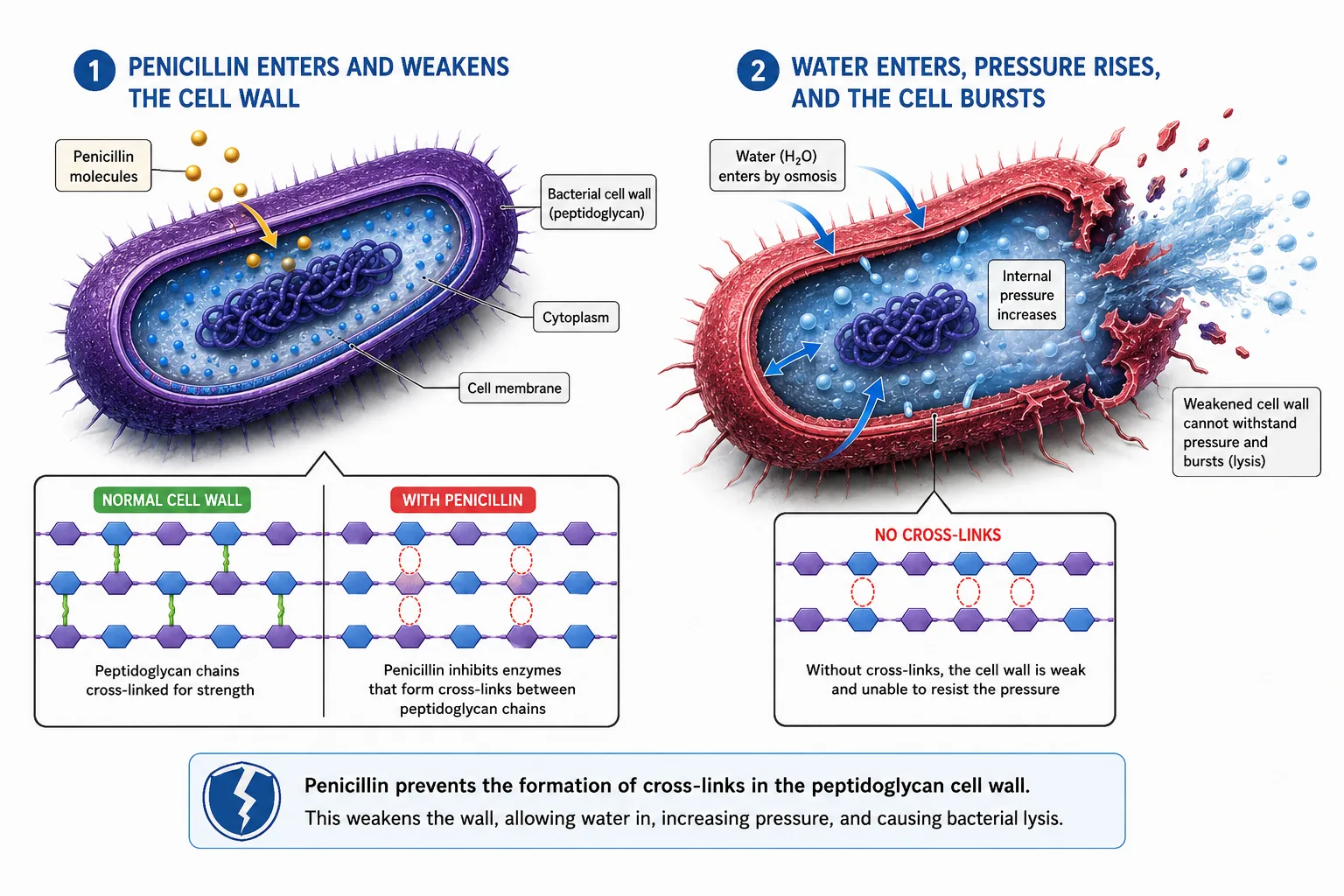
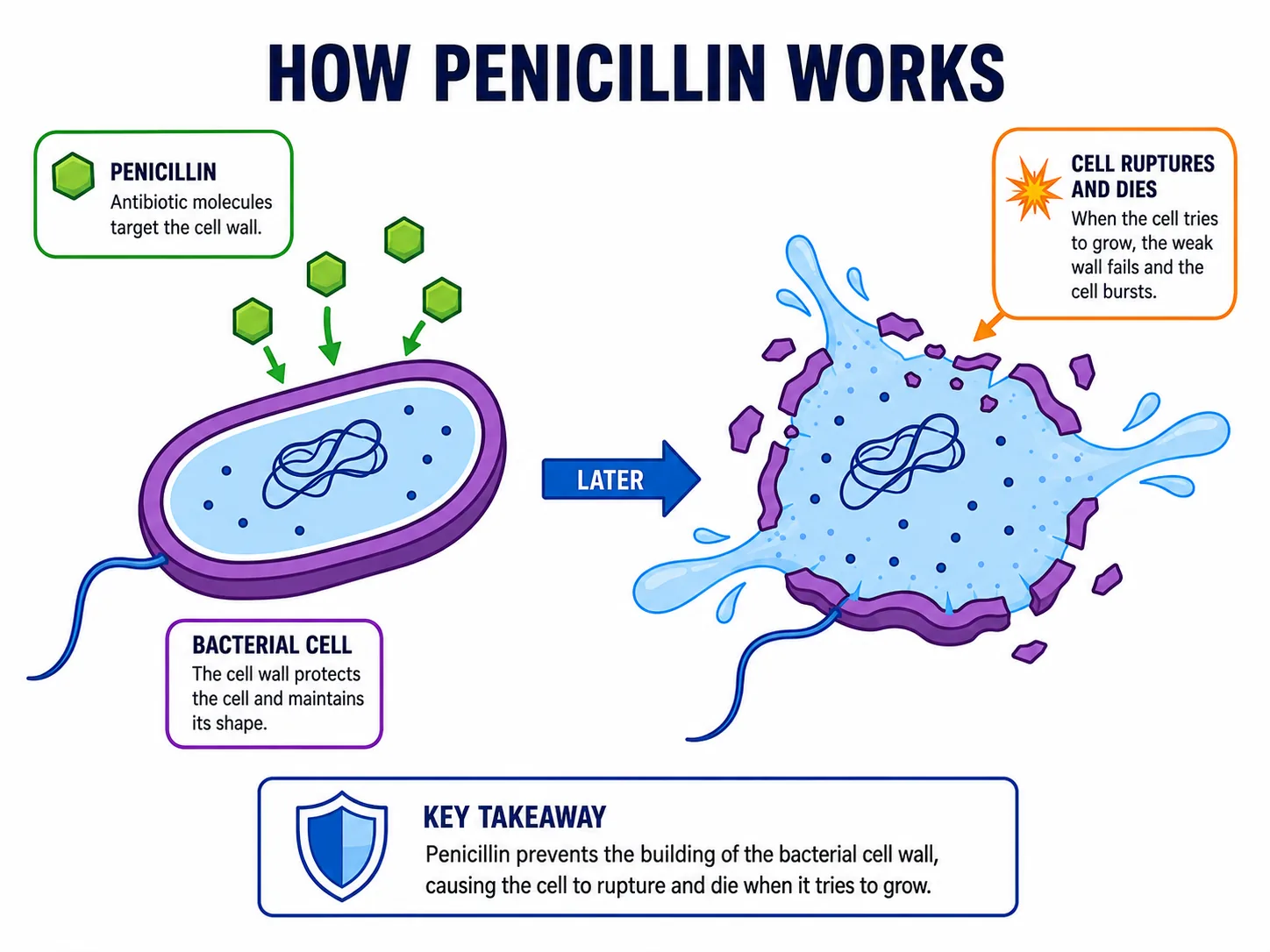
Bacteria are single-celled microorganisms, and some cause disease. Antibiotics are drugs, such as penicillin, that kill bacteria or stop them growing; they do not affect viruses. Bacteria can reproduce by binary fission as often as every twenty minutes in good conditions, so a population can grow extremely rapidly and many generations occur in a short time.
Section 2 of 9How resistance arises

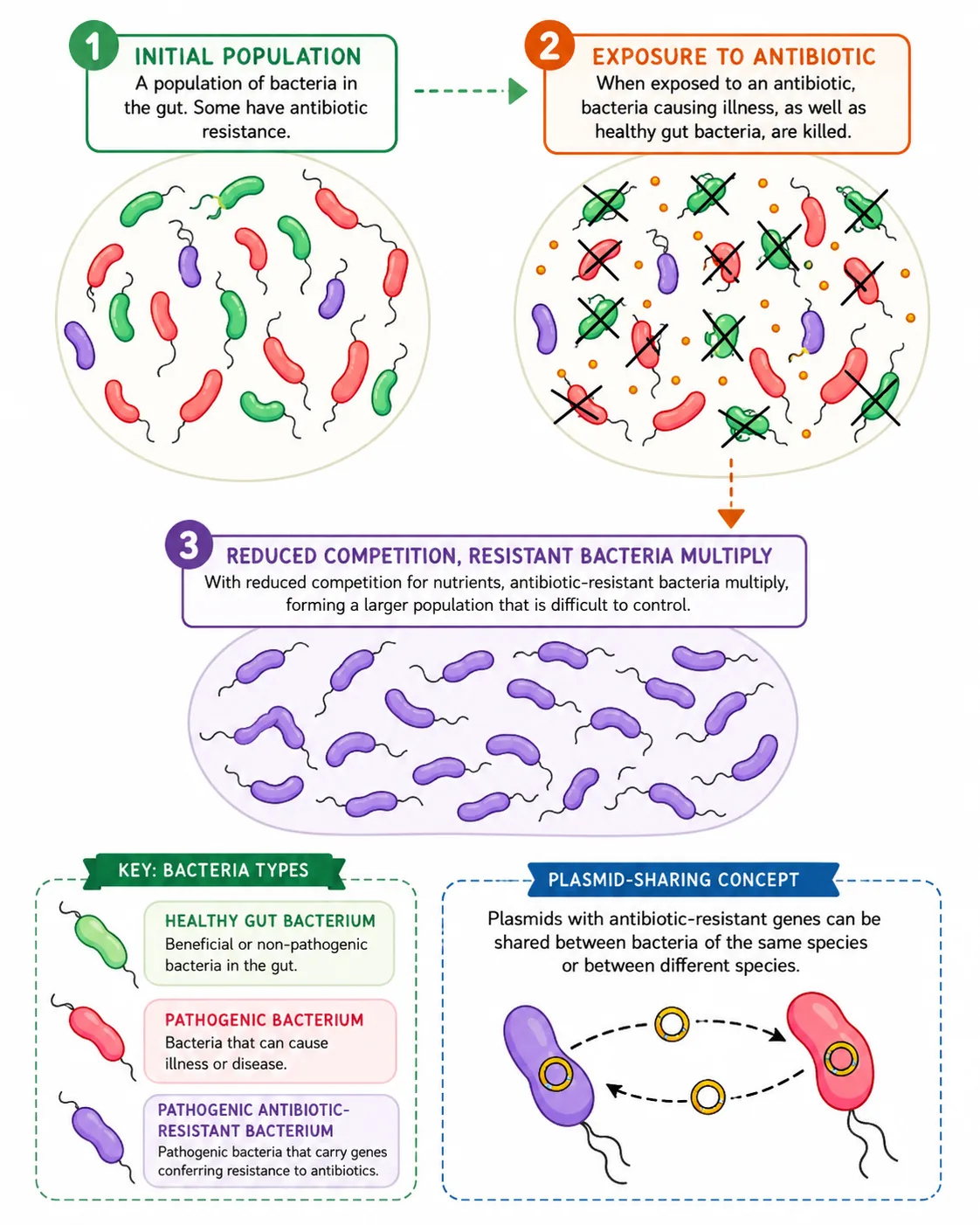
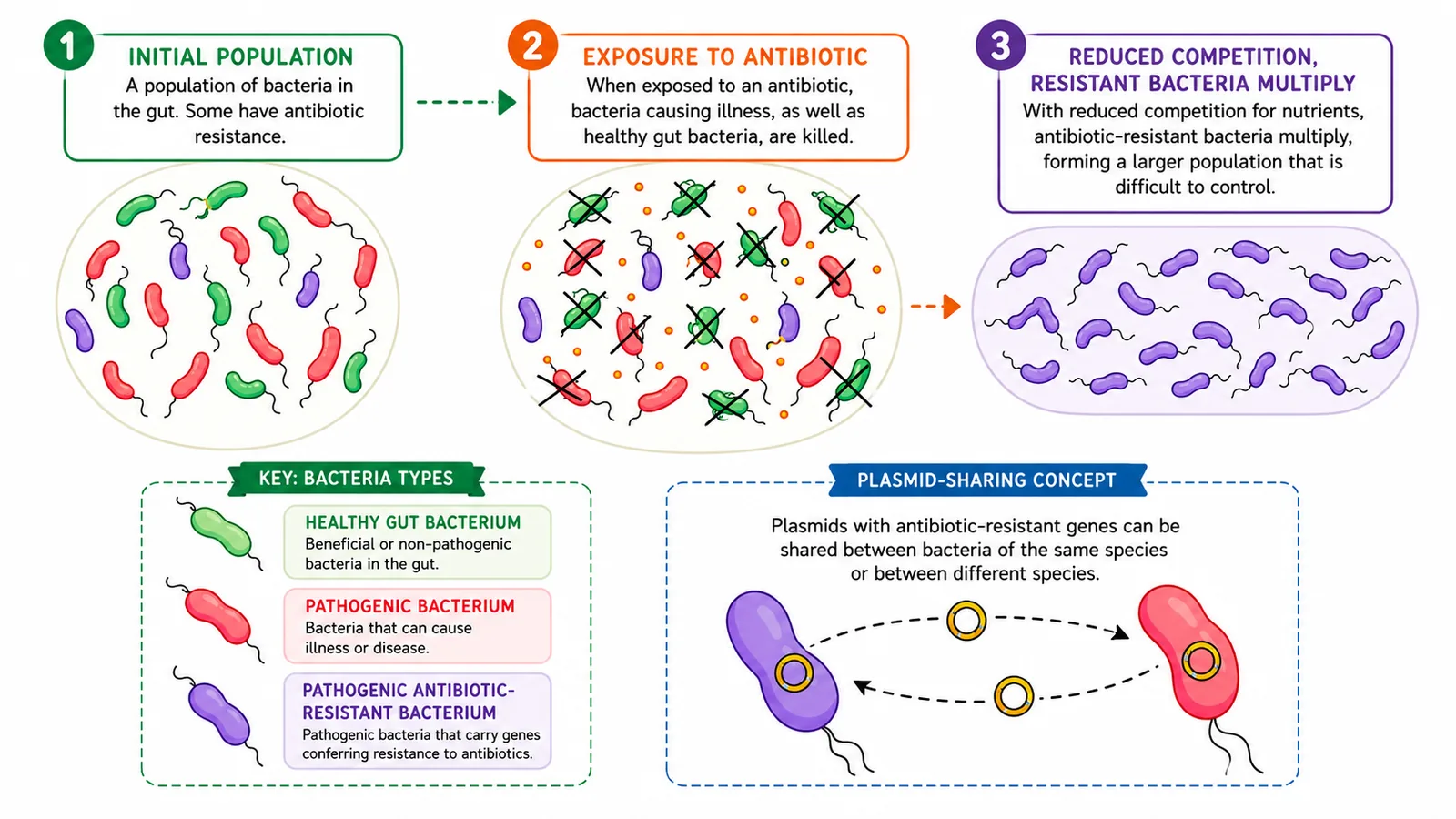
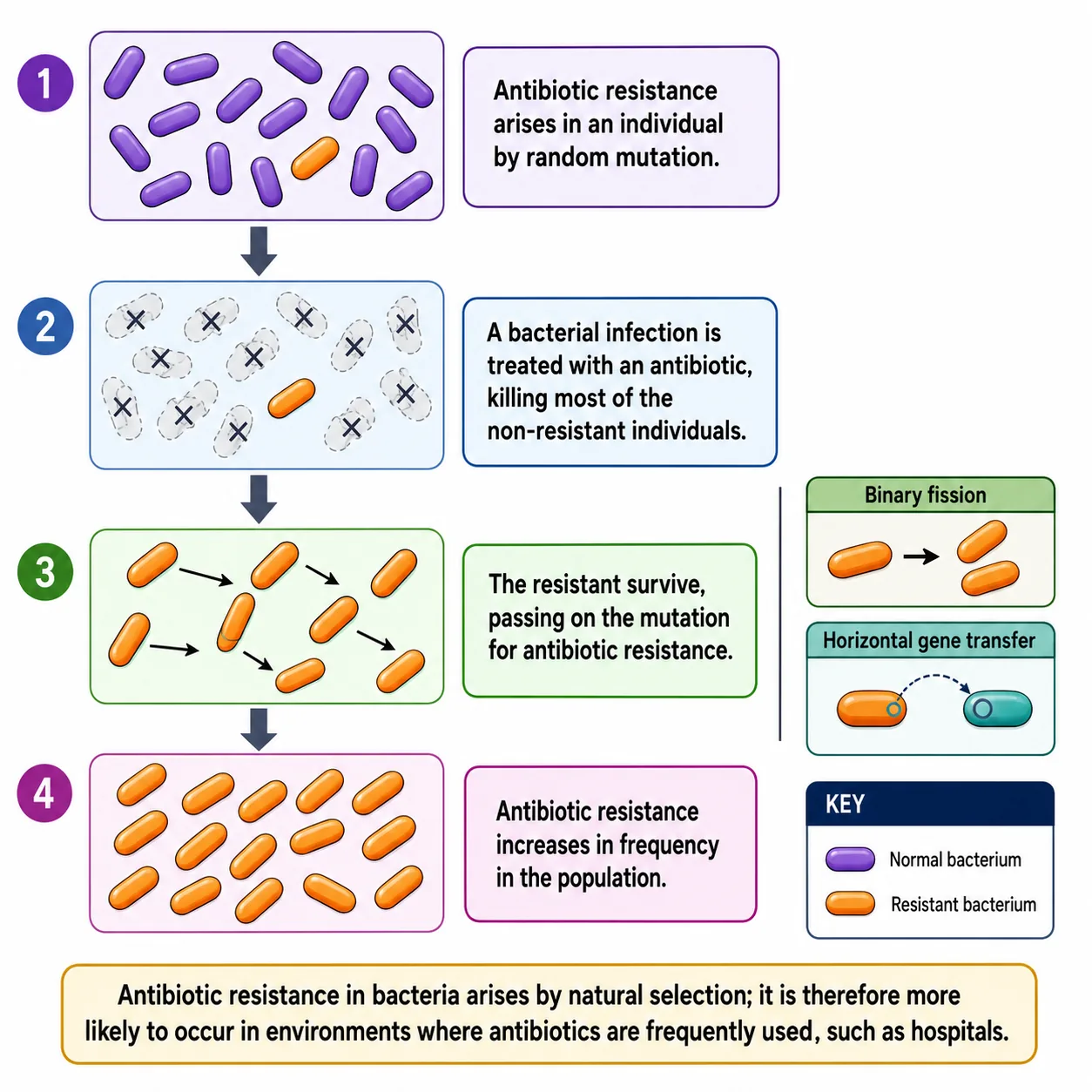
- A random mutation in one bacterium may make it resistant to an antibiotic, for example by changing the target of the drug or by producing an enzyme that breaks it down.
This is natural selection, with the antibiotic as the selection pressure. Resistance can also spread between bacteria by passing plasmids.
Section 3 of 9MRSA
MRSA (methicillin-resistant Staphylococcus aureus) is a strain resistant to several antibiotics. It is a particular problem in hospitals because patients may have open wounds and weakened immune systems. Treating it requires different antibiotics, which may be less effective, more expensive or have side effects. Strains resistant to many drugs are sometimes called superbugs.
Section 4 of 9Reducing the problem
Section 5 of 9Link with evolution
Antibiotic resistance is one of the clearest observable examples of evolution by natural selection and shows why a high rate of reproduction combined with mutation produces rapid change. It is also an example where understanding evolution has direct benefit for human health.
Section 6 of 9Antibiotics, evidence and the wider problem
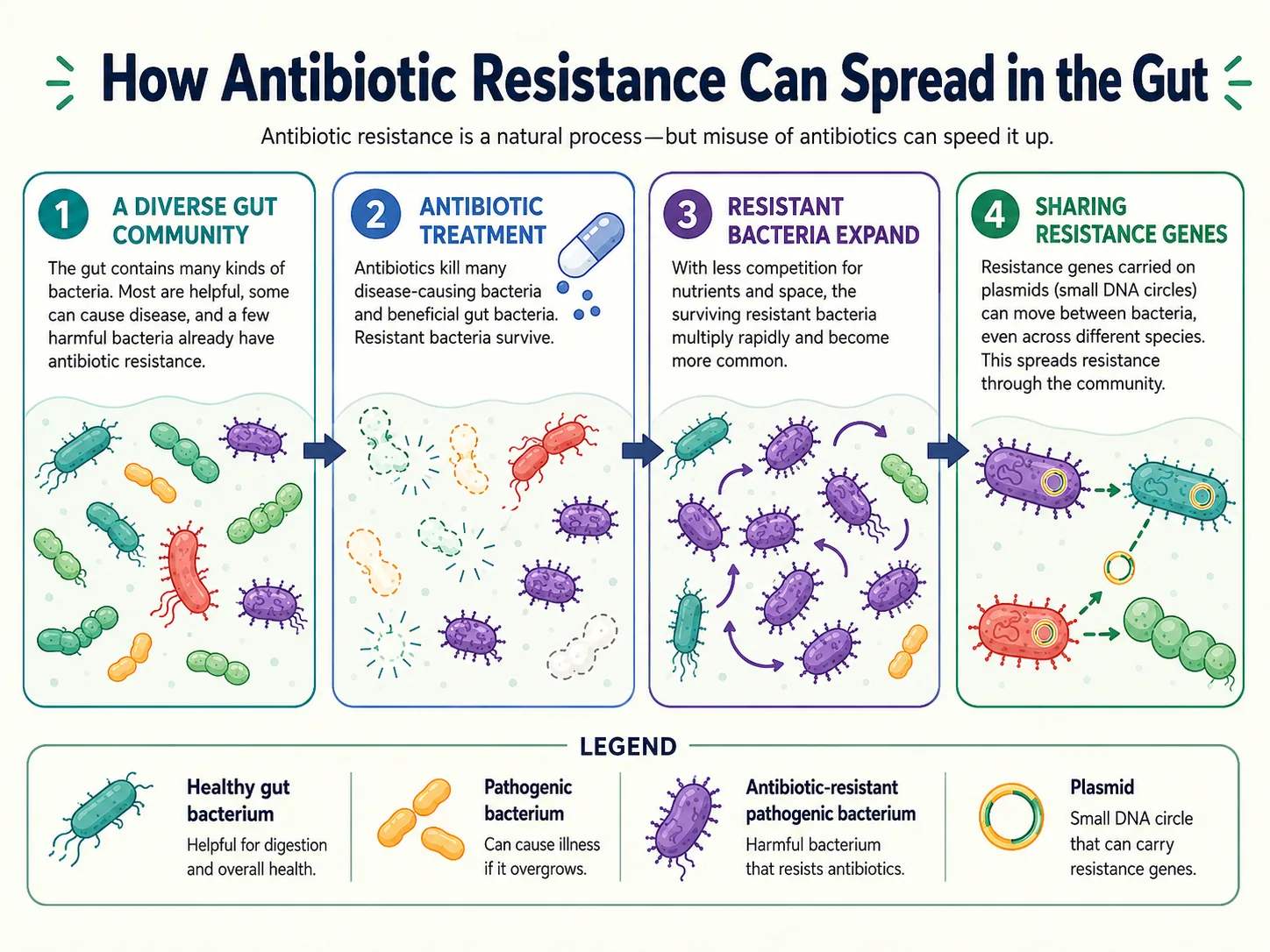

Alexander Fleming discovered penicillin in 1928 when he noticed that mould on a culture plate stopped bacteria growing.
- as common operations and treatments for cancer depend on effective antibiotics to prevent infection.
It is important to understand why the numbers behave as they do.
- so resistance can spread even faster than by reproduction alone.
Preventing resistance involves a combination of measures.
Developing new antibiotics is difficult, because a drug may take over ten years and cost large amounts of money, and drug companies earn less from drugs that are used only briefly.
Hospitals also screen patients for MRSA on admission, treat carriers, and use alcohol gels and barrier nursing. These measures do not stop mutations, but they reduce the chance that resistant bacteria spread between patients and so give selection fewer opportunities to favour resistant strains.
Section 7 of 9Exam-style questions
Explain how a population of bacteria can become resistant to an antibiotic. [4]4 marks
A mutation gives a bacterium a resistance allele (1). The antibiotic kills non-resistant bacteria (1). The resistant bacterium survives and reproduces (1). It passes on the allele, so the proportion of resistant bacteria increases (1).
Explain why patients should complete a course of antibiotics. [2]2 marks
Stopping early may leave some bacteria alive (1), which may be partially resistant and can reproduce and form a resistant population (1).
A colony starts with 1 resistant bacterium among 10 000. After treatment 99.9% of non-resistant bacteria die. Estimate the number of non-resistant survivors and comment on the proportion of resistant bacteria afterwards. [3]3 marks
Non-resistant start = 9 999. Survivors = 0.1% of 9 999 ≈ 10 (1). Survivors in total ≈ 11, of which 1 is resistant (1). Proportion resistant rises from 0.01% to about 9%, and it will increase further as they reproduce (1).
Section 8 of 9Key terms
| Term | Meaning |
|---|---|
| Antibiotic | A drug that kills bacteria or prevents their growth. |
| Resistance | The ability of bacteria to survive an antibiotic. |
| MRSA | A strain of Staphylococcus aureus resistant to many antibiotics. |
| Mutation | A random change in DNA. |
| Binary fission | Asexual division of a bacterial cell into two. |
| Selection pressure | Environmental factor, such as an antibiotic, that favours some individuals. |