Section 1 of 9What are abiotic factors?

Abiotic factors are the non-living features of the environment that can affect organisms and communities. They help determine which species can live in an area and how many of them there are.
Section 2 of 9The main abiotic factors


| Factor | Effect on organisms |
|---|---|
| Light intensity | Limits the rate of photosynthesis in plants, so affects growth and the food available to herbivores |
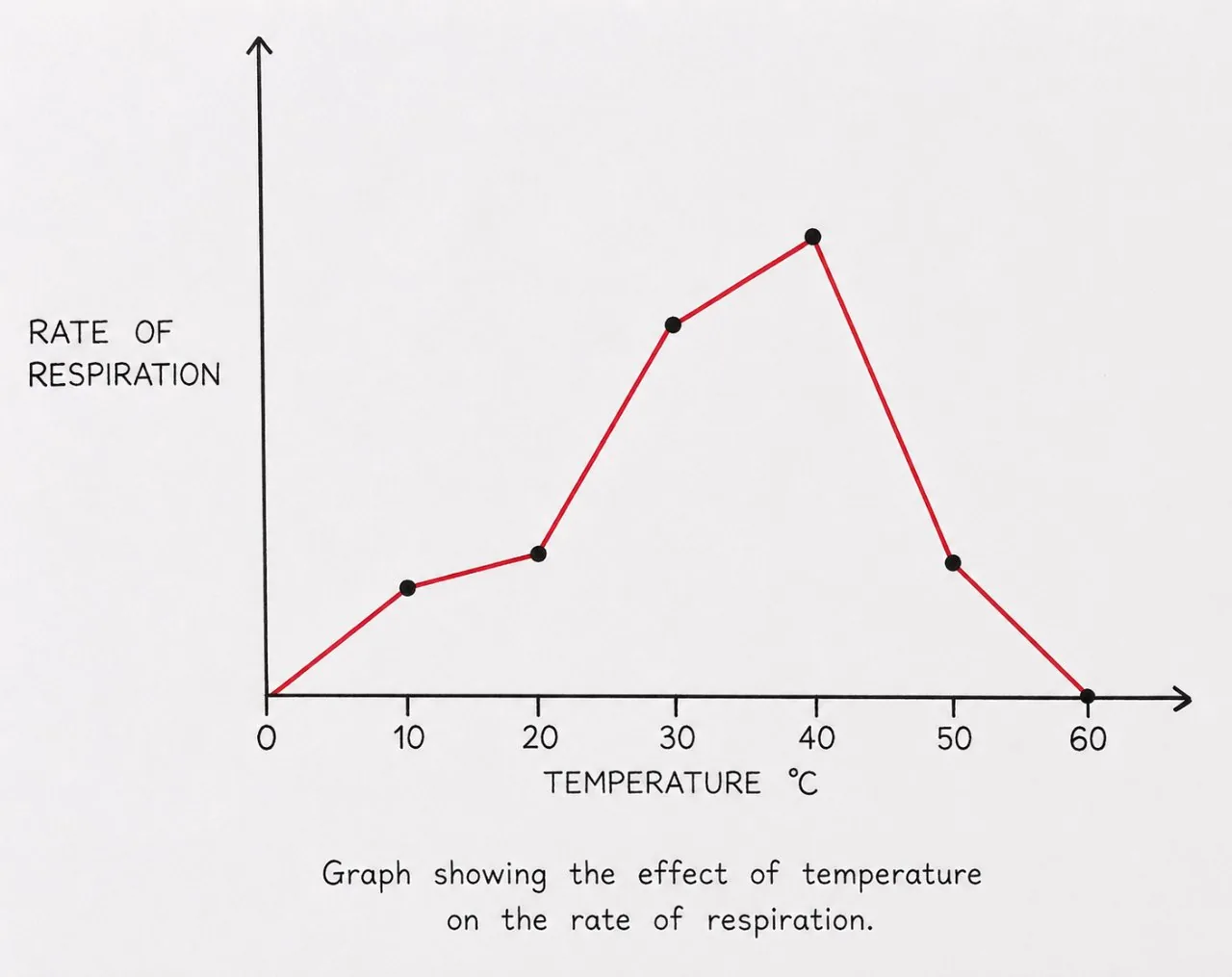
| Temperature | Affects enzyme activity, so growth and reproduction; extremes may kill organisms |
| Moisture level | Plants need water for photosynthesis and support; animals need water to survive. Dry places hold fewer species |
| Soil pH and mineral content | Affects which plants can grow; for example nitrate shortage limits growth |
| Carbon dioxide (plants) and oxygen (animals) levels | Limit photosynthesis and respiration respectively; low oxygen in polluted water stops fish surviving |
| Wind intensity and direction | Increases water loss by transpiration, damages plants, affects insect flight |
Section 3 of 9Examples in nature
In a woodland, ground plants such as bluebells grow and flower in early spring before the tree canopy leaves block the light.
Section 4 of 9Measuring abiotic factors


Taking several readings at each location and finding the mean improves reliability. Data loggers can record continuously over a day or season.
Section 5 of 9Interpreting data
To analyse the effect of an abiotic factor, compare the abundance of a species at sites with different values of the factor. A transect that shows the number of organisms falling as light decreases suggests (but does not prove) that light limits the species. Other factors might vary at the same time, so conclusions should be cautious.
Section 6 of 9Abiotic factors in a woodland and a rocky shore
It is useful to know a few detailed examples.
On a rocky shore, the abiotic factors change from the top of the beach to the bottom.
Abiotic factors often interact.
Gathering reliable data requires measurements to be made at the same time of day, using the same instrument at each site and taking repeats.
Some organisms are used as indicators of abiotic conditions. For example, lichens show sulfur dioxide levels, and some aquatic invertebrates show how much oxygen is dissolved in water, so their distribution gives information about the abiotic environment without expensive instruments.
Section 7 of 9Exam-style questions

Name three abiotic factors that could affect the distribution of plants in a woodland. [3]3 marks
Any three from: light intensity; temperature; soil moisture; soil pH; mineral content of the soil; wind (3).
Describe how you could investigate the effect of light intensity on the abundance of daisies on a lawn. [4]4 marks
Place a transect from shade to open ground (1). Use quadrats at regular intervals and count the daisies in each (1). Measure light intensity at each point with a light meter (1). Repeat and calculate means, then compare numbers with light level (1).
The mean soil moisture was 24% at site A and 12% at site B. Calculate how many times greater the moisture was at A, and suggest an effect on plants. [2]2 marks
24 ÷ 12 = 2 times (1). More plants and a greater variety of species are expected at the wetter site / plants at B may wilt (1).
Section 8 of 9Key terms
| Term | Meaning |
|---|---|
| Abiotic factor | A non-living factor of the environment. |
| Light intensity | The brightness of light, affecting photosynthesis. |
| Distribution | Where organisms are found in an area. |
| Abundance | How many individuals of a species there are. |
| Data logger | An electronic device that records readings automatically. |
| Transect | A line along which sampling is carried out. |