Section 1 of 7Making new cells

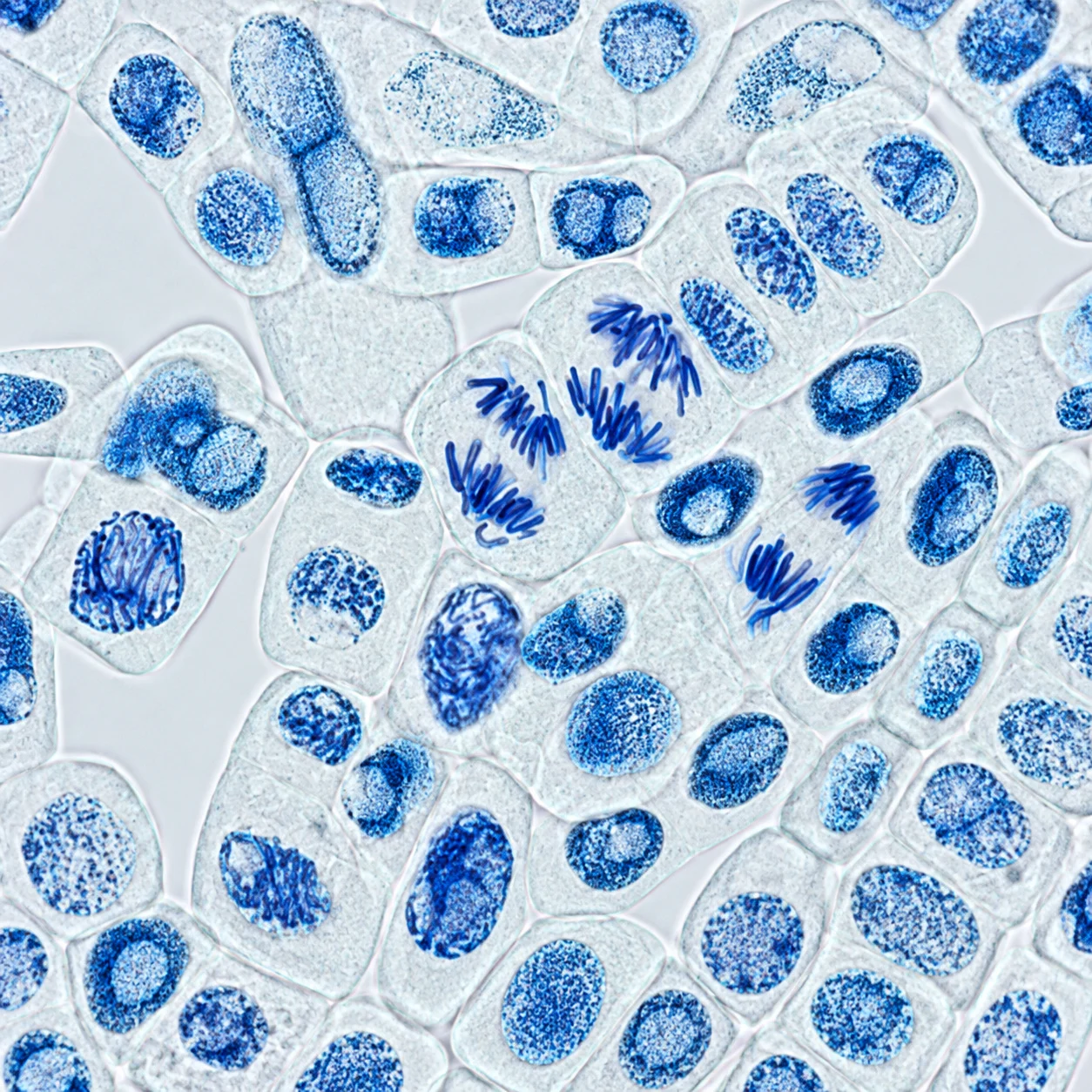
1Cells divide
- Cells divide New cells are produced when existing cells divide, which is how organisms grow and repair damaged tissue.
2Cells differentiate
- Cells differentiate The new cells develop special features that suit a particular job.
- They become specialised.
3Structure fits function
- Structure fits function The shape and contents of a specialised cell help it to carry out its function efficiently.
Section 2 of 7Specialised animal cells


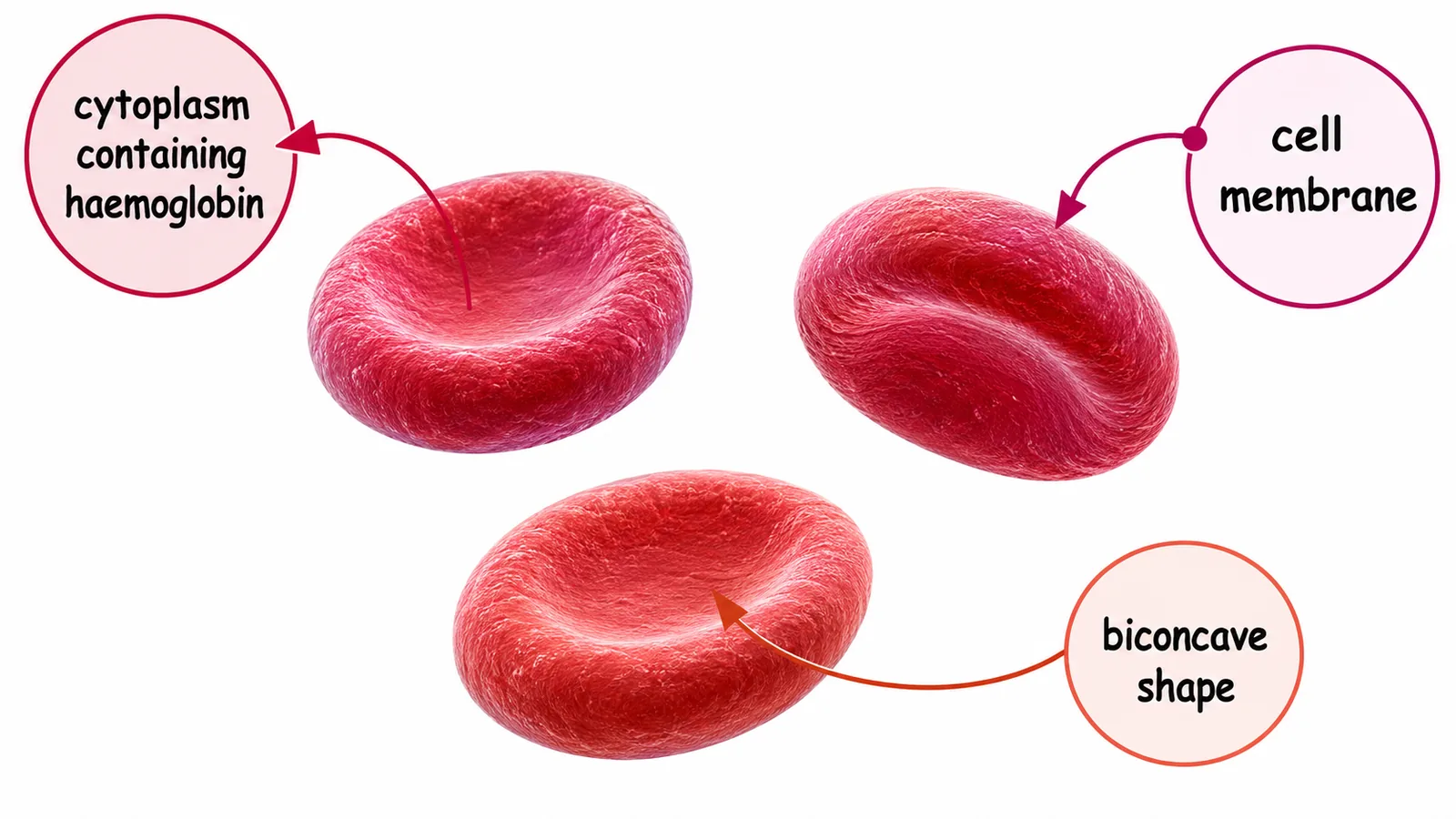


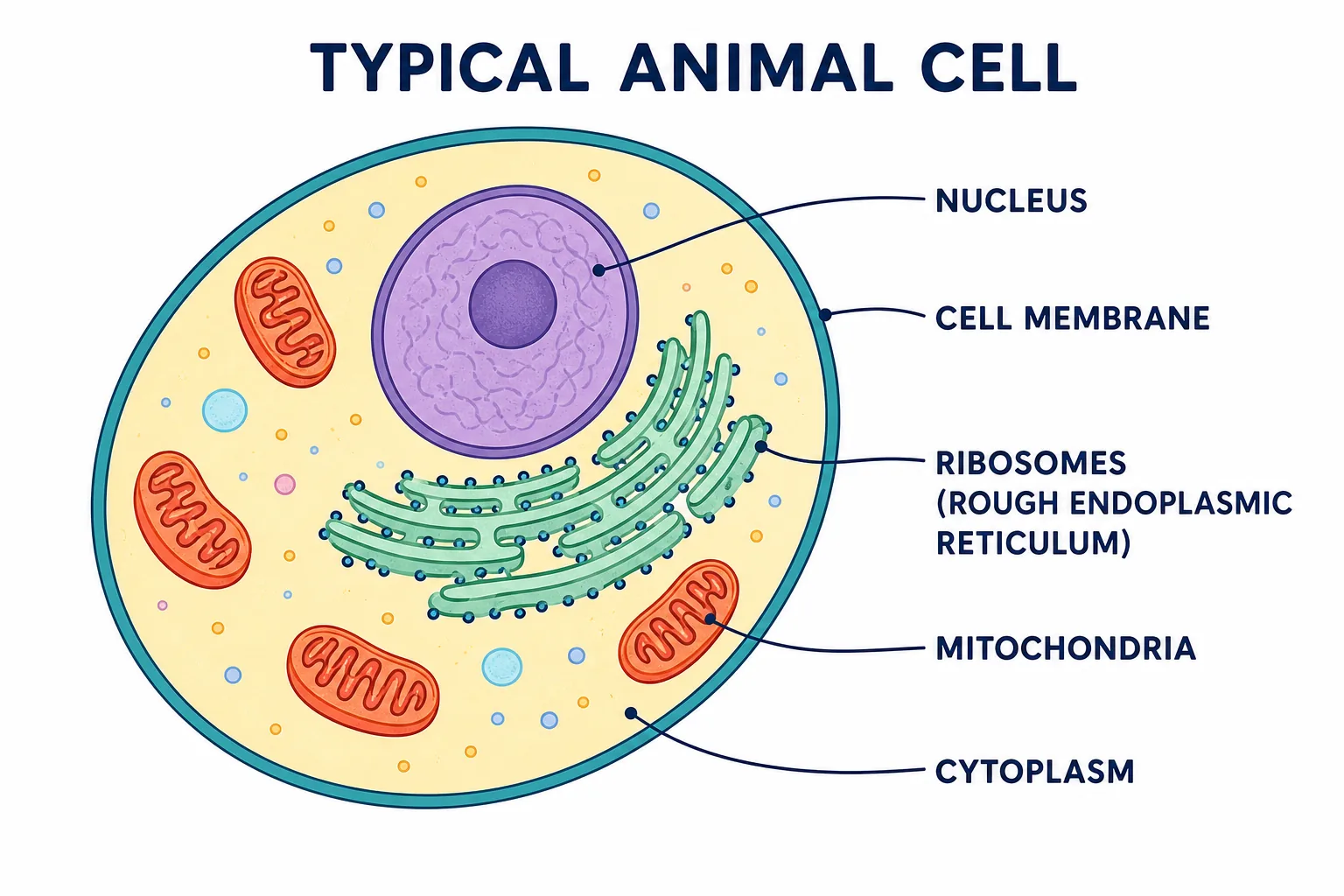
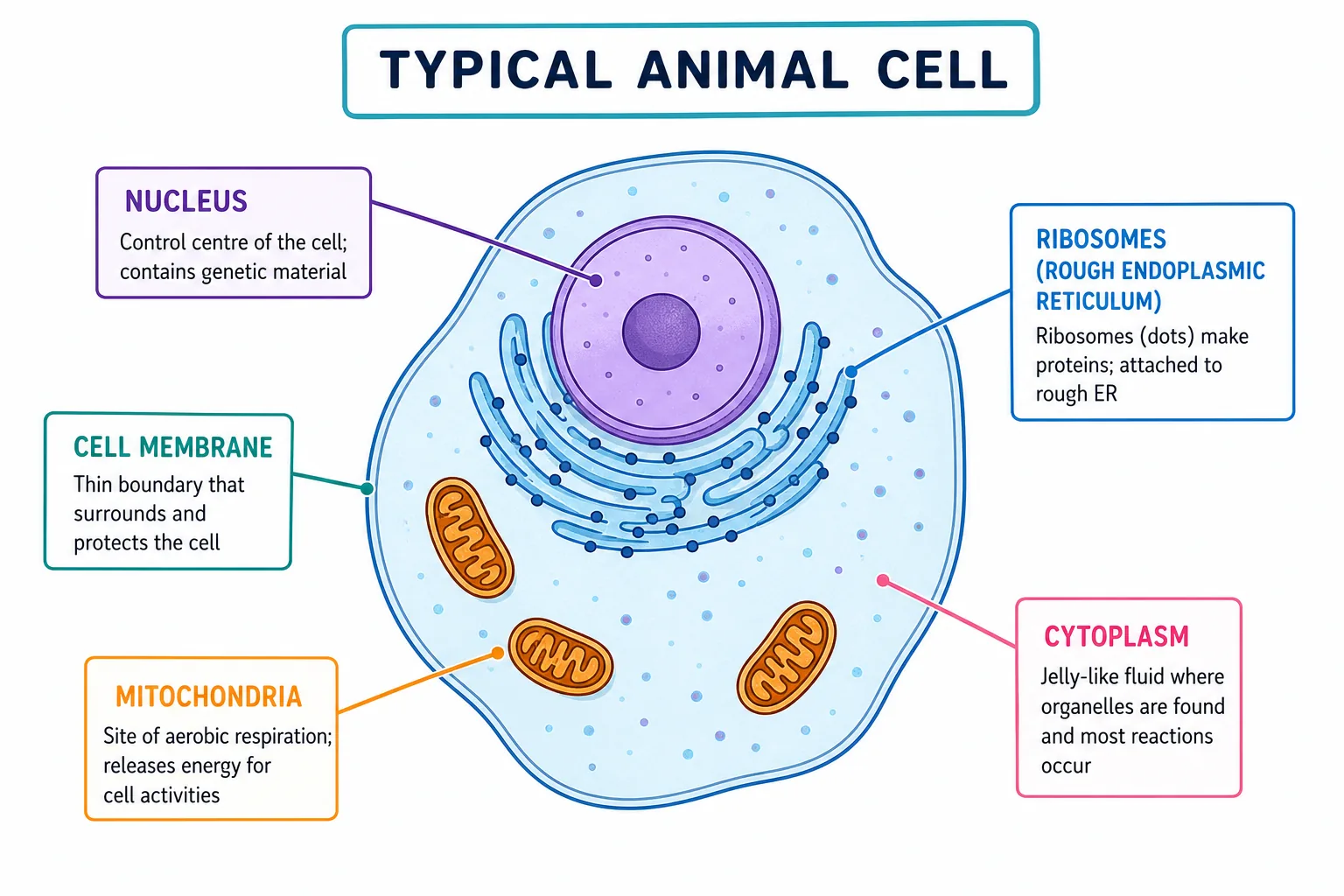
| Cell | Function | Adaptation |
|---|---|---|
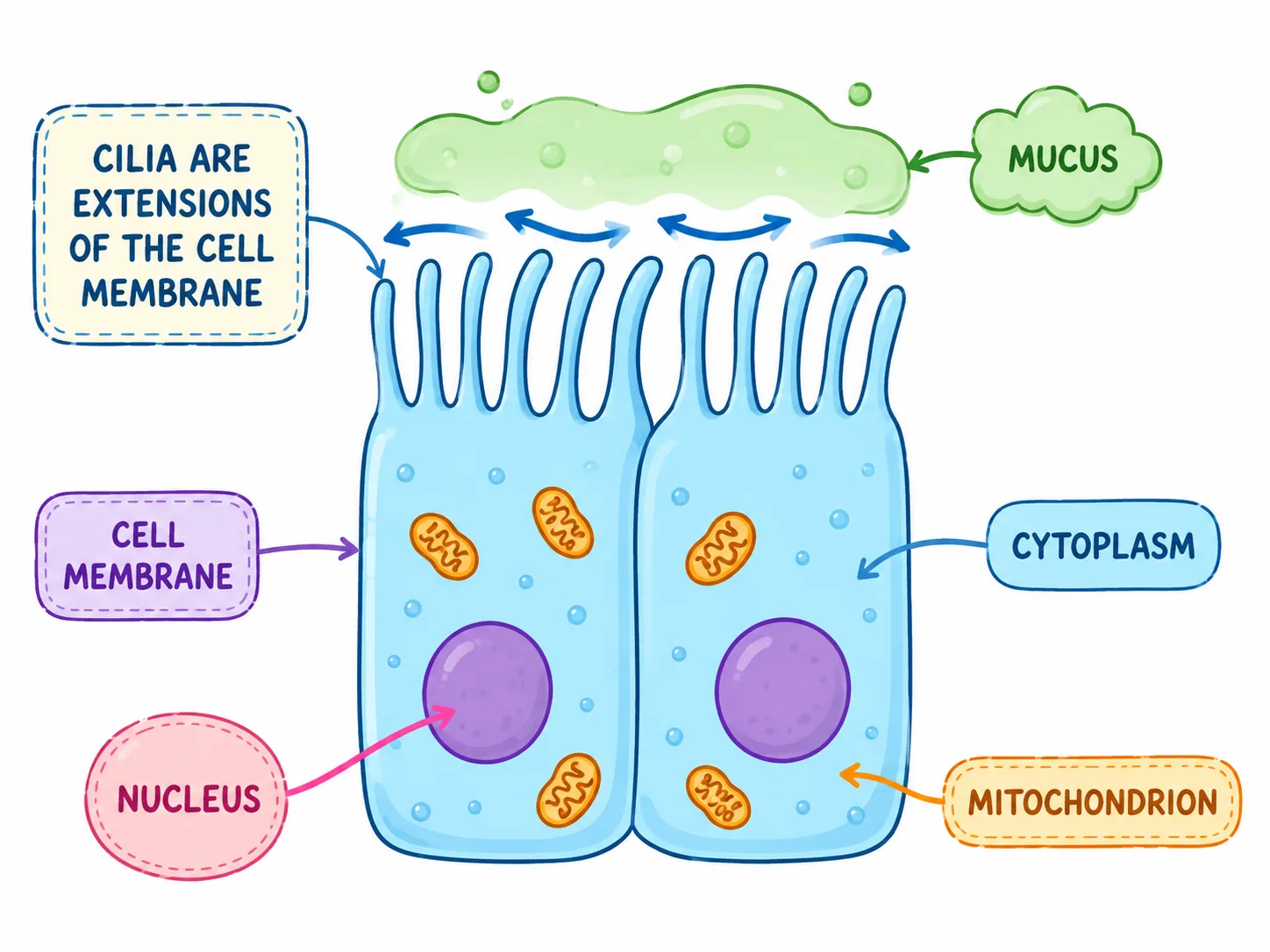
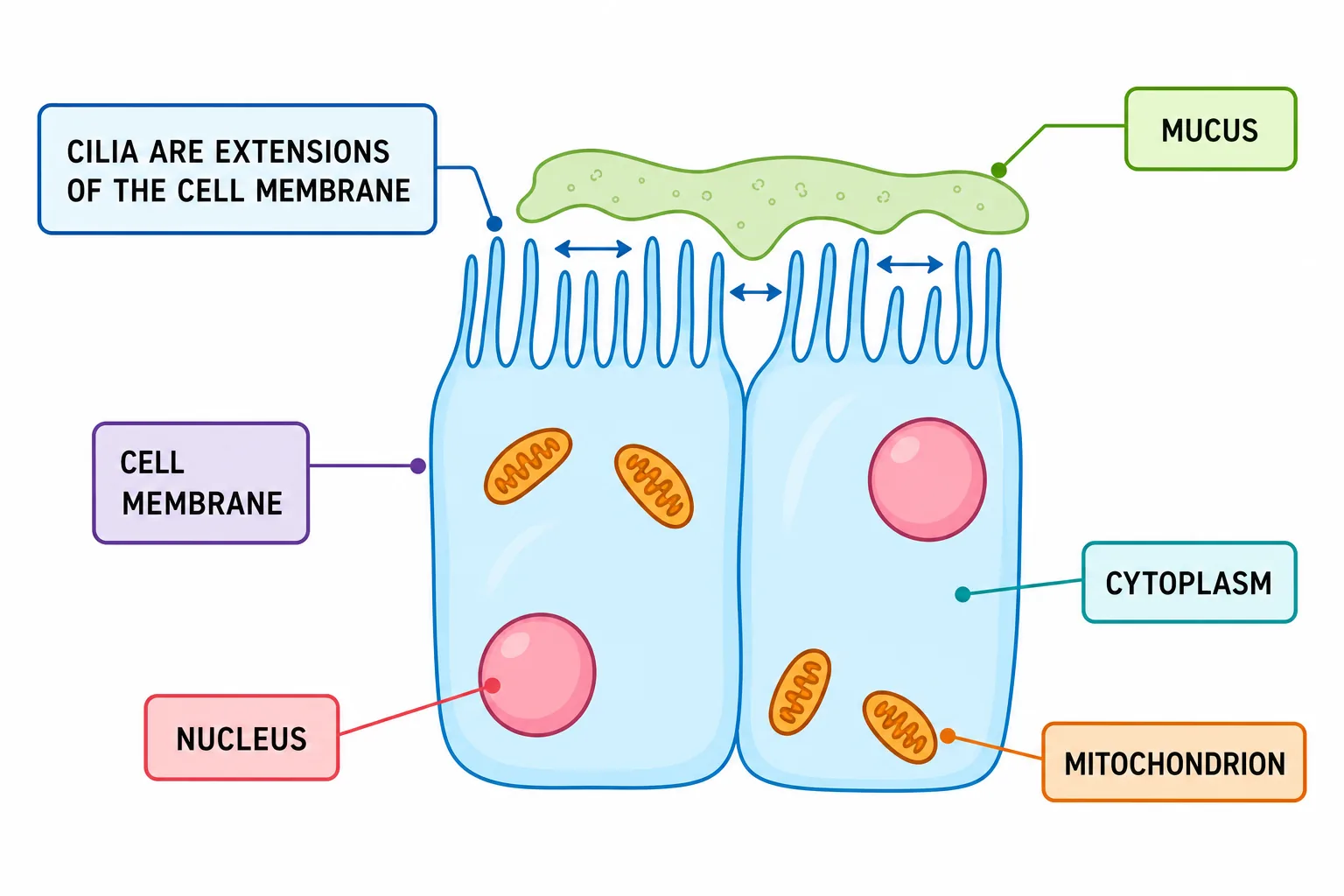
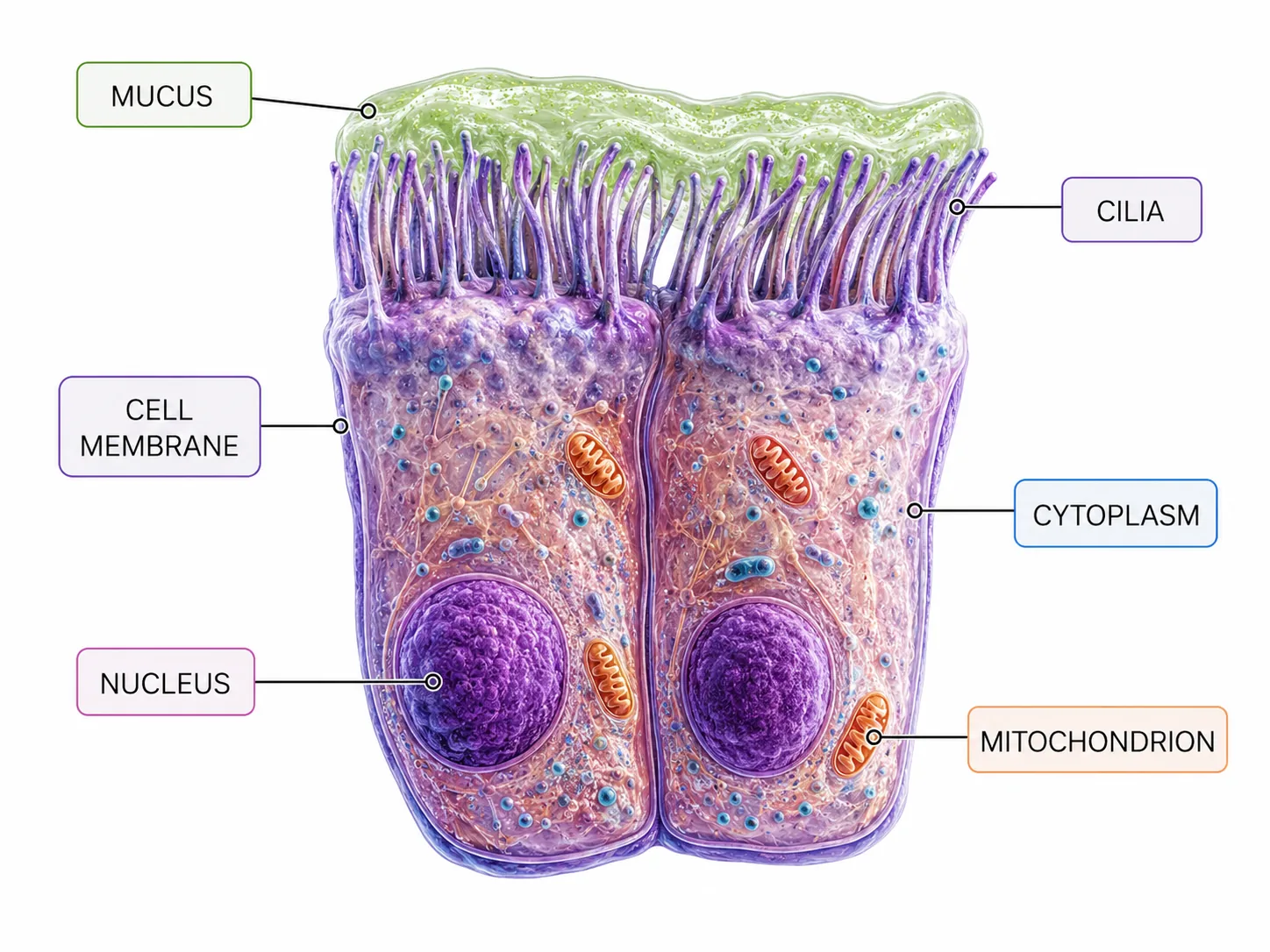
| Ciliated epithelial cell | Moves mucus along the airways | Hair-like cilia on the surface that sweep mucus and trapped particles away |
| Nerve cell (neurone) | Carries nerve impulses around the body | Long axon and branched ends that connect to other cells |
| Red blood cell | Carries oxygen | Biconcave disc shape giving a large surface area, no nucleus so more room for haemoglobin |
| Sperm cell | Carries the male genetic information to the egg | Tail to swim, streamlined head, many mitochondria for energy |
| Egg cell | Is fertilised and supports the early embryo | Large size with a food store in the cytoplasm and a membrane that changes after fertilisation |
Section 3 of 7Specialised plant cells


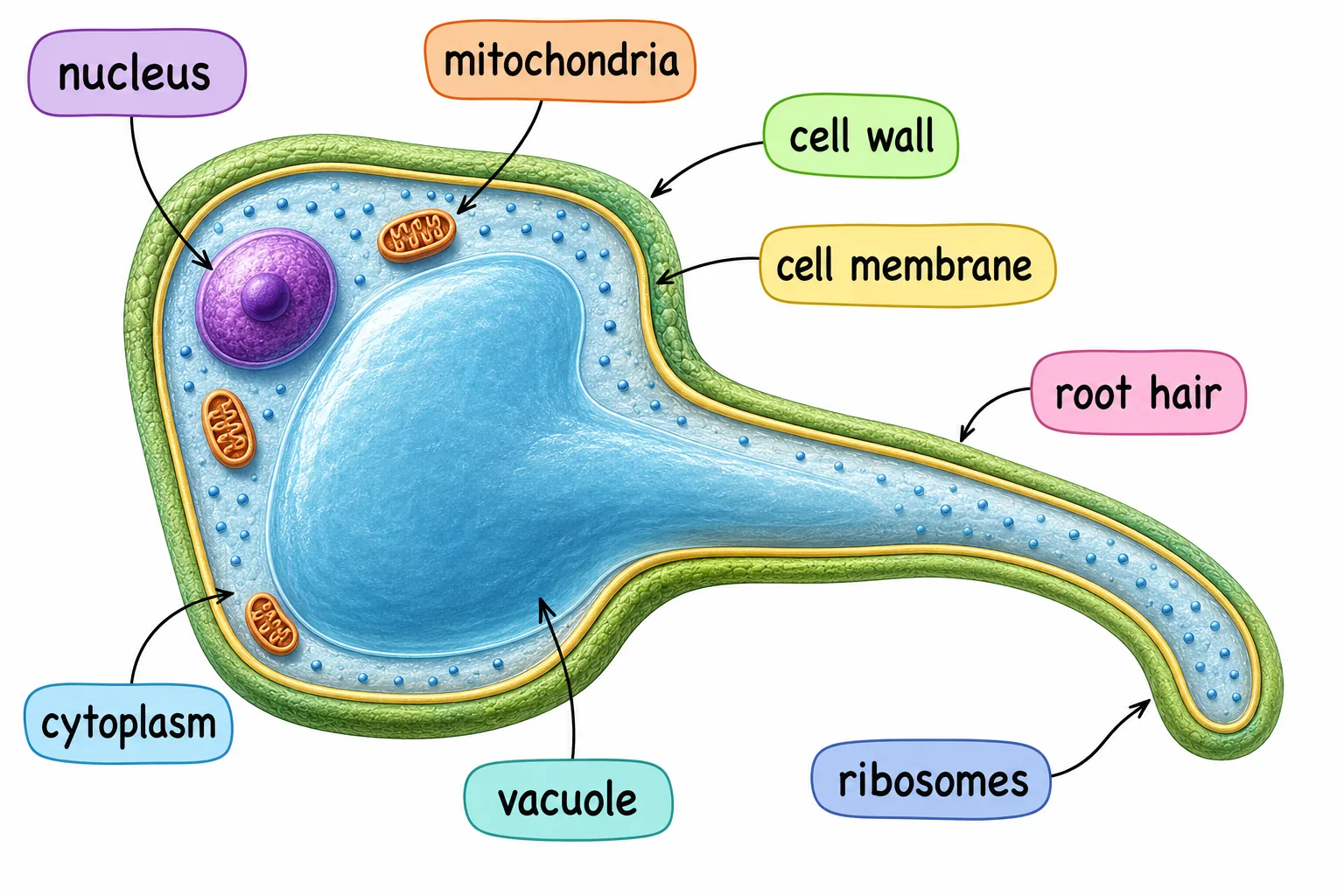
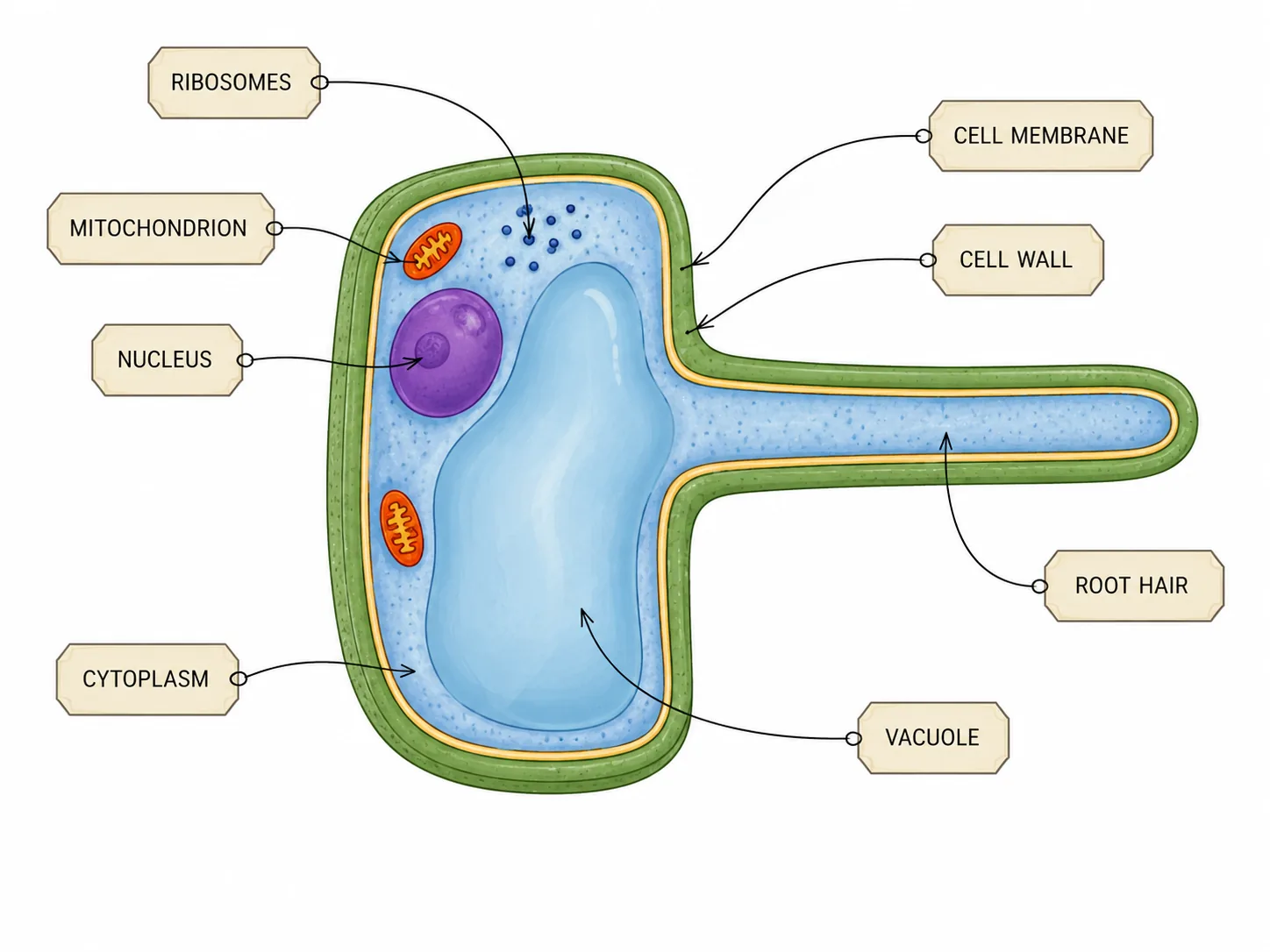
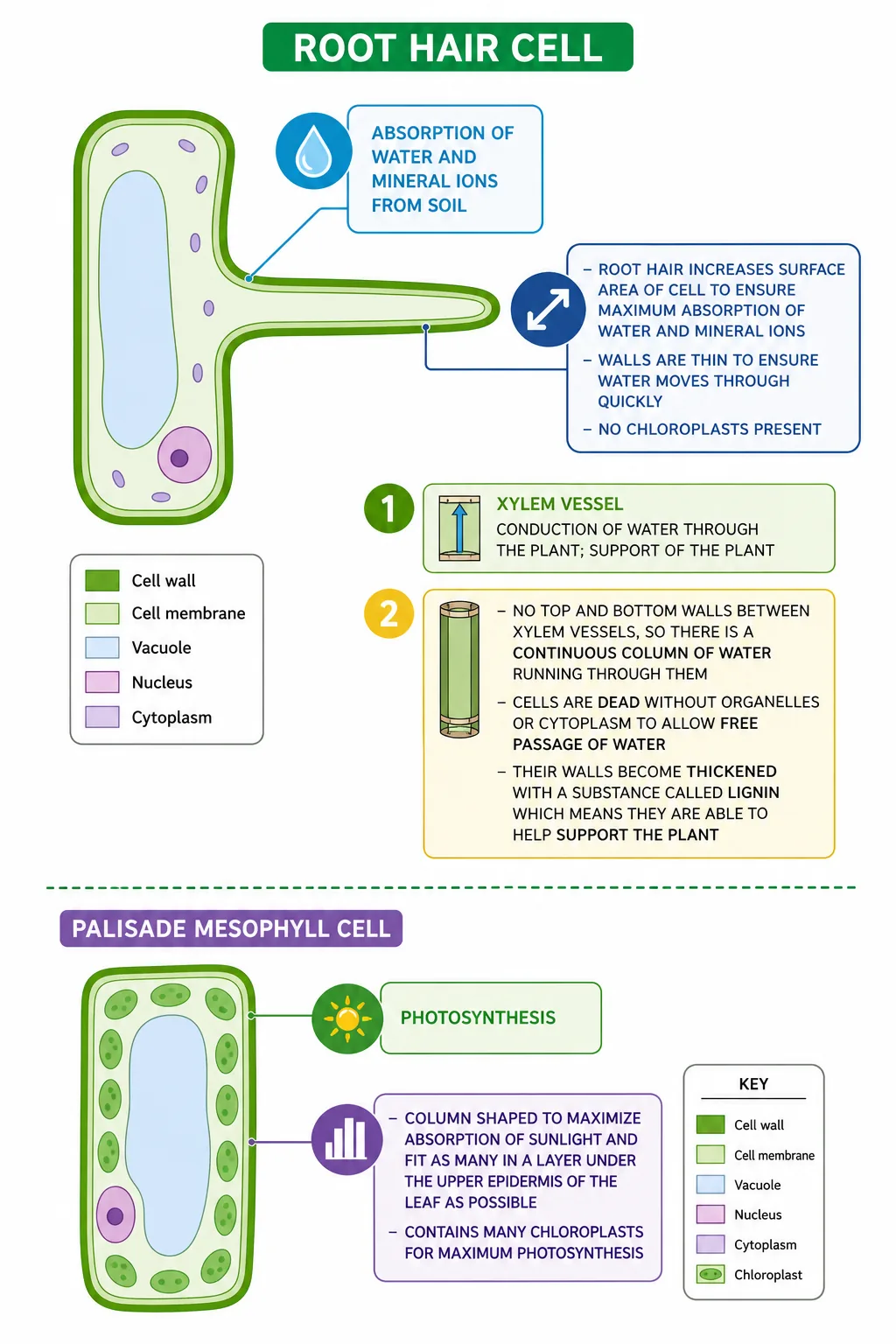
Root hair cell
- Root hair cell Absorbs water and mineral ions from the soil.
- A long, thin extension from the cell greatly increases the surface area for absorption.
Palisade mesophyll cell
- Palisade mesophyll cell Carries out photosynthesis in the leaf.
- It is tall and packed with chloroplasts, and is found near the top of the leaf where light is strongest.
Section 4 of 7Levels of organisation




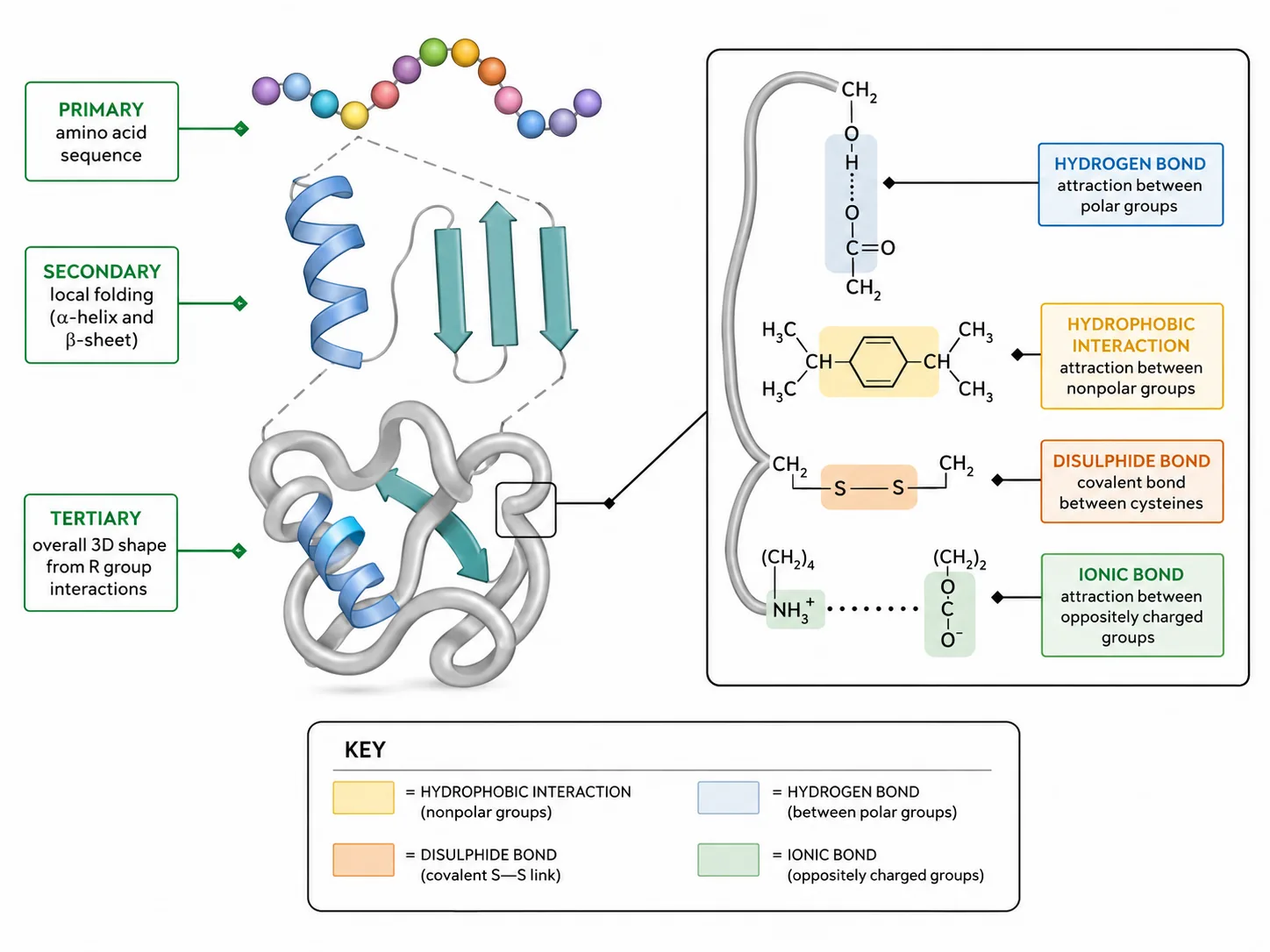
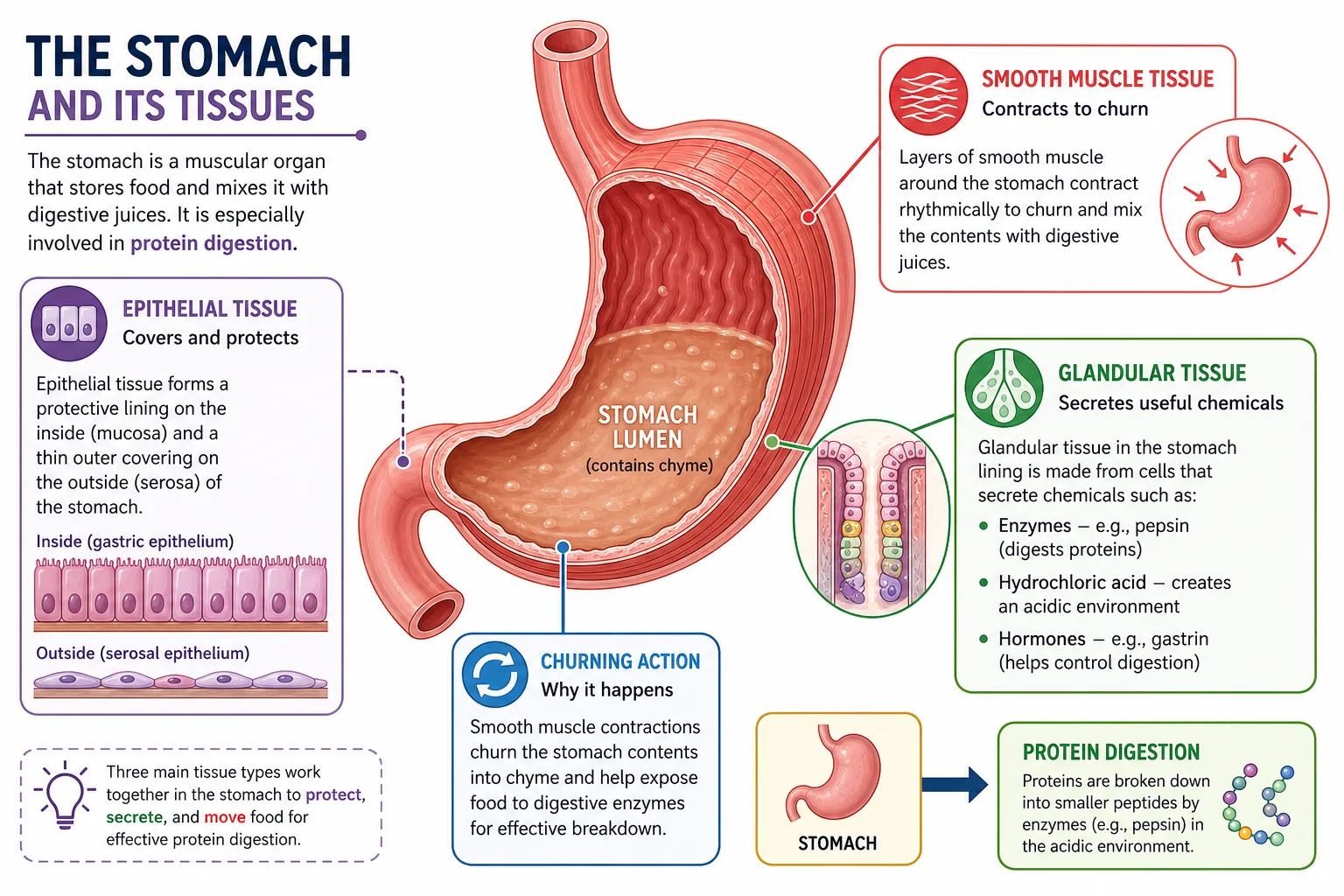
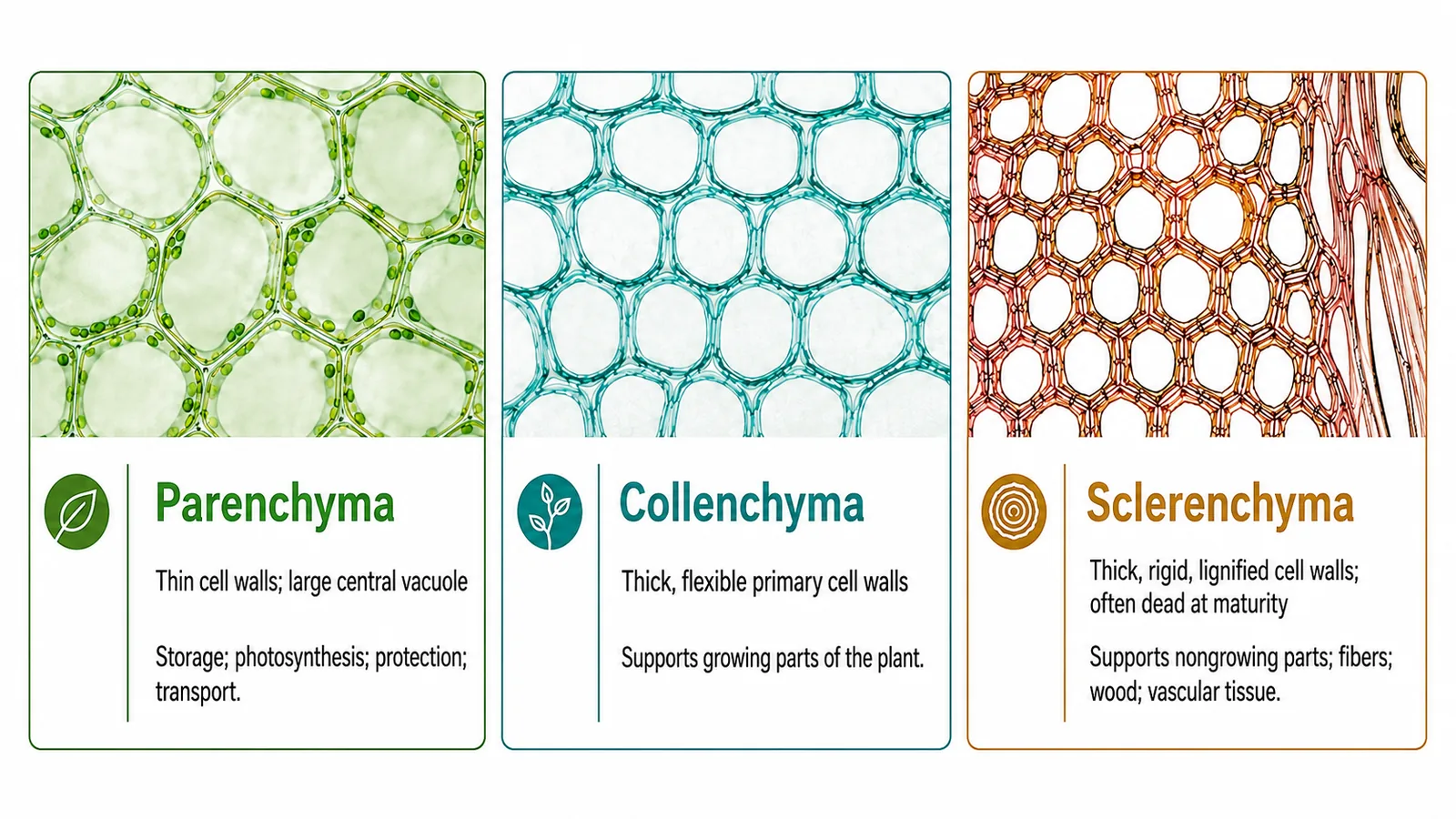
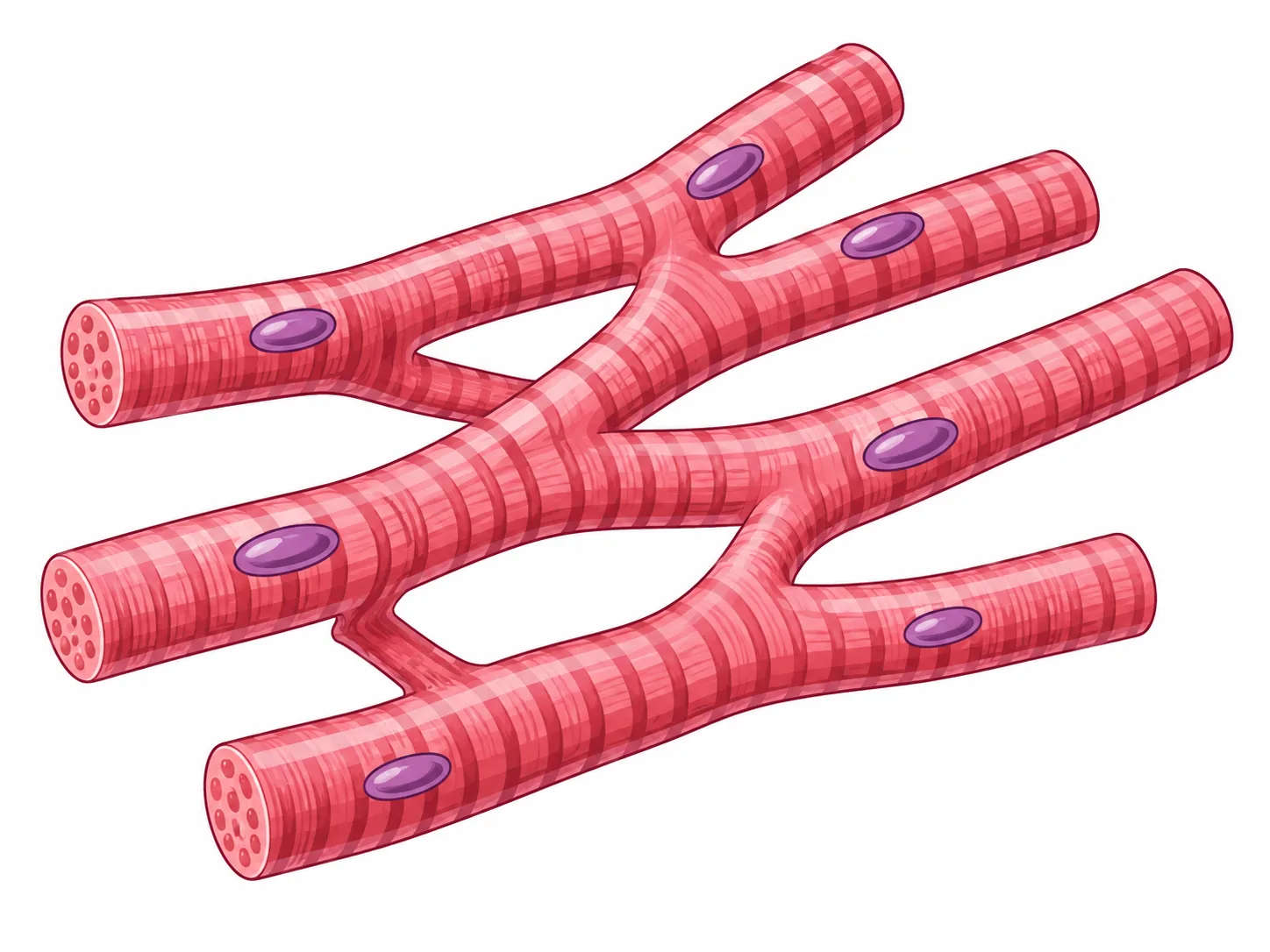
1
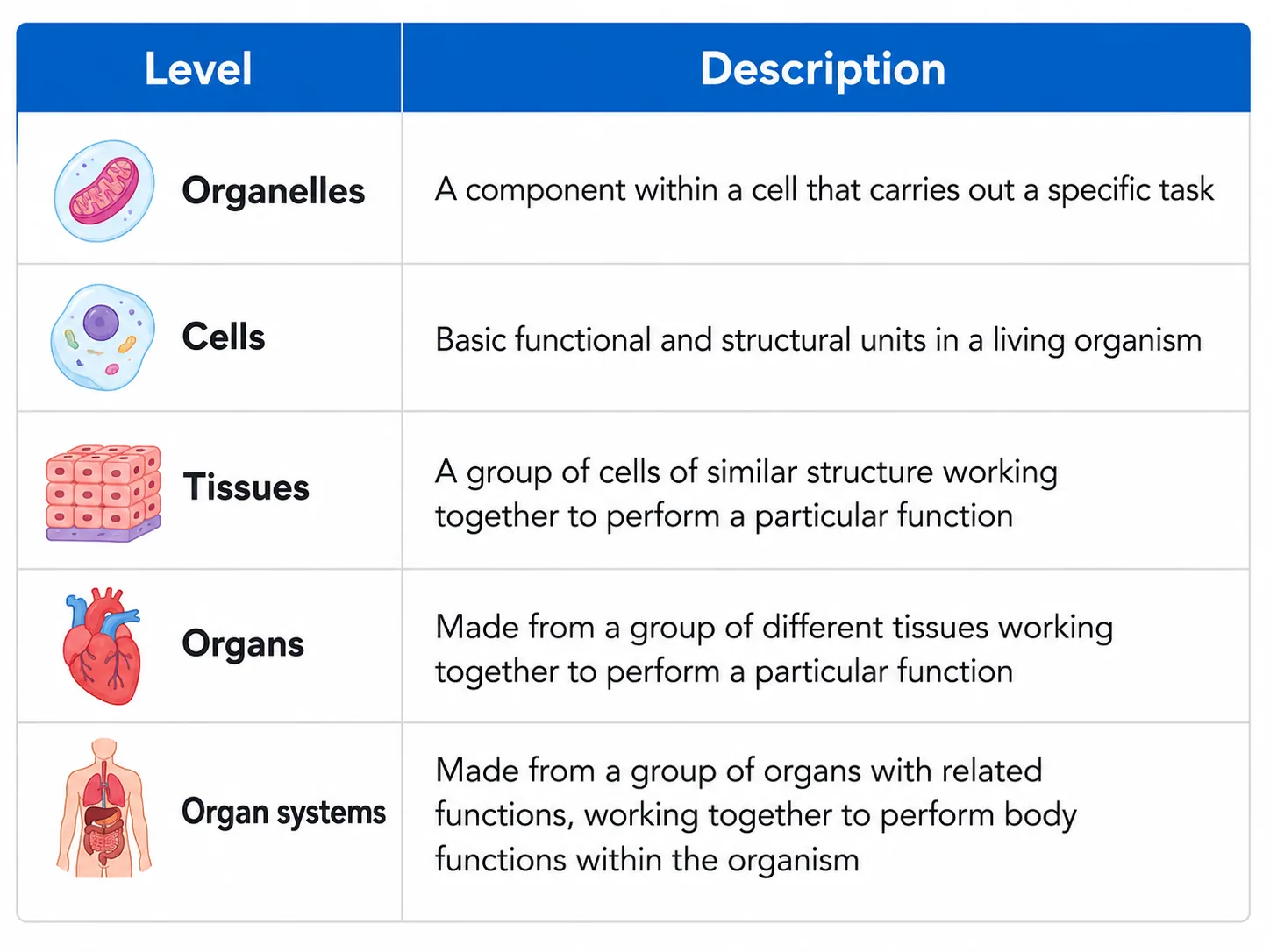
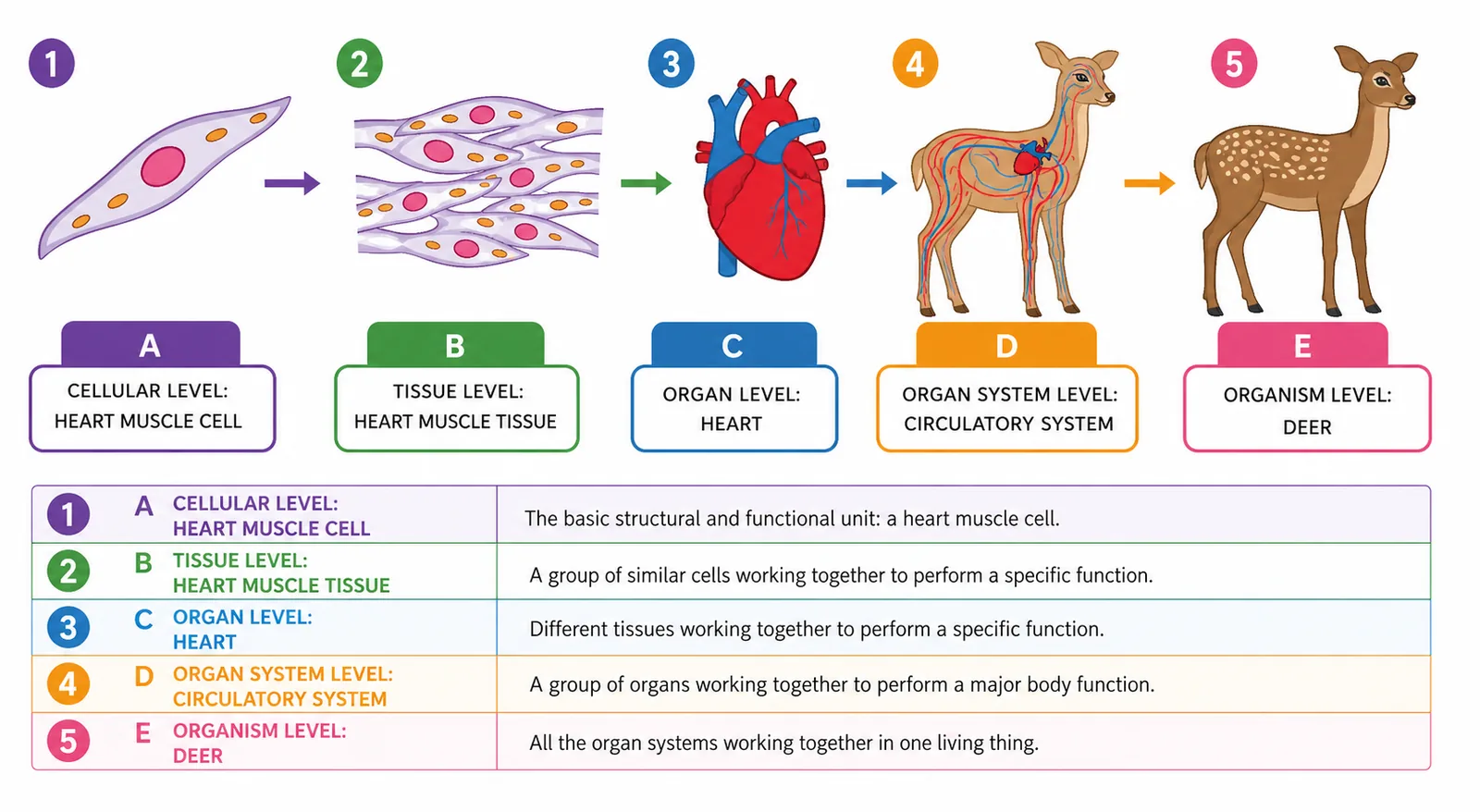
Cell: the basic unit of life, such as a palisade mesophyll cell or a muscle cell.
2
Tissue: a group of similar cells working together to do a job, for example spongy mesophyll tissue or muscular tissue.
3
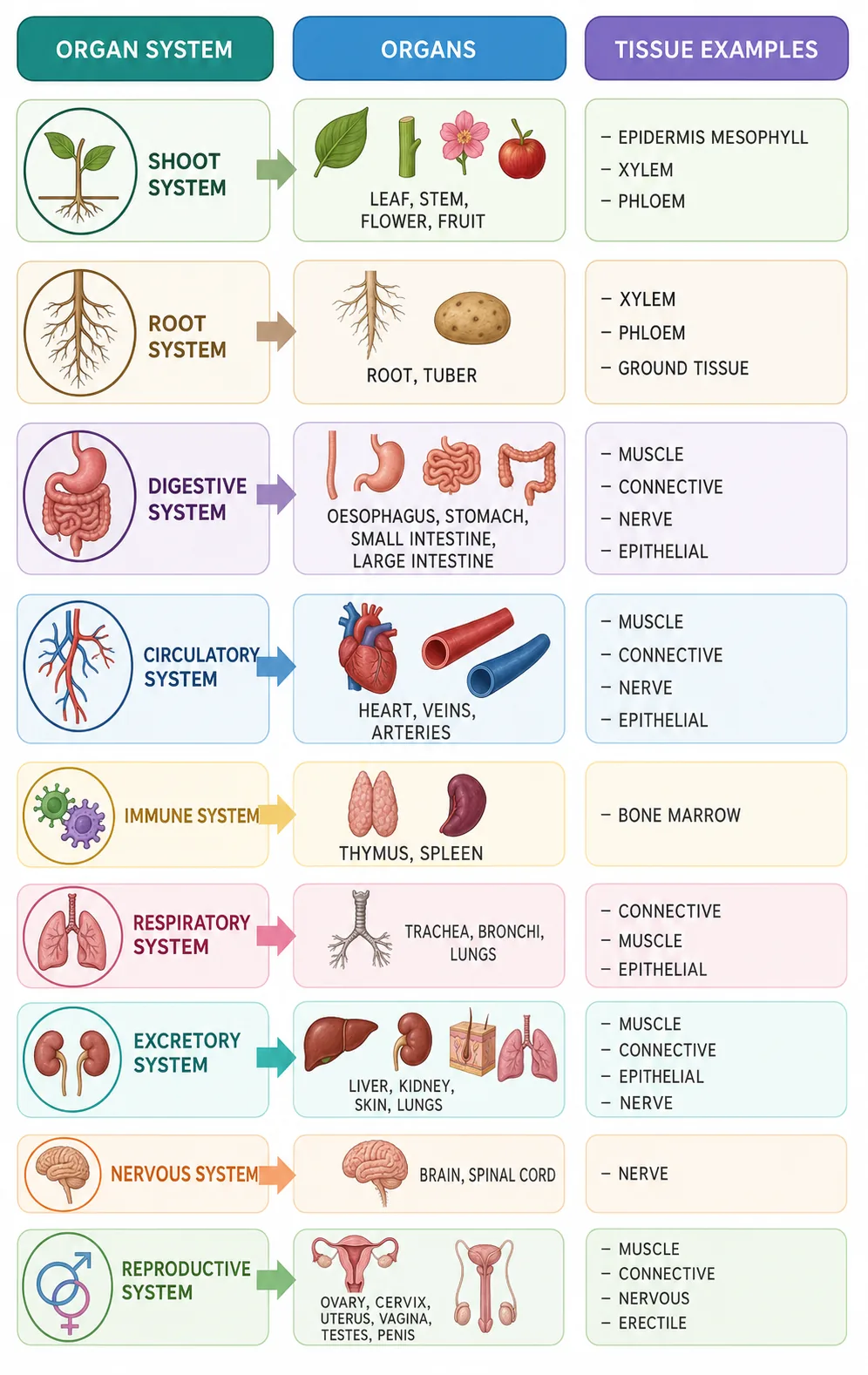
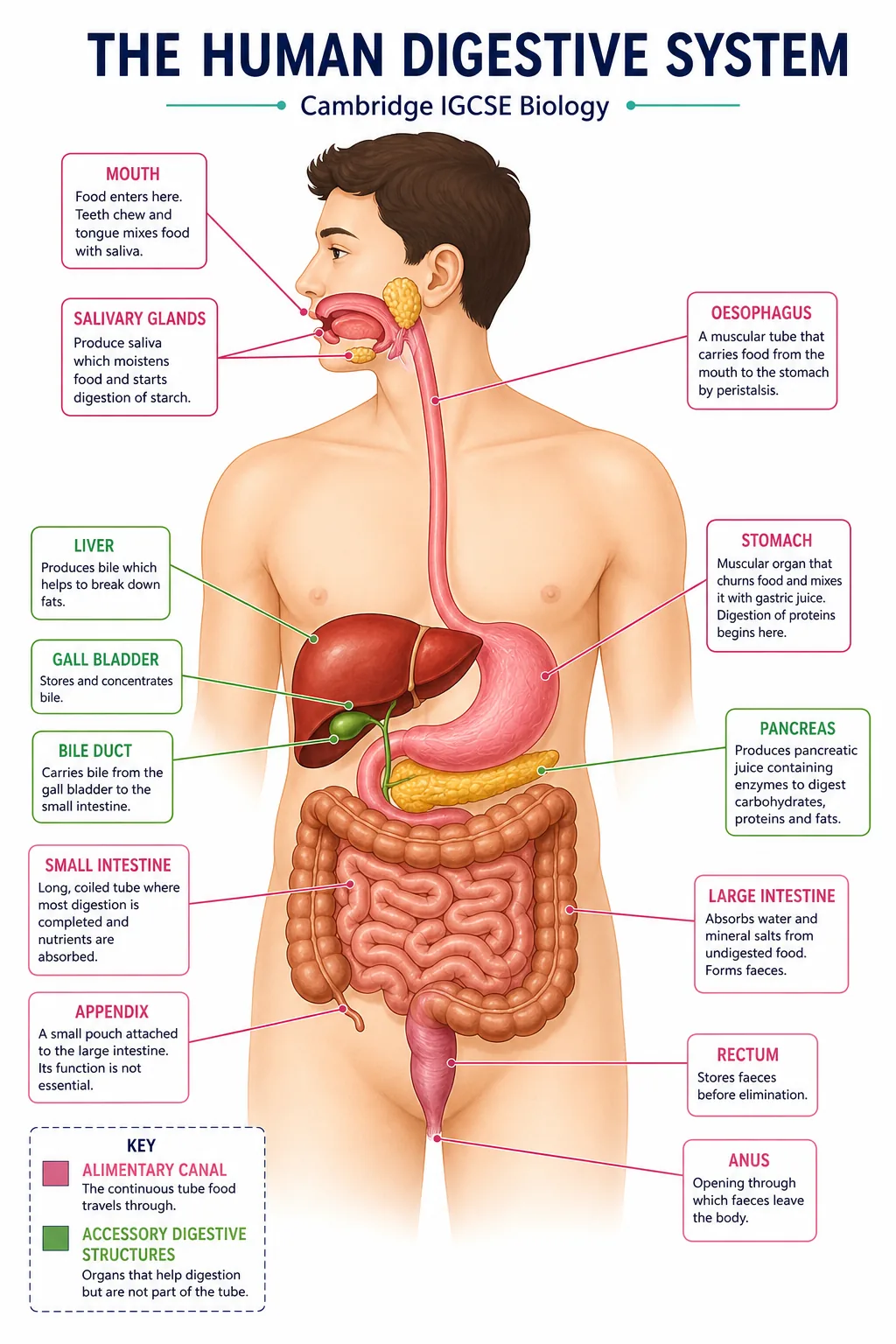
Organ: a structure made of several different tissues that work together to perform a function, such as the leaf or the stomach.
4
Organ system: a group of organs that work together, such as the digestive system or the transport system of a plant.
5
Organism: all the organ systems working together make up a whole living thing.
Section 5 of 7Worked example

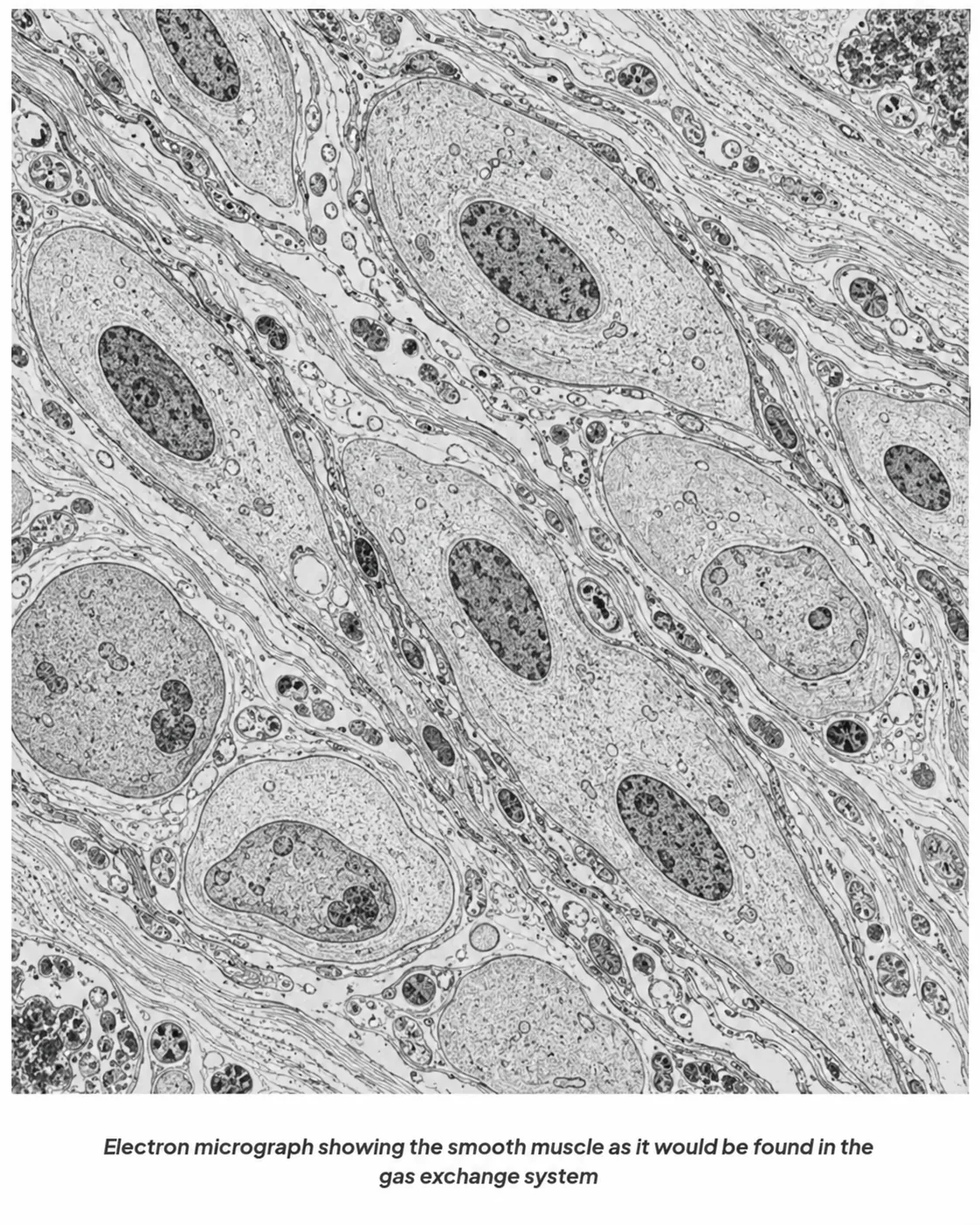
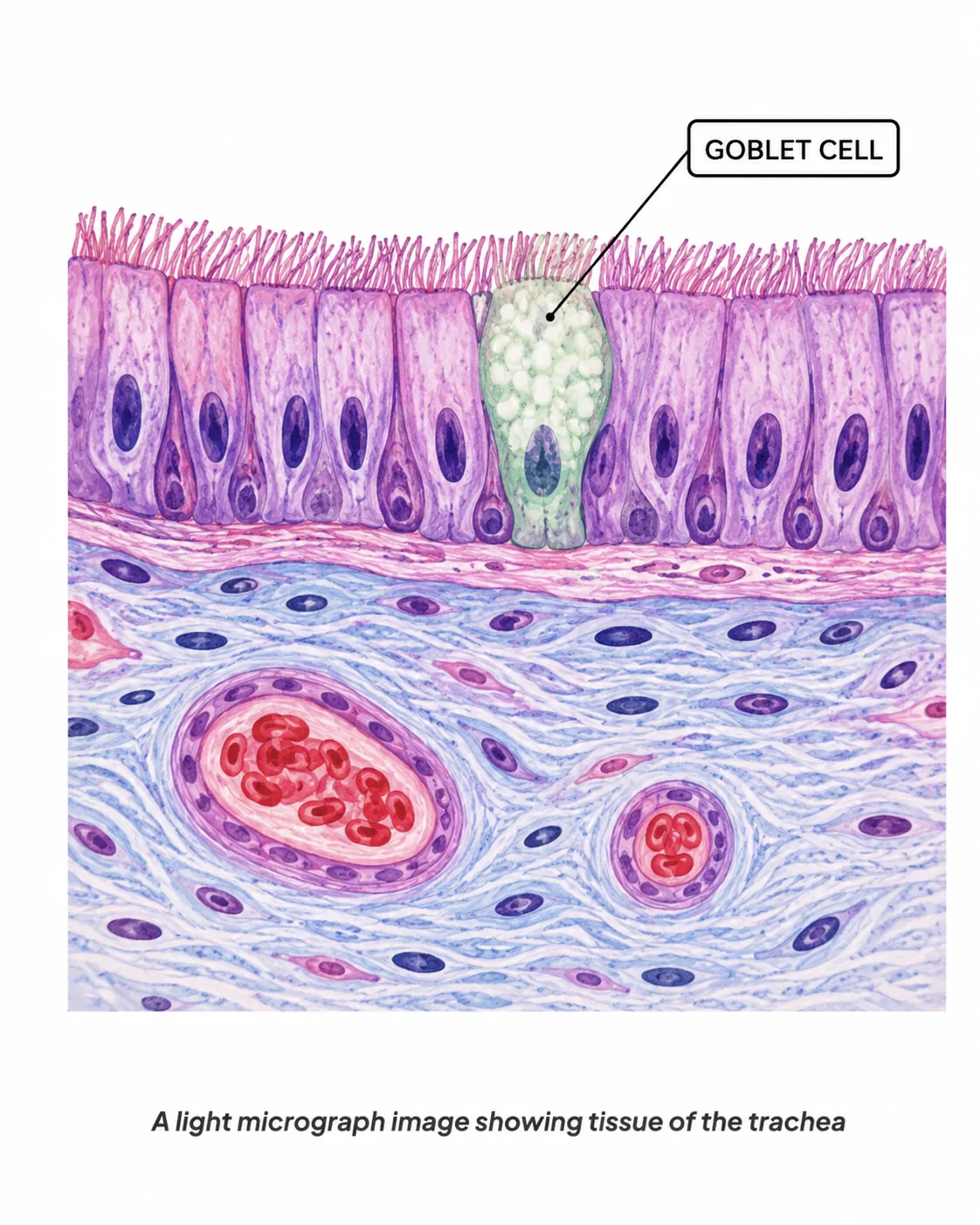

Identify each level
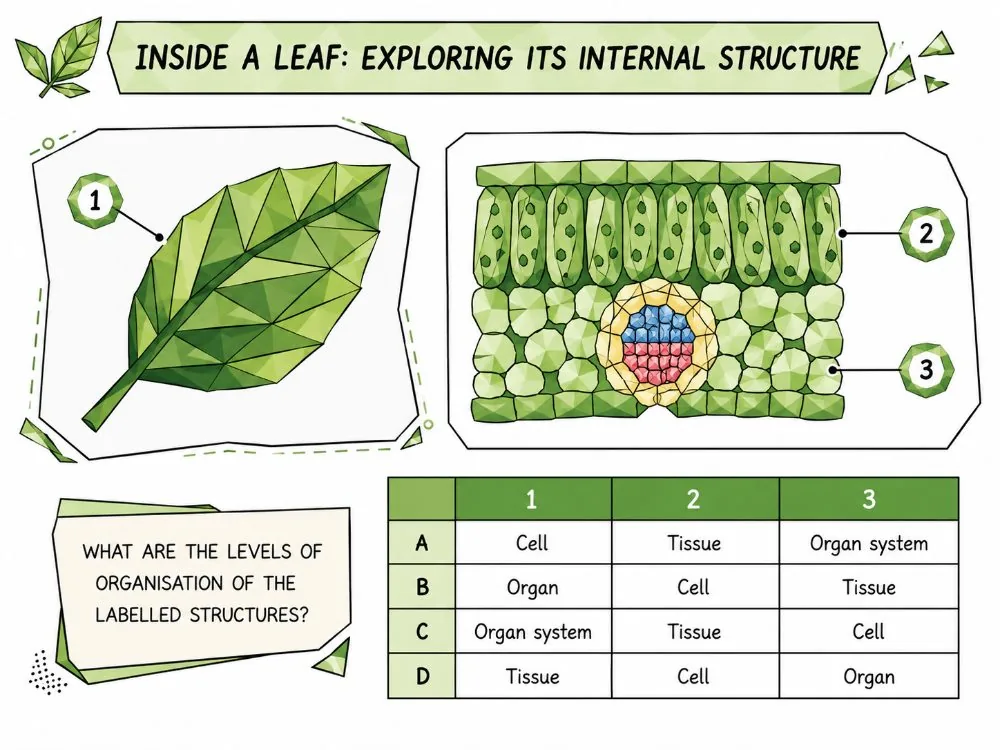
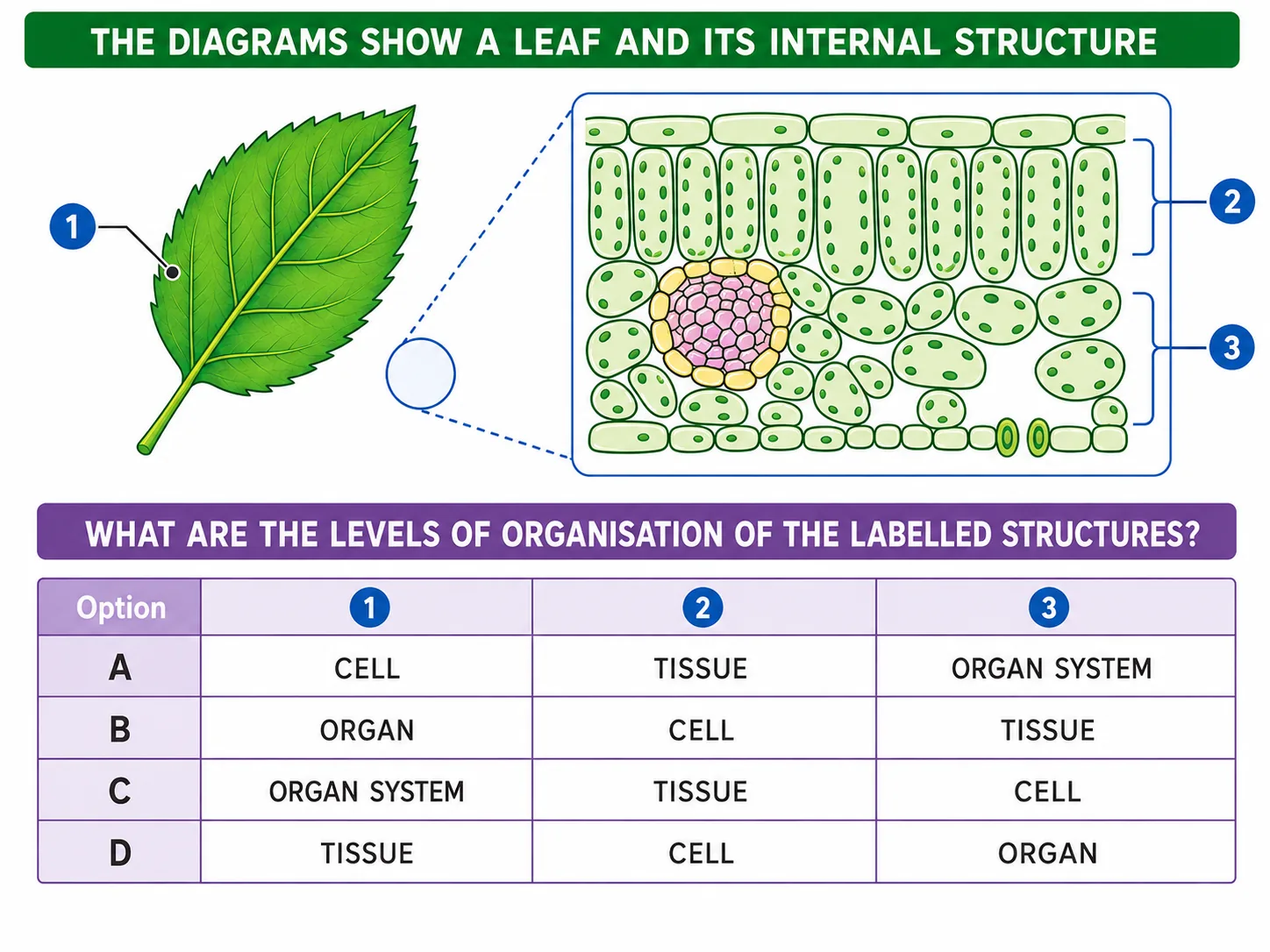
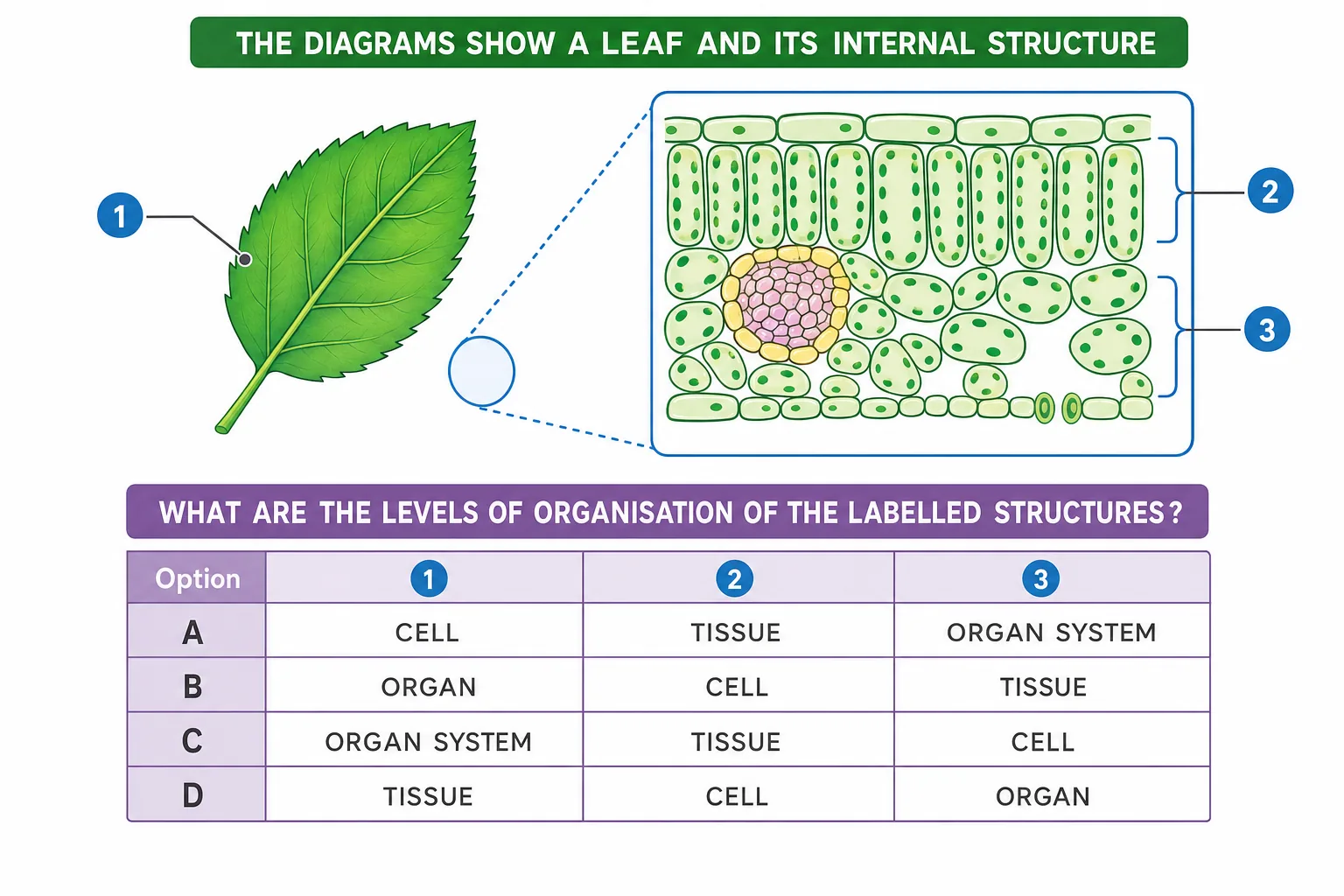
- Identify each level A leaf contains several tissues that work together for photosynthesis, so it is an organ.
- A palisade mesophyll cell is a single specialised unit, so it is a cell.
- A group of similar spongy mesophyll cells working together is a tissue.
- The correct order from the example, organ then cell then tissue, depends on correct definitions rather than size alone.
Section 6 of 7Key terms
| Term | Meaning |
|---|---|
| Cell division | The process by which a cell splits to form new cells, used for growth and repair. |
| Specialised cell | A cell with a structure adapted to carry out a particular function. |
| Tissue | A group of similar cells that work together to carry out a function. |
| Organ | A structure made of different tissues working together to carry out a function. |
| Organ system | A group of organs that work together to perform a major function in the body. |
Section 7 of 7Exam technique
1
Describing a tissue as a group of different cell types. A tissue is made of similar cells; an organ contains several tissues.
2
Writing the adaptation without linking it to the function, such as saying only that a red blood cell has no nucleus. State that this gives more room for haemoglobin to carry oxygen.
3
Saying that root hair cells absorb sunlight or that palisade cells absorb water. Match each cell to the correct job.
4
Mixing up the order of the levels. It runs from cell to tissue to organ to organ system to organism.
Marked practiceQuizzes for this lesson
Cambridge 9700 AS Biology
Core Formula
Magnification Triangle & Unit Conversion
Formula: M = I / A ⇔ A = I / M ⇔ I = M × A
Units: 1 mm = 1,000 μm = 1,000,000 nm.
Rule: Convert Image size (ruler mm) to μm by ×1,000 before dividing by Actual size.