3.1.5Movement into and out of Cells
Osmosis in Animals and Plants
5 min read 6 parts Lesson 6 of 8 1 quiz
Section 1 of 6Osmosis and water potential (Extended)






Definition
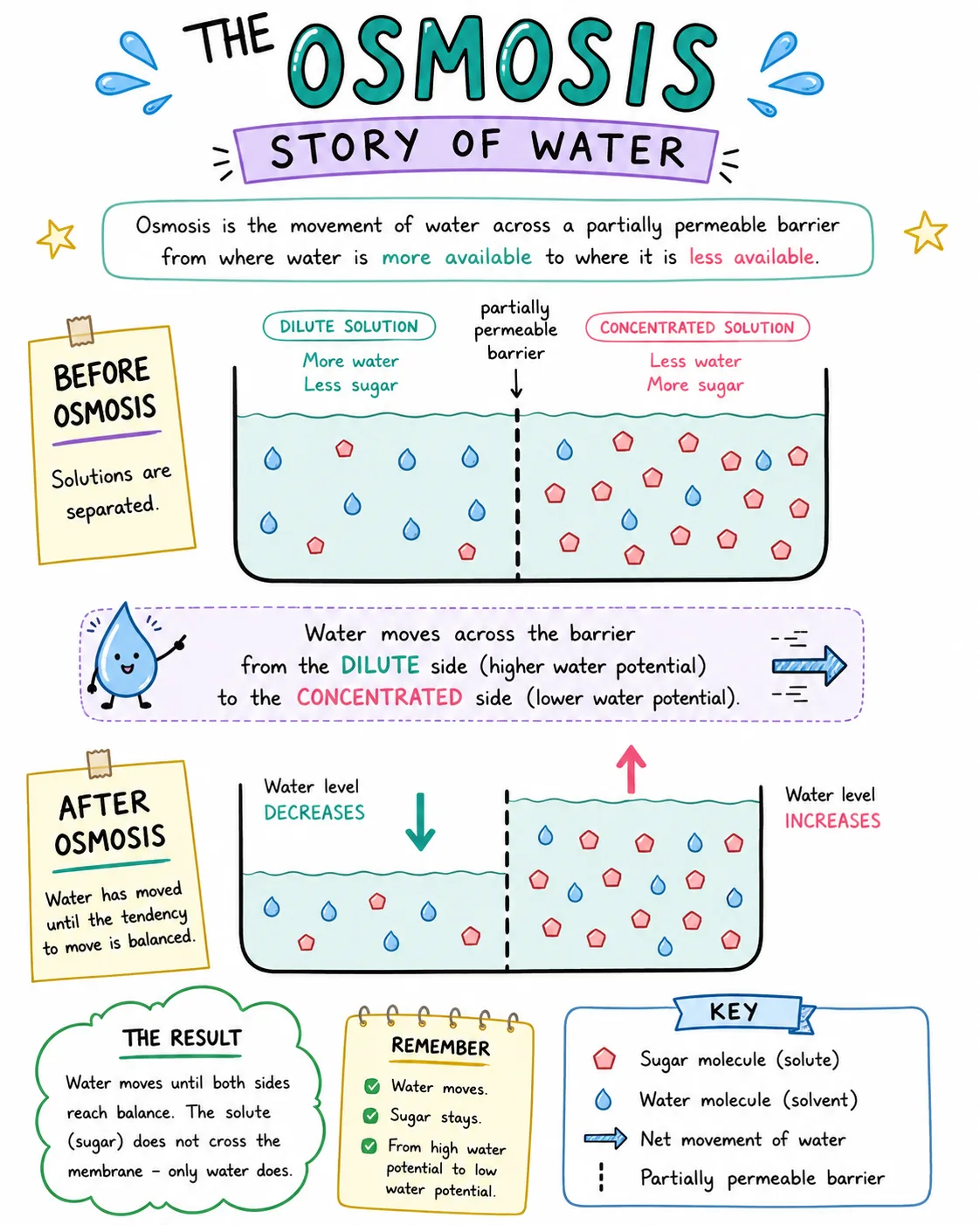
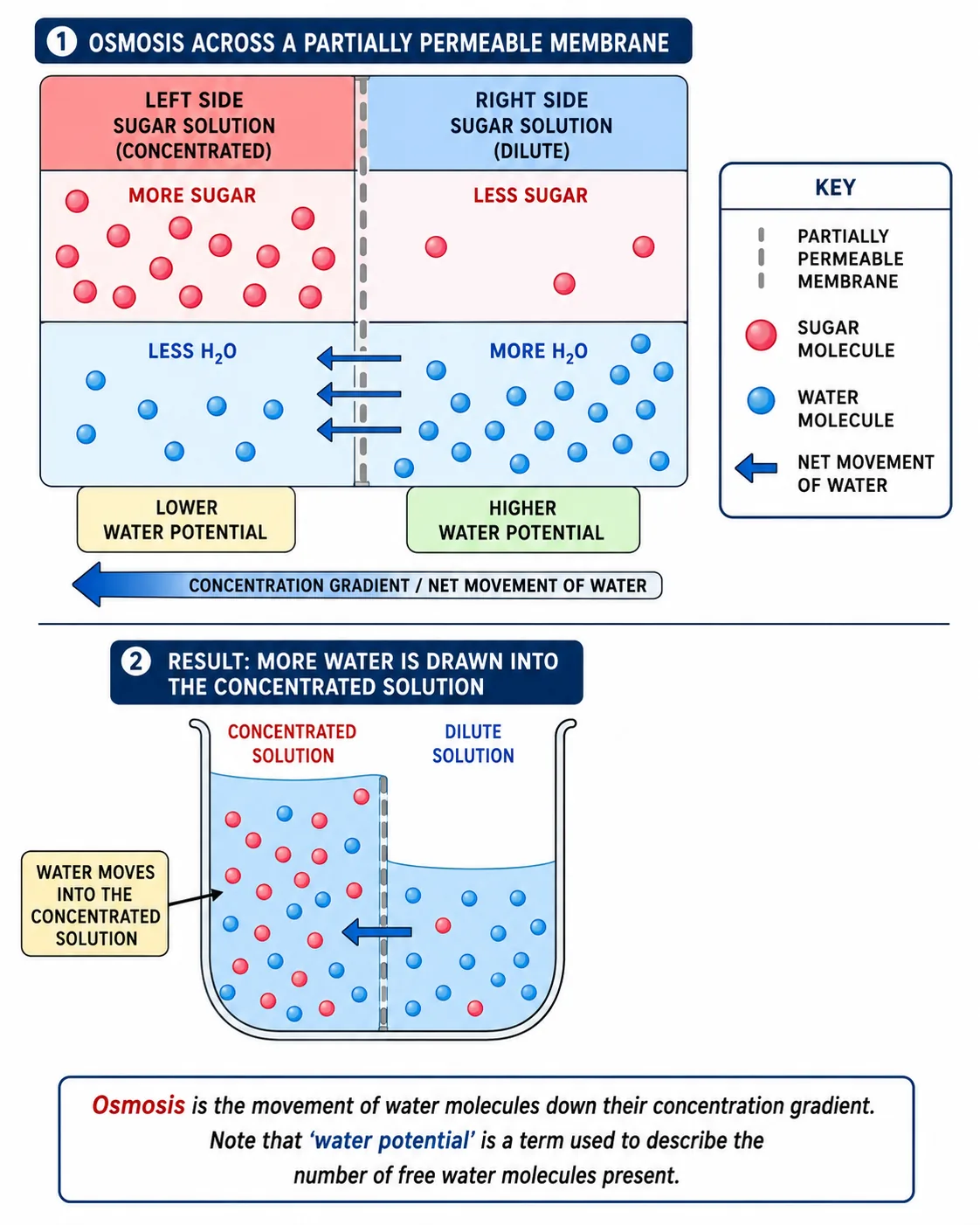
- Definition Osmosis is the net movement of water molecules from a region of higher water potential to a region of lower water potential, through a partially permeable membrane.
Why use water potential?
- Why use water potential?
- Talking about the 'concentration of water' is confusing, because we also call solutions concentrated when they contain a lot of solute.
- A dilute solution has a high water potential; a concentrated solution has a low water potential. Pure water has the highest water potential of all.
Direction of travel
- Direction of travel Water always moves down its water potential gradient, from dilute to concentrated, until the two sides are balanced.
Section 2 of 6Plant cells in dilute solution
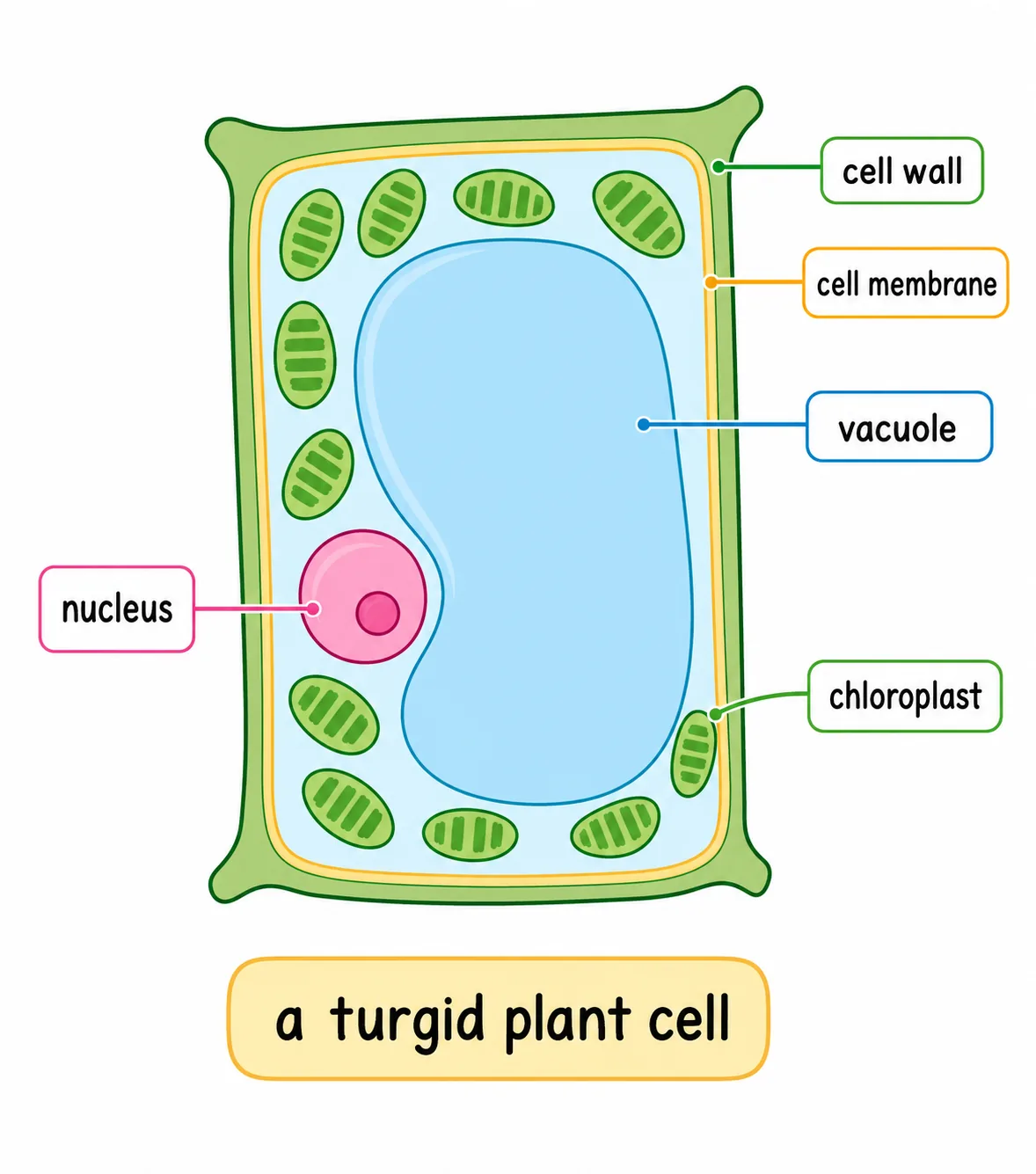
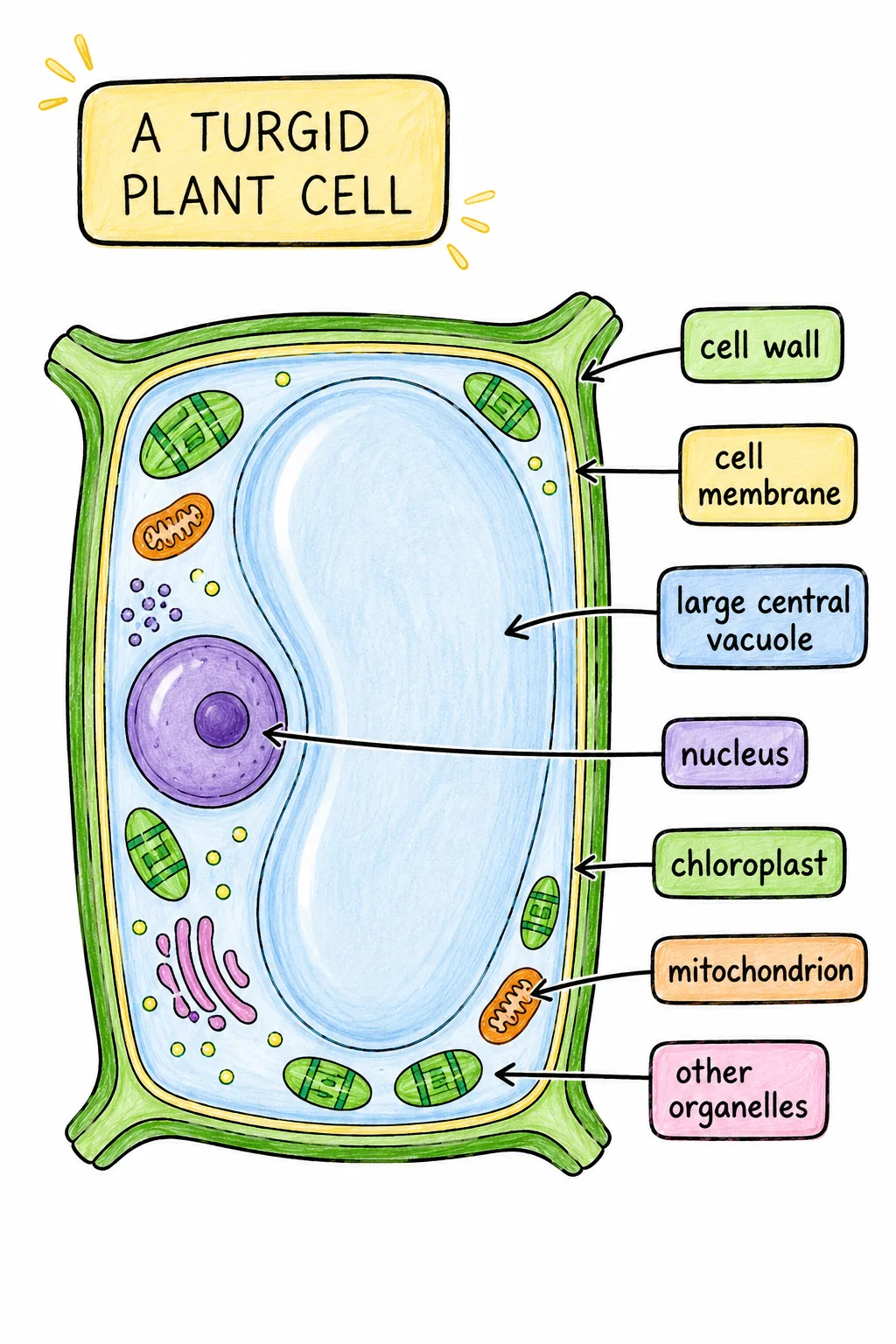

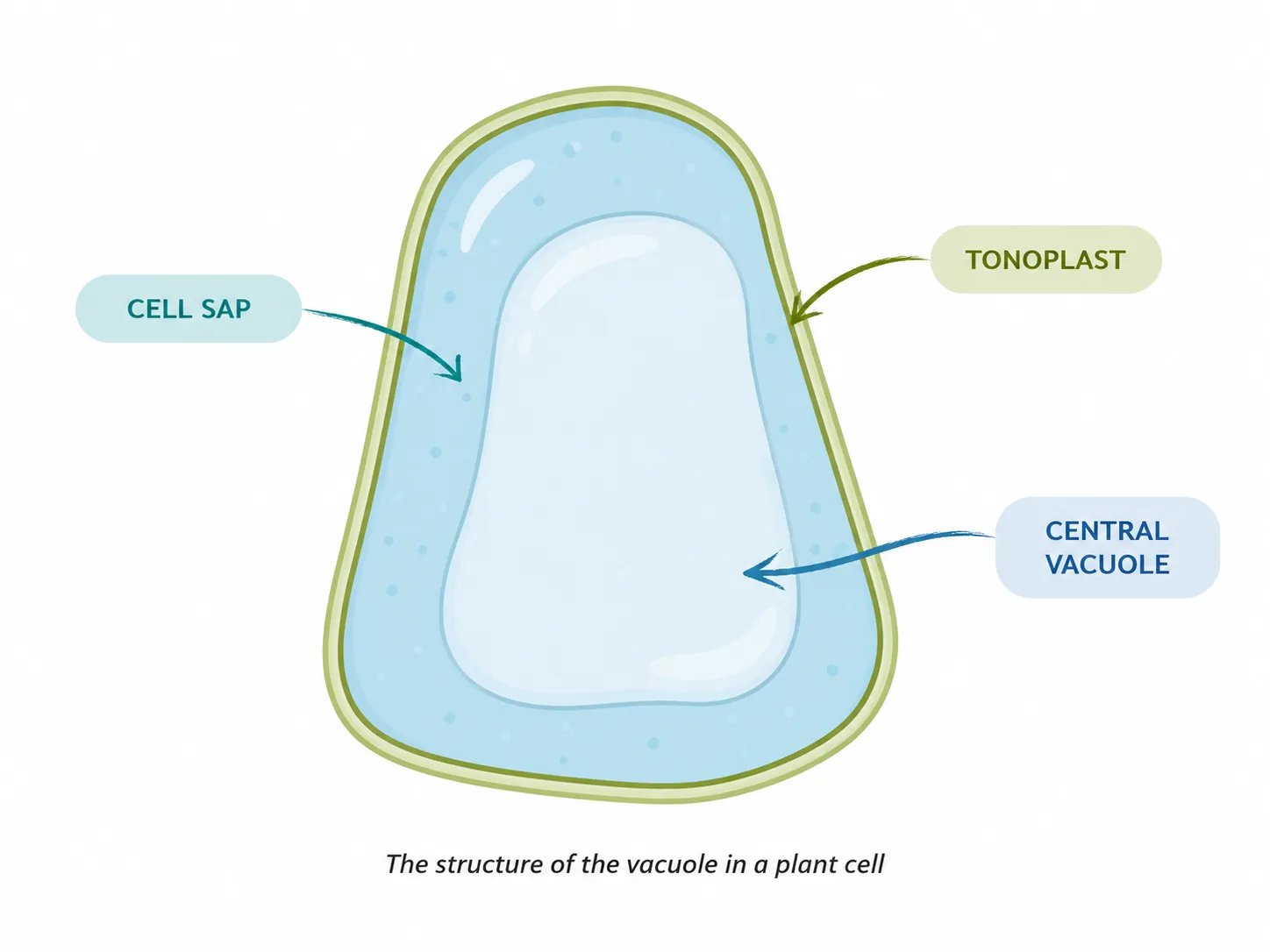

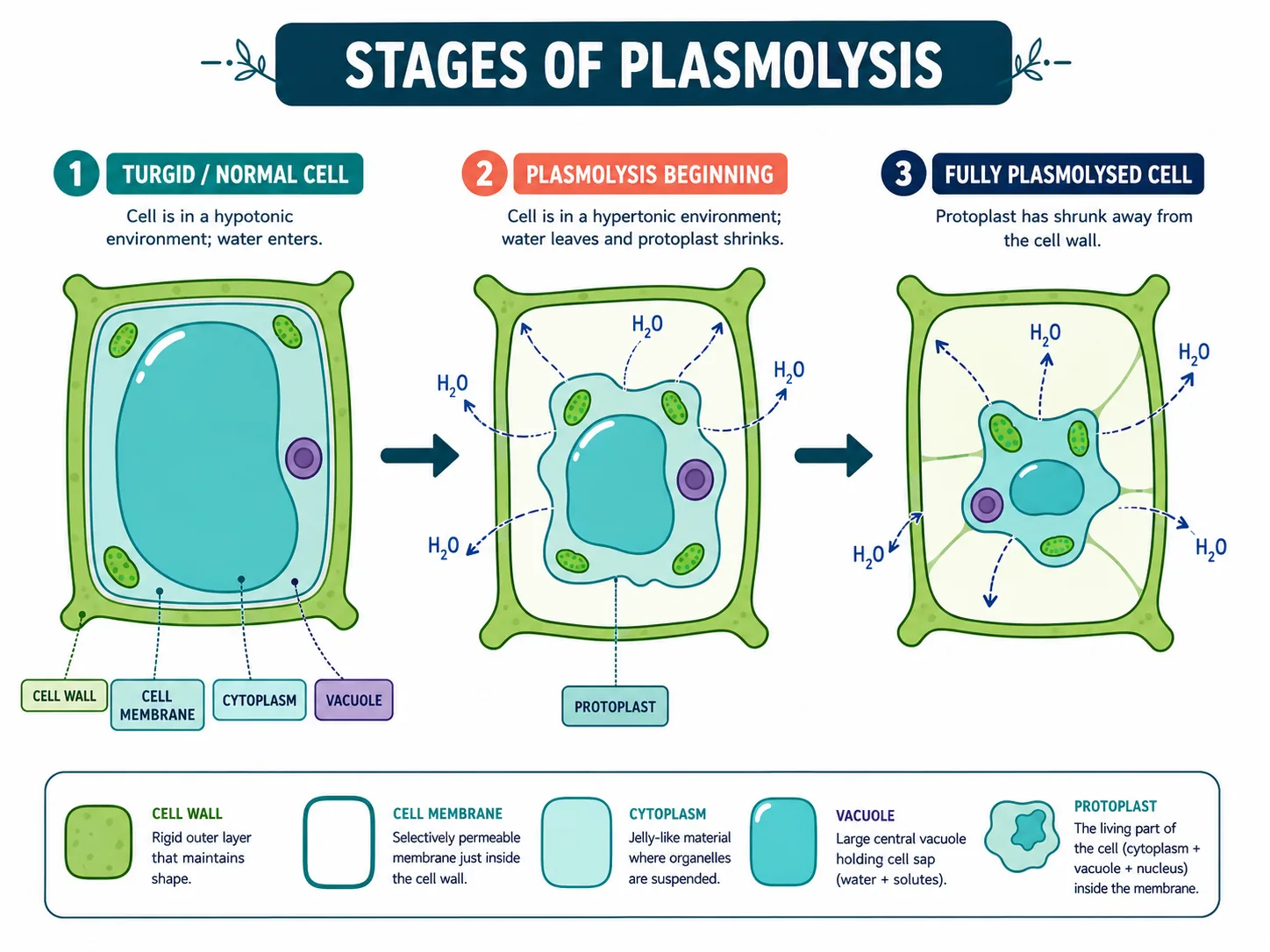
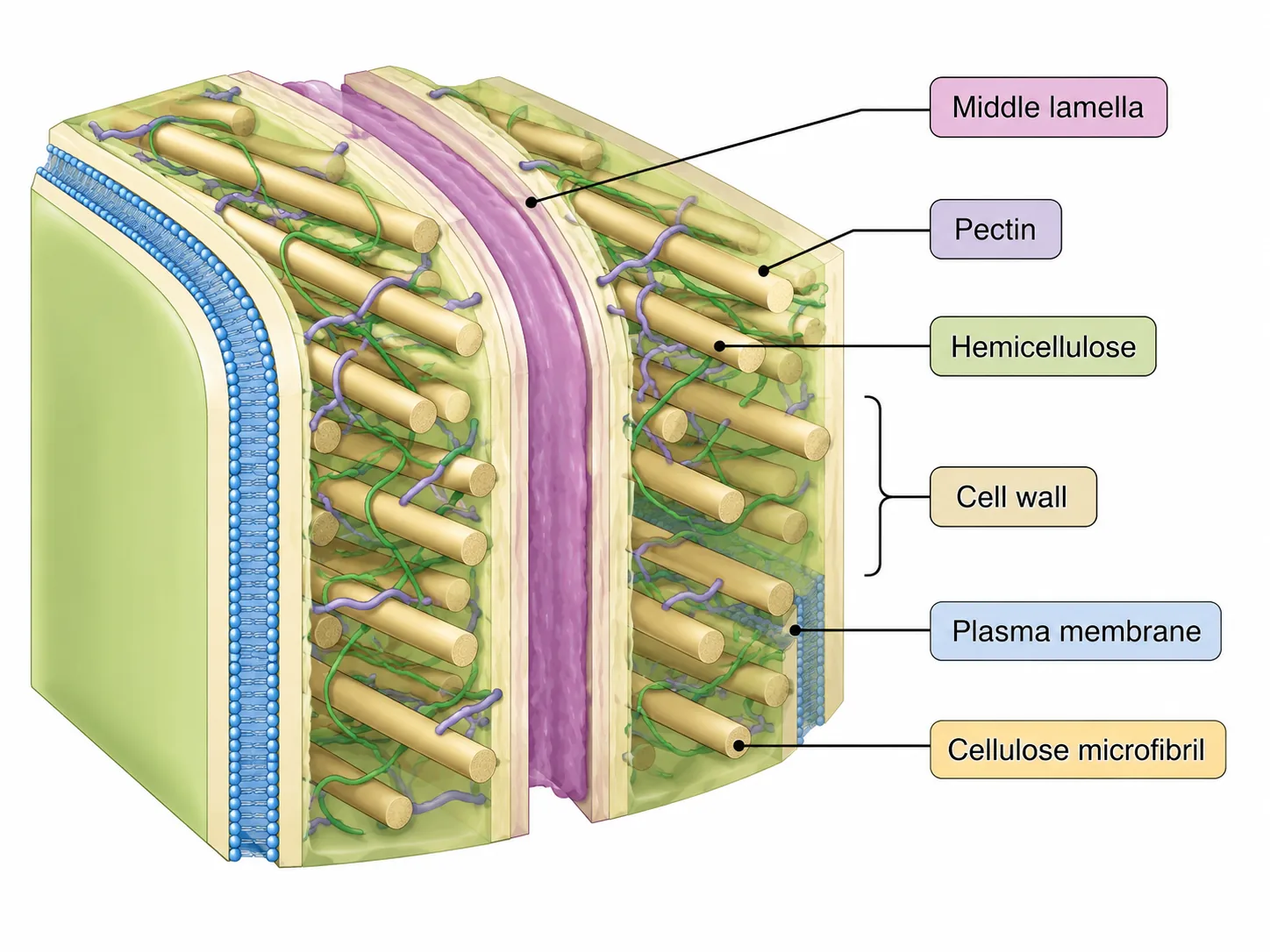
1Higher water potential outside
- Higher water potential outside The cell is placed in distilled water or a very dilute solution.
2Water enters by osmosis
- Water enters by osmosis Water molecules move into the cell through the partially permeable membrane.
3Turgor pressure rises
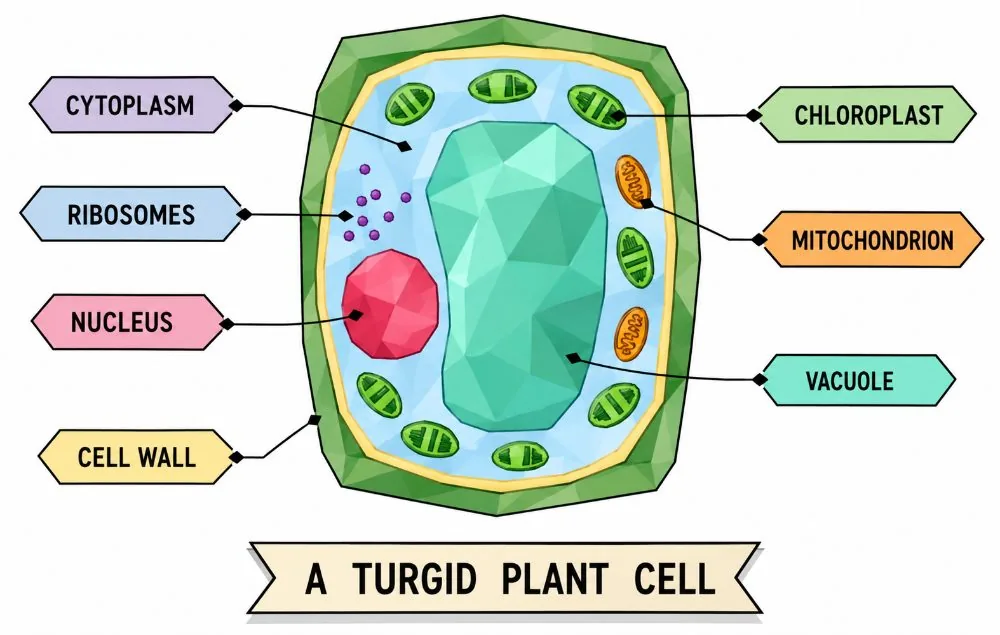
- Turgor pressure rises The vacuole swells and pushes the cell membrane against the cell wall.
4Cell becomes turgid
- Cell becomes turgid The strong wall stops the cell bursting, and turgid cells help to support the plant.
Section 3 of 6Plant cells in concentrated solution
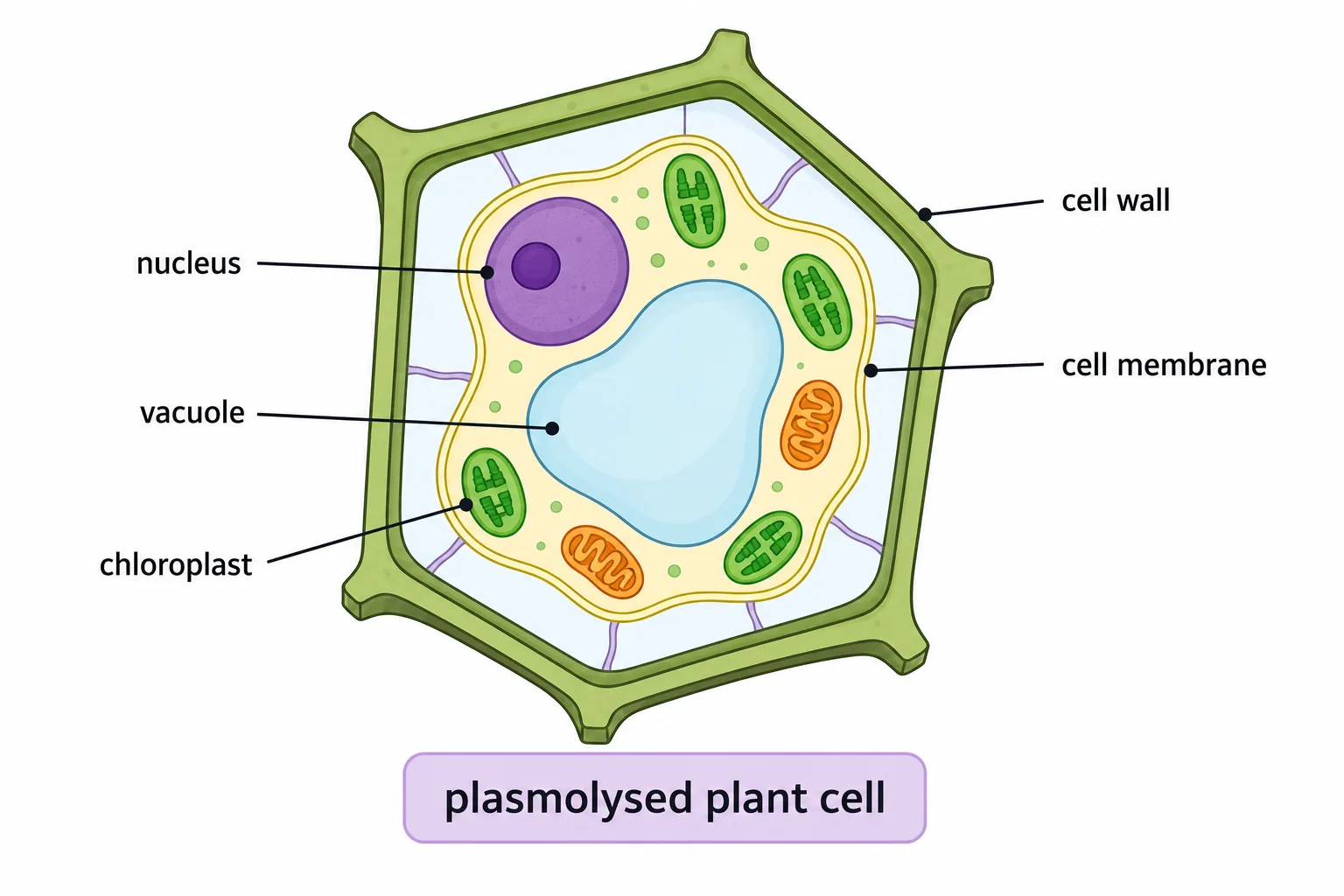

1Lower water potential outside
- Lower water potential outside The cell is placed in a concentrated solution.
2Water leaves by osmosis
- Water leaves by osmosis Water moves out of the cell and the contents shrink.
3Cell becomes flaccid
- Cell becomes flaccid Turgor pressure falls, so the plant loses support and wilts.
4Plasmolysis
- Plasmolysis If enough water is lost, the membrane pulls away from the cell wall.
- Under a microscope the cell is described as plasmolysed.
Section 4 of 6Animal cells compared

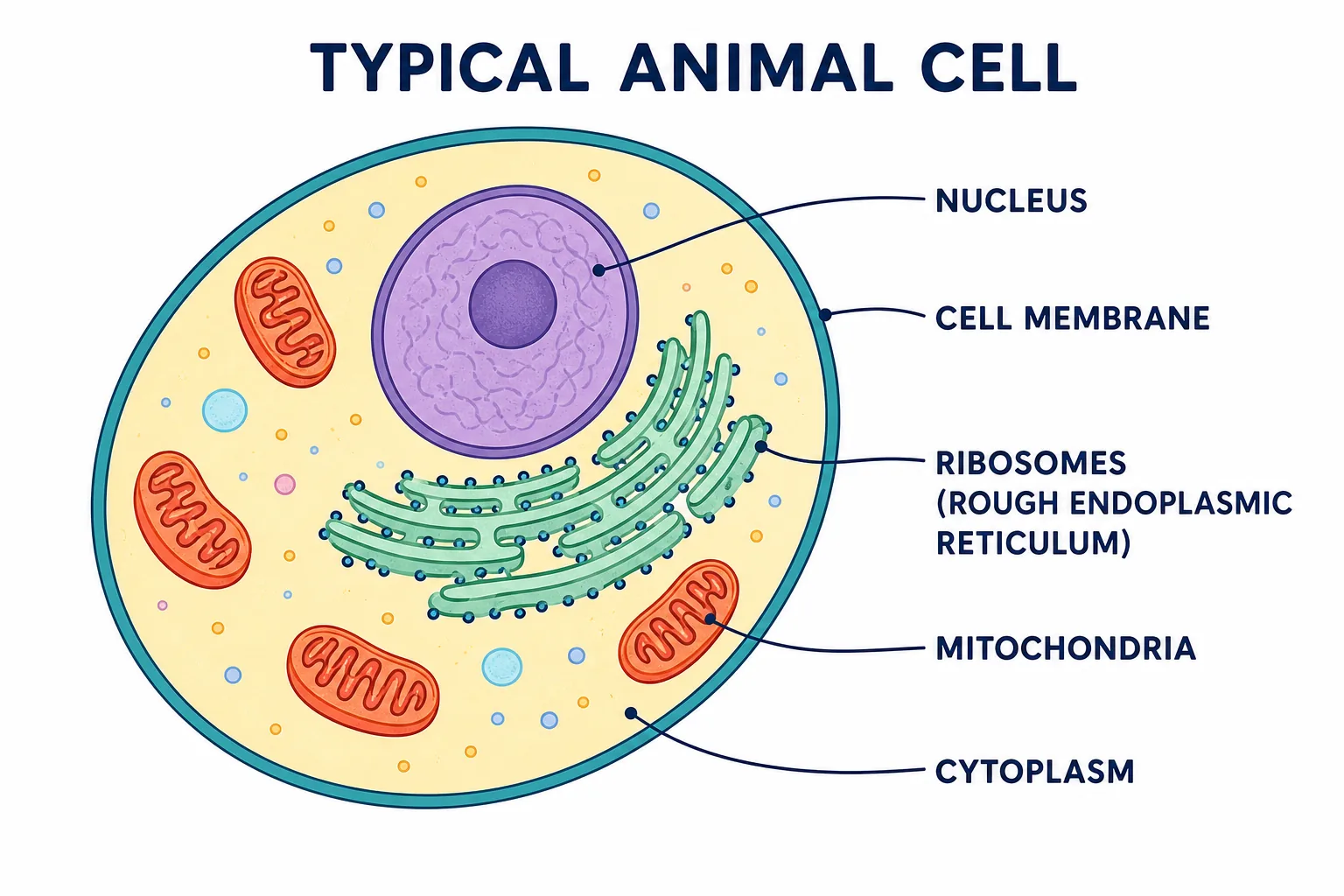
| Solution | Water movement | Result for an animal cell |
|---|---|---|
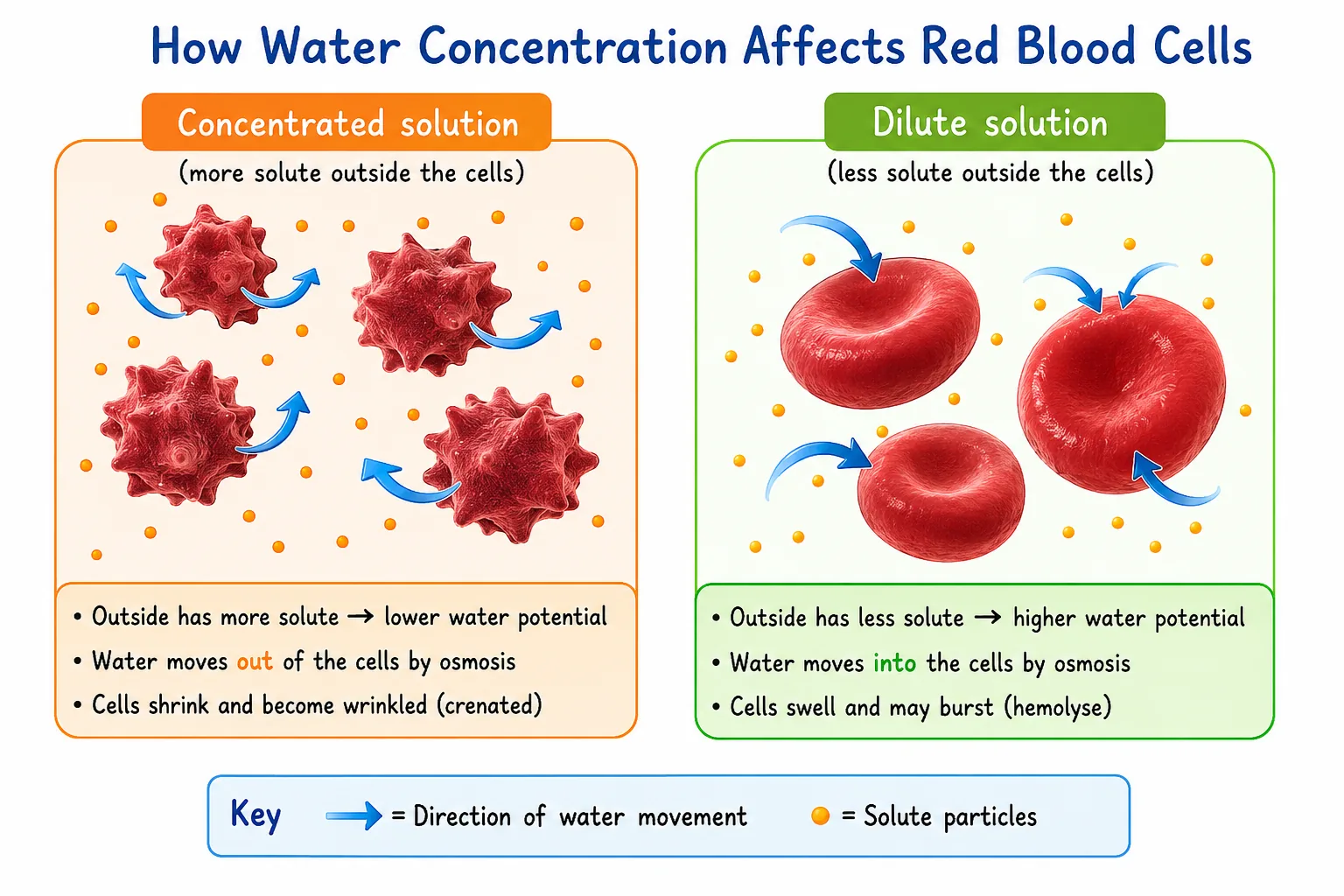
| Lower water potential than the cell (concentrated, e.g. strong sugar solution) | Water leaves the cell by osmosis | The cell shrinks and becomes crenated (shrivelled) |
| Higher water potential than the cell (e.g. distilled water) | Water enters the cell by osmosis | The cell swells and, with no cell wall to resist, may burst |
| Same water potential as the cell | No net movement | The cell stays the same size |
Section 5 of 6Key terms
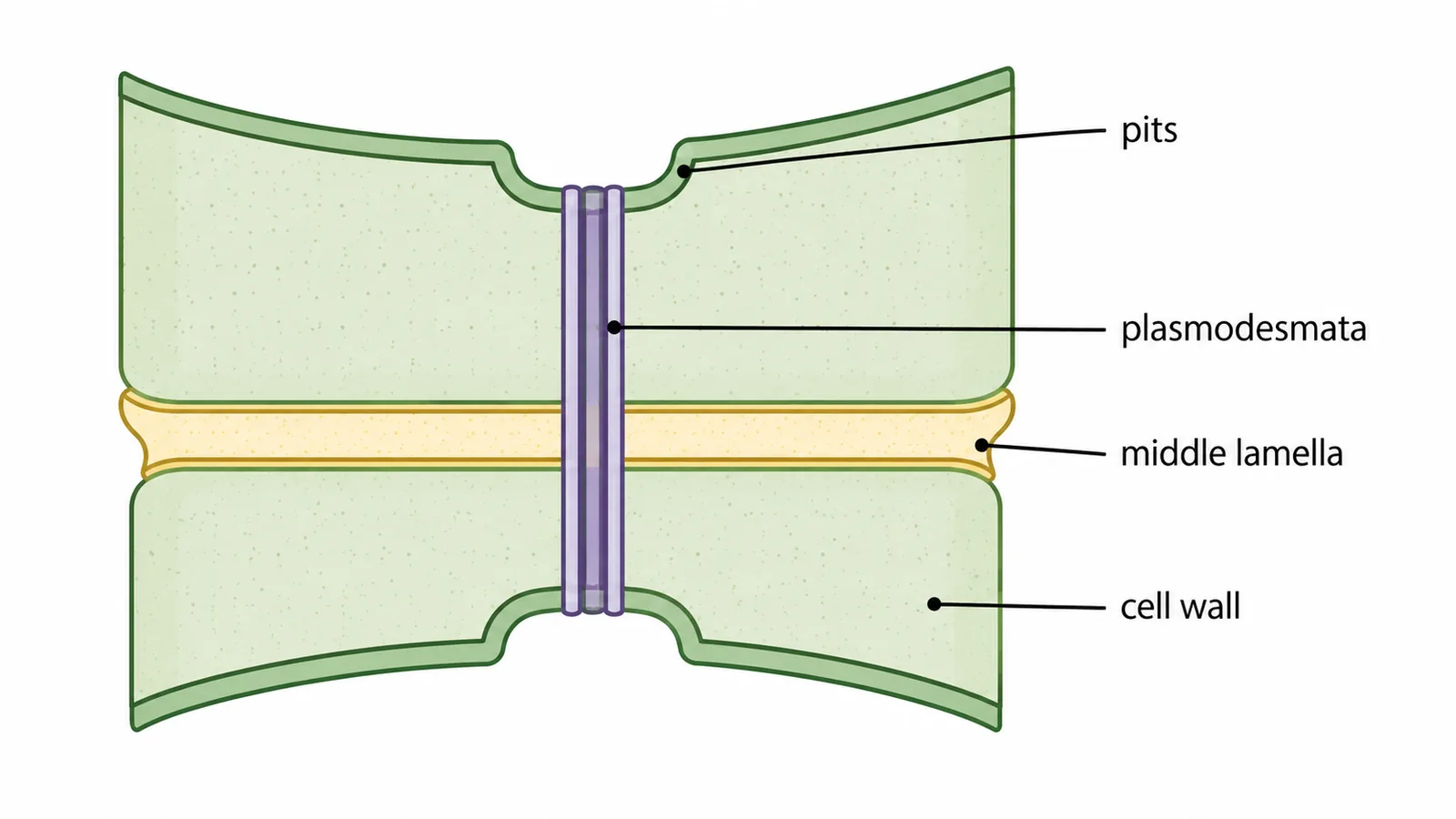
| Term | Meaning |
|---|---|
| Water potential | A measure of the tendency of water to move; dilute solutions have a high water potential and concentrated solutions have a low one. |
| Turgid | Describes a plant cell that is firm and full of water, with the membrane pressing on the cell wall. |
| Flaccid | Describes a plant cell that has lost water and become soft because turgor pressure has fallen. |
| Plasmolysed | Describes a plant cell in which the cell membrane has pulled away from the cell wall. |
| Crenated | Describes an animal cell that has shrivelled after losing water by osmosis. |
| Turgor pressure | The pressure of the cell contents pushing outwards against the cell wall. |
Section 6 of 6Exam technique
1
Saying water moves from 'high concentration to low concentration' without specifying water potential — write 'from higher to lower water potential'.
2
Saying an animal cell becomes turgid; only plant cells have a cell wall, so animal cells swell and burst instead.
3
Mixing up flaccid and plasmolysedflaccid means soft through loss of turgor, plasmolysed means the membrane has pulled away from the wall.
4
Forgetting to mention the partially permeable membrane in a definition of osmosis.
5
Describing a dilute solution as having a low water potential — it is the other way round.