Section 1 of 11Preparing the sample
1
Grind a solid food with a little distilled water using a pestle and mortar.
2
Filter or allow the mixture to settle to obtain a clear solution.
3
Divide the solution into separate test tubes, one for each test.
4
Run a test on distilled water as a control to show a negative result.
Section 2 of 11Starch — iodine test

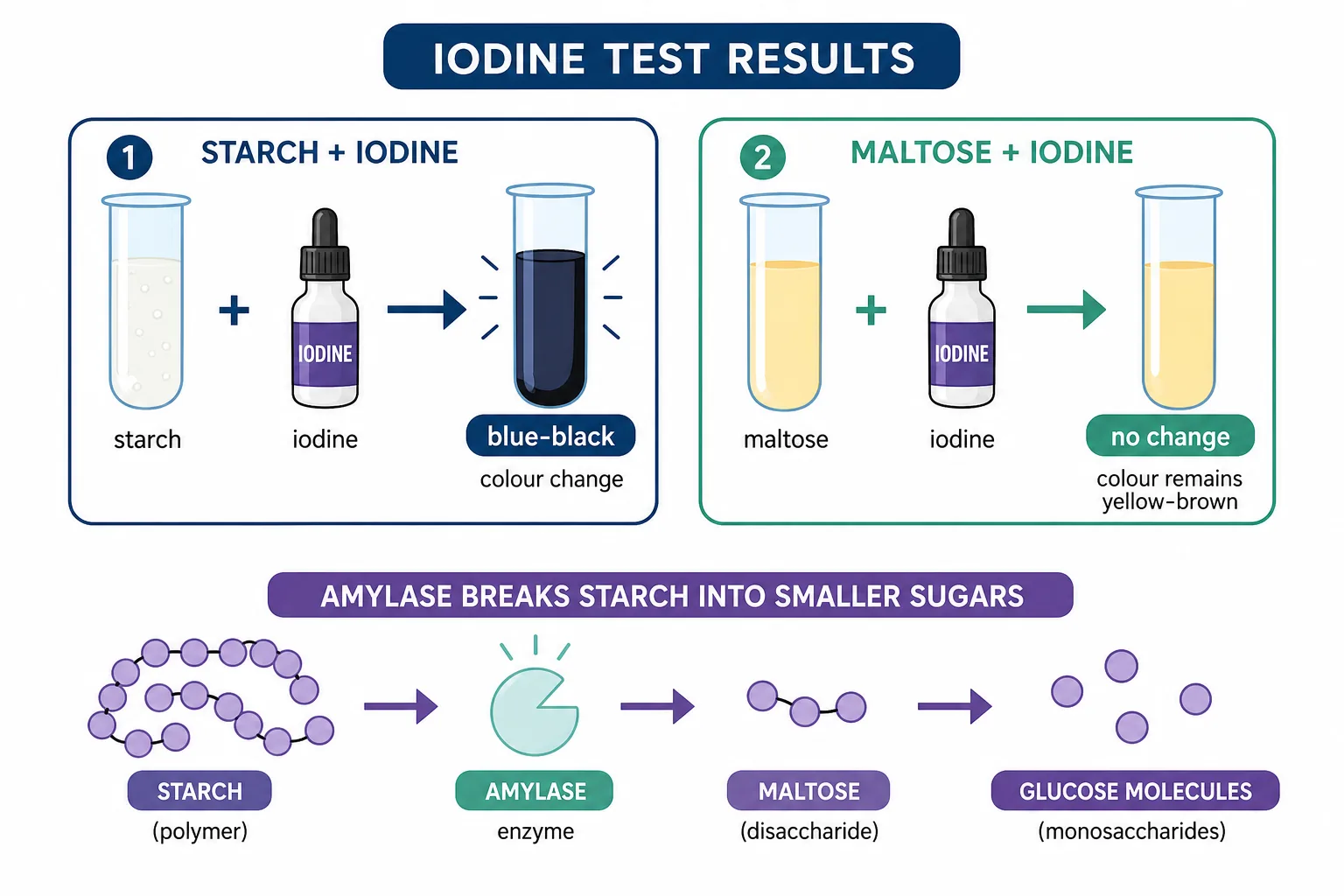


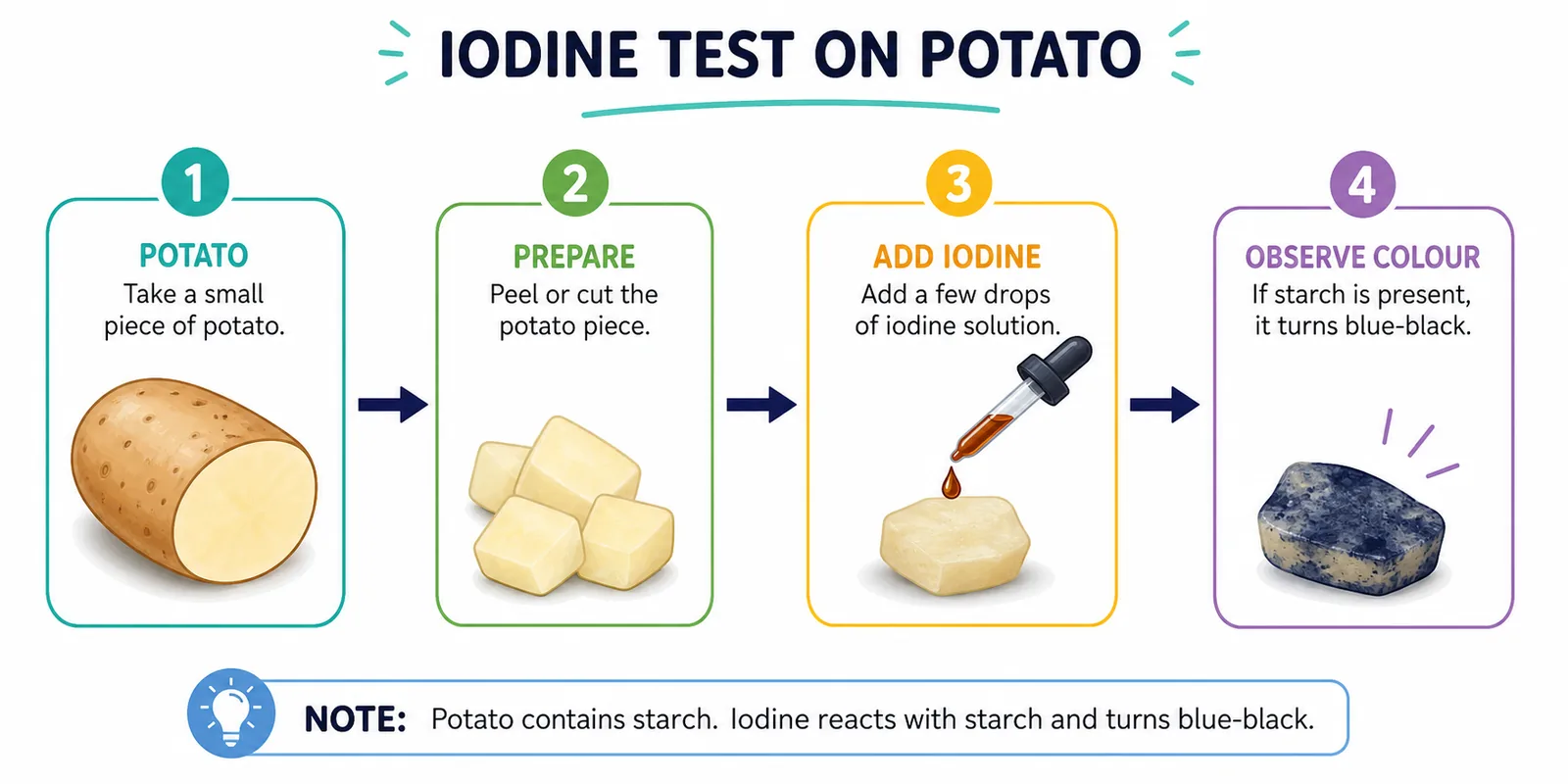

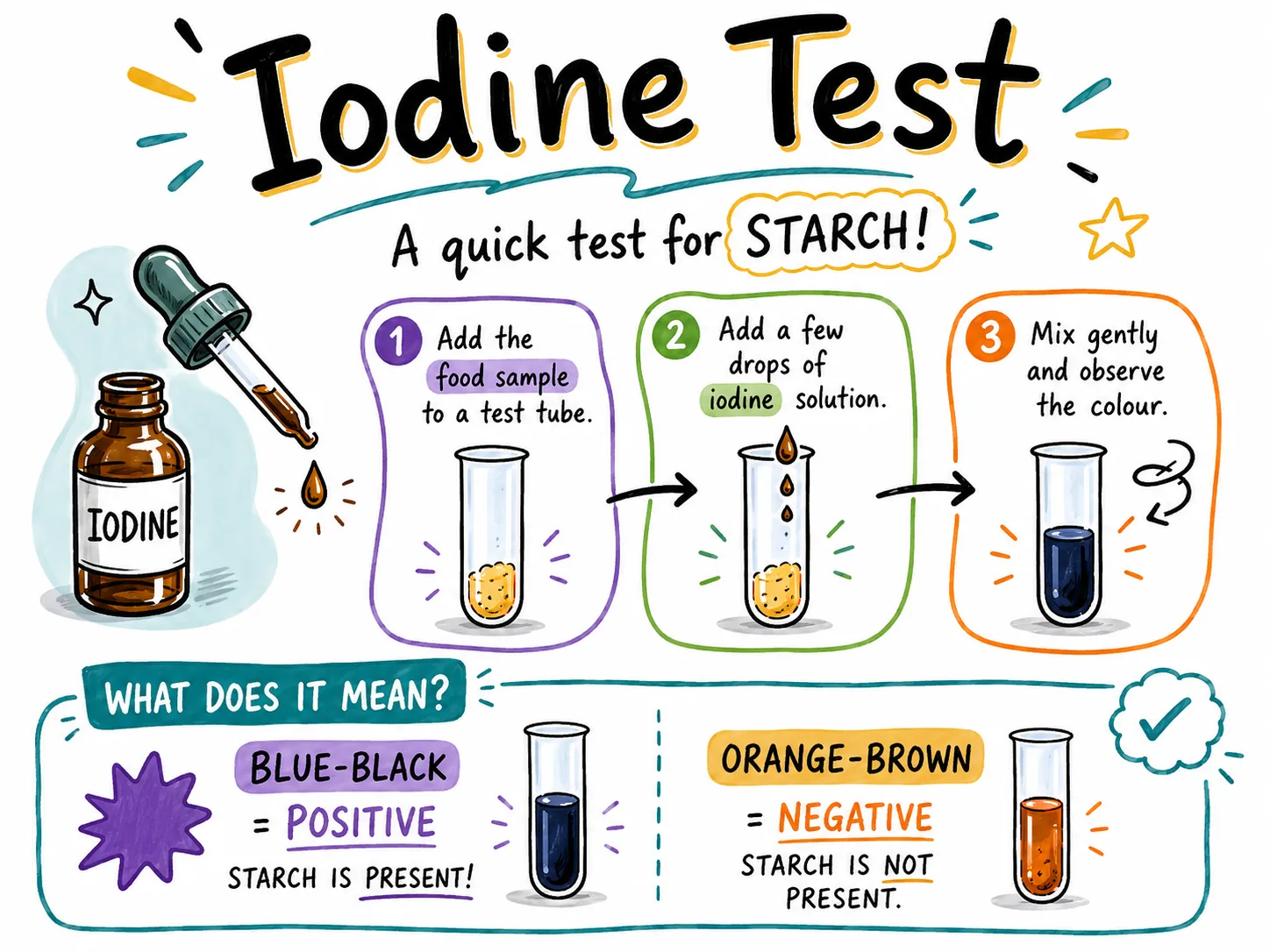
Starch — iodine test
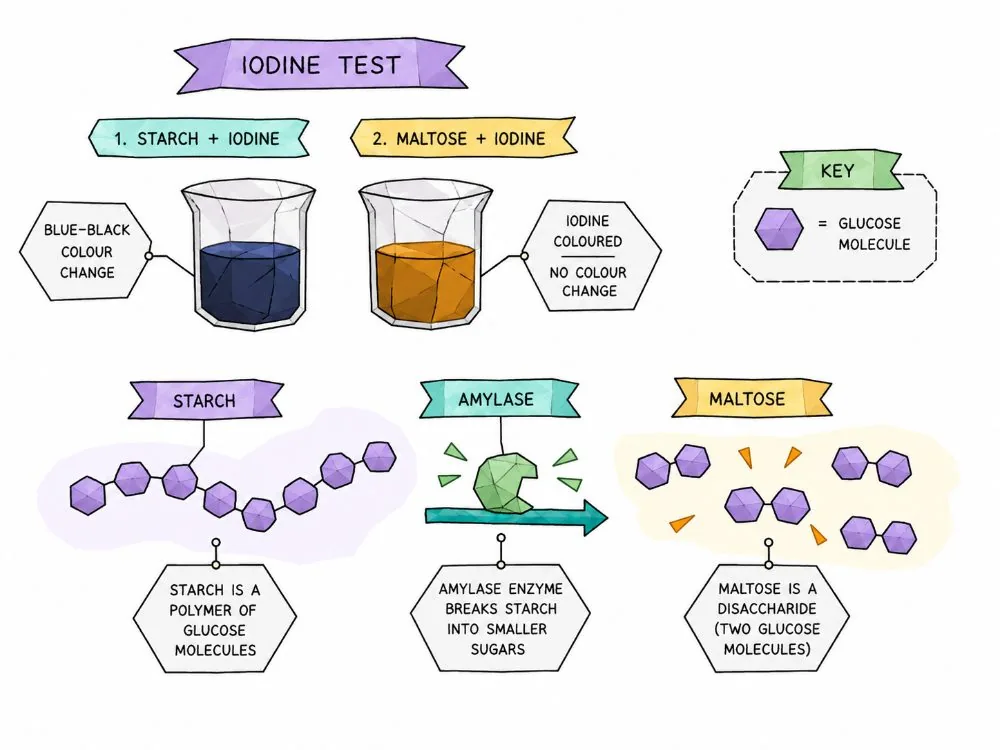
Add drops of iodine solution to the food sample.
Observe the colour straight away; no heating is needed.
A positive test shows a colour change from orange-brown to blue-black.
Section 3 of 11Glucose — Benedict's test
1
Add Benedict's solution to the sample solution in a test tube.
2
Heat in a water bath at 80 °C for 5 minutes.
3
Remove the test tube from the water bath and observe the colour.
4
A positive test shows a colour change from blue to orange or brick red.
Section 4 of 11Protein — biuret test


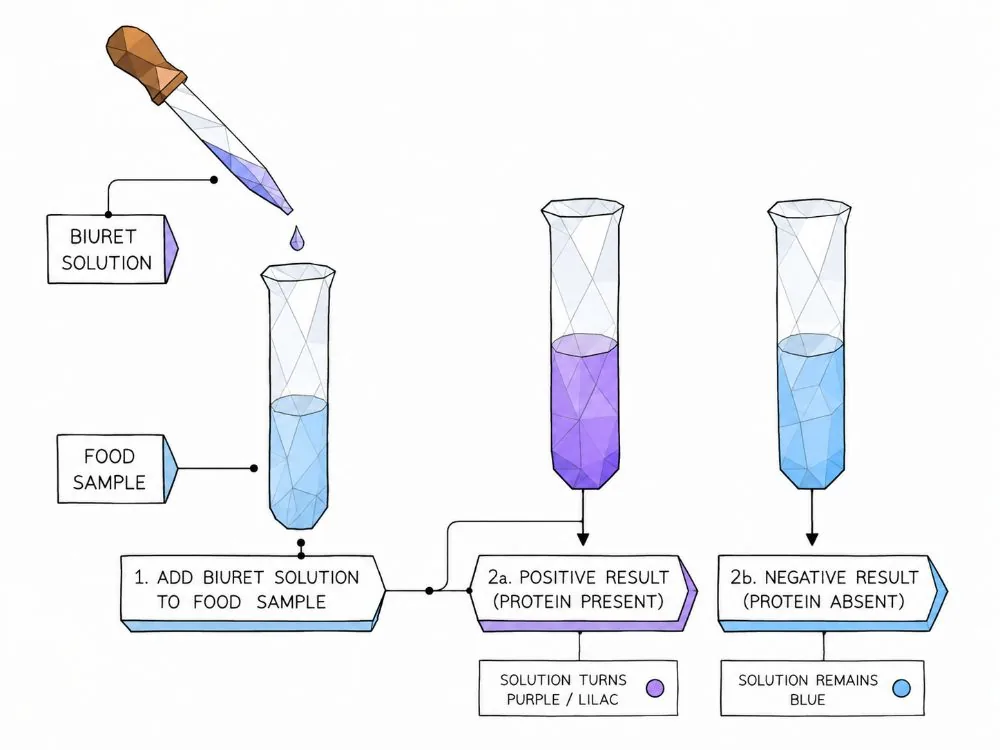
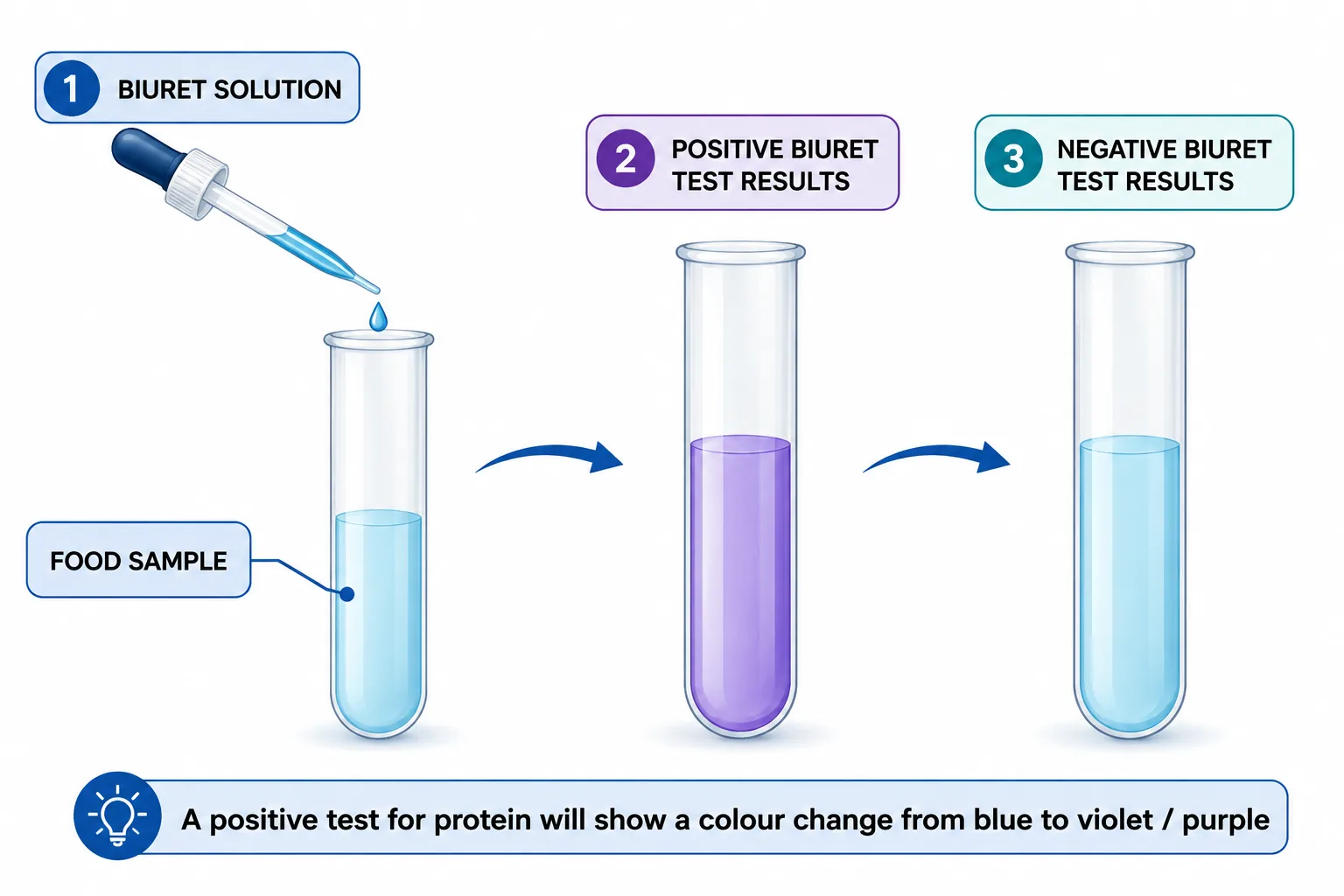


Protein — biuret test
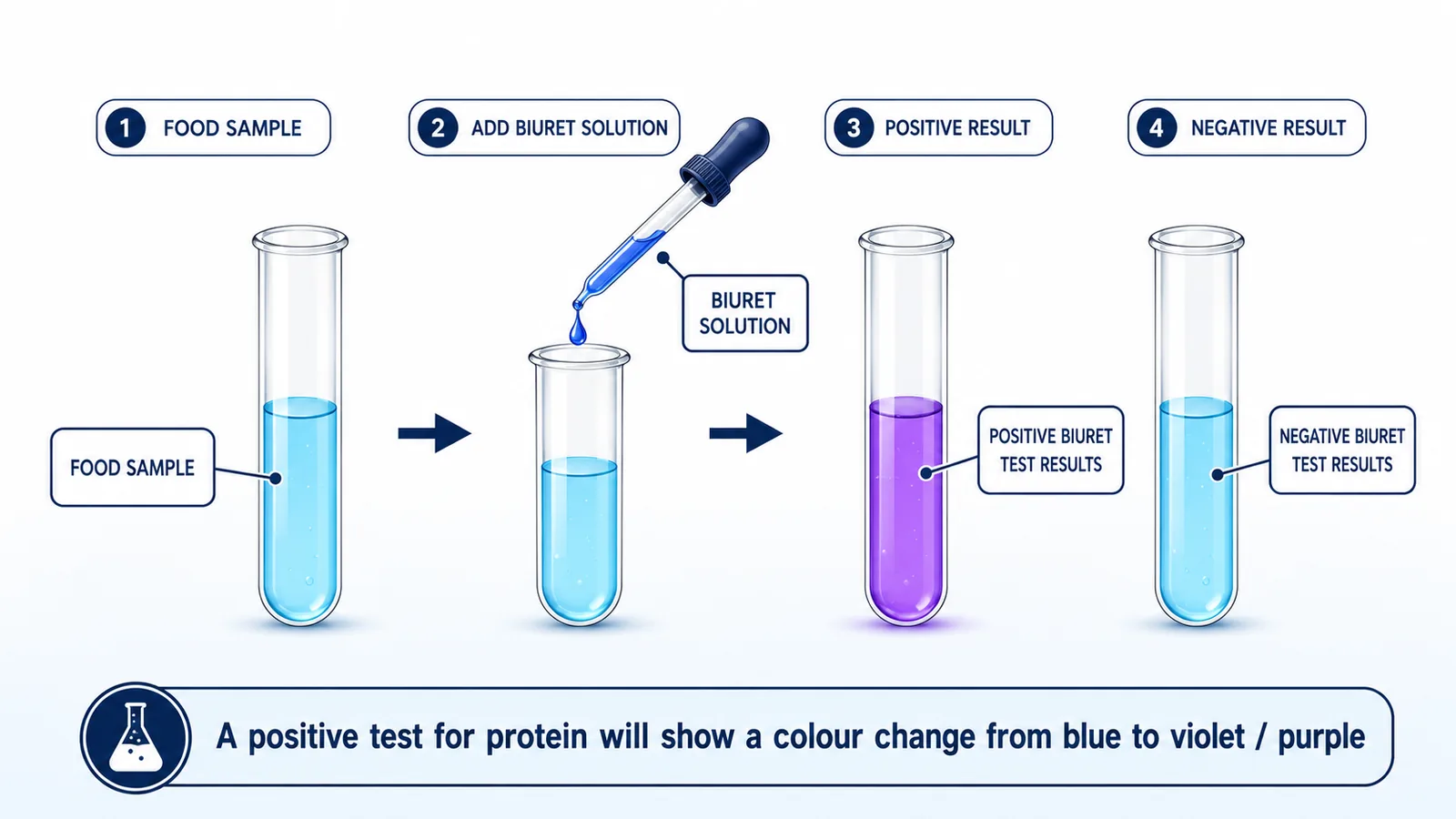
Add drops of biuret solution to the food sample.
Mix and observe; no heating is needed.
A positive test shows a colour change from blue to violet or purple.
Section 5 of 11Lipids — ethanol emulsion test

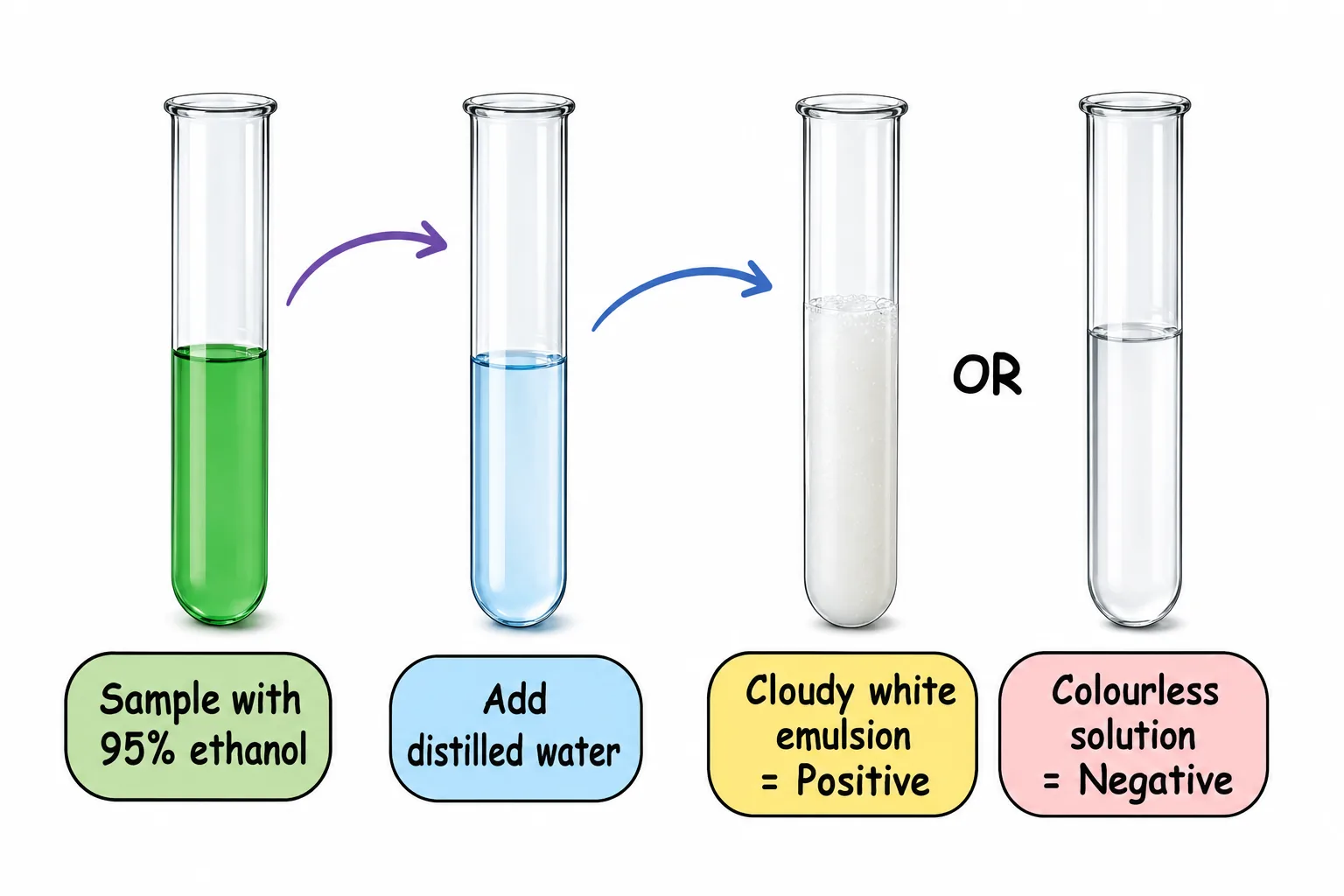
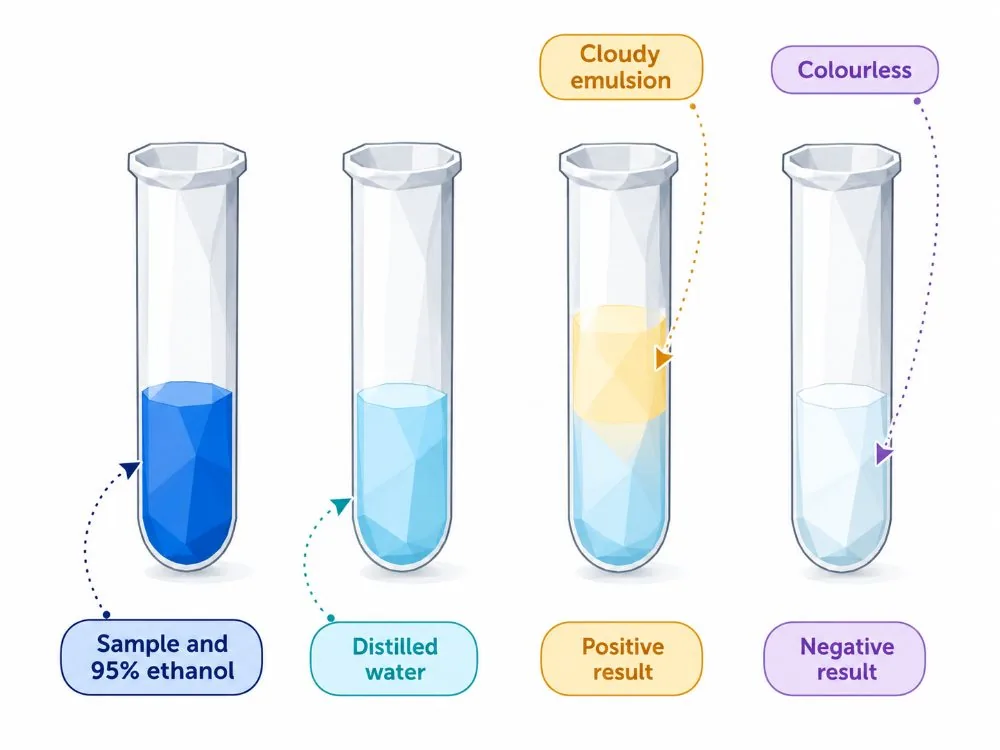
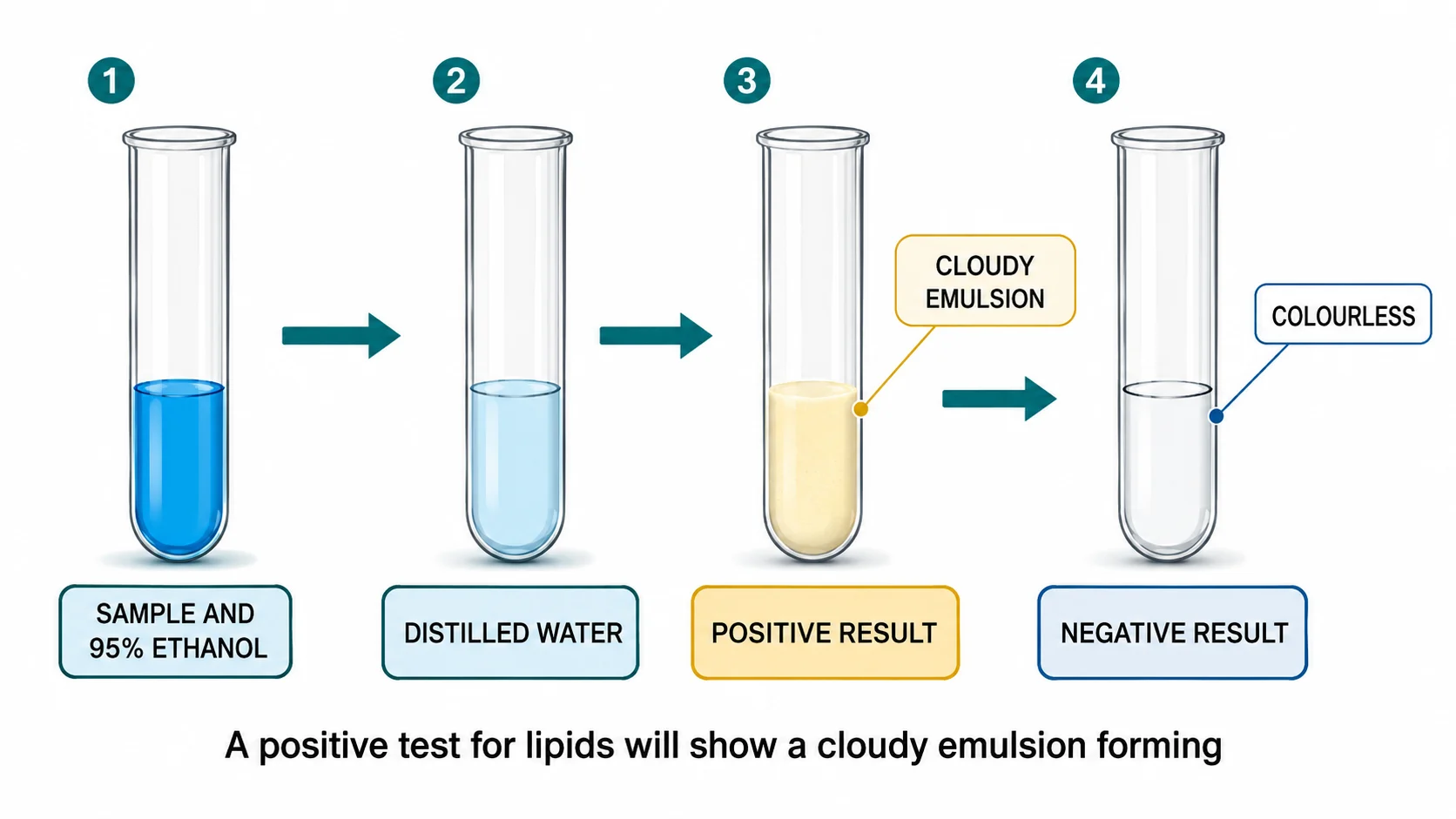
Lipids — ethanol emulsion test
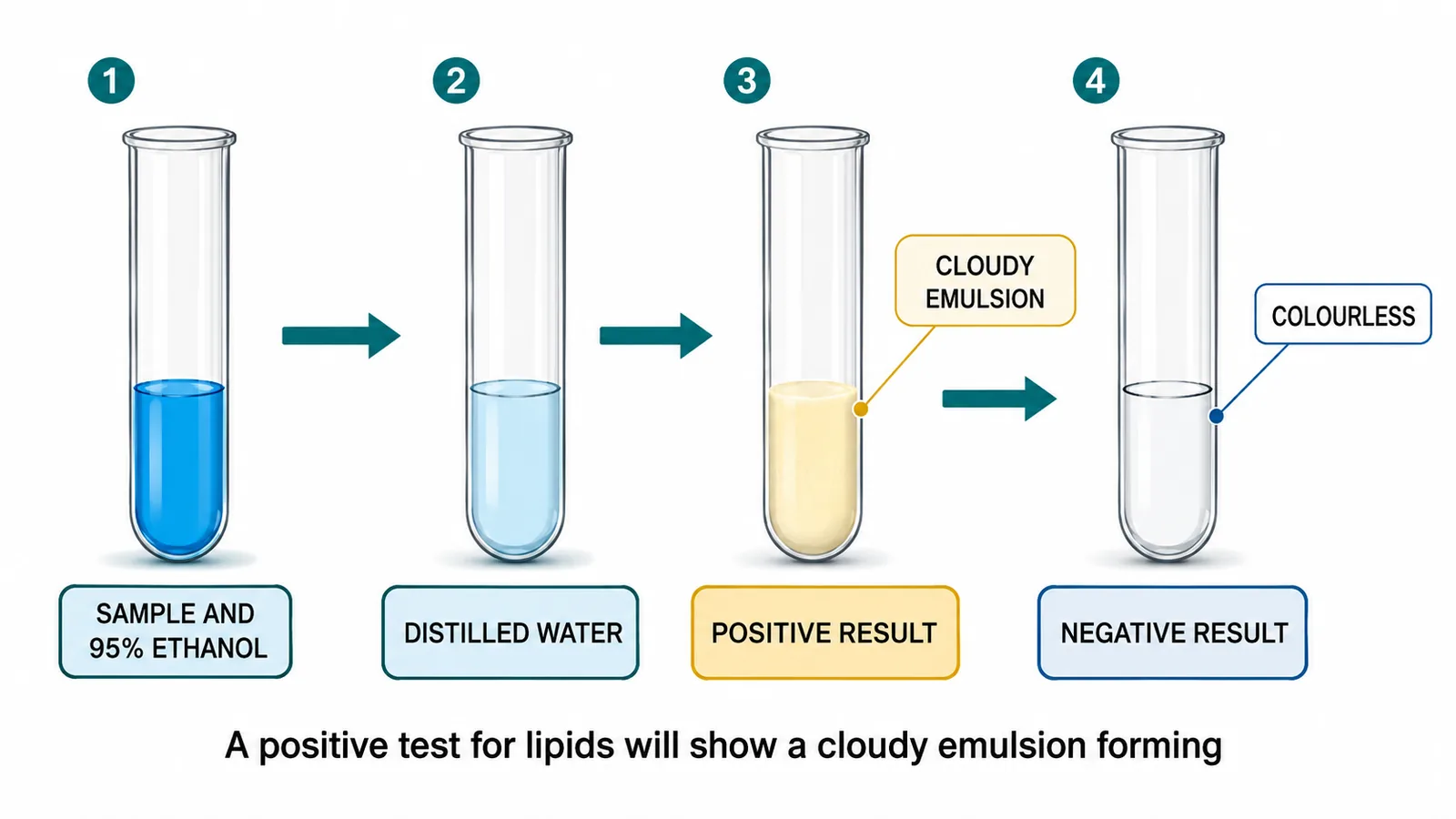
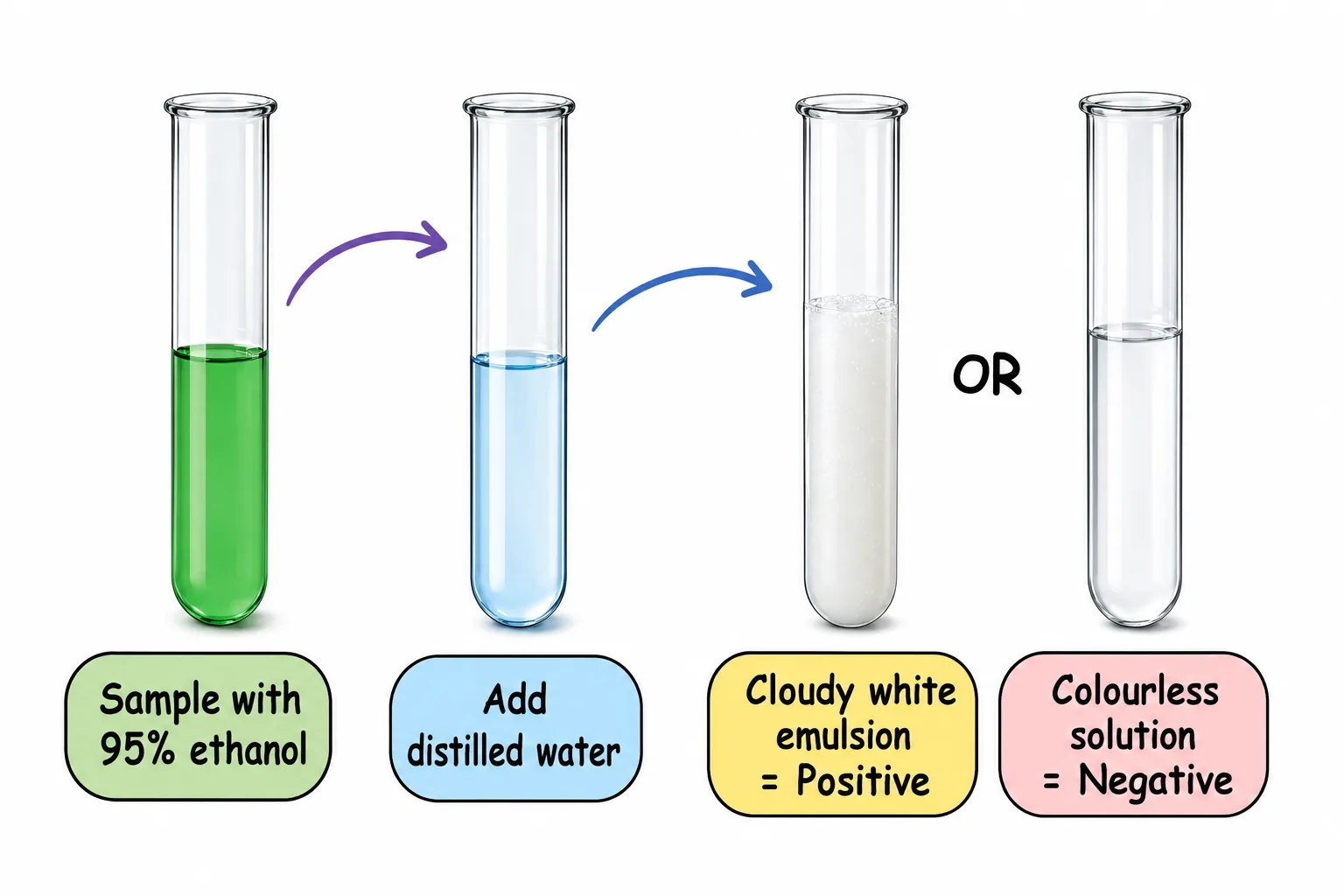
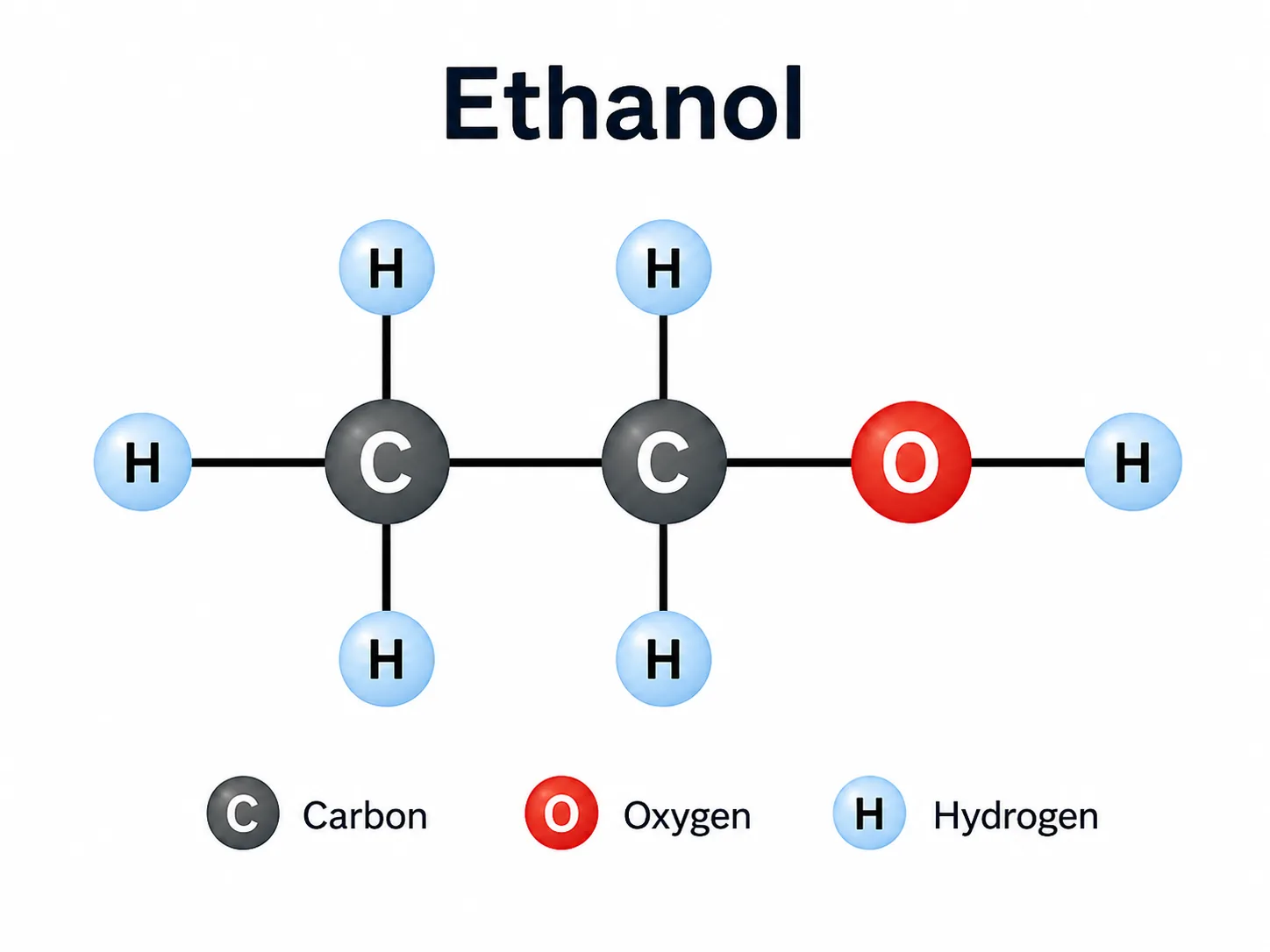
Mix the food sample with 2 cm3 of ethanol and shake.
Add the ethanol to an equal volume of cold water.
A positive test shows a cloudy emulsion forming.
Section 6 of 11Vitamin C — DCPIP test


1
Add 1 cm3 of DCPIP solution to a test tube.
2
Add a small amount of the food sample as a solution.
3
A positive test shows the blue colour of the dye disappearing.
4
The fewer drops needed to remove the colour, the more vitamin C the food contains.
Section 7 of 11Food tests compared



| Nutrient | Reagent | Heat | Start colour | Positive result |
|---|---|---|---|---|
| Starch | Iodine solution | No | Orange-brown | Blue-black |
| Glucose (reducing sugar) | Benedict's solution | Yes, 80 °C water bath | Blue | Orange or brick red |
| Protein | Biuret solution | No | Blue | Violet or purple |
| Lipids | Ethanol then water | No | Clear | Cloudy emulsion |
| Vitamin C | DCPIP | No | Blue | Colourless |
Section 8 of 11Safety

Eye protection
- Wear it throughout every test.
Ethanol
- It is flammable, so keep it away from flames.
Heating
- Use a water bath for the Benedict's test and point tubes away from people.
Reagents
- Biuret reagent is irritant, so wash spills off skin at once; iodine stains skin.
Section 9 of 11More from the specification
More from the specification
Nitrogenous bases and amino acids
- Nitrogenous bases and amino acids biochemical digestion separates polynucleotide bases from protein chains composed of constituent amino acids.
Carbon
- Element with four valence electrons that forms the backbone of organic molecules.
Nucleotide
- The unit of DNA made of a phosphate, a deoxyribose sugar and a base.
Organism
- A living thing, such as a plant or an animal.
Carbohydrate
- A molecule of carbon, hydrogen and oxygen, including sugars, starch, glycogen and cellulose.
Glycogen
- The polysaccharide in which glucose is stored in animals.
Cellulose
- A structural polysaccharide of β-glucose.
Amino acid
- The unit from which proteins are made; the sequence decides the protein's shape and function.
Double helix
- Two DNA strands wound around each other.
Section 10 of 11Key terms
| Term | Meaning |
|---|---|
| Benedict's solution | Blue reagent that turns orange or brick red with glucose on heating. |
| Iodine solution | Orange-brown reagent that turns blue-black with starch. |
| Biuret solution | Blue reagent that turns violet or purple with protein. |
| Ethanol emulsion test | Test in which lipids dissolved in ethanol form a cloudy emulsion in water. |
| DCPIP | Blue dye that is decolourised by vitamin C. |
| Reducing sugar | A sugar such as glucose that reacts with Benedict's solution. |
| Control | A test on distilled water used for comparison. |
Section 11 of 11Exam technique
1
Giving only the end colour — always state both the starting colour and the colour of a positive result.
2
Heating every test — only Benedict's test needs heating, in a water bath.
3
Saying a positive lipid test is a colour change — it is a cloudy emulsion.
4
Saying vitamin C turns DCPIP blue — it makes the blue dye disappear.