Section 1 of 5From glucose to everything else (Extended)

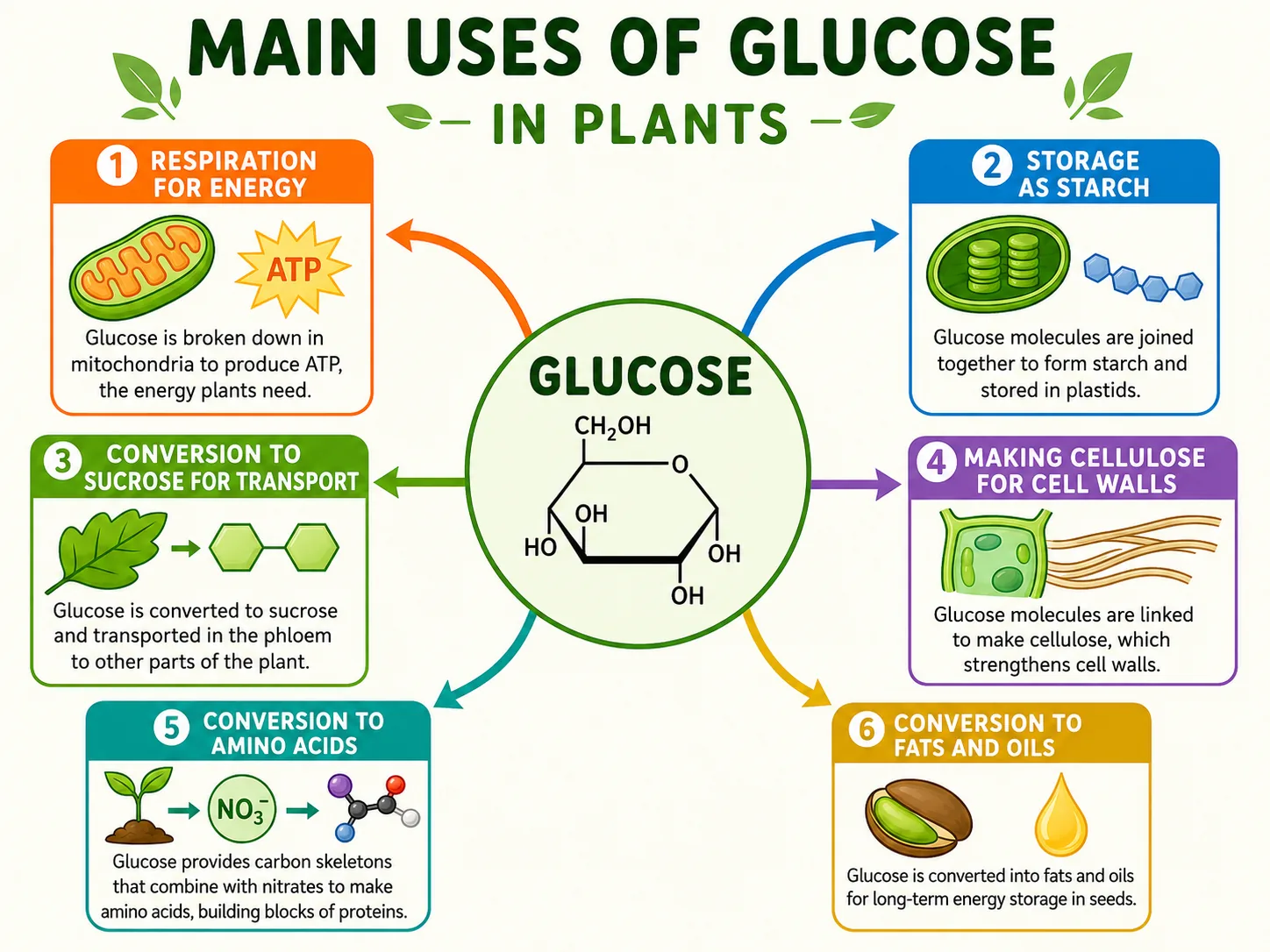
Glucose is the starting point
- Glucose is the starting point Photosynthesis makes glucose, which the plant uses straight away or converts into other substances.
Plants can make more than carbohydrates
- Plants can make more than carbohydrates By adding other elements,
- such as nitrogen from nitrate ions, plants can convert carbohydrates into lipids and amino acids.
Section 2 of 5Uses of the carbohydrates

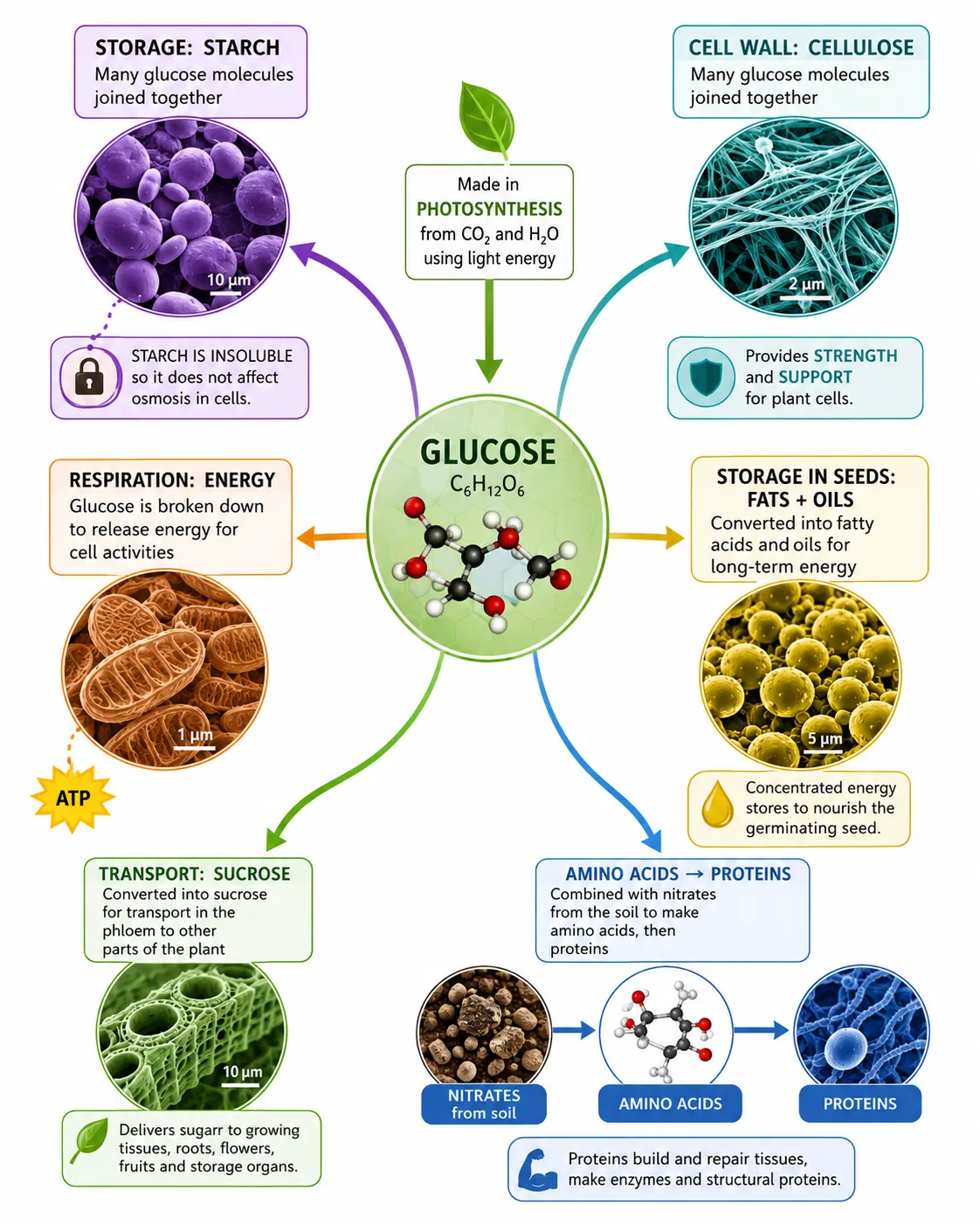



Glucose made in photosynthesis
Respiration
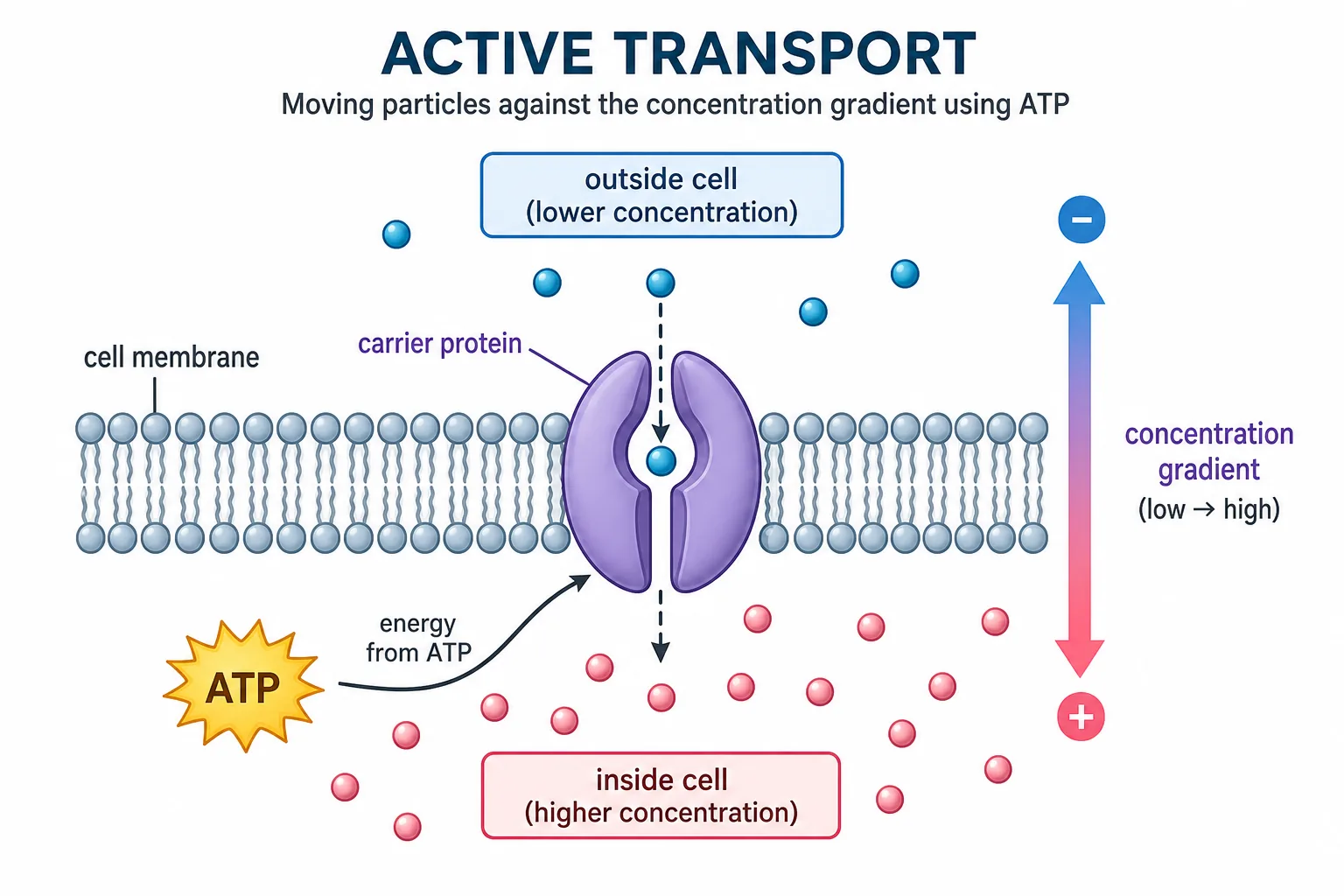
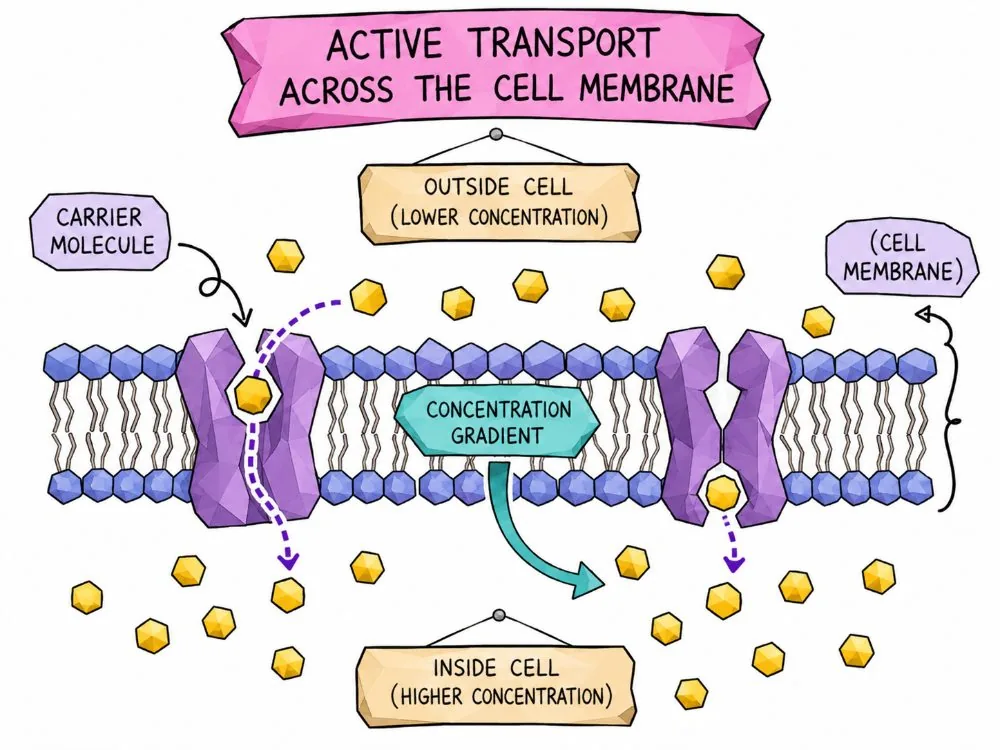
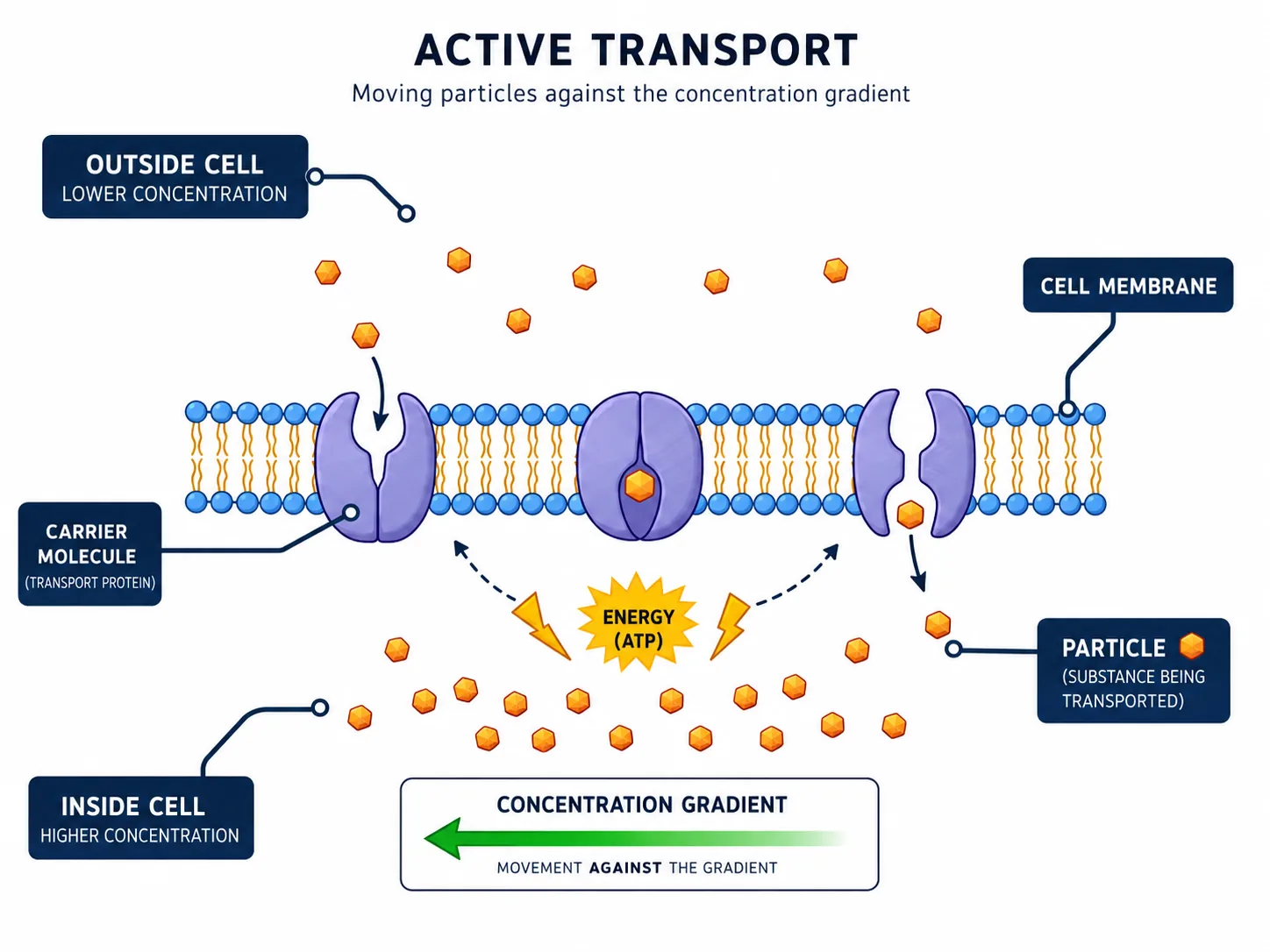
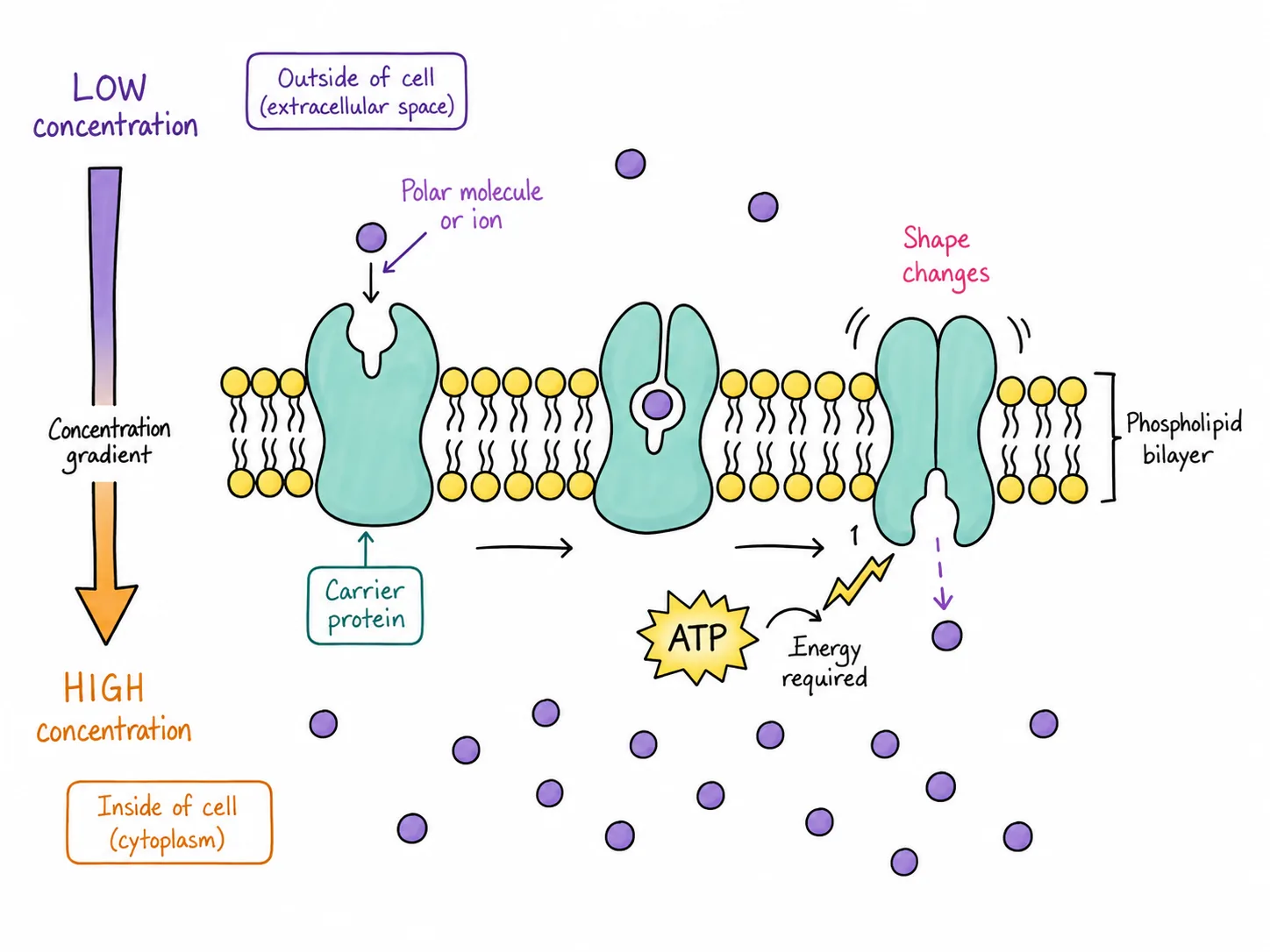
- Respiration Glucose is broken down in respiration to release energy for growth, active transport and other life processes.
Storage as starch
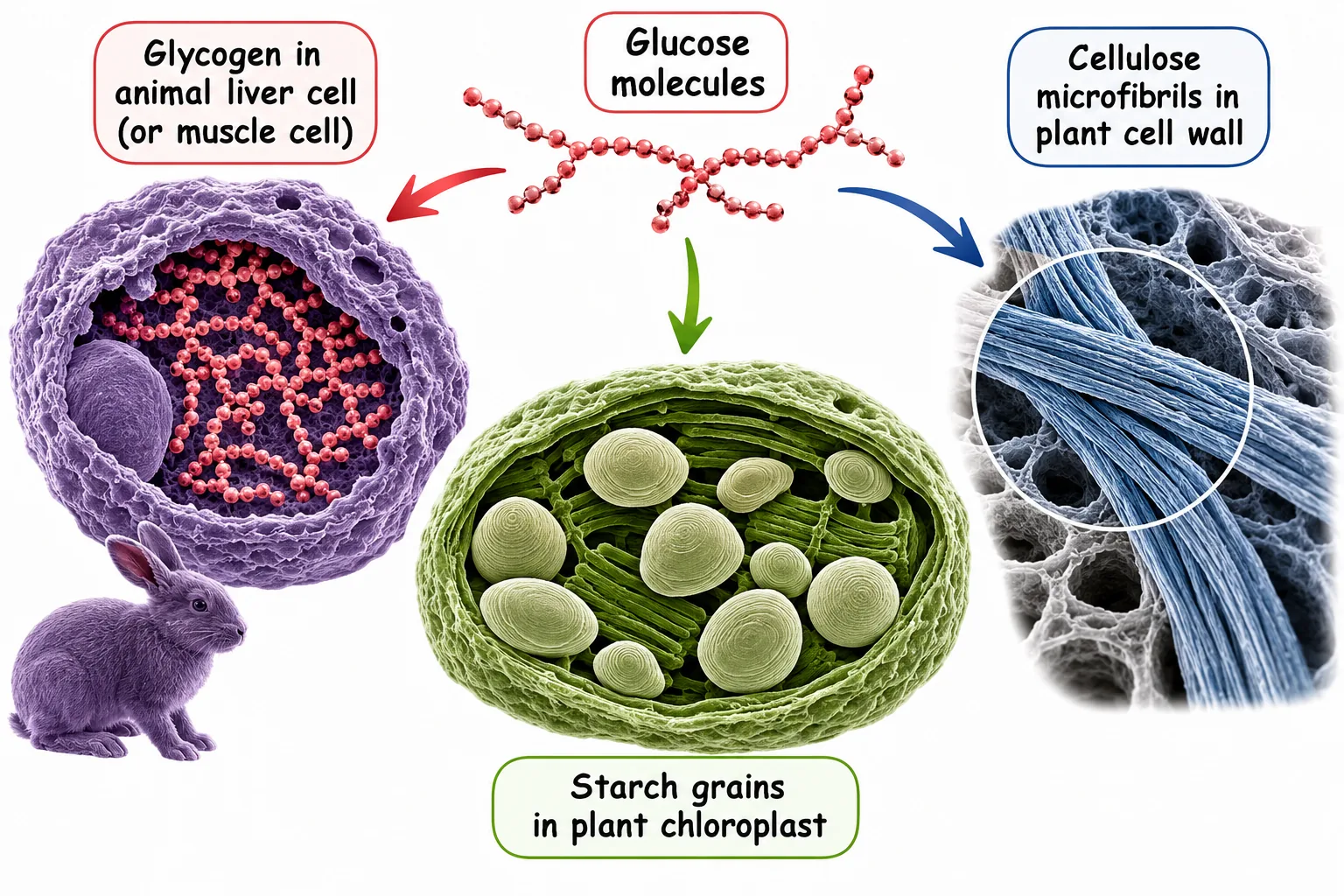
- Storage as starch Glucose is converted to insoluble starch, which is stored inside cells such as those in roots, seeds and tubers.
Cellulose
- Cellulose Glucose is converted to cellulose, which is used to build strong cell walls as the plant grows.
Sucrose for transport
- Sucrose for transport Glucose is converted to sucrose, which is carried in the phloem to growing regions and storage organs.
Nectar
- Nectar Sugars are used in making nectar, which attracts insects to pollinate the flowers.
Other molecules
- Other molecules Glucose is converted into lipids (for example for storage in seeds) and amino acids (to make proteins).
Section 3 of 5Why store carbohydrate as starch?
1Glucose is soluble
- Glucose is soluble Large amounts of dissolved glucose would change the water potential inside cells.
2Starch is insoluble
- Starch is insoluble Starch is a large molecule that does not dissolve, so it does not affect osmosis.
3Compact store
- Compact store Many glucose units can be packed into a small space.
4Available when needed
- Available when needed Starch can be broken down to glucose again when the plant is not photosynthesising, for example at night.
Section 4 of 5Key terms
| Term | Meaning |
|---|---|
| Starch | An insoluble polysaccharide made from glucose and used as an energy store in plants. |
| Cellulose | A polysaccharide made from glucose that forms plant cell walls. |
| Sucrose | The sugar in which carbohydrate is transported through the phloem. |
| Phloem | Plant tissue that carries dissolved sugars around the plant. |
| Nectar | A sugary liquid made by flowers to attract pollinating insects. |
Section 5 of 5Exam technique
1
Saying plants store glucose as glycogen; glycogen is the animal store, whereas plants store starch.
2
Stating that sucrose is stored in the leaf; it is the transport form of sugar.
3
Forgetting that plants also respire all the time, using some of the glucose they make.
4
Writing that cellulose is a store of energy for the plant — it is a structural material in cell walls.
5
Assuming plants can make amino acids from carbohydrate alone; they need a source of nitrogen too.