Section 1 of 9Why chemical digestion is needed
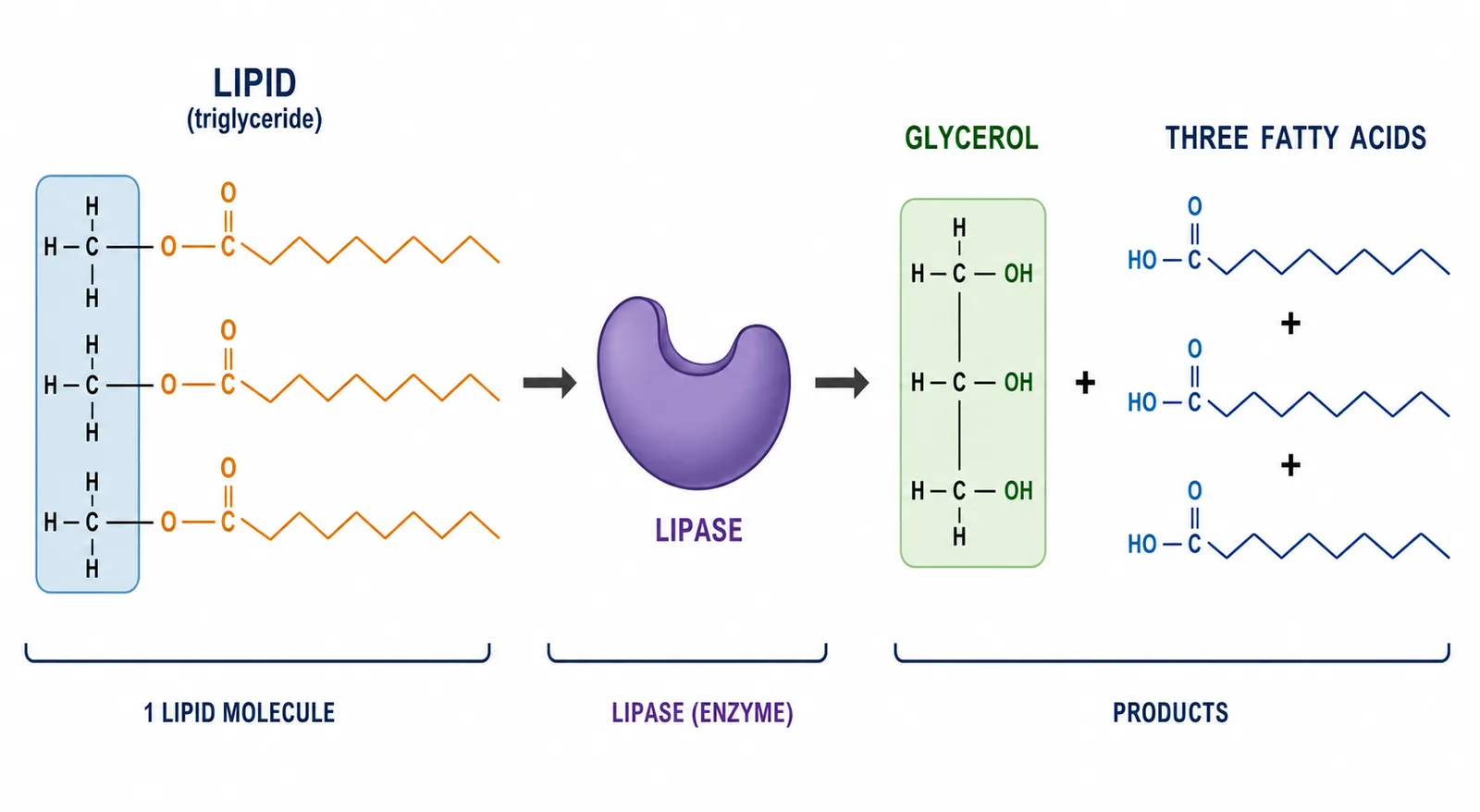

Chemical digestion
- The breakdown of large insoluble molecules into small soluble molecules.
Reason
- Large insoluble molecules cannot be absorbed through the wall of the small intestine.
Result
- Small soluble molecules are easily absorbed into the capillaries in the intestine wall.
Enzymes
- Enzymes are required for chemical digestion.
Section 2 of 9Digestive enzymes
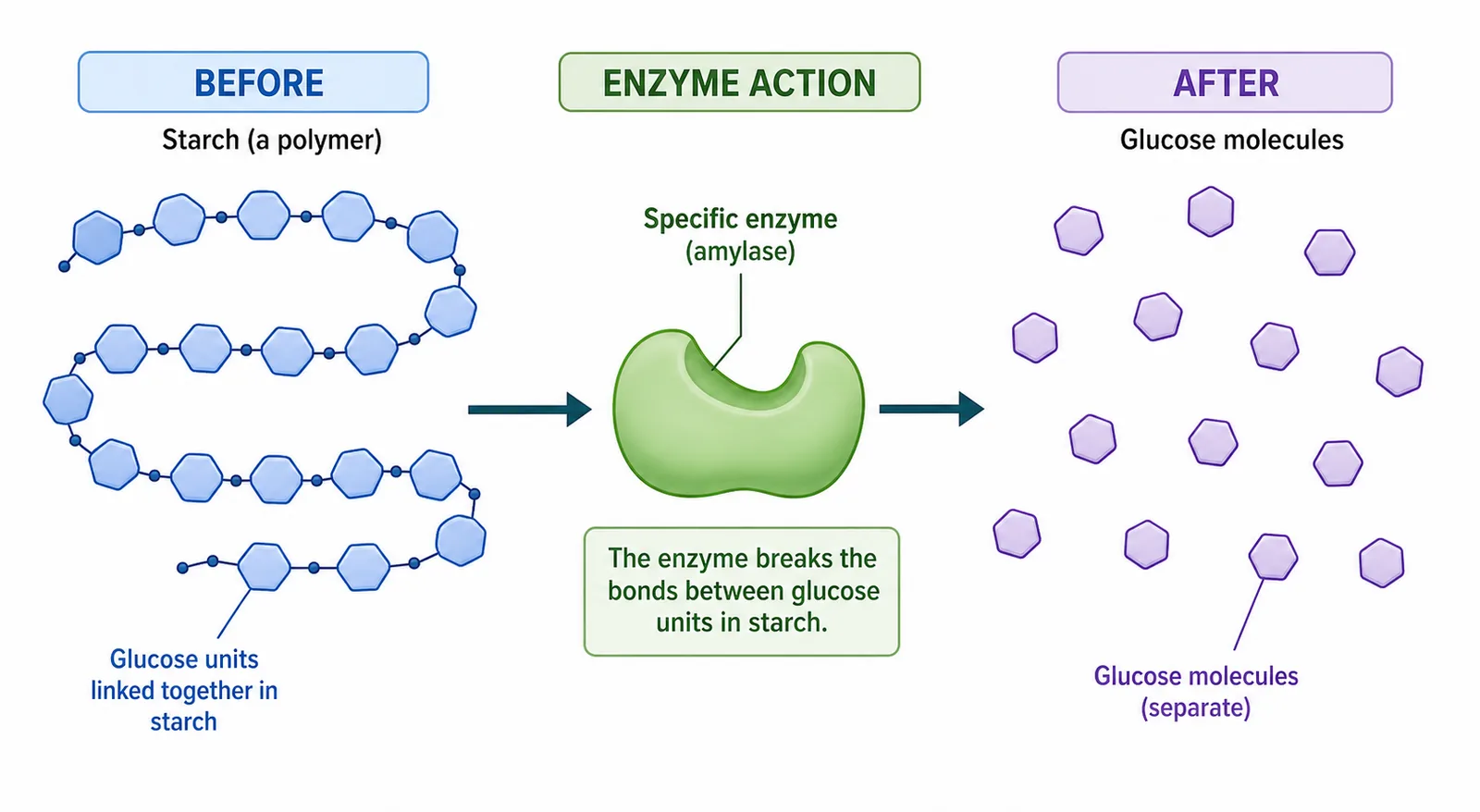
| Enzyme | Substrate | Product | Made in |
|---|---|---|---|
| Amylase | Starch | Smaller sugars (maltose) | Salivary glands and pancreas |
| Protease | Protein | Amino acids | Stomach and pancreas |
| Lipase | Lipids (fats and oils) | Fatty acids and glycerol | Pancreas, secreted into the duodenum |
Section 3 of 9Hydrochloric acid in gastric juice
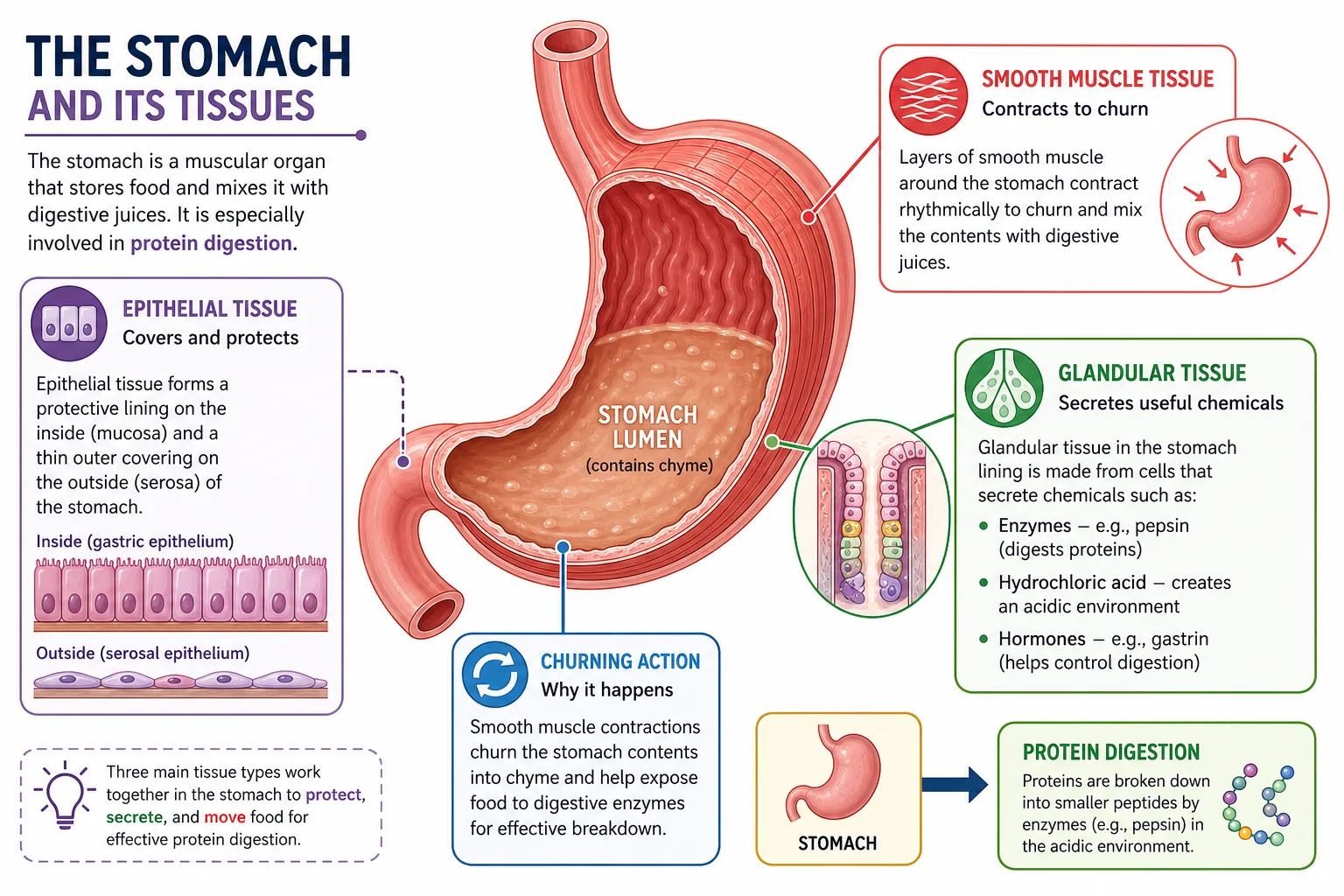
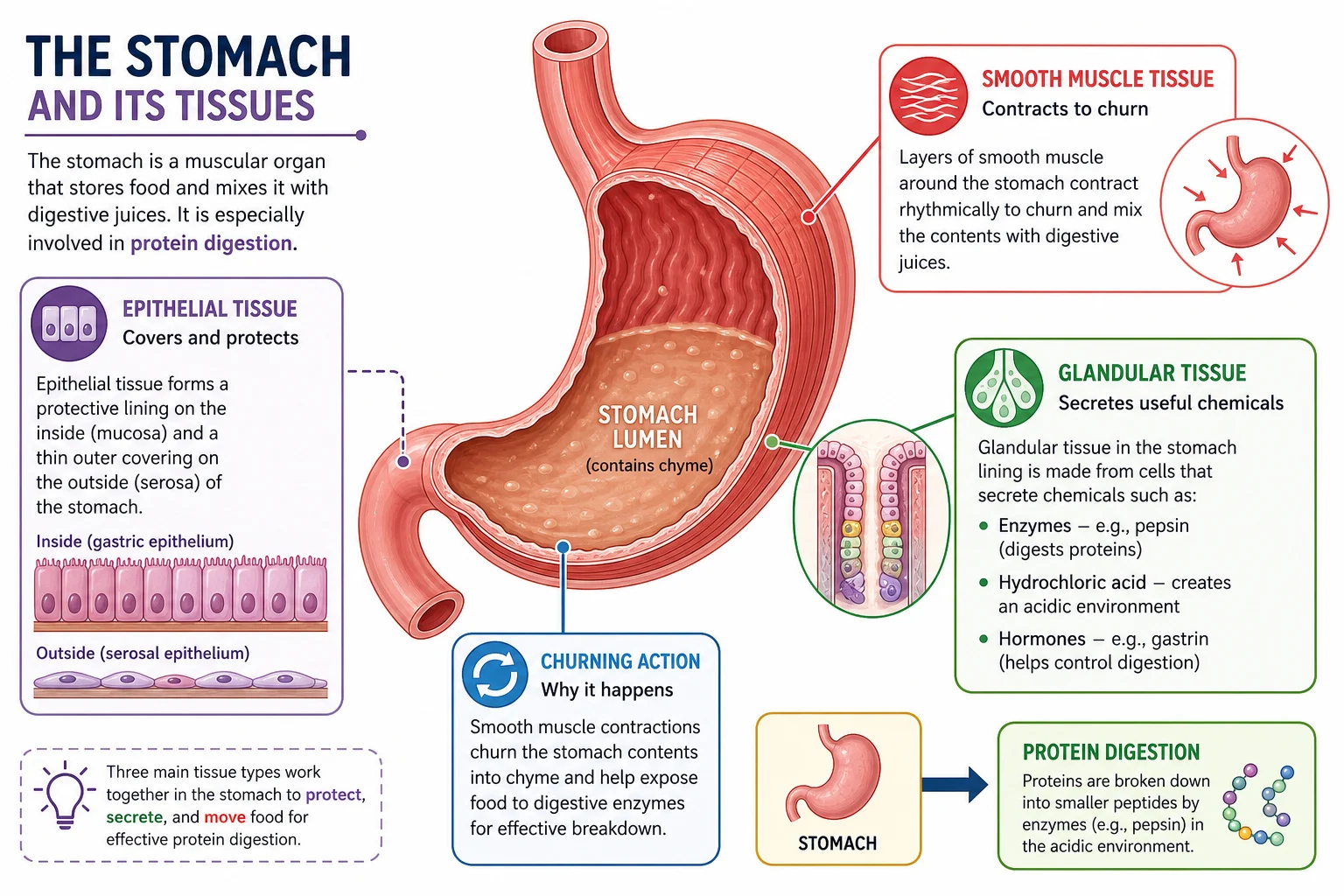
Gastric juice
- The stomach produces several fluids that together are called gastric juice, including hydrochloric acid.
Kills bacteria
- The low pH denatures the enzymes in bacterial cells so they cannot carry out cell reactions.
Optimum pH
- Pepsin has an optimum of about pH 2, and the acid keeps the stomach within this range.
Section 4 of 9Digestion of starch (Supplement)


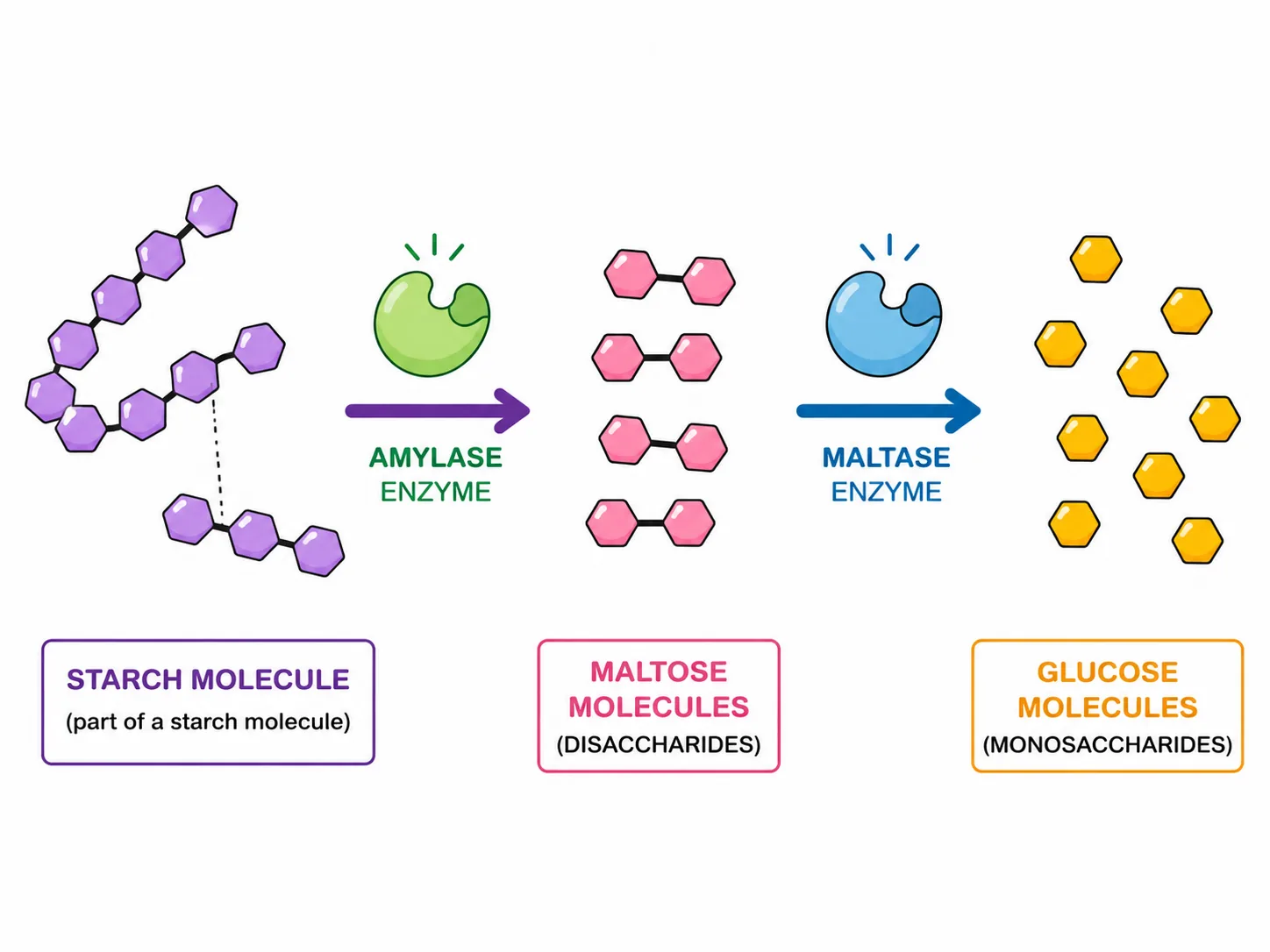
Digestion of starch (Supplement)
Amylase is secreted in the mouth and, from the pancreas, into the duodenum.
Amylase digests starch to maltose, a disaccharide.
Maltase digests maltose to glucose on the membranes of the epithelium lining the small intestine.
Section 5 of 9Digestion of protein (Supplement)

Sites
- Protein digestion takes place in the stomach and the duodenum.
Pepsin
- Produced in the stomach, it breaks down protein in acidic conditions.
Trypsin
- Produced in the pancreas and secreted into the duodenum, it breaks down protein in alkaline conditions.
Section 6 of 9Role of bile (Supplement)
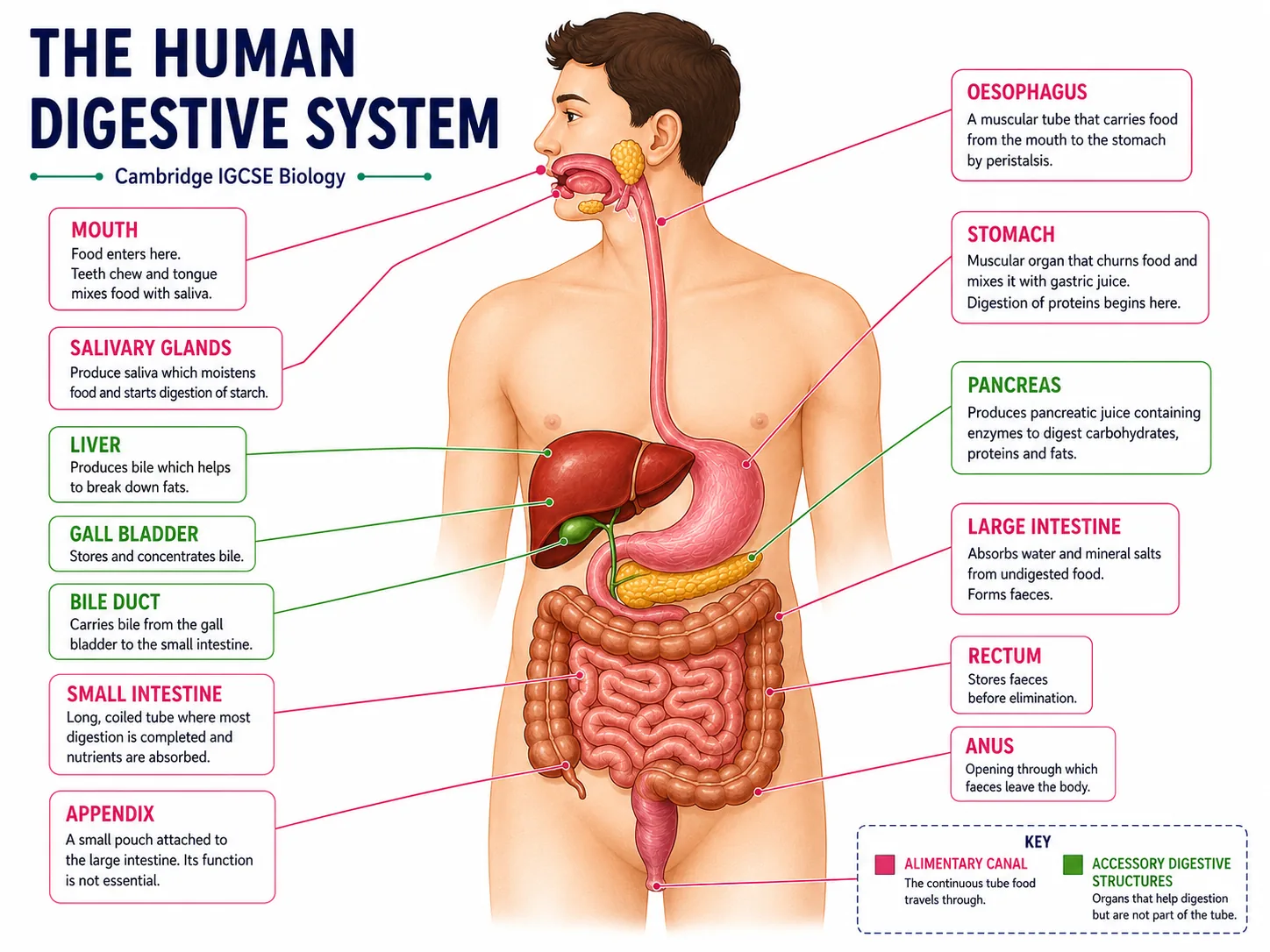


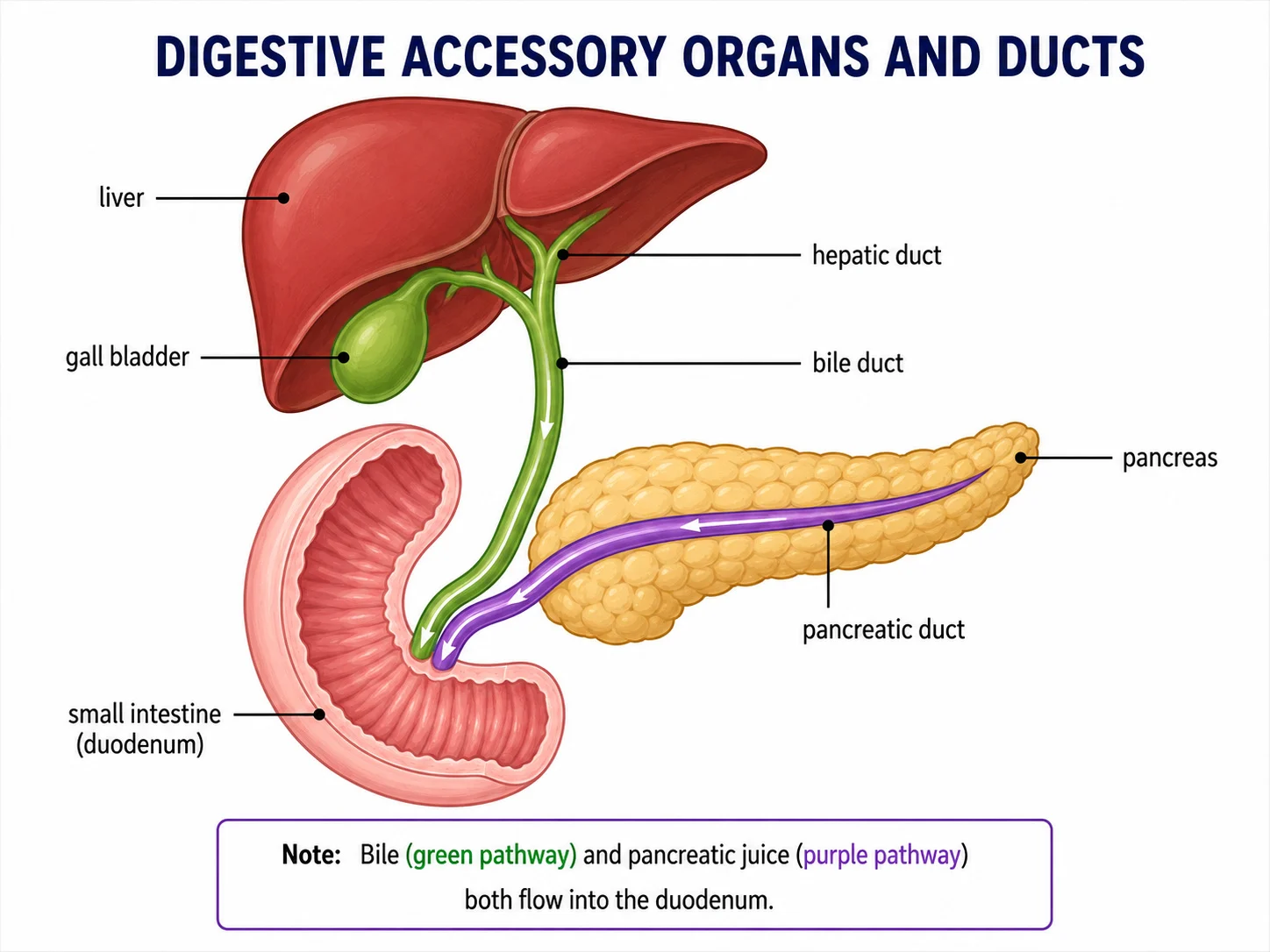
Made and stored
- Bile is made by liver cells and stored in the gall bladder.
Alkaline
- It neutralises the hydrochloric acid arriving from the stomach.
- Small intestine enzymes have a higher, more alkaline, optimum pH than stomach enzymes.
Emulsification
- It breaks large fat drops into smaller ones, giving lipase a larger surface area.
Section 7 of 9More from the specification
More from the specification
Nutrient assimilation by vital organs
- Nutrient assimilation by vital organs dietary iron, vitamins,
- and amino acids are transported via systemic circulation to support the metabolism of internal organs.
Hydrolytic Enzymes of Chemical Digestion
- Specific biological catalysts cleave insoluble large polymers into soluble, permeable monomers capable of crossing intestinal epithelial membranes into the bloodstream.
- (carbohydrases, proteases, and lipases)
Mechanical Preparations by Teeth and Stomach
- Physical mastication by specialized dentition and gastric muscular churning break food down physically, preventing digestive tract obstruction and maximizing substrate exposure to digestive juices.
Water and Mineral Absorption
- Water, mineral ions,
- and water-soluble vitamins are absorbed across the intestinal epithelium down osmotic and electrochemical gradients without requiring prior chemical cleavage.
Scurvy
- A deficiency disease caused by lack of vitamin C.
Adaptation
- The process by which populations become better suited to their environment.
Growth
- A permanent increase in size and dry mass.
Digestive system
- Organ system that breaks down and absorbs food.
Physical digestion
- Breaking food into smaller pieces without chemical change.
Dietary fibre
- Indigestible plant material giving bulk to the intestine contents.
Vitamin
- A nutrient needed in small amounts to stay healthy.
Absorption
- Movement of small food molecules into the blood.
Organ
- A structure of different tissues working together for specific functions.
Section 8 of 9Key terms


| Term | Meaning |
|---|---|
| Chemical digestion | Breakdown of large insoluble molecules into small soluble molecules by enzymes. |
| Amylase | Enzyme that breaks starch into maltose. |
| Maltase | Enzyme that breaks maltose into glucose. |
| Protease | Enzyme that breaks protein into amino acids. |
| Pepsin | Protease made in the stomach with an optimum near pH 2. |
| Trypsin | Protease made by the pancreas that works in alkaline conditions. |
| Lipase | Enzyme that breaks fats and oils into fatty acids and glycerol. |
| Gastric juice | The fluids produced by the stomach, including hydrochloric acid. |
Section 9 of 9Exam technique
1
Saying salivary amylase works in the stomach — the acid there denatures it.
2
Saying bile digests fat chemically — bile only neutralises acid and emulsifies fat, and lipase digests it.
3
Giving every digestive enzyme pH 7 — pepsin works best at about pH 2 and the others in the small intestine are alkaline.
4
Thinking protease makes only one product — it breaks protein down into amino acids.