Section 1 of 6Gastric juice and its acid (Extended tier only)
What gastric juice is
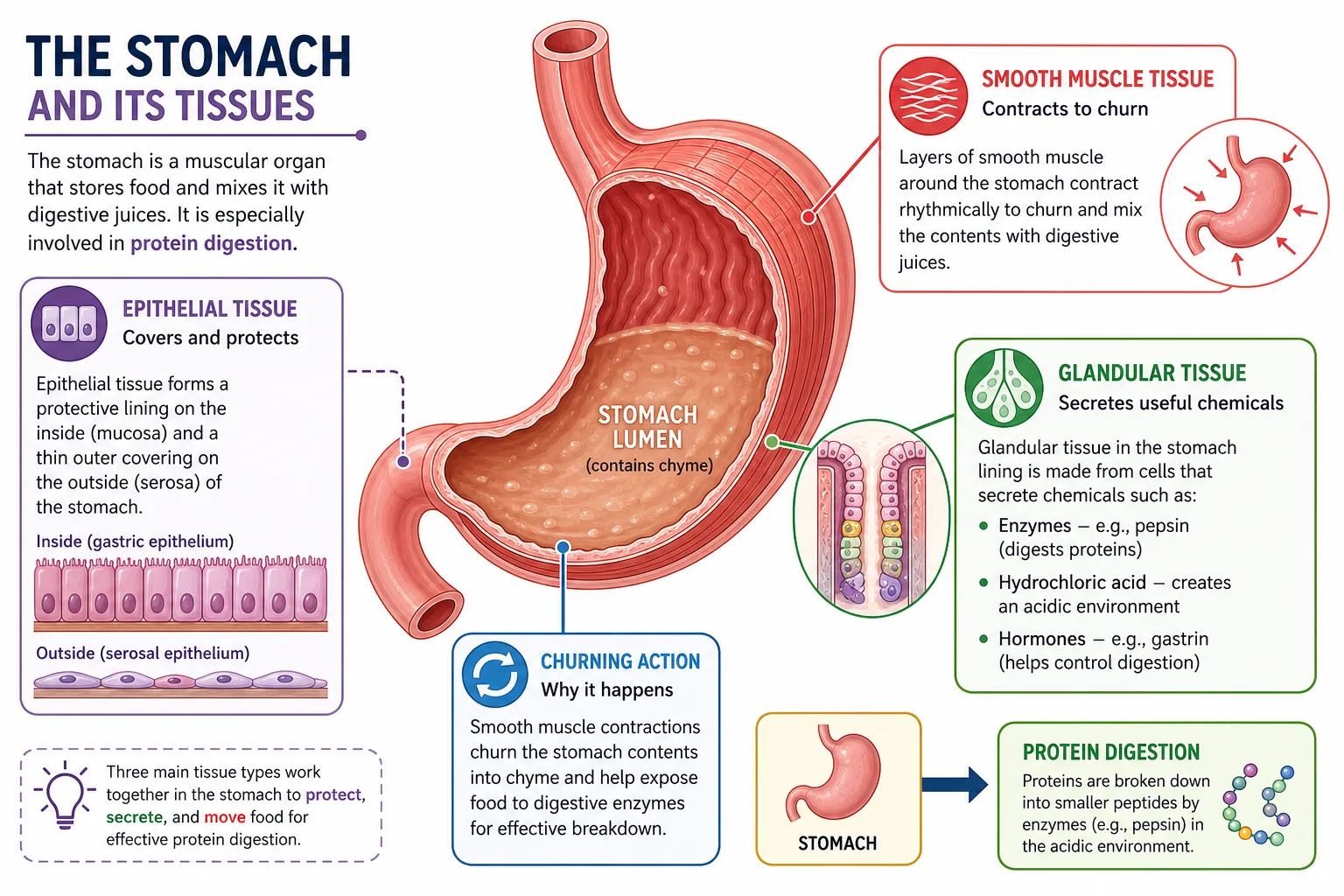
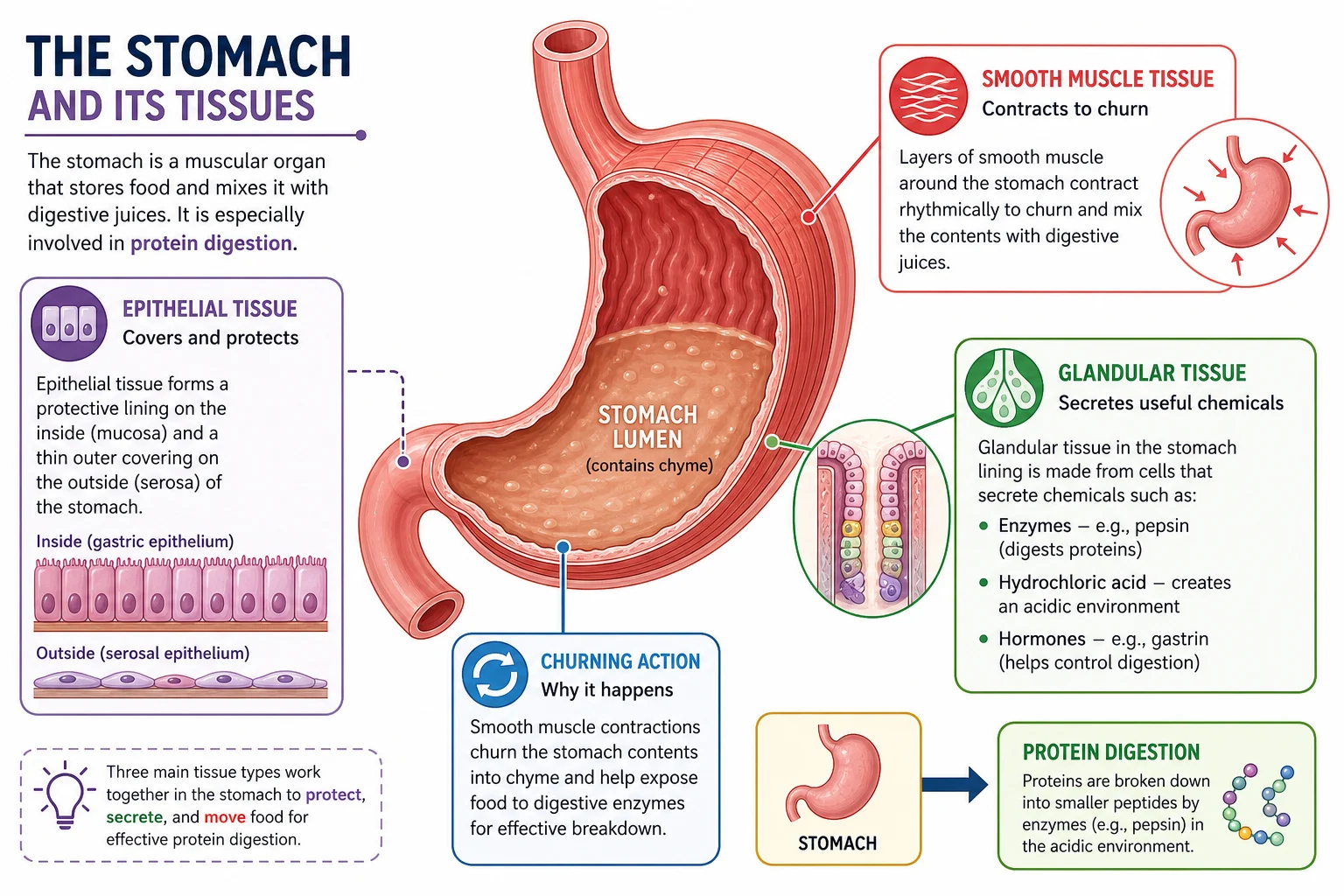
- What gastric juice is The stomach lining secretes a mixture of fluids called gastric juice.
- It contains hydrochloric acid, the protease enzyme pepsin and mucus.
How acidic it is
- How acidic it is Stomach contents are very acidic, at about pH 1.5 to 2, which is much lower than the pH of most body fluids.
Protection of the stomach wall
- Protection of the stomach wall Mucus coats the lining of the stomach, which prevents the acid and enzymes from digesting the organ itself.
Section 2 of 6Two jobs of the acid
Hydrochloric acid in the stomach
Kills harmful microorganisms
- Kills harmful microorganisms Food and drink often carry bacteria.
- The acid destroys many of them before they can reach the intestines and cause infection.
Provides the right pH for pepsin
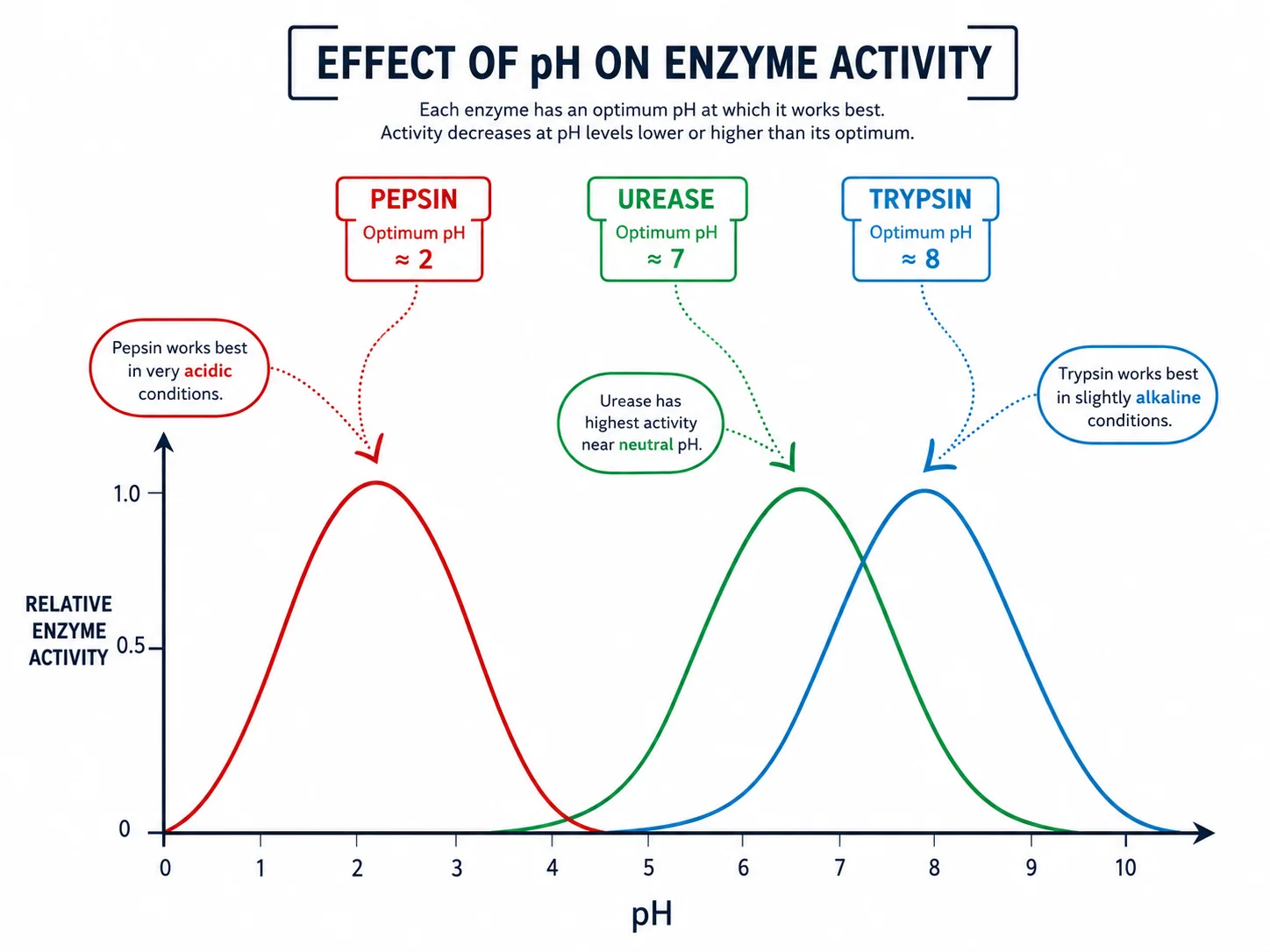
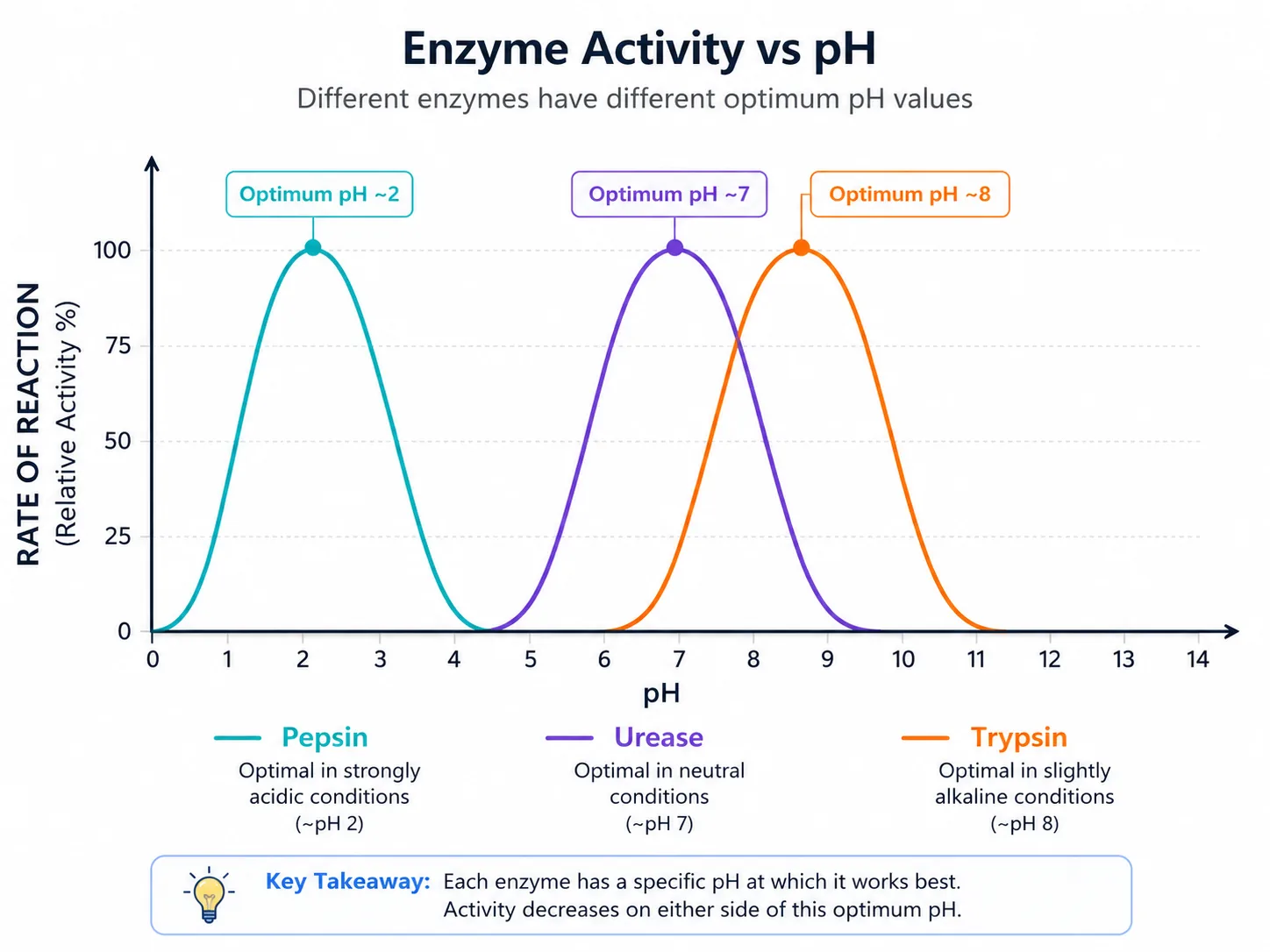
- Provides the right pH for pepsin Pepsin works best at a very low pH of around 2,
- so the acid keeps the stomach in the range where this enzyme works fastest.
Section 3 of 6How a low pH kills bacteria


1Bacteria are swallowed
- Bacteria are swallowed They arrive in the stomach on food and drink.
2Acid surrounds them
- Acid surrounds them The very low pH changes the shape of the proteins inside bacterial cells, including their enzymes.
3Enzymes are denatured
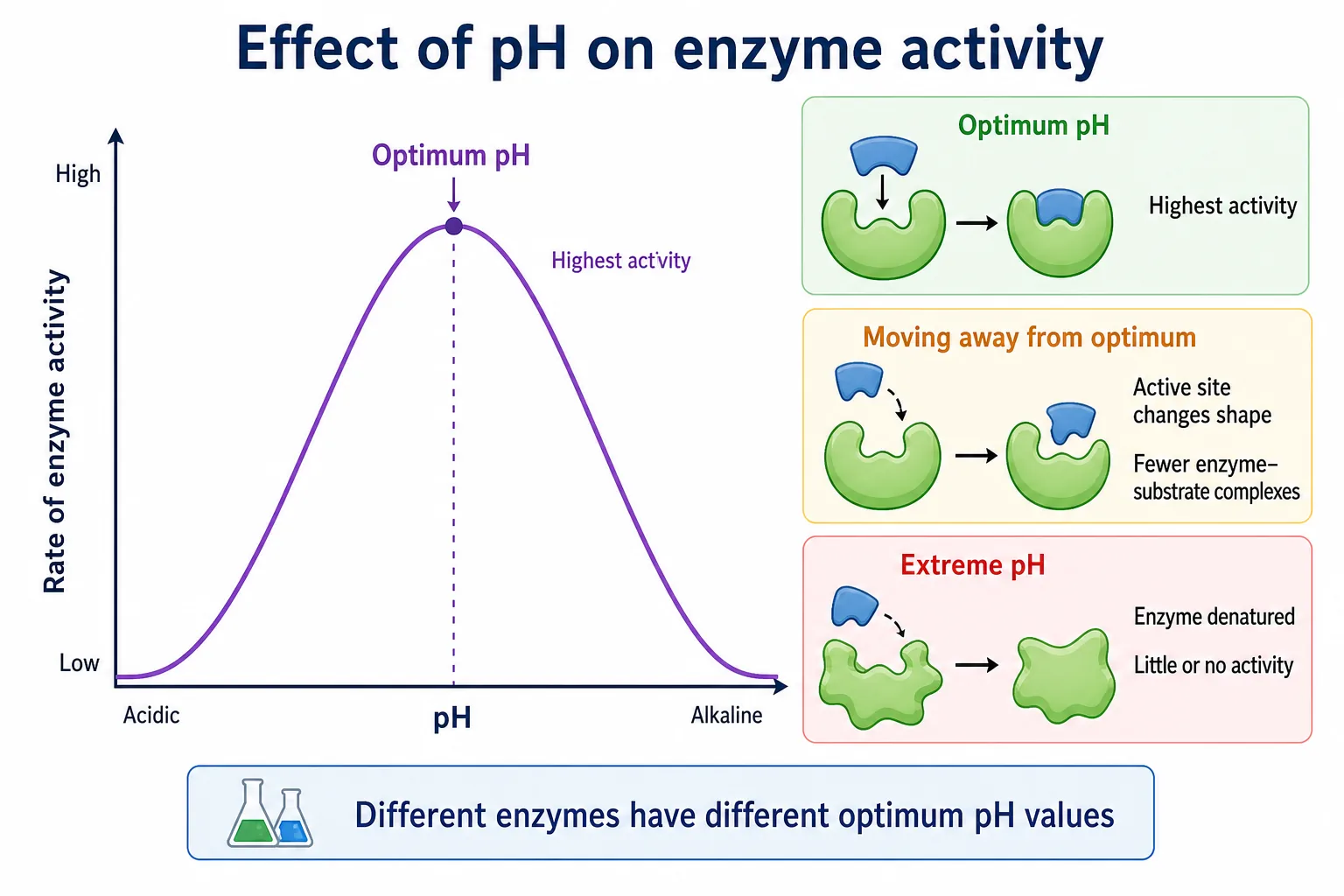
- Enzymes are denatured The active sites lose their shape, so substrates can no longer fit and the enzyme stops working.
4Cell reactions stop
- Cell reactions stop The bacterial cell can no longer carry out the reactions that keep it alive, so it dies.
Section 4 of 6Enzyme activity and pH


| Enzyme | Where it works | Optimum pH | What happens in the wrong pH |
|---|---|---|---|
| Pepsin (protease) | Stomach | Around pH 2 (acidic) | Activity falls sharply in neutral or alkaline conditions and the enzyme is denatured |
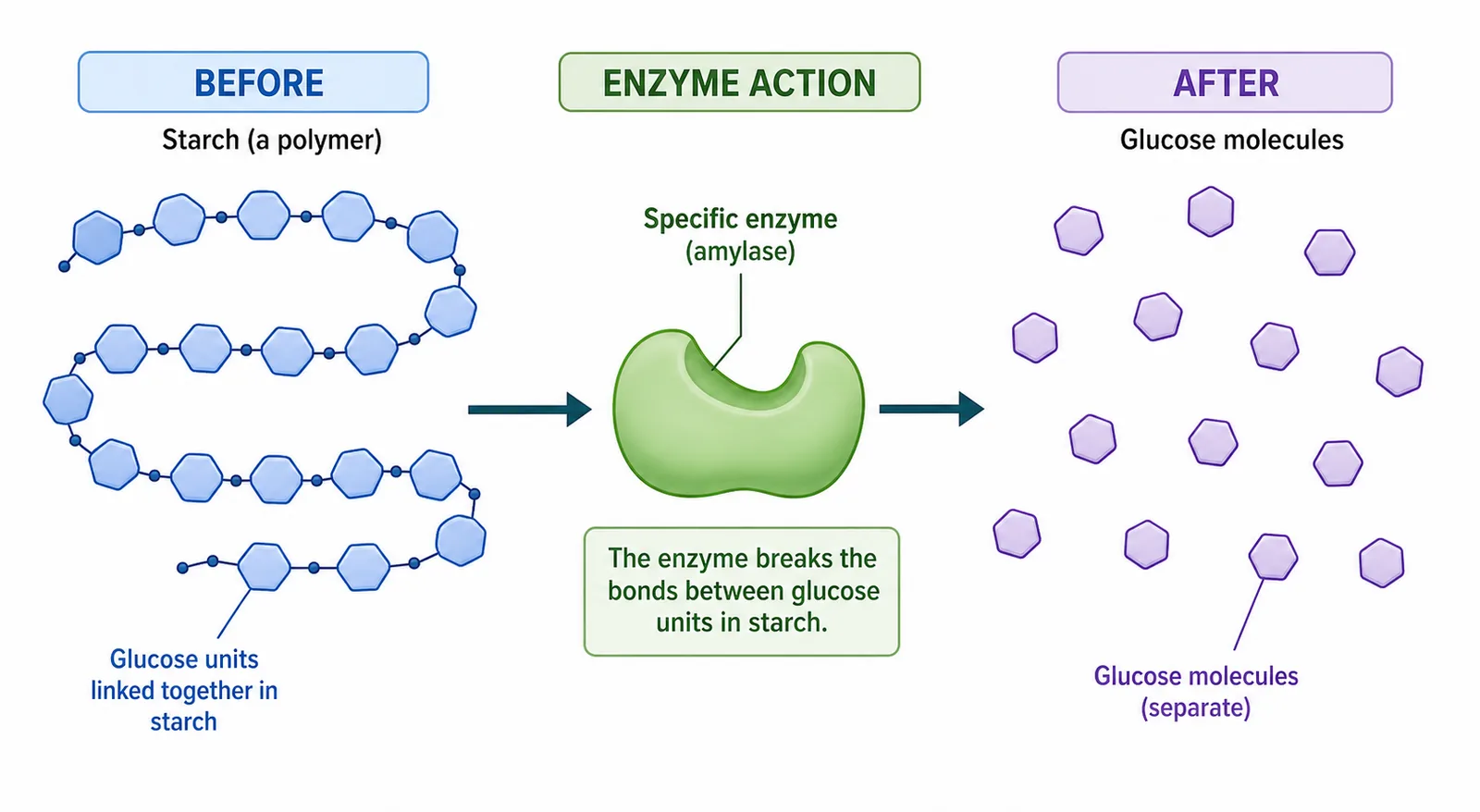
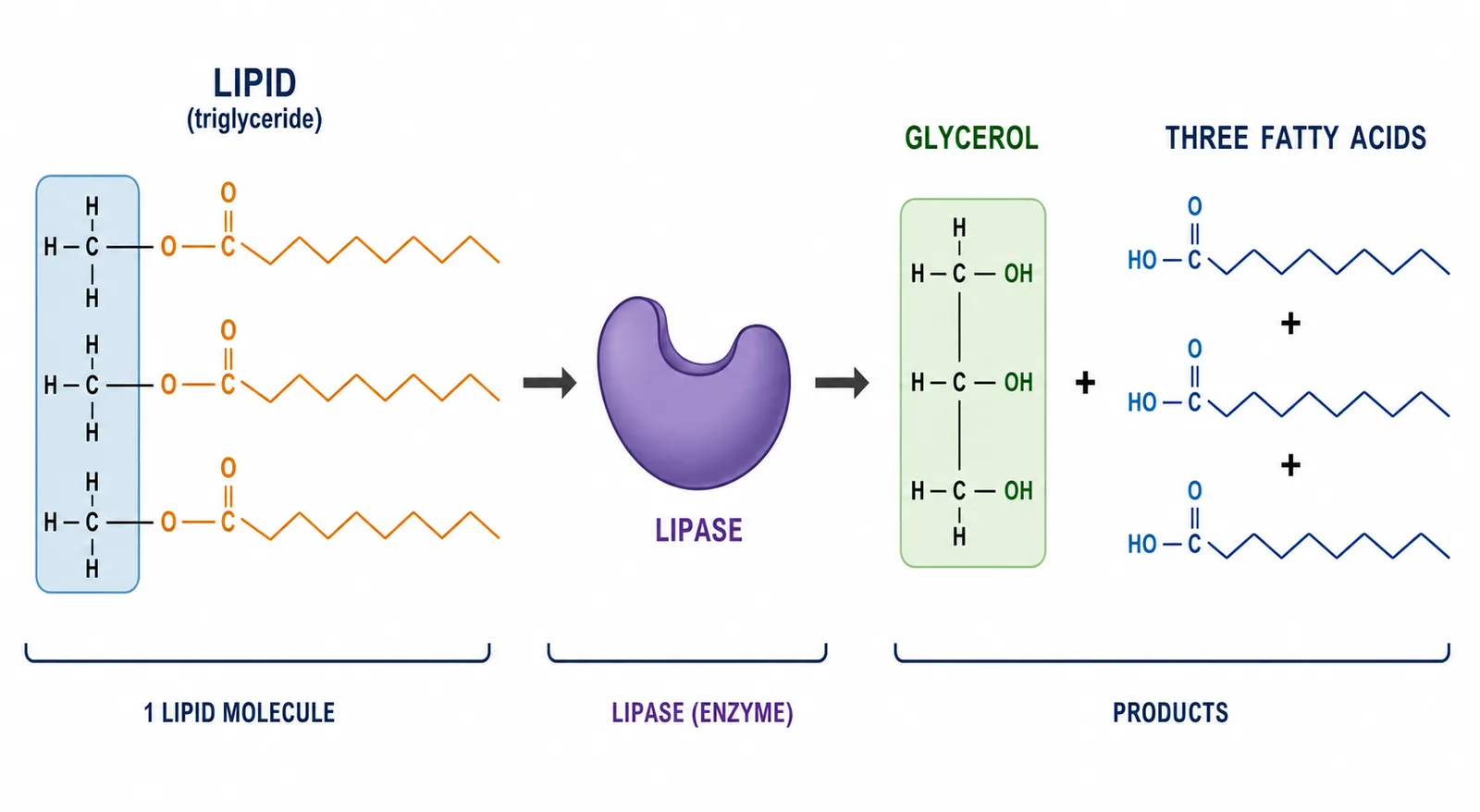
| Amylase and lipase | Mouth and small intestine | Around pH 7 to 8 | Activity falls if the pH is too acidic, so acid from the stomach must be neutralised |
| Bacterial enzymes | Inside bacteria in food | Near neutral | Denatured by stomach acid, so the bacteria die |
Section 5 of 6Key terms
| Term | Meaning |
|---|---|
| Gastric juice | The mixture of acid, enzymes and mucus secreted by the stomach lining. |
| Pepsin | A protease enzyme made in the stomach that breaks proteins down into smaller molecules. |
| Optimum pH | The pH at which an enzyme works at its fastest rate. |
| Denatured | Permanently changed in shape so that an enzyme's active site no longer works. |
| Active site | The part of an enzyme where the substrate binds. |
Section 6 of 6Exam technique
1
Saying the acid 'dissolves' or 'digests' bacteria. It kills them by denaturing their enzymes and other proteins.
2
Claiming all enzymes prefer neutral pH. Pepsin has an acidic optimum, around pH 2.
3
Saying enzymes are 'killed'. Enzymes are not alive; they are denatured.
4
Forgetting the second role. The acid does not only kill bacteria, it also gives pepsin the pH it needs.