Section 1 of 9Role of roots

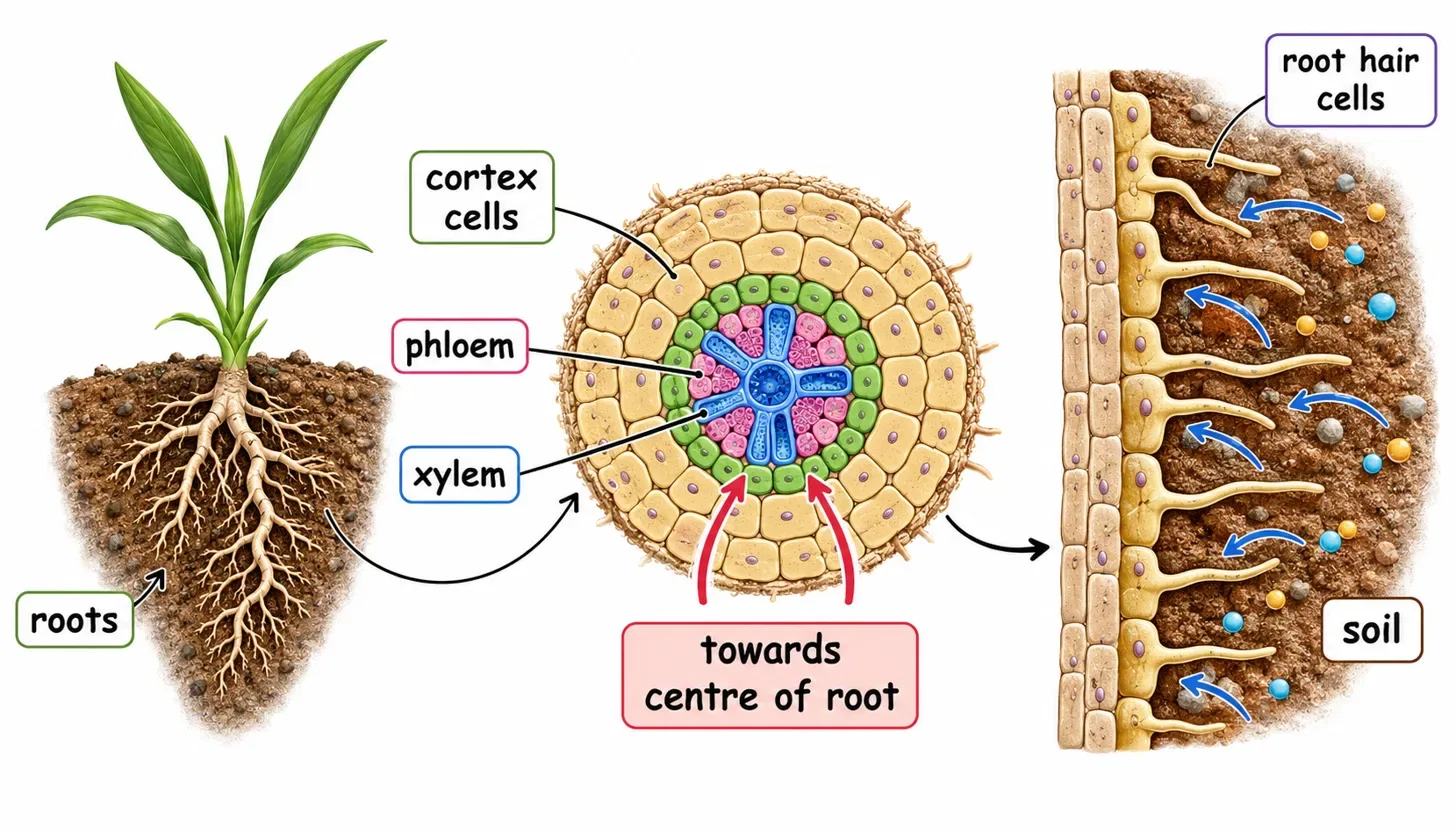

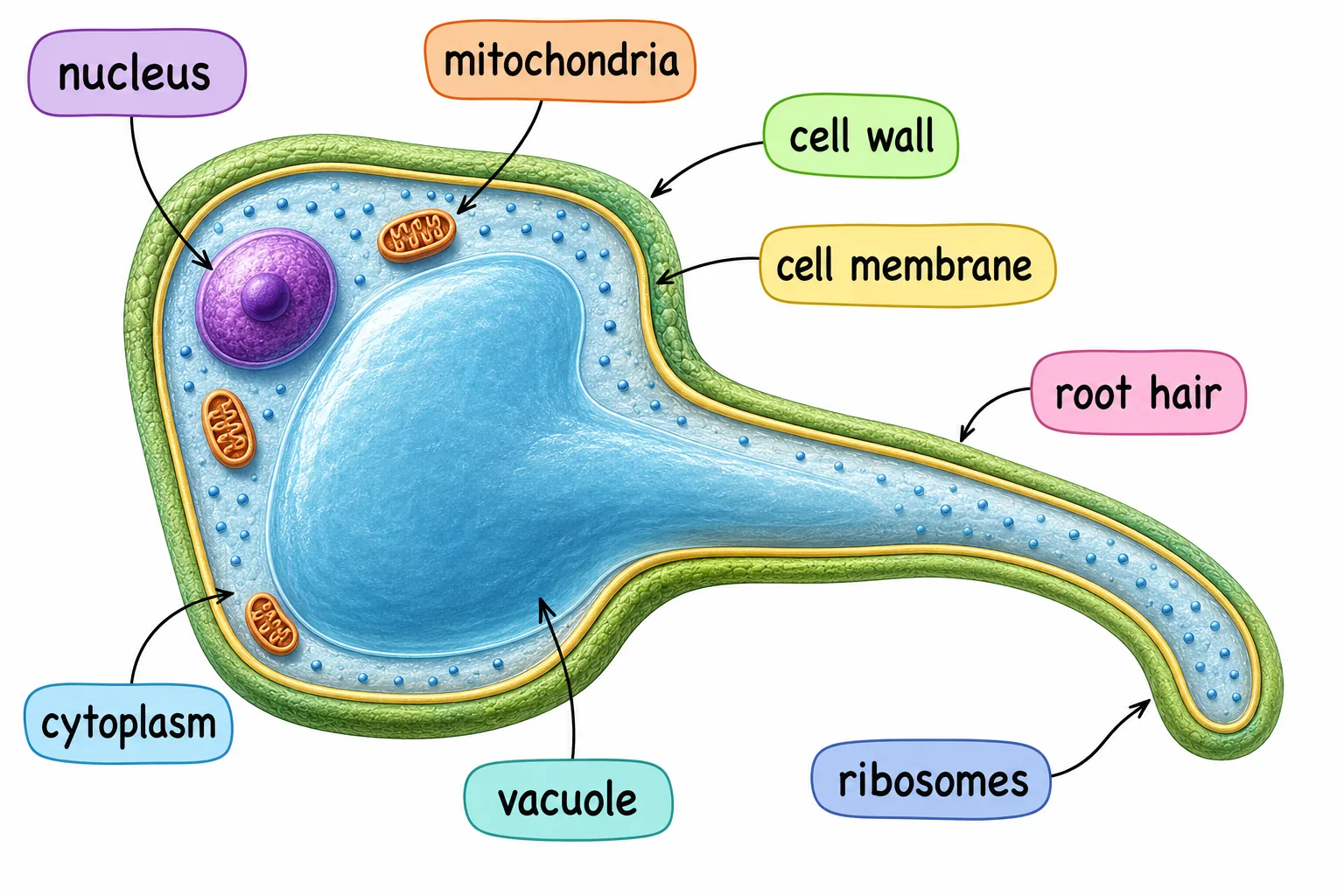
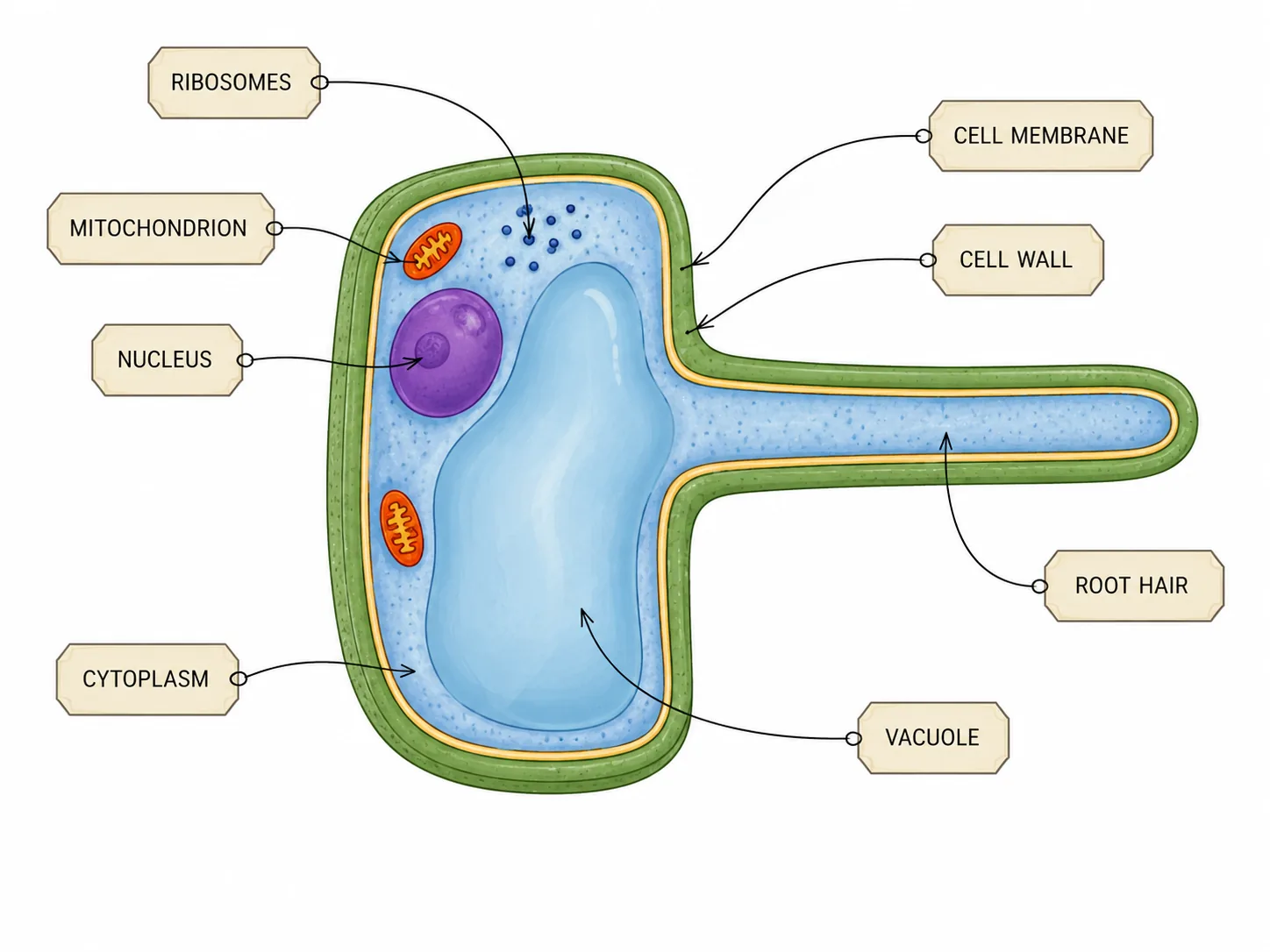
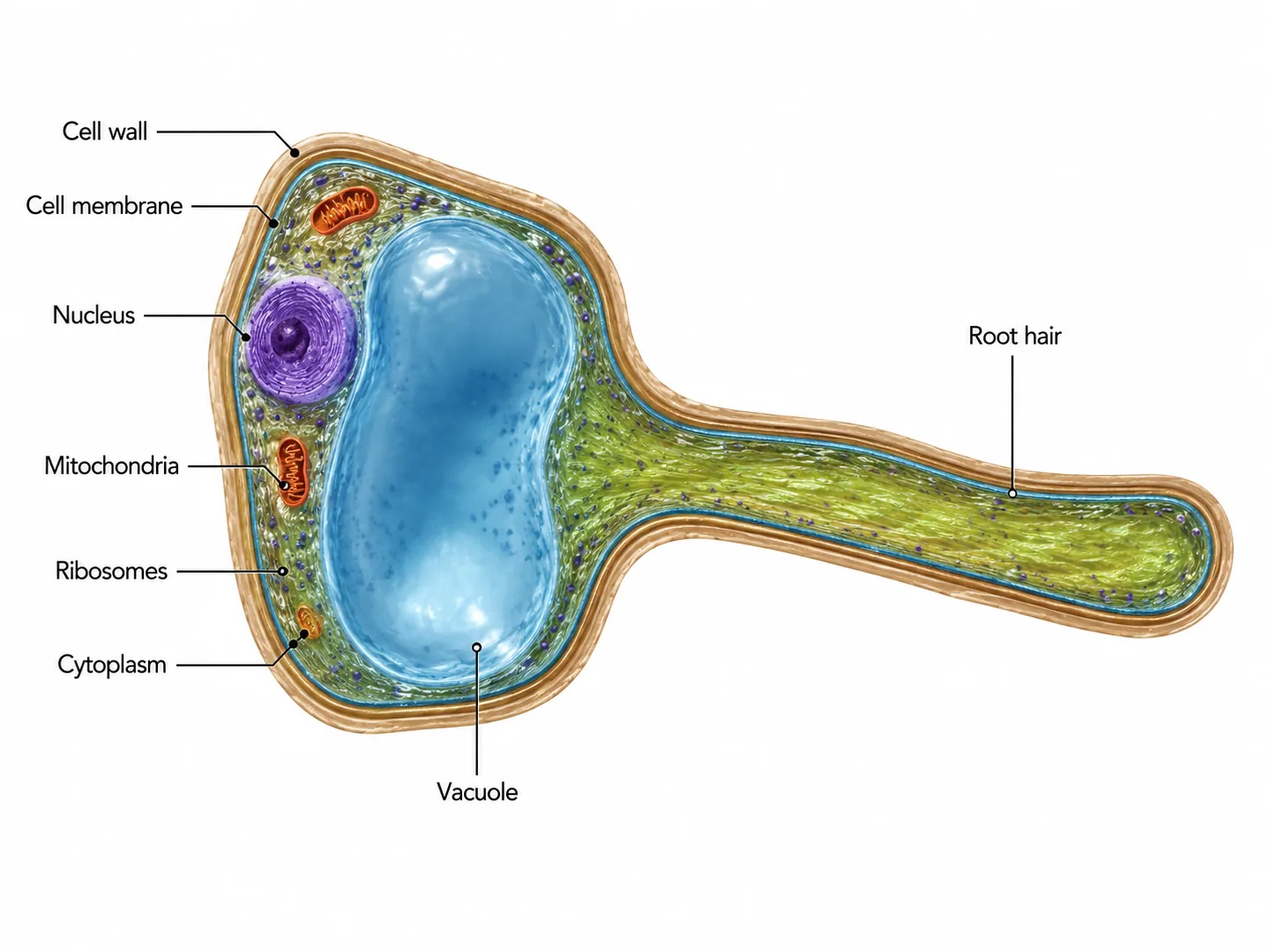


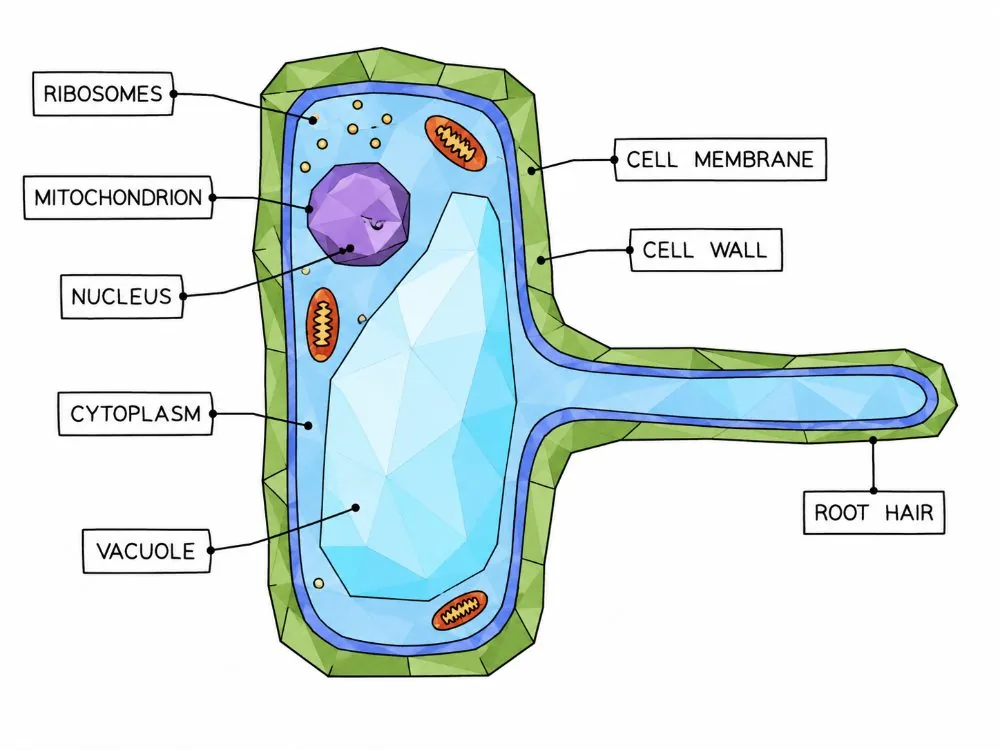
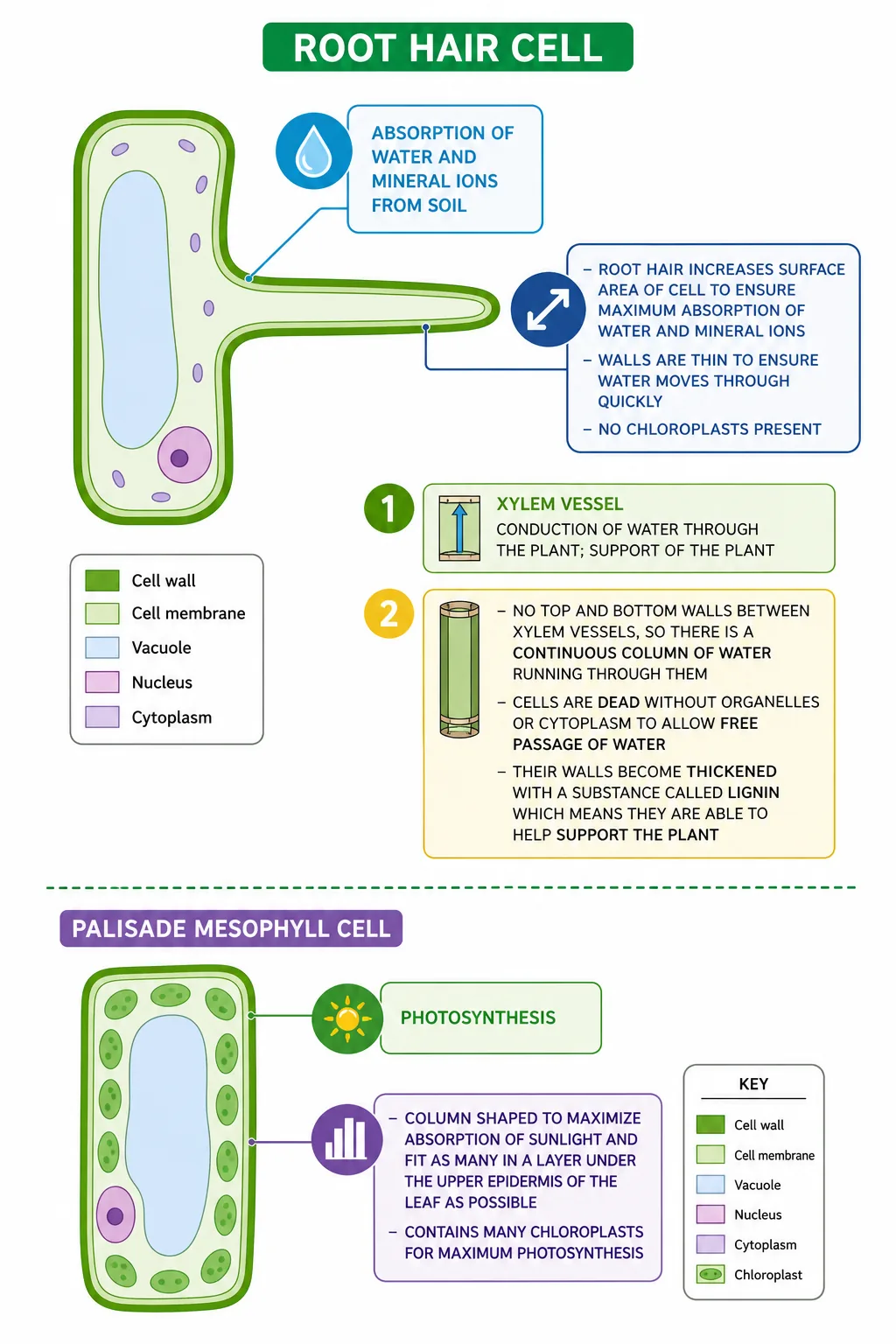
Roots anchor the plant in the soil and absorb water and mineral ions, such as nitrate and magnesium, from it. Absorption takes place mainly near the root tip, in the root hair cells. These are specialised epidermal cells on the surface of young roots, each with a long, thin extension that grows out into the soil between soil particles.
Section 2 of 9Structure and adaptations



| Feature | Adaptation to function |
|---|---|
| Long, thin hair-like projection | Greatly increases the surface area for absorbing water and ions, and can reach between soil particles |
| Thin cell wall and surface layer | Short distance for water and ions to enter the cell |
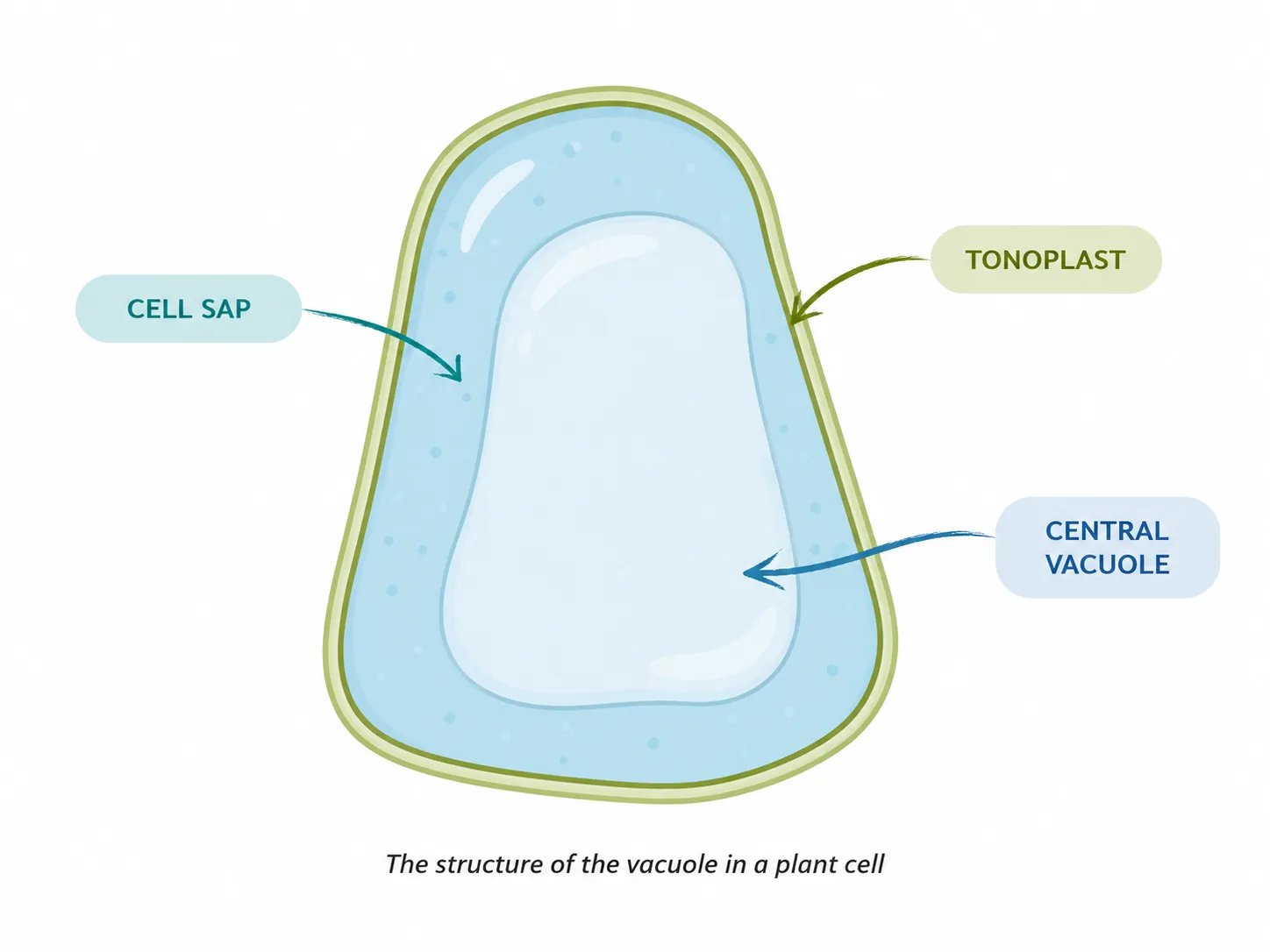
| Large permanent vacuole containing sugars and salts | Keeps the cell sap concentrated so that water potential is lower than the soil water, which helps water enter by osmosis |
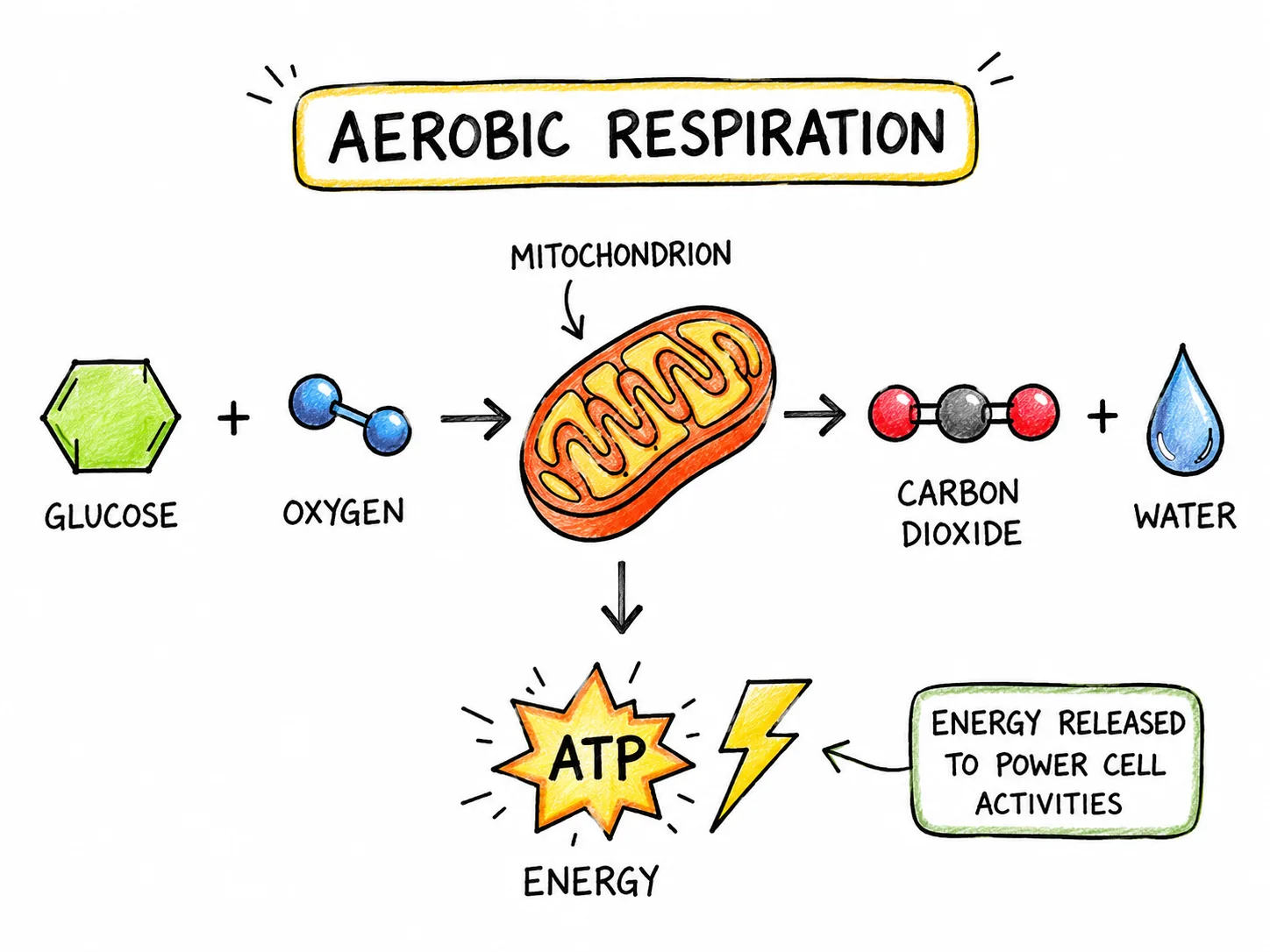
| Many mitochondria | Release energy by aerobic respiration for active transport of mineral ions |
| No chloroplasts | Underground, so no light for photosynthesis |
Section 3 of 9Uptake of water by osmosis


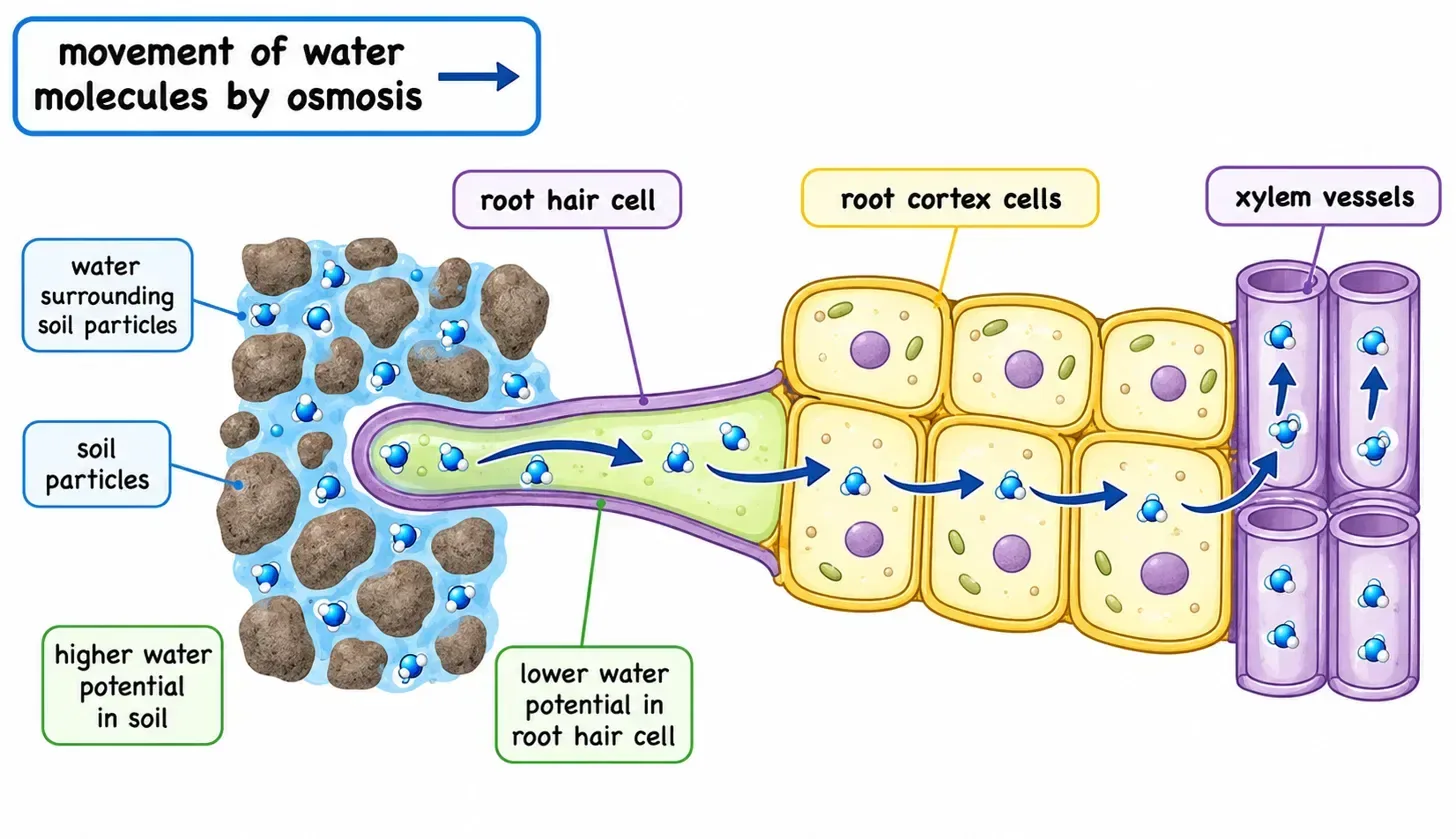
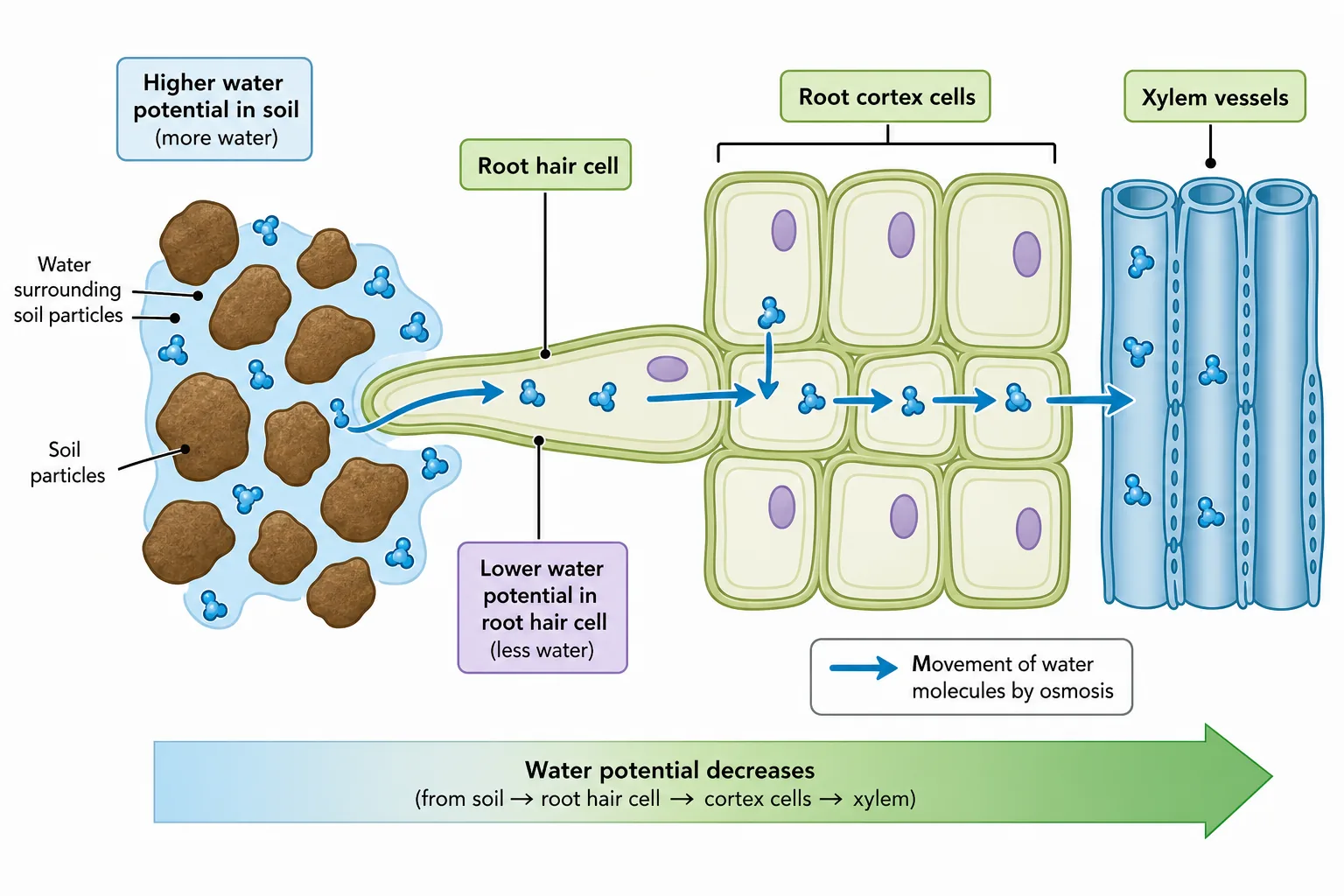


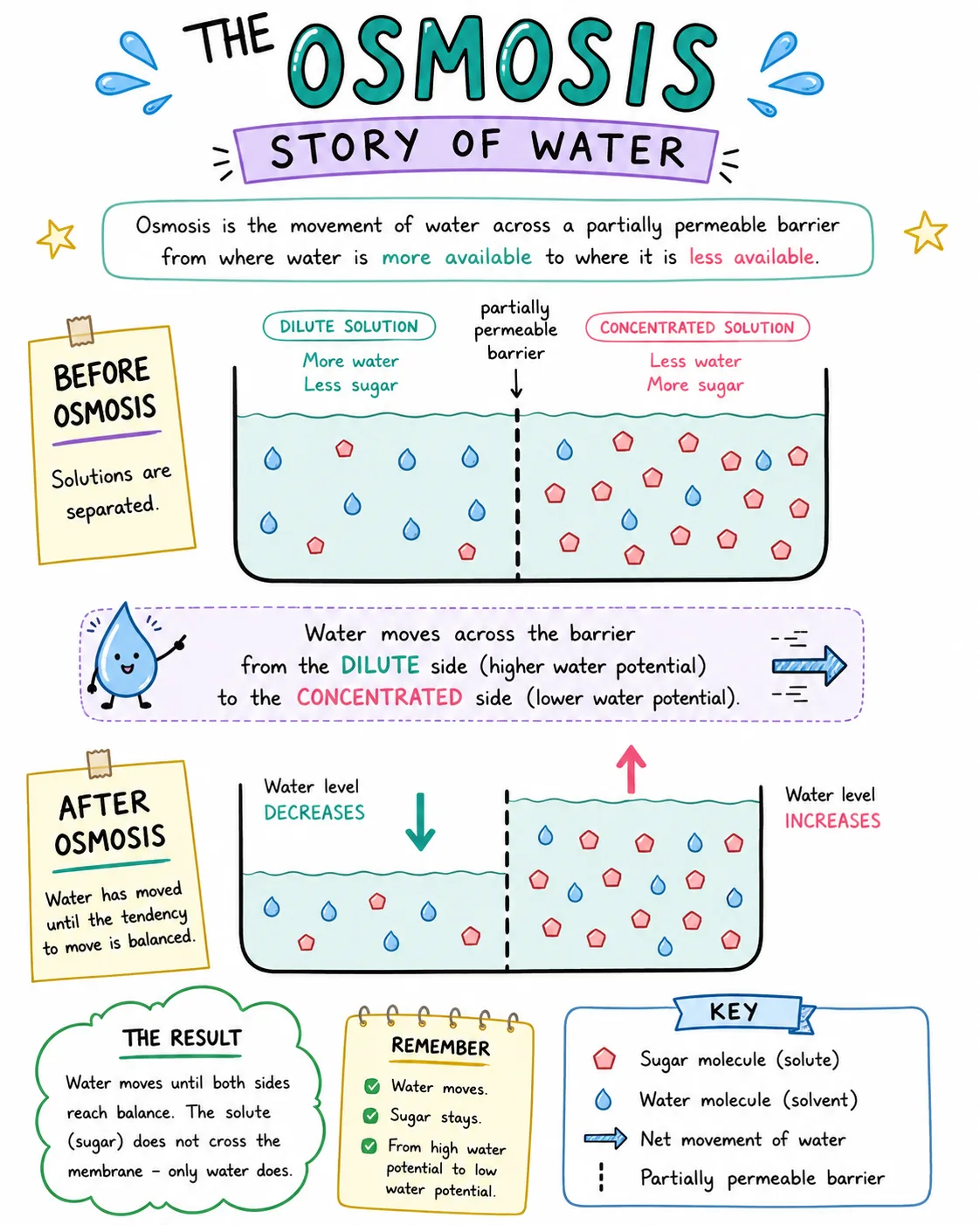


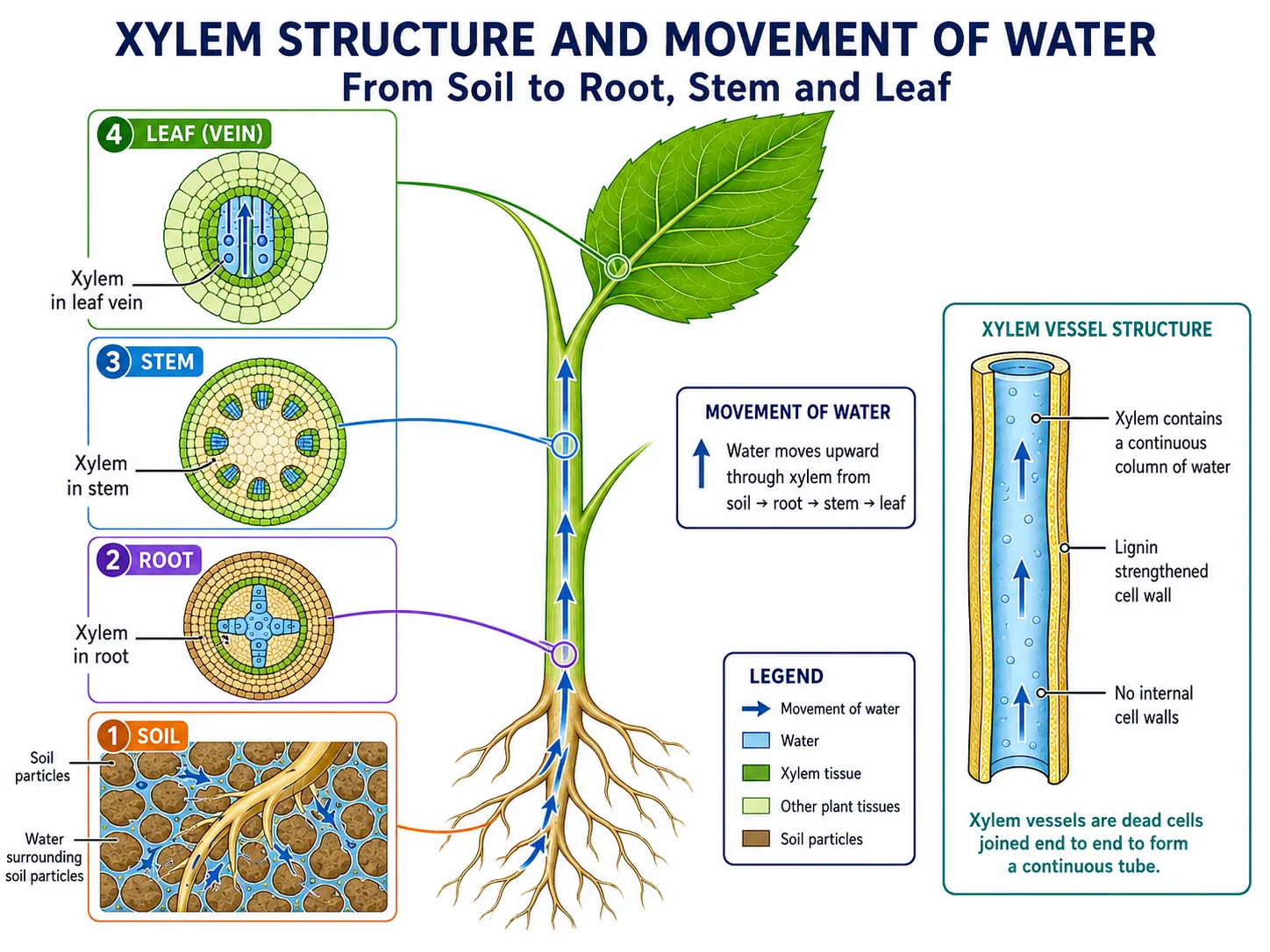


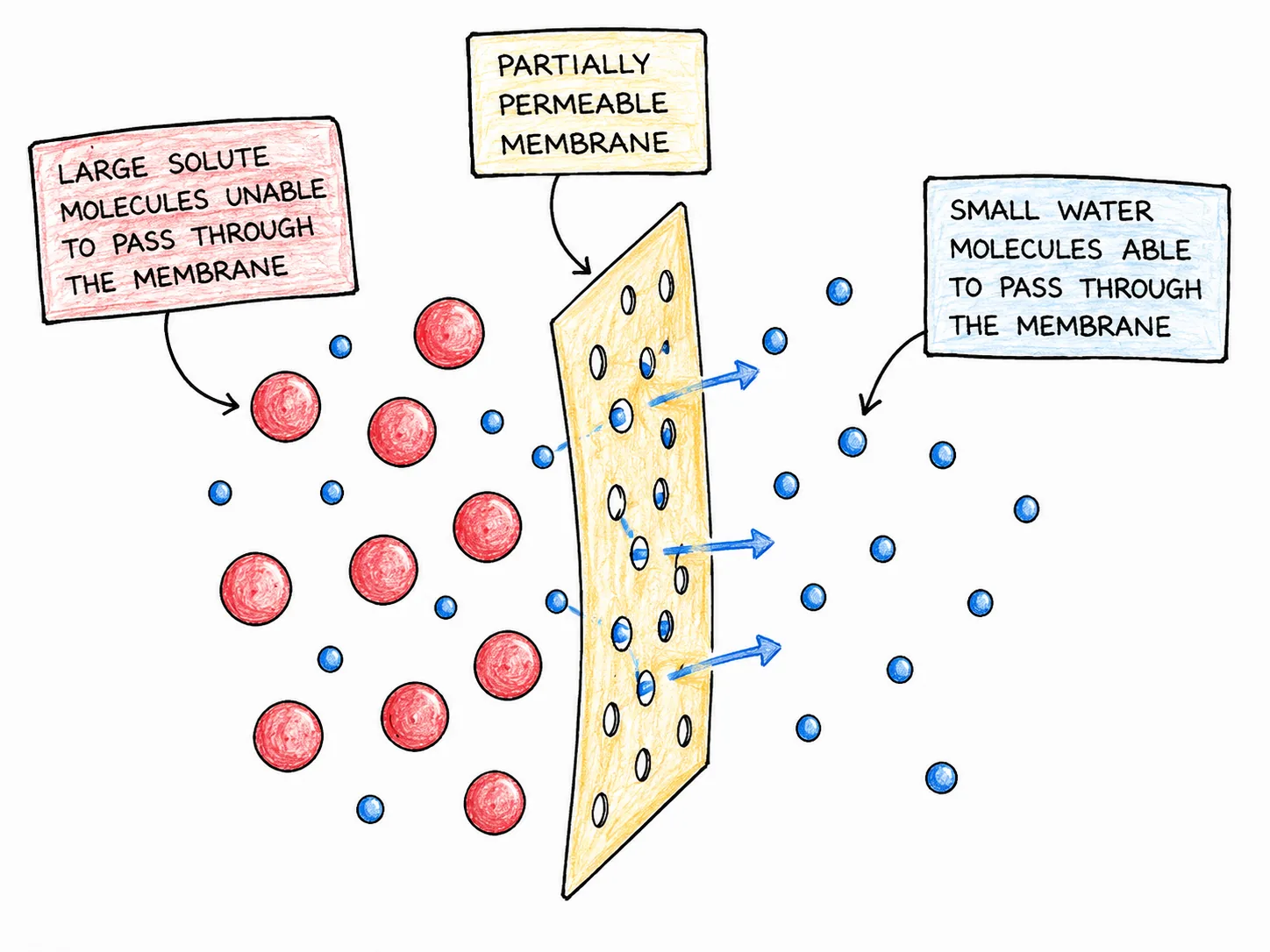
Soil water is a dilute solution of mineral ions, so it has a higher water potential (a higher concentration of water molecules) than the cytoplasm and vacuole of the root hair cell, which contain dissolved sugars, ions and proteins.
- and is carried up the plant.
Section 4 of 9Uptake of mineral ions by active transport


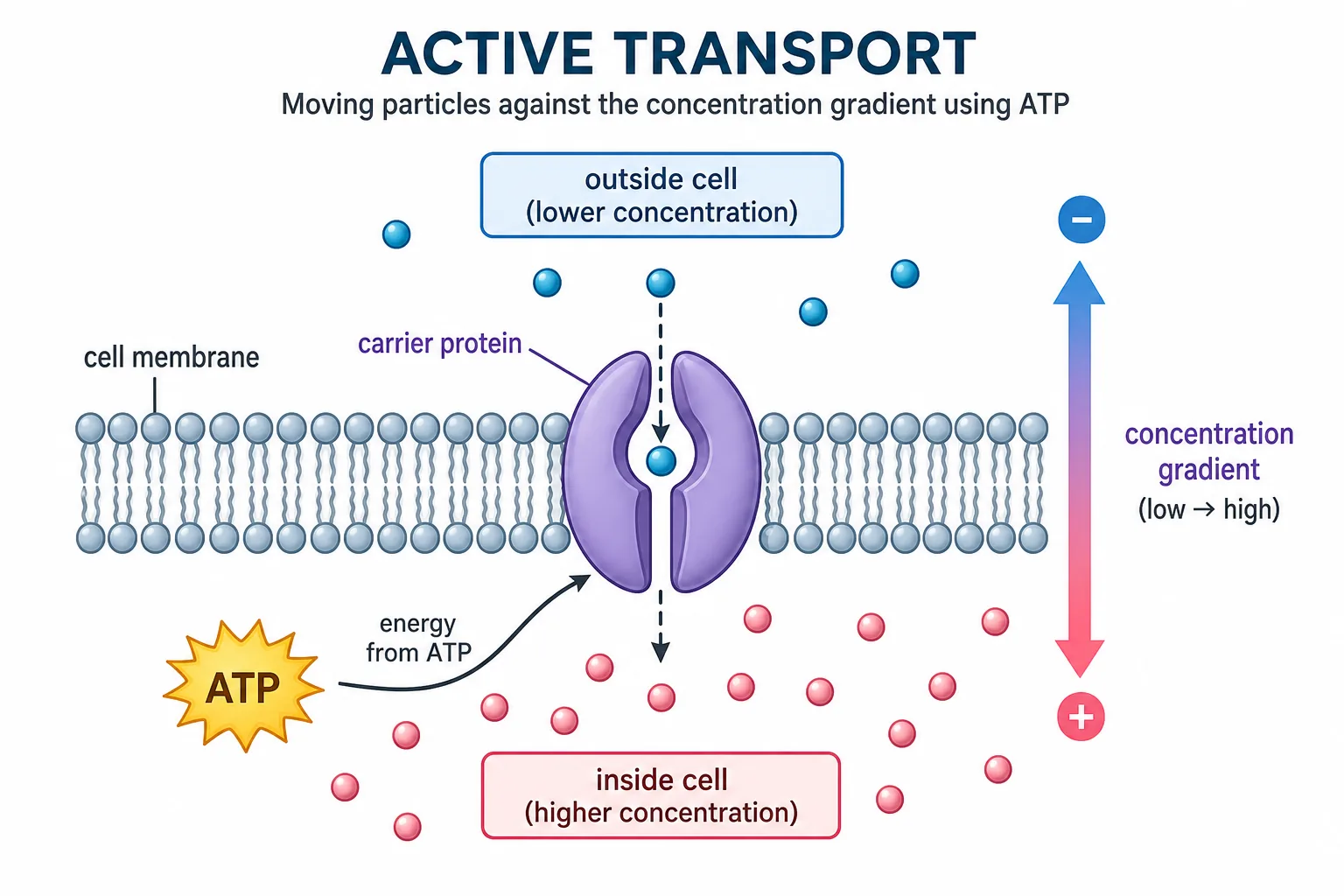
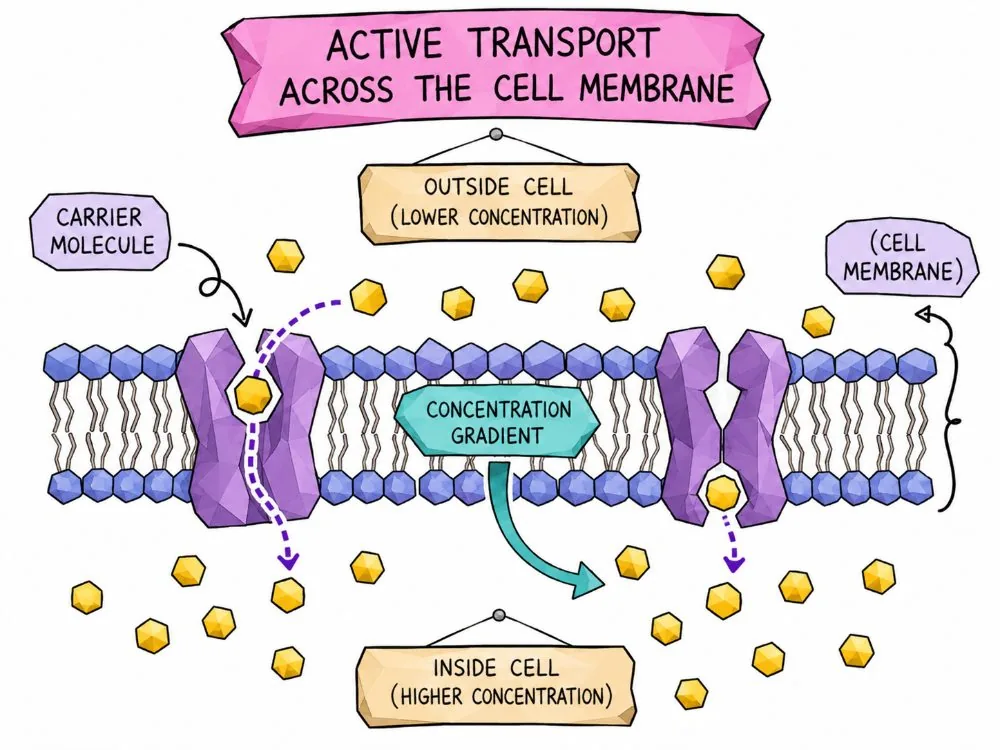


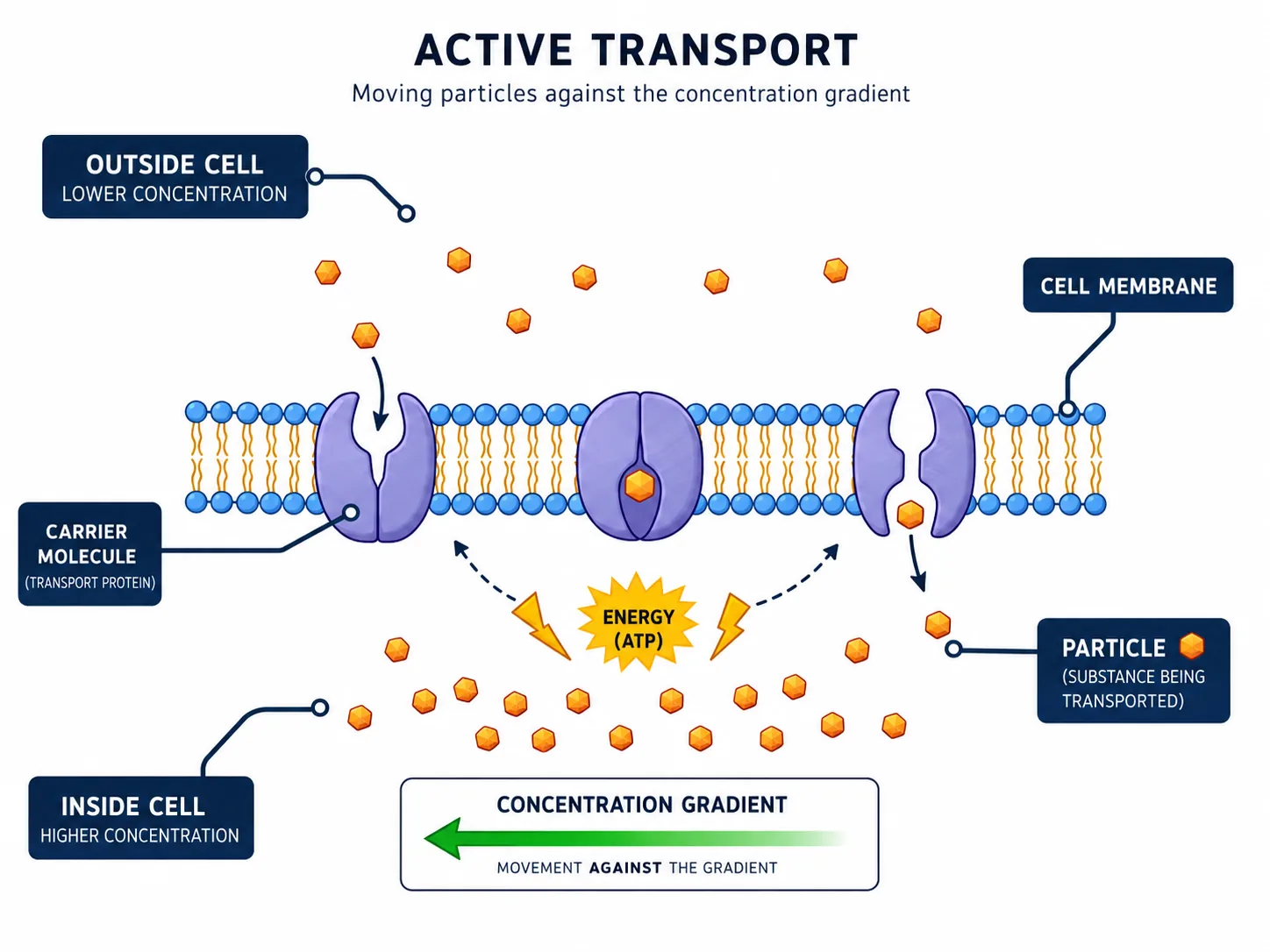

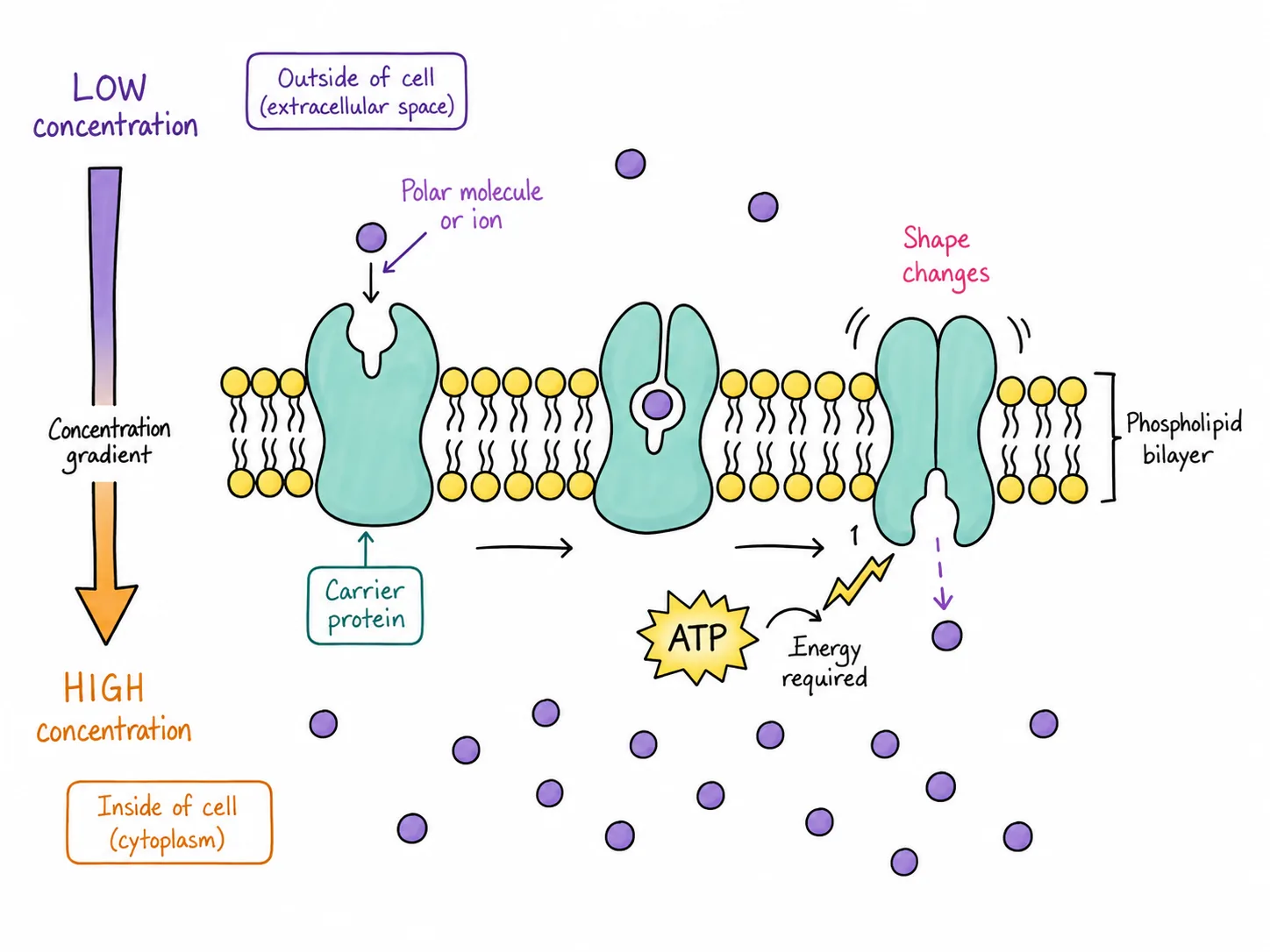
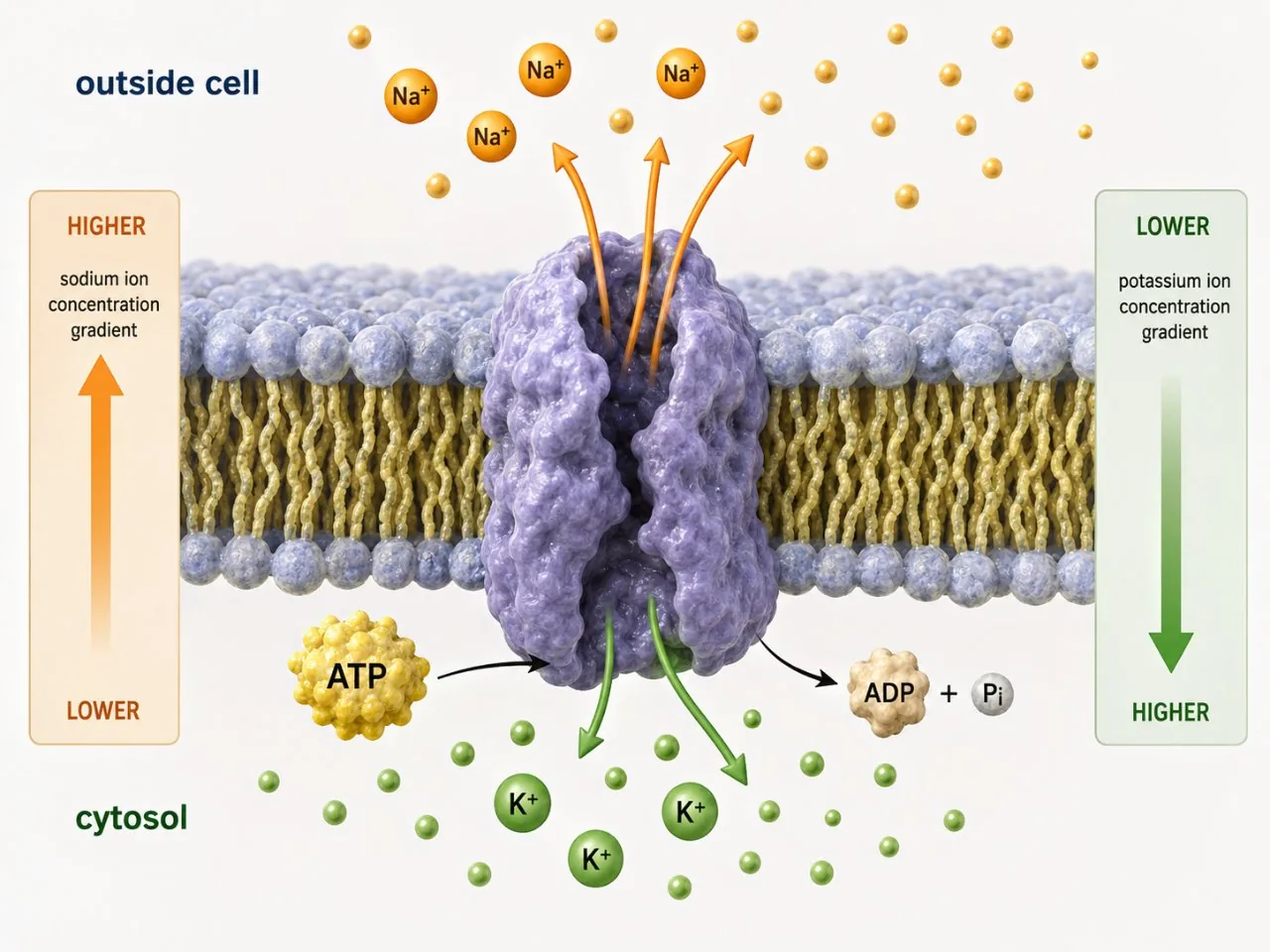

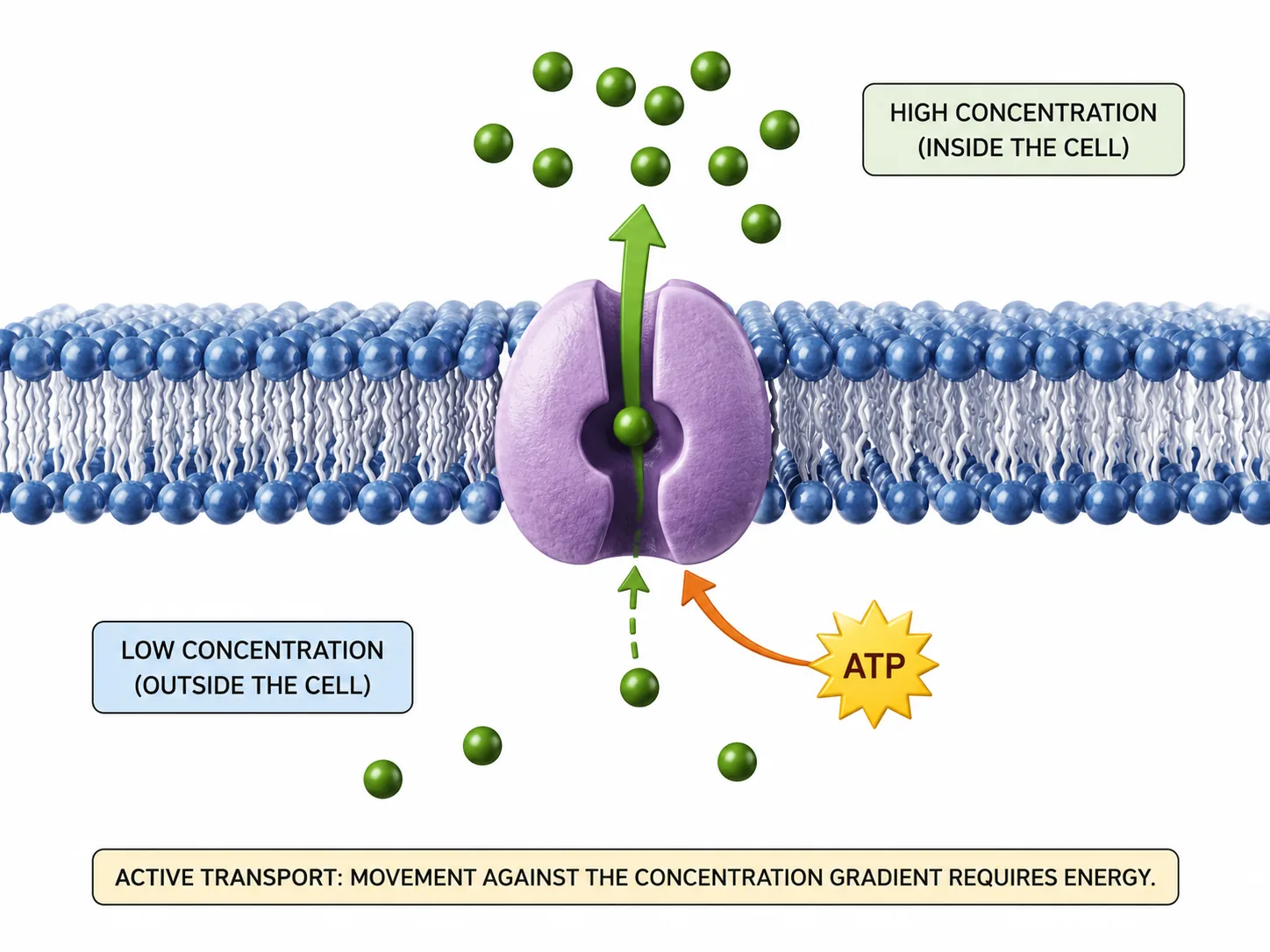


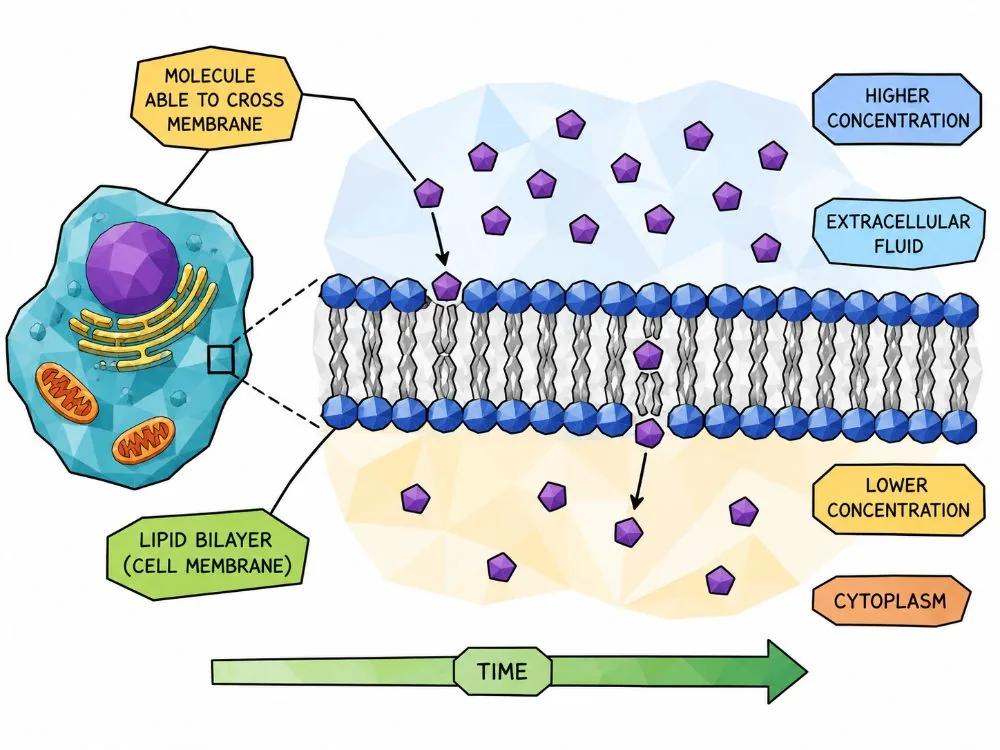
The concentration of mineral ions such as nitrate is usually higher inside the root hair cell than in the soil water.
- which lacks oxygen and stops aerobic respiration, reduces mineral uptake and can damage the plant.
Section 5 of 9Comparing transport processes

| Diffusion | Osmosis | Active transport | |
|---|---|---|---|
| What moves | Any particles | Water only | Ions and molecules |
| Direction | High to low concentration | High to low water concentration | Low to high concentration |
| Energy needed | No | No | Yes, from respiration |
| Membrane protein | Not always | Not needed | Carrier protein |
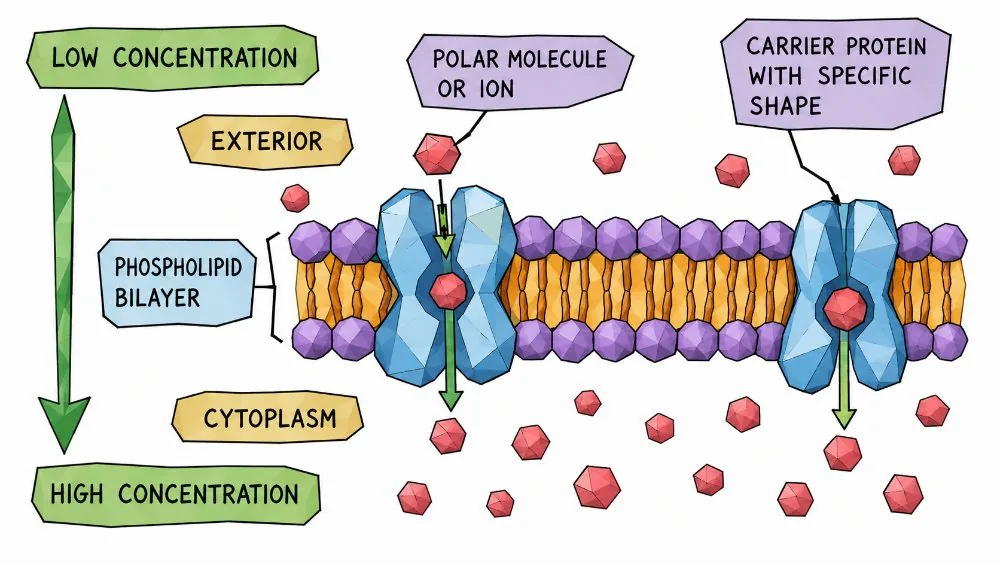
Note that carrier proteins in active transport are specific to the particles carried. Root hair cells also take up some ions by facilitated diffusion where the concentration gradient is favourable.
Section 6 of 9Link to other topics

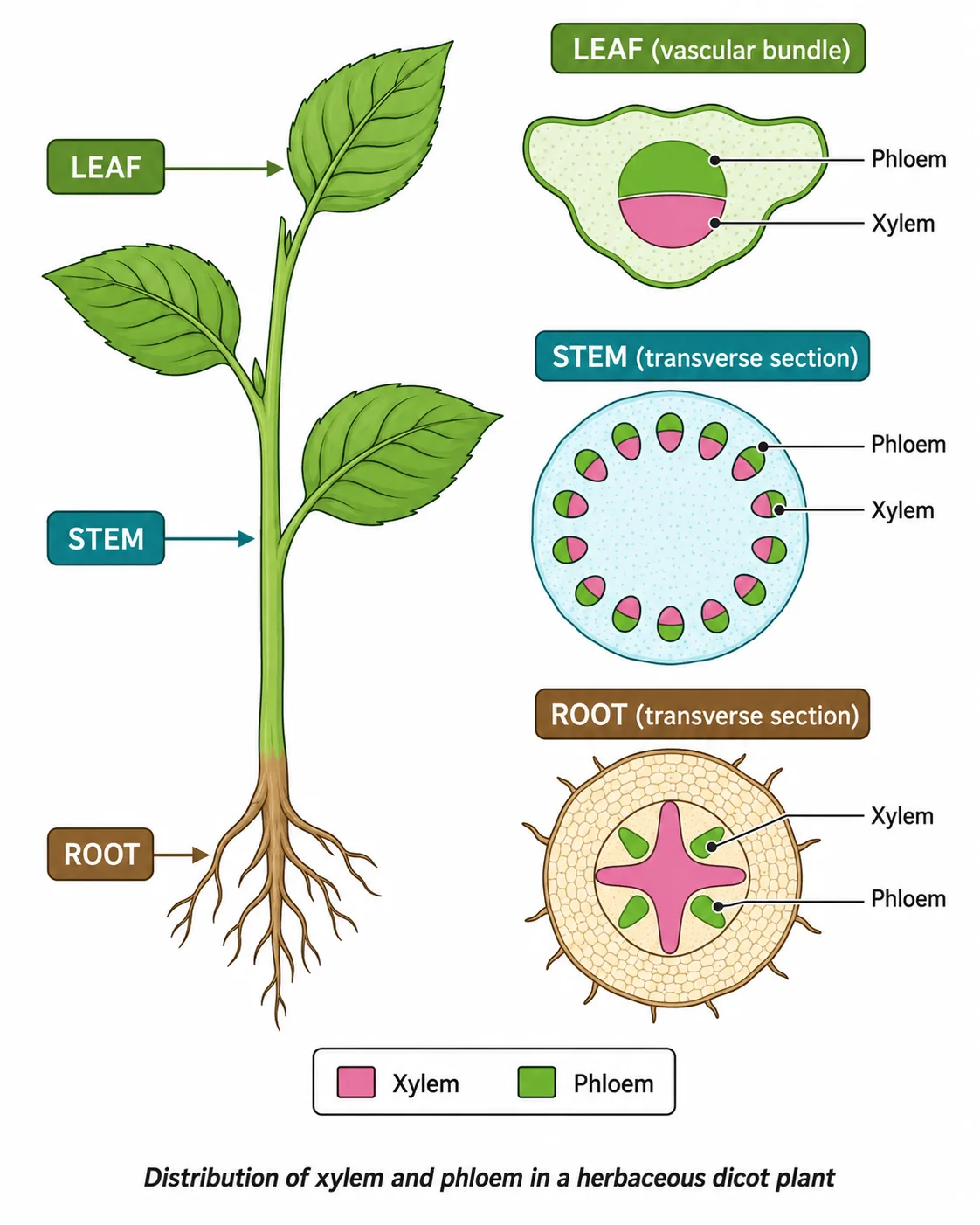

The surface area to volume idea is the same as in lungs and villi: a larger surface area gives a faster exchange.
- and minerals taken up are used to make amino acids, nucleotides and chlorophyll.
A practical way to see the effect is to compare plants grown in different conditions.
- which shows that ions need respiration while water uptake by osmosis does not.
- (active transport)
- because their job is protection and letting light through.
- so new ones form as the root grows,
- which is why transplanting a seedling carefully, to avoid damaging them, helps it to establish quickly.
Section 7 of 9Exam-style questions





Explain how a root hair cell is adapted for the uptake of water. [3]3 marks
The long extension increases surface area for absorption [1]. The thin wall gives a short diffusion distance [1]. The vacuole contains a concentrated solution so water enters by osmosis down a concentration gradient [1].
Explain why root hair cells contain many mitochondria. [3]3 marks
Mineral ions are absorbed by active transport [1] against the concentration gradient, which needs energy [1]. Mitochondria release energy by aerobic respiration [1].
Explain why plants growing in waterlogged soil may have poor growth. [3]3 marks
The soil lacks oxygen, so root cells cannot respire aerobically [1]. Less energy is available for active transport [1], so fewer mineral ions, such as nitrate, are absorbed, reducing growth [1].
Section 8 of 9Key terms
| Term | Meaning |
|---|---|
| Root hair cell | A specialised root epidermis cell with an extension that absorbs water and ions. |
| Osmosis | The net movement of water through a partially permeable membrane from high to low water concentration. |
| Active transport | Movement of substances against a concentration gradient using energy from respiration. |
| Mineral ions | Ions such as nitrate and magnesium needed for plant growth. |
| Vacuole | A fluid-filled sac containing cell sap. |
| Surface area | The total area of the surface of a cell or structure. |
| Partially permeable membrane | A membrane that lets some substances pass but not others. |
Section 9 of 9Exam technique
Marked practiceQuizzes for this lesson
Magnification Triangle & Unit Conversion
Formula: M = I / A ⇔ A = I / M ⇔ I = M × A
Units: 1 mm = 1,000 μm = 1,000,000 nm.
Rule: Convert Image size (ruler mm) to μm by ×1,000 before dividing by Actual size.