Section 1 of 6Single circulation in fish (Extended tier only)
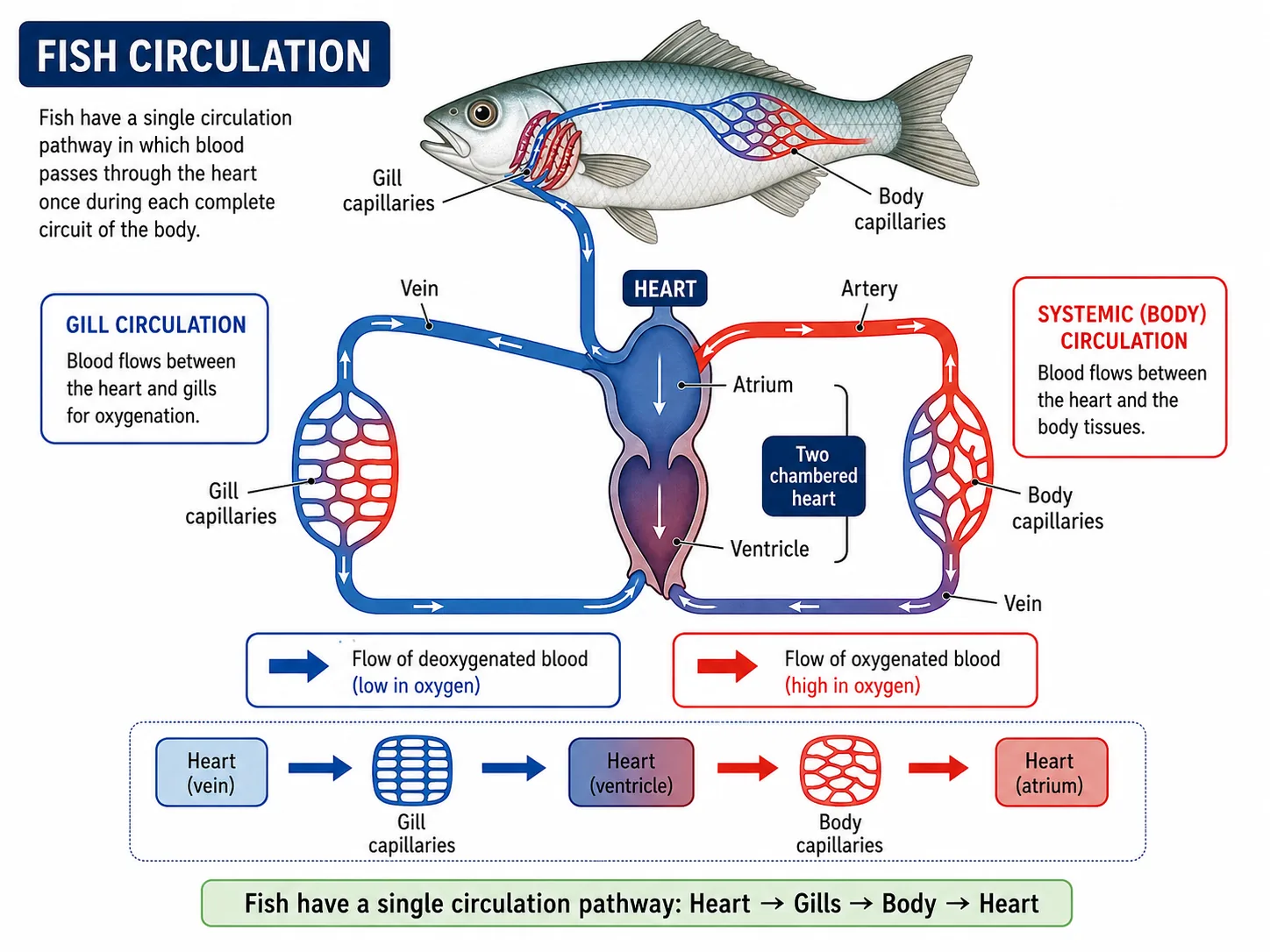
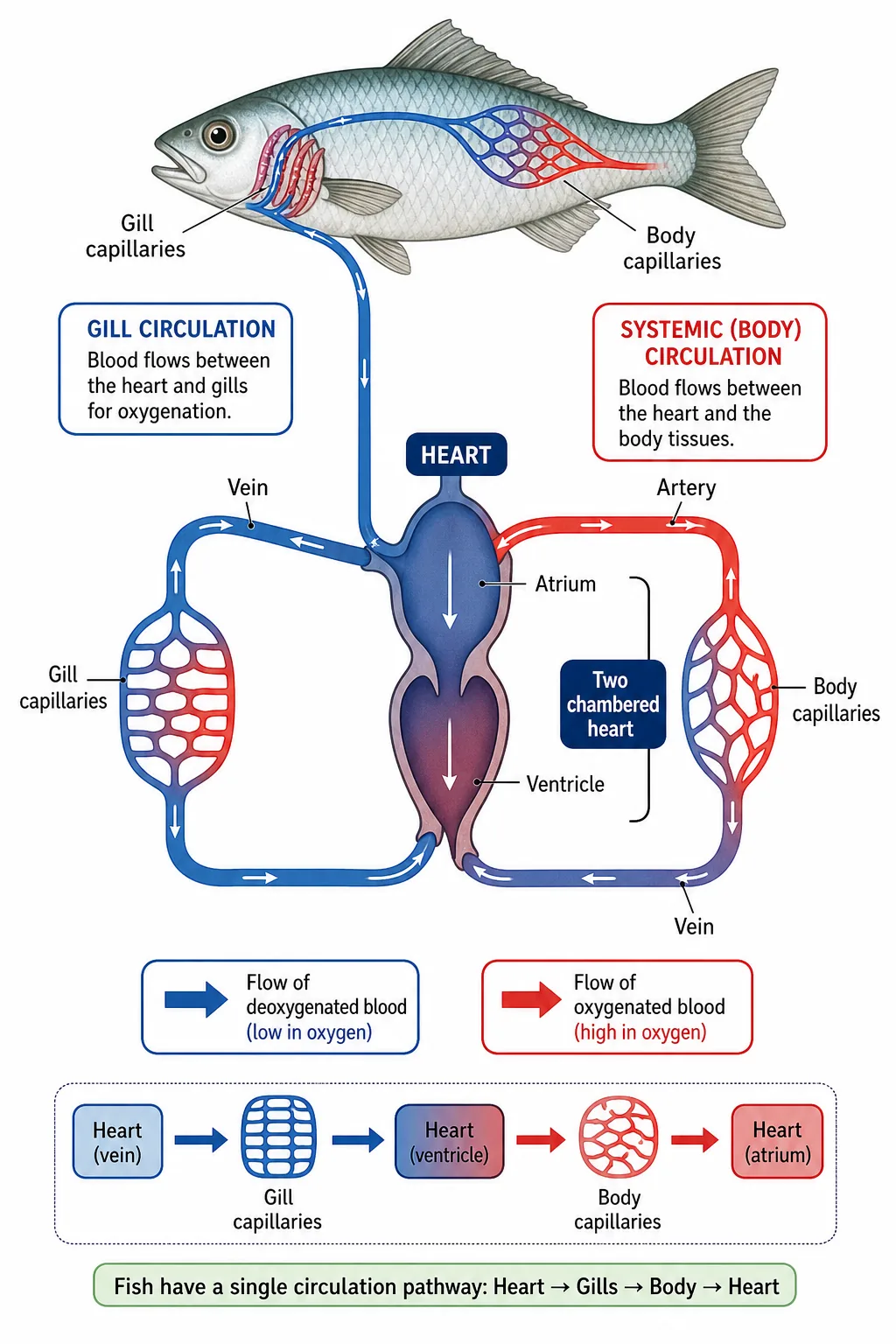

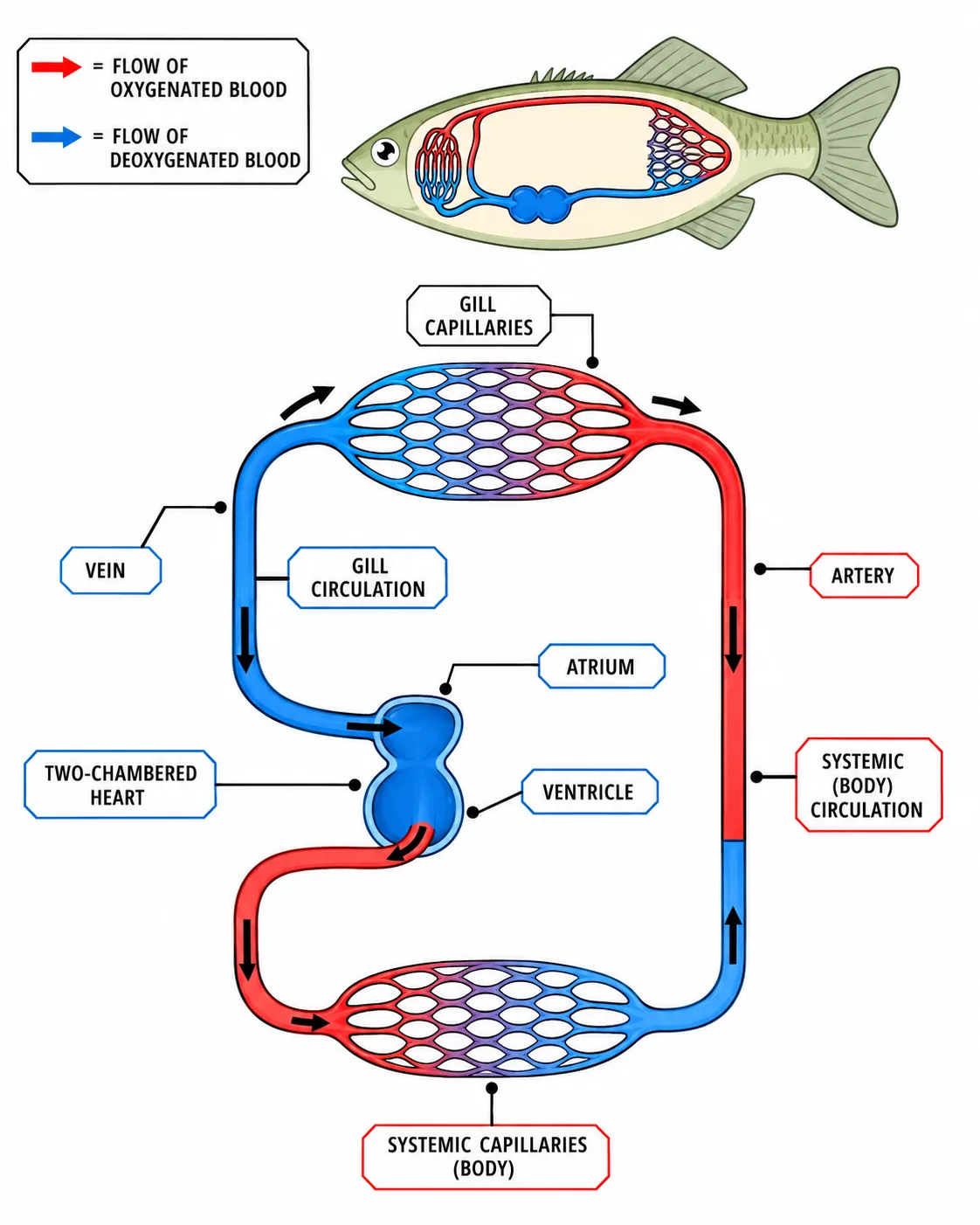


1Heart pumps blood
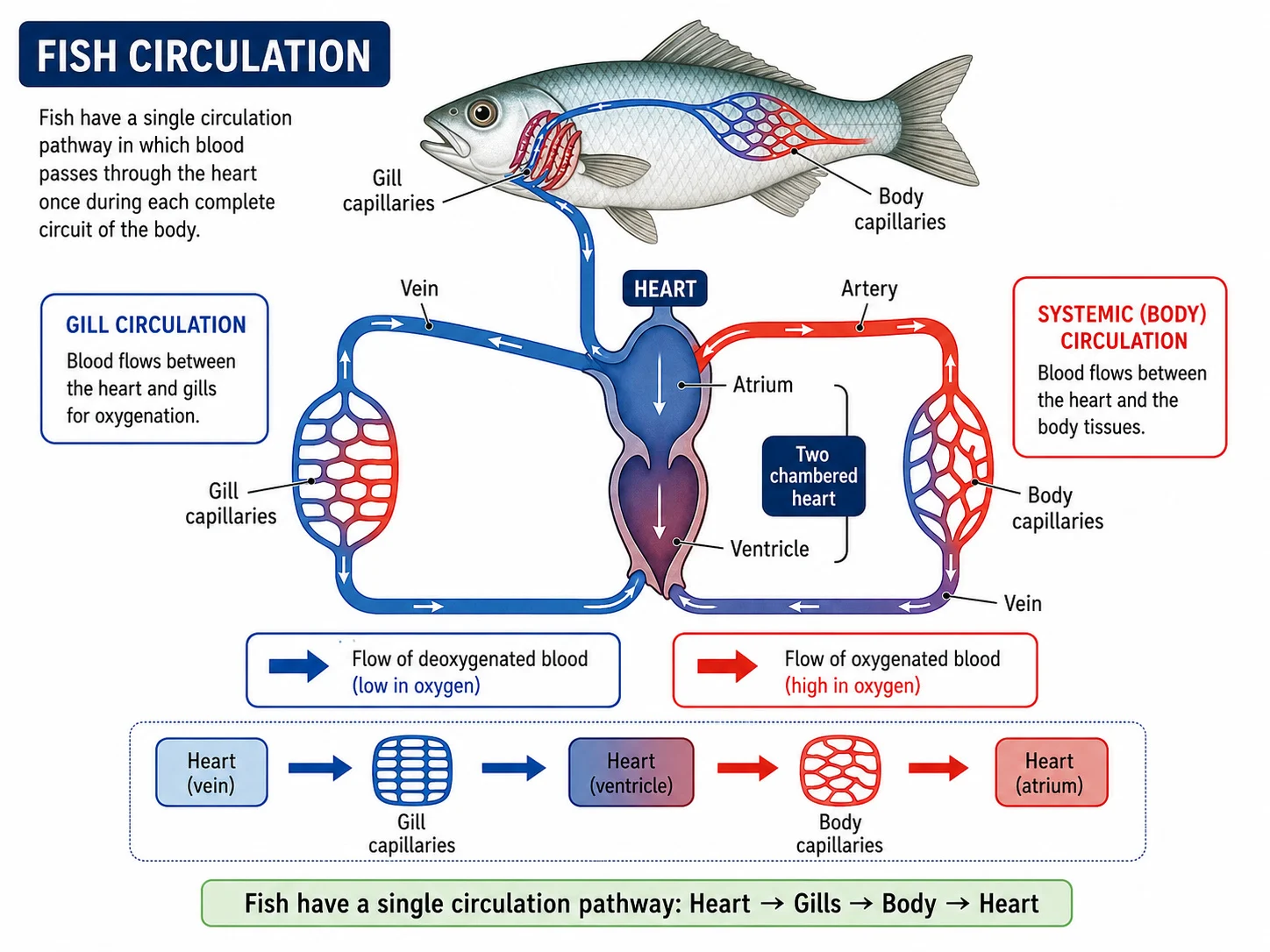
- Heart pumps blood A fish has a two-chambered heart: one atrium and one ventricle.
2To the gills
- To the gills Blood is pumped to the gills, where it picks up oxygen and loses carbon dioxide.
3To the body
- To the body Blood then flows on to the organs of the body without going back to the heart.
4Back to the heart
- Back to the heart Deoxygenated blood returns to the heart, so it passes through the heart once on each full circuit.
Section 2 of 6Double circulation in mammals (Extended tier only)


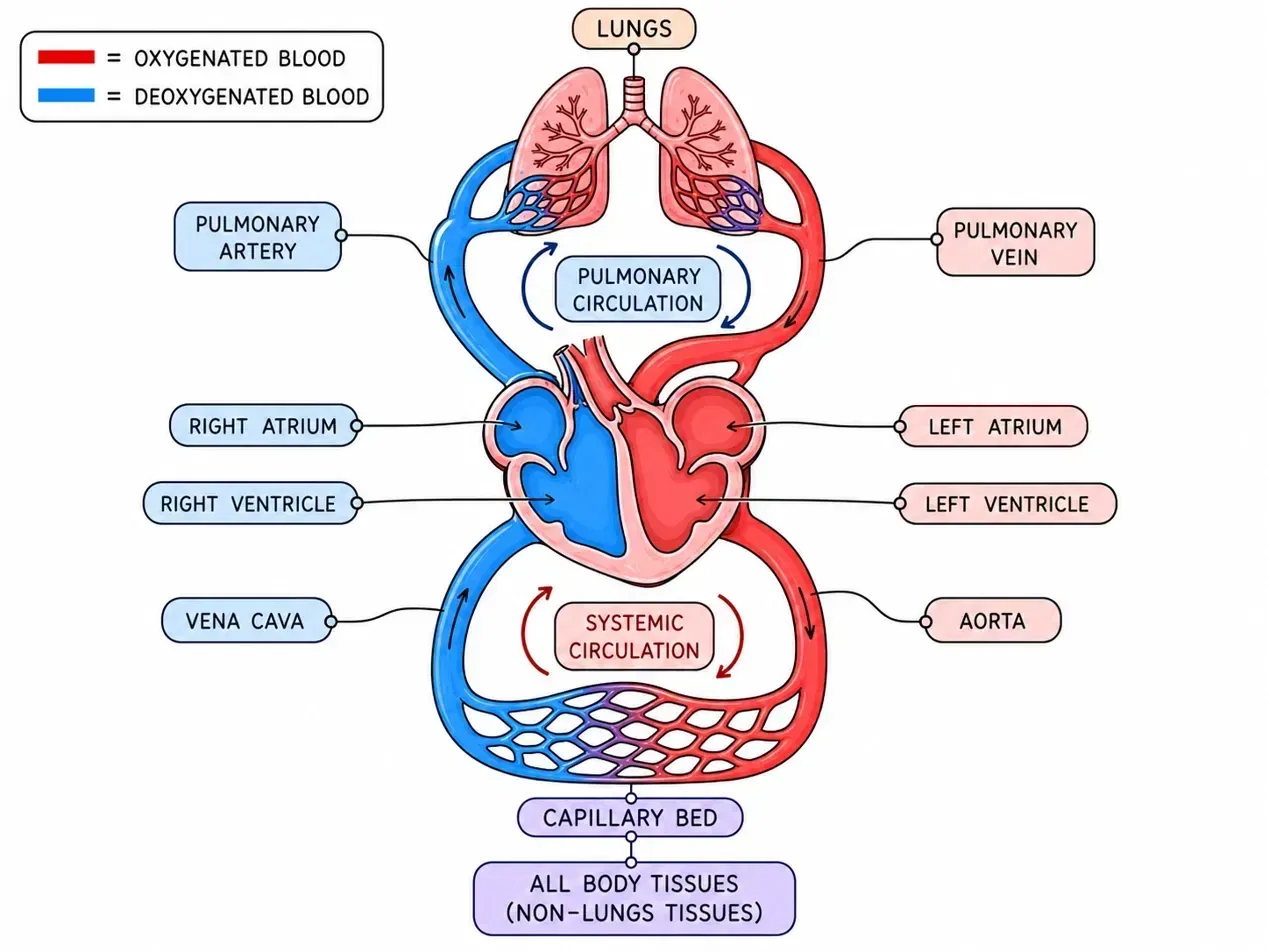
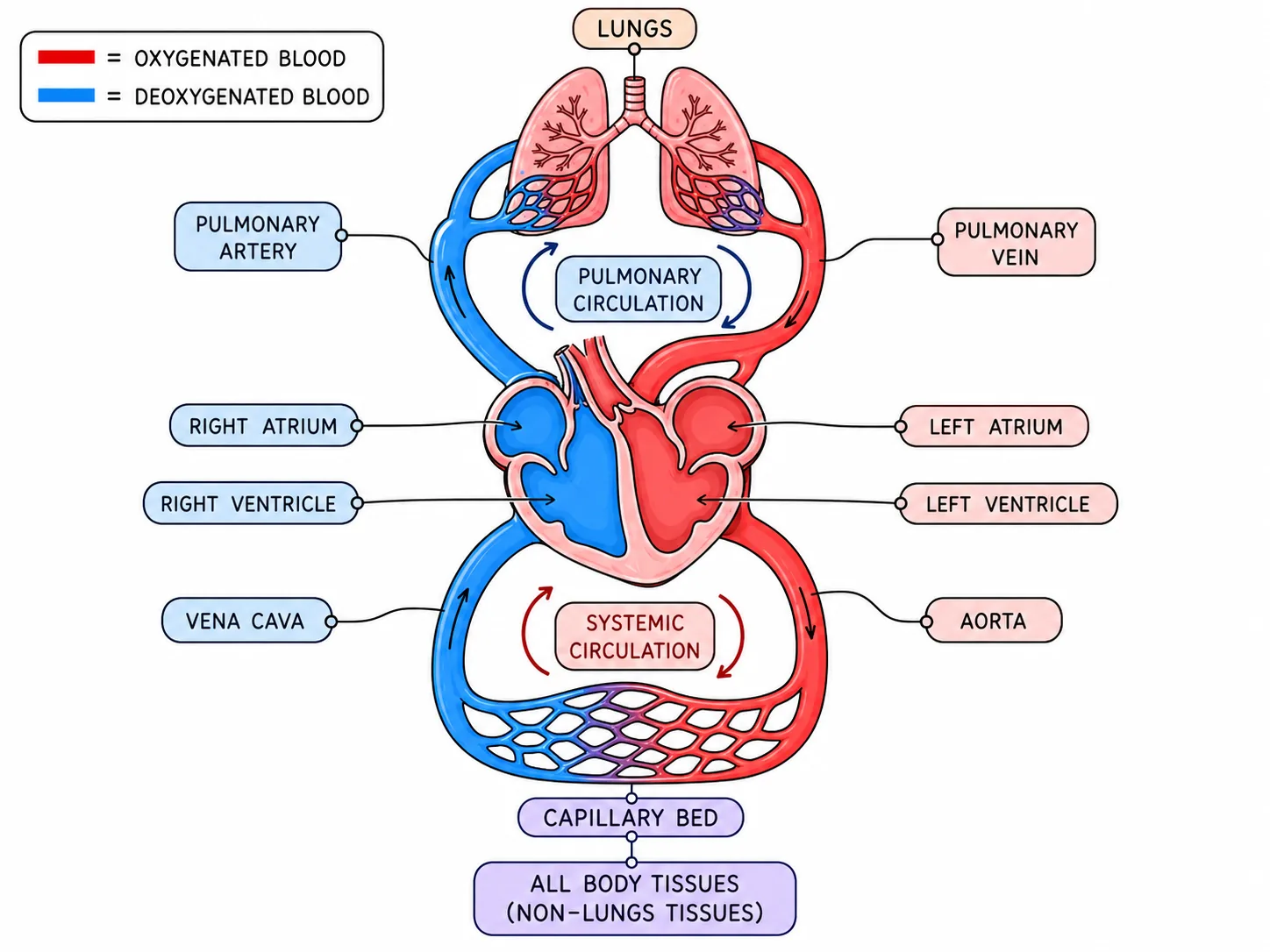


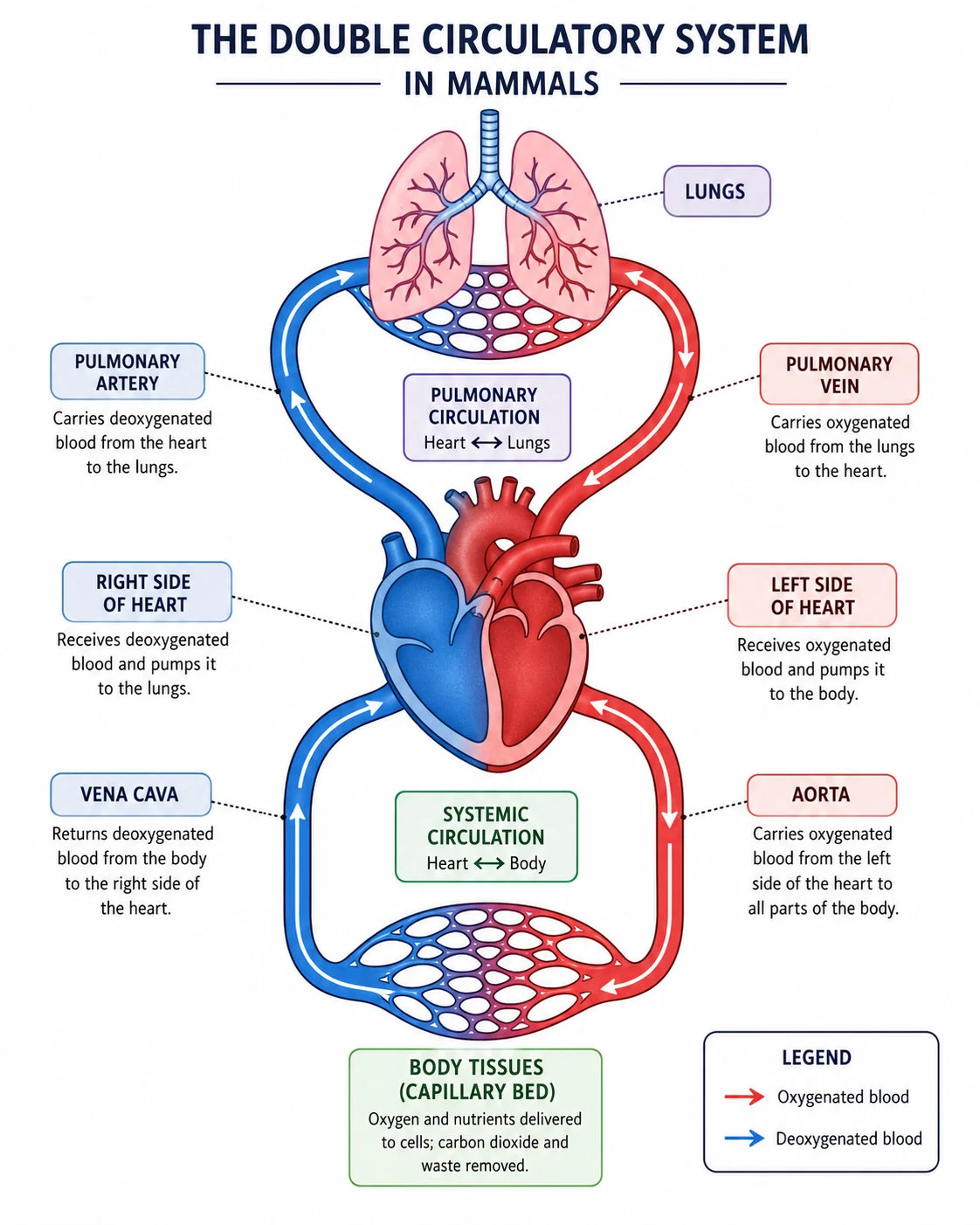
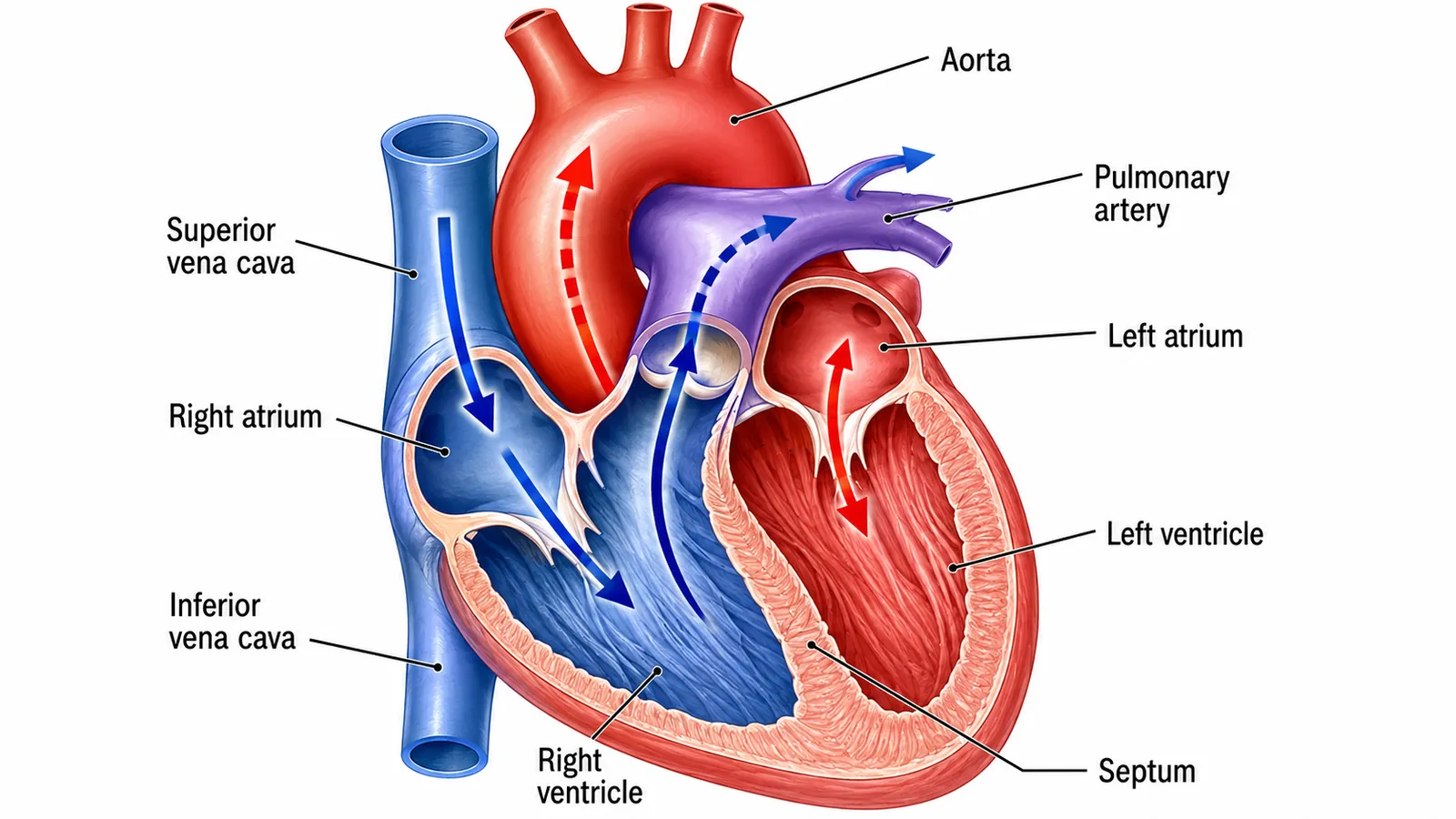
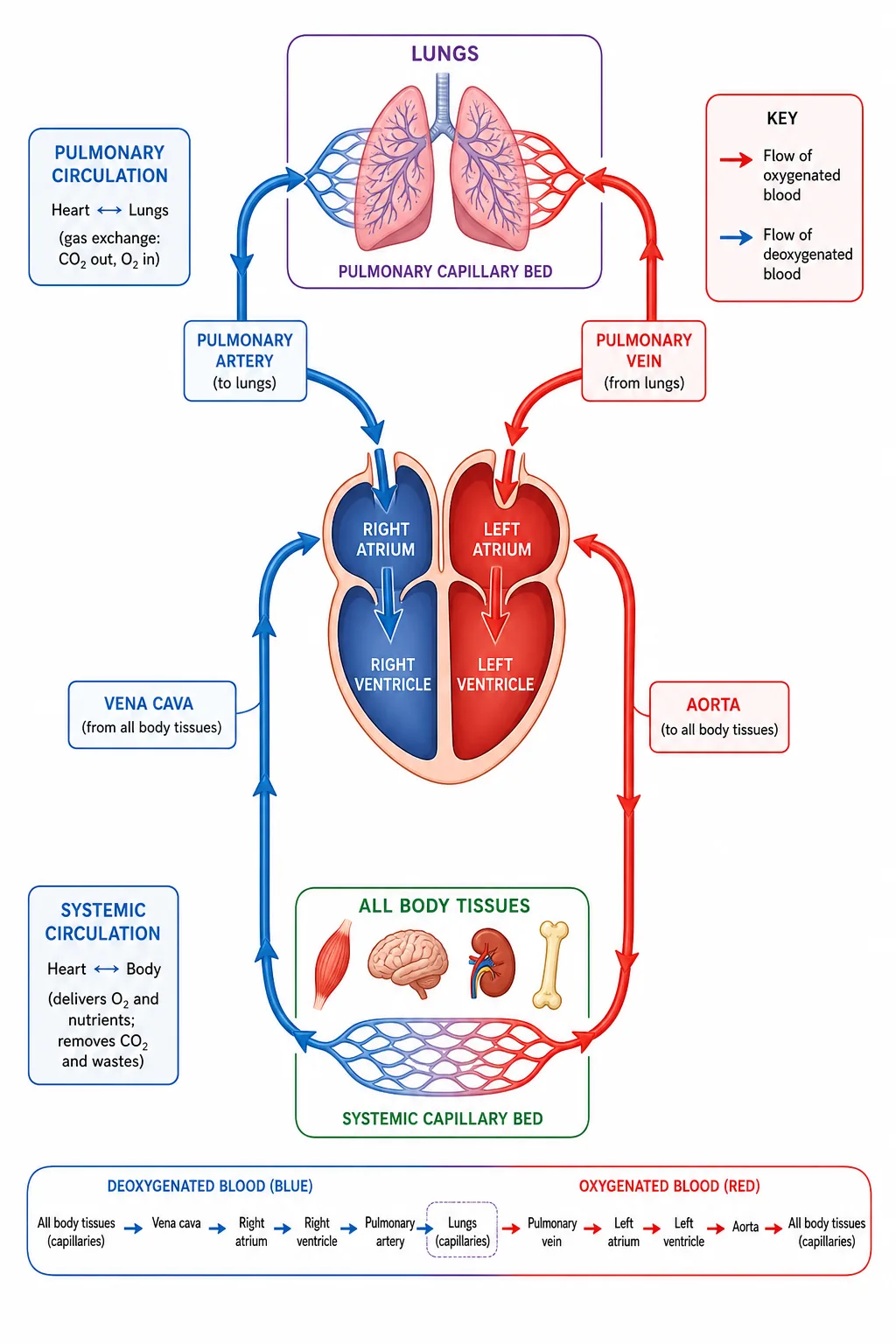
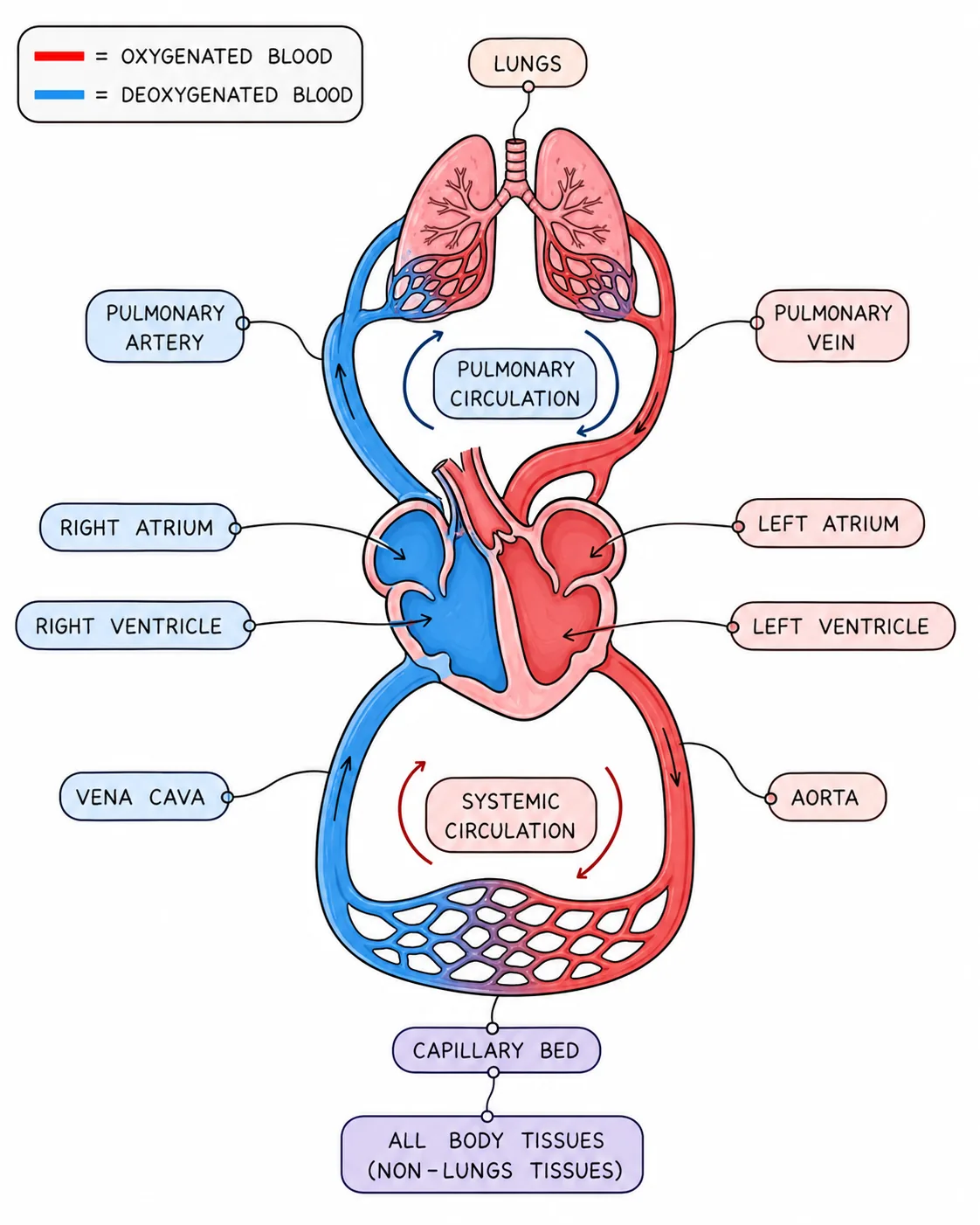
Four-chambered heart, blood passes through twice per circuit
Right side: pulmonary circuit
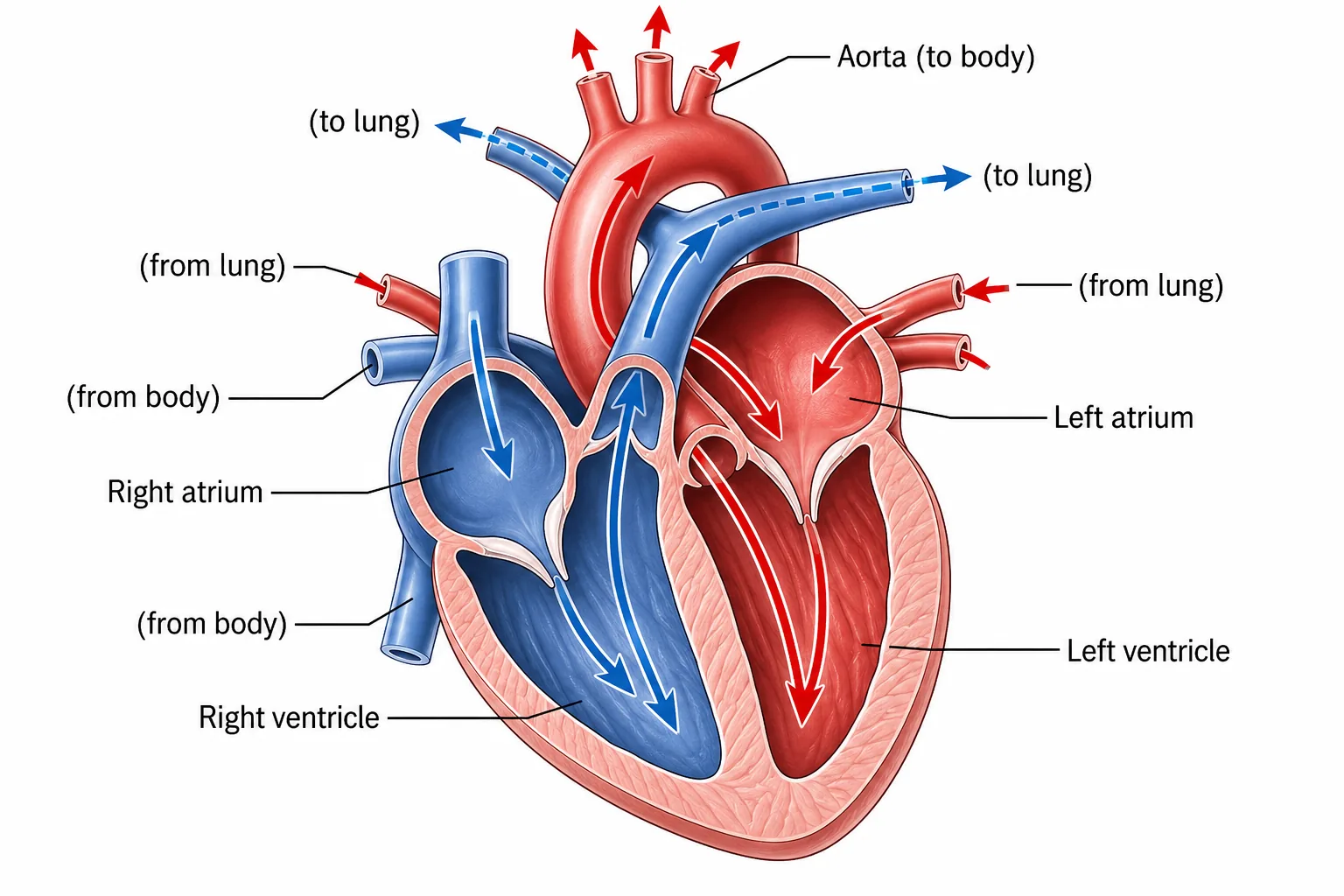
- Right side: pulmonary circuit The right side receives deoxygenated blood from the body and pumps it to the lungs, where it picks up oxygen.
Left side: systemic circuit
- Left side: systemic circuit The left side receives oxygenated blood from the lungs and pumps it round the body.
Two trips through the heart
- Two trips through the heart For every full circuit of the body, blood passes through the heart twice: once on the way to the lungs and once on the way to the body.
Separation of blood
- Separation of blood A wall of muscle between the two sides keeps oxygenated and deoxygenated blood from mixing.
Section 3 of 6Why double circulation is an advantage (Extended tier only)





1
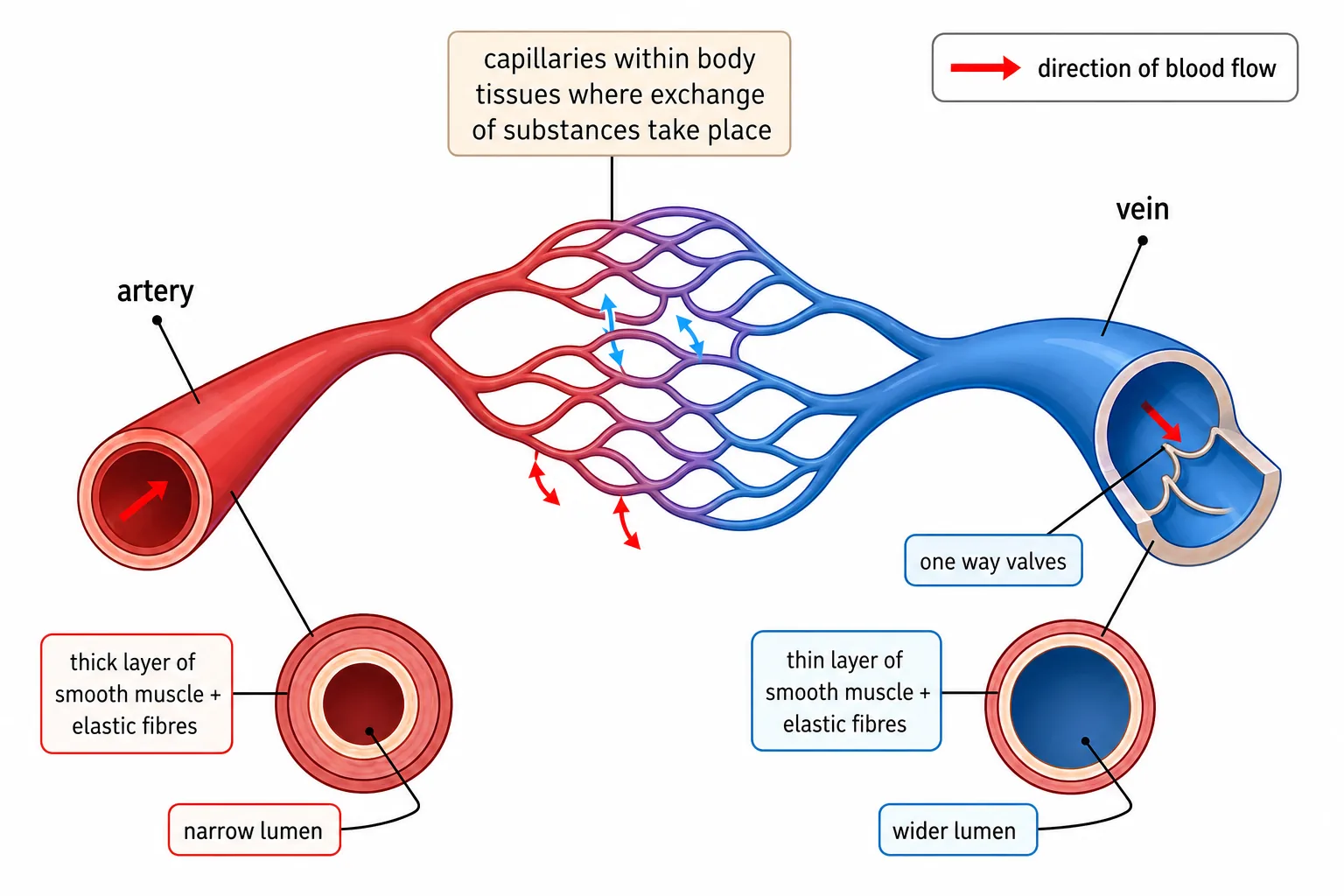
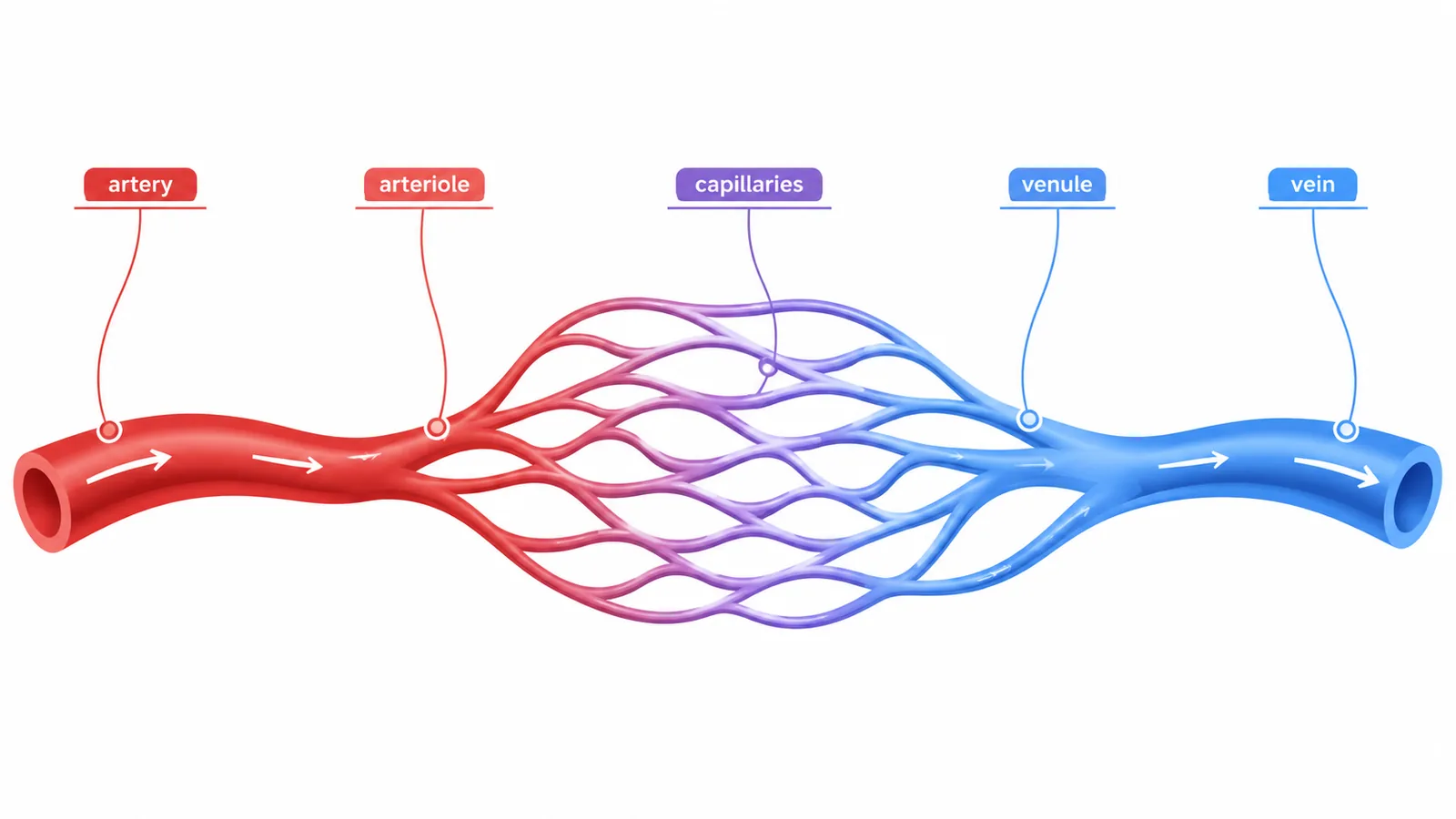
When blood is pumped through the tiny capillaries of the lungs, it has to squeeze through very narrow vessels.
2
This causes a large drop in pressure, so the blood leaving the lungs slows down.
3
In a double circulation the blood returns to the heart straight after the lungs.
4
The heart pumps it again, raising its pressure back up before it is sent to the body.
5
Blood therefore reaches the body tissues quickly, supplying oxygen and glucose for respiration faster and more often, which supports active, warm-blooded animals.
Section 4 of 6Comparison
| Feature | Fish | Mammals |
|---|---|---|
| Heart chambers | Two | Four |
| Type of circulation | Single | Double |
| Passes through heart per circuit | Once | Twice |
| Blood pressure to body tissues | Low, because pressure drops in the gill capillaries | High, because the heart raises pressure after the lungs |
| Mixing of oxygenated and deoxygenated blood | Not applicable, as one pump serves one circuit | Prevented by the septum |
Section 5 of 6Key terms
| Term | Meaning |
|---|---|
| Single circulation | A system in which blood passes through the heart once per complete circuit of the body. |
| Double circulation | A system in which blood passes through the heart twice per complete circuit. |
| Pulmonary circulation | The circuit carrying blood from the heart to the lungs and back. |
| Systemic circulation | The circuit carrying blood from the heart to the body and back. |
| Deoxygenated blood | Blood with a low oxygen content. |
Section 6 of 6Exam technique
1
Saying fish have a double circulation. They have a single circulation with a two-chambered heart.
2
Mixing up which side does which
- the right side pumps to the lungs;
- the left side pumps to the body.
3
Explaining the advantage as 'more oxygen'. The real advantage is that pressure is restored, so blood reaches the body faster.
4
Saying that blood goes round the body twice. It passes through the heart twice, once in each circuit.