Section 1 of 6Reading a heart diagram
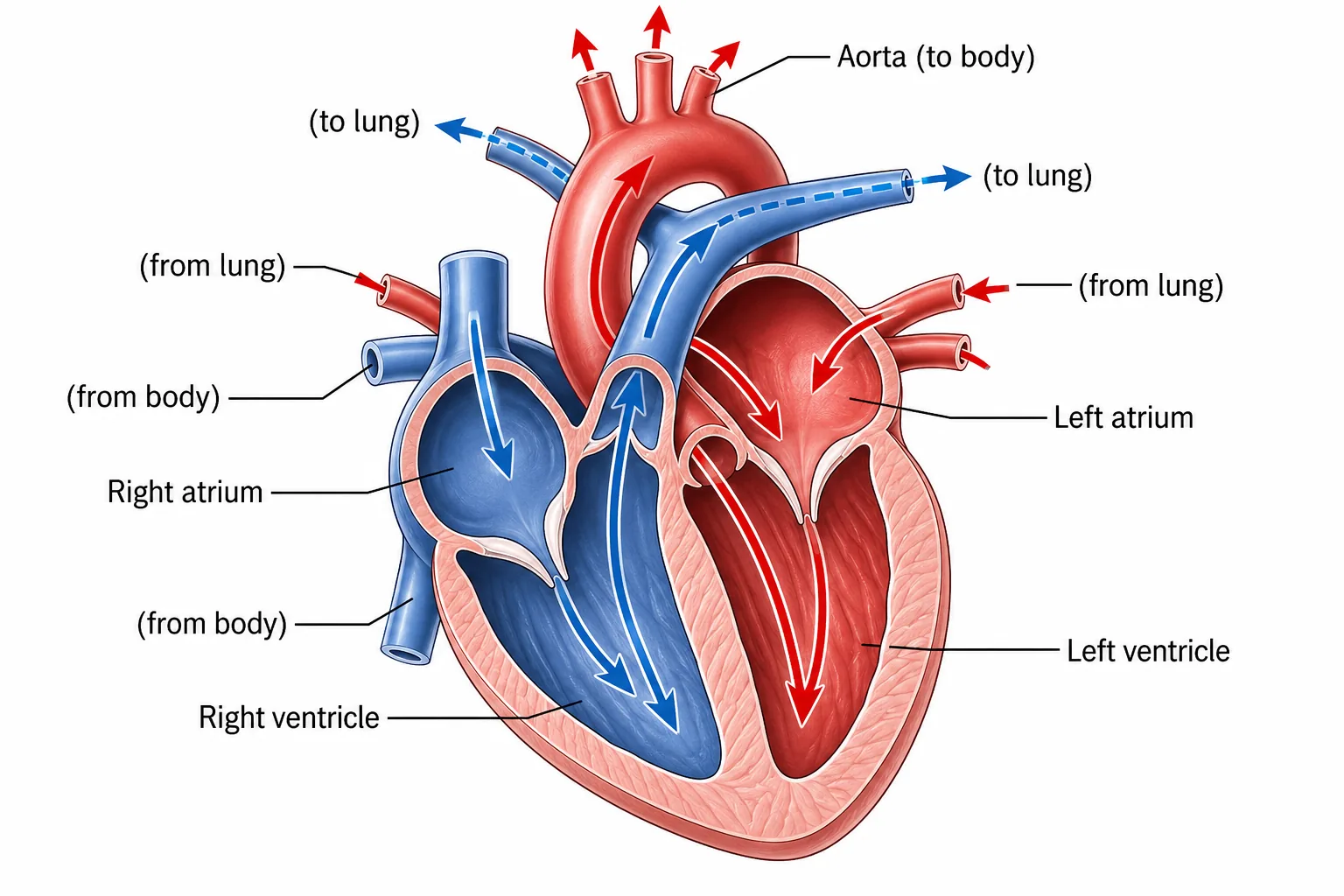
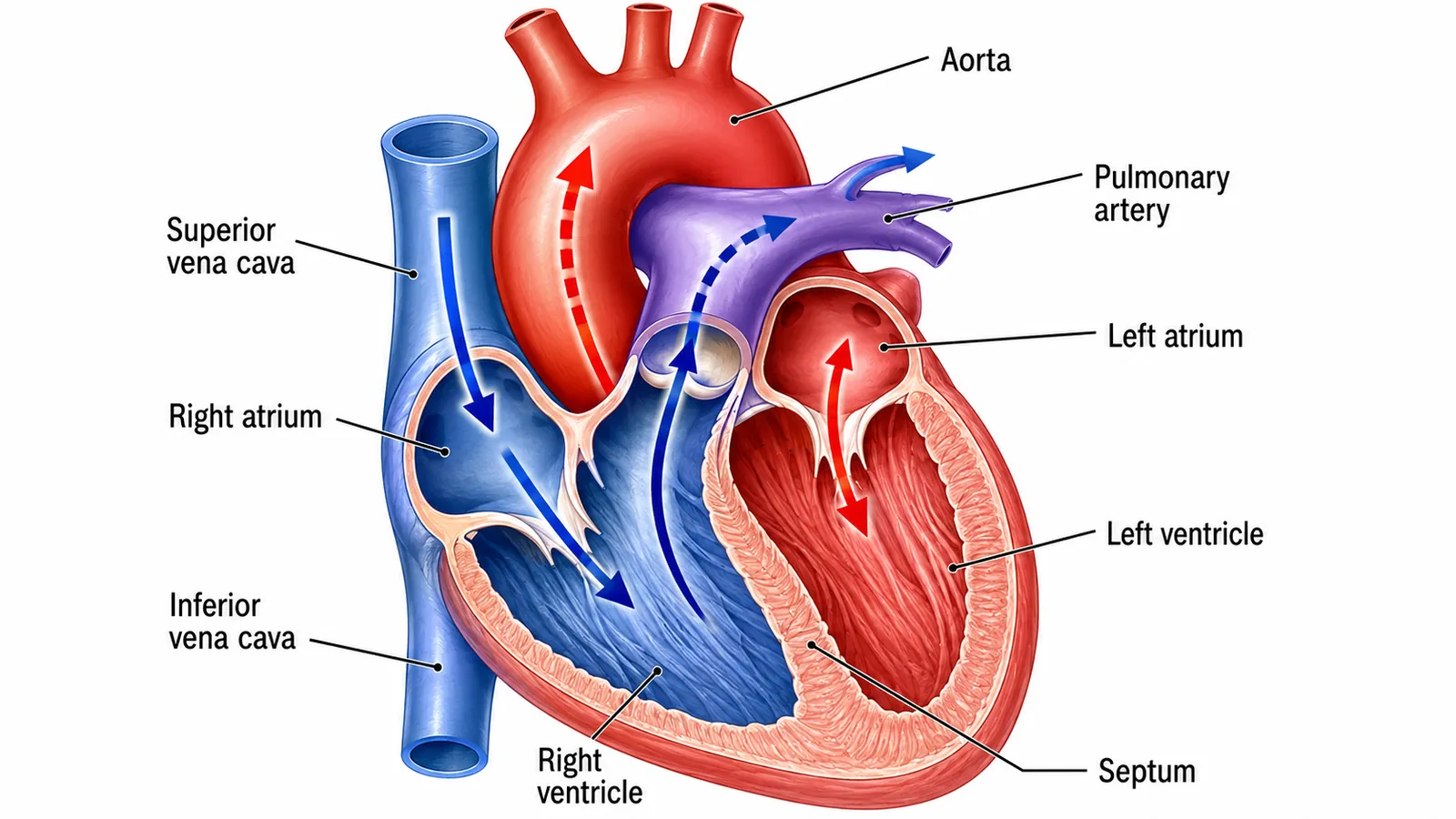
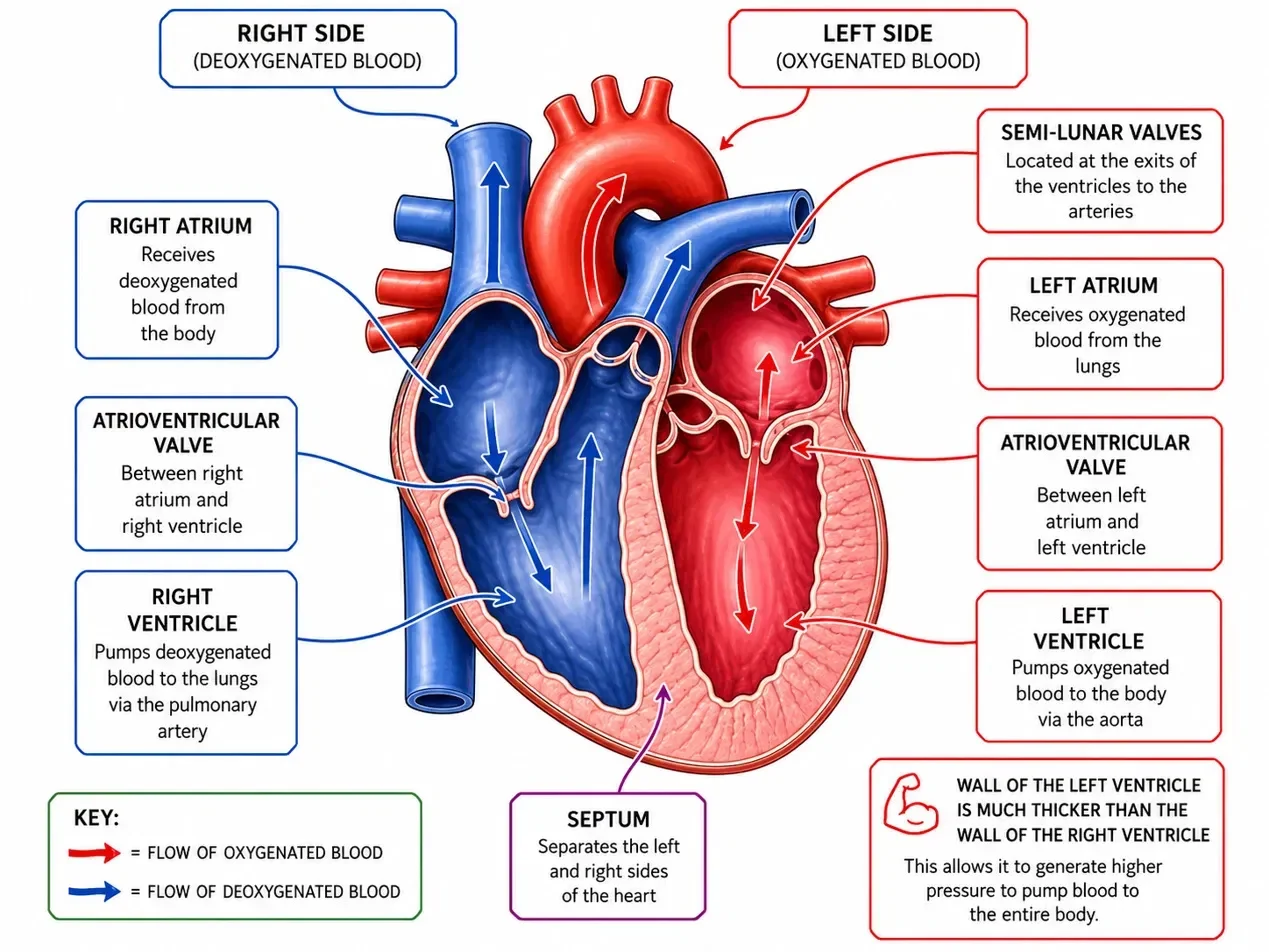
Left and right are reversed
- Left and right are reversed A heart diagram is drawn as if you were looking at someone's chest,
- so the left of the picture is the heart's right side,
- and vice versa.
Four chambers
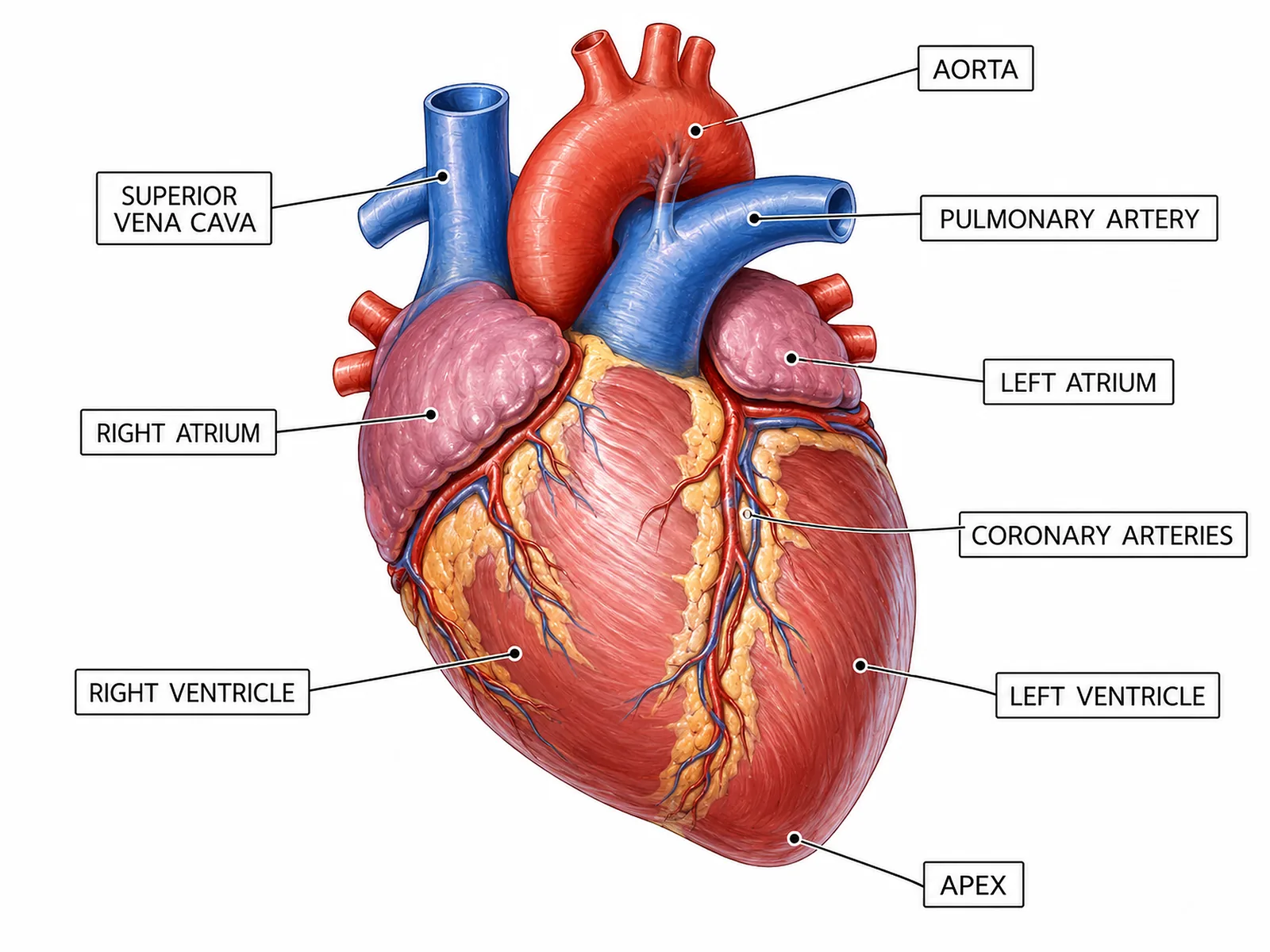
- Four chambers The two upper chambers are the atria, which receive blood.
- The two lower chambers are the ventricles, which pump blood out.
The septum
- The septum A muscular wall called the septum divides the right side from the left side, so oxygenated and deoxygenated blood stay separate.
Thickness of walls
- Thickness of walls The left ventricle has a thicker wall than the right because it pumps blood all the way round the body, rather than just to the nearby lungs.
Section 2 of 6The two sides of the heart

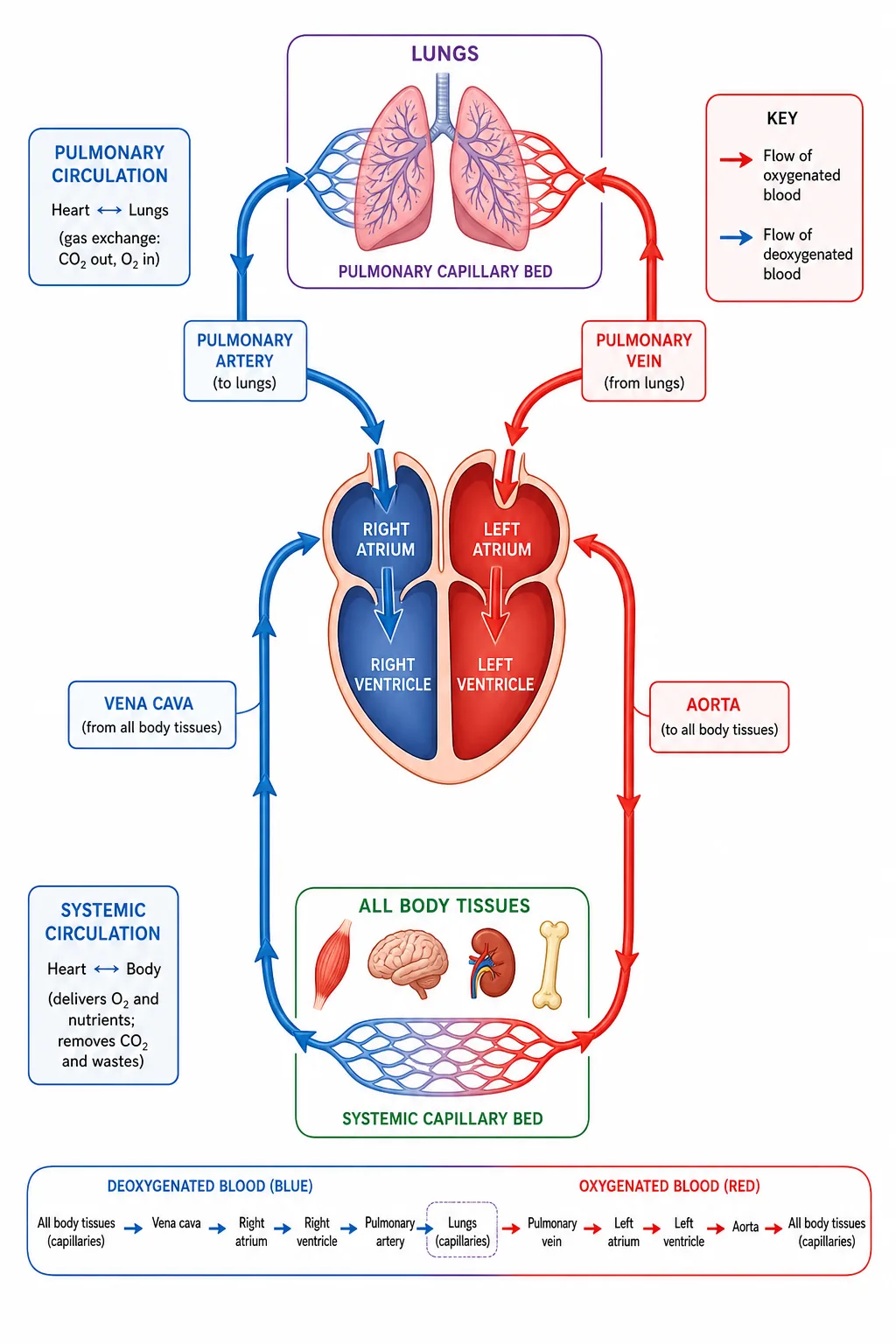


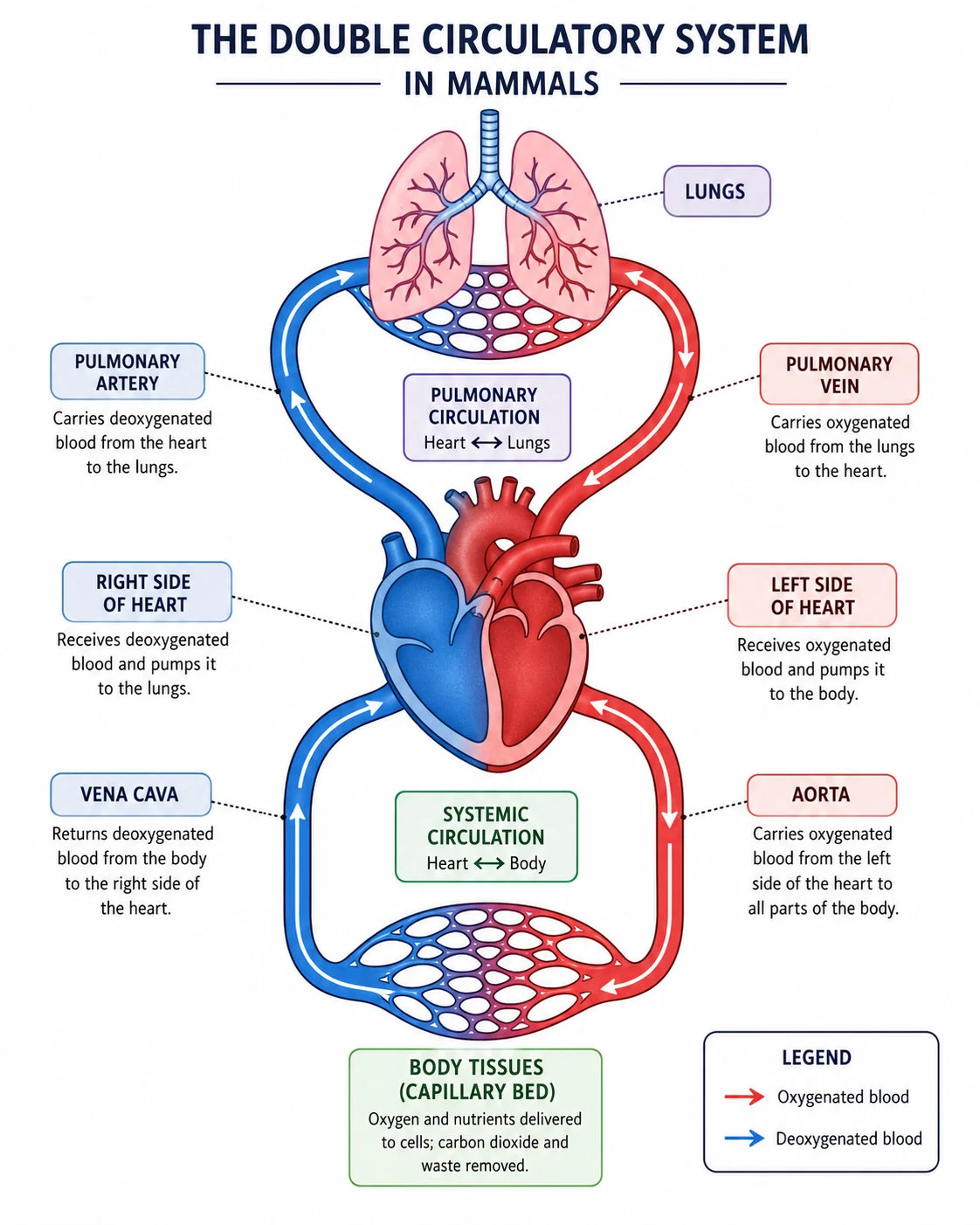
| Feature | Right side | Left side |
|---|---|---|
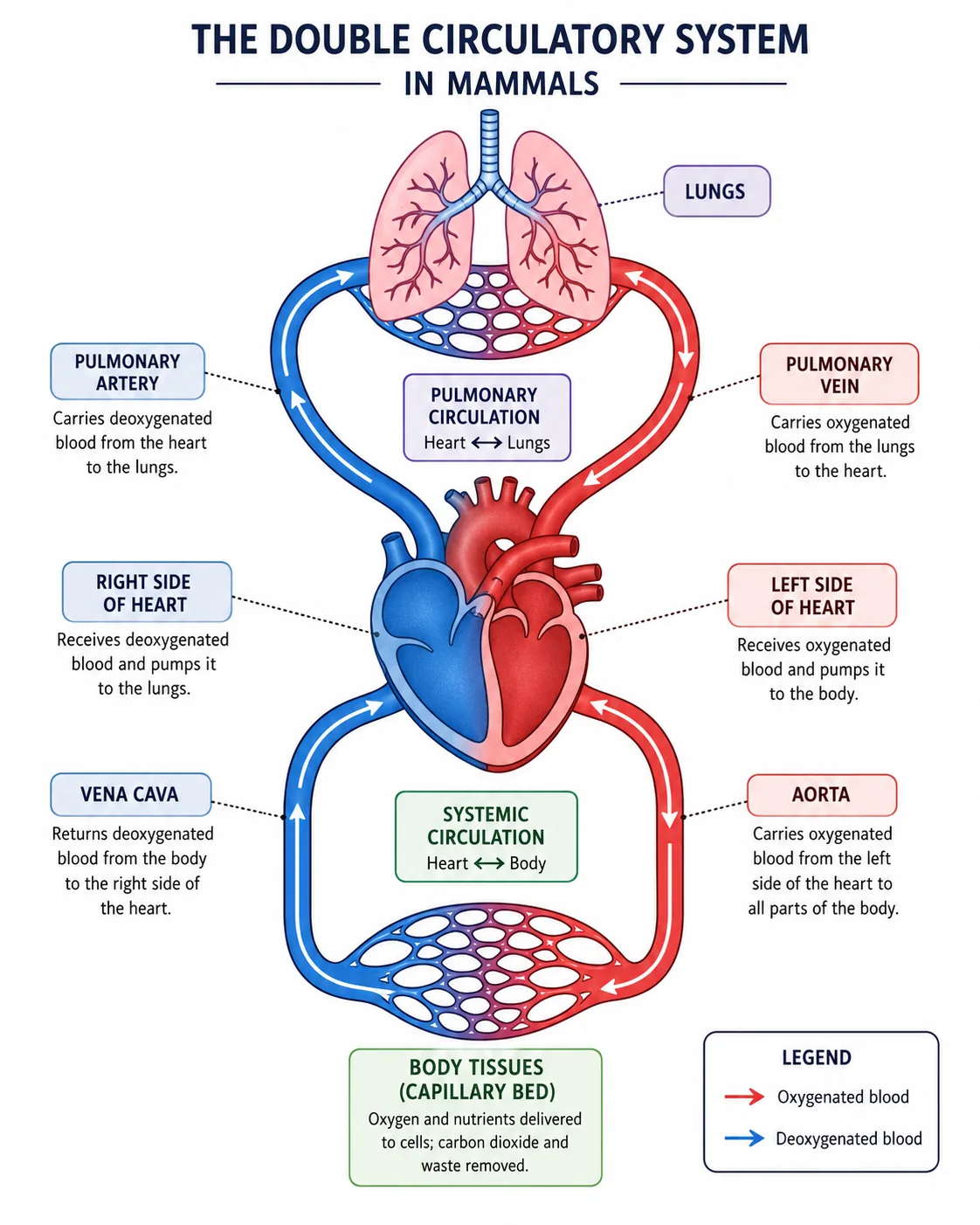
| Blood received | Deoxygenated blood from the body, via the vena cava | Oxygenated blood from the lungs, via the pulmonary vein |
| Blood pumped to | The lungs, via the pulmonary artery | The whole body, via the aorta |
| Ventricle wall | Thinner muscle | Thicker muscle |
| Circulation served | Pulmonary | Systemic |
Section 3 of 6Route of blood through the heart


1Body to right atrium
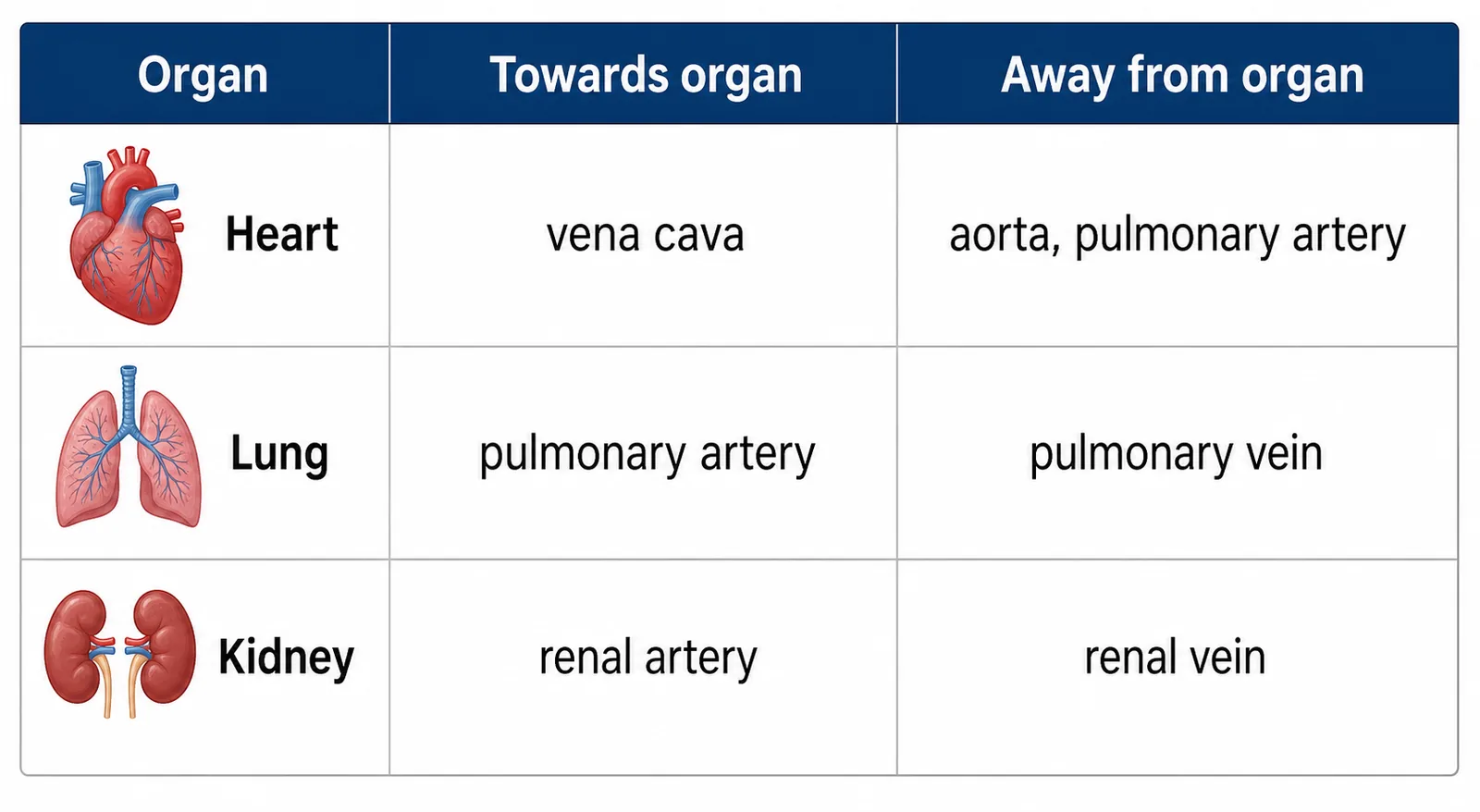
- Body to right atrium Deoxygenated blood enters through the vena cava.
2Right ventricle to lungs
- Right ventricle to lungs Blood moves down into the right ventricle, which pumps it out through the pulmonary artery.
3Lungs to left atrium
- Lungs to left atrium Oxygenated blood returns through the pulmonary vein.
4Left ventricle to body
- Left ventricle to body Blood passes into the left ventricle, which pumps it out through the aorta.
Section 4 of 6Vessels and valves





Heart and connecting vessels
Arteries
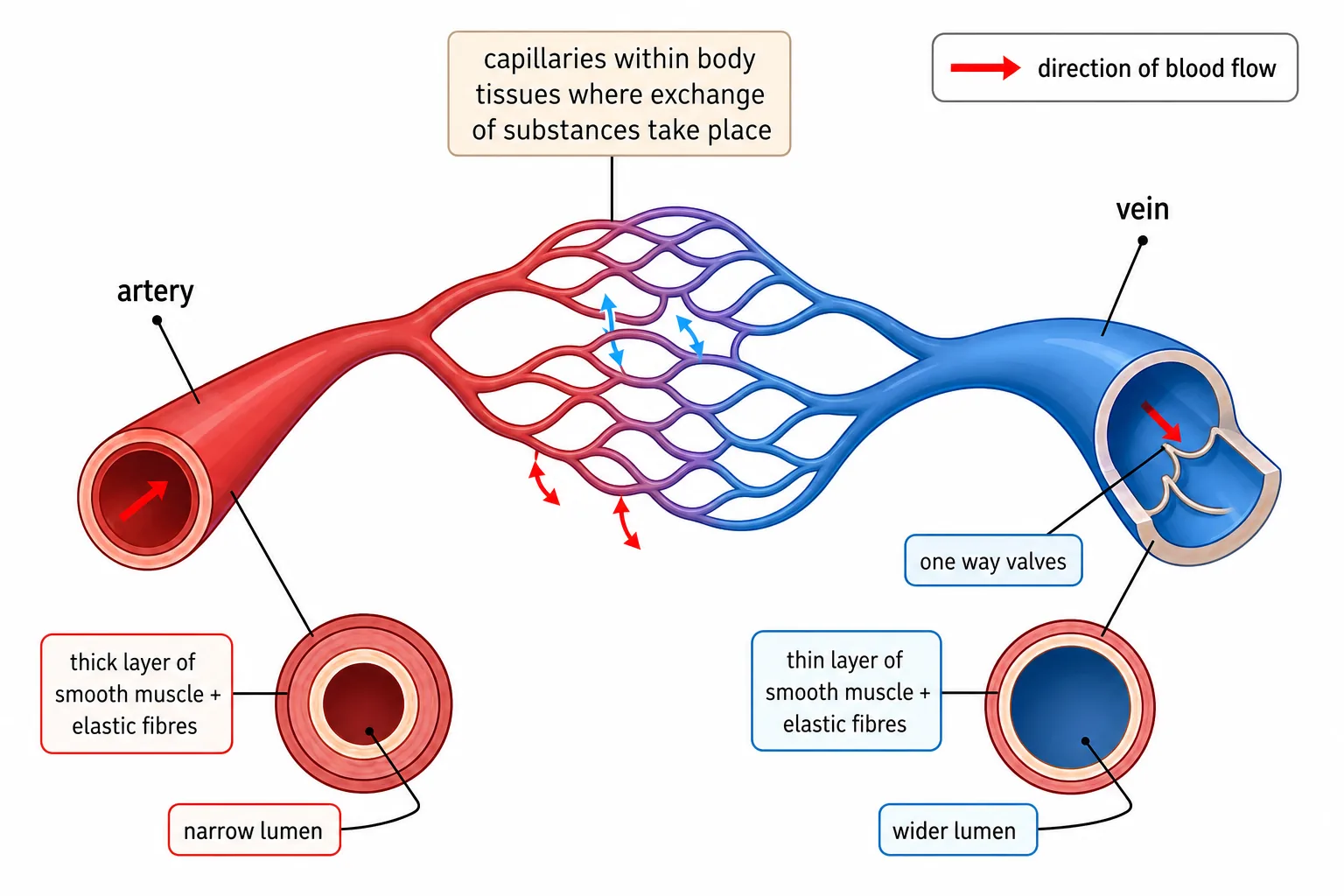
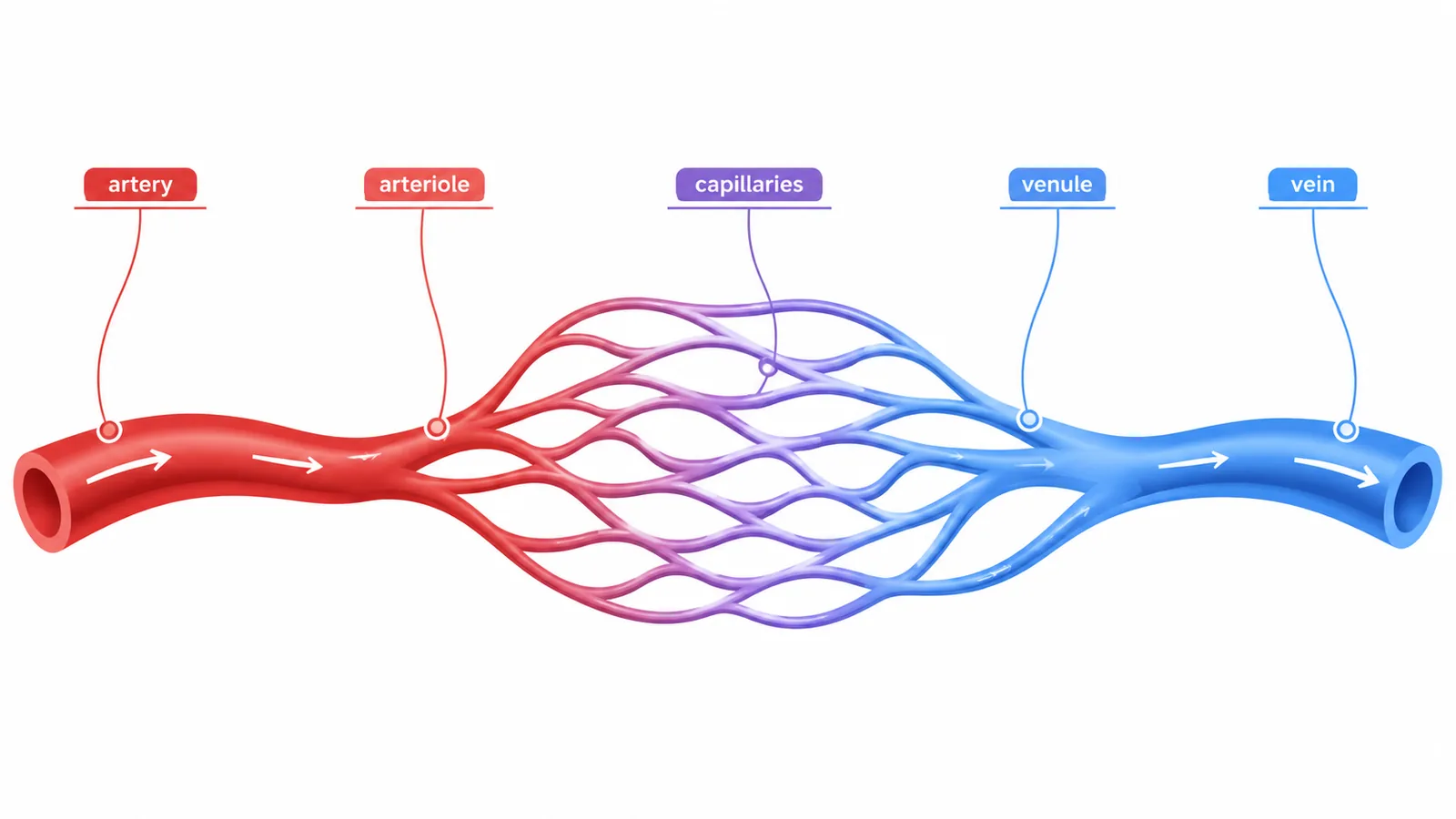
- Arteries Carry blood away from the heart. A memory aid is A for Artery and A for Away.
Veins
- Veins Carry blood towards the heart.
Valves
- Valves Valves between atria and ventricles and in the exits from the ventricles prevent backflow, keeping blood moving in one direction.
Coronary arteries
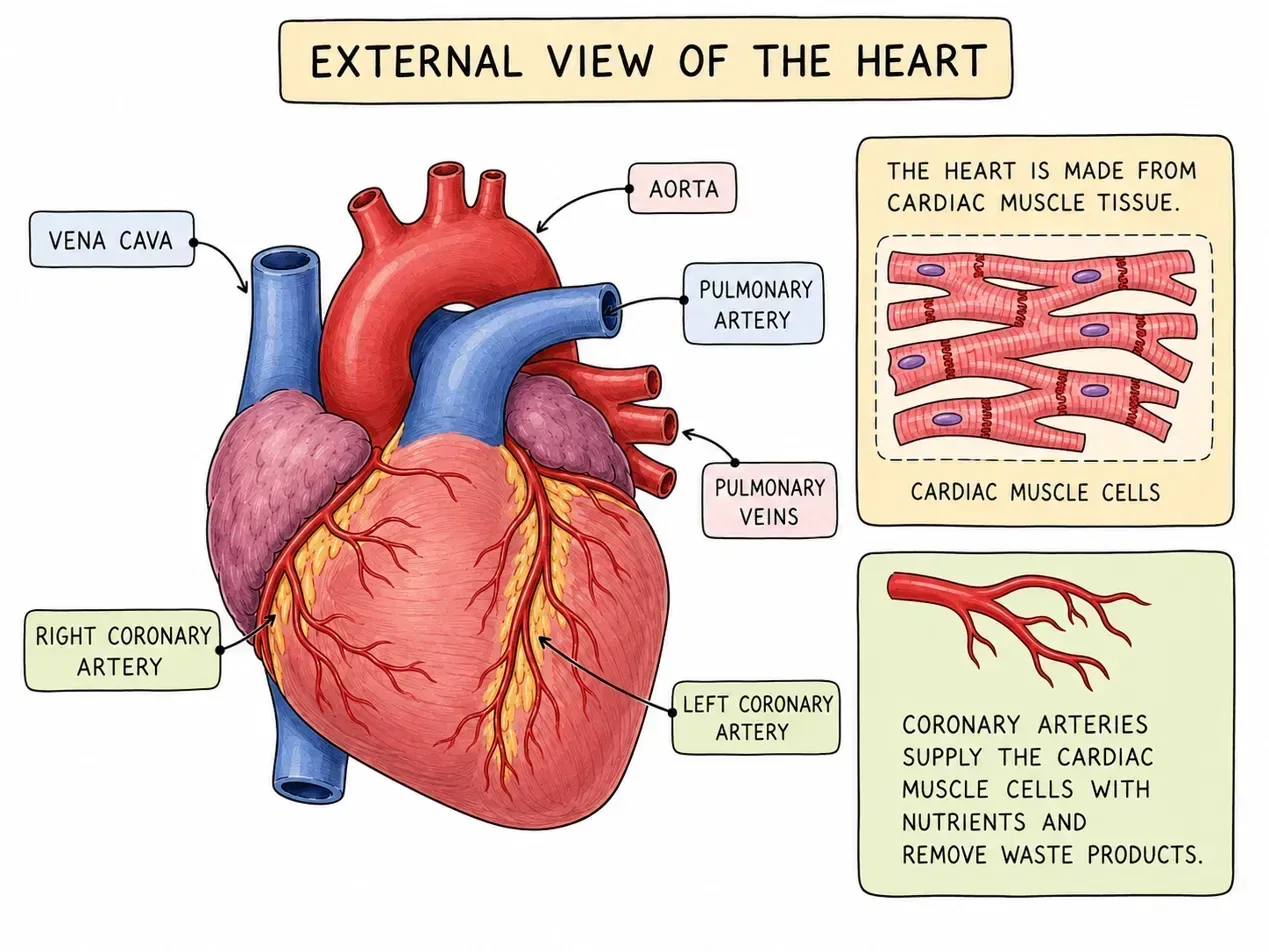
- Coronary arteries These vessels run over the surface of the heart and supply the heart muscle with oxygen and glucose.
- If one is blocked, part of the muscle can be damaged.
Section 5 of 6Key terms
| Term | Meaning |
|---|---|
| Atrium | An upper chamber of the heart that receives blood. |
| Ventricle | A lower chamber of the heart that pumps blood out. |
| Septum | The muscular wall that separates the left and right sides of the heart. |
| Coronary arteries | Blood vessels that supply the heart muscle itself with blood. |
| Aorta | The main artery carrying oxygenated blood from the left ventricle to the body. |
| Valve | A flap that stops blood flowing backwards. |
Section 6 of 6Exam technique
1
Labelling the left side of the picture as the left side of the heart. Diagrams are drawn from the patient's point of view, so it is reversed.
2
Saying that arteries always carry oxygenated blood. The pulmonary artery carries deoxygenated blood to the lungs.
3
Saying that the heart gets its oxygen from the blood inside its chambers. It is supplied by the coronary arteries.
4
Forgetting that the left ventricle is thicker because it pumps blood at higher pressure round the body.