Section 1 of 6The heart needs its own blood supply




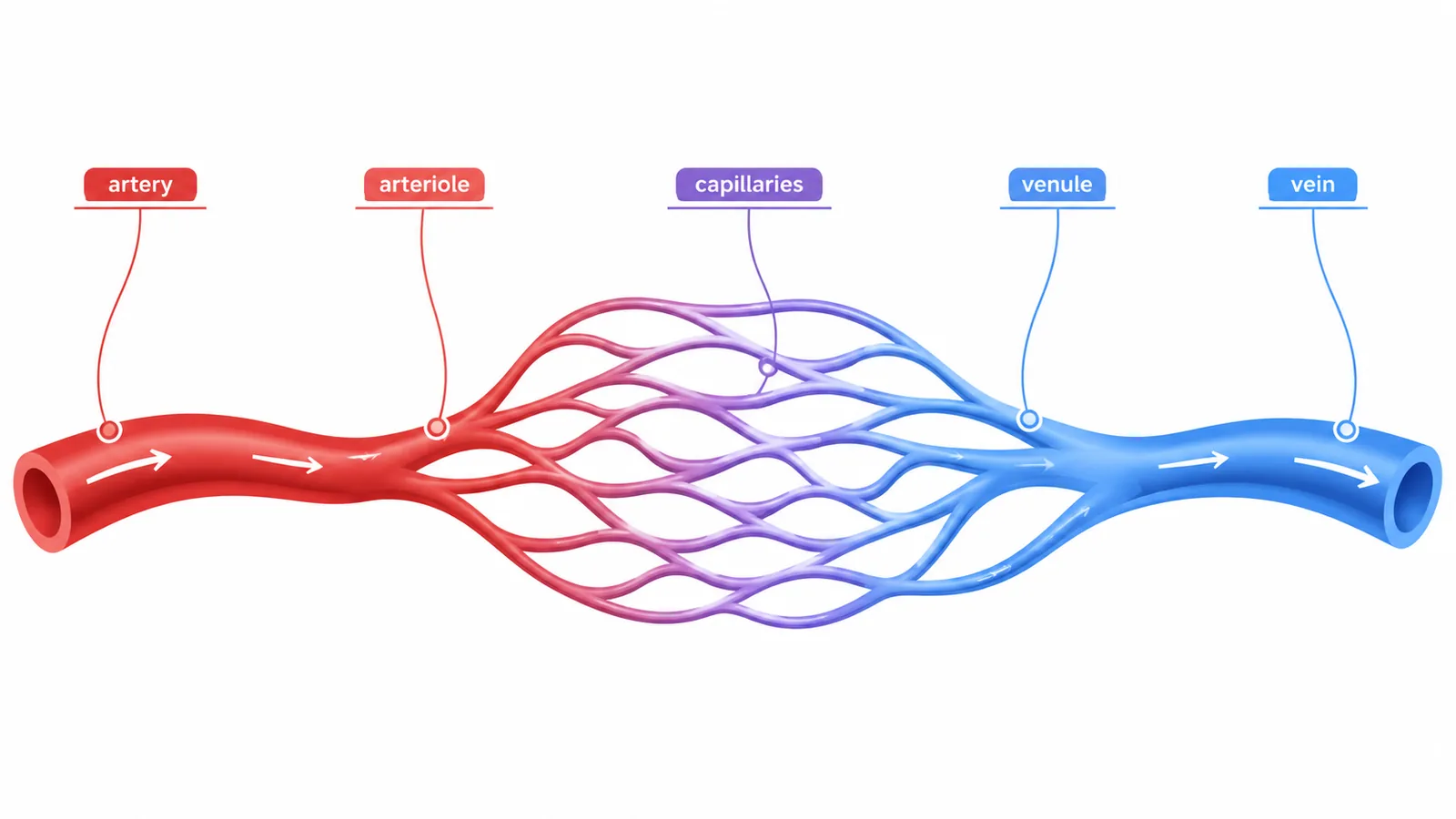

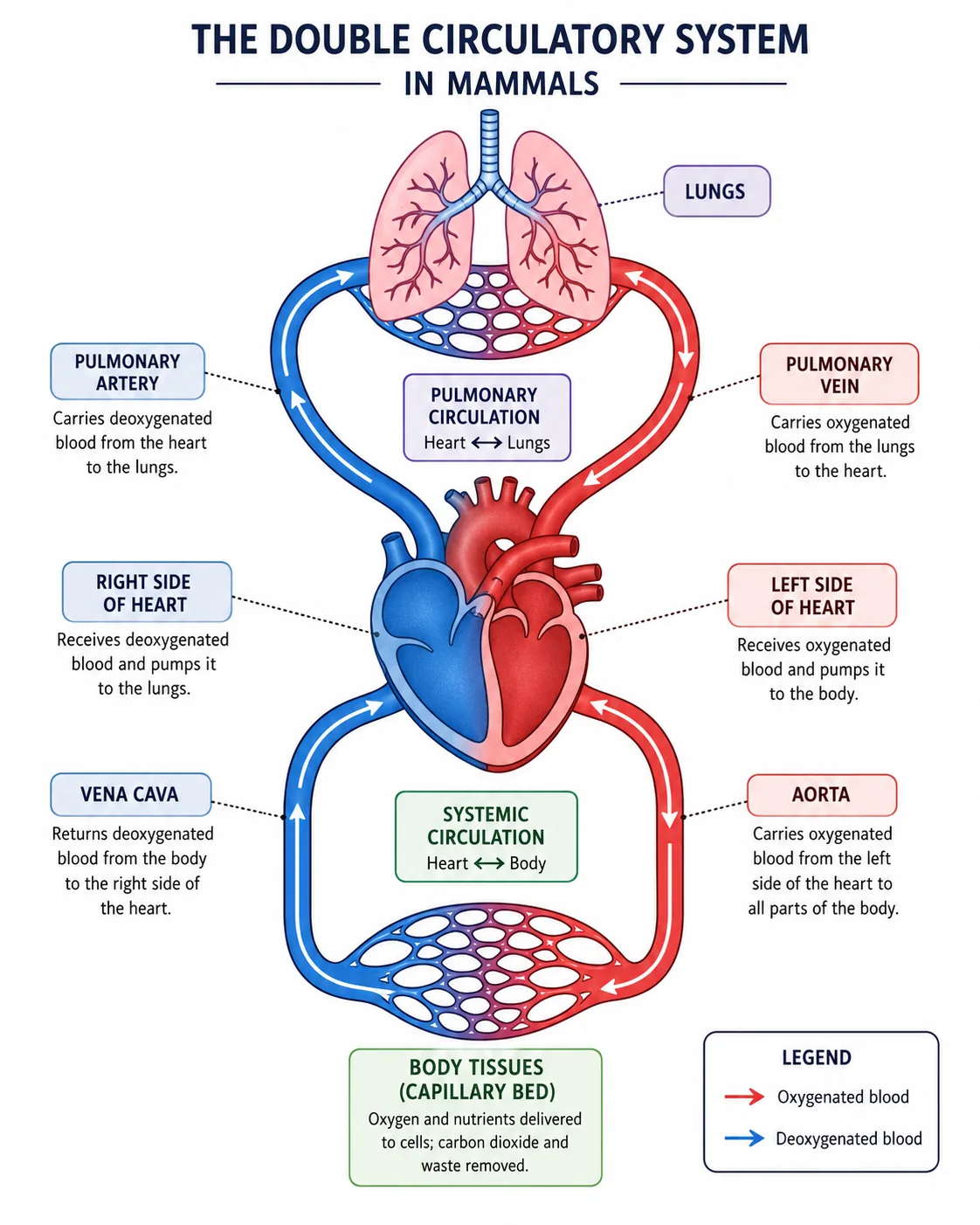


Cardiac muscle
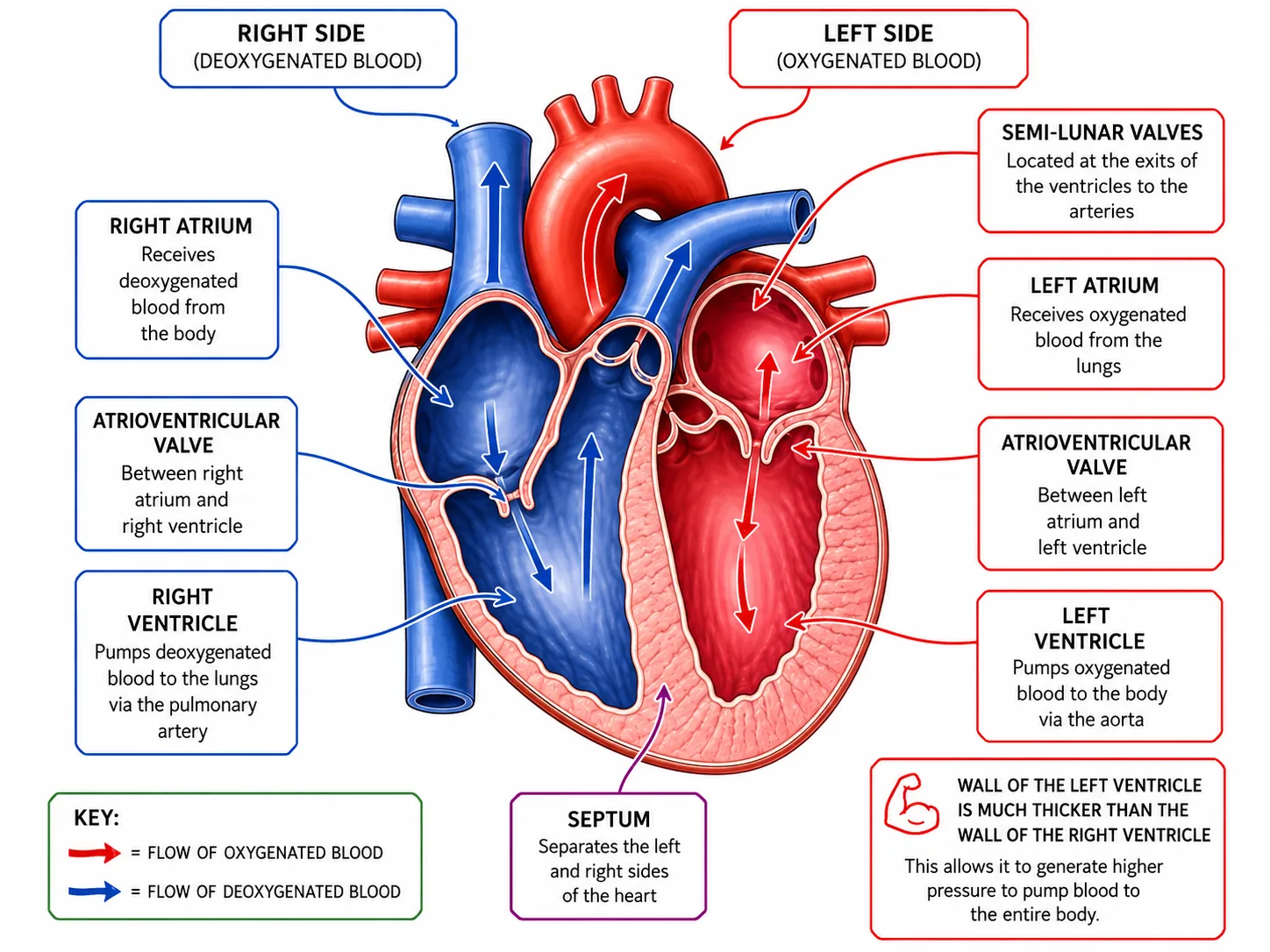
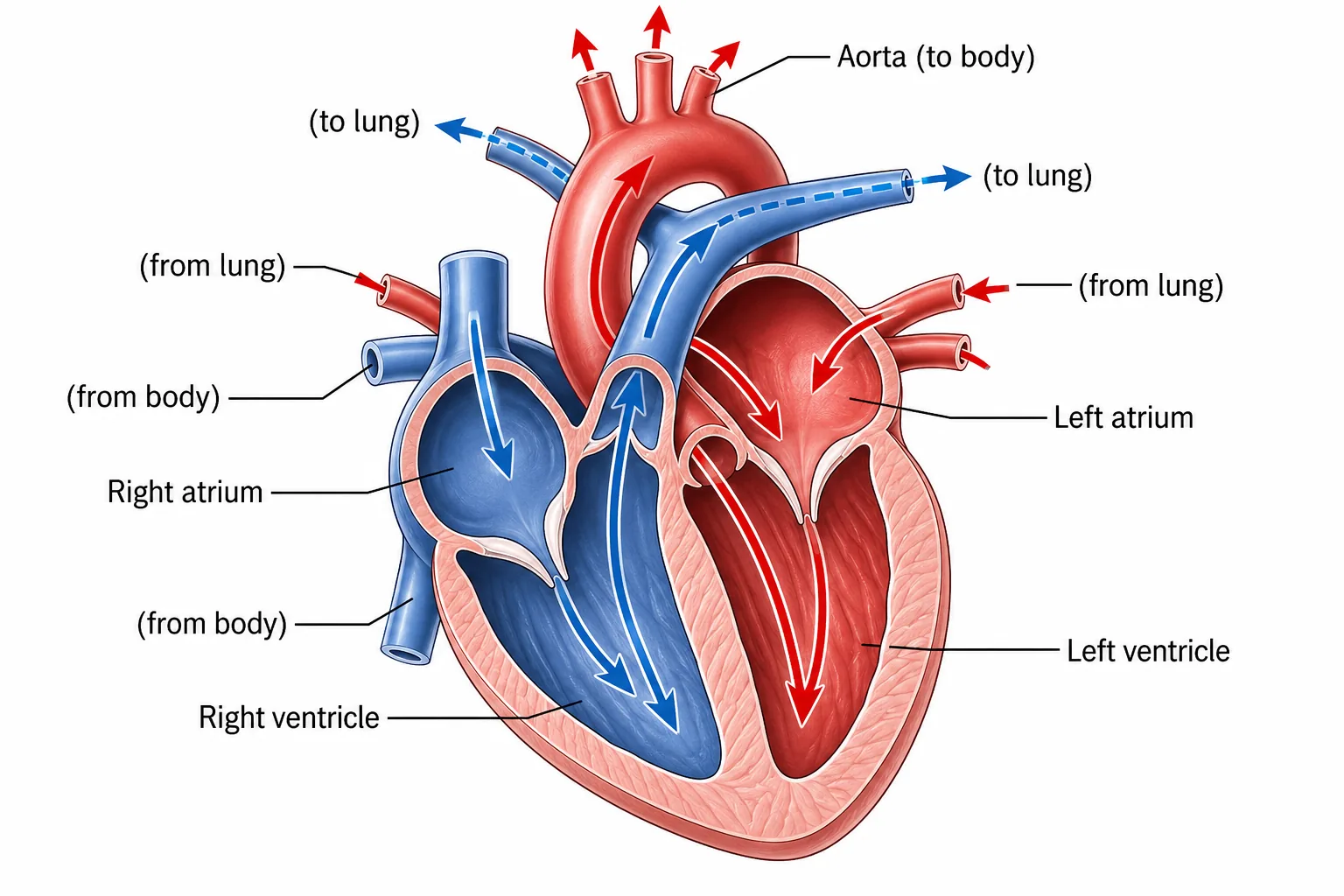
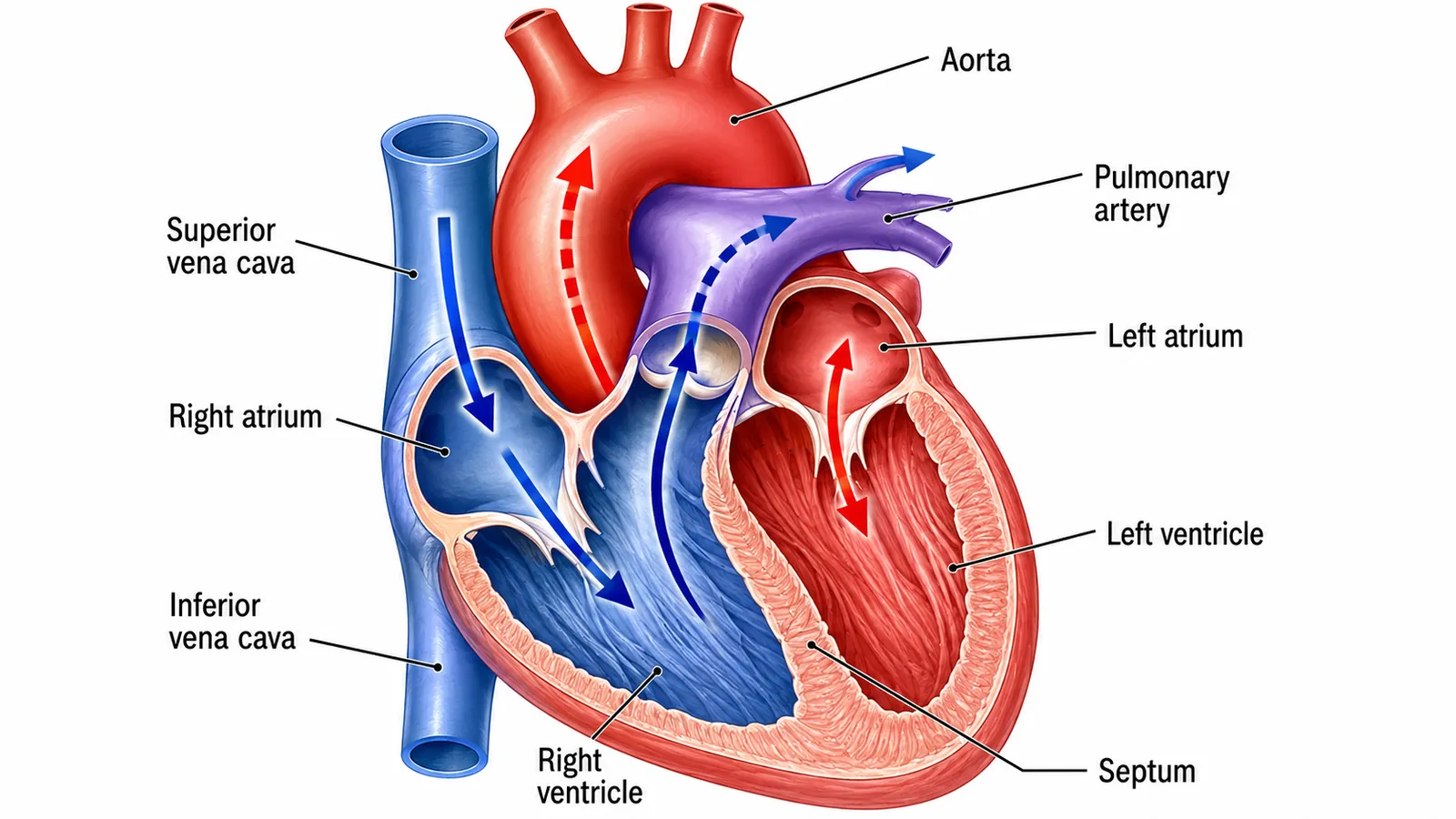
- Cardiac muscle The wall of the heart is made of muscle that contracts non-stop throughout life, so its cells respire constantly.
- Blood inside the chambers cannot supply these cells quickly enough, so the muscle has its own blood vessels.
Coronary arteries
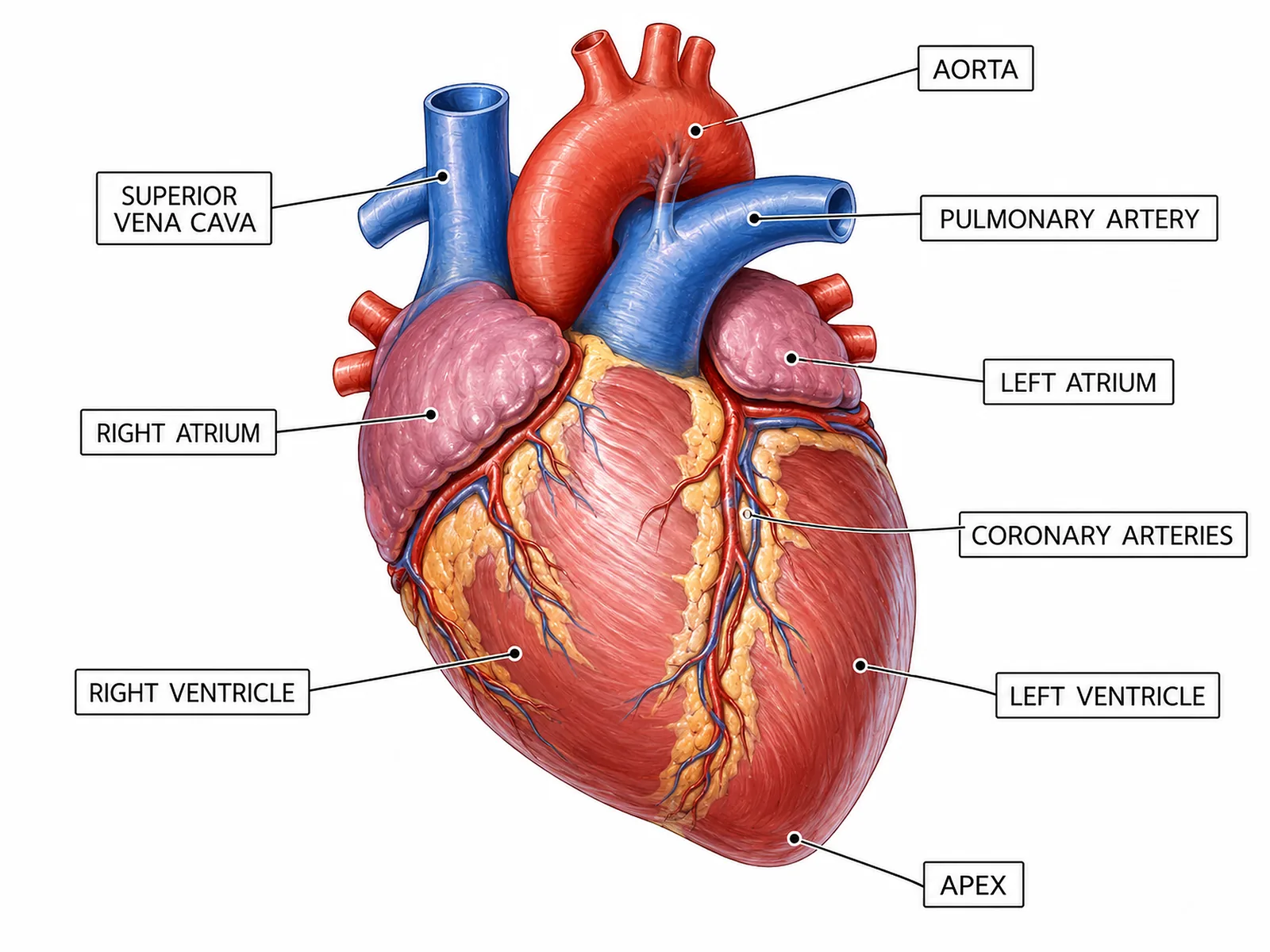
- Coronary arteries The coronary arteries branch from the aorta and run over the surface of the heart.
- They deliver oxygen and glucose to the muscle cells and carry away carbon dioxide and other wastes.
Section 2 of 6How the disease develops




1Fatty deposits form
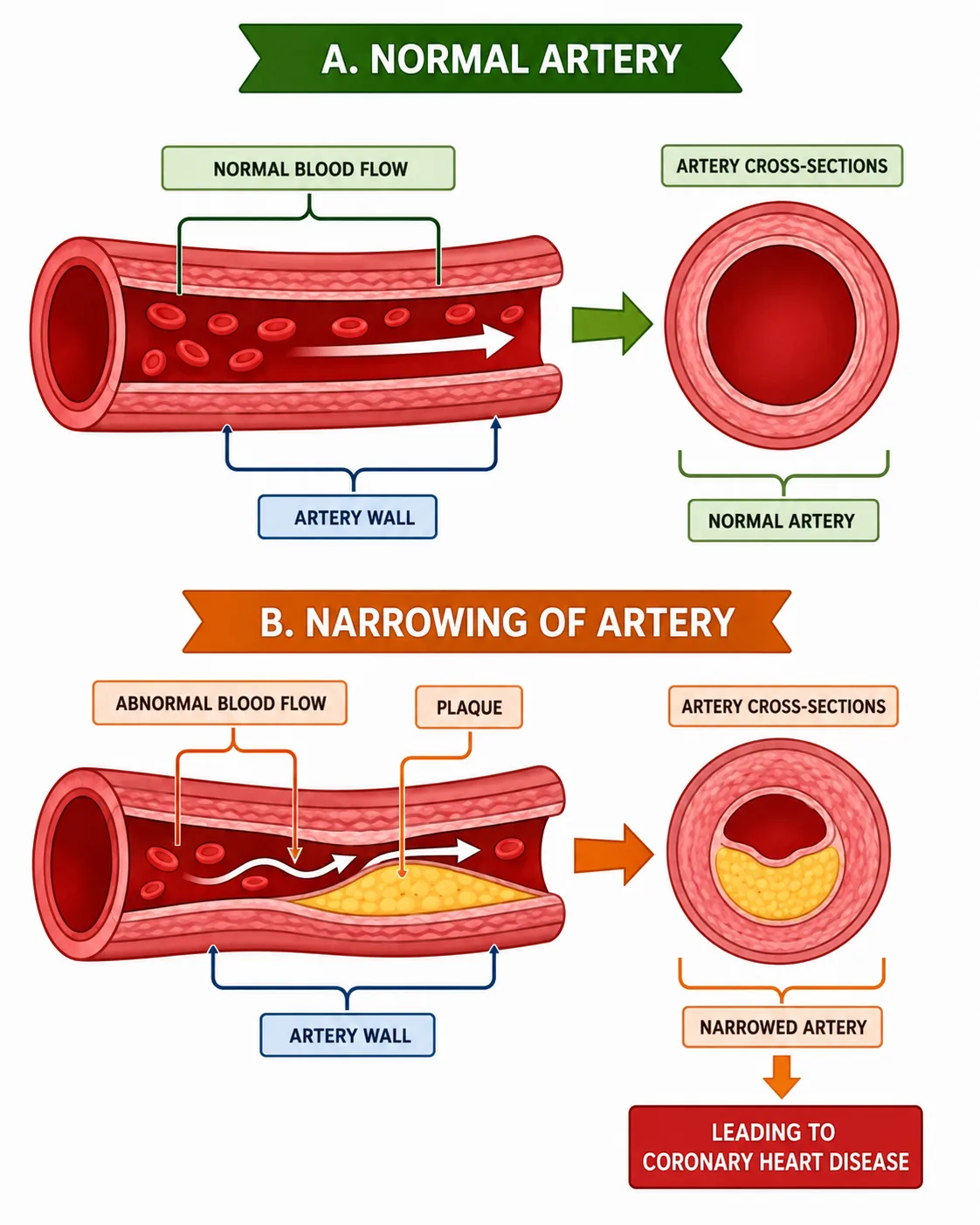
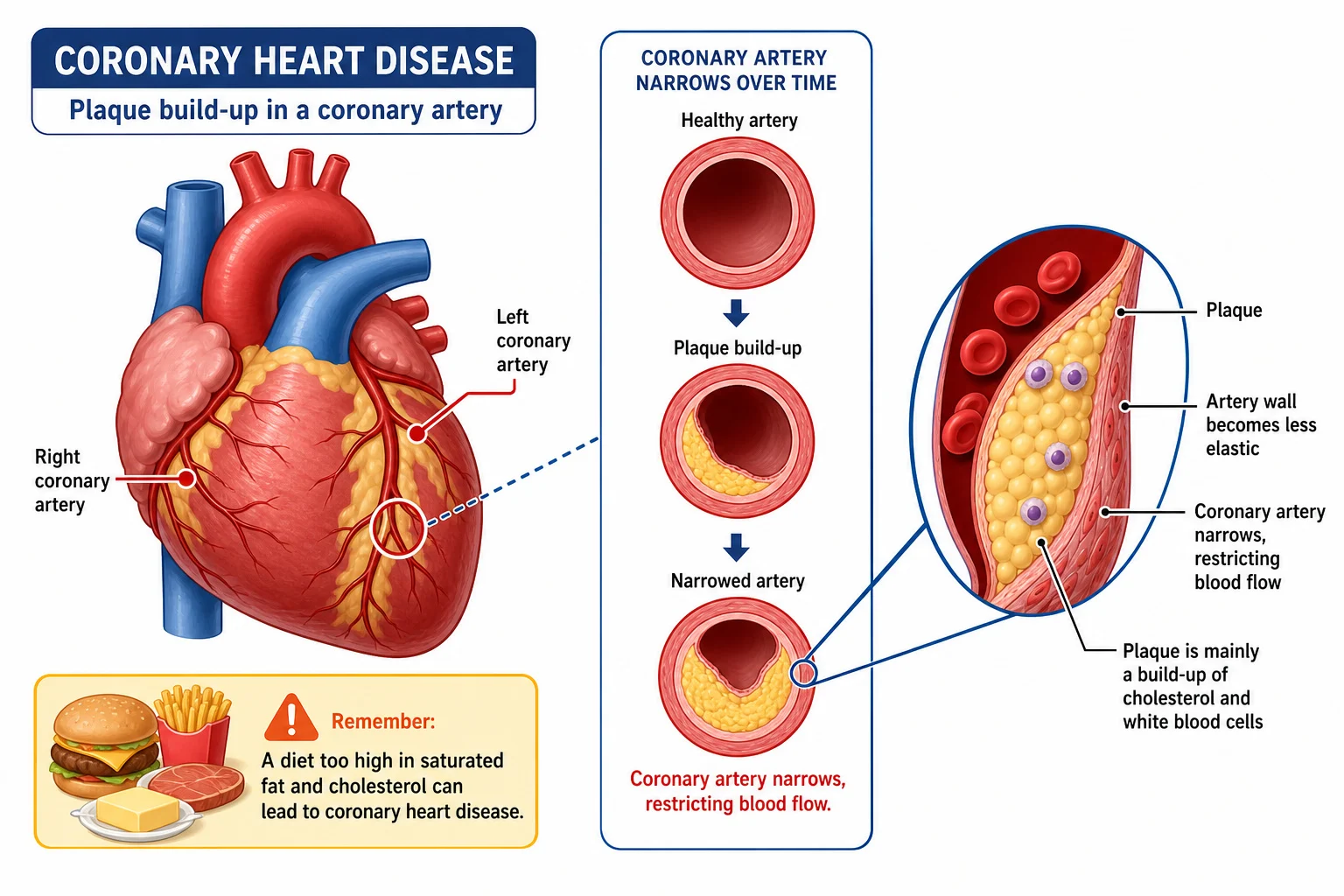
- Fatty deposits form Cholesterol and other fatty material build up in the artery wall as plaques.
2The artery narrows
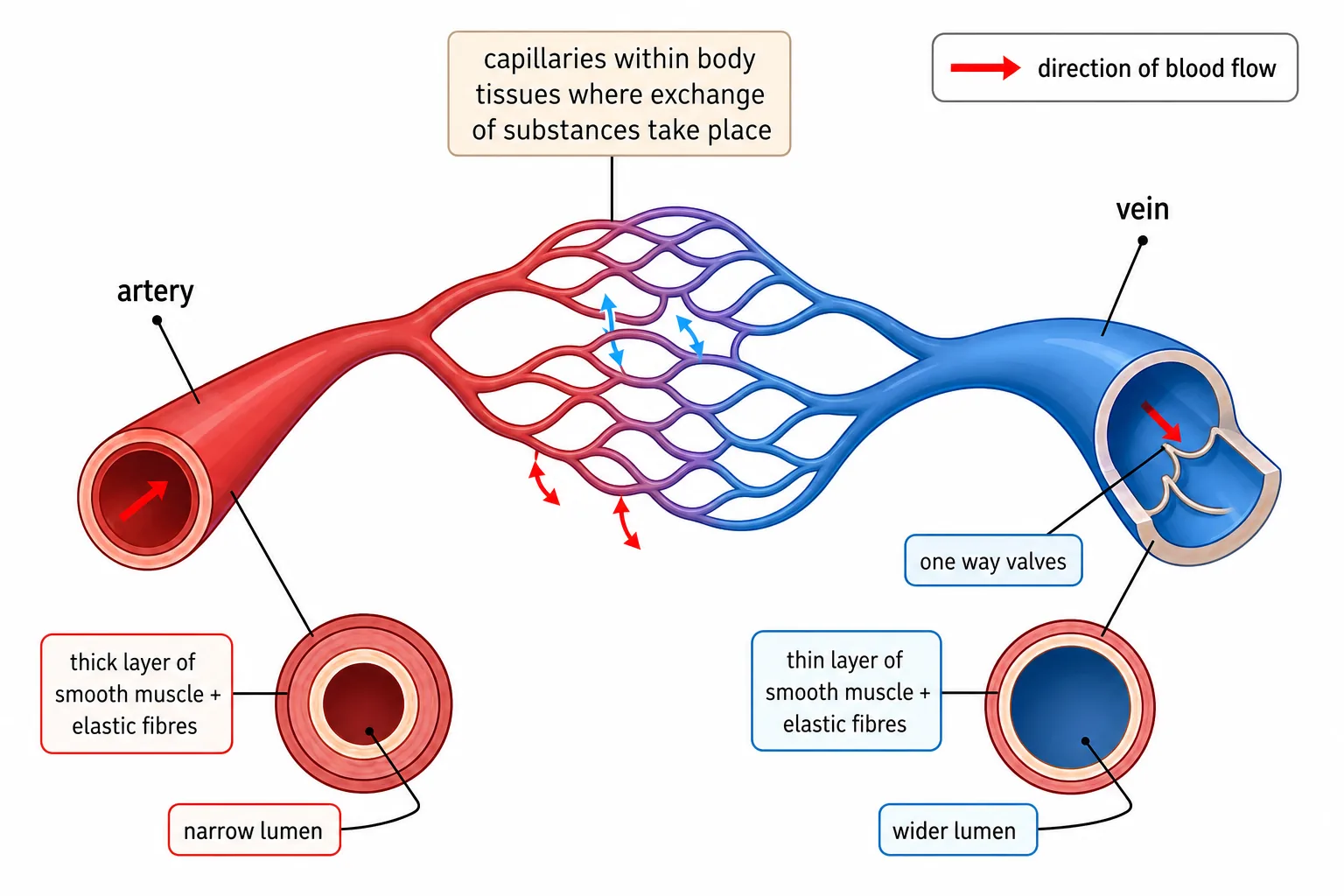
- The artery narrows The lumen gets smaller and the wall becomes stiff, so it cannot stretch properly as blood is forced through.
3Blood flow is reduced
- Blood flow is reduced Less oxygen and glucose reach the heart muscle, so less aerobic respiration can take place.
4Symptoms appear
- Symptoms appear Partial blockage can cause severe chest pain known as angina, especially during exertion.
5Complete blockage
- Complete blockage If a coronary artery is completely blocked, the muscle cells it supplies cannot respire or contract.
- This is a heart attack.
Section 3 of 6Risk factors

| Risk factor | How it raises the risk |
|---|---|
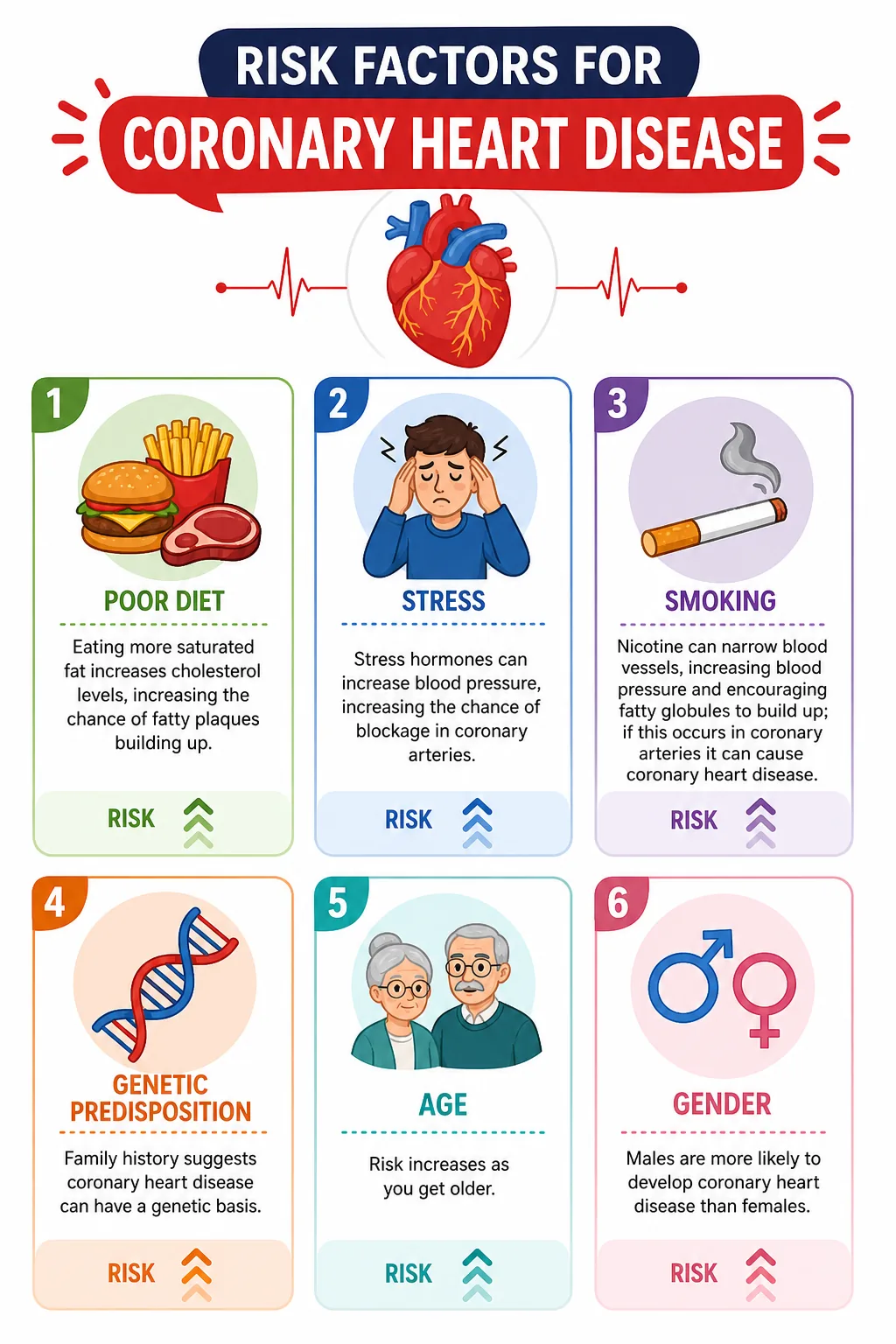
| Diet high in saturated fat | Raises blood cholesterol, so more plaque forms in the arteries. |
| Smoking | Chemicals damage artery walls and raise blood pressure, and carbon monoxide reduces the oxygen carried by the blood. |
| Lack of exercise | Contributes to weight gain, high blood pressure and higher cholesterol. |
| High blood pressure | Puts extra strain on artery walls and encourages damage and plaque formation. |
| Stress | Can raise blood pressure and may lead to unhealthy habits such as smoking and poor diet. |
| Genetic inheritance and age | Some people inherit a tendency to high cholesterol, and risk rises with age; these cannot be changed. |
Section 4 of 6Reducing the risk

Lower the chance of CHD
Stop smoking
- Stop smoking Removes the damage to artery walls and allows the blood to carry more oxygen.
Healthier diet
- Healthier diet Eat less animal fat and more fruit and vegetables to reduce blood cholesterol and help control body mass.
Regular exercise
- Regular exercise Helps with weight loss, lowers blood pressure and cholesterol and can reduce stress.
Manage stress
- Manage stress Relaxation, enough sleep and a balanced lifestyle help blood pressure stay lower.
Section 5 of 6Key terms
| Term | Meaning |
|---|---|
| Coronary artery | A blood vessel that supplies the heart muscle itself with oxygenated blood. |
| Plaque | A fatty deposit, mainly cholesterol, that builds up inside the wall of an artery. |
| Angina | Severe chest pain caused by a restricted blood flow to part of the heart muscle. |
| Heart attack | Death of part of the heart muscle after its blood supply is completely blocked. |
| Cholesterol | A fatty substance in the blood that can be deposited in artery walls. |
| Risk factor | Something that increases the chance of developing a disease. |
Section 6 of 6Exam technique
1
Saying that the heart is supplied by the blood inside its chambers. The muscle is supplied by the coronary arteries.
2
Confusing the coronary arteries with the pulmonary artery or the aorta, which are different vessels.
3
Stating that a risk factor definitely causes the disease. It only increases the chance of getting it.
4
Writing that angina and a heart attack are the same. Angina is pain from reduced flow; a heart attack follows complete blockage.
5
Forgetting to link blocked arteries to less oxygen for respiration in the muscle cells.