Section 1 of 7Arteries and veins: the basic rule
Arteries
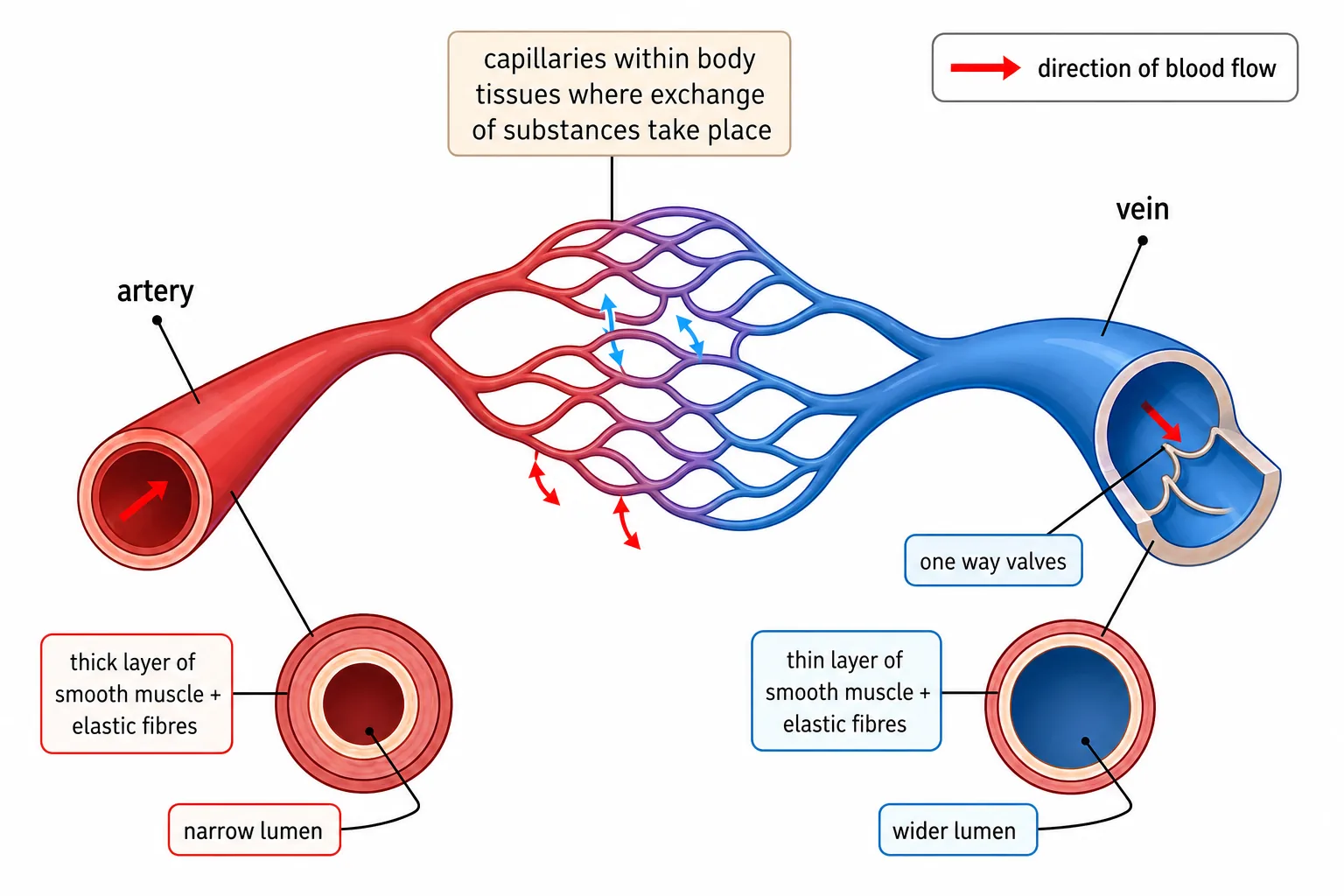
- Arteries Arteries carry blood away from the heart towards the organs.
- Most arteries carry oxygenated blood, but the pulmonary artery is an exception.
Veins
- Veins Veins carry blood towards the heart.
- Most veins carry deoxygenated blood, but the pulmonary vein is an exception.
Naming rule
- Naming rule The name depends on direction relative to the heart, never on the oxygen content of the blood.
Section 2 of 7The four vessels at the heart
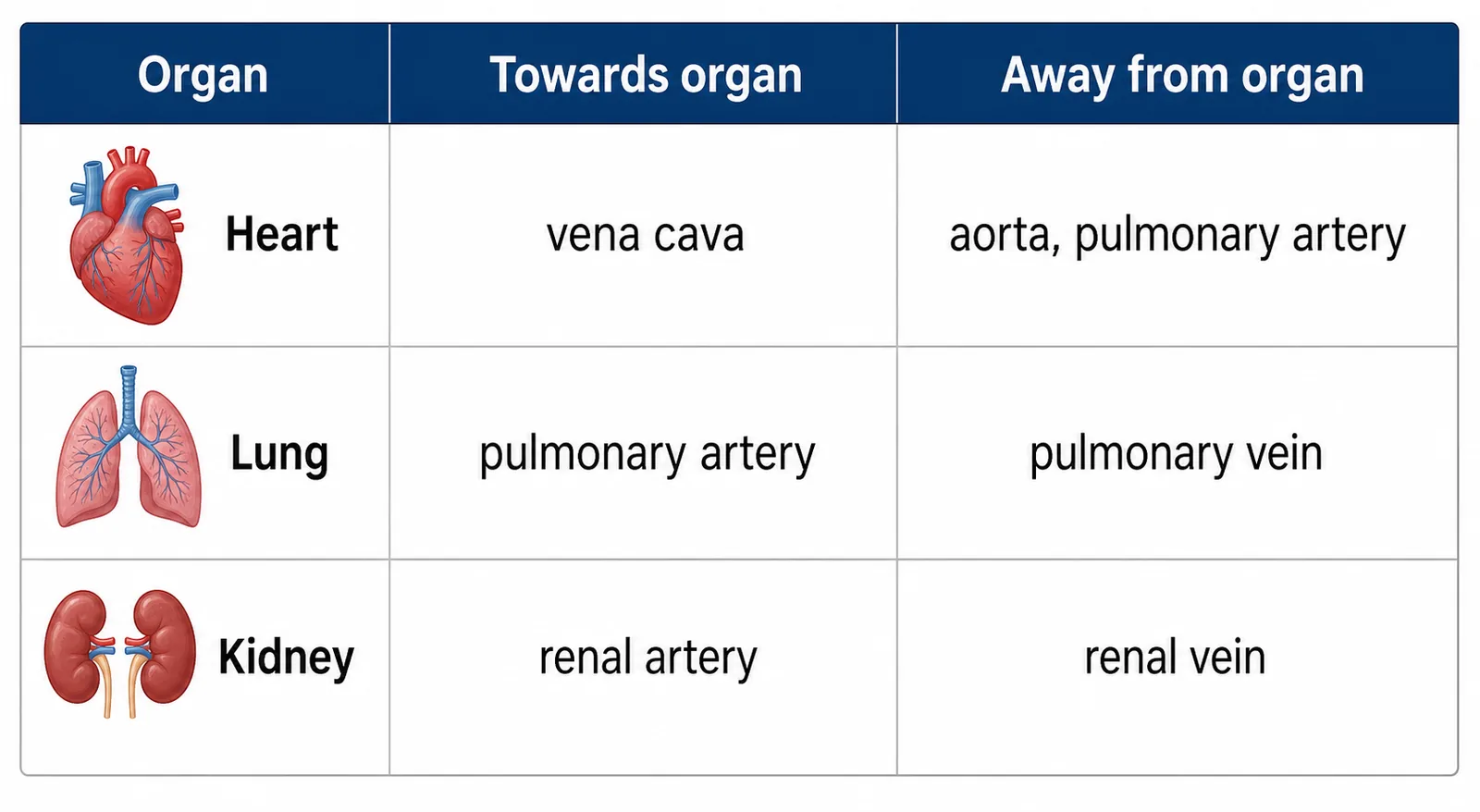
| Vessel | Carries blood from | Carries blood to | Blood type |
|---|---|---|---|
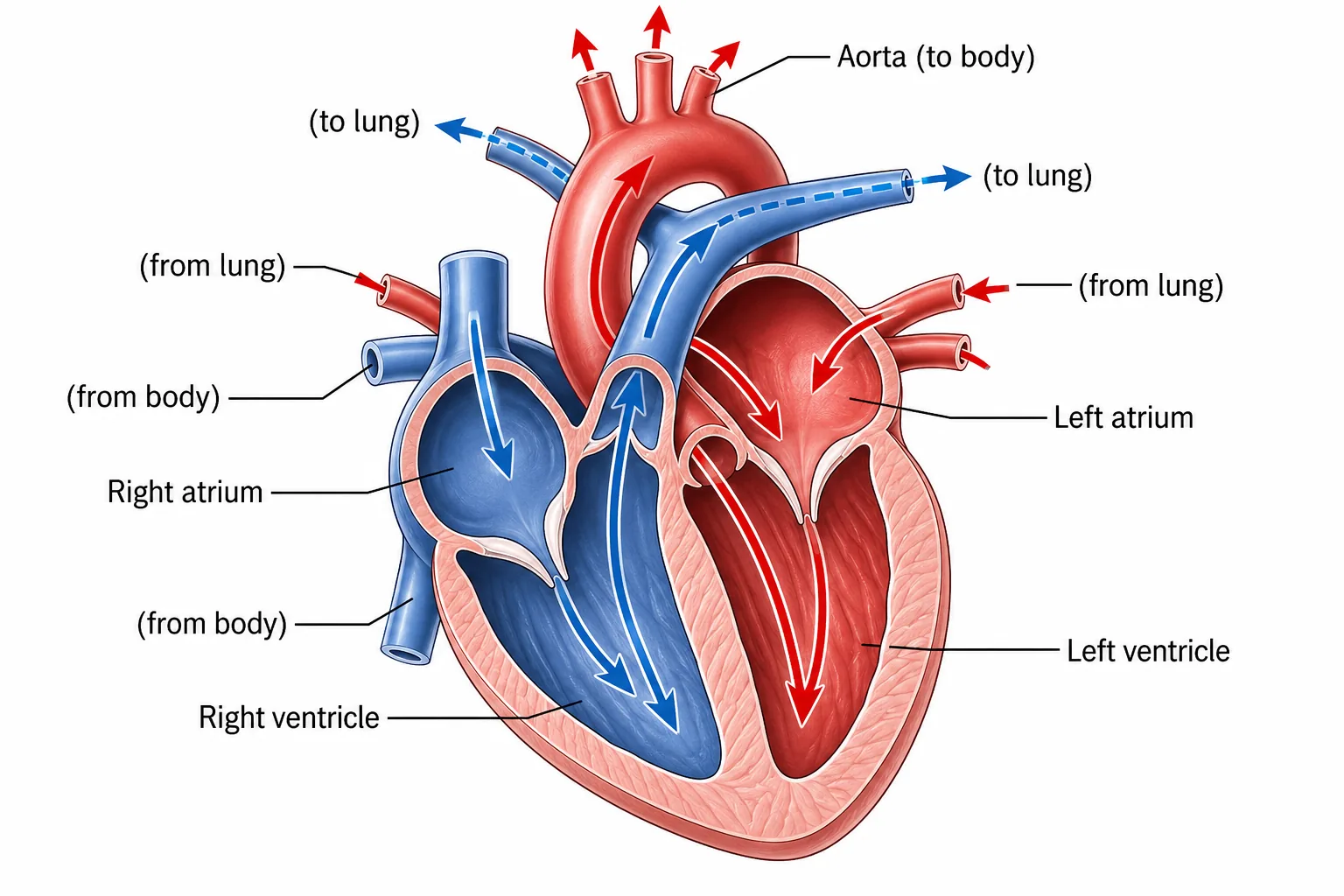
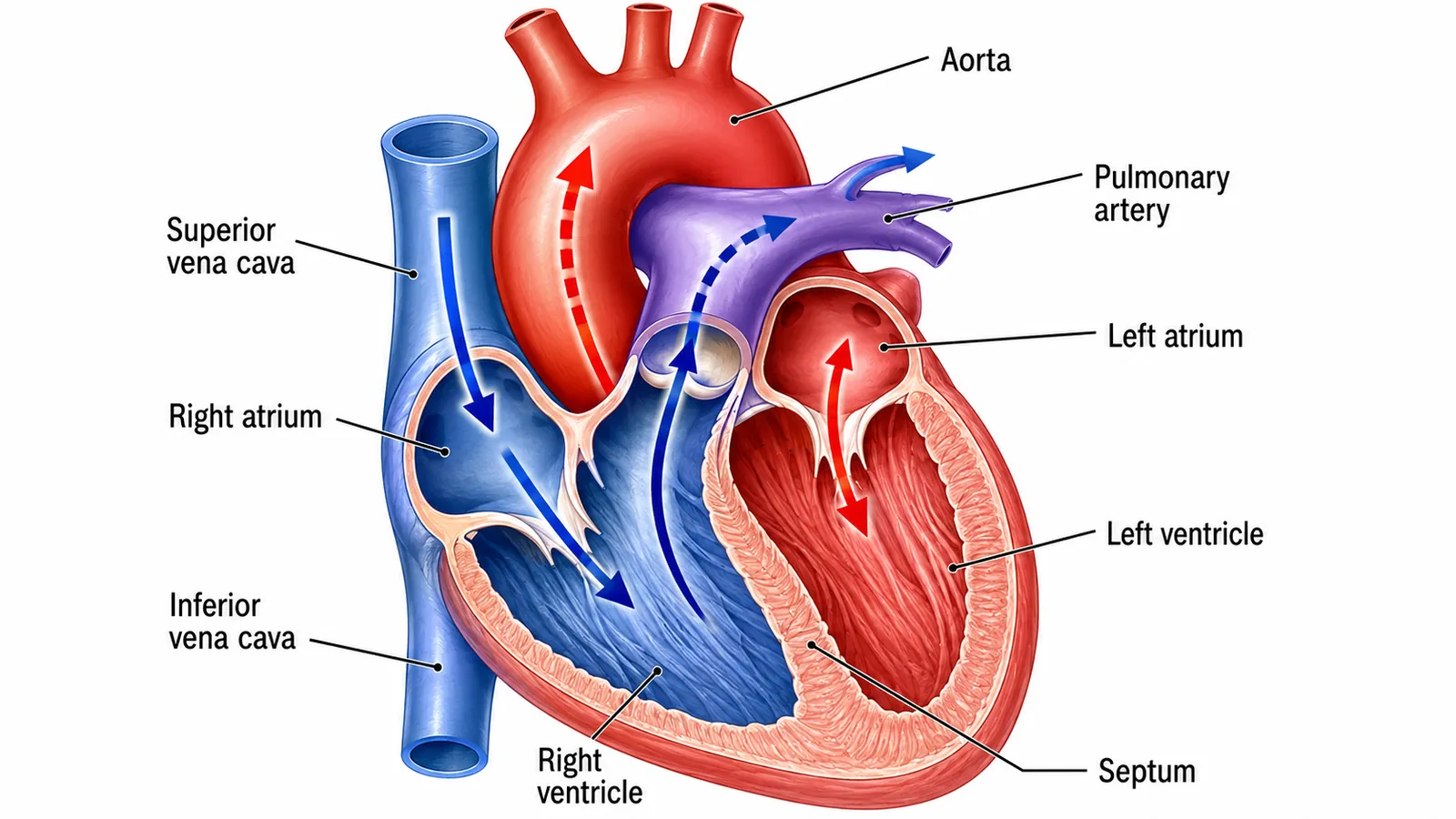
| Vena cava | The body | Right atrium | Deoxygenated |
| Pulmonary artery | Right ventricle | The lungs | Deoxygenated |
| Pulmonary vein | The lungs | Left atrium | Oxygenated |
| Aorta | Left ventricle | The body | Oxygenated |
Section 3 of 7Vessels by organ
Direction relative to the organ
Heart: blood in
- Heart: blood in The vena cava and the pulmonary vein bring blood towards the heart.
Heart: blood out
- Heart: blood out The aorta and the pulmonary artery take blood away from the heart.
Lungs
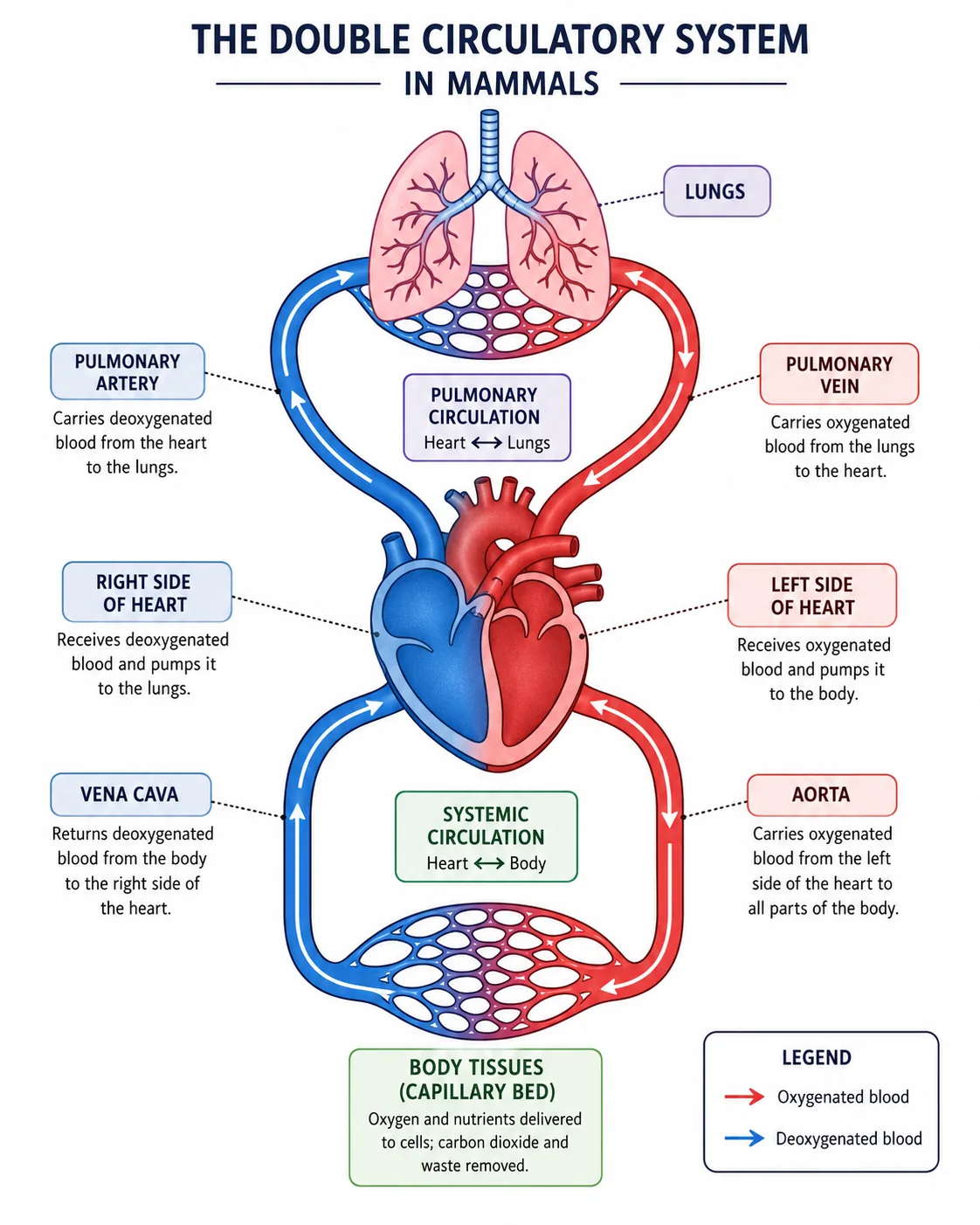
- Lungs The pulmonary artery brings blood to the lungs and the pulmonary vein takes it away.
Section 4 of 7Following one circuit

1Out to the lungs
- Out to the lungs Deoxygenated blood leaves the right ventricle in the pulmonary artery.
2Oxygen picked up
- Oxygen picked up In the lung capillaries the blood gains oxygen and loses carbon dioxide.
3Back to the heart
- Back to the heart The pulmonary vein returns oxygenated blood to the left atrium.
4Out to the body
- Out to the body After the left ventricle, the aorta carries the blood to organs, where it gives up oxygen and returns through the vena cava.
Section 5 of 7Why the vessels matter in practice




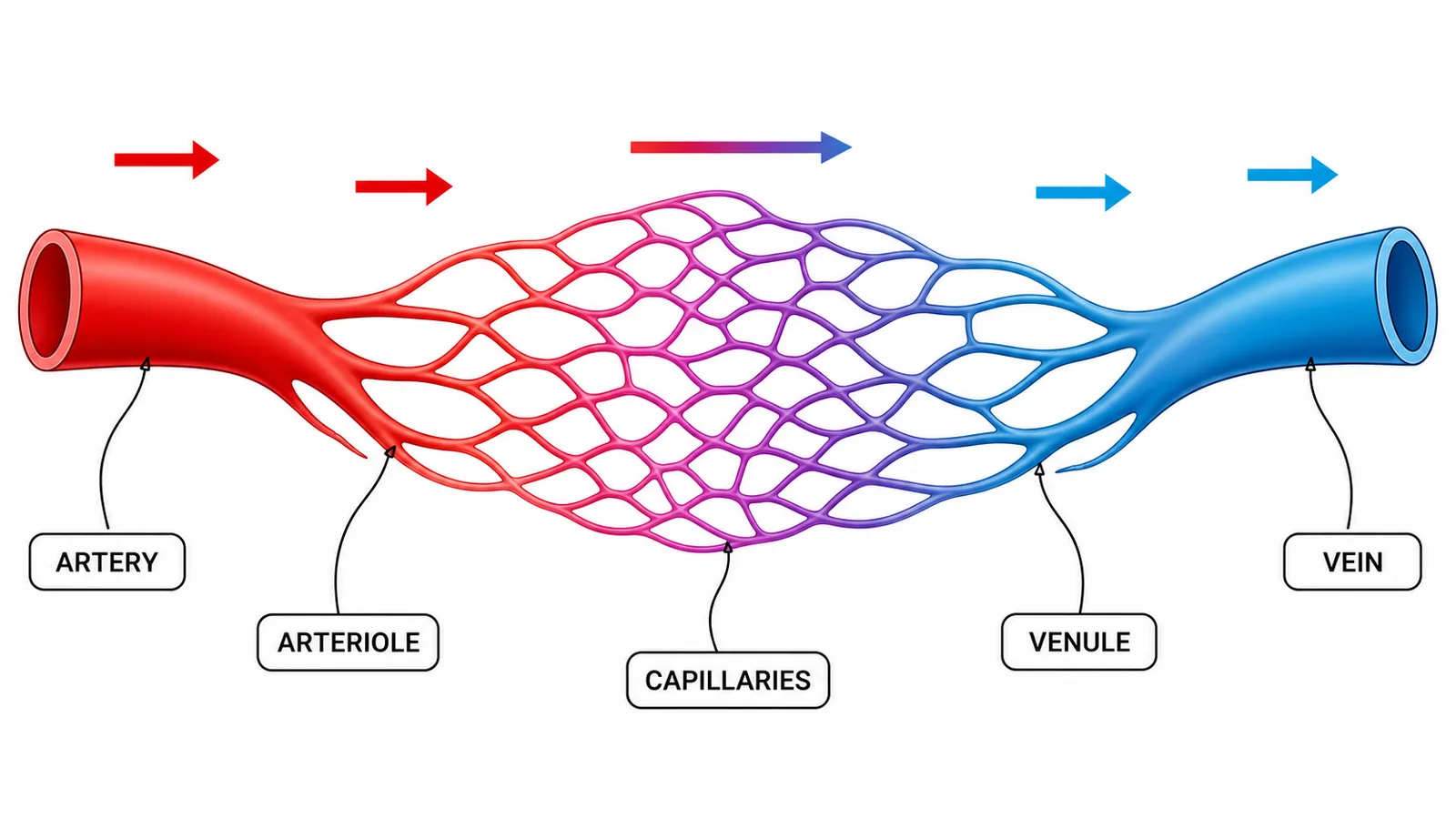

Worked example: tracing a red blood cell
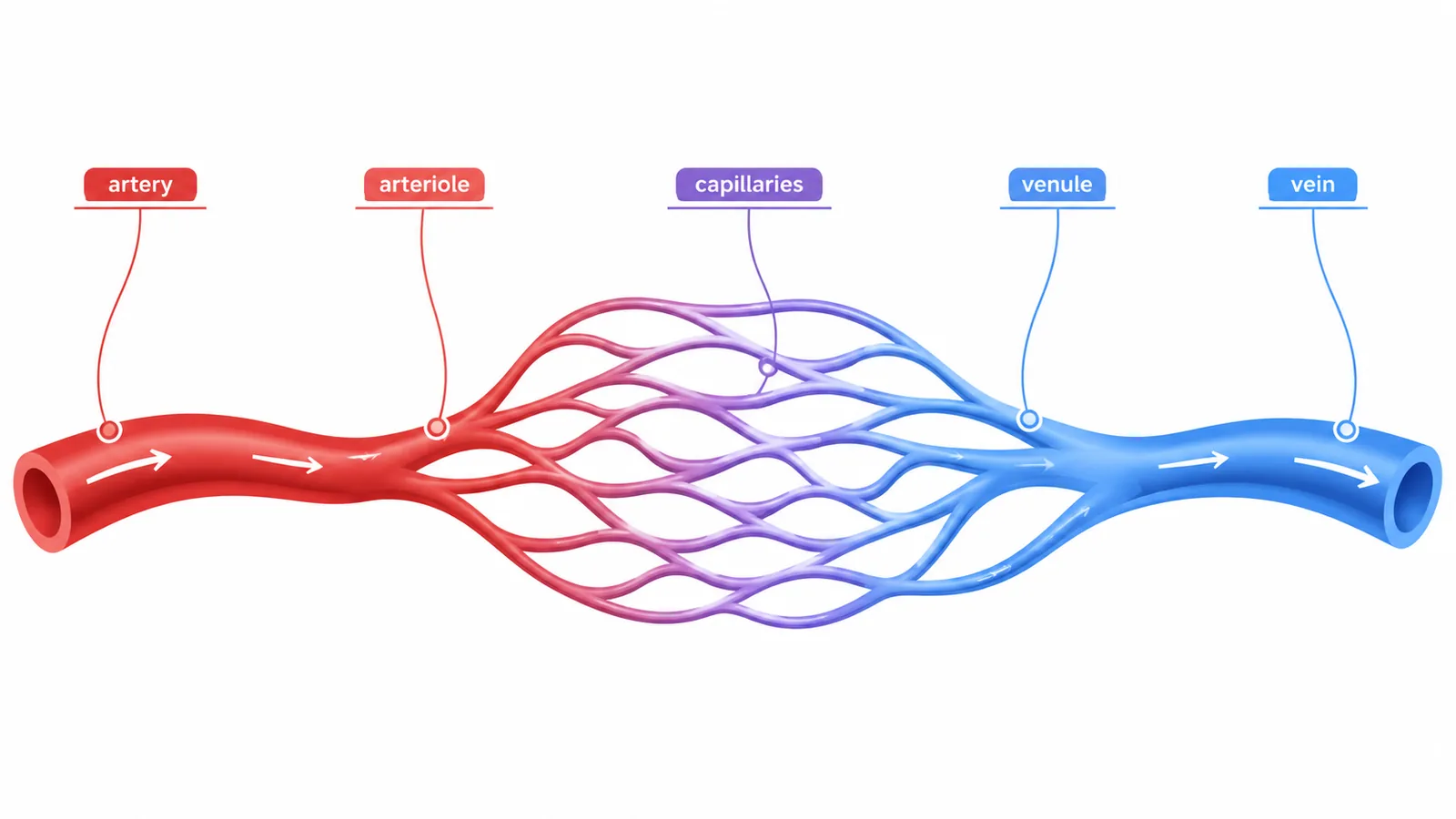
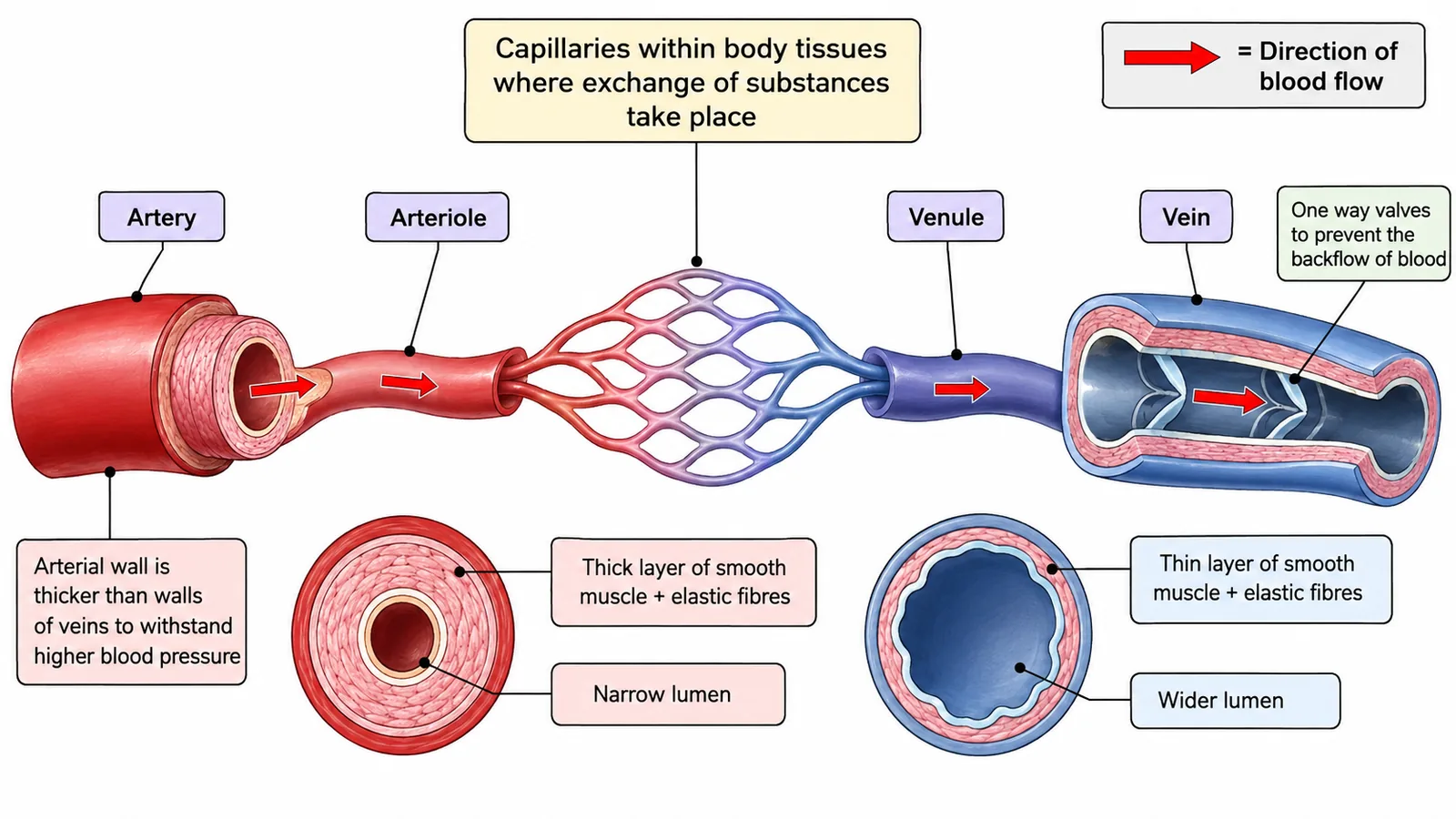
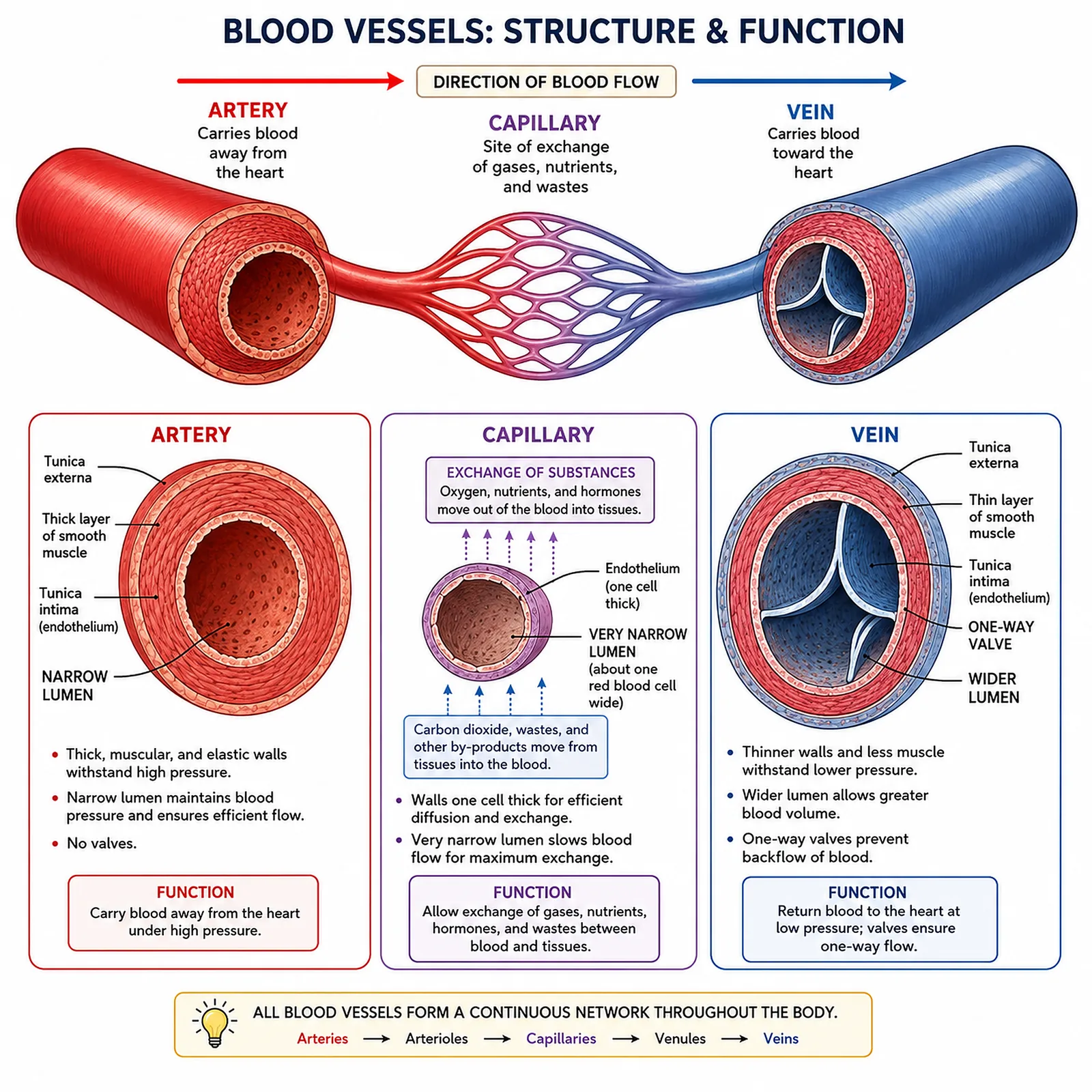
- Worked example: tracing a red blood cell A red blood cell leaving the left ventricle enters the aorta, passes through arteries and arterioles to a muscle, gives up oxygen in a capillary,
- and returns through a venule and a vein to the vena cava.
- It then enters the right atrium, moves to the right ventricle, and leaves in the pulmonary artery for the lungs to collect more oxygen.
Checking your answer
- Checking your answer Ask two questions about any vessel: does it go towards or away from the heart, and which chamber does it join?
- These two facts always give the correct name.
- Remember that the blood in the pulmonary vein is bright red with oxygen even though it is in a vein, because the direction decides the name.
Link to the heart
- Link to the heart The four vessels join the four chambers: the vena cava to the right atrium, the pulmonary artery to the right ventricle, the pulmonary vein to the left atrium and the aorta to the left ventricle.
Section 6 of 7Key terms
| Term | Meaning |
|---|---|
| Aorta | The largest artery, carrying oxygenated blood from the left ventricle to the body. |
| Vena cava | The large vein returning deoxygenated blood from the body to the right atrium. |
| Pulmonary artery | The artery that carries deoxygenated blood from the heart to the lungs. |
| Pulmonary vein | The vein that carries oxygenated blood from the lungs to the heart. |
| Oxygenated blood | Blood rich in oxygen, carried as oxyhaemoglobin in red blood cells. |
Section 7 of 7Exam technique
1
Writing that all arteries carry oxygenated blood. The pulmonary artery carries deoxygenated blood.
2
Writing that all veins carry deoxygenated blood. The pulmonary vein carries oxygenated blood.
3
Mixing up pulmonary artery and pulmonary vein. Check the direction: artery away from the heart, vein towards it.
4
Using 'vein' for the vessel leaving the left ventricle. That vessel is the aorta, an artery.
5
Leaving out the pulmonary system when asked to describe vessels entering and leaving the heart.