9.1.11Transport in Animals
Structure and Function of Blood Vessels
5 min read 7 parts Lesson 12 of 15 1 quiz
Section 1 of 7Arteries

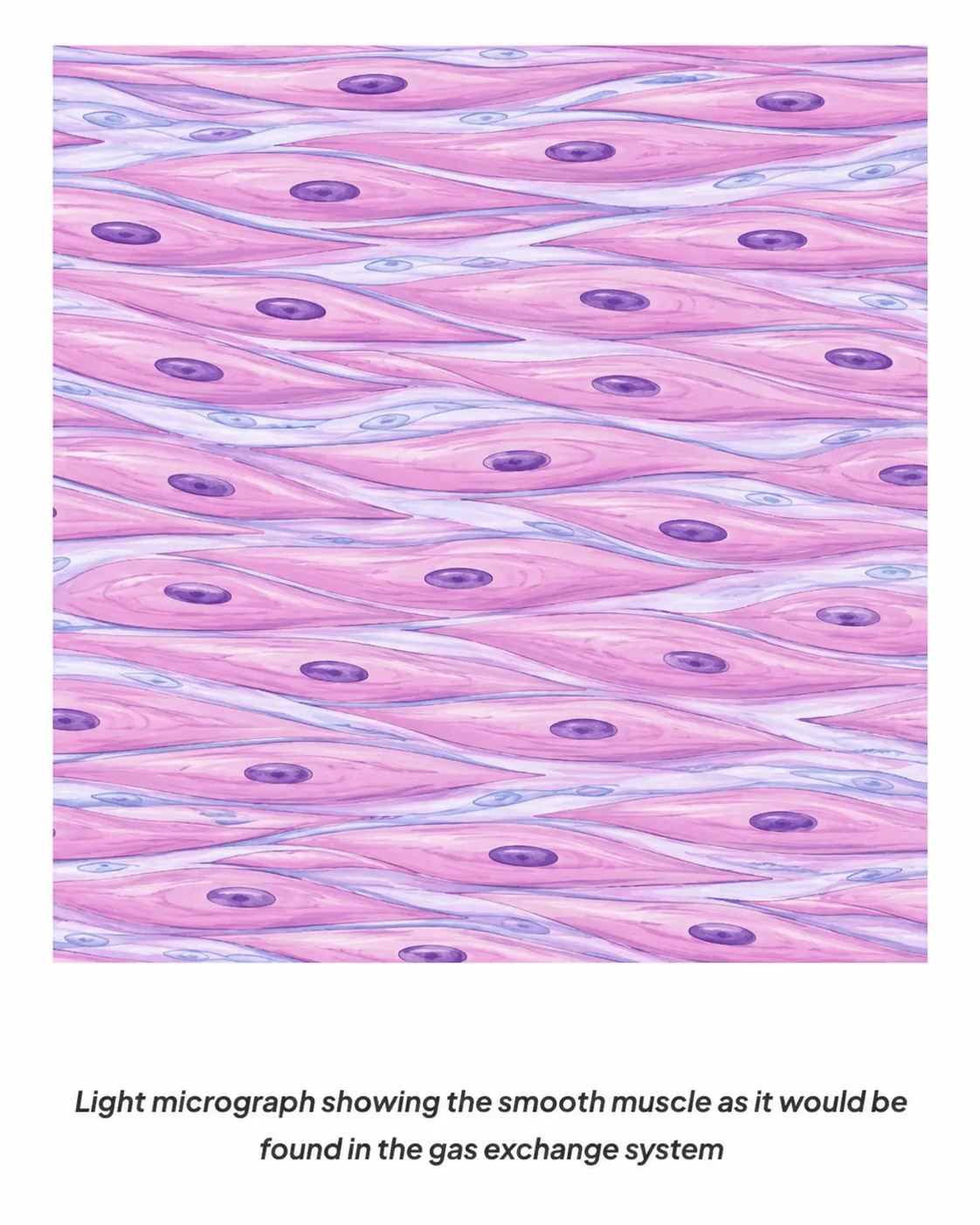
Job
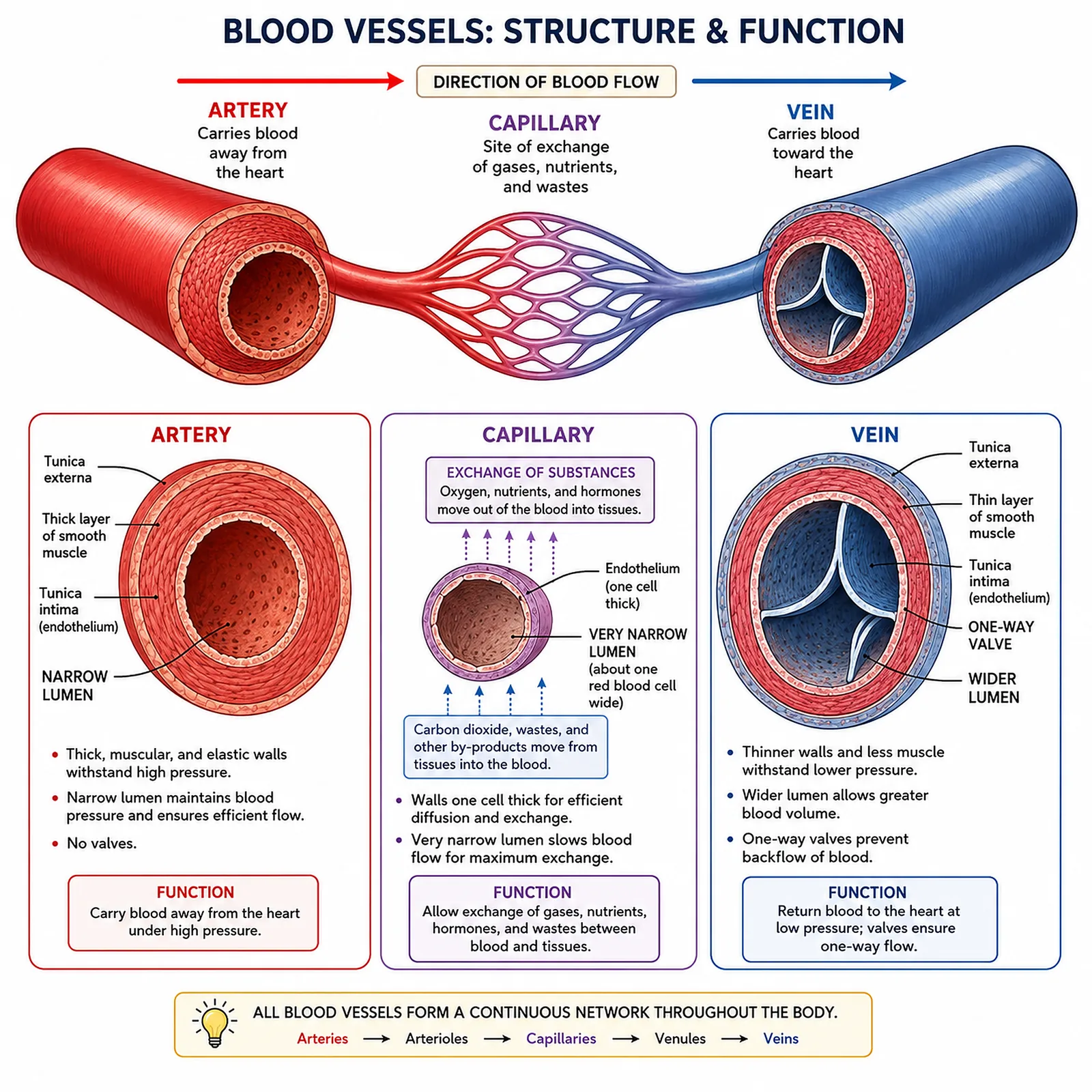
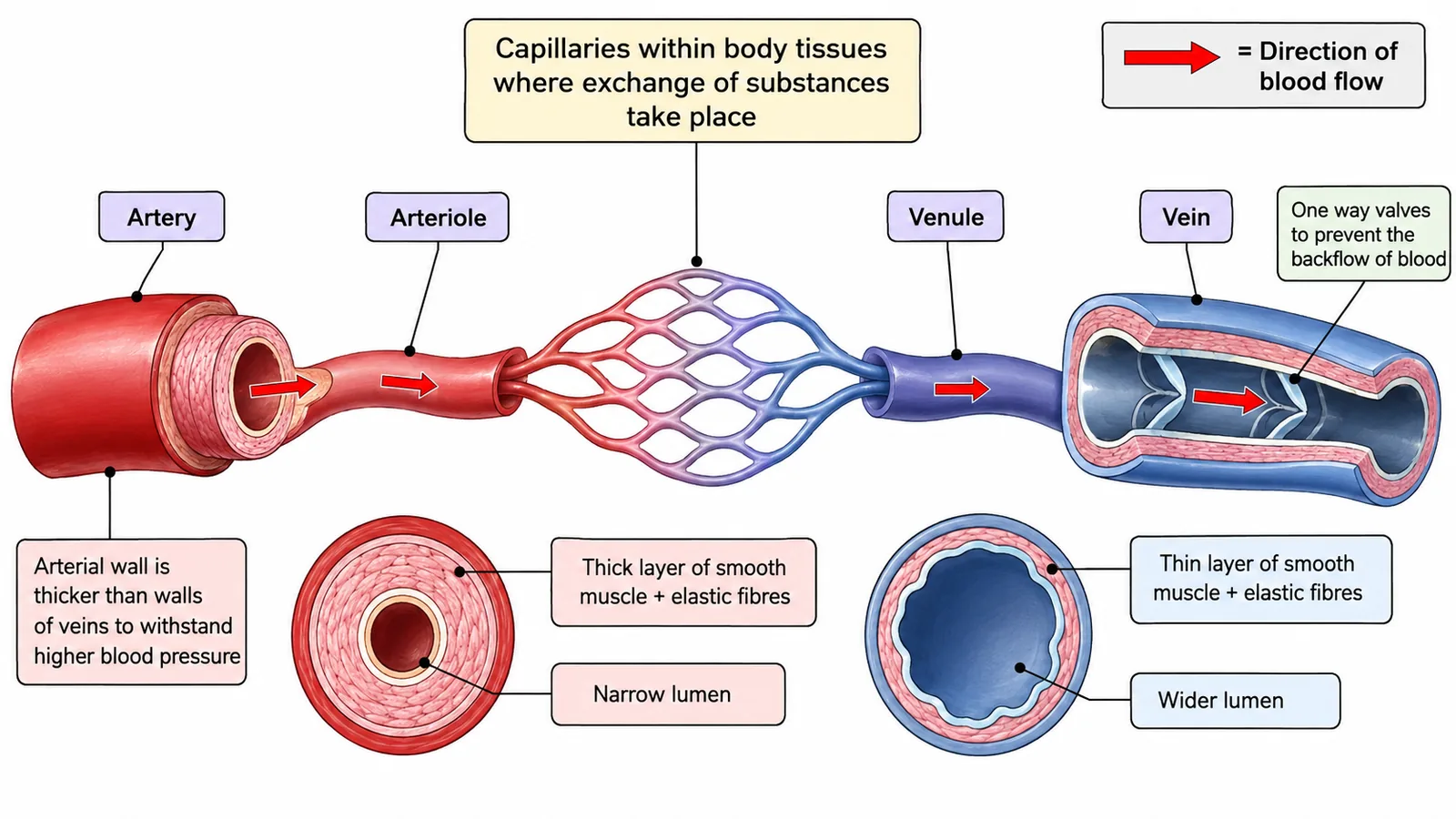
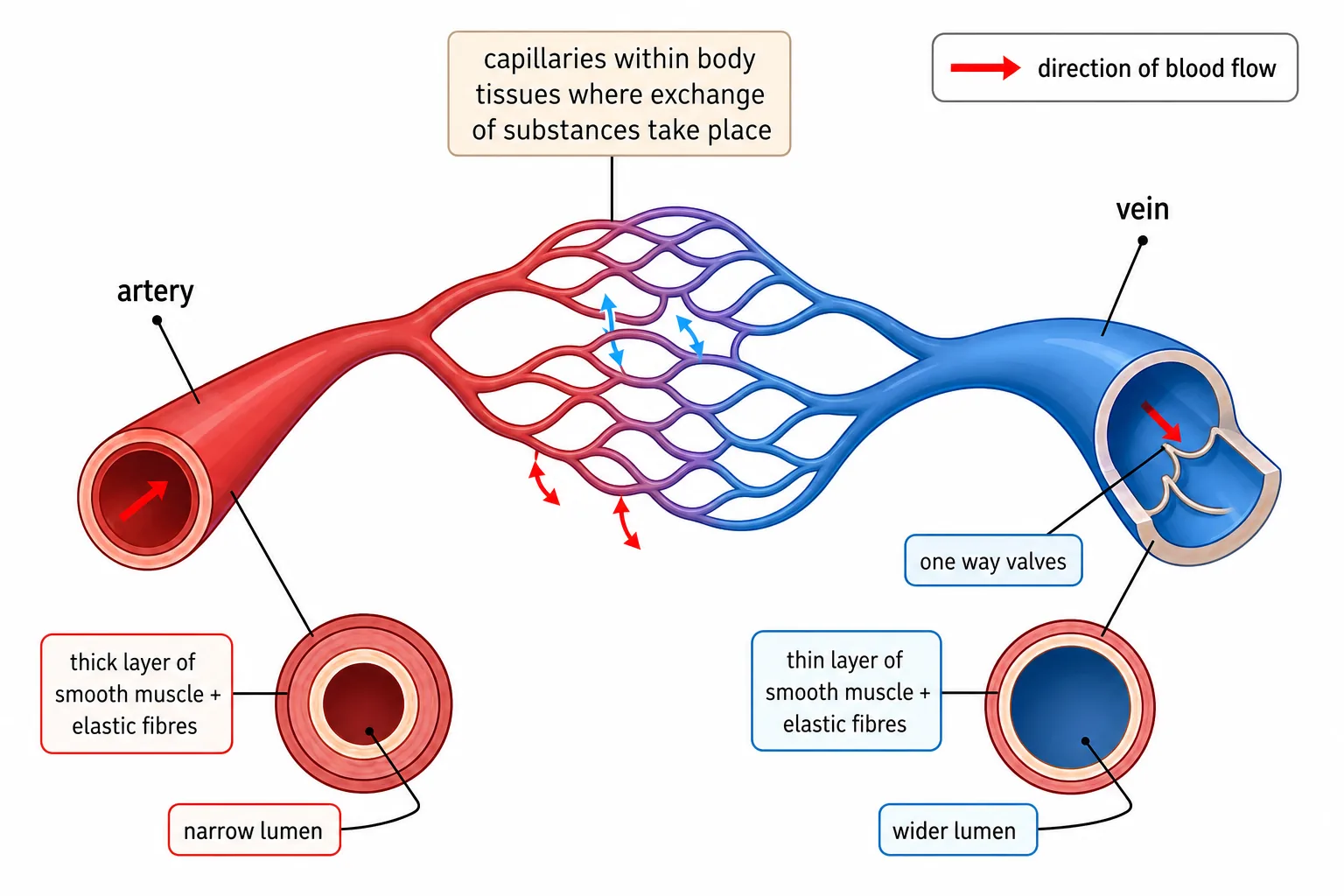
- Job Arteries carry blood away from the heart at high pressure, with the pressure rising and falling with each heartbeat.
Thick muscular wall with elastic fibres
- Thick muscular wall with elastic fibres The thick wall withstands the high pressure without bursting.
- Elastic fibres stretch as a pulse of blood arrives and then recoil, which helps keep the blood moving and the pressure steady between beats.
Narrow lumen
- Narrow lumen A small central channel helps to maintain the high pressure.
Section 2 of 7Veins
Job
- Job Veins carry blood back to the heart. By the time blood reaches them, the pressure is low.
Wide lumen
- Wide lumen A large lumen offers little resistance to the slow-moving, low-pressure blood.
Valves
- Valves Valves stop blood flowing backwards, and contraction of surrounding skeletal muscles squeezes the veins and helps push the blood along.
Thin wall
- Thin wall Less muscle and elastic tissue is needed because the pressure is low.
Section 3 of 7Capillaries


Job
- Job Capillaries form tiny networks in tissues, where blood exchanges substances with the cells.
Walls one cell thick
- Walls one cell thick The very short diffusion distance lets oxygen, glucose and carbon dioxide pass quickly.
Leaky walls
- Leaky walls Some plasma leaks out and forms tissue fluid, which bathes the cells and carries substances to them.
Section 4 of 7Comparison
| Feature | Artery | Vein | Capillary |
|---|---|---|---|
| Direction of flow | Away from the heart | Towards the heart | Between arteries and veins |
| Wall | Thick, muscle and elastic fibres | Thin | One cell thick |
| Lumen | Narrow | Wide | Very narrow, about one red cell wide |
| Valves | None (except at heart exits) | Present | None |
| Pressure | High | Low | Falling |
Section 5 of 7Arterioles and venules


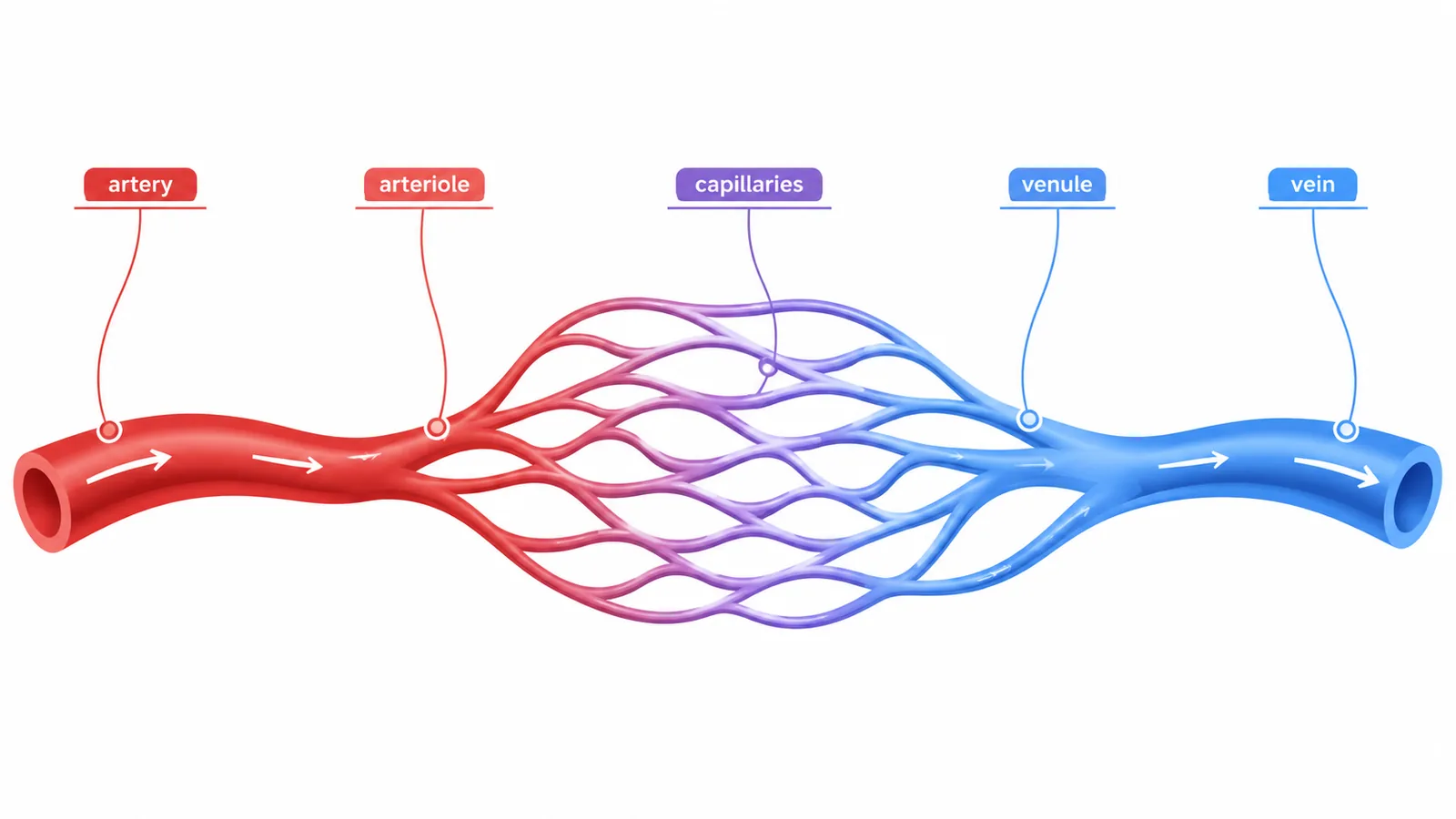
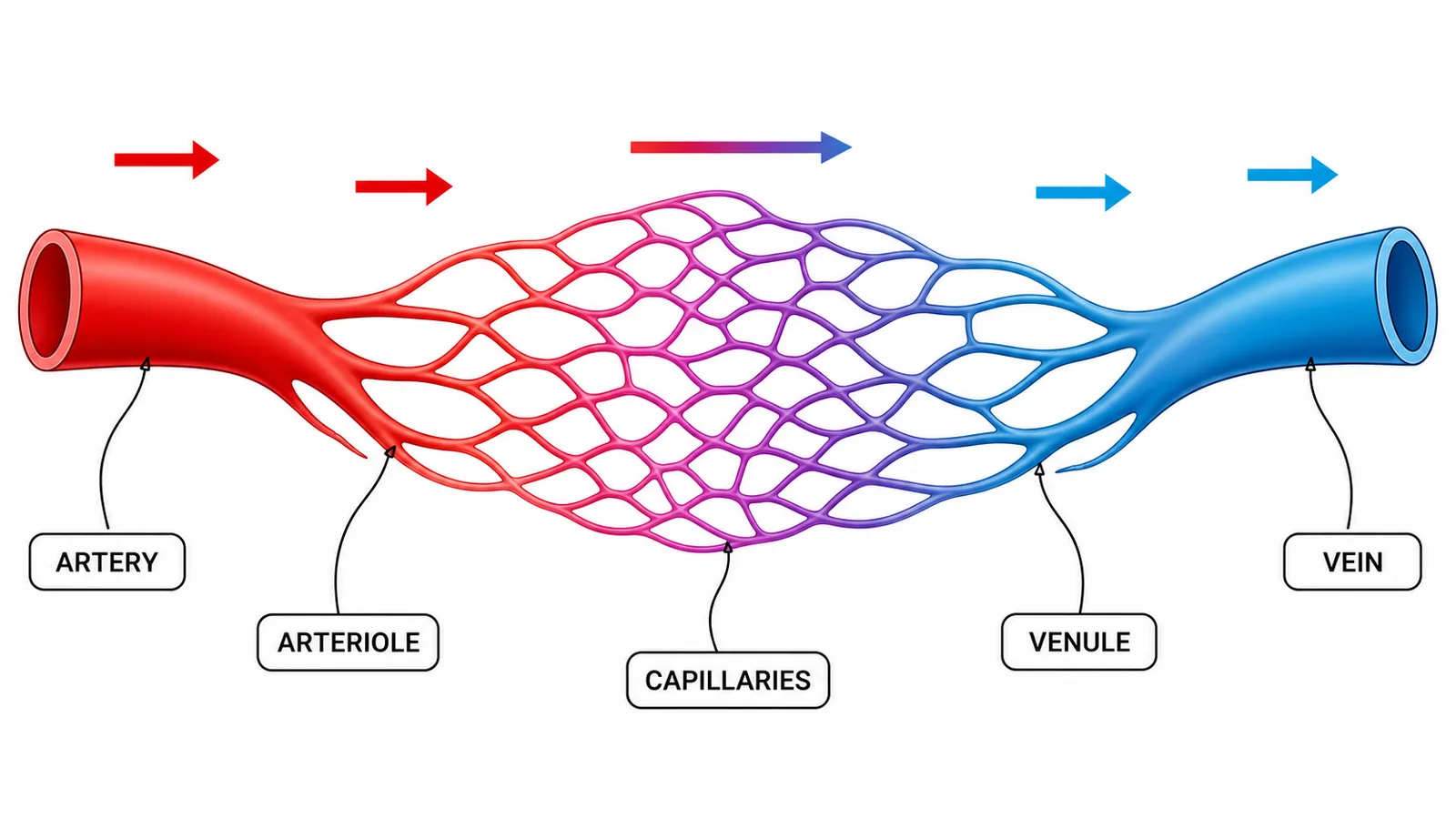
1Artery
- Artery Arteries divide into smaller branches as they move away from the heart.
2Arteriole
- Arteriole The narrow vessels that connect arteries to capillaries.
3Capillary
- Capillary Exchange of materials with the cells takes place here.
4Venule
- Venule The narrow vessels that connect capillaries to veins.
5Vein
- Vein Venules join to form larger veins that return blood to the heart.
Section 6 of 7Key terms
| Term | Meaning |
|---|---|
| Lumen | The hollow space inside a blood vessel through which blood flows. |
| Elastic fibres | Stretchy protein fibres in an artery wall that allow it to expand and recoil. |
| Valve | A flap in a vein that prevents backflow of blood. |
| Tissue fluid | Plasma that has leaked out of capillaries and surrounds the body cells. |
| Arteriole | A small vessel that links an artery to capillaries. |
| Venule | A small vessel that links capillaries to a vein. |
Section 7 of 7Exam technique
1
Saying that the artery lumen is wide. It is narrow, which helps keep pressure high; veins have the wide lumen.
2
Explaining the thick artery wall without mentioning pressure.
3
Forgetting that capillary walls are only one cell thick and relating this to short diffusion distance.
4
Suggesting arteries have valves to stop backflow. Valves are a feature of veins.
5
Confusing arterioles and venules. Arterioles come before capillaries and venules come after.