Section 1 of 6What blood is made of

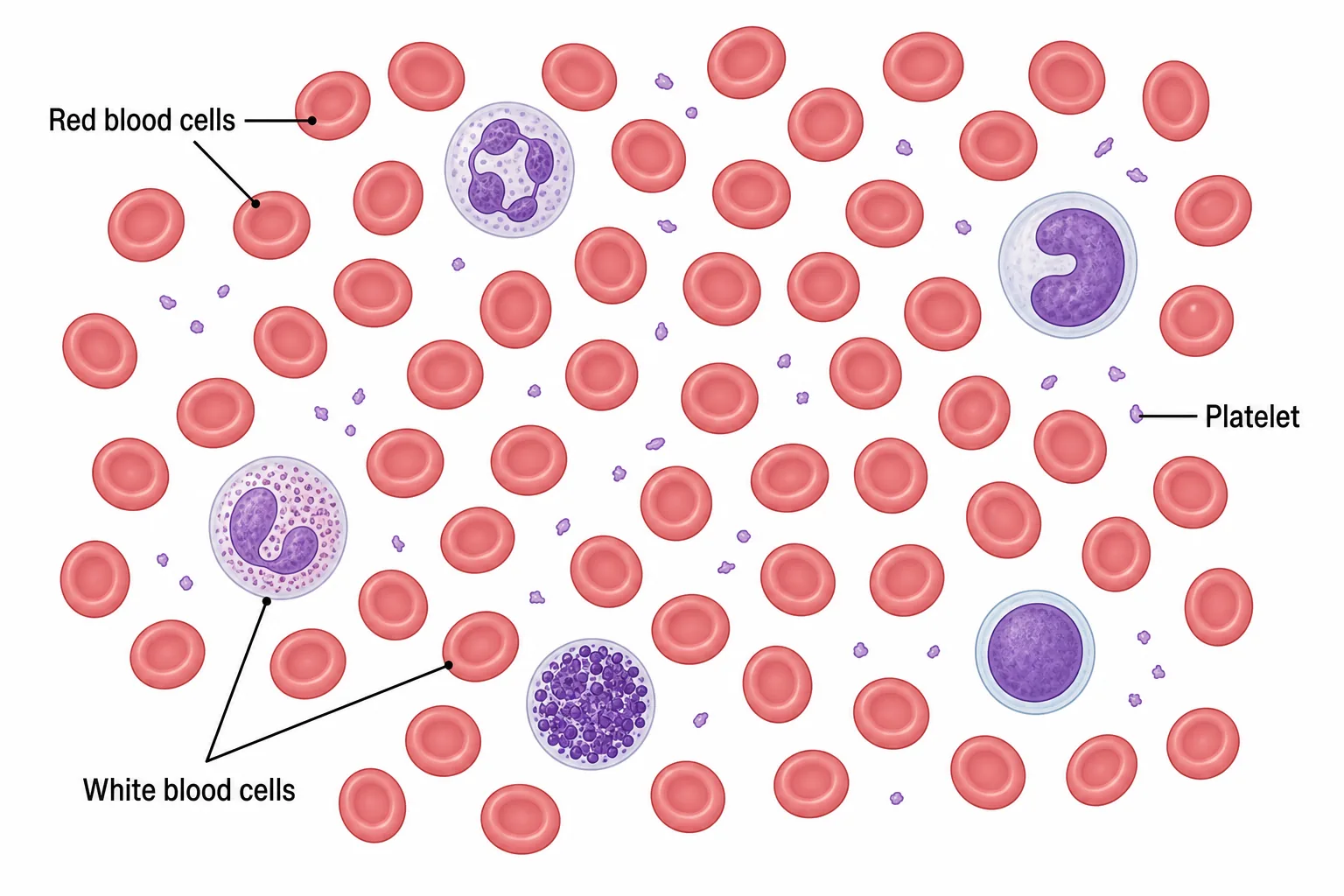
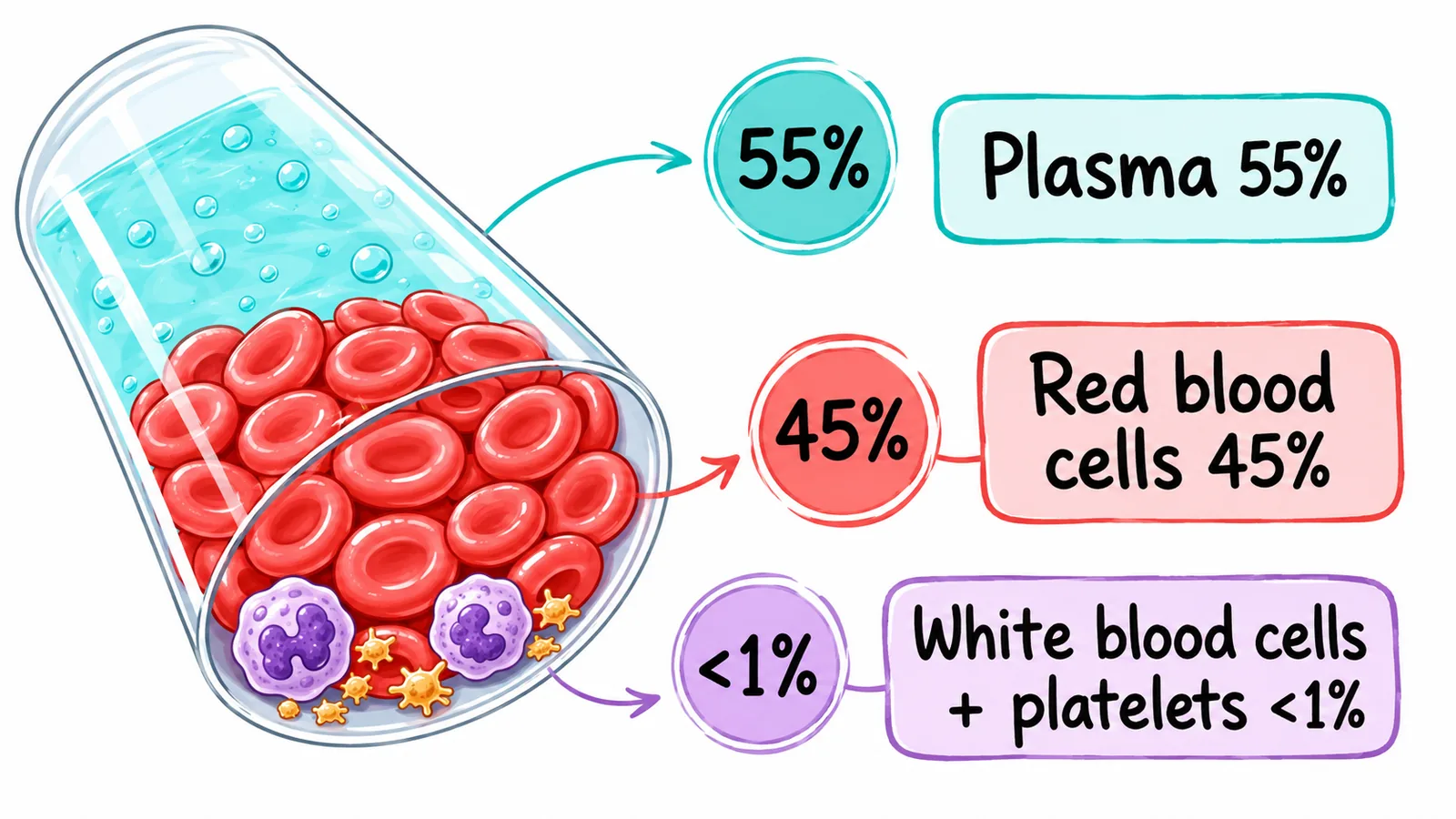
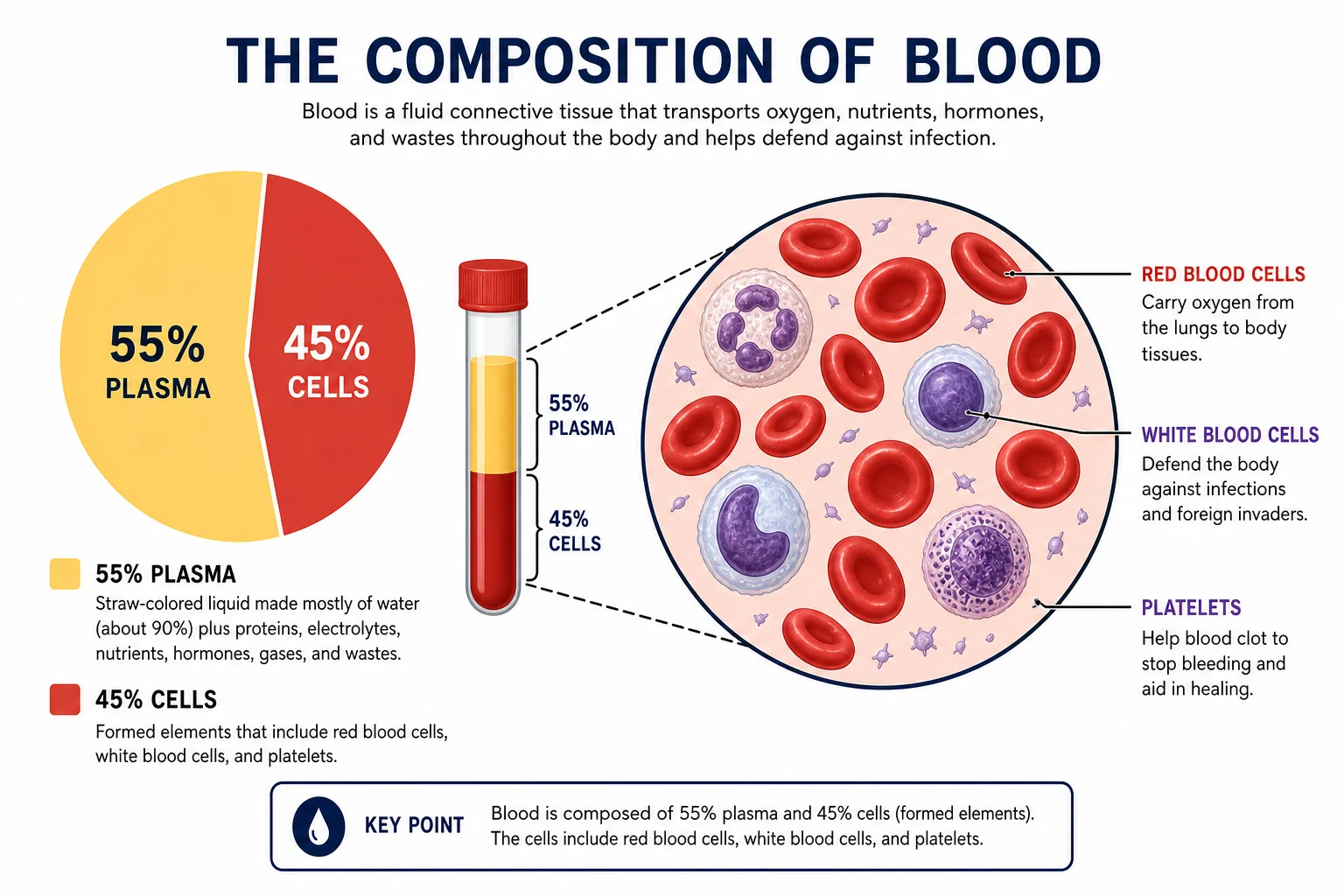
Blood
Plasma
- Plasma The pale yellow liquid that makes up just over half of the blood volume.
Red blood cells
- Red blood cells The most numerous cells, giving blood its colour.
White blood cells
- White blood cells Fewer in number than red cells, with a nucleus.
Platelets
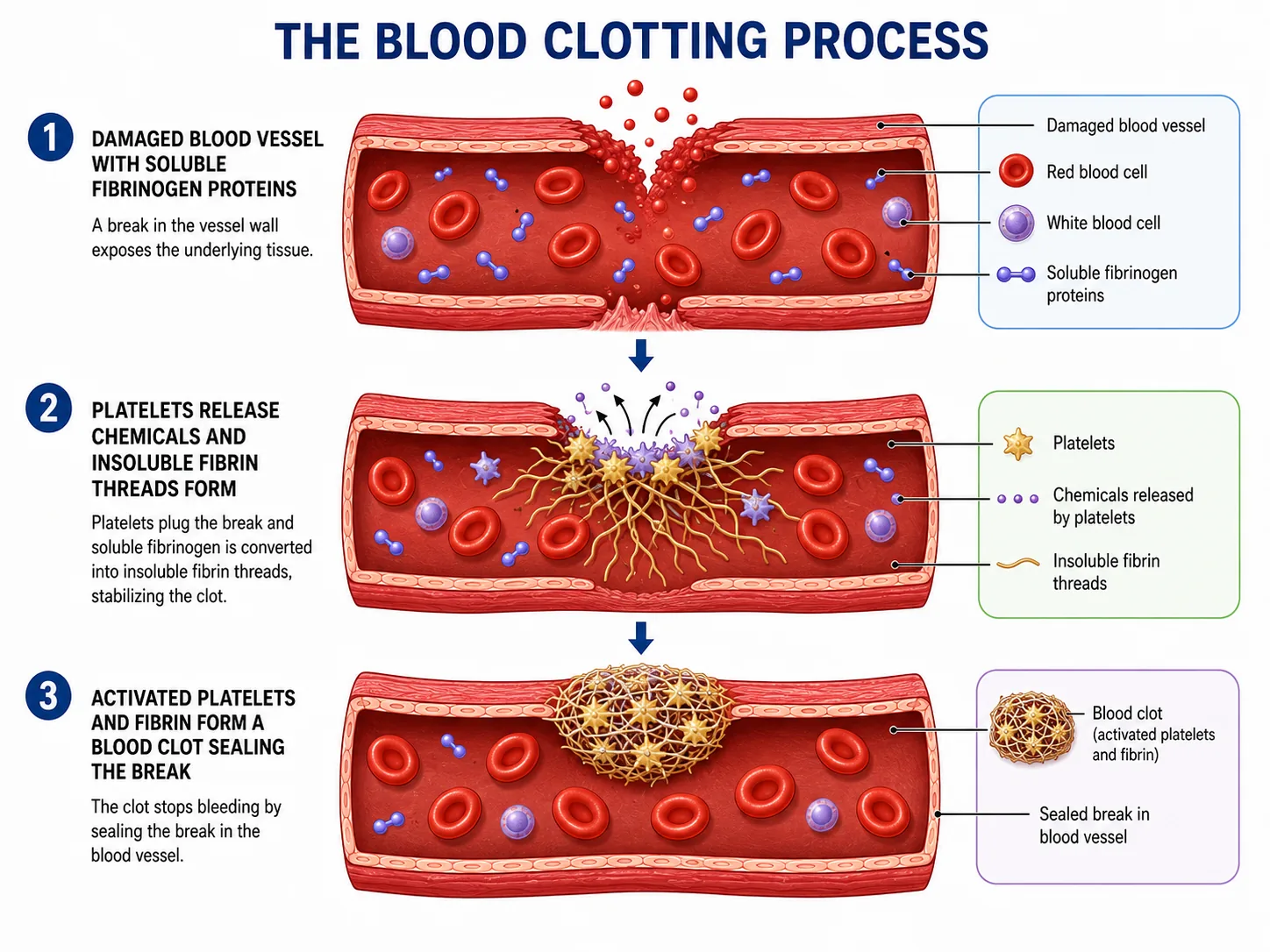
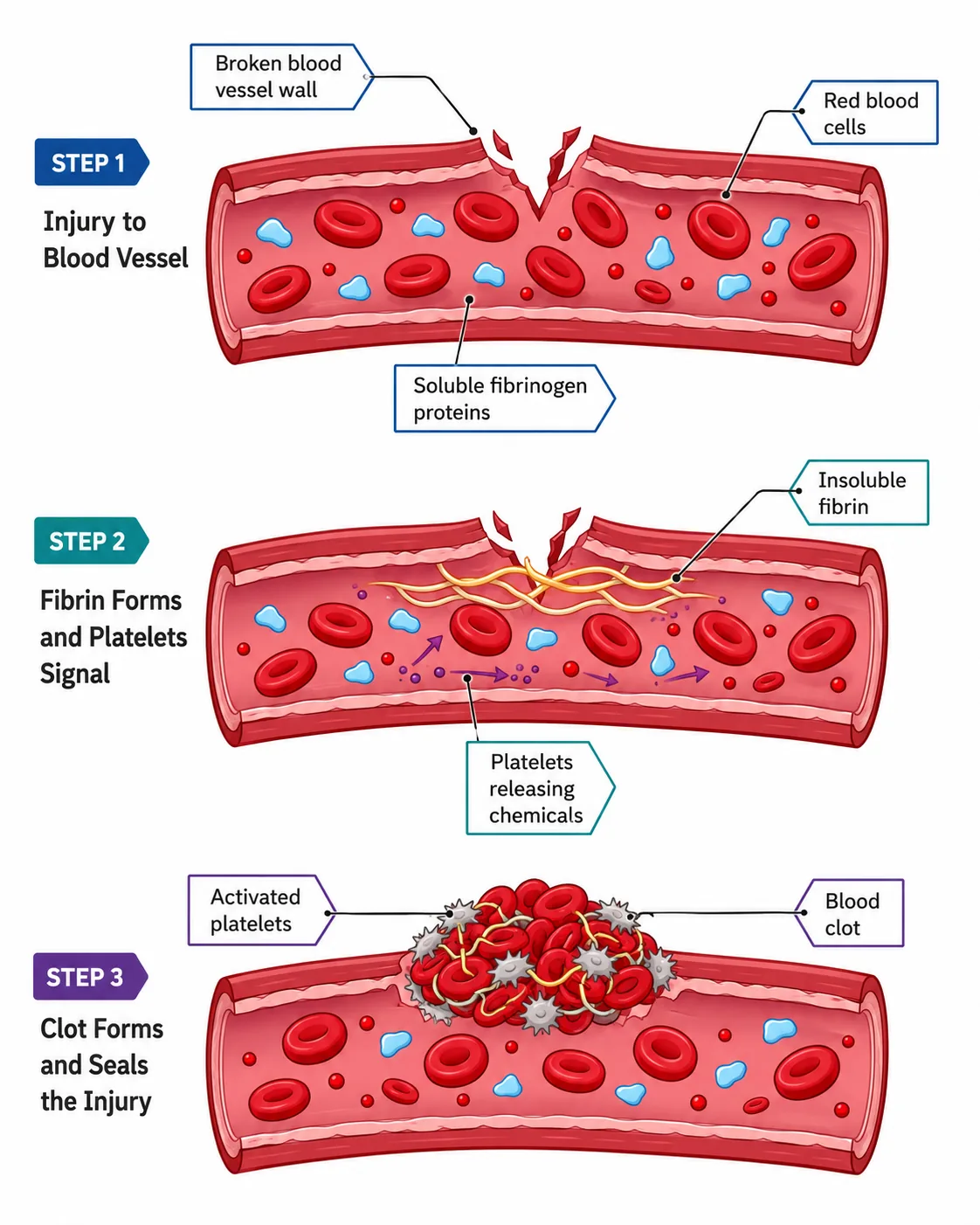
- Platelets Tiny fragments of cells that help blood to clot.
Section 2 of 6Functions of each component
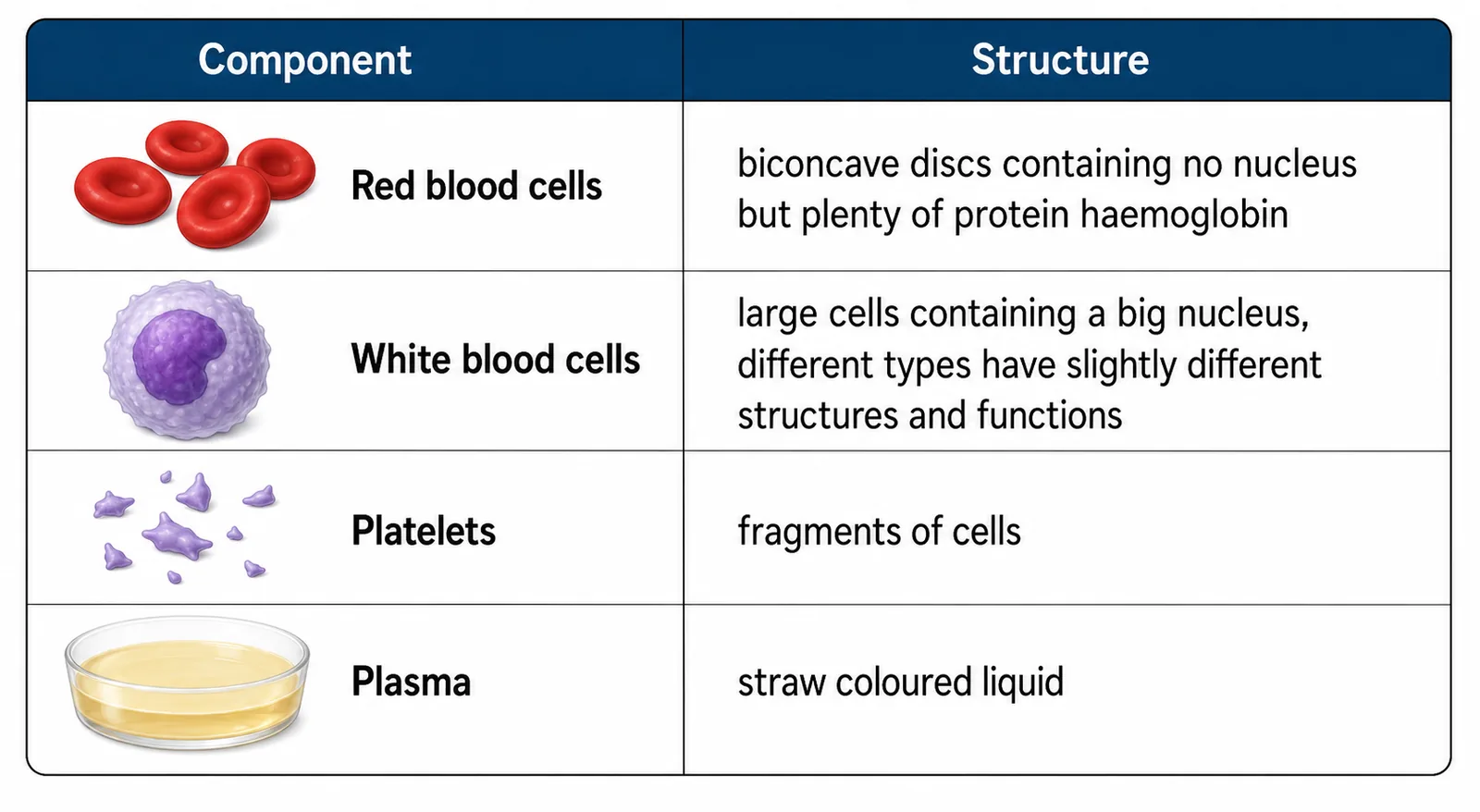
| Component | Function | Key feature |
|---|---|---|
| Plasma | Transports carbon dioxide, digested food (nutrients), urea, mineral ions, hormones and heat energy. | Mostly water with dissolved substances |
| Red blood cells | Carry oxygen from the lungs to cells that need it for aerobic respiration. | Contain haemoglobin, which forms oxyhaemoglobin |
| White blood cells | Defend the body against pathogens by phagocytosis and by making antibodies. | Have a nucleus |
| Platelets | Help the blood to clot at a wound. | Fragments, not complete cells |
Section 3 of 6Identifying cells under the microscope
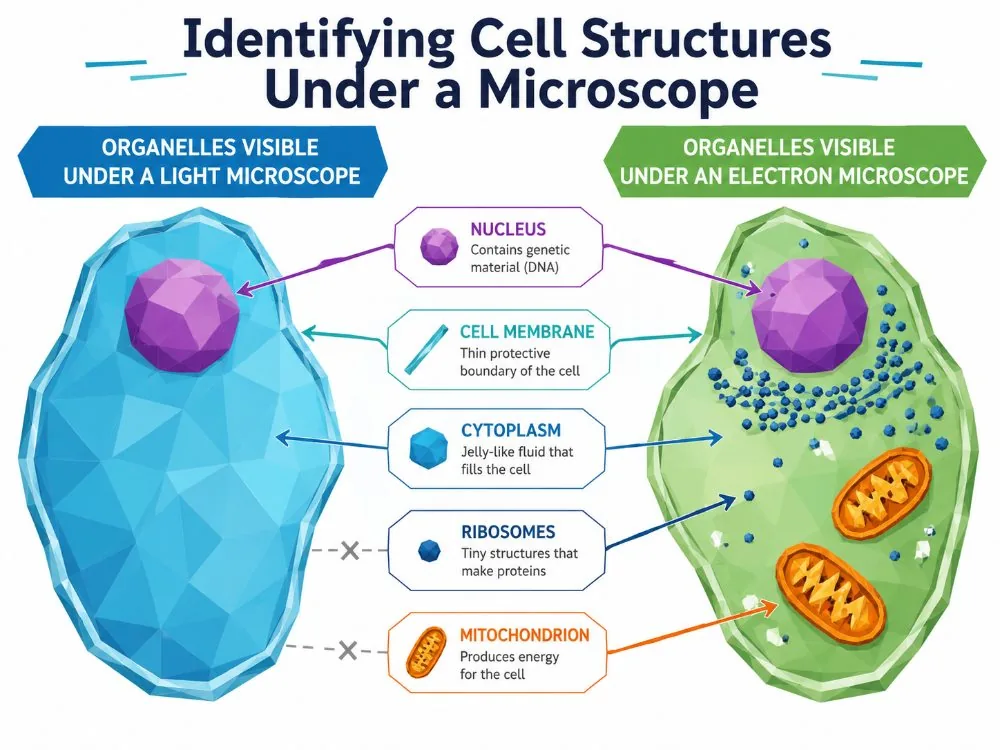

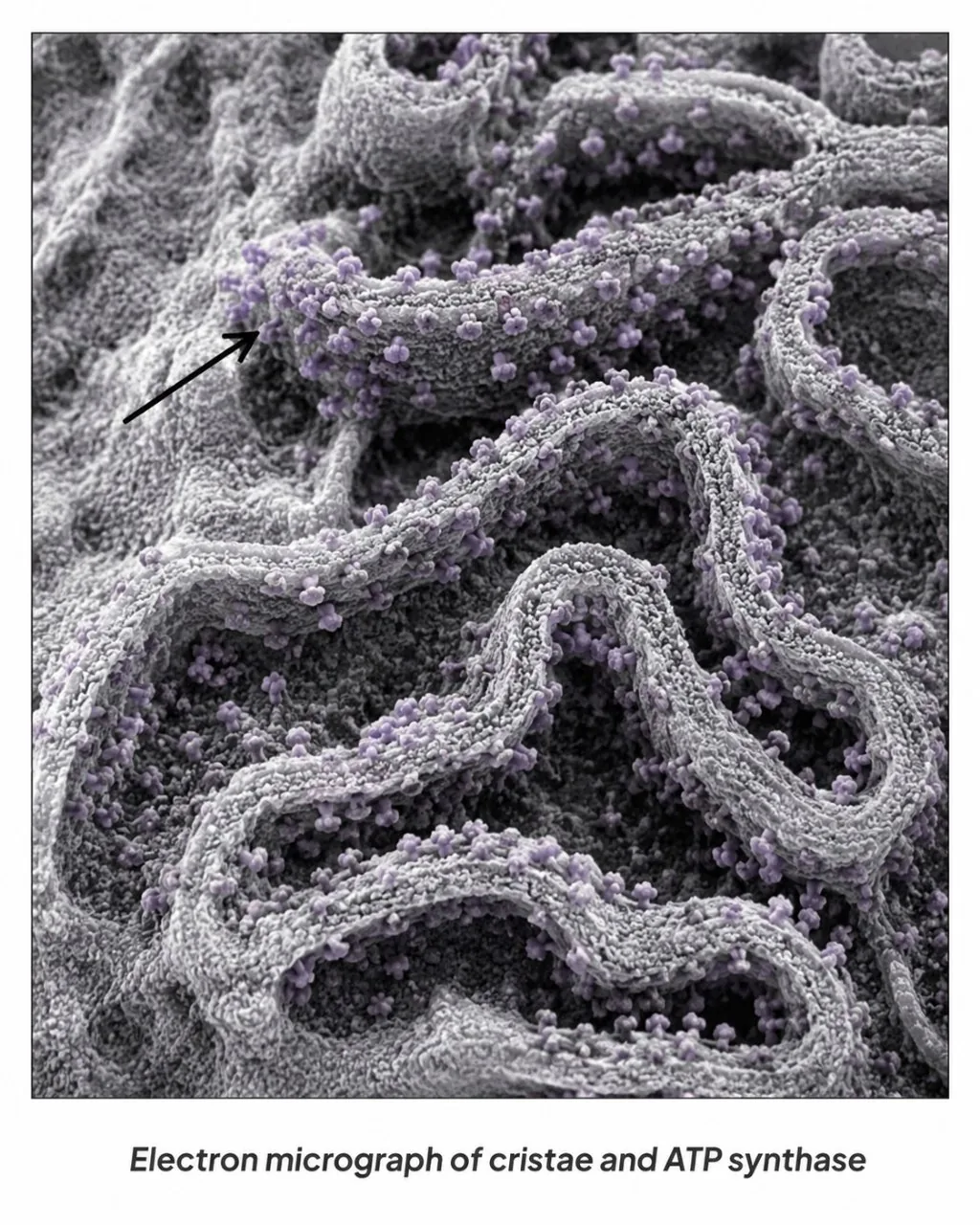
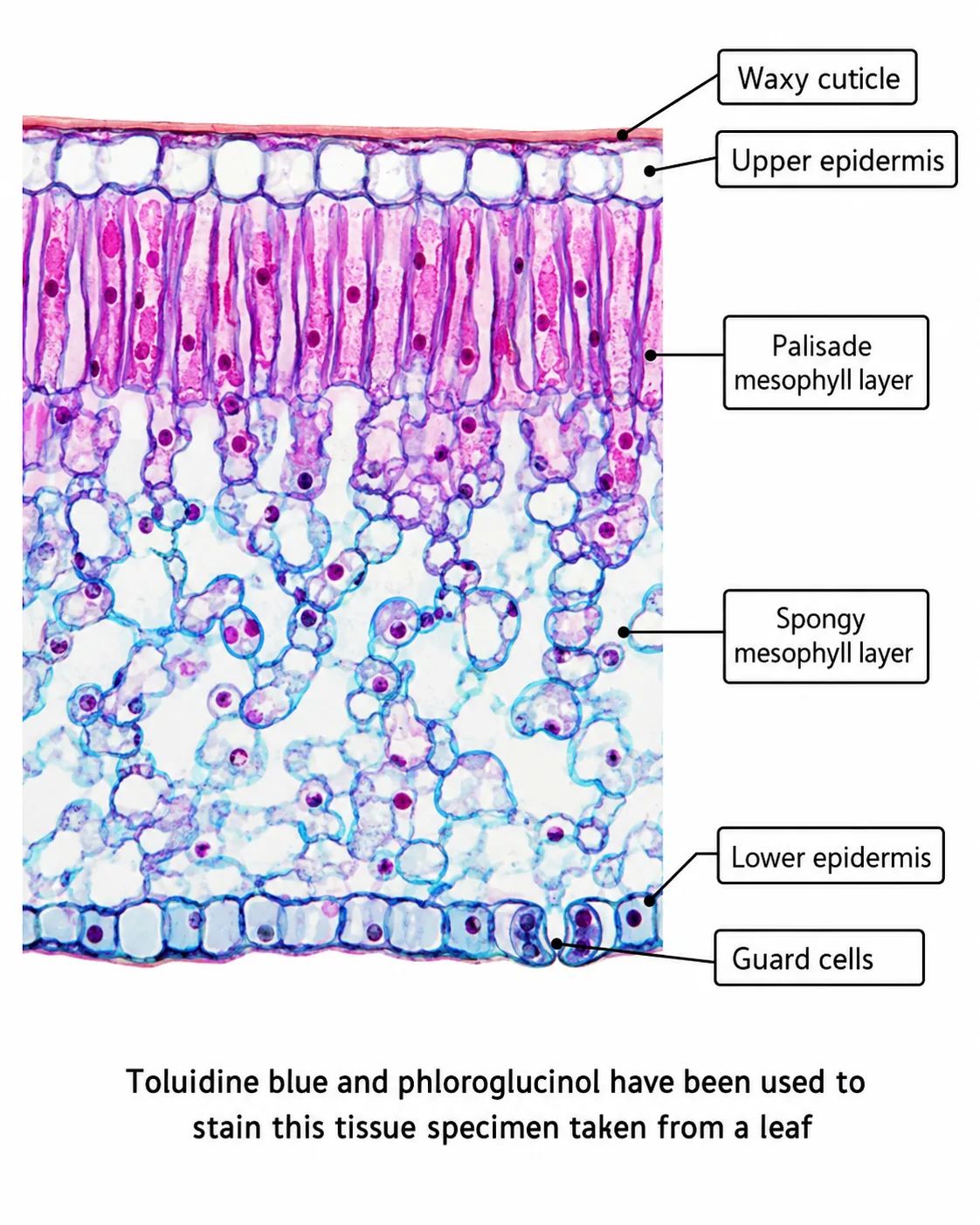
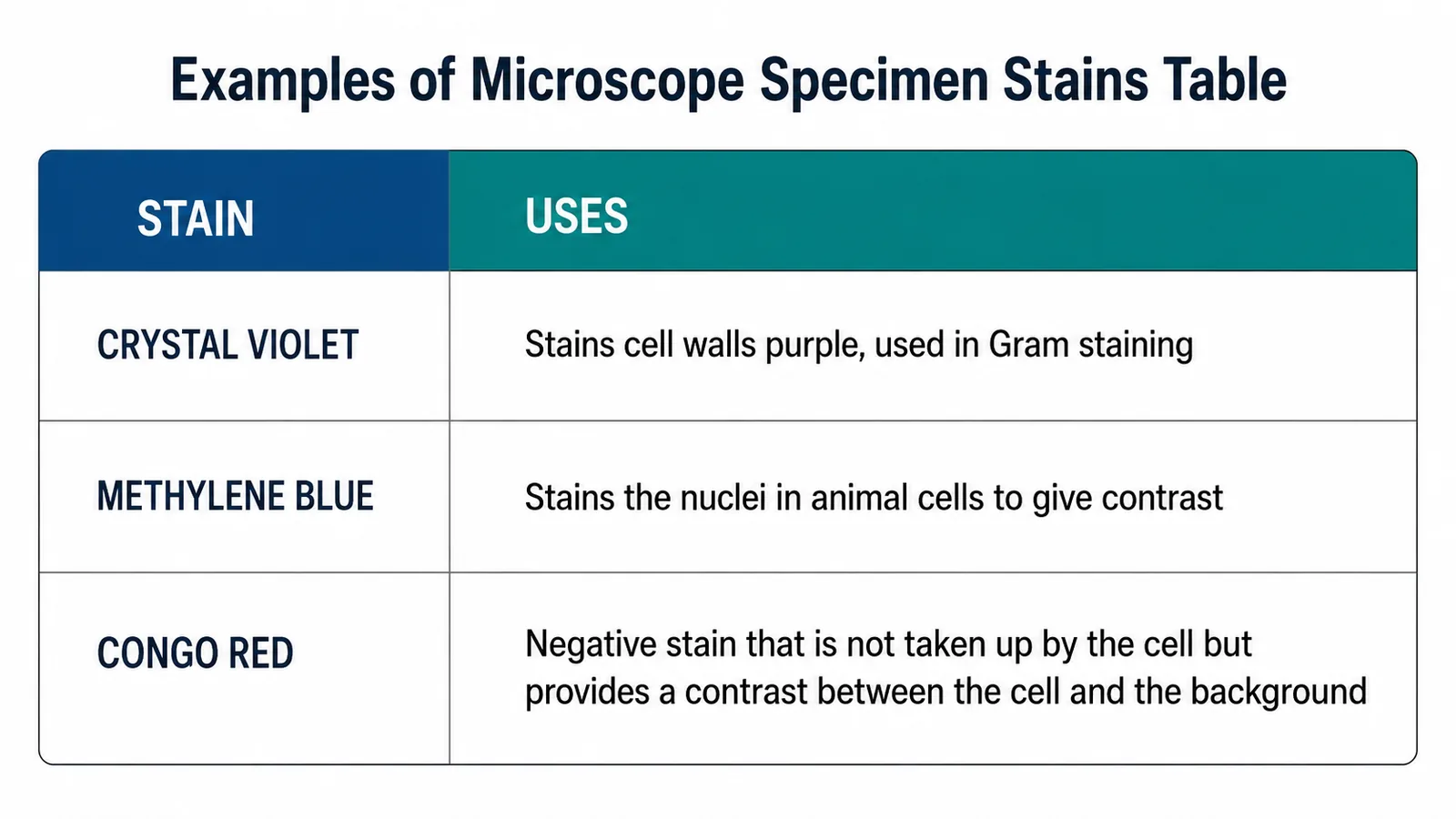

Red blood cells
- Red blood cells Shaped like a biconcave disc, thin in the centre, and they have no nucleus.
- They usually stain pink or red.
- The shape gives a large surface area for taking up oxygen, and the lack of a nucleus leaves more room for haemoglobin.
White blood cells
- White blood cells Larger than red cells and usually round or irregular in outline, with a clearly stained nucleus.
- Some have a lobed nucleus and others a large round one.
Platelets
- Platelets Very small pieces between the larger cells, with no nucleus.
Section 4 of 6Carrying oxygen


1
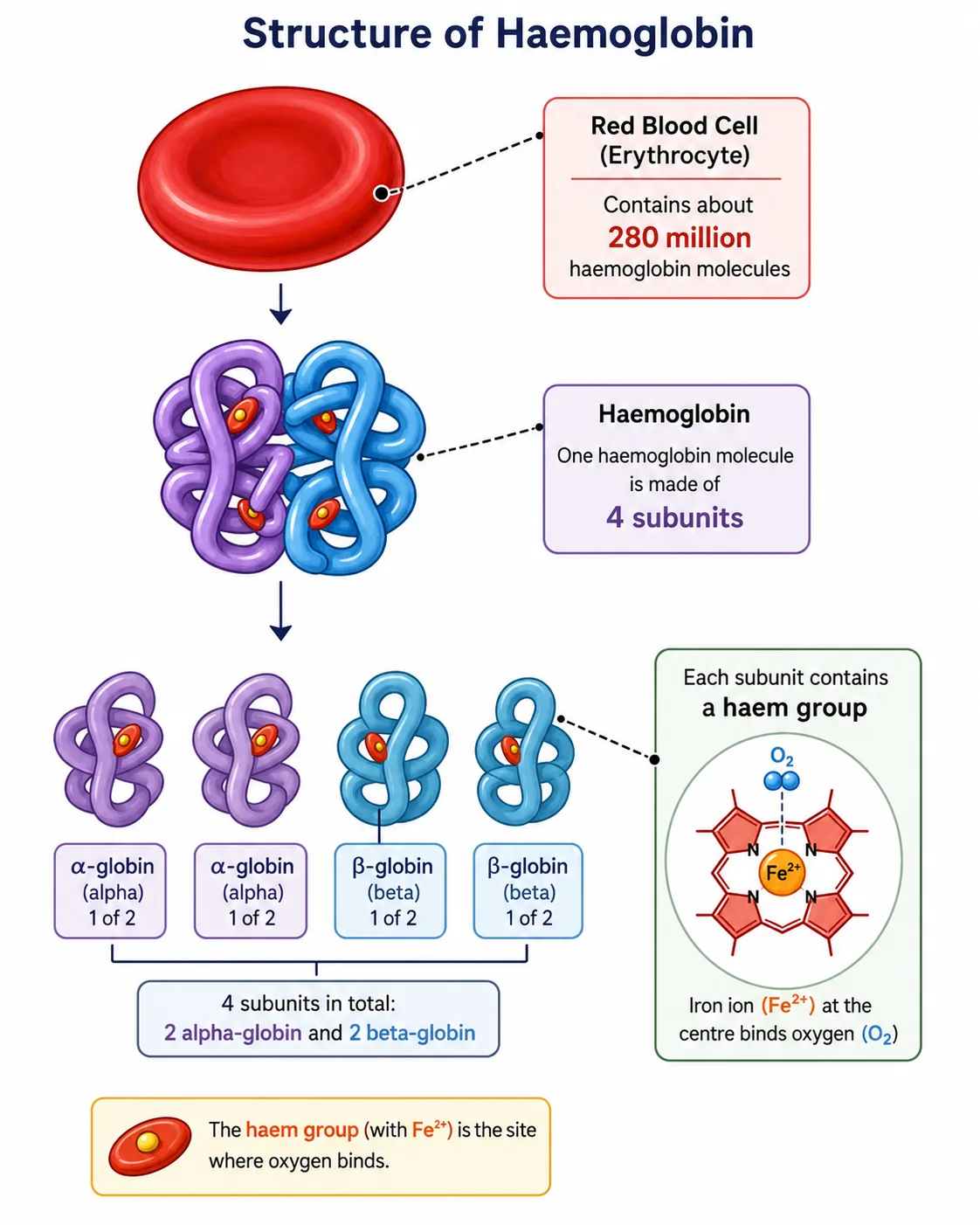
In the lungs, where oxygen concentration is high, oxygen diffuses into the red blood cells.
2
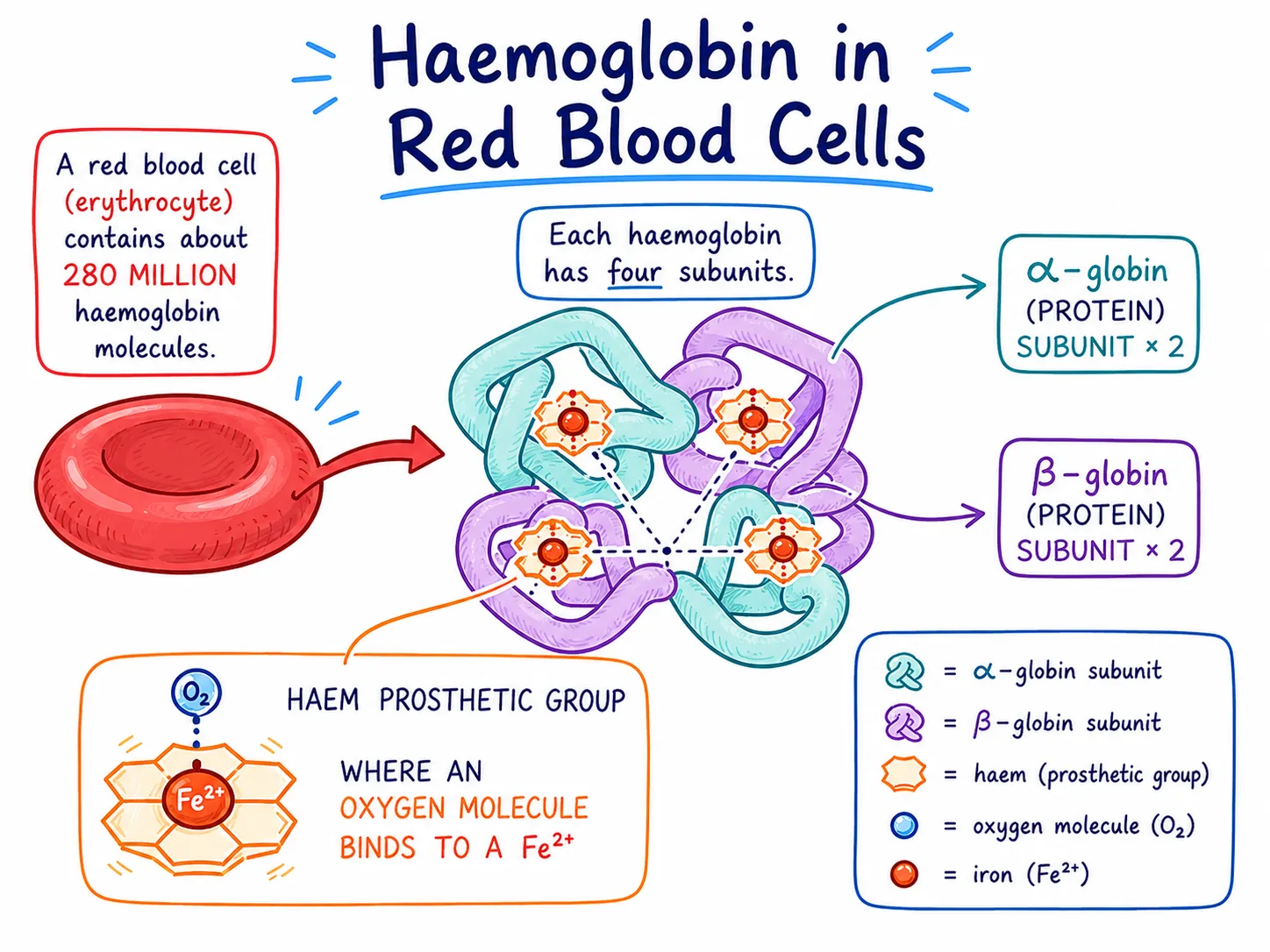
Oxygen combines with haemoglobin to form oxyhaemoglobin.
3
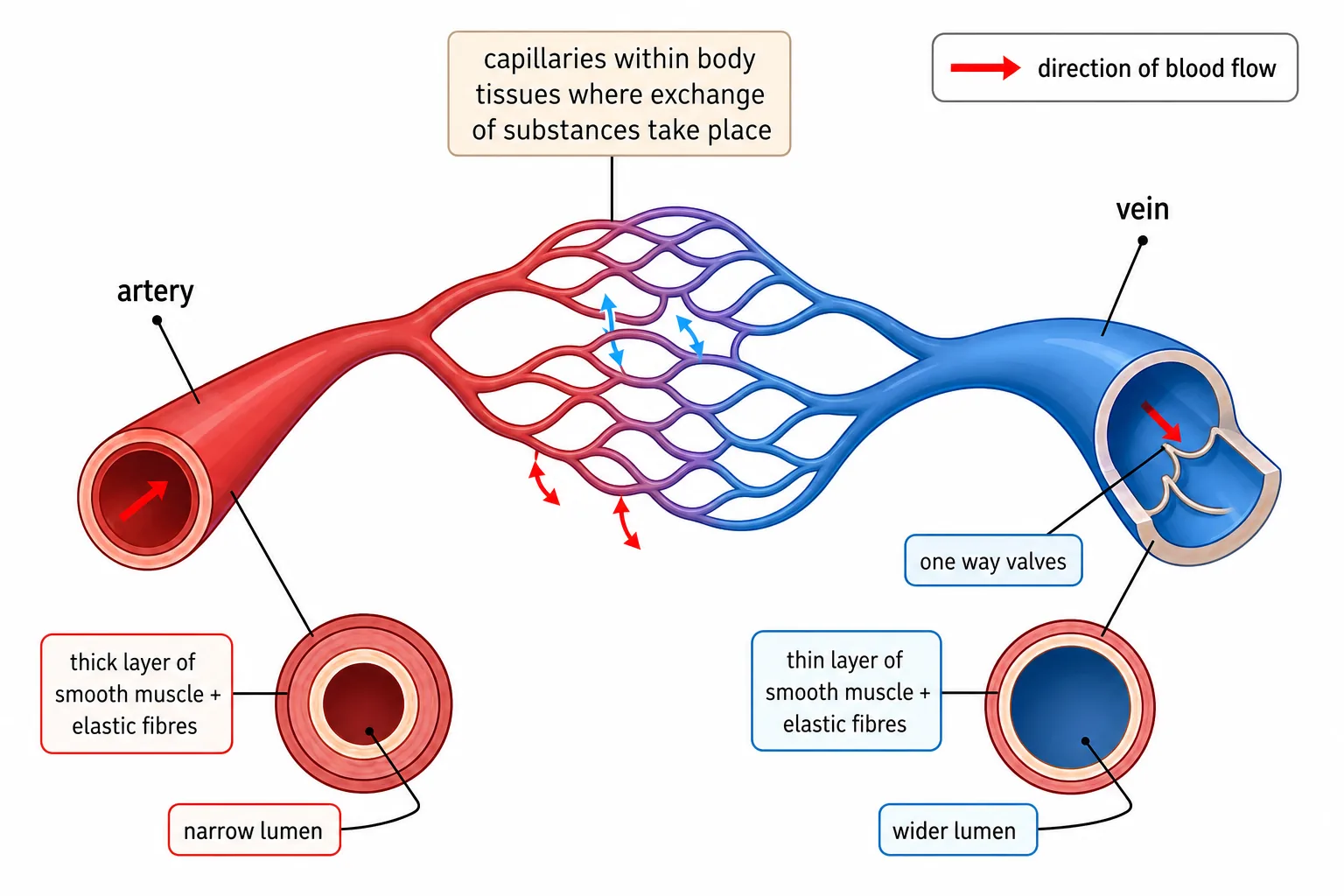
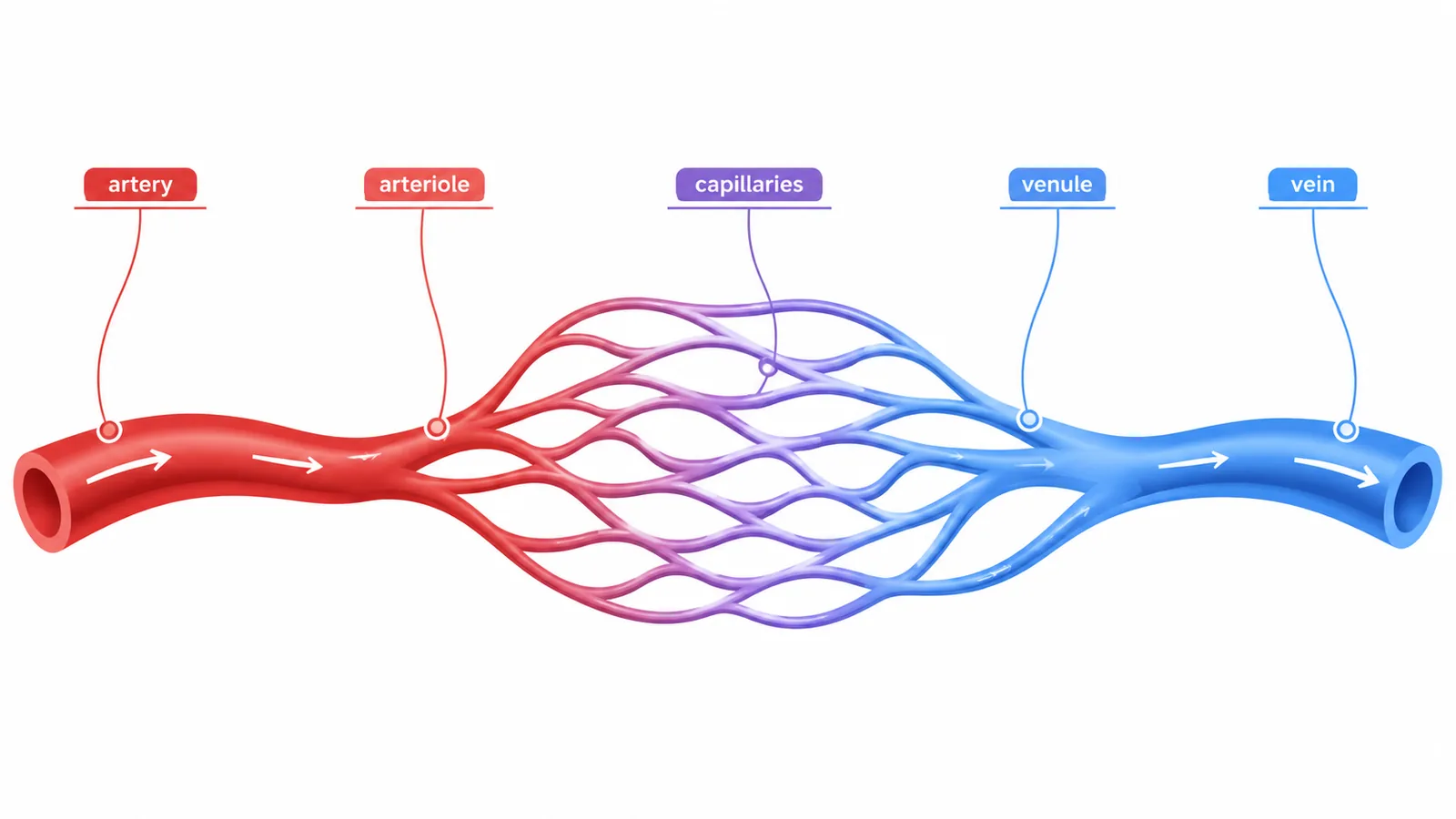
The blood travels round the body in the arteries.
4
In tissues where oxygen concentration is low, oxyhaemoglobin releases its oxygen, which diffuses into the respiring cells.
Section 5 of 6Key terms
| Term | Meaning |
|---|---|
| Plasma | The liquid part of the blood that transports dissolved substances and heat. |
| Haemoglobin | The red protein in red blood cells that binds to oxygen. |
| Oxyhaemoglobin | The compound formed when haemoglobin combines with oxygen. |
| Phagocytosis | Engulfing and digesting pathogens, carried out by some white blood cells. |
| Platelet | A cell fragment that helps blood to clot. |
| Antibody | A protein made by white blood cells that targets a particular pathogen. |
Section 6 of 6Exam technique
1
Saying red blood cells have a nucleus. They do not; white blood cells do.
2
Writing that platelets are cells. They are fragments of cells.
3
Saying plasma carries only water. It carries many dissolved substances including urea, hormones, nutrients and carbon dioxide.
4
Mixing up haemoglobin and oxyhaemoglobin. Oxyhaemoglobin is haemoglobin carrying oxygen.
5
Stating that red blood cells fight infection. White blood cells do this.