Section 1 of 10Components of blood

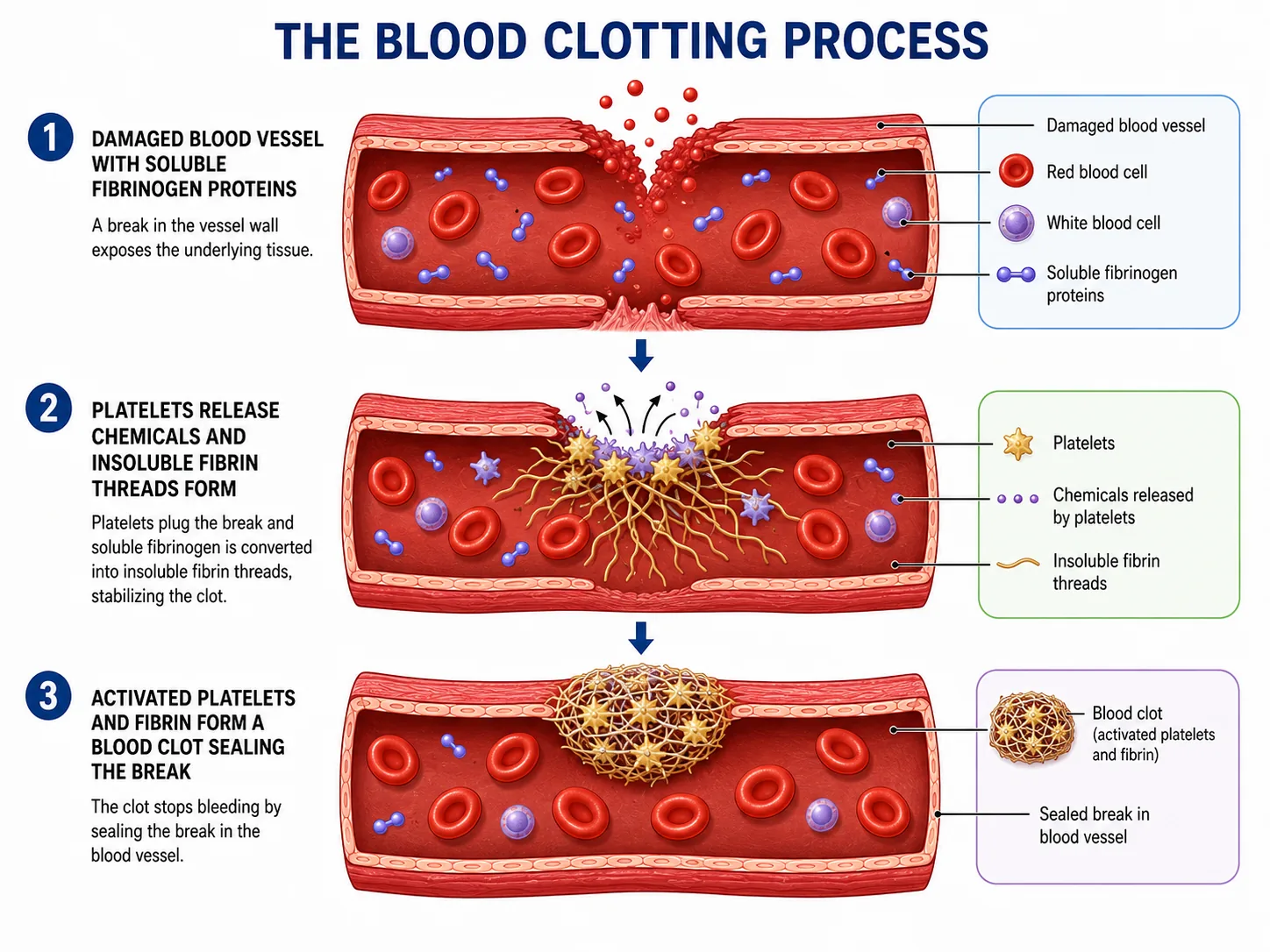
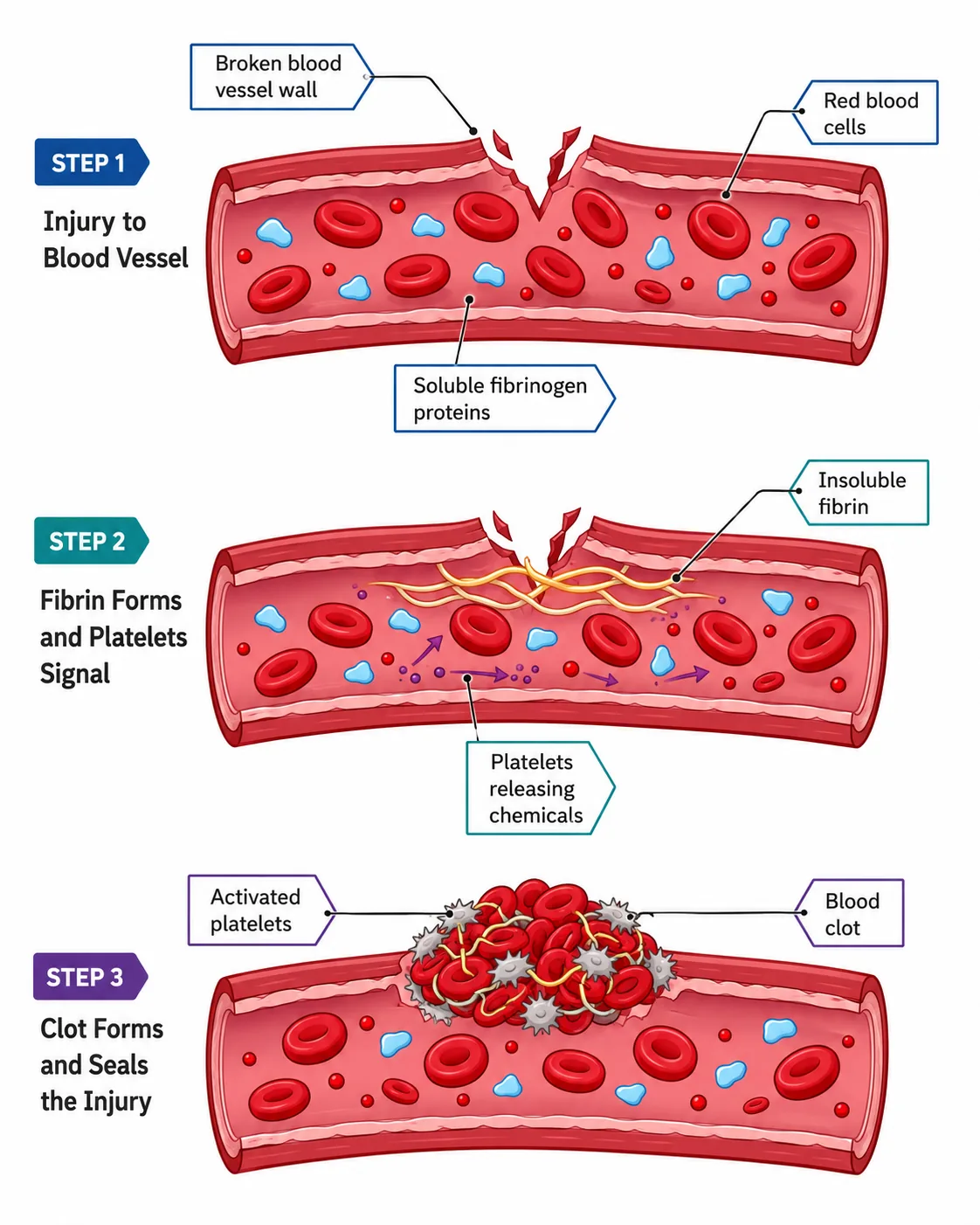

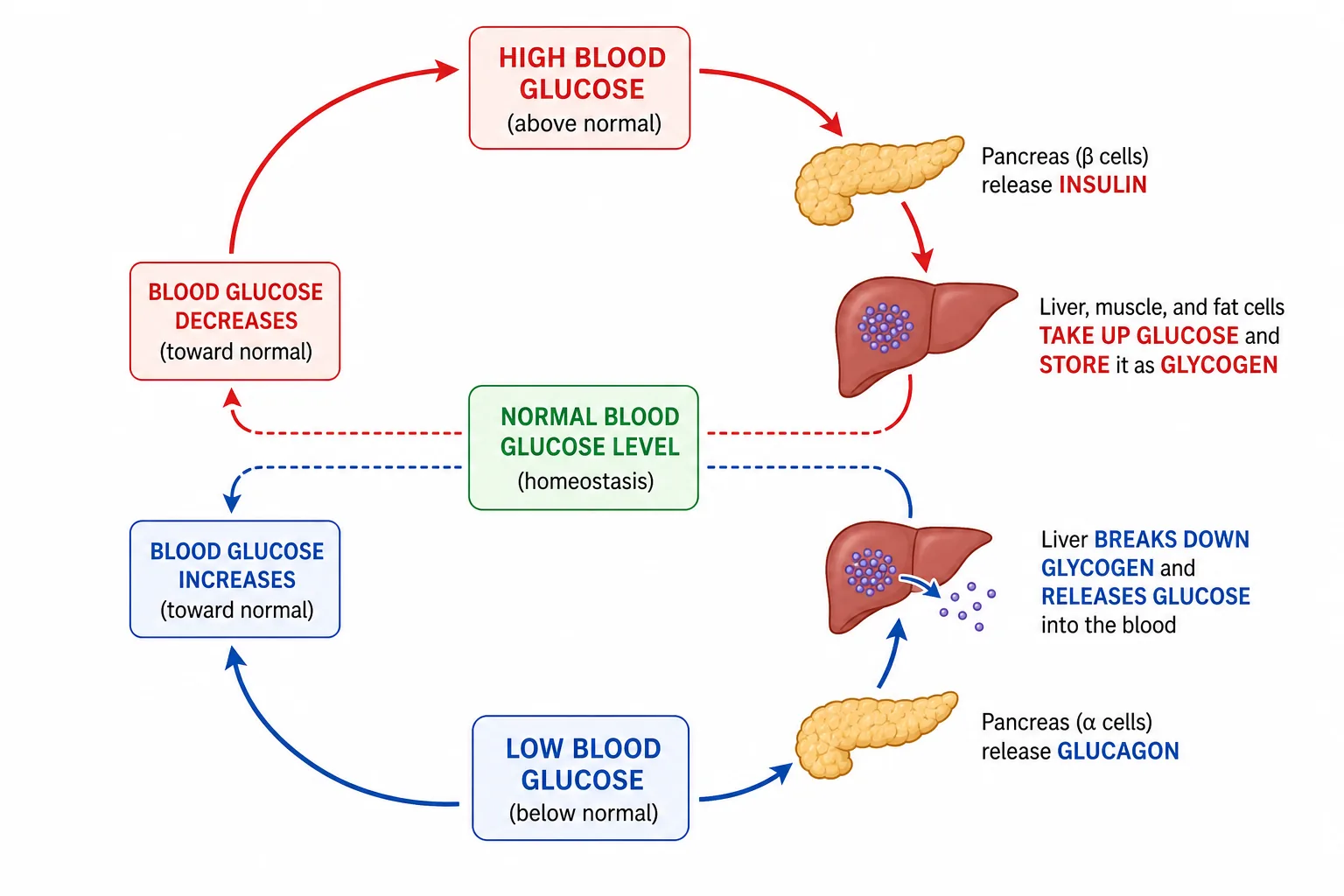

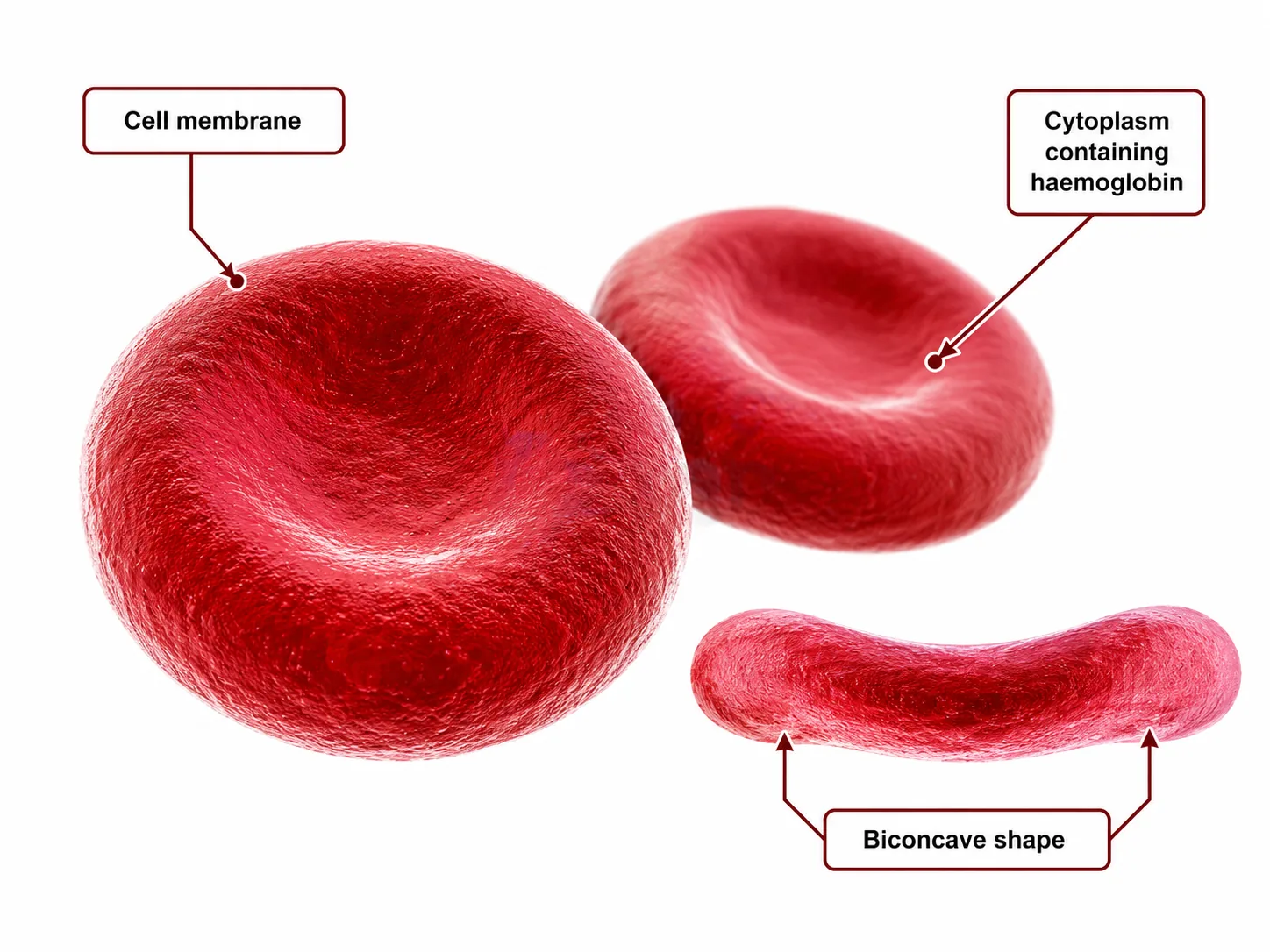

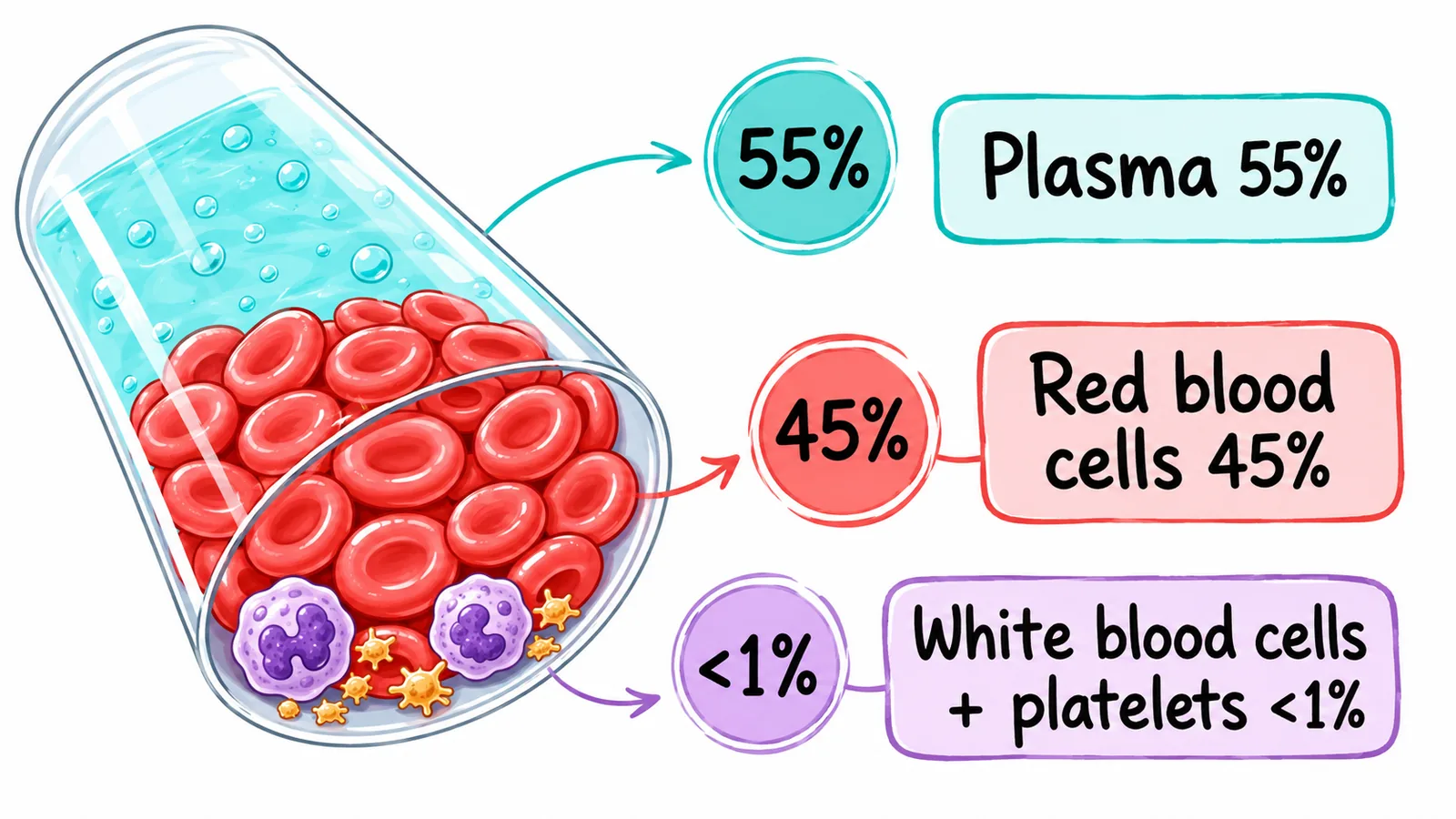
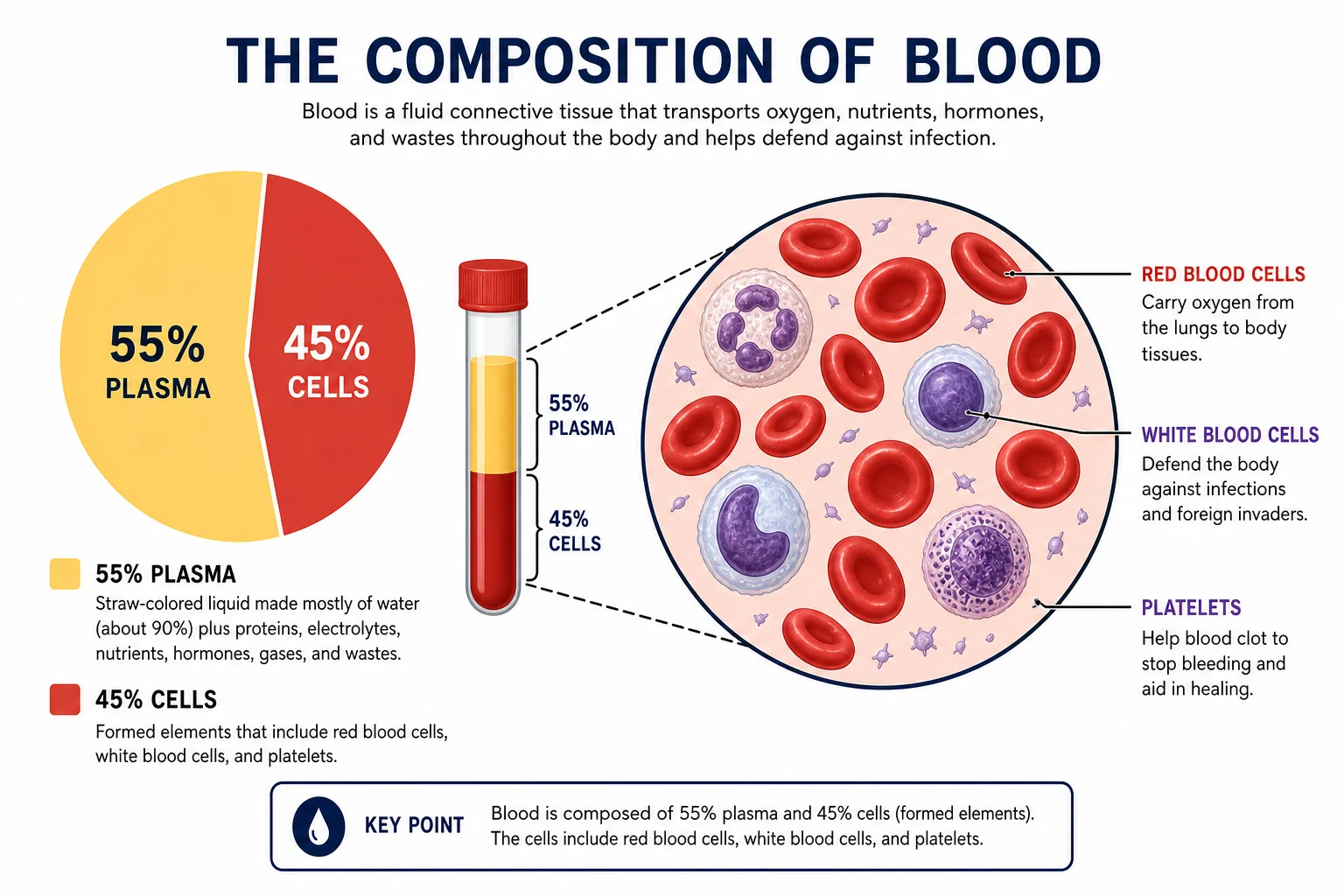
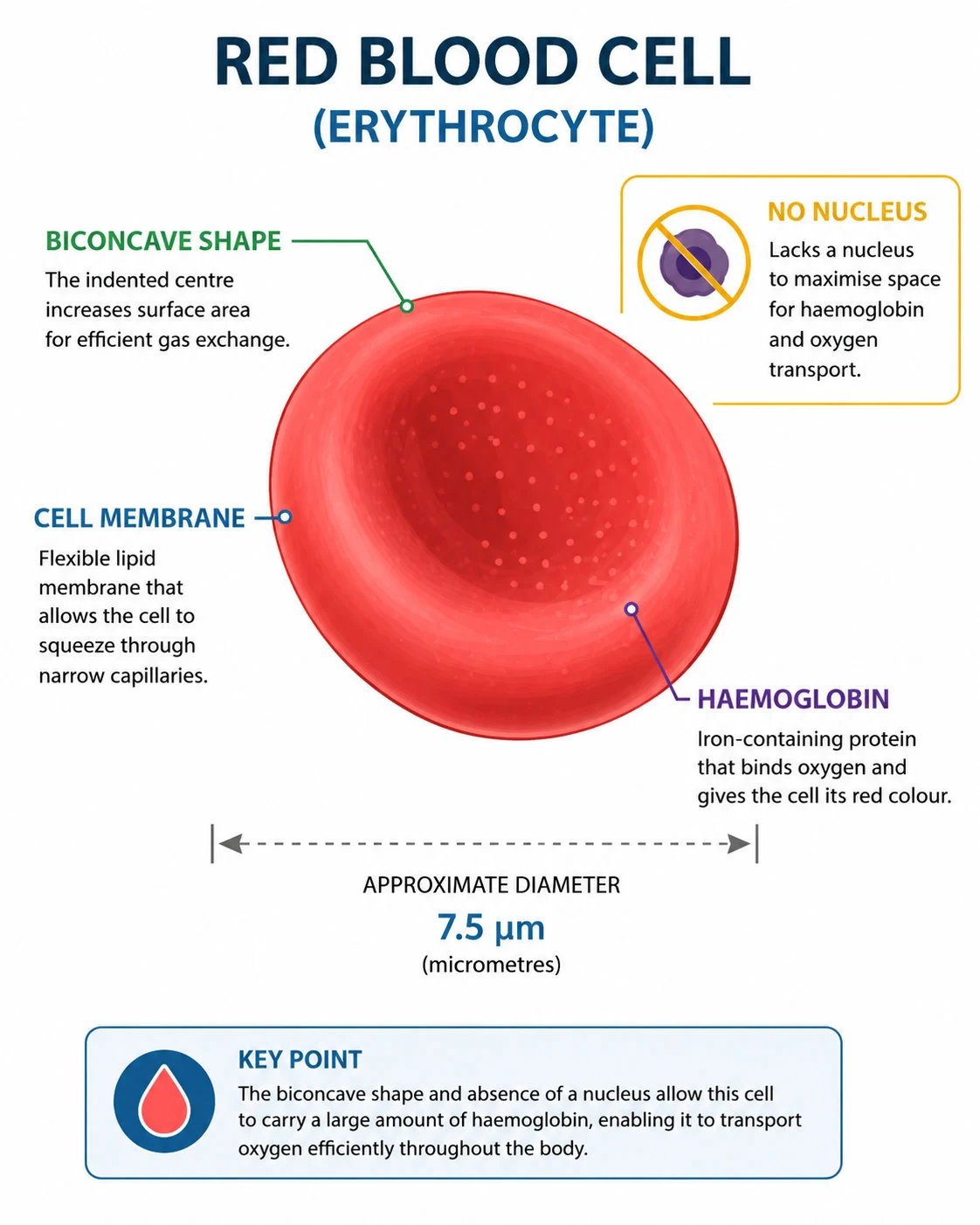
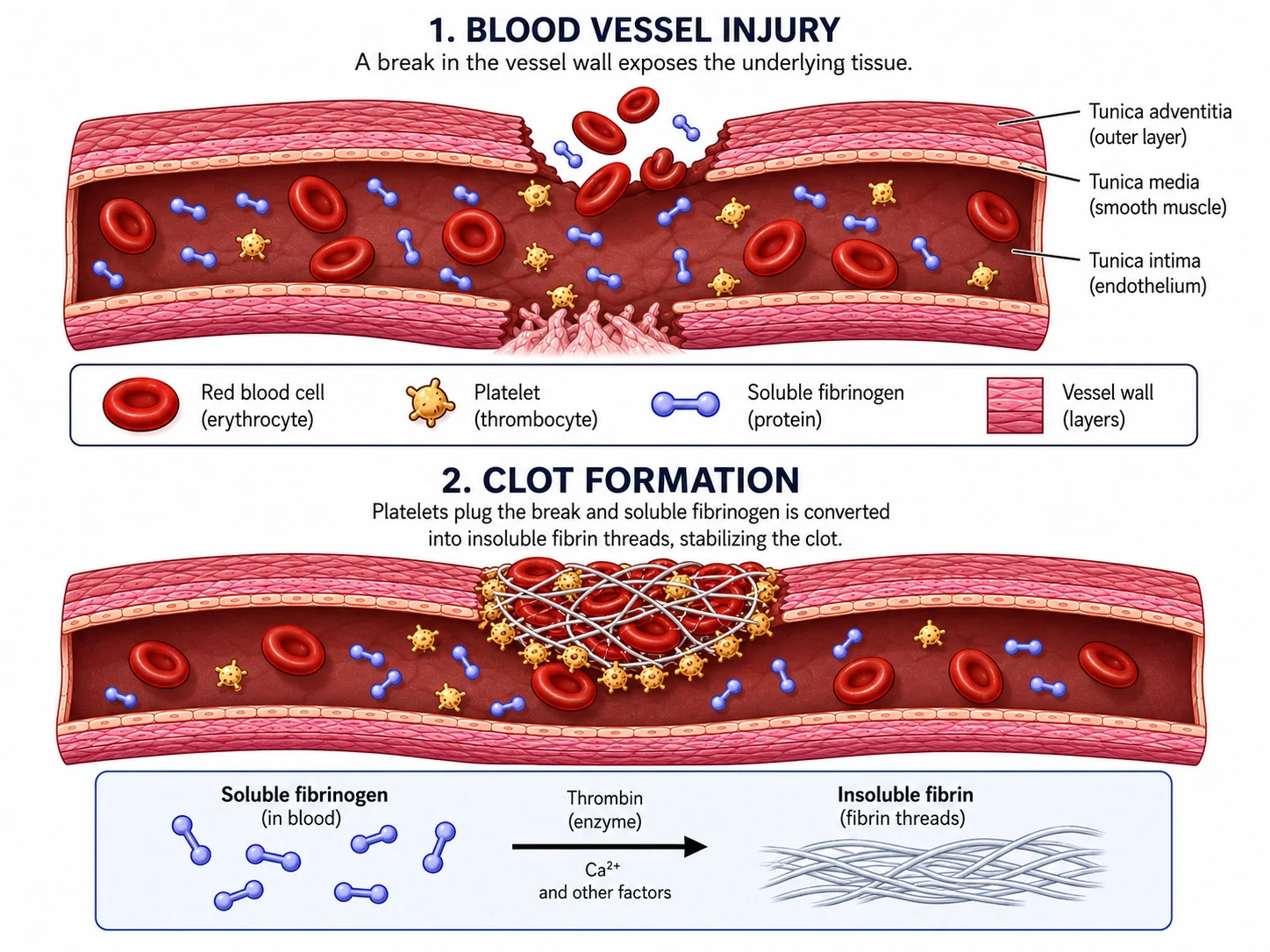
Blood is a tissue made of plasma, red blood cells, white blood cells and platelets. Plasma is the pale yellow liquid that carries dissolved substances such as glucose, urea, hormones and carbon dioxide, and distributes heat. Red blood cells carry oxygen. This lesson concentrates on white blood cells and platelets, which are part of the body's defence.
Section 2 of 10White blood cells
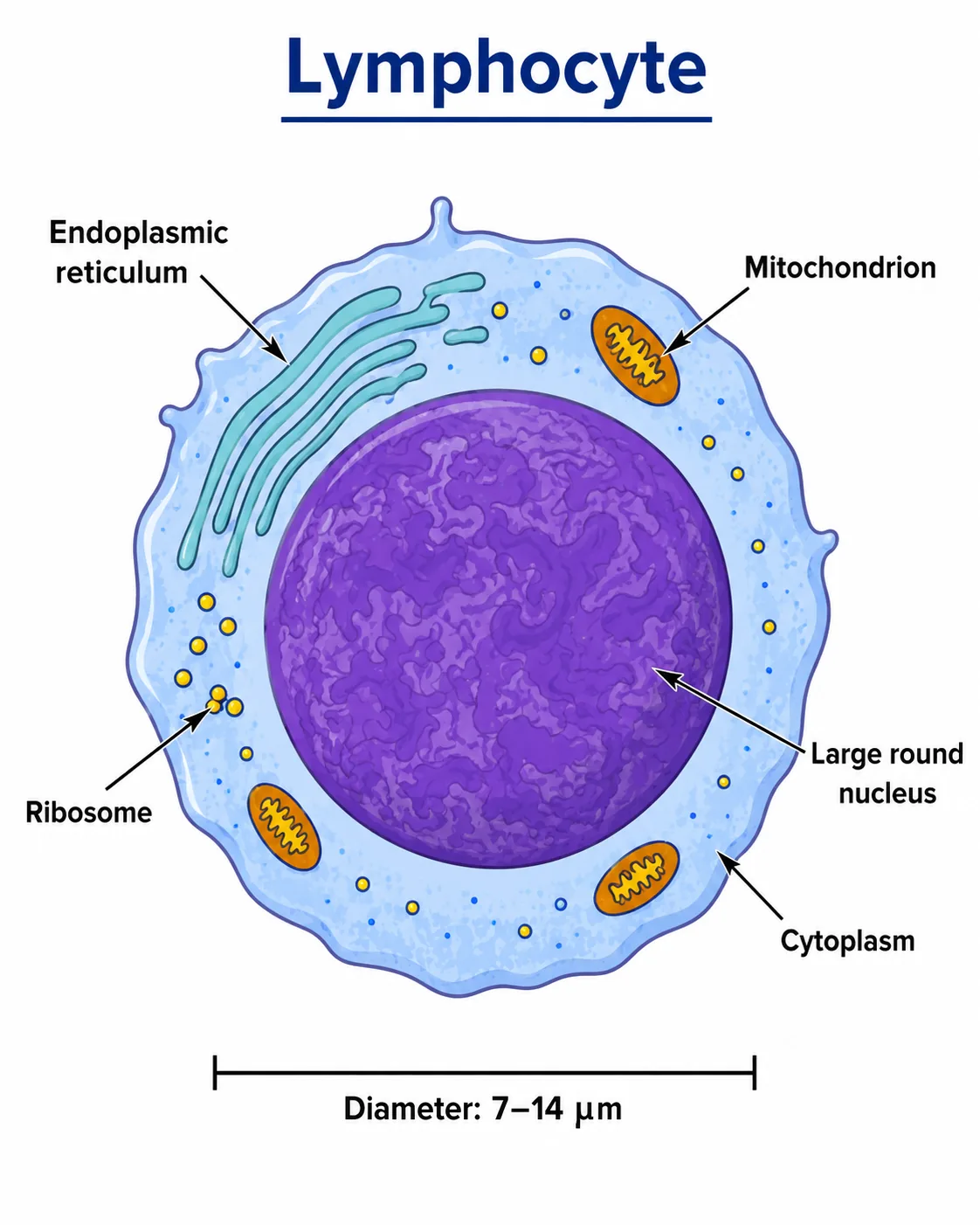

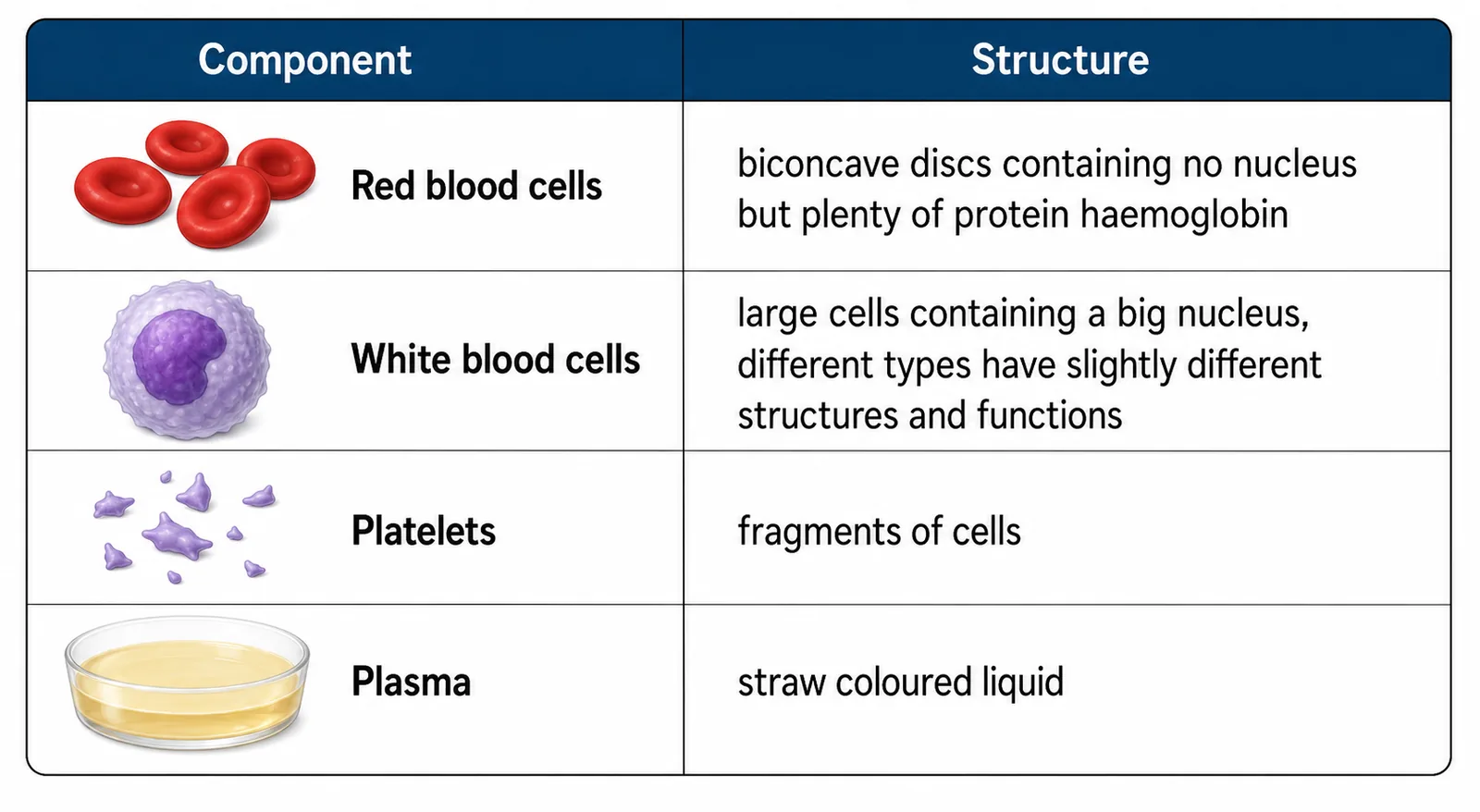


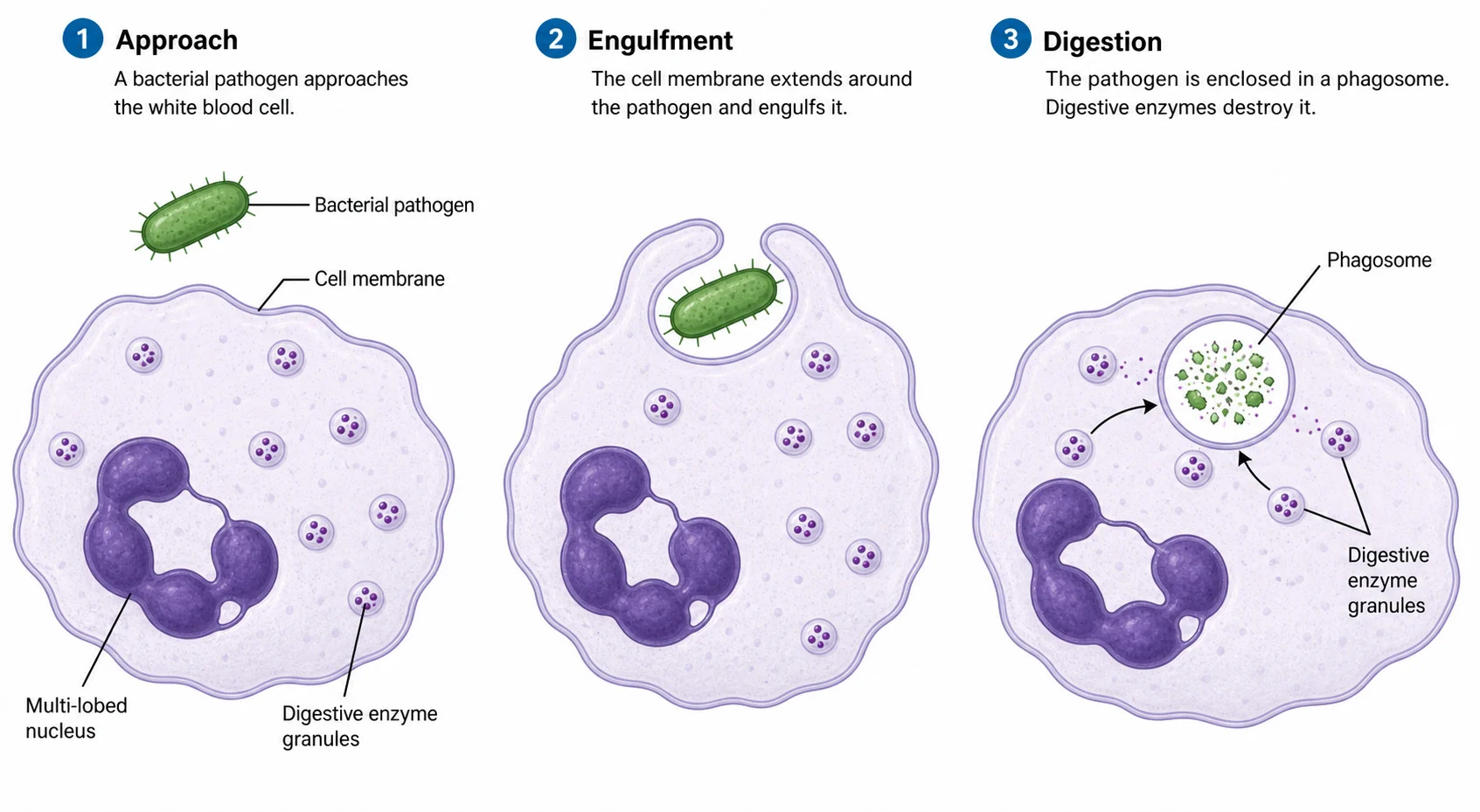
White blood cells (leucocytes) are larger than red cells, have a nucleus, and are far fewer in number. They are produced in bone marrow. The two main groups that you need to know are phagocytes and lymphocytes.
| Type | Structure | How it protects |
|---|---|---|
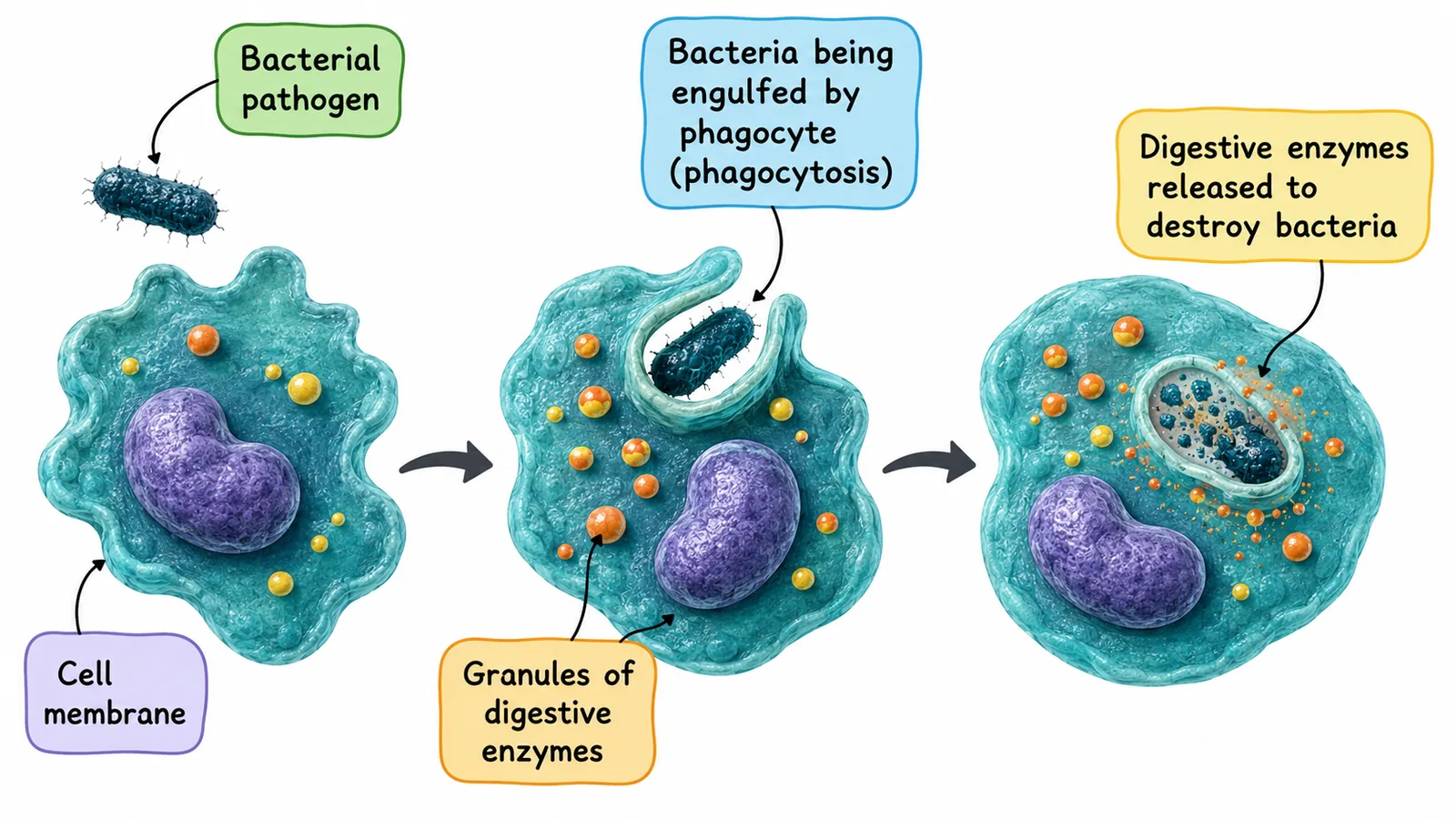
| Phagocyte | Large, with a lobed or bean-shaped nucleus and a flexible cell membrane | Engulfs and digests pathogens by phagocytosis |
| Lymphocyte | Large round nucleus, little cytoplasm | Produces antibodies or antitoxins; some remain as memory cells |
Phagocytosis happens in stages. The phagocyte is attracted to chemicals released by the pathogen, flows around it and engulfs it in a vacuole. Enzymes from lysosomes are released into the vacuole to digest and destroy the pathogen. Phagocytosis is non-specific: phagocytes respond to many types of pathogen.
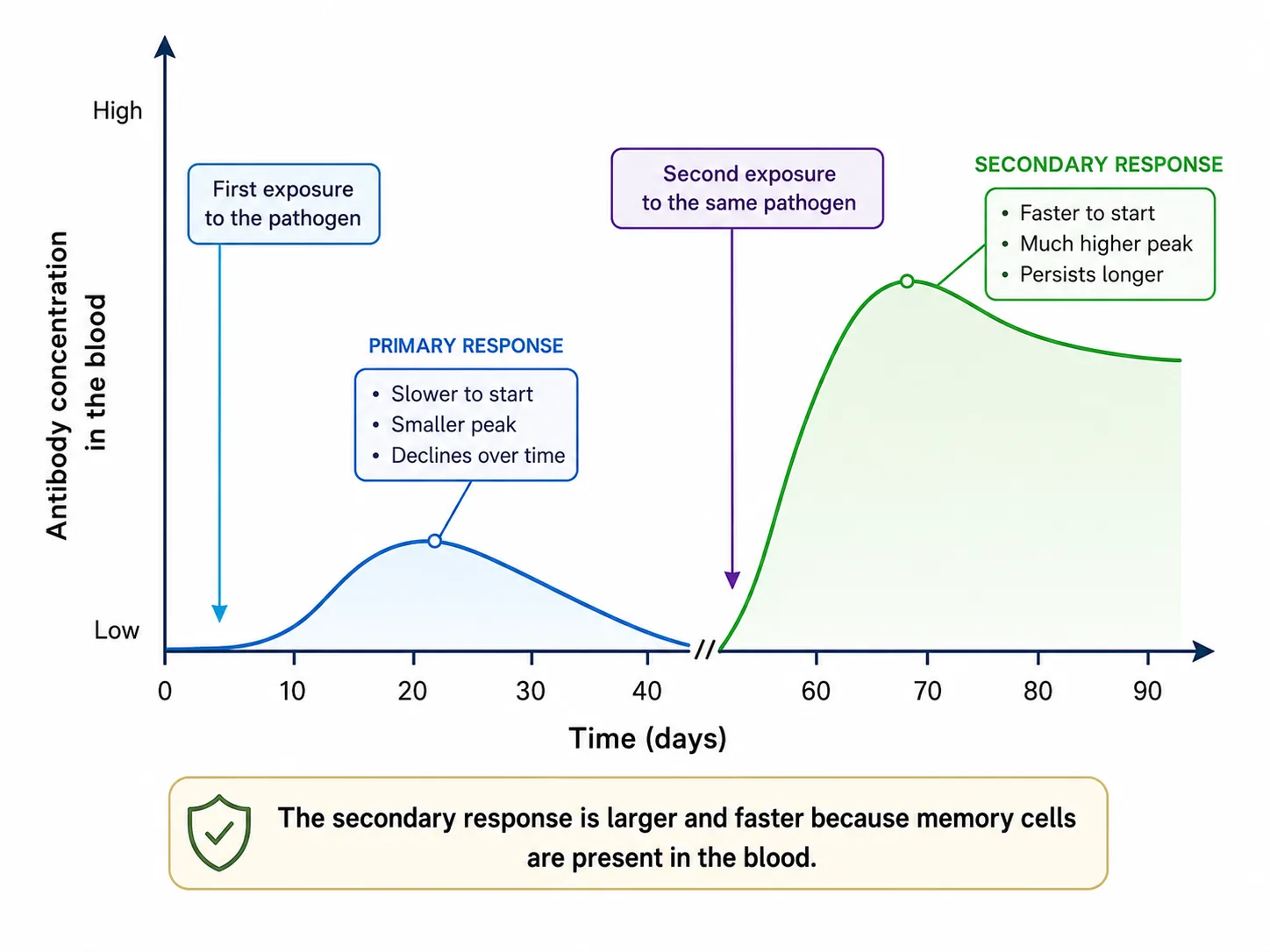
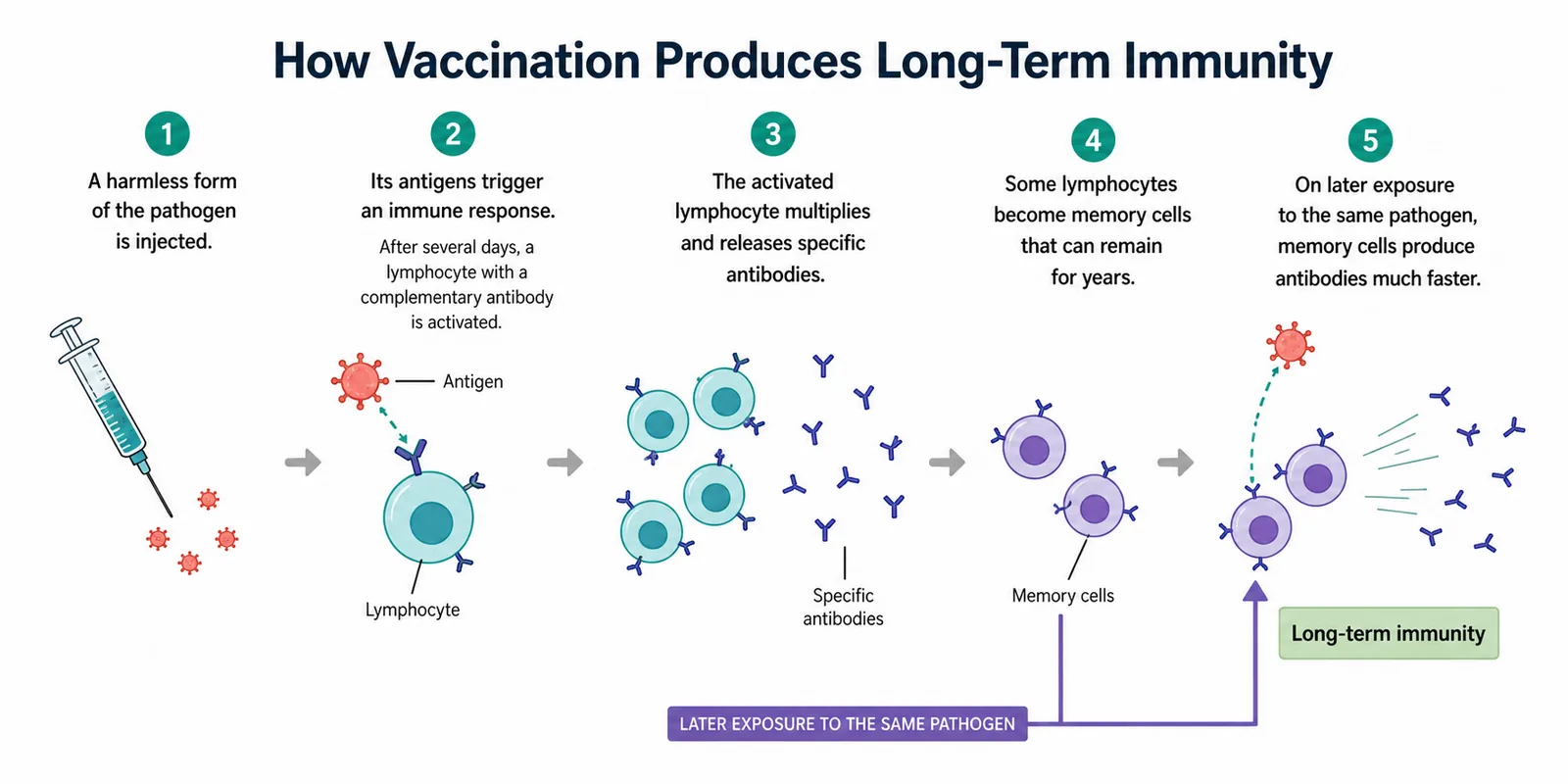
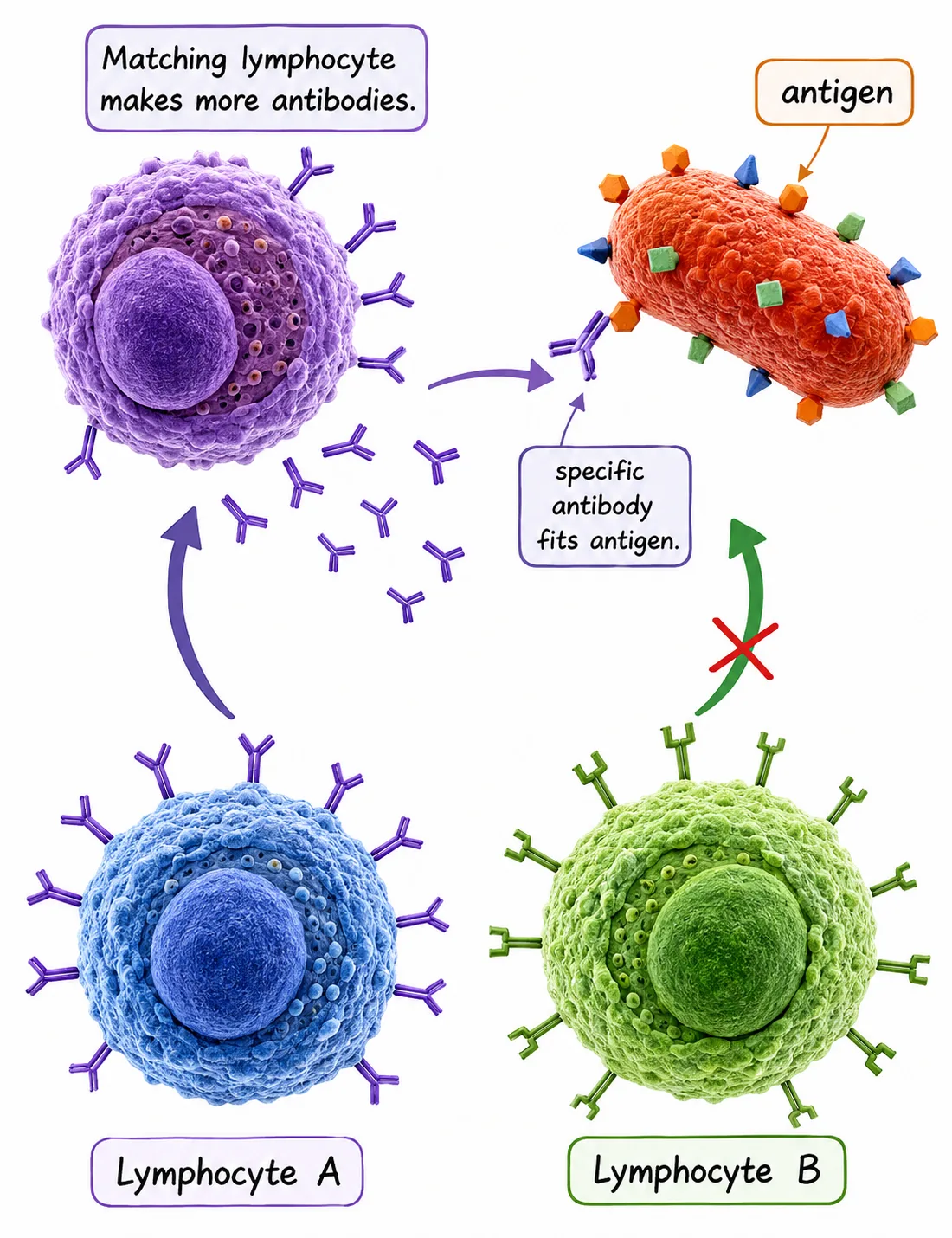
Lymphocytes act in a more specific way. When a pathogen enters, a lymphocyte whose antibody fits the pathogen's antigen is stimulated to multiply and produce large numbers of the matching antibody. Some produce antitoxins that neutralise toxins released by bacteria.
Section 3 of 10Platelets


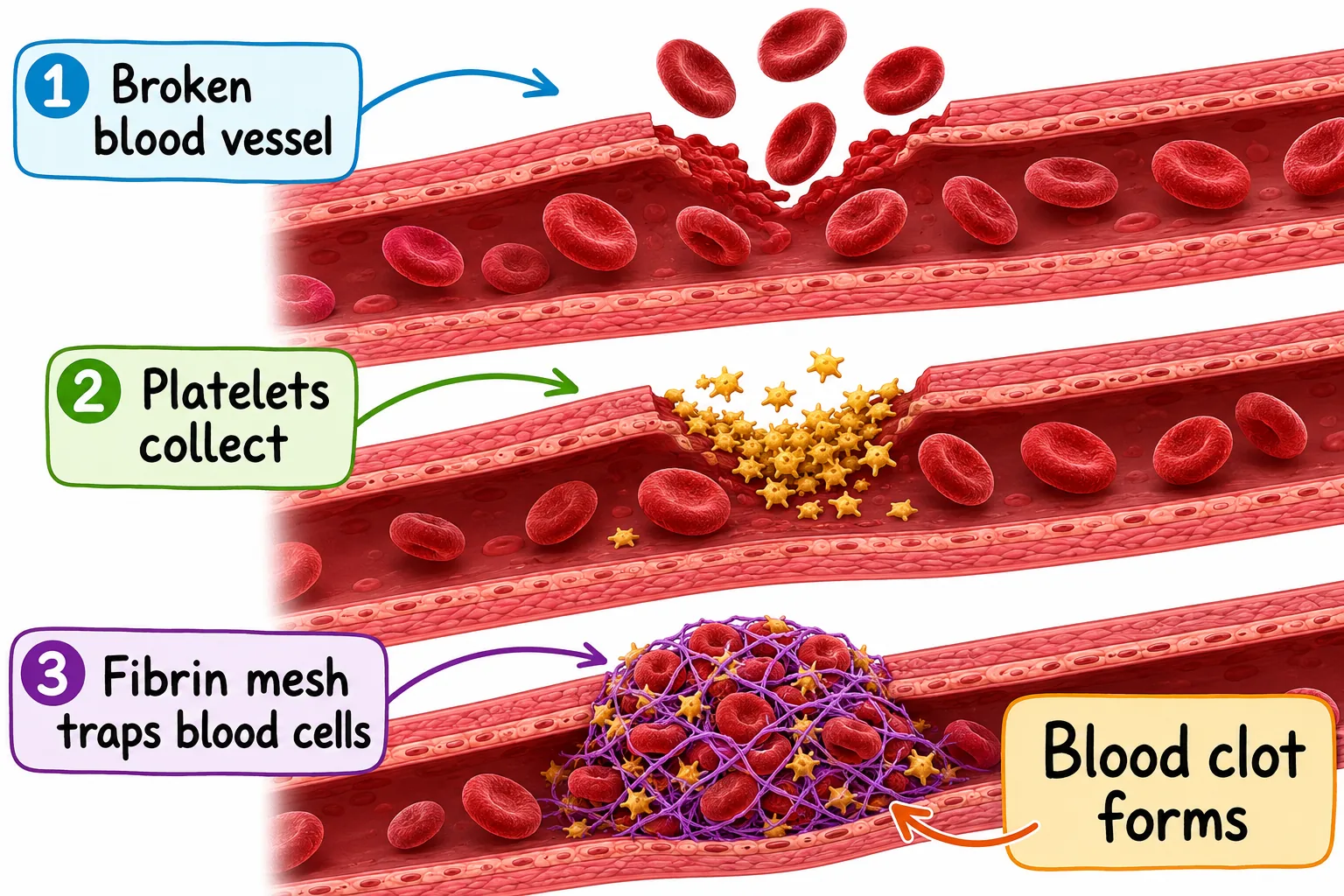


Platelets are small fragments of cells with no nucleus, produced in bone marrow.
Section 4 of 10Observing blood
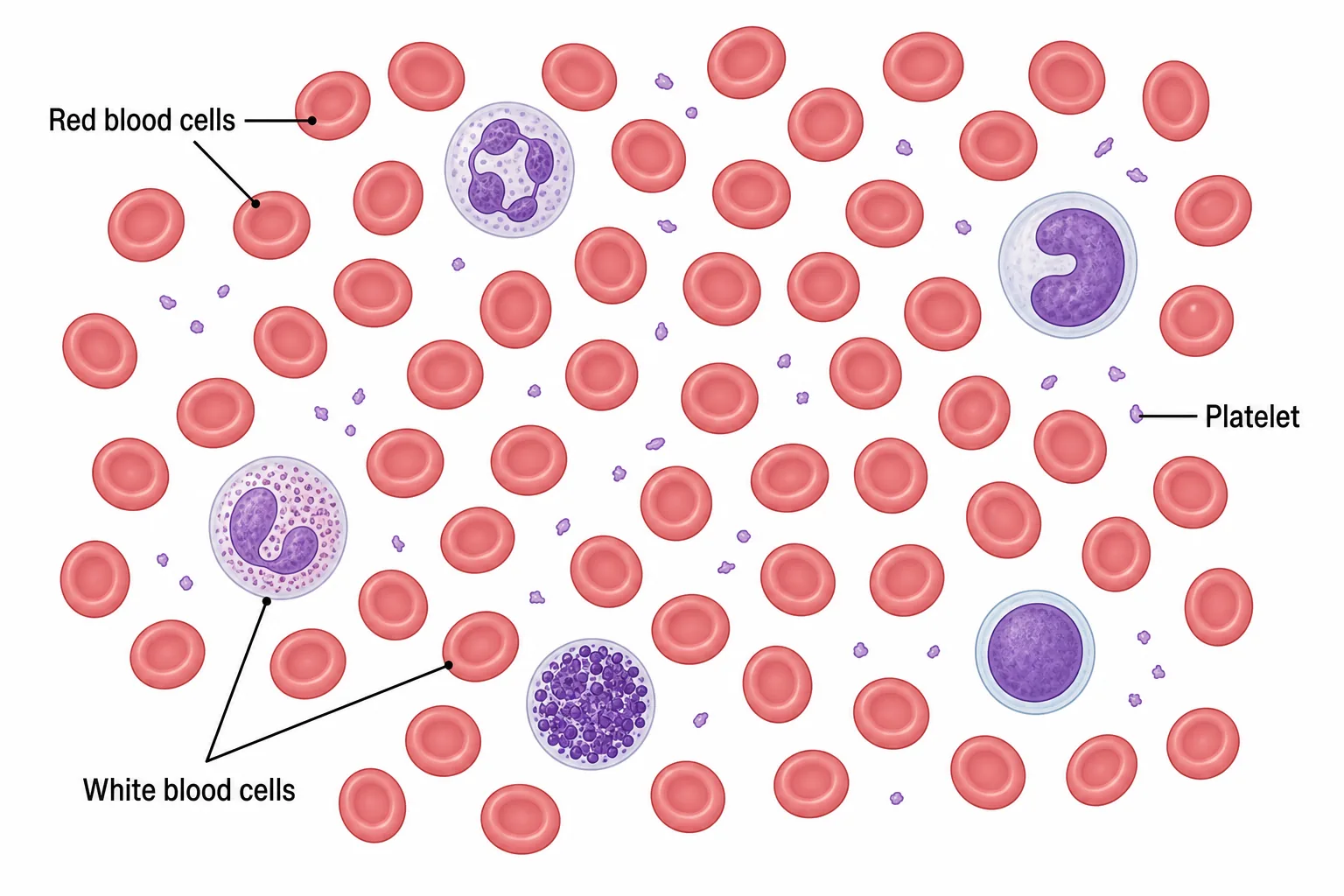
A stained blood smear can be examined under a light microscope.
- and add a magnification calculated by dividing the size of the drawing by the actual size.
- as in HIV infection.
Section 5 of 10Connections
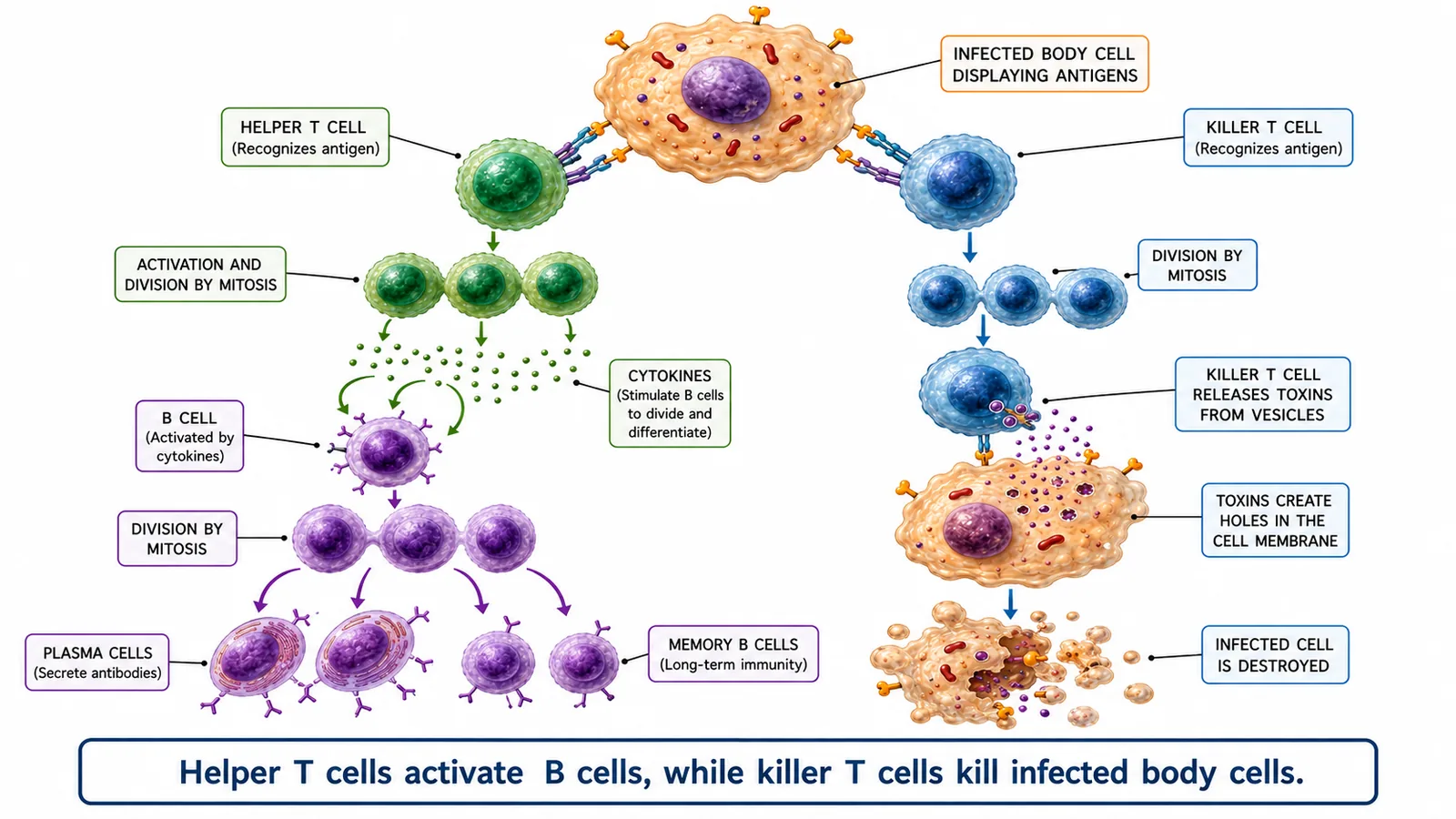
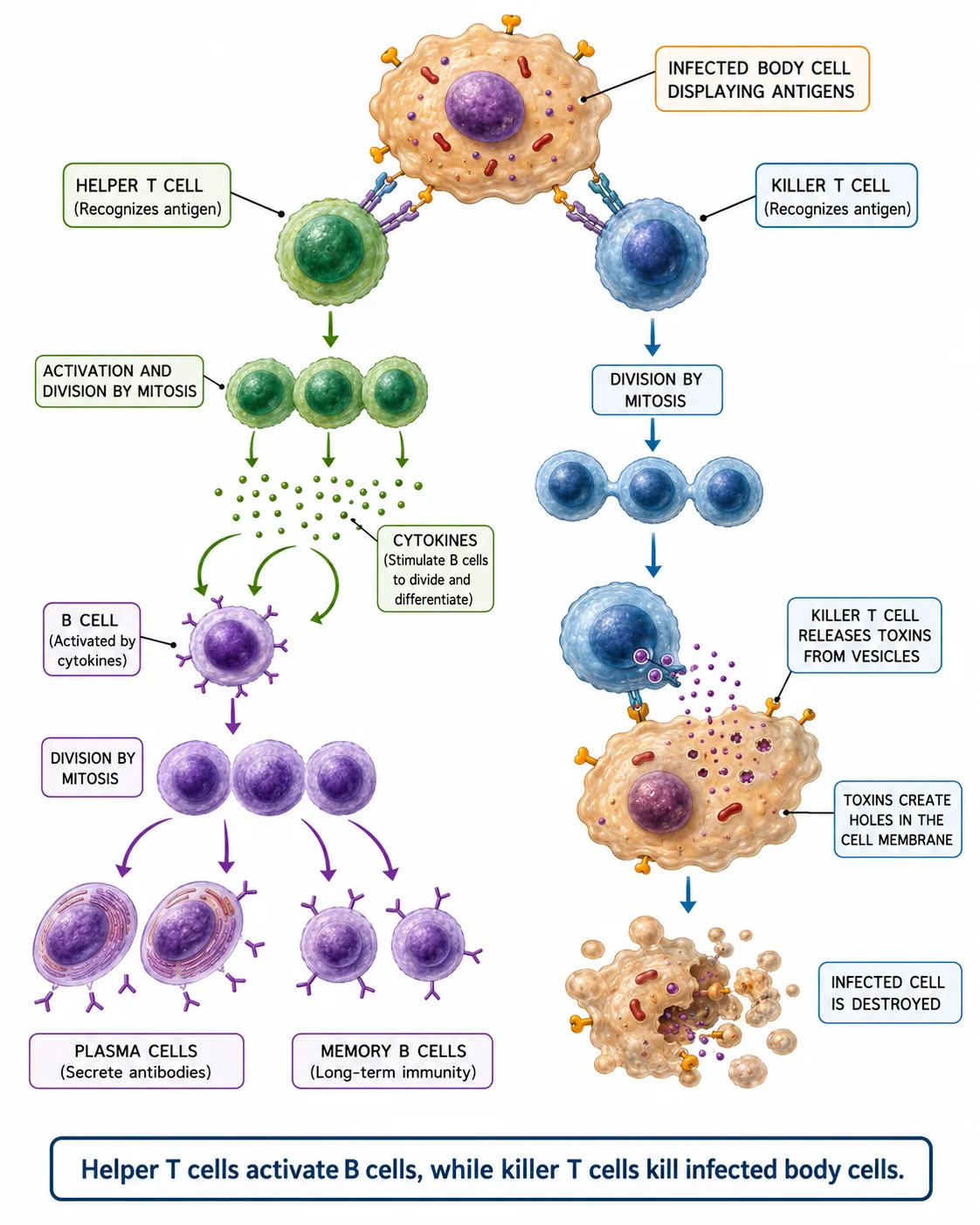
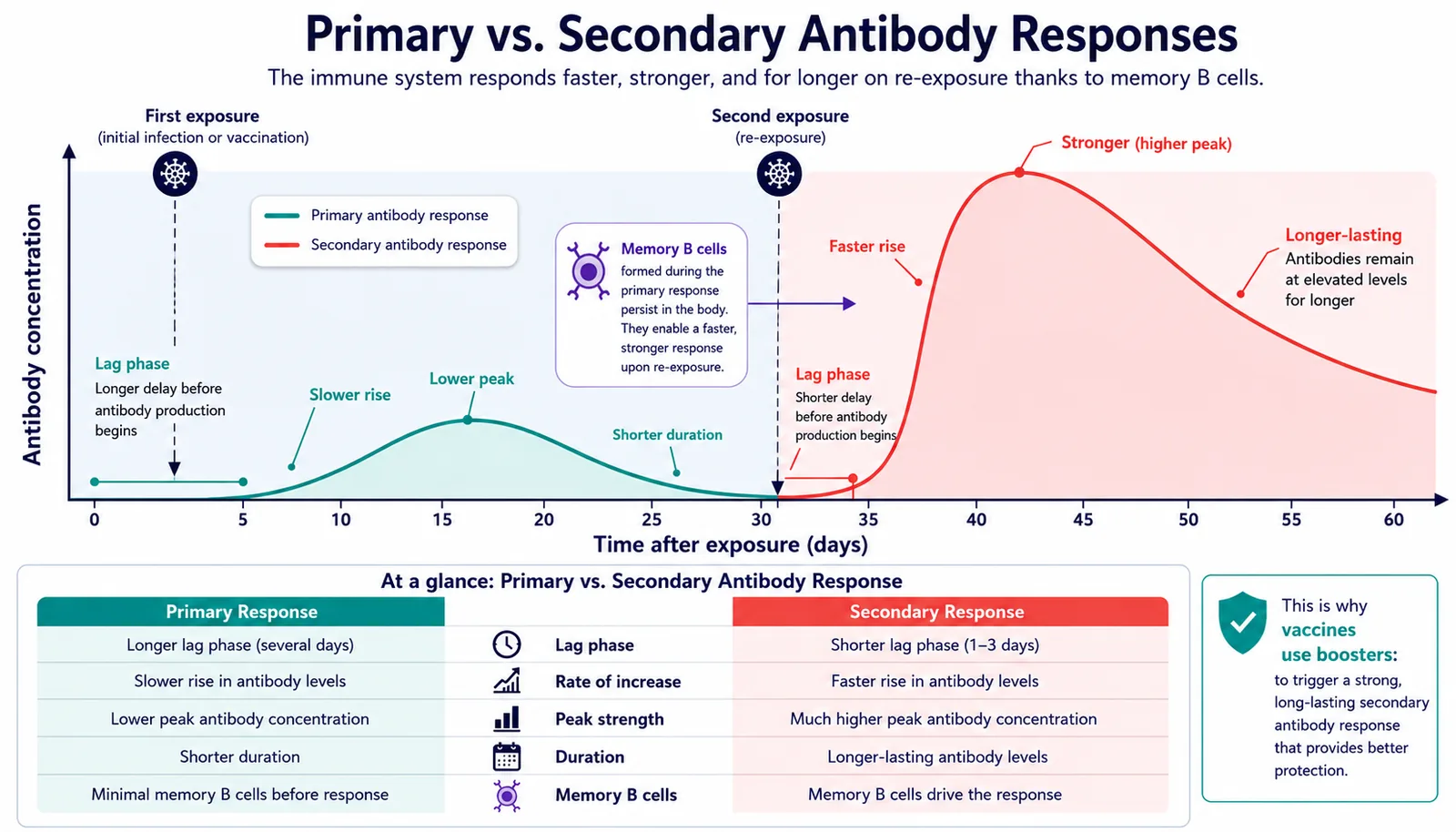
These cells are the basis for the immune response, in which the number of antibodies rises when a pathogen first invades, and for vaccines, which prepare memory lymphocytes. They also link to the skin and other non-specific defences, which are the first line. Together these lessons show the layered nature of defence: barriers first, then phagocytes, then specific lymphocyte responses.
Section 6 of 10Magnification from a drawing

You may be asked to calculate magnification from a drawing or micrograph.
- A red blood cell is typically about 7 to 8 micrometres in diameter,
- so you can estimate the size of a white blood cell by comparing it with the red cells next to it.
Remember to rearrange the formula when you are given the magnification and the image size and are asked for the actual size: actual size = image size / magnification.
Section 7 of 10Antibodies and antitoxins in more detail


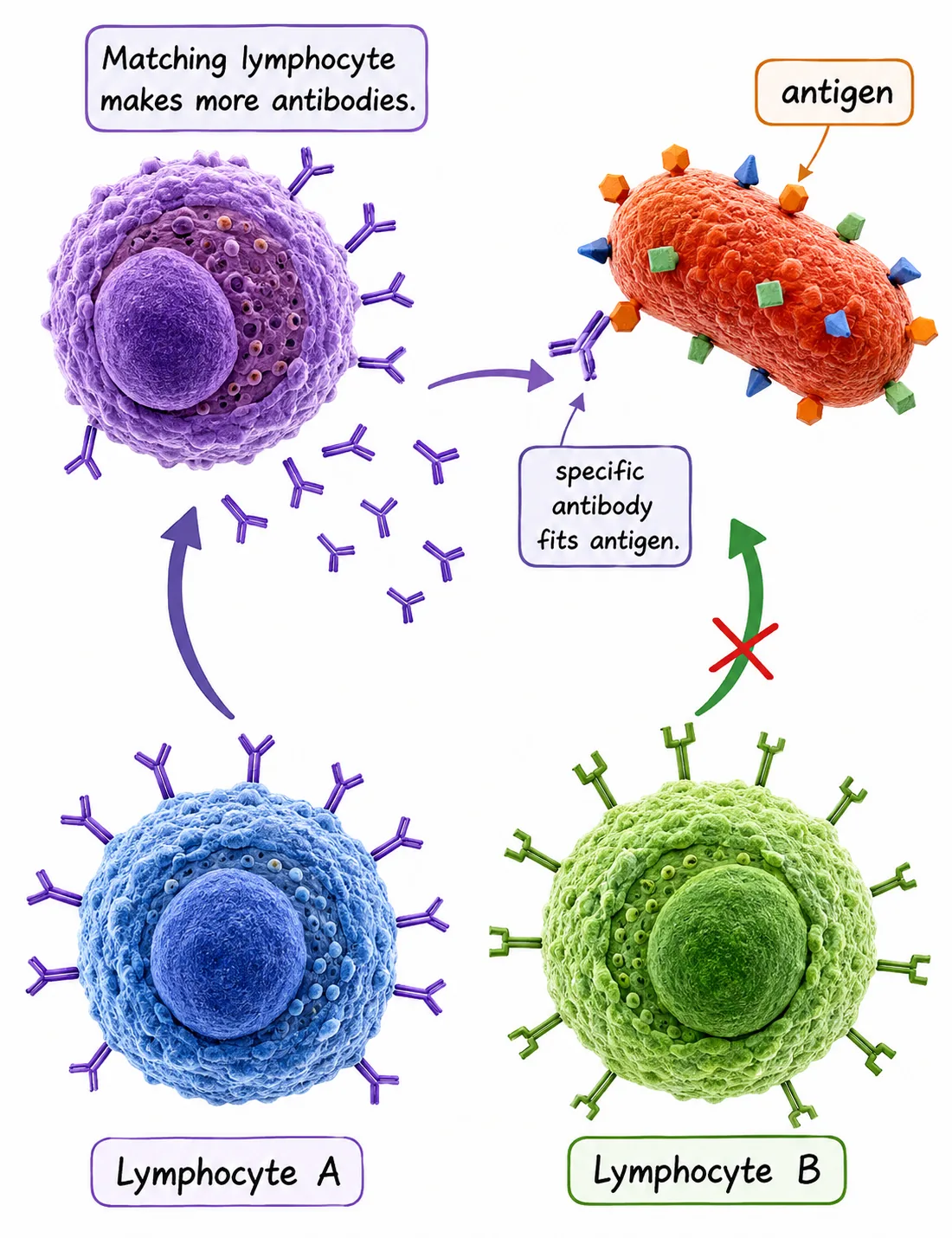
Each lymphocyte makes antibodies of one shape only.
Section 8 of 10Exam-style questions


Describe how a phagocyte destroys a bacterium. [3]3 marks
Exam-style questions1. The phagocyte detects the bacterium and engulfs it, taking it into a vacuole. [1]2. Lysosomes release enzymes into the vacuole. [1]3. The enzymes digest the bacterium. [1]Explain how platelets help to prevent infection when the skin is cut. [3]3 marks
Exam-style questions1. Platelets stick at the wound and trigger clotting. [1]2. Fibrinogen is converted to insoluble fibrin, forming a mesh that traps cells. [1]3. The clot (scab) seals the wound so pathogens cannot enter. [1]A blood sample has 8 000 white blood cells per mm3. A patient with an infection has 15 000. Calculate the percentage increase. [2]2 marks
1. Increase = 15 000 - 8 000 = 7 000. [1]
2. 7 000 / 8 000 x 100 = 87.5%. [1]
Section 9 of 10Key terms
| Term | Meaning |
|---|---|
| Phagocyte | A white blood cell that engulfs and digests pathogens. |
| Lymphocyte | A white blood cell that makes antibodies. |
| Phagocytosis | Engulfing and digesting of a pathogen by a cell. |
| Antibody | A protein made by lymphocytes that binds to a specific antigen. |
| Antitoxin | A protein that neutralises a toxin. |
| Platelet | A cell fragment involved in blood clotting. |
| Fibrin | An insoluble protein that forms a mesh in a blood clot. |
| Antigen | A molecule on a pathogen that triggers an immune response. |
Section 10 of 10Exam technique
Marked practiceQuizzes for this lesson
Magnification Triangle & Unit Conversion
Formula: M = I / A ⇔ A = I / M ⇔ I = M × A
Units: 1 mm = 1,000 μm = 1,000,000 nm.
Rule: Convert Image size (ruler mm) to μm by ×1,000 before dividing by Actual size.