Section 1 of 7Path of air into the lungs


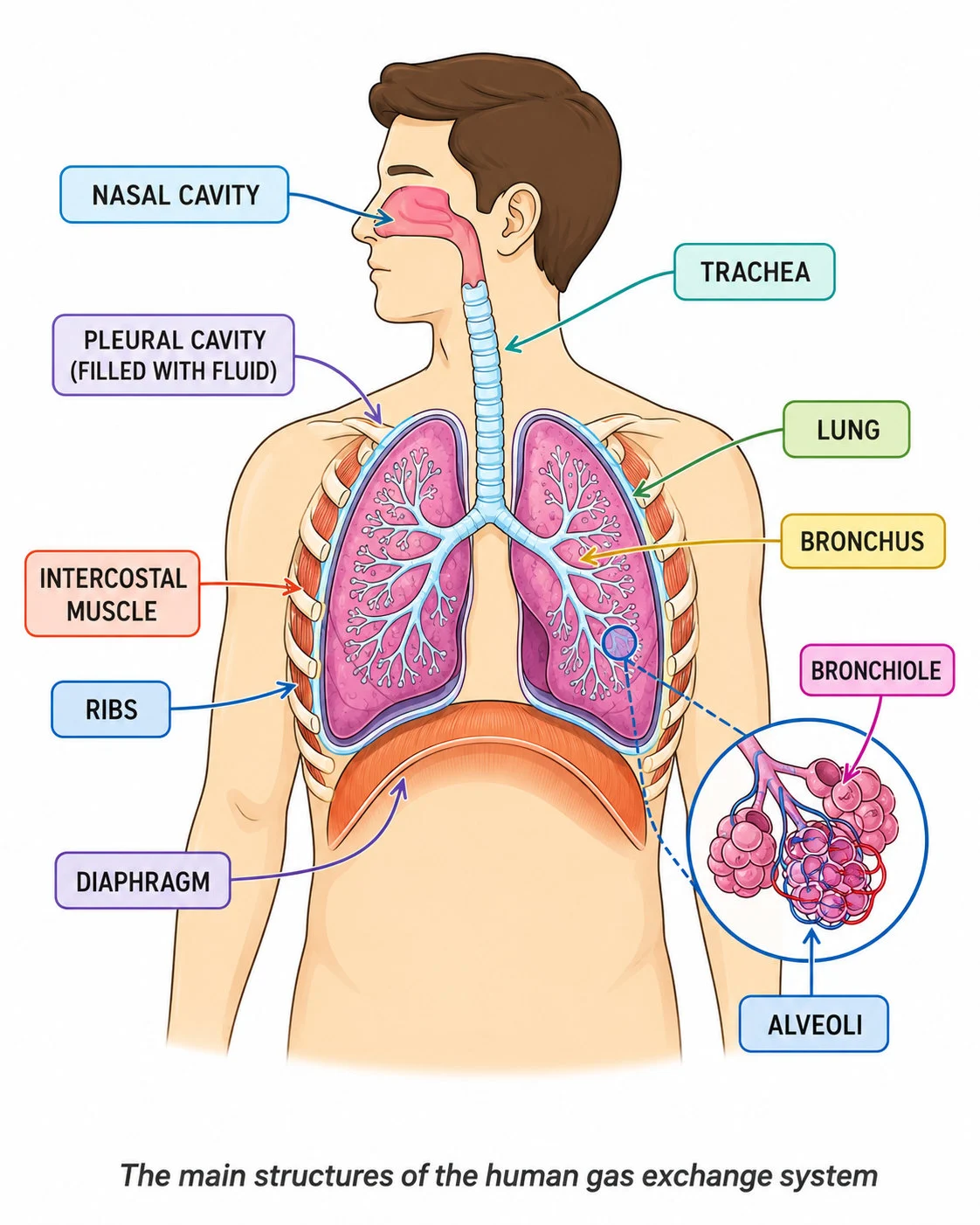
1Nose and mouth
- Nose and mouth Air enters the body here. The nose has hairs and mucus that begin to trap dust and microbes.
2Trachea
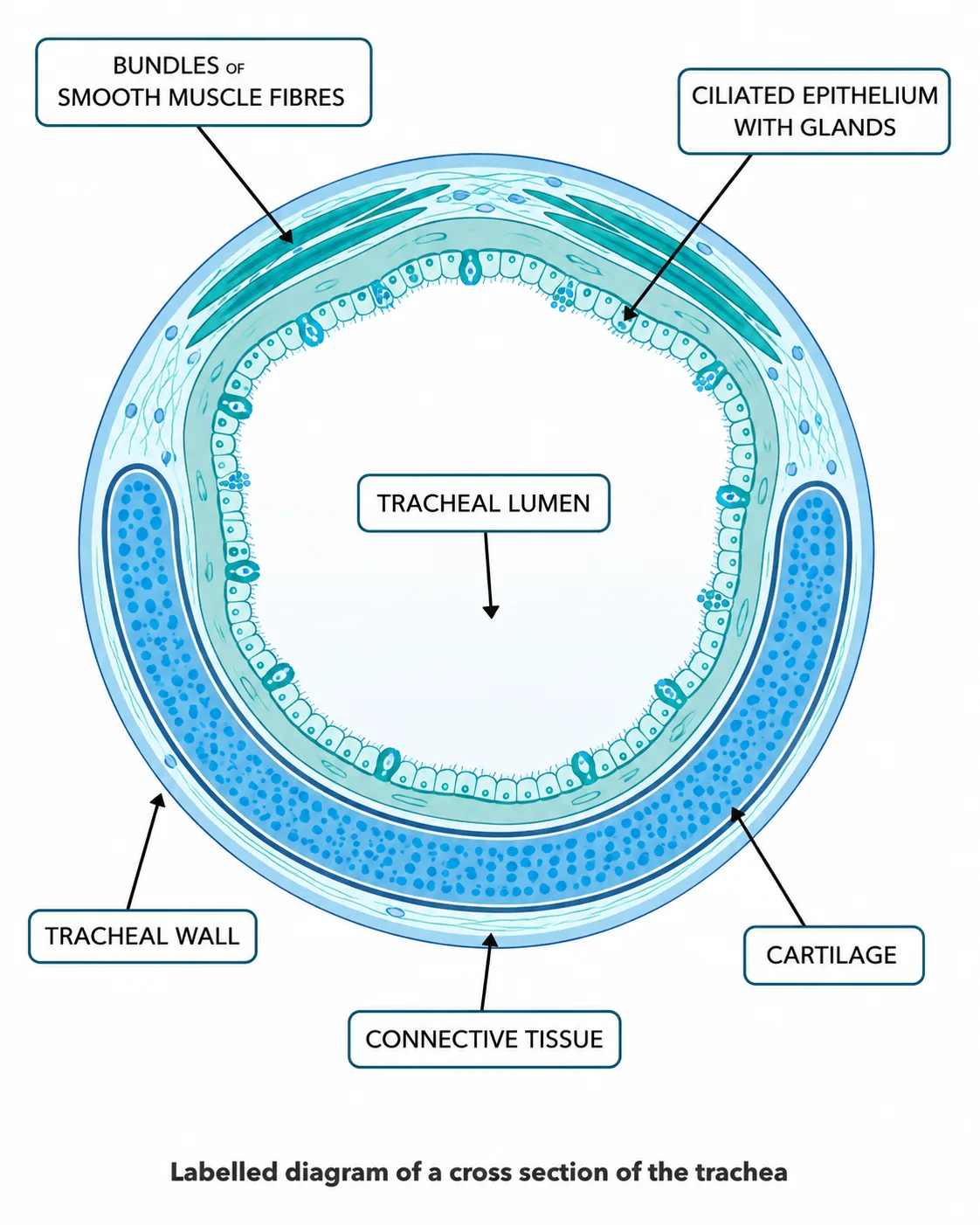
- Trachea The windpipe is a tube kept open by C-shaped rings of cartilage.
- Its lining of mucus and cilia traps and moves particles upwards.
3Bronchi
- Bronchi The trachea divides into two bronchi, one leading to each lung.
4Bronchioles
- Bronchioles Each bronchus branches into many small tubes called bronchioles that carry air deep into the lung.
5Alveoli
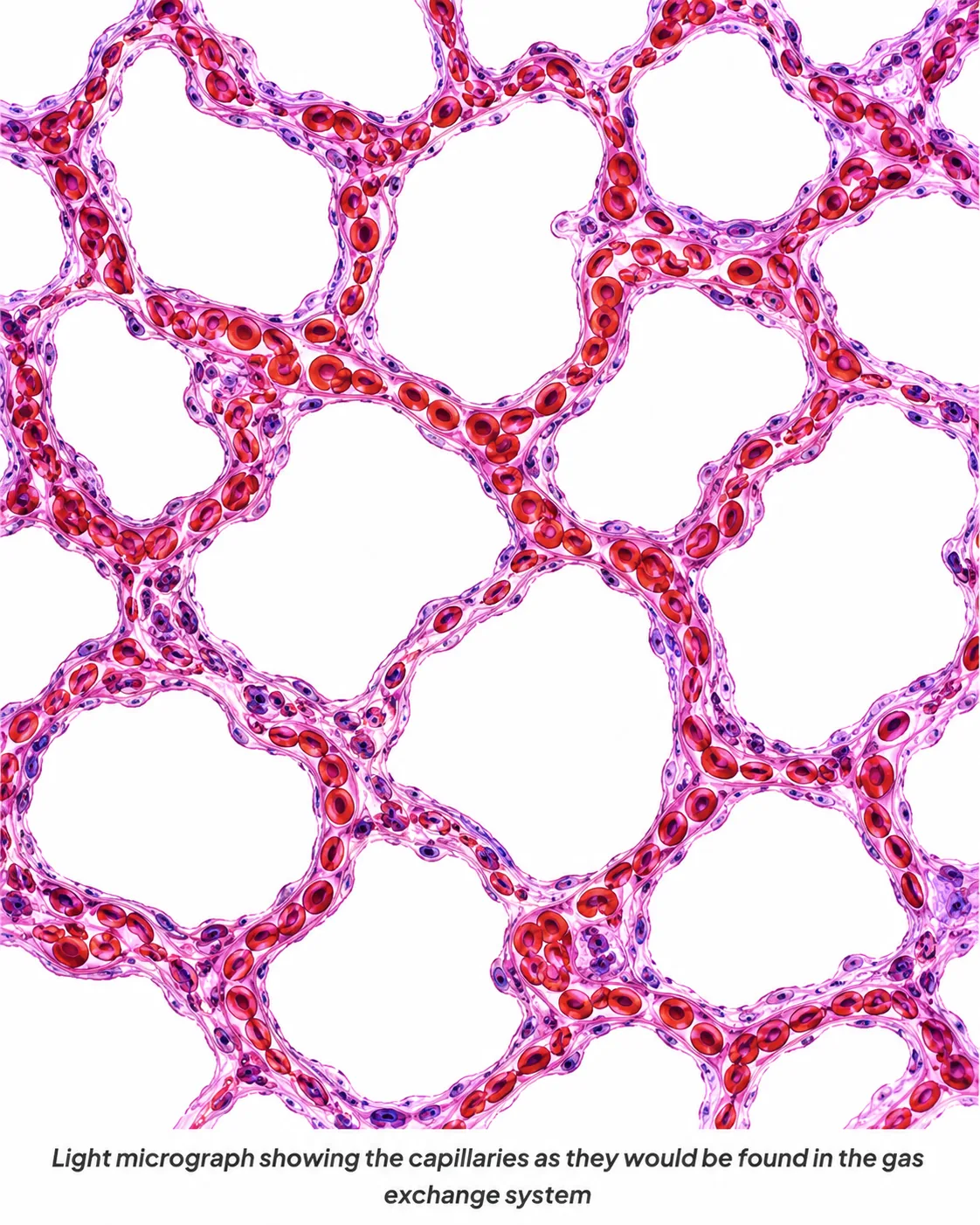
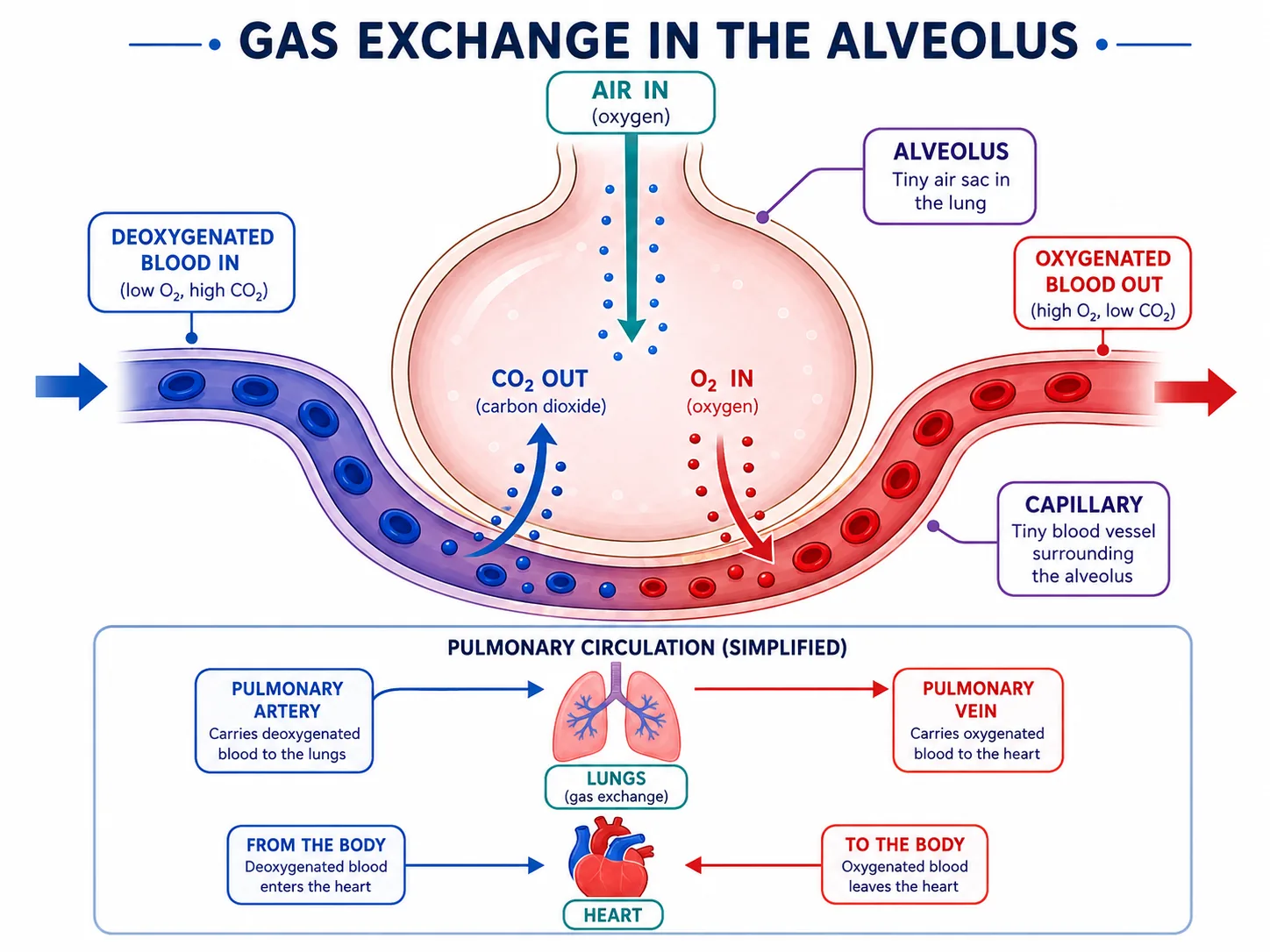
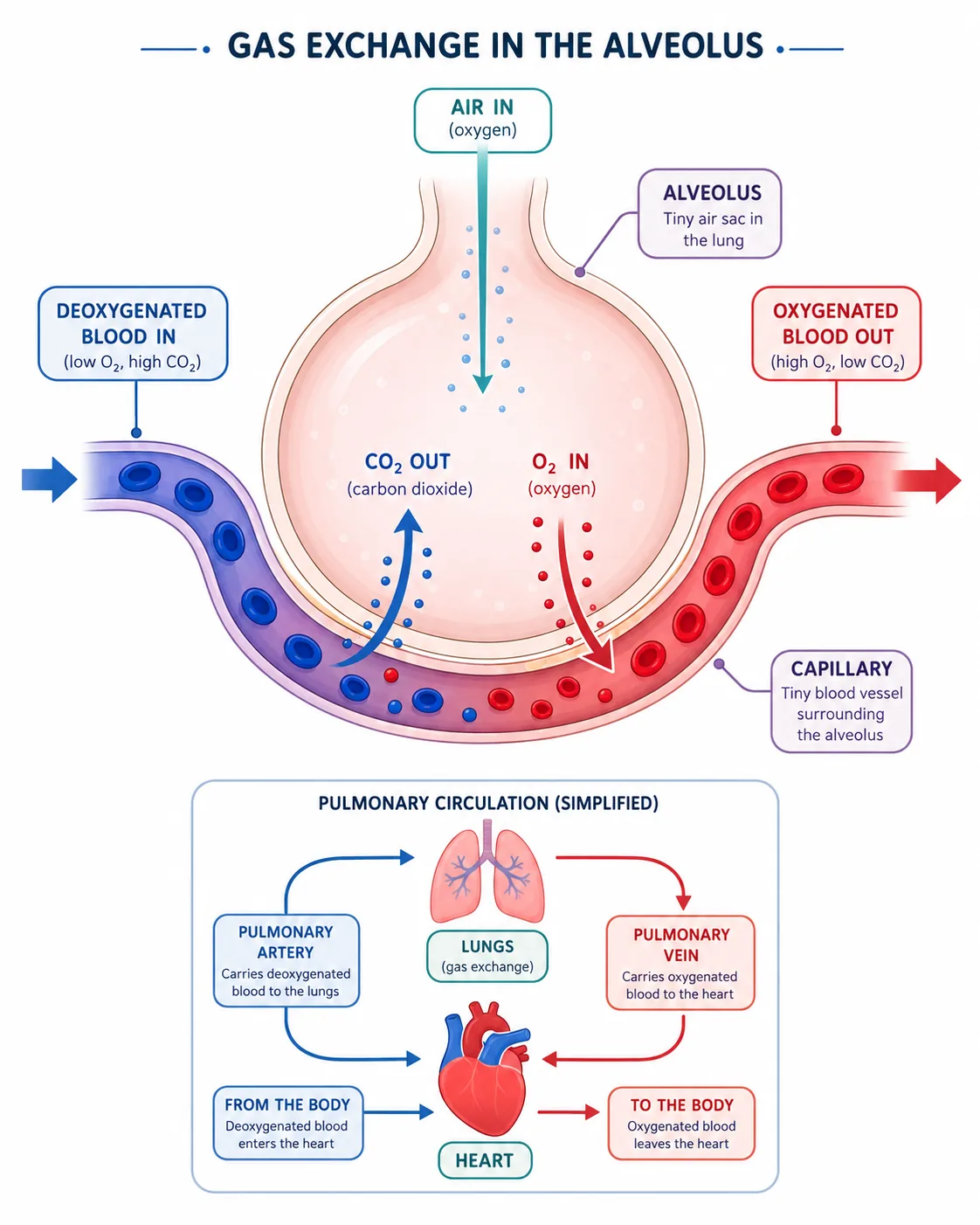
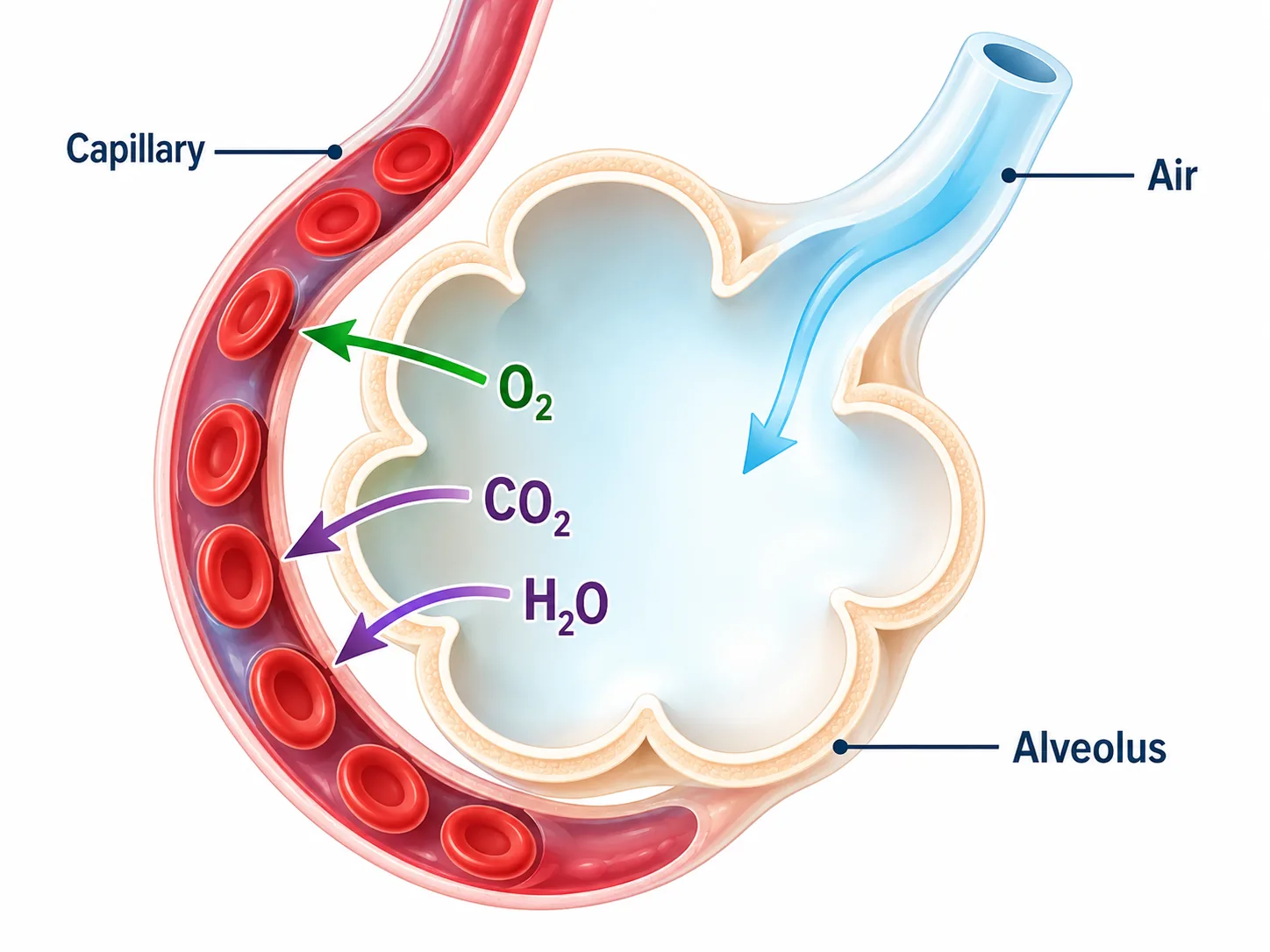
- Alveoli Bronchioles end in clusters of tiny air sacs where oxygen and carbon dioxide are exchanged with the blood.
Section 2 of 7Structures and their jobs



| Structure | Position | Function |
|---|---|---|
| Lungs | In the thorax, either side of the heart | Site of gas exchange |
| Ribs | Curved bones forming a cage around the thorax | Protect the lungs and heart; move during breathing |
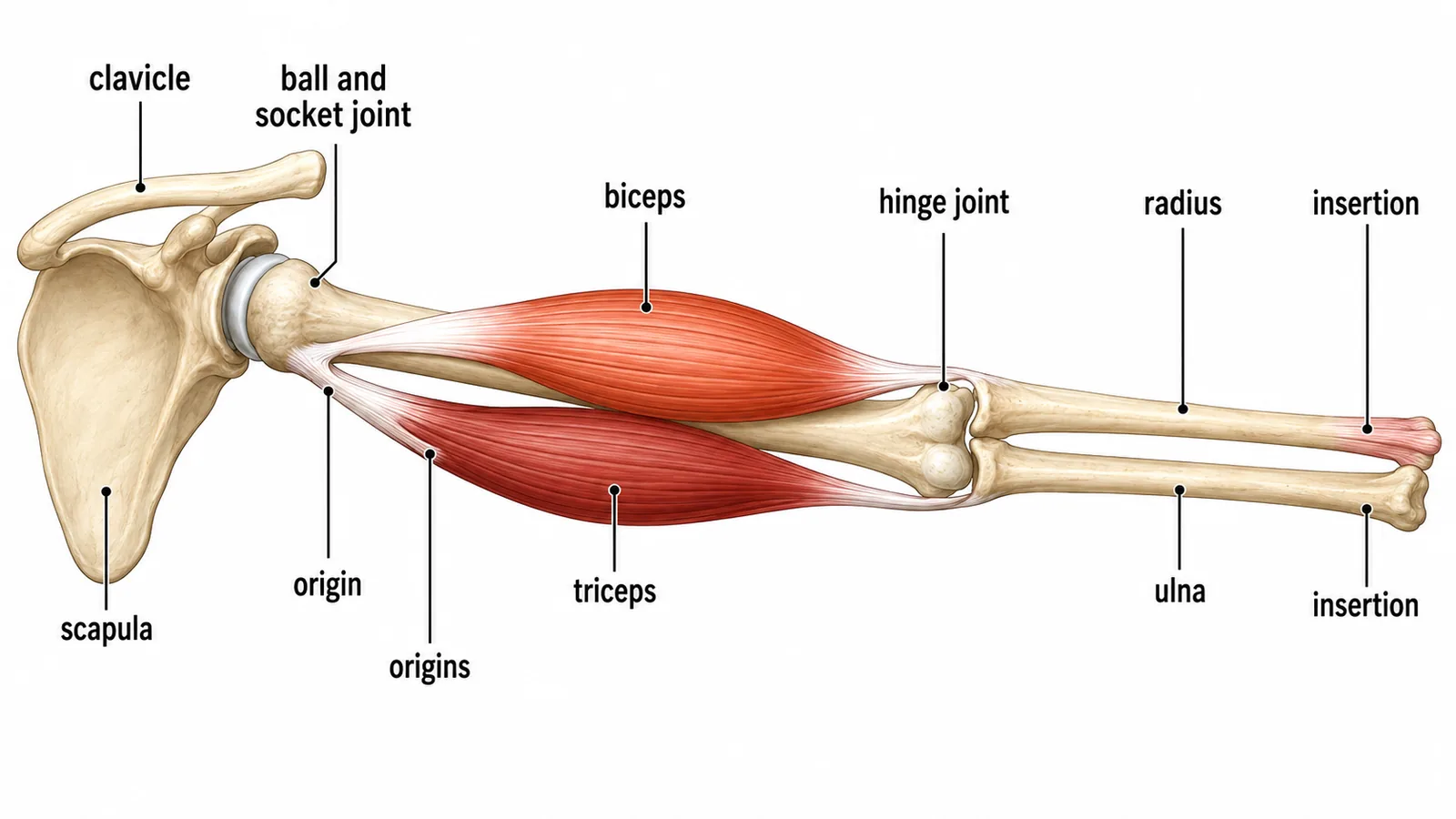
| Intercostal muscles | Between the ribs | Contract and relax to move the rib cage up and down |
| Diaphragm | Sheet of muscle beneath the lungs | Contracts and relaxes to change the volume of the thorax |
| Pleural membranes | Cover the lungs and line the chest wall | Secrete fluid that reduces friction as the lungs move |
Section 3 of 7Breathing in (inspiration)

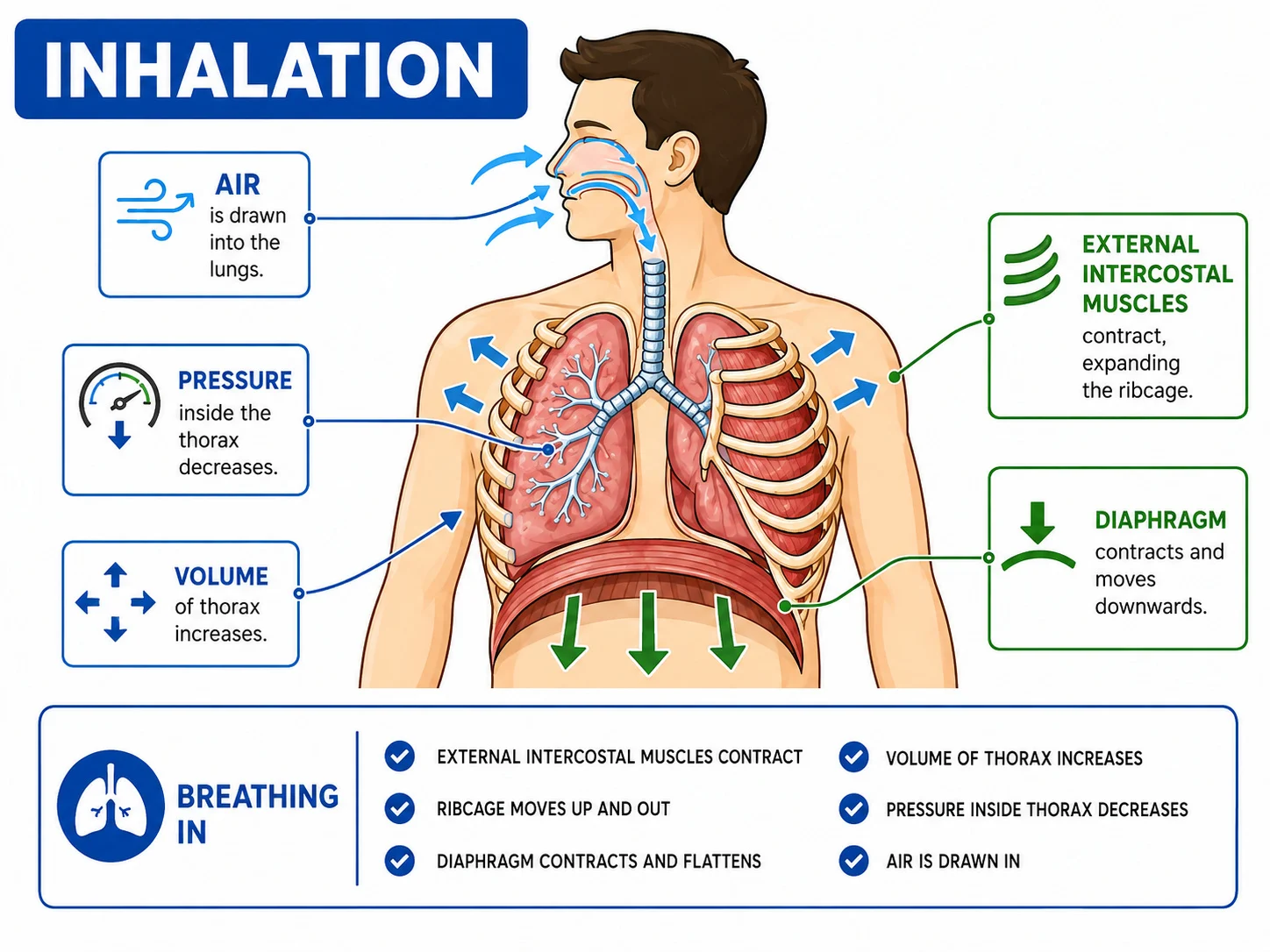
1
The external intercostal muscles contract, pulling the ribs upwards and outwards.
2
The diaphragm contracts and flattens, moving downwards.
3
The volume of the thorax increases, so the air pressure inside falls below atmospheric pressure.
4
Air is pushed in from outside by the higher external pressure and fills the lungs.
Section 4 of 7Breathing out (expiration)


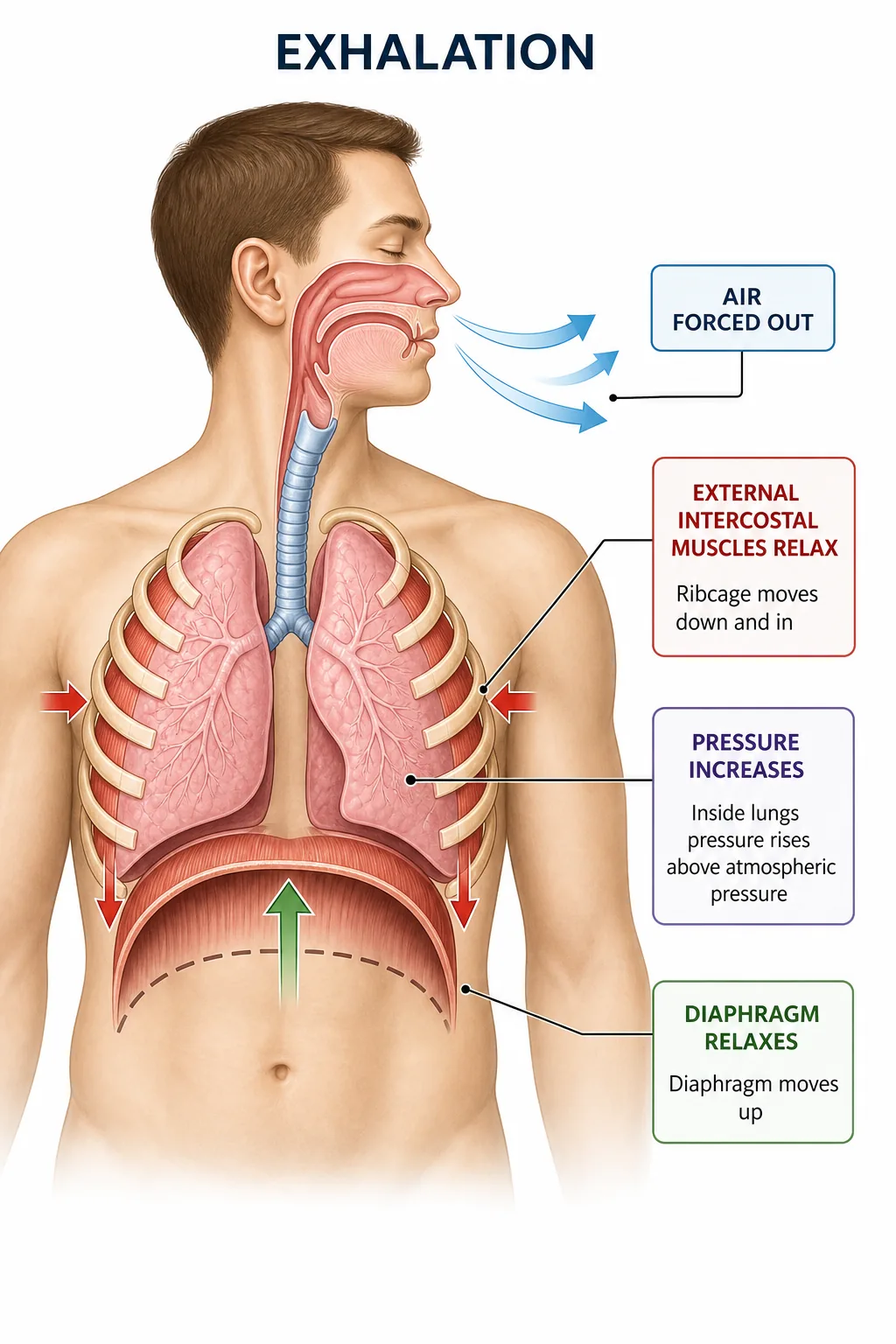
1
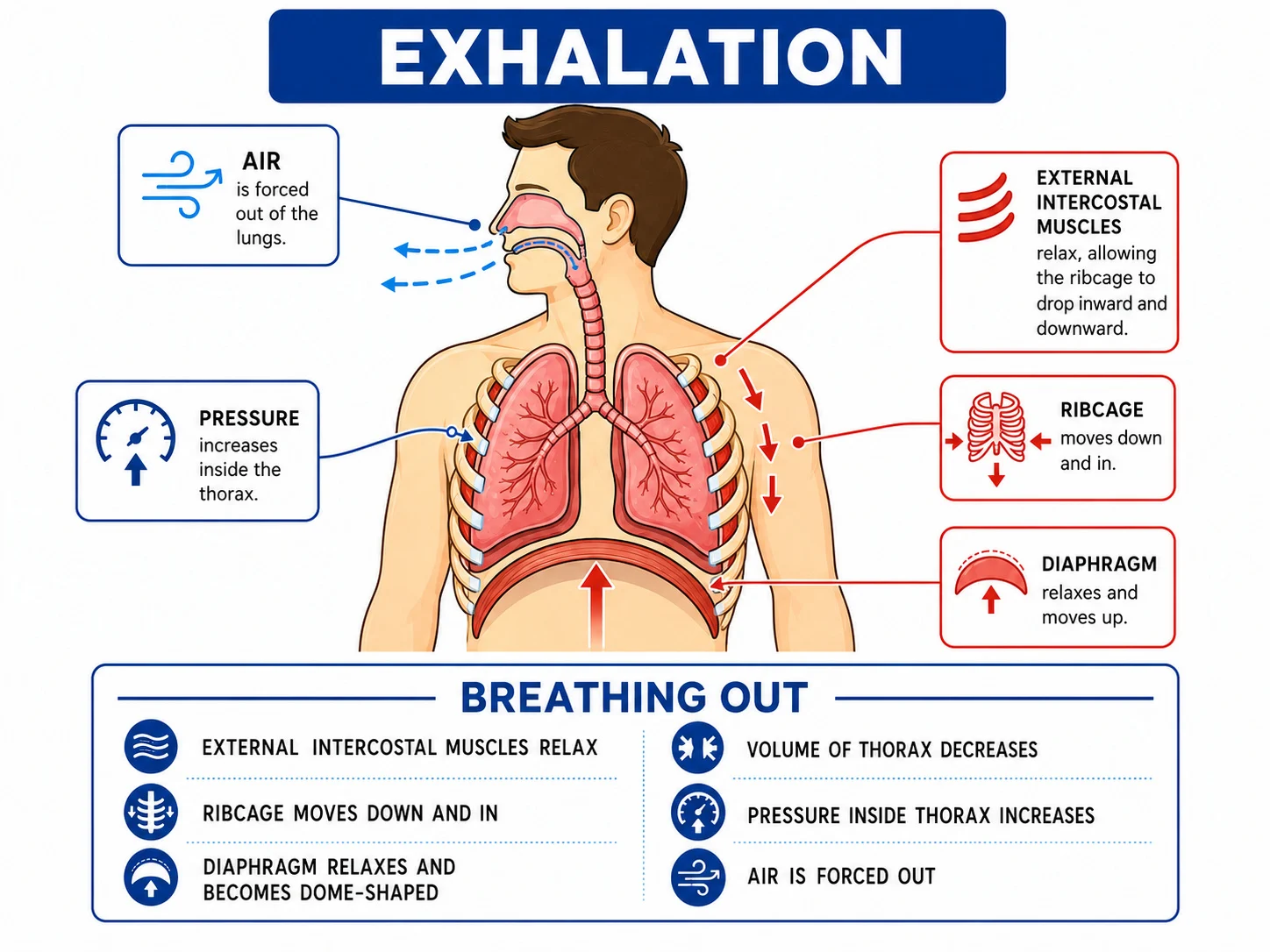
The external intercostal muscles relax, so the ribs move downwards and inwards.
2
The diaphragm relaxes and returns to its domed shape.
3
The volume of the thorax decreases and the pressure inside rises above atmospheric pressure.
4
Air is forced out of the lungs through the trachea.
Section 5 of 7Protecting the airways




Goblet cells
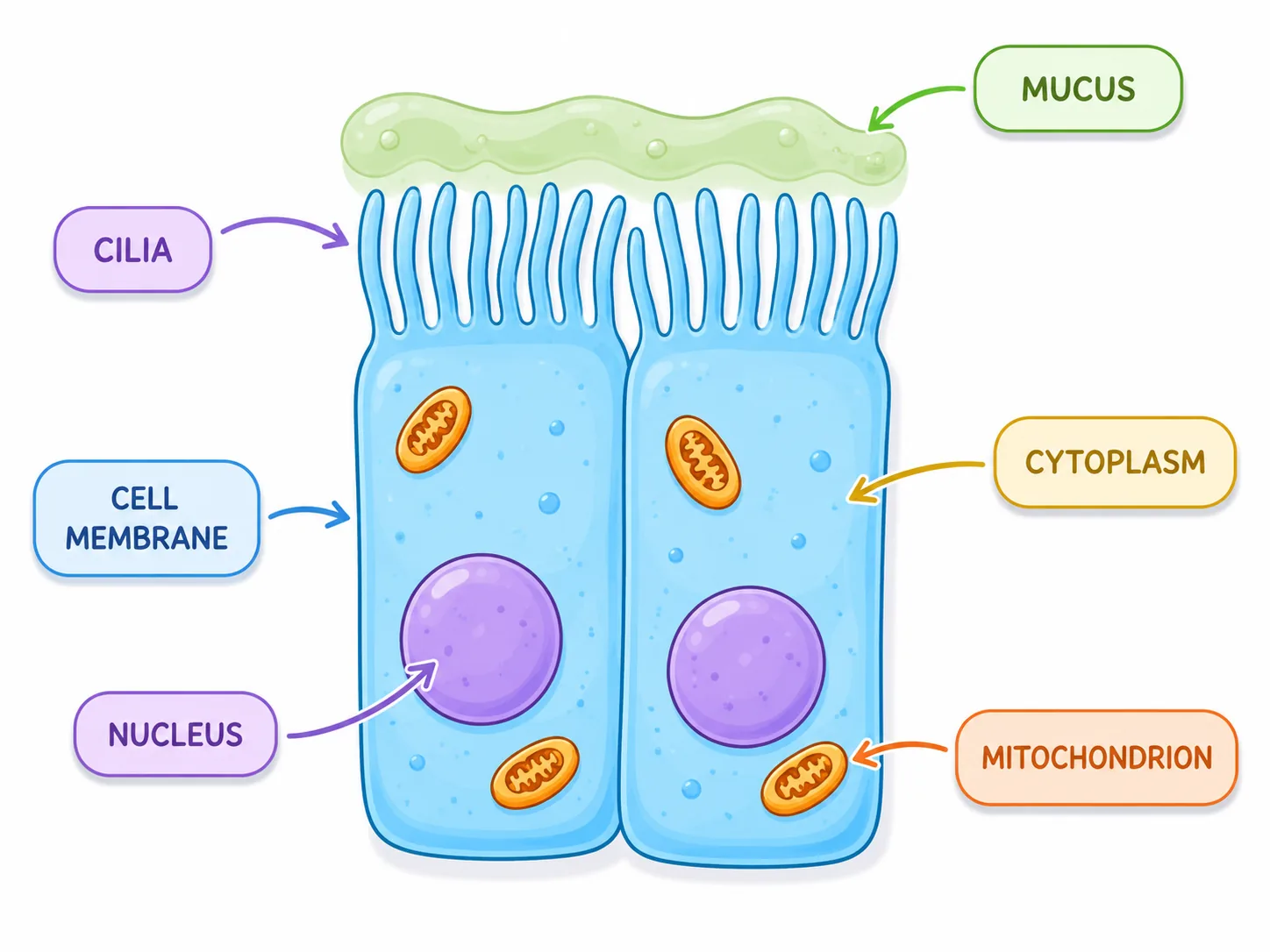
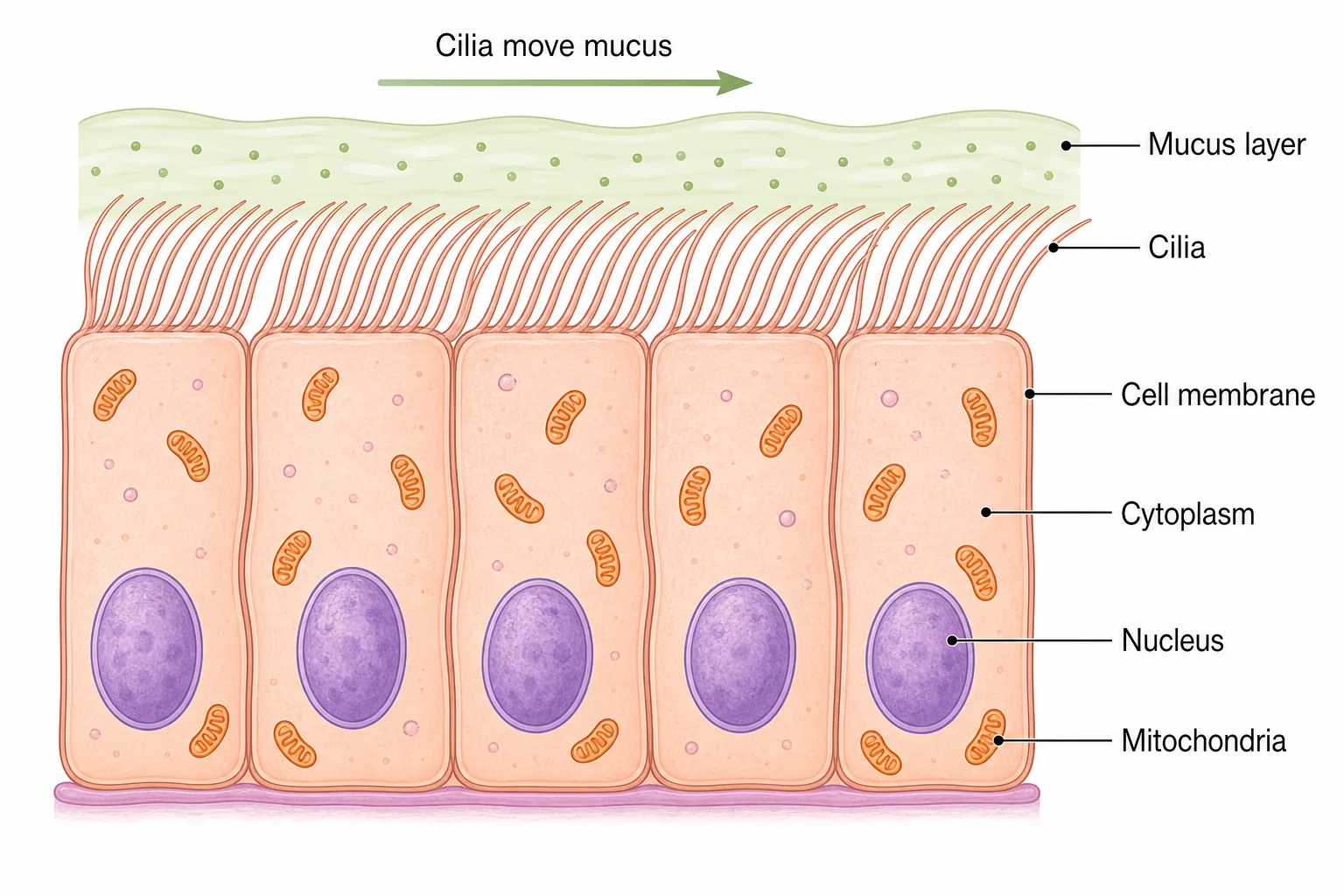
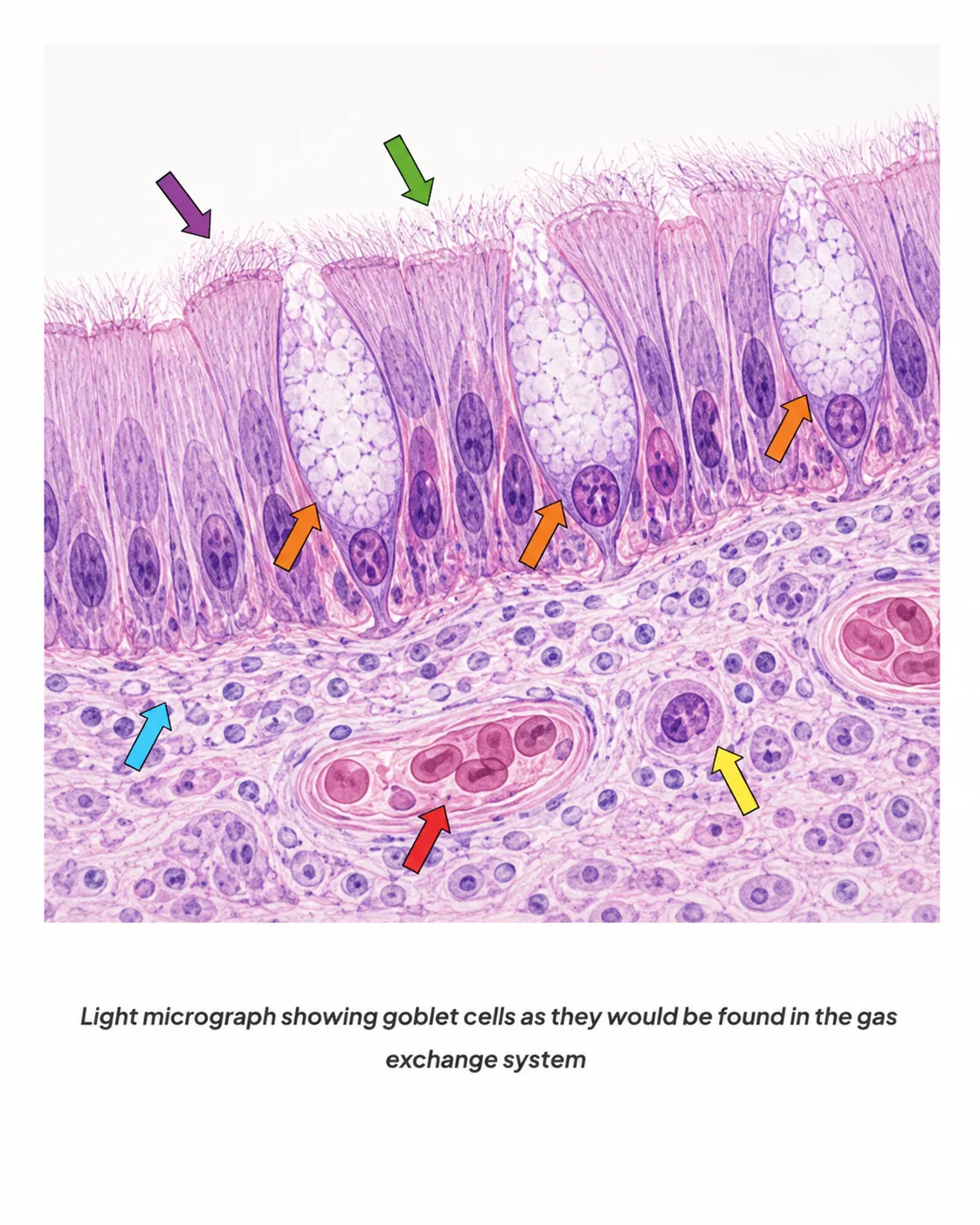
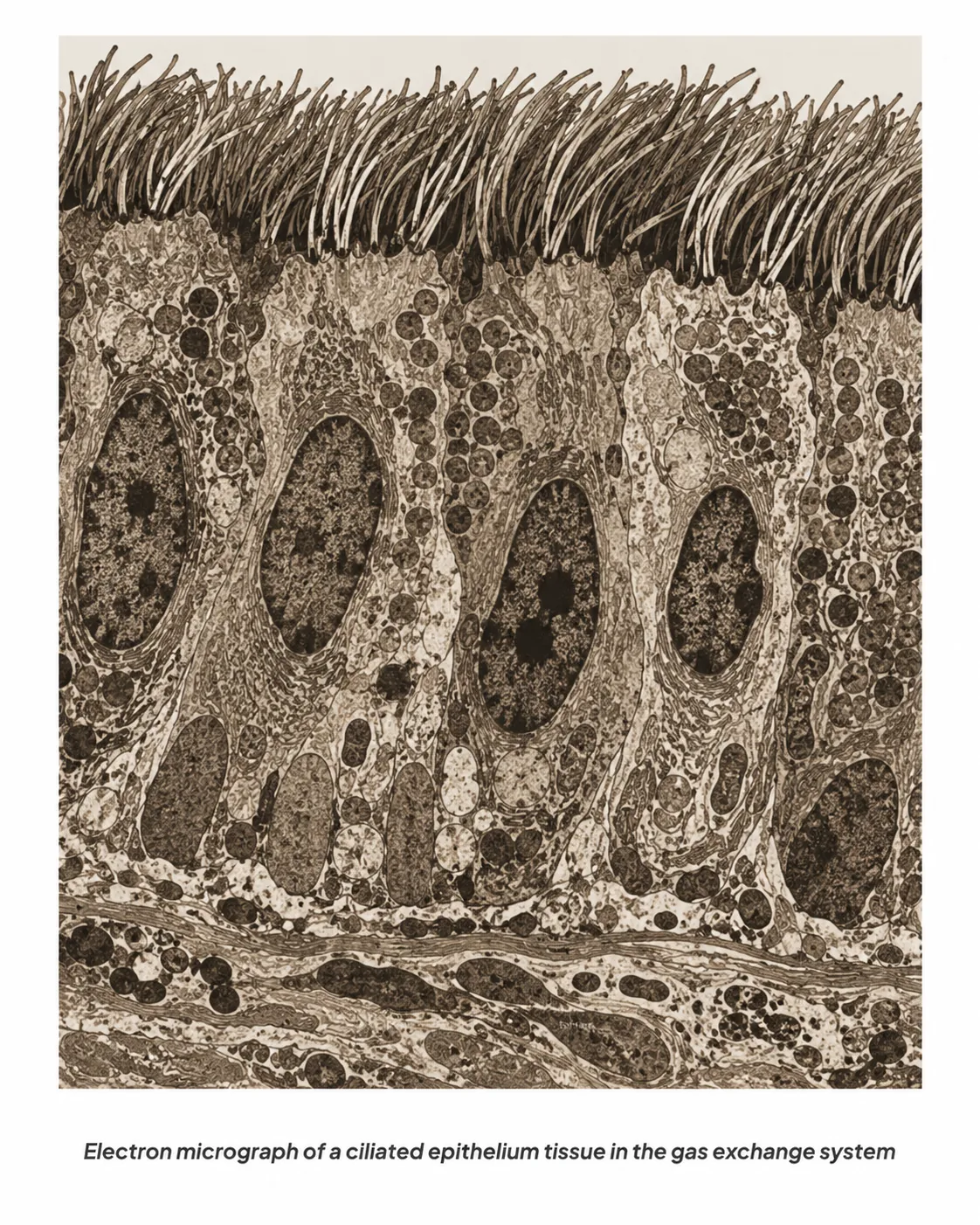
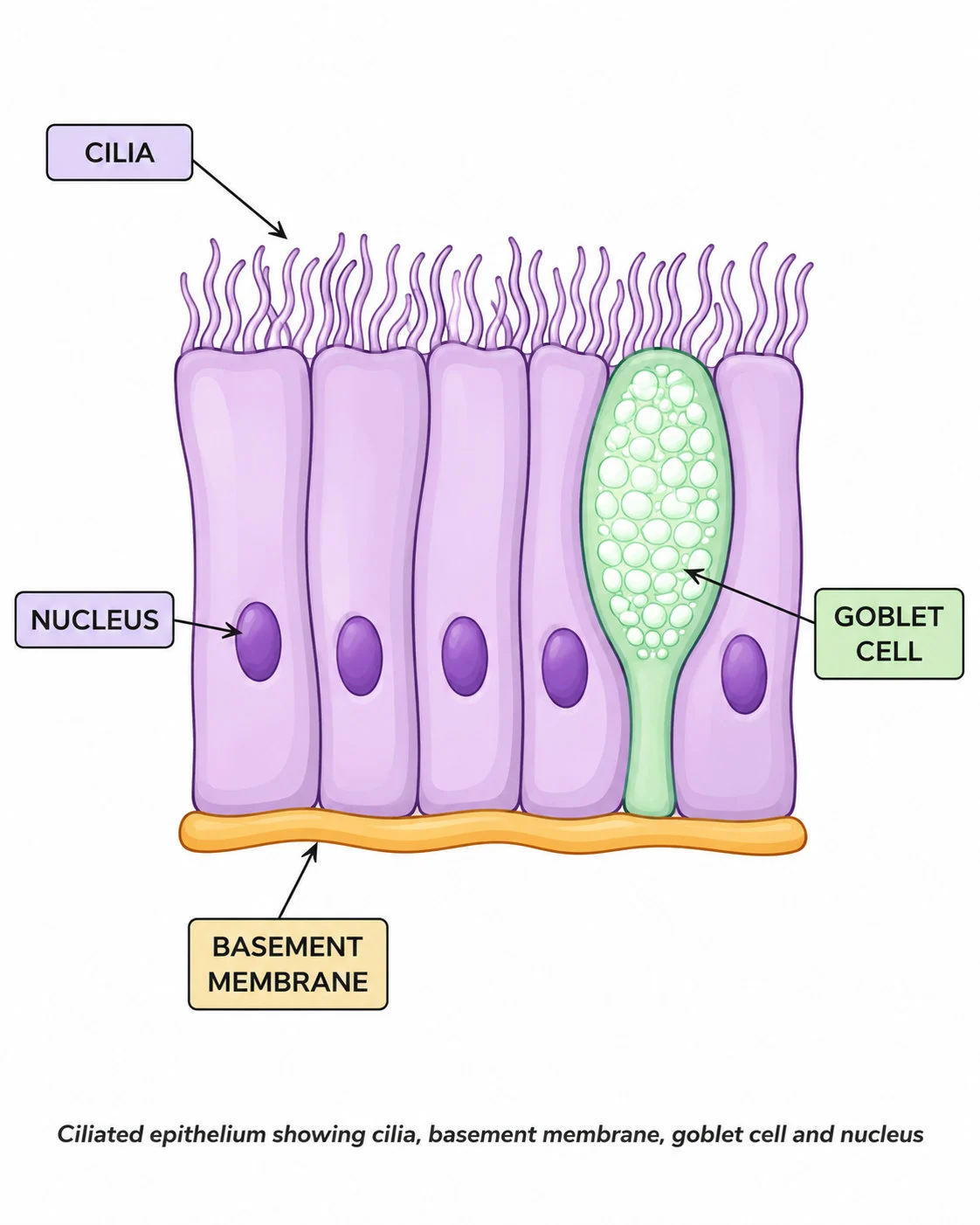
- Goblet cells These cells in the lining of the airways make sticky mucus which traps dust and bacteria.
Ciliated cells
- Ciliated cells Tiny hair-like cilia beat in a wave and sweep the mucus upwards to the throat, where it is swallowed.
Section 6 of 7Key terms
| Term | Meaning |
|---|---|
| Thorax | The upper part of the body trunk that contains the heart and lungs. |
| Trachea | The windpipe, which carries air from the throat to the bronchi. |
| Bronchus | One of the two main branches of the trachea leading into the lungs. |
| Diaphragm | A sheet of muscle that separates the thorax from the abdomen and helps change thorax volume. |
| Intercostal muscles | Muscles between the ribs that raise and lower the rib cage. |
| Cilia | Tiny hair-like projections on cells that sweep mucus along. |
Section 7 of 7Exam technique
1
Saying the lungs push air in and out — the lungs have no muscle; the change in thorax volume moves the air.
2
Mixing up the direction of diaphragm movement: it flattens and moves down when breathing in and rises into a dome when breathing out.
3
Forgetting the pressure link — a larger volume gives lower pressure, so air moves in from higher pressure outside.
4
Naming the trachea as the place where gas exchange happens — exchange takes place only in the alveoli.