11.1.7Gas Exchange in Humans
Explaining the Link Between Physical Activity and Breathing
5 min read 6 parts Lesson 8 of 8 1 quiz
Section 1 of 6Why breathing must increase (HT only)

Greater energy demand
- Greater energy demand Working muscles respire aerobically at a faster rate to release more energy for contraction.
- They therefore need extra oxygen delivered and extra carbon dioxide removed.
Role of breathing
- Role of breathing Breathing exchanges gases between the lungs and the air so that the blood can keep supplying the muscles.
- Faster and deeper breathing supports the faster rate of respiration.
Section 2 of 6Control mechanism (HT only)
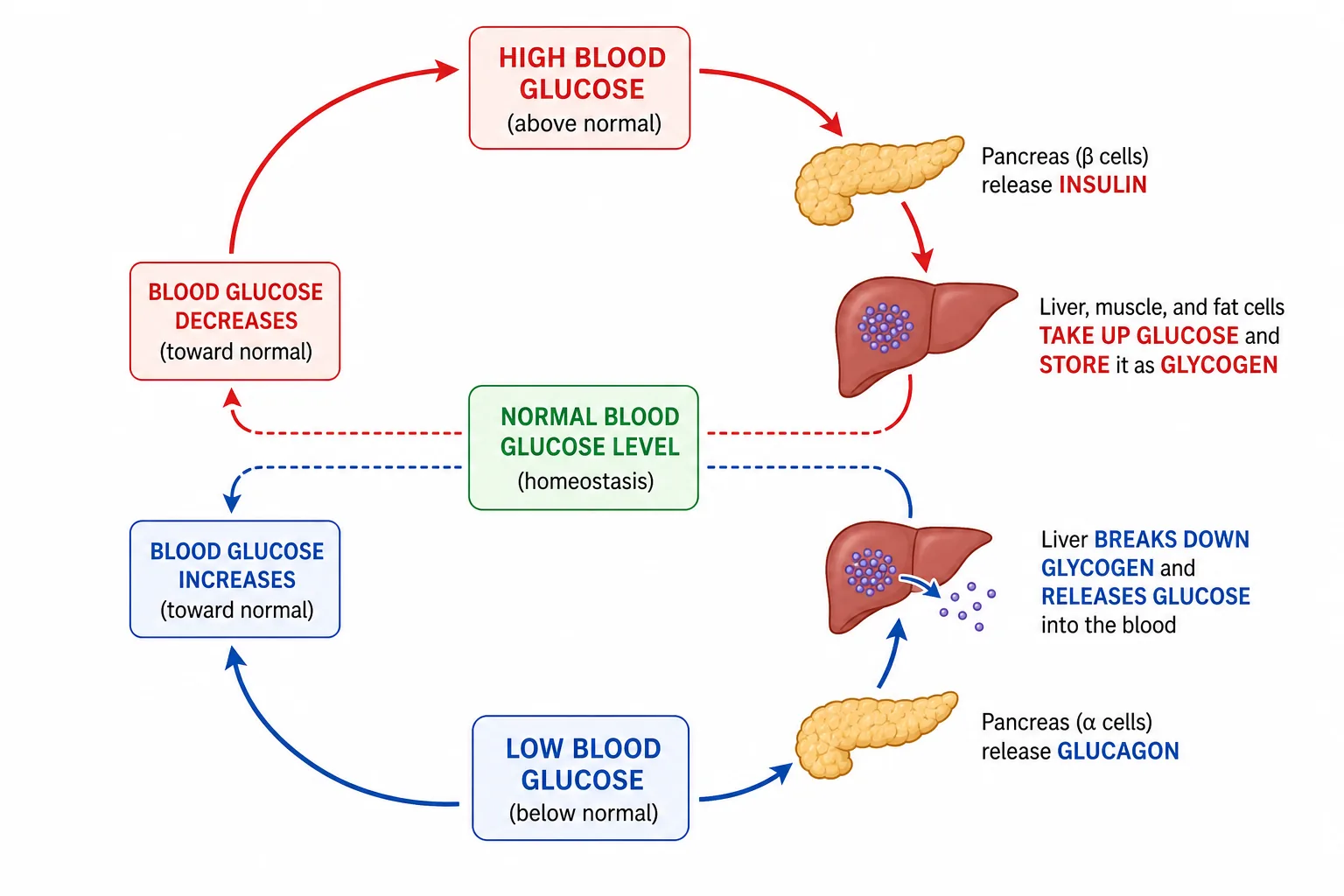
1
Muscle cells respire faster during exercise, so more carbon dioxide is produced.
2
Carbon dioxide diffuses out of the muscle cells into the blood plasma.
3
Carbon dioxide dissolved in the plasma lowers the pH slightly, so the blood becomes a little more acidic.
4
The blood travels to the brain, where receptors detect the higher carbon dioxide concentration and lower pH.
5
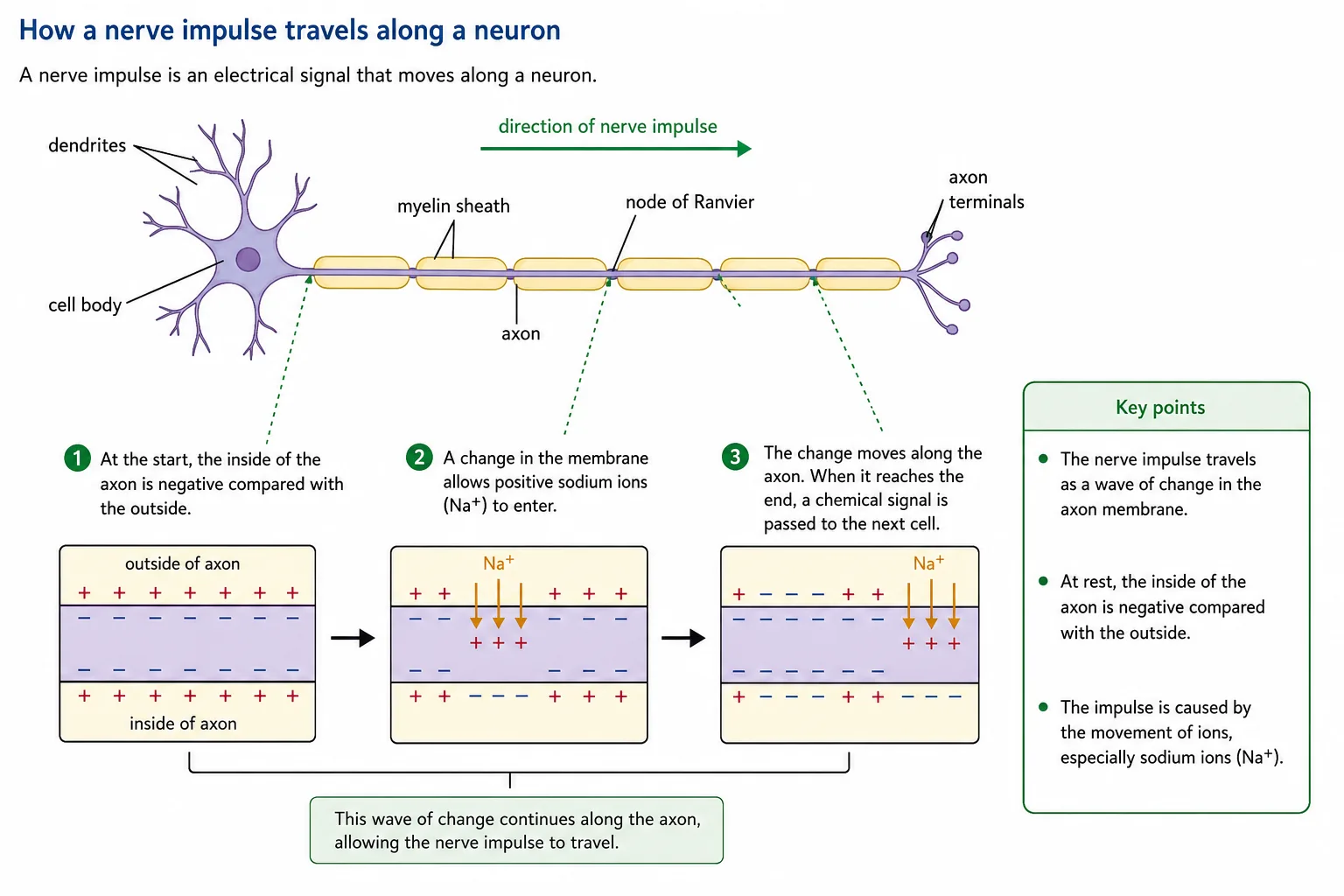
The brain sends nerve impulses to the diaphragm and the intercostal muscles.
6
These muscles contract more often and more forcefully, so breathing rate and depth both increase.
Section 3 of 6Result of the response (HT only)
1More air moved
- More air moved A larger volume of air is moved in and out of the lungs every minute.
2Steeper gradients
- Steeper gradients Fresh air keeps the oxygen concentration high and carbon dioxide low in the alveoli.
3Faster exchange
- Faster exchange Oxygen absorption and carbon dioxide removal both speed up.
4Respiration supported
- Respiration supported Muscle cells receive the oxygen they need and the carbon dioxide level in the blood returns towards normal.
Section 4 of 6Respiration and breathing compared


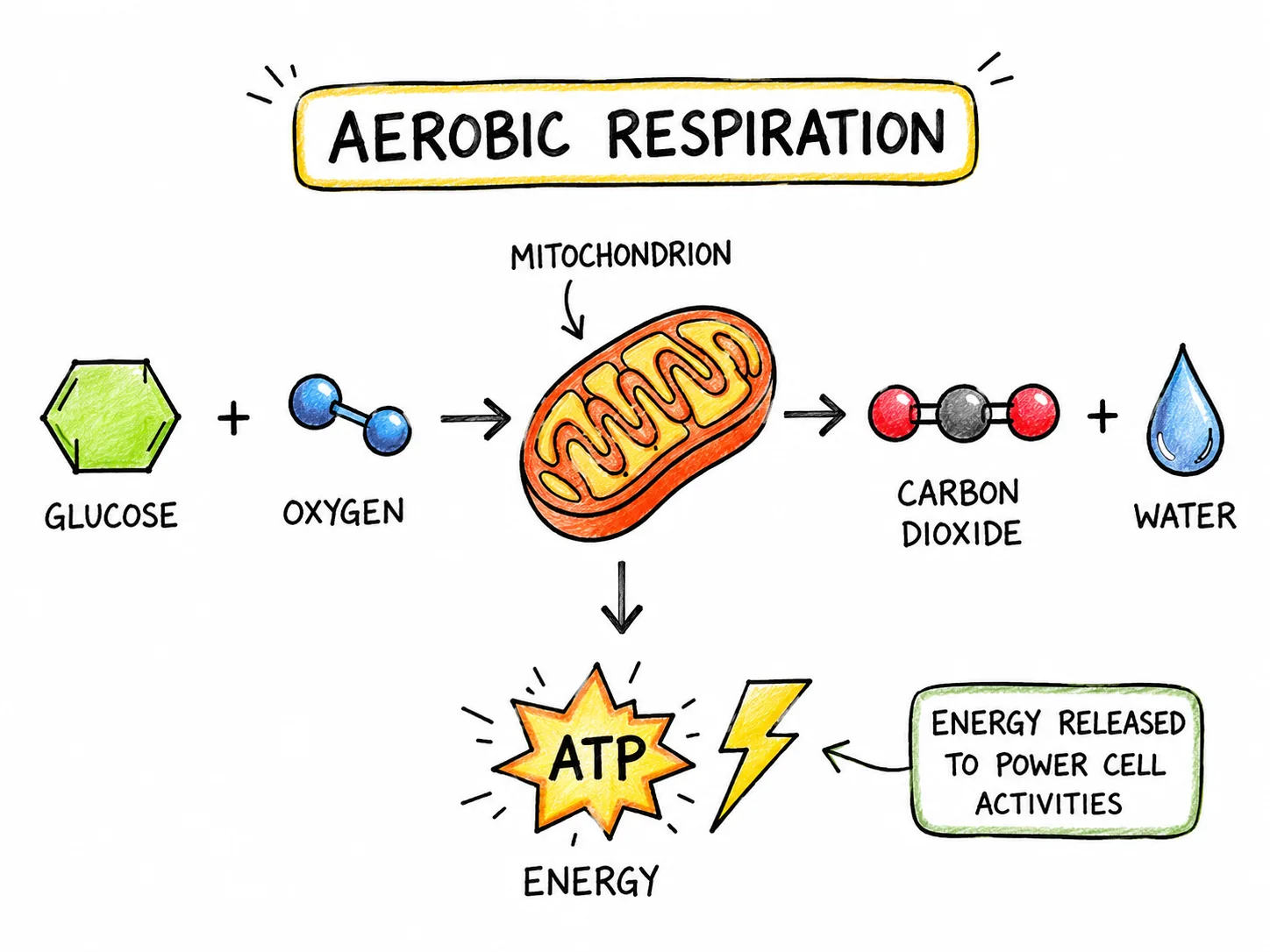

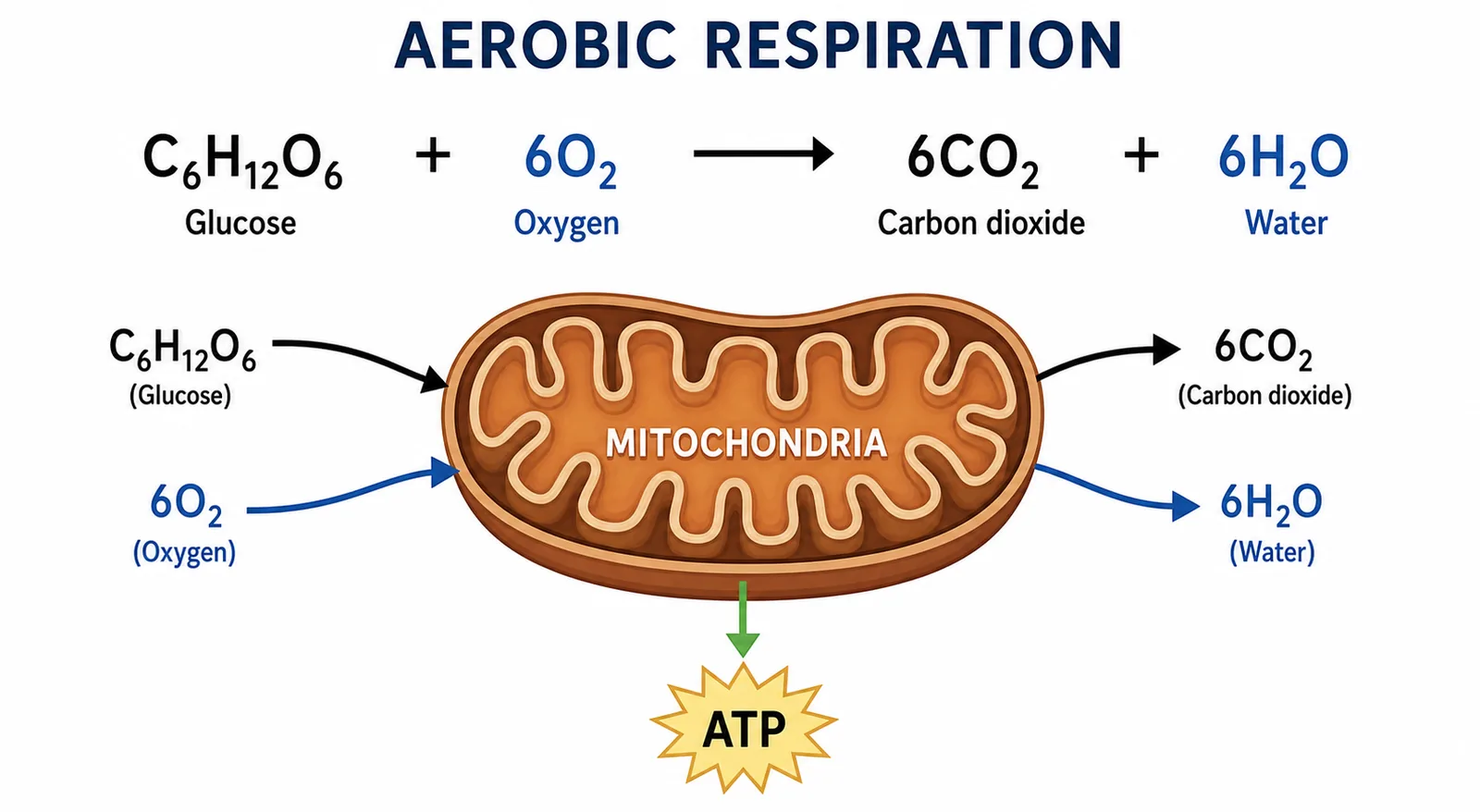
| Feature | Respiration | Breathing |
|---|---|---|
| Nature | A series of chemical reactions | A physical process of moving air |
| Where | Inside cells, mostly in mitochondria | Between the lungs and the atmosphere |
| Purpose | Releases energy from glucose | Supplies oxygen and removes carbon dioxide |
| Controlled by | Enzymes | Muscles stimulated by nerve impulses from the brain |
Section 5 of 6Key terms
| Term | Meaning |
|---|---|
| Receptor | A cell or group of cells that detects a change in the body or surroundings. |
| Blood plasma | The liquid part of the blood that carries dissolved substances. |
| pH | A measure of how acidic or alkaline a solution is; lower values are more acidic. |
| Nerve impulse | An electrical signal that travels along a neurone. |
| Aerobic respiration | Release of energy from glucose using oxygen. |
Section 6 of 6Exam technique
1
Saying the brain detects low oxygen as the main trigger — it is the rise in carbon dioxide (and fall in pH) that is detected.
2
Using the words breathing and respiration as if they mean the same thing.
3
Leaving out the diaphragm and intercostal muscles as the effectors that receive the impulses.
4
Describing the increase as only faster breathing — the depth of each breath increases as well.