Section 1 of 7What respiration is





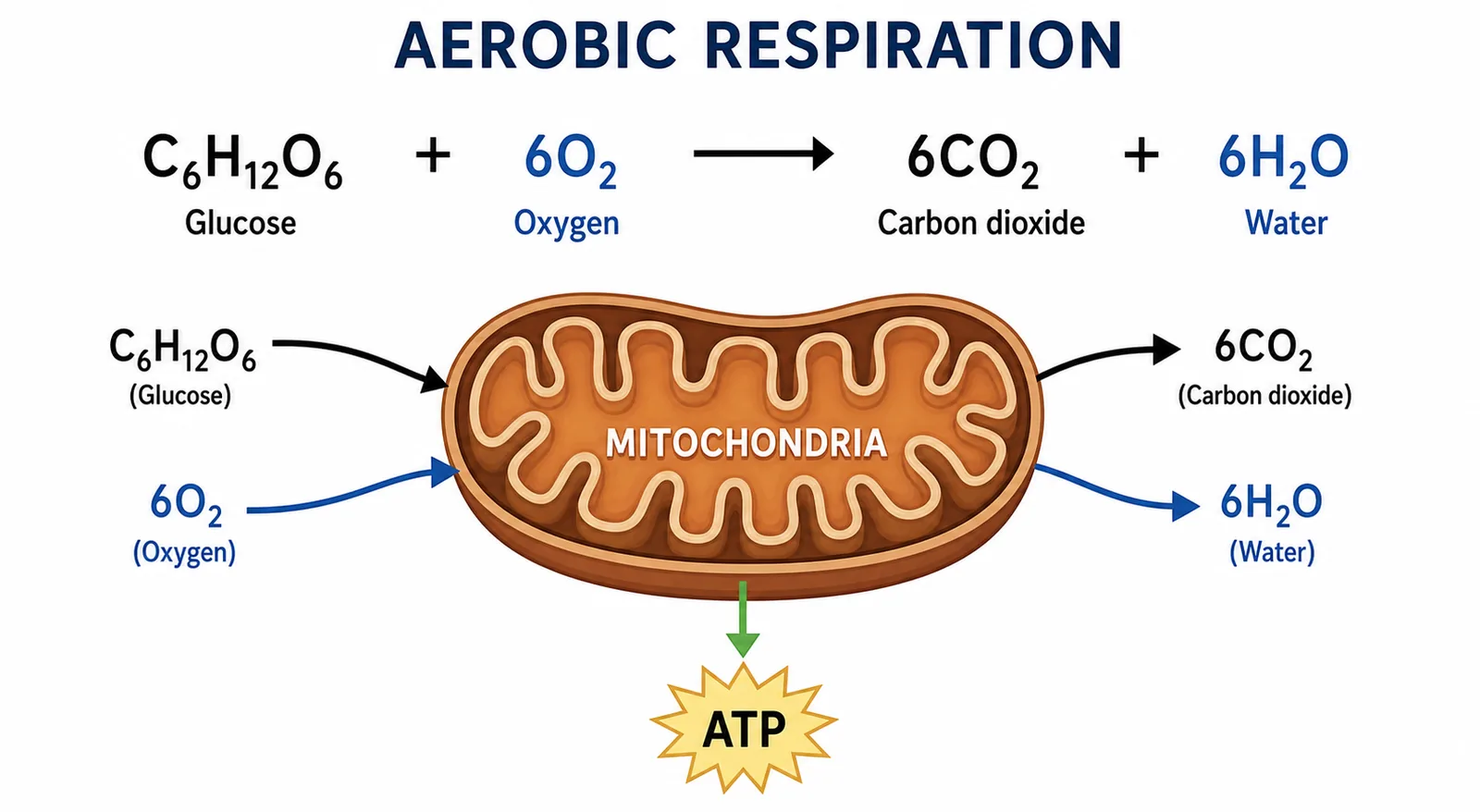
Release of energy
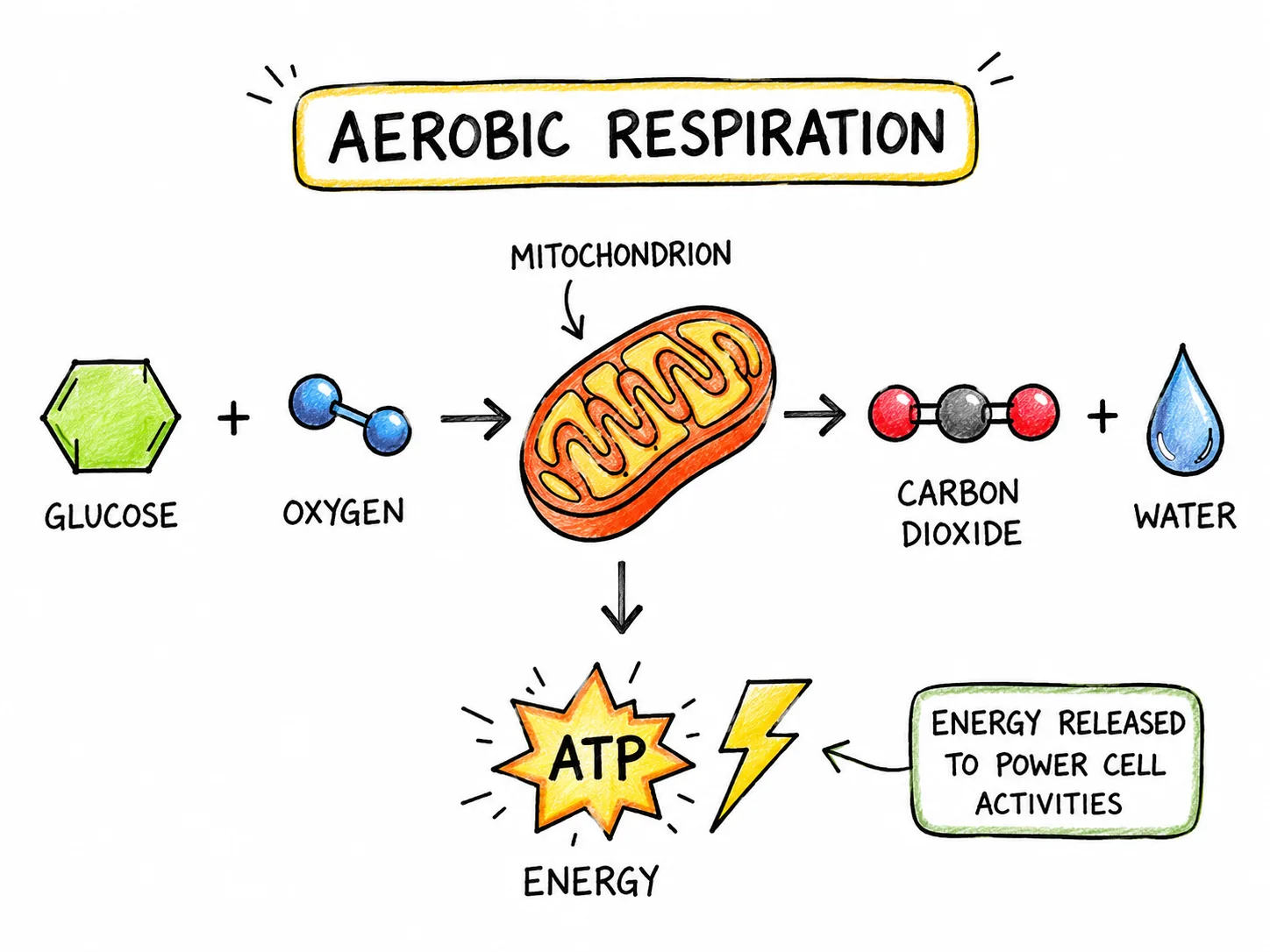
- Release of energy Respiration is a chemical process in which nutrient molecules, mainly glucose, are broken down to release the energy stored in them.
- Energy is released, never made or produced.
Enzyme controlled
- Enzyme controlled Every step of respiration is catalysed by an enzyme.
Aerobic and anaerobic
- Aerobic and anaerobic Aerobic respiration uses oxygen and takes place mostly in the mitochondria.
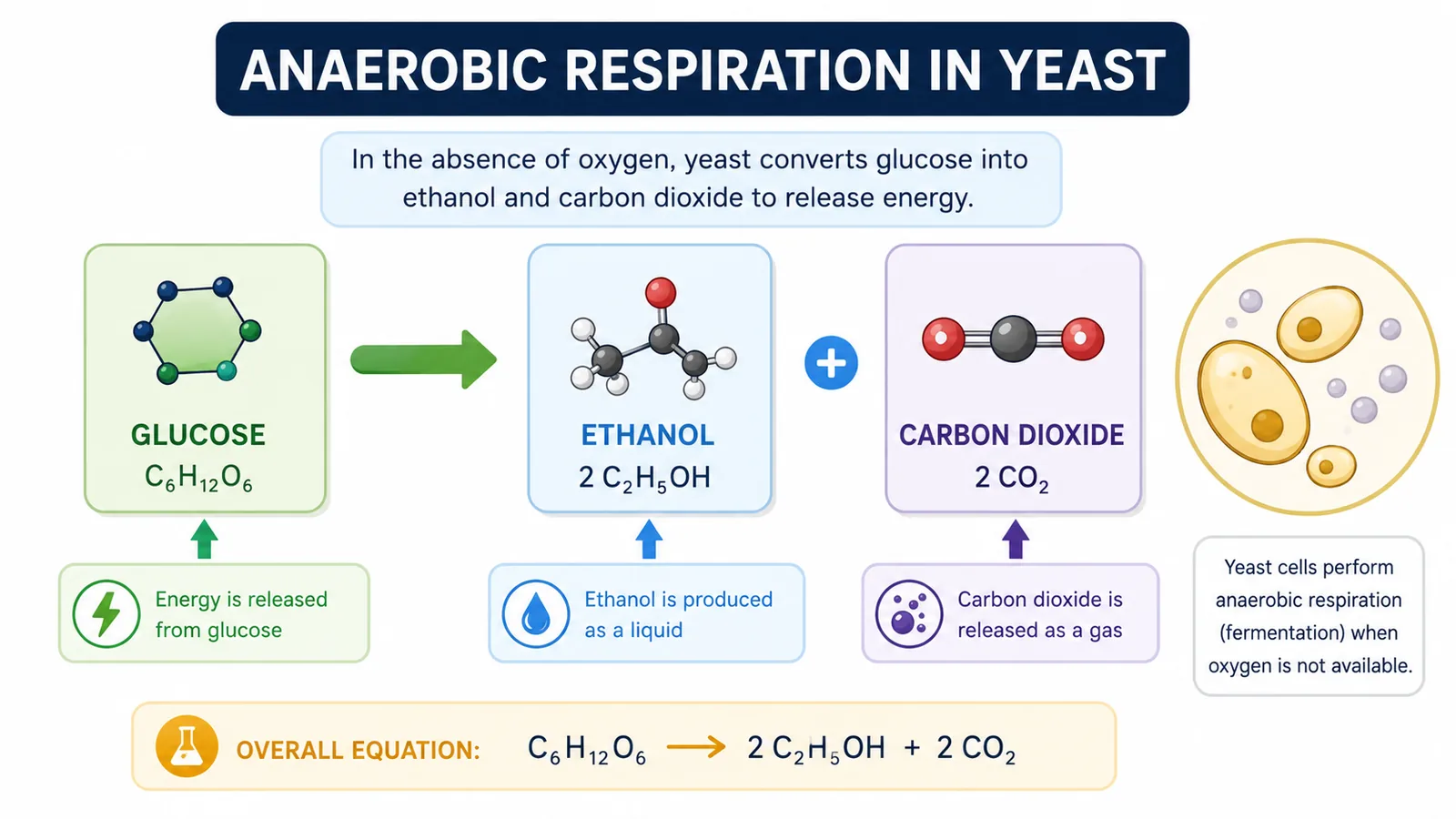
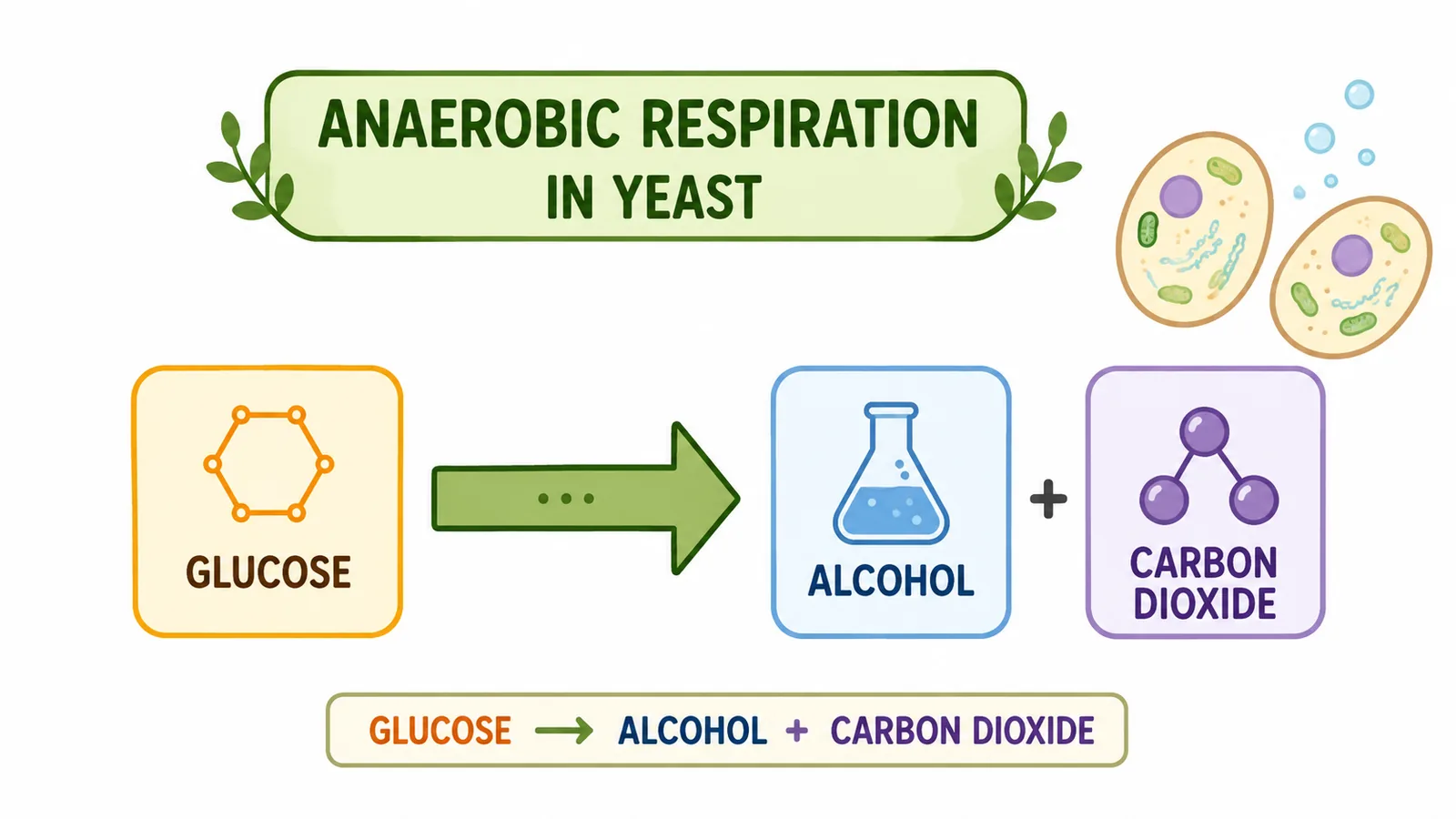
- Anaerobic respiration happens without oxygen and releases much less energy from each glucose molecule.
- Respiration occurs in all living cells.
Section 2 of 7Uses of the energy in humans
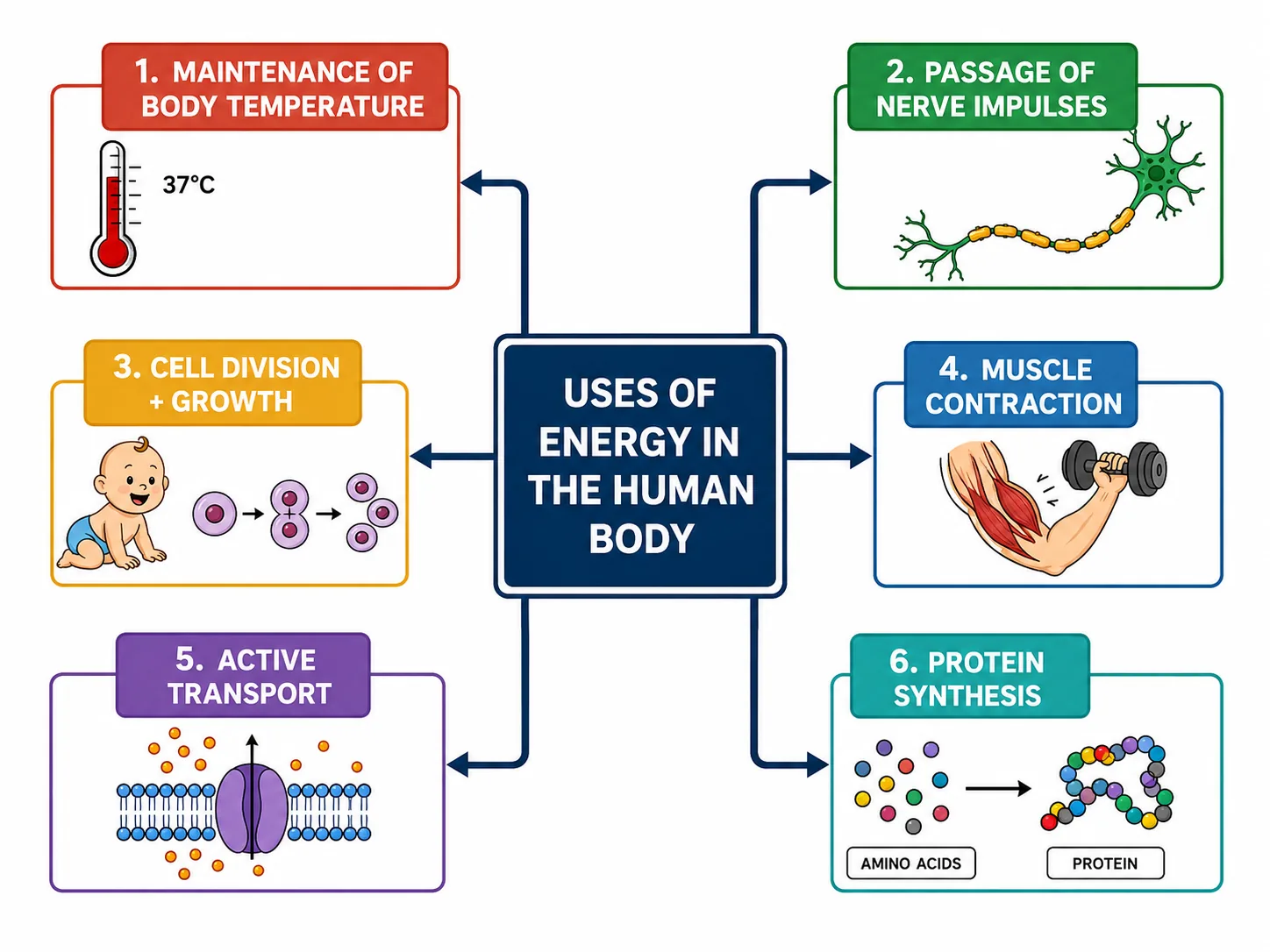


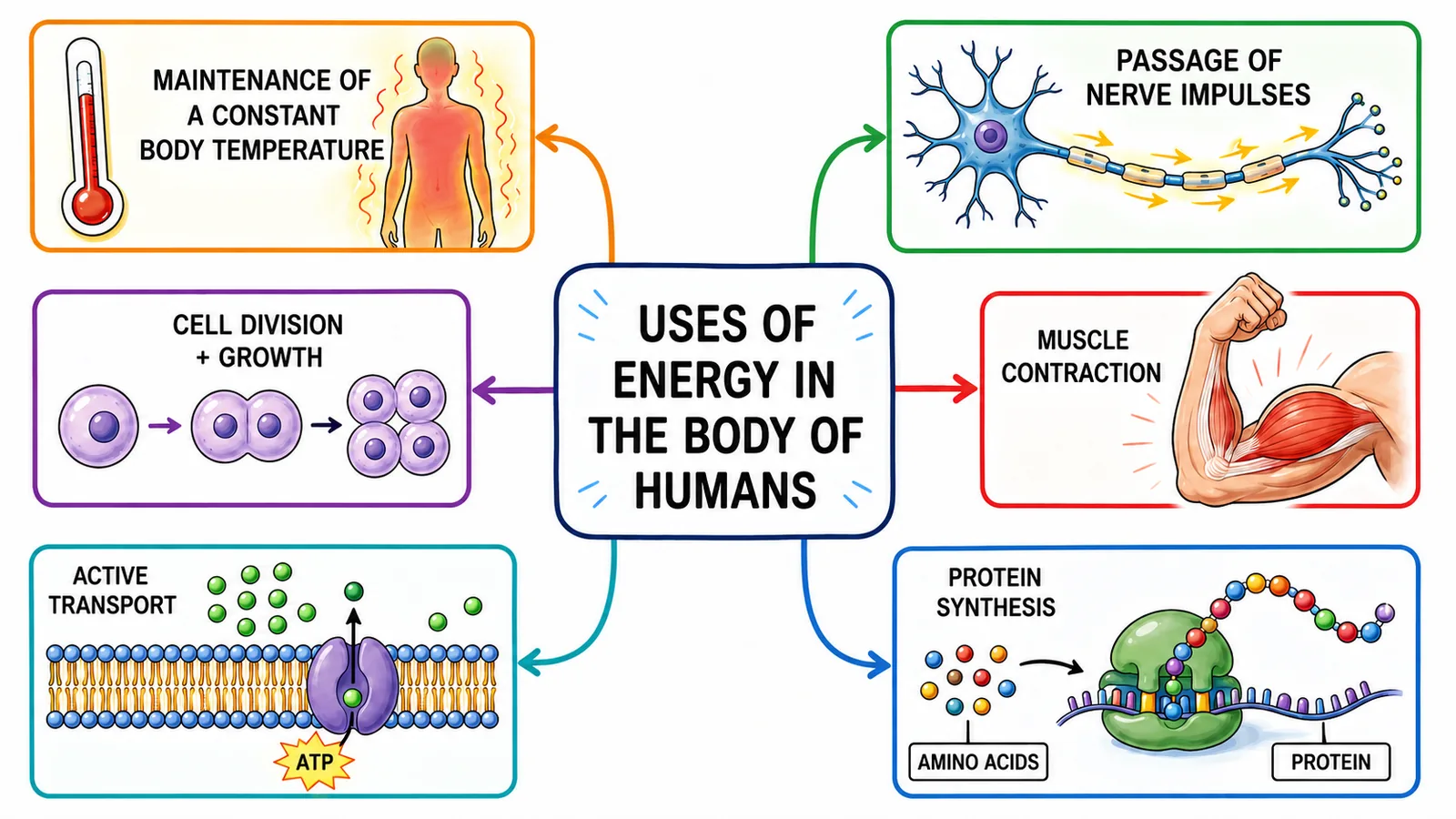

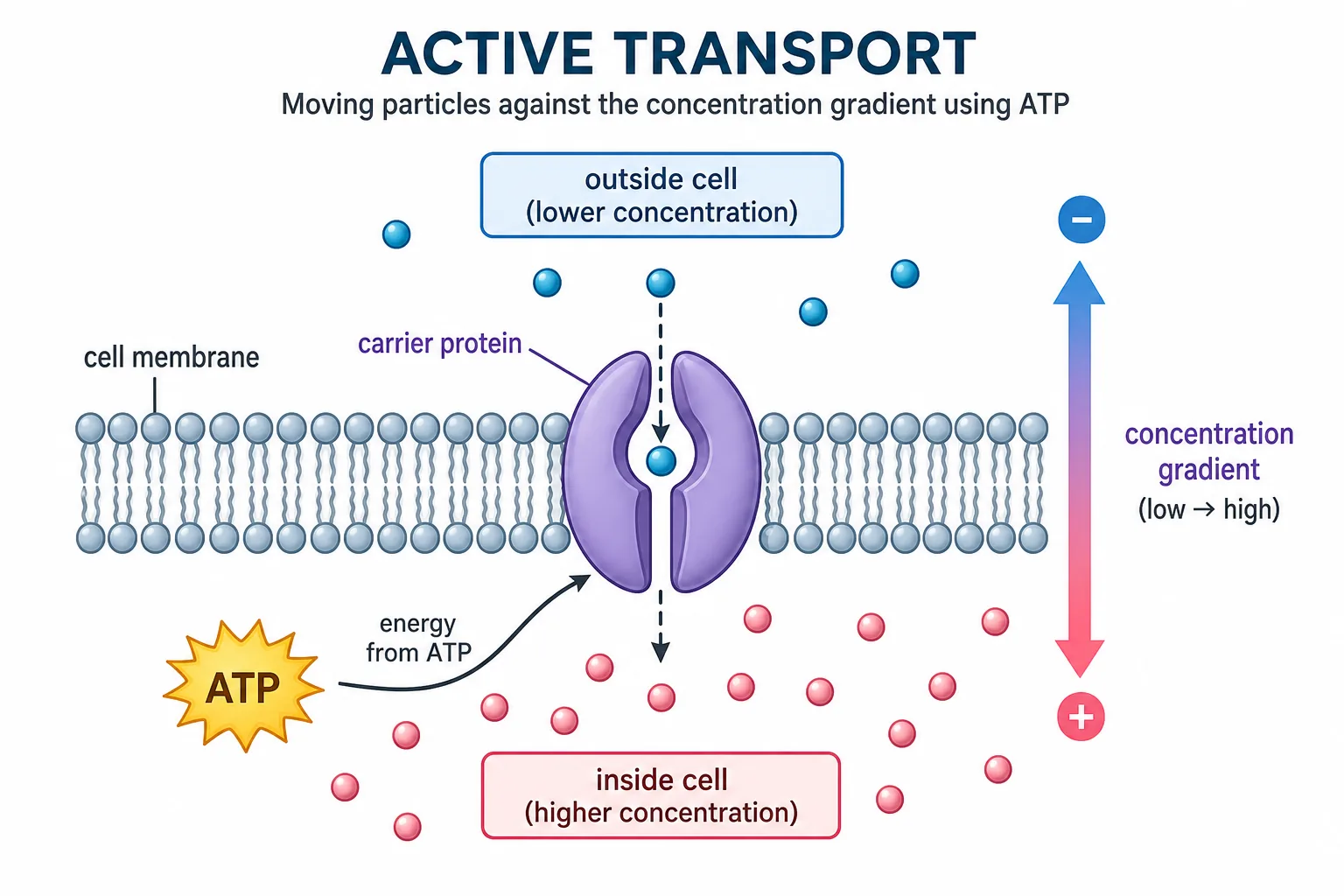
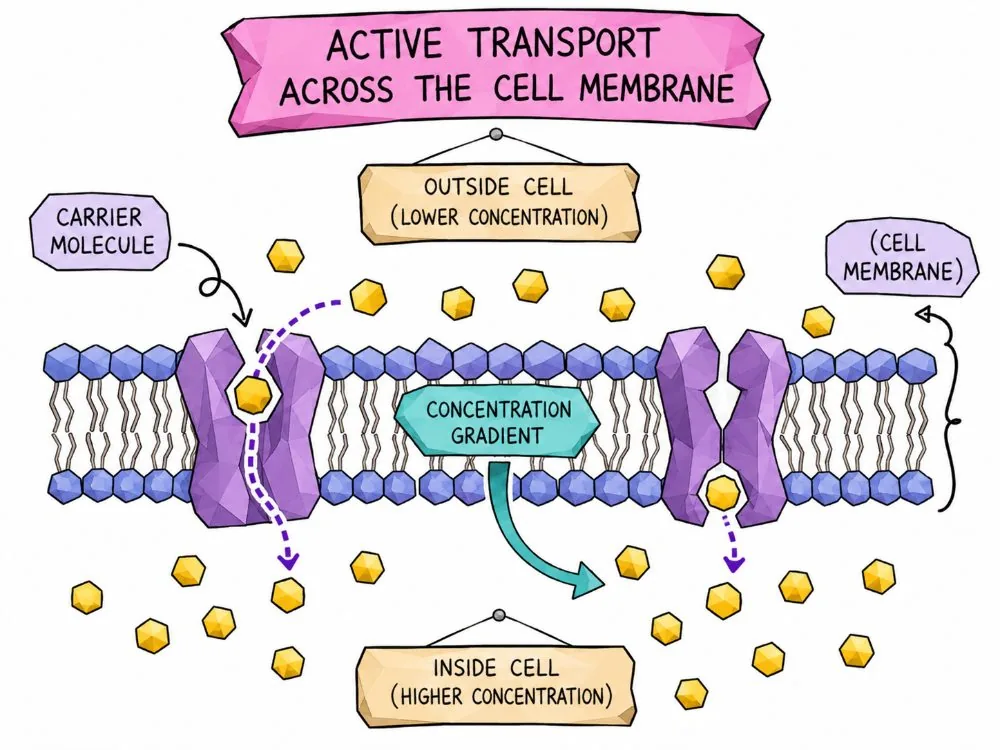

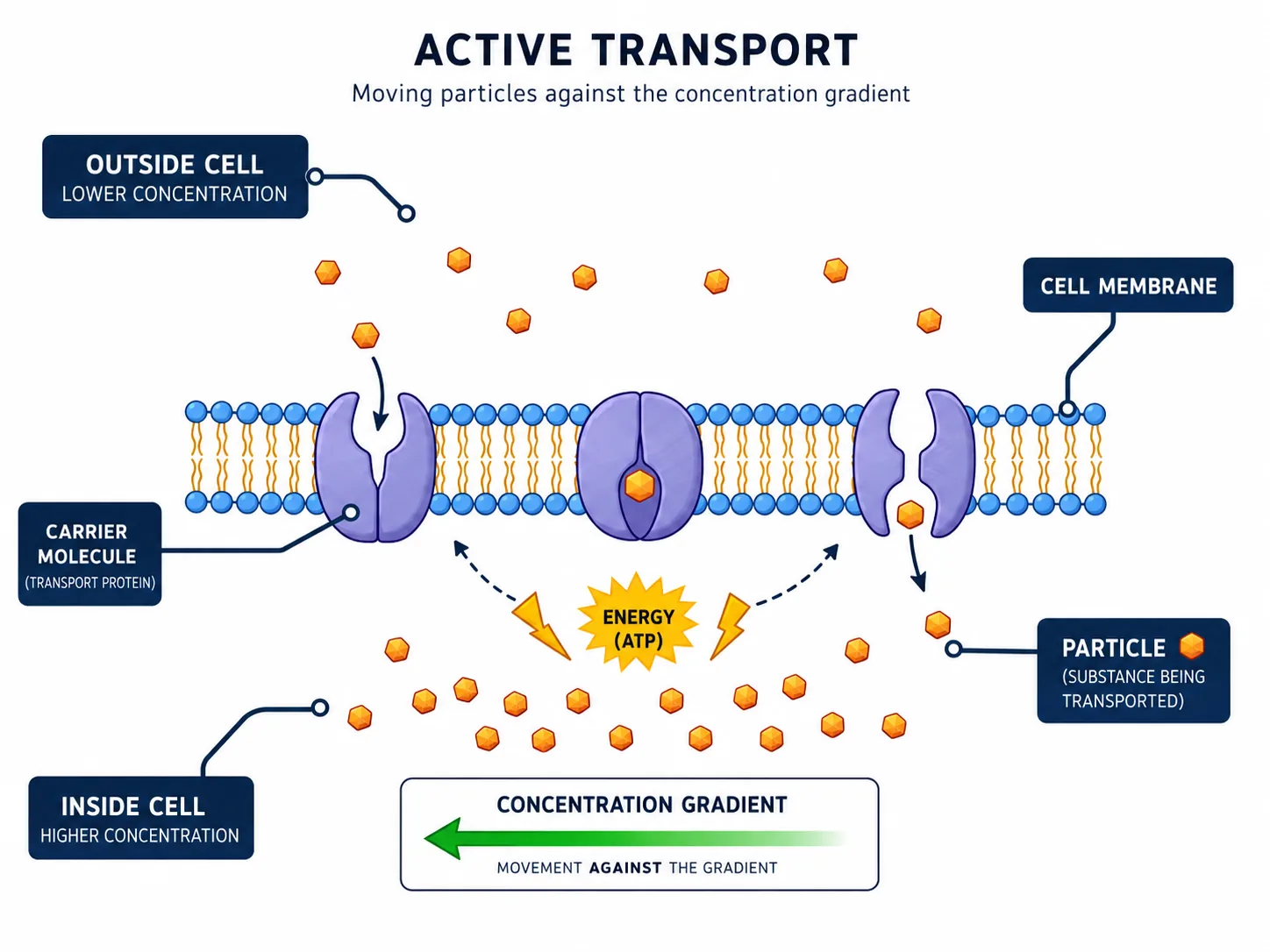

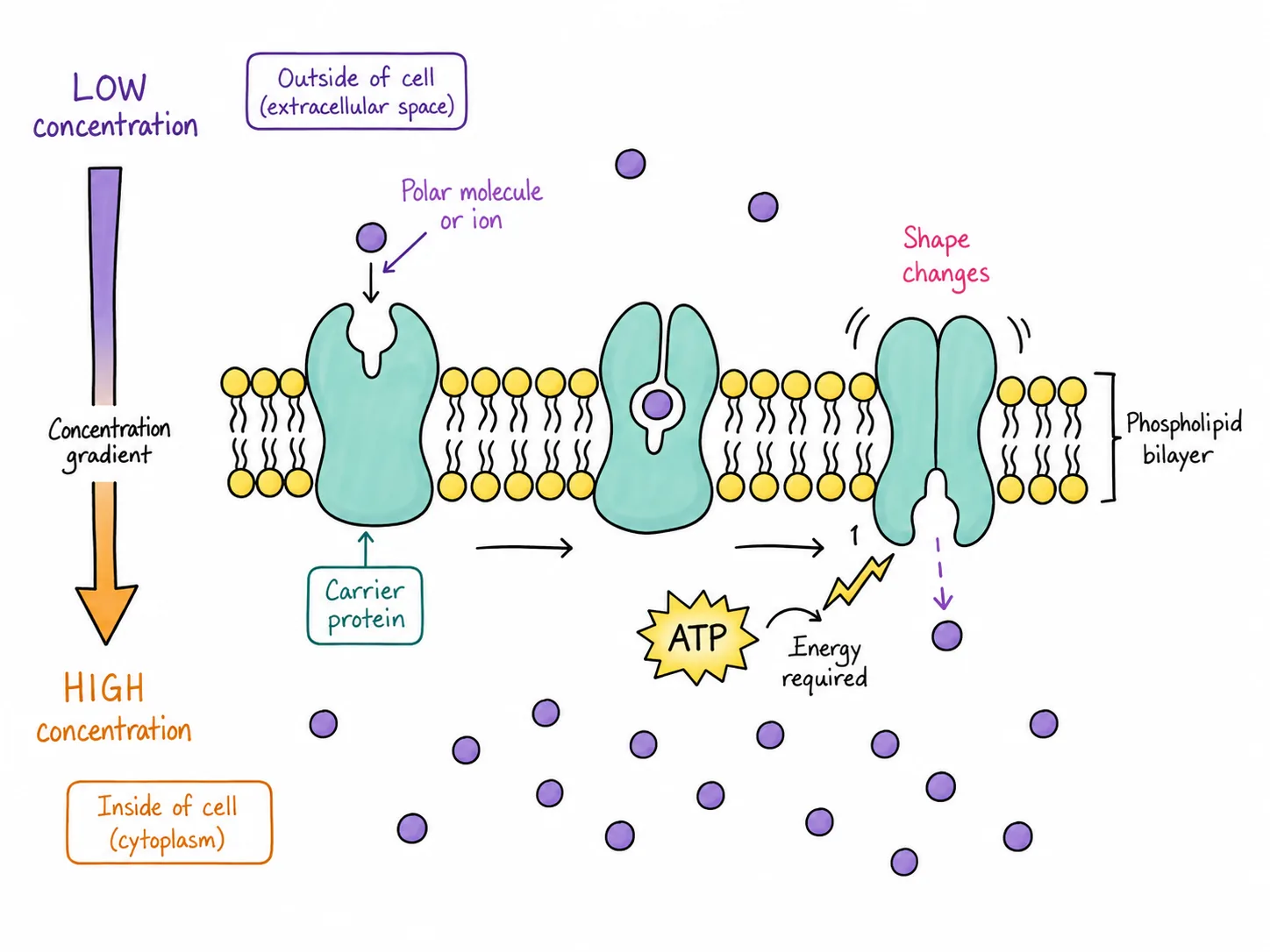
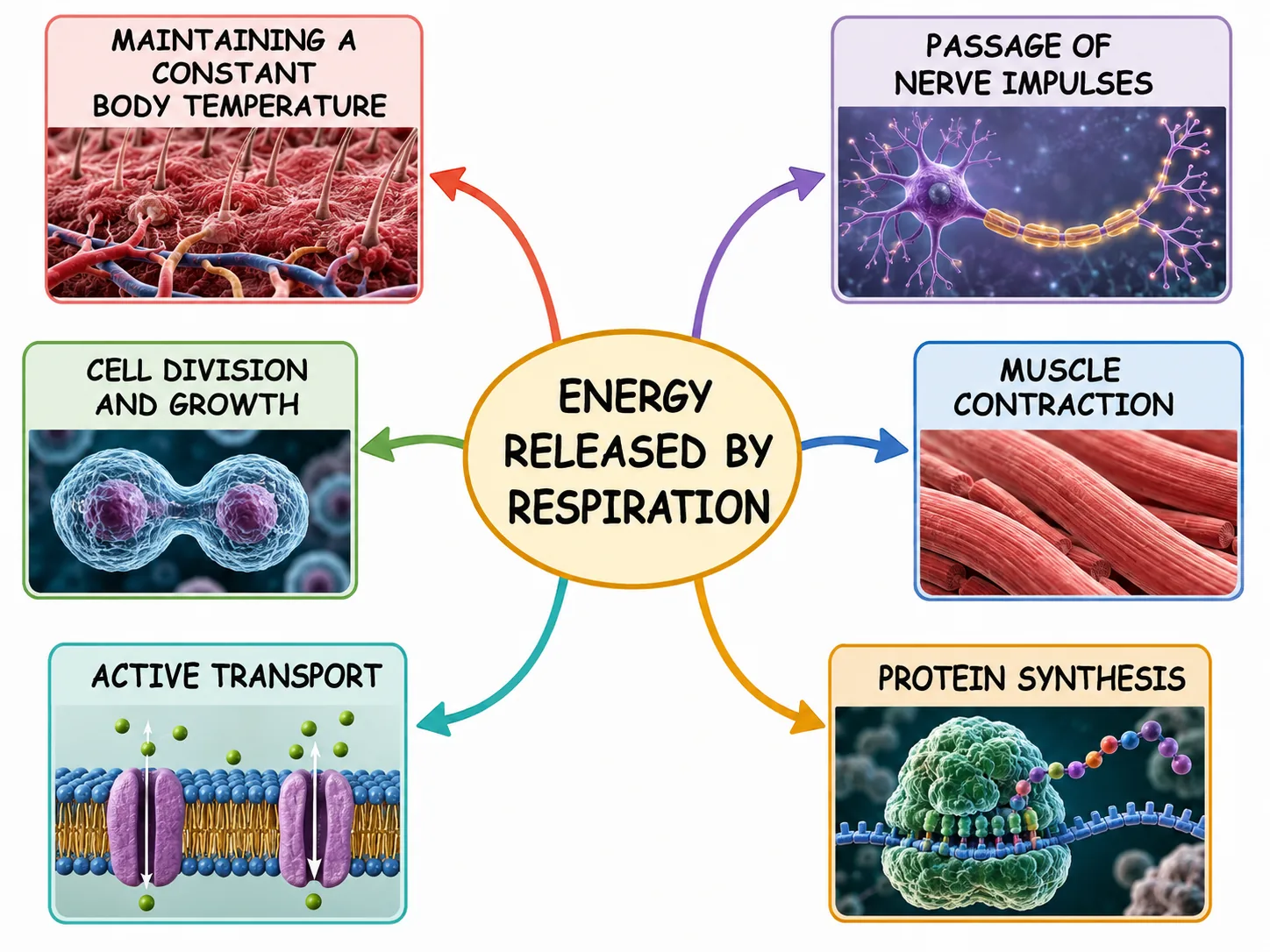
Energy from respiration
Movement
- Movement Muscle contraction.
Building
- Building Protein synthesis, cell division and growth.
Transport
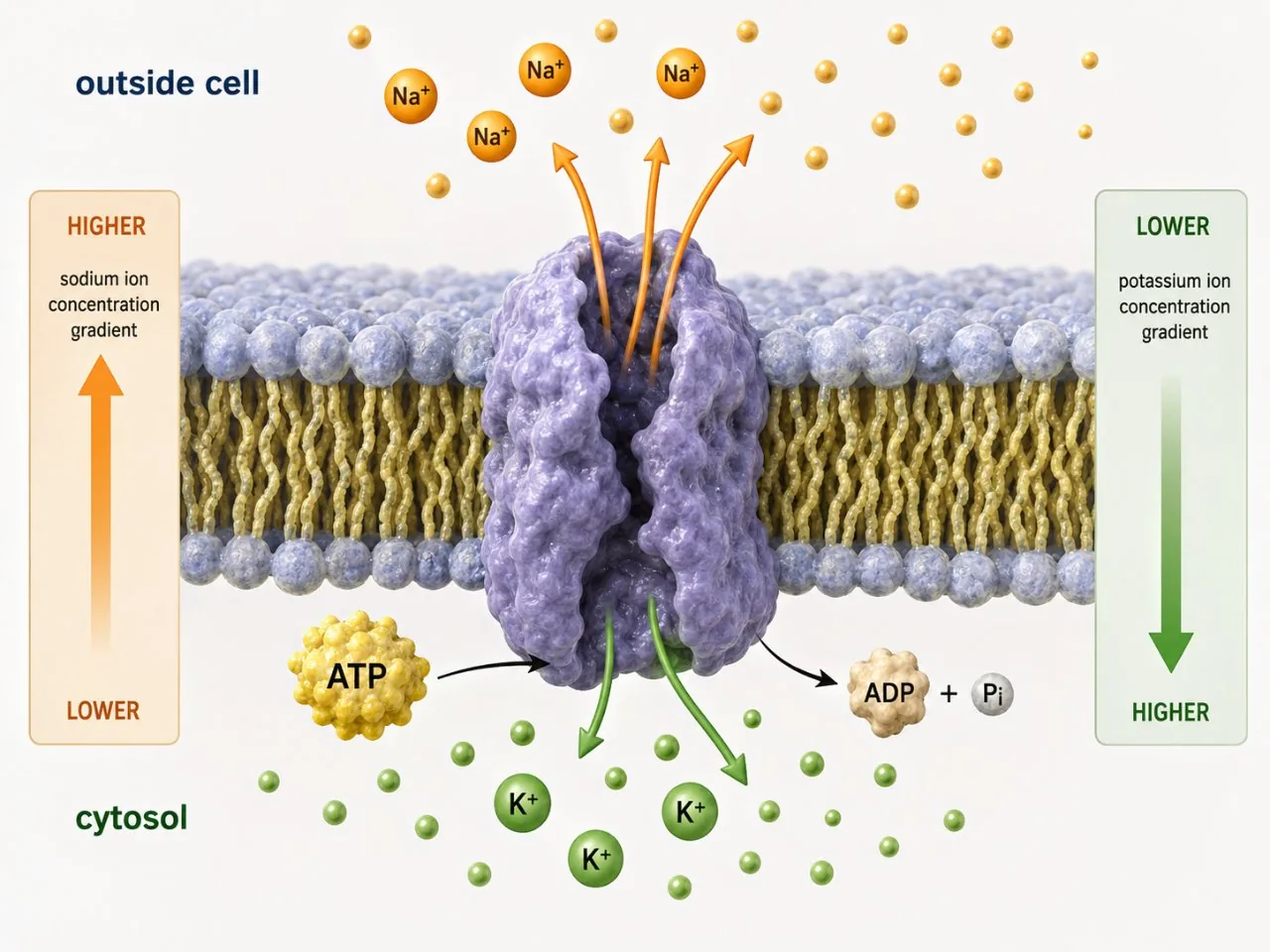
- Transport Active transport across cell membranes.
Communication
- Communication Generation of nerve impulses.
Temperature
- Temperature Maintaining a constant internal body temperature.
Section 3 of 7Practical: temperature and yeast respiration
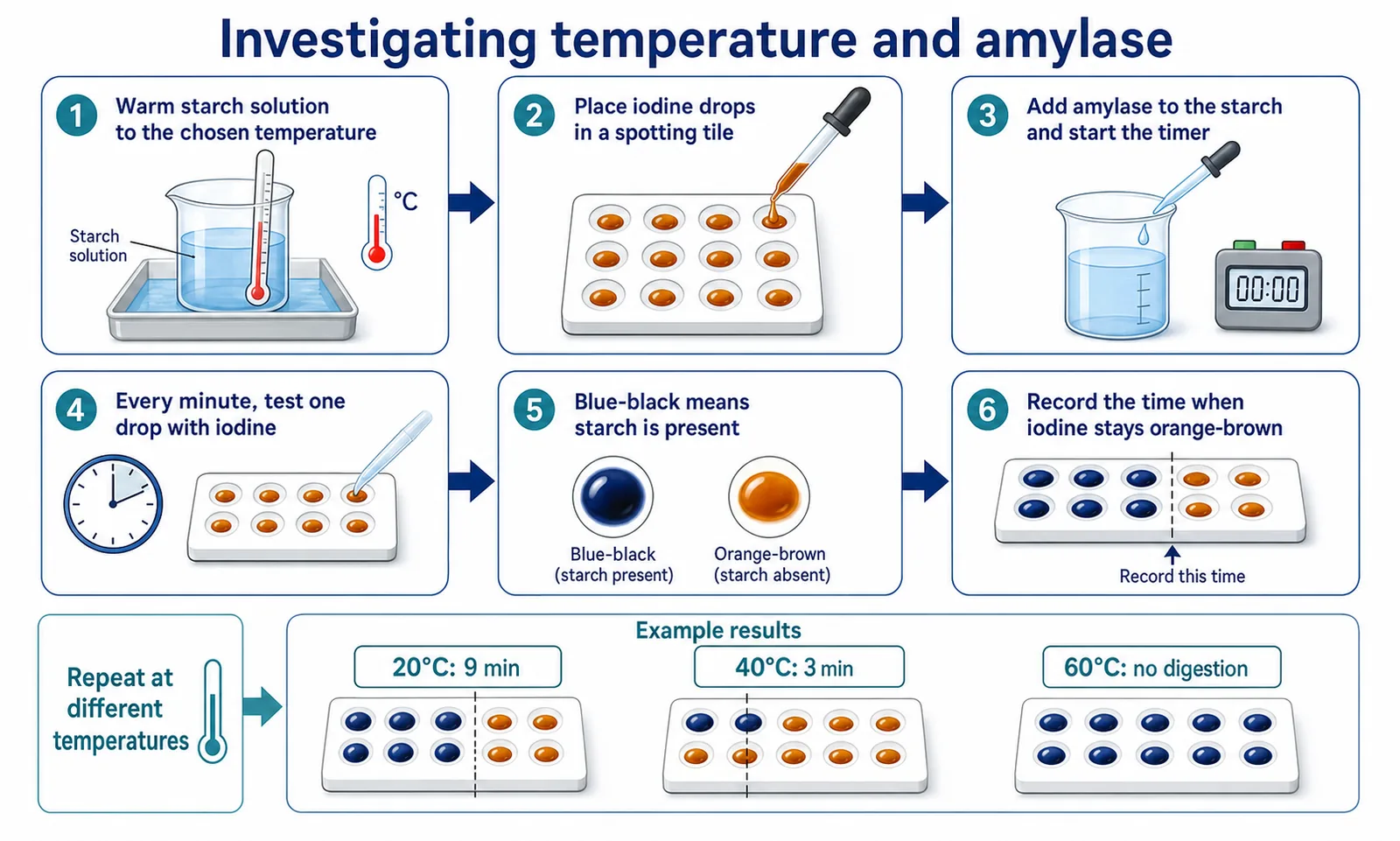




1
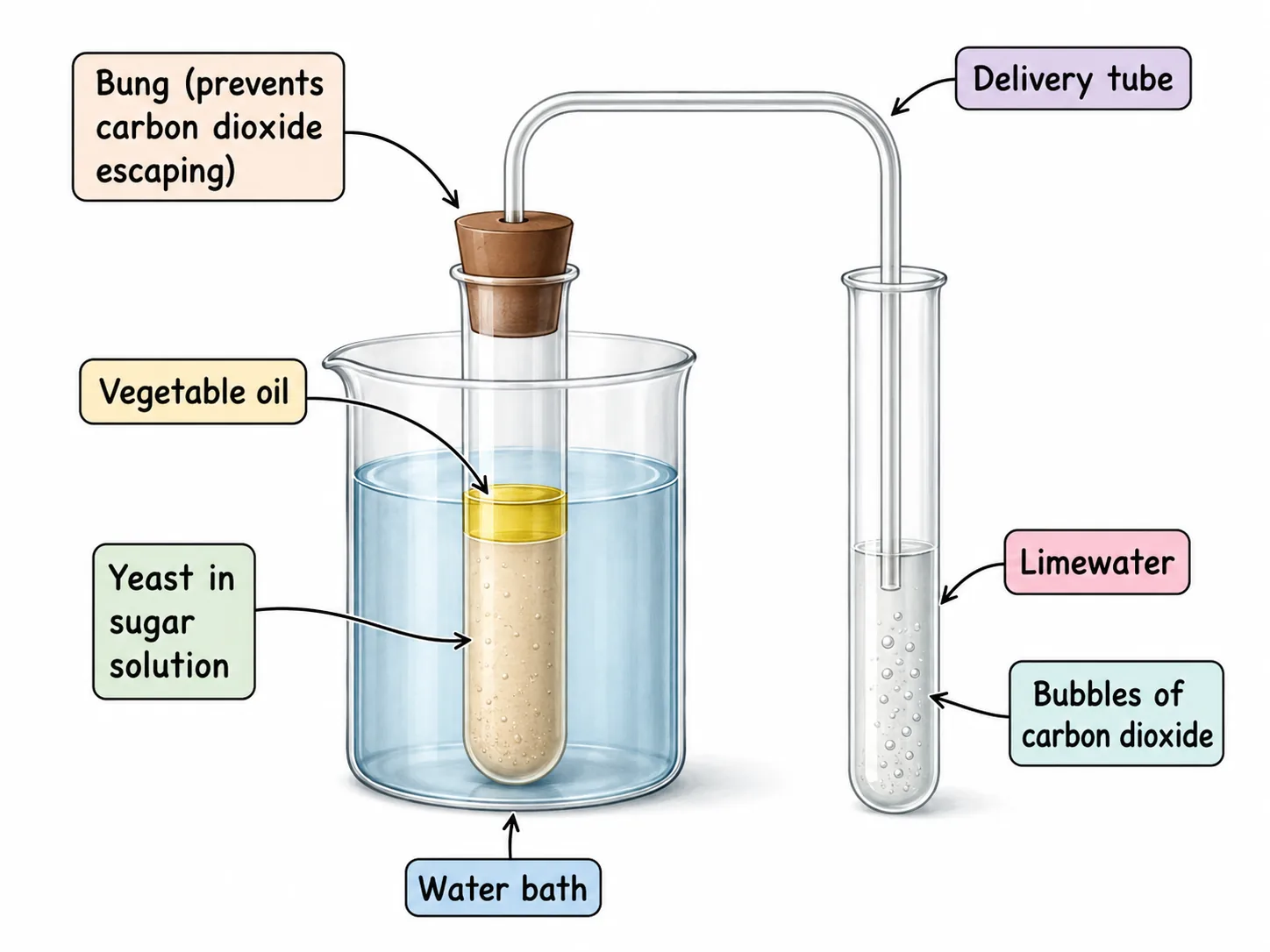
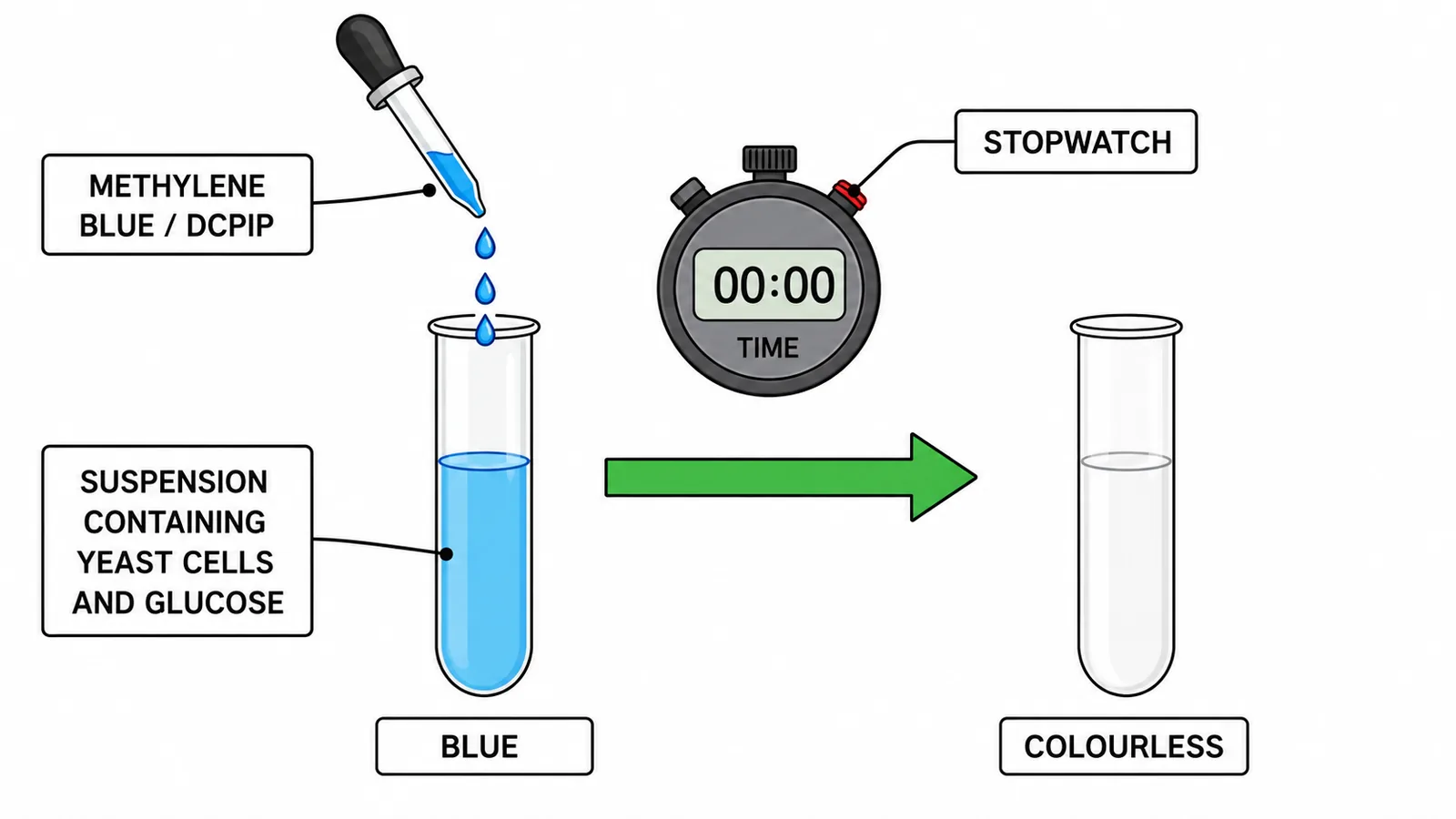
Set up water baths at a range of temperatures, for example 10, 20, 30, 40 and 50 °C.
2
Put the same volume of yeast suspension and glucose solution into each test tube and stand the tubes in their water baths until they reach the correct temperature.
3
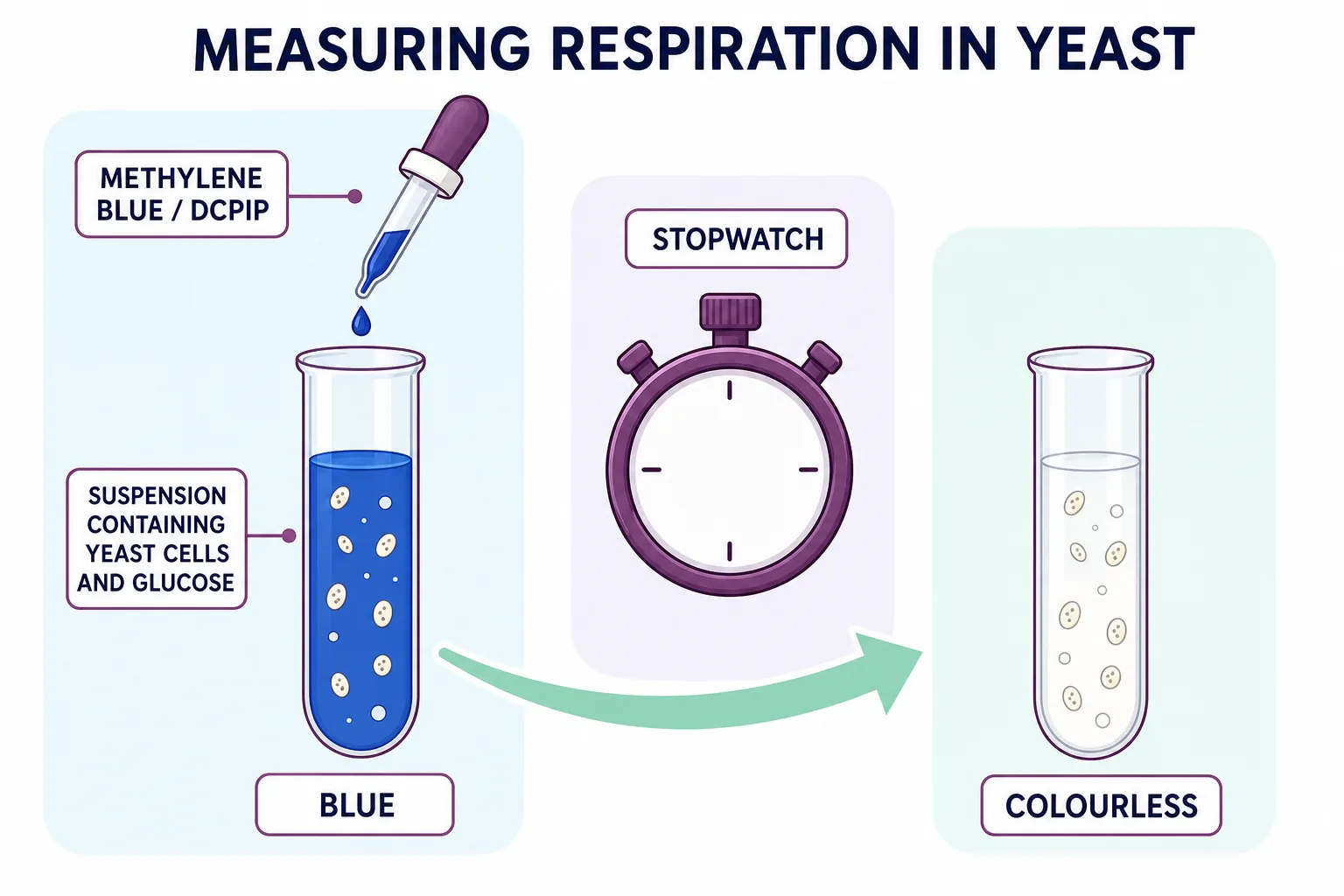
Add the same volume of methylene blue to each tube and start the stopwatch.
4
Record the time taken for the blue colour to disappear.
5
Repeat at each temperature and calculate a mean time.
6
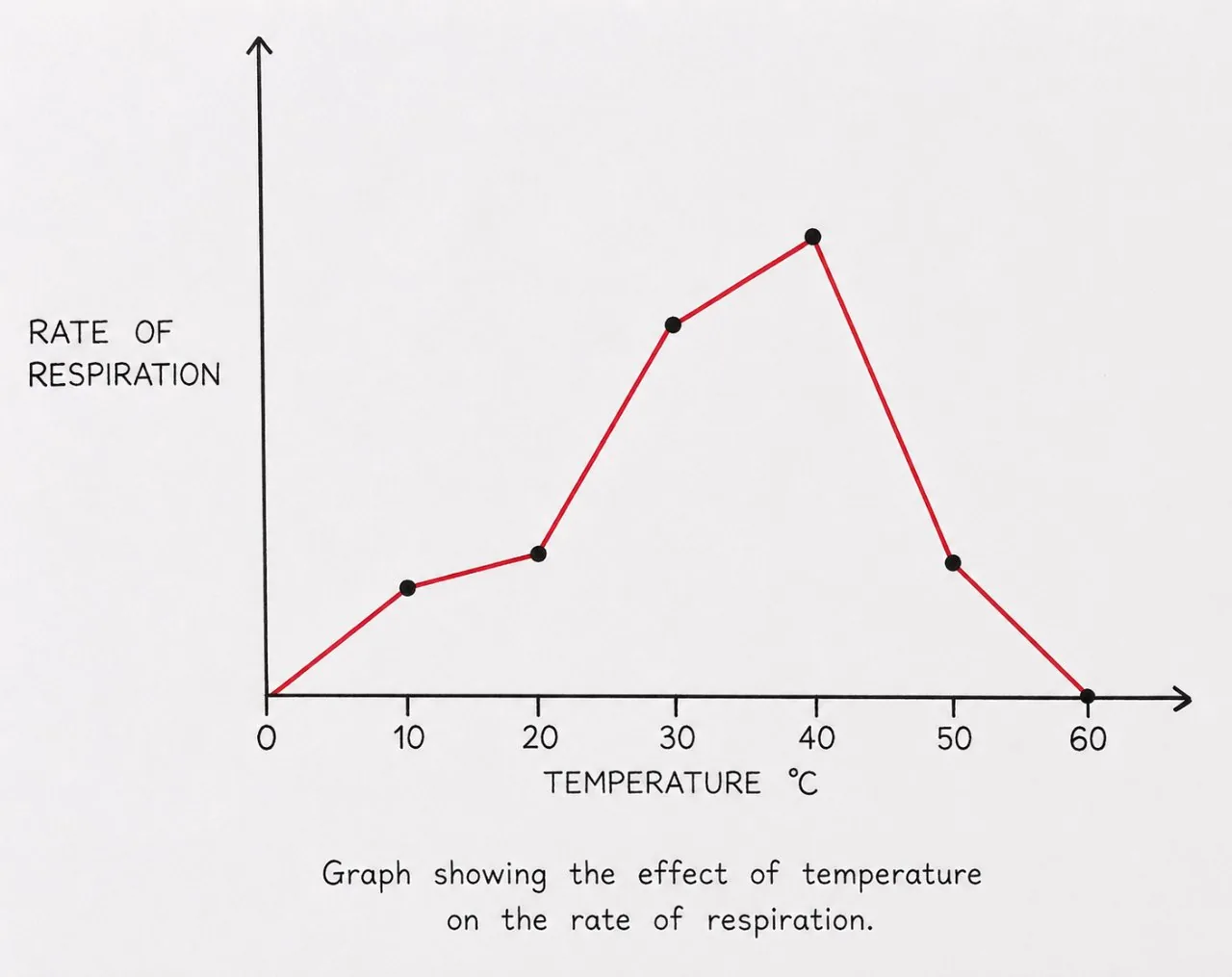
Plot a graph of temperature on the x-axis against time for colour change on the y-axis, or convert the times into a rate of respiration.
Section 4 of 7Variables in the practical
| Type | Variable | Reason |
|---|---|---|
| Independent | Temperature of the water bath | This is what is changed on purpose |
| Dependent | Time for methylene blue to become colourless | A shorter time means a faster rate of respiration |
| Control | Volume and concentration of yeast, glucose and dye | More yeast or less dye would alter the time |
| Control | pH, which can be held steady with a buffer | pH affects enzyme activity |
Section 5 of 7Interpreting the results


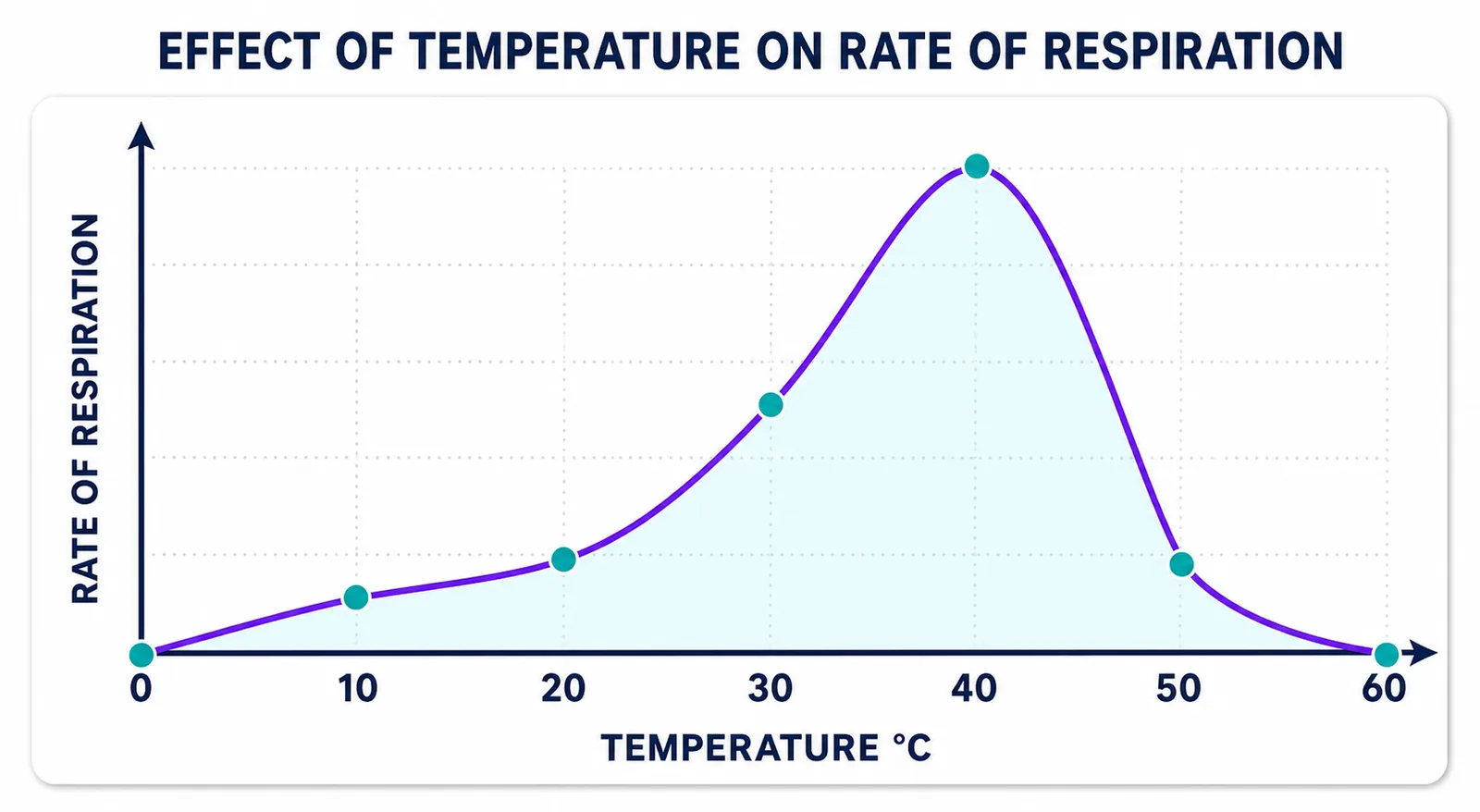
1Below about 40 °C
- Below about 40 °C Particles have more kinetic energy, so enzymes and substrates collide more often and the rate rises.
- The colour change takes less time.
2Around the optimum
- Around the optimum The rate of respiration is at its highest and the dye clears fastest.
3Above about 40 °C
- Above about 40 °C Enzymes begin to denature as their active sites change shape, so enzyme-substrate complexes cannot form and the rate falls.
Section 6 of 7Key terms
| Term | Meaning |
|---|---|
| Respiration | The chemical reactions in cells that break down nutrient molecules to release energy. |
| Aerobic respiration | Respiration that uses oxygen. |
| Anaerobic respiration | Respiration without oxygen, releasing much less energy. |
| Mitochondria | Cell structures where most of the reactions of aerobic respiration occur. |
| Denature | Permanent change in the shape of an enzyme's active site, caused by high temperature or extreme pH. |
| Methylene blue | A dye that loses its blue colour as yeast respire, used as an indicator of respiration rate. |
Section 7 of 7Exam technique
1
Confusing respiration with breathing — respiration is chemical and occurs in cells.
2
Writing that respiration 'makes' or 'produces' energy — energy is released from glucose.
3
Forgetting that a shorter time for the dye to clear means a faster rate, not a slower one.
4
Failing to state that enzymes control the reactions of respiration.
Marked practiceQuizzes for this lesson
Cambridge 9700 AS Biology
Core Formula
Magnification Triangle & Unit Conversion
Formula: M = I / A ⇔ A = I / M ⇔ I = M × A
Units: 1 mm = 1,000 μm = 1,000,000 nm.
Rule: Convert Image size (ruler mm) to μm by ×1,000 before dividing by Actual size.