13.1.7Coordination and Response
Homeostasis and Temperature Control
5 min read 6 parts Lesson 8 of 8 1 quiz
Section 1 of 6Homeostasis (HT only)
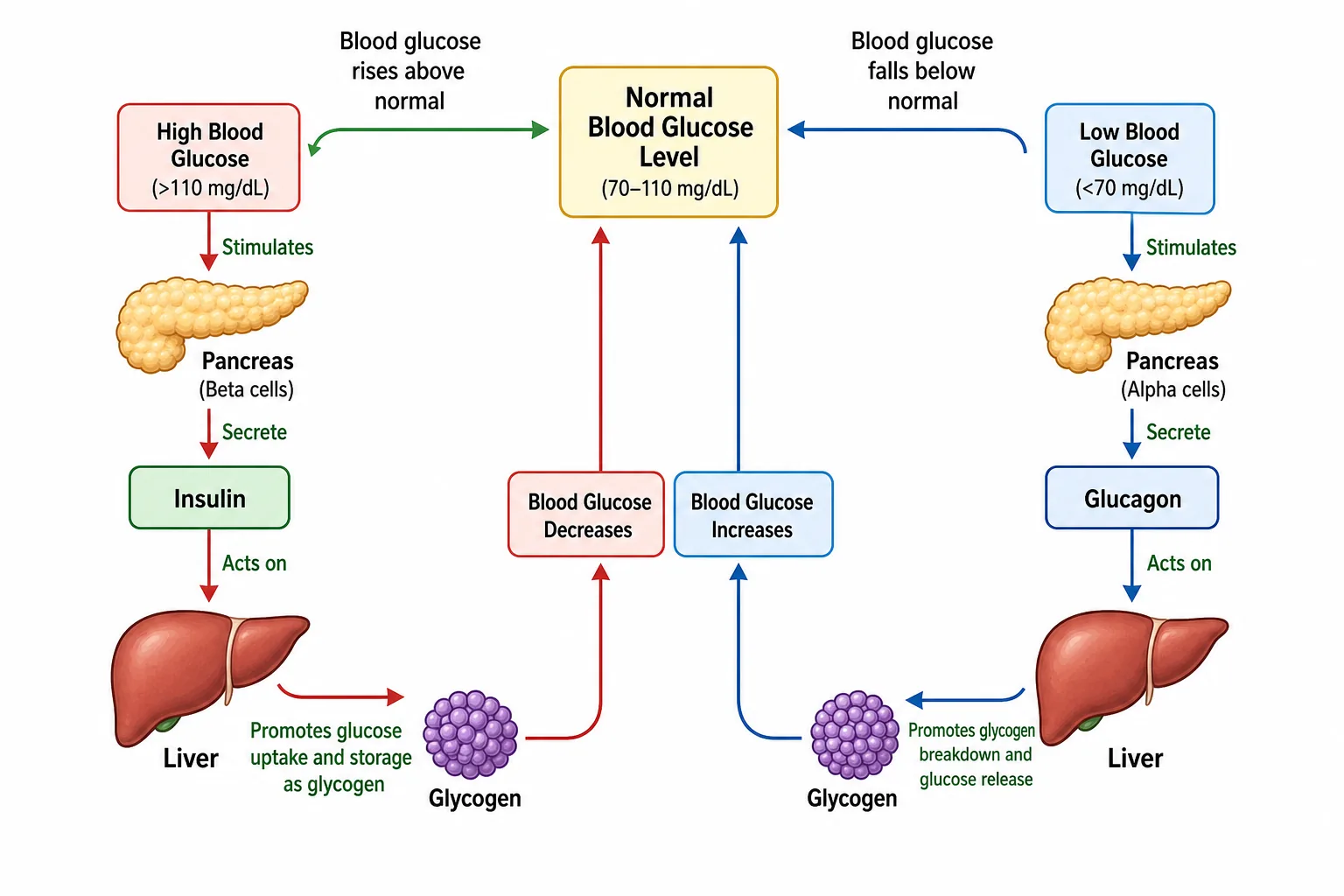


Meaning
- Meaning Homeostasis is the maintenance of a constant internal environment.
- Conditions such as temperature, blood pressure, water concentration and glucose concentration must stay within set limits.
Why it matters
- Why it matters Body cells can only carry out their reactions properly within a narrow range of conditions,
- and the organism can only live if its cells function.
Temperature and enzymes
- Temperature and enzymes The body holds its temperature near 37 °C, where enzymes work best.
- If body temperature rises too far, enzymes denature and reactions such as respiration are catalysed less effectively.
Section 2 of 6How the control system works (HT only)


1Detect
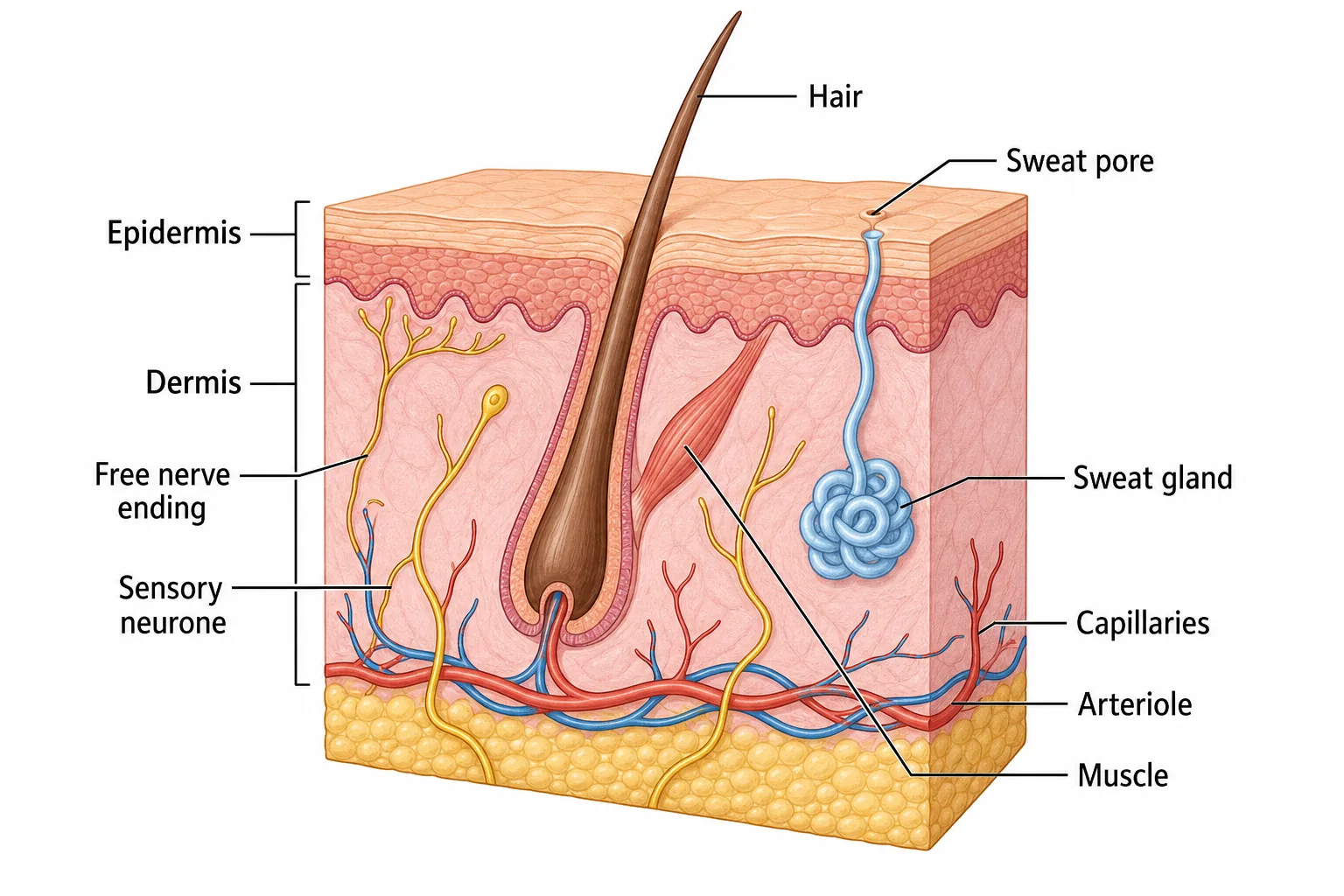
- Detect The brain has receptors sensitive to the temperature of the blood,
- and the skin has temperature receptors that send impulses along sensory neurones.
2Coordinate
- Coordinate The brain processes the information and compares it with the optimum of 37 °C.
3Respond
- Respond Nerve impulses travel to effectors in the skin.
4Correct
- Correct Body temperature moves back towards the set point, and the cycle continues as negative feedback.
Section 3 of 6Responses to heat and cold (HT only)


| Change | Response in the skin | Effect |
|---|---|---|
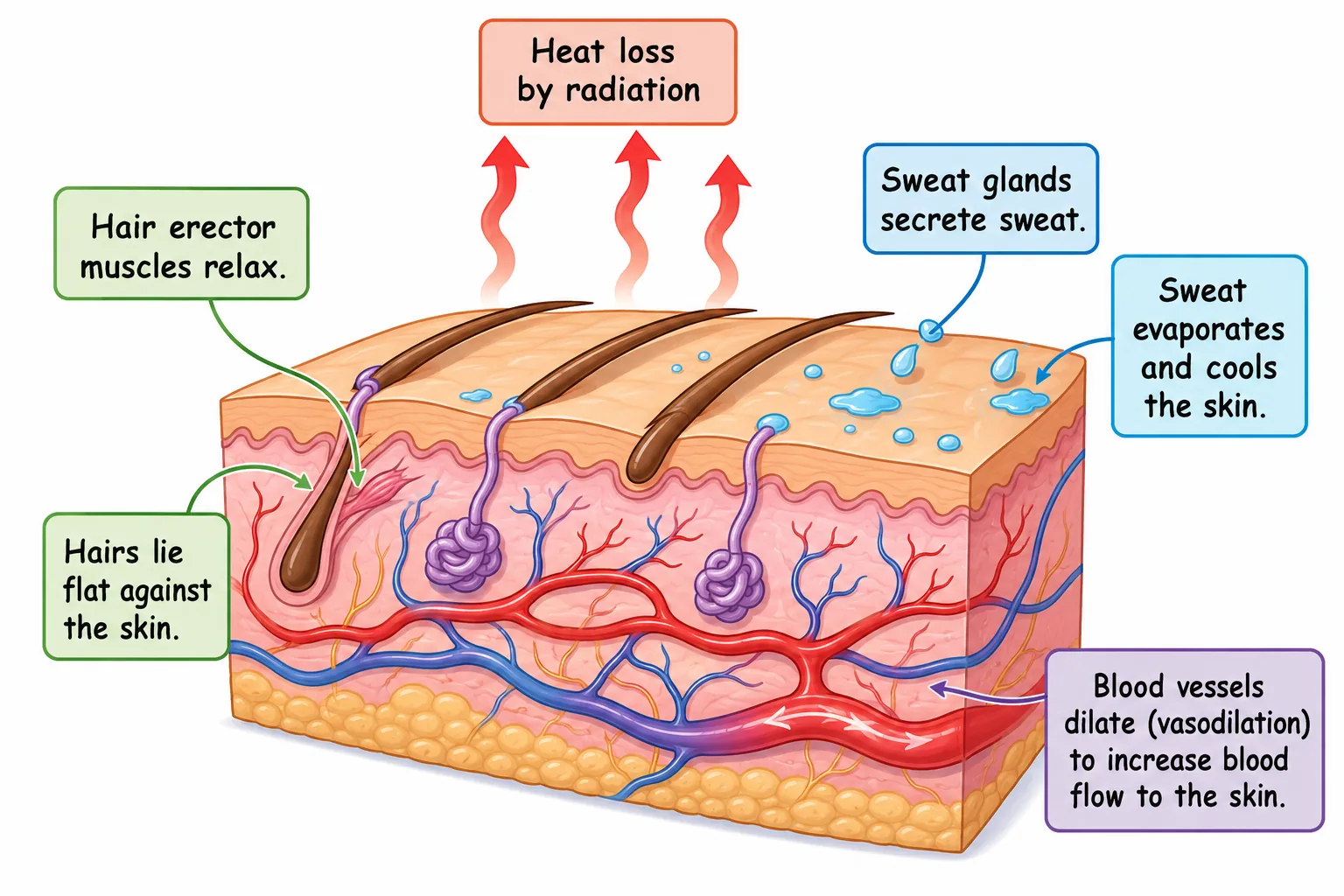
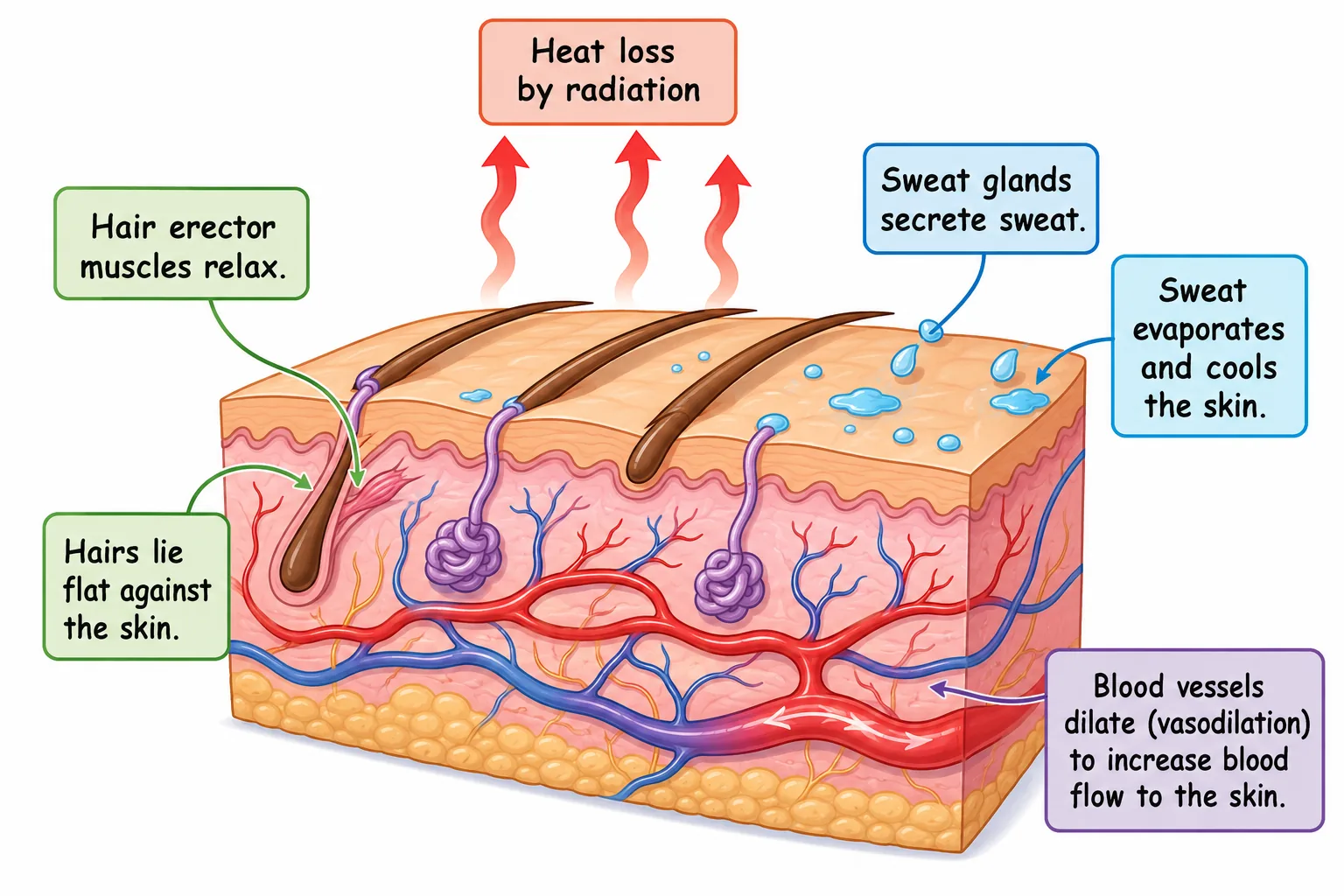
| Body too hot | Sweat glands release sweat | Evaporation of sweat transfers heat from the skin |
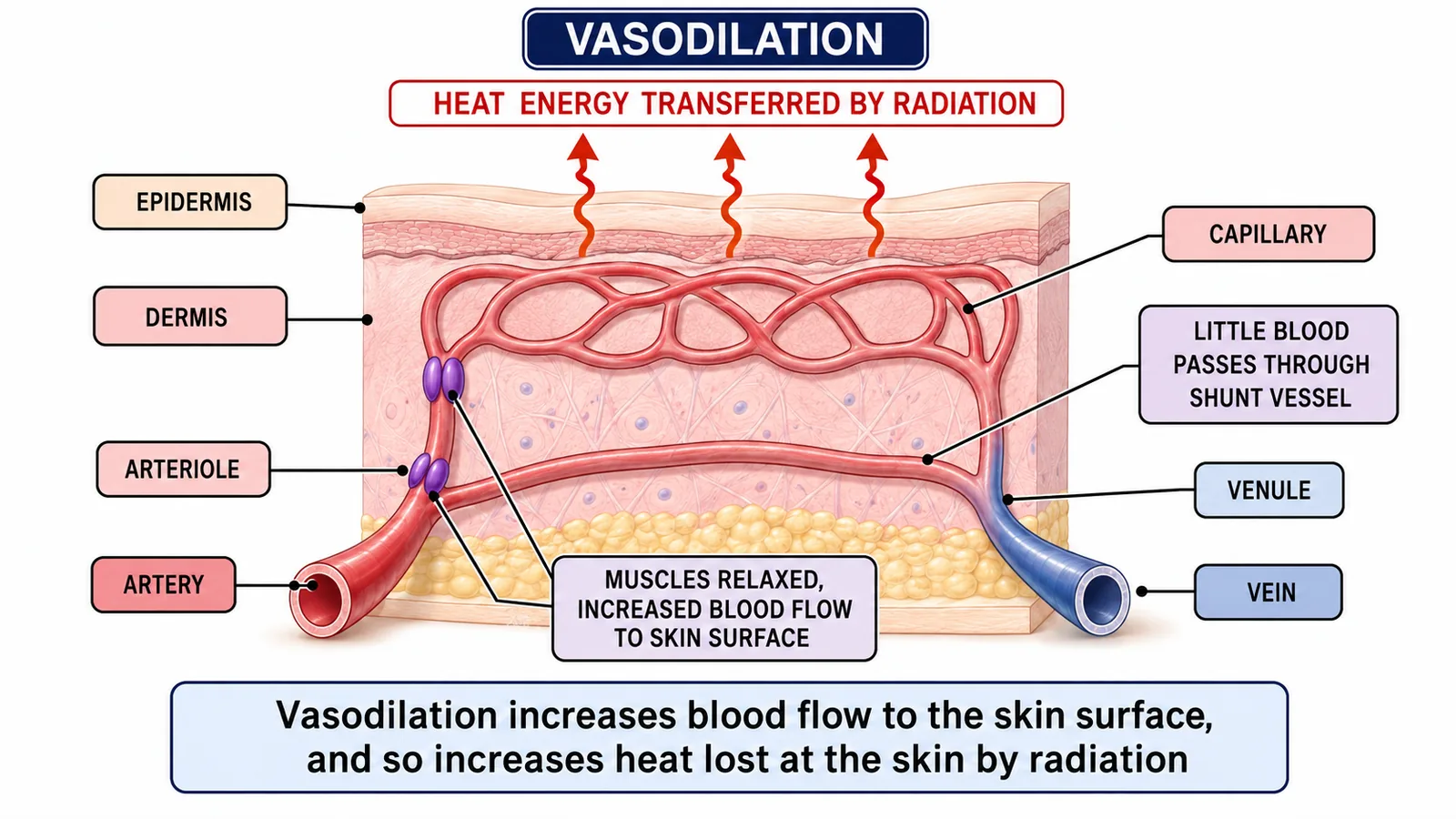
| Body too hot | Vasodilation: arterioles near the surface widen | More blood flows near the surface, so more heat is radiated |
| Body too cold | Shivering by skeletal muscles | Respiration in muscles releases heat |
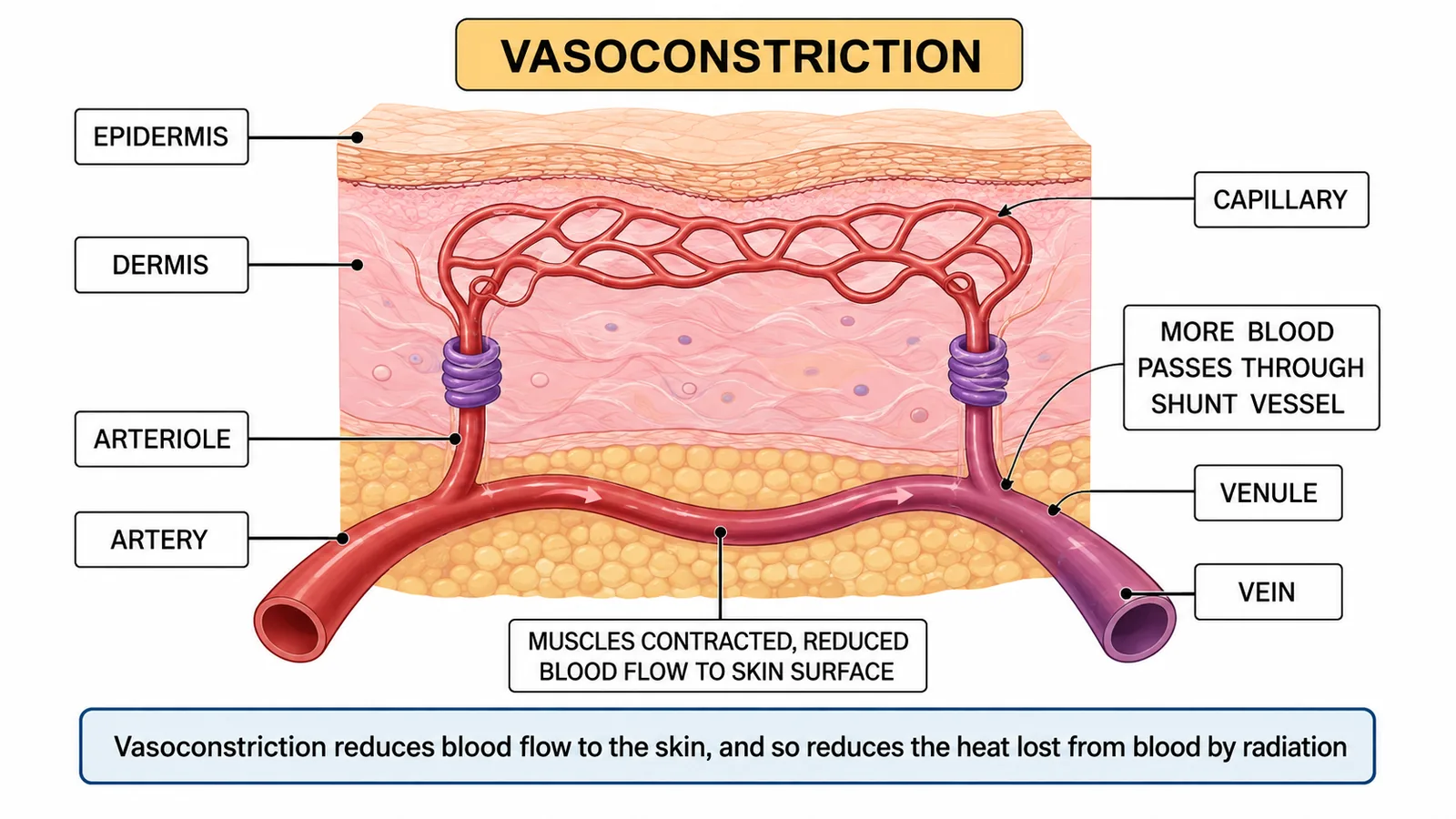
| Body too cold | Vasoconstriction: arterioles narrow | Less blood flows near the surface, so less heat is lost |
| Body too cold | Hair erector muscles raise hairs | A layer of trapped air insulates the skin |
Section 4 of 6Parts of the skin involved (HT only)




Skin and temperature
Epidermis
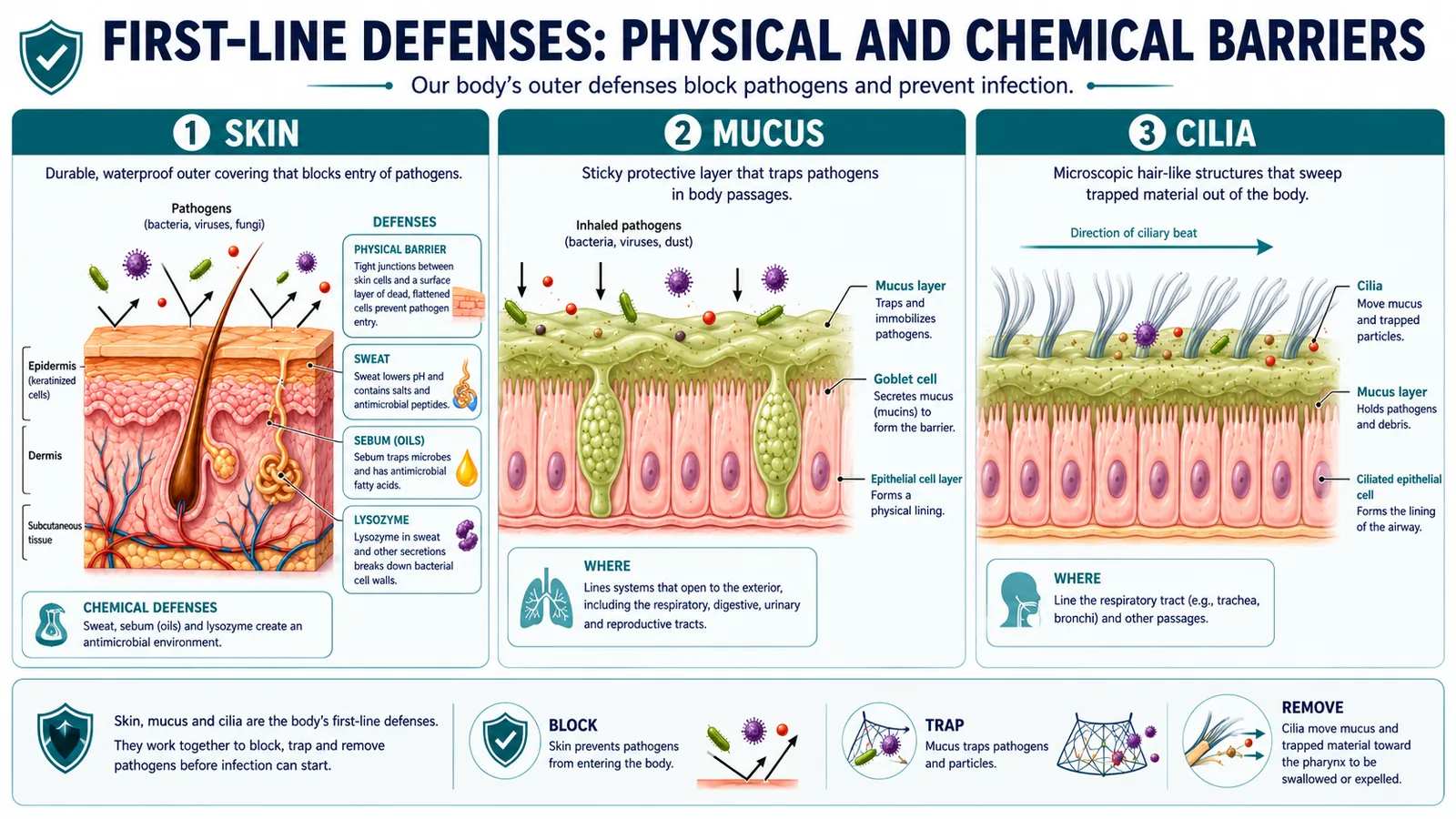
- Epidermis The outer layer forms a barrier and protects the tissues beneath.
Dermis
- Dermis This layer contains sweat glands, blood vessels, hair follicles and receptors.
Fatty tissue
- Fatty tissue The layer beneath the dermis insulates the body and reduces heat loss through the skin.
Blood vessels
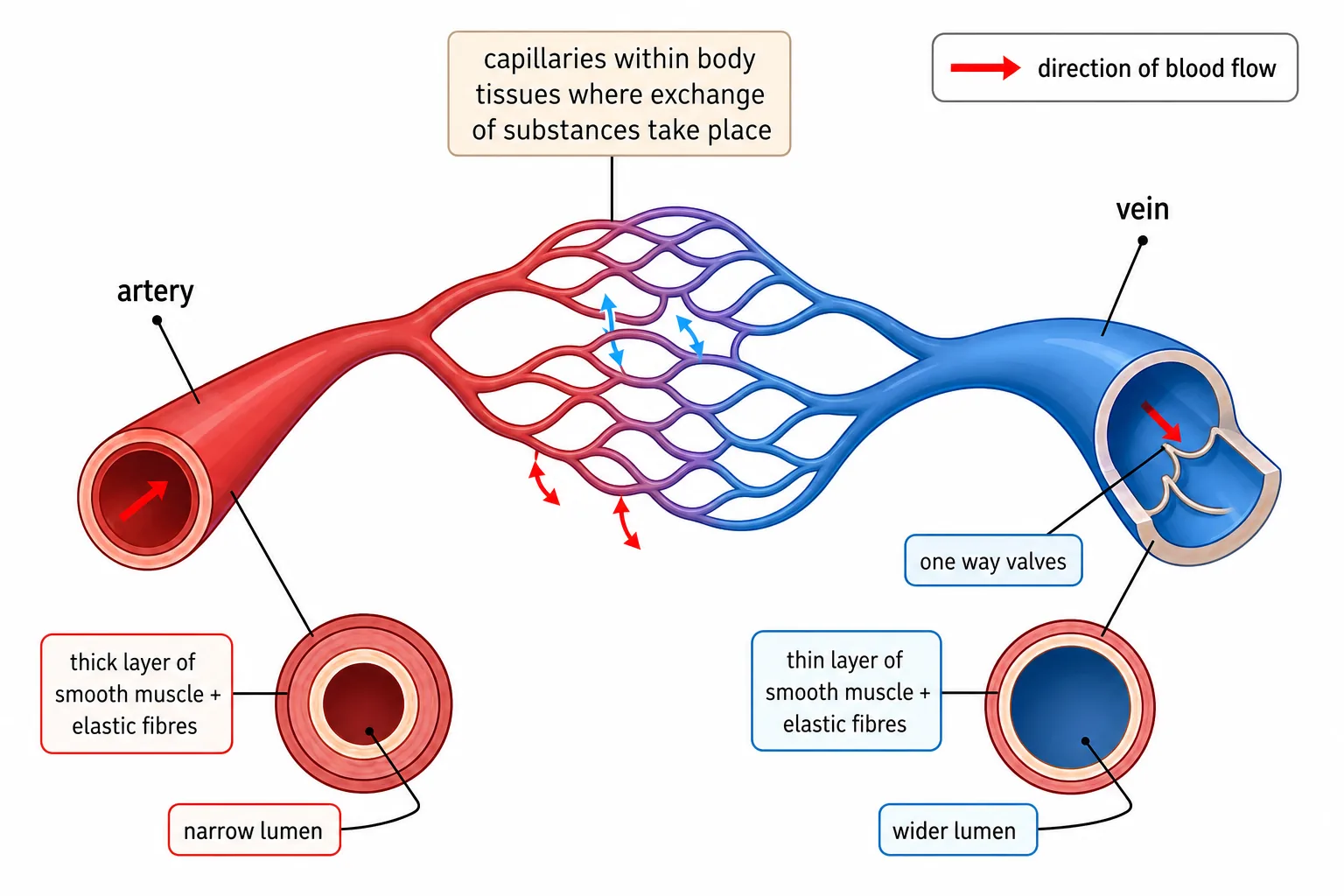
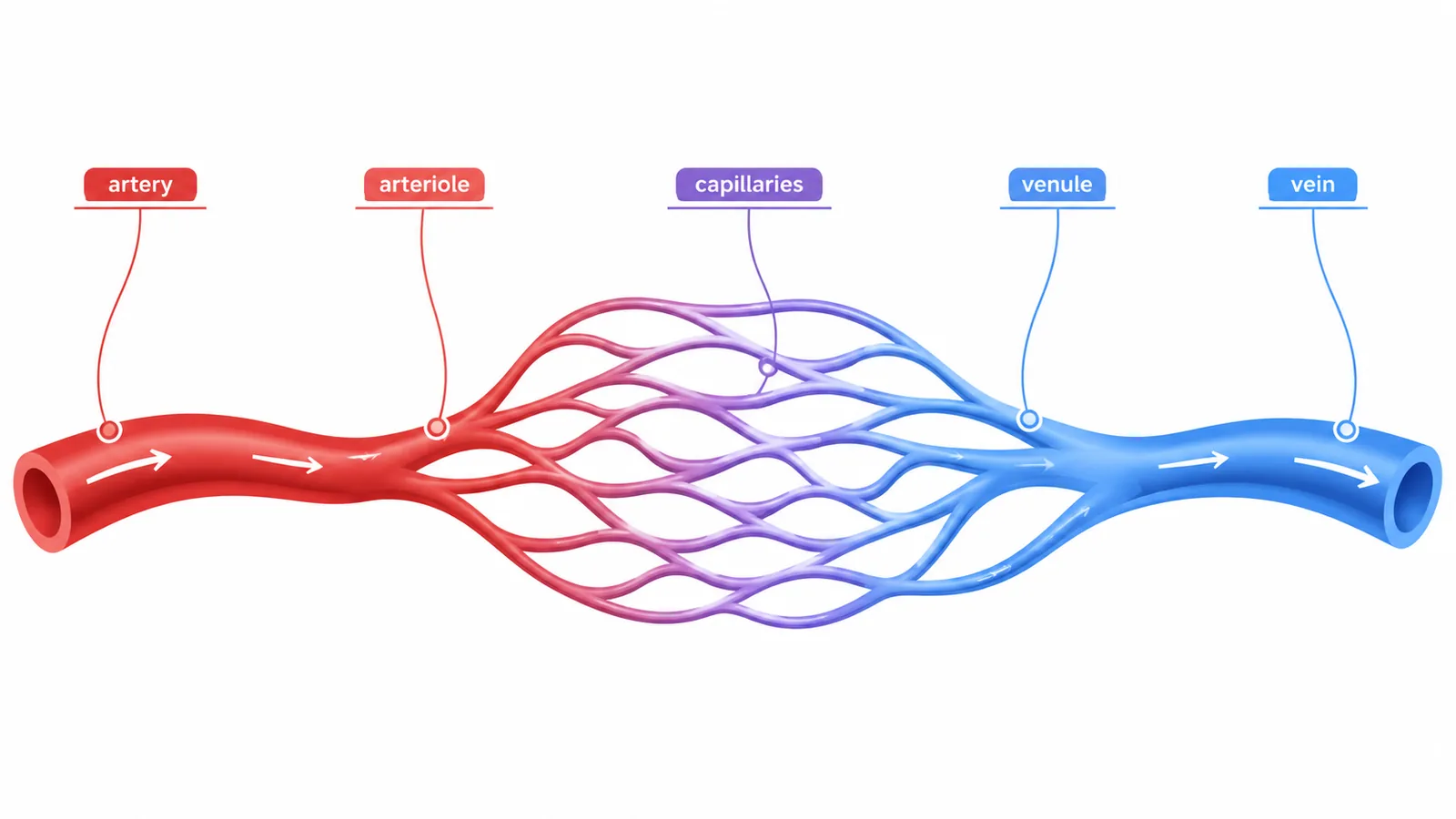
- Blood vessels Arterioles change width to control how much blood passes near the surface;
- capillaries themselves cannot move.
Section 5 of 6Key terms
| Term | Meaning |
|---|---|
| Homeostasis | The maintenance of a constant internal environment. |
| Negative feedback | A response that reverses a change and returns a condition to its set level. |
| Vasodilation | Widening of arterioles near the skin surface so more blood flows through them. |
| Vasoconstriction | Narrowing of arterioles near the skin surface so less blood flows through them. |
| Effector | A muscle or gland that produces a response. |
| Denature | Change in the shape of an enzyme that stops it working. |
Section 6 of 6Exam technique
1
Saying that blood vessels move closer to or further from the skin surface — they stay in place; the arterioles widen or narrow.
2
Writing that sweating cools the body simply by being released; the cooling comes from evaporation.
3
Mixing up vasodilation (hot) with vasoconstriction (cold).
4
Saying that the body temperature is controlled by the skin alone — the brain coordinates the response.