Section 1 of 11Sexual reproduction




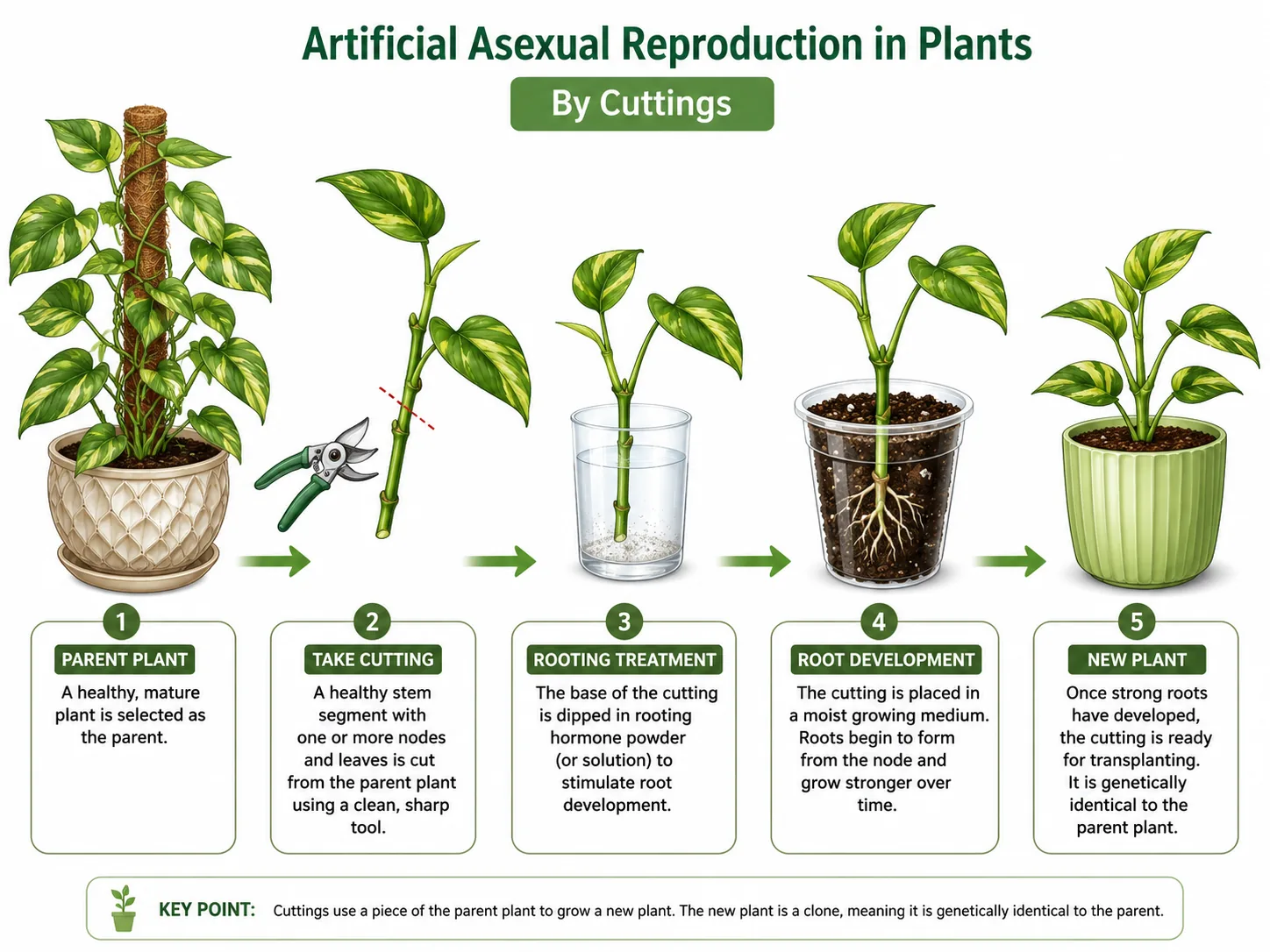
Sexual reproduction
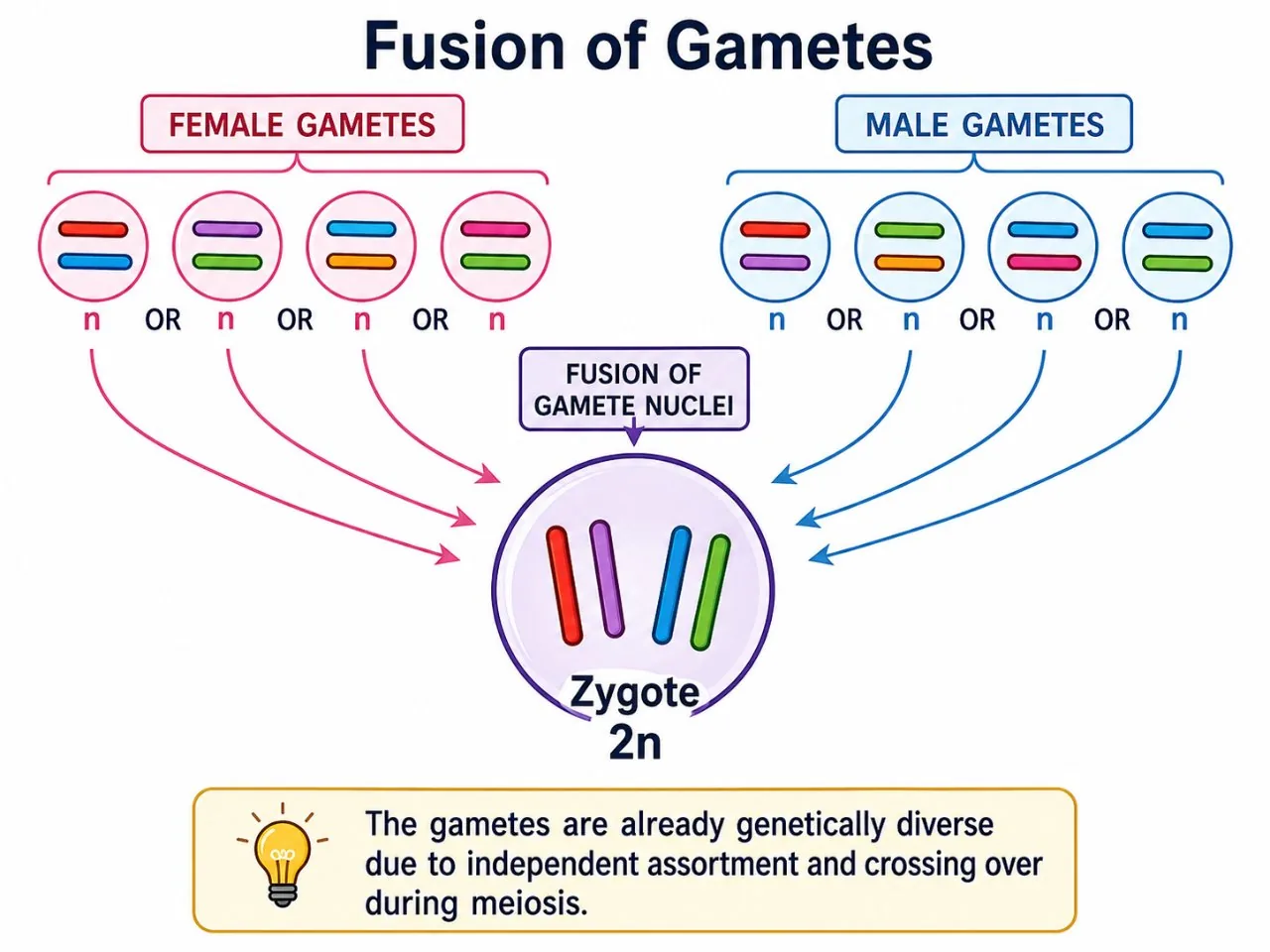
Sexual reproduction fusion of the nuclei of two gametes to form a zygote, giving offspring that are genetically different from each other.
Plant gametes
- Plant gametes the male gamete is the pollen nucleus and the female gamete is in the ovule.
Haploid gametes
- Haploid gametes they have half the chromosome number of a body cell.
Cross-pollination
- Cross-pollination it increases genetic variation.
Section 2 of 11Parts of an insect-pollinated flower





| Structure | Function |
|---|---|
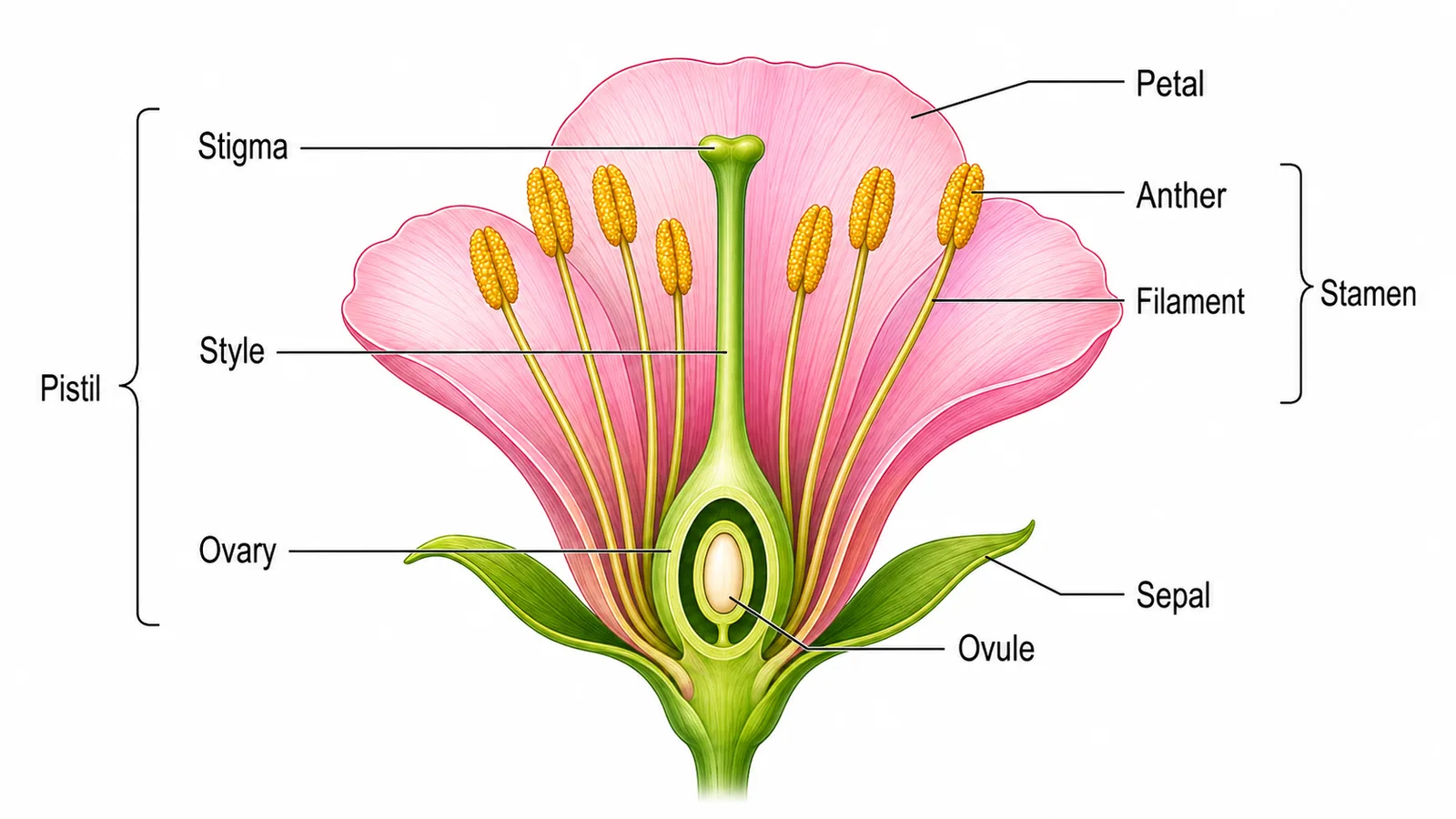
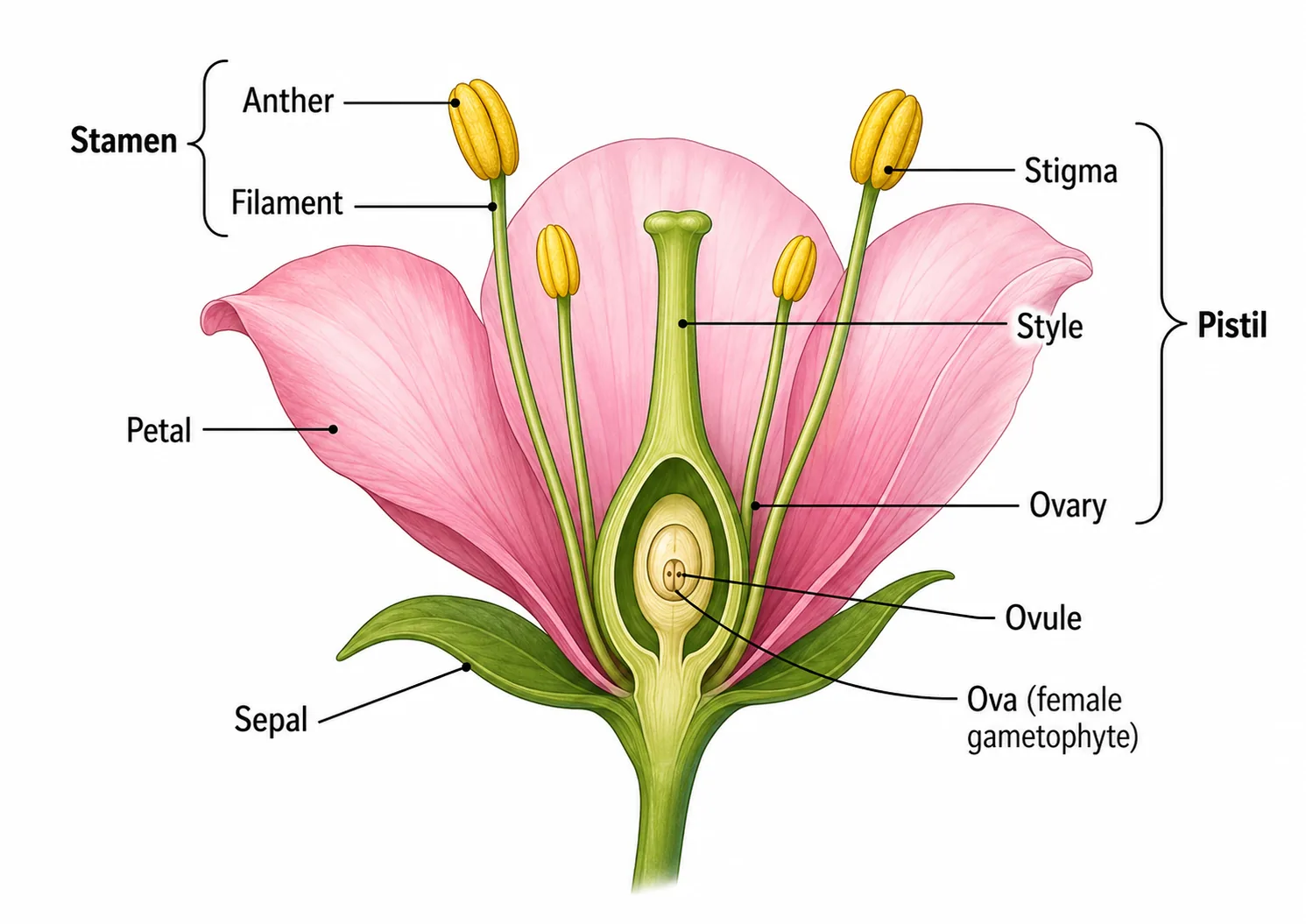
| Sepal | Protects the unopened flower |
| Petal | Brightly coloured to attract insects |
| Stamen: anther | Produces and releases pollen |
| Stamen: filament | Supports the anther |
| Carpel: stigma | Sticky top of the female part that collects pollen |
| Carpel: style | Tube connecting the stigma and the ovary |
| Carpel: ovary | Contains the ovules |
| Ovule | Contains the female gamete |
Section 3 of 11Insect-pollinated and wind-pollinated flowers
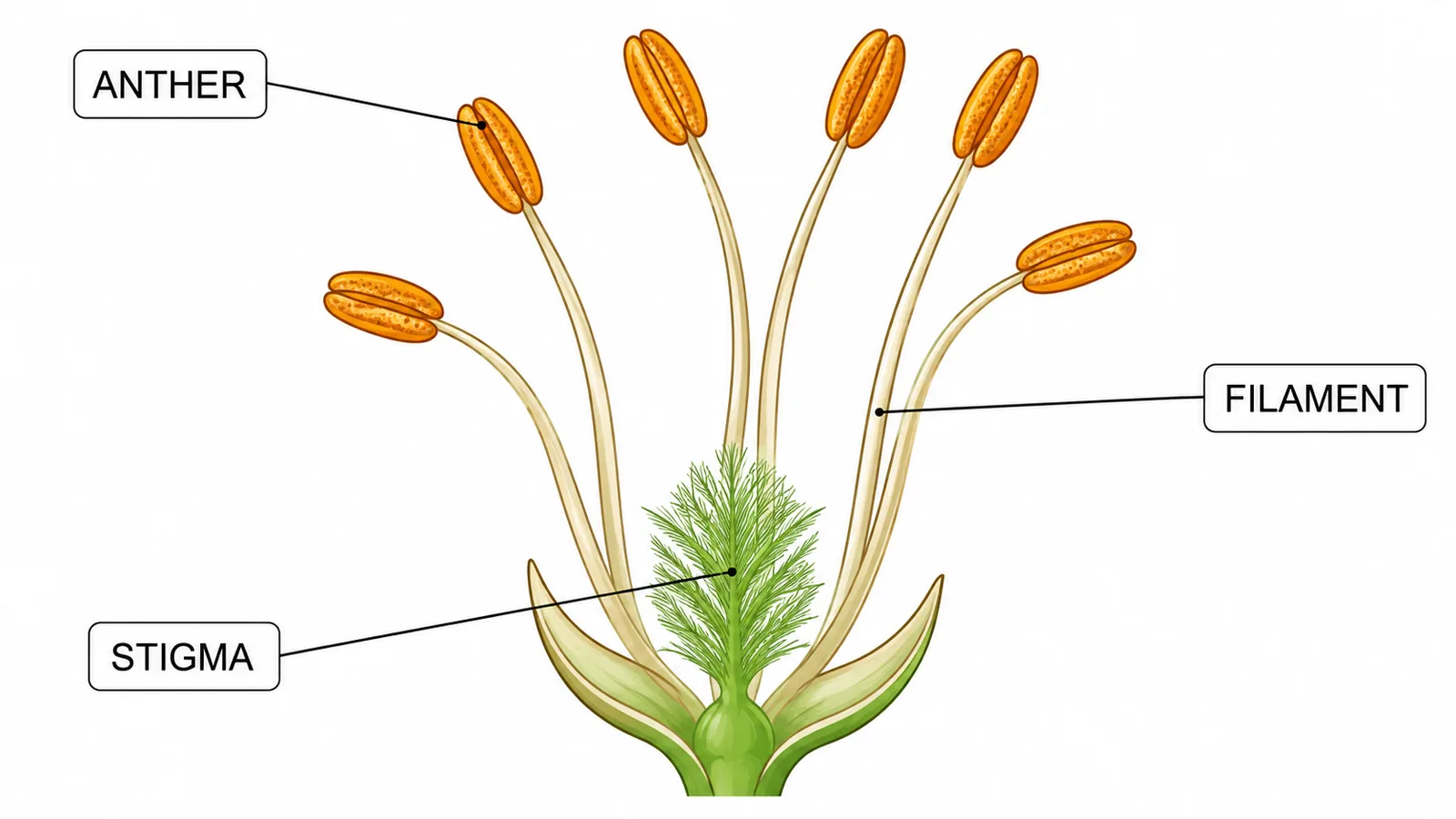


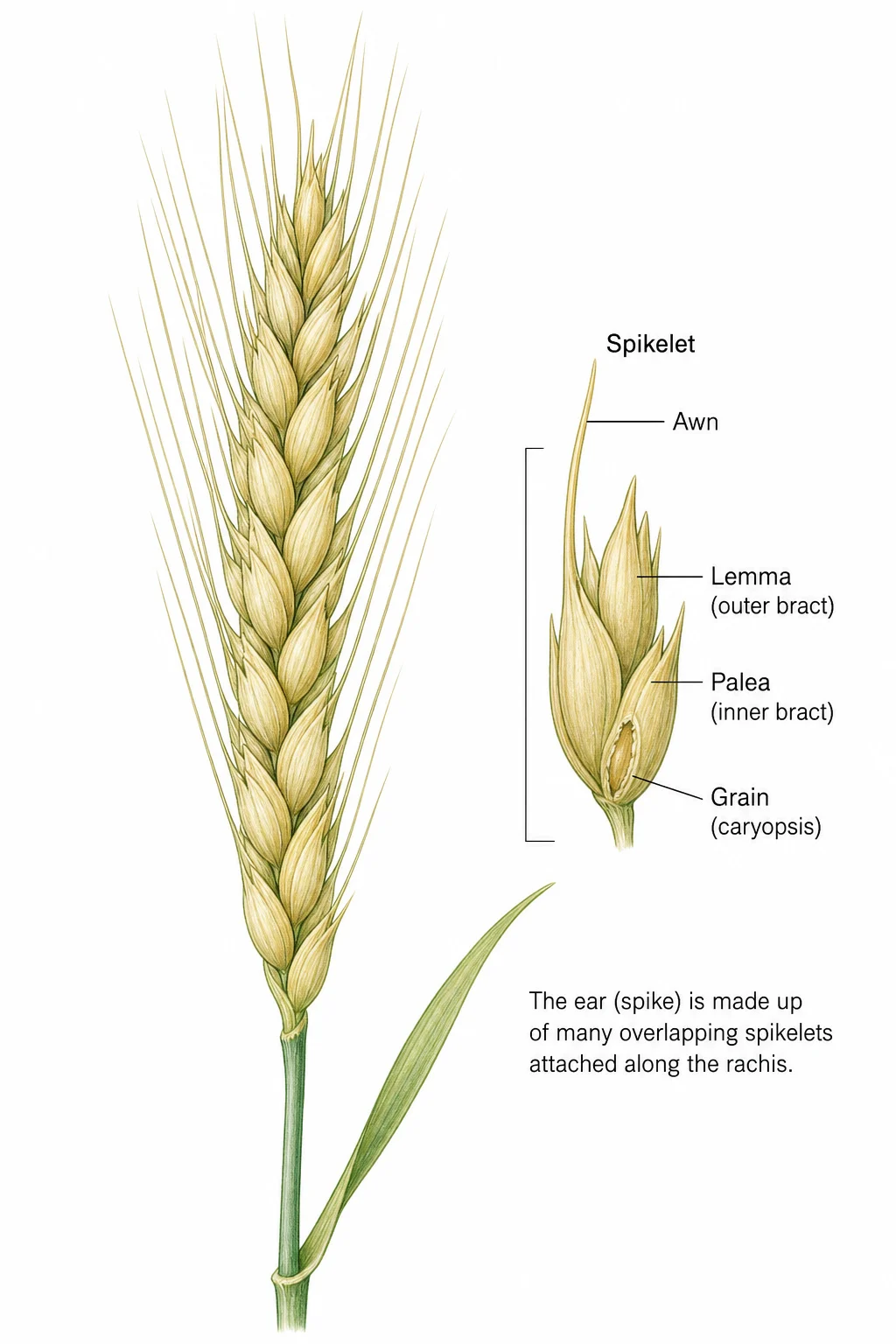
| Feature | Insect-pollinated | Wind-pollinated |
|---|---|---|
| Petals | Large and brightly coloured | Small and dull, often green or brown |
| Scent and nectar | Produced to attract insects | Not produced |
| Anthers | Stiff filaments, inside the flower, brush against insects | Long filaments, hang outside the flower |
| Stigma | Sticky, inside the flower | Feathery, outside the flower |
| Pollen | Large, heavy, spiky or hooked grains | Small, light, smooth grains |
Section 4 of 11Pollination and fertilisation
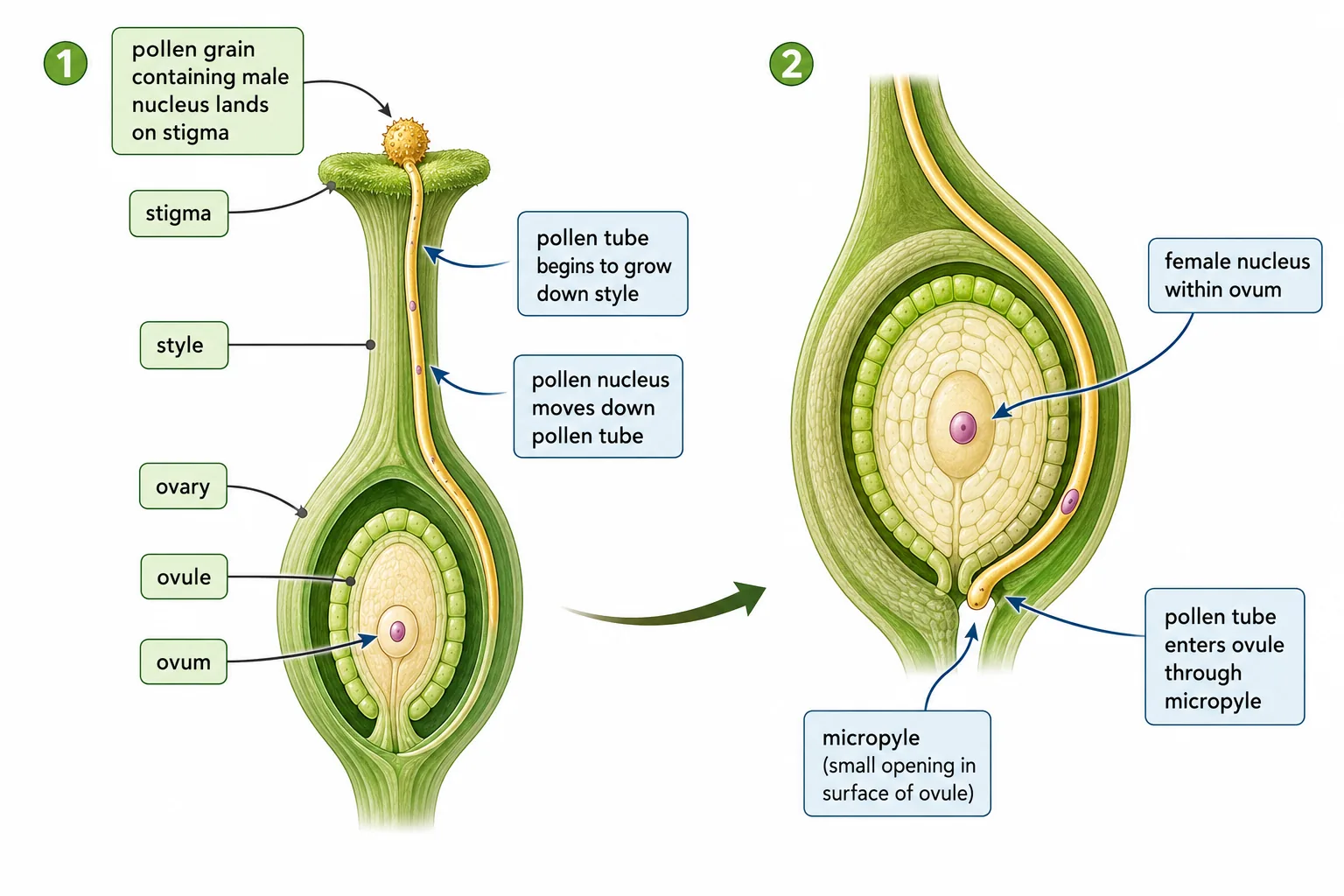


Pollination
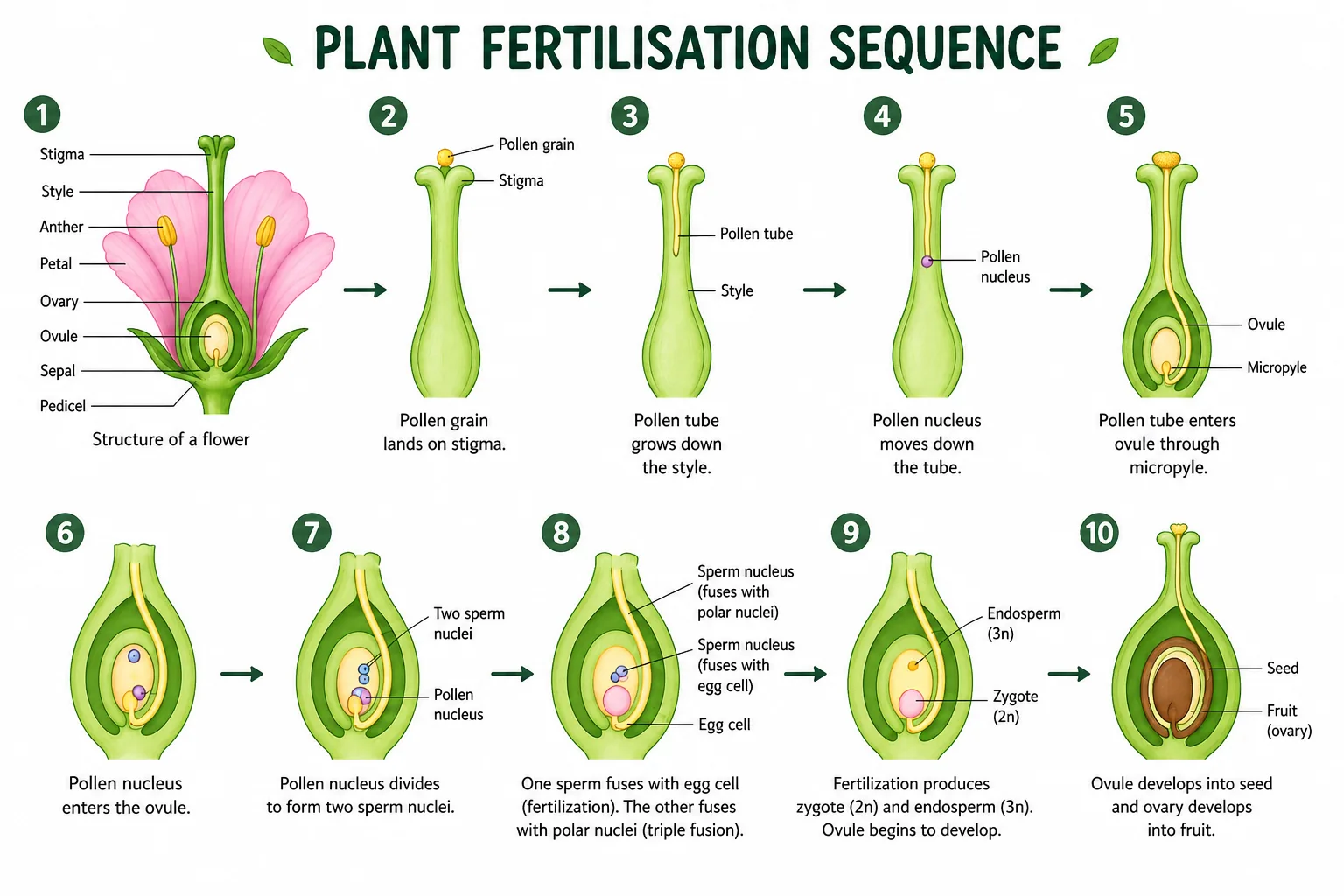
Pollination transfer of pollen grains from an anther to a stigma.
Fertilisation
Fertilisation fusion of a pollen nucleus with a nucleus in an ovule.
Difference
- Difference pollination is the transfer of pollen, fertilisation is the fusion of gametes.
Section 5 of 11Pollen tube, seed and fruit

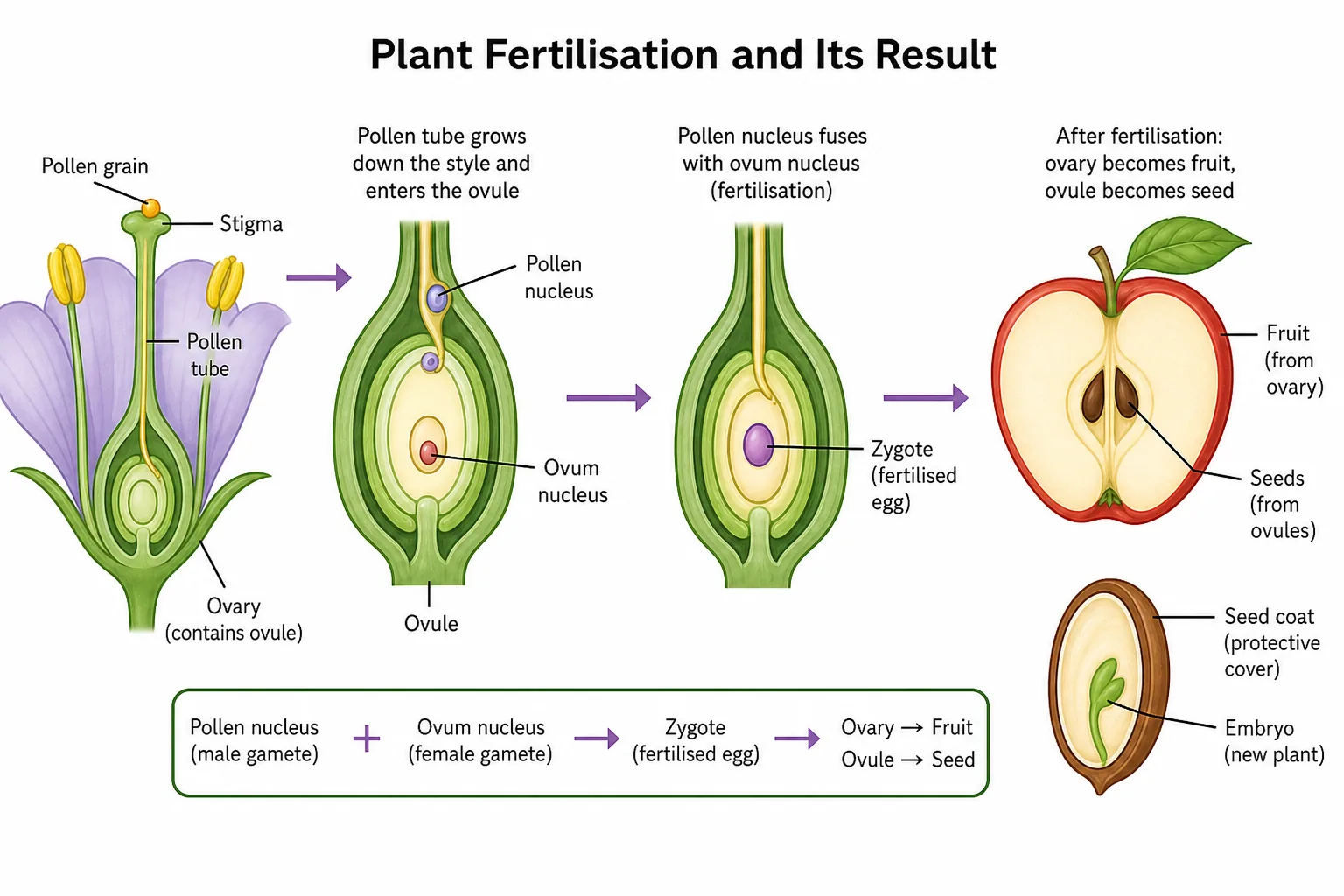

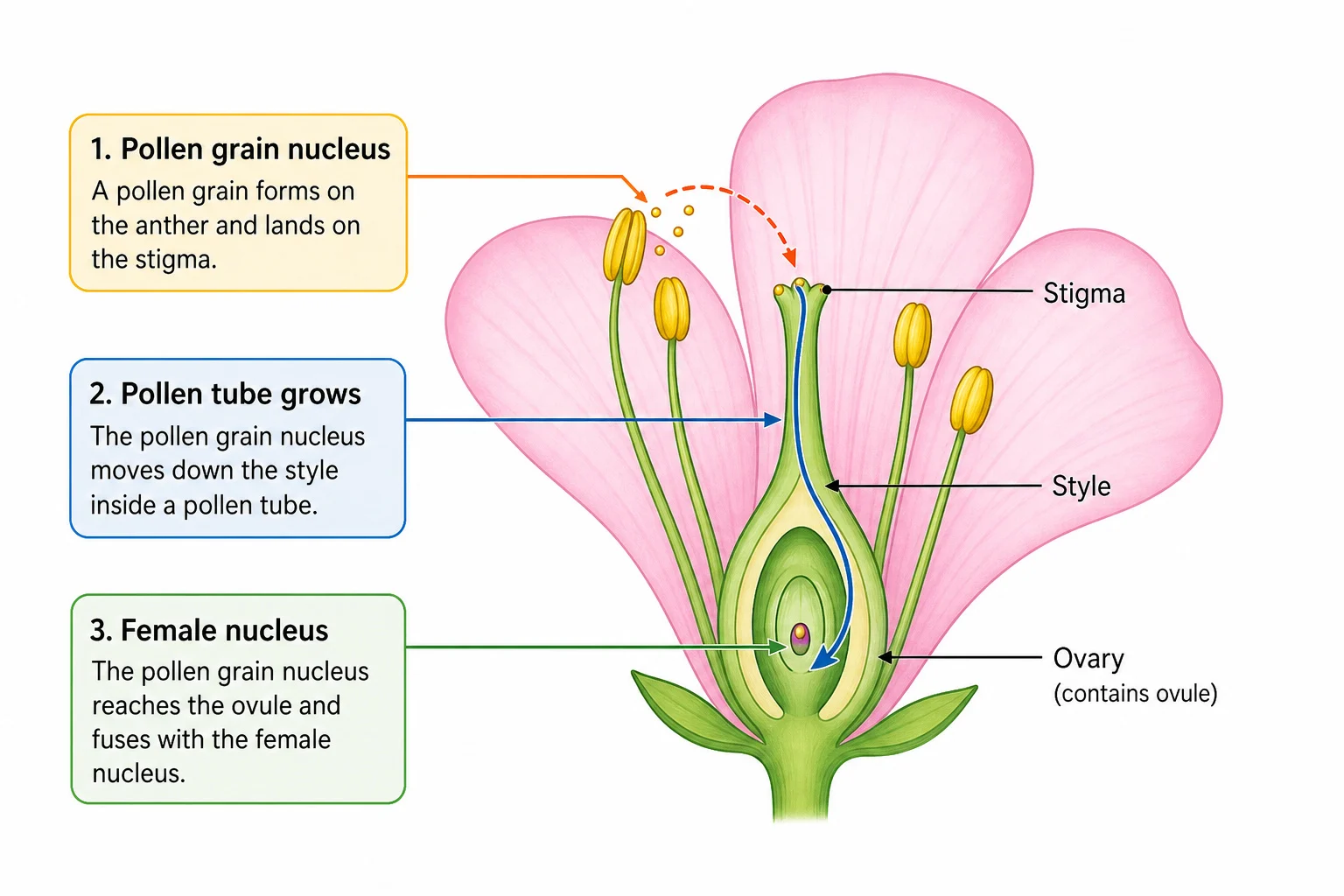
1
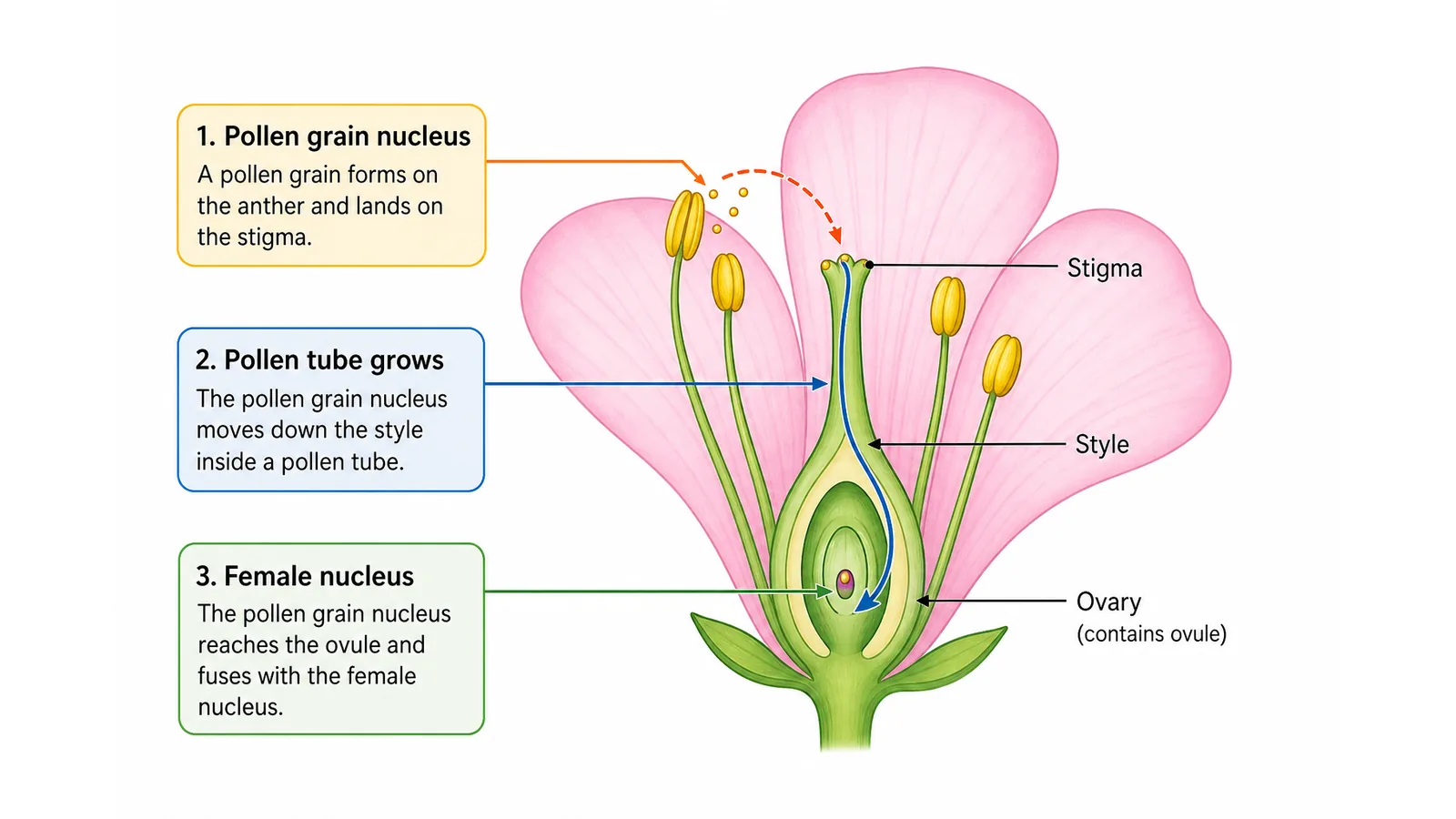
Pollen lands on the stigma.
2
A pollen tube grows from the pollen grain down the style to the ovary.
3
The pollen nucleus travels down the tube into the ovule.
4
The pollen nucleus fuses with the nucleus of the female gamete.
5
The ovule develops into a seed and the ovary develops into a fruit.
- Nucleus
- it is the pollen nucleus, not the whole pollen grain, that travels down the tube.
Section 6 of 11Self-pollination and cross-pollination
Cross-pollination
Cross-pollination transfer of pollen to the stigma of another plant of the same species.
- It improves genetic variation.
- It depends on pollinators, so a fall in bee numbers is a problem for food crops.
Self-pollination
Self-pollination pollen lands on its own stigma or another flower on the same plant.
- It reduces genetic variety because all gametes come from one parent.
- Lack of variation is a disadvantage if the environment changes.
Section 7 of 11Conditions needed for germination

Germination
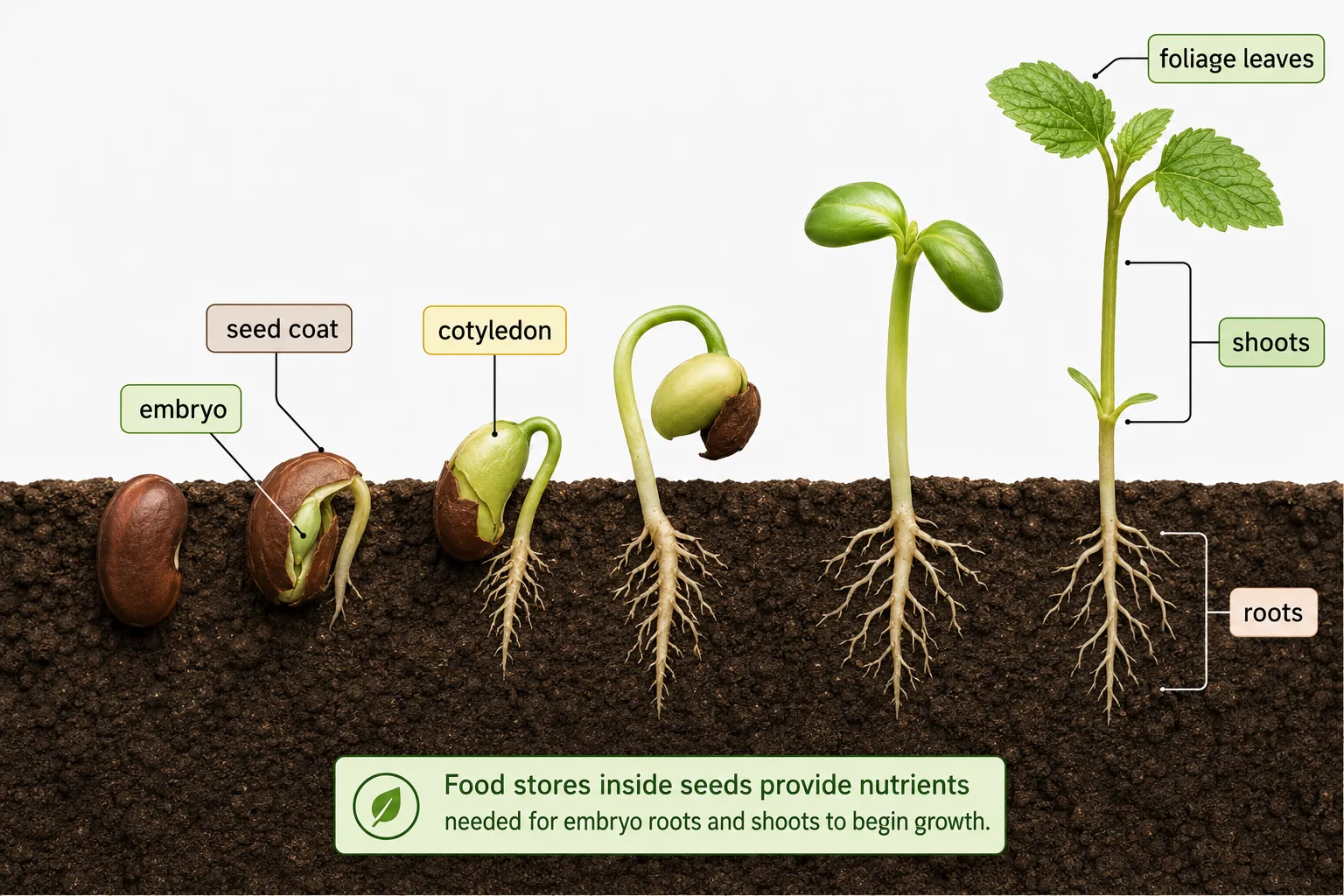
Germination the start of growth in a seed.
Water
- Water it makes the seed swell and lets enzymes in the embryo start working.
Oxygen
- Oxygen it is needed so that energy can be released by respiration.
Warmth
- Warmth a suitable temperature gives the best rate of enzyme-controlled reactions.
Carbon dioxide
- Carbon dioxide it is not required and does not inhibit germination.
Section 8 of 11Investigating germination


1
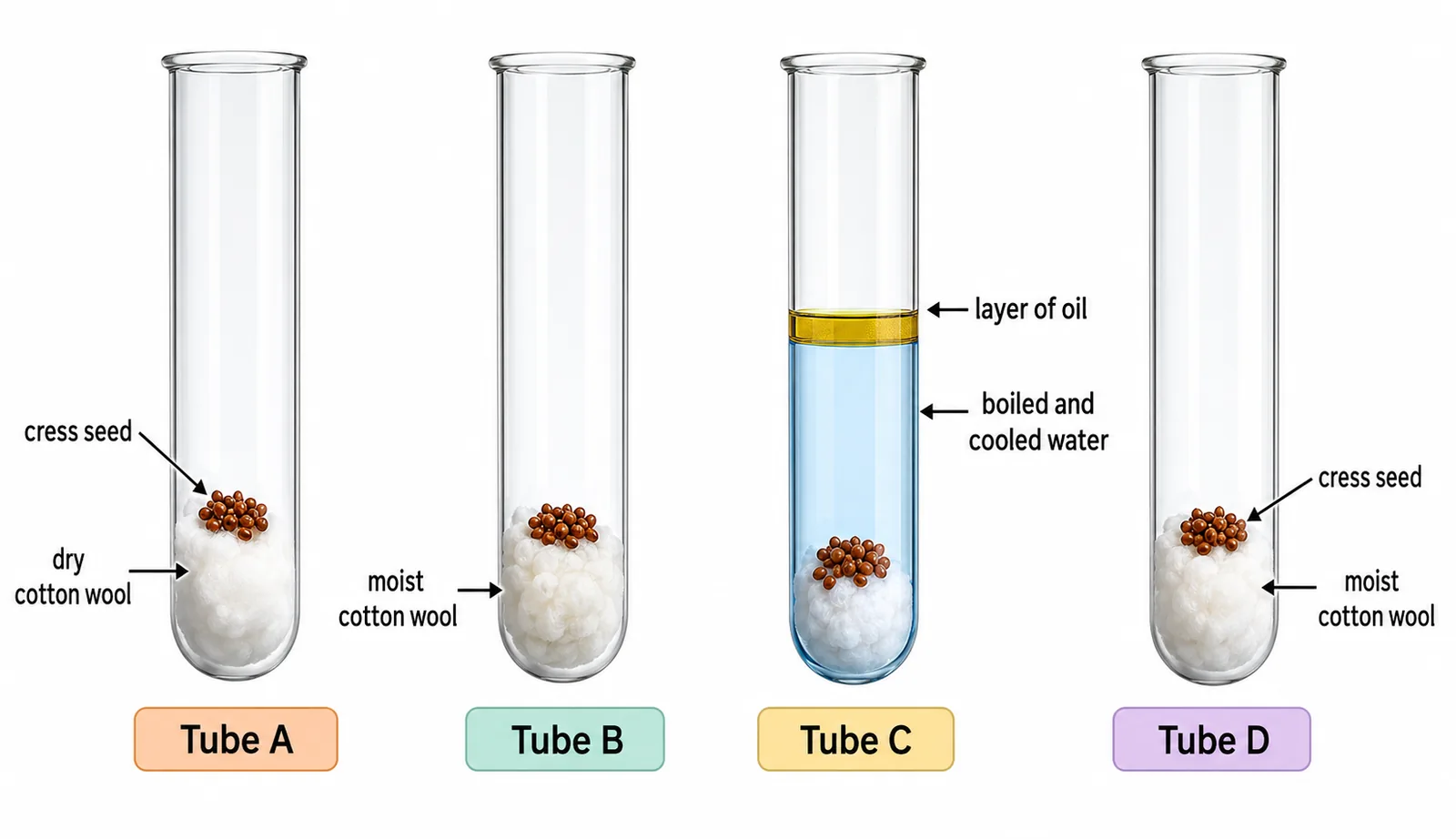
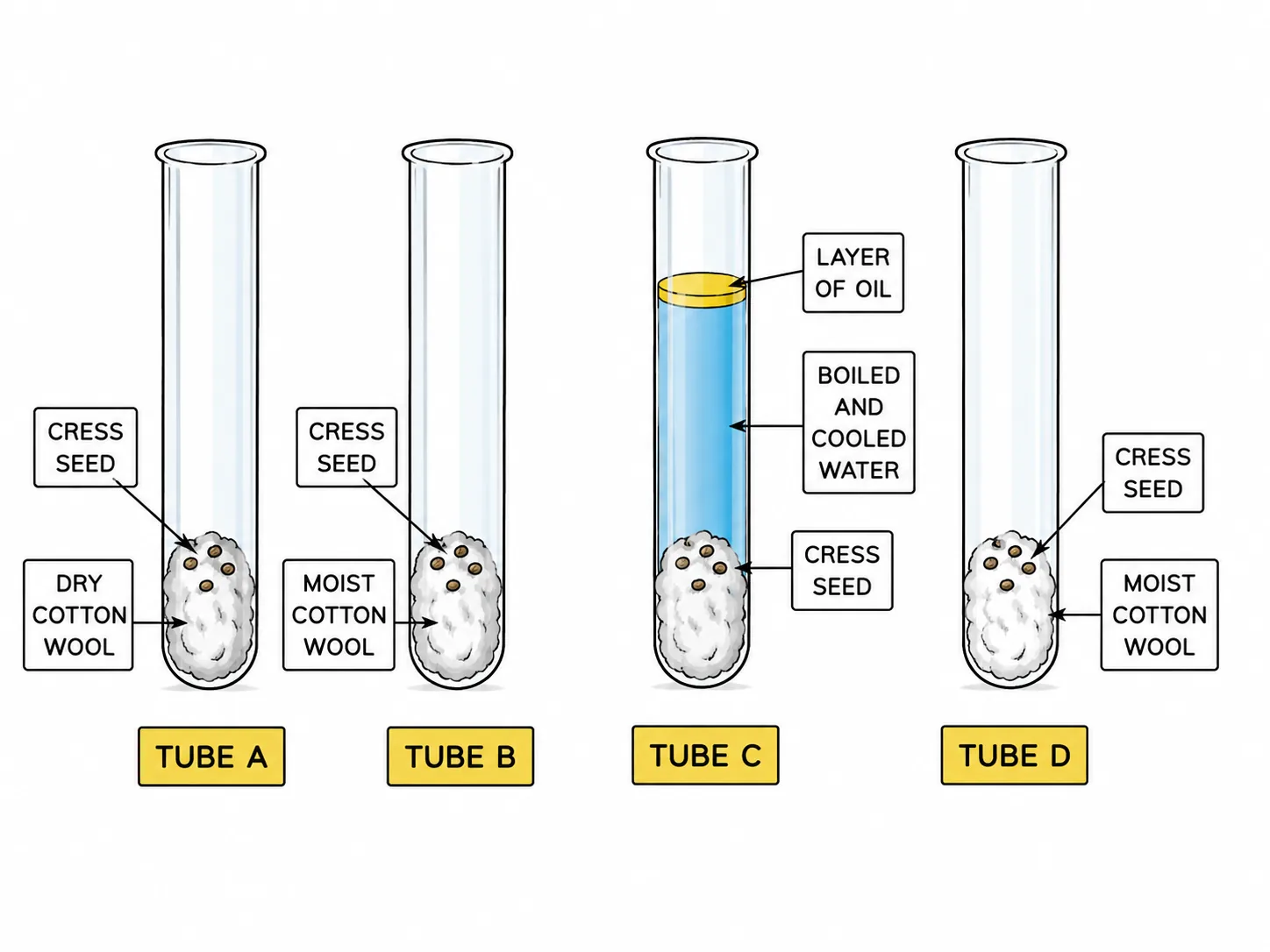
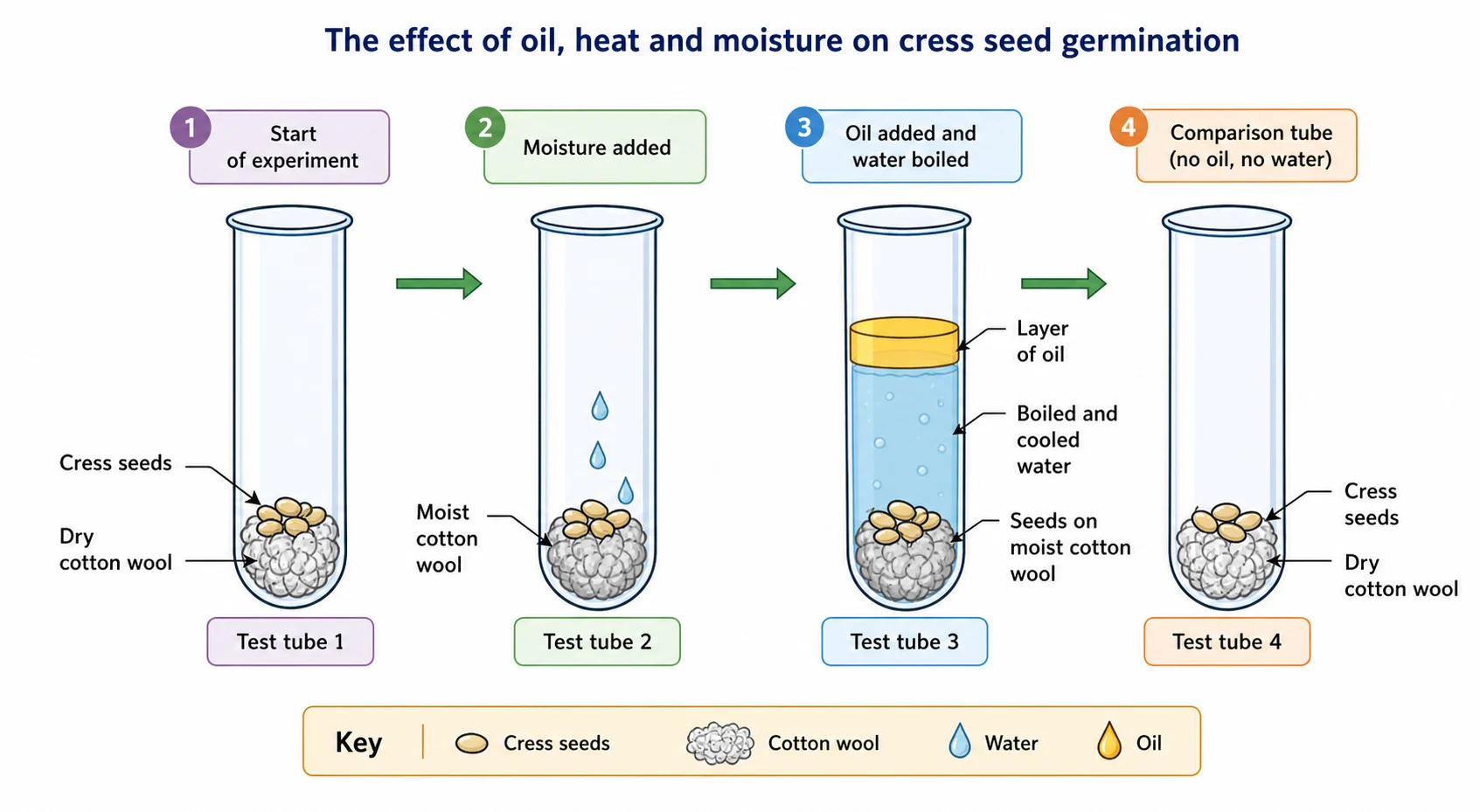
Set up four boiling tubes, each with 10 cress seeds on cotton wool.
2
Give tube A no water, tube B all conditions as the control, tube C no oxygen and tube D a cold temperature (about 4 °C in a fridge).
3
Keep A, B and C at about 20 °C.
4
Leave for several days and count germinated seeds in each tube.
Result
- Result only the control tube germinates, so water, oxygen and warmth are all required.
Fair test
- Fair test change one factor only and use the same number of seeds in each tube.
Section 9 of 11More from the specification
More from the specification
Floral gametogenesis and vascular system
- Floral gametogenesis and vascular system pollen mother cells undergo meiotic division inside anthers supported by xylem tissues of the floral system.
Asexual reproduction
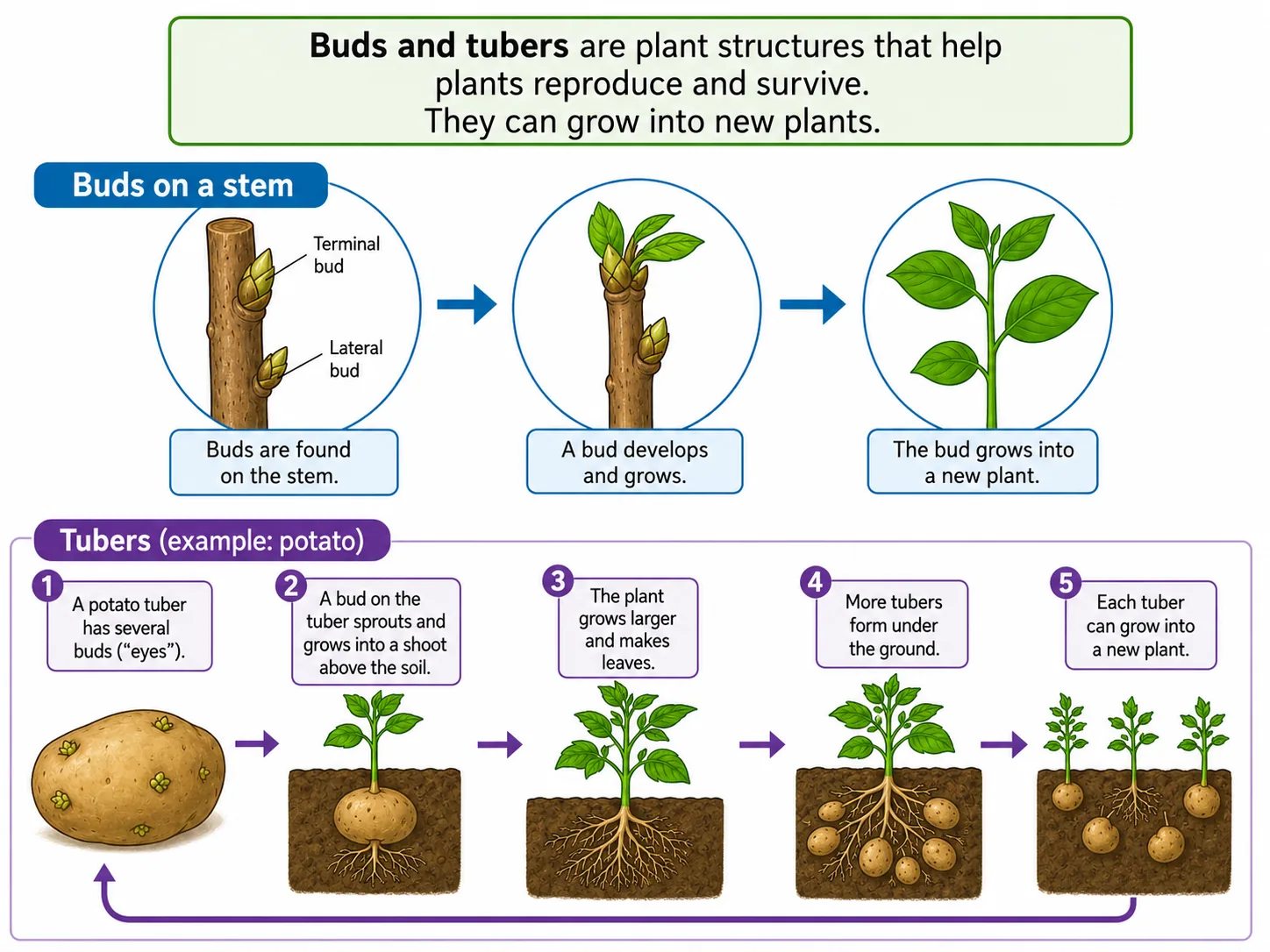
- One parent gives genetically identical offspring
Pituitary gland
- Master gland controlling other glands
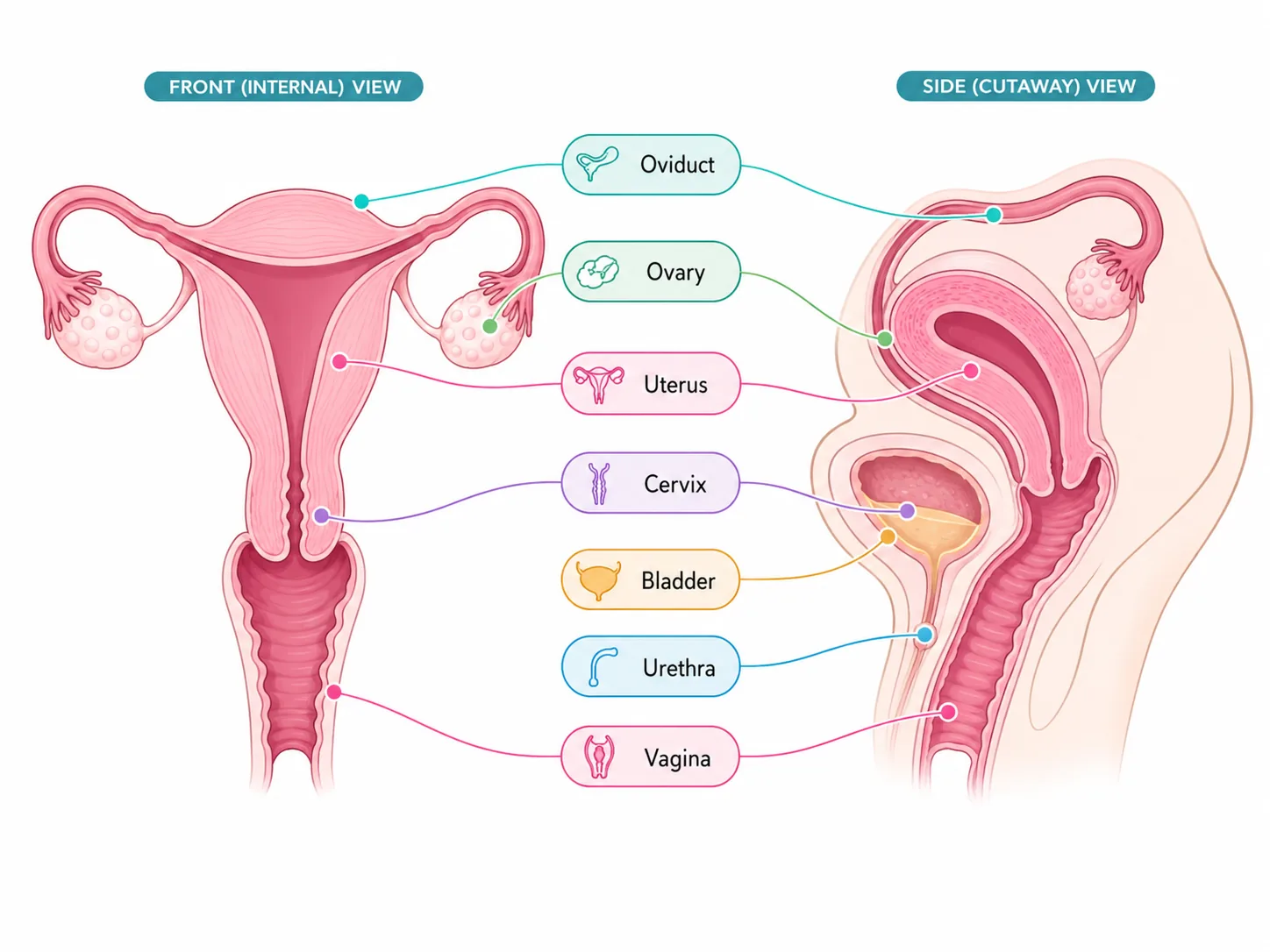
Uterus
- Organ where the embryo develops
Placenta
- Organ exchanging substances between mother and foetus
Foetus
- Developing baby once organs are in place
Hormone
- A chemical messenger carried in the blood.
Oestrogen
- The main female sex hormone.
Progesterone
- Hormone that maintains the uterus lining
Section 10 of 11Key terms
| Term | Meaning |
|---|---|
| Pollination | Transfer of pollen from an anther to a stigma |
| Fertilisation | Fusion of a pollen nucleus with a nucleus in an ovule |
| Anther | Part of the stamen that produces pollen |
| Stigma | Sticky top of the carpel that receives pollen |
| Ovule | Structure in the ovary containing the female gamete; becomes the seed |
| Germination | Start of growth in a seed |
Section 11 of 11Exam technique
1
Confusing pollination with fertilisation — pollination is transfer of pollen, fertilisation is fusion of gametes.
2
Saying the pollen grain travels down the pollen tube — the nucleus does.
3
Saying wind-pollinated flowers have brightly coloured petals and nectar — they are small and dull.
4
Saying seeds need light or carbon dioxide to germinate — they need water, oxygen and warmth.