Section 1 of 9Male reproductive system


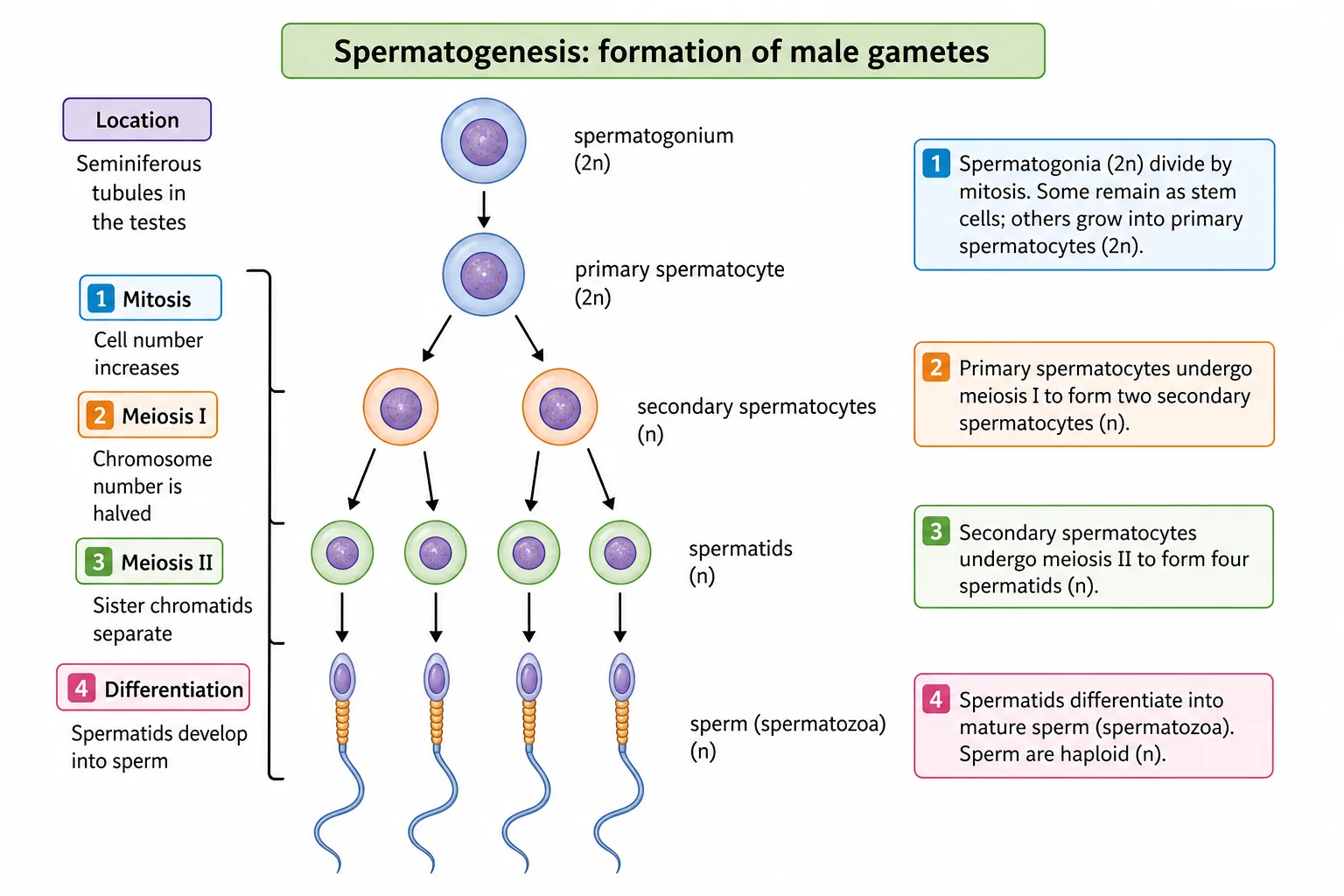

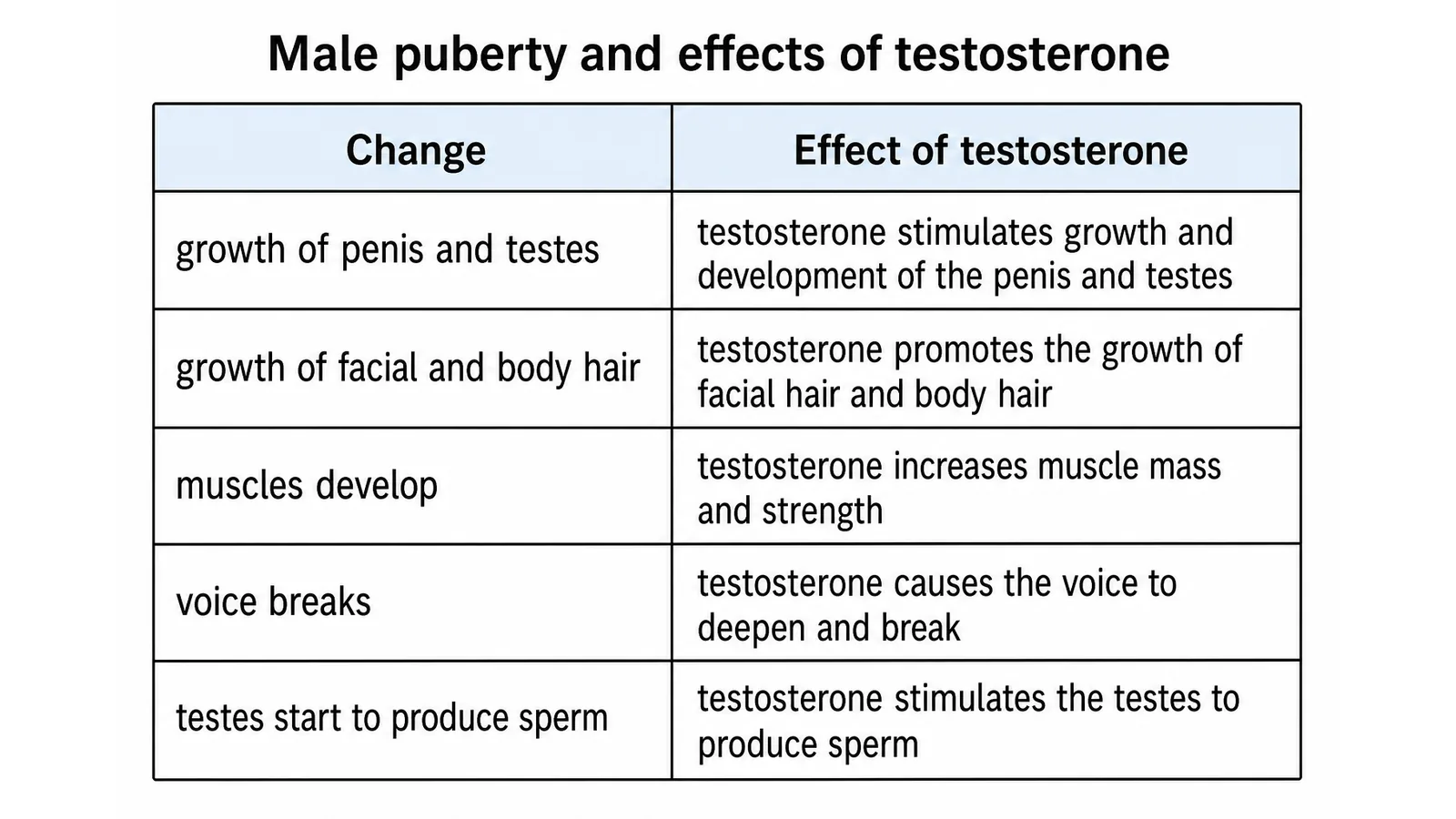
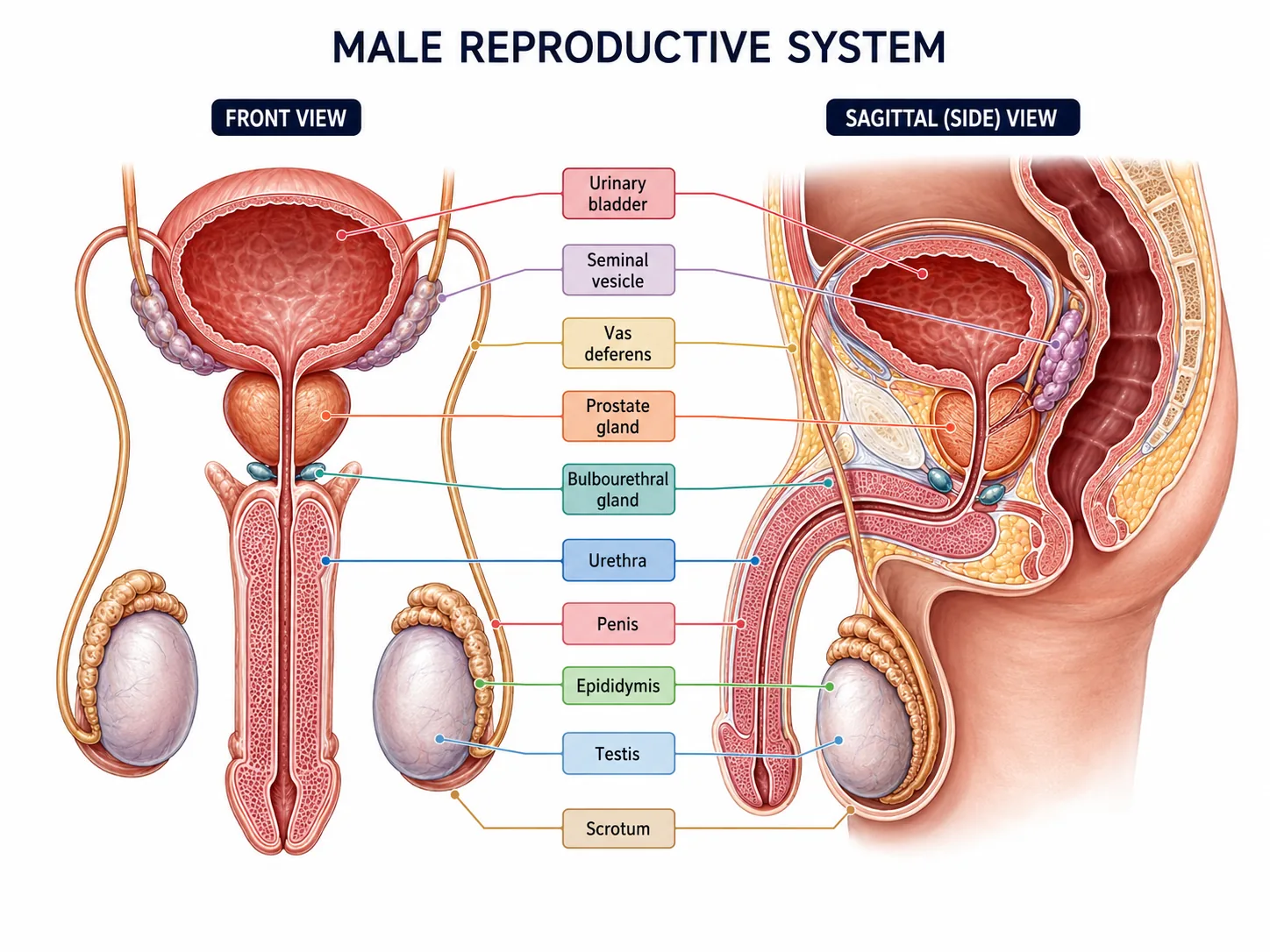


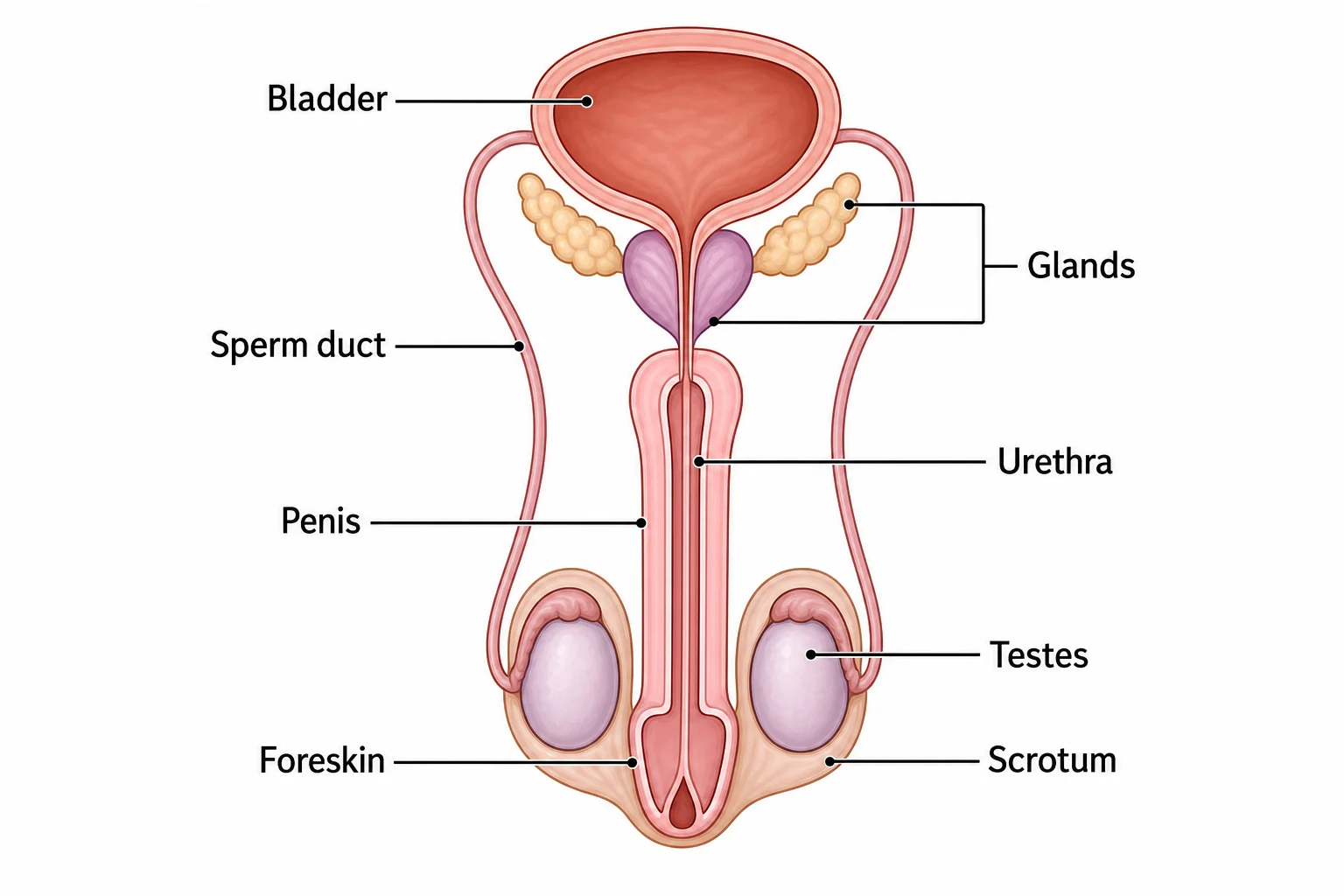
| Structure | Function |
|---|---|
| Testis | Produces sperm and testosterone |
| Scrotum | Holds the testes outside the body so sperm are slightly cooler than body temperature |
| Sperm duct | Carries sperm to the urethra |
| Prostate gland | Produces fluid that mixes with sperm to form semen |
| Urethra | Carries urine or semen; a ring of muscle prevents mixing |
| Penis | Passes urine out and places semen in the vagina |
Section 2 of 9Female reproductive system

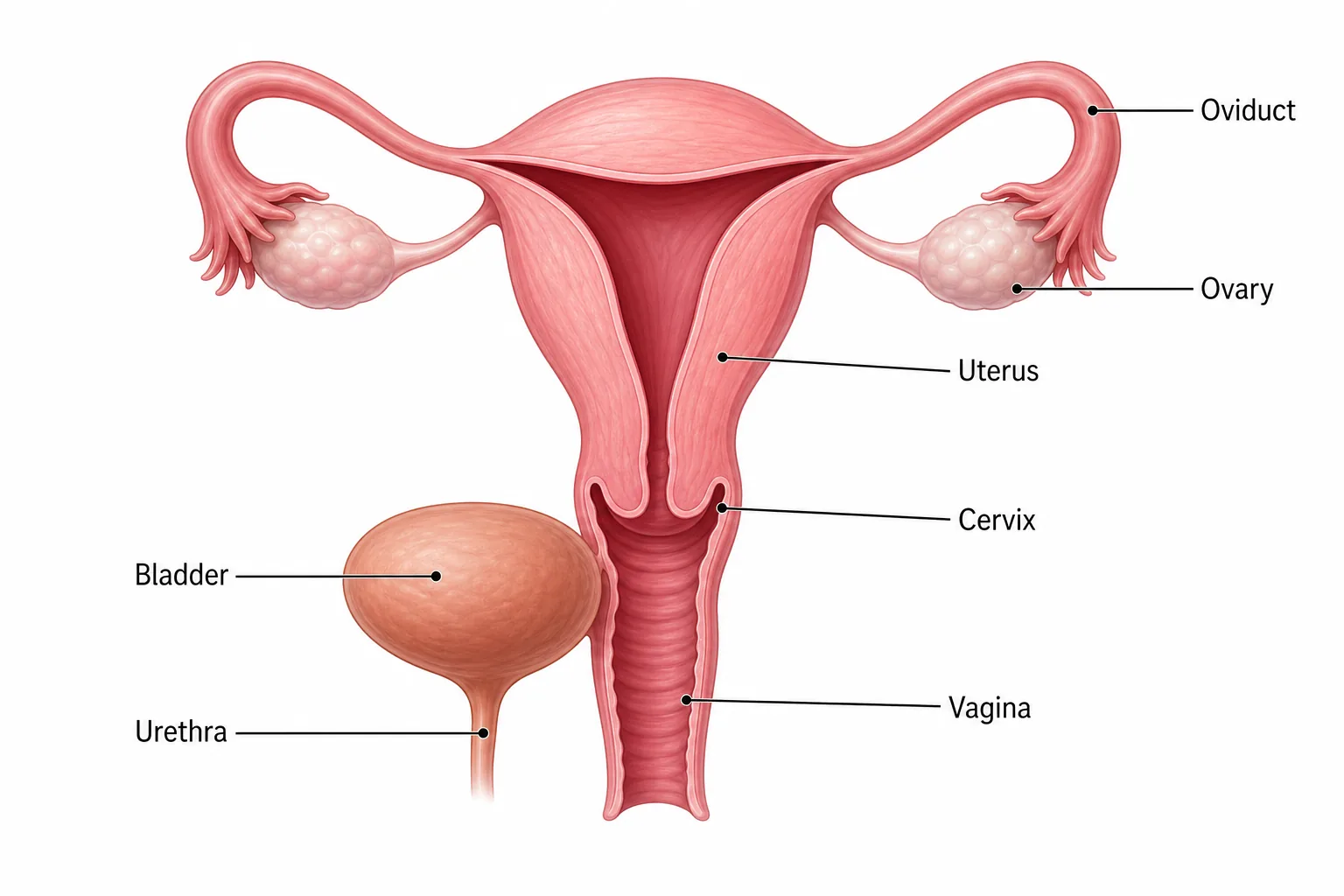


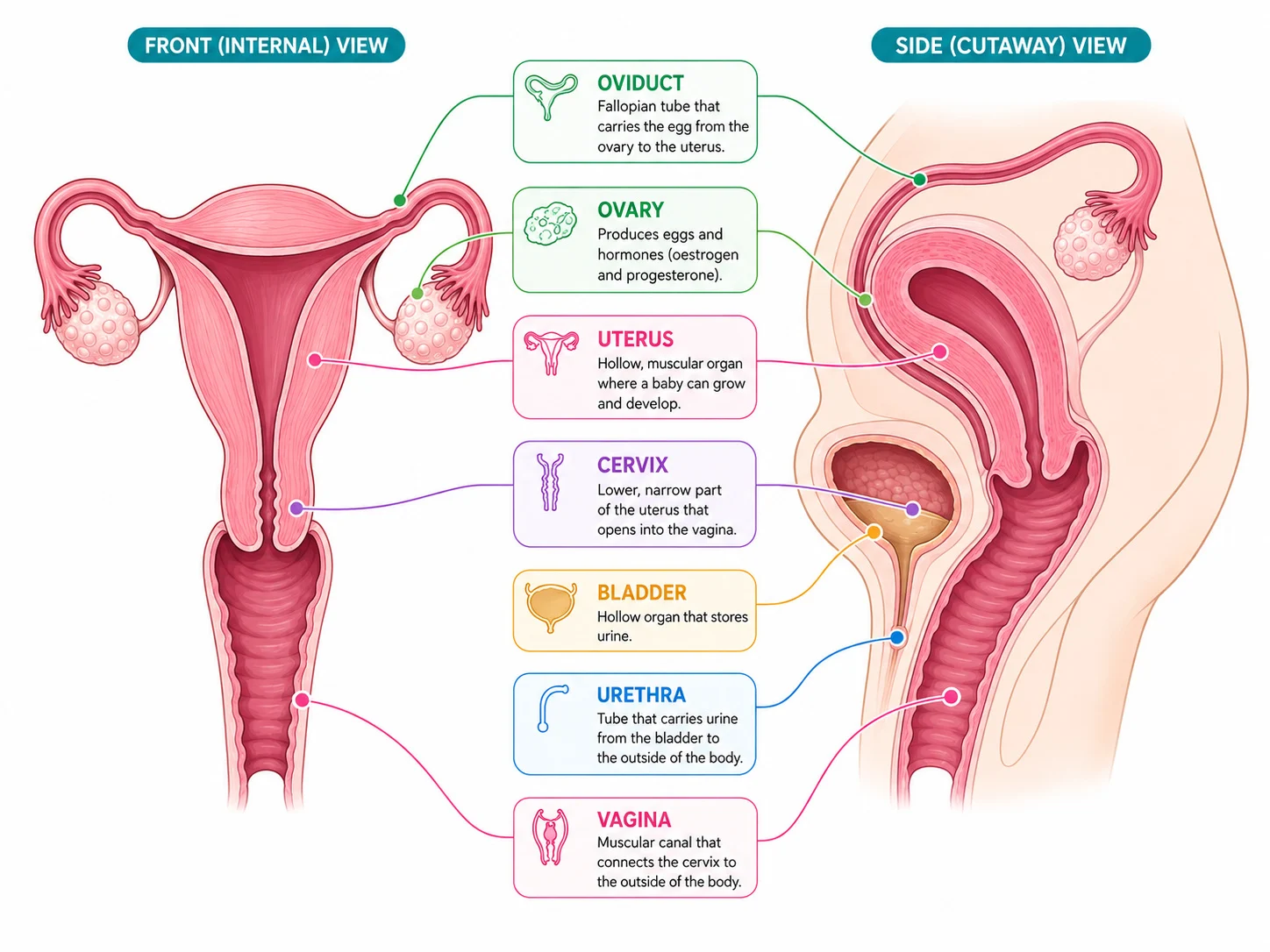
| Structure | Function |
|---|---|
| Ovary | Contains ova which mature when hormones are released |
| Oviduct | Carries the ovum to the uterus; ciliated; fertilisation occurs here |
| Uterus | Muscular bag with a soft lining where the zygote implants |
| Cervix | Ring of muscle at the lower end of the uterus holding the foetus in place |
| Vagina | Muscular tube that receives the penis and sperm |
Section 3 of 9Gametes and fertilisation
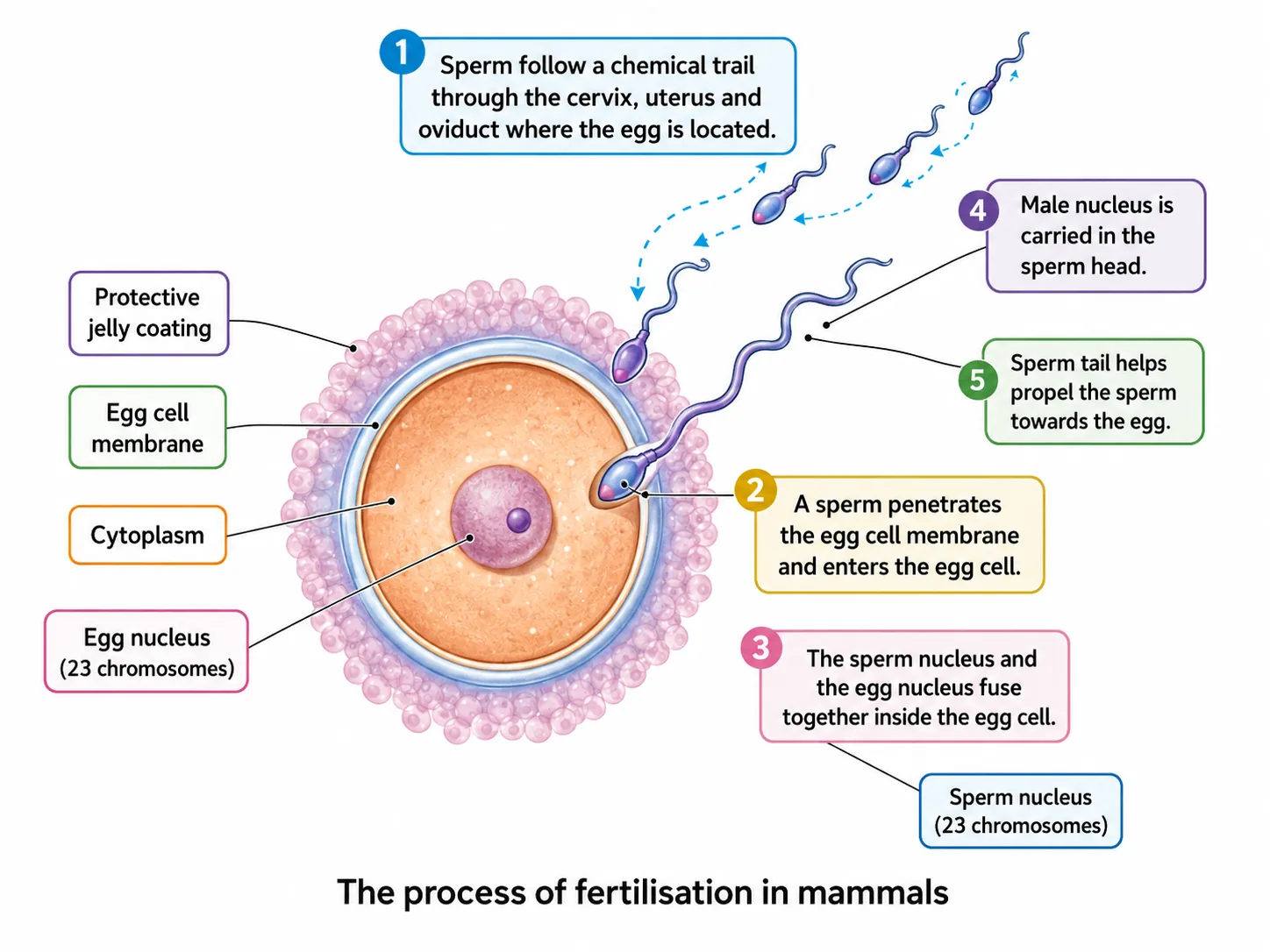
Fertilisation
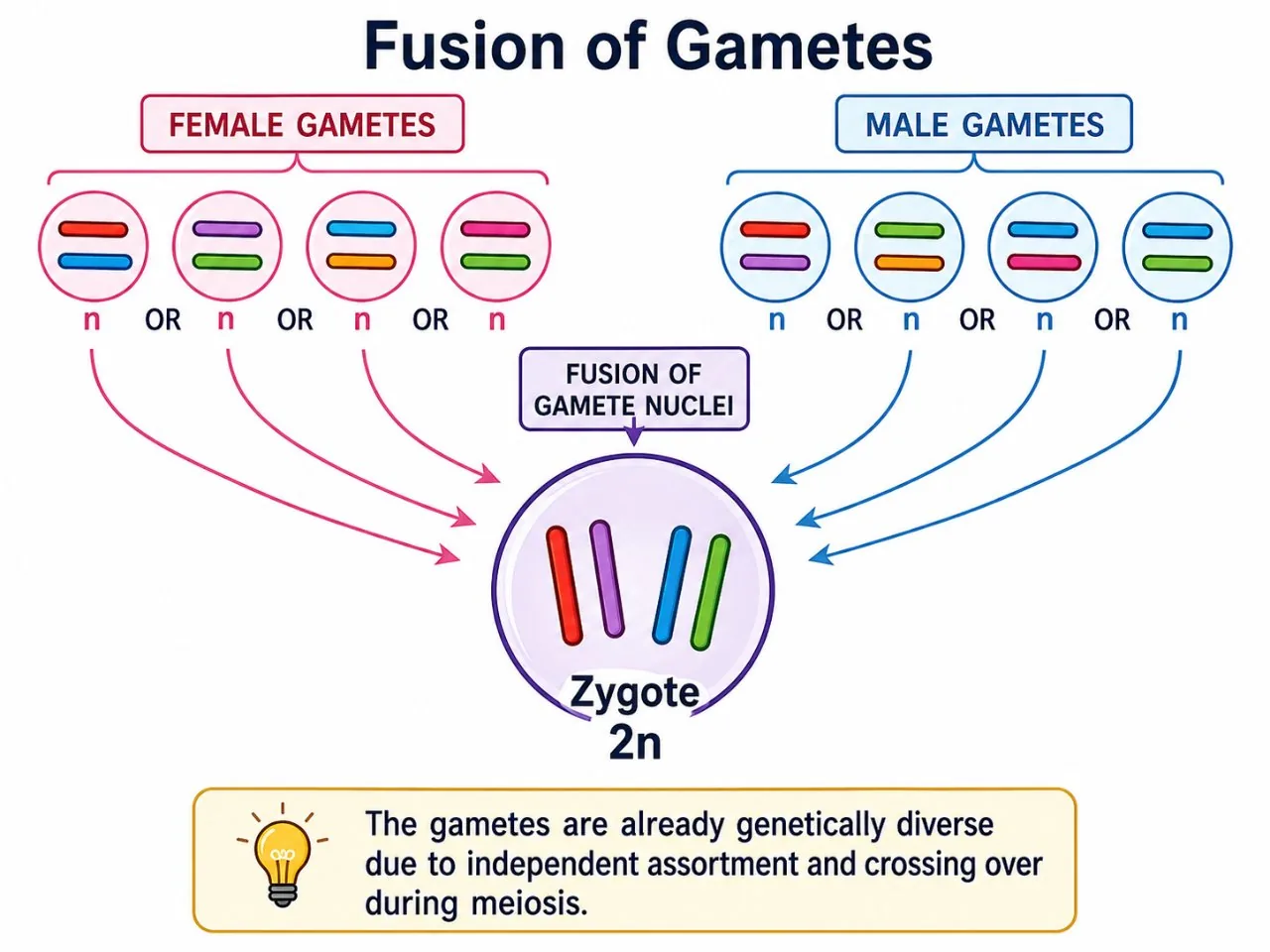
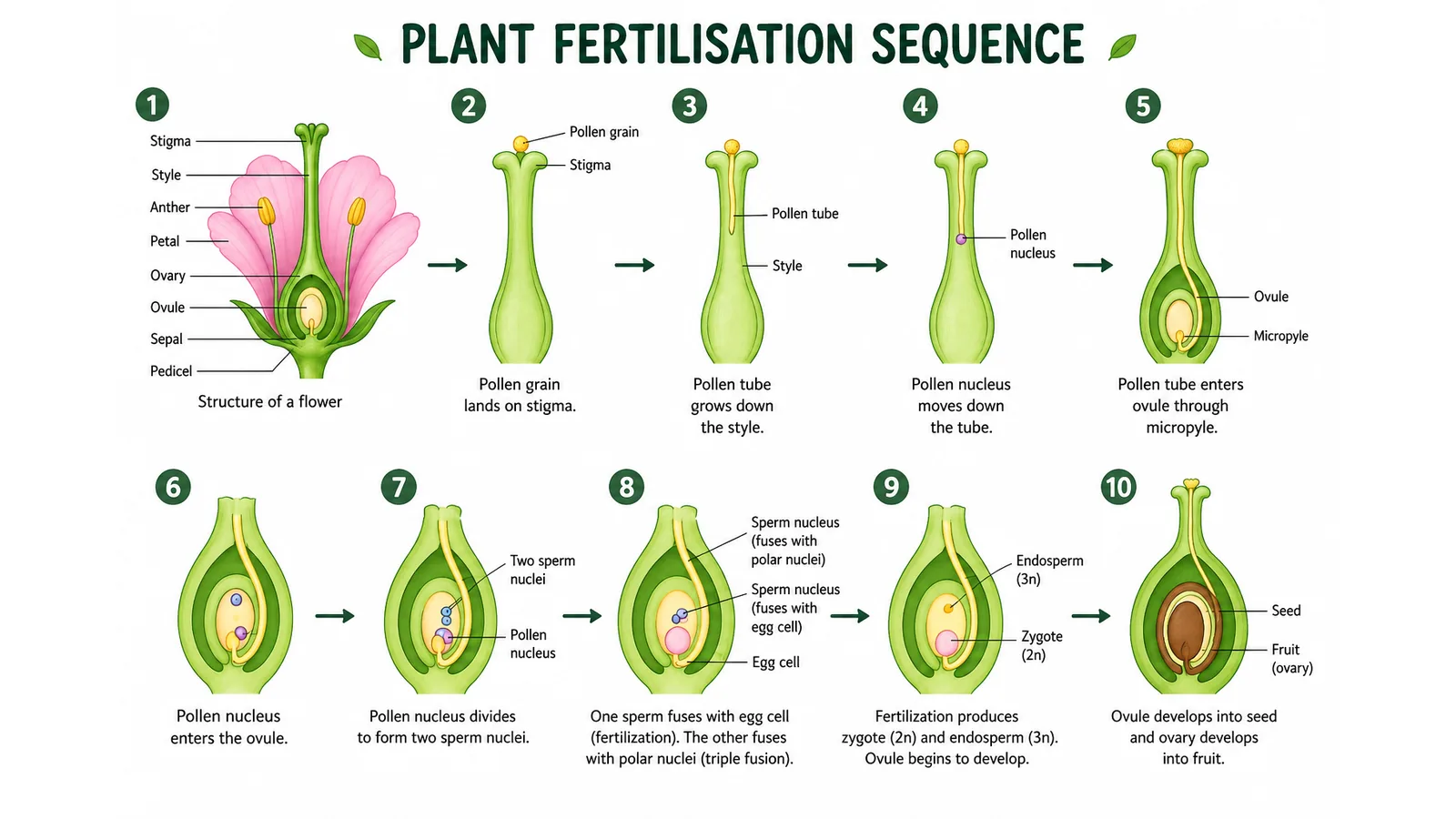
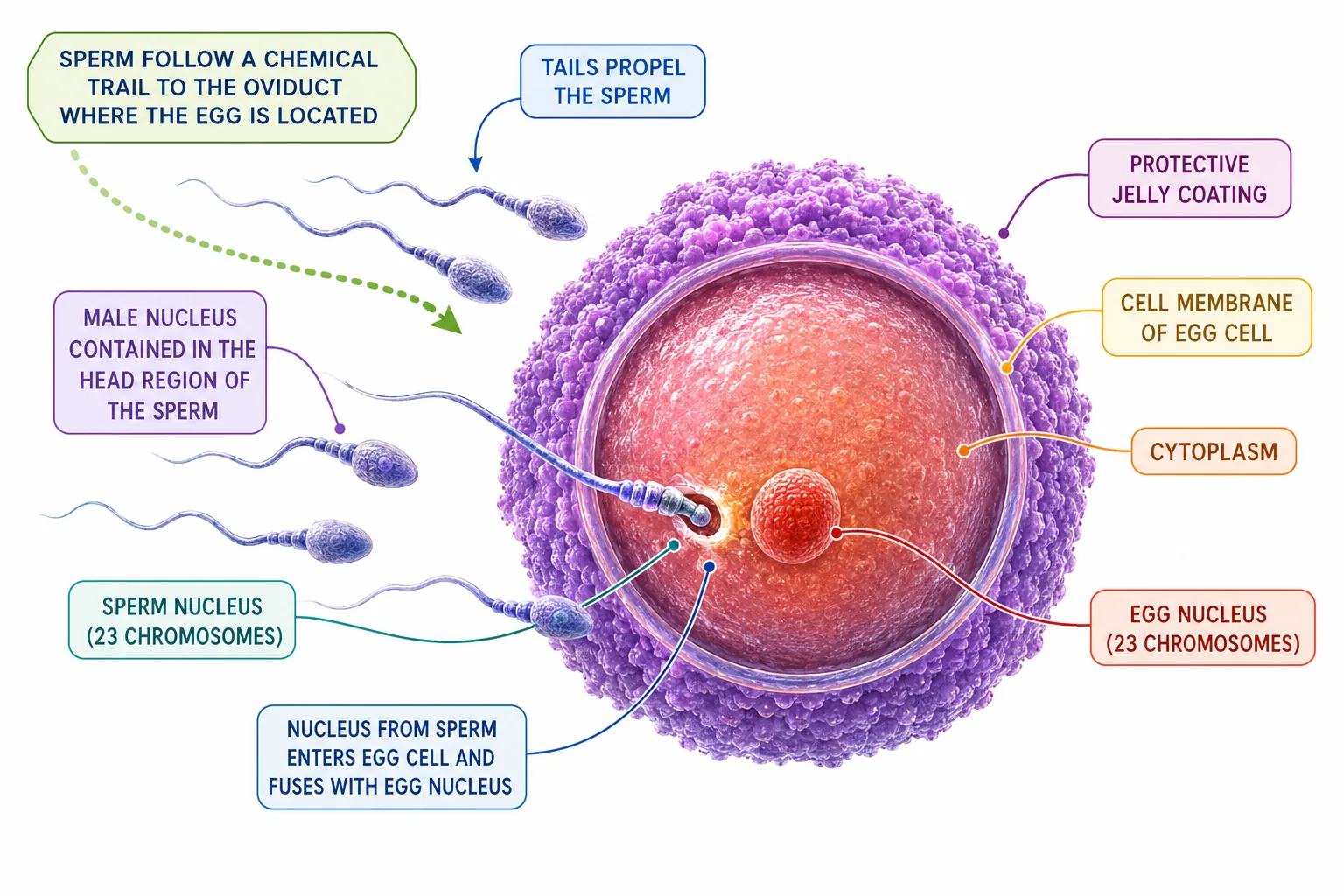
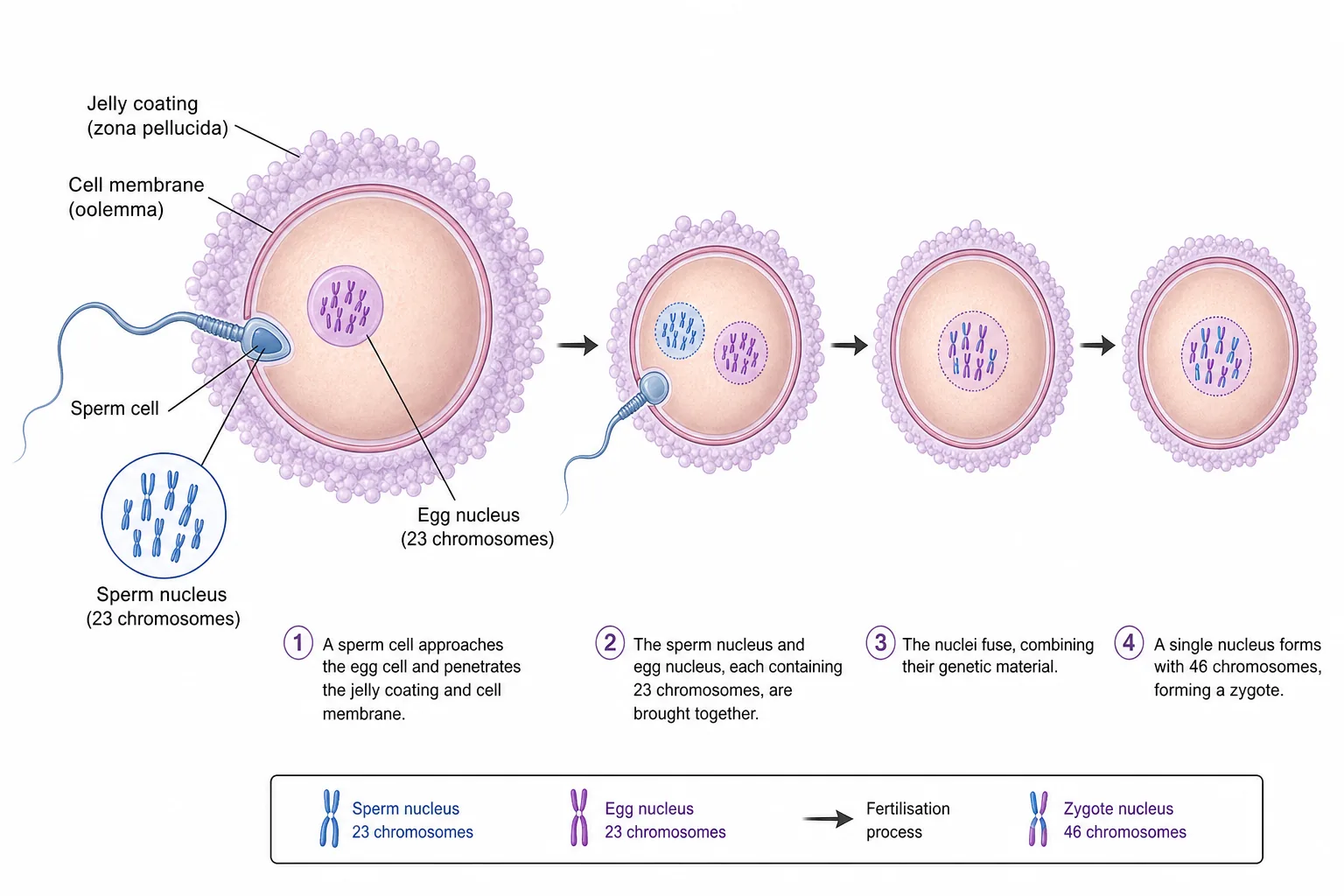
Fertilisation the fusion of the nuclei of a sperm and an egg cell, usually in the oviduct.
Sperm flagellum
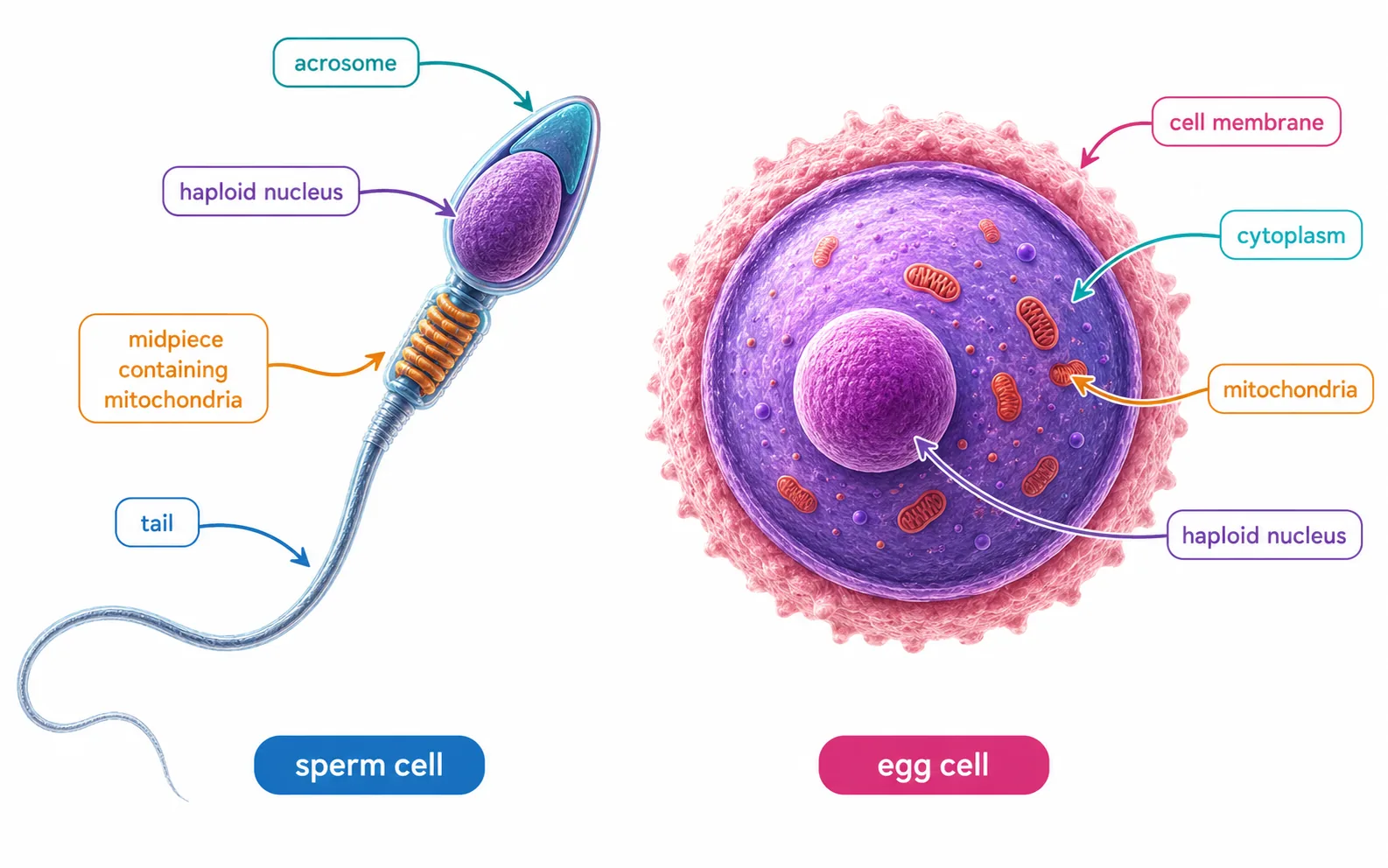
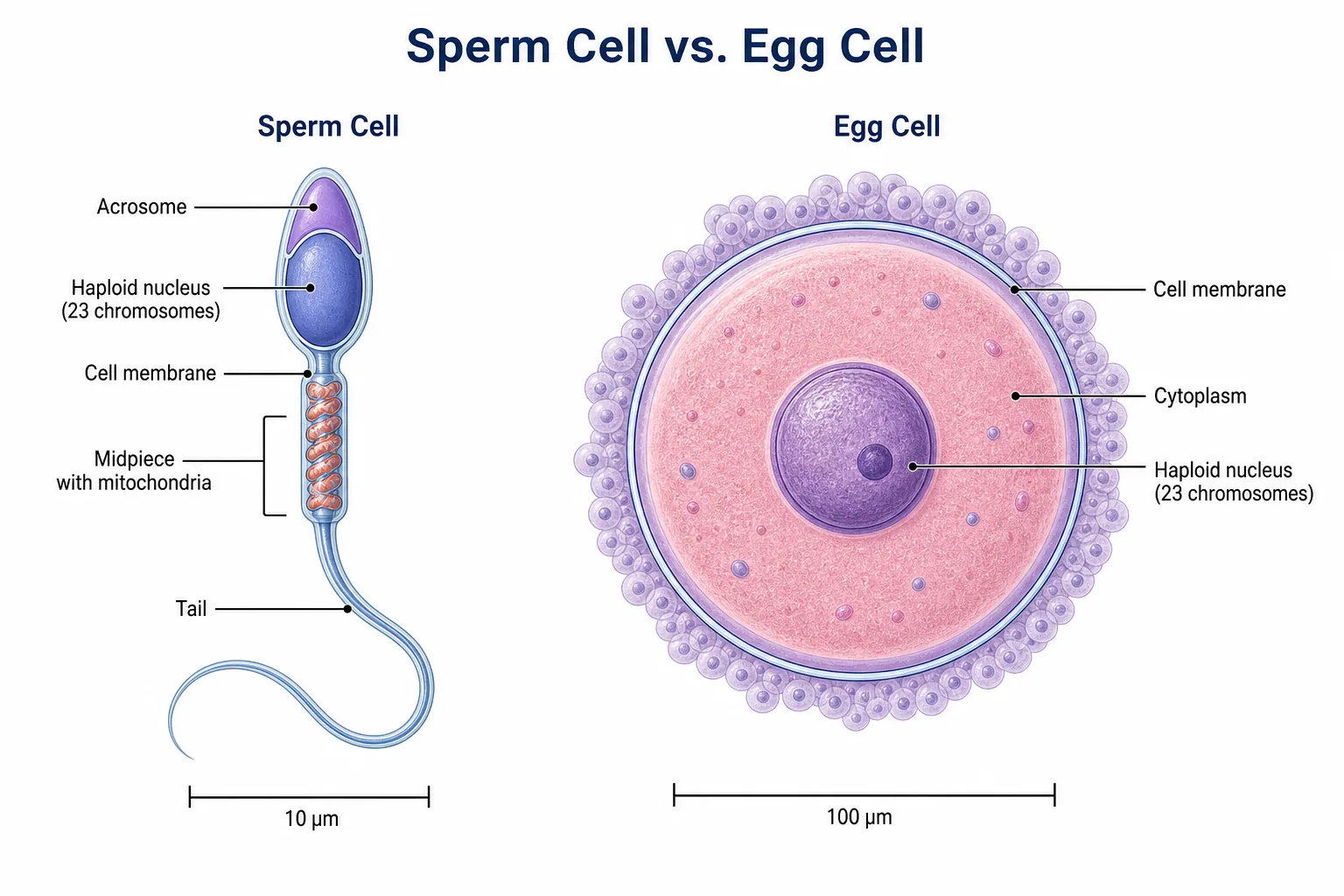
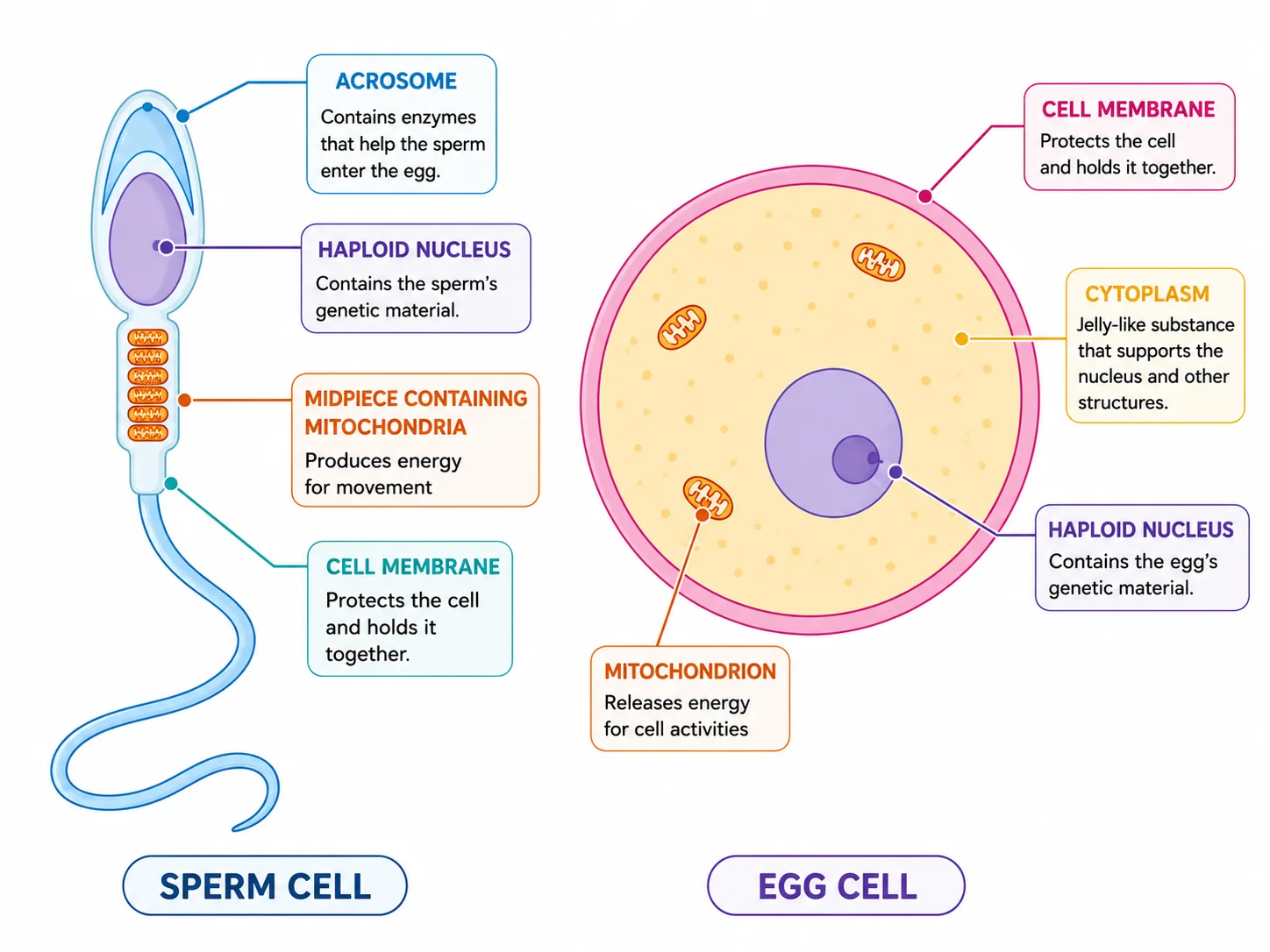
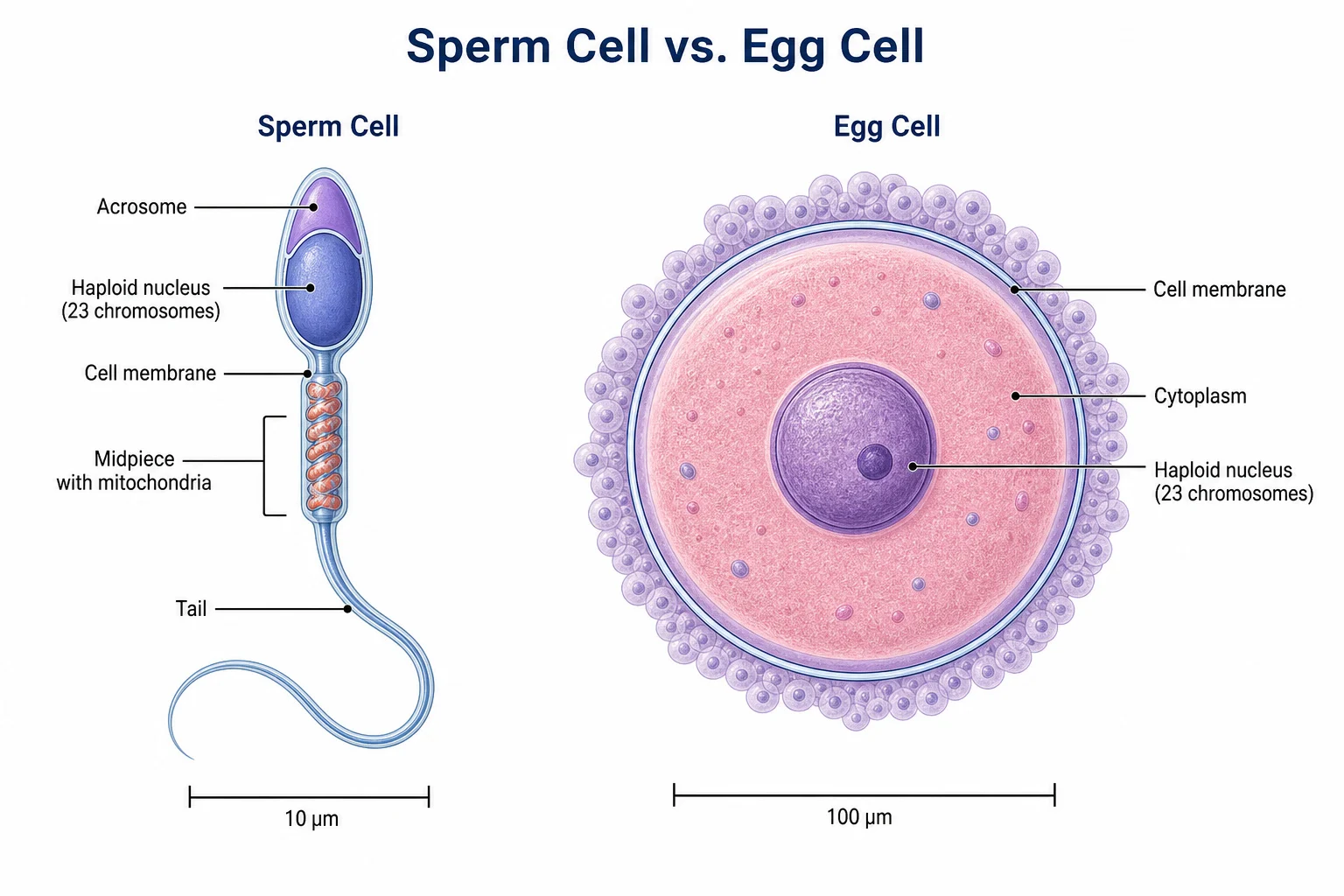
- Sperm flagellum a tail that lets the sperm swim to the egg.
Sperm acrosome
- Sperm acrosome enzymes in the head digest a route into the egg.
Sperm mitochondria
- Sperm mitochondria supply energy for movement of the flagellum.
Egg cytoplasm
- Egg cytoplasm an energy store for cell division after fertilisation.
Egg jelly coat
- Egg jelly coat changes after fertilisation to stop more sperm entering.
Section 4 of 9Sperm and egg compared



| Feature | Sperm | Egg |
|---|---|---|
| Size | Very small (about 45 µm) | Large (about 0.15 mm) |
| Structure | Head, flagellum, many adaptations | Round, covered in a jelly coating |
| Movement | Capable of locomotion | Not capable of locomotion |
| Numbers | Around 100 million made each day | Thousands of immature eggs but one released each month |
Section 5 of 9Development in pregnancy

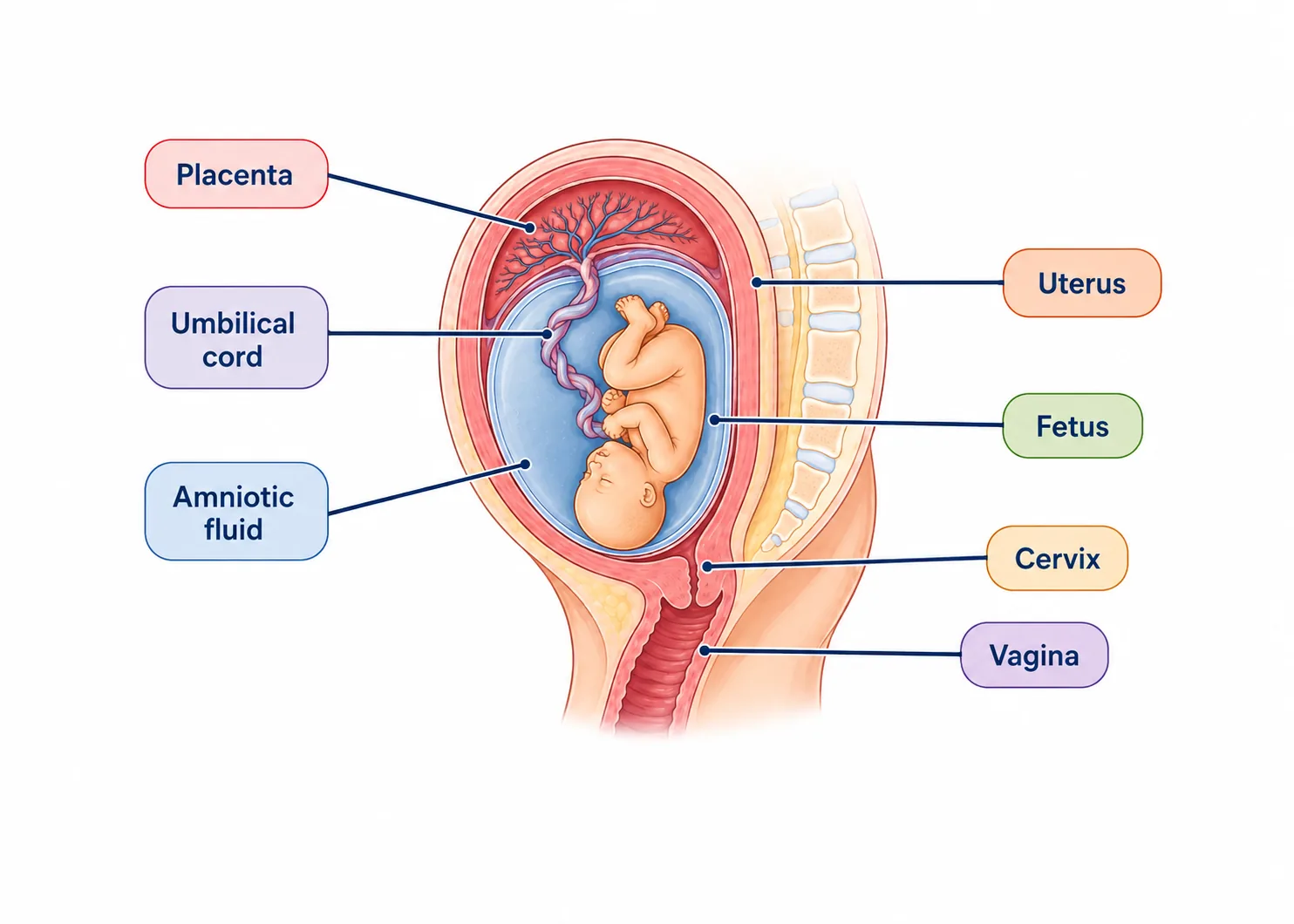
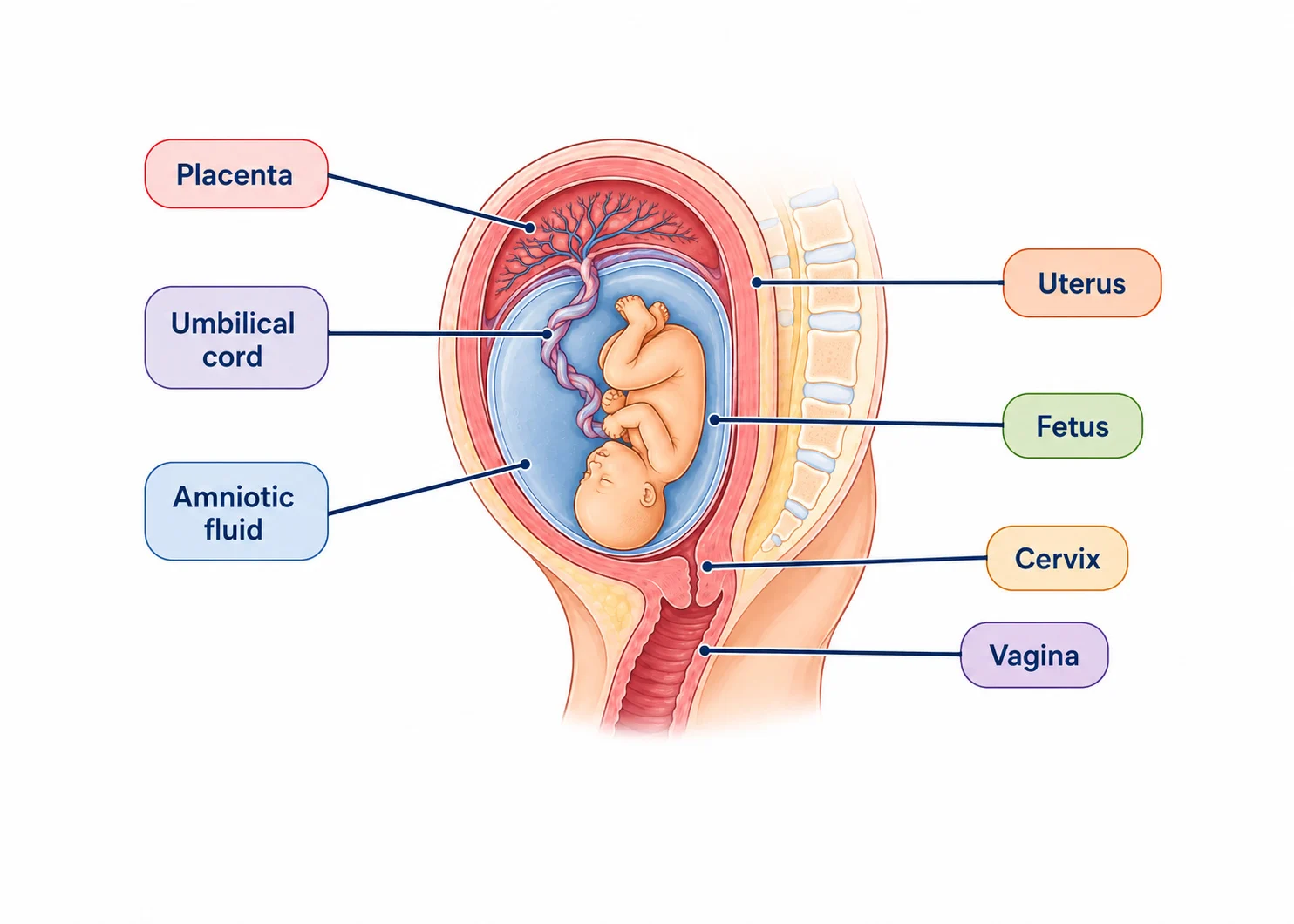
1
The zygote travels along the oviduct, dividing repeatedly to form a ball of cells, the embryo.
2
The embryo embeds in the thick uterus lining (implantation).
3
Over the first 12 weeks the organs develop, with nutrients reaching the embryo by diffusion.
4
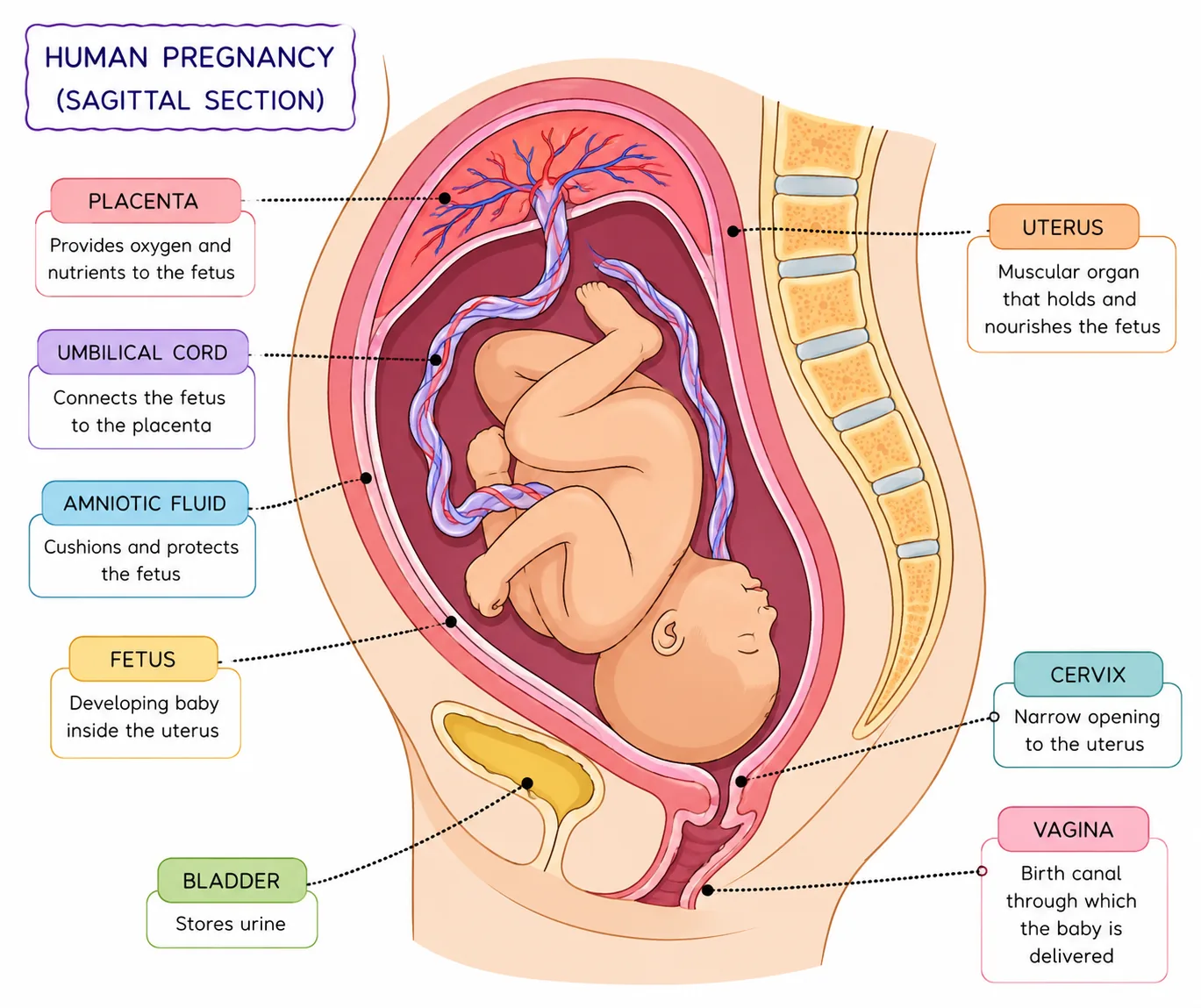
After this the placenta has formed and the embryo is called a foetus.
5
The rest of the 9 months is growth in size.
1Amniotic sac
- Amniotic sac contains amniotic fluid, made from the mother's blood plasma, which cushions the foetus.
2Umbilical cord
- Umbilical cord joins the foetal blood supply to the placenta.
Section 6 of 9The placenta
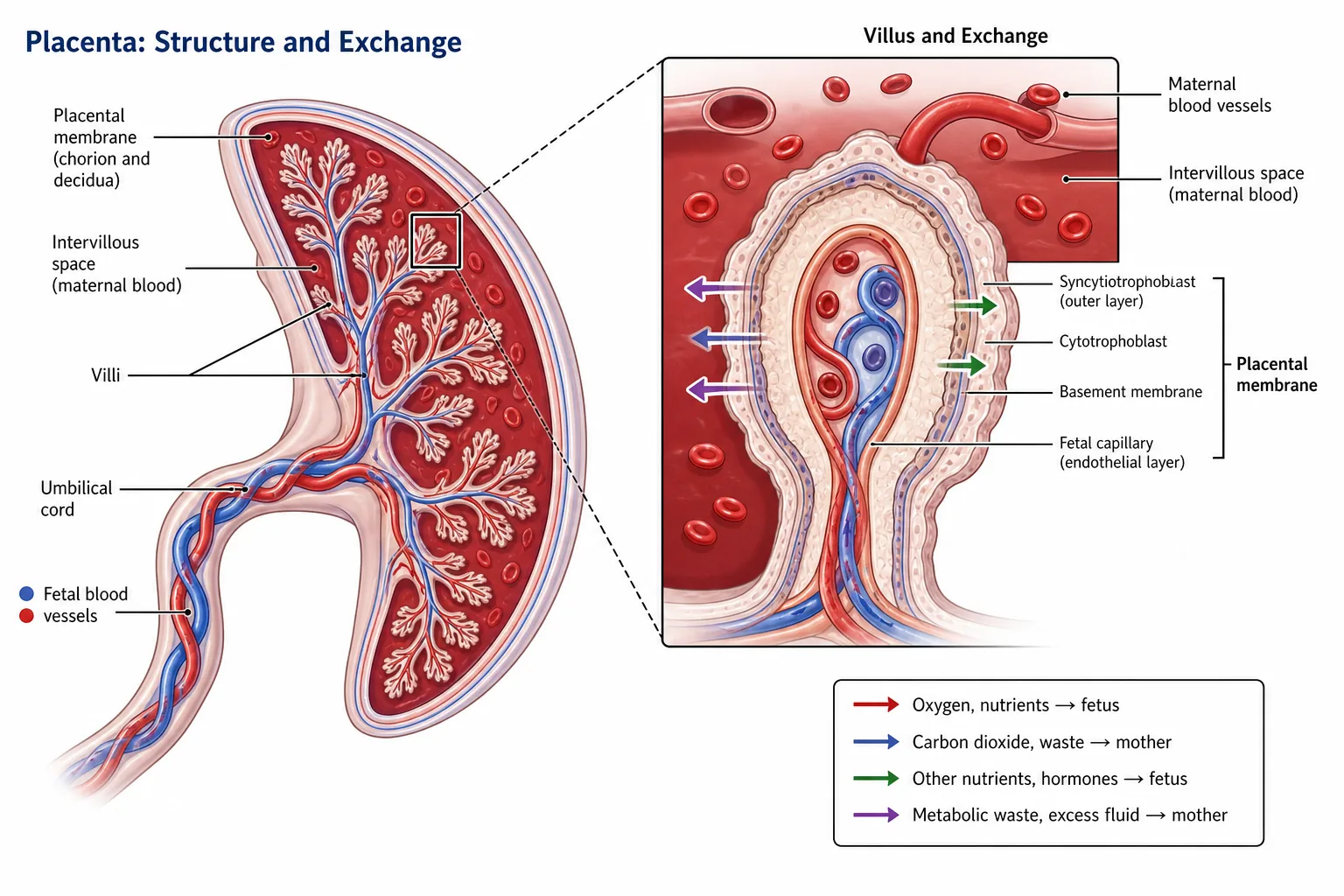
Exchange
- Exchange glucose, amino acids, fats, water and oxygen pass from mother to foetus.
Waste
- Waste carbon dioxide and urea pass from foetus to mother.
Diffusion
- Diffusion all movement is by diffusion down concentration gradients.
Adaptations
- Adaptations a large surface area and a thin wall.
Blood
- Blood maternal and foetal blood flow close together but never mix.
Barrier
- Barrier it blocks many toxins and pathogens, but some, such as nicotine and the rubella virus, cross.
Section 7 of 9More from the specification
1
Human Male Reproductive Anatomy
- Testes suspended within the scrotum produce flagellated spermatozoa and testosterone,
- which travel along the vas deferens and mix with alkaline seminal fluid before ejaculation.
2
Human Female Reproductive Anatomy
- Paired ovaries release secondary oocytes into fallopian tubes (oviducts);
- upon fertilisation, the resulting zygote cleaves as it travels to implant into the vascularised endometrium of the uterus.
3
Role of the Placenta and Umbilical Cord
- The placenta acts as an exchange organ where maternal and fetal bloodstreams come into close proximity, enabling diffusion of nutrients, oxygen,
- and antibodies into fetal blood while expelling urea and carbon dioxide.
4
Oestrogen
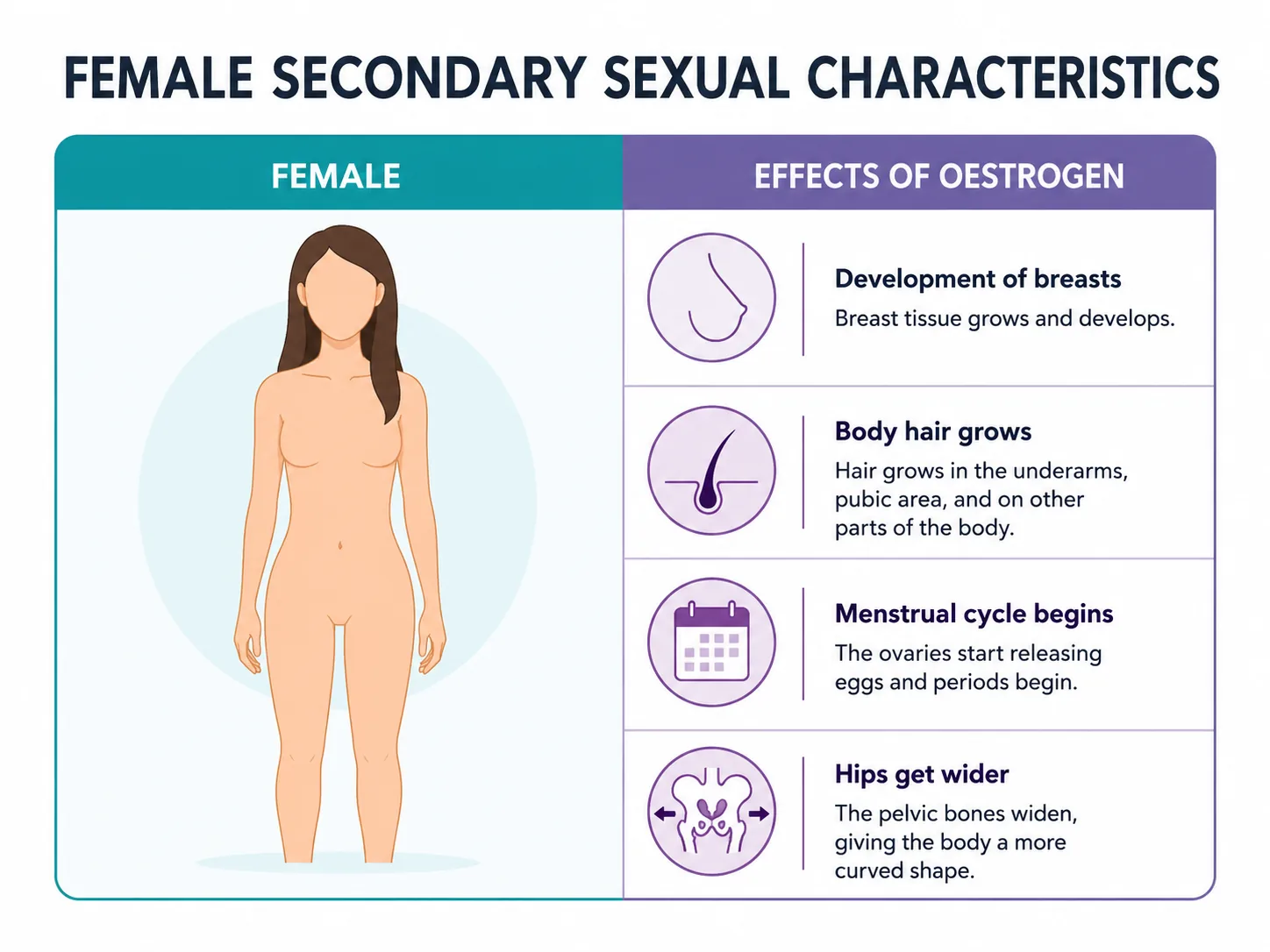
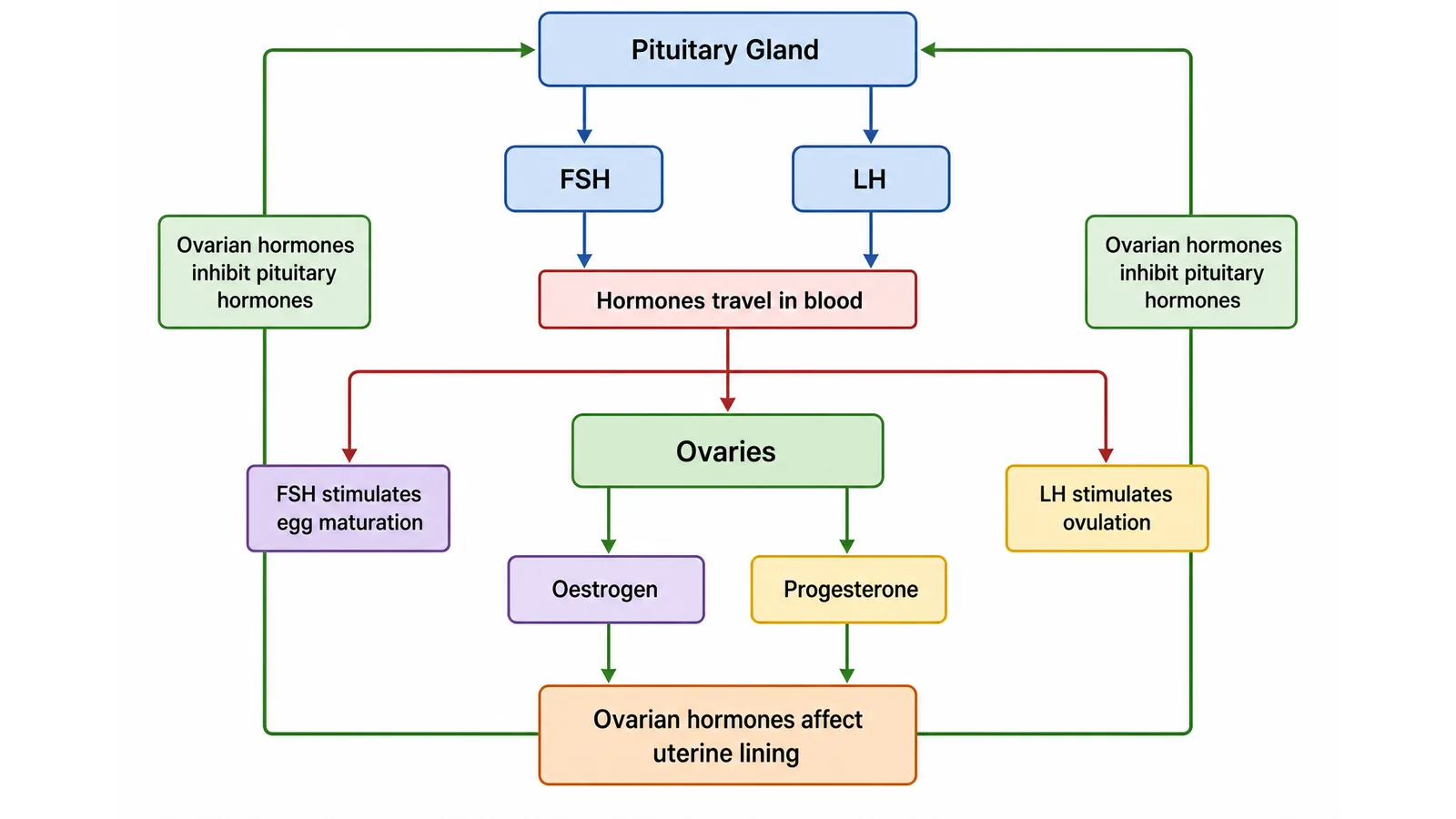
- The main female sex hormone, made in the ovaries.
5
Progesterone
- A hormone that maintains the uterus lining.
6
Asexual reproduction
- Reproduction from one parent giving genetically identical offspring.
7
Menstrual cycle
- A monthly series of changes in the female reproductive system controlled by hormones.
8
Genetically identical
- Having the same alleles
9
Pituitary gland
- The master gland whose hormones control other glands.
10
Genetic variation
- Differences in alleles within a population.
11
Pollen
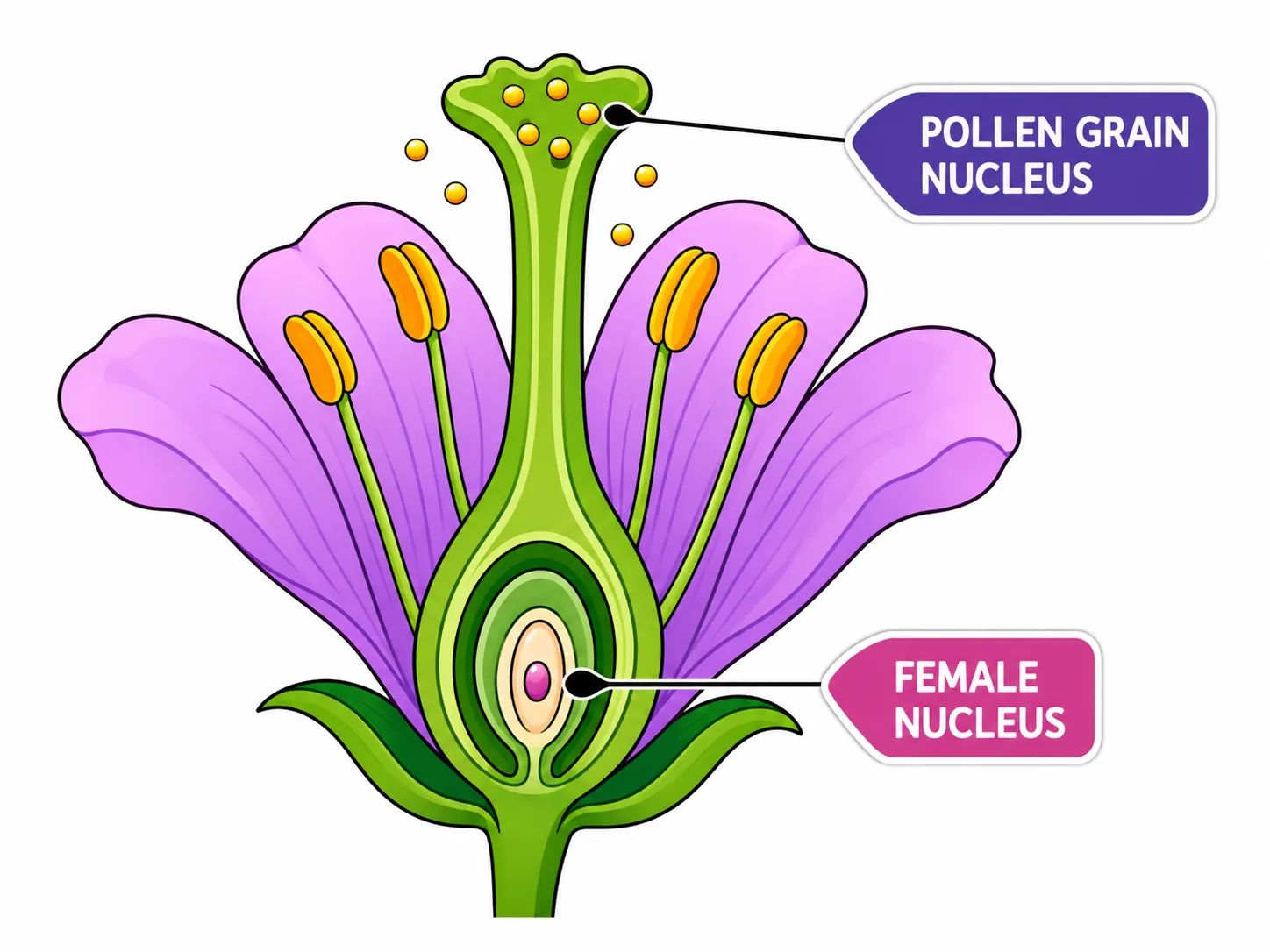
- Grains made by plants, each type with a different shape.
12
Pollination
- Transfer of pollen from an anther to a stigma.
13
Variation
- Differences between individuals of the same species.
14
Germination
- The start of growth of a seed.
Section 8 of 9Key terms



| Term | Meaning |
|---|---|
| Fertilisation | The fusion of the nuclei of a sperm and an egg cell. |
| Zygote | The fertilised egg cell. |
| Implantation | Embedding of the embryo in the uterus lining. |
| Placenta | The organ where substances are exchanged between mother and foetus. |
| Umbilical cord | Links the foetus to the placenta. |
| Amniotic fluid | Fluid that cushions the foetus. |
| Acrosome | The enzyme-containing head region of a sperm. |
Section 9 of 9Exam technique
1
Saying the mother's blood flows into the baby — substances diffuse across the placenta and the bloods never mix.
2
Giving vague answers like waste products or nutrients — name specific substances such as urea and glucose.
3
Saying fertilisation occurs in the uterus — it usually occurs in the oviduct.
4
Saying the foetus forms immediately — the embryo becomes a foetus after about 12 weeks.