Section 1 of 7Primary and secondary sexual characteristics
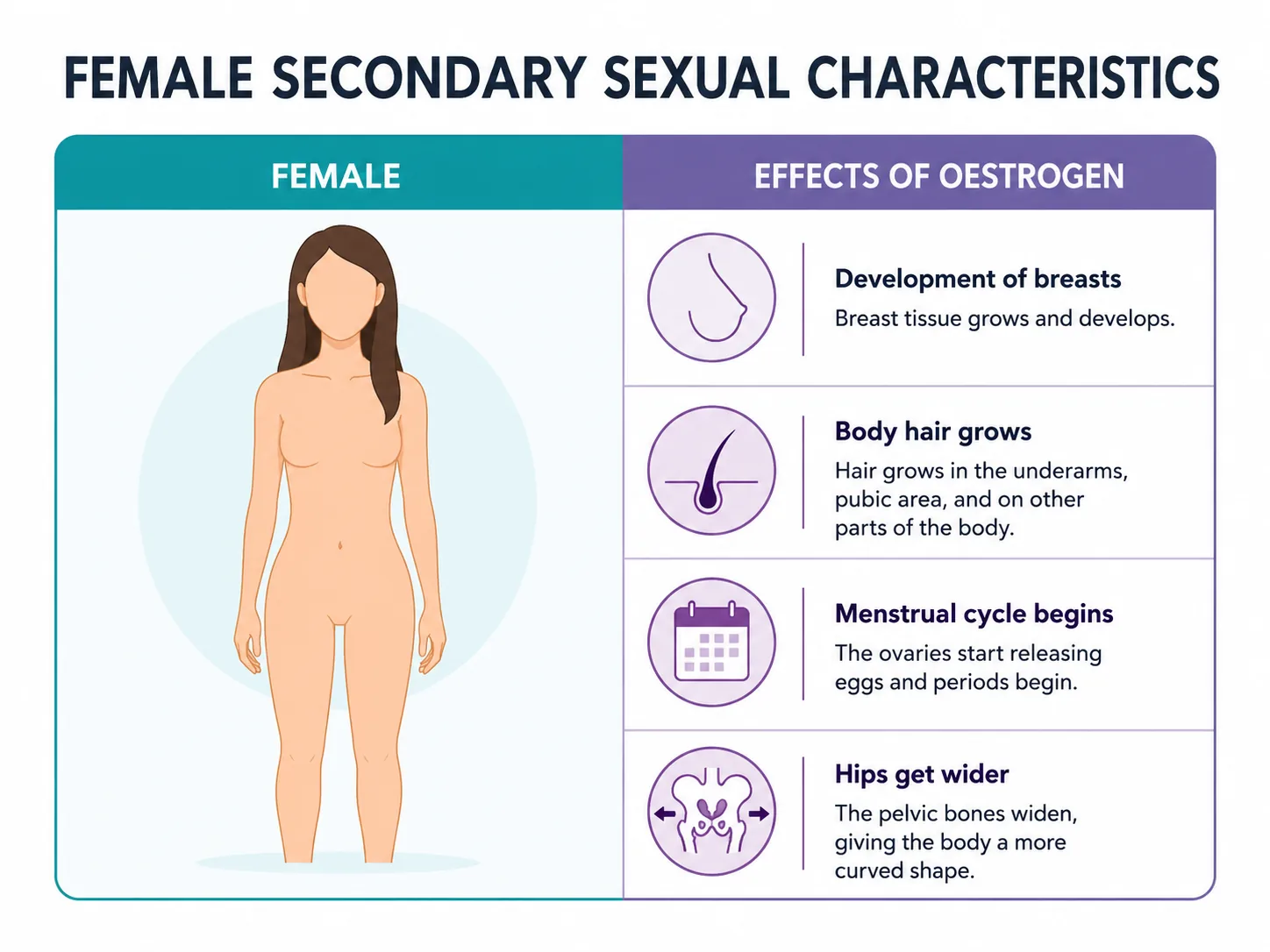
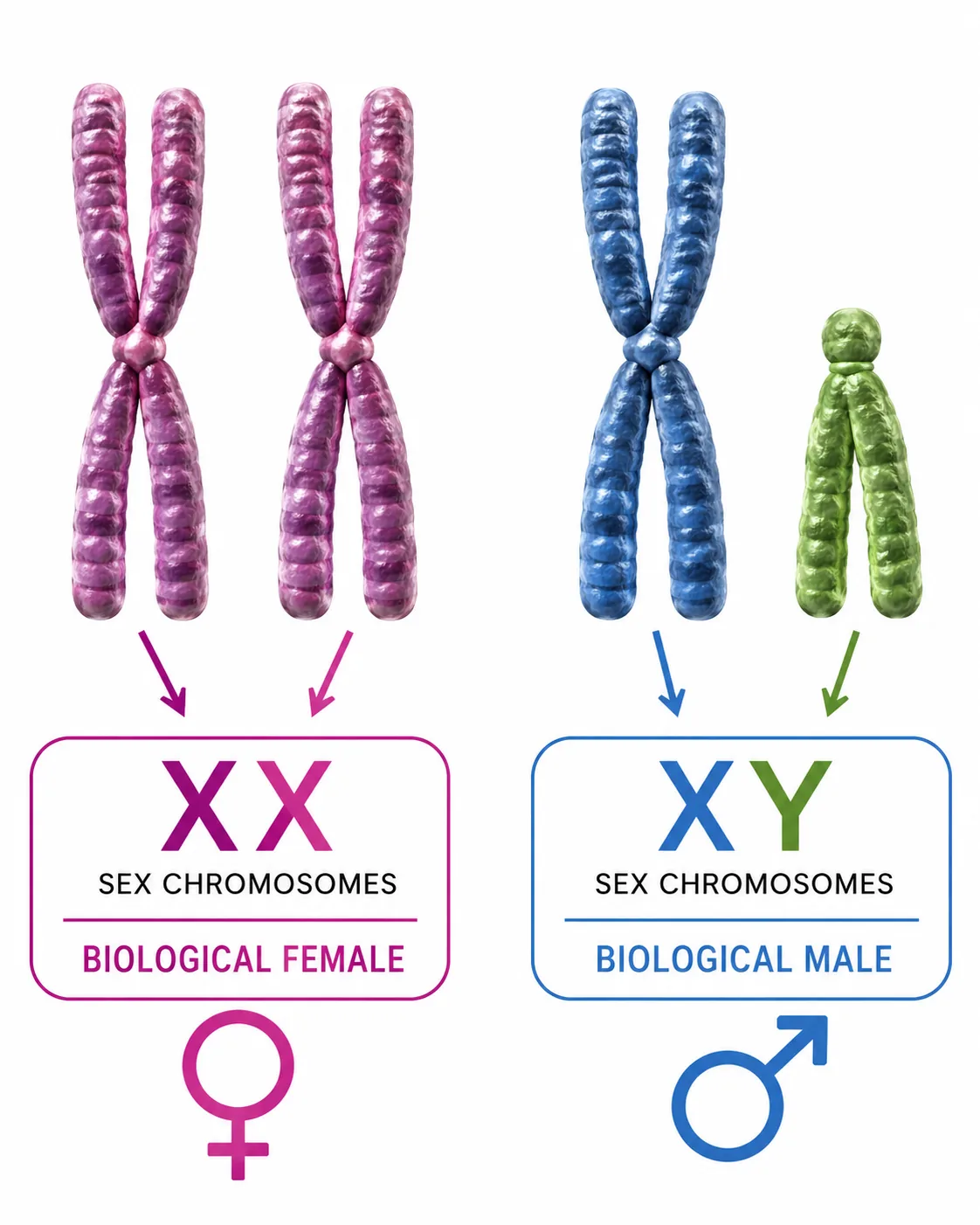

Primary characteristics
- Primary characteristics These are the differences in the reproductive organs between males and females,
- and they are already present when a baby is developing in the uterus.
- Examples are the ovaries and uterus in females and the testes and penis in males.
Secondary characteristics
- Secondary characteristics These are the changes that appear during puberty,
- when a child develops into an adolescent and the body becomes able to reproduce.
- They are triggered by sex hormones released into the blood.
Emotional changes
- Emotional changes The rising hormone levels also affect behaviour,
- so adolescents often show mood swings and a growing interest in sexual relationships.
Section 2 of 7Hormones of puberty


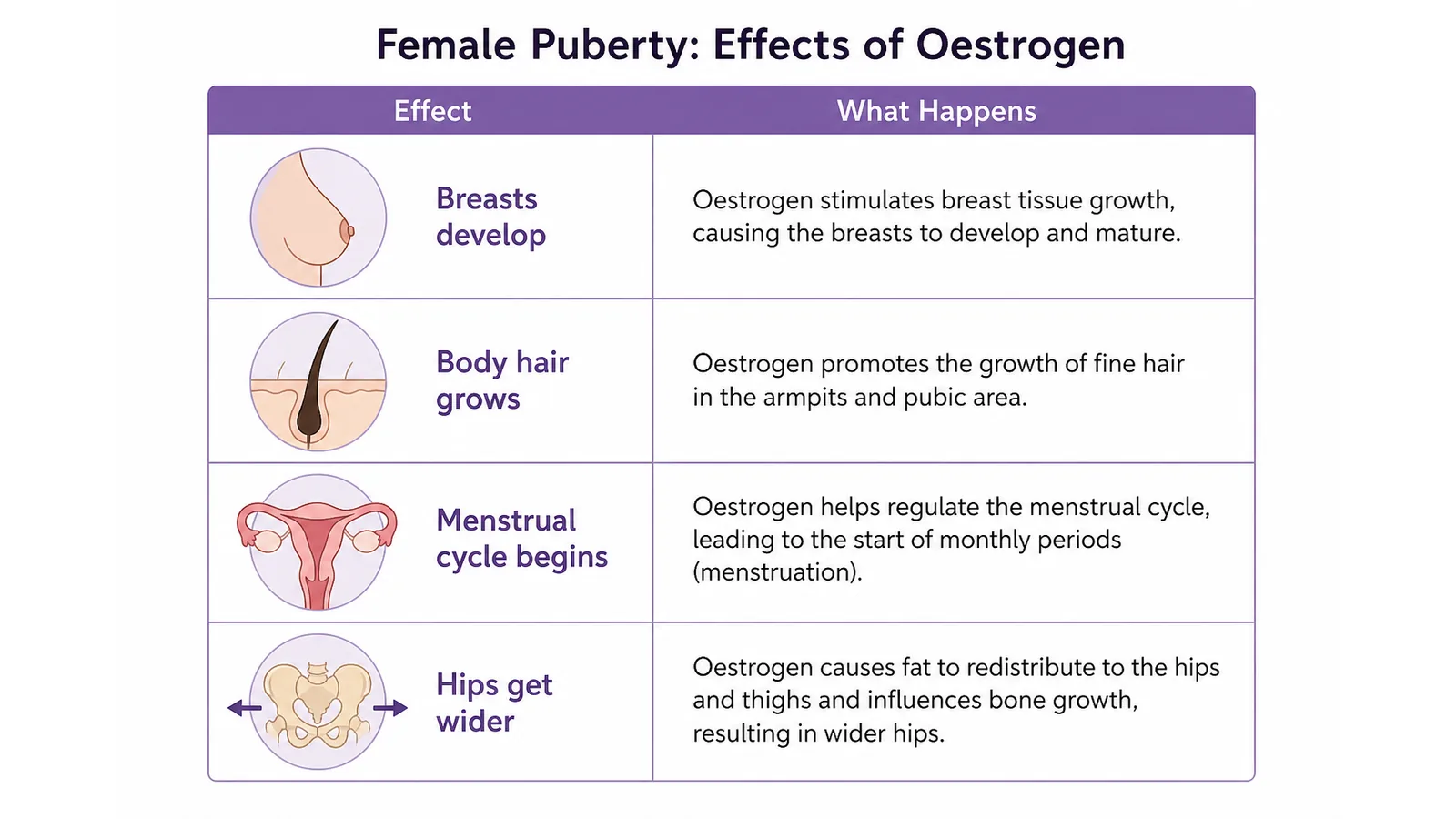
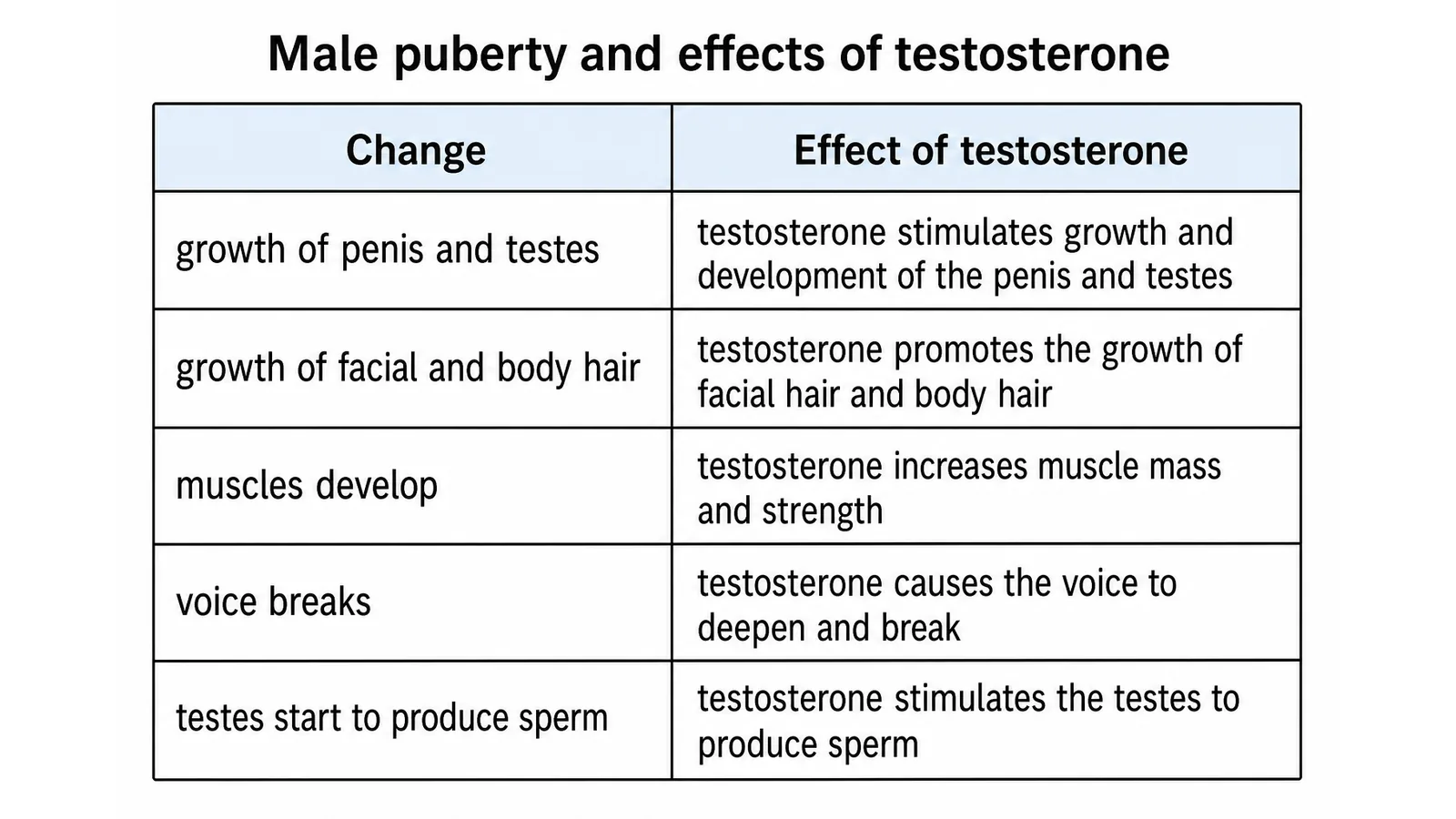
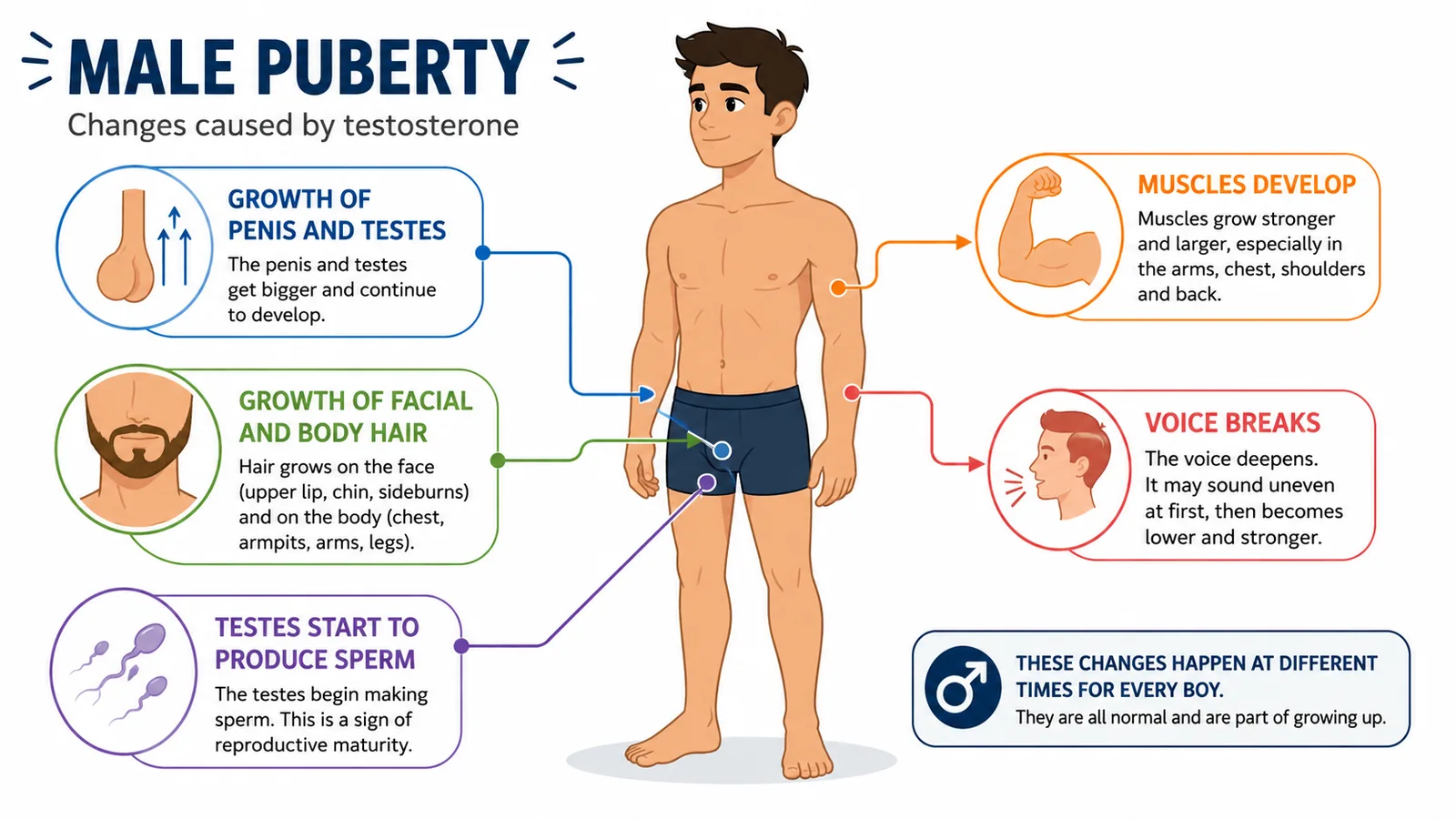
| Feature | Girls | Boys |
|---|---|---|
| Hormone responsible | Oestrogen, made by the ovaries | Testosterone, made by the testes |
| Body changes | Breasts develop, hips widen, and the menstrual cycle begins | Voice deepens, shoulders broaden, facial hair grows and muscles develop |
| Changes in both sexes | Growth of the sex organs and growth of pubic and underarm hair | Growth of the sex organs and growth of pubic and underarm hair |
| Reproductive ability | Eggs are released from the ovaries | Sperm production begins in the testes |
Section 3 of 7The menstrual cycle in sequence


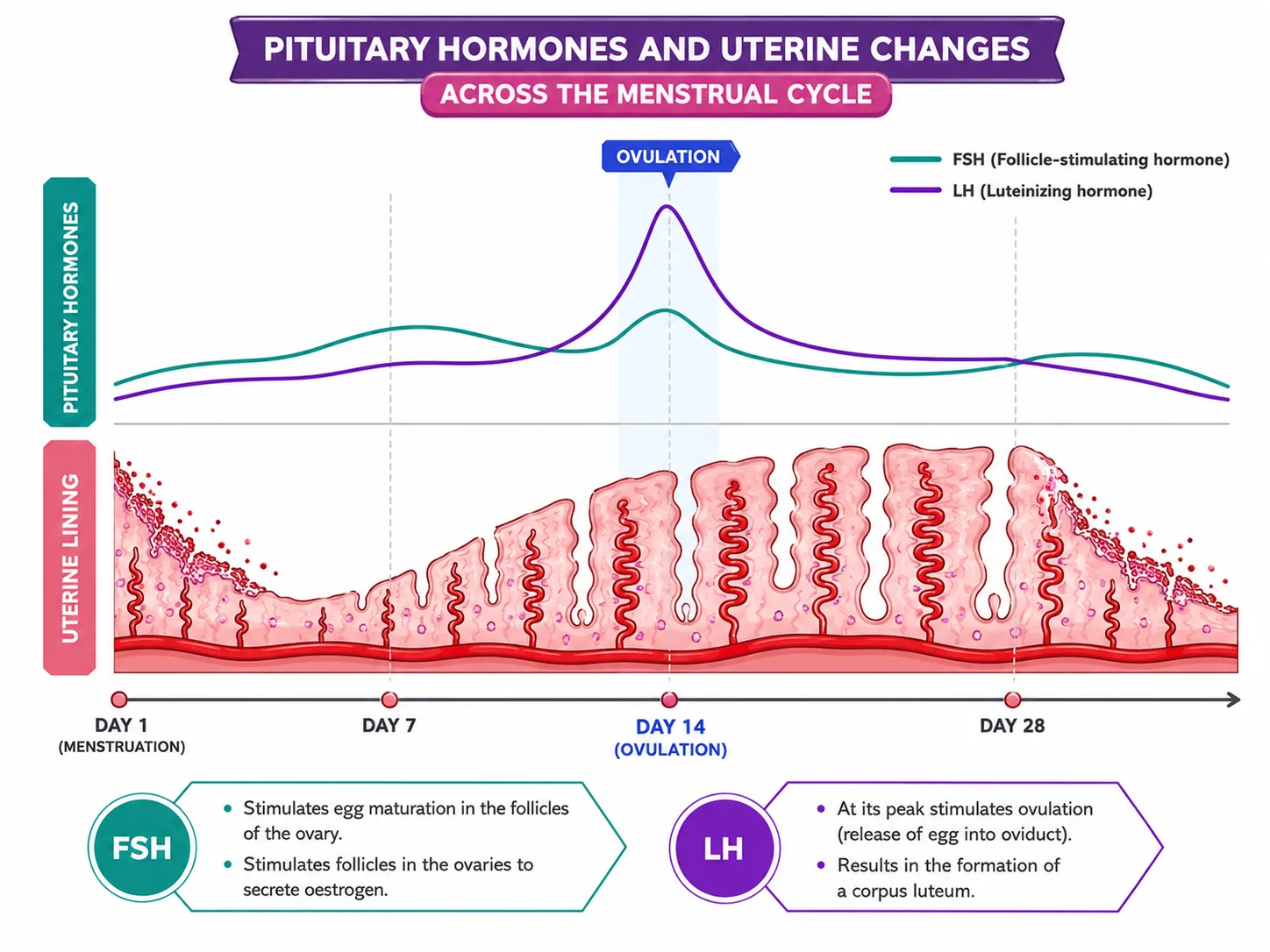
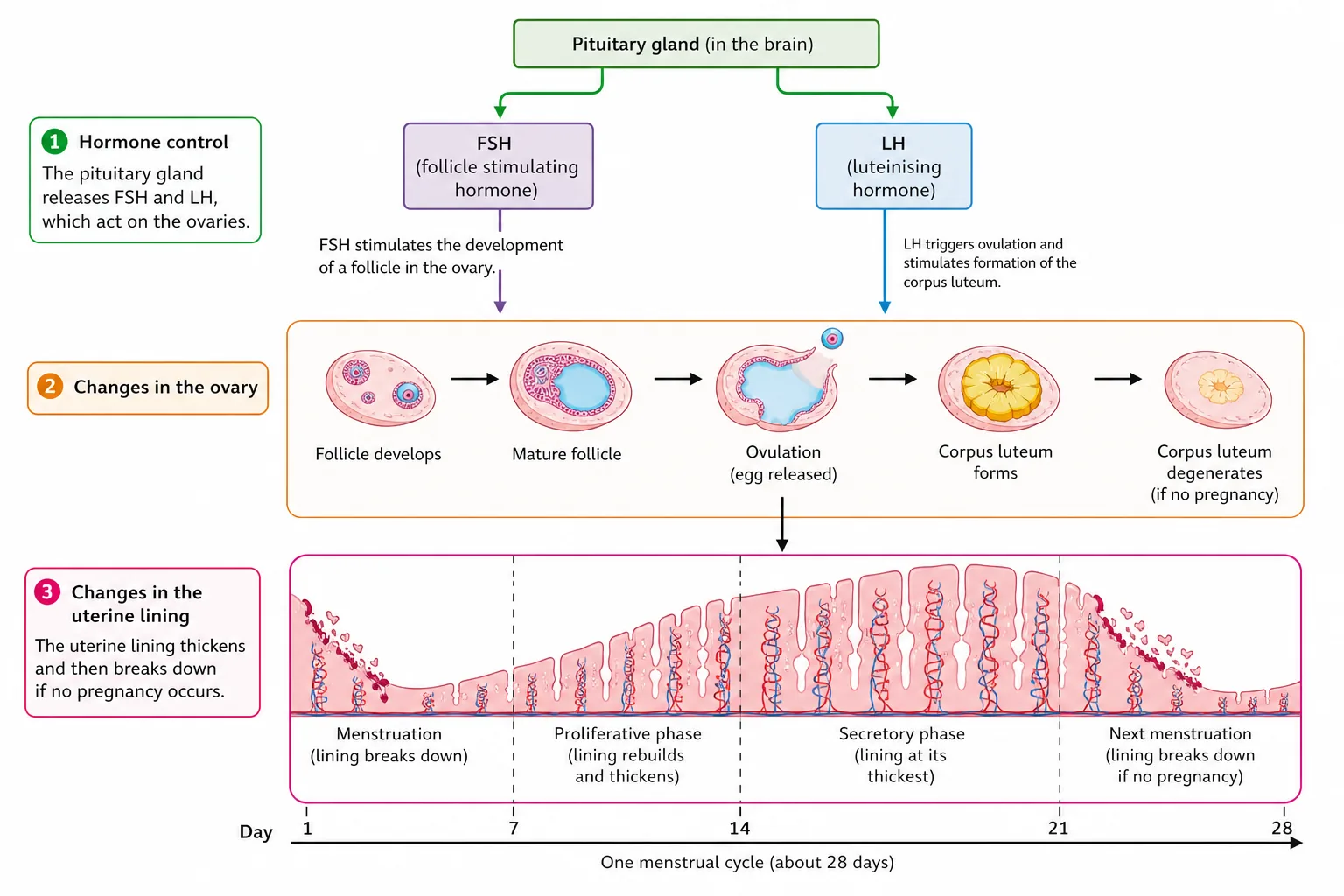

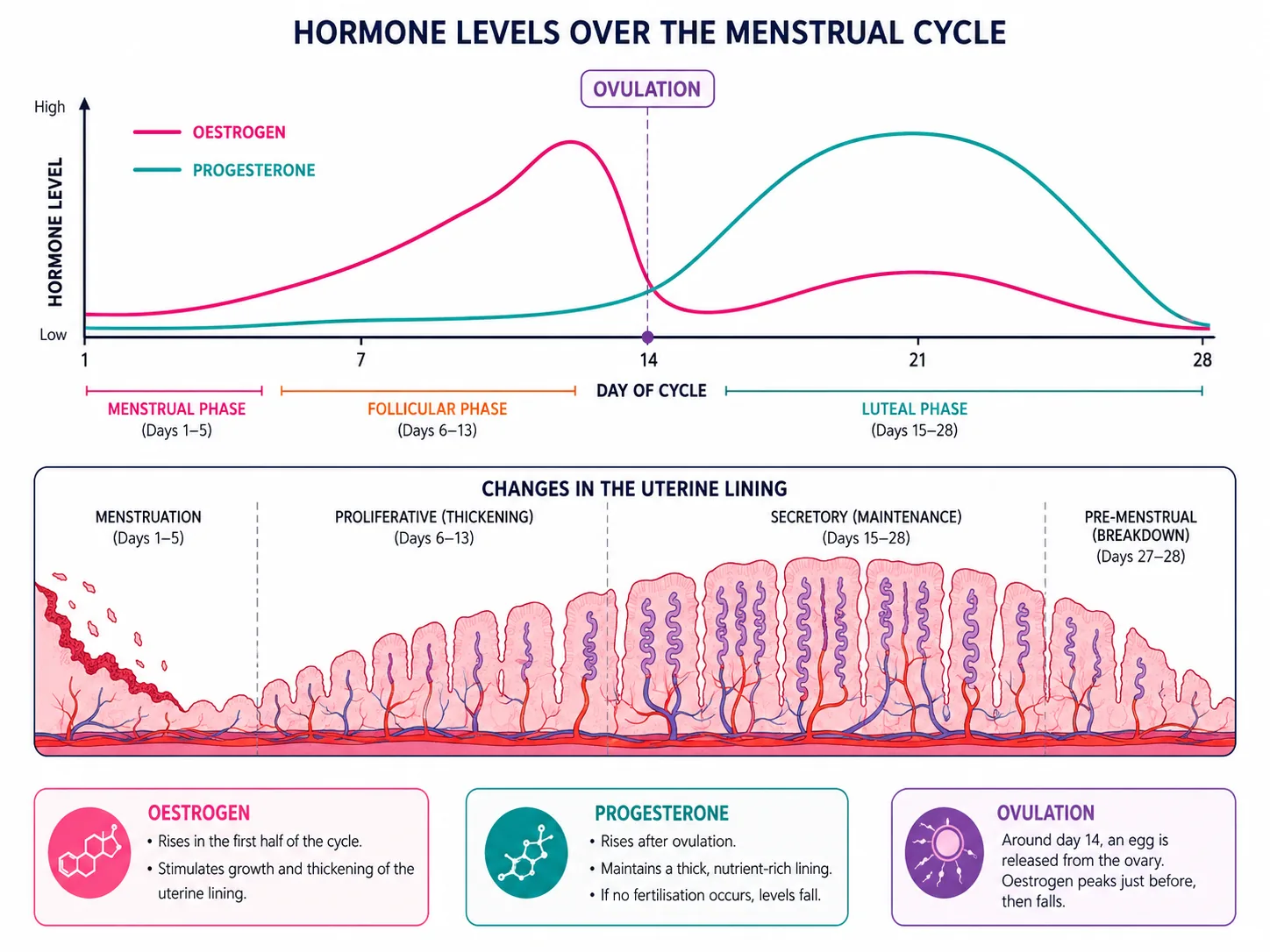
1Menstruation (days 1 to 5-7)
- Menstruation (days 1 to 5-7) The thickened lining of the uterus breaks down and leaves the body through the vagina.
- This is commonly called a period.
2Lining rebuilds
- Lining rebuilds After the bleeding stops, the uterus lining begins to thicken again, ready for a possible embryo to implant.
3Ovulation (around day 14)
- Ovulation (around day 14) A mature egg is released from an ovary and moves along the oviduct towards the uterus.
4Fertilisation or not
- Fertilisation or not If the egg is fertilised, it may implant in the thick lining and pregnancy begins.
- If it is not, the lining breaks down and a new cycle starts.
Section 4 of 7Key facts about the cycle


Menstrual cycle
Start and length
- Start and length The cycle starts in early adolescence, at around 12 years old, and an average cycle lasts about 28 days.
Where changes happen
- Where changes happen The important changes take place in the ovaries, where eggs mature and are released, and in the lining of the uterus.
Hormonal control
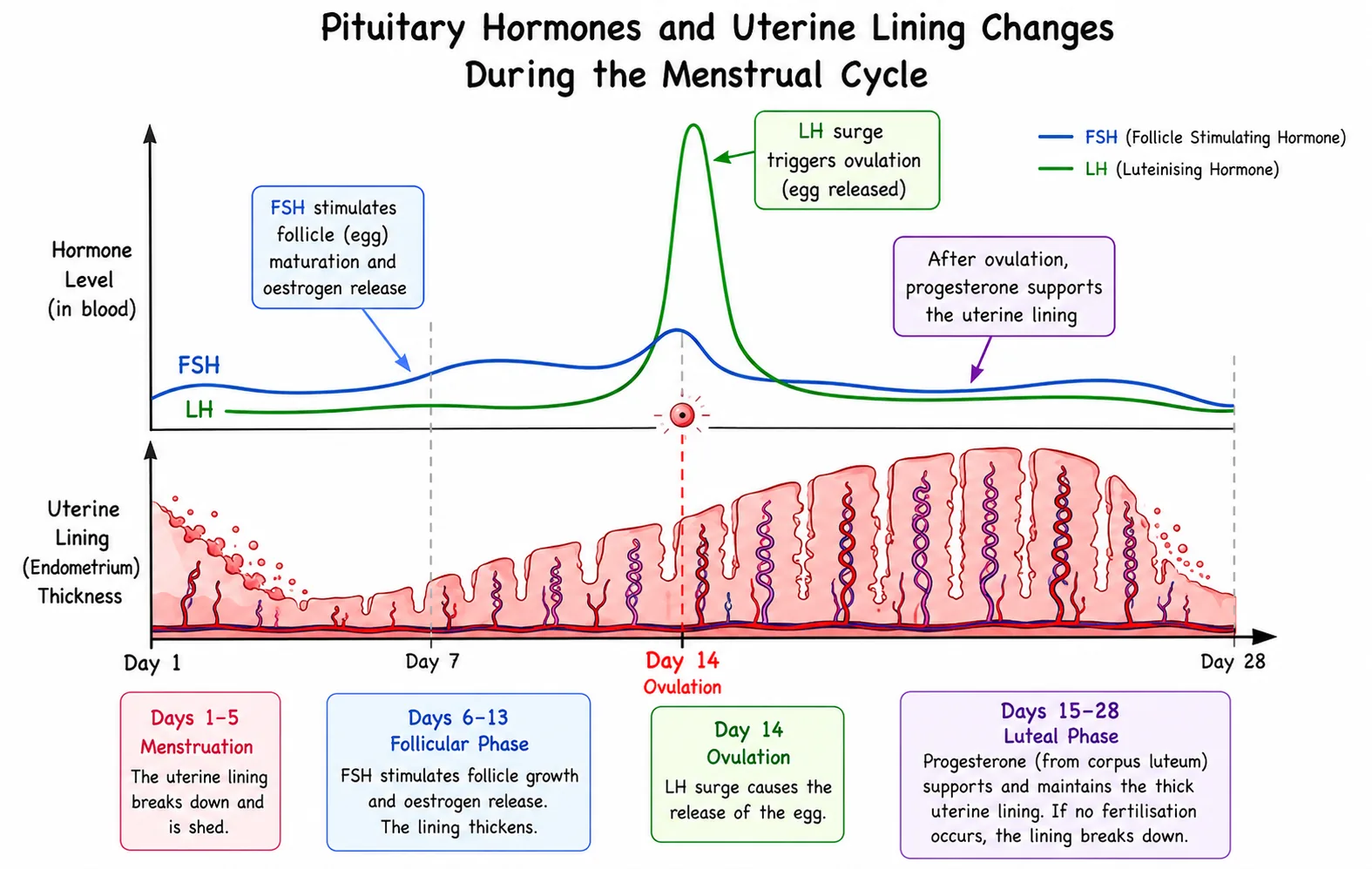
- Hormonal control The whole cycle is controlled by hormones.
- At this level you need to know that hormones are involved, but not the names or the detailed roles of the individual hormones.
Blood supply
- Blood supply When the lining is thick it is rich in blood vessels.
- When it breaks down, the blood and tissue are lost during menstruation.
Section 5 of 7Reading a graph of the uterus lining



1
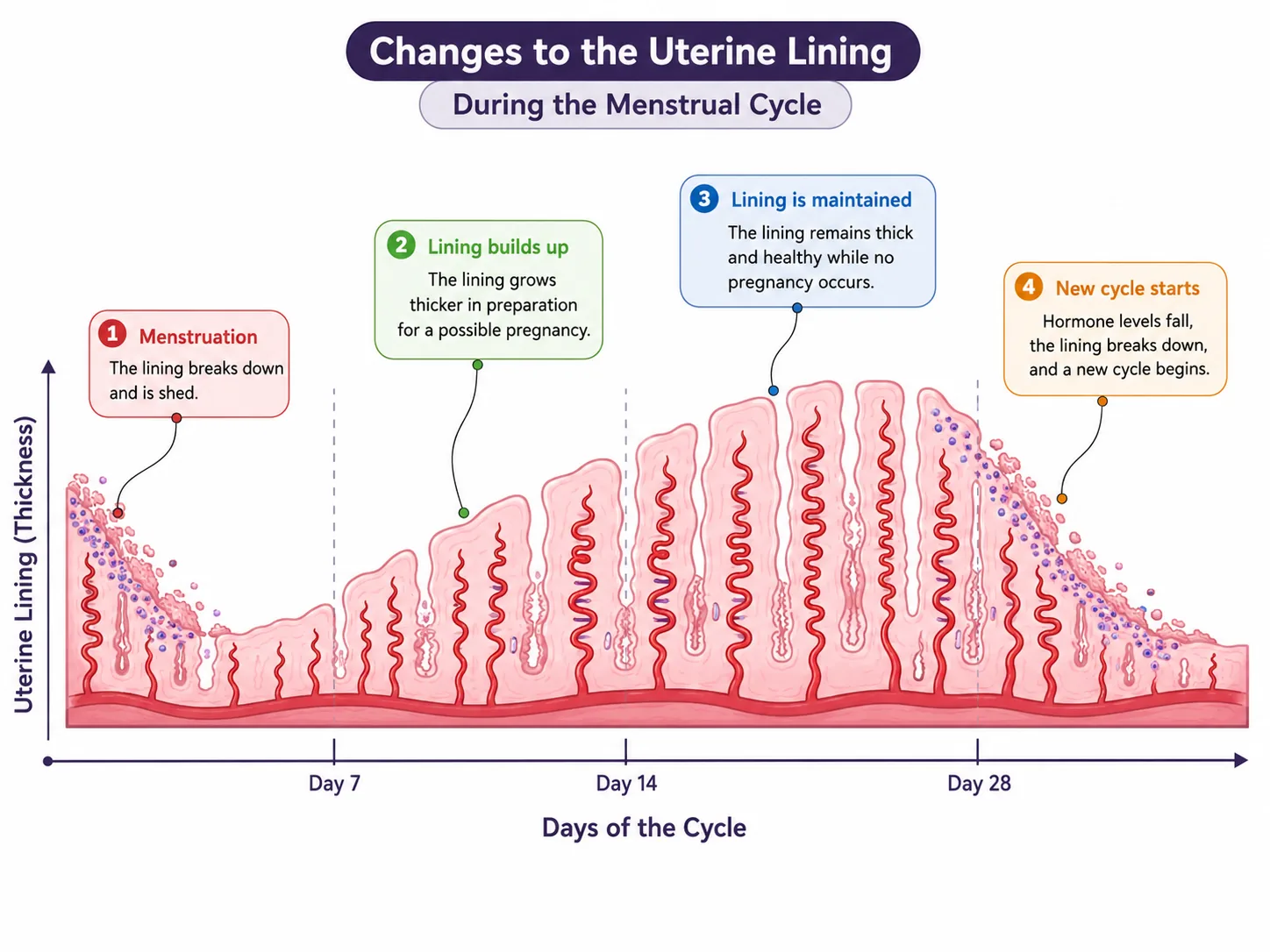
Find day 1 on the horizontal axis. The lining is at its thinnest here because menstruation has just happened.
2
Follow the line upwards through days 5 to 14. The lining thickens steadily as it is rebuilt.
3
Mark day 14 as the point of ovulation, when the lining is already thick and well supplied with blood vessels.
4
Follow the line to about day 28. If no embryo has implanted the lining falls, which matches the next period.
5
If a question gives a longer or shorter cycle, adjust the day of ovulation to about halfway through that cycle.
Section 6 of 7Key terms
| Term | Meaning |
|---|---|
| Puberty | The stage of development when a child's body changes and becomes able to reproduce. |
| Secondary sexual characteristics | Body changes at puberty, such as breast development or a deeper voice, controlled by sex hormones. |
| Oestrogen | The female sex hormone made by the ovaries that controls female secondary sexual characteristics. |
| Testosterone | The male sex hormone made by the testes that controls male secondary sexual characteristics. |
| Ovulation | The release of a mature egg from an ovary, which happens around day 14 of a 28-day cycle. |
| Menstruation | The loss of the broken-down uterus lining through the vagina, lasting about 5 to 7 days. |
Section 7 of 7Exam technique
1
Mixing up primary and secondary characteristics: primary ones are present before birth, secondary ones appear at puberty.
2
Saying that menstruation is the release of the egg. Ovulation releases the egg; menstruation is the loss of the uterus lining.
3
Writing that ovulation is on day 1. It happens around day 14, about halfway through a 28-day cycle.
4
Thinking that only girls grow body hair and have sex organs that grow. Both sexes show these changes.