Section 1 of 8Sexually transmitted infections
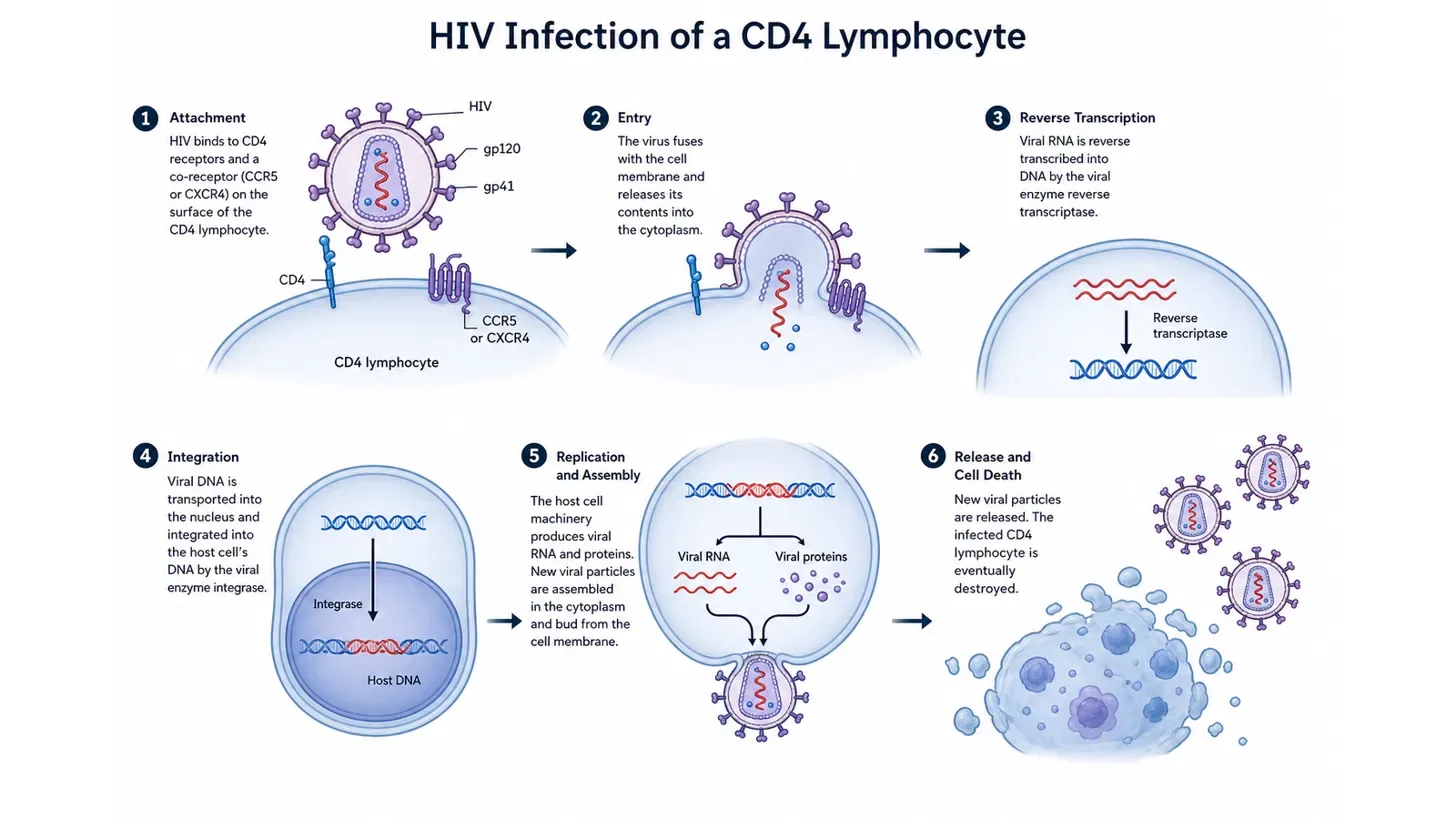
STI
STI an infection transmitted through sexual contact.
- Unprotected intercourse can pass pathogens through the exchange of body fluids.
HIV
- HIV the human immunodeficiency virus is a pathogen that causes an STI.
AIDS
- HIV infection may lead to acquired immunodeficiency syndrome.
Section 2 of 8Other STIs
| Infection | Pathogen | Treatment |
|---|---|---|
| Chlamydia | Bacterium | Antibiotics |
| Gonorrhoea | Bacterium | Antibiotics |
| Genital herpes | Virus | Antiviral drugs relieve symptoms |
| HIV | Virus | Antiretroviral drugs control it; no cure |
Section 3 of 8Transmission of HIV
Sexual intercourse
- Sexual intercourse through exchange of body fluids.
Sharing needles
- Sharing needles with an infected person.
Blood transfusion
- Blood transfusion with infected blood.
Mother to baby
- Mother to baby through the placenta, and in breast milk.
Section 4 of 8How HIV affects the immune system

1
HIV enters the body and often causes mild flu-like symptoms.
2
The symptoms pass and the person may not know they are infected.
3
HIV infects a type of lymphocyte and uses its machinery to multiply.
4
HIV avoids recognition by repeatedly changing its protein coat.
5
The number of lymphocytes and the antibodies they make fall.
6
The immune system weakens and opportunistic infections occur, leading to AIDS.
Section 5 of 8Controlling the spread
| Method | How it helps |
|---|---|
| Limit the number of sexual partners | Reduces exposure |
| Use condoms | Barrier to body fluids; also prevent pregnancy |
| Get tested after unprotected sex | Allows early treatment |
| Screen blood donations | Removes infected blood |
| Do not share needles | Stops blood transfer |
| Education programmes | Raise awareness |
Section 6 of 8More from the specification
1
Pathogen invasion of mucosal epithelial cells
- Pathogen invasion of mucosal epithelial cells sexually transmitted bacteria and viruses adhere to and invade genital epithelial cells, triggering inflammatory responses.
2
Pituitary gland
- The master gland whose hormones control other glands.
3
Structural adaptation
- An adaptation of body form.
4
Pathogenesis and Impact of Human Immunodeficiency Virus (HIV) — HIV infects and progressively destroys CD4+ helper T lymphocytes, impairing the adaptive immune system and eventually leading to Acquired Immune Deficiency Syndrome (AIDS).
5
Transmission Routes of Sexually Transmitted Infections
- Pathogens causing STIs are transmitted through unprotected sexual intercourse, exposure to contaminated blood, needle sharing,
- and vertically from mother to foetus during childbirth or breastfeeding.
- (such as HIV, gonorrhea, and chlamydia)
6
Prevention and Management Strategies for STIs
- Transmission rates are effectively minimized through the consistent use of barrier contraceptives (condoms), comprehensive public screening, prophylactic antiretroviral therapies,
- and contact tracing.
7
Hormone
- A chemical substance produced by a gland and carried by the blood that alters the activity of specific target organs.
8
Variation
- Differences between individuals of the same species.
9
Germination
- The start of growth of a seed.
10
Oestrogen
- The main female sex hormone, made in the ovaries.
11
Progesterone
- A hormone that maintains the uterus lining.
12
Asexual reproduction
- Reproduction from one parent giving genetically identical offspring.
13
Menstrual cycle
- A monthly series of changes in the female reproductive system controlled by hormones.
14
Genetically identical
- Having the same alleles
15
Pollen
- Grains made by plants, each type with a different shape.
16
Fertilisation
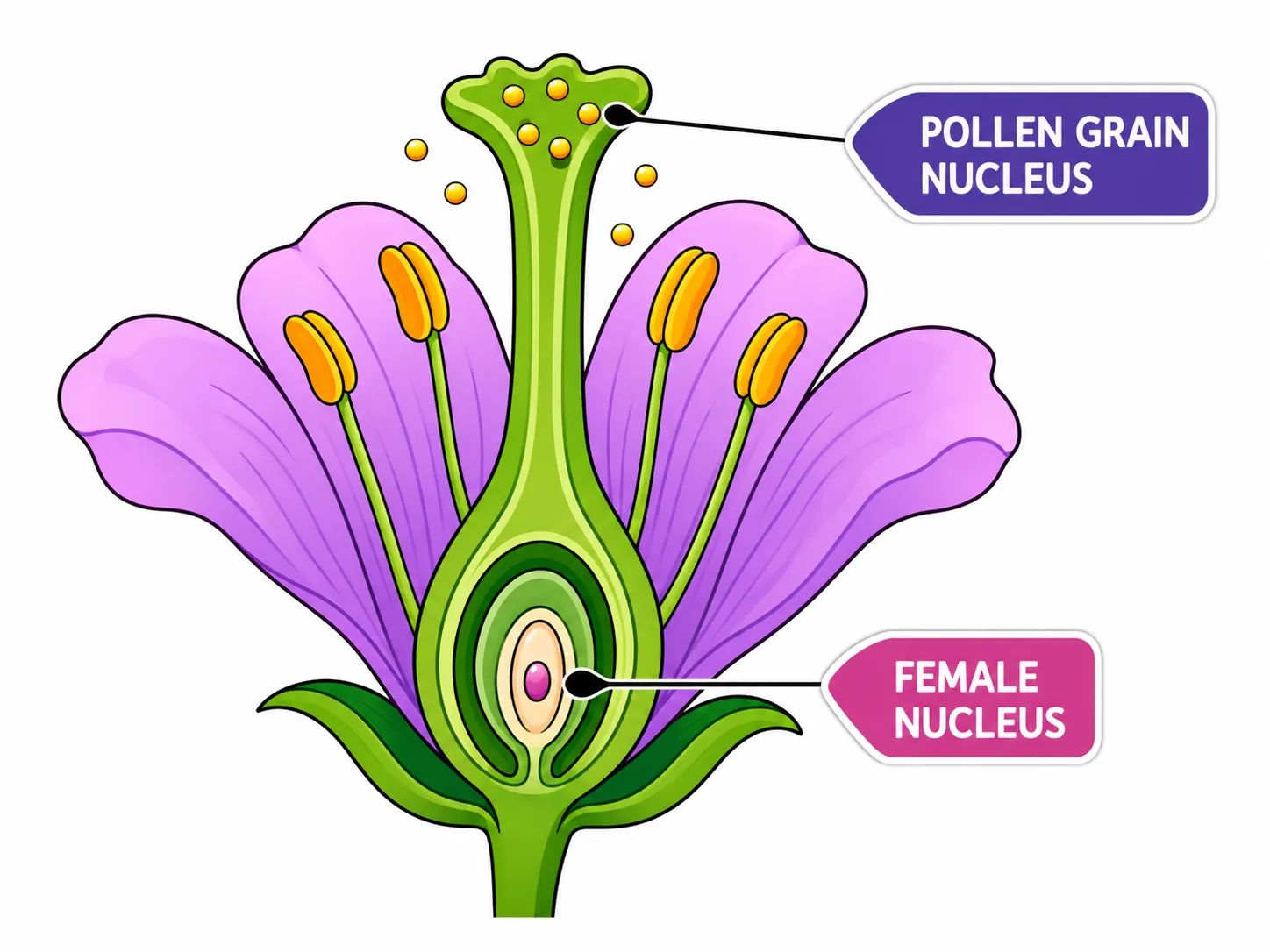
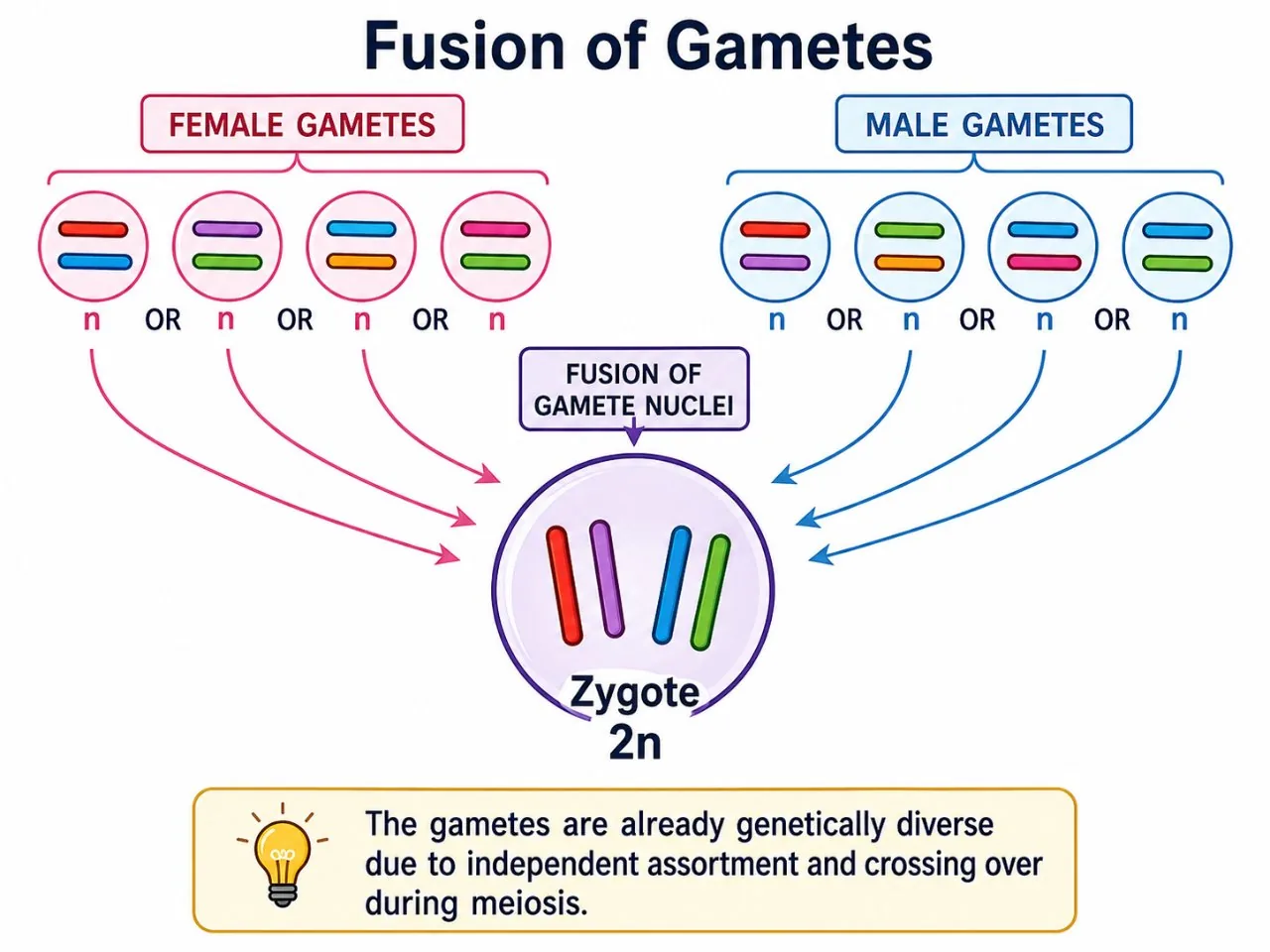
- The fusion of the nuclei of a male and a female gamete.
17
Reproduction
- The processes that make more of the same kind of organism.
18
Gamete
- A haploid sex cell.
19
Uterus
- The organ in which the foetus develops.
20
Pollination
- Transfer of pollen from an anther to a stigma.
Section 7 of 8Key terms



| Term | Meaning |
|---|---|
| STI | An infection passed on by sexual contact. |
| HIV | A virus that attacks lymphocytes of the immune system. |
| AIDS | The late stage of HIV infection when the immune system cannot fight infections. |
| Lymphocyte | A white blood cell of the immune system. |
| Condom | A barrier that reduces the spread of STIs. |
| Antiretroviral drug | A drug that controls HIV infection. |
Section 8 of 8Exam technique
1
Saying HIV and AIDS are the same — HIV is the virus and AIDS is the late syndrome.
2
Saying antibiotics treat HIV — antibiotics do not affect viruses.
3
Saying HIV spreads by touch or hugging — it spreads by body fluids and blood.
4
Saying treatment cures HIV — antiretroviral drugs control it.