Section 1 of 9Chromosomes, genes and alleles



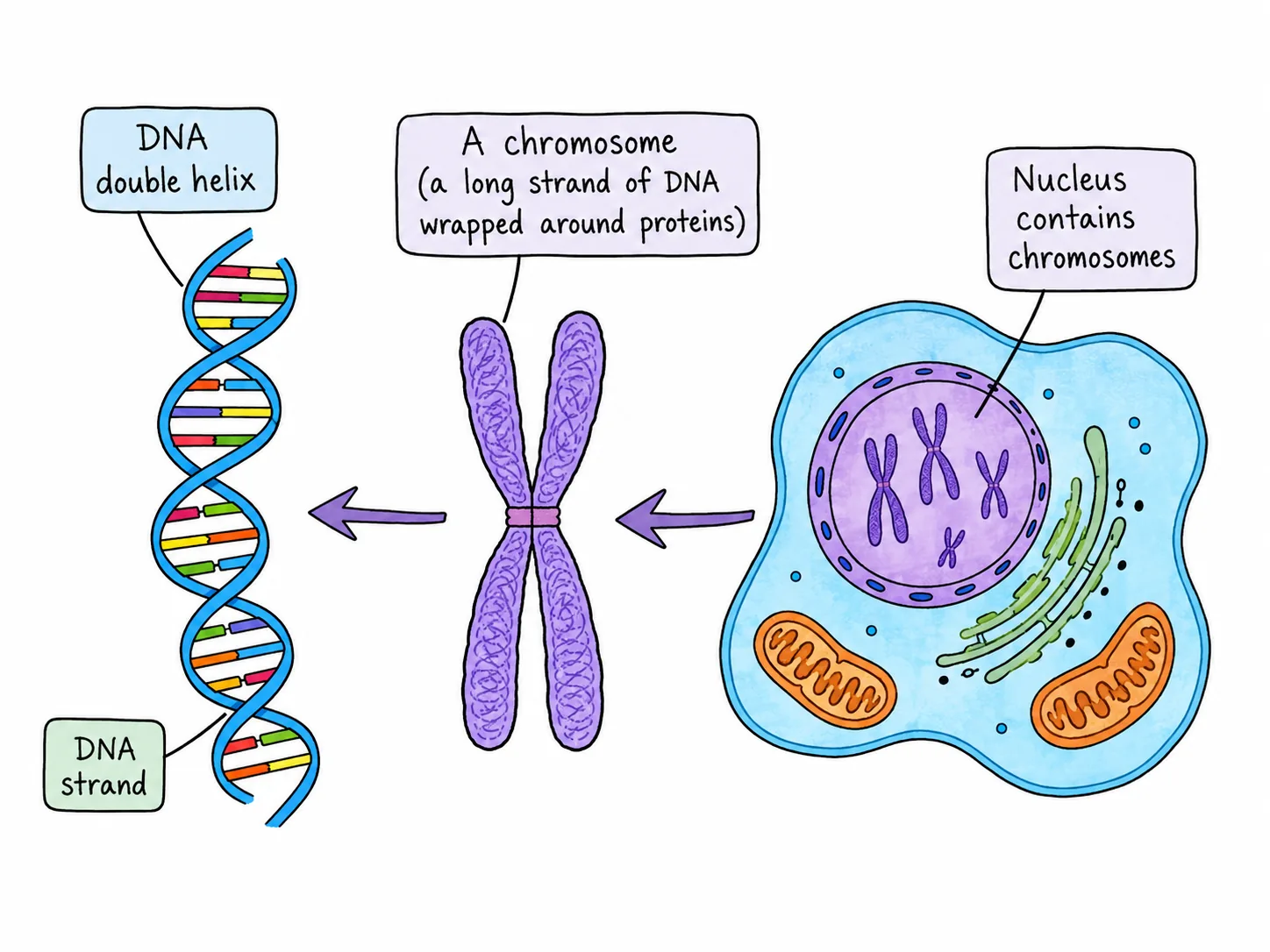
Inheritance
Inheritance the transmission of genetic information from generation to generation.
Chromosomes
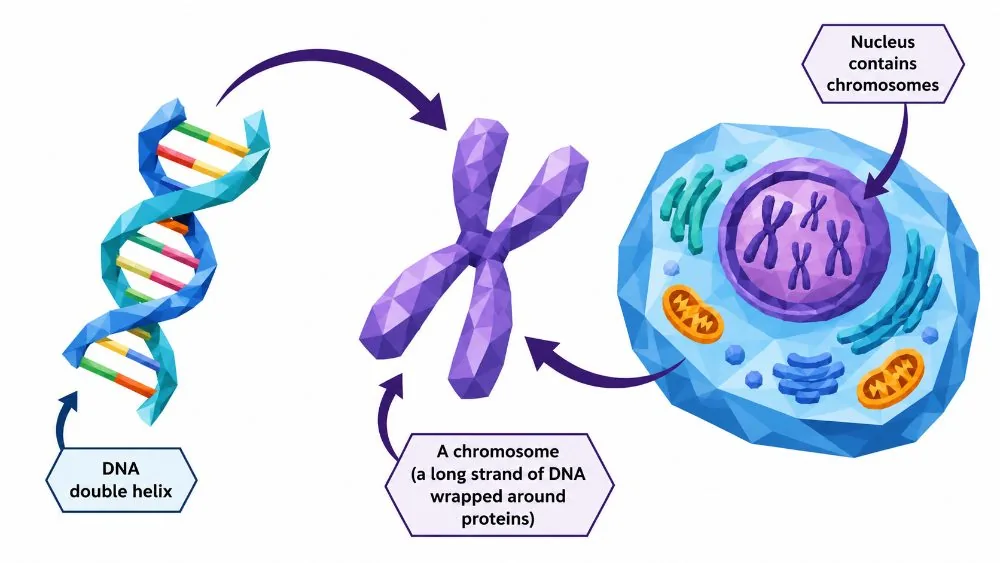
- Chromosomes thread-like structures of DNA in the nucleus, carrying genetic information as genes.
Gene
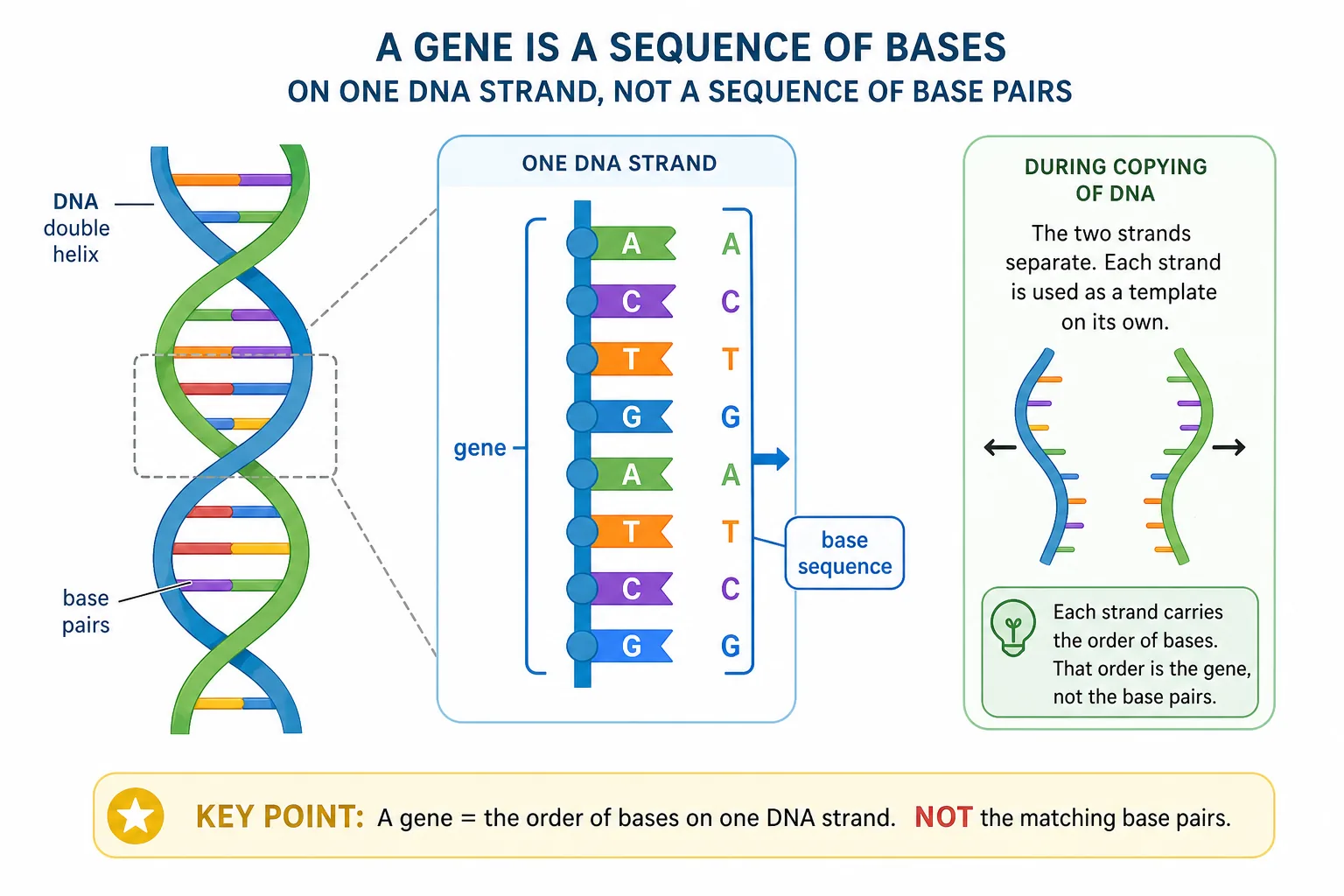
Gene a short length of DNA on a chromosome that codes for a specific protein.
- The protein may be structural (collagen), an enzyme or a hormone.
- Genes control characteristics because proteins control what cells do.
Alleles
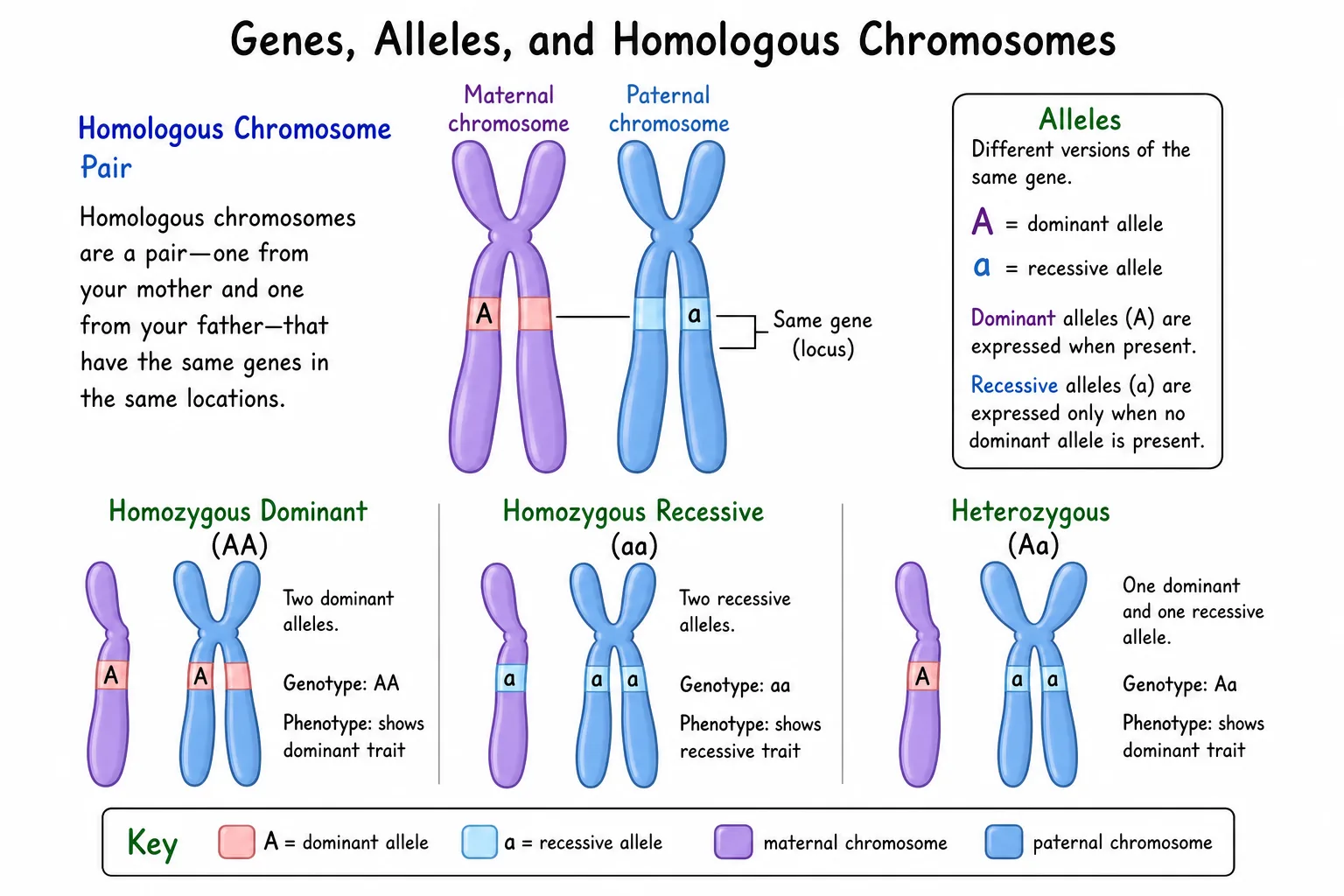
Alleles different versions of the same gene.
- Humans have two copies of each chromosome, so two alleles of each gene, one from each parent.
- For example one eye colour allele may code for brown eyes and the other for blue.
Zoom model
- Zoom model organism, cell, nucleus, chromosome, gene, DNA bases.
Section 2 of 9Haploid and diploid nuclei

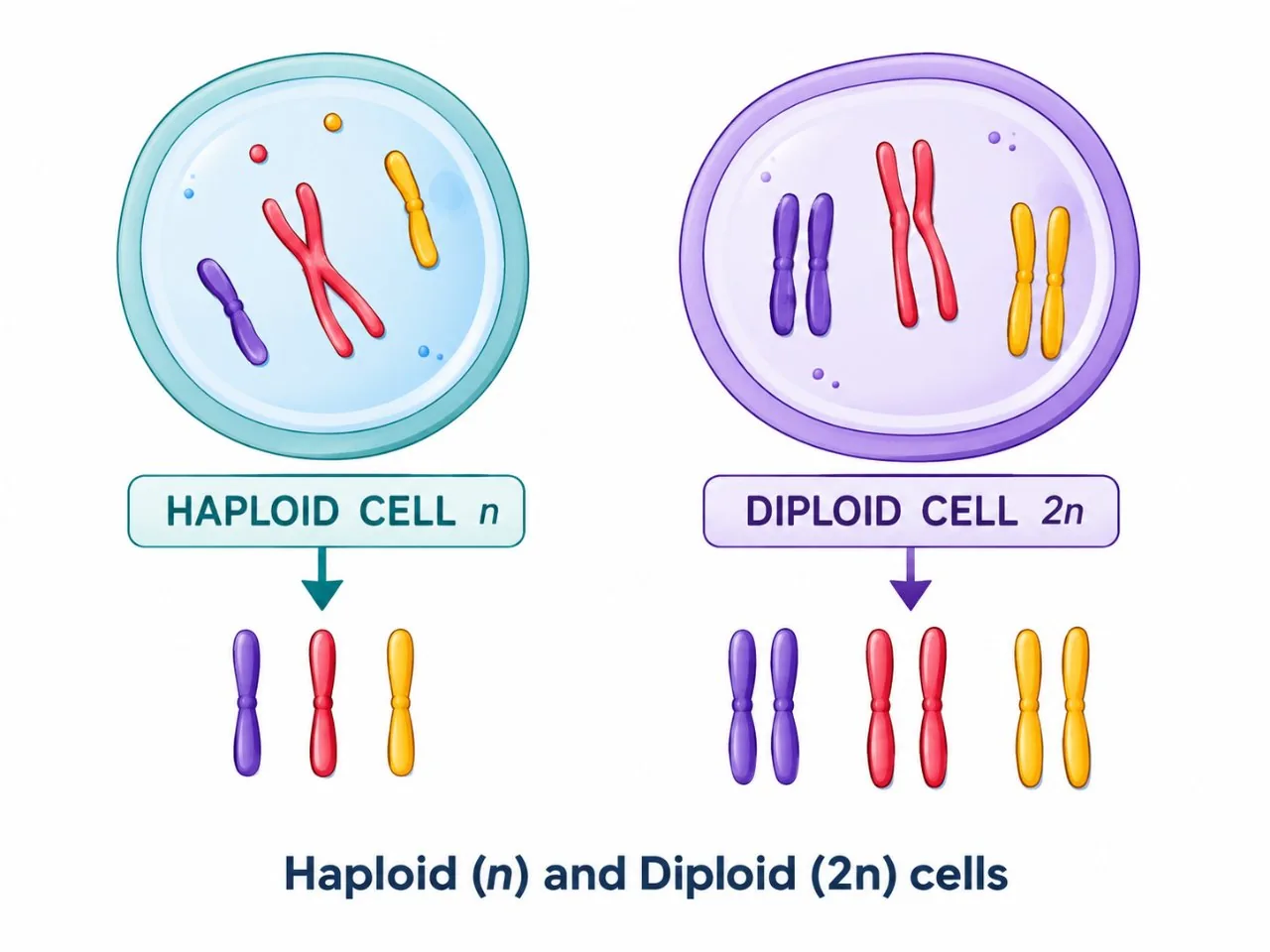
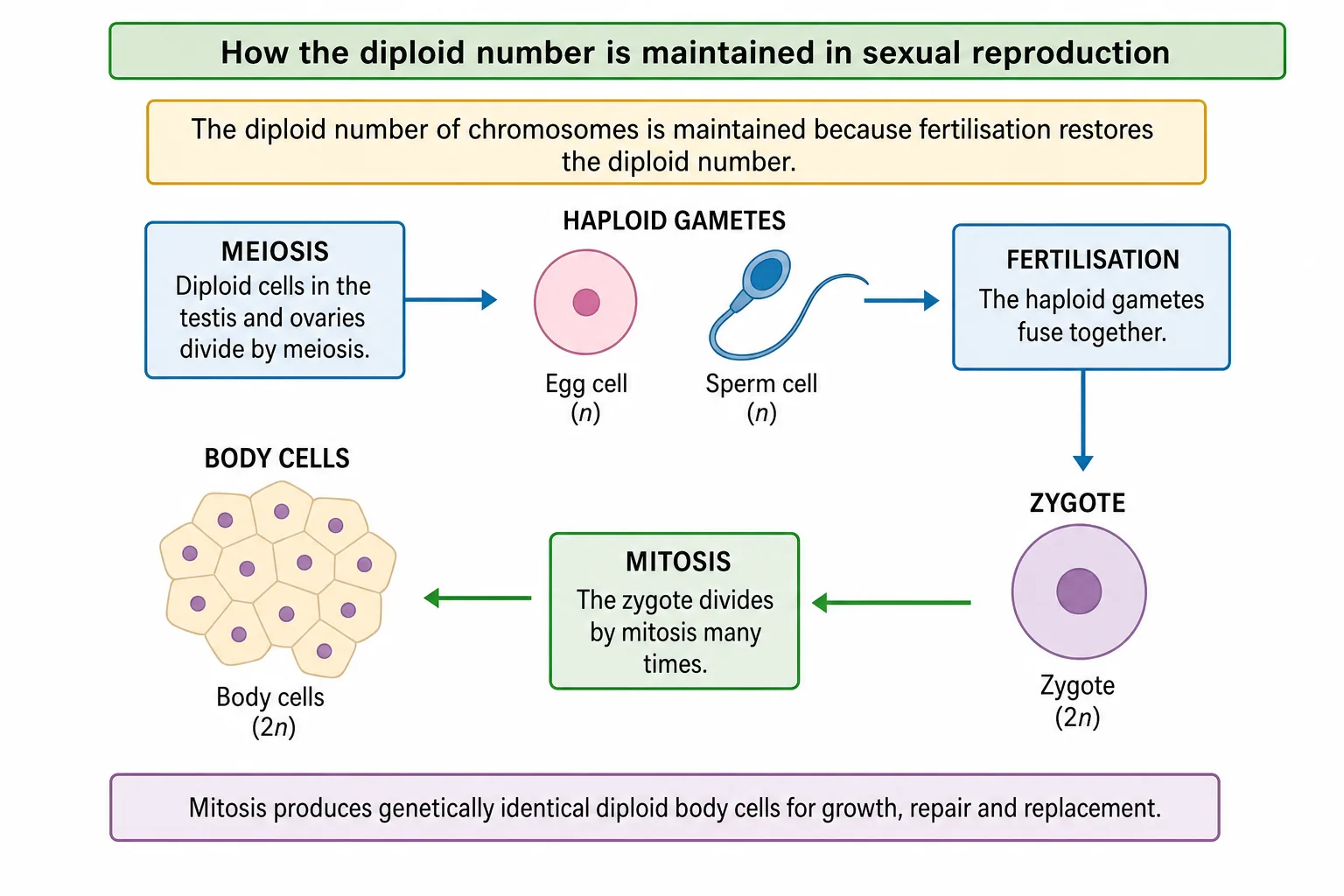
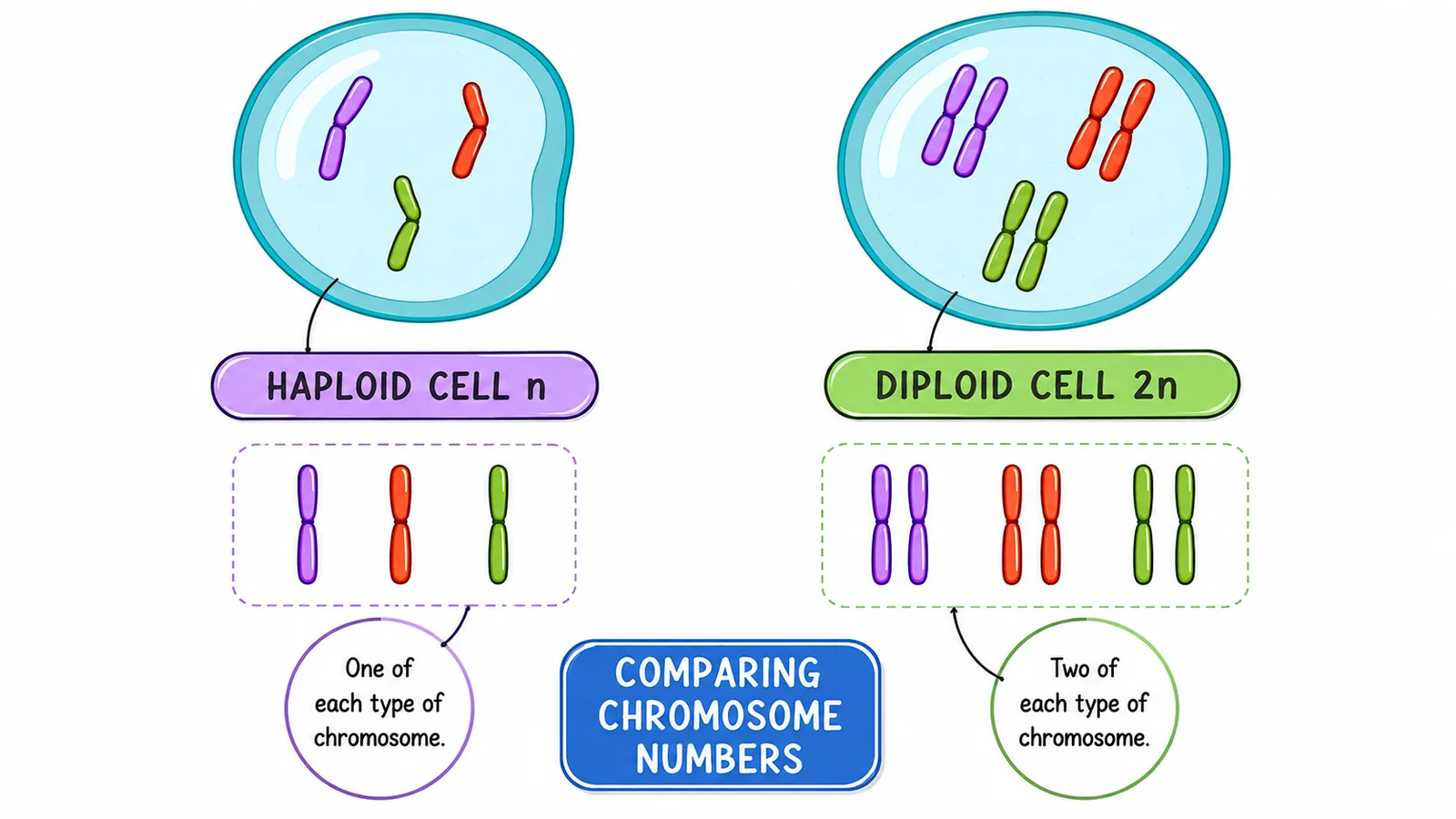

| Feature | Diploid (2n) | Haploid (n) |
|---|---|---|
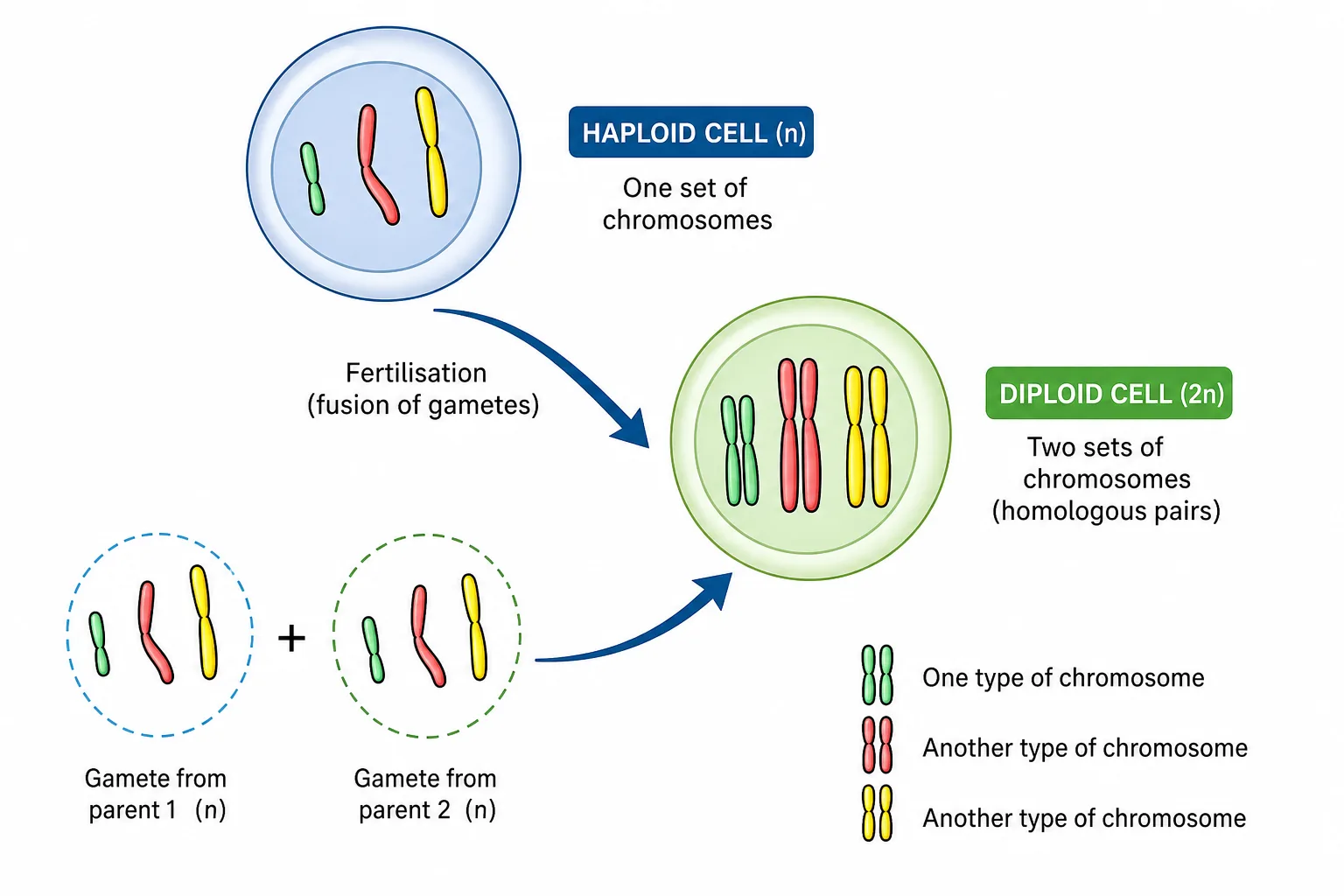
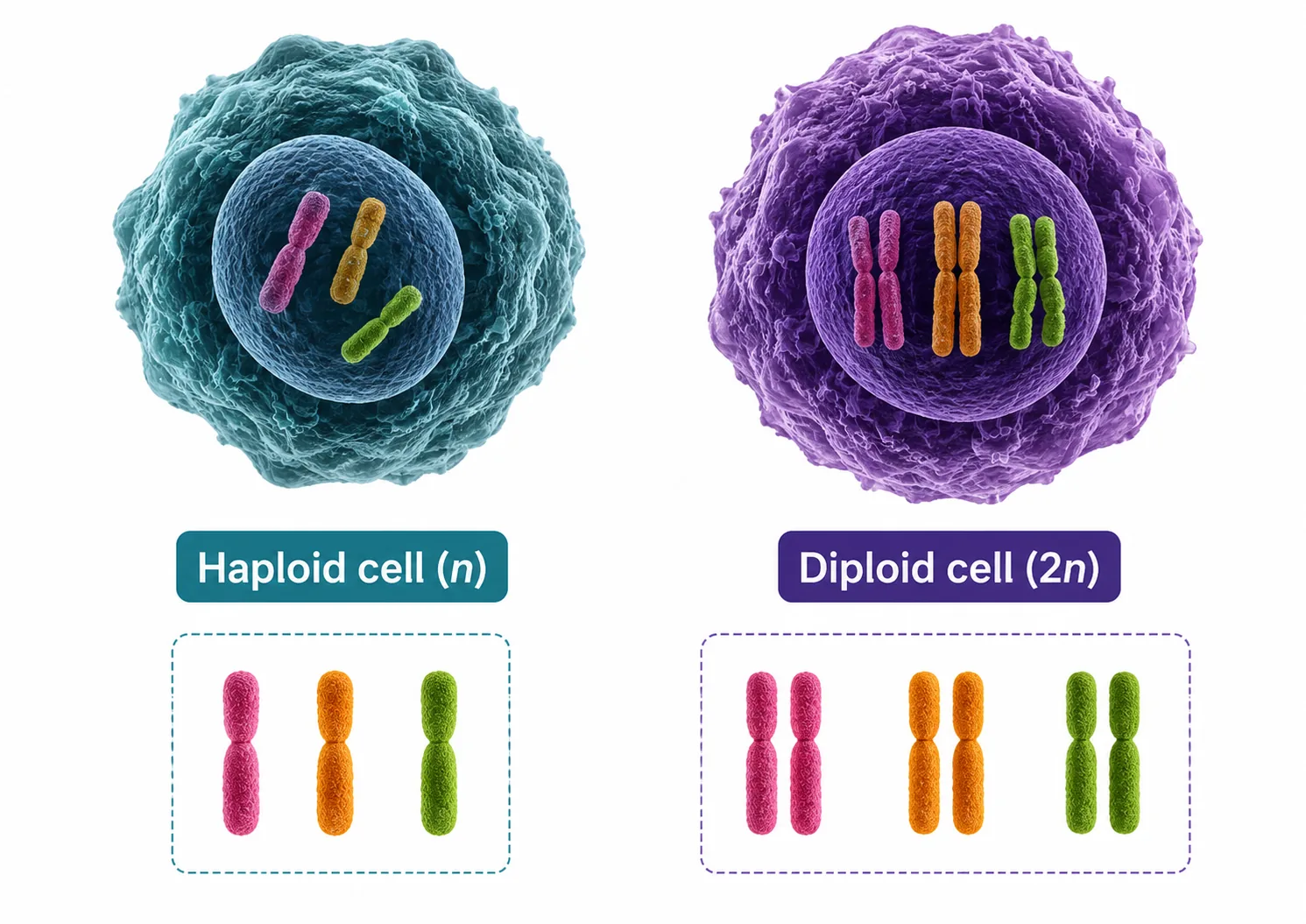
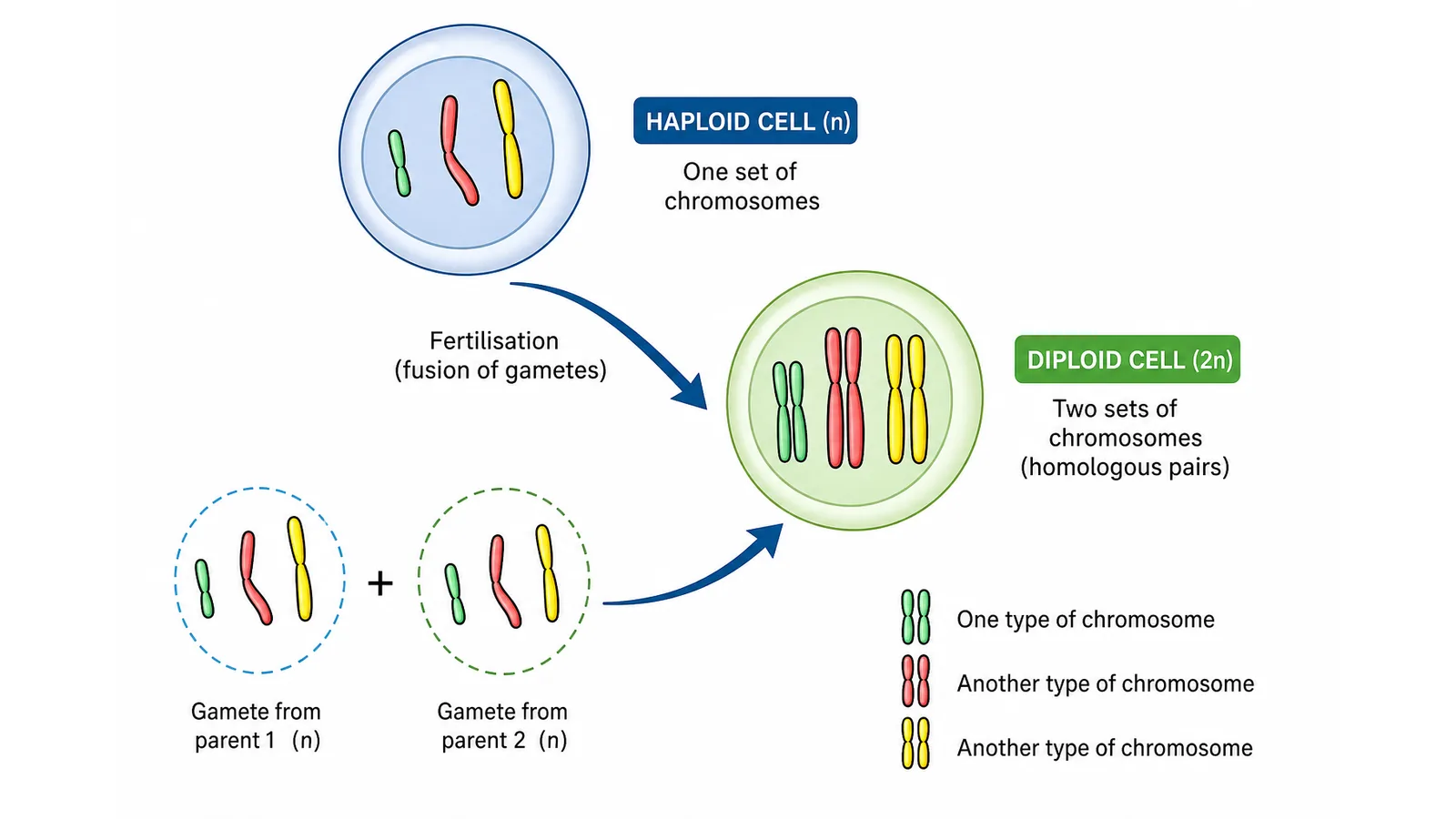
| Sets of chromosomes | Two (pairs) | One (unpaired) |
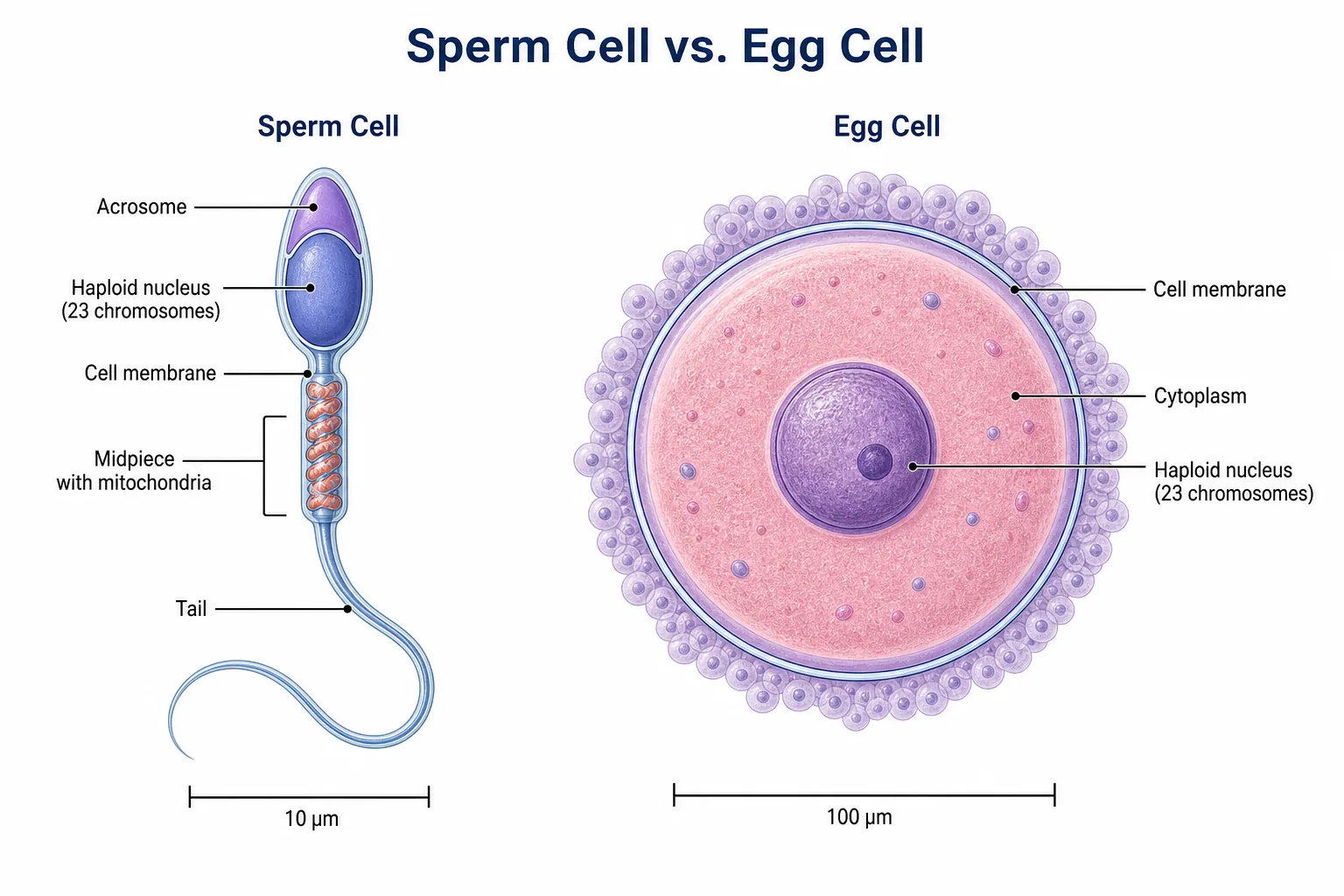
| Human number | 46 (23 pairs) | 23 |
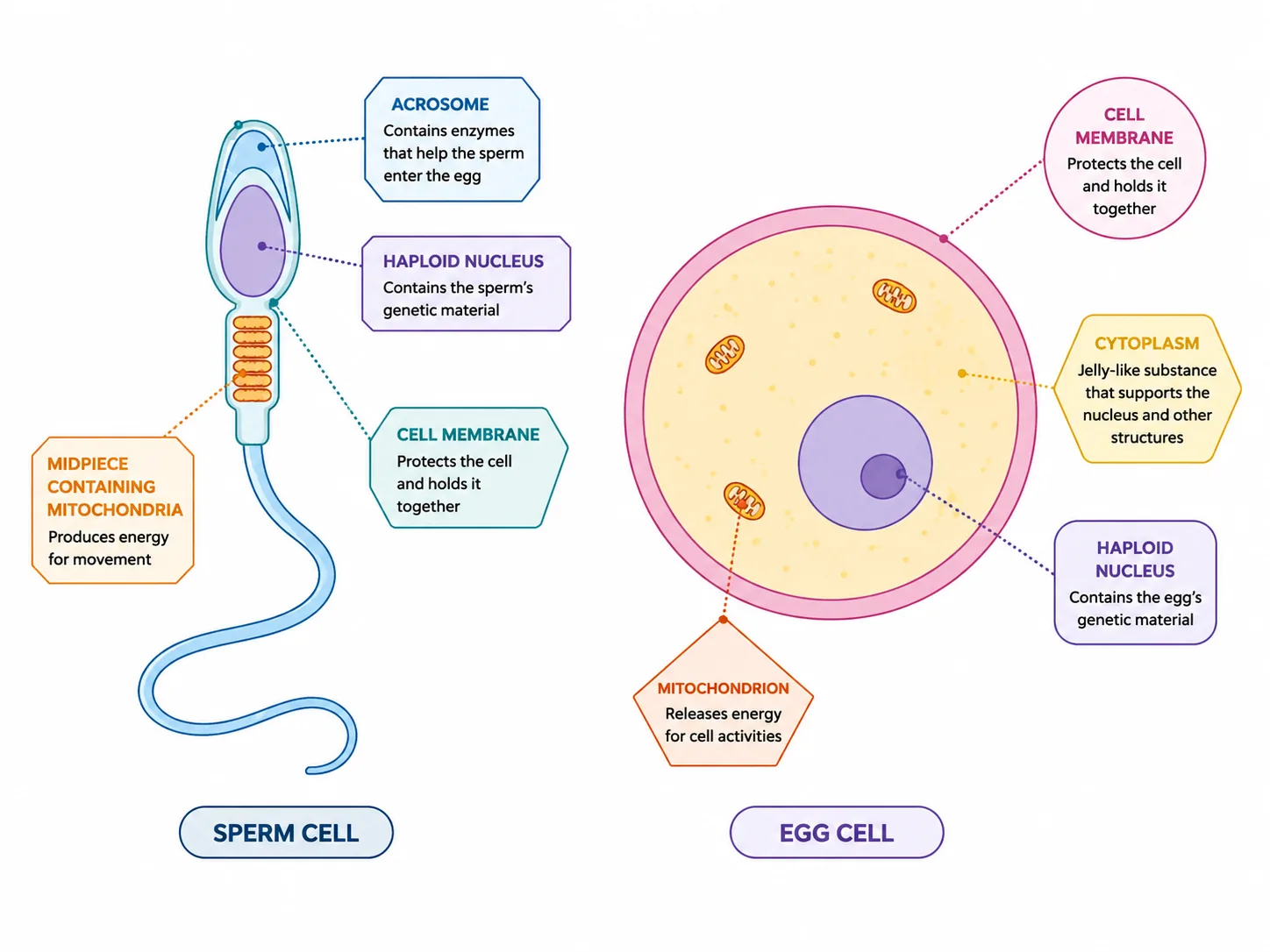
| Found in | Body cells and the zygote | Gametes |
Memory aid
- Memory aid haploid means half the normal number.
Other species have different chromosome numbers.
Section 3 of 9Inheritance of sex

Sex chromosomes
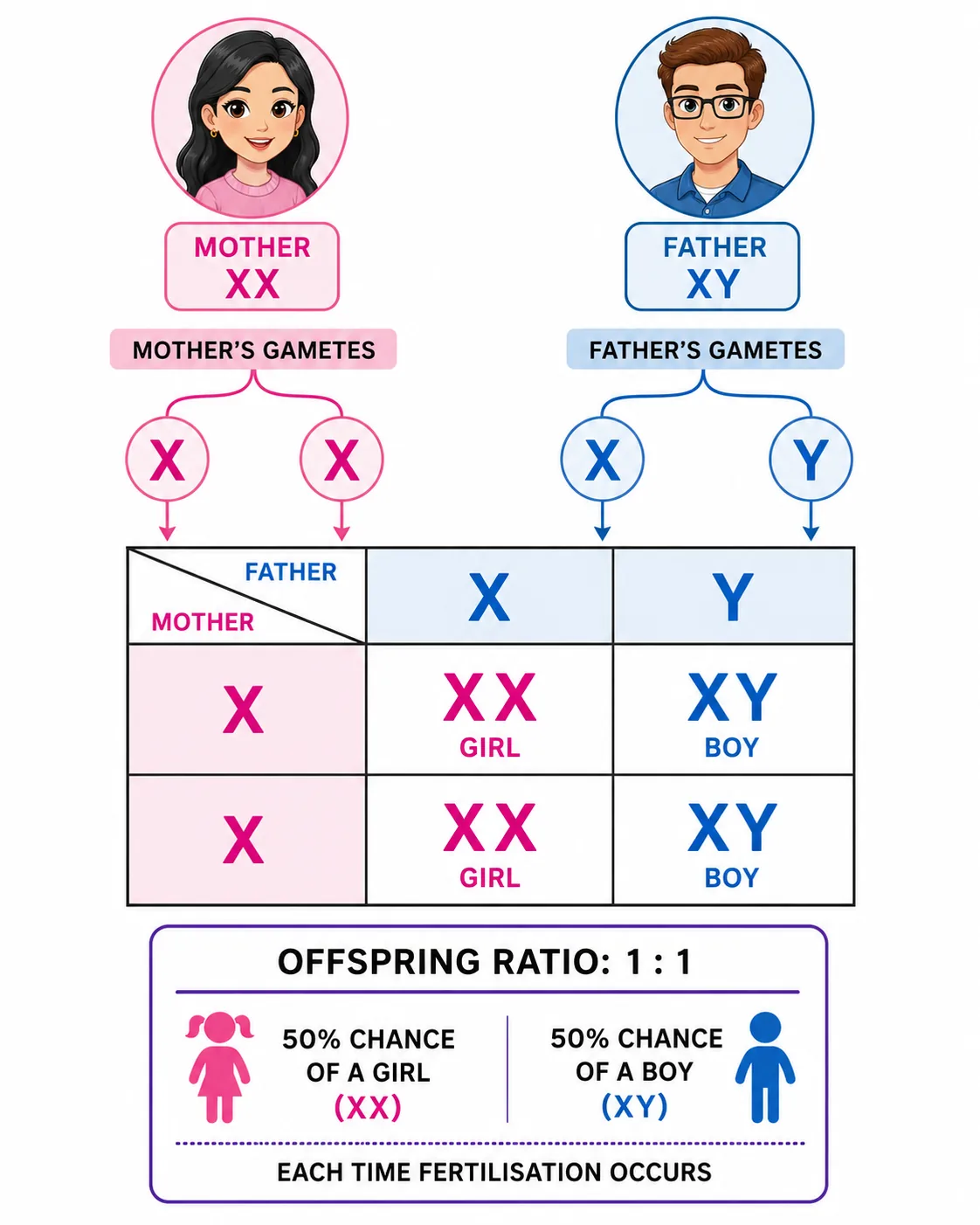
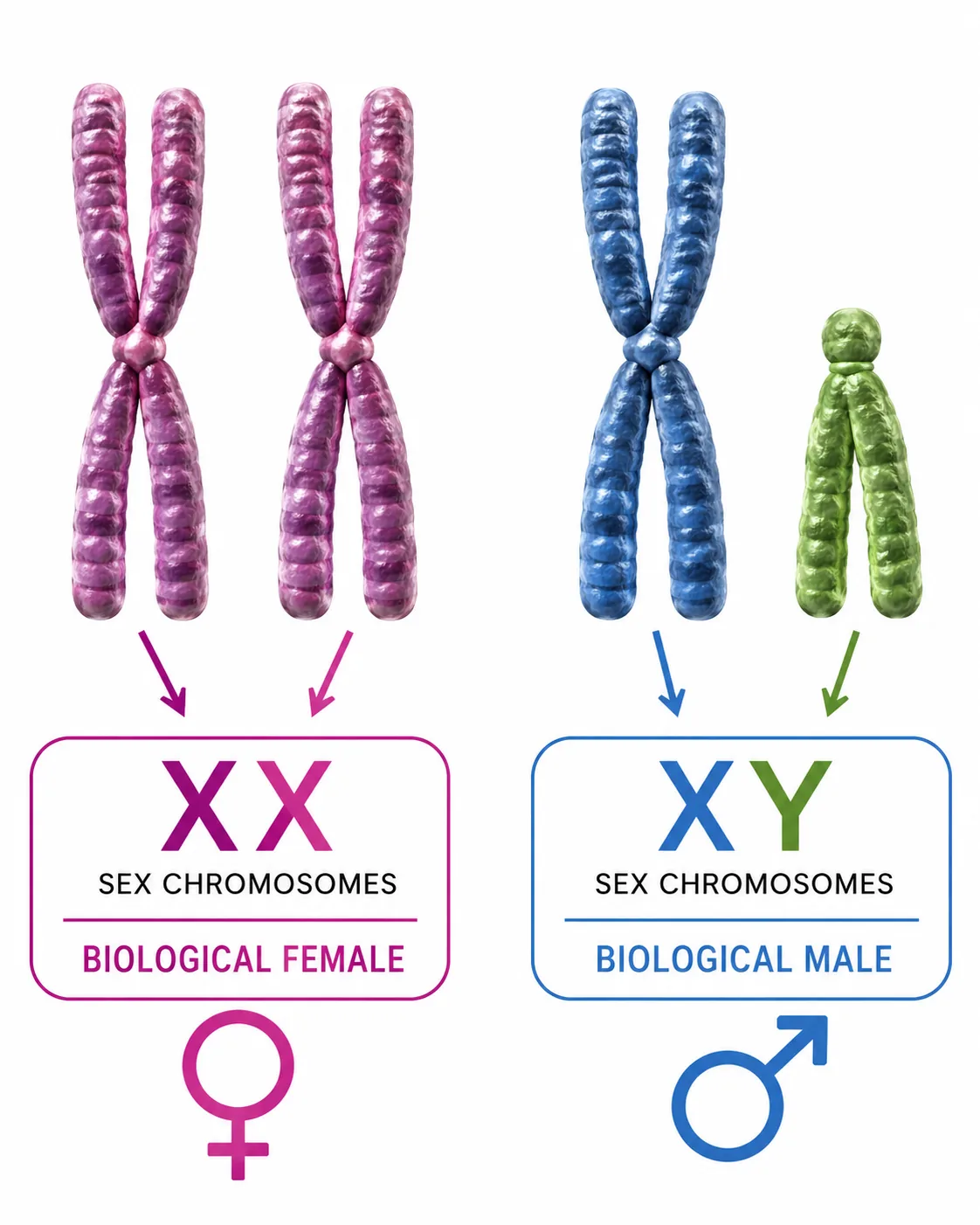
- Sex chromosomes sex is determined by a whole chromosome pair, XX in females and XY in males.
The father decides
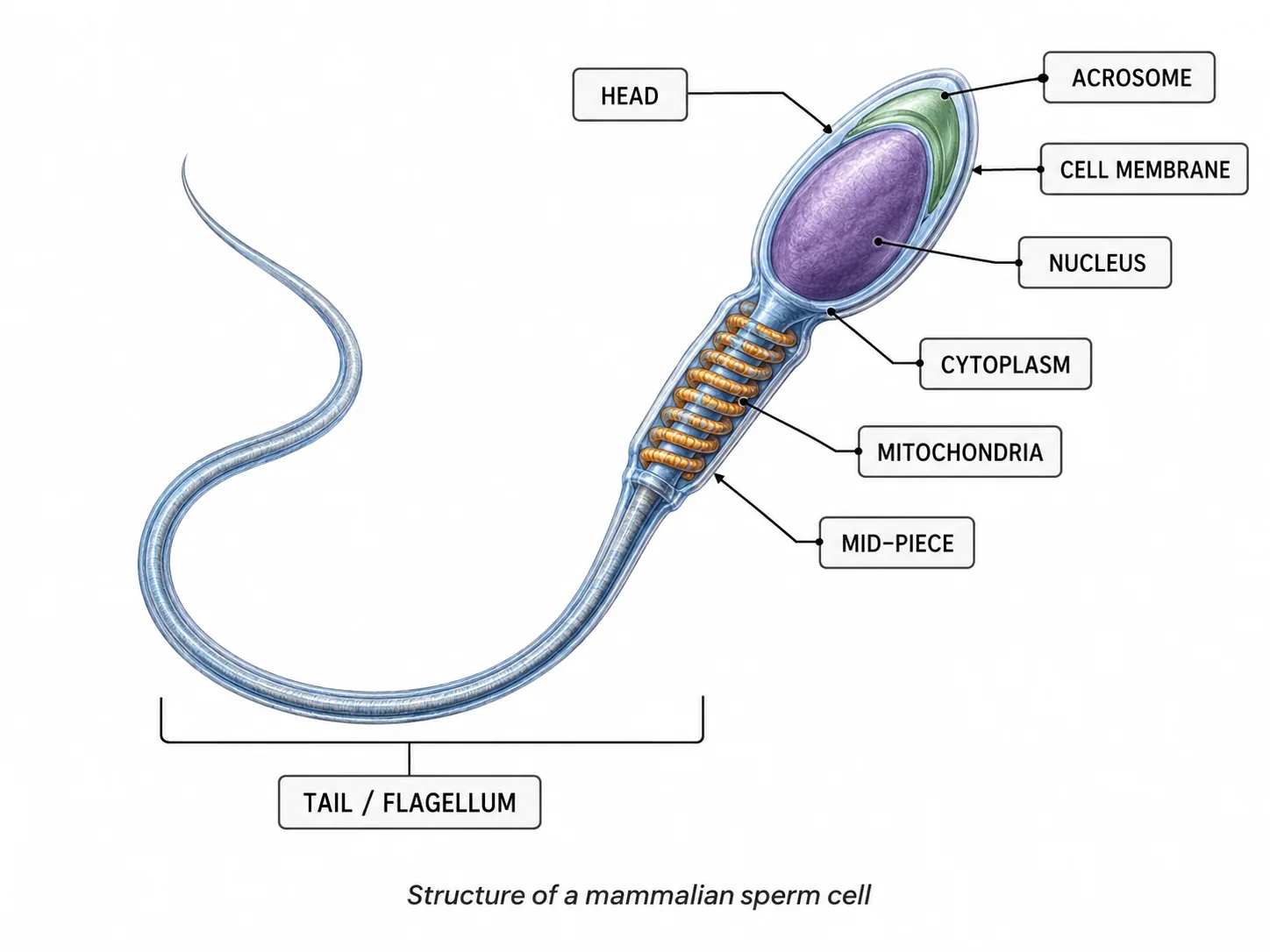
- The father decides only a father can pass on a Y chromosome.
Every egg carries X, and about half the sperm carry X and half carry Y.
Outcome
- Outcome an X sperm gives a girl (XX) and a Y sperm gives a boy (XY).
Punnett square
- XX × XY gives XX, XX, XY, XY, a 1 : 1 ratio.
Section 4 of 9From DNA base sequence to amino acid sequence







1Base sequence
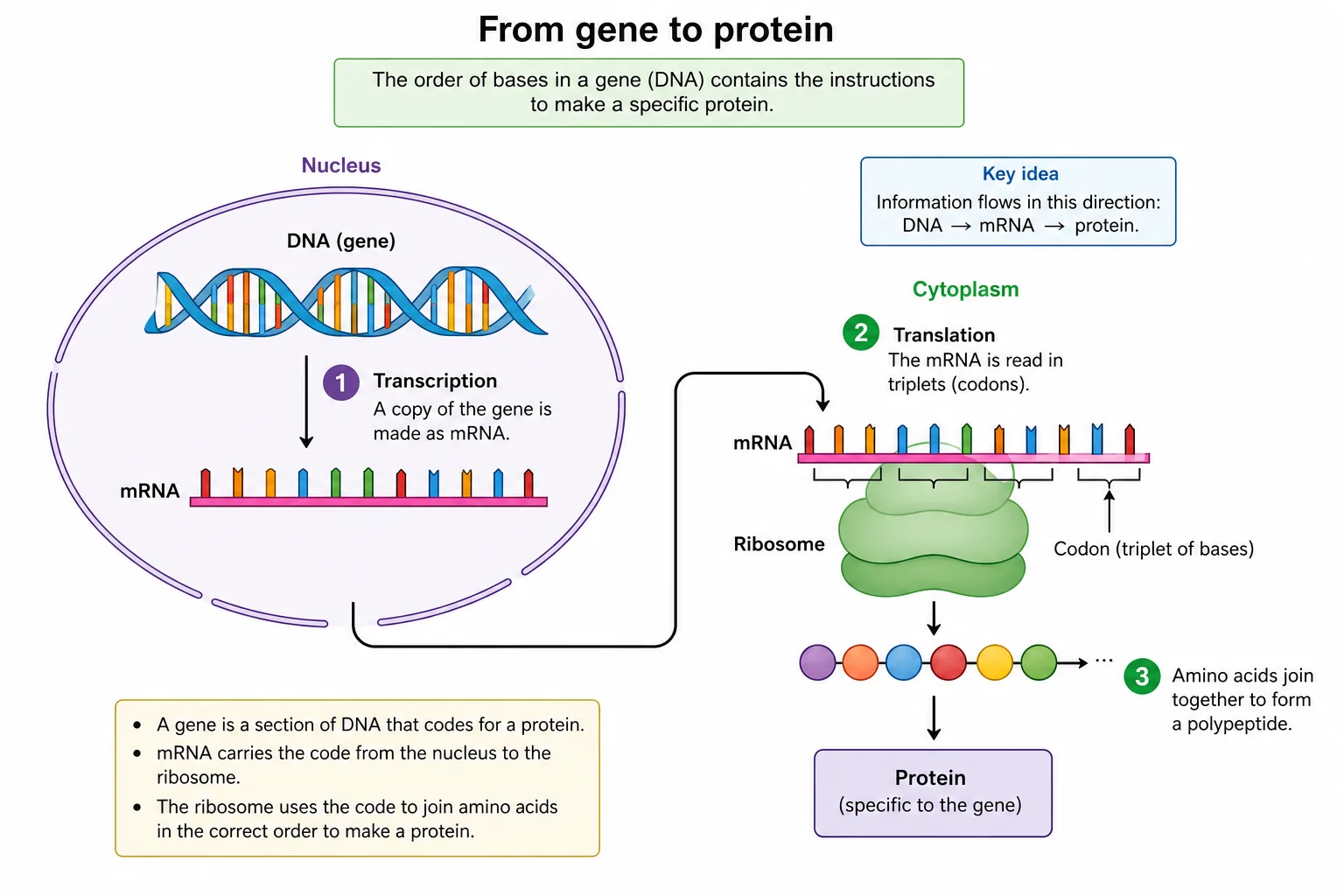
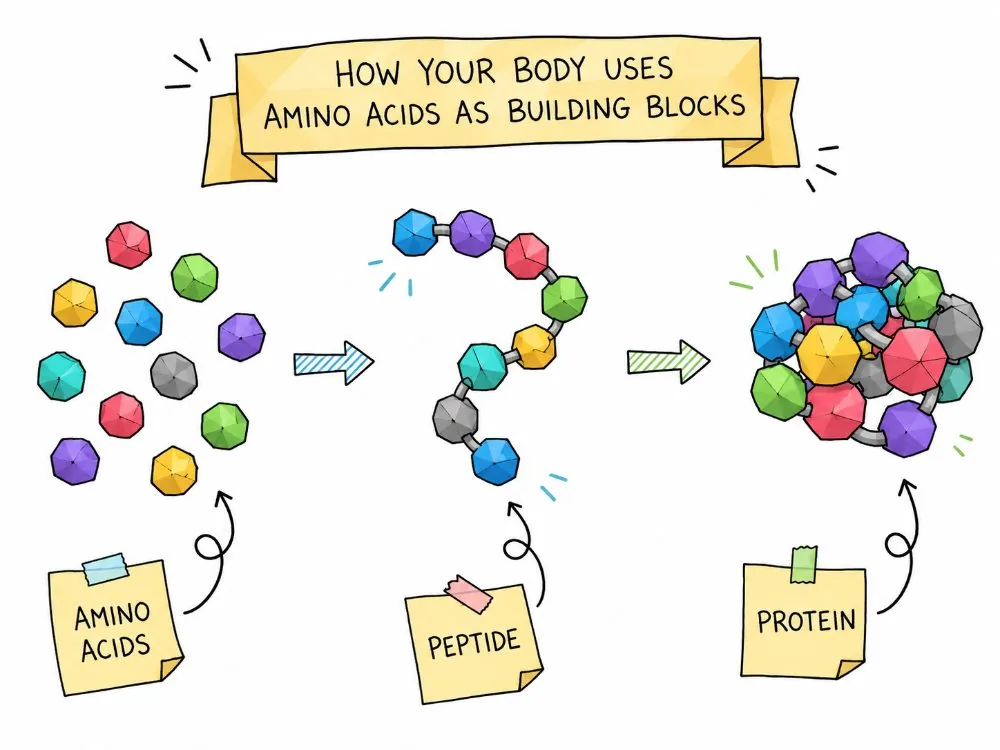
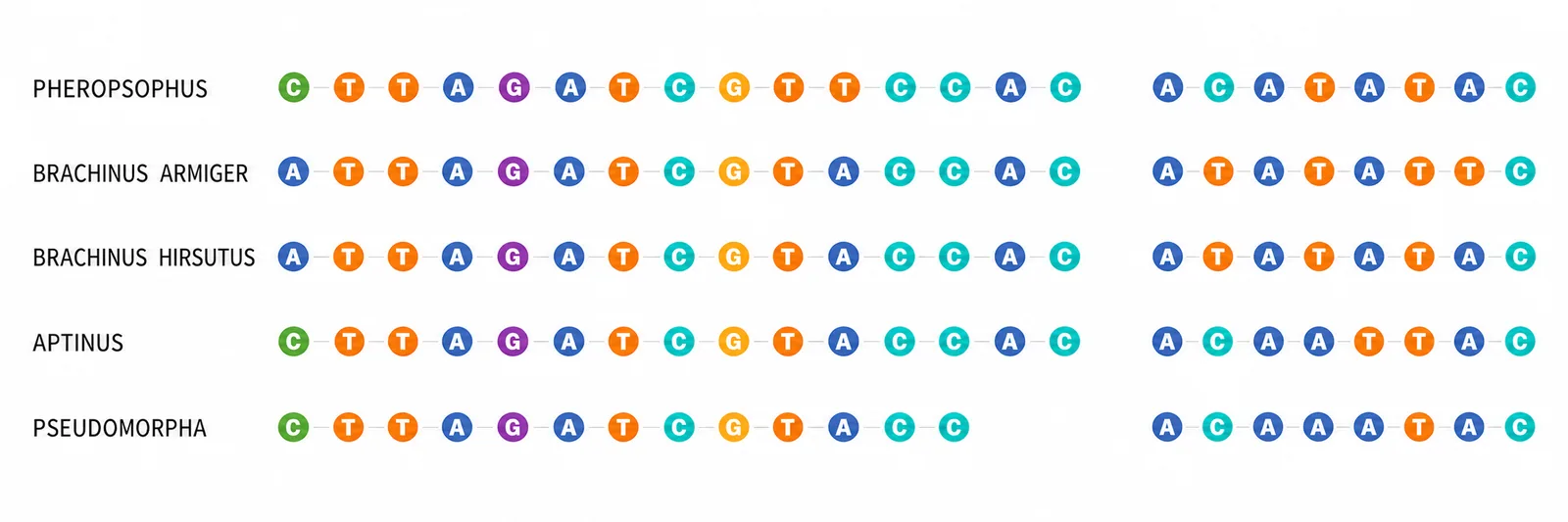
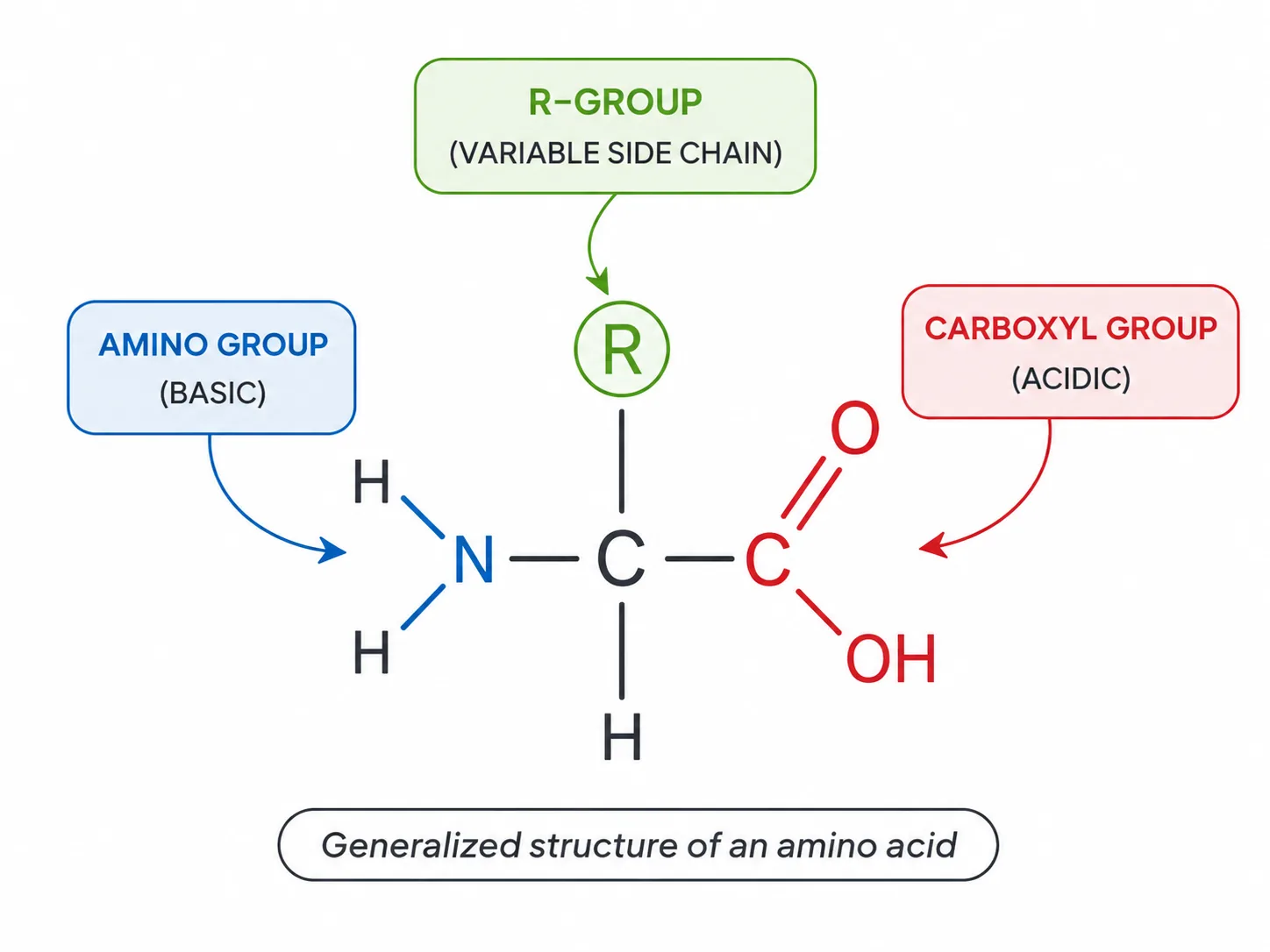
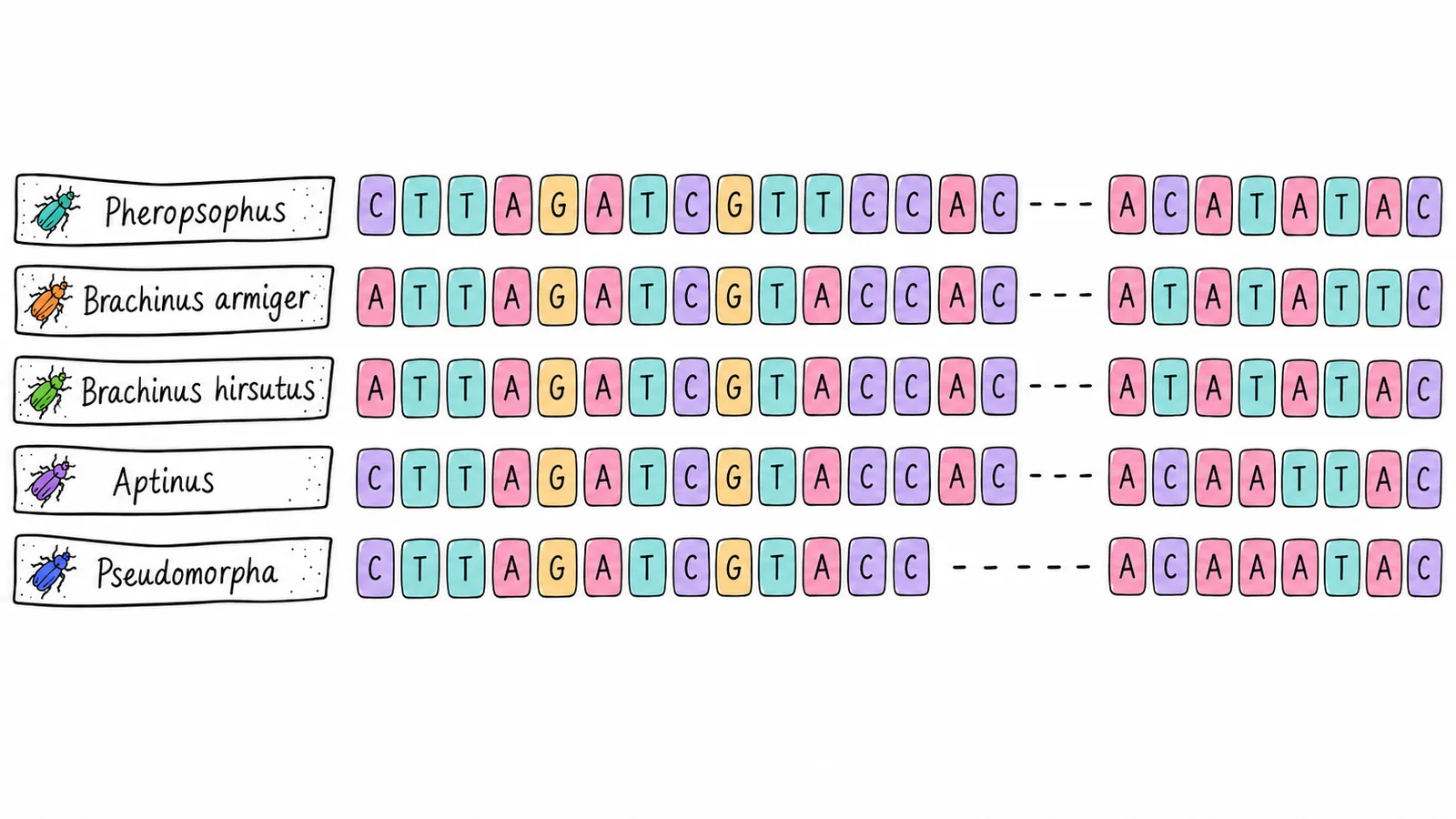
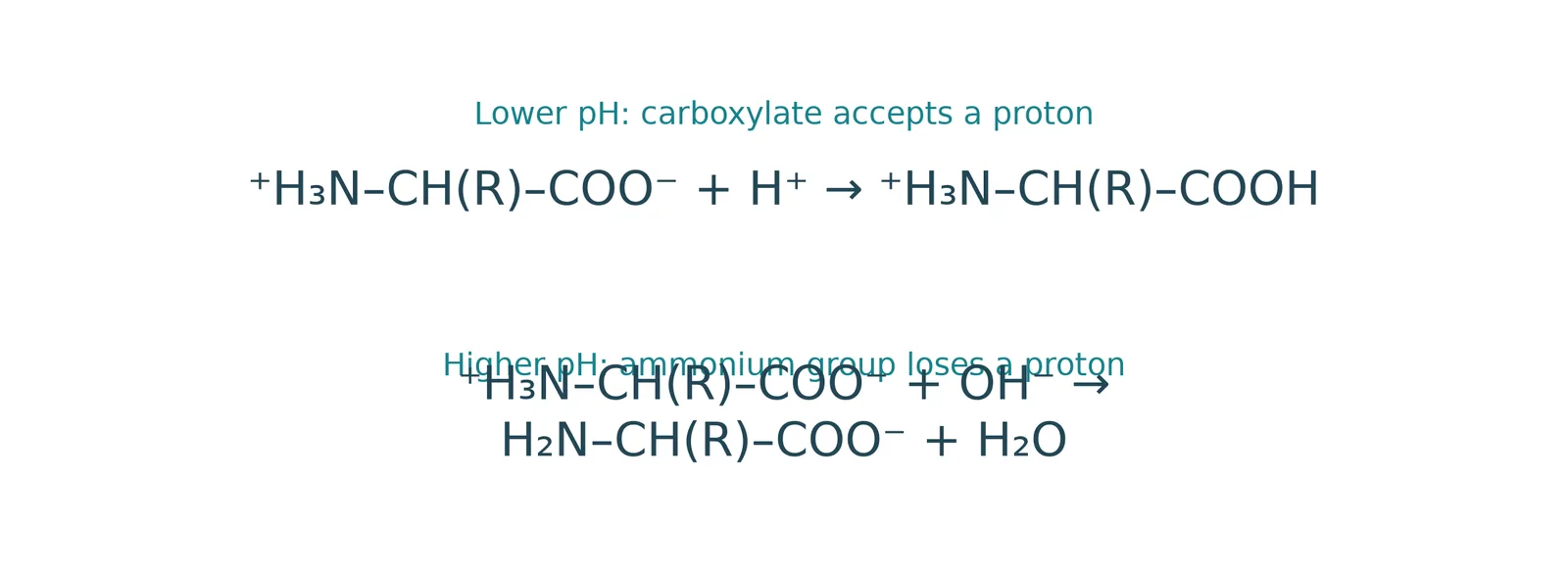
- Base sequence the sequence of bases in a gene determines the sequence of amino acids in a protein.
2Protein shape and function
- Protein shape and function different amino acid sequences give different shapes and functions.
3Transcription
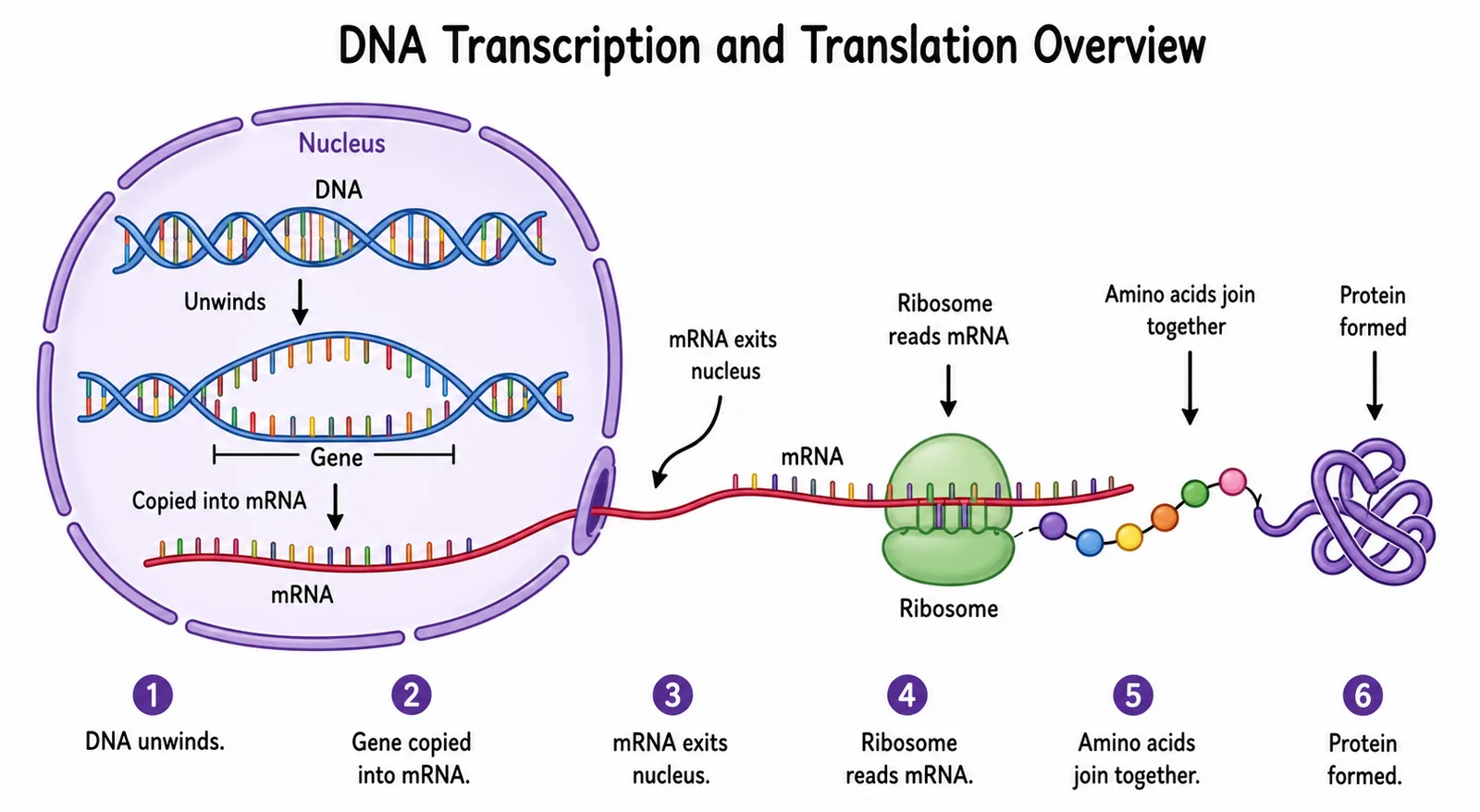
- Transcription the base code of the gene is rewritten as mRNA.
4Translation
- Translation the ribosome uses the mRNA sequence to join amino acids in order.
5Why mRNA
- DNA is too large to leave the nucleus through a nuclear pore.
6Triplet code
- Triplet code each group of three bases codes for one amino acid.
Section 5 of 9Making a protein
1
The DNA double helix unzips at the gene as hydrogen bonds between bases break.
2
Free RNA nucleotides pair with the template strand to build mRNA.
3
The mRNA leaves the nucleus and attaches to a ribosome.
4
The ribosome reads the mRNA in triplets (codons).
5
tRNA molecules, each carrying a specific amino acid, bring them to the matching codons.
6
The amino acids are joined in the order set by the codons.
7
The finished chain is released and folds into the final protein.
- RNA compared with DNA
- RNA is single-stranded, contains ribose and has uracil instead of thymine, so A pairs with U.
Section 6 of 9Which proteins are made
Gene expression
- Gene expression whether a gene is transcribed and translated in a particular cell.
Same genes
- Same genes all body cells contain the same genes but most are switched off in any one cell.
Needed proteins
- Needed proteins only genes whose proteins the cell needs are switched on.
Examples of proteins
- Examples of proteins enzymes, antibodies and receptors for neurotransmitters.
DNA controls cell function by controlling which proteins are made.
Section 7 of 9More from the specification
More from the specification
Gene Expression and Polypeptide Synthesis
- A gene is a sequence of DNA nucleotide bases that codes for a specific sequence of amino acids, determining the primary structure of functional proteins such as enzymes and haemoglobin.
Mitotic Division and Chromosome Replication
- Prior to nuclear division, DNA replicates to form sister chromatids joined at a centromere;
- spindle fibres then align and separate chromatids to ensure both daughter cells inherit identical diploid chromosome complements.
Meiosis and Gamete Haploidy
- Meiosis is a reductive nuclear division in diploid germ cells producing four genetically non-identical haploid gametes, each carrying half the parental chromosome number.
Dominant and Recessive Allele Expression
- An individual possessing a homozygous genotype carries identical alleles at a gene locus,
- whereas a heterozygous genotype expresses the dominant phenotype while masking the recessive allele.
Probability
- The chance that an offspring has a given genotype or phenotype.
Daughter cell
- Cell produced by cell division.
Blood group
- A phenotype set by alleles I-A, I-B and I-O.
Monohybrid inheritance
- Inheritance of one gene.
Mitosis
- Cell division producing genetically identical cells.
Recessive
- Expressed only when no dominant allele is present.
Dominant
- Expressed when present in the genotype.
Meiosis
- Reduction division giving four genetically different haploid cells.
Genotype
- The alleles an organism has.
Homozygous
- Having two identical alleles.
Phenotype
- The observable characteristic.
Heterozygous
- Having two different alleles.
Section 8 of 9Key terms




| Term | Meaning |
|---|---|
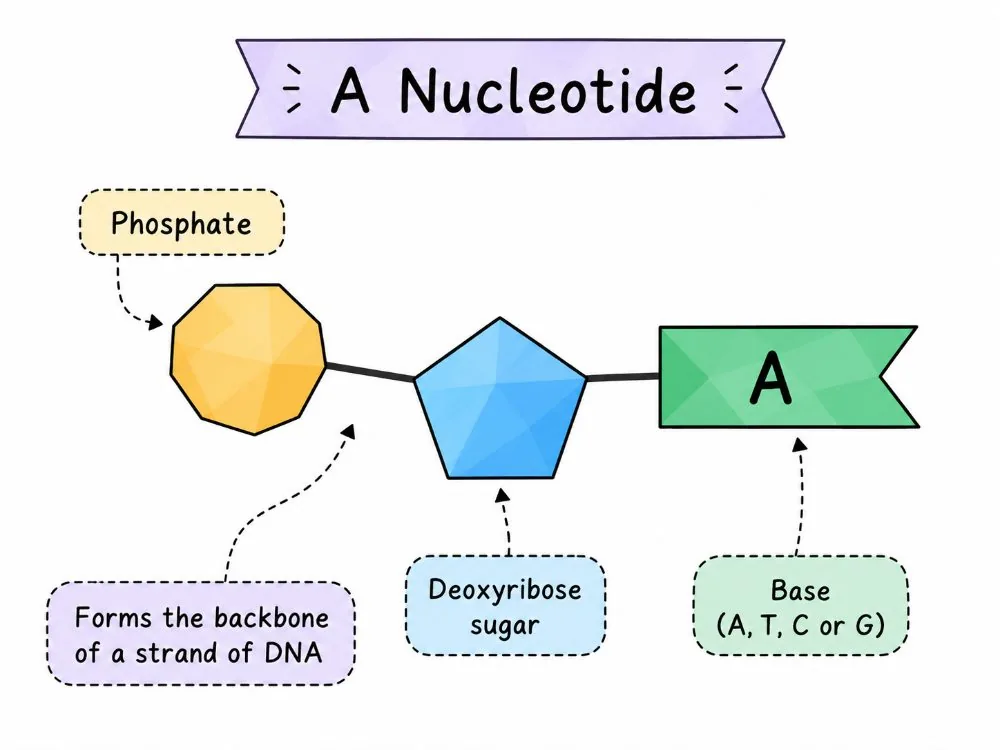
| Chromosome | A thread-like structure of DNA carrying genes. |
| Gene | A short length of DNA that codes for a protein. |
| Allele | A version of a gene. |
| Haploid | Having one set of chromosomes. |
| Diploid | Having two sets of chromosomes. |
| Transcription | Rewriting the DNA base code as mRNA. |
| Translation | Using the mRNA code to build a protein. |
| Gene expression | Whether a gene is switched on in a cell. |
Section 9 of 9Exam technique
1
Saying genes and alleles are the same — an allele is one version of a gene.
2
Saying the mother decides the sex of a child — every egg carries X and the sperm carries X or Y.
3
Saying haploid human cells have 46 chromosomes — they have 23.
4
Saying DNA leaves the nucleus to make proteins — a copy, mRNA, leaves.
5
Confusing base sequences with amino acid sequences — bases are in DNA and RNA, amino acids make proteins.