Section 1 of 8Natural Selection
Essential knowledge
What is variation?
Variation is the differences between individuals of the same species. It may be genetic (inherited), environmental (caused by surroundings, such as diet or sunlight) or a mixture of both.
Types of variation
Types of variation continuous variation shows a range of values (height, mass) and is plotted as a histogram, often giving a bell-shaped curve; it is influenced by many genes and the environment. Discontinuous variation has distinct groups (blood group) and is shown on a bar chart; it is caused by genes alone.
Variation in biology – sources
Variation in biology – sources genetic variation arises from mutation, meiosis (independent assortment), random fertilisation and sexual reproduction. Mutation creates new alleles; the chance increases with ionising radiation and certain chemicals. Sickle-cell anaemia is caused by a gene mutation.
Adaptive features
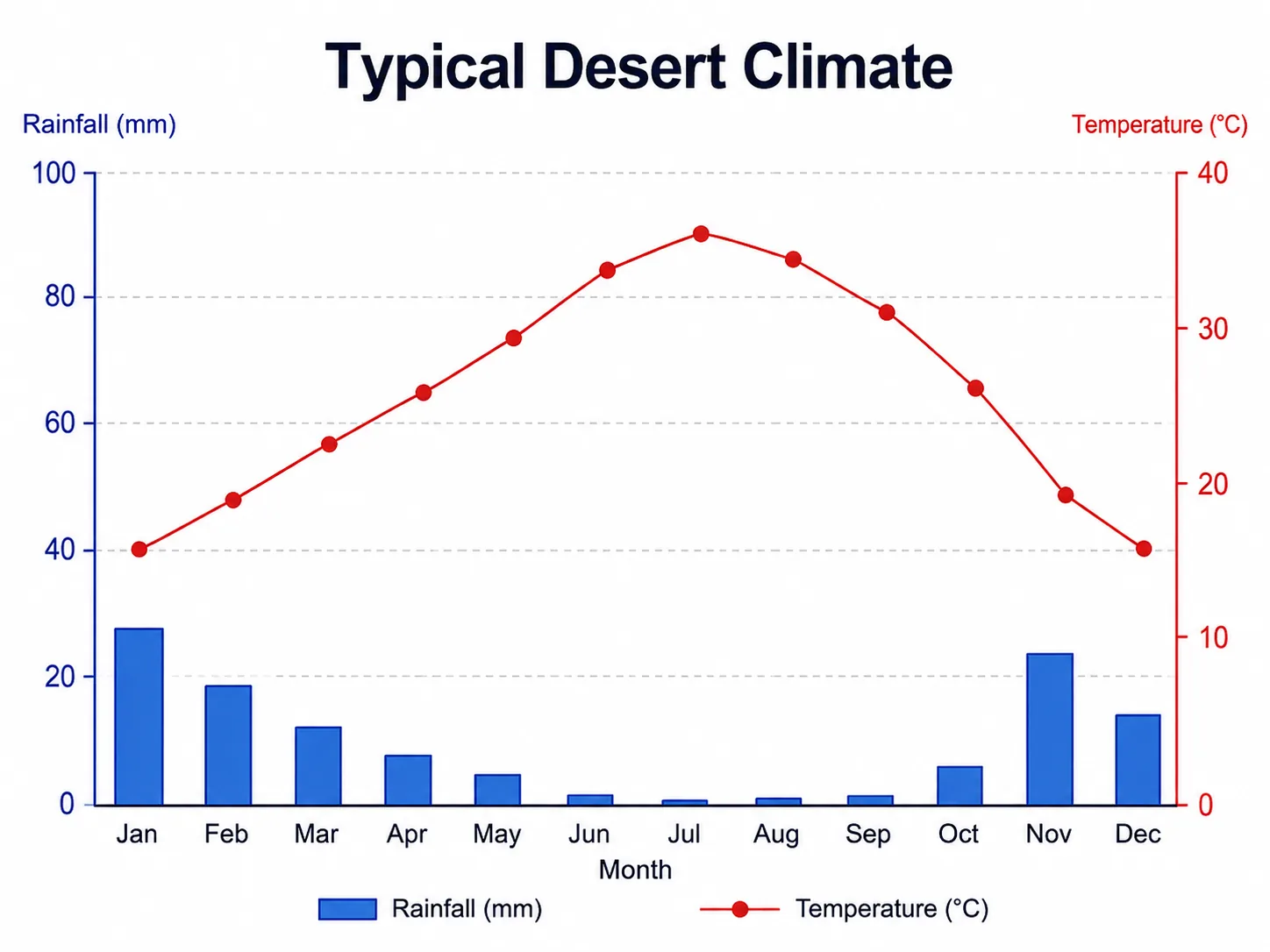
Adaptive features inherited features that help an organism survive and reproduce. Animals in cold climates have thick fur, a thick fat layer and a small surface area to volume ratio; desert animals have large ears to lose heat and concentrated urine.
Adaptive features continued (plants)
Adaptive features continued (plants) xerophytes reduce water loss using thick waxy cuticles, rolled leaves, sunken stomata, hairs trapping humid air, small leaves or spines, and extensive roots. Hydrophytes have large air spaces for buoyancy, stomata on the upper surface of floating leaves and little support tissue.
Natural selection
Natural selection there is variation; more offspring are produced than can survive; there is competition; the best-adapted survive and reproduce, passing on their alleles; the frequency of those alleles increases over generations.
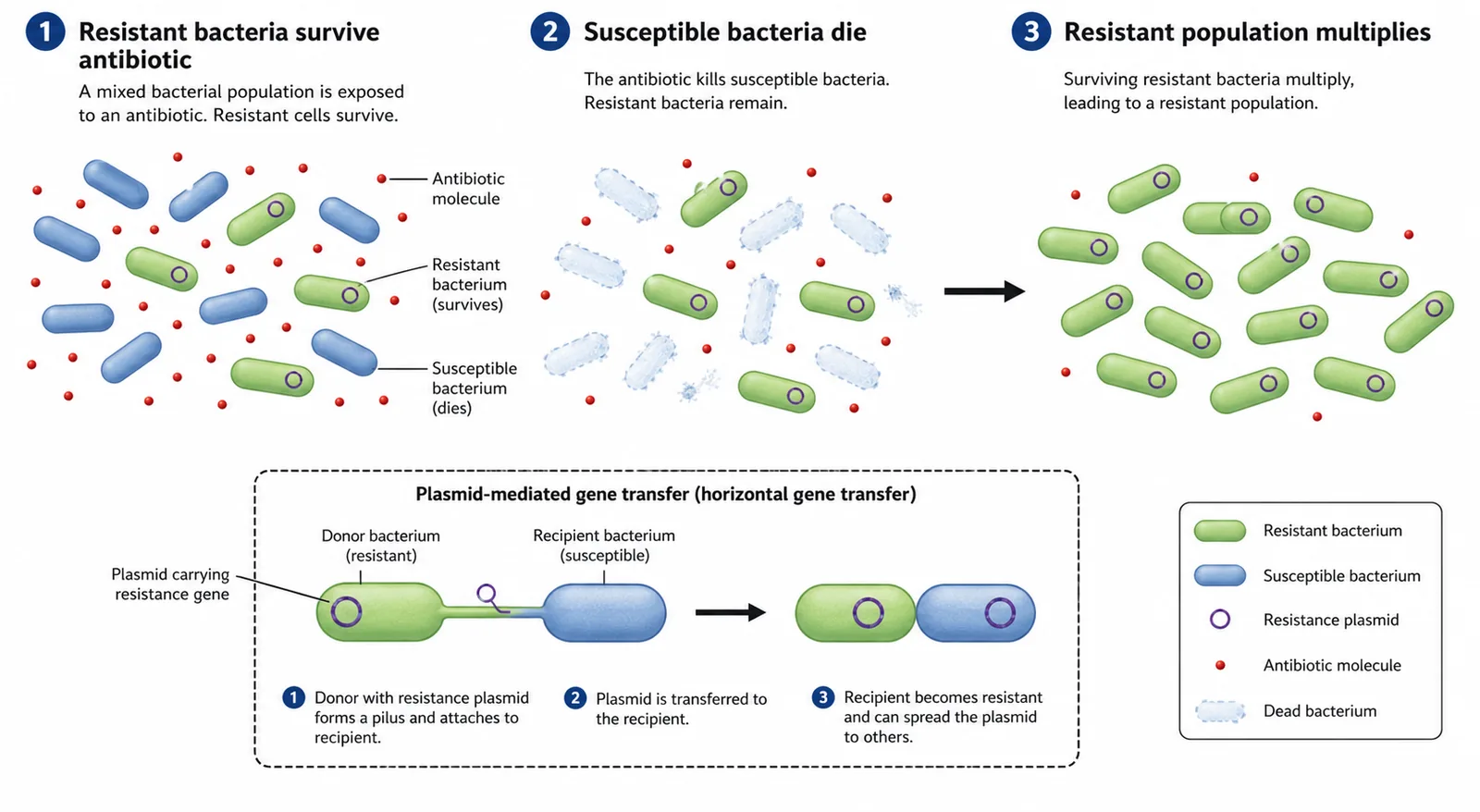
- Bacteria that develop antibiotic resistance by mutation survive antibiotic treatment and multiply, so resistant strains such as MRSA spread.
Artificial selection
Artificial selection humans choose individuals with desired features, breed them, select the best offspring and repeat over many generations. Examples: cows with high milk yield, disease-resistant crops, dogs with a gentle nature.
Evolution
Evolution is the change in adaptive features of a population over time as a result of natural selection. If the environment stays the same, selection favours existing features; if it changes, different alleles are favoured.
Effects of mutation
Most mutations have little or no effect on the phenotype; a few are harmful (sickle-cell anaemia) and a very few are beneficial. Ionising radiation, UV light and tar in tobacco smoke raise mutation rates and can cause cancer.
Xerophyte water storage
Many xerophytes have thick, fleshy stems or leaves with cells that store water, and a shiny cuticle that reflects heat.
Section 2 of 8Process & sequence
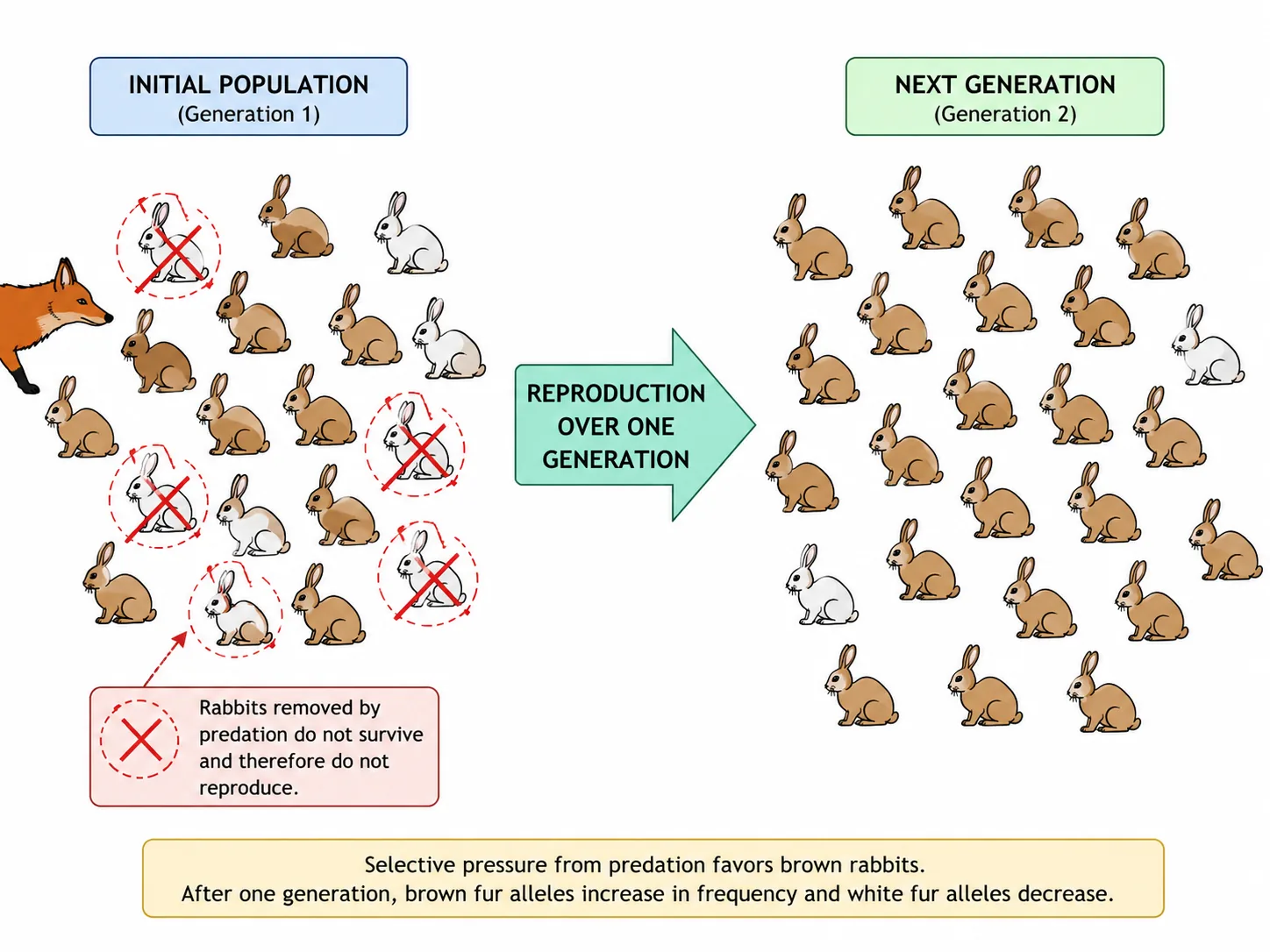
- There is variation within a population, partly due to mutation and sexual reproduction.
- Organisms produce more offspring than the environment can support.
- There is a struggle for survival
- competition for food, mates, space;
- predation and disease.
- competition for food, mates, space;
- Individuals with advantageous adaptive features are more likely to survive.
- They reproduce and pass on their alleles to offspring.
- Over many generations, the frequency of advantageous alleles in the population increases.
Natural selectionwrite these steps in this order; each step is a marking point.
- Variation in the population
- Overproduction of offspring
- Competition for resources
- Best adapted survive
- They reproduce and pass alleles
- Allele frequency changes
Section 3 of 8Compare
| Feature | Continuous | Discontinuous |
|---|---|---|
| Phenotypes | Range between extremes | Distinct categories |
| Cause | Genes and environment | Genes only (usually one or few) |
| Graph | Histogram / normal distribution curve | Bar chart |
| Examples | Height, mass, leaf length | Blood group, tongue rolling, seed shape |
| Feature | Natural selection | Artificial selection |
|---|---|---|
| Who selects | The environment | Humans |
| Features selected | Those that aid survival and reproduction | Those useful or desirable to humans |
| Speed | Usually very slow | Faster |
| Examples | Antibiotic-resistant bacteria | High-yield wheat, high milk-yield cows |
Section 4 of 8Worked examples
1Explain how a population of bacteria can become resistant to an antibiotic.
- A random mutation gives one bacterium resistance.
- When the antibiotic is used, non-resistant bacteria are killed but the resistant one survives.
- It reproduces by binary fission, passing on the resistance allele, so the resistant population grows.
- Overuse of antibiotics or not finishing the course increases this selection.
2Suggest why a histogram of human heights forms a bell-shaped curve.
- Height shows continuous variation controlled by many genes plus environmental factors such as diet.
- Most people have intermediate combinations, so most heights are near the mean with fewer at each extreme.
Section 5 of 8Keep going
Variation & Natural Selection IGCSE Biology 0610: what to do next
These Variation & Natural Selection IGCSE Biology 0610 notes covered the key ideas, worked examples and exam technique for this topic. Check your Variation & Natural Selection IGCSE Biology 0610 understanding with the practice questions below, then reread any Variation & Natural Selection IGCSE Biology 0610 point you were unsure about before moving on.
Variation & Natural Selection IGCSE Biology 0610: revision checklist
- Revise the main Variation & Natural Selection IGCSE Biology 0610 definitions until you can write them from memory.
- Practise Variation & Natural Selection IGCSE Biology 0610 exam questions under timed conditions.
- Practice: Variation & Natural Selection IGCSE Biology 0610 practice questions
- Previous lesson: 5.2 Inheritance, Genes & Cell Division — Notes
- Next lesson: 6.1 Energy & Feeding Relationships — Notes
- Course: Cambridge IGCSE Biology 0610 — all units
- Official syllabus: Cambridge IGCSE Biology 0610 syllabus
Section 6 of 8Key terms
Section 7 of 8Command terms
Command terms
State / Name
Give a short answer only; no explanation is needed (1 mark = 1 fact).
Define
Give the precise meaning. Learn the syllabus definitions word-for-word: every keyword in the definition is a marking point.
Describe
Say what happens / what the data show, with key features and figures. Do not give reasons.
Explain
Give reasonswhat happens AND why/how, linked with “because”, “so”, “therefore”.
Suggest
Apply knowledge to an unfamiliar situation; any sensible, scientifically-based answer can score.
Compare
Give similarities AND differences, each as a direct comparison (“X is … whereas Y is …”).
Outline
Set out the main points briefly.
Calculate
Work out from given facts; show working, give the unit and the requested significant figures.
Identify
Name/select from given information.
Predict
Give an expected result without a full justification.
Evaluate
Judge the importance or quality of the evidence/method, with reasons.
Section 8 of 8Exam technique
Keywords the mark scheme looks for in this lesson
Keywords the mark scheme looks for in this lesson
Variation · Continuous variation · Discontinuous variation · Mutation · Adaptive feature · Natural selection · Adaptation · Selective breeding · Xerophyte · Hydrophyte
Learn each definition in the Key words tab exactly; a missing keyword in a definition usually loses the mark.
How to get full marks (examiner guidance)
How to get full marks (examiner guidance)
Use the exact scientific term
“osmosis” must mention a partially permeable membrane and water potential gradient; “diffusion” must mention net movement down a concentration gradient.
Write “rate of … increases”, not “… increases” (e.g. rate of diffusion, rate of photosynthesis).
Say “concentration gradient”, never just “gradient”.
Name the type
“aerobic/anaerobic respiration”, not just “respiration”; respiration releases energy — never “produces/creates energy”.
Enzymes are not “killed” and are not “used up”
Enzymes are not “killed” and are not “used up” they are denatured (active site changes shape) at high temperature/extreme pH; low temperature only reduces kinetic energy.
Antibodies have a shape complementary to the antigen — not “the same shape”.
Particle/ion answers
Particle/ion answers say “particles/molecules/ions”, not “it”; give units with every numerical answer and use the significant figures asked for.
Compare = a similarity AND a difference; describe = what happens; explain = why it happens.
Repeats let you identify anomalies and calculate a mean — they do not make an experiment “valid”.