Section 1 of 6What is a covalent bond?


Sharing electrons
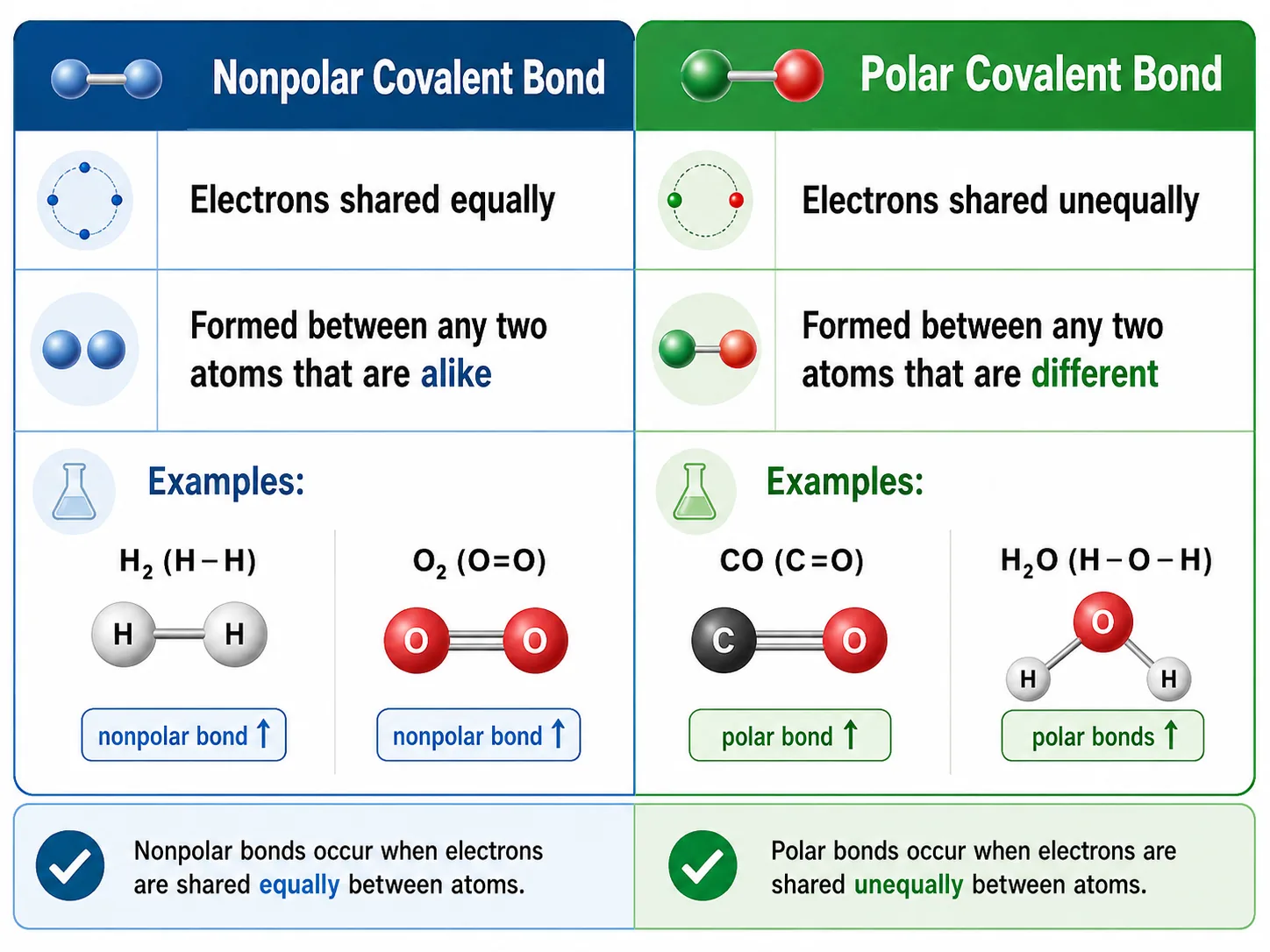
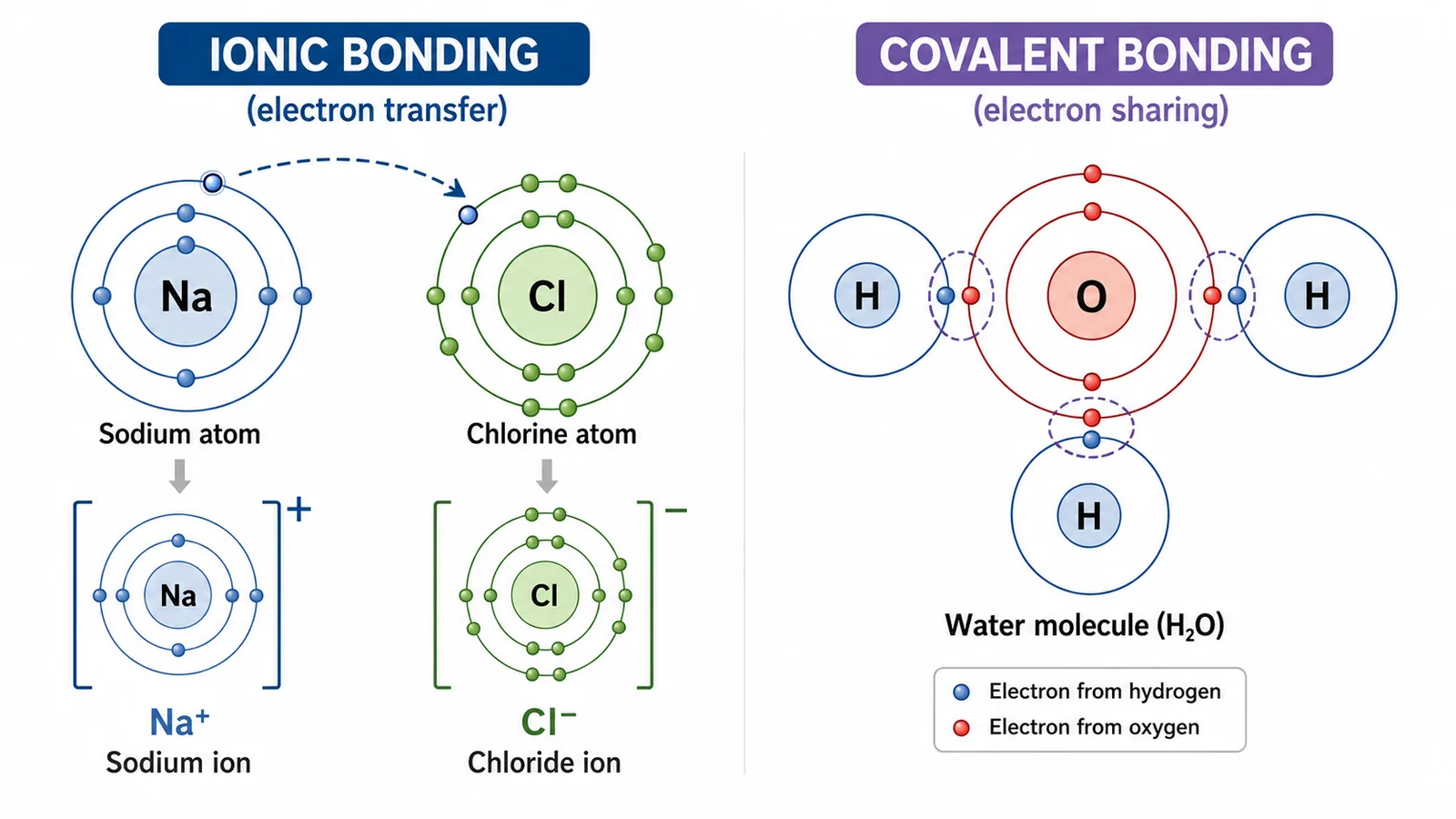
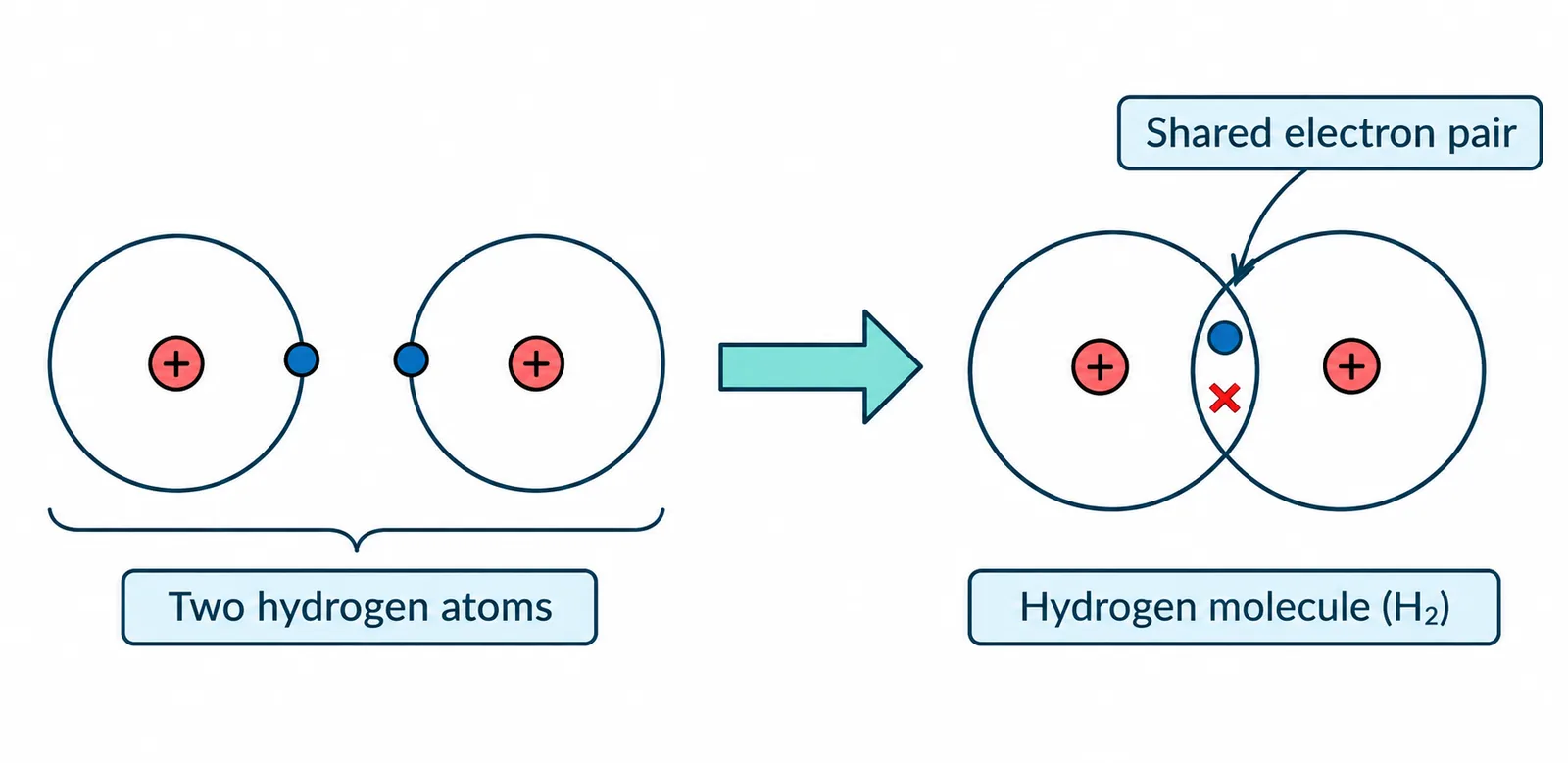
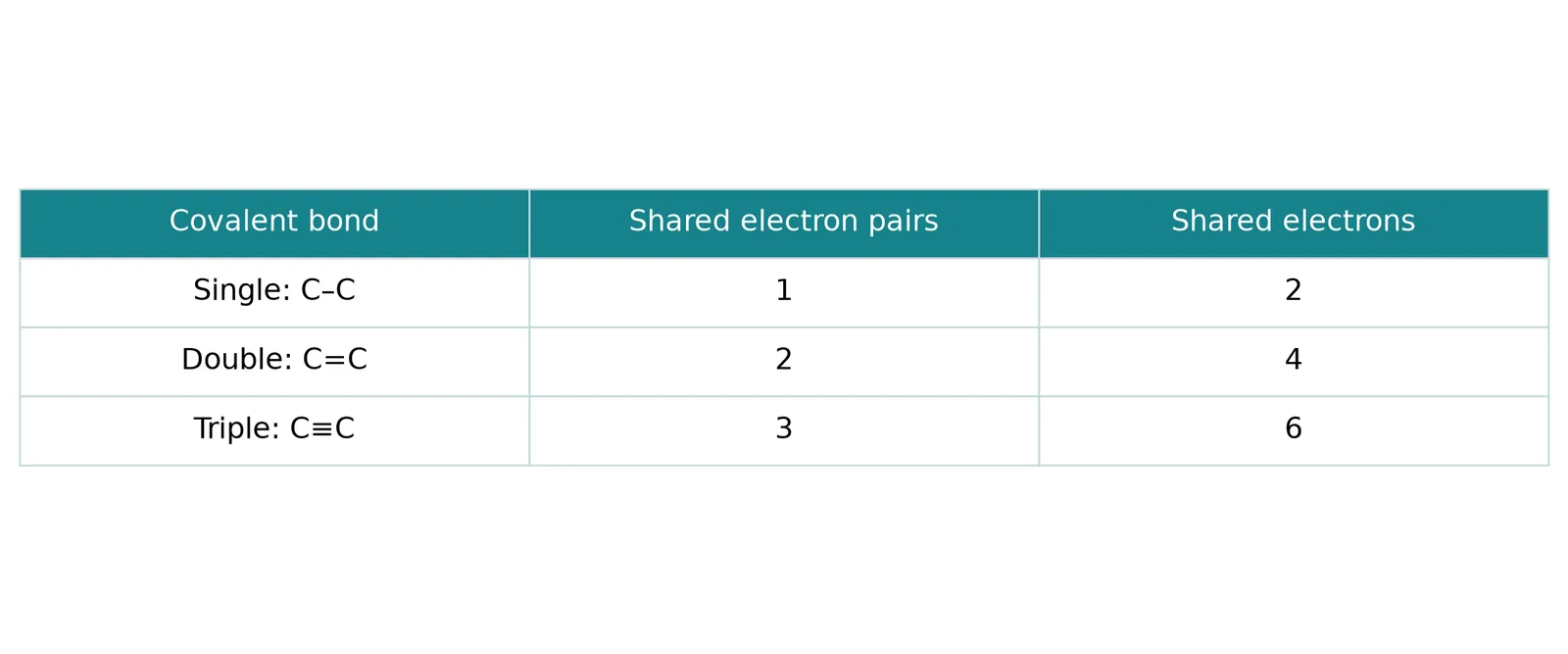
- Sharing electrons A covalent bond forms when two atoms share a pair of electrons.
- Each shared pair holds the nuclei of the two atoms together.
Only non-metals
- Only non-metals Covalent bonding happens between non-metal atoms.
- Metals with non-metals form ionic compounds instead.
Full outer shells
- Full outer shells By sharing, each atom gets a full outer shell, giving it the electronic configuration of a noble gas.
Molecules
- Molecules A group of atoms joined by covalent bonds is called a molecule.
- Covalent substances can be small molecules or giant structures.
Section 2 of 6Drawing a dot-and-cross diagram

1
Work out the number of outer electrons in each atom from its group number.
2
Draw the overlapping outer shells of the atoms, showing the shared pair in the overlap.
3
Use dots for the electrons from one atom and crosses for those from the other.
4
Count the electrons around each atom and check that every atom has a full outer shell. Remember hydrogen needs only 2.
5
Show the unshared outer electrons as well as the shared pairs.
Section 3 of 6Common single-bonded molecules
| Molecule | Formula | Bonds present |
|---|---|---|
| Hydrogen | H2 | One shared pair between the two hydrogen atoms |
| Chlorine | Cl2 | One shared pair; each chlorine has three non-bonded pairs |
| Hydrogen chloride | HCl | One shared pair between hydrogen and chlorine |
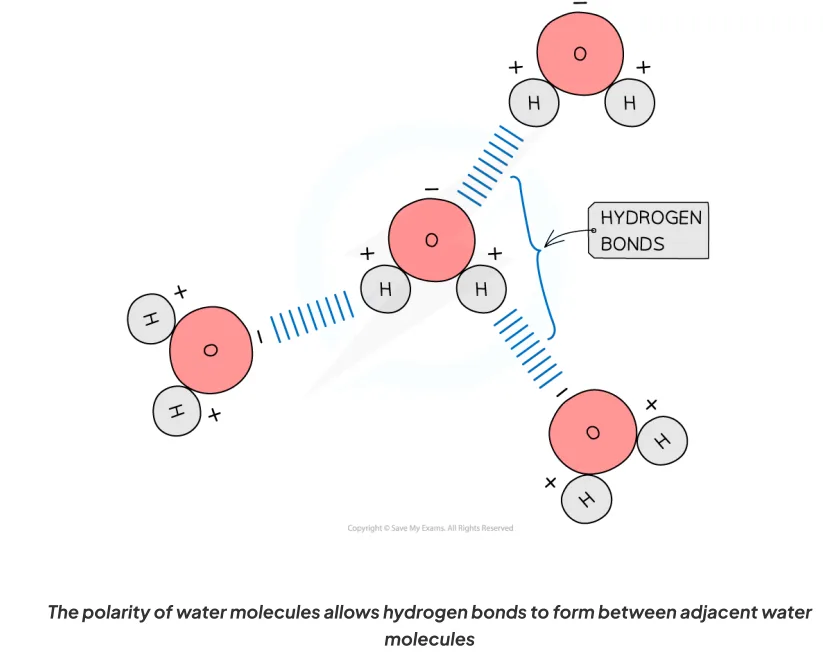
| Water | H2O | Two single bonds from oxygen to hydrogen |
| Ammonia | NH3 | Three single bonds from nitrogen to hydrogen |
| Methane | CH4 | Four single bonds from carbon to hydrogen |
Section 4 of 6Worked example: chlorine, Cl2


1Each atom
- Each atom Chlorine is in Group VII, so each atom has seven outer electrons and needs one more.
2Share one pair
- Share one pair The two atoms share one pair of electrons, with one electron from each.
3Result
- Result Each chlorine now has eight outer electrons, giving a stable noble gas configuration.
- This is a single covalent bond.
Section 5 of 6Key terms
| Term | Meaning |
|---|---|
| Covalent bond | A bond formed when two atoms share a pair of electrons. |
| Molecule | A particle made of two or more atoms joined by covalent bonds. |
| Single bond | A covalent bond in which one pair of electrons is shared. |
| Noble gas configuration | A full outer shell of electrons, which makes an atom stable. |
| Non-metal | An element that forms covalent bonds with other non-metals and ions with metals. |
Section 6 of 6Exam technique
1
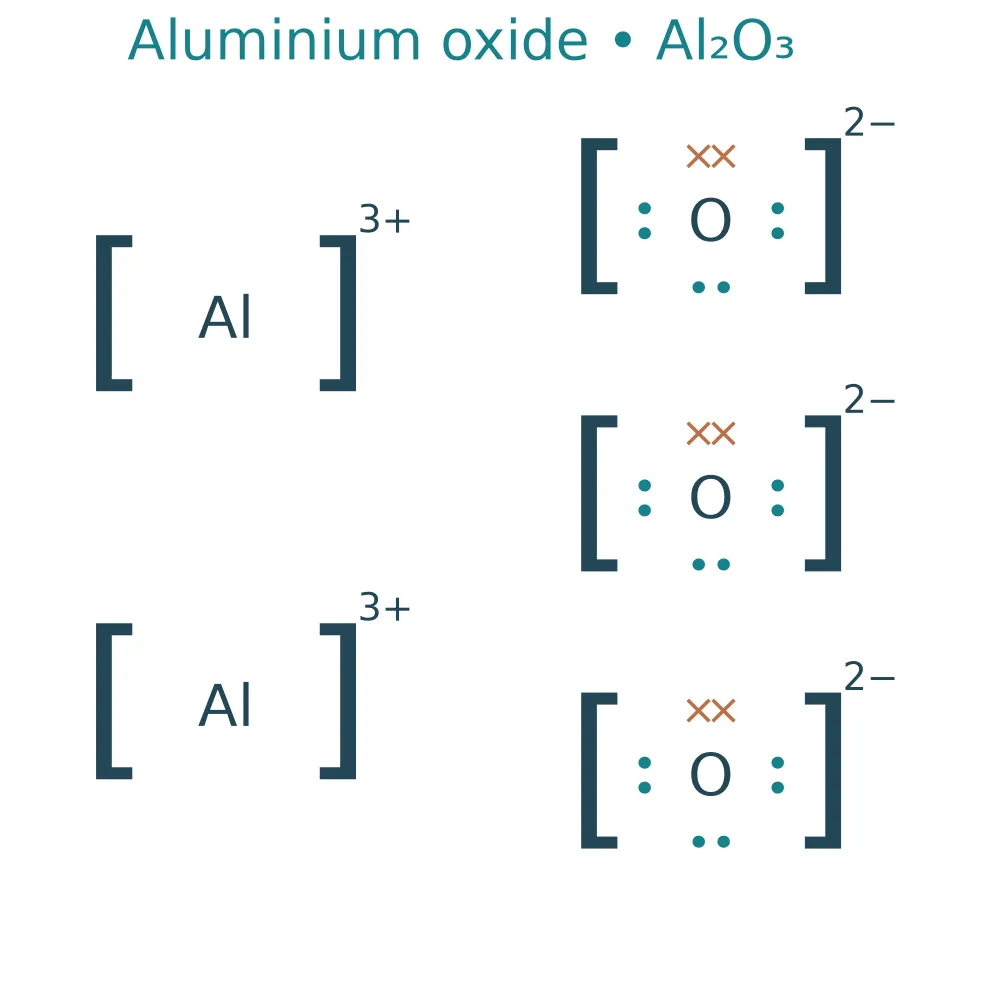
Drawing square brackets and charges on a covalent molecule. These belong only to ions.
2
Giving hydrogen eight outer electrons. Its first shell is full with two.
3
Showing a covalent bond between a metal and a non-metal.
4
Leaving out the non-bonded outer electrons, for example the lone pairs on oxygen in water.