2.2.2Cells and Control
The Importance of Cell Differentiation
5 min read 9 parts Lesson 5 of 11 1 quiz
Section 1 of 9Differentiation


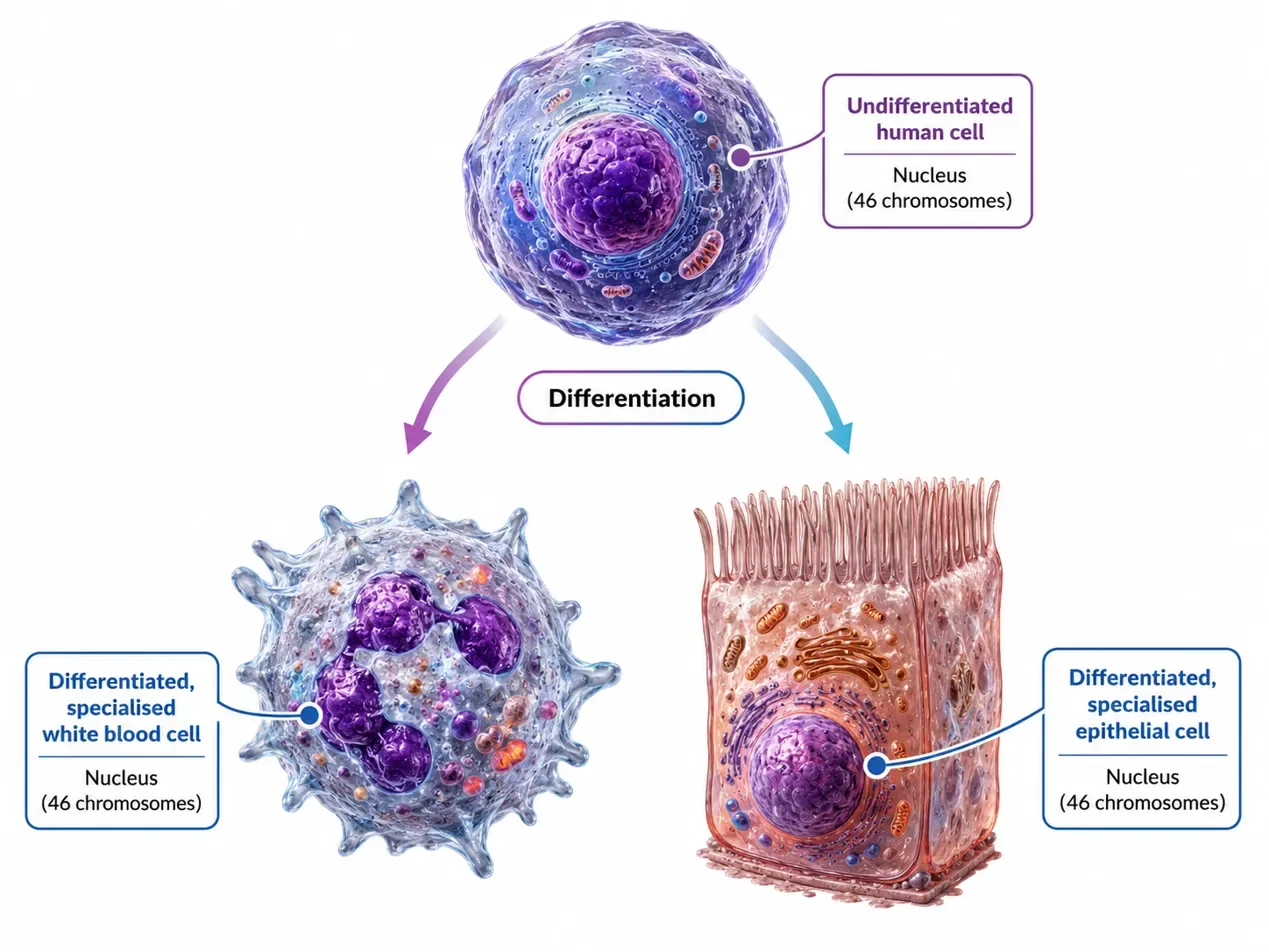
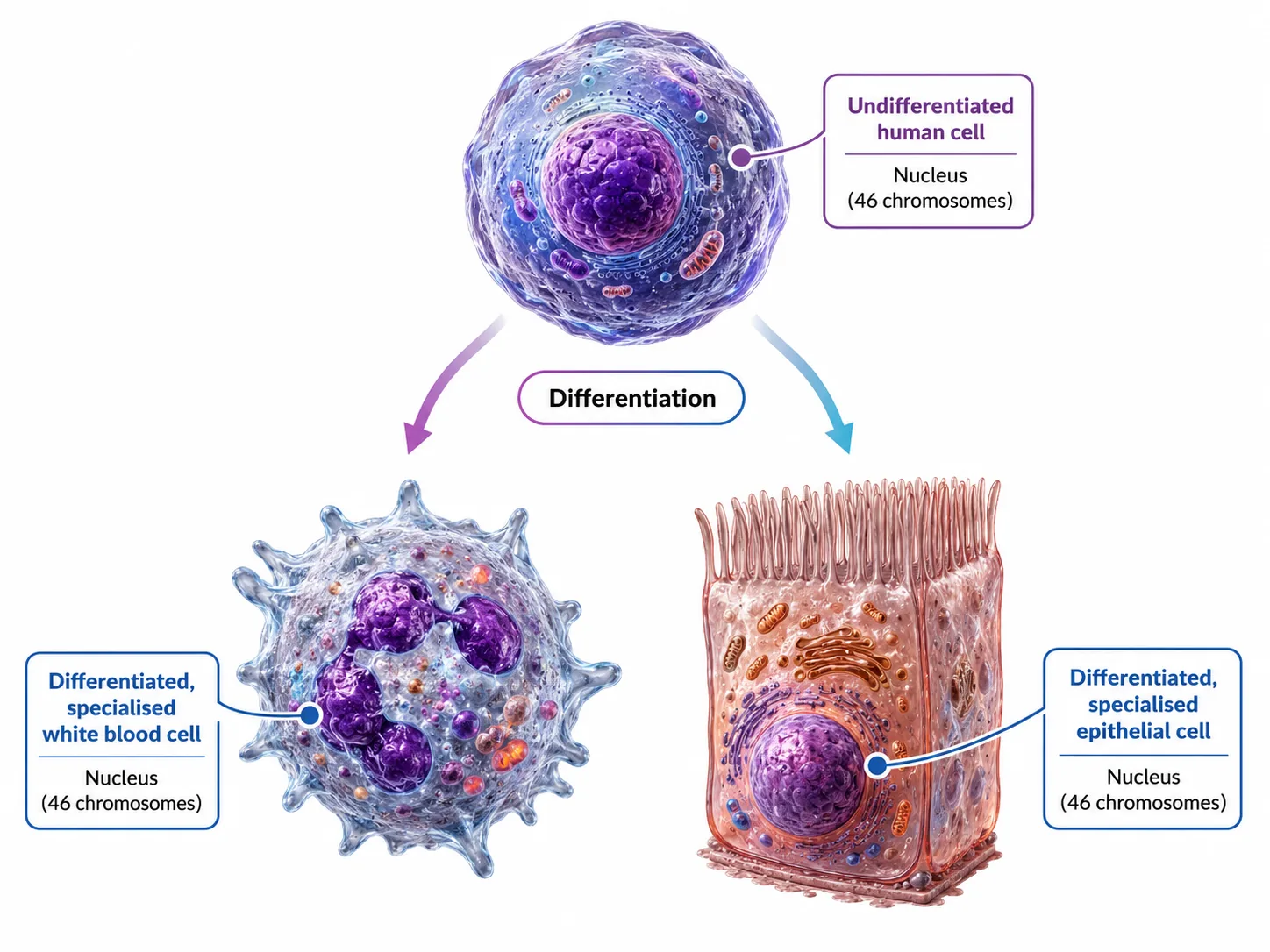
A fertilised egg divides by mitosis to form an embryo. The early cells are all alike and are called unspecialised cells. As the embryo develops, many cells change in shape, structure and contents so they can carry out a particular job. This process is called differentiation, and the result is a specialised cell.
Differentiation does not change the DNA. Every body cell contains the same genes, but different cells switch on (express) different genes, so they make different proteins and develop different features. A muscle cell makes large amounts of contractile proteins, whereas a red blood cell makes haemoglobin.
Section 2 of 9Why differentiation matters
- Specialisation lets different cells share the work,
- so the organism can have tissues, organs and organ systems that are far more efficient than a single type of cell doing everything.
- Cells that are specialised carry out their one job very effectively, though they often lose the ability to divide.
- and later for repair,
- where stem cells replace worn-out cells.
- Cells deep inside the body are far from the surface,
- so oxygen and nutrients cannot reach them by diffusion alone,
- and specialised red blood cells and vessels are needed to deliver them.
Section 3 of 9Specialised animal cells

| Cell | Adaptation | How it helps |
|---|---|---|
| Sperm cell | Tail, streamlined head, many mitochondria, acrosome with enzymes | Swims to the egg, releases energy for movement, digests the egg's outer layer |
| Nerve cell (neurone) | Long axon, branched dendrites, insulating myelin | Carries electrical impulses over long distances and connects to other neurones |
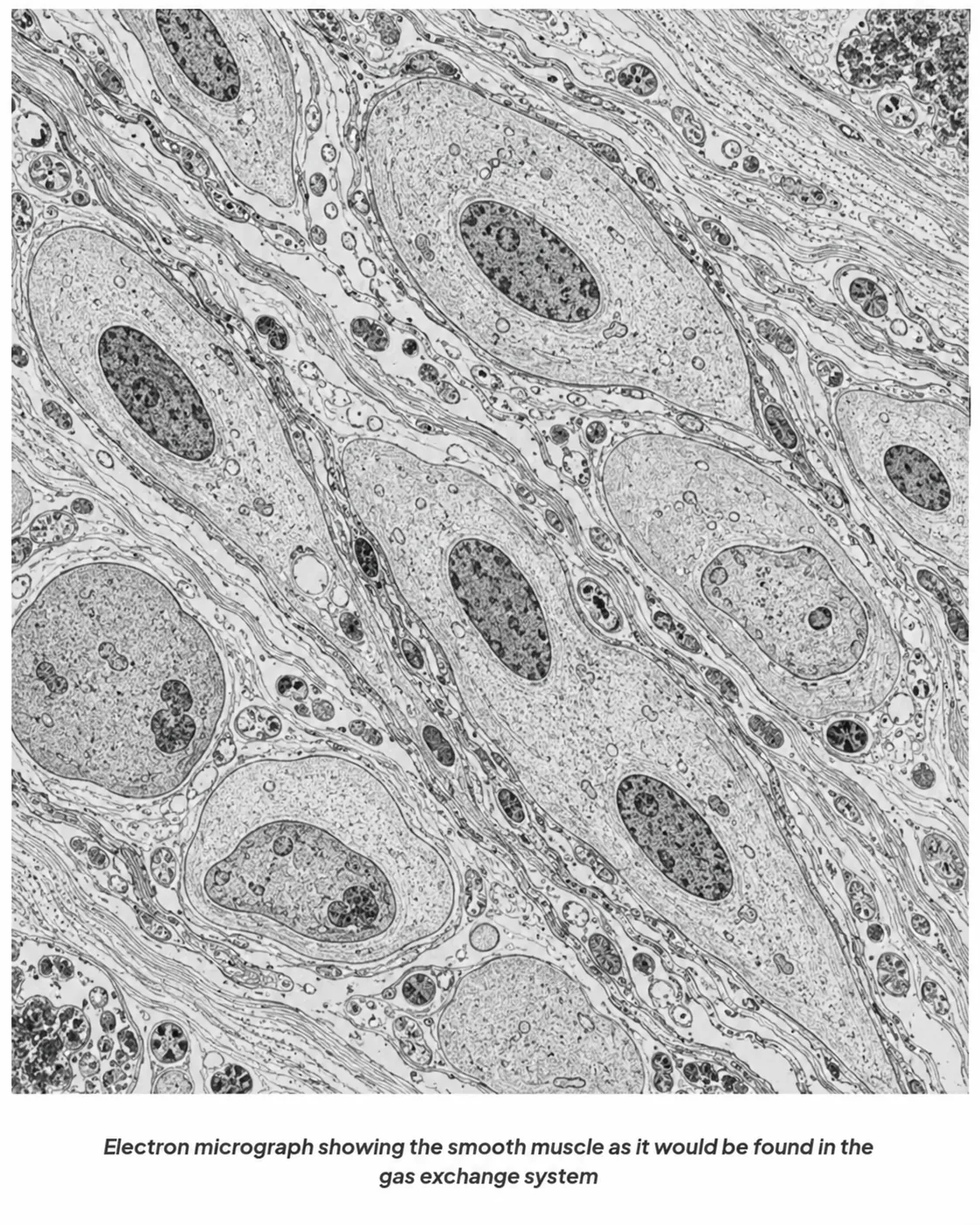
| Muscle cell | Contractile protein fibres, many mitochondria | Shortens to cause movement; energy for contraction |
| Red blood cell | Biconcave shape, no nucleus, full of haemoglobin | Large surface area and more space to carry oxygen |
| Root hair cell | Long, thin projection | Large surface area for water and mineral ion uptake |
Section 4 of 9Specialised plant cells
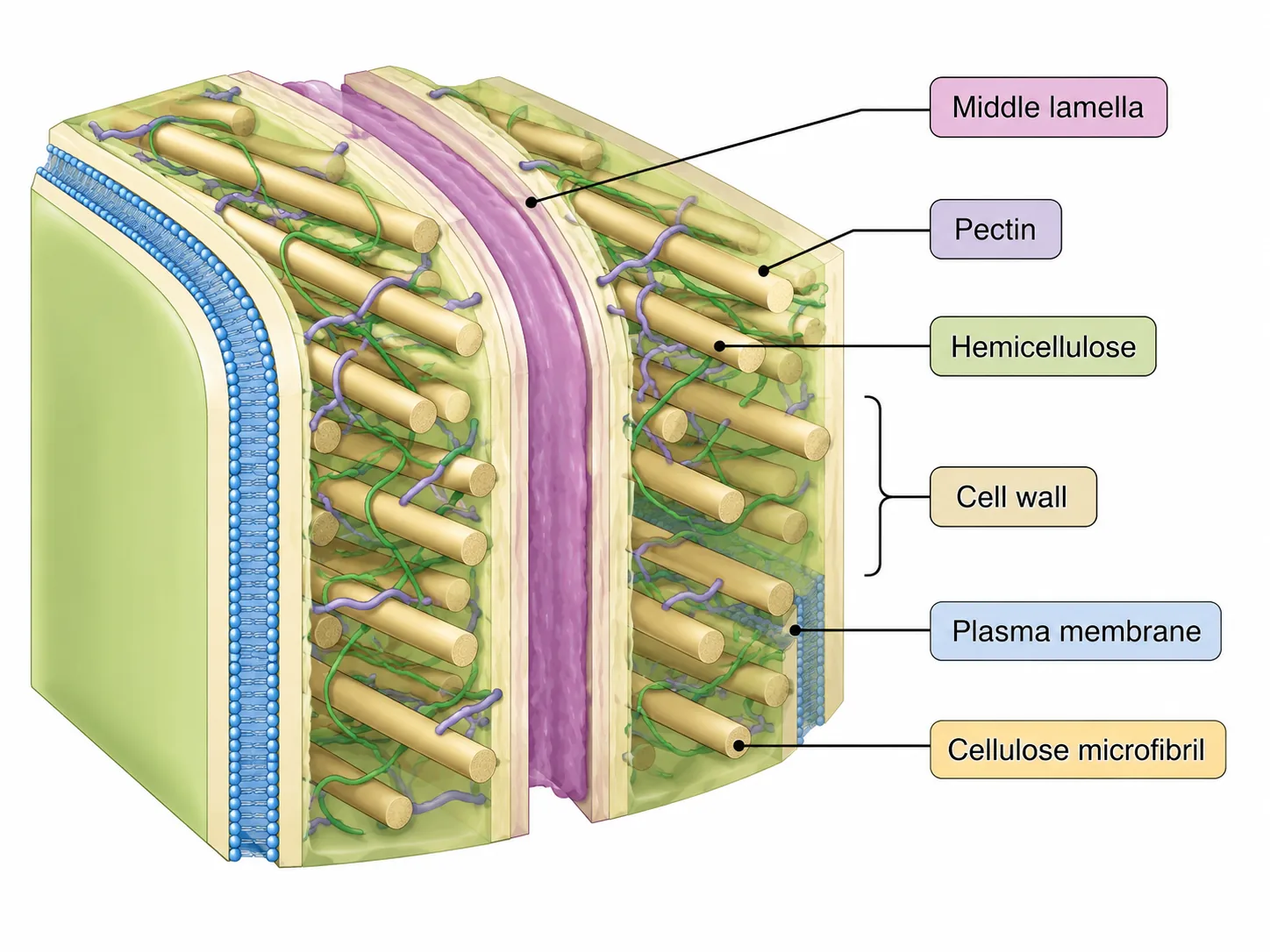

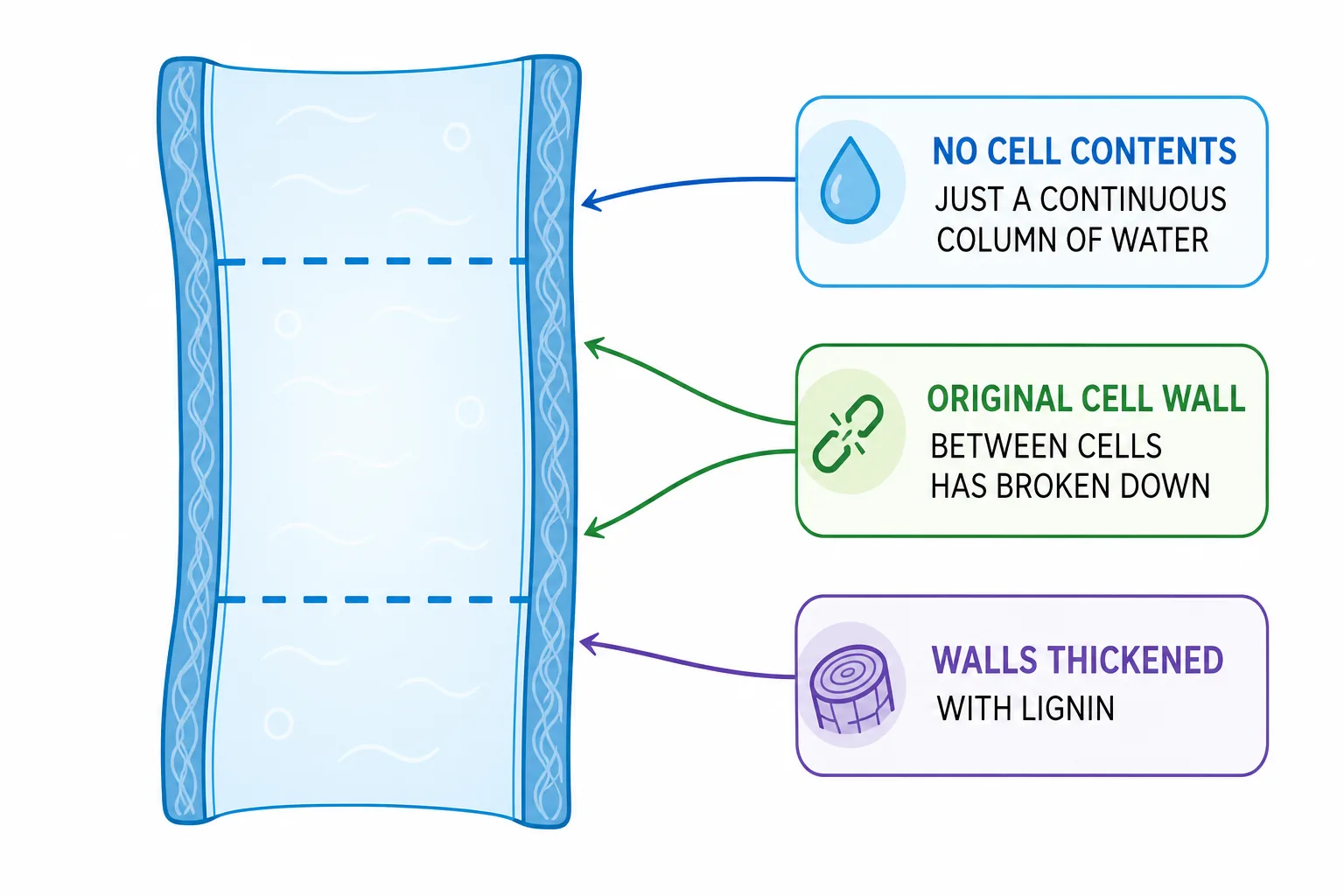
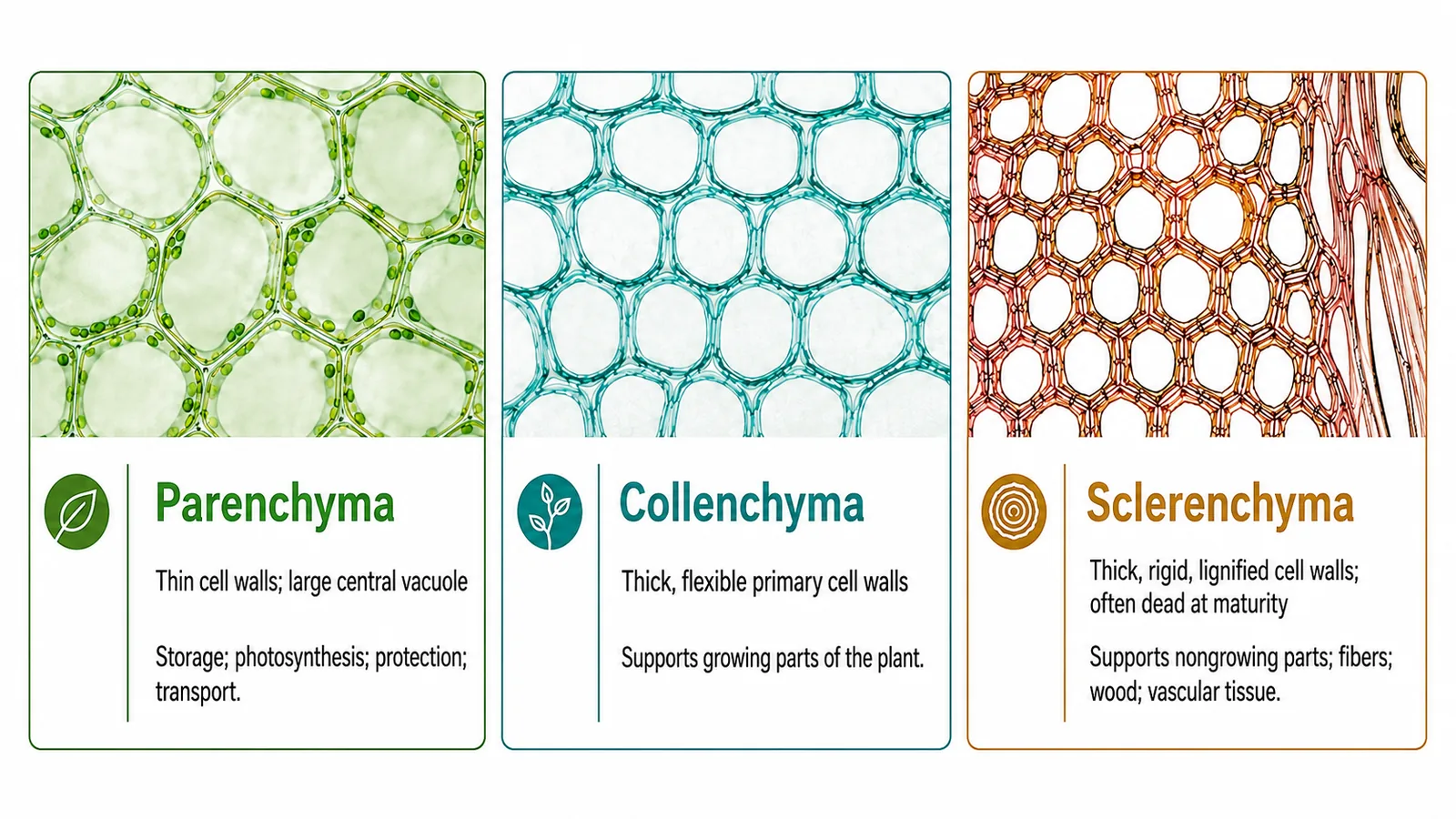
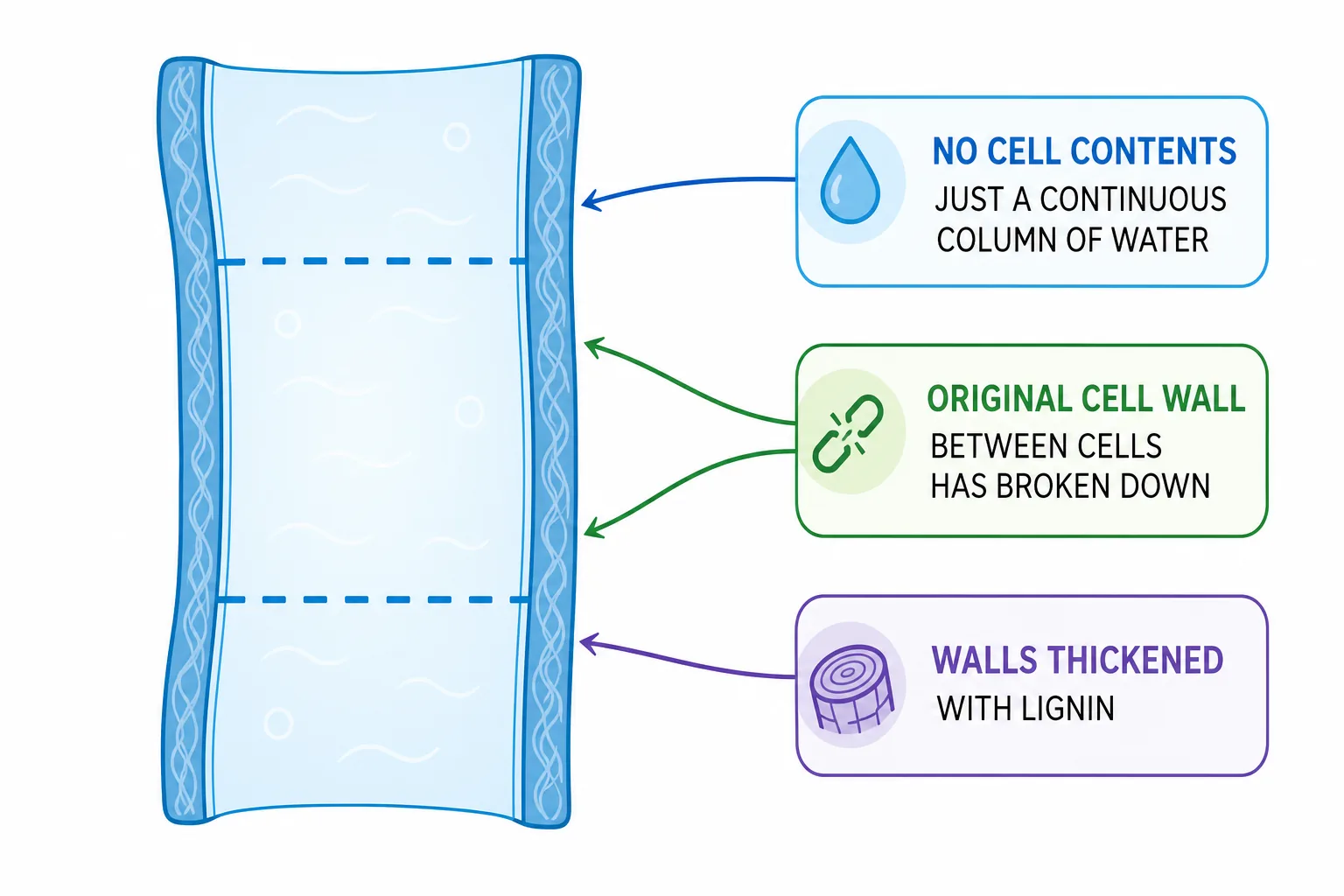
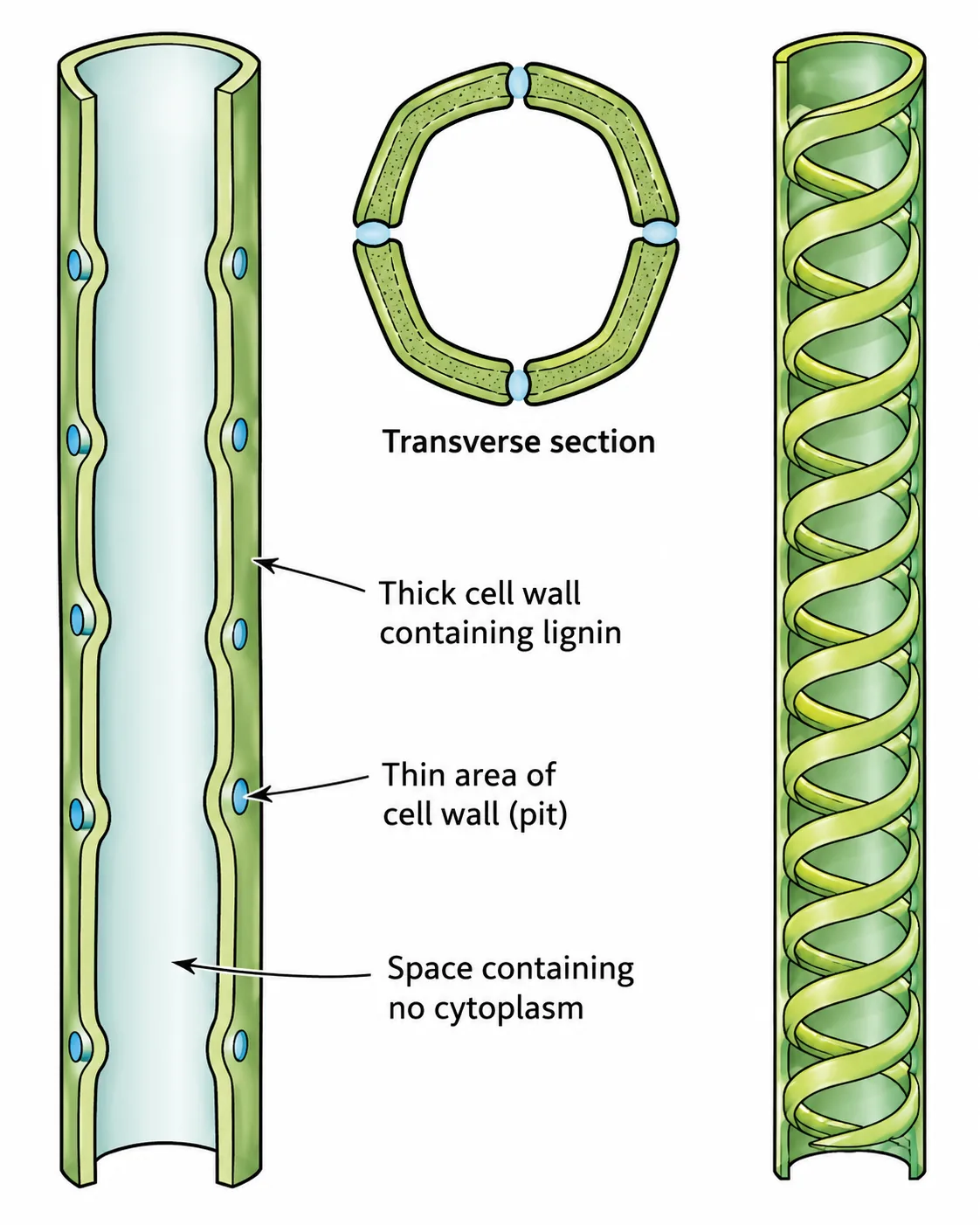
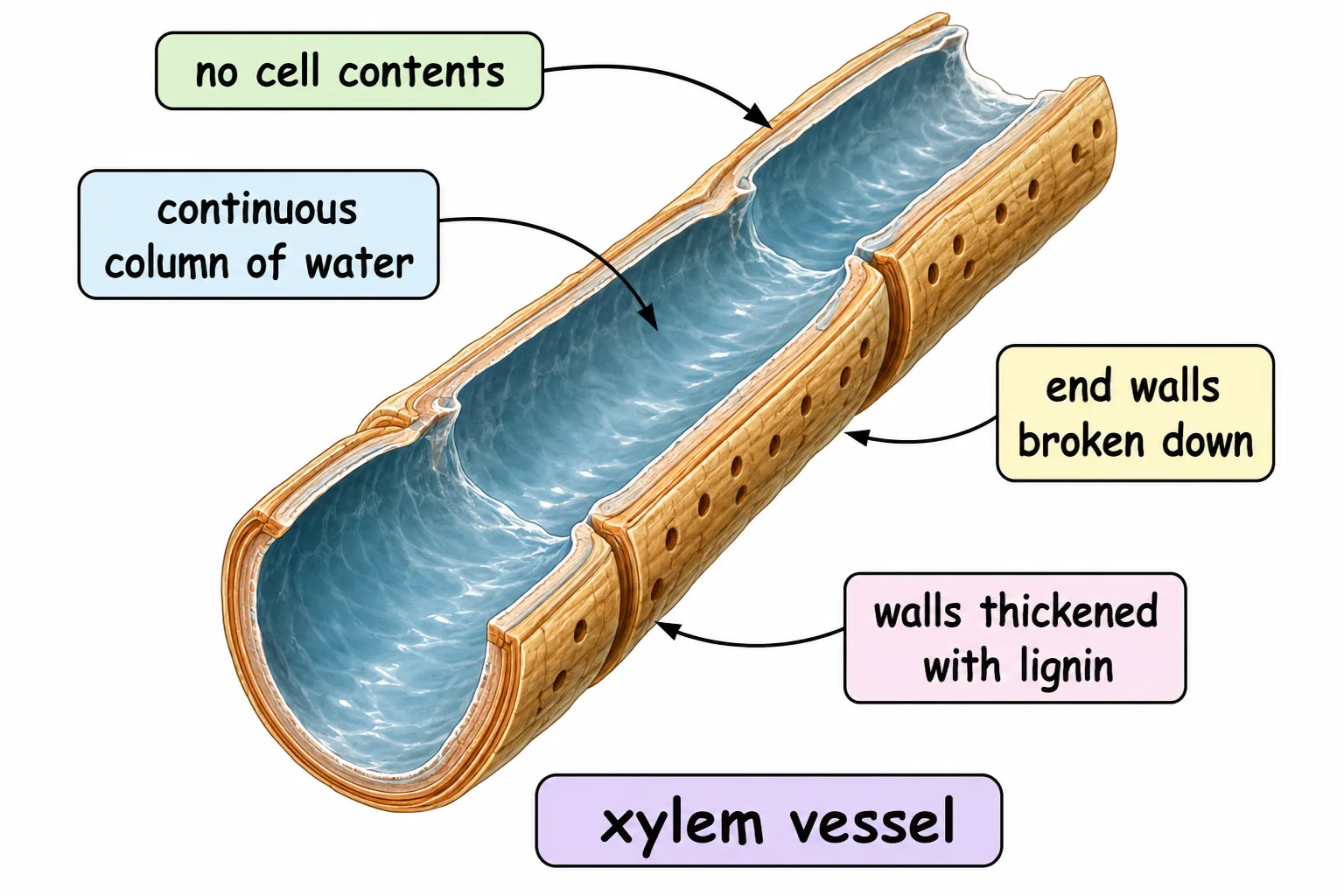
Xylem cells become long hollow tubes with lignin in the walls. They die and lose their end walls, forming continuous tubes that carry water and minerals upward. The lignin strengthens them and supports the plant.
Phloem cells form tubes with perforated end plates (sieve plates) and are helped by companion cells; they carry dissolved sugars up and down the plant. Palisade mesophyll cells are packed with chloroplasts and sit near the upper surface of the leaf to absorb as much light as possible for photosynthesis.
Section 5 of 9Differentiation, division and stem cells
In most animals, cells differentiate early and the majority of specialised cells lose the ability to divide. This is why damaged nerve or heart muscle does not easily repair itself. By contrast, plant cells in meristems keep dividing and many plant cells can differentiate throughout life.
Cells that remain unspecialised and able to divide and differentiate are called stem cells. Their role in growth and repair is developed further in the stem cell topic. At the end of a growth period, differentiated cells are organised into tissues (groups of similar cells with one function), organs (groups of tissues) and organ systems.
Section 6 of 9Levels of organisation and how differentiation builds them
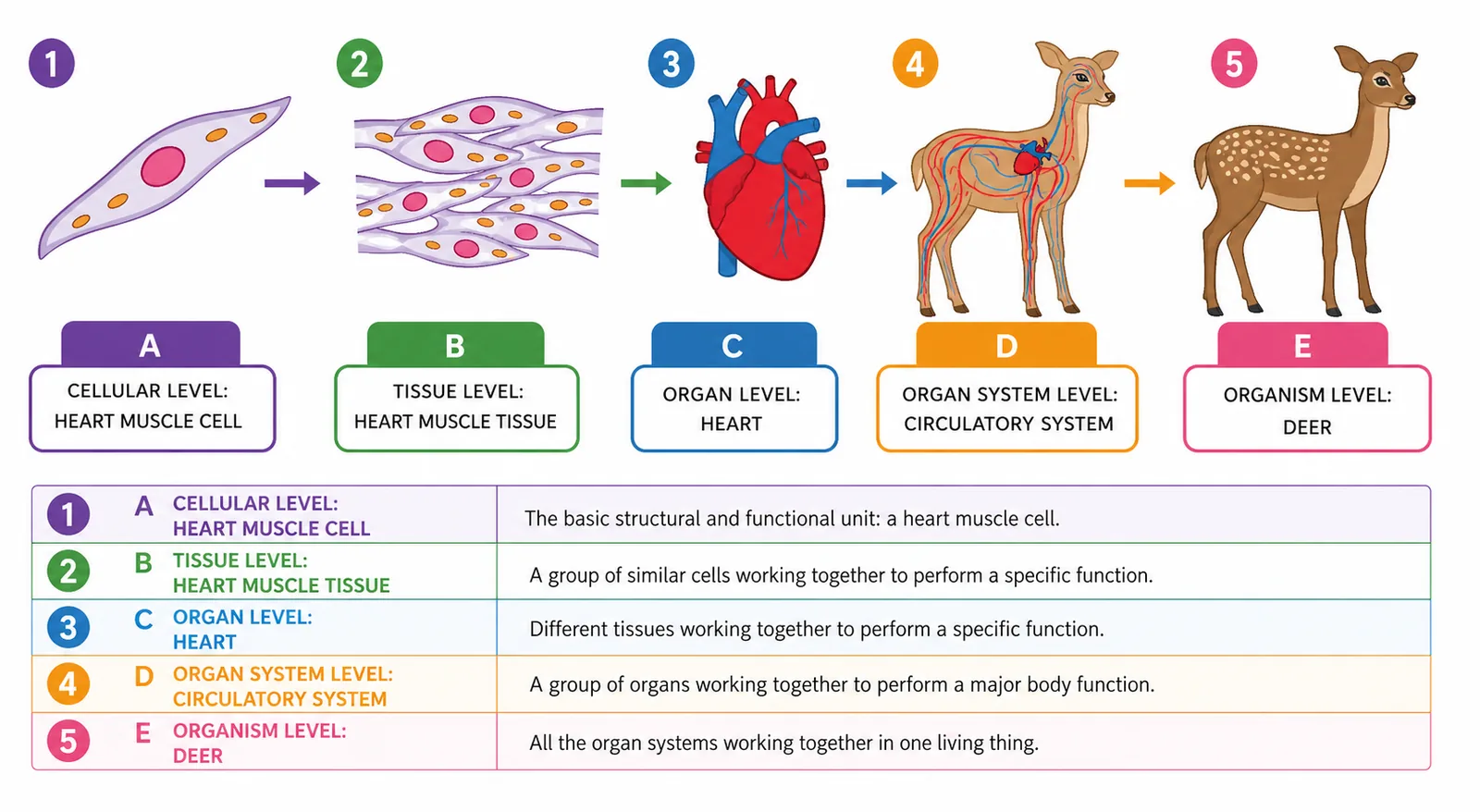

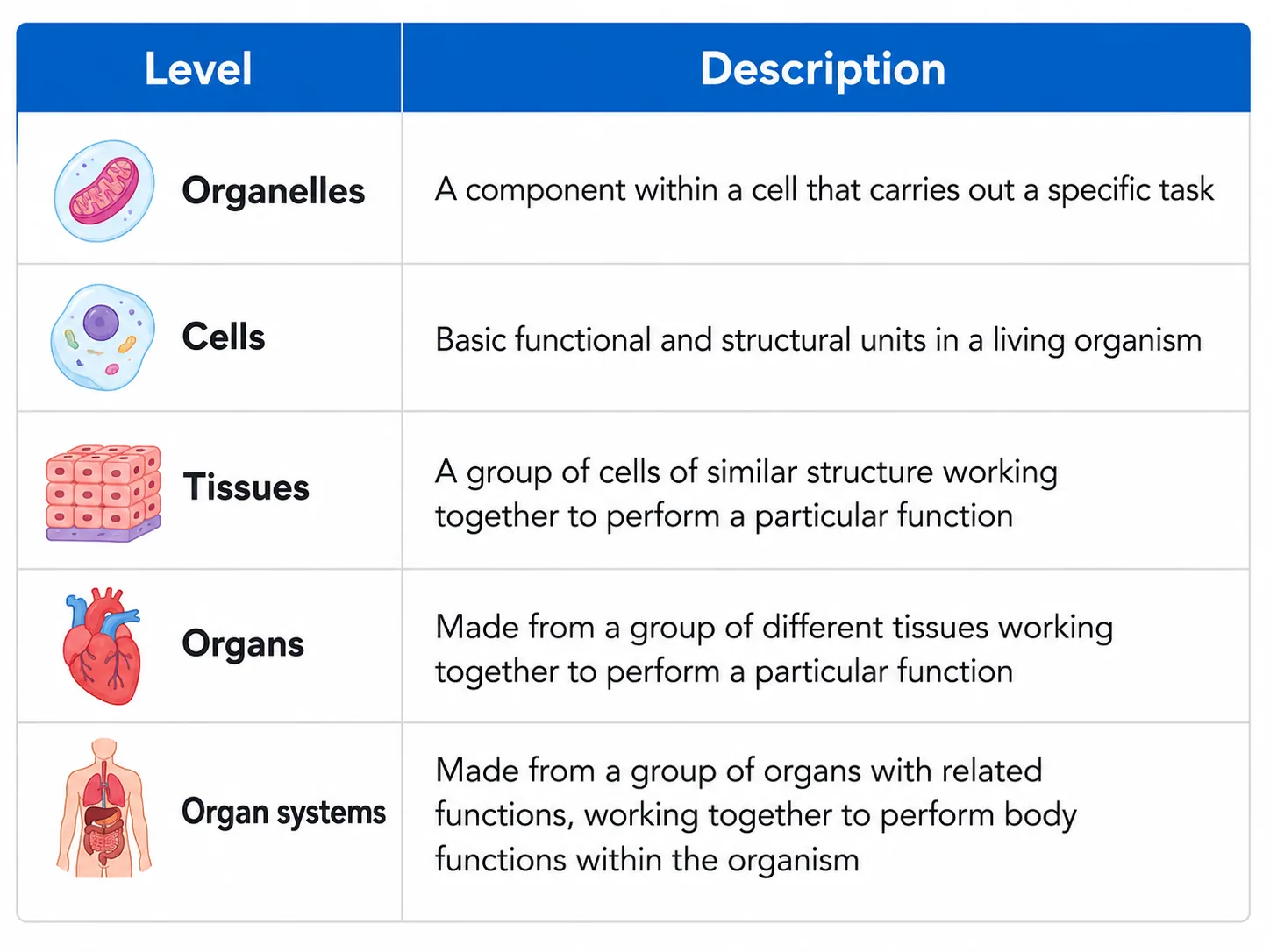
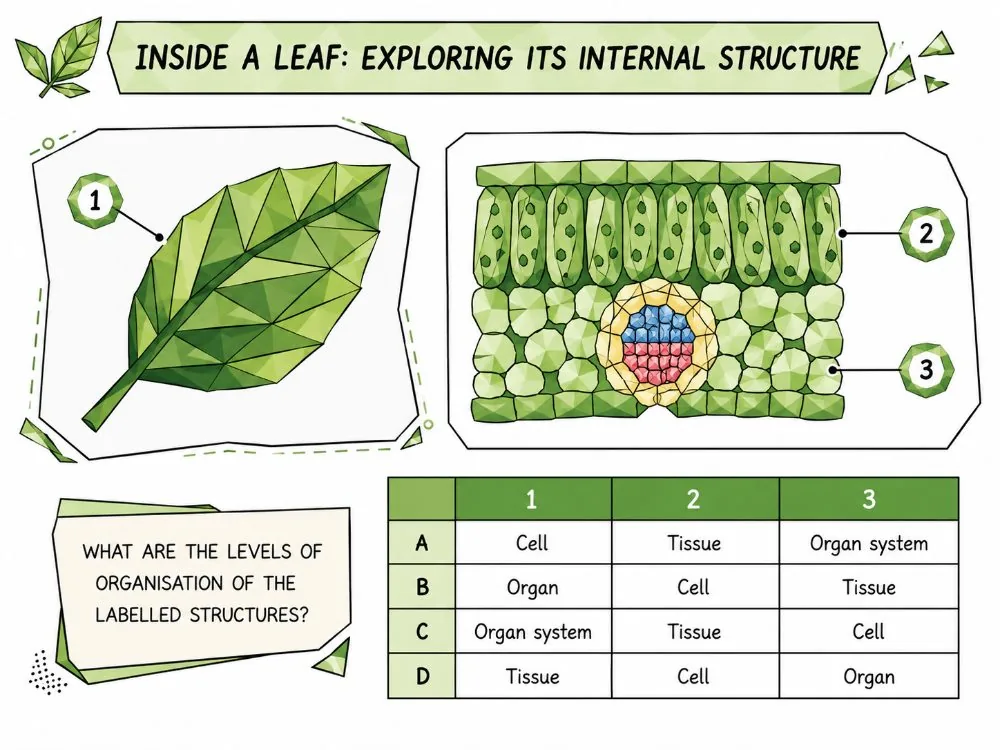
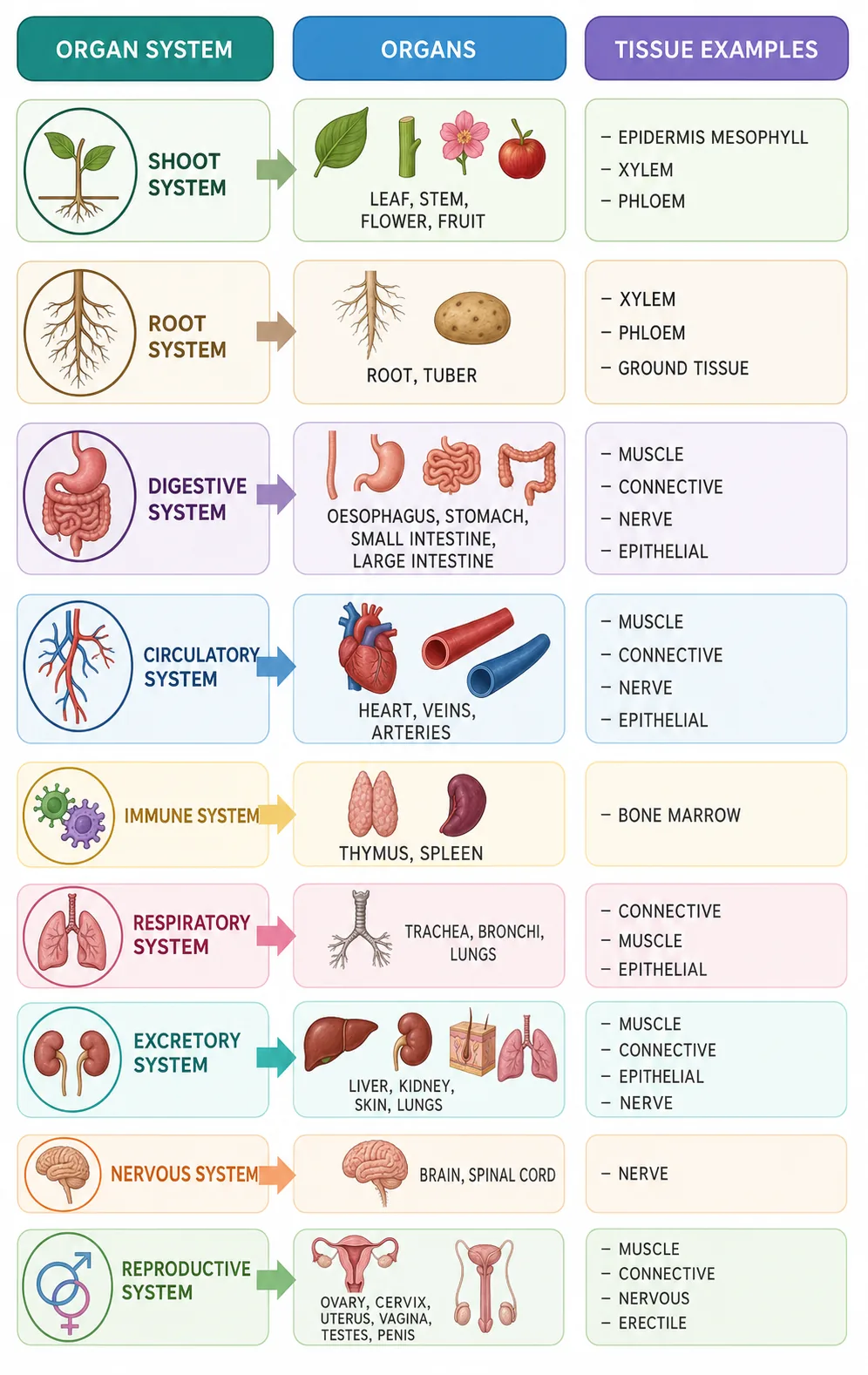
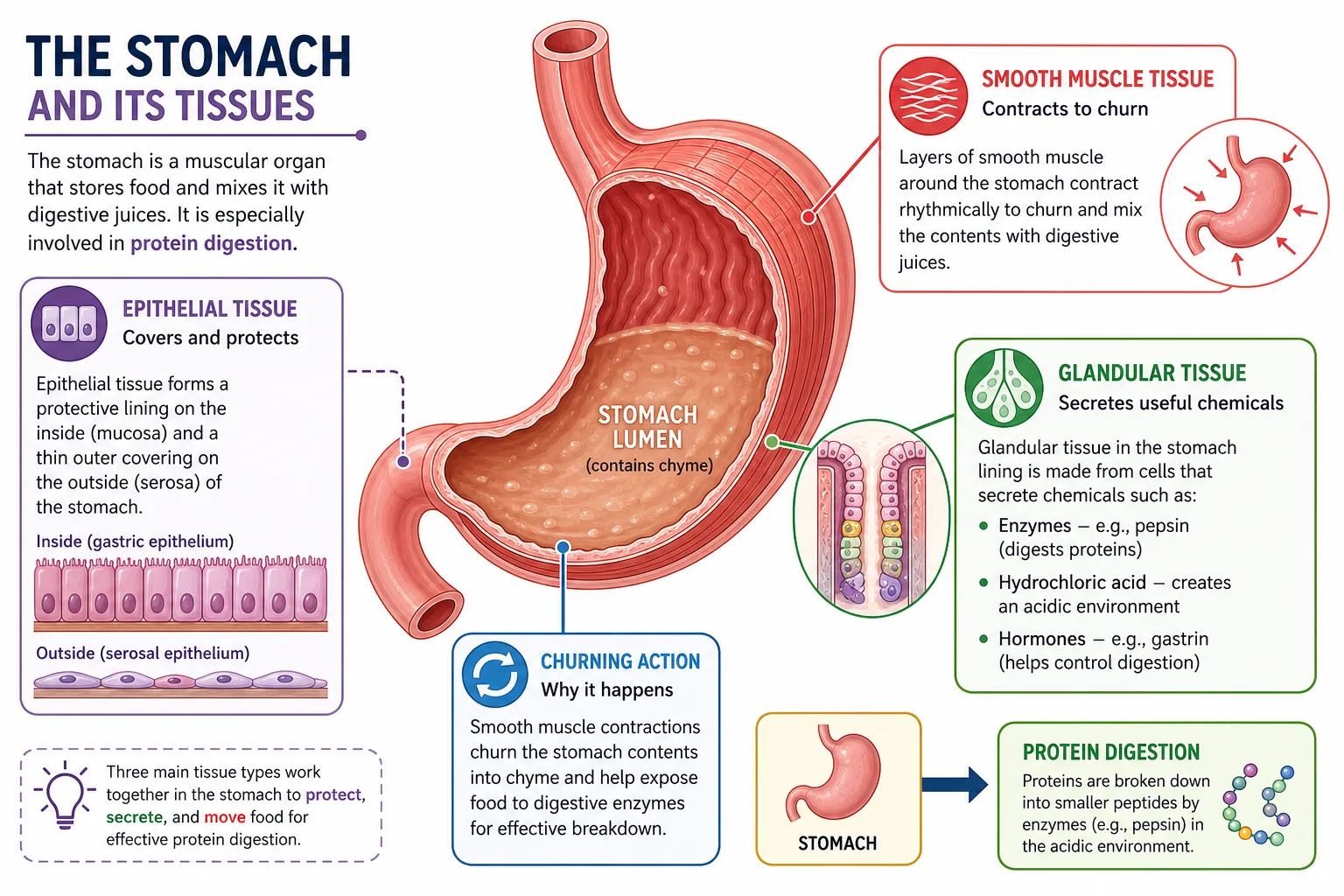


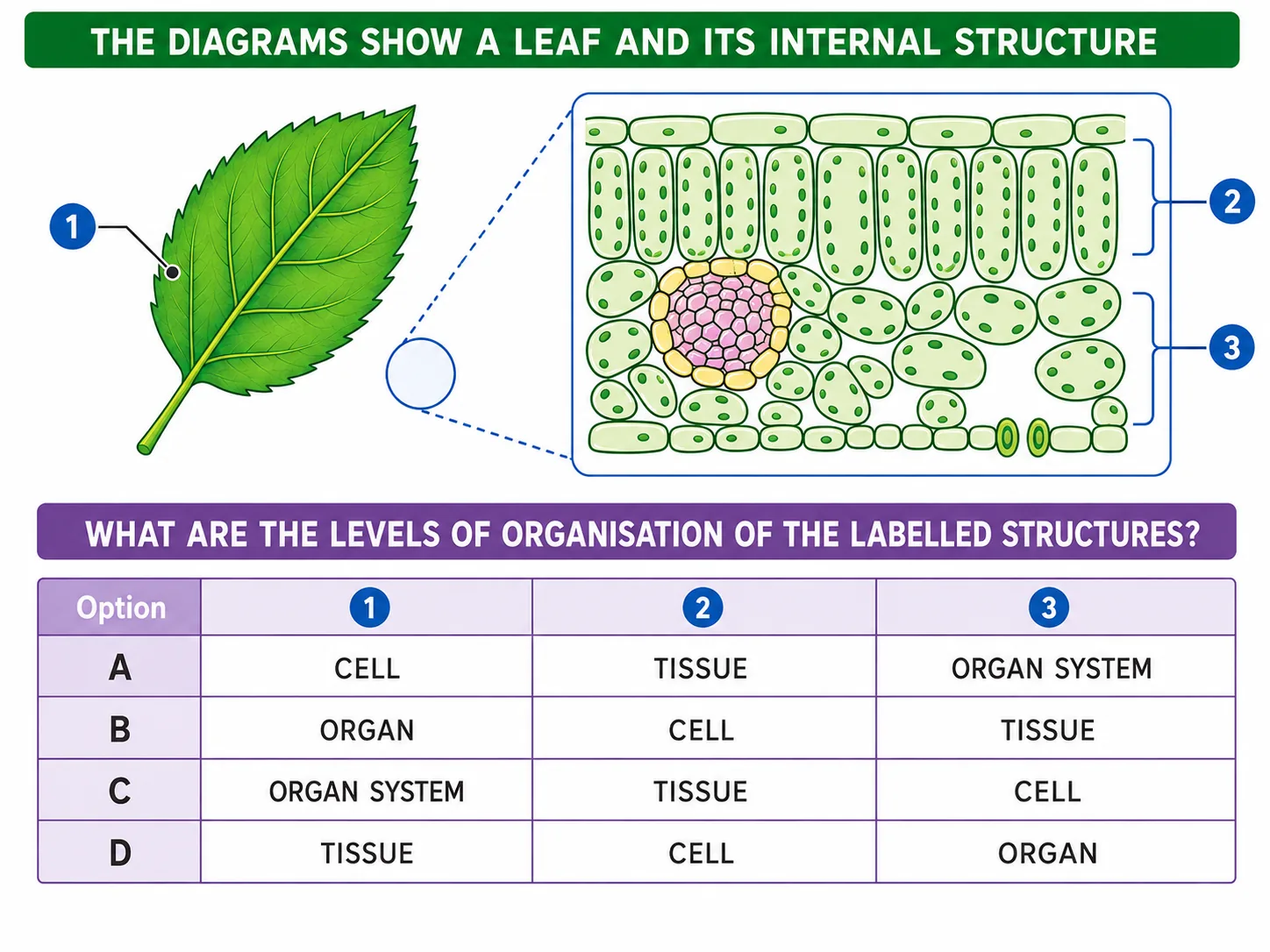
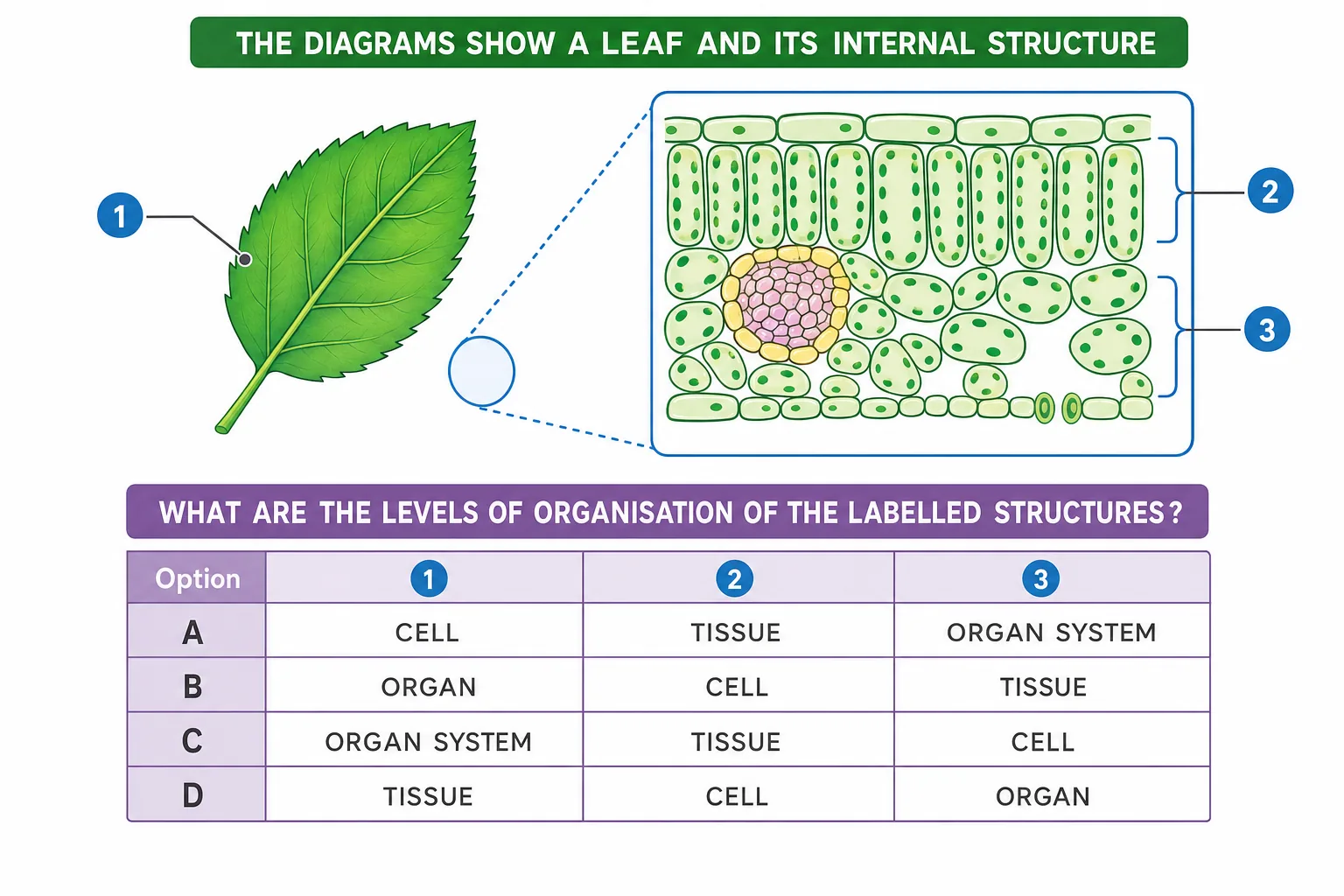
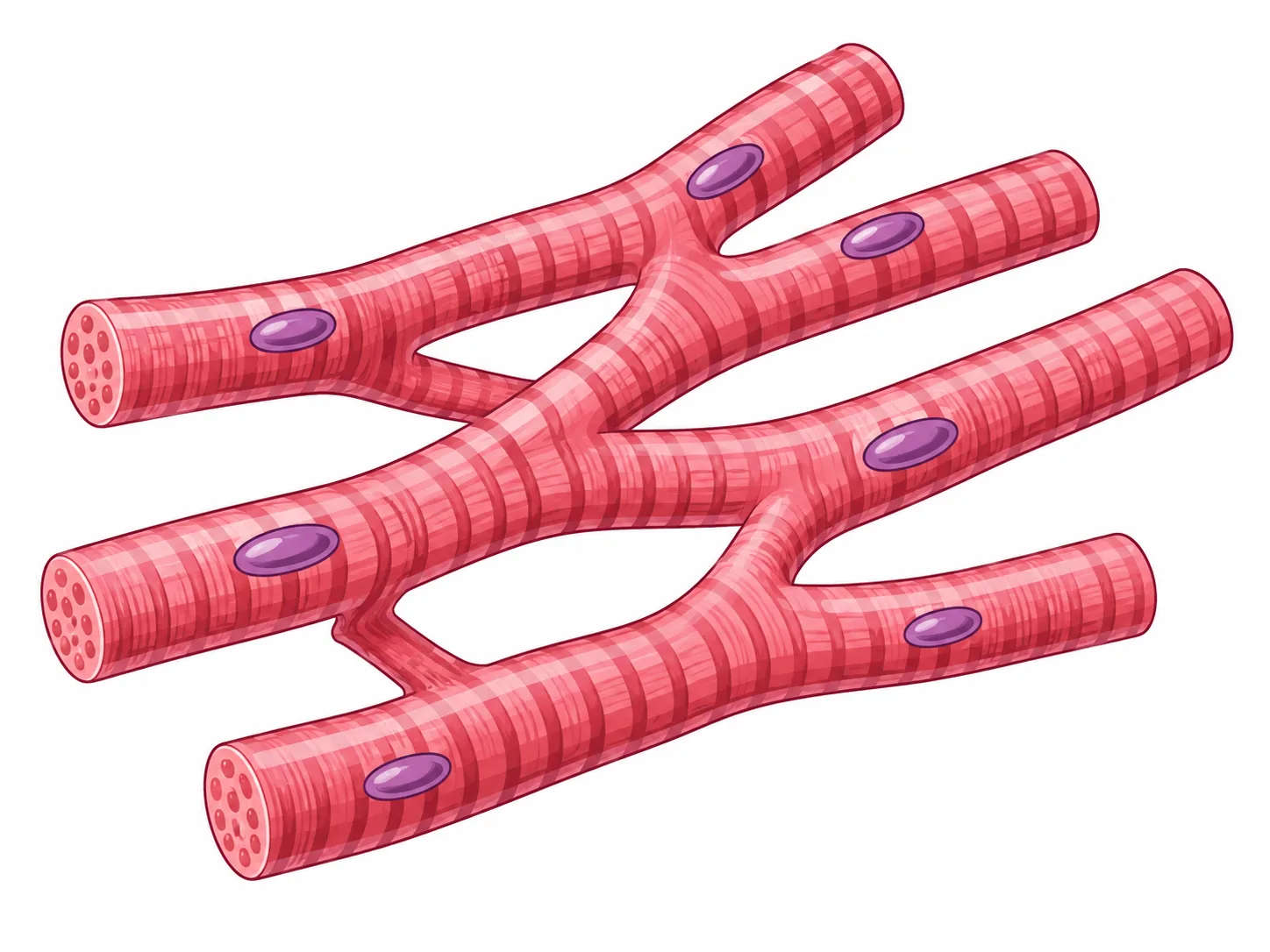
Differentiation is what makes the hierarchy of living organisation possible: specialised cells form tissues, tissues form organs, and organs work together as organ systems.
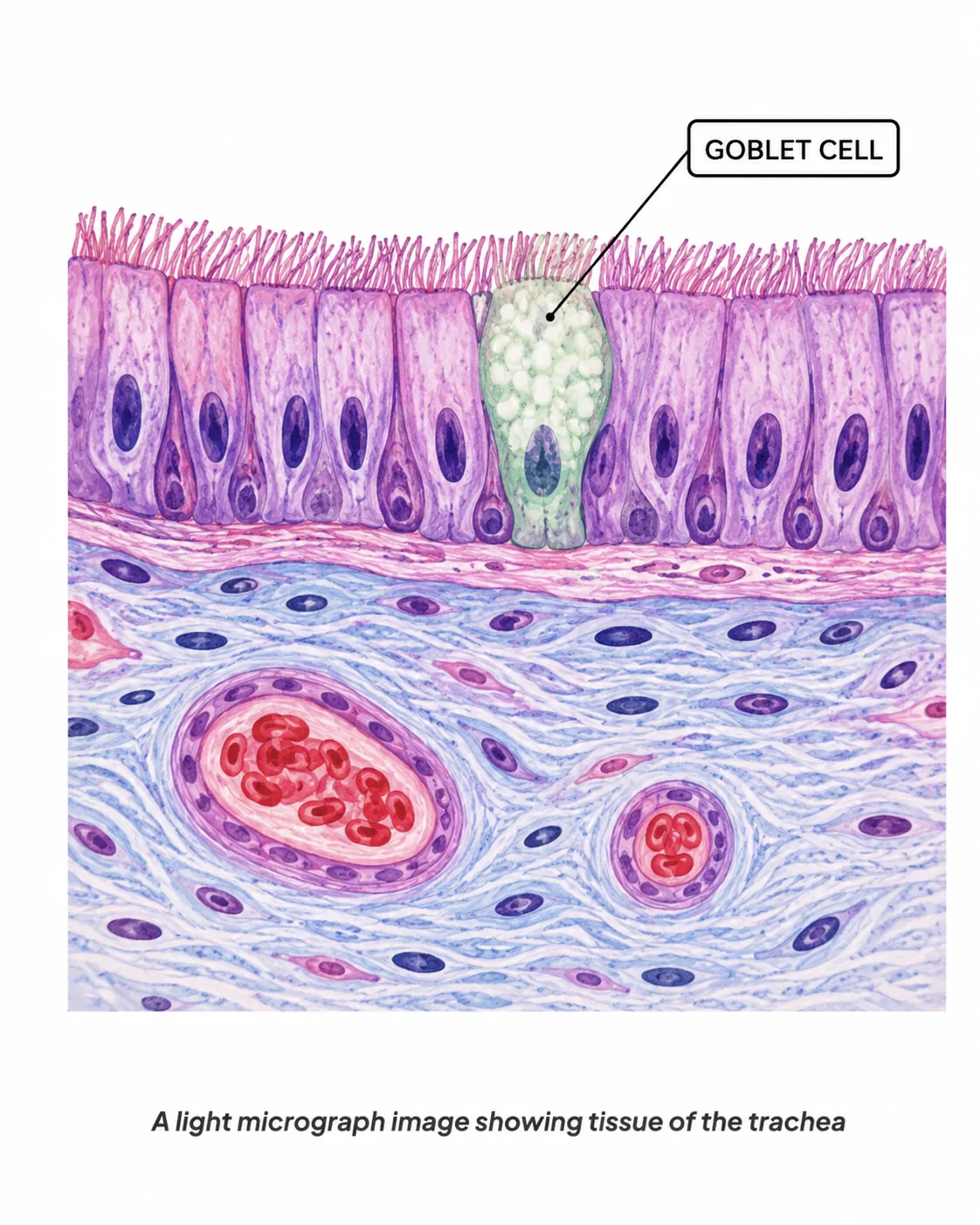
- and epithelial tissue that covers the inner surface.
In the digestive and circulatory systems, specialisation increases efficiency, because each cell type is optimised and does not need to carry out all life processes. The cost of specialisation is that specialised cells depend on others: a nerve cell cannot absorb food by itself, so it relies on blood to bring glucose and oxygen from other organs.
When you answer exam questions on specialised cells, name the feature (for example a large number of mitochondria), state its effect (more energy released by aerobic respiration) and link it to the function (sustained movement of the sperm tail).
Section 7 of 9Exam-style questions

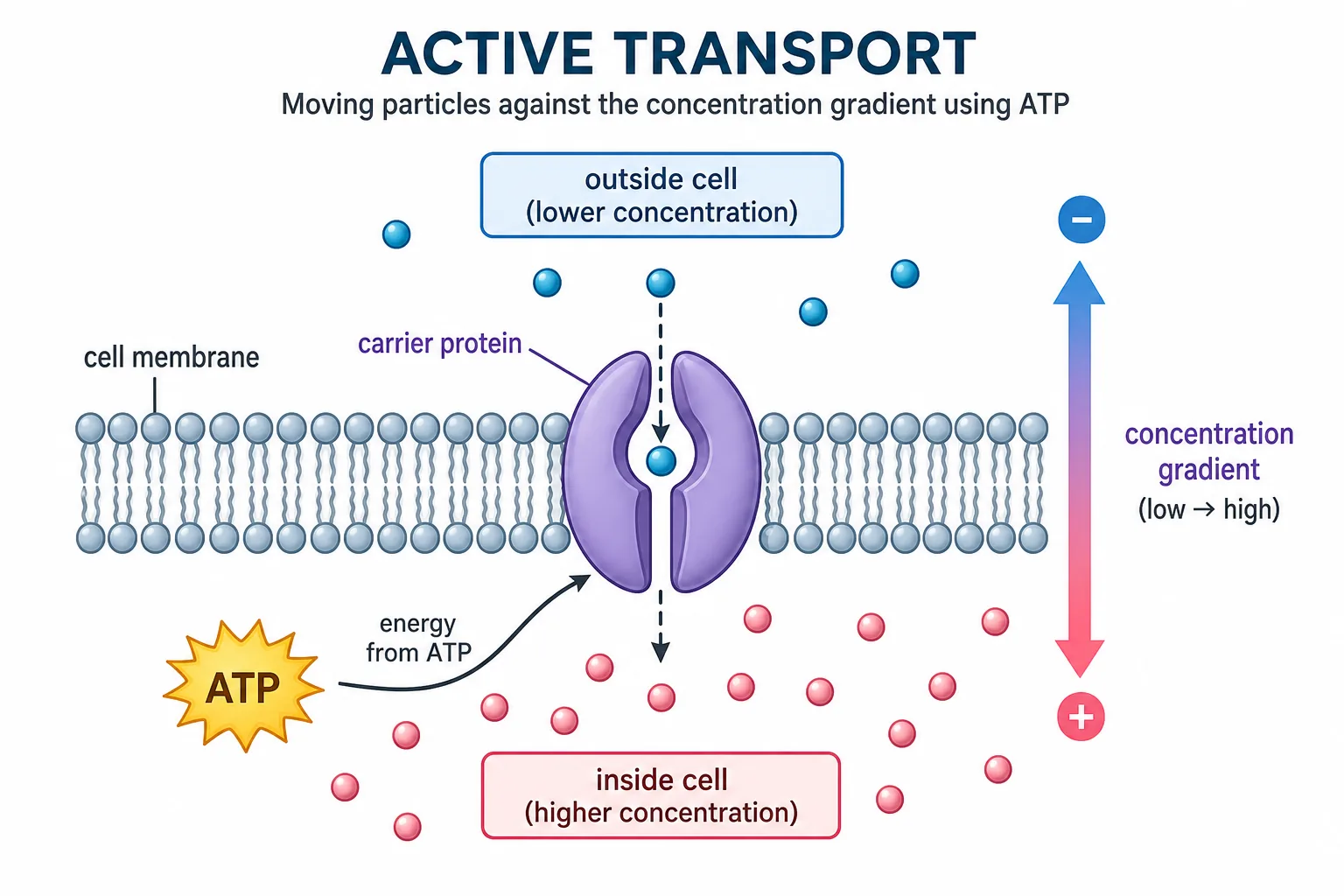
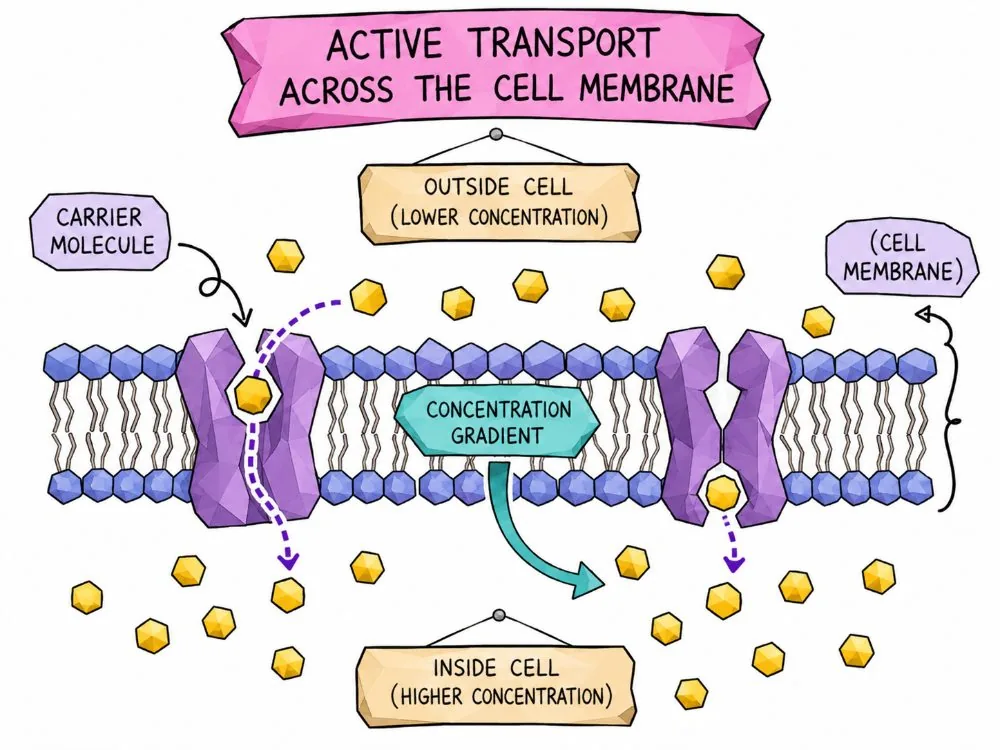

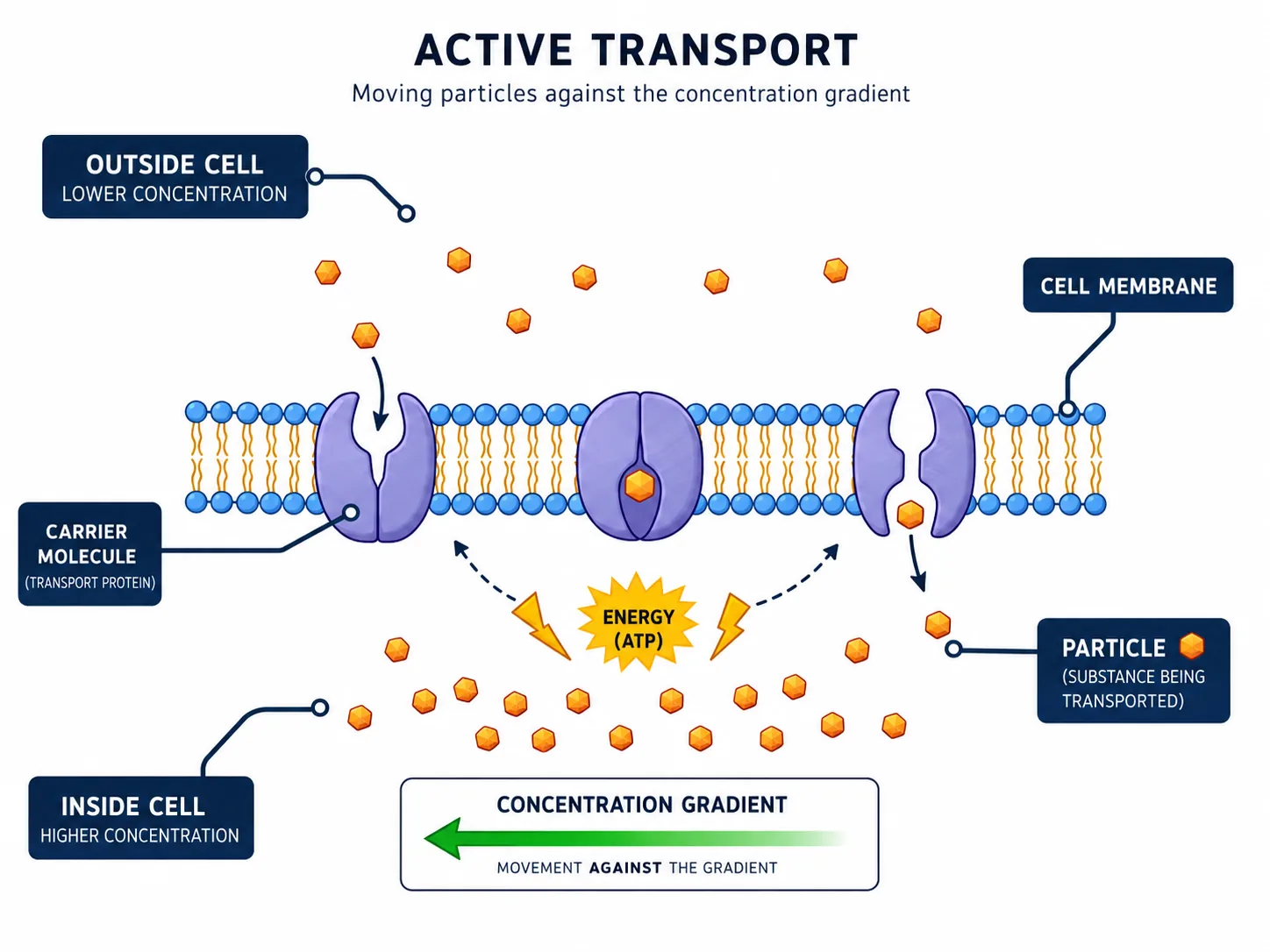

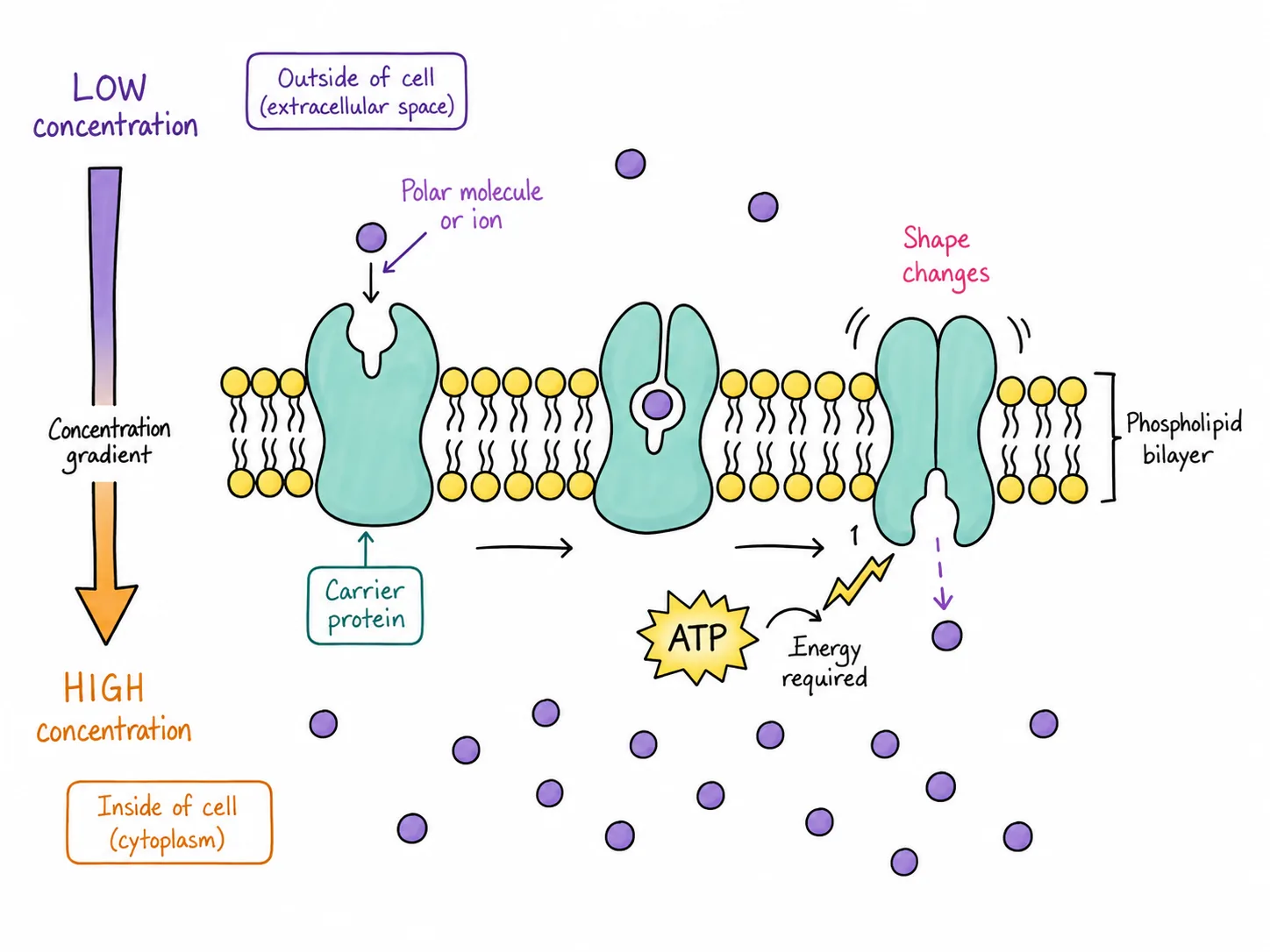


Explain how the structure of a root hair cell makes it suited to its function. [3]3 marks
The long, thin extension gives a large surface area [1] for the absorption of water by osmosis and mineral ions by active transport [1]. It has many mitochondria to release energy for active transport, and a thin wall to keep the diffusion distance short [1].
Both a muscle cell and a nerve cell contain the same genes. Explain why they are so different in structure. [2]2 marks
During differentiation different genes are switched on in each cell type [1], so different proteins are made, which leads to different structures such as contractile fibres or long axons [1].
Suggest why a damaged nerve cell in an adult is not easily replaced. [2]2 marks
Nerve cells are highly specialised and have lost the ability to divide by mitosis [1], so they cannot produce new cells to replace the damaged ones [1].
Section 8 of 9Key terms
| Term | Meaning |
|---|---|
| Differentiation | The process by which an unspecialised cell becomes specialised for a particular function. |
| Specialised cell | A cell with a structure adapted to carry out a specific job. |
| Unspecialised cell | A cell that has not yet developed features for a particular function. |
| Stem cell | An unspecialised cell able to divide and differentiate into other cell types. |
| Tissue | A group of similar cells working together to carry out a function. |
| Organ | A group of different tissues working together to perform a function. |
| Xylem | Plant tissue of hollow lignified tubes that transports water and minerals. |
| Lignin | A strong substance in xylem walls that provides support and waterproofing. |
Section 9 of 9Exam technique
Marked practiceQuizzes for this lesson
Magnification Triangle & Unit Conversion
Formula: M = I / A ⇔ A = I / M ⇔ I = M × A
Units: 1 mm = 1,000 μm = 1,000,000 nm.
Rule: Convert Image size (ruler mm) to μm by ×1,000 before dividing by Actual size.