Section 1 of 9From nucleus to gene

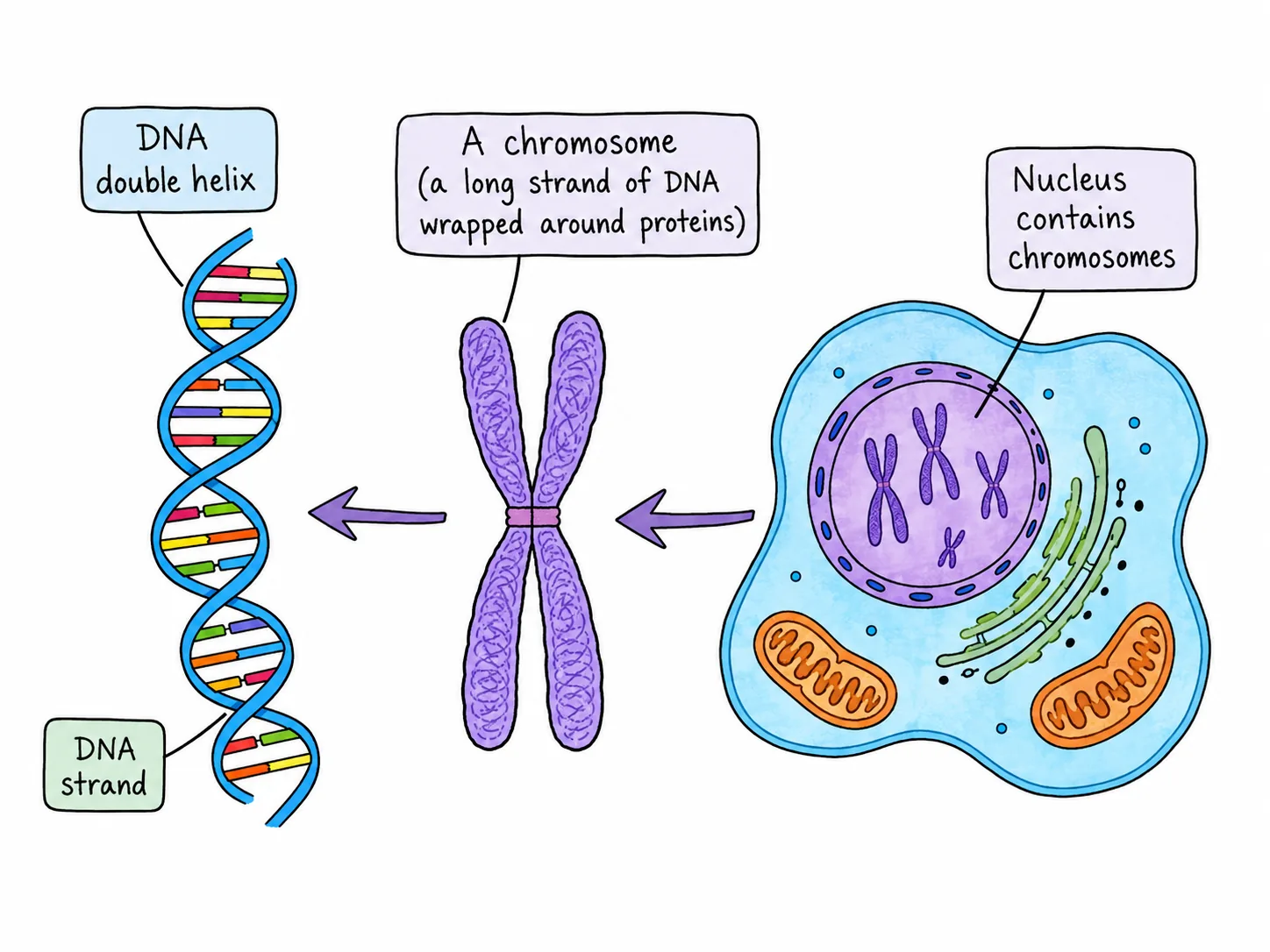
Most cells contain a nucleus in which the genetic material is found as chromosomes.
The order is
- genome > chromosome > gene > DNA bases.
- Each chromosome contains many genes.
Section 2 of 9The genome
The genome of an organism is the entire genetic material of that organism.
- which worked out the order of the DNA bases of all human chromosomes.
Section 3 of 9How genes code for proteins
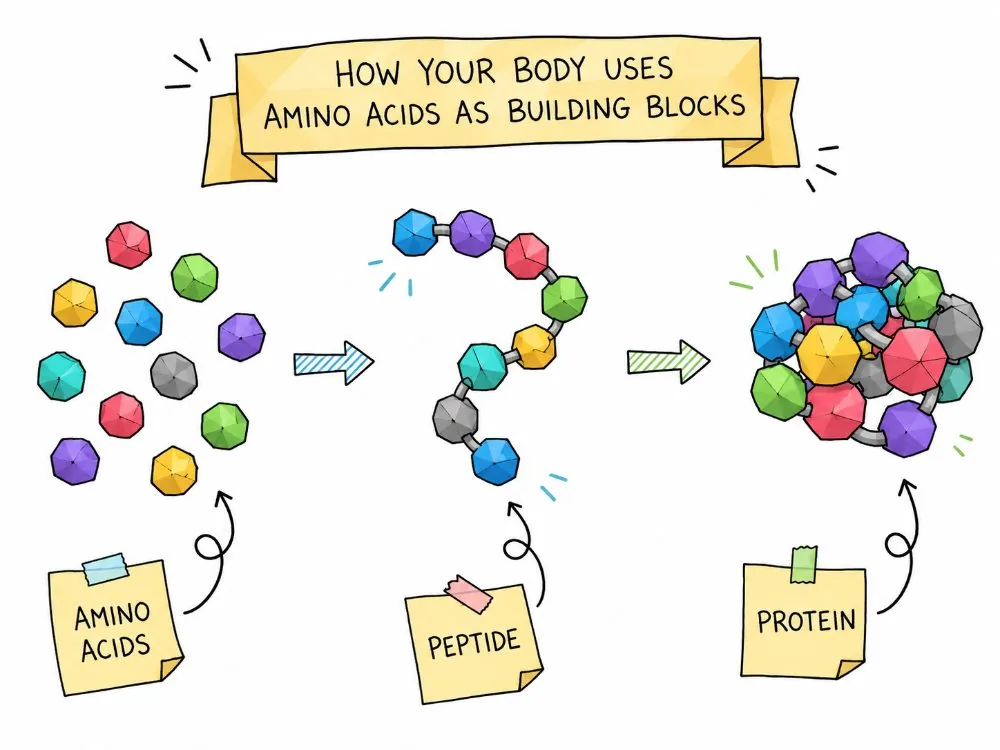

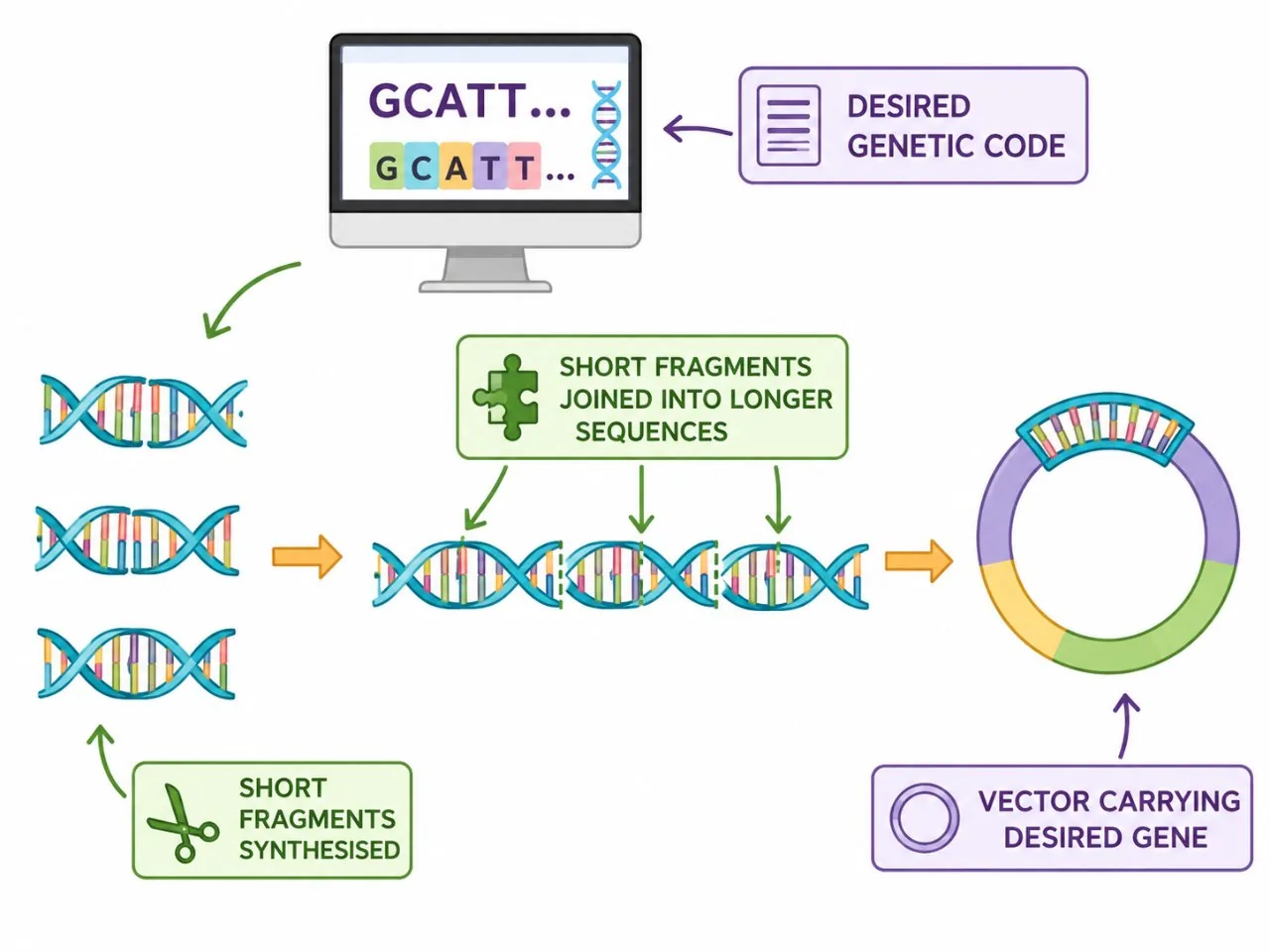
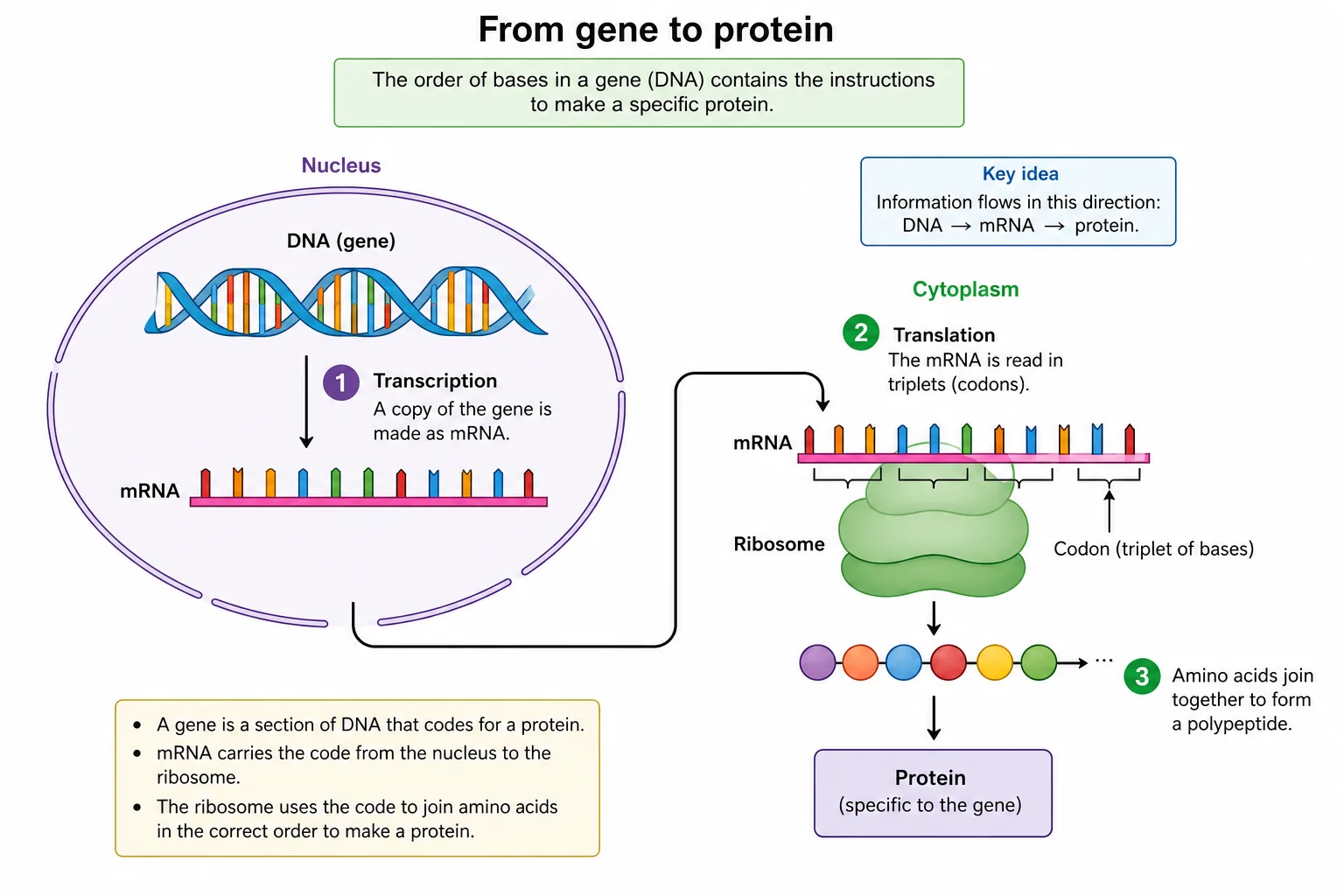
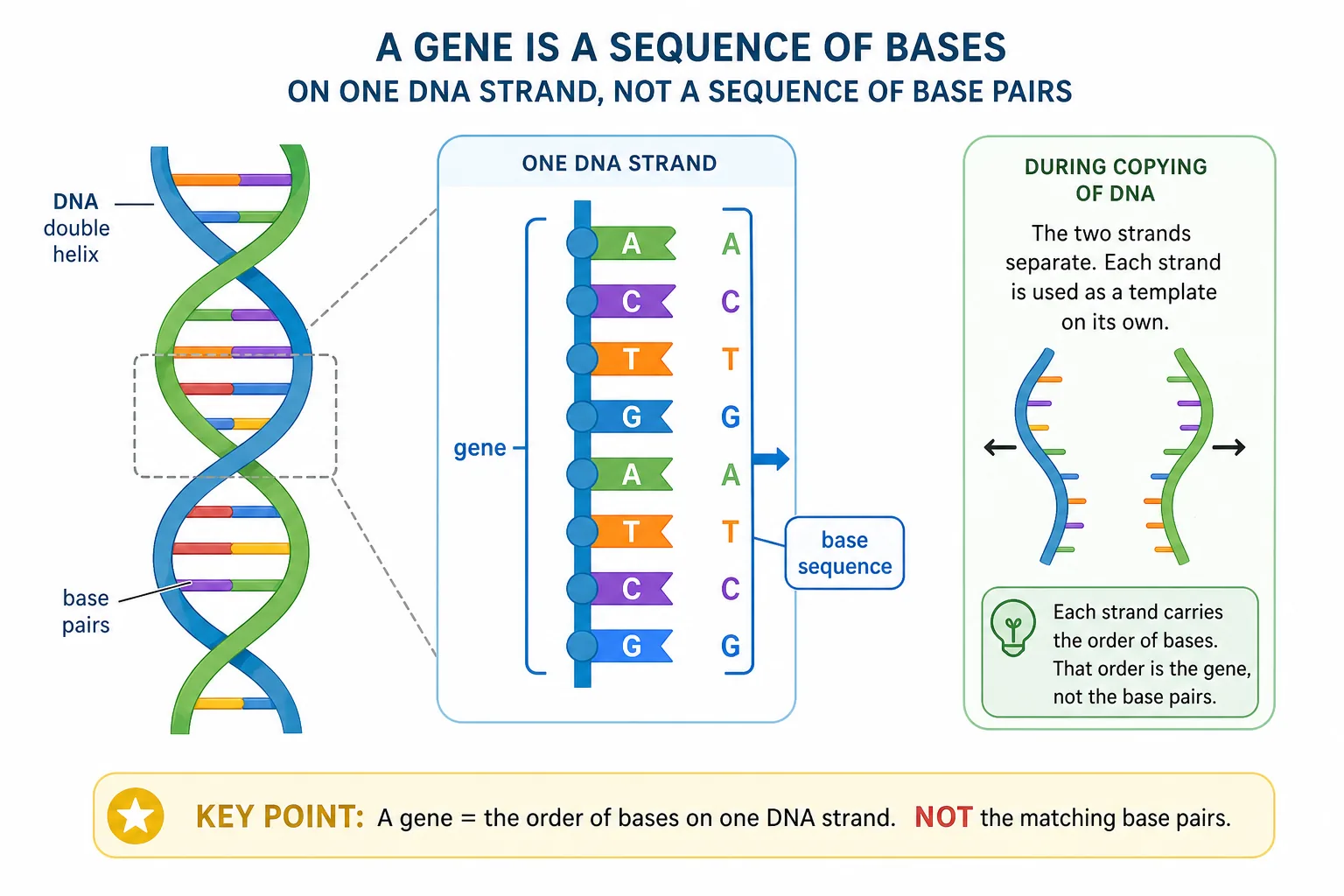
DNA contains four bases, abbreviated A, C, G and T.
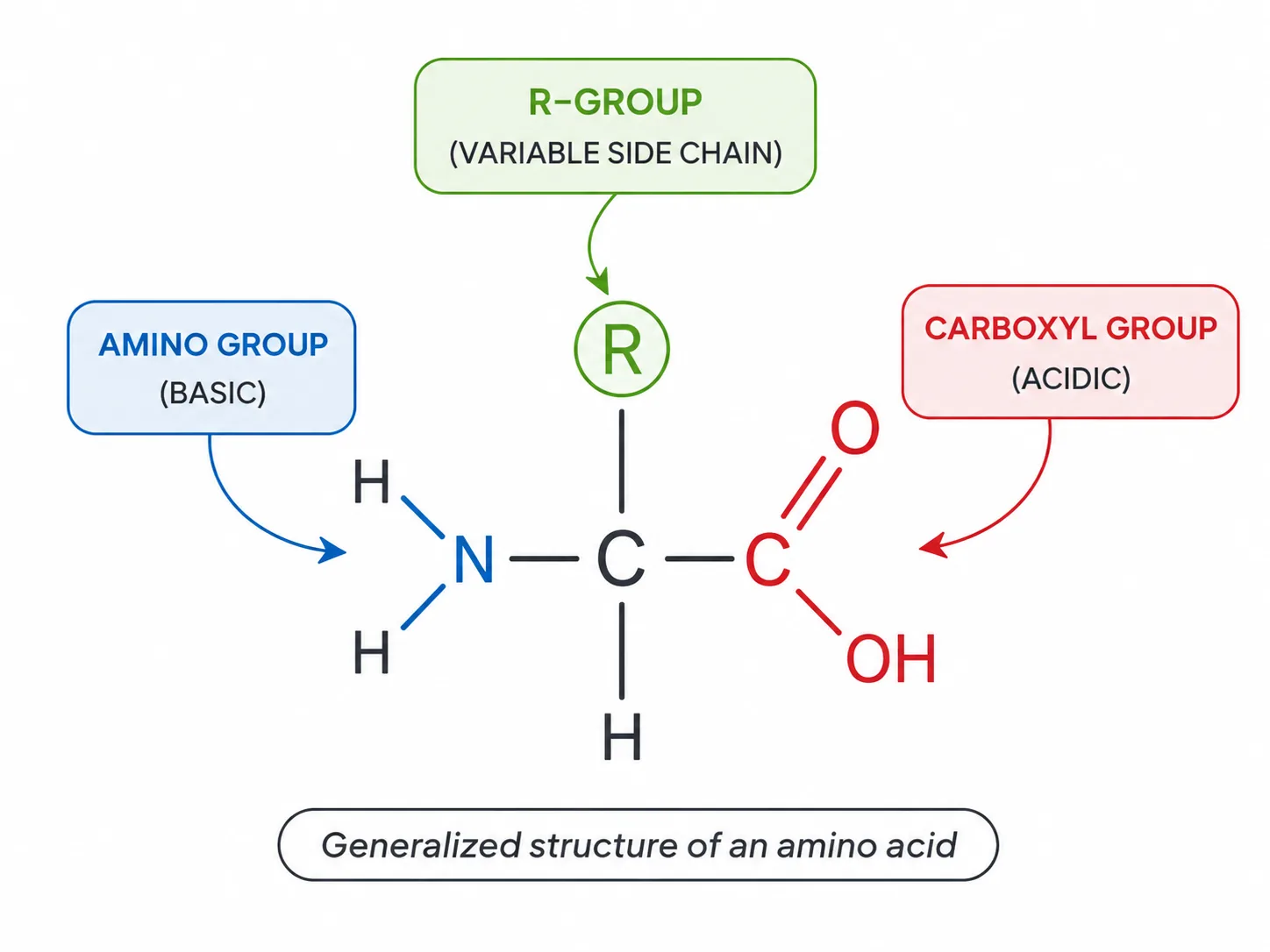
- and this in turn determines how the protein folds into its shape and what it does.
Protein synthesis takes place on ribosomes in the cytoplasm. Because DNA cannot leave the nucleus, a copy of the gene is taken to the ribosome in the form of a molecule of messenger RNA.
Section 4 of 9Mutations
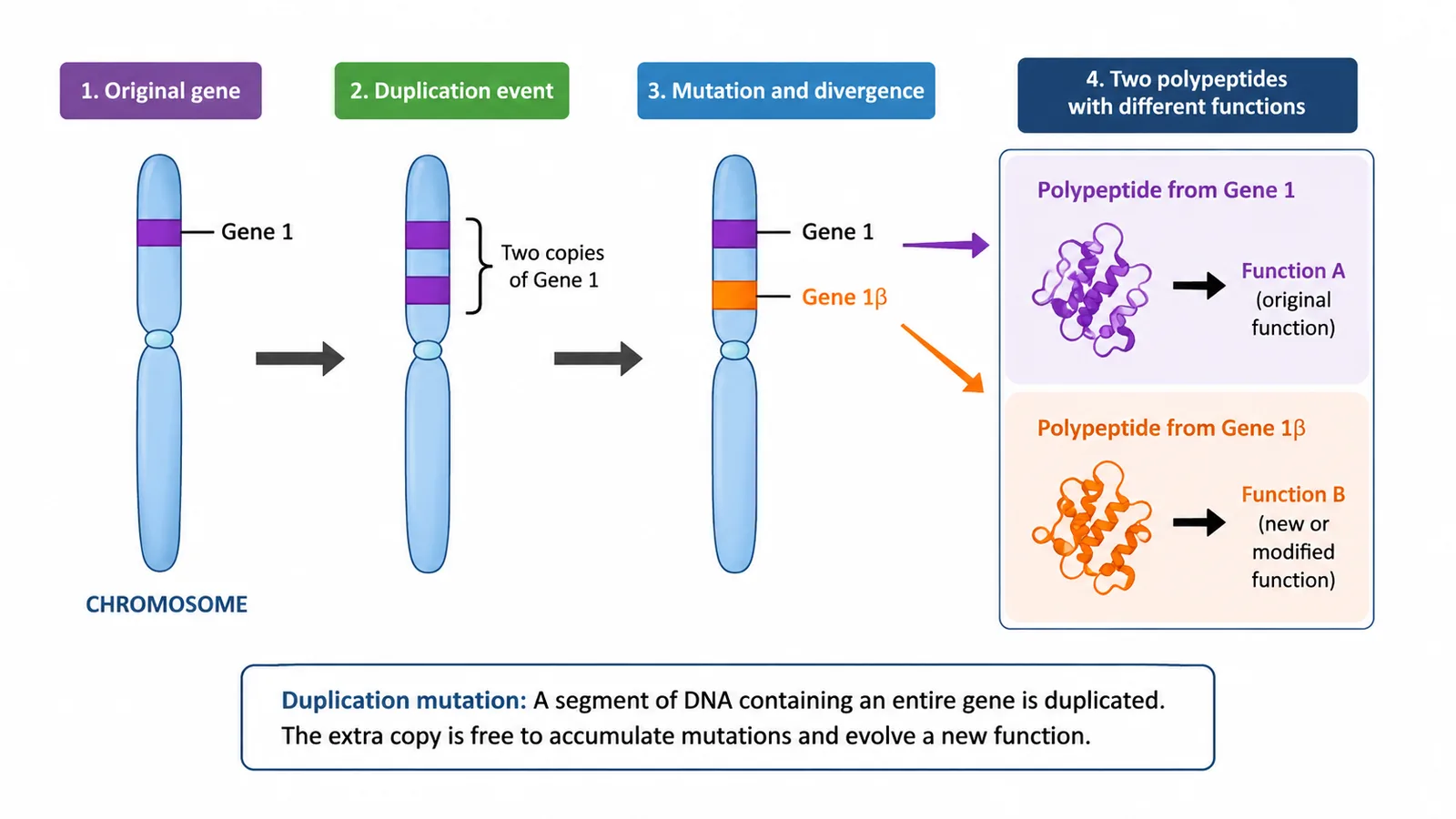

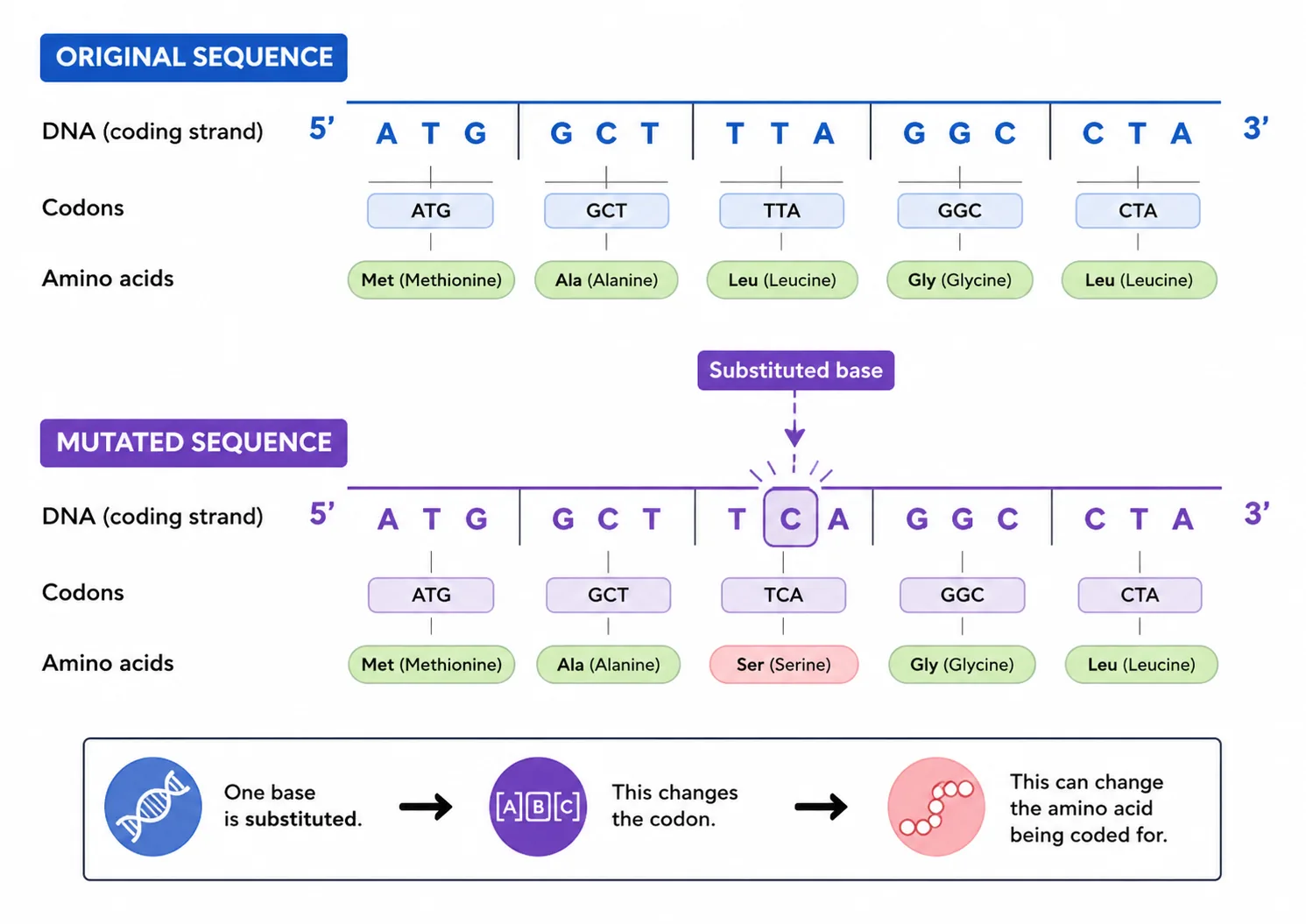
A mutation is a change in the sequence of DNA bases.
- so the protein folds differently and may not work, for instance when an enzyme's active site no longer fits its substrate.
Section 5 of 9Importance of the genome
Knowing the human genome has several uses.
It raises ethical questions, such as who should have access to a person's genetic information, whether insurers could use it, and how it should be protected. These issues should be weighed in discussion.
The topic links to DNA structure (6.1.5), inheritance (6.1.6) and inherited disorders (6.1.7).
Section 6 of 9Gene expression and protein shape


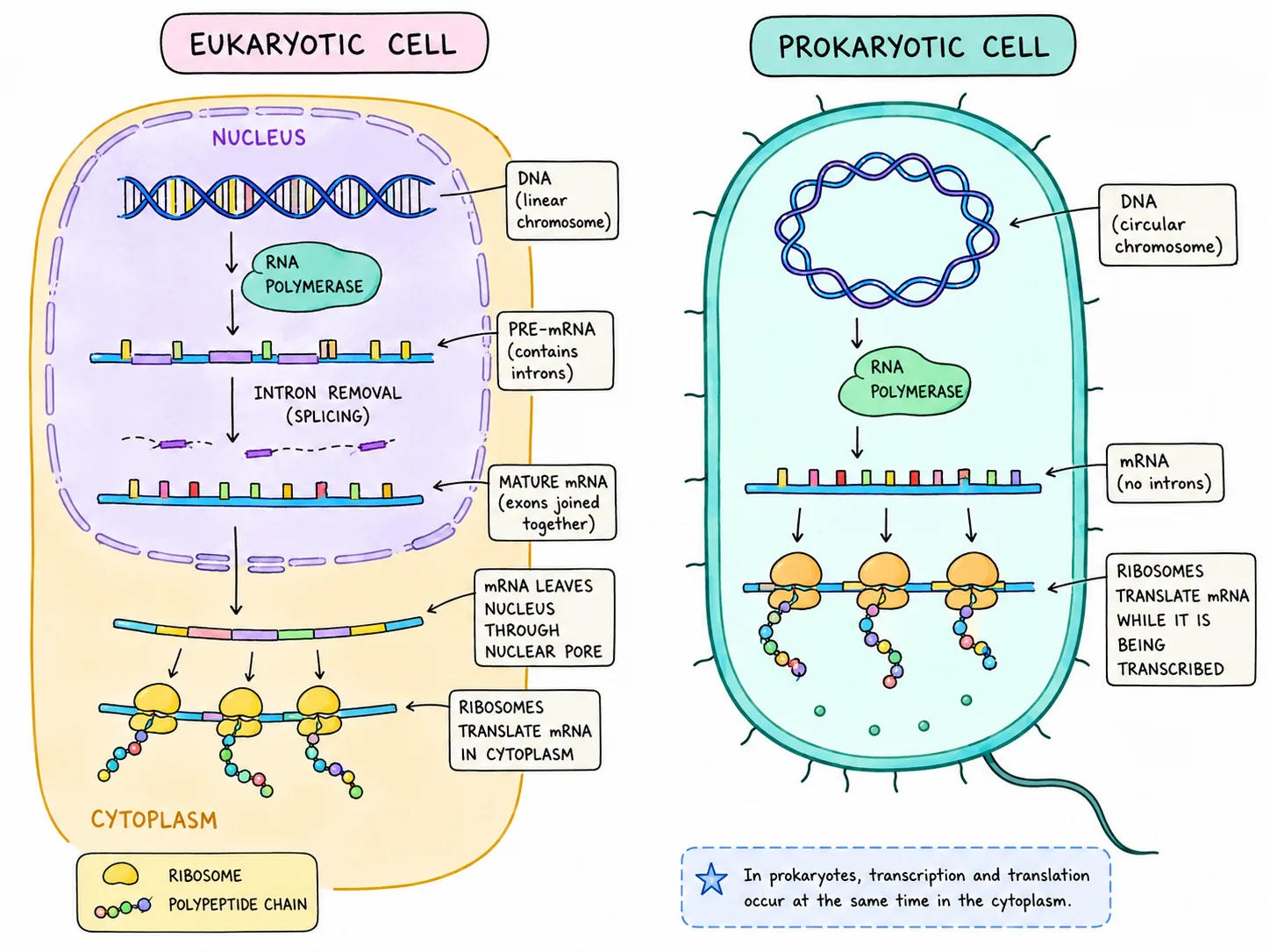
Every cell in the body of an organism has the same genome, yet a muscle cell and a nerve cell look and behave very differently.
- while a pancreas cell makes insulin.
The shape of a protein is critical.
- and a function is lost.
Calculations may ask how many bases code for a protein with a given number of amino acids: a protein of 100 amino acids needs at least 300 bases, since each amino acid is coded by three.
Section 7 of 9Exam-style questions

Describe the relationship between a gene, a chromosome and DNA. [3]3 marks
A chromosome is a long coiled molecule of DNA [1]. A gene is a short section of DNA [1] that codes for a particular protein [1].
Explain how a change in a gene can lead to a non-functioning protein. [3]3 marks
A mutation changes the order of the bases [1]. This may change the amino acid sequence [1]. The protein folds into a different shape so it may not work, for example an enzyme not fitting its substrate [1].
Give two reasons why it is useful to know the human genome. [2]2 marks
It helps to identify genes linked to inherited diseases [1]. It allows doctors to predict risk or personalise treatment [1]. (Also: tracing human migration.)
Section 8 of 9Key terms
| Term | Meaning |
|---|---|
| Genome | The entire genetic material of an organism. |
| Gene | A section of DNA that codes for a protein. |
| Chromosome | A coiled molecule of DNA containing many genes. |
| Base | One of A, C, G or T in DNA. |
| Mutation | A change in the DNA sequence. |
| Amino acid | Unit that makes up proteins. |
| Triplet | A group of three bases coding for one amino acid. |
Section 9 of 9Exam technique
Marked practiceQuizzes for this lesson
قواعد اتجاهات البلمرة ومضاد الكودون
- إنزيم بلمرة RNA: يبني دائماً في الاتجاه 5′ → 3′، ويقرأ شريط القالب فقط في الاتجاه 3′ → 5′.
- كودون البدء: AUG يقابله مضاد كودون UAC ويشفر للميثيونين أول حمض أميني.
- كودونات الوقف: UAA, UAG, UGA ليس لها tRNA يقابلها، بل يرتبط بها بروتين عامل الإطلاق (Release Factor) لإنهاء الترجمة.