4.1.1Natural Selection and Genetic Modification
Evolution by Natural Selection
5 min read 9 parts Lesson 2 of 9 1 quiz
Section 1 of 9The steps of natural selection
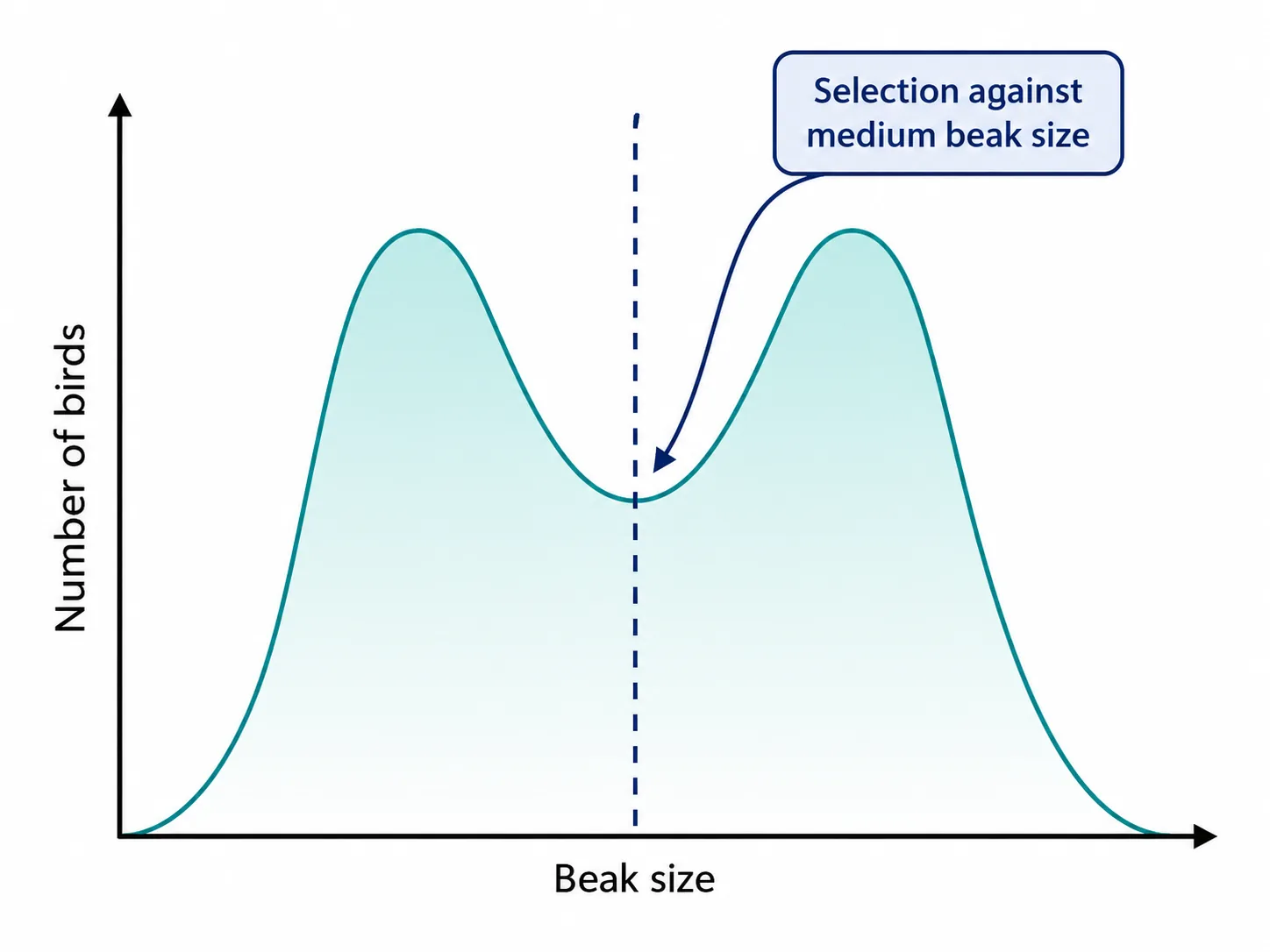
Note that selection acts on the phenotype, but what changes in the population is the frequency of alleles. An individual does not change; a population does.
Section 2 of 9Example: peppered moths
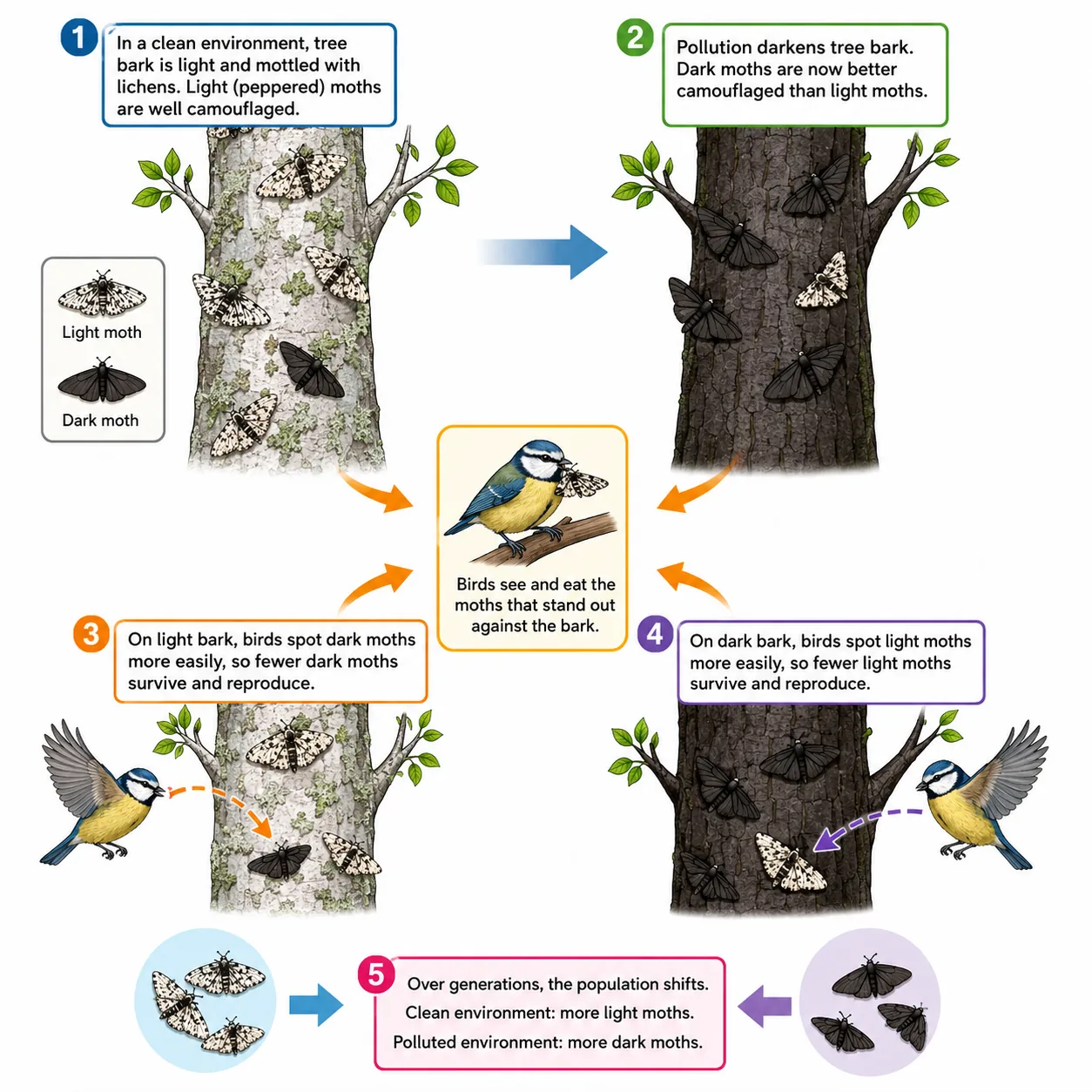
The peppered moth exists as a pale form and a dark form.
Section 3 of 9Example: antibiotic resistance
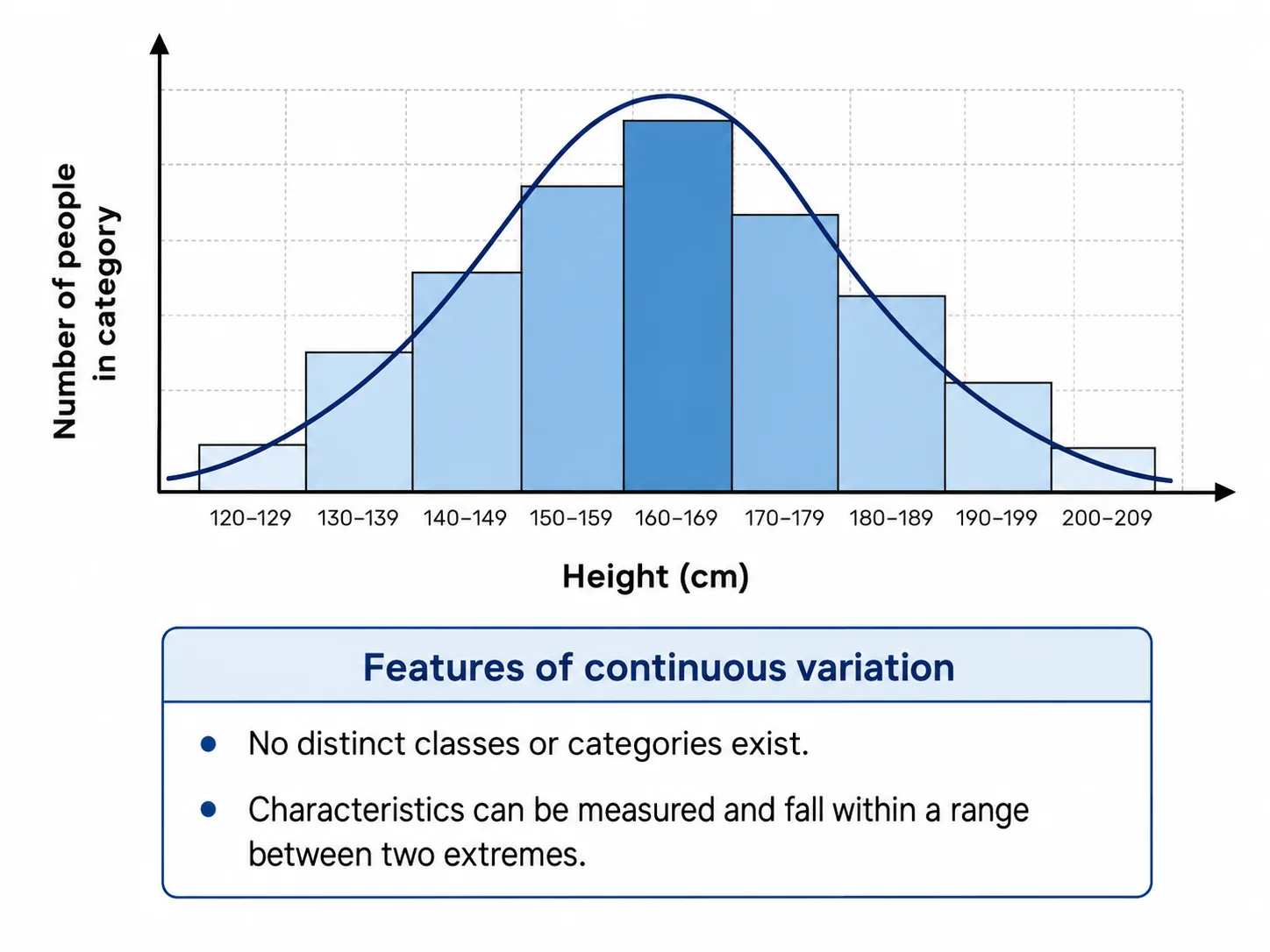
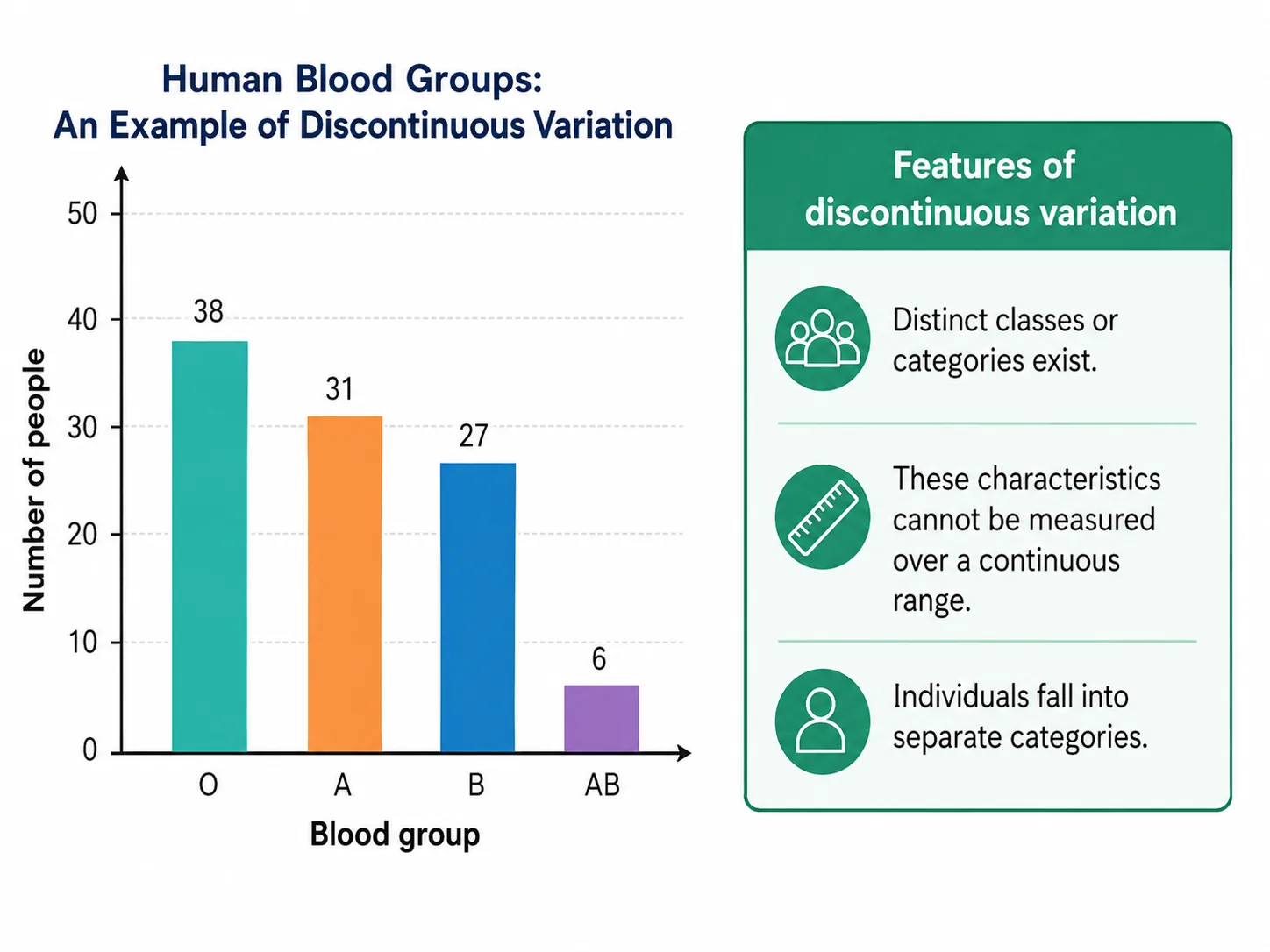

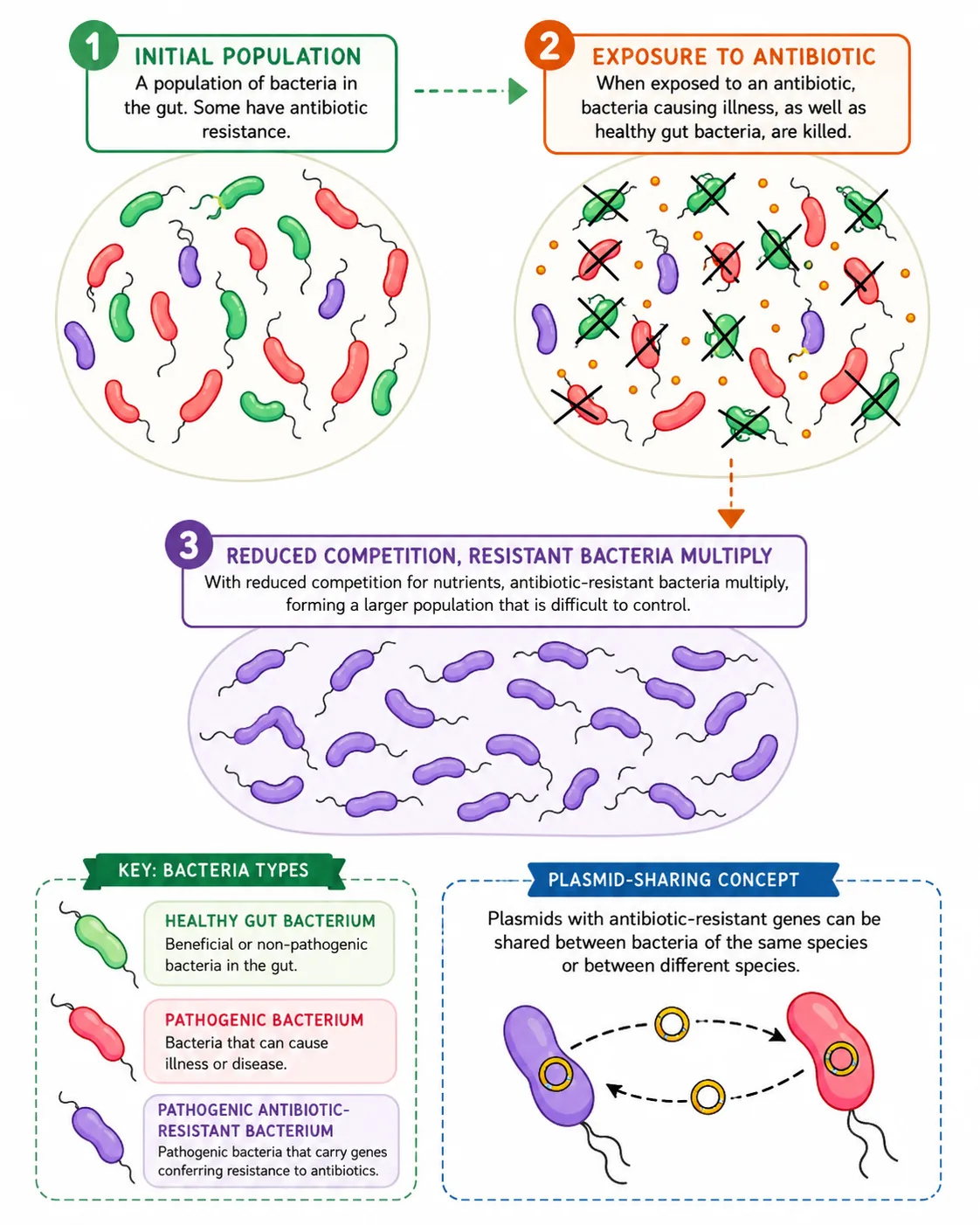
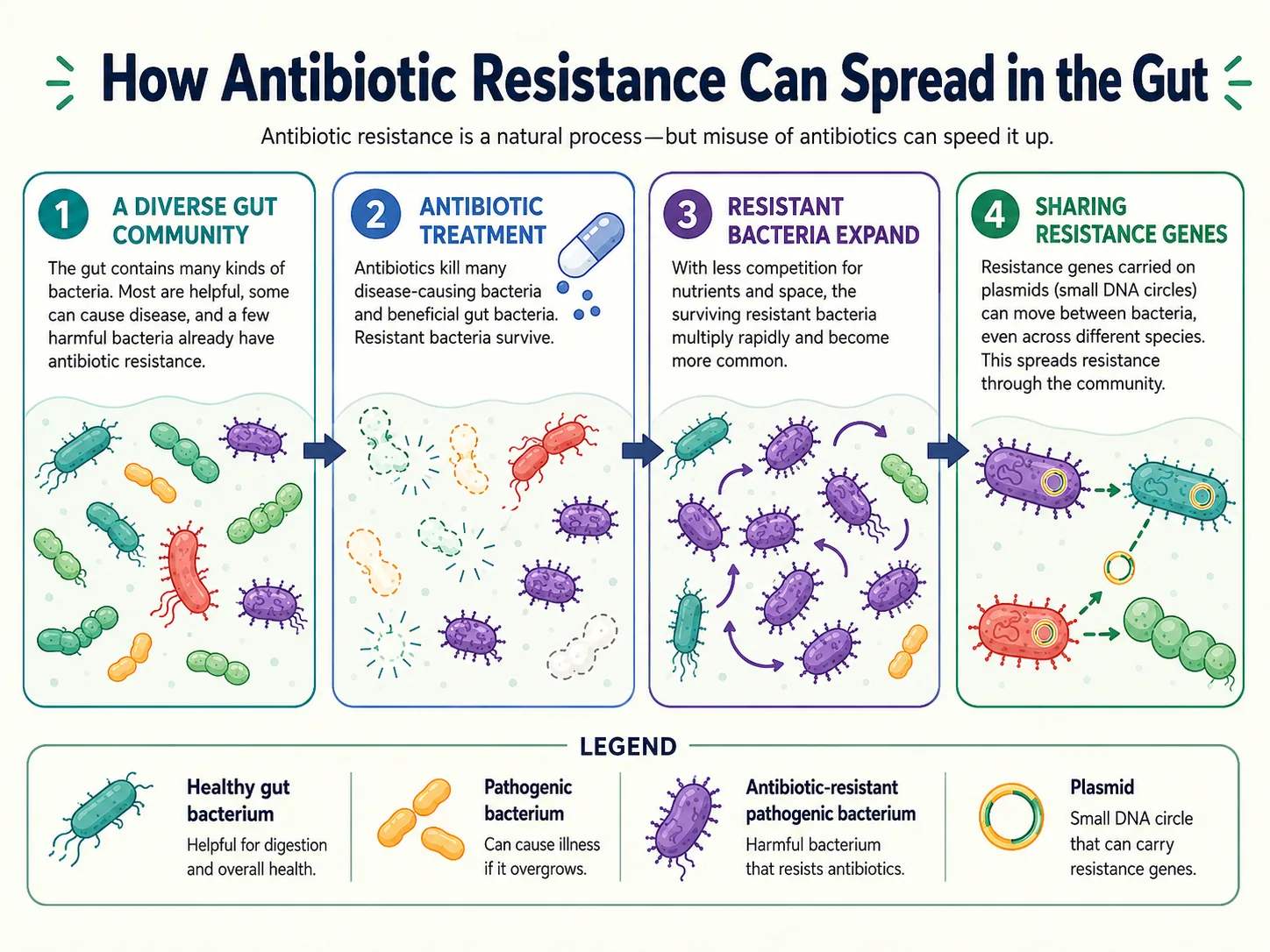
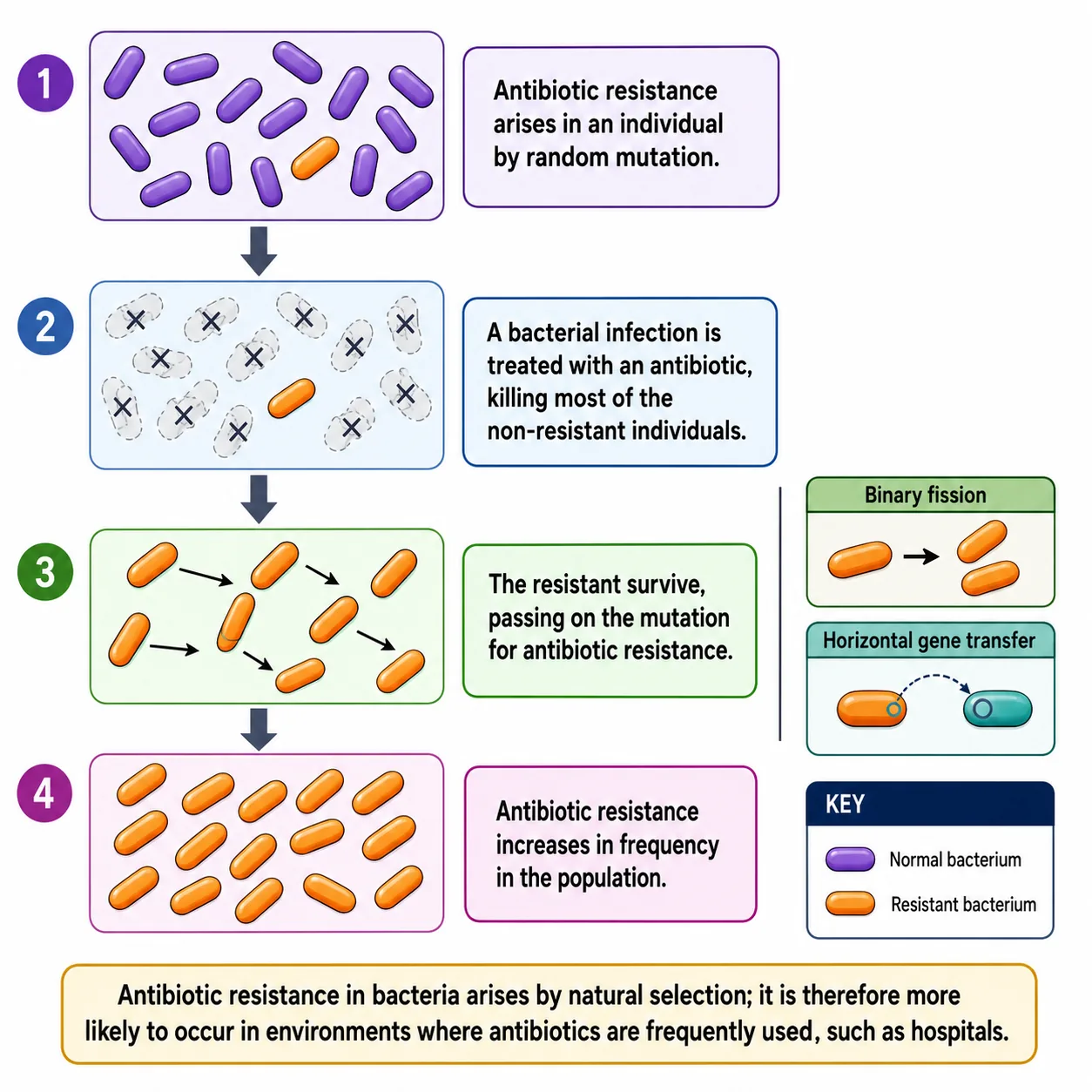

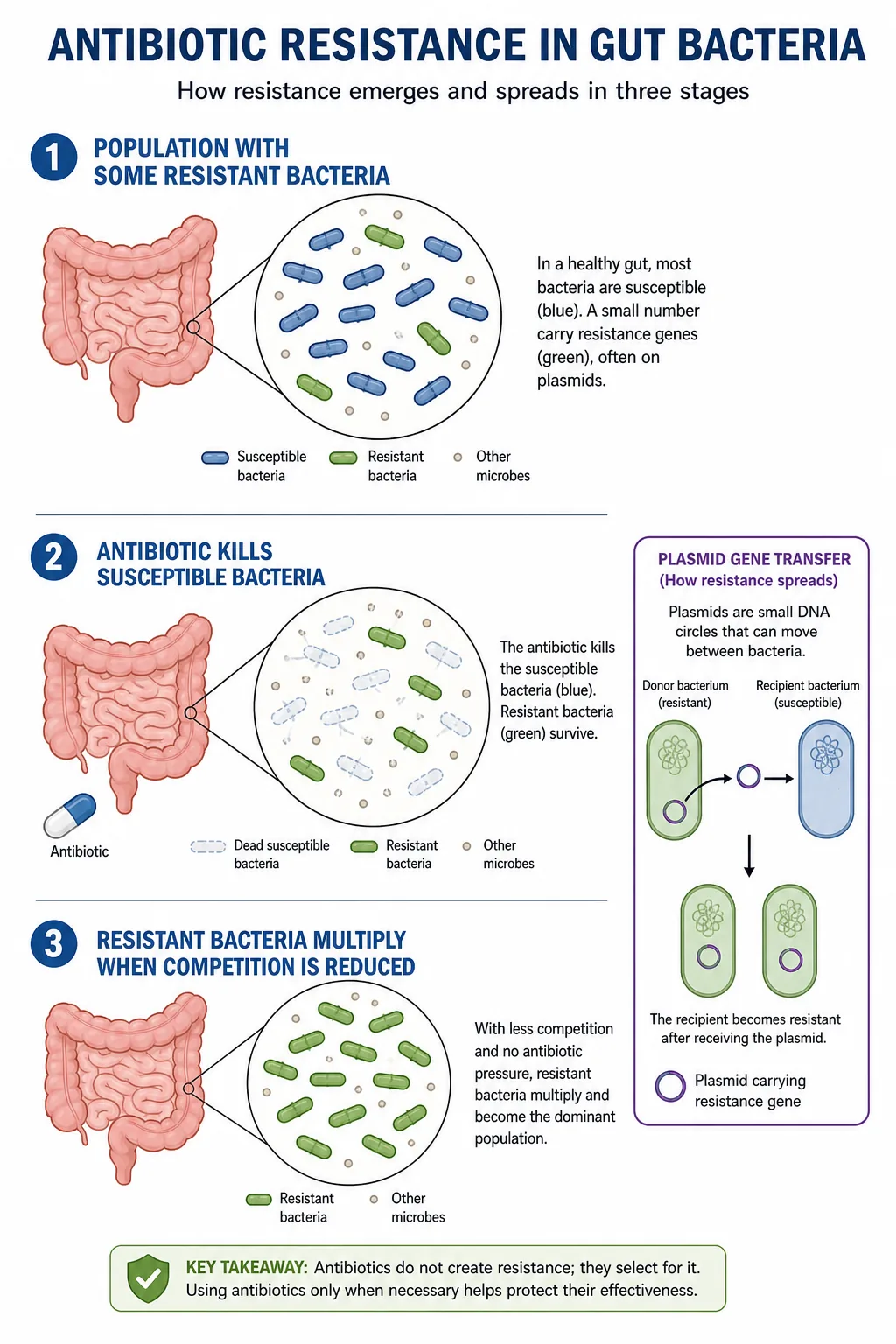

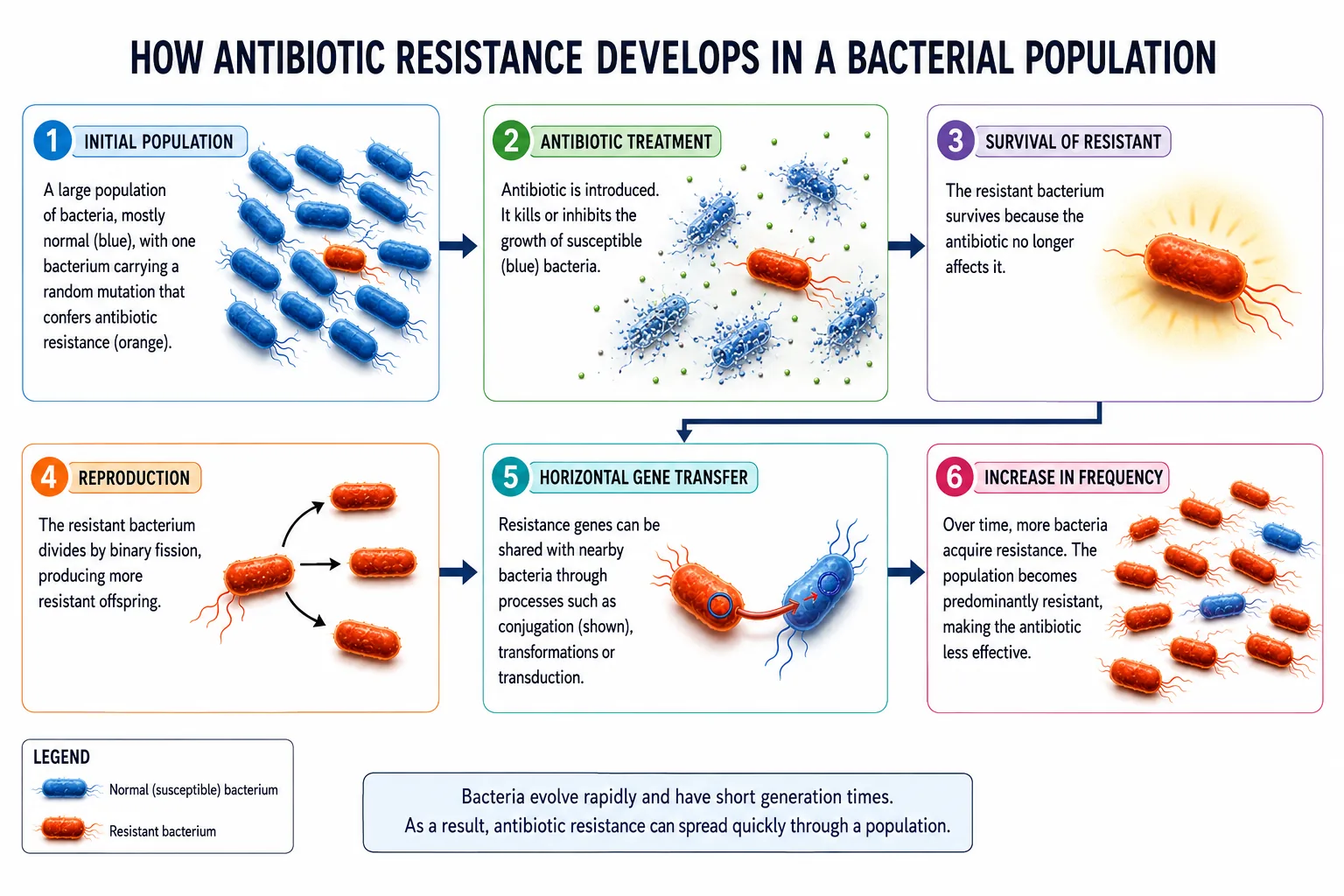
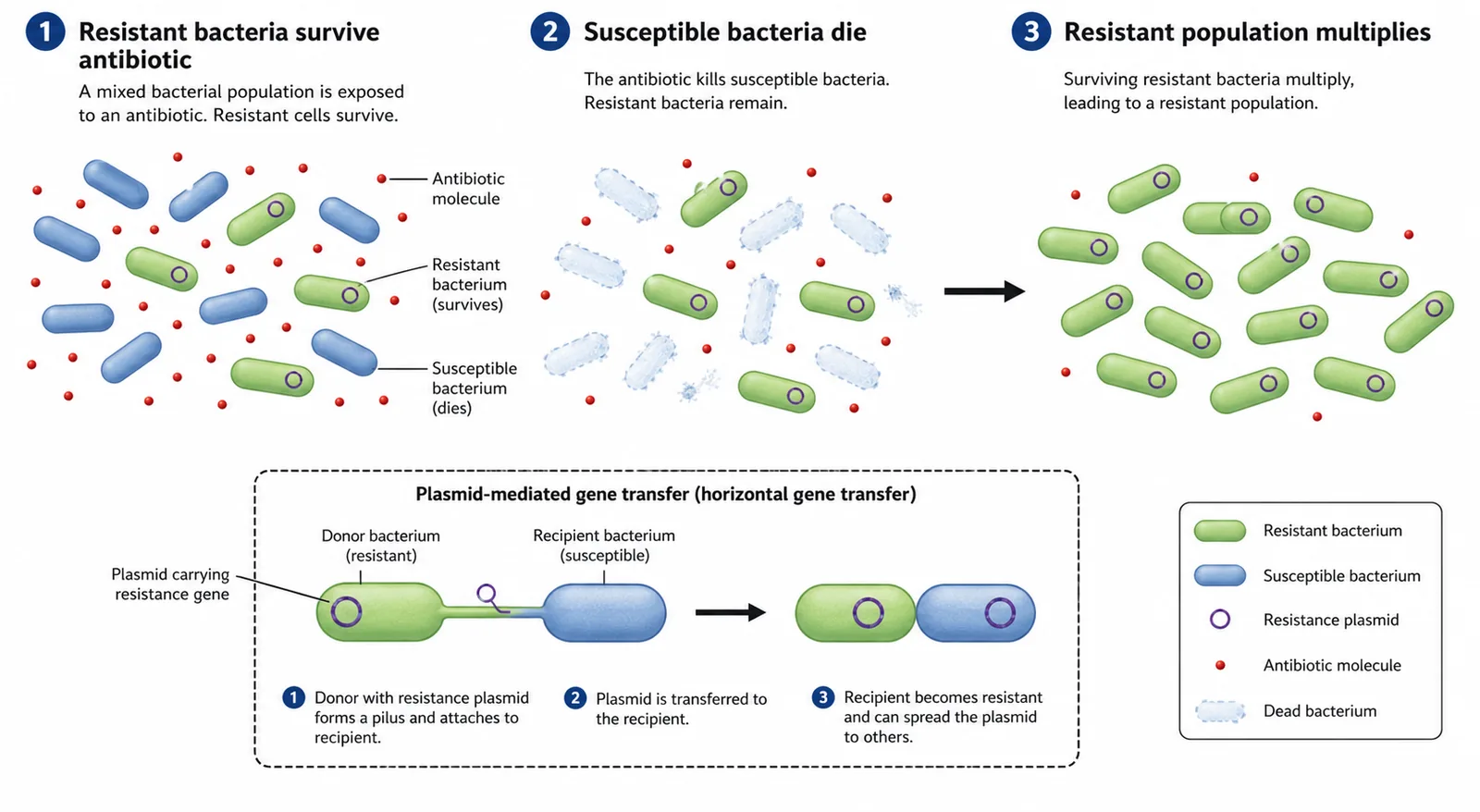
Bacteria reproduce very quickly, so evolution can be seen in a short time.
| Peppered moth | Antibiotic resistance | |
|---|---|---|
| Source of variation | Mutation to dark colour | Mutation giving resistance |
| Selection pressure | Predation by birds | Antibiotic |
| Result | Dark allele common in polluted areas | Resistant strain spreads |
Section 4 of 9Adaptation and speciation
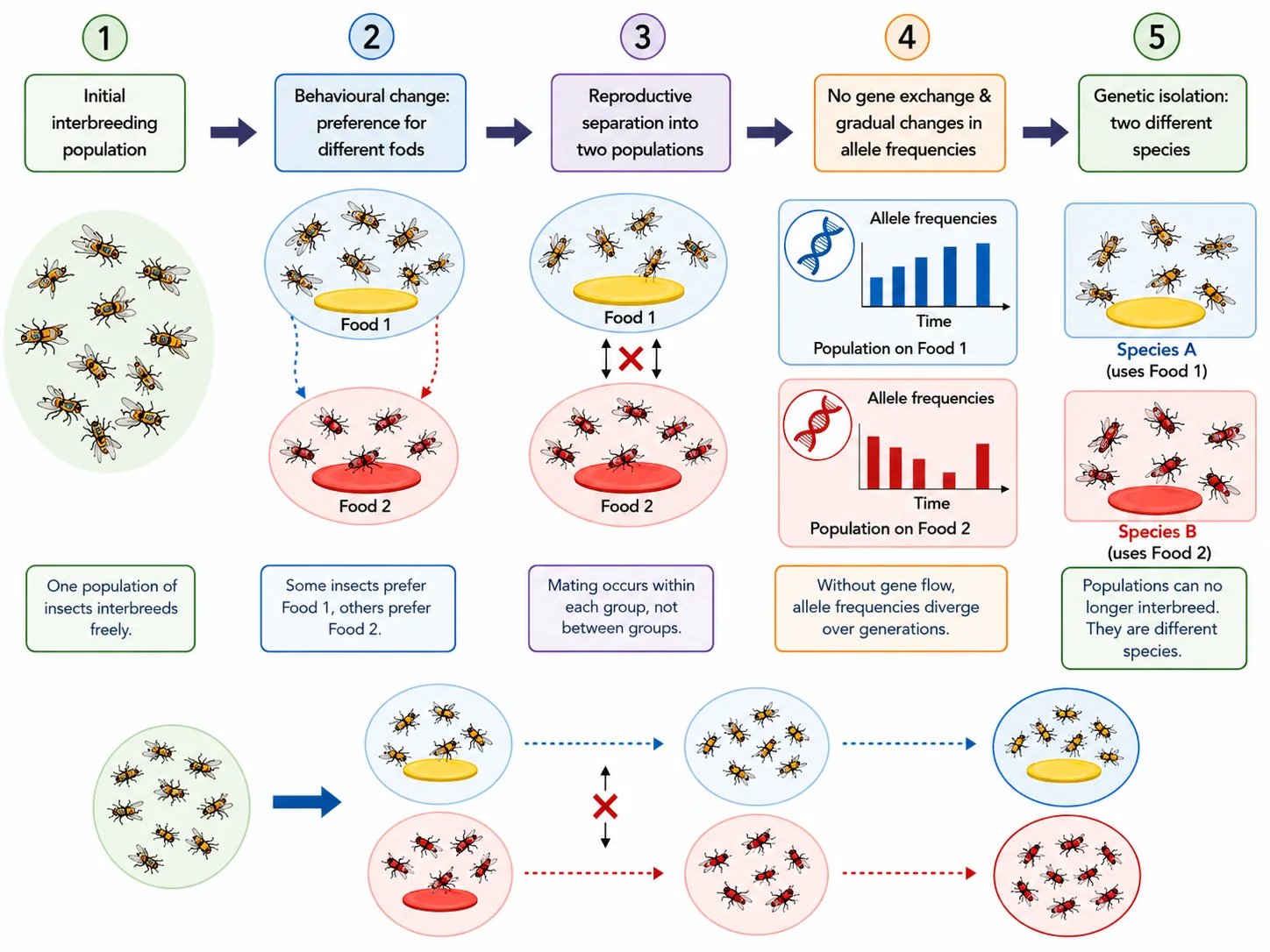
Features that increase an organism's chance of survival and reproduction are adaptations: structural (the thick fur and fat of a polar bear), behavioural (migration), or physiological (producing a toxin). Over many generations, selection leads to a population that is well adapted to its habitat.
If two populations of the same species become separated, for example on different islands, they experience different conditions and different selection pressures.
Section 5 of 9Common misunderstandings
Natural selection does not occur because organisms need or want to change.
Section 6 of 9Selection pressures and how they act
Anything that affects the survival or breeding success of individuals is a selection pressure.
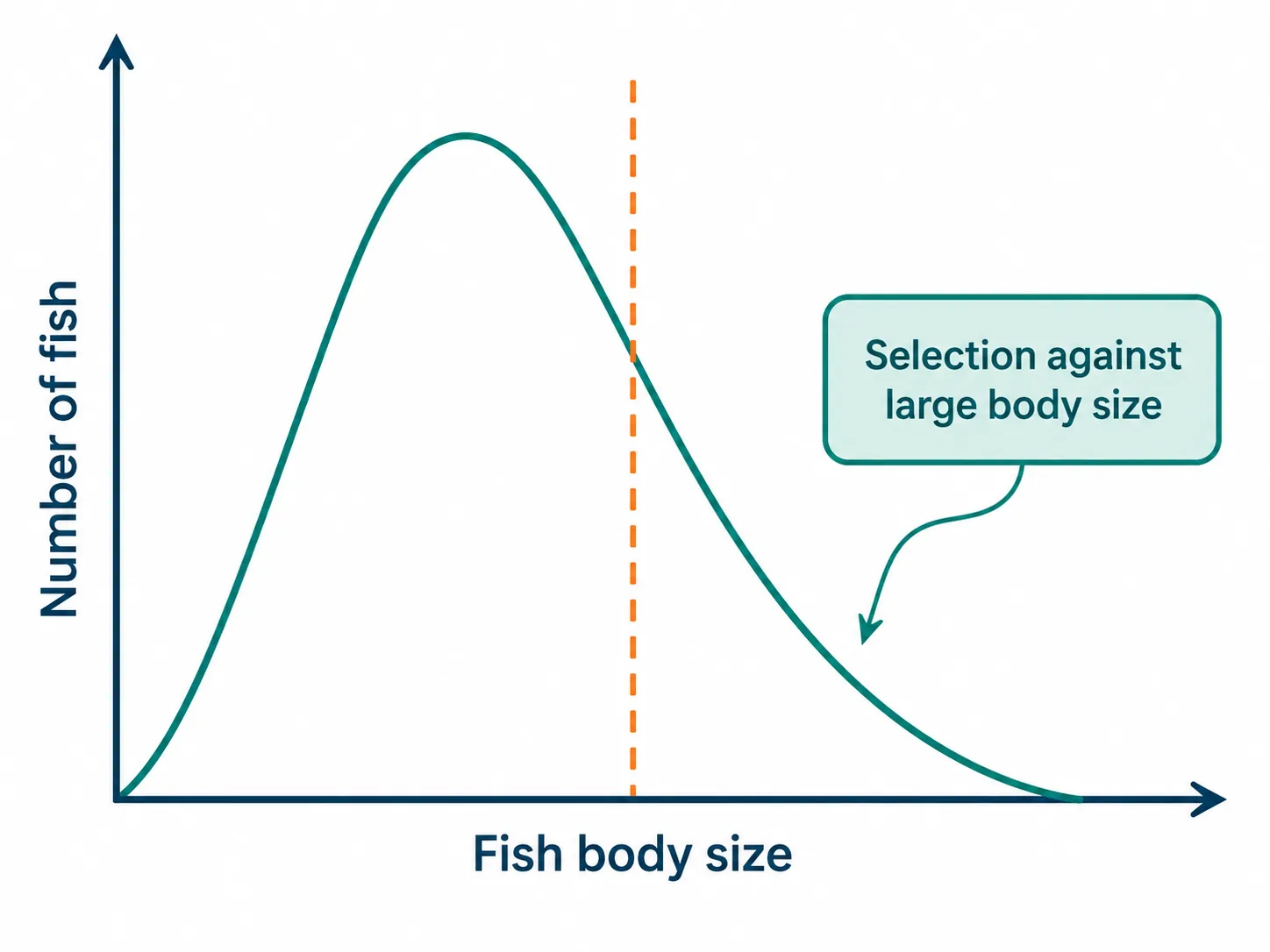
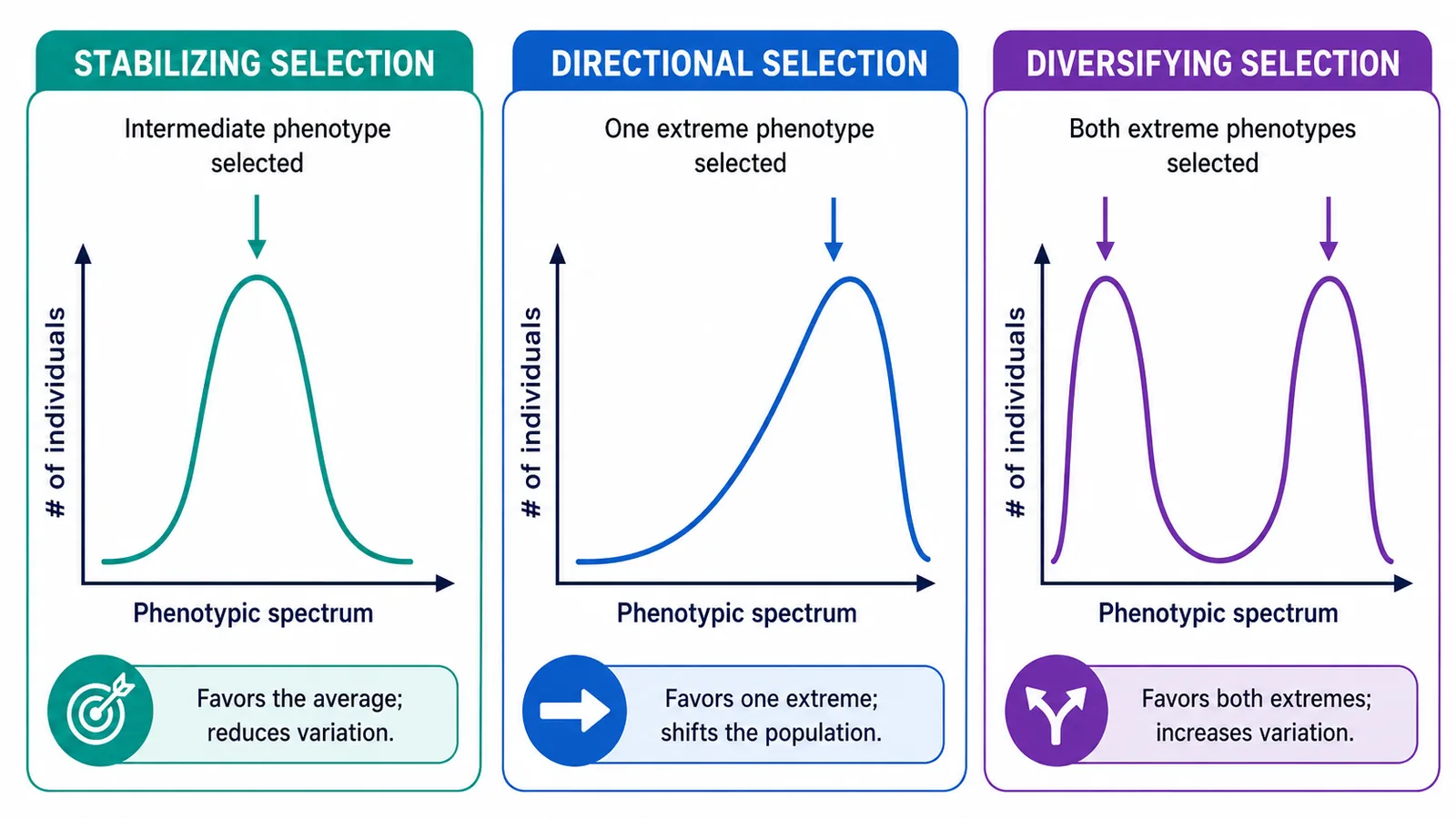
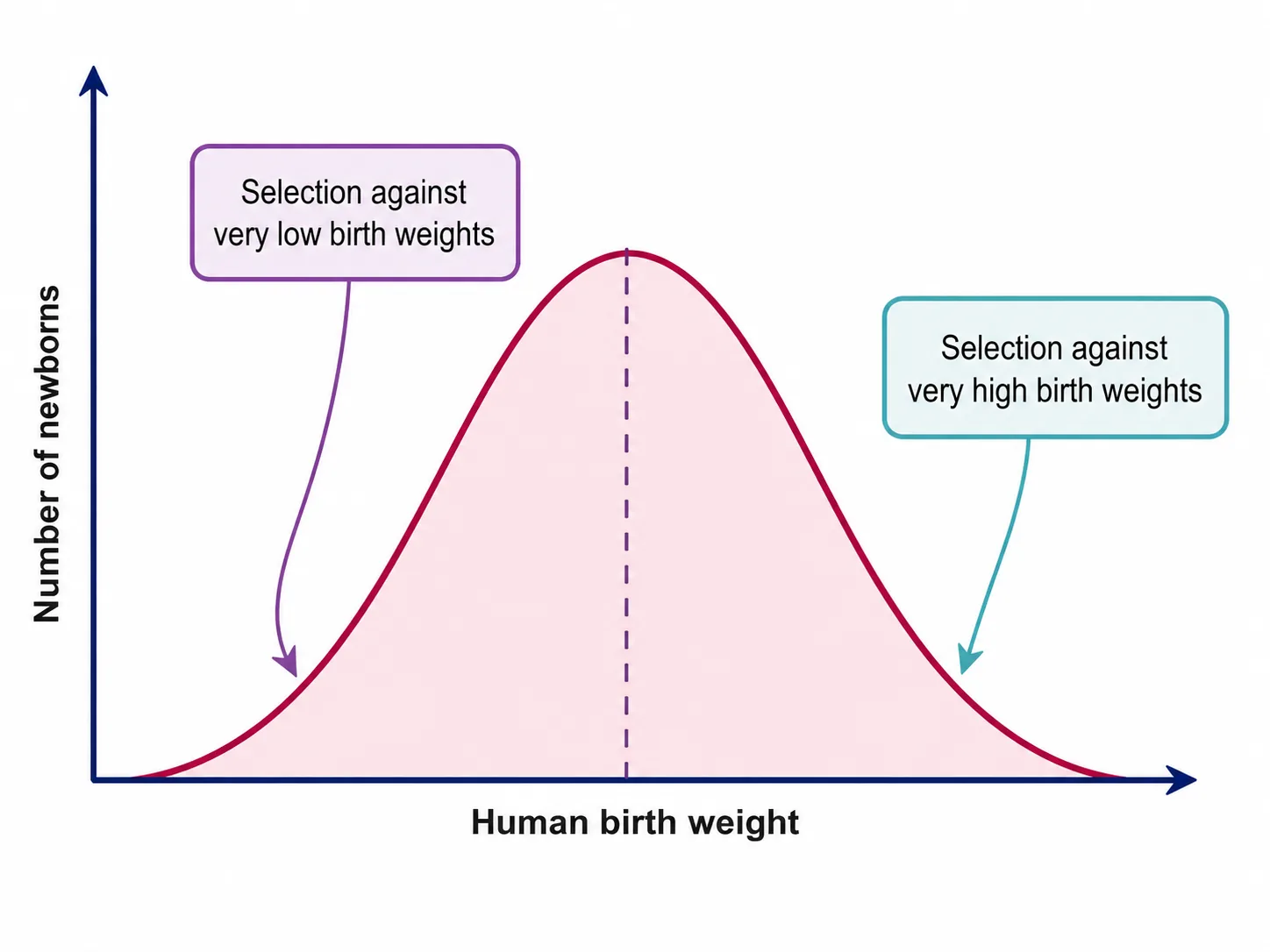
When the environment is stable, selection tends to keep a population close to the best-suited form. When the environment changes, selection favours different variants and the population changes. A sensible approach to an exam question is to identify the selection pressure, state which variant has the advantage, say why, and then describe the change in allele frequency over generations.
Section 7 of 9Exam-style questions
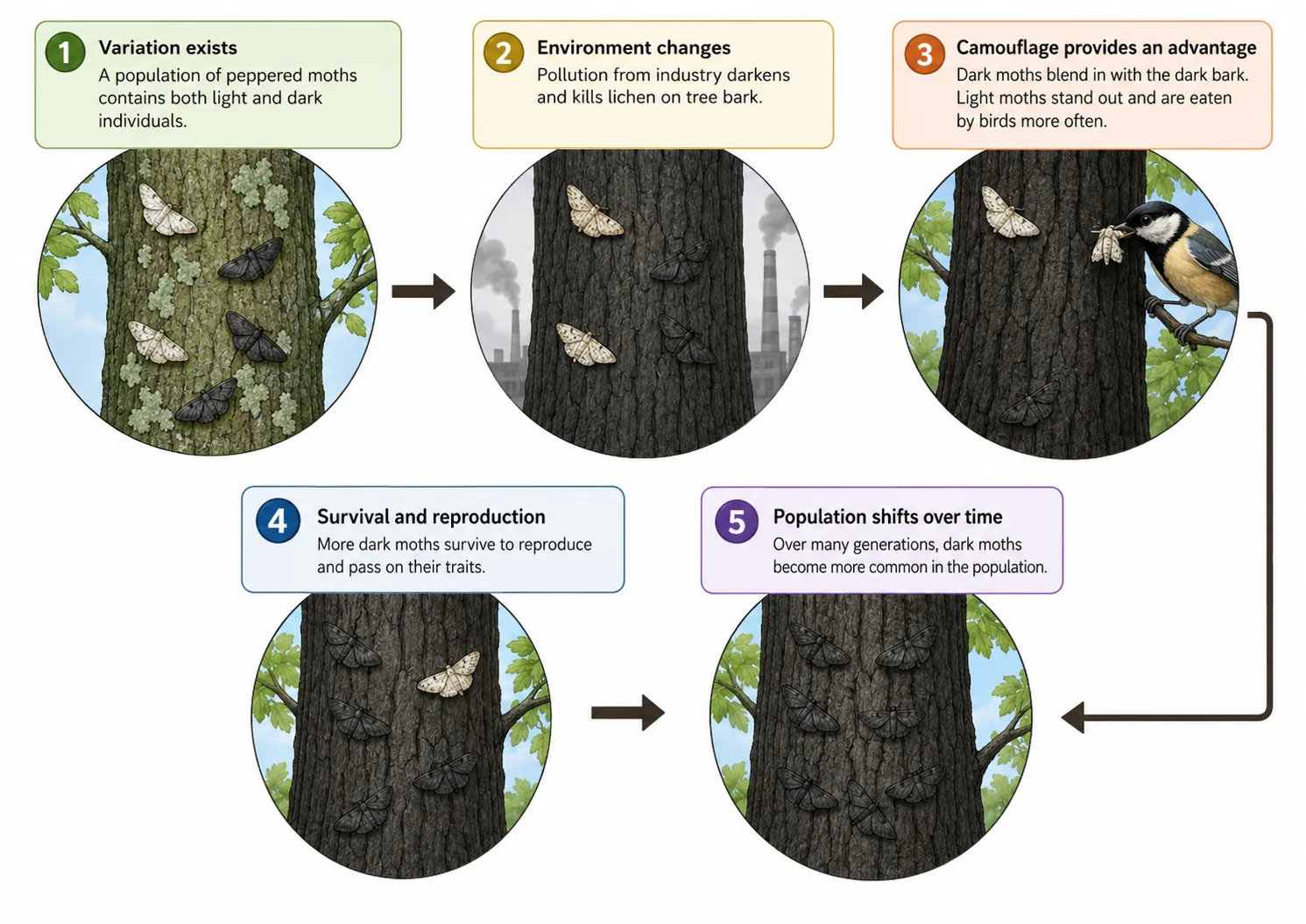
Explain how natural selection led to dark-coloured peppered moths becoming more common in industrial areas. [4]4 marks
Variation existed, with some dark moths due to a mutation [1]; soot darkened trees so pale moths were seen and eaten more by birds [1]; dark moths survived and reproduced more [1]; they passed on the allele, so it became more common [1].
Explain why antibiotic-resistant strains of bacteria have become more common. [3]3 marks
A mutation gave some bacteria resistance [1]; antibiotics killed the non-resistant bacteria so resistant ones survived and reproduced [1]; resistance was passed on, so the proportion of resistant bacteria rose [1].
Suggest how two populations of the same species on different islands might become different species. [3]3 marks
Different environments cause different selection pressures [1]; different alleles are favoured in each population [1]; eventually they can no longer interbreed to produce fertile offspring [1].
Section 8 of 9Key terms
| Term | Meaning |
|---|---|
| Natural selection | The process by which individuals with advantageous features survive and reproduce more. |
| Selection pressure | An environmental factor that affects survival, such as predation or disease. |
| Adaptation | A feature that helps an organism survive in its habitat. |
| Speciation | The formation of a new species. |
| Extinction | The permanent loss of all members of a species. |
| Antibiotic resistance | The ability of bacteria to survive an antibiotic. |
| Camouflage | Colouring that makes an organism hard to see. |
| MRSA | A strain of bacteria resistant to many antibiotics. |