4.2.4Natural Selection and Genetic Modification
Evaluating the Use of Genetic Engineering
5 min read 9 parts Lesson 8 of 9 Unit quiz
Section 1 of 9How to evaluate
To evaluate means to consider evidence for and against and reach a judgement. A strong answer states benefits and risks, who is affected, whether the evidence is reliable, and gives a conclusion linked to the points made. The same method applies to GM crops, GM animals, and medical uses such as gene therapy.
Section 2 of 9Applications in medicine
- It has treated some conditions but is limited: the gene may not reach enough cells, the effect may not last,
- and the body may respond to the viral vector.
In every case, ask whether the benefit could be achieved another way, such as by selective breeding or improved farming, and whether the harm can be reversed if it appears.
A condition treated by gene therapy also needs careful trials, because a patient cannot easily be returned to their original state if something goes wrong.
Section 3 of 9Applications in agriculture
GM crops can improve yield, nutrition and resistance, as covered in the lesson on food demand. The main risks cited are cross-pollination with wild plants, harm to non-target organisms, increased reliance on a few herbicide-resistant varieties, and the cost of seed. Reduced pesticide spraying can benefit wildlife, but herbicide-resistant crops may lead to heavy use of weedkillers.
Section 4 of 9Ethical, social and economic issues
| Issue | Points |
|---|---|
| Ethical | Is it right to alter the genes of living things? Concerns about animal welfare and about future uses such as altering human embryos for appearance or ability (designer babies). |
| Health | Possible allergens or unknown long-term effects; people want the right to choose through labelling. |
| Environmental | Gene transfer to wild species, loss of biodiversity, effects on other organisms; but potentially less land and chemical use. |
| Economic | Patents and costs may give large companies control; better yields can raise farmers' incomes and lower food prices. |
Section 5 of 9Reaching a conclusion
A balanced conclusion might say that the medical uses are widely accepted because the benefit is large and the risk is controlled in a laboratory, whereas environmental release of GM crops needs careful testing and monitoring because organisms cannot be recalled once released. Evidence should come from peer-reviewed studies, large trials and independent regulators, and you should note when evidence comes from a source with a financial interest, such as a seed company or an opposing campaign group.
Section 6 of 9Applying the method to a scenario

Suppose a company wants to grow herbicide-resistant oilseed rape.
Finally, remember that regulation differs between countries.
Section 7 of 9Exam-style questions
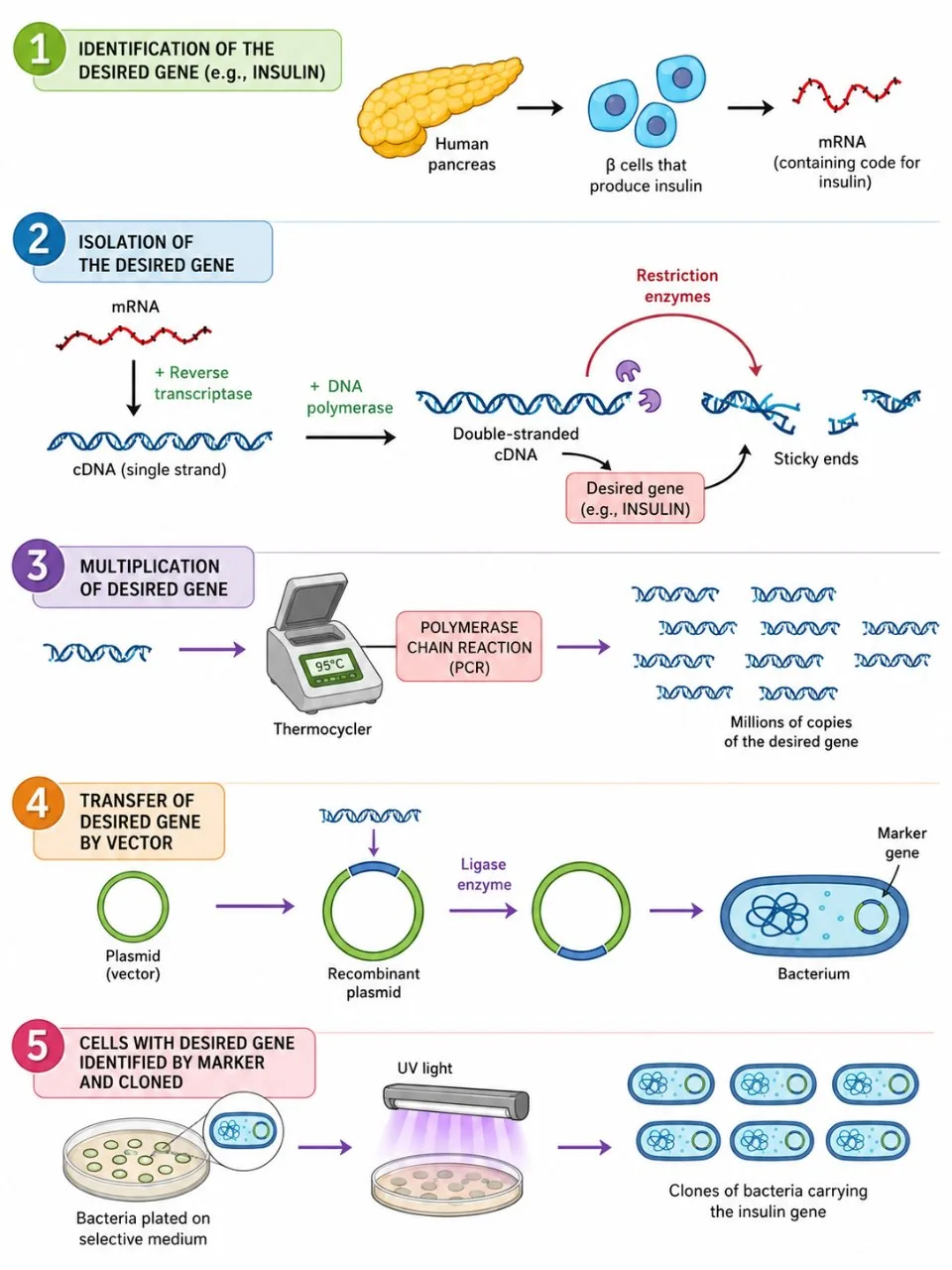
Evaluate the use of genetic engineering to produce human insulin in bacteria. [4]4 marks
Advantages: large amounts can be made quickly and cheaply because bacteria reproduce fast [1]; it is identical to human insulin so fewer side effects or immune responses than animal insulin [1].
Exam-style questionsDisadvantages: needs expensive equipment and skilled staff, and the bacteria must be kept pure [1].Conclusion: overall beneficial as it is made in contained conditions with little risk to the environment, so it is widely accepted [1].Suggest why scientists should publish GM crop safety trials in peer-reviewed journals. [2]2 marks
Other scientists check the methods and conclusions for errors or bias [1], so the evidence is more reliable and results can be repeated by others [1].
State two ethical objections some people have to genetic engineering. [2]2 marks
It is unnatural or interfering with living organisms [1]; it may cause suffering to animals used in research [1]. Alternatively, it could lead to modification of human embryos for non-medical features [1].
Section 8 of 9Key terms
| Term | Meaning |
|---|---|
| Evaluate | Consider the evidence for and against and reach a judgement. |
| Gene therapy | Introducing a working allele into a person's cells to treat a genetic disorder. |
| Peer review | Checking of scientific work by other experts before publication. |
| Ethical issue | A question of right and wrong raised by a technology. |
| Transgenic | An organism containing a gene from another species. |
| Patent | A legal right giving a company sole use of an invention. |
| Designer baby | An embryo selected or altered for chosen characteristics. |