Section 1 of 9What photosynthesis is
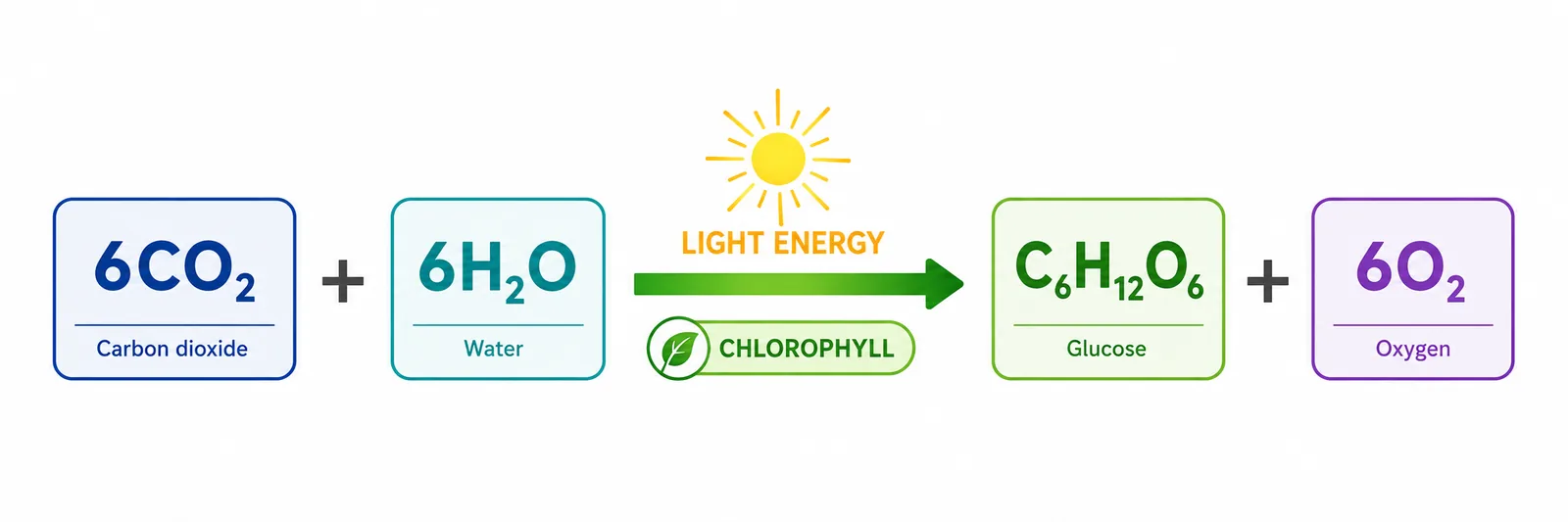
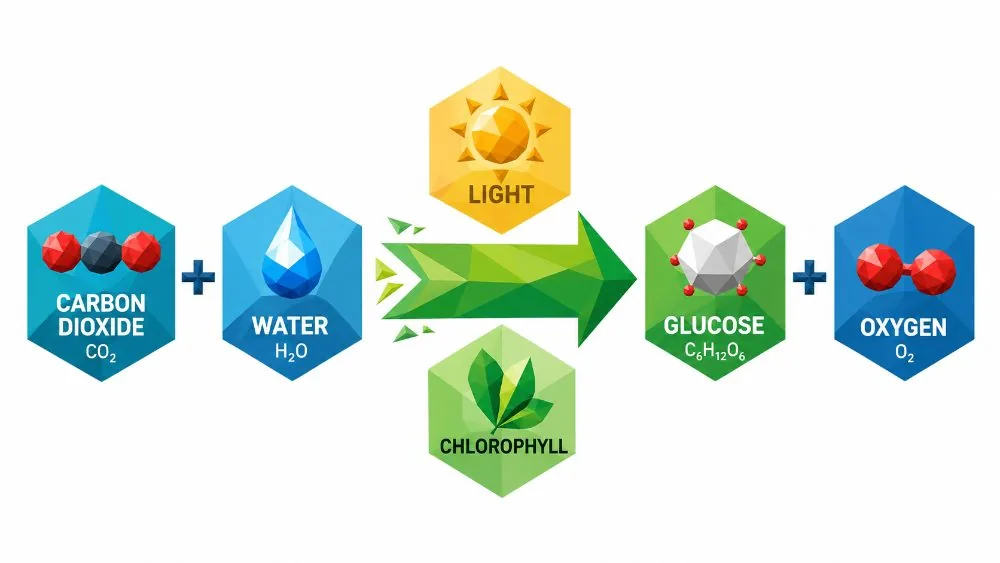



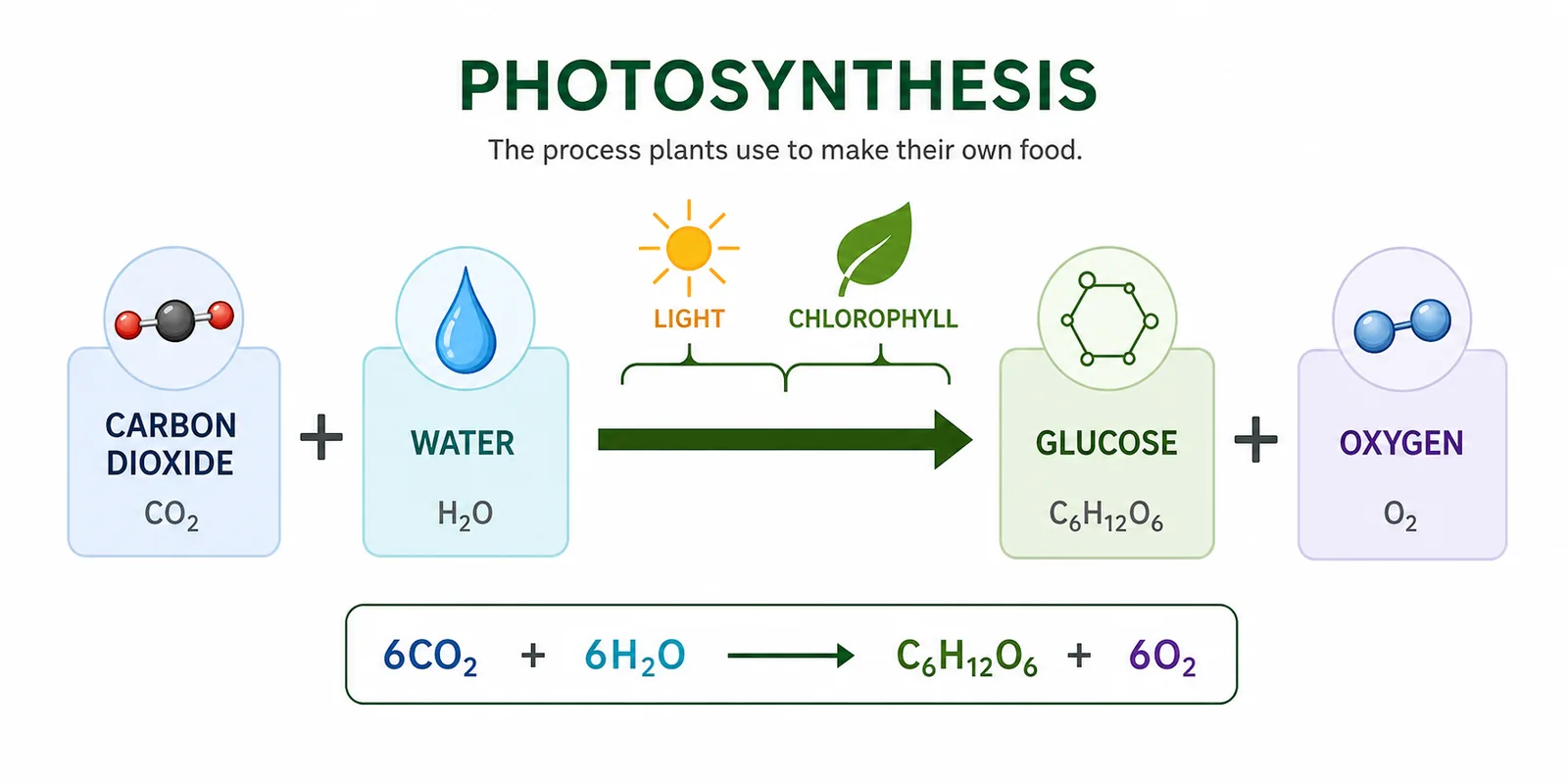

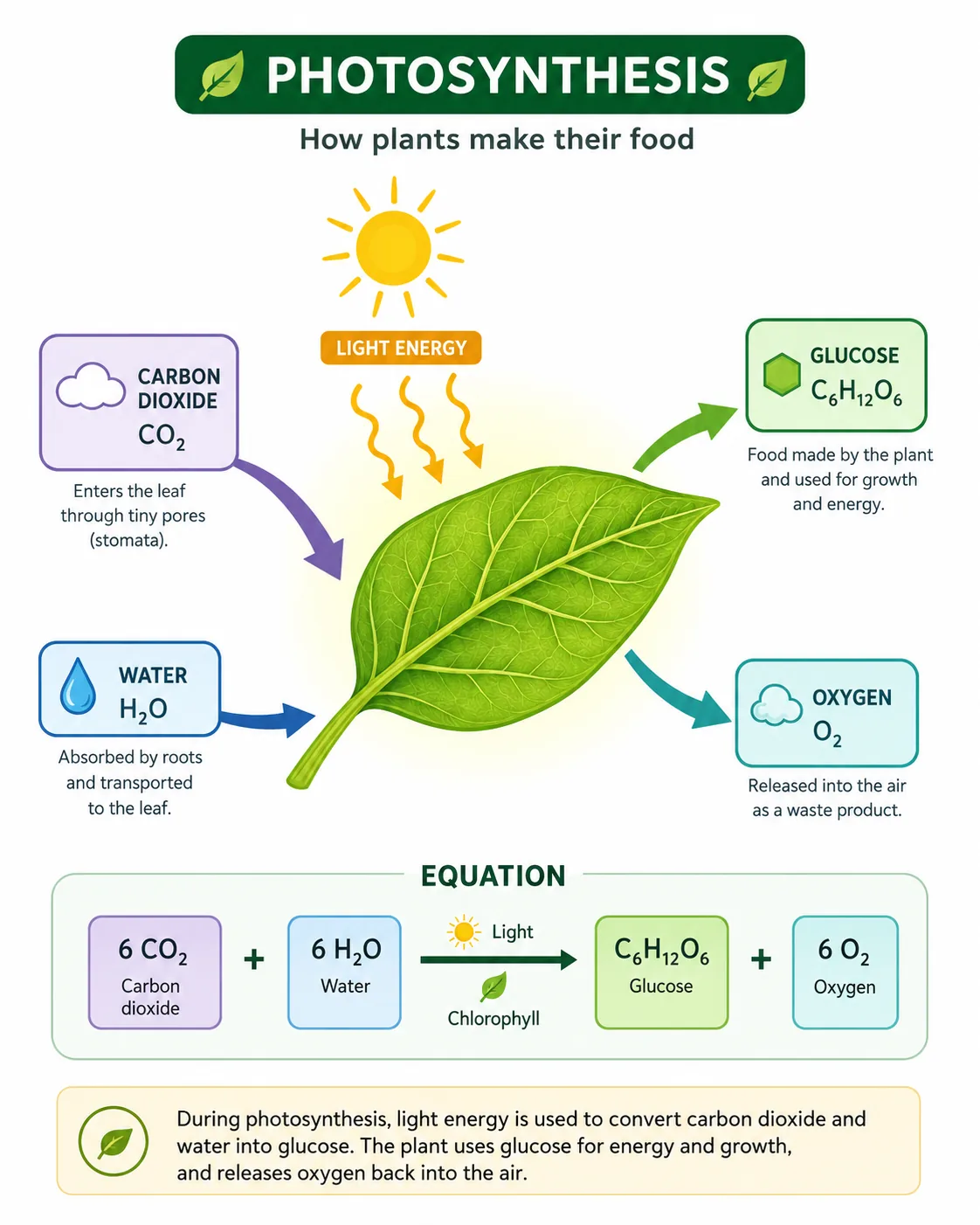
Photosynthesis is the process by which green plants, algae and some bacteria make glucose from carbon dioxide and water using light energy.
Word equationcarbon dioxide + water, in the presence of light and chlorophyll, gives glucose + oxygen.
Symbol equation6CO2 + 6H2O gives C6H12O6 + 6O2.
Section 2 of 9Where it happens: chloroplasts

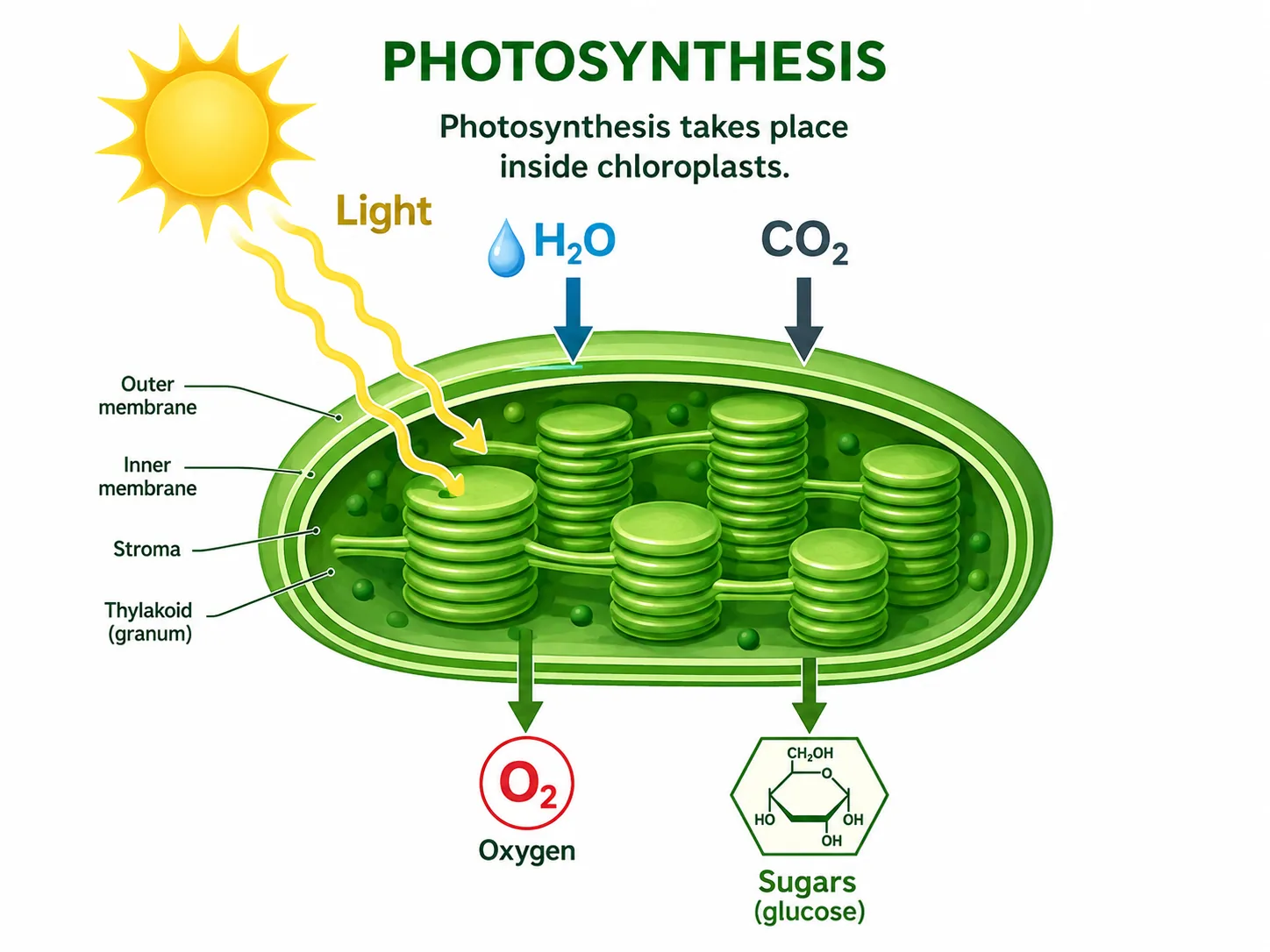
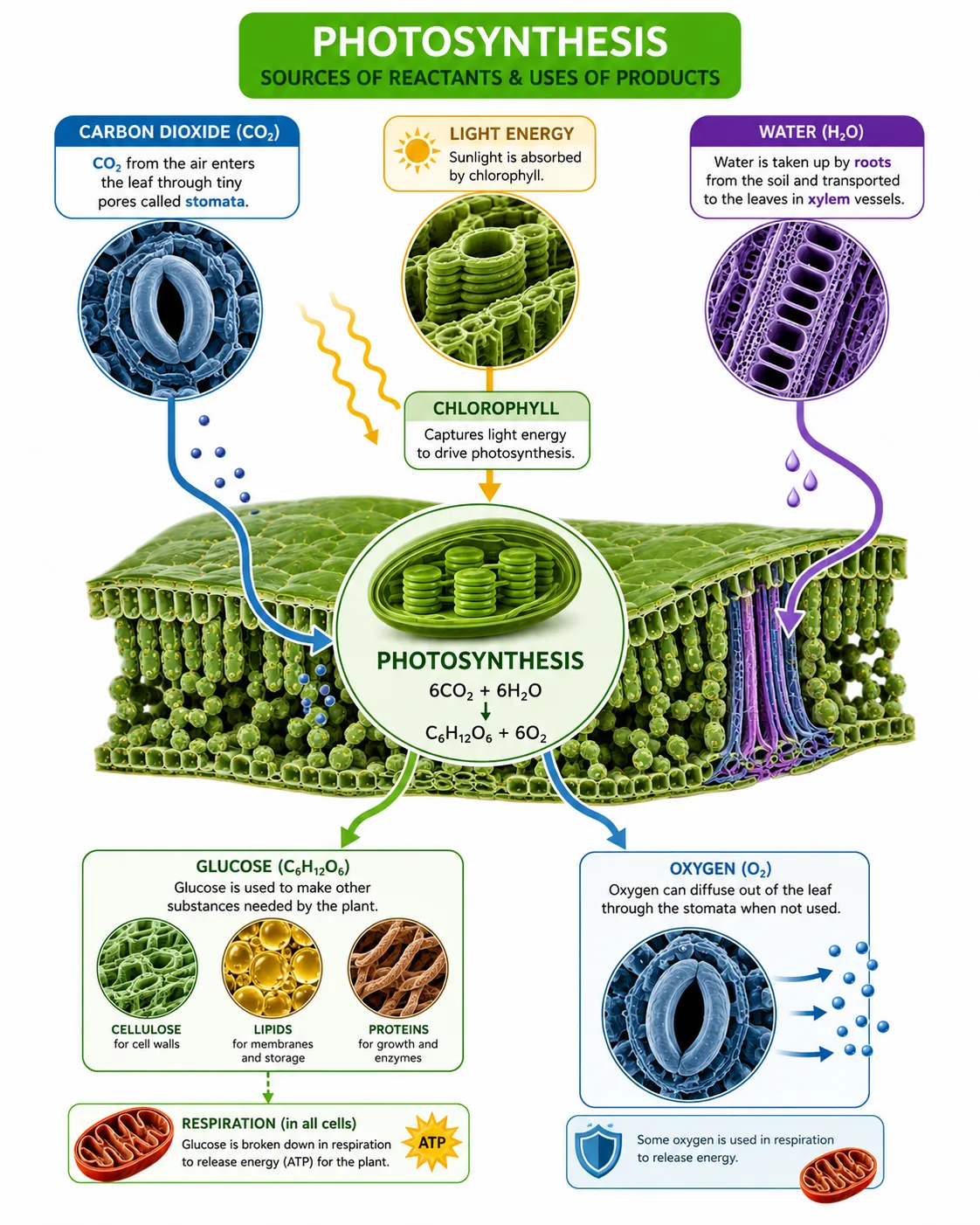
Photosynthesis takes place in chloroplasts, which are found mainly in palisade mesophyll cells in the leaf, and in the cells of the spongy mesophyll and guard cells.
Section 3 of 9Raw materials and where they come from
| Substance | Source |
|---|---|
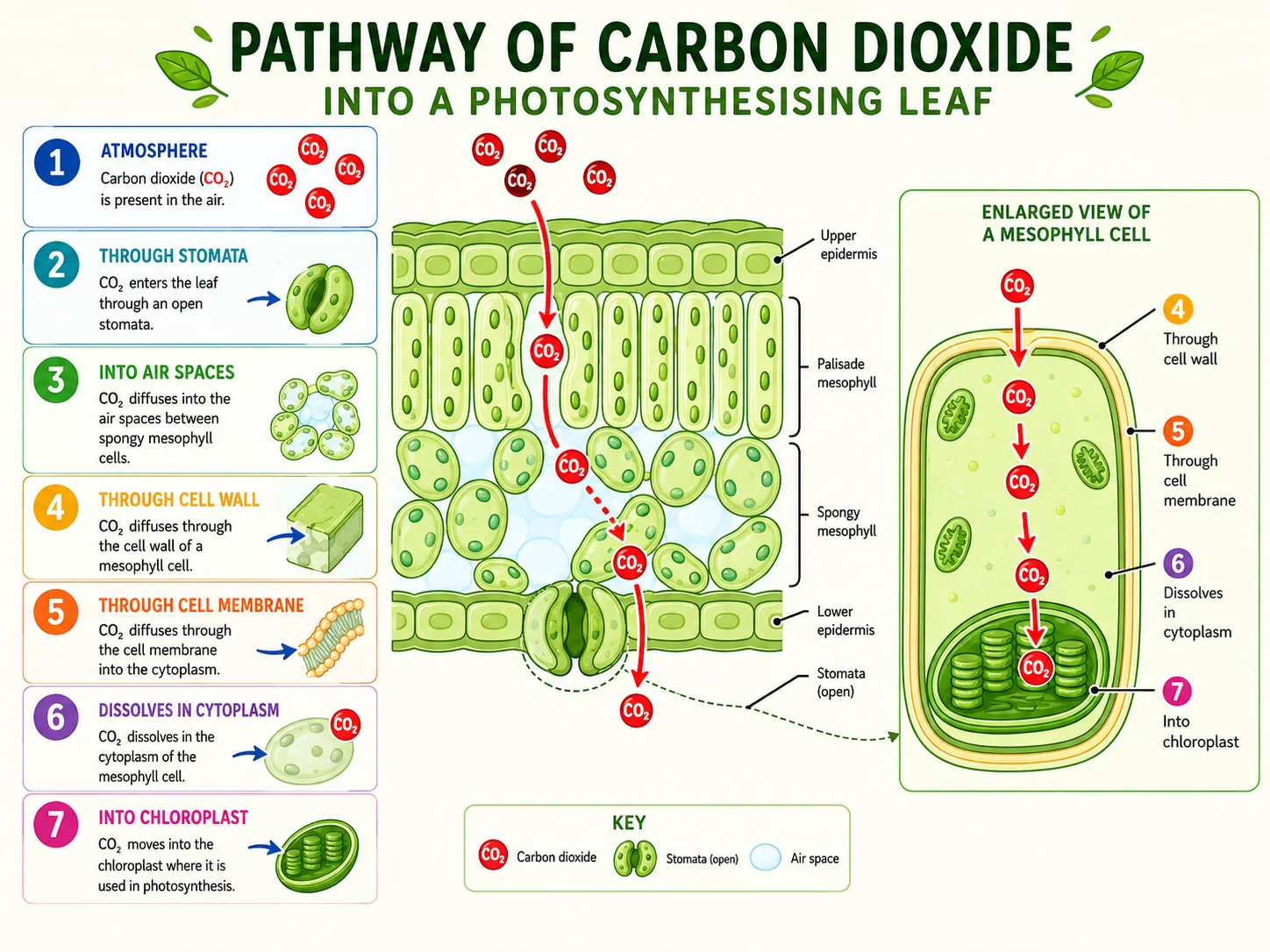
| Carbon dioxide | Diffuses from the air through open stomata into the leaf |
| Water | Absorbed from the soil by roots and carried to the leaves in xylem |
| Light energy | The Sun, absorbed by chlorophyll |
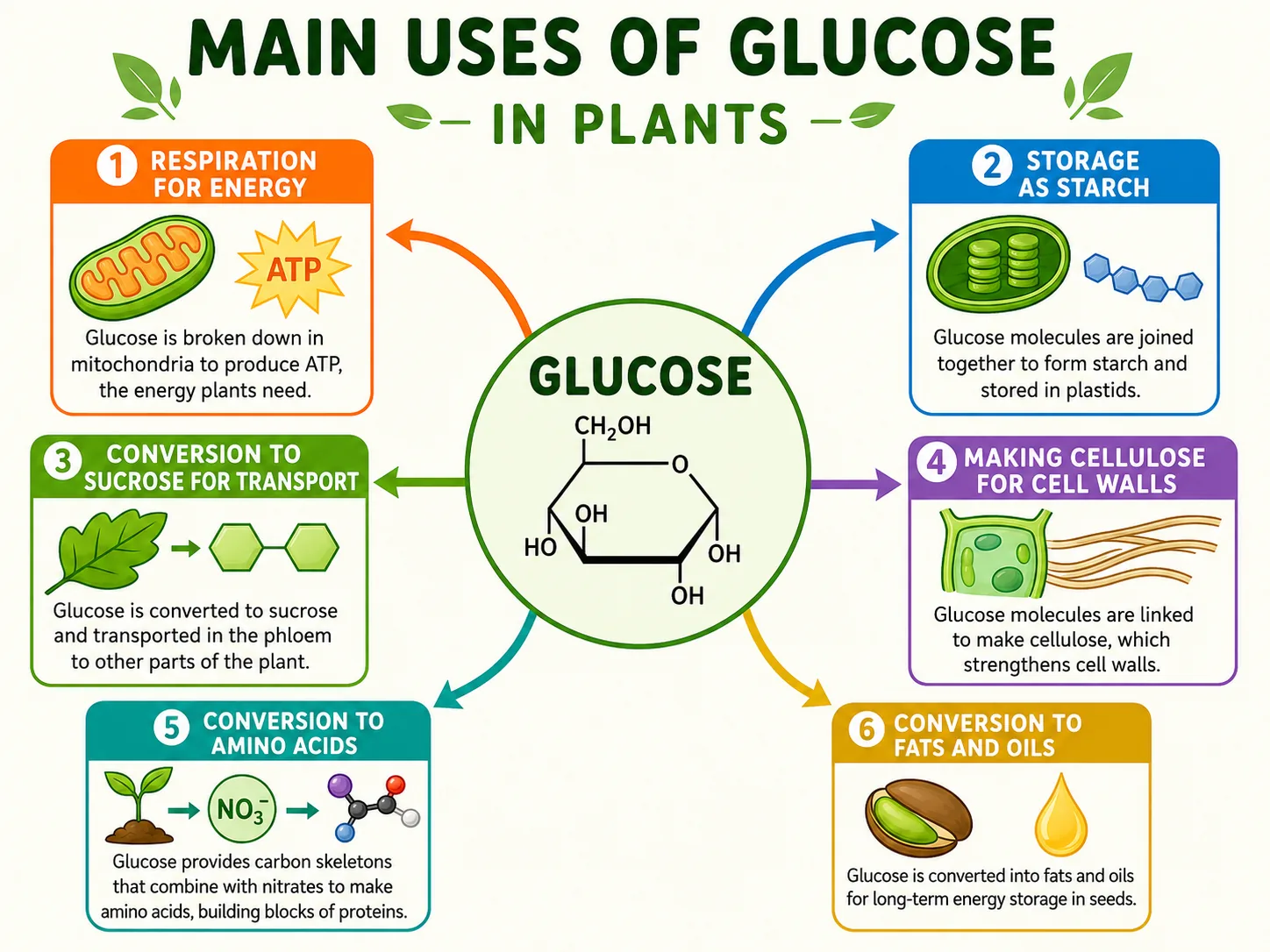
The oxygen produced diffuses out of the leaf through the stomata, and some is used by the plant for respiration. The glucose is made in the chloroplasts and then used or stored.
Section 4 of 9Uses of glucose



Section 5 of 9Testing a leaf for starch
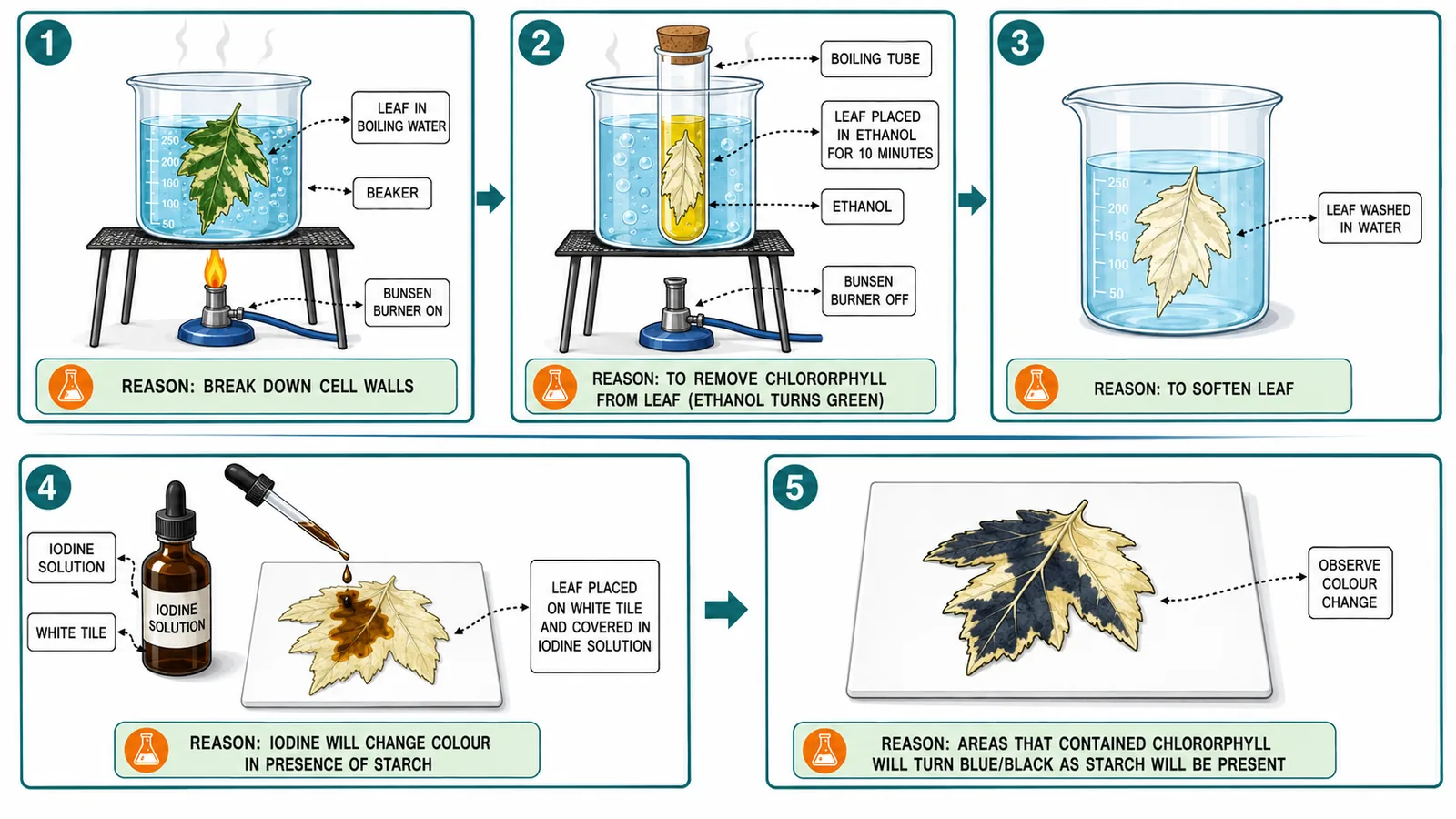


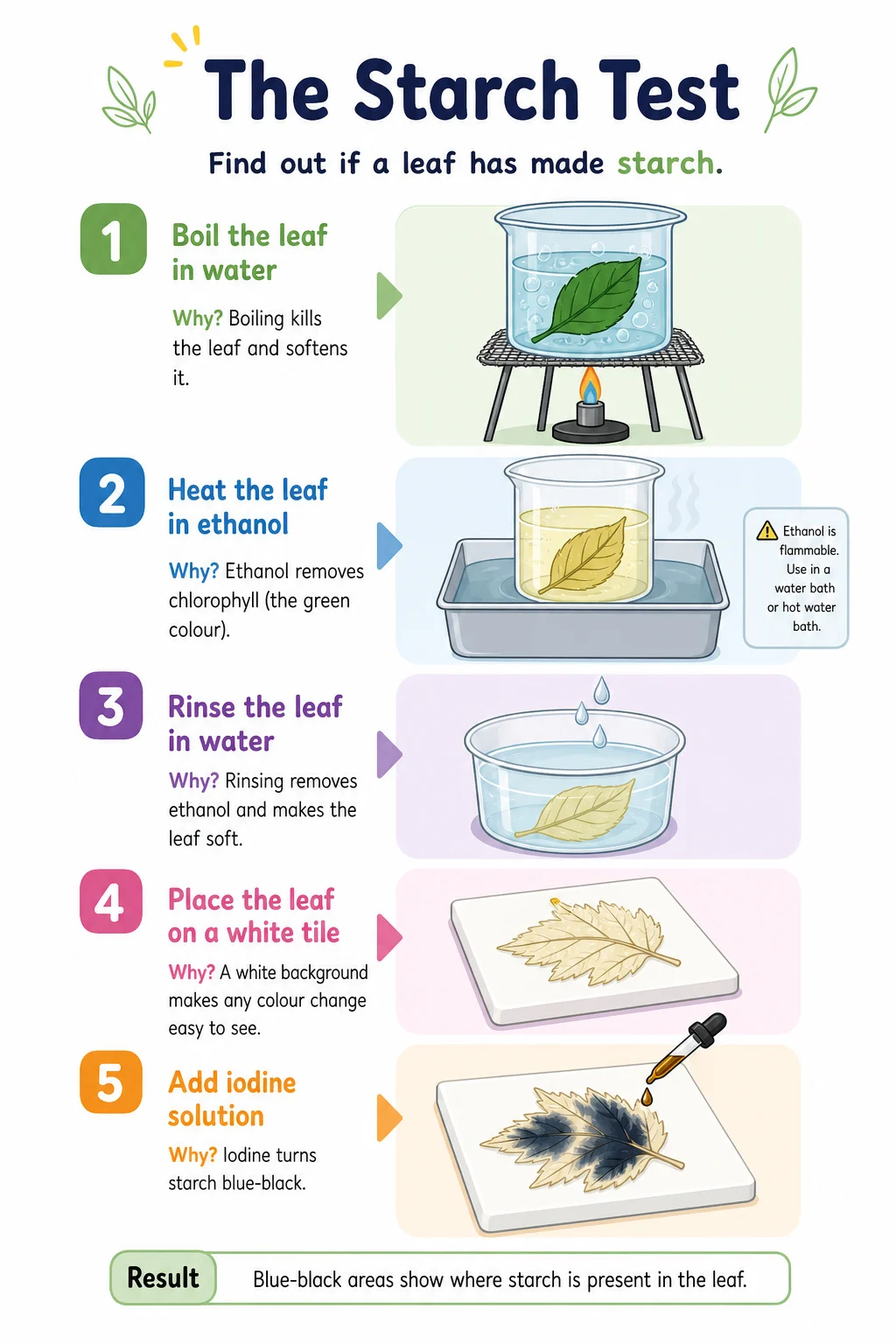
Starch indicates that photosynthesis has taken place.
Section 6 of 9Link with respiration and the carbon cycle


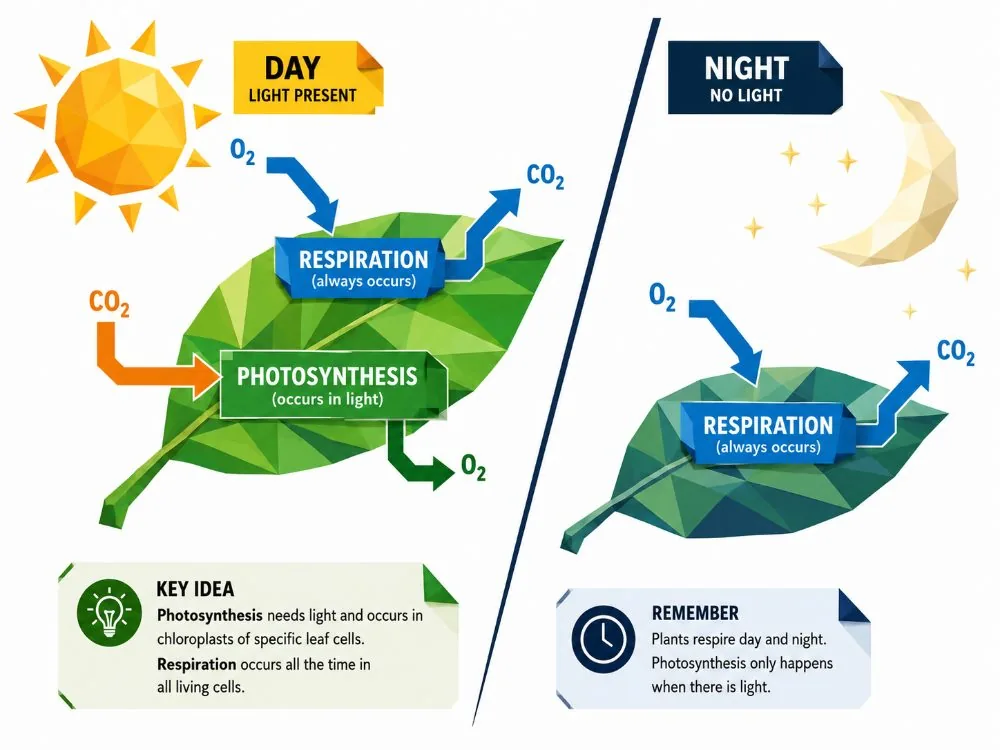

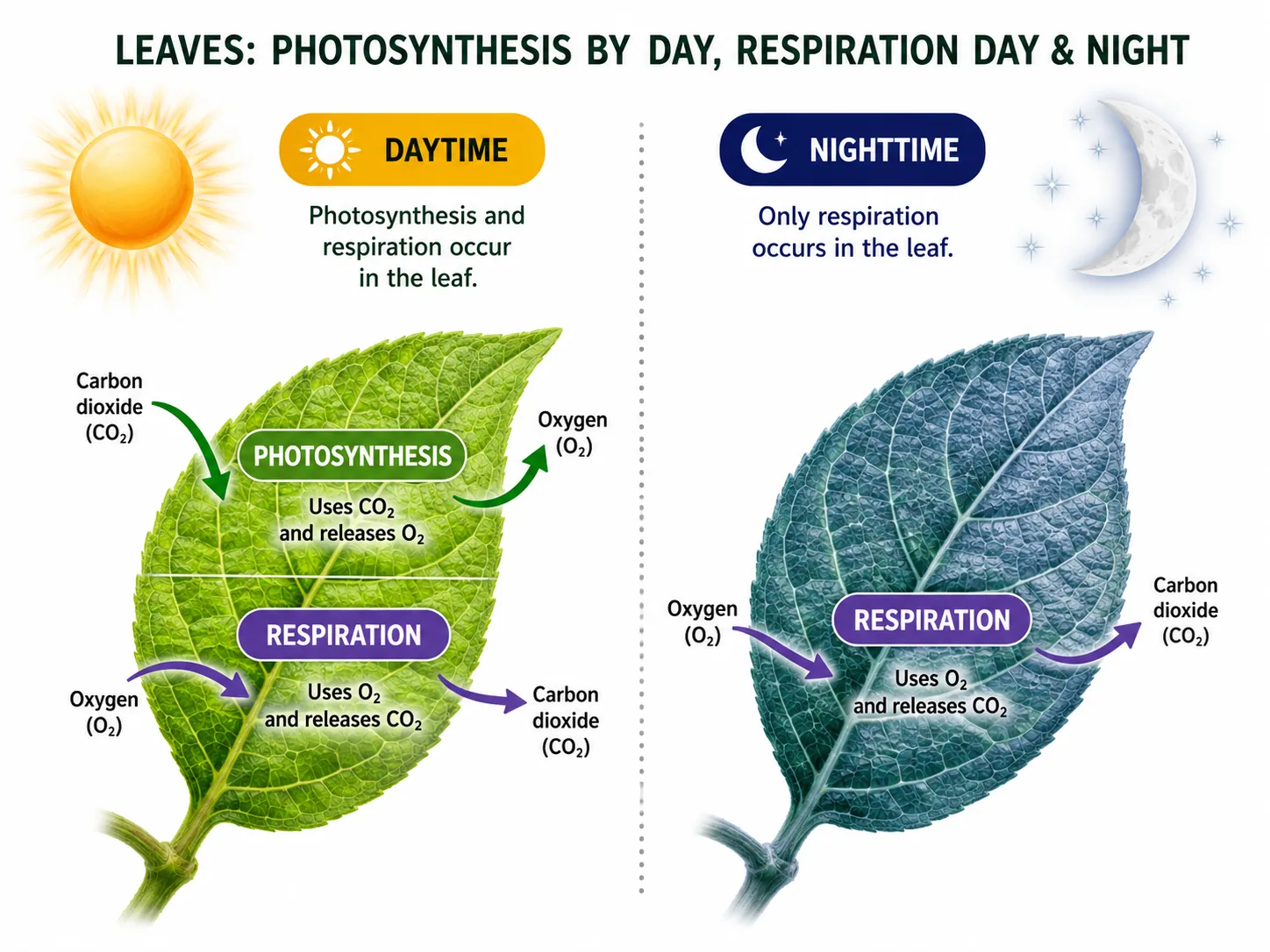


Photosynthesis and respiration are almost opposite processes.
The adaptations of a leaf for photosynthesis are covered in the plant structure topic, but it is worth noting here that a thin, flat shape gives a large surface area to catch light, and a short diffusion distance for carbon dioxide.
Remember that the glucose made in a leaf in the day can be stored as starch there, and that this starch is converted into soluble sugar and moved to other parts of the plant at night.
Section 7 of 9Exam-style questions






State the word equation for photosynthesis and name the site of the reaction in a cell. [3]3 marks
Carbon dioxide + water gives glucose + oxygen [2: reactants and products correct, light/chlorophyll mentioned as conditions or above the arrow]. It occurs in chloroplasts [1].
Describe how a leaf is tested for starch and explain each step of the method. [4]4 marks
Boil the leaf in water to kill it and stop reactions / make it permeable [1]. Heat it in ethanol in a water bath to remove chlorophyll [1]. Rinse in water to soften it [1]. Add iodine, which turns blue-black if starch is present [1].
Explain why plants need nitrate ions to grow. [2]2 marks
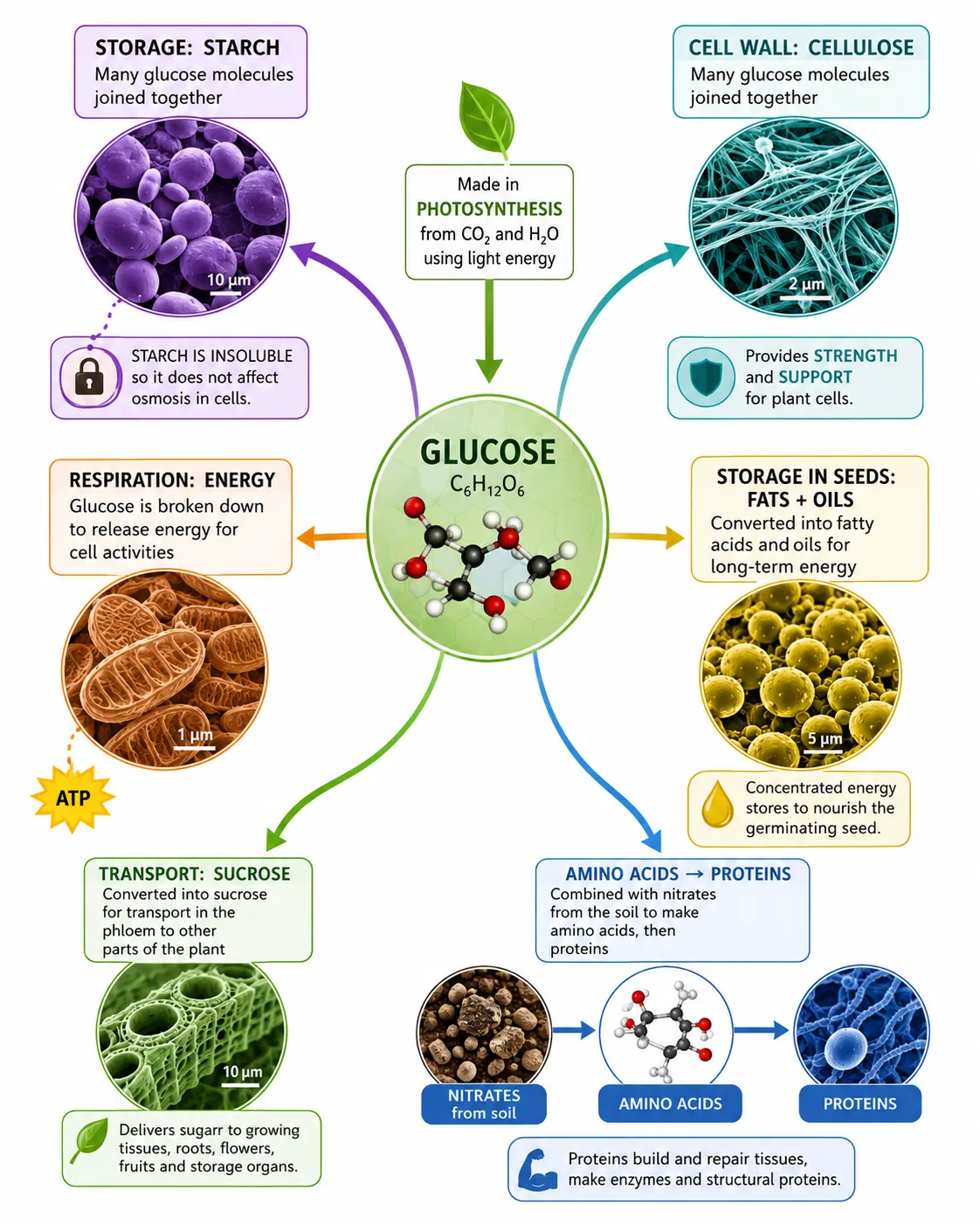
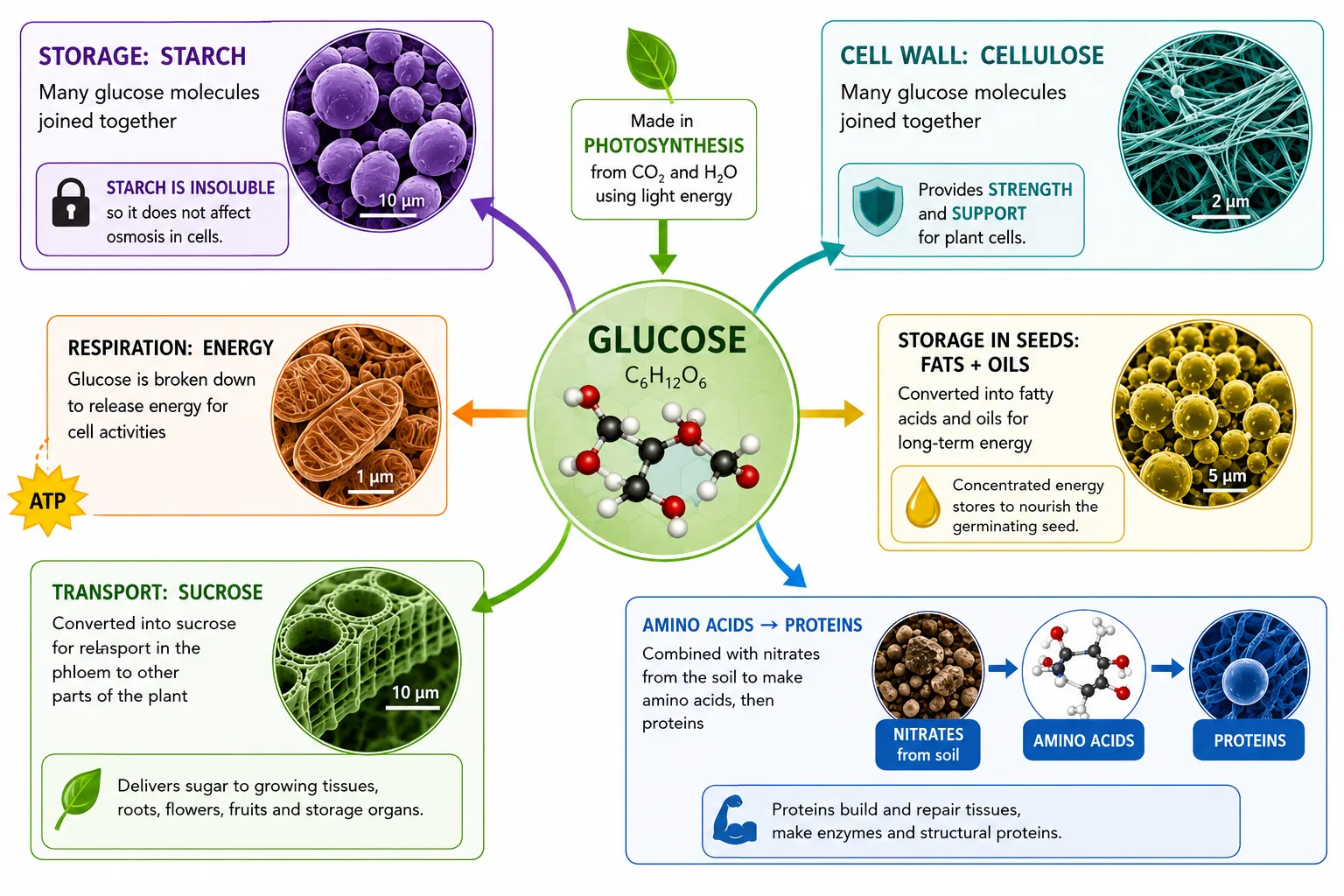
Nitrate ions are combined with glucose products to make amino acids [1], which are joined into proteins used for growth and enzymes [1].
Section 8 of 9Key terms
| Term | Meaning |
|---|---|
| Photosynthesis | The process of making glucose from carbon dioxide and water using light energy. |
| Chlorophyll | The green pigment that absorbs light energy for photosynthesis. |
| Chloroplast | The organelle where photosynthesis occurs. |
| Endothermic | A reaction that takes in energy from the surroundings. |
| Stomata | Pores in the leaf through which gases enter and leave. |
| Starch | An insoluble carbohydrate used for storage. |
| Compensation point | The light intensity at which photosynthesis rate equals respiration rate. |
Section 9 of 9Exam technique
Marked practiceQuizzes for this lesson
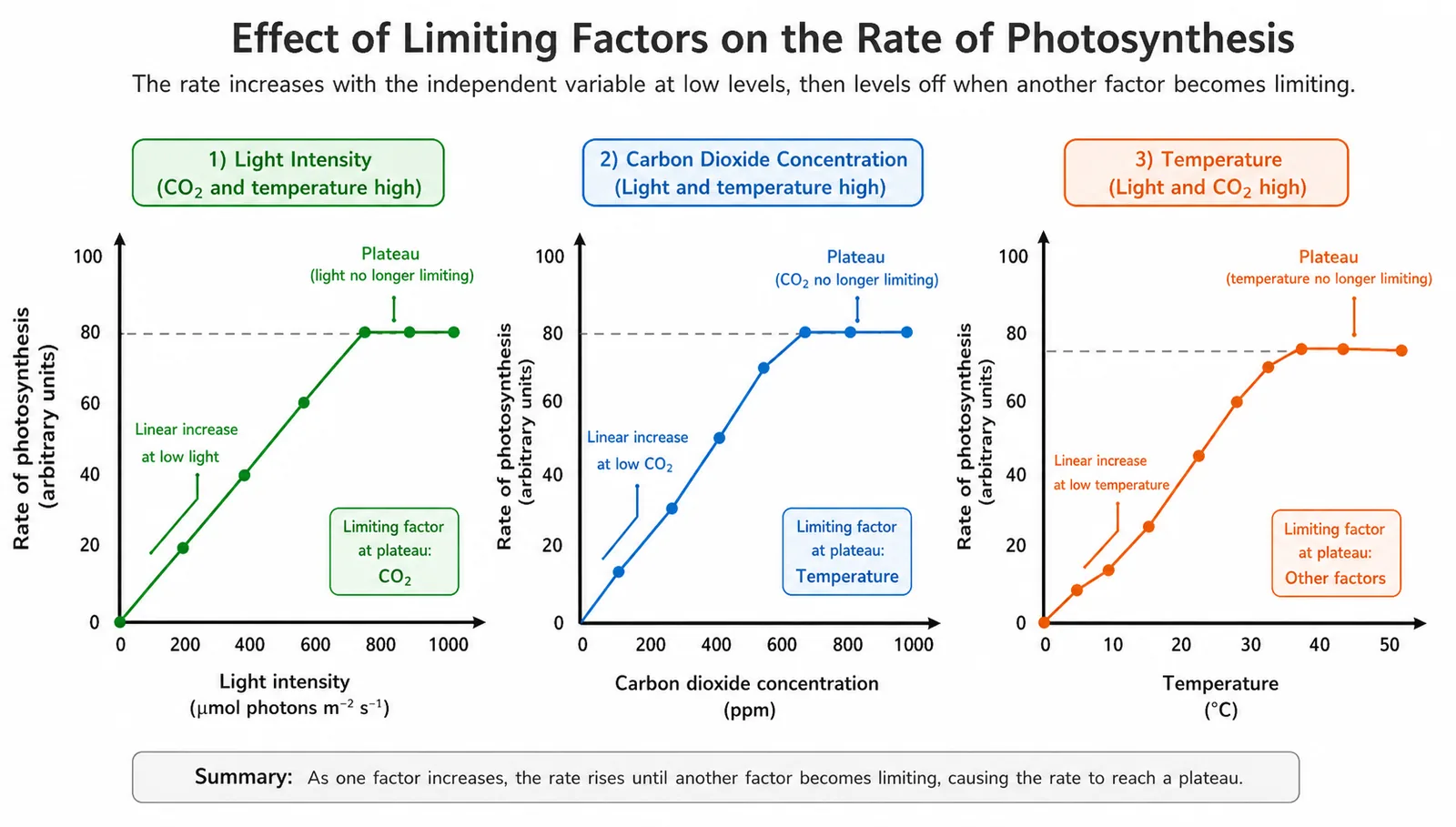
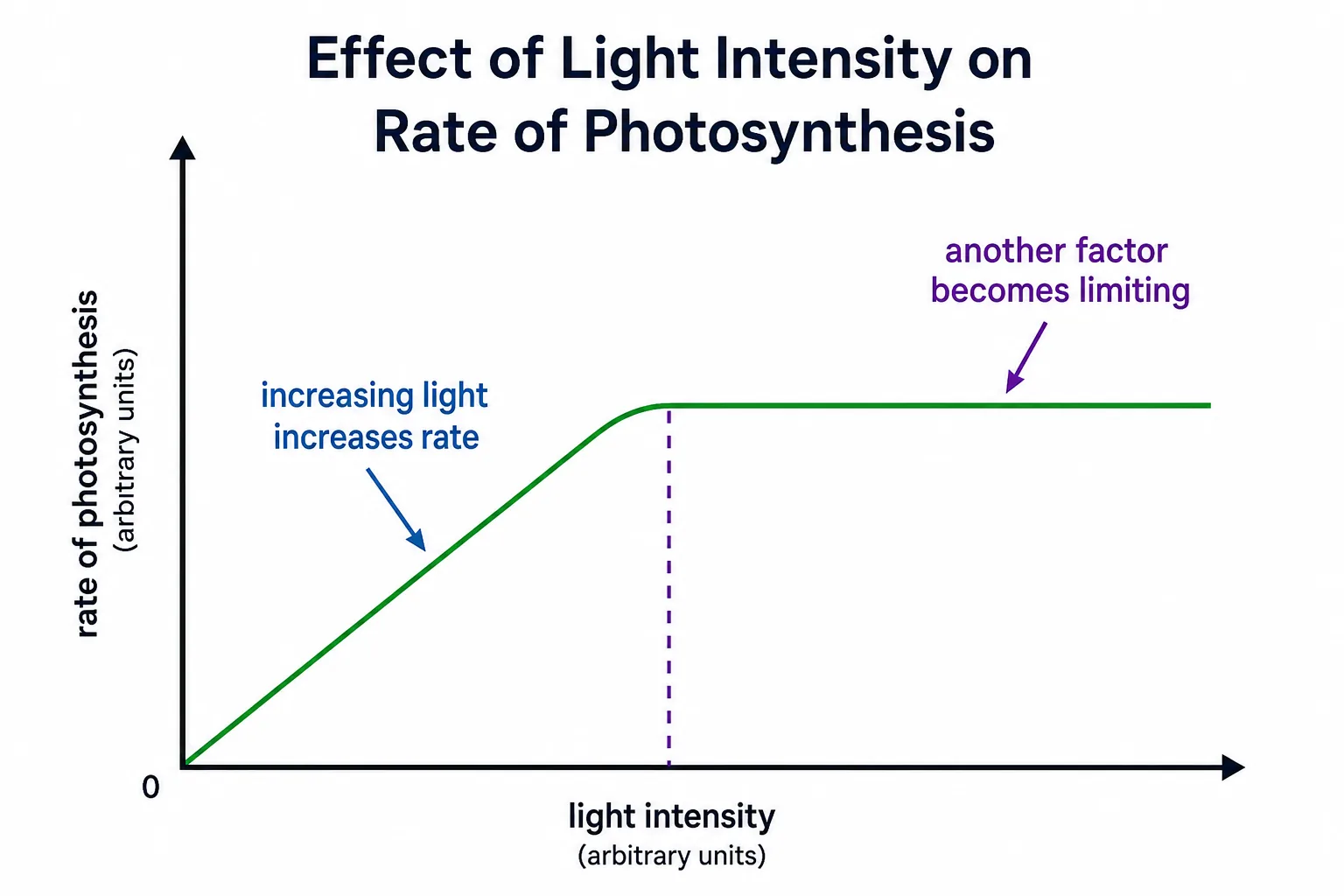
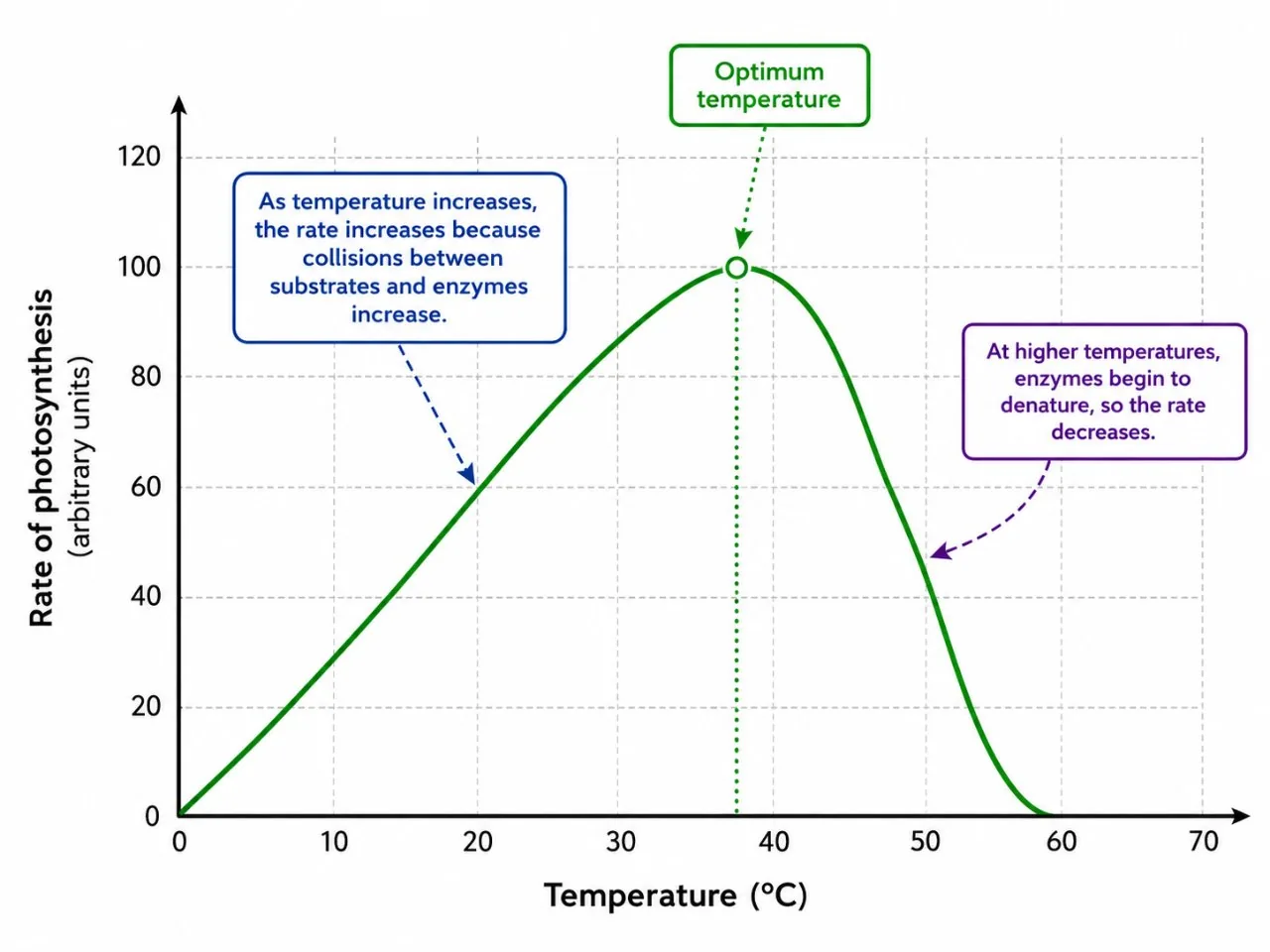
Photosynthesis: Limiting Factors & Graph Plateau
6CO2 + 6H2O → C6H12O6 + 6O2 (Light & Chlorophyll required)
- Limiting Factor Definition: Something present in the environment in such short supply that it restricts life processes.
- Graph Plateau: When rate levels off as light intensity increases, light is no longer the limiting factor; CO2 concentration or temperature has become limiting.
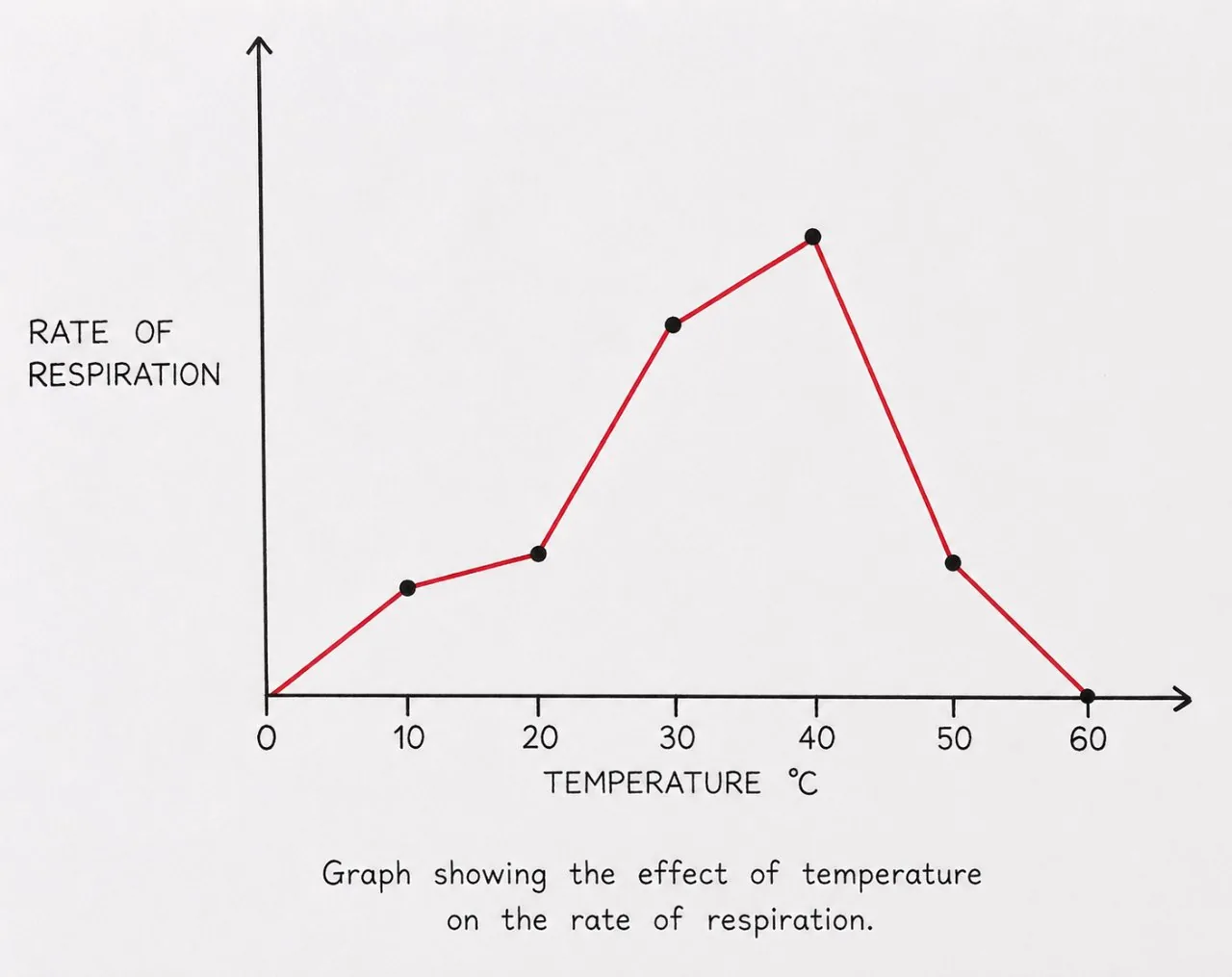
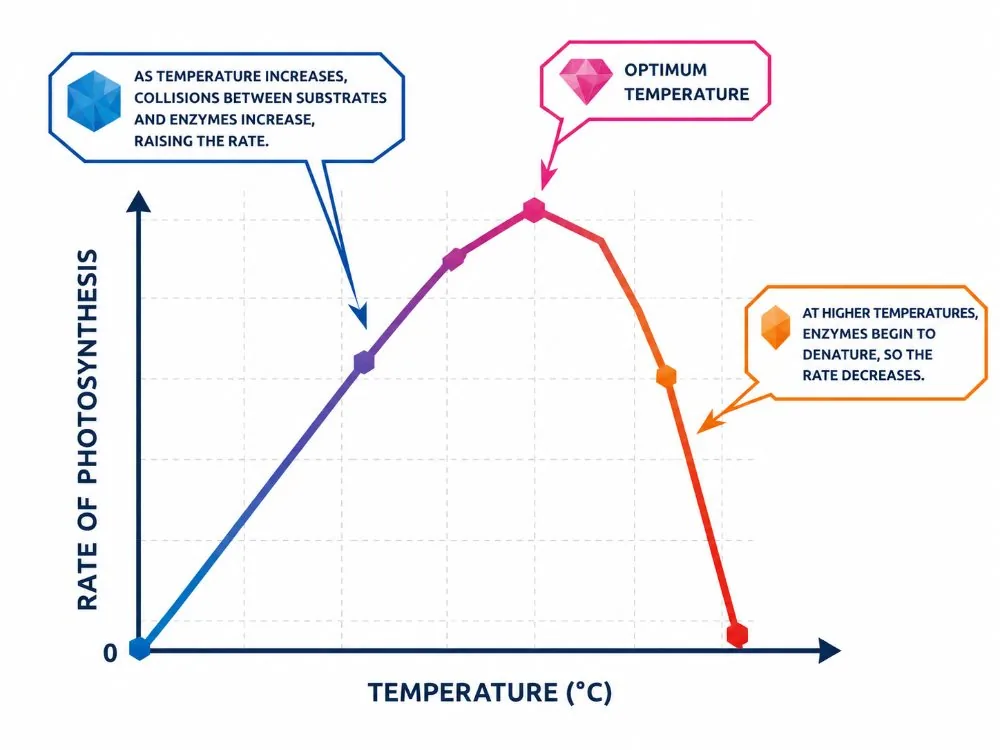
- High Temperature Drop: Beyond optimum temp (~40°C), enzymes (e.g. RuBisCO) denature, permanently decreasing rate.