Section 1 of 10Bases and alkalis

Bases
- Bases A base is a substance that neutralises an acid to form a salt and water.
- Bases are usually metal oxides, metal hydroxides or metal carbonates.
Alkalis
- Alkalis An alkali is a base that dissolves in water.
- Every alkali is a base, but not every base is an alkali: copper oxide is a base but insoluble, so it is not an alkali.
Properties of alkalis
- Properties of alkalis pH above 7, feel soapy, and turn red litmus paper blue.
- They give universal indicator a blue or purple colour.
Section 2 of 10Why alkalis are alkaline
1Dissolve
- Dissolve An alkali such as sodium hydroxide dissolves in water.
2Ions separate
- Ions separate NaOH(aq) → Na+(aq) + OH−(aq).
3Hydroxide ions
- Hydroxide ions The solution now contains many hydroxide ions, OH−.
4High pH
- High pH The more OH− ions, the higher the pH of the solution.
Section 3 of 10Common bases
| Base | Formula | Soluble (alkali)? |
|---|---|---|
| Sodium hydroxide | NaOH | Yes |
| Potassium hydroxide | KOH | Yes |
| Calcium hydroxide | Ca(OH)2 | Slightly soluble: limewater |
| Copper(II) oxide | CuO | No |
| Magnesium oxide | MgO | Very slightly |
| Ammonia solution | NH3(aq) | Yes |
Section 4 of 10Ammonia as an unusual base
Reaction with water
- Reaction with water Ammonia gas dissolves in water and reacts slightly to make ammonium ions and hydroxide ions: NH3 + H2O ⇌
- NH4+ + OH−.
- The hydroxide ions make the solution alkaline.
Names matter
- Names matter Ammonia is the gas NH3. Ammonium is the positive ion NH4+ found in ammonium salts.
Section 5 of 10Indicators and alkalis
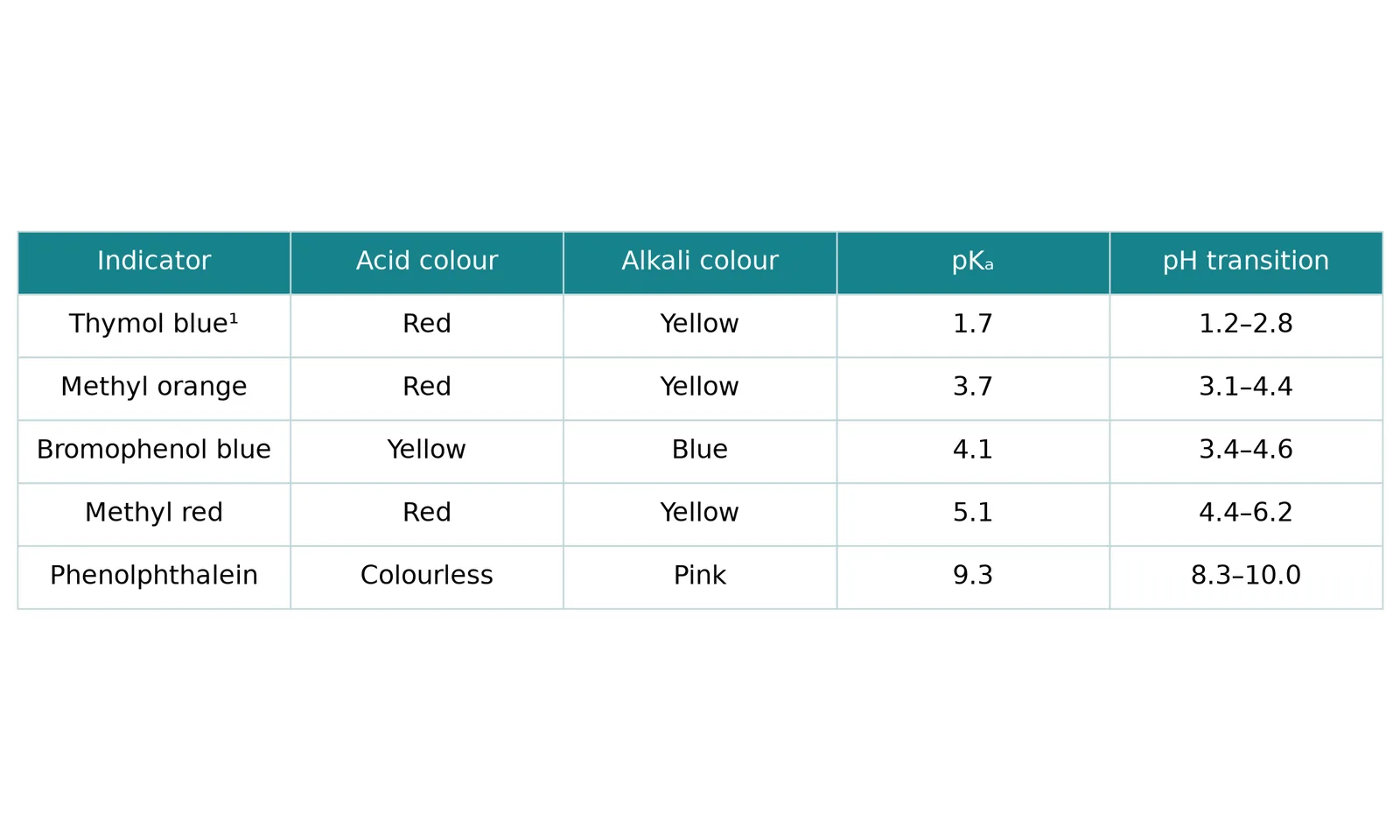
| Indicator | In acid | In alkali |
|---|---|---|
| Litmus | Red | Blue |
| Universal indicator | Red, orange or yellow | Blue or purple (pH above 7) |
| Phenolphthalein | Colourless | Pink |
| Methyl orange | Red | Yellow |
Section 6 of 10Testing a solution for alkalinity
1
Put a small sample of the solution into a clean test tube or on a white tile.
2
Add a few drops of universal indicator, or dip in a strip of red litmus paper.
3
Compare the colour with the pH chart supplied. Blue or purple, or red litmus turning blue, shows the solution is alkaline.
4
Wear eye protection, because many alkalis are corrosive or irritant, and wash spills off the skin with plenty of water.
Section 7 of 10Uses of bases and alkalis
Everyday uses
- Everyday uses Sodium hydroxide is used to make soap and in oven cleaners,
- while magnesium hydroxide is taken as an indigestion remedy to neutralise excess stomach acid.
Agriculture
- Agriculture Farmers spread calcium hydroxide (slaked lime) or calcium oxide on acidic soil to raise its pH.
Section 8 of 10Neutralisation in action


1Acid meets base
- Acid meets base An acid such as hydrochloric acid is added to a base such as sodium hydroxide.
2Ions combine
- Ions combine Hydrogen ions from the acid react with hydroxide ions from the alkali: H+(aq) + OH−(aq) → H2O(l).
3Salt remains
- Salt remains The other ions stay in solution as a salt, here sodium chloride.
4pH approaches 7
- pH approaches 7 As the acid is added the pH of the alkali falls towards 7, and it is neutral when the amounts exactly cancel.
Section 9 of 10Key terms
| Term | Meaning |
|---|---|
| Base | A substance that reacts with an acid to form a salt and water. |
| Alkali | A soluble base that produces hydroxide ions in water. |
| Hydroxide ion | OH−, the ion present in alkaline solutions. |
| Neutralisation | The reaction of an acid with a base to form a salt and water. |
| Litmus | A plant dye that is red in acid and blue in alkali. |
Section 10 of 10Exam technique
1
Saying all bases are alkalis. Only soluble bases are alkalis.
2
Confusing ammonia (NH3) with the ammonium ion (NH4+).
3
Stating that alkalis contain H+ ions. It is OH− ions that characterise them.
4
Forgetting that insoluble bases such as copper oxide still neutralise acids, even though they have no pH when not dissolved.