2.4.3Structure and Function in Living Organisms
Practical: Investigating Diffusion and Osmosis
5 min read 8 parts Lesson 13 of 55 1 quiz
Section 1 of 8Practical 1: diffusion in agar cubes


The idea
- The idea Agar is a clear jelly.
- When made with sodium hydroxide and phenolphthalein indicator, it is pink, because phenolphthalein is pink in alkaline conditions.
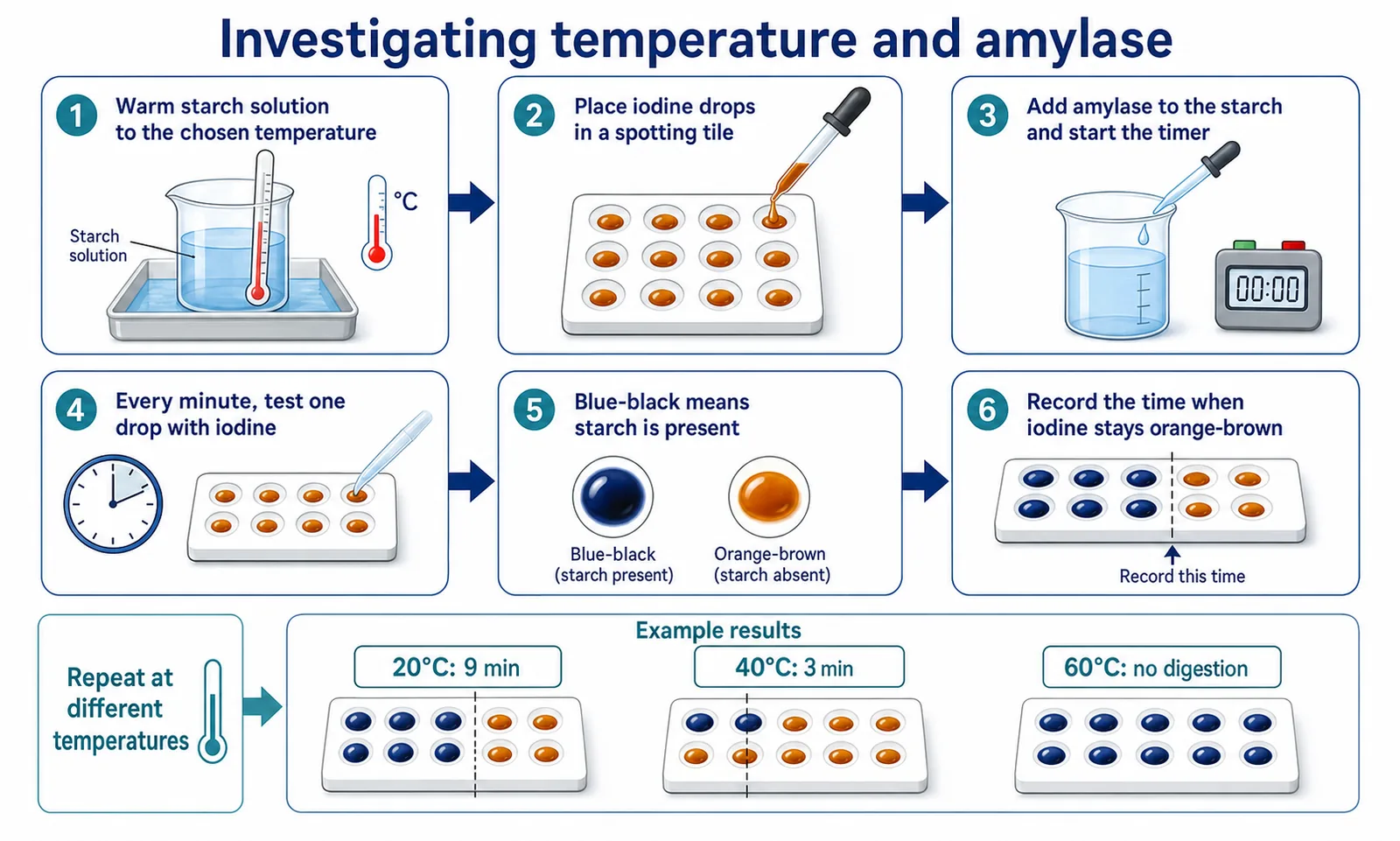
- When dilute hydrochloric acid diffuses into the jelly it neutralises the alkali, and the pink colour disappears.
- The time this takes shows how fast the acid has reached the middle.
Variables
- Variables Independent variable: the size of the cube, which changes the surface area to volume ratio.
- Dependent variablethe time taken for the cube to turn colourless.
- Control variablesconcentration and volume of acid, temperature, and the agar batch.
Safety
- Safety Wear eye protection. Dilute hydrochloric acid and the alkaline agar are irritants.
- Cut the agar on a white tile and cut away from your body, because the scalpel is sharp.
Section 2 of 8Method: agar cubes


1
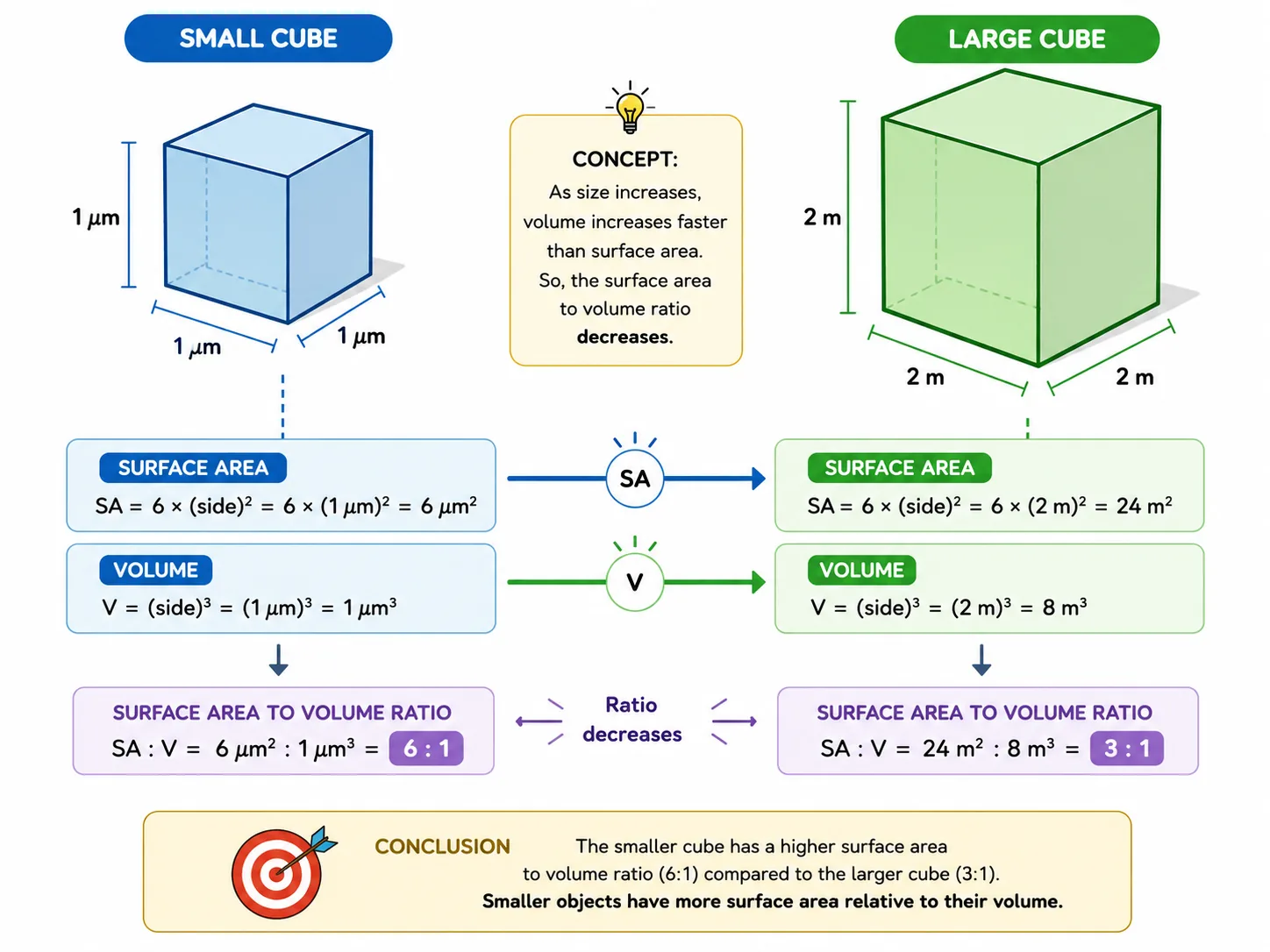
Use a scalpel and ruler to cut cubes of pink agar with sides of 0.5 cm, 1 cm and 2 cm.
2
Calculate the surface area, volume and surface area to volume ratio of each cube.
3
Put the same volume of dilute hydrochloric acid, for example 50 cm3, into a boiling tube for each cube.
4
Use forceps to drop a cube into the acid and start the stopwatch immediately.
5
Stop the stopwatch when the cube has become completely colourless and record the time.
6
Repeat at least three times for every size and calculate a mean.
Section 3 of 8Results and evaluation: diffusion
| Cube side (cm) | SA : V | Expected result |
|---|---|---|
| 0.5 | 12 : 1 | Fastest to turn colourless |
| 1 | 6 : 1 | Intermediate time |
| 2 | 3 : 1 | Slowest to turn colourless |
Section 4 of 8Practical 2: osmosis in potato





1
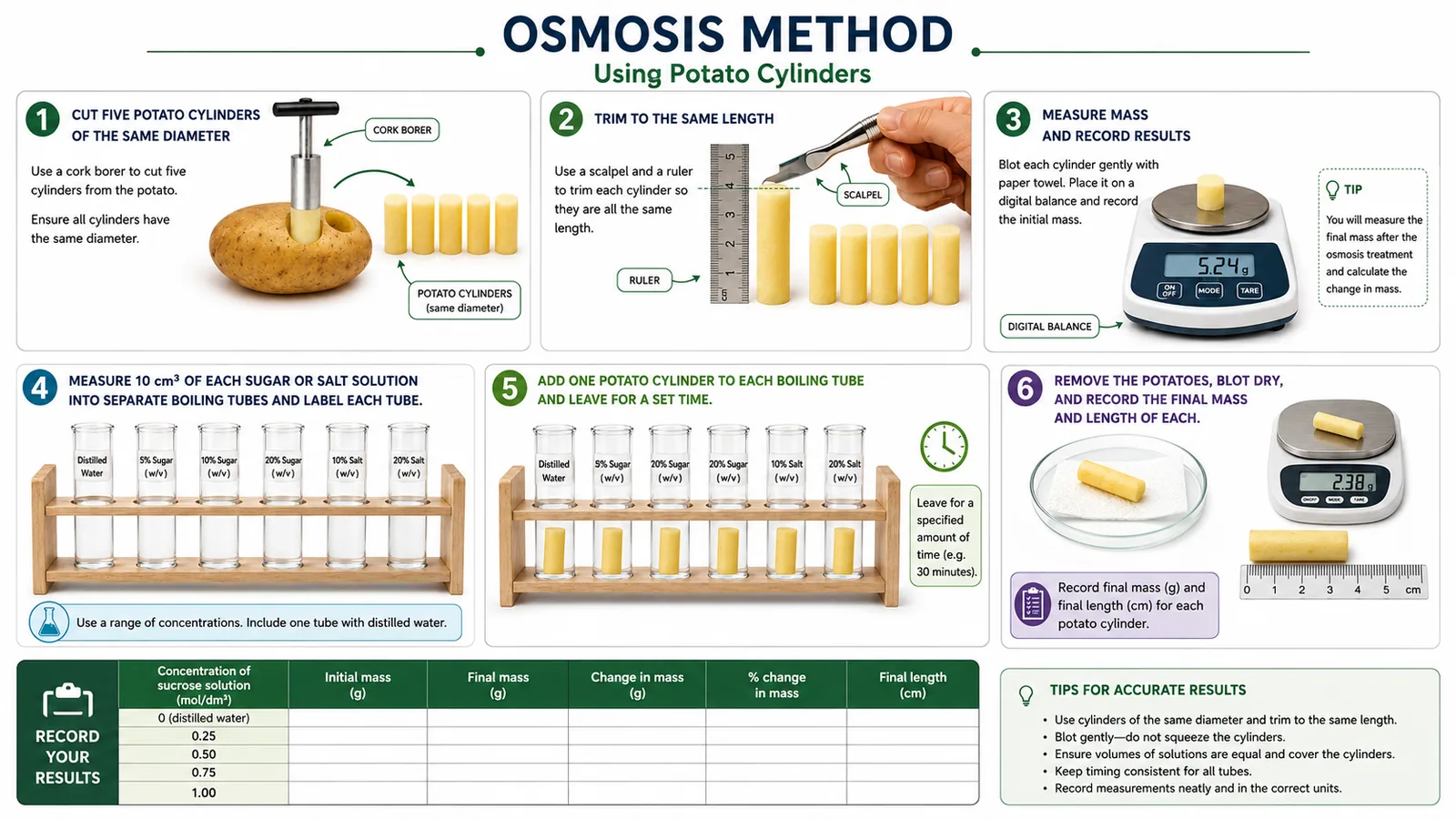
Prepare sucrose solutions of several concentrations from 0 mol/dm3 (distilled water) up to 1 mol/dm3, and pour the same volume of each into a labelled test tube.
2
Use a cork borer to cut potato cylinders, then trim them to the same length.
3
Blot each cylinder dry with paper towel and find its initial mass on a balance.
4
Place one cylinder in each tube and leave for a set time, for example several hours.
5
Remove the cylinders, blot them dry in the same way and find their final mass.
6
Calculate the percentage change in mass: (final mass − initial mass) ÷ initial mass × 100.
Section 5 of 8Interpreting the osmosis results


Potato in sucrose
Distilled water or dilute solution
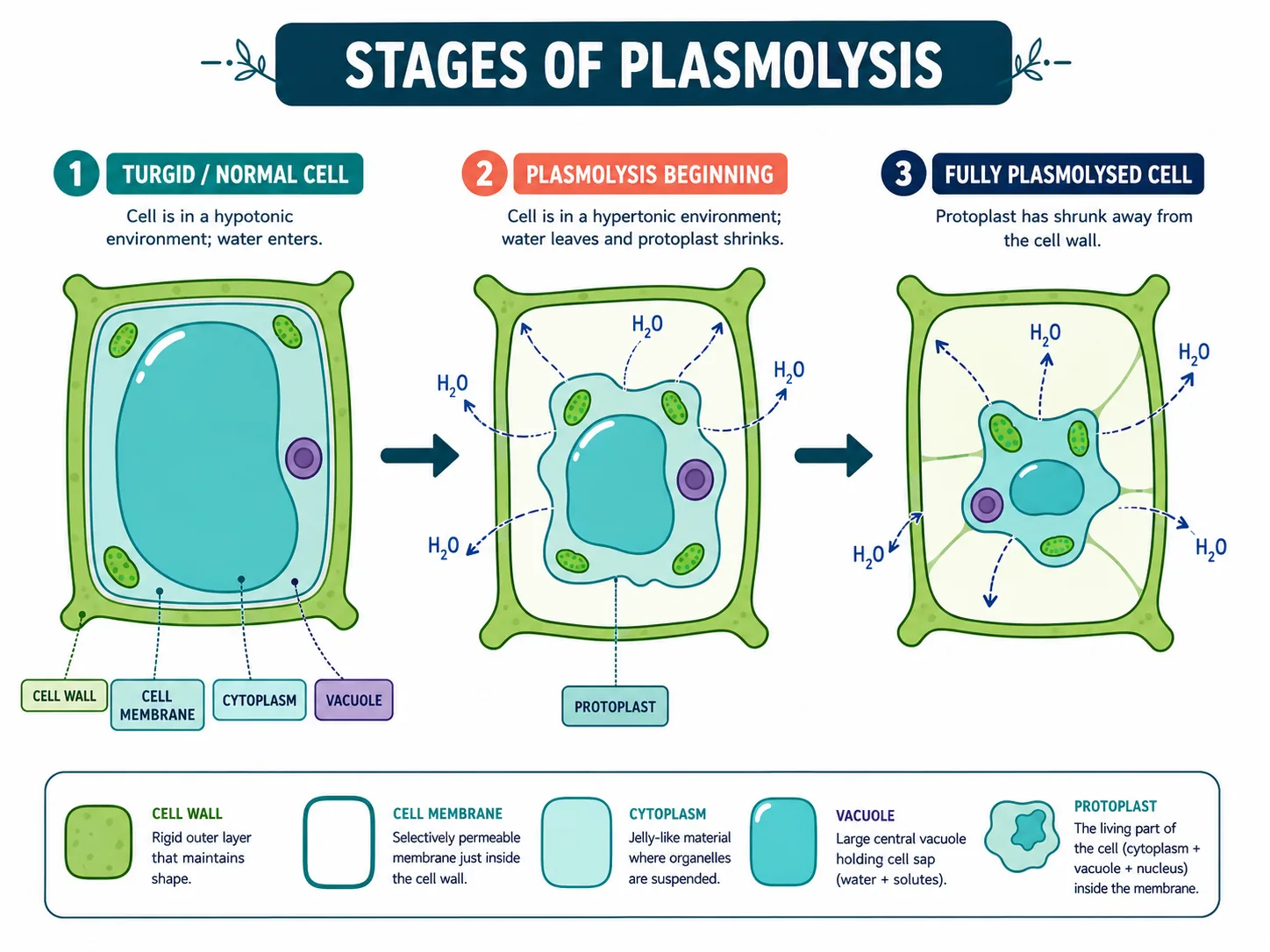
- Distilled water or dilute solution Water moves into the potato cells by osmosis, so the mass increases.
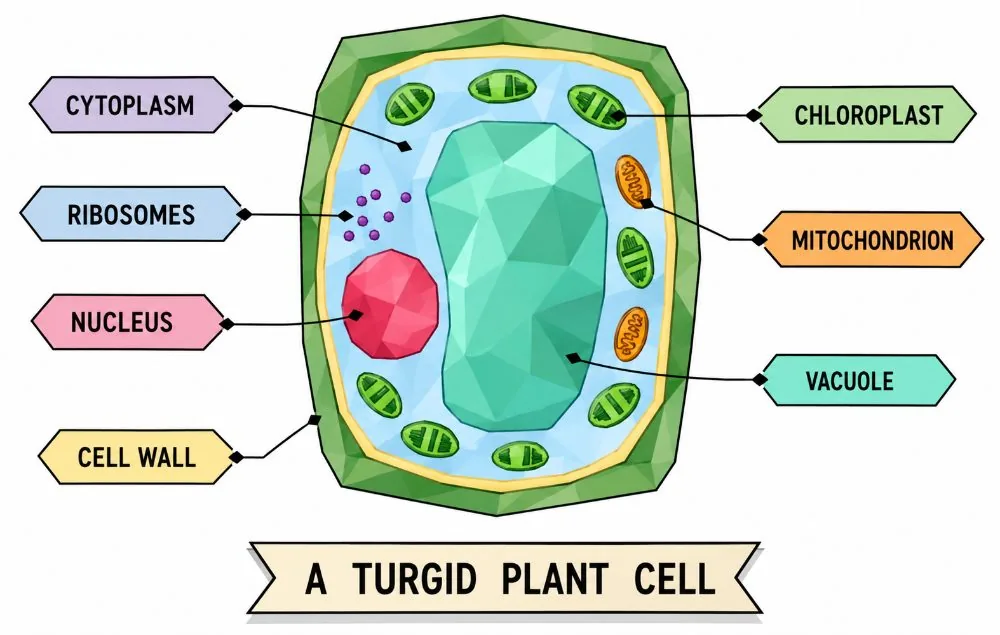
- The cells become firm, or turgid.
Concentrated solution
- Concentrated solution Water moves out of the cells, so the mass decreases.
- The cylinders feel soft, and the cell membranes can pull away from the wall (plasmolysis).
Zero change
- Zero change Where the line on a graph of percentage change crosses zero, the solution has the same water concentration as the potato cells.
- There is no net movement.
Section 6 of 8Limitations and improvements


Agar cubes
- Agar cubes Judging the exact moment a cube turns colourless is subjective.
- Measure instead how far (in mm) the acid has travelled after a fixed time.
- Cubes are hard to cut accurately, so use a sharp scalpel and a ruler.
Potato cylinders
- Potato cylinders Different potatoes may have different solute concentrations, so use cylinders from the same potato.
- Blot with the same amount of pressure each time, otherwise unequal surface water affects the mass.
Section 7 of 8Key terms

| Term | Meaning |
|---|---|
| Diffusion | The net movement of particles from a region of higher concentration to a region of lower concentration. |
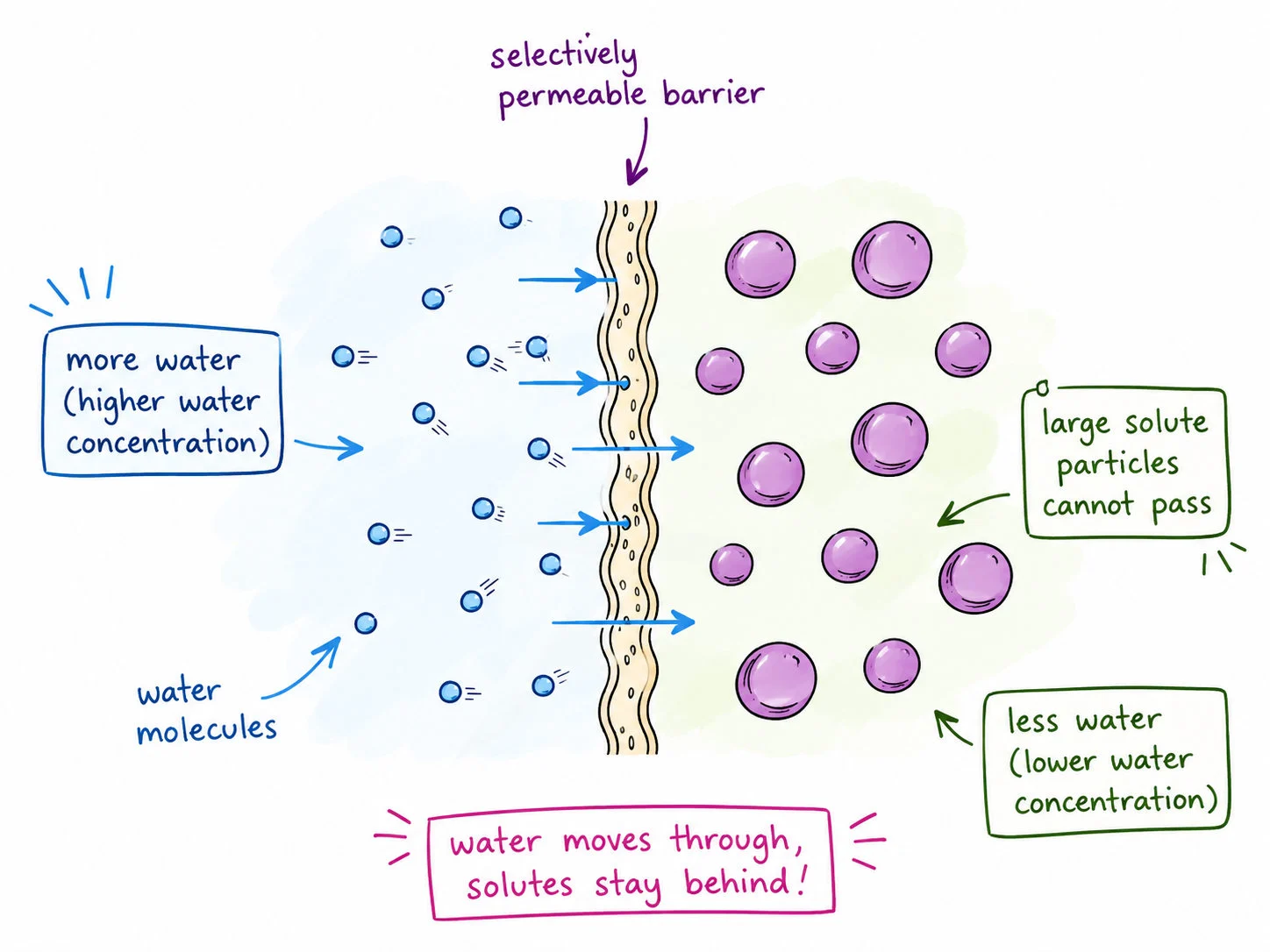
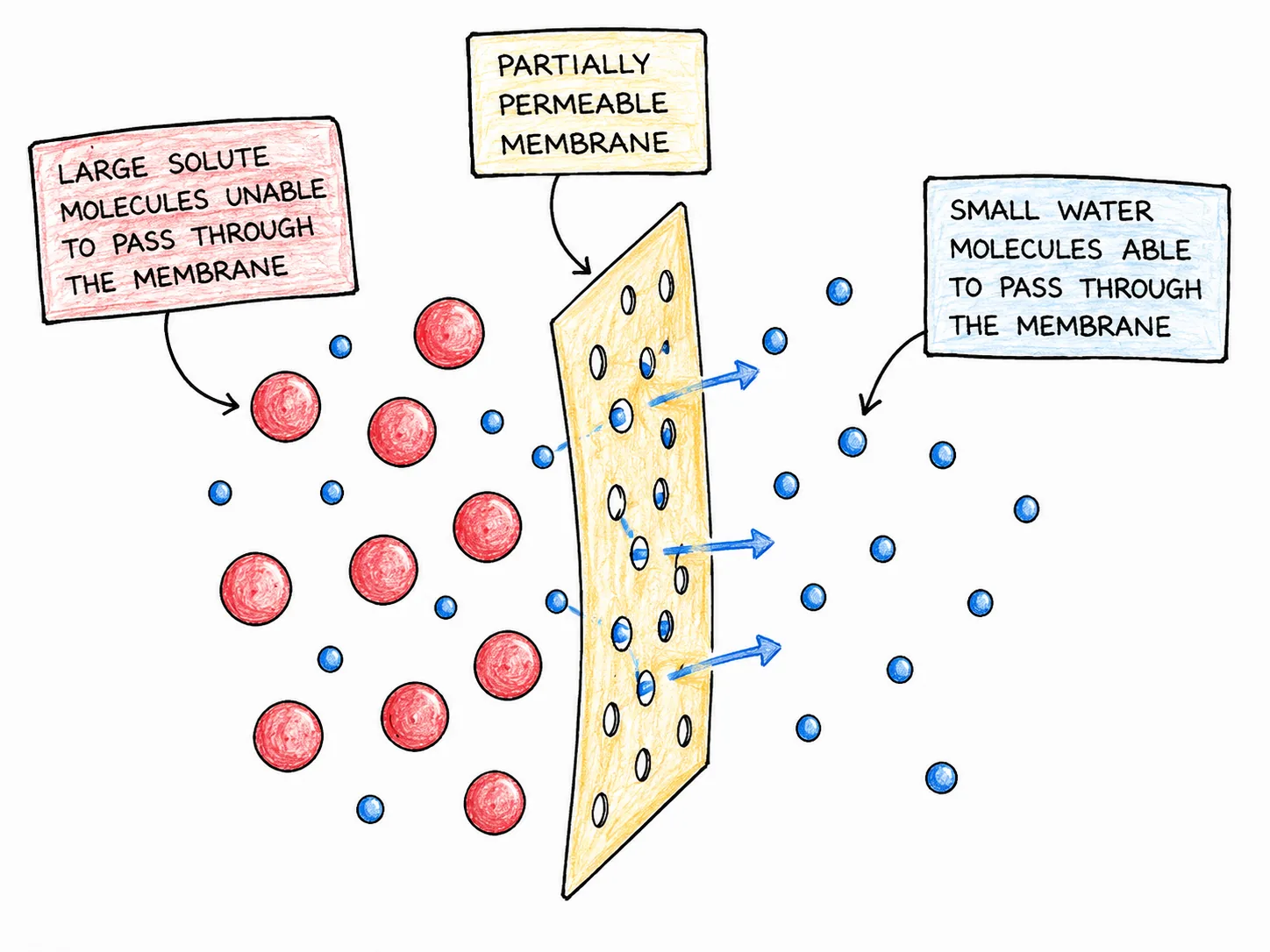
| Osmosis | The diffusion of water across a partially permeable membrane from a dilute solution to a more concentrated solution. |
| Percentage change in mass | The change in mass divided by the starting mass, multiplied by 100. |
| Turgid | Describes a plant cell that is swollen and firm because it is full of water. |
| Plasmolysis | When a plant cell loses so much water that its membrane pulls away from the cell wall. |
| Partially permeable membrane | A membrane that lets some substances pass through but not others. |
Section 8 of 8Exam technique

1
Saying that the large agar cube diffuses 'more slowly'. The rate through the jelly is the same; the larger cube takes longer because the acid must travel further and has less surface area per unit of volume.
2
Comparing the final masses of potato cylinders rather than the percentage change, which allows for different starting masses.
3
Forgetting to blot the potato before weighing, so liquid on the surface adds to the mass.
4
Describing osmosis as the movement of sugar. In these experiments it is water that moves, from dilute to concentrated solution.