2.7.2Structure and Function in Living Organisms
Role of the Intercostal Muscles and Diaphragm
5 min read 7 parts Lesson 29 of 55 1 quiz
Section 1 of 7The muscles involved
Muscles can only pull
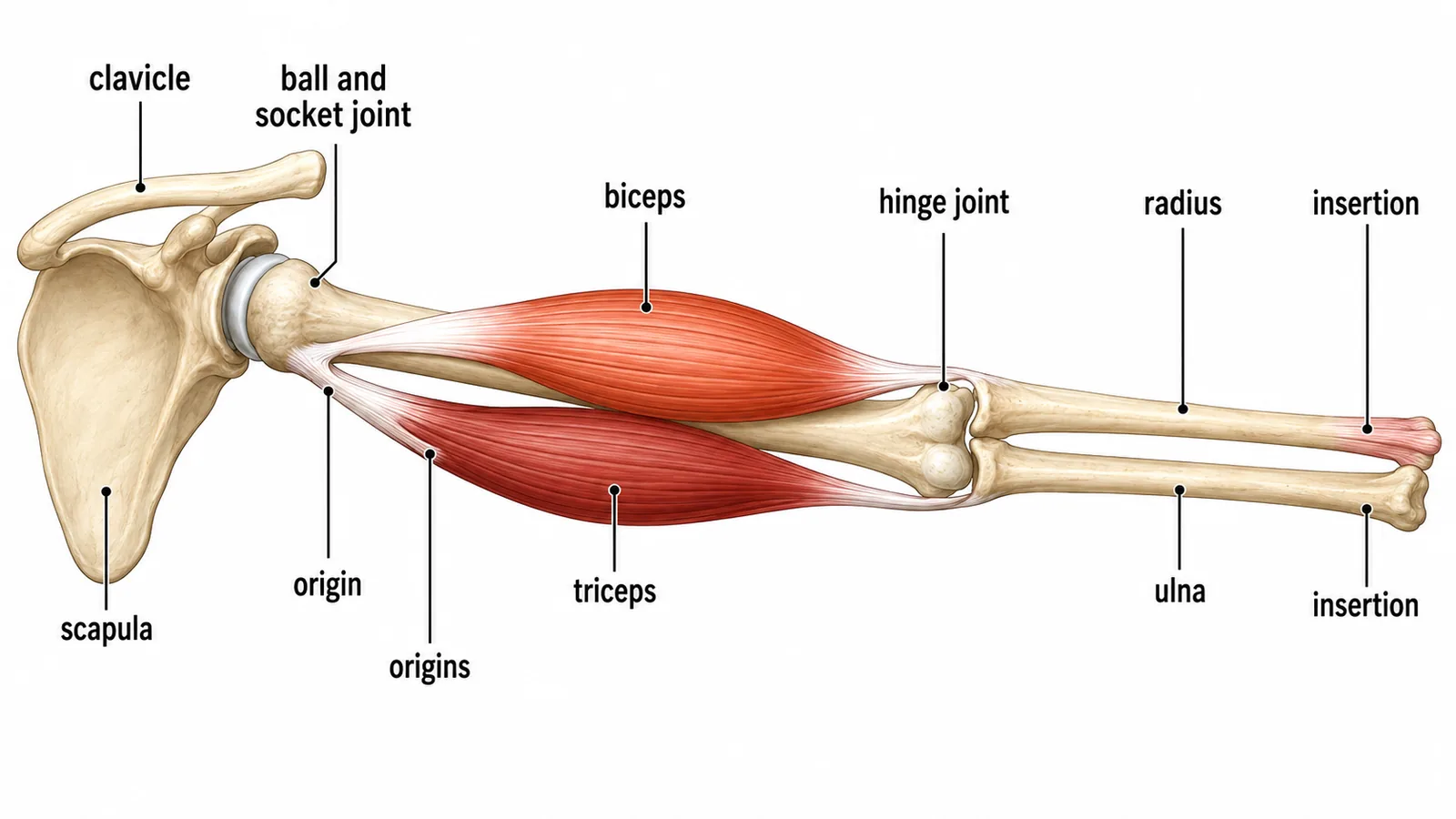
- Muscles can only pull A muscle can contract to pull on a bone but cannot push,
- so movements in two directions need two sets of muscles working as an antagonistic pair.
External intercostal muscles
- External intercostal muscles They lie on the outside of the rib cage.
- When they contract, they pull the ribs up and out.
Internal intercostal muscles
- Internal intercostal muscles They lie on the inside of the rib cage.
- They contract to pull the ribs down and in, but mainly during forced exhalation.
Diaphragm
- Diaphragm A dome-shaped sheet of muscle below the lungs.
- It flattens when it contracts and returns to a dome when it relaxes.
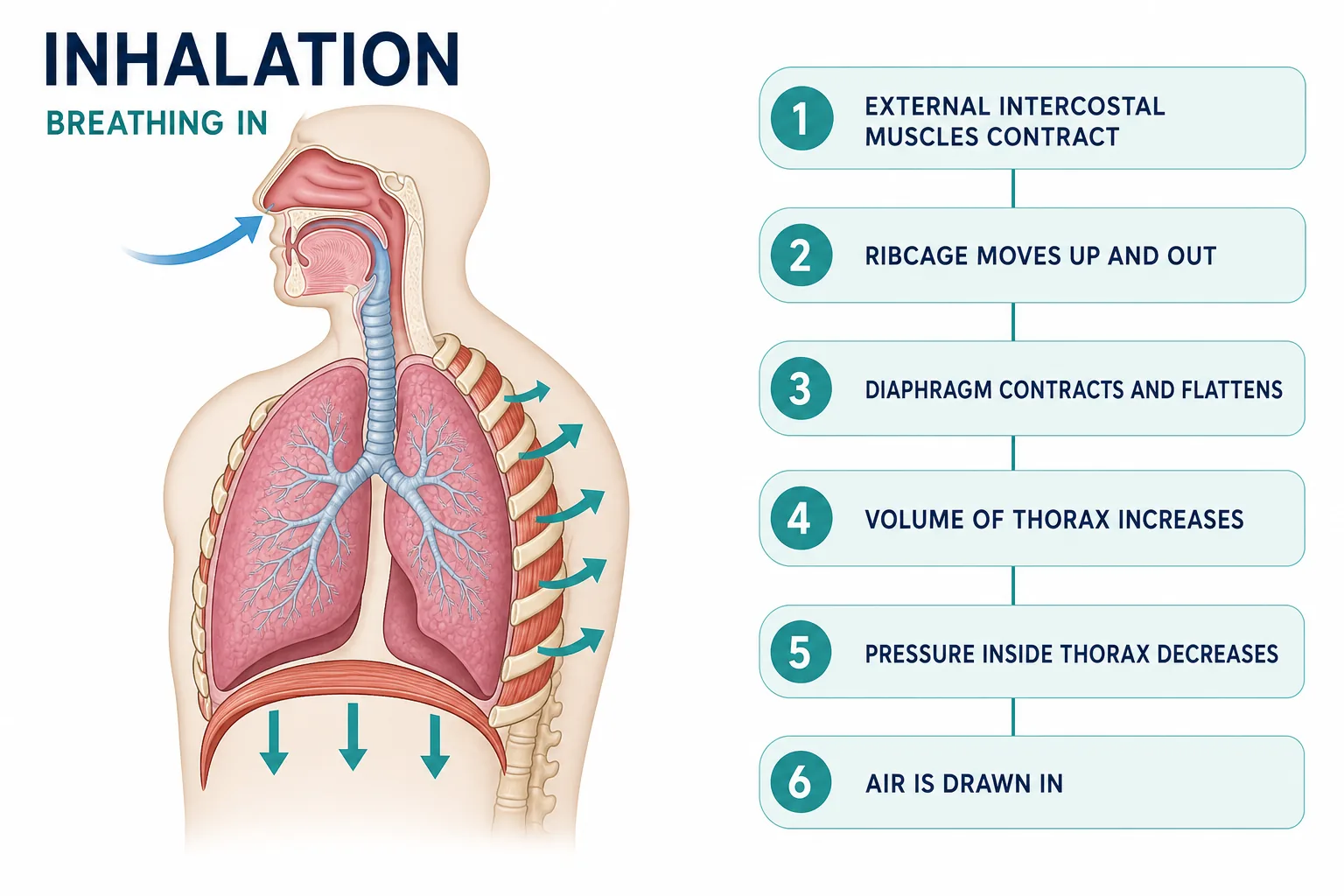
Section 2 of 7Inhalation (breathing in)
1Muscles contract
- Muscles contract The diaphragm contracts and flattens, and the external intercostal muscles contract, raising the ribs up and out.
2Volume increases
- Volume increases The volume of the thorax becomes larger.
3Pressure falls
- Pressure falls The pressure inside the lungs drops below atmospheric pressure outside the body.
4Air flows in
- Air flows in Air moves from the higher pressure outside to the lower pressure inside the lungs.
Section 3 of 7Normal exhalation (breathing out)

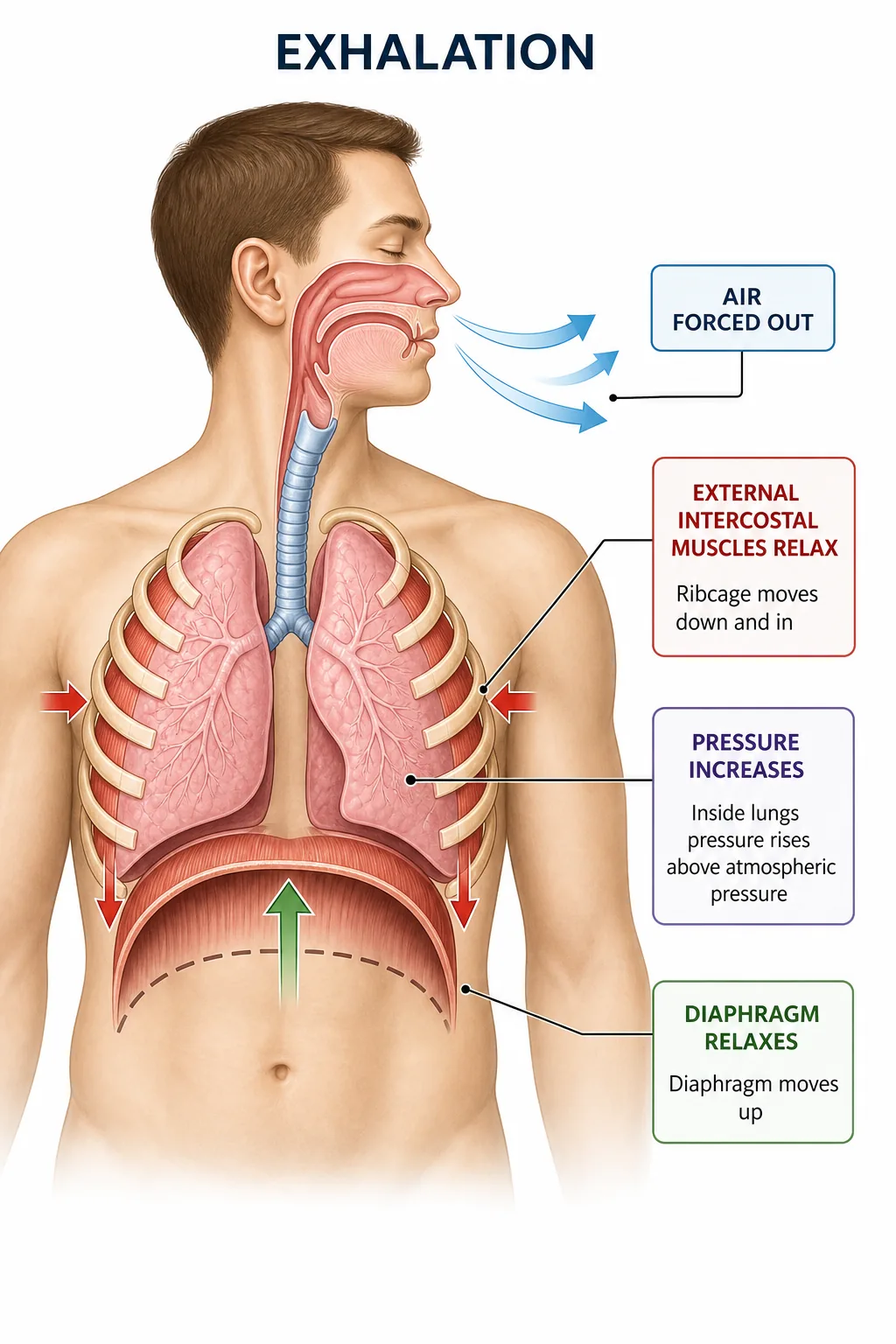
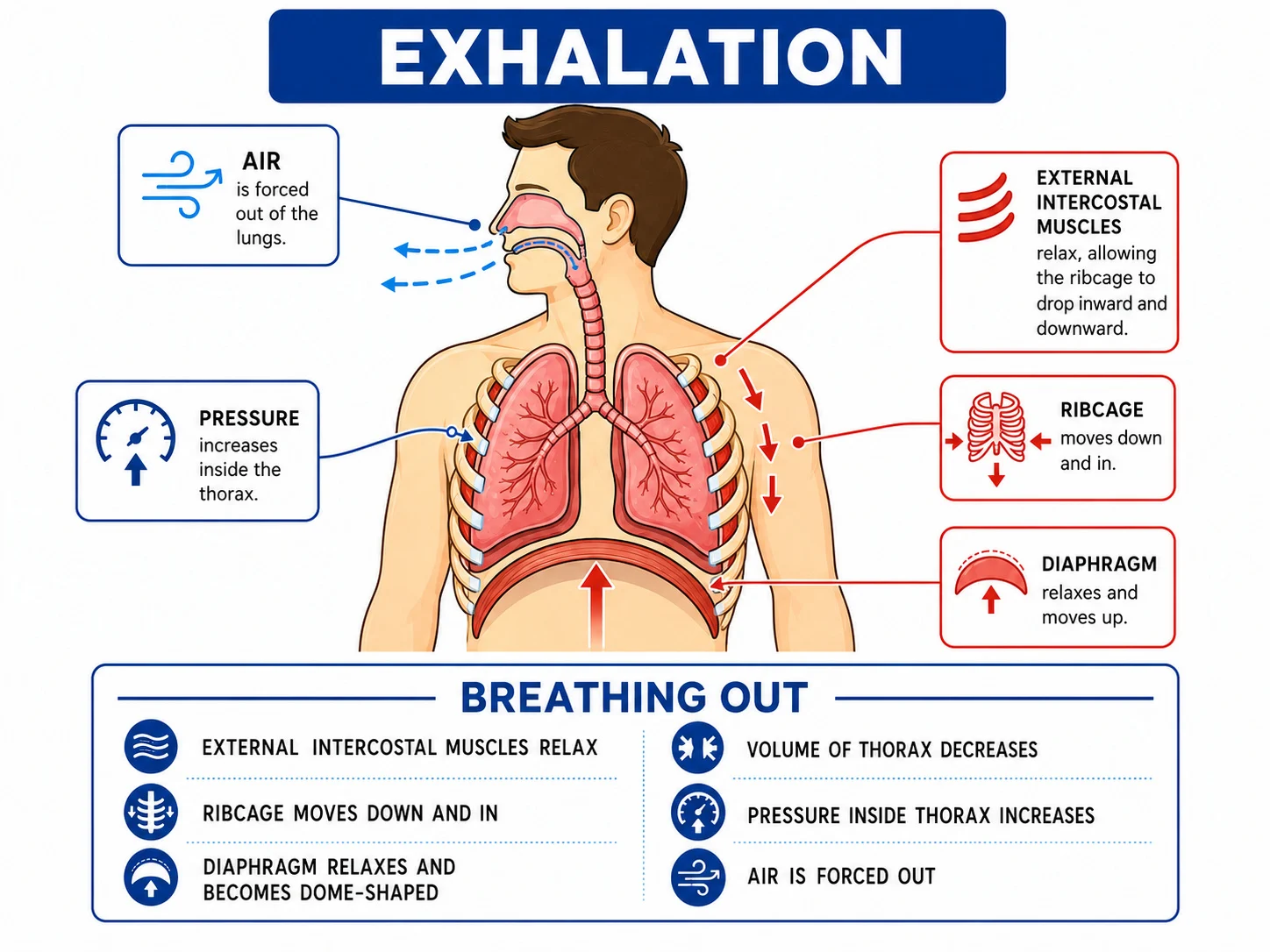
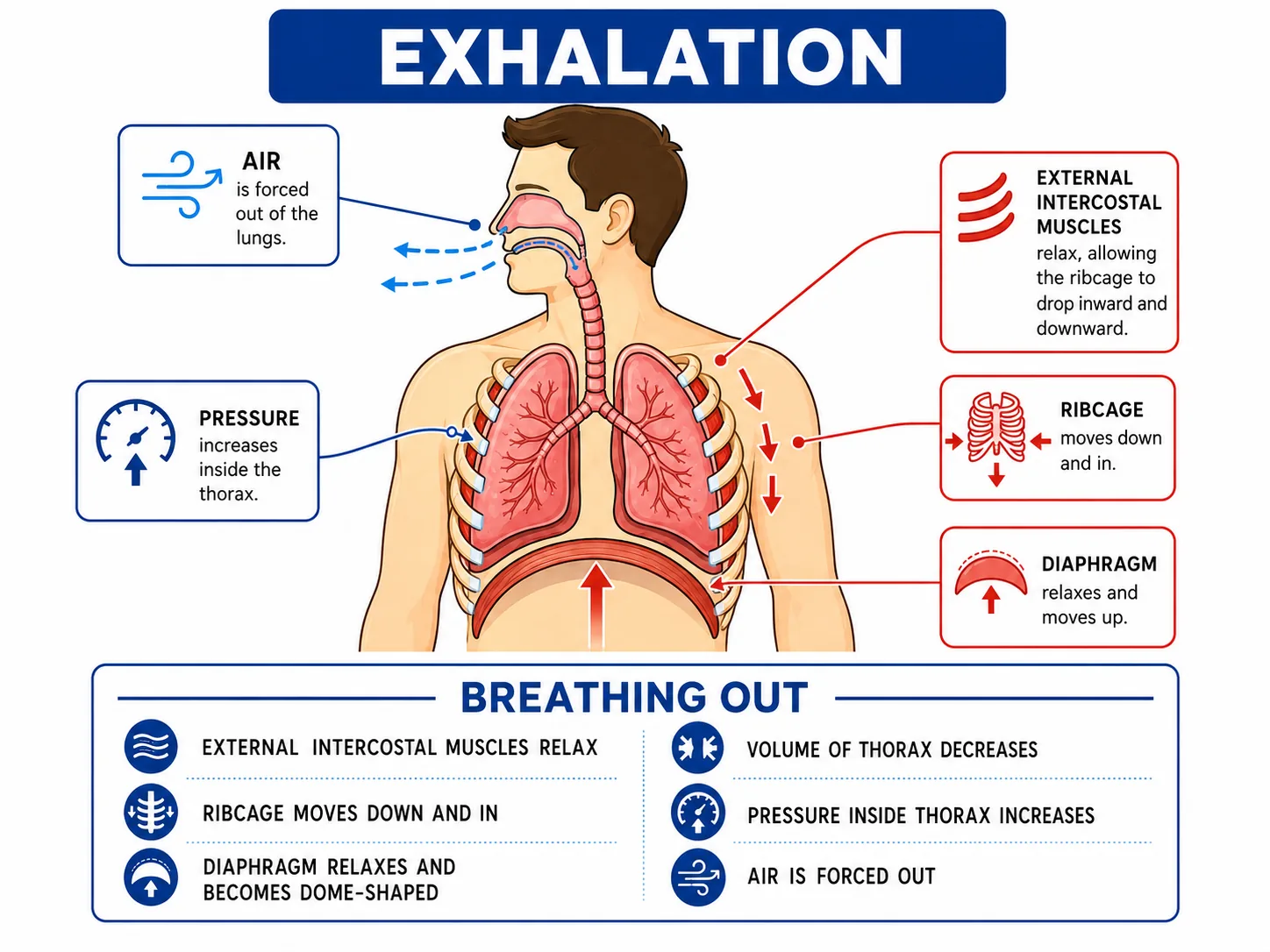
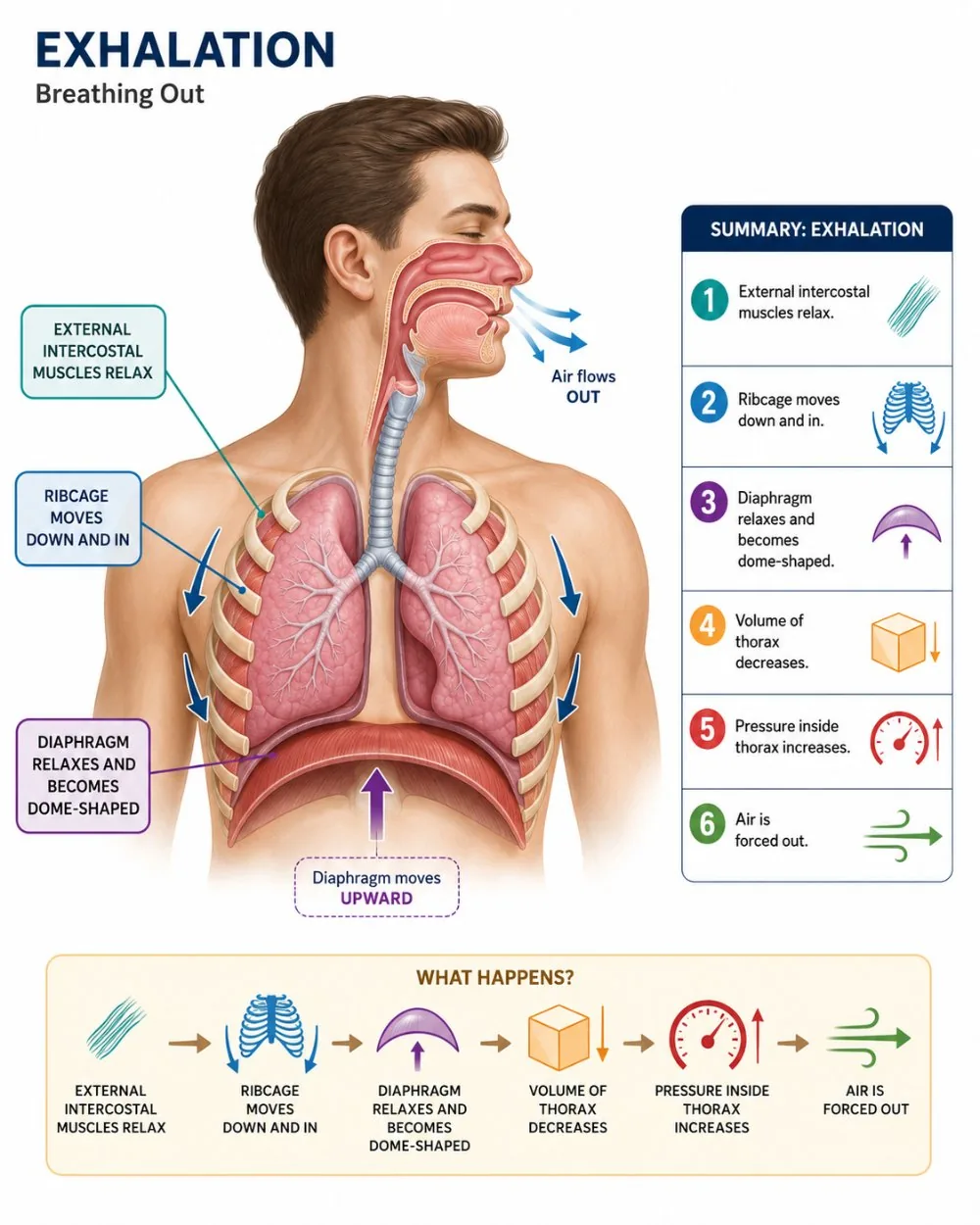
1Muscles relax
- Muscles relax The diaphragm relaxes and rises back into a dome, and the external intercostal muscles relax so the ribs drop down and in.
2Volume decreases
- Volume decreases The thorax becomes smaller.
3Pressure rises
- Pressure rises The pressure in the lungs rises above the pressure outside.
4Air flows out
- Air flows out Air is pushed out of the lungs.
Section 4 of 7Comparing the three types of breathing




| Stage | Diaphragm | Intercostal muscles | Thorax volume | Lung pressure |
|---|---|---|---|---|
| Inhalation | Contracts, flattens | External contract | Increases | Decreases |
| Normal exhalation | Relaxes, domed | External relax | Decreases | Increases |
| Forced exhalation | Relaxes | Internal contract and pull the ribs down and in | Decreases further | Increases more |
Section 5 of 7Why forced exhalation matters

During strenuous exercise
- During strenuous exercise Muscles respire faster and produce more carbon dioxide, which must be removed quickly.
- The internal intercostal muscles help by pulling the ribs down more strongly, forcing air out faster so a larger volume of air is exchanged each minute.
Section 6 of 7Key terms

| Term | Meaning |
|---|---|
| Inhalation | Breathing in; also called inspiration. |
| Exhalation | Breathing out; also called expiration. |
| Antagonistic muscles | A pair of muscles that work in opposite directions, one relaxing as the other contracts. |
| Intercostal muscles | The muscles between the ribs that move the rib cage. |
| Forced exhalation | Active breathing out using the internal intercostal muscles, which empties the lungs more quickly. |
Section 7 of 7Exam technique

1
Saying air is 'sucked' in because the lungs expand on their own. The lungs have no muscle; changes in thorax volume and pressure move the air.
2
Mixing up the diaphragm positionsit flattens on inhalation and is domed on exhalation.
3
Forgetting to mention pressure. A full answer links volume change to pressure change to air movement.
4
Stating that normal exhalation uses the internal intercostals. They are used for forced exhalation only.