2.10.2Structure and Function in Living Organisms
Homeostasis
5 min read 9 parts Lesson 45 of 55 1 quiz
Section 1 of 9What homeostasis is
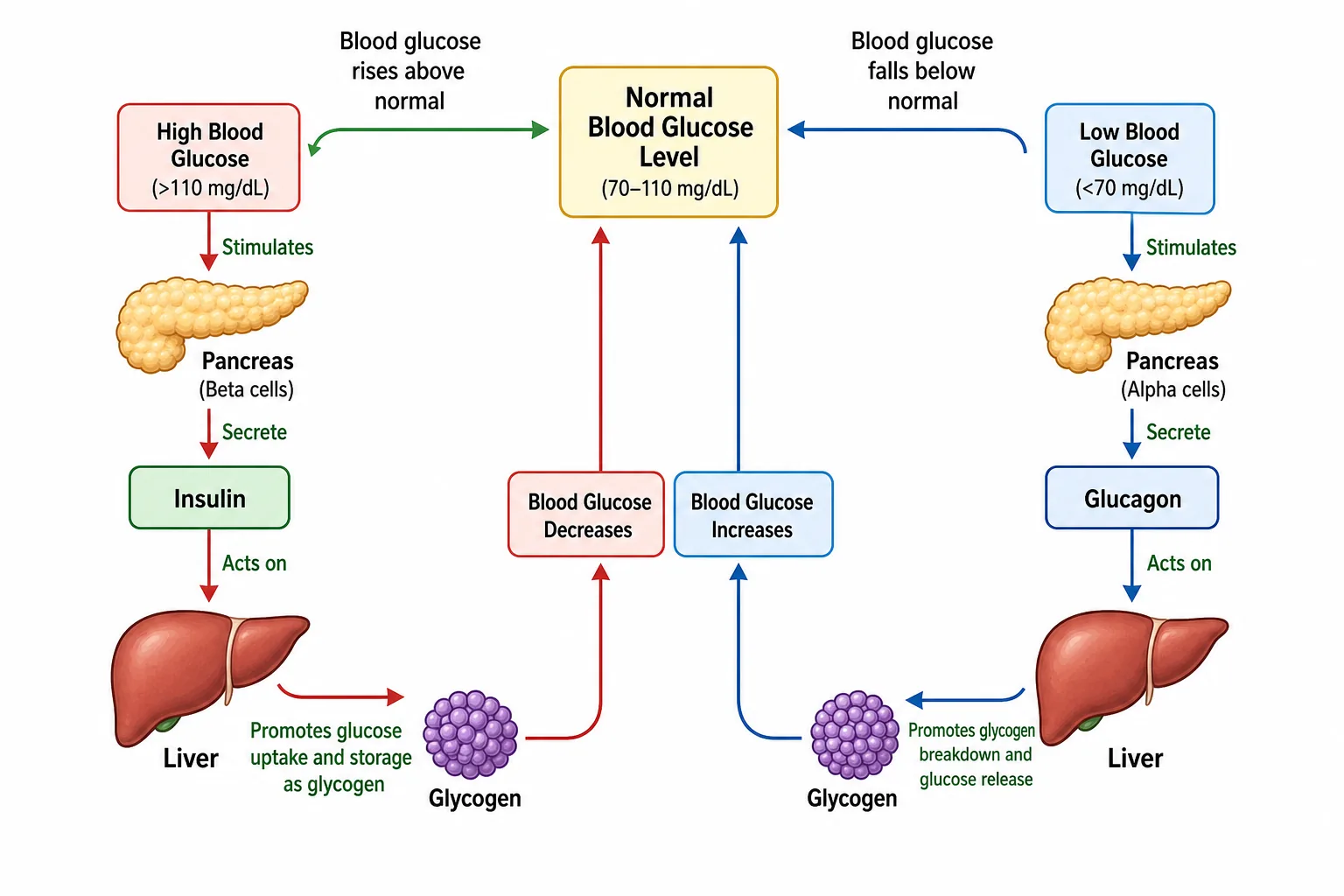
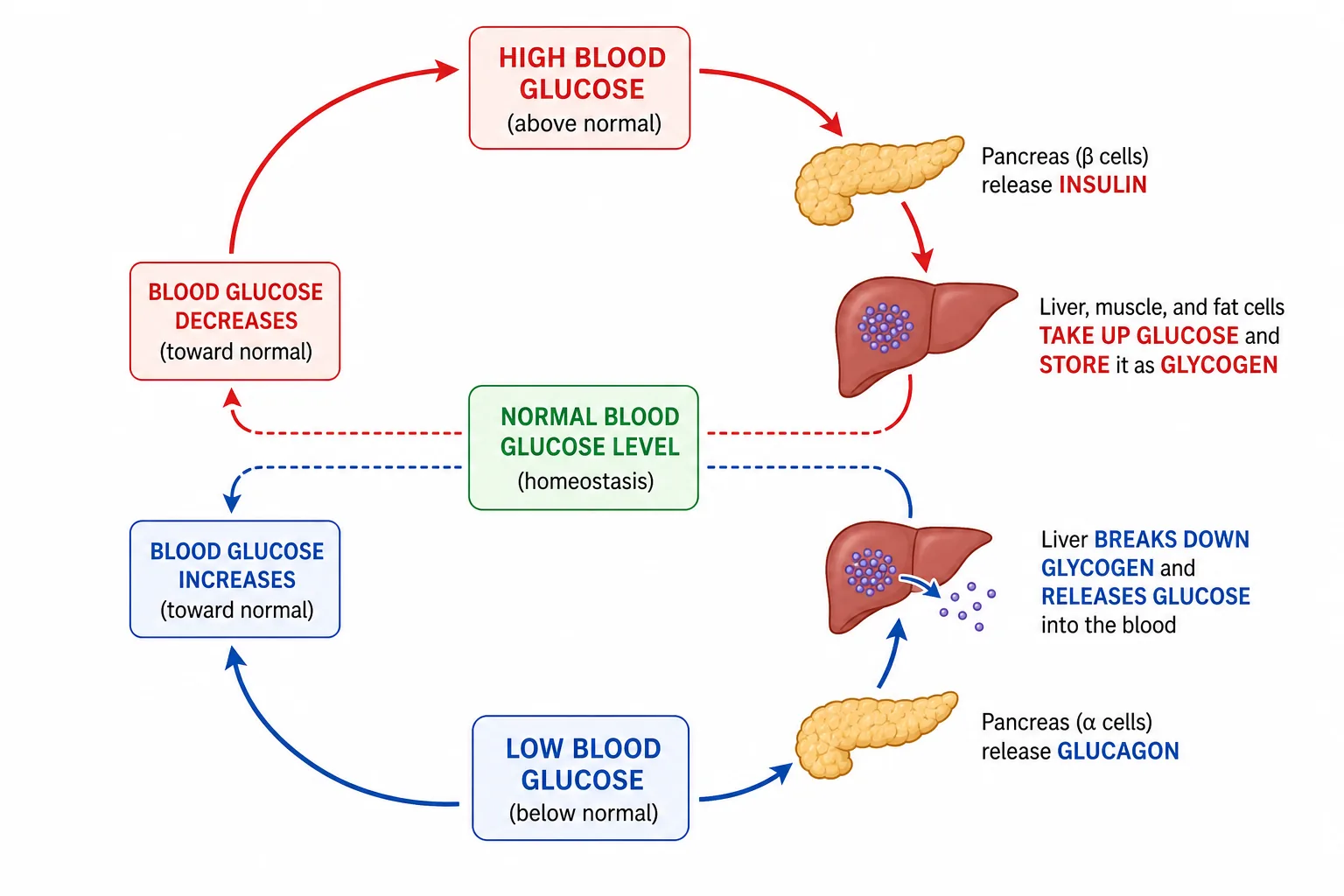
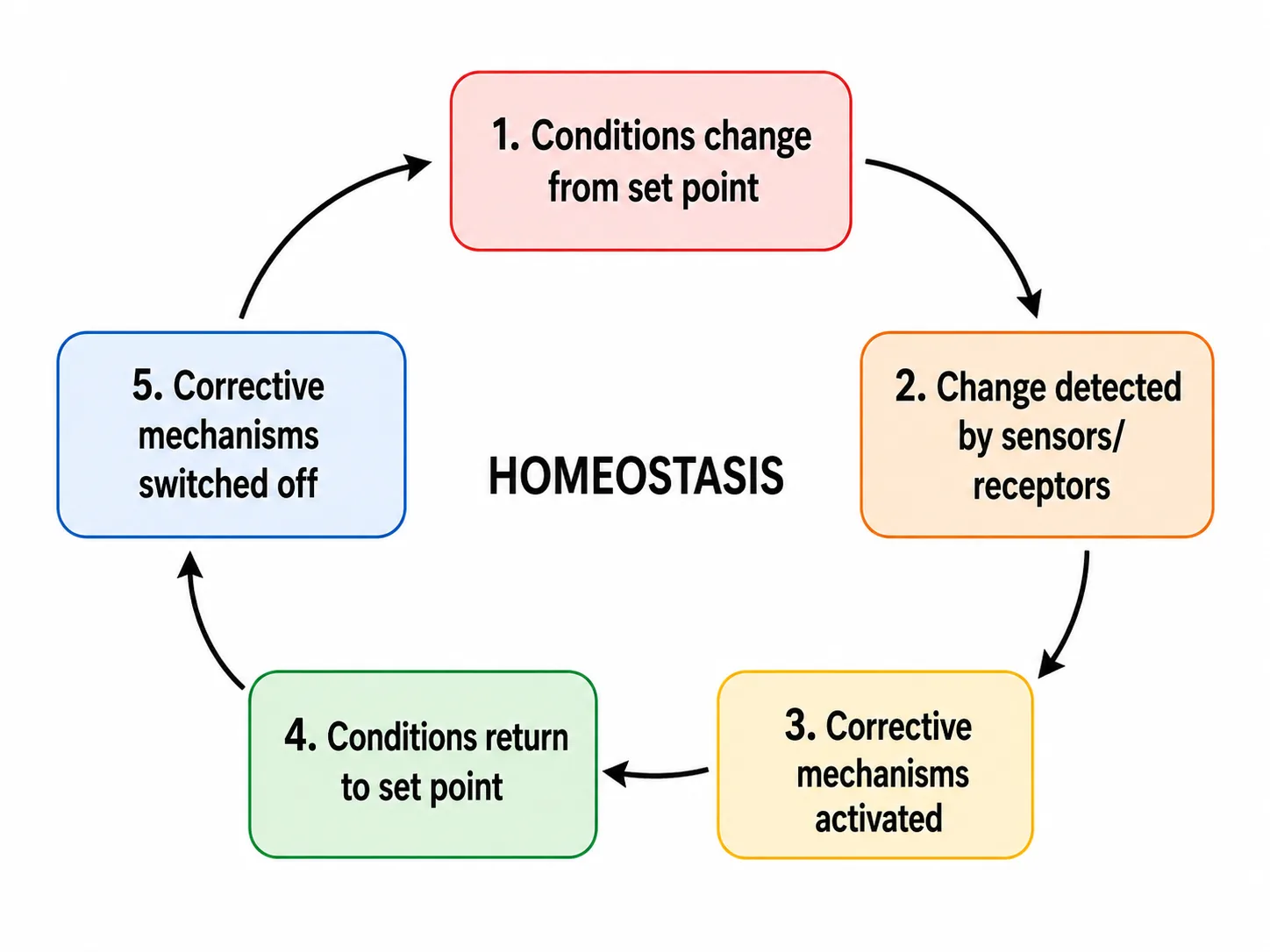

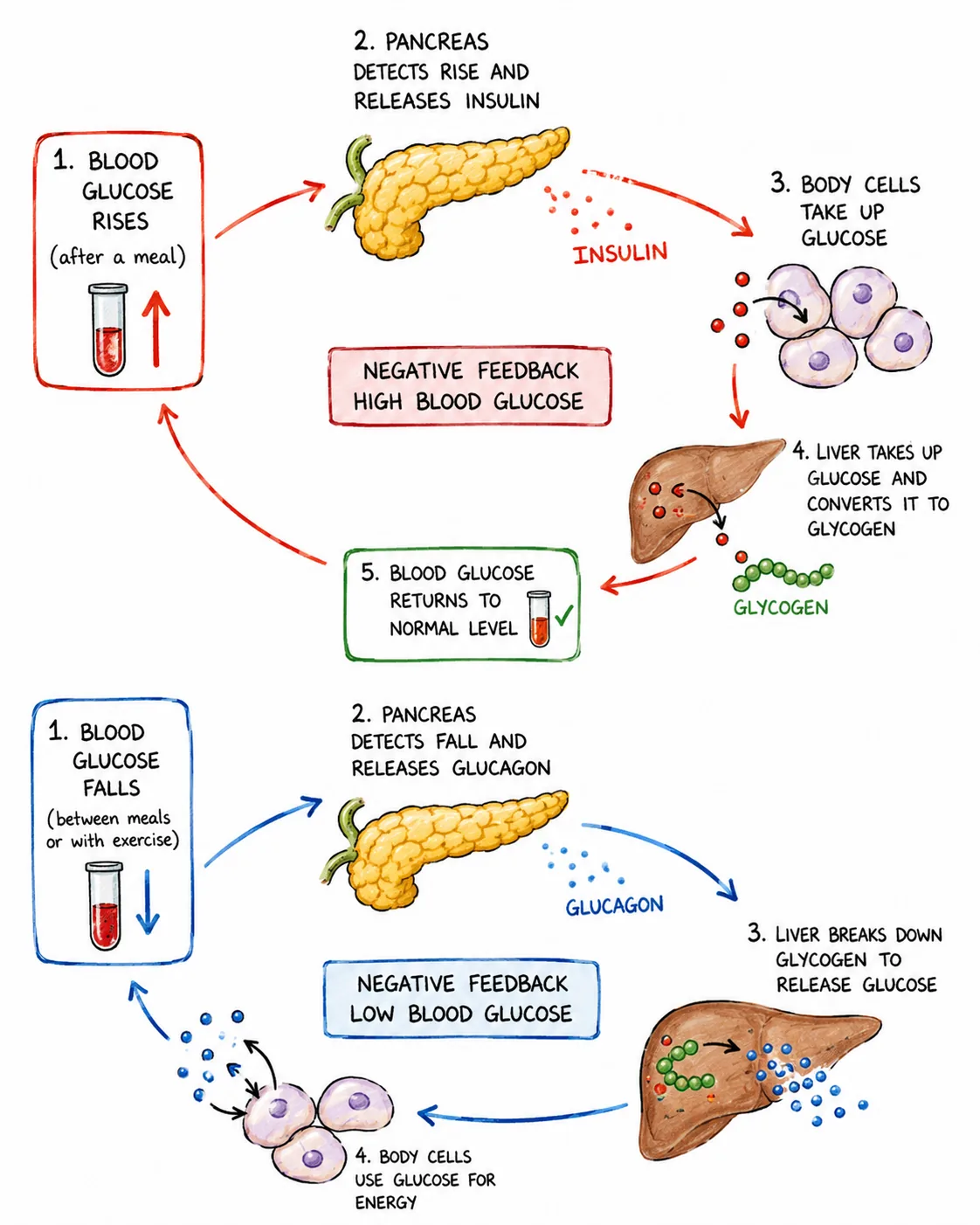
Homeostasis is the regulation of the internal conditions of a cell or organism to maintain optimum conditions for function, in response to internal and external changes. The body does not keep everything perfectly constant; instead each condition varies slightly around a set point. Homeostasis involves the nervous system and the endocrine (hormonal) system working together.
The conditions kept steady in the human body include body temperature, blood glucose concentration, and water content of the blood. The levels of ions and carbon dioxide are also controlled.
A useful way to remember the idea is the phrase 'keep it steady, but not frozen'.
- but the control systems pull each back towards its set point.
- whereas disease often shows up when one of these systems is unable to respond.
Section 2 of 9Why control is needed
Cells work best when their surroundings are kept stable.
Section 3 of 9Components of a control system
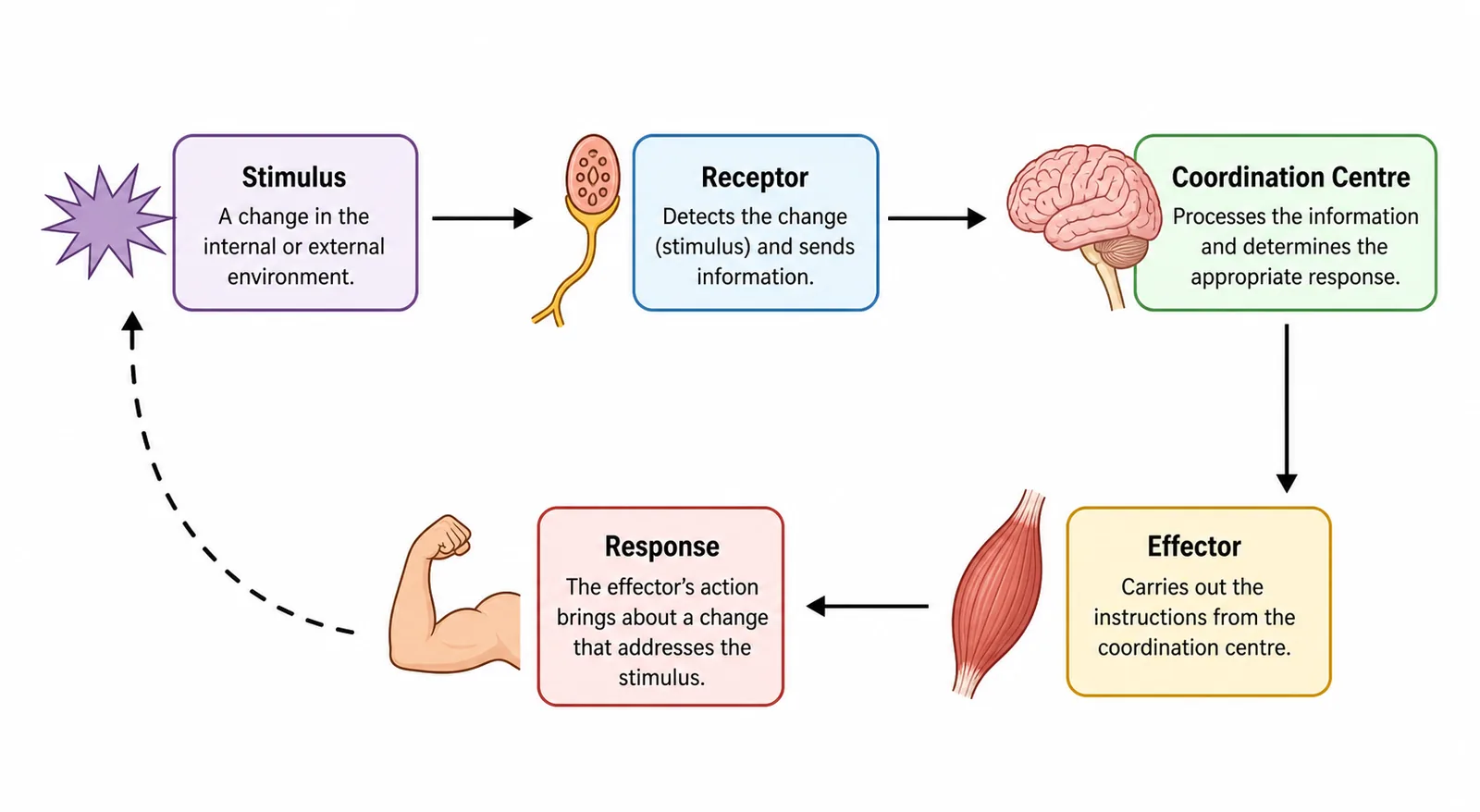
All automatic control systems in the body have three kinds of components.
| Component | Role | Example (body temperature) |
|---|---|---|
| Receptor | Detects a change from the set point | Temperature receptors in the skin and brain |
| Coordination centre | Processes the information and decides on a response | Thermoregulatory centre in the brain |
| Effector | Carries out the response to restore the level | Sweat glands, muscles, skin arterioles |
Information from receptors reaches the coordination centre by nerve impulses or by hormones in the blood. Coordination centres include the brain, spinal cord and the pancreas. Effectors are muscles or glands.
Section 4 of 9Negative feedback
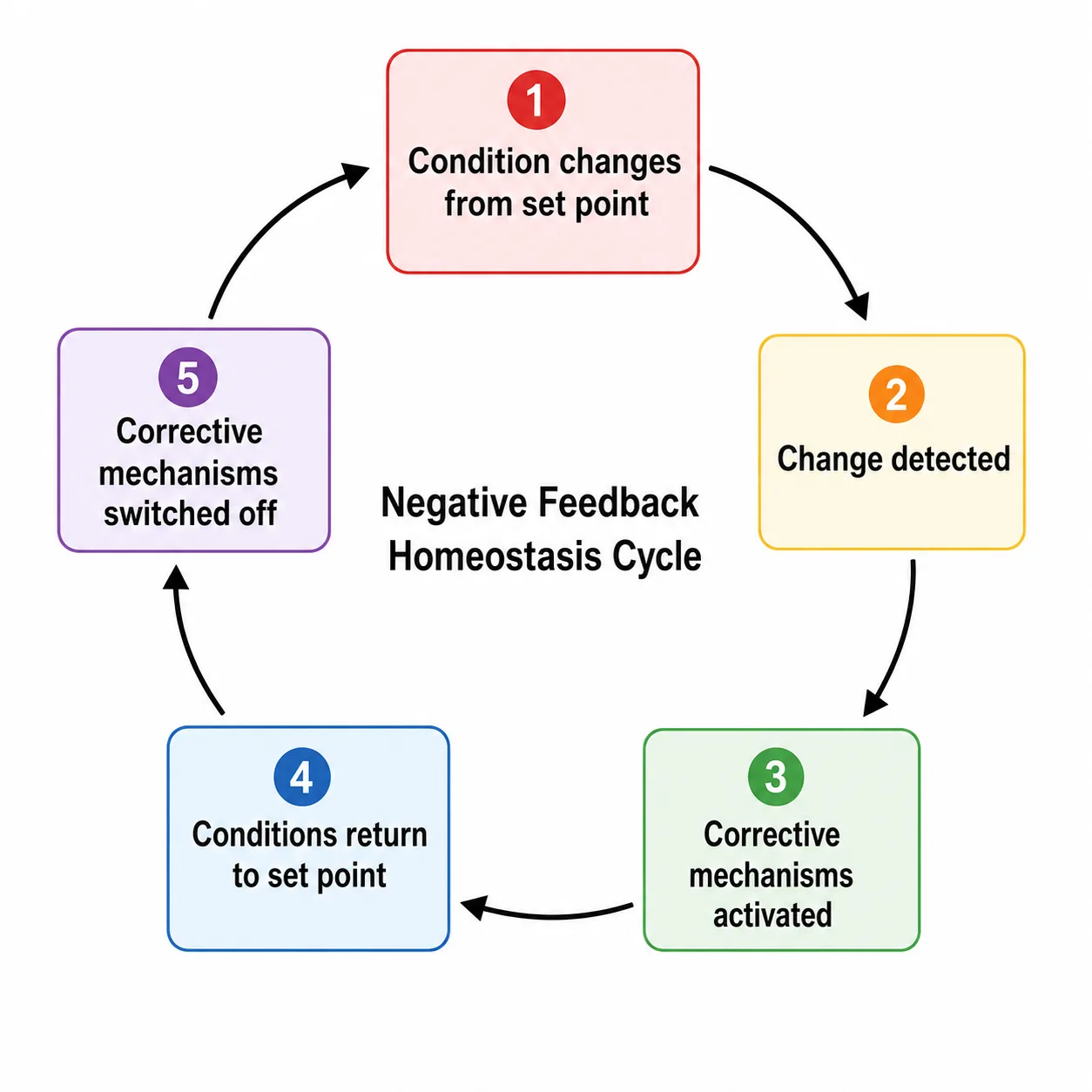
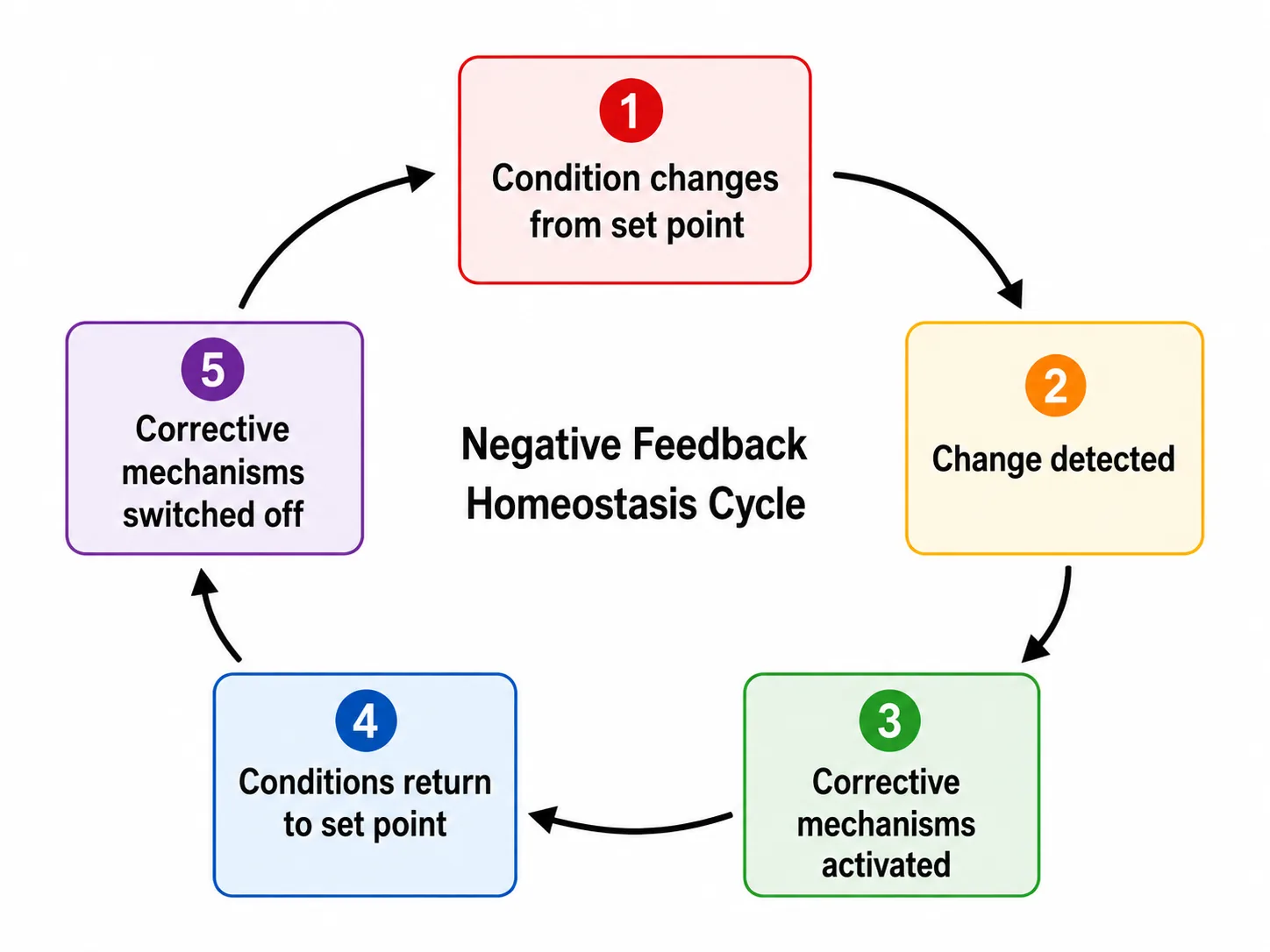
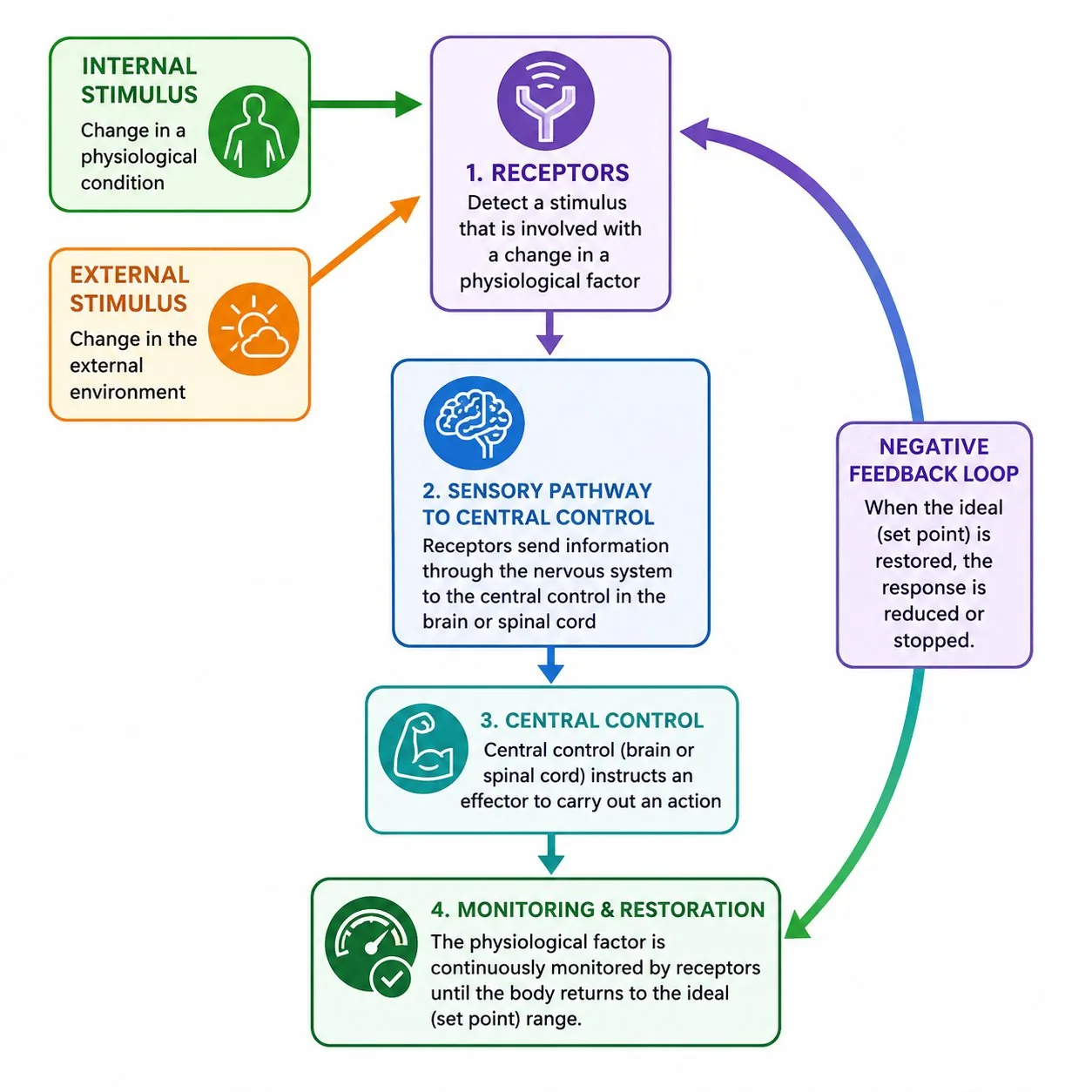
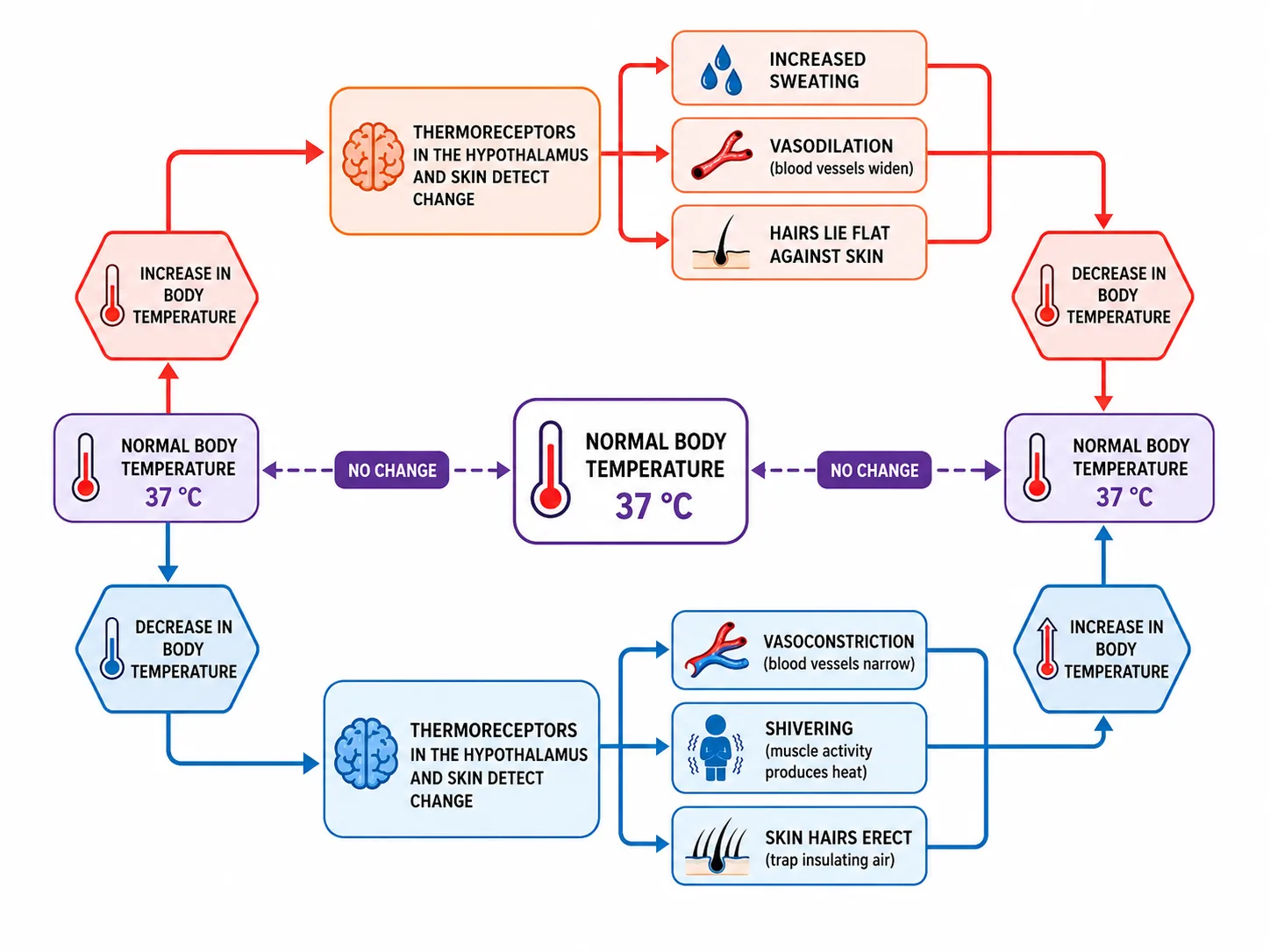
Most homeostatic systems work by negative feedback.
Section 5 of 9Nervous versus hormonal control
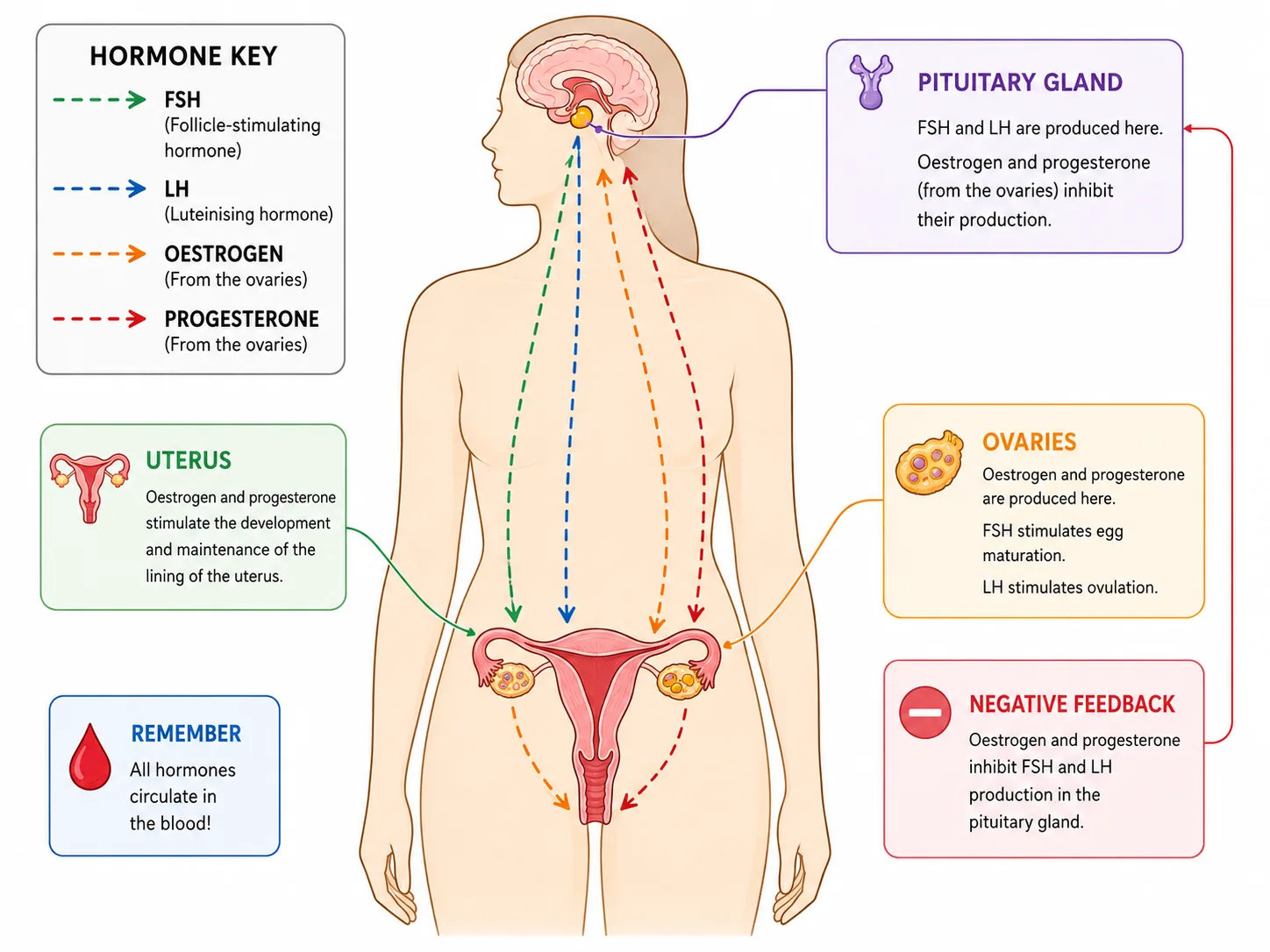
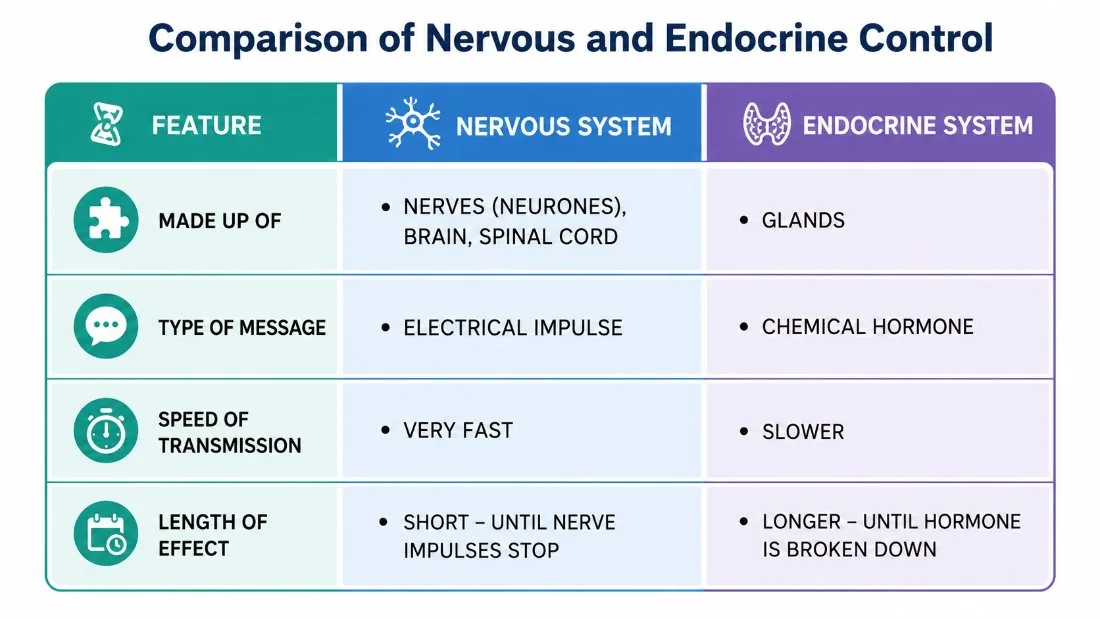
| Feature | Nervous | Hormonal |
|---|---|---|
| Message carried by | Electrical impulses | Chemical hormones in blood |
| Speed | Very fast | Slower |
| Duration | Short | Longer-lasting |
| Target | Precise area | Target organs with receptors, often widespread |
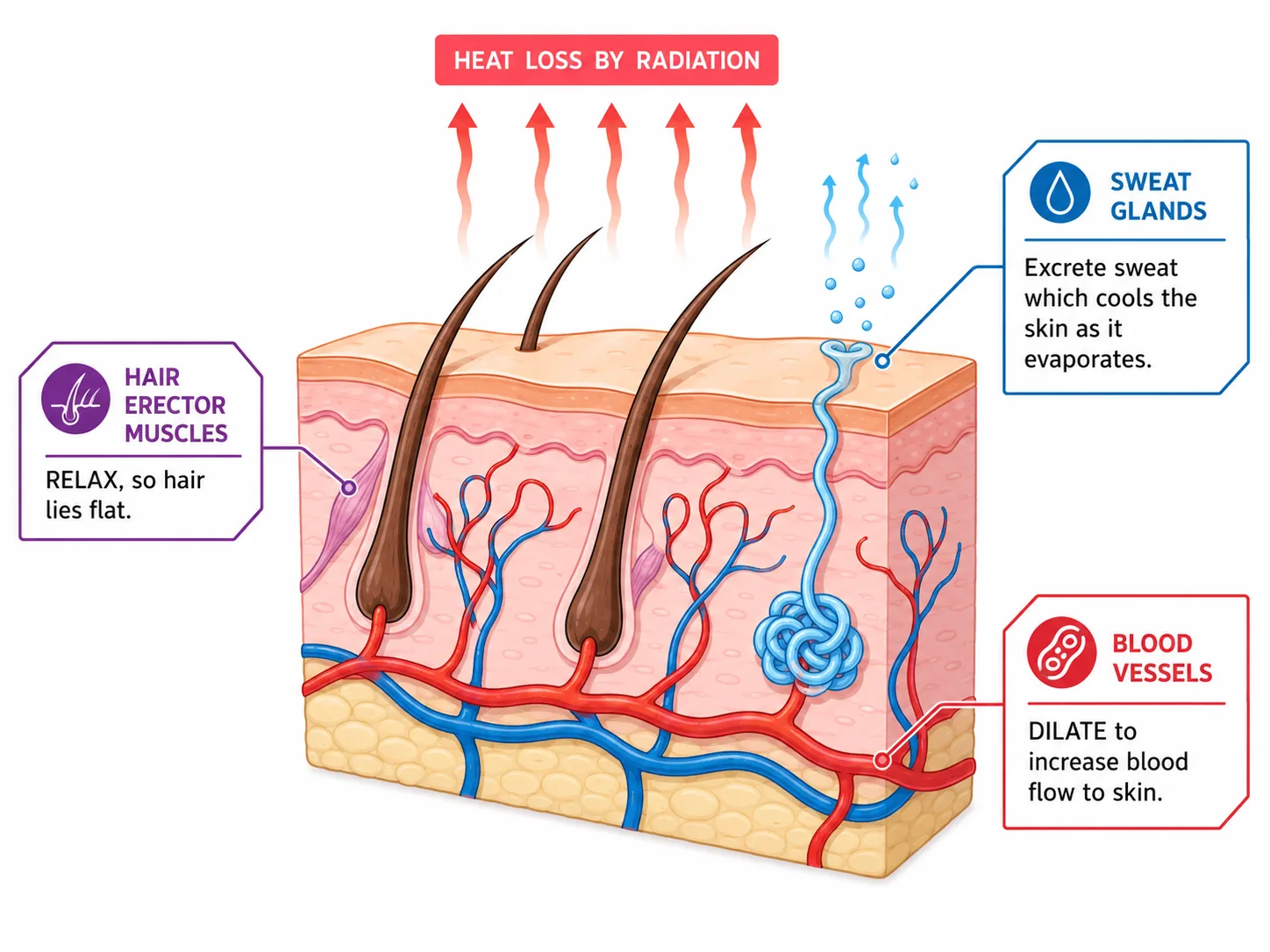
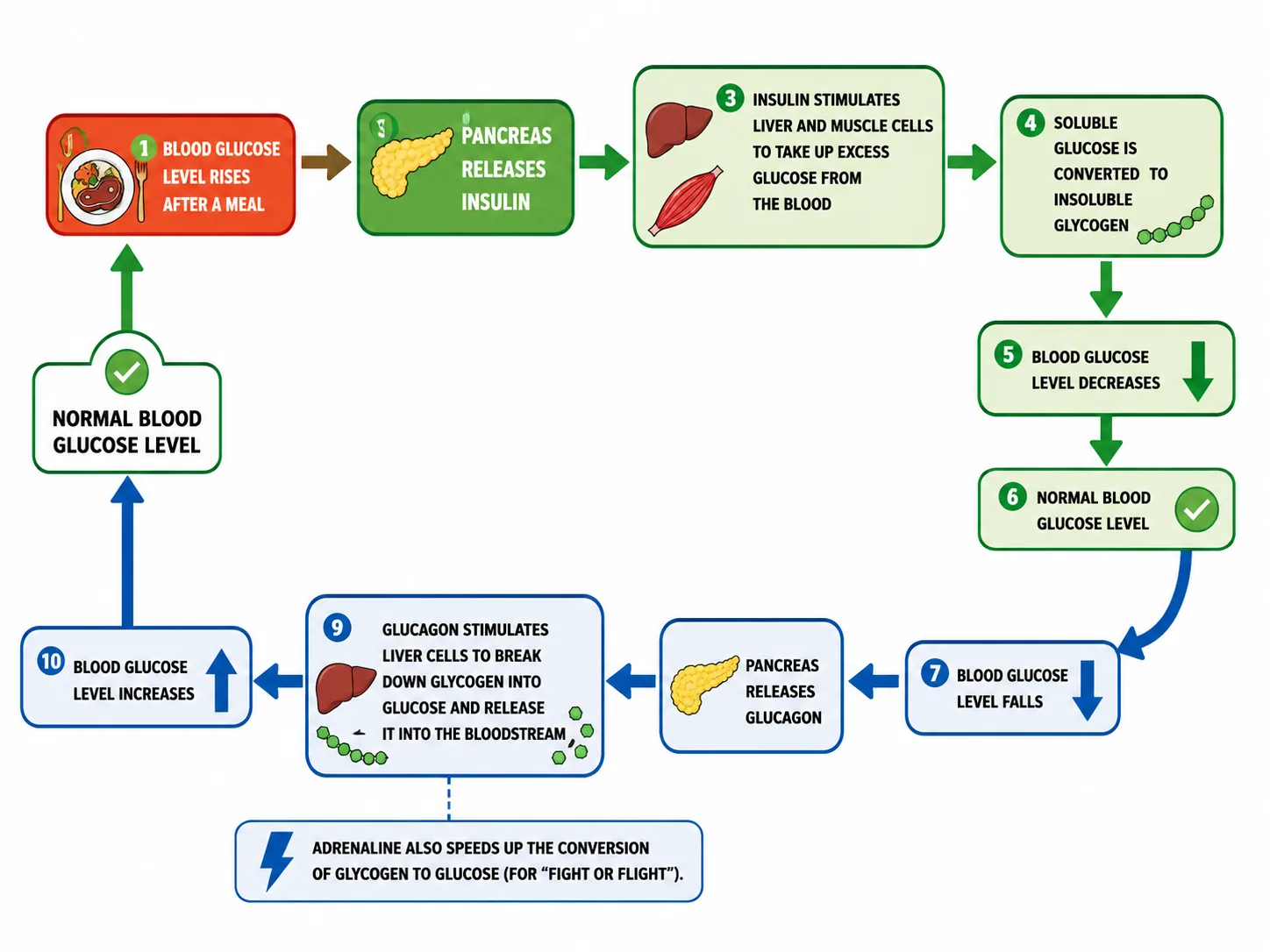
Body temperature uses mainly nervous control (5.1.6). Blood glucose uses hormonal control (5.2.3), and water balance uses ADH, a hormone (5.2.4). Homeostasis is a prime example of how organ systems in the body cooperate.
When doctors study patients they use the idea of a range: a normal fasting blood glucose is within a narrow band, and a reading outside that band can indicate illness.
Section 6 of 9Applying the idea to new situations
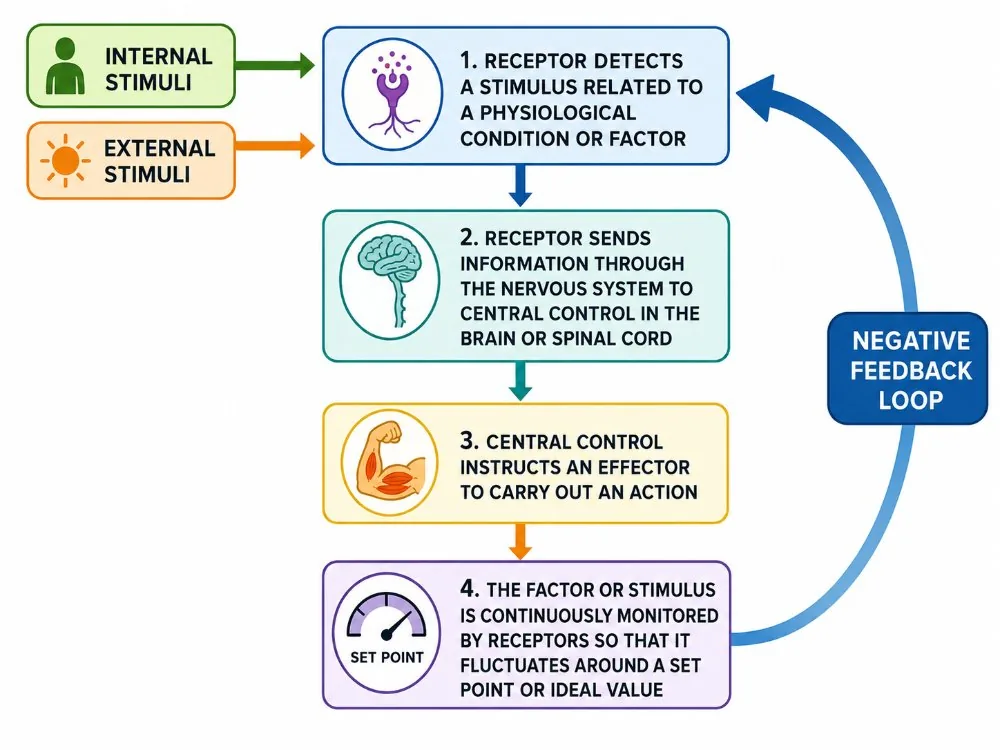
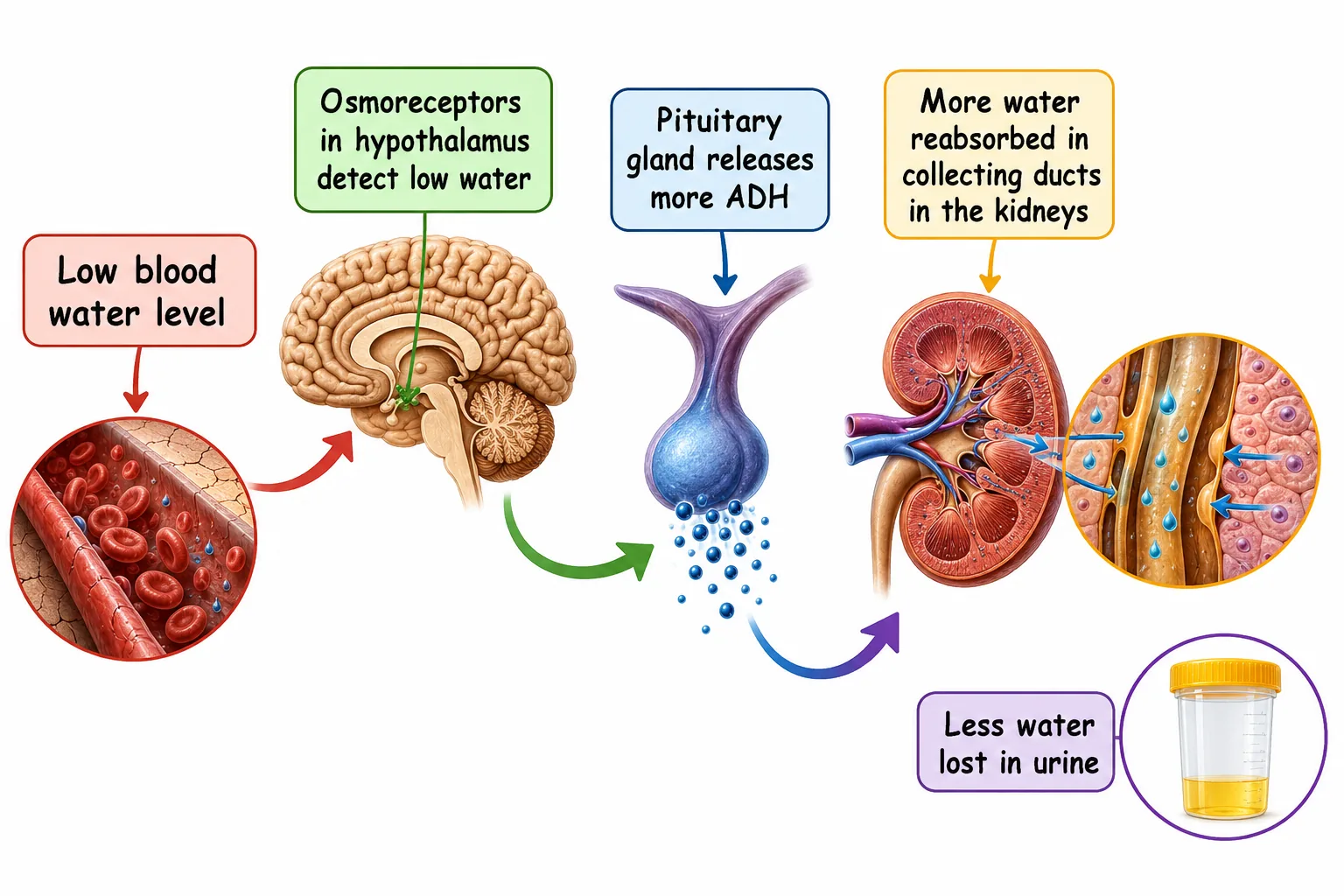


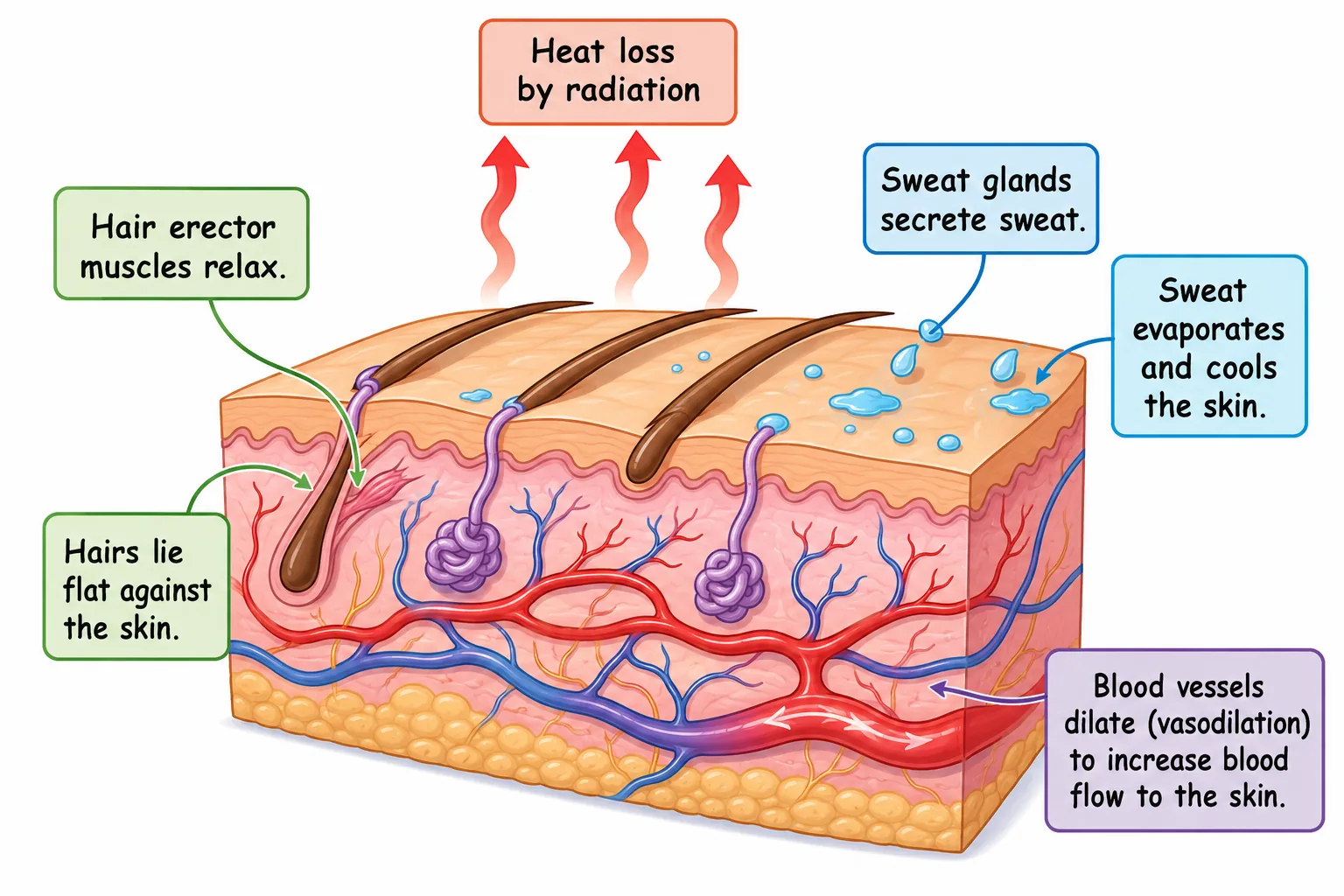
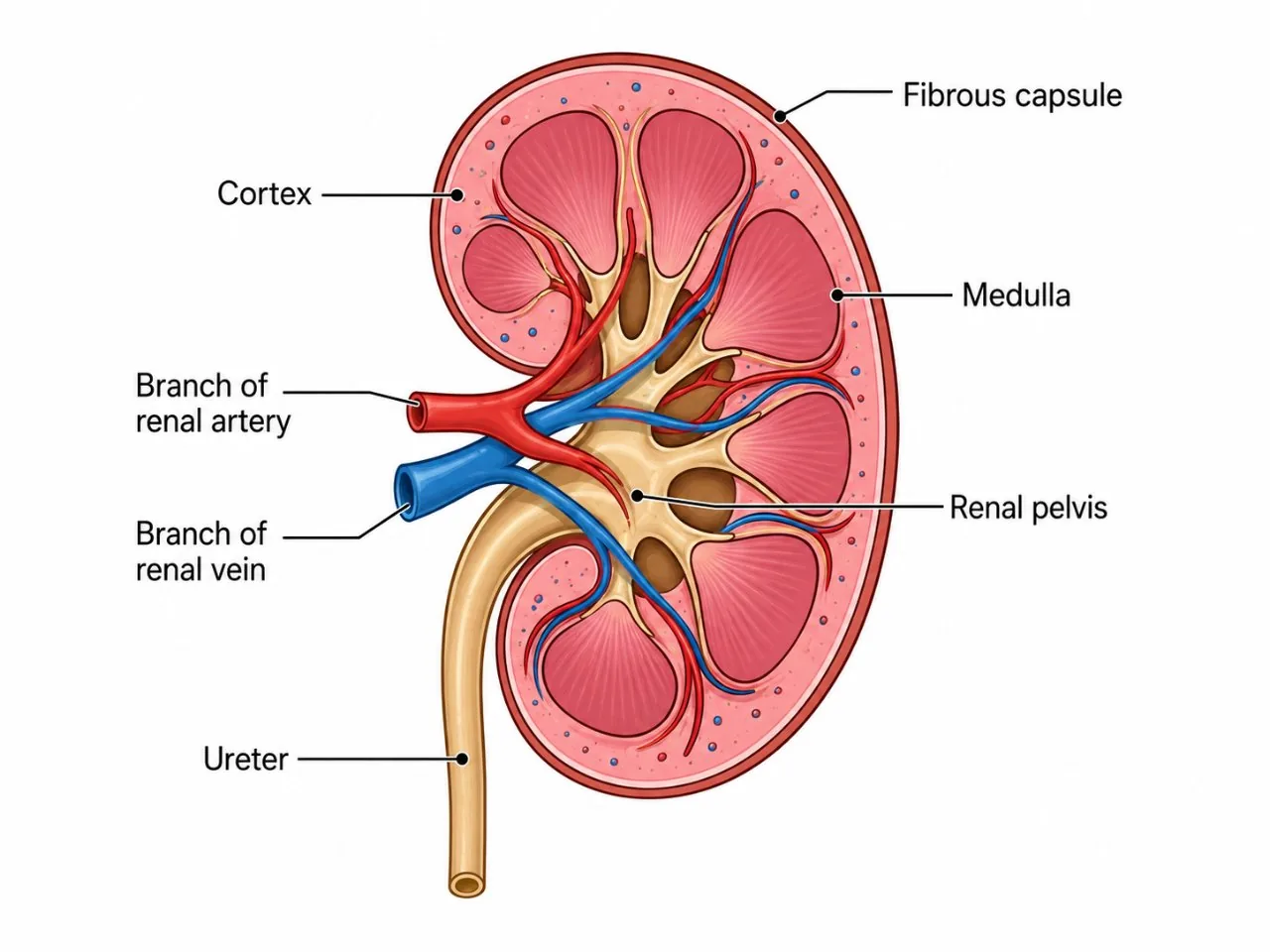
Exam questions often describe a situation you have not met and ask you to apply the homeostasis model.
- and then state the response and its effect.
- and the blood becomes more dilute again.
Another example is a runner on a hot day.
- and the temperature falls.
Finally, remember that a disorder of homeostasis is not always a failure of the effector. In type 1 diabetes, for example, the coordinator (pancreas) fails to release insulin, while in type 2 the target cells do not respond properly. Being specific about which part of the loop has failed is the best way to gain full marks.
Section 7 of 9Exam-style questions




Define homeostasis. [2]2 marks
The regulation of the internal conditions of the body [1] to maintain optimum conditions for cells and enzymes, in spite of changes inside or outside [1].
Name the three types of component in a homeostatic control system and state the job of each. [3]3 marks
Receptor detects the stimulus or change [1]. Coordination centre processes information and decides the response [1]. Effector carries out the response to restore the optimum [1].
Explain what is meant by negative feedback, using body temperature as an example. [3]3 marks
A change away from the set point causes a response that reverses it [1]. If the body is too hot, sweating and vasodilation cool it [1]. When temperature returns to 37°C the response stops [1].
Section 8 of 9Key terms
| Term | Meaning |
|---|---|
| Homeostasis | Regulation of internal conditions to keep them at an optimum. |
| Set point | The target level at which a condition is maintained. |
| Receptor | Cell that detects a stimulus or change. |
| Coordination centre | Structure that receives information and decides on a response. |
| Effector | Muscle or gland that carries out a response. |
| Negative feedback | A response that reverses the change that triggered it. |
| Hormone | A chemical messenger carried in the blood. |