2.10.5Structure and Function in Living Organisms
Nervous and Hormonal Control
5 min read 6 parts Lesson 48 of 55 Unit quiz
Section 1 of 6Two control systems

Why two systems
- Why two systems Changes outside the body and inside it act as stimuli.
- The nervous system and the hormonal system work together to coordinate suitable responses and regulate body functions.
The nervous system
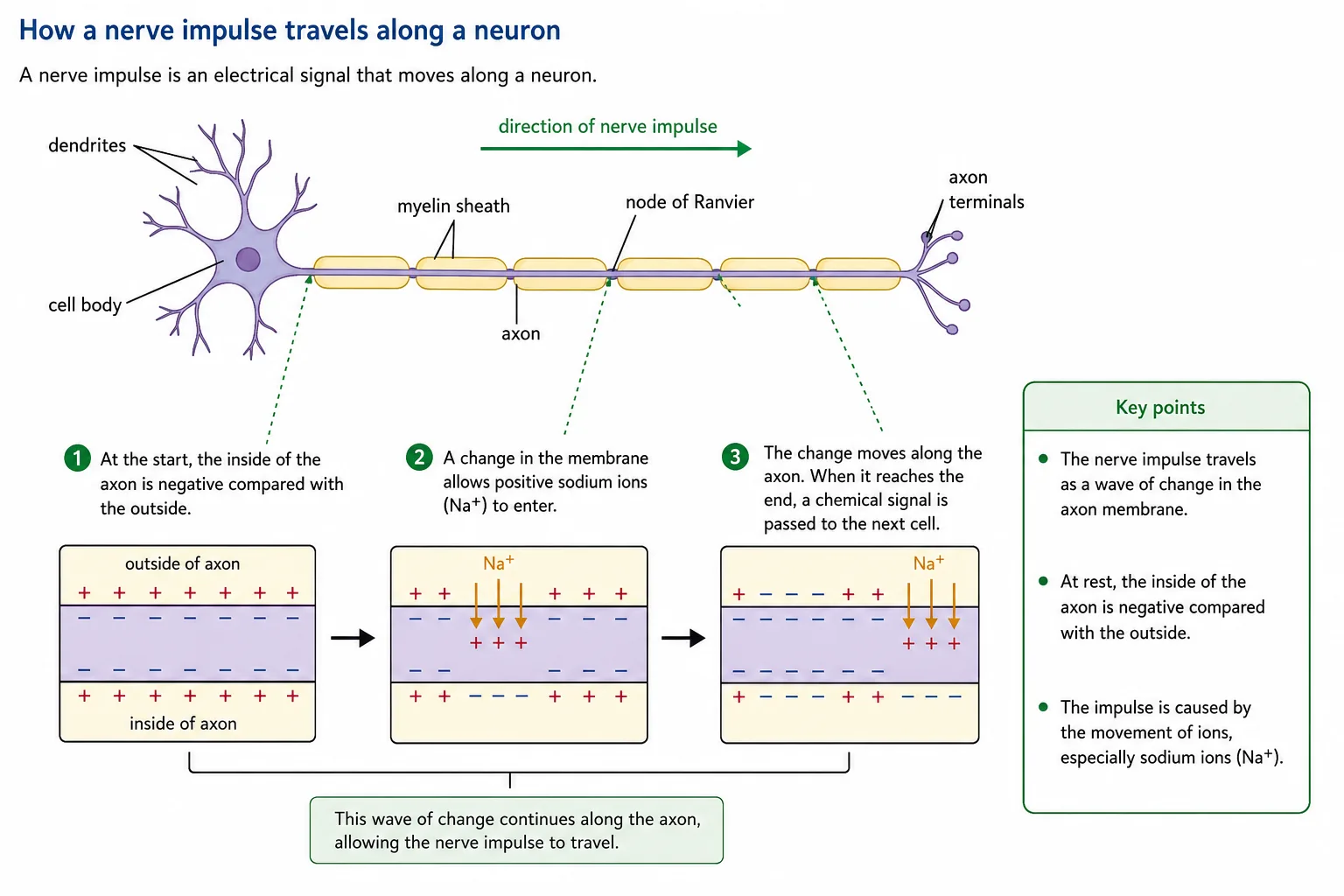
- The nervous system Information travels as electrical impulses along nerve cells called neurones.
- Impulses can travel at up to about 100 metres per second, so responses are very quick.
The endocrine system
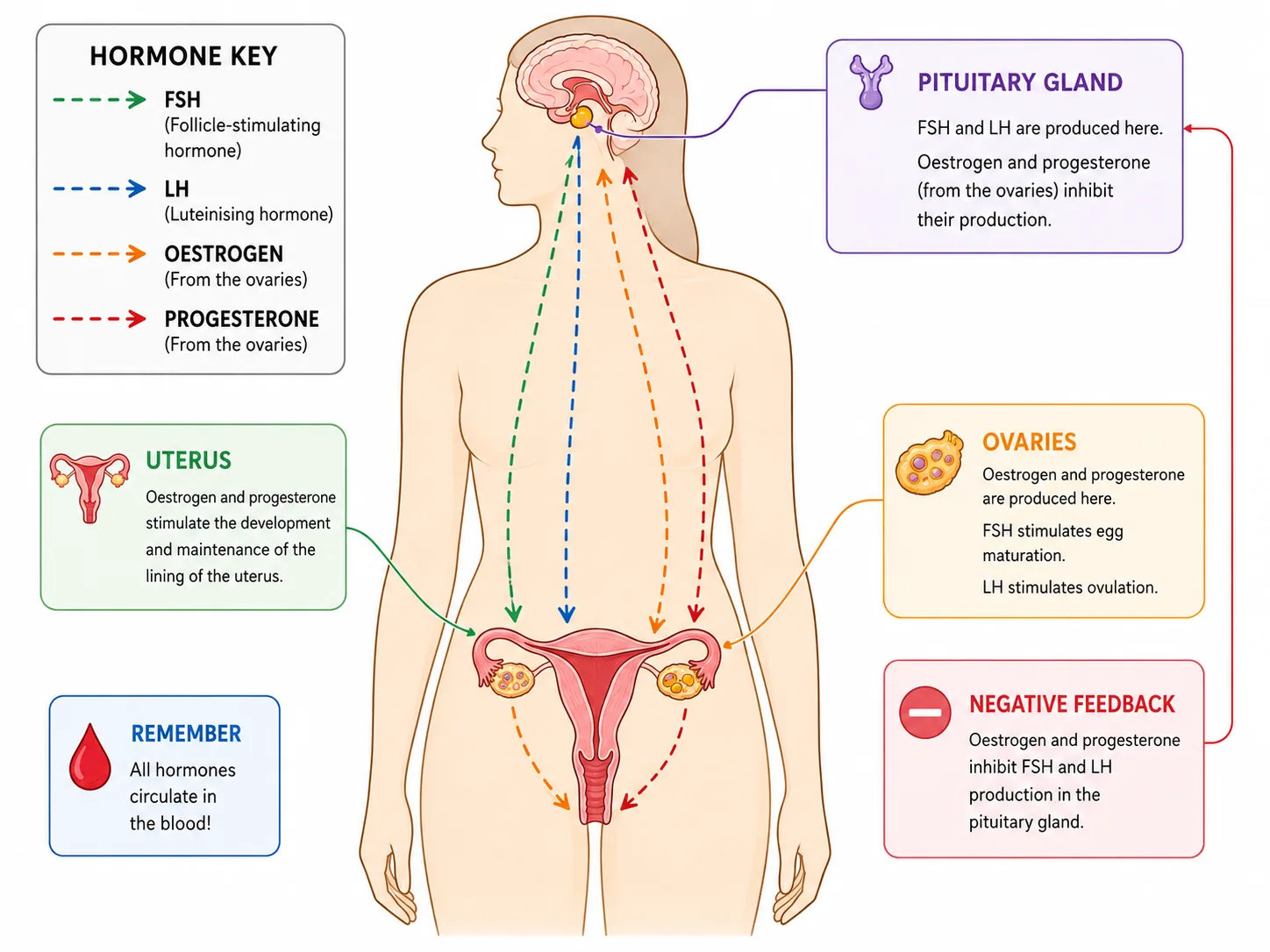
- The endocrine system Information is sent as chemical messengers called hormones, which are made in endocrine glands and carried in the blood.
- Hormones act on target organs and trigger a change there.
Section 2 of 6How the nervous system works
1Receptors
- Receptors Sensory receptors, such as those in the eye, detect a stimulus.
2Central nervous system
- Central nervous system The brain and spinal cord decide on a response.
3Effectors
- Effectors Muscles contract or glands secrete.
4Rapid reflex
- Rapid reflex Pulling a hand away from a flame is a fast response that needs very little delay.
Section 3 of 6How the endocrine system works
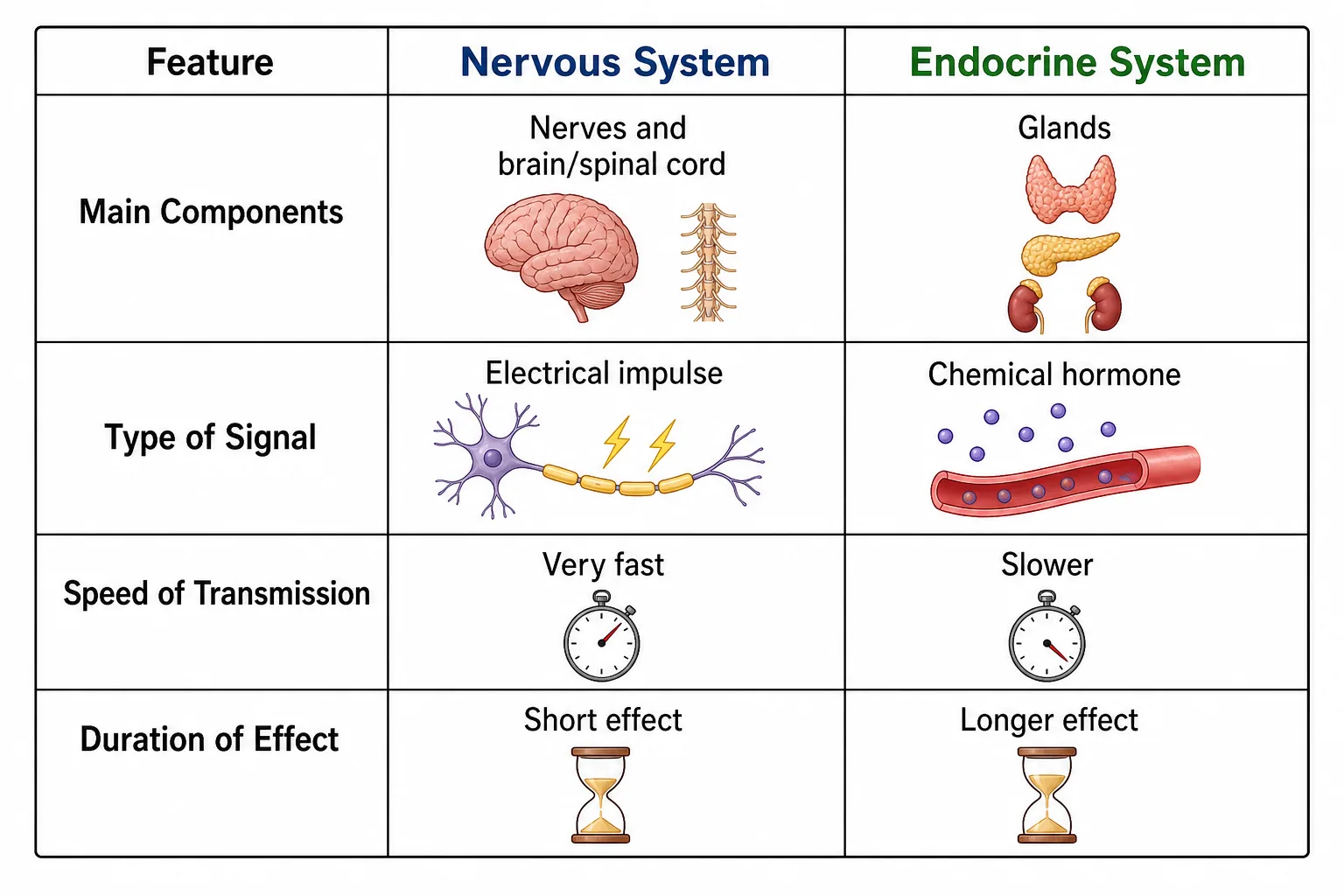
1
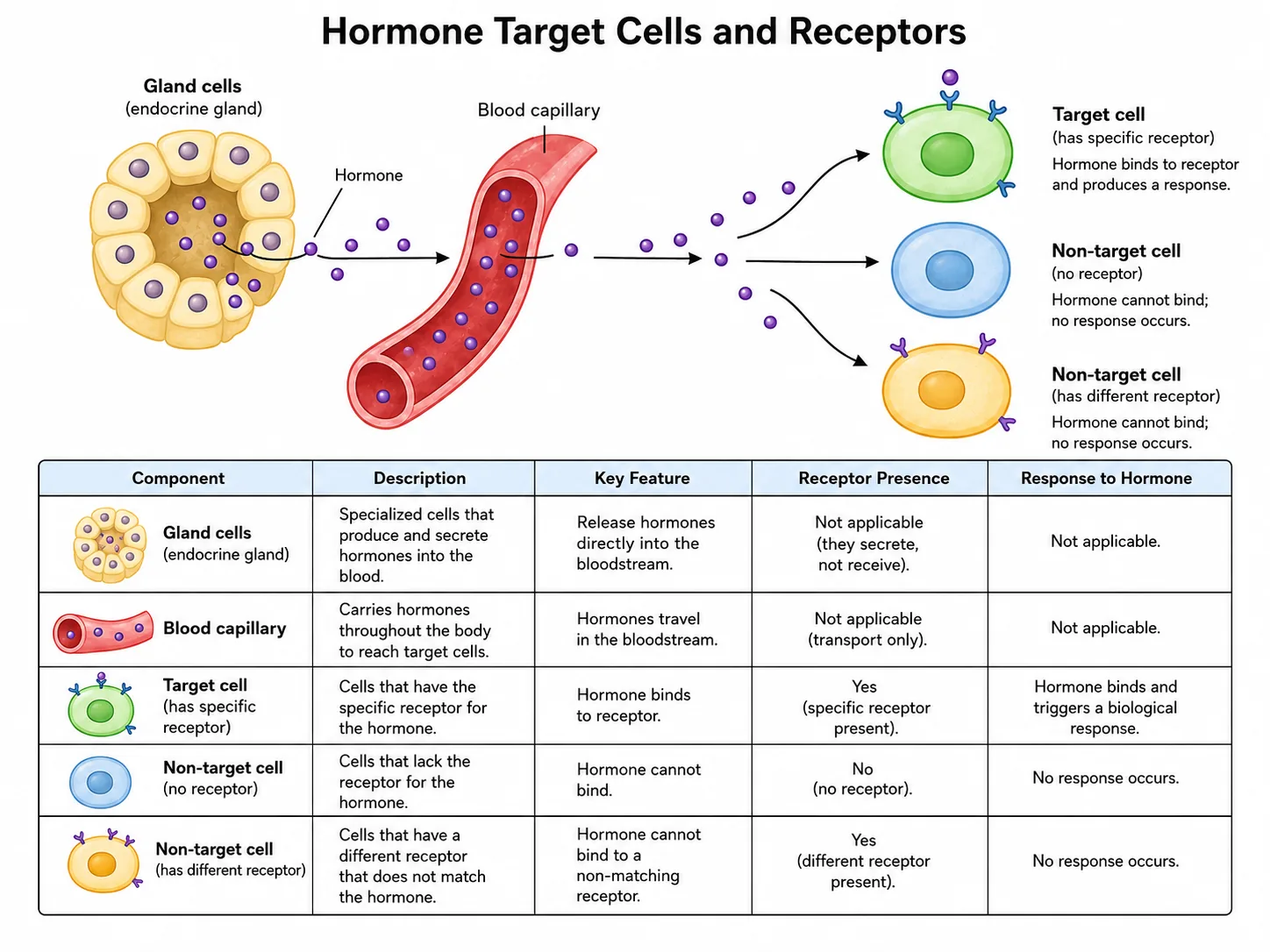
A gland, which is a group of cells that secretes a substance, releases a hormone into the bloodstream.
2
The blood carries the hormone around the whole body.
3
Only the target organs that have receptors for the hormone respond to it.
4
The target organ changes its activity until the hormone is broken down and removed.
Section 4 of 6Comparing the two
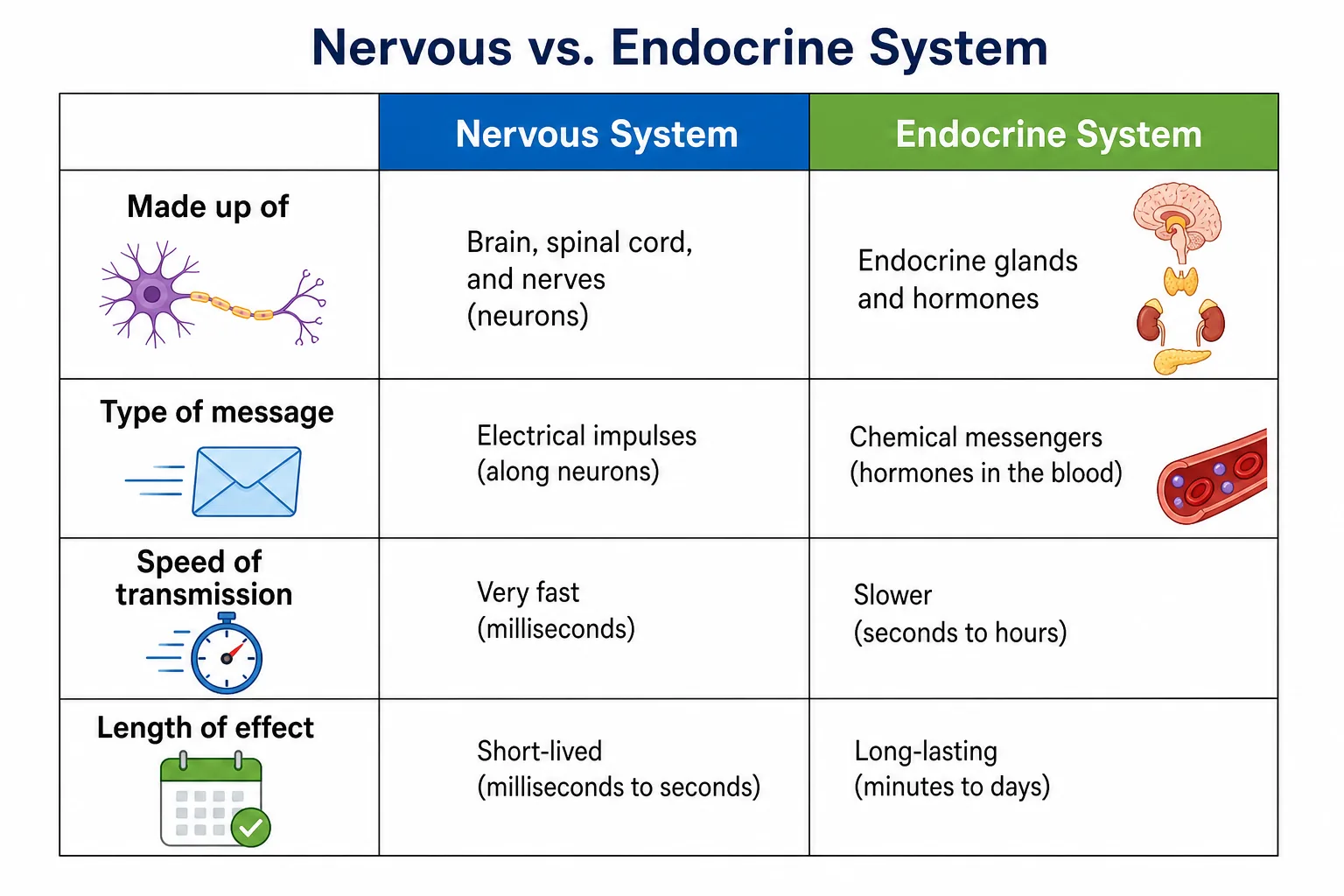
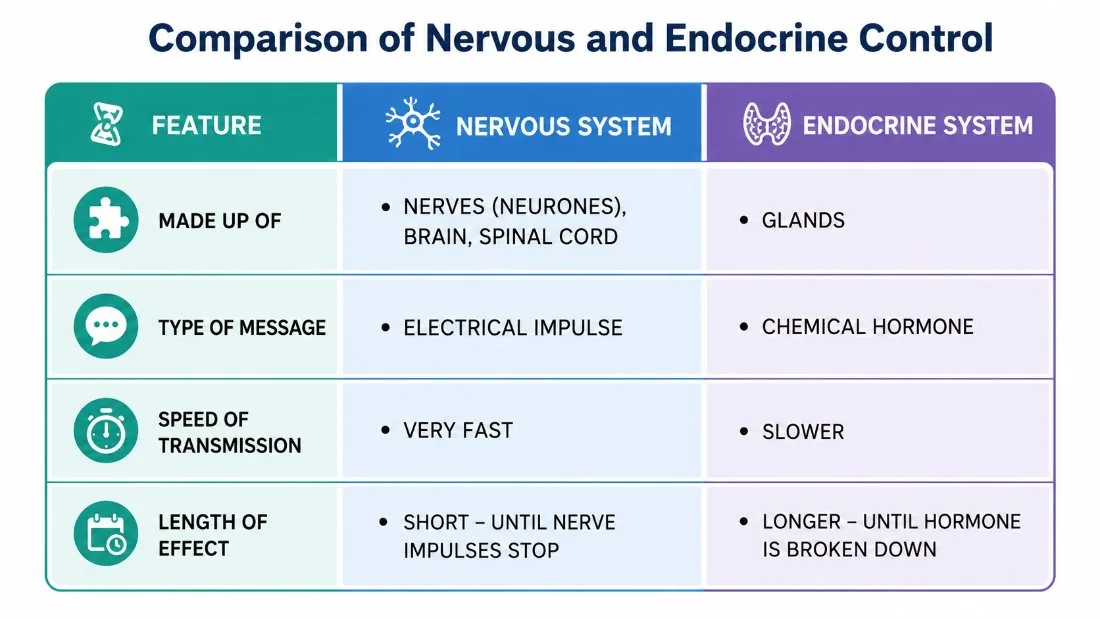
| Feature | Nervous system | Endocrine system |
|---|---|---|
| Made up of | Neurones, nerves, brain and spinal cord | Glands |
| Type of message | Electrical impulse | Chemical hormone |
| Route | Along neurones | In the blood plasma |
| Speed | Very fast | Slower |
| Area affected | Specific and localised | Widespread, any cell with the right receptor |
| Duration | Short, stops quickly | Longer, until the hormone is broken down |
| Best suited to | Instant responses | Responses that need not be immediate |
Section 5 of 6Key terms
| Term | Meaning |
|---|---|
| Neurone | A nerve cell that carries electrical impulses. |
| Hormone | A chemical messenger produced by a gland and carried in the blood to target organs. |
| Gland | A group of cells that makes and releases a substance. |
| Target organ | An organ whose activity is changed by a particular hormone. |
| Impulse | An electrical signal travelling along a neurone. |
Section 6 of 6Exam technique
1
Saying hormones travel along nerves; they travel in the blood.
2
Describing the nervous response as long-lasting — nervous effects are brief, whereas hormonal effects last longer.
3
Writing that hormones are produced by muscles; they are produced by endocrine glands.
4
Giving a comparison with no reference to both sides, for example stating 'fast' without saying the other system is slower.