2.10.11Structure and Function in Living Organisms
The Role of Skin in Temperature Regulation
5 min read 6 parts Lesson 54 of 55 1 quiz
Section 1 of 6Why temperature is controlled




A narrow range
- A narrow range Core body temperature is held close to 37 °C.
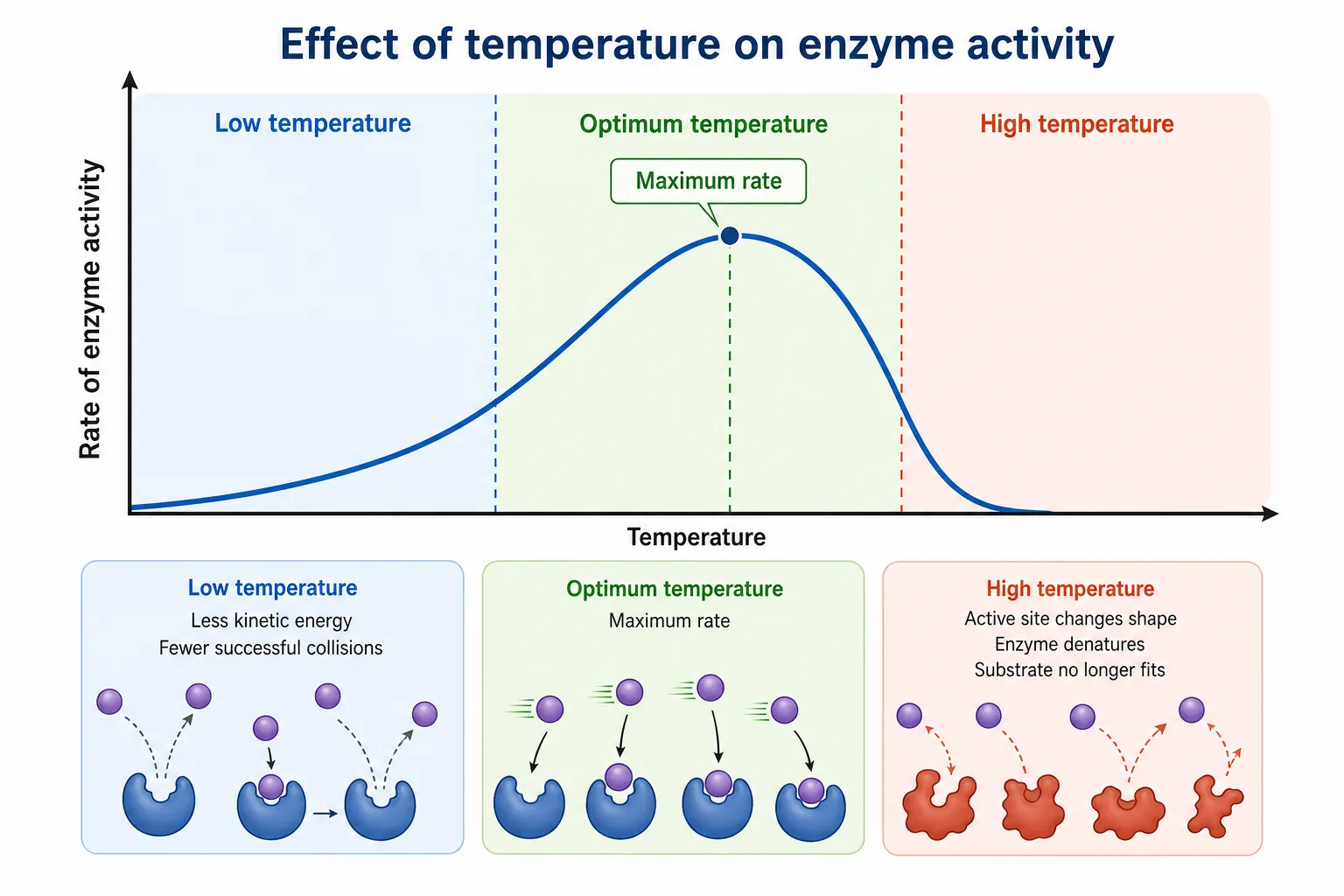
- A change of more than about 2 °C can be fatal, because enzymes stop working properly.
Detecting changes
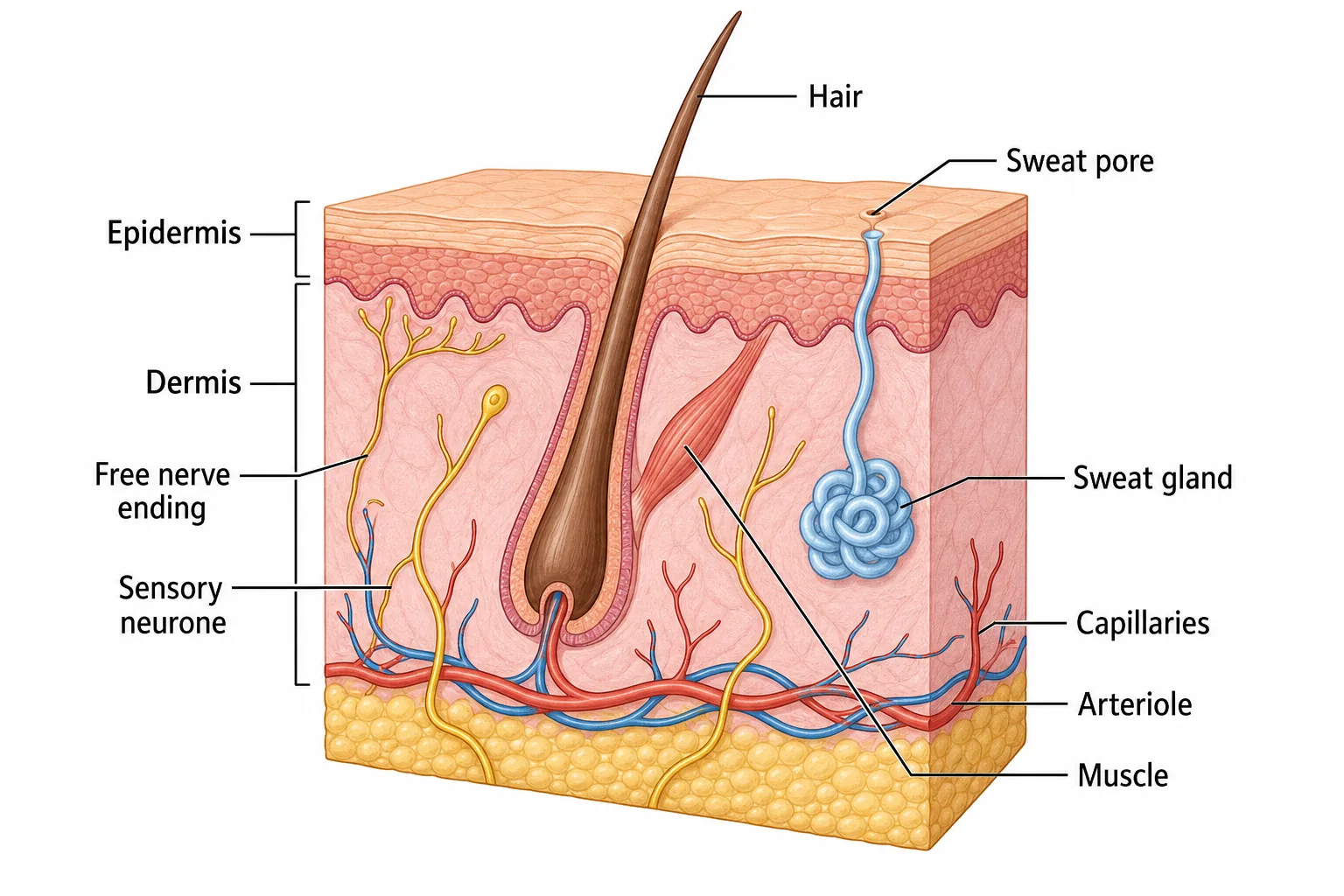
- Detecting changes Temperature receptors in the skin and in the hypothalamus, a part of the brain, detect small changes.
- The brain then coordinates a cooling or warming response.
Homeostasis
- Homeostasis Temperature control is an example of homeostasis, because the temperature is kept within a constant range.
Skin as a sense organ
- Skin as a sense organ The skin contains receptors for touch, pressure, pain, heat and cold.
Section 2 of 6When the body is too hot

Cooling down
Vasodilation
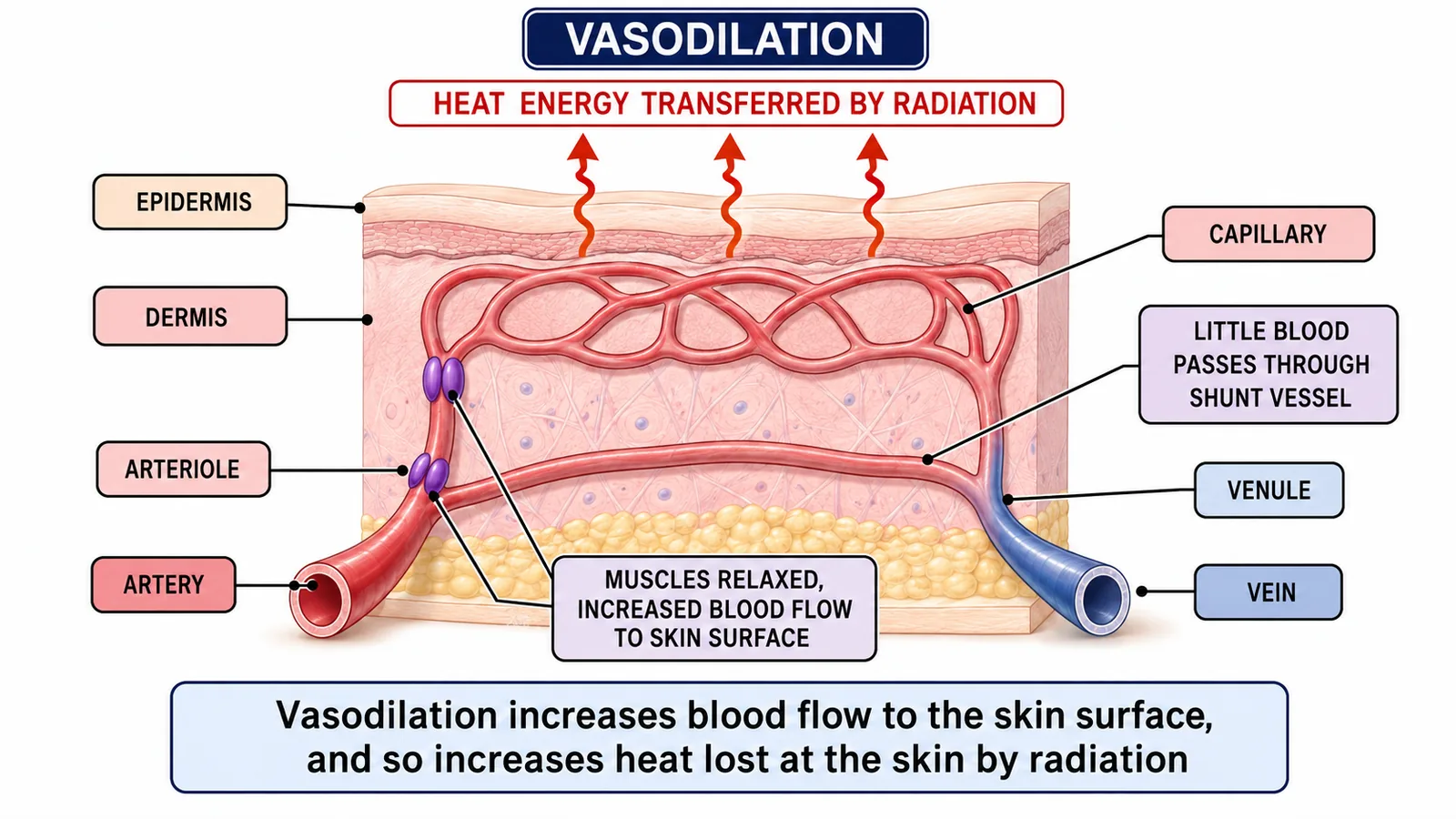
- Vasodilation Muscles in the walls of arterioles near the skin relax, so the arterioles widen.
- More blood flows through skin capillaries and more heat is lost by radiation.
Sweating
- Sweating Sweat glands release sweat onto the skin.
- As the water evaporates it takes heat energy from the body, which cools the skin.
Hairs lie flat
- Hairs lie flat Hair erector muscles relax so that hairs lie flat, no air is trapped and heat escapes more easily.
- This detail is not required by the specification.
Section 3 of 6When the body is too cold


Warming up
Vasoconstriction
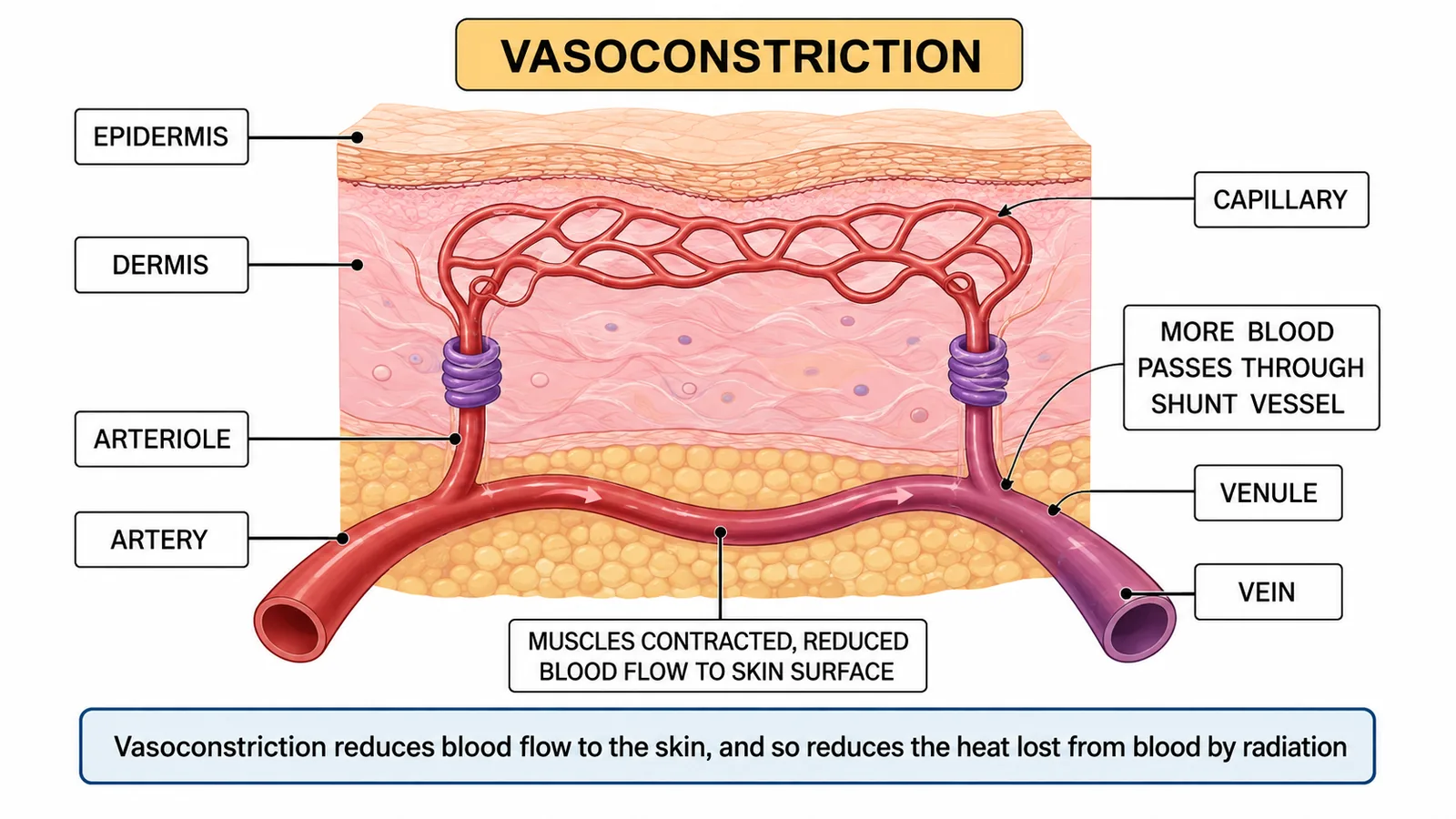
- Vasoconstriction Muscles in arteriole walls contract, so the arterioles near the skin narrow.
- Less blood flows close to the surface, which reduces heat loss by radiation.
Less sweating
- Less sweating Little or no sweat is produced, so less heat is lost by evaporation.
Shivering
- Shivering This reflex makes muscles contract rapidly and regularly.
- The exothermic reactions of respiration that power the contractions release heat and raise the core temperature.
Hairs stand up
- Hairs stand up Erector muscles contract to trap an insulating layer of air.
- This is not needed for the specification.
Section 4 of 6Answering exam questions
1
State the stimulus, such as the person entering a hot room or a cold environment.
2
Name the changes in the skin: vasodilation and sweating for heat, vasoconstriction and reduced sweating for cold.
3
Explain what happens to blood flow near the skin surface and what this does to heat loss by radiation.
4
Link the change to the outcome, which is a return of core temperature to about 37 °C.
Section 5 of 6Key terms

| Term | Meaning |
|---|---|
| Vasodilation | The widening of arterioles supplying skin capillaries, increasing blood flow near the surface. |
| Vasoconstriction | The narrowing of arterioles supplying skin capillaries, reducing blood flow near the surface. |
| Hypothalamus | The part of the brain that monitors blood temperature and coordinates the response. |
| Radiation | Transfer of heat energy as infrared waves from the body to the surroundings. |
| Thermoreceptor | A receptor that detects changes in temperature. |
Section 6 of 6Exam technique
1
Saying that blood vessels move closer to the skin surface in the heat — they stay in place, and the arterioles simply widen.
2
Stating that capillaries dilate and constrict; it is the arterioles supplying them that change width.
3
Describing vasoconstriction as warming the blood; it only reduces heat loss.
4
Saying sweating cools the body because sweat is cold; the cooling comes from evaporation taking heat energy from the skin.