3.1.3Reproduction and Inheritance
Adaptations for Pollination
5 min read 7 parts Lesson 4 of 28 1 quiz
Section 1 of 7Flower structure and function


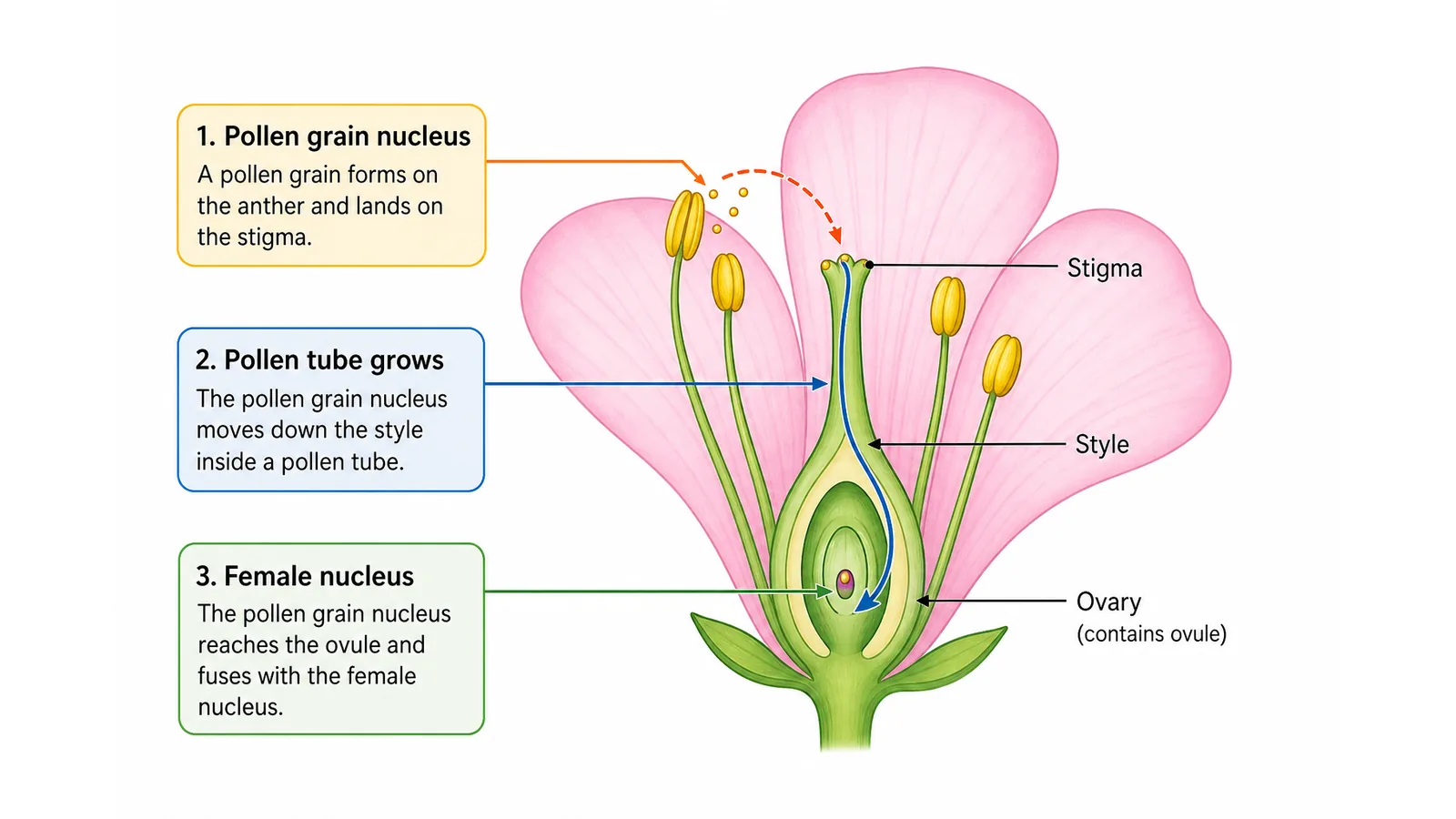

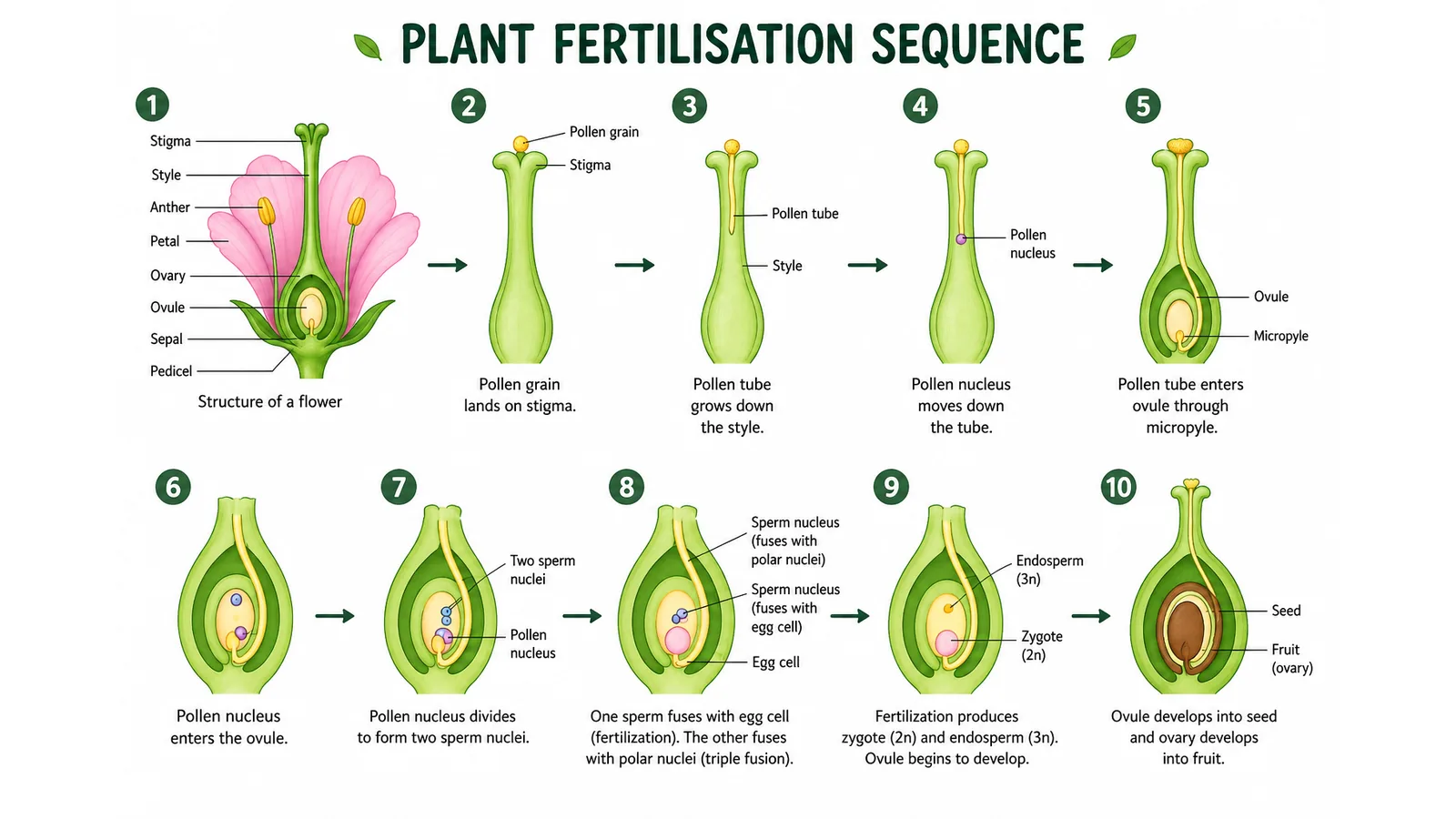
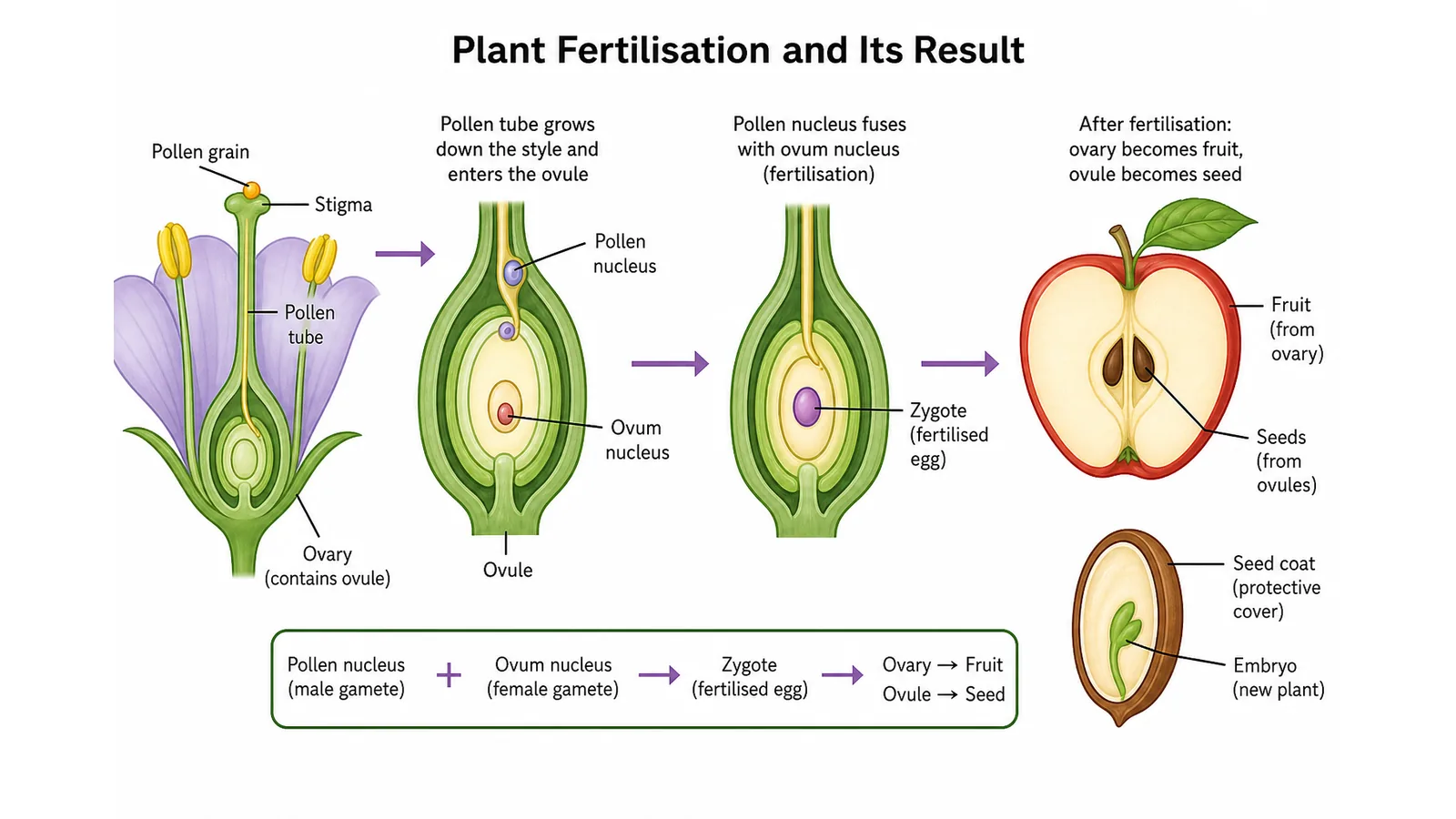

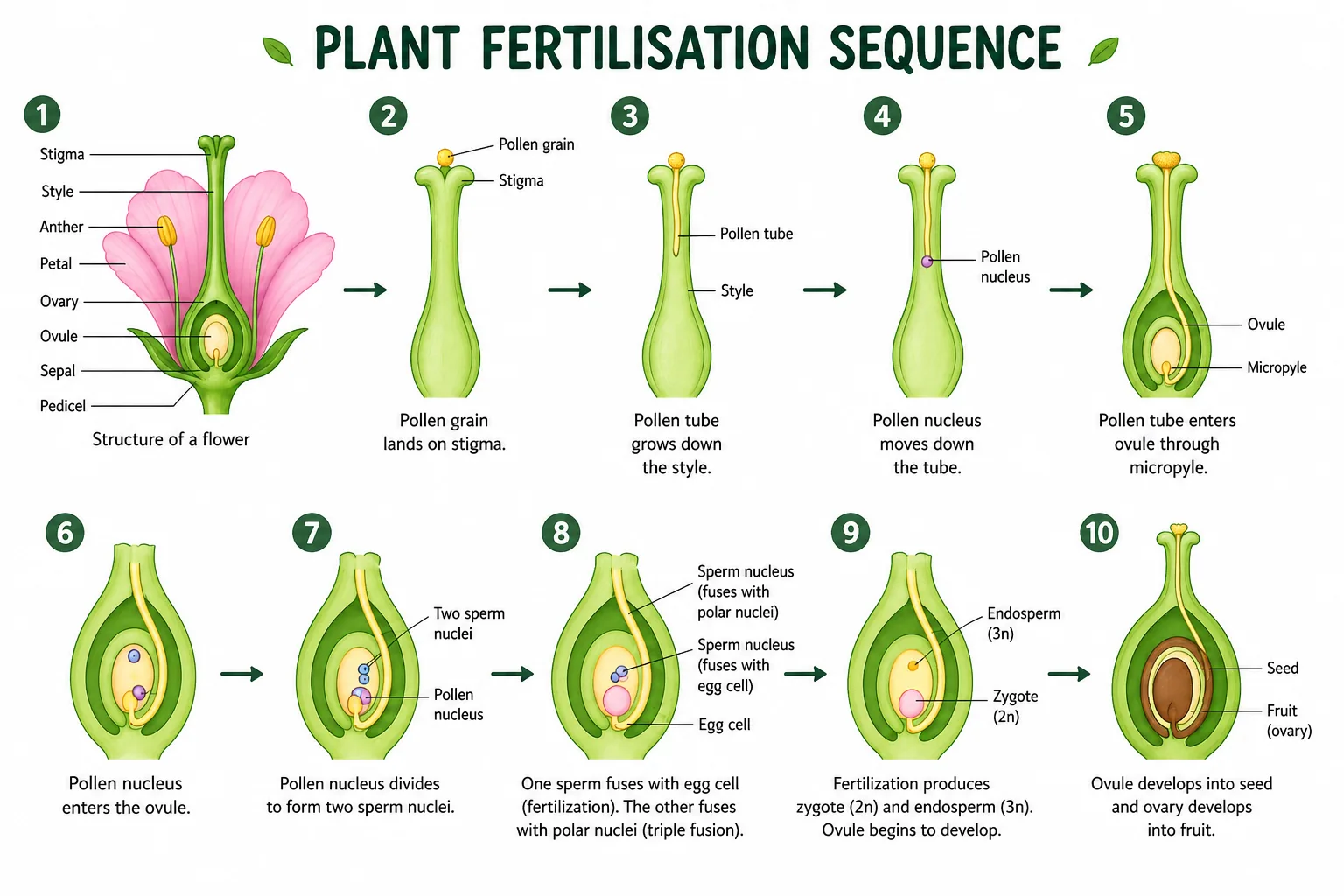
| Part | Function |
|---|---|
| Sepal | Covers and protects the flower while it is still a bud |
| Petal | Often brightly coloured to attract insects |
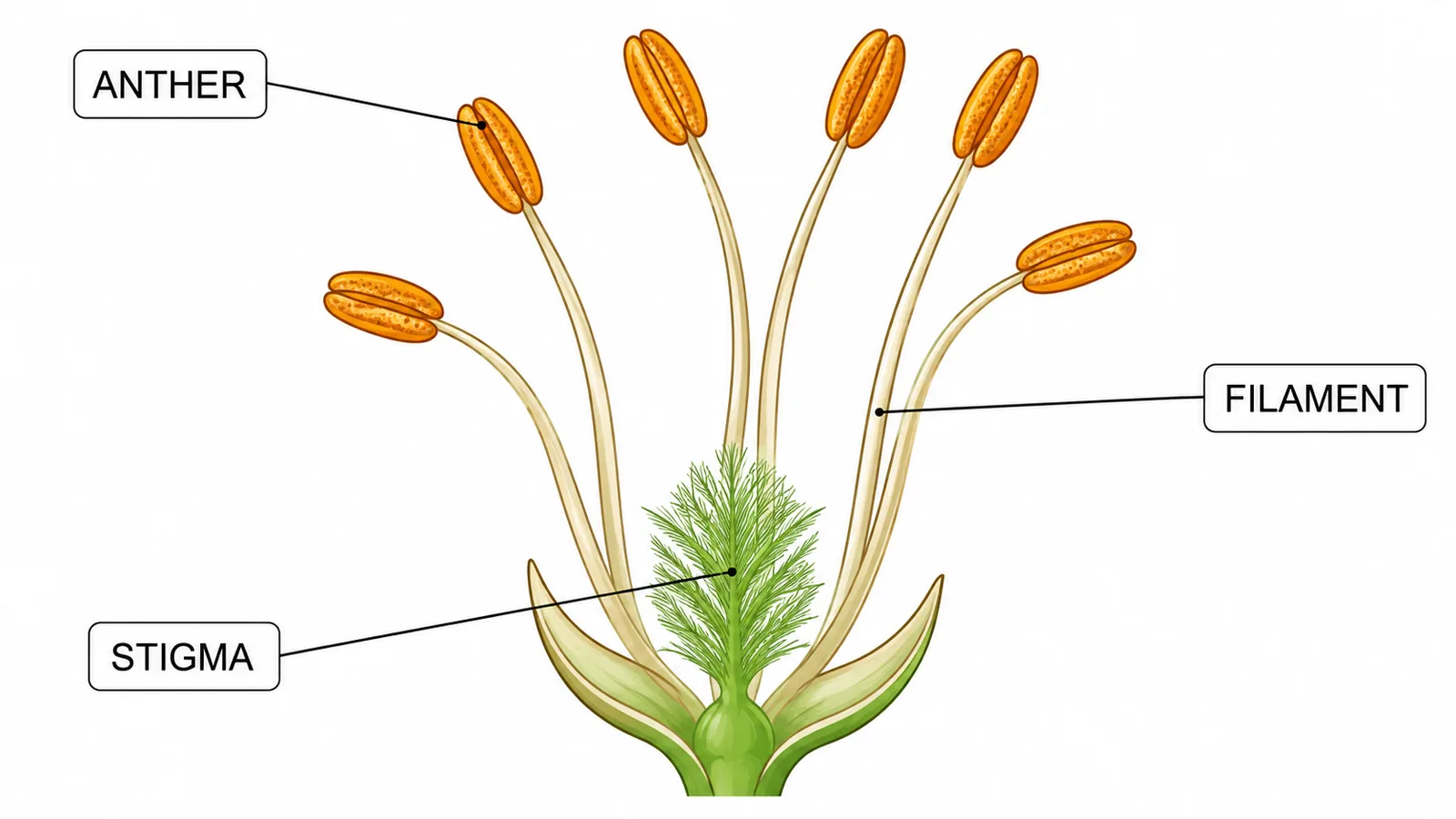
| Anther | Makes and releases pollen grains, which contain the male gametes |
| Filament | Holds the anther up in position |
| Stigma | Sticky surface at the top of the female part that catches pollen |
| Style | Tube that connects the stigma to the ovary |
| Ovary | Contains the ovules |
| Ovule | Contains the female gamete (egg cell); it becomes a seed after fertilisation |
Section 2 of 7What pollination means
Definition
- Definition Pollination is the transfer of pollen from an anther to a stigma.
- It brings the male and female gametes of a plant close enough to allow fertilisation later.
Carriers of pollen
- Carriers of pollen Pollen is carried either by animals, usually insects, or by the wind.
- The flower's structure reflects which of these it relies on.
Section 3 of 7How an insect pollinates
1Insect is attracted
- Insect is attracted Bright petals, scent and the promise of nectar bring an insect to the flower.
2Pollen is picked up
- Pollen is picked up The insect pushes past the anthers to reach the nectar and the sticky pollen rubs onto its body.
3Insect moves on
- Insect moves on It visits another flower of the same type.
4Pollen is deposited
- Pollen is deposited Its body brushes the sticky stigma, which collects some of the pollen grains.
Section 4 of 7Comparing the two types of flower


| Feature | Insect-pollinated | Wind-pollinated |
|---|---|---|
| Petals | Large, brightly coloured to attract insects | Small and dull, often green or brown, because showy petals would waste energy |
| Scent and nectar | Produced to draw insects in | Not produced |
| Anthers | Stiff filaments hold them inside the flower where insects brush against them | Hang outside the flower on long filaments so the wind can blow pollen away |
| Stigma | Sticky and inside the flower to catch pollen from insects' bodies | Large and feathery, hanging outside to filter pollen from the air |
| Pollen grains | Fewer, sticky or spiky so they cling to insects | Very many, light and smooth so they travel far on air currents |
Section 5 of 7Linking structure to function
Adaptation to the pollinator
Insect flowers
- Insect flowers Every feature increases the chance of contact with a visiting insect.
Wind flowers
- Wind flowers Every feature exposes the anthers and stigmas to moving air, and energy is not spent on petals or nectar.
Exam approach
- Exam approach Name the feature, then say how it helps pollen be released, carried or caught.
Section 6 of 7Key terms


| Term | Meaning |
|---|---|
| Pollination | The transfer of pollen from an anther to a stigma. |
| Anther | The part of the stamen that produces pollen. |
| Stigma | The sticky surface that collects pollen grains. |
| Nectar | A sugary liquid made by flowers to reward visiting insects. |
| Ovule | A structure in the ovary containing the female gamete. |
| Filament | The stalk that supports an anther. |
Section 7 of 7Exam technique
1
Describing a wind-pollinated flower as having bright petals or nectar. These are features of insect-pollinated flowers.
2
Saying the stigma makes pollen. The anther makes pollen; the stigma only collects it.
3
Stating that the feature is adapted without explaining how, for example 'feathery stigma' needs 'to catch airborne pollen'.
4
Mixing up the male parts (anther and filament) with the female parts (stigma, style and ovary).