3.1.8Reproduction and Inheritance
Human Reproductive Systems
5 min read 6 parts Lesson 9 of 28 1 quiz
Section 1 of 6The male reproductive system


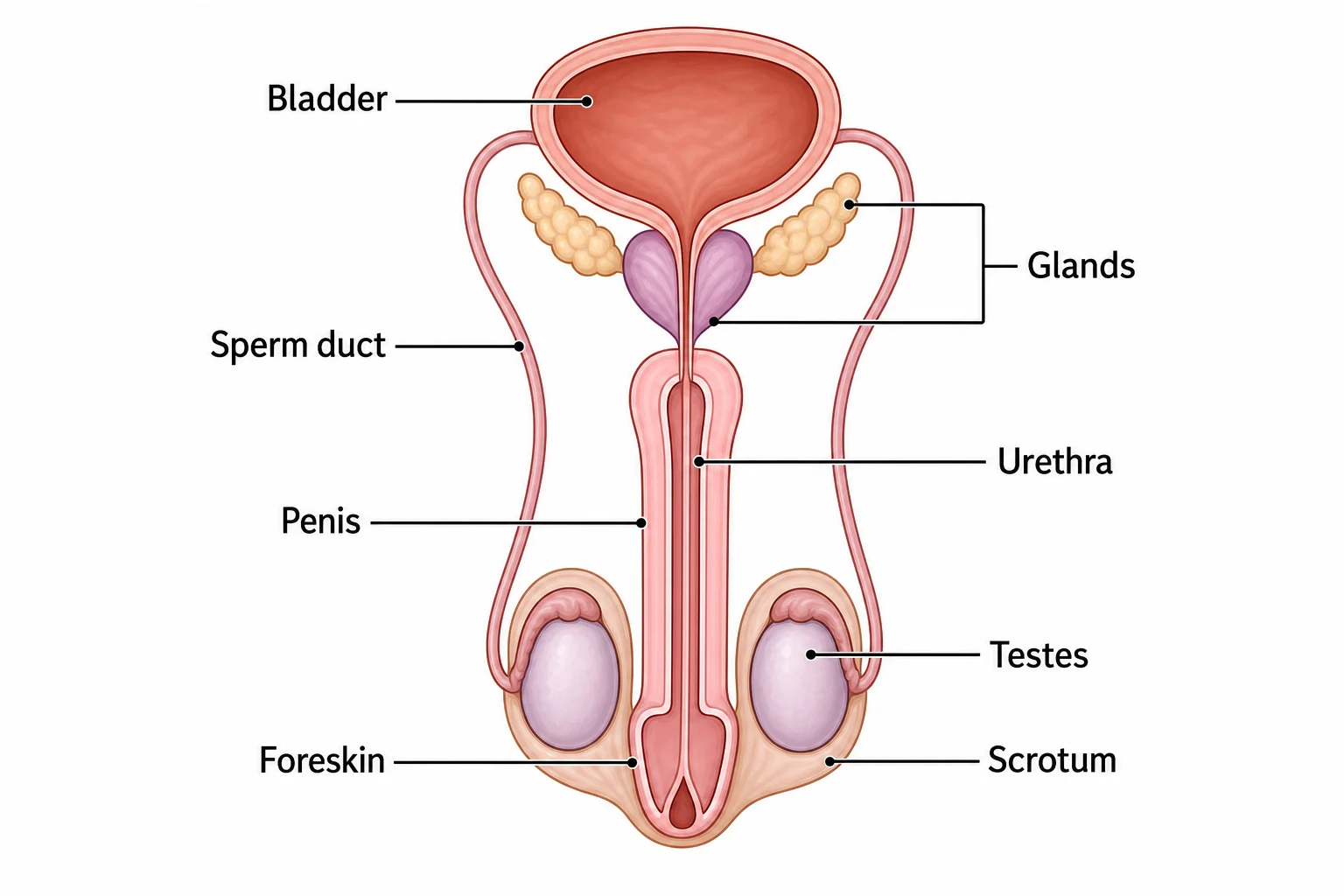
| Part | Function |
|---|---|
| Testis | Makes sperm (the male gametes) and the hormone testosterone |
| Scrotum | A sac of skin holding the testes outside the body so they stay slightly cooler than body temperature, which suits sperm production |
| Sperm duct | Carries sperm from the testis towards the urethra, where glands add fluids to make semen |
| Urethra | Tube through the penis that carries semen, or urine at other times; a ring of muscle prevents the two mixing |
| Penis | Passes urine out of the body and places semen inside the vagina during intercourse |
Section 2 of 6The female reproductive system

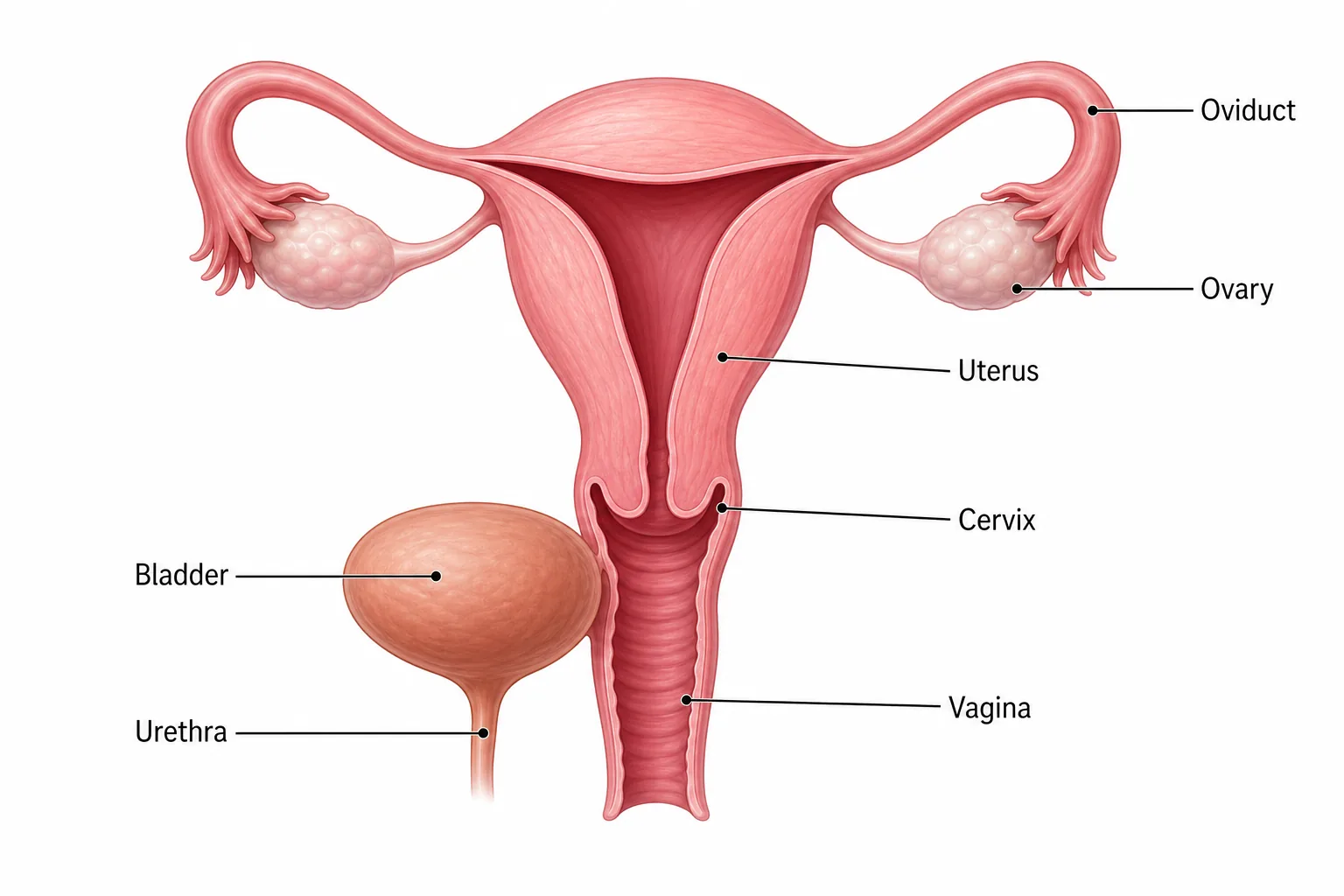
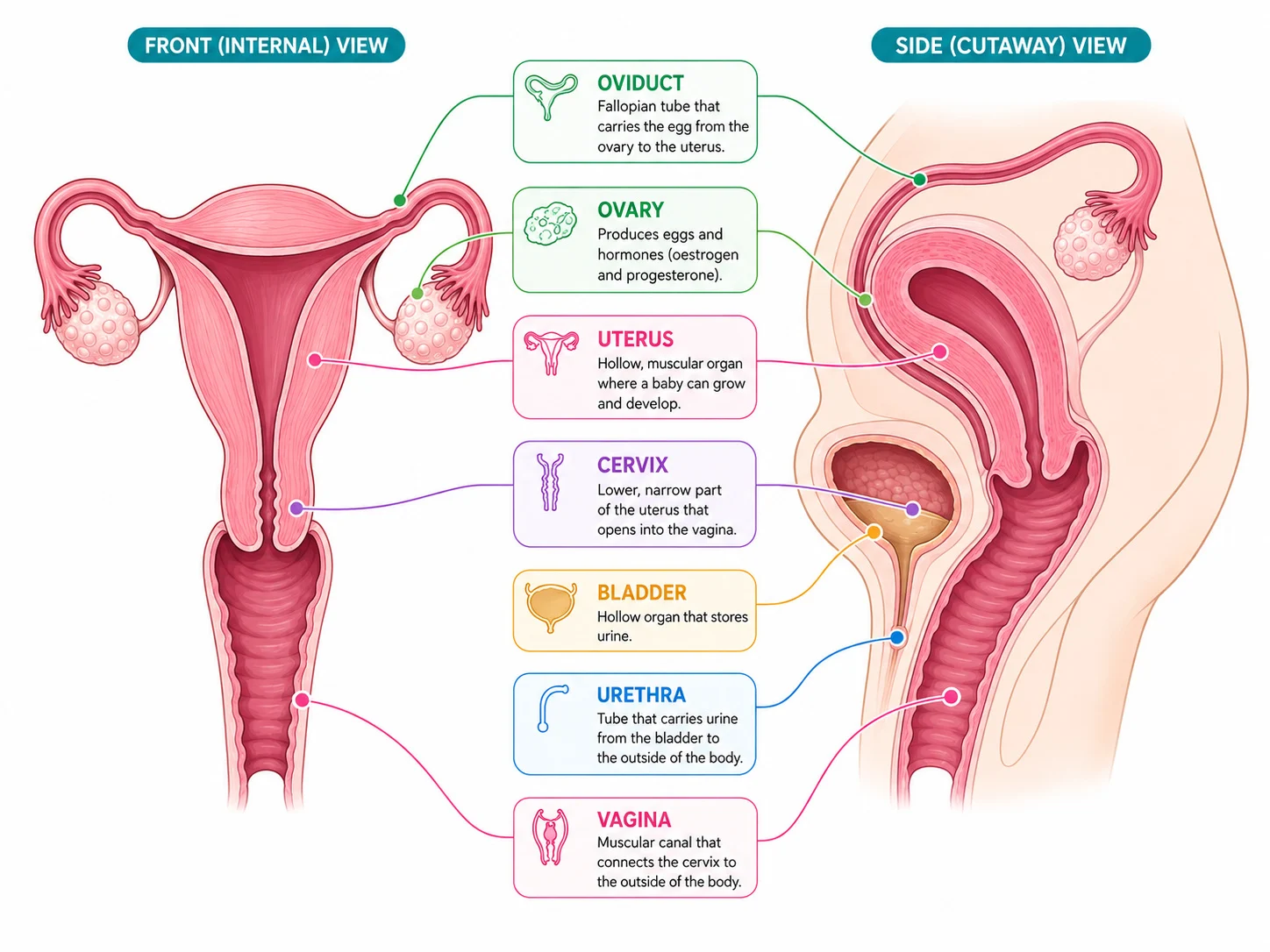
| Part | Function |
|---|---|
| Ovary | Holds egg cells (ova) and releases a mature egg each cycle; also makes oestrogen and progesterone |
| Oviduct | Carries the egg towards the uterus; lined with cilia that sweep it along; the site of fertilisation |
| Uterus | Muscular organ with a soft lining in which a fertilised egg implants and the foetus develops |
| Cervix | Ring of muscle at the base of the uterus that holds the foetus in place during pregnancy |
| Vagina | Muscular tube that receives the penis and sperm and forms part of the birth canal |
Section 3 of 6Path taken by sperm and egg
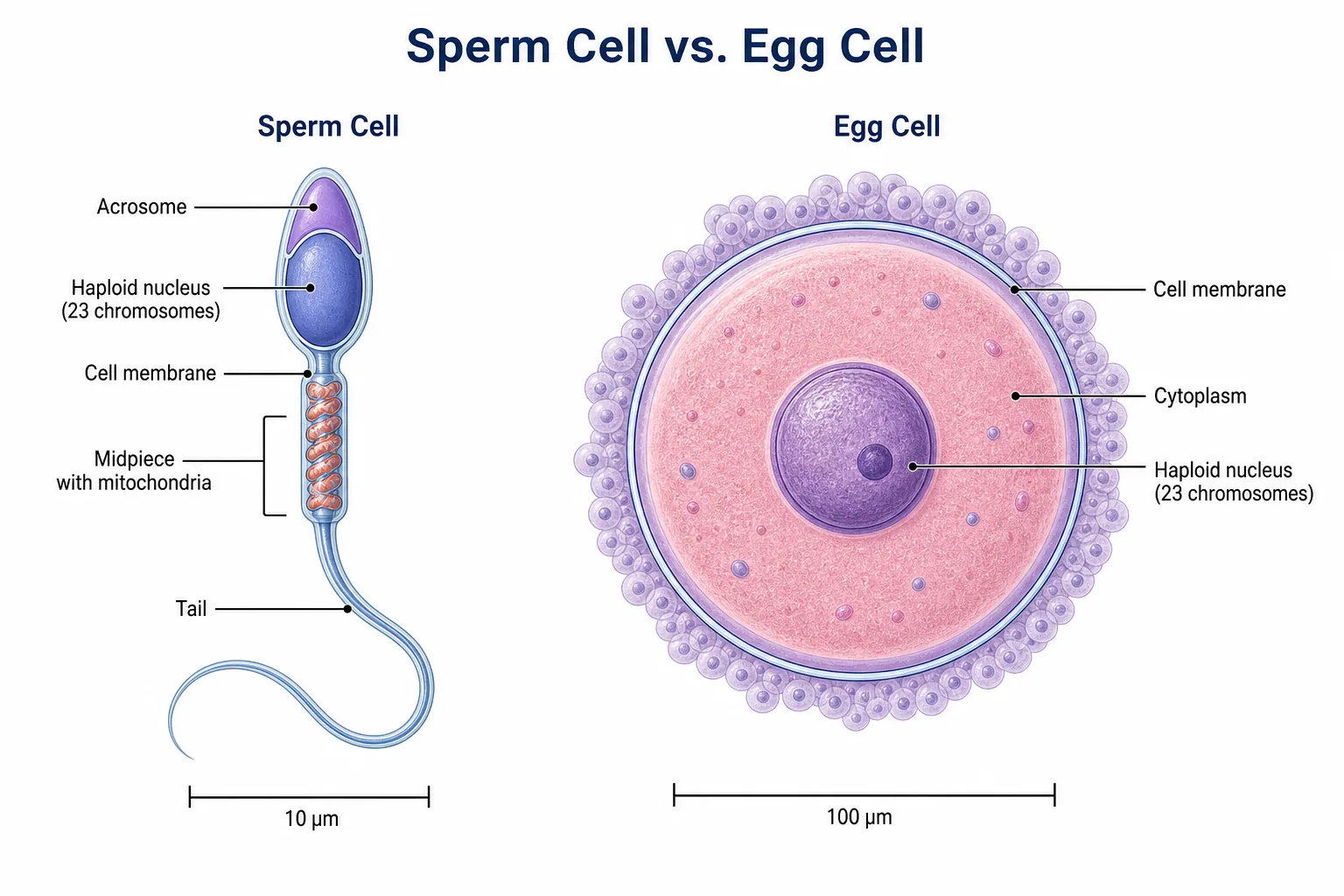

1Sperm production
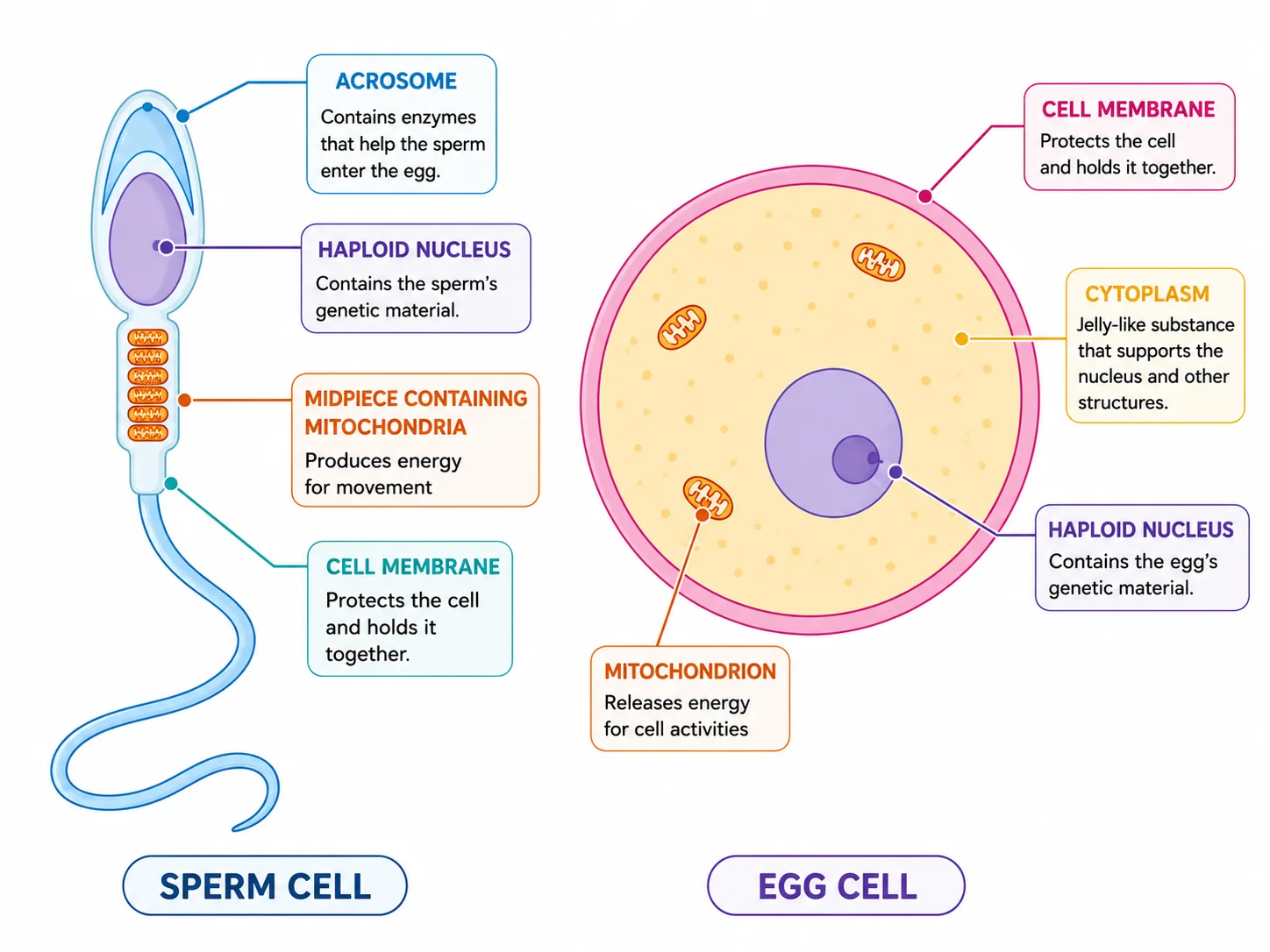
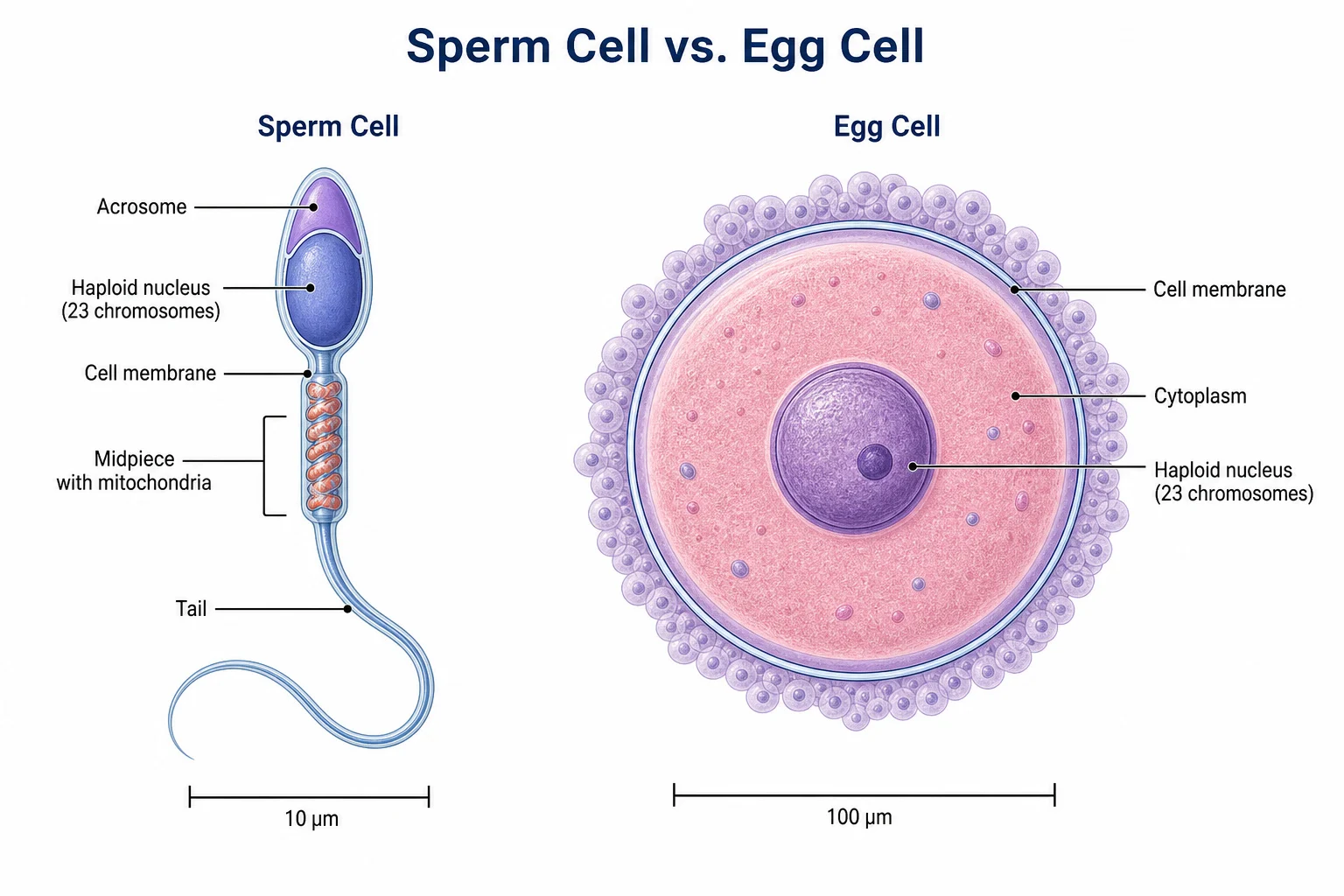
- Sperm production Sperm form in the testes and move into the sperm ducts.
2Semen
- Semen Glands add fluids that nourish and carry the sperm. The mixture, semen, leaves through the urethra.
3Entry to the female
- Entry to the female Semen is released in the vagina.
- Sperm swim through the cervix and uterus into the oviducts.
4Meeting the egg
- Meeting the egg If an egg released from the ovary is in the oviduct, fertilisation can occur there.
Section 4 of 6Adaptations worth remembering
Cooler testes
- Cooler testes Sperm production works best a little below body temperature, which is why the scrotum hangs outside the body.
Ciliated oviduct
- Ciliated oviduct Cilia and muscle movements push the egg slowly along the tube.
Muscular uterus wall
- Muscular uterus wall The thick muscle can stretch as the foetus grows and contract strongly during birth.
Section 5 of 6Key terms
| Term | Meaning |
|---|---|
| Testis | Male organ that makes sperm and testosterone. |
| Ovary | Female organ that stores and releases eggs and makes hormones. |
| Oviduct | The tube between ovary and uterus where fertilisation takes place. |
| Uterus | The womb, where the foetus develops. |
| Semen | Sperm mixed with fluid from glands. |
| Implantation | Attachment of the embryo to the uterus lining. |
Section 6 of 6Exam technique
1
Saying fertilisation takes place in the uterus. It happens in the oviduct.
2
Mixing up the sperm duct and the urethra. The sperm duct carries only sperm; the urethra carries semen or urine.
3
Writing that the ovary makes eggs every month from nothing; the ovary holds immature eggs that mature and are released one at a time.
4
Forgetting that the testes also make the hormone testosterone, not only sperm.