5.2.2Use of Biological Resources
Selective Breeding in Animals
5 min read 7 parts Lesson 11 of 15 1 quiz
Section 1 of 7The process
1
Decide which characteristic is wanted, for example high milk yield in cattle.
2
Choose parent animals that show this characteristic most strongly. Several unrelated parents are often chosen so that close relatives need not be bred together later.
3
Breed the chosen parents together.
4
From the offspring, select those that show the desired characteristic best and breed them together.
5
Repeat this selection over many generations until the characteristic is well established in the breed.
Section 2 of 7Examples of characteristics selected
Food production
- Food production Cattle, goats and sheep with high milk or meat yield, and hens that lay many large eggs.
Other products
- Other products Sheep with good quality wool.
Behaviour and performance
- Behaviour and performance Dogs with a gentle nature, and horses with a fine build and fast pace.
Dog breeds
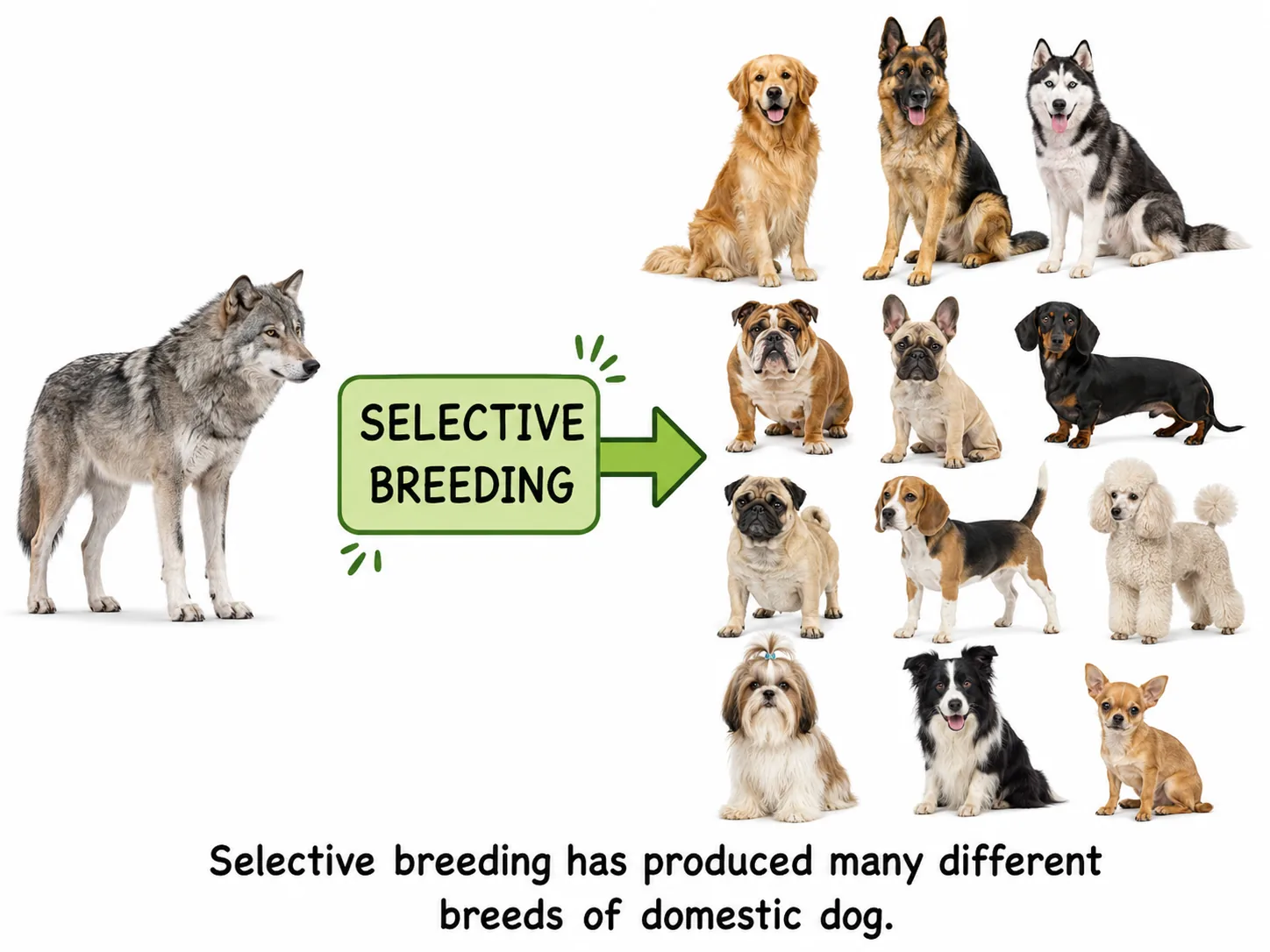
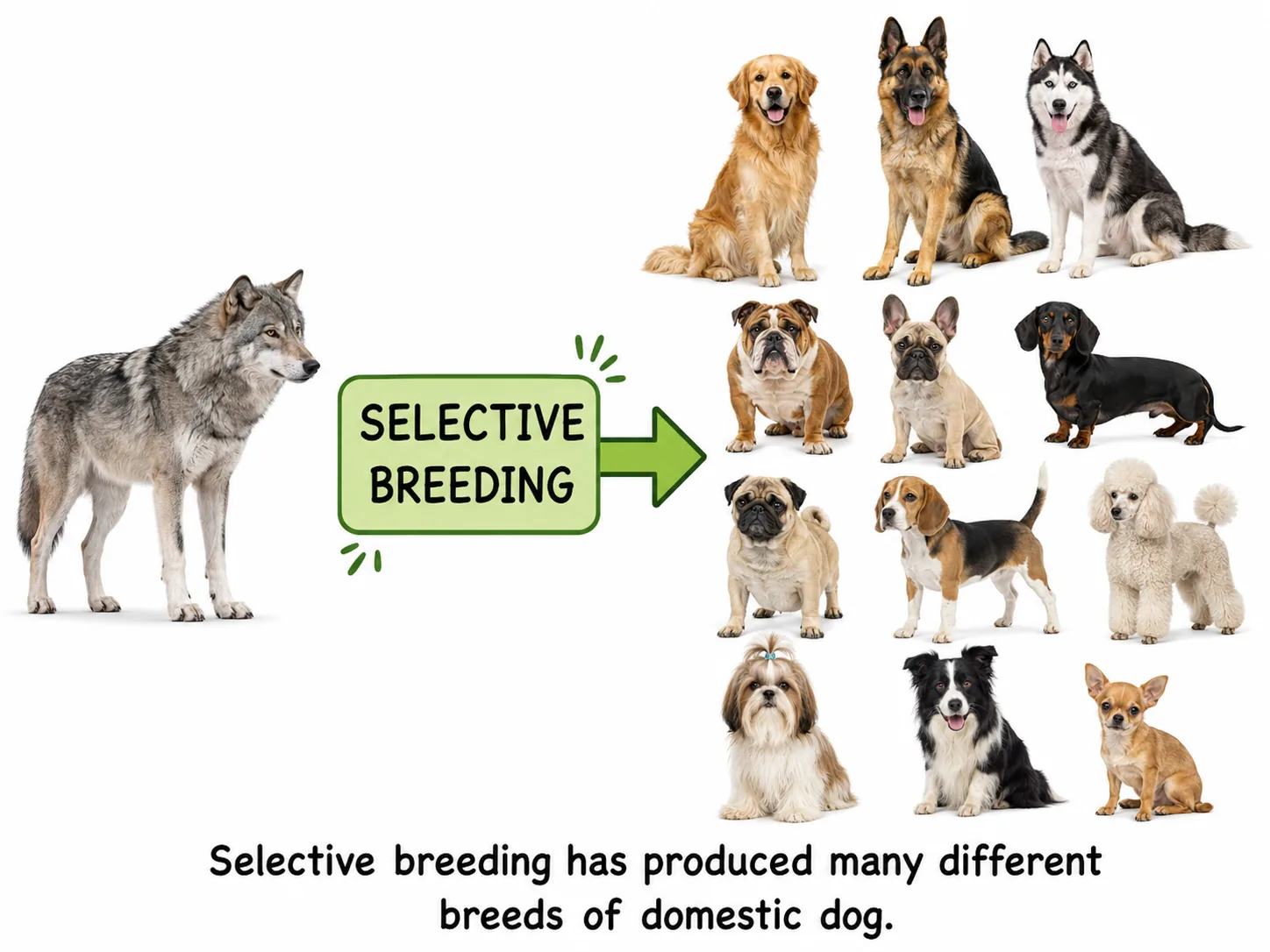
- Dog breeds All dog breeds have descended from wolves, but humans have selected different features to produce very different breeds.
Section 3 of 7Natural selection compared with artificial selection
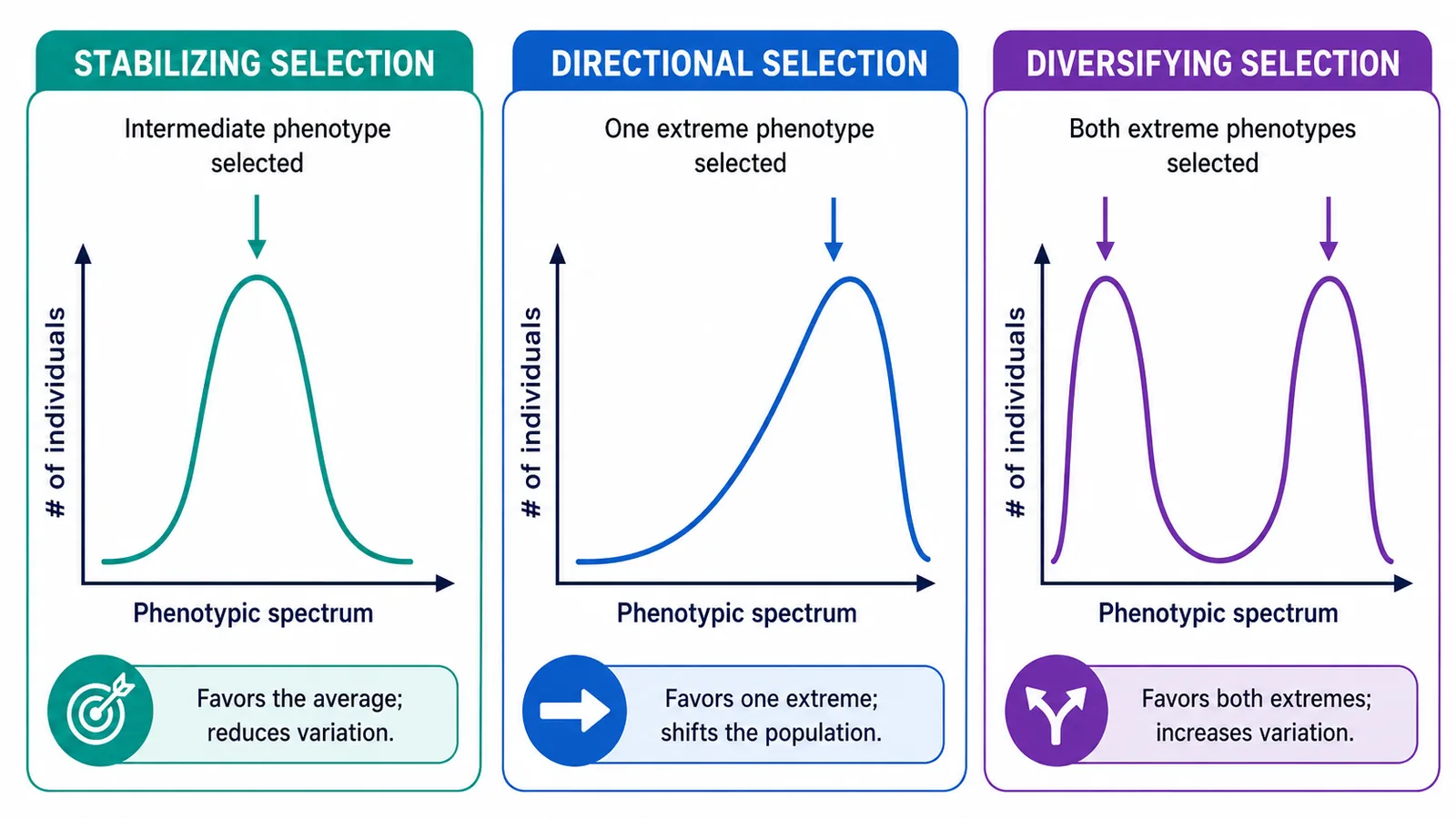
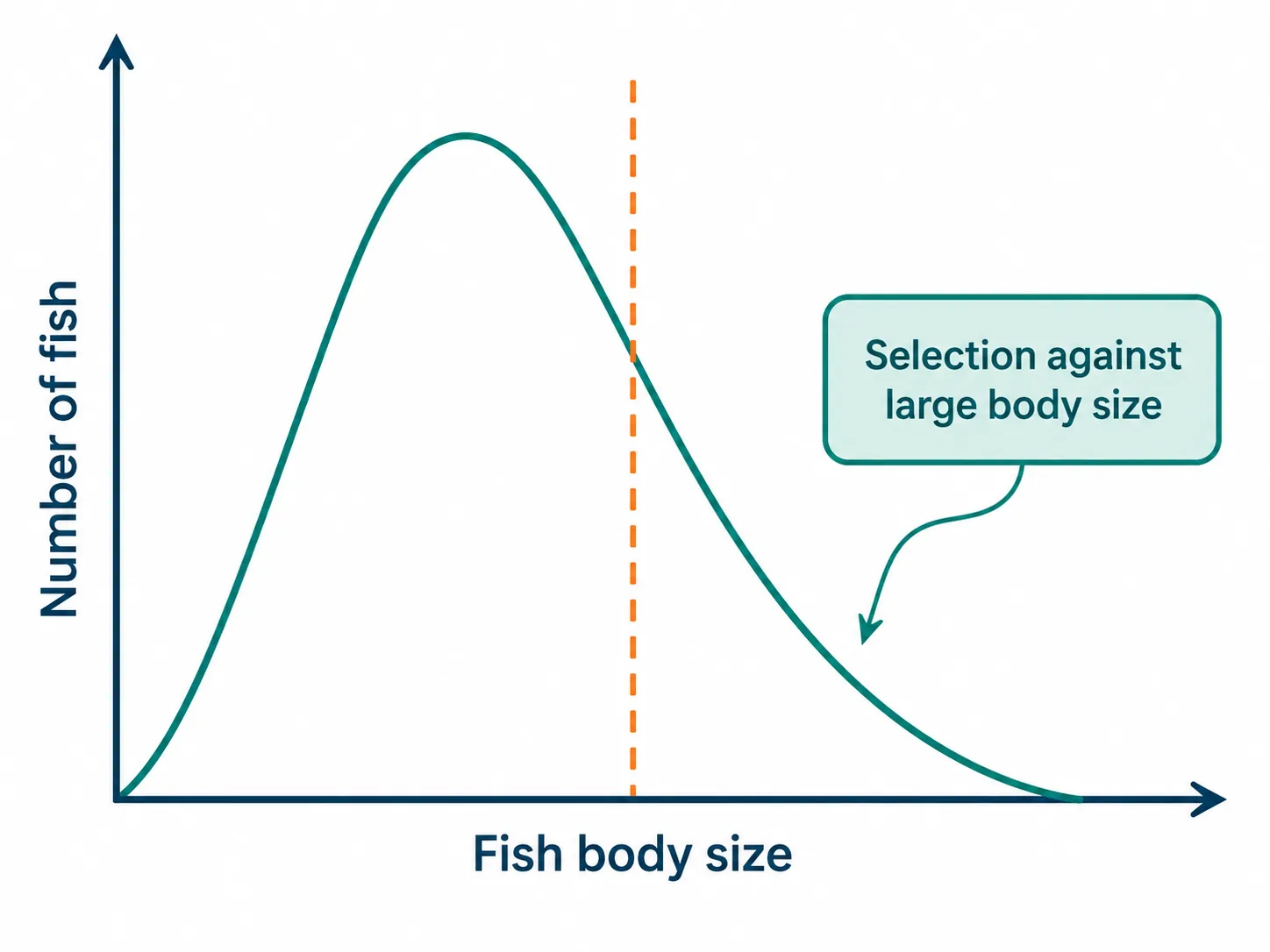
| Feature | Natural selection | Artificial selection |
|---|---|---|
| What drives it | The environment, with no human involvement | Humans choose which animals breed |
| Features favoured | Those that help survival and reproduction | Those useful to humans, not always useful to the animal |
| Speed | Usually very slow | Generally faster, because only chosen individuals reproduce |
Section 4 of 7Benefits and drawbacks of selective breeding
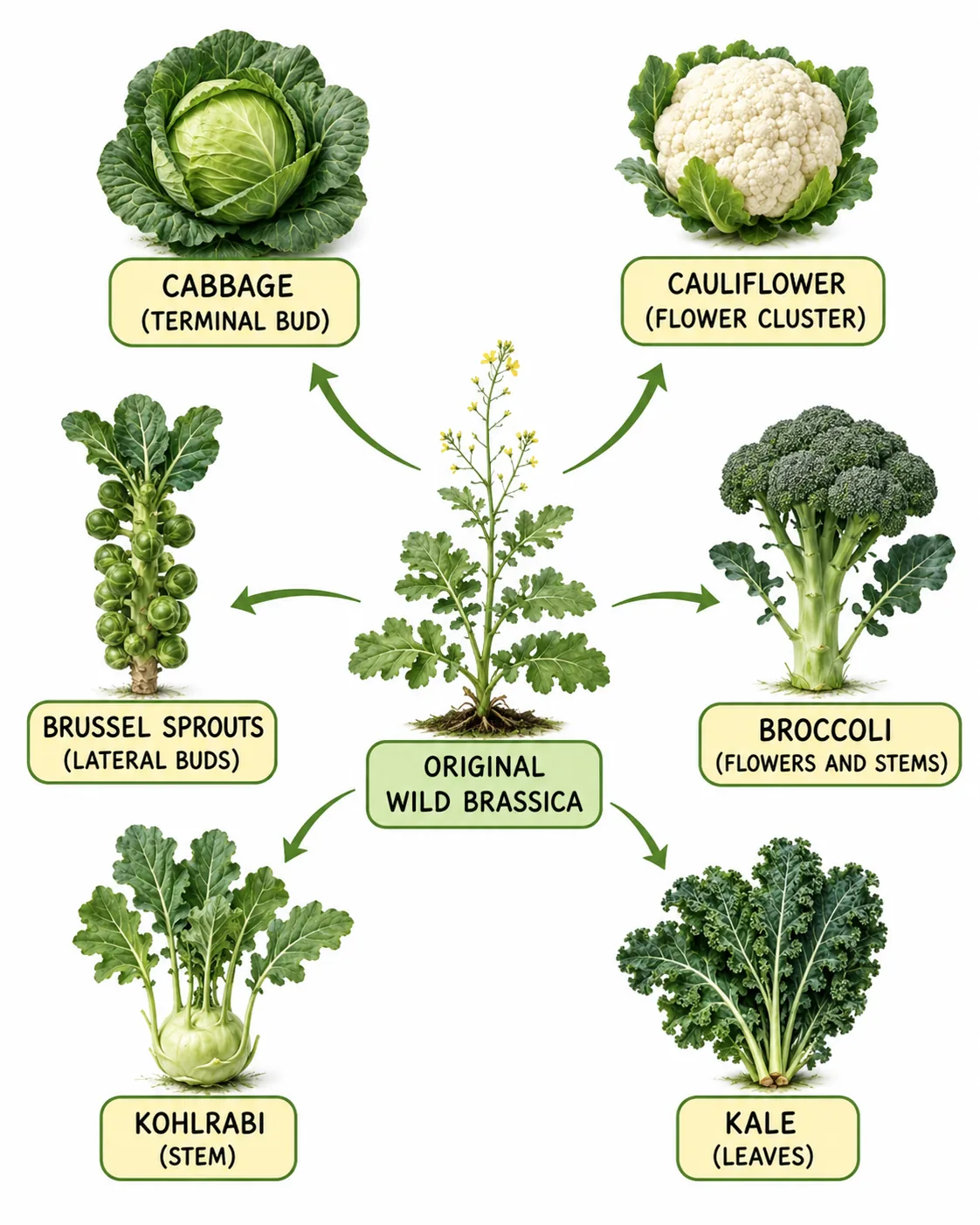

Benefits
- Benefits Farmers obtain animals that give more milk, meat or eggs, which increases food supply and income.
- Animals can also be selected for disease resistance, so that fewer need treatment.
Drawbacks
- Drawbacks Breeding from a small number of animals reduces the variety of alleles in the population, so a new disease could affect them all.
- Breeding closely related animals can increase inherited health problems, so breeders choose unrelated parents where they can.
Section 5 of 7Why repetition is essential
1Generation 1
- Generation 1 Parents with the best trait are bred and their offspring show a slight improvement.
2Next generations
- Next generations Again the best offspring are chosen, so the useful alleles become more common.
3New breed
- New breed After many generations the population reliably shows the trait.
- A single round of breeding is not enough.
Section 6 of 7Key terms
| Term | Meaning |
|---|---|
| Selective breeding | Choosing parents with desired features and breeding them over many generations. |
| Artificial selection | Another name for selective breeding, driven by human choice. |
| Breed | A group of animals of one species with a set of shared characteristics. |
| Yield | The amount of a product, such as milk, that an animal produces. |
| Natural selection | The process by which better-adapted organisms survive and reproduce more in their environment. |
Section 7 of 7Exam technique
1
Describing only one round of breeding — the process must be repeated for many generations.
2
Saying selective breeding creates new alleles — it increases the frequency of existing ones.
3
Writing that natural selection is chosen by humans — only artificial selection is.
4
Forgetting that artificially selected features may not help the animal survive in the wild.